
 A SCHOLARLY BOOK REPOSITORY
60 start with M start with M
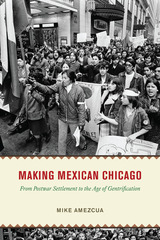
Though Chicago is often popularly defined by its Polish, Black, and Irish populations, Cook County is home to the third-largest Mexican-American population in the United States. The story of Mexican immigration and integration into the city is one of complex political struggles, deeply entwined with issues of housing and neighborhood control. In Making Mexican Chicago, Mike Amezcua explores how the Windy City became a Latinx metropolis in the second half of the twentieth century.
In the decades after World War II, working-class Chicago neighborhoods like Pilsen and Little Village became sites of upheaval and renewal as Mexican Americans attempted to build new communities in the face of white resistance that cast them as perpetual aliens. Amezcua charts the diverse strategies used by Mexican Chicagoans to fight the forces of segregation, economic predation, and gentrification, focusing on how unlikely combinations of social conservatism and real estate market savvy paved new paths for Latinx assimilation. Making Mexican Chicago offers a powerful multiracial history of Chicago that sheds new light on the origins and endurance of urban inequality.
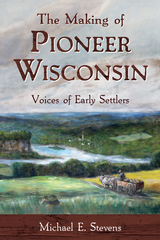
The Making of Pioneer Wisconsin provides a unique and intimate glimpse into the lives of these early settlers, as they describe what it felt like to be a teenager in a wagon heading west or an isolated young wife living far from her friends and family. Woven together with context provided by historian Michael E. Stevens, these first-person accounts form a fascinating narrative that deepens our ability to understand and empathize with Wisconsin’s early pioneers.
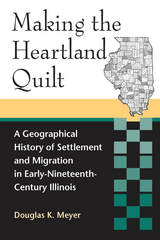
In Making the Heartland Quilt, Douglas K. Meyer reconstructs the settlement patterns of thirty-three immigrant groups and confirms the emergence of discrete culture regions and regional way stations. Meyer argues that midcontinental Illinois symbolizes a historic test strip of the diverse population origins that unfolded during the Great Migration. Basing his research on the 1850 U.S. manuscript schedules, Meyer dissects the geographical configurations of twenty-three native and ten foreign-born adult male immigrant groups who peopled Illinois. His historical geographical approach leads to the comprehension of a new and clearer map of settlement and migration history in the state.
Meyer finds that both cohesive and mixed immigrant settlements were established. Balkan-like immigrant enclaves or islands were interwoven into evolving local, regional, and national settlement networks. The midcontinental location of Illinois, its water and land linkages, and its lengthy north-south axis enhanced cultural diversity. The barrier effect of Lake Michigan contributed to the convergence and mixing of immigrants. Thus, Meyer demonstrates, Illinois epitomizes midwestern dichotomies: northern versus southern; native-born versus foreign-born; rural versus urban; and agricultural versus manufacturing.
A compelling union of analysis and rich storytelling, Making the Immigrant Soldier traces the complexities of serving in the military in order to pursue the American dream.
A Choice Outstanding Academic Title for 2023
Large numbers of Latino migrants began to arrive in Grand Rapids, Michigan, in the 1950s. They joined a small but established Spanish-speaking community of people from Texas, Mexico, and Puerto Rico. Delia Fernández-Jones merges storytelling with historical analysis to recapture the placemaking practices that these Mexicans, Tejanos, and Puerto Ricans used to create a new home for themselves. Faced with entrenched white racism and hostility, Latinos of different backgrounds formed powerful relationships to better secure material needs like houses and jobs and to recreate community cultural practices. Their pan-Latino solidarity crossed ethnic and racial boundaries and shaped activist efforts that emphasized working within the system to advocate for social change. In time, this interethnic Latino alliance exploited cracks in both overt and structural racism and attracted white and Black partners to fight for equality in social welfare programs, policing, and education.
Groundbreaking and revelatory, Making the MexiRican City details how disparate Latino communities came together to respond to social, racial, and economic challenges.
Maltese in Michigan is an enlivening volume depicting the struggles and accomplishments of a singular culture, an immigrant narrative at once recognizable and enigmatic. Without realizing it, most Americans are probably familiar with the Maltese people through the cross displayed by firefighters, which bears a strong similarity in design and meaning to the one used by the Knights of Malta. The noble qualities embodied by the Maltese Cross are reflected in the pride and accomplishments of Maltese immigrants in Michigan, a small but vibrant ethnic group. Rooted in the post–World War II experiences of the 20th century, the Maltese established themselves in the city of Detroit, and thrived due to a strong work ethic and Catholic faith, while maintaining a strong central identity. This volume is a tribute to the Maltese of Michigan and all who have begun anew in an unfamiliar land and culture.

At the border where Brazil, Paraguay, and Argentina meet under the scrutiny of the US and Mercosur (the large South American trade bloc), Arabs have long fulfilled what author John Tofik Karam calls a "manifold destiny." Karam casts Lebanese, Palestinians, and Syrians at this American border as circumstantial protagonists of a hemispheric saga.
For the more than six decades since they started settling at the trinational border between Brazil, Paraguay, and Argentina, Arabs have animated the hemisphere. Their transnational economic and social projects reveal a heretofore unacknowledged venue of exceptional rule in which the community accommodates and abides multiple states' varied suspensions of norms and laws. Arabs set up businesses and community centers at the border under authoritarian military governments between the 1950s and 1980s; thereafter, when denied full democratic enfranchisement, they instead underwent increasing surveillance from the 1990s to today. Karam reveals an unfinished history of exceptional rule that Arabs accommodate from an authoritarian past to a counterterrorist present.
Karam's riveting account draws on anthropological and historical research from each side of this trinational South American border, as well as from the US—where government bureaucrats still suspect Arabs at the border of would-be-terrorist subversion. Offering a fresh understanding of the hemisphere, Manifold Destiny brings the transnational turn of Middle Eastern studies to bear upon the fields of American studies, Brazilian studies, and Latin American studies.
This memoir is an act of map making, of plotting out overlapping territories—topographical, temporal, and psychological. Centered on family life in a Massachusetts town from the 1920s to the 1960s, the author's investigation extends outward to include the Boston area from colonial times to the recent past, encounters with Boston's Museum of Fine Arts and with Harvard College, the American Civil War, and Ireland and Germany in the nineteenth century.
Charles Fanning re-creates the landscape of childhood and adolescence in a place and time both ordinary and rich with possibility. An expert on Irish immigration, he was born and raised in Norwood, Massachusetts, twelve miles outside of Boston, where Yankee and Irish cultures bumped against each other. The narrative traces his personal growth, shaped by family, school, baseball, radio drama, and art. He was the first in his family to attend college, and the book ends with his undergraduate experience at Harvard, class of 1964.
Along with this coming-of-age story, Mapping Norwood features forays back in time, including chapters on each of Fanning's parents and historical excavations and meditations on three ancestors. Guided by his own experience as a scholar, the pressure of these chapters is epistemological—the thrill of the hunt toward knowing. Fanning's great-grandfather, John Fanning, disappeared from the family in the late 1880s, and a chapter chronicles the discovery of “Walking John's” fifty years of hidden later life in East St. Louis, Illinois, where he died alone in 1946. Fanning's great-great-grandfather, Winslow Radcliffe, was a veteran of the 35th Massachusetts Infantry in the Civil War, and the author traces this regiment through the horrors of Antietam and Fredericksburg, by means of diaries and letters by four men from Winslow's company. The evidence gleaned helps explain Winslow's suicide after the war. An Irish immigrant ancestor, Phillip Fanning, came to Boston from County Monaghan just after the Great Famine of the late 1840s. Relying on historical research, Fanning imagines vividly the lives led by Phillip's family and thousands like them in the wake of Ireland's nineteenth-century catastrophe.
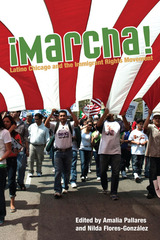
Marcha is a multidisciplinary survey of the individuals, organizations, and institutions that have given shape and power to the contemporary immigrant rights movement in Chicago. A city with longstanding historic ties to immigrant activism, Chicago has been the scene of a precedent-setting immigrant rights mobilization in 2006 and subsequent mobilizations in 2007 and 2008.
Positing Chicago as a microcosm of the immigrant rights movement on national level, these essays plumb an extraordinarily rich set of data regarding recent immigrant rights activities, defining the cause as not just a local quest for citizenship rights, but a panethnic, transnational movement. The result is a timely volume likely to provoke debate and advance the national conversation about immigration in innovative ways.
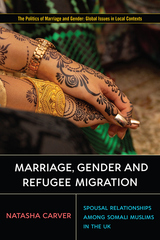
This ethical and poetic ethnography analyses the upheavals to gender roles and marital relationships brought about by Somali refugee migration to the UK. Unmoored from the socio-cultural norms that made them men and women, being a refugee is described as making "everything" feel "different, mixed up, upside down." Marriage, Gender and Refugee Migration details how Somali gendered identities are contested, negotiated, and (re)produced within a framework of religious and politico-national discourses, finding that the most significant catalysts for challenging and changing harmful gender practices are a combination of the welfare system and Islamic praxis. Described as “an important and urgent monograph," this book will be a key text relevant to scholars of migration, transnational families, personal life, and gender. Written in a beautiful and accessible style, the book voices the participants with respect and compassion, and is also recommended for scholars of qualitative social research methods.
Vasquez-Tokos finds that their experiences in childhood, adolescence, and young adulthood shape their perceptions of race, which in turn influence their romantic expectations. Most Latinos marry other Latinos, but those who intermarry tend to marry whites. She finds that some Latina women who had domineering fathers assumed that most Latino men shared this trait and gravitated toward white men who differed from their fathers. Other Latina respondents who married white men fused ideas of race and class and perceived whites as higher status and considered themselves to be “marrying up.” Latinos who married non-Latino minorities—African Americans, Asian Americans, and Native Americans—often sought out non-white partners because they shared similar experiences of racial marginalization. Latinos who married Latinos of a different national origin expressed a desire for shared cultural commonalities with their partners, but—like those who married whites—often associated their own national-origin groups with oppressive gender roles.
Vasquez-Tokos also investigates how racial and cultural identities are maintained or altered for the respondents’ children. Within Latino-white marriages, biculturalism—in contrast with Latinos adopting a white “American” identity—is likely to emerge. For instance, white women who married Latino men often embraced aspects of Latino culture and passed it along to their children. Yet, for these children, upholding Latino cultural ties depended on their proximity to other Latinos, particularly extended family members. Both location and family relationships shape how parents and children from interracial families understand themselves culturally.
As interracial marriages become more common, Marriage Vows and Racial Choices shows how race, gender, and class influence our marital choices and personal lives.
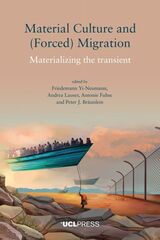
Material Culture and (Forced) Migration argues that materiality is a fundamental dimension of migration. People take things with them, or they lose, find, and engage things along the way. Movements themselves are framed by objects such as borders, passports, tents, camp infrastructures, boats, and mobile phones. This volume brings together chapters on a broad range of movements—from forced migration and displacement to retirement migration. What ties the chapters together is their perspective of material culture.
Centering on four interconnected themes—temporality and materiality, methods of object-based migration research, the affective capacities of objects, and the engagement of things in place-making practices—the volume provides a material culture perspective for migration scholars around the globe, from a wide range of disciplines. The chapters’ focus on everyday objects and practices will appeal to all those interested in the tangible experiences of migration.
A searing critique of the “freedom” that America offers to the victims of its imperialist machinations of war and occupation
Meaningless Citizenship traces the costs of America’s long-term military involvement around the world by following the forced displacement of Iraqi families, unveiling how Iraqis are doubly displaced: first by the machinery of American imperialism in their native countries and then through a more pernicious war occurring on U.S. soil—the dismantling of the welfare state.
Revealing the everyday struggles and barriers that texture the lives of Iraqi families recently resettled to the United States, Sally Wesley Bonet draws from four years of deep involvement in the refugee community of Philadelphia. An education scholar, Bonet’s analysis moves beyond the prevalent tendency to collapse schooling into education. Focusing beyond the public school to other critical institutions, such as public assistance, resettlement programs, and healthcare, she shows how encounters with institutions of the state are an inherently educative process for both refugee youths and adults, teaching about the types of citizenship they are expected to enact and embody while simultaneously shaping them into laboring subjects in service of capitalism.
An intimate, in-depth ethnography, Meaningless Citizenship exposes how the veneer of American values—freedom, democracy, human rights—exported to countries like Iraq, disintegrates to uncover what is really beneath: a nation-state that prioritizes the needs of capitalism above the survival and wellbeing of its citizens.
To better understand these experiences, Schmalzbauer draws on interviews with 60 low-income Latino youth who graduated or were set to graduate from Amherst College, one of the most selective private colleges in the United States. The vast majority of these students were the first in their immigrant families to go to college in the U.S. She finds that while most of the students believed attending Amherst provided them with previously unimaginable opportunities, adjusting to life on campus came with significant challenges. Many of the students Schmalzbauer spoke with had difficulties adapting to the cultural norms at Amherst as well as with relating to their non-Latino, non-low-income peers. The challenges these students faced were not limited to life on campus. As they attempted to adapt to Amherst, many felt distanced from the family and friends they left behind who could not understand the new challenges they faced.
The students credit their elite education for access to extraordinary educational and employment opportunities. However, their experiences while in college and afterward reveal that the relationship between educational and social mobility is much more complicated and less secure than popular conversations about the “American Dream” suggest. Many students found that their educational attainment was not enough to erase the core challenges of growing up in a marginalized immigrant family: many were still poor, faced racism, and those who were undocumented or had undocumented family members still feared deportation.
Schmalzbeauer suggests ways elite colleges can better support low-income Latino students and lower the emotional price of educational mobility, including the creation of immigration offices on campus to provide programming and support for undocumented students and their families. She recommends educating staff to better understand the centrality of family for these students and the challenges they face, as well as educating more privileged students about inequality and the life experiences of their marginalized peers.
Meanings of Mobility provides compelling insights into the difficulties faced by low-income Latinos pursuing educational and social mobility in America’s elite institutions.
The Mexican Border Cities draws on extensive field research to examine eighteen settlements along the 2,000-mile border, ranging from towns of less than 10,000 people to dynamic metropolises of nearly a million. The authors chronicle the cities' growth and compare their urban structure, analyzing them in terms of tourist districts, commercial landscapes, residential areas, and industrial and transportation quarters.
Arreola and Curtis contend that, despite their proximity to the United States, the border cities are fundamentally Mexican places, as distinguished by their cultural landscapes, including town plan, land-use pattern, and building fabric. Their study, richly illustrated with over 75 maps and photographs, offers a provocative and insightful interpretation of the geographic anatomy and personality of these fascinating—and rapidly changing—communities.
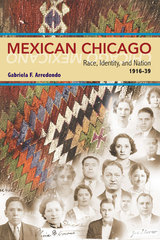
Mexican Chicago builds on previous studies of Mexicans in the United States while challenging static definitions of “American” and underlying assumptions of assimilation. Gabriela F. Arredondo contends that because of the revolutionary context from which they came, Mexicans in Chicago between 1916 and 1939 were not just another ethnic group working to be assimilated into a city that has a long history of incorporating newcomers. Suggesting a new understanding of identity formation, she argues that Mexicans wielded tools of identification forged in revolutionary Mexico to collectively battle the prejudices of ethnic groups that included Poles, Italians, and the Irish, as well as African Americans. By turning inward, however, Mexicans also highlighted tremendous differences among themselves, such as gender and class. In discussing this distinctive process of becoming “Mexican” in Chicago during the early twentieth century, Arredondo not only explores how that identity was constructed but also provides telling insight into the repercussions of that identity formation process.
During the same era, capitalist modernization in the United States was creating a strong demand for low-paid, unskilled labor, especially for agricultural and railroad work. Mexico's newly created class of migrant workers rushed across the border to fill this demand, setting in motion a social, economic, and political phenomenon that Lawrence Cardoso analyzed here in detail. What set this study apart, however, is the author's focus on the ' Human element," as revealed through the Mexican workers' hopes, fears, and reactions to events of their time.
Borderlands migration has been the subject of considerable study, but the authorship has usually reflected a north-of-the-border perspective only. Gathering a transnational group of prominent researchers, including leading Mexican scholars whose work is not readily available in the United States and academics from US universities, Mexican Migration to the United States brings together an array of often-overlooked viewpoints, reflecting the interconnectedness of immigration policy.
This collection’s research, principally empirical, reveals significant aspects of labor markets, family life, and educational processes. Presenting recent data and accessible explanations of complex histories, the essays capture the evolving legal frameworks and economic implications of Mexico-US migrations at the national and municipal levels, as well as the experiences of receiving communities in the United States. The volume includes illuminating reports on populations ranging from undocumented young adults to elite Mexican women immigrants, health-care rights, Mexico’s incorporation of return migration, the impact of Deferred Action for Childhood Arrivals on higher education, and the experiences of young children returning to Mexican schools after living in the United States. Reflecting a multidisciplinary approach, the list of contributors includes anthropologists, demographers, economists, educators, policy analysts, and sociologists.
Underscoring the fact that Mexican migration to the United States is unique and complex, this timely work exemplifies the cross-border collaboration crucial to the development of immigration policies that serve people in both countries.
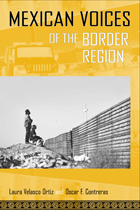
Every day, 40,000 commuters cross the U.S. Mexico border at Tijuana San Diego to go to work. Untold numbers cross illegally. Since NAFTA was signed into law, the border has become a greater obstacle for people moving between countries. Transnational powers have exerted greater control over the flow of goods, services, information, and people.
Mexican Voices of the Border Region examines the flow of people, commercial traffic, and the development of relationships across this border. Through first-person narratives, Laura Velasco Ortiz and Oscar F. Contreras show that since NAFTA, Tijuana has become a dynamic and significant place for both nations in terms of jobs and residents. The authors emphasize that the border itself has different meanings whether one crosses it frequently or not at all. The interviews probe into matters of race, class, gender, ethnicity, place, violence, and political economy as well as the individual's sense of agency.
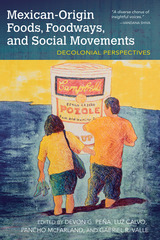
This collection of new essays offers groundbreaking perspectives on the ways that food and foodways serve as an element of decolonization in Mexican-origin communities.
The writers here take us from multigenerational acequia farmers, who trace their ancestry to Indigenous families in place well before the Oñate Entrada of 1598, to tomorrow’s transborder travelers who will be negotiating entry into the United States. Throughout, we witness the shifting mosaic of Mexican-origin foods and foodways in the fields, gardens, and kitchen tables from Chiapas to Alaska.
Global food systems are also considered from a critical agroecological perspective, including the ways colonialism affects native biocultural diversity, ecosystem resilience, and equality across species, human groups, and generations.
Mexican-Origin Foods, Foodways, and Social Movements is a major contribution to the understanding of the ways that Mexican-origin peoples have resisted and transformed food systems. It will animate scholarship on global food studies for years to come.
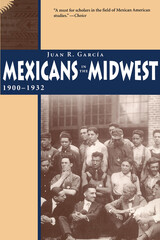
Here is a book that persuasively challenges many prevailing assumptions about Mexican people and the communities they established in the Midwest. The author notes the commonalities and differences between Mexicans in that region and their compadres who settled elsewhere. He further demonstrates that although Mexicans in the Midwest maintained a strong sense of cultural identity, they were quick to adopt the consumer culture and other elements of U.S. life that met their needs.
Focusing on a people, place, and time rarely covered before now, this wide-ranging work will be welcomed by scholars and students of history, sociology, and Chicano studies. General readers interested in ethnic issues and the multicultural fabric of American society will find here a window to the past as well as new perspectives for understanding the present and the future.
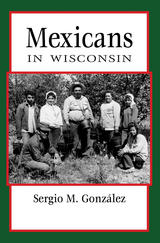
From agricultural and factory workers to renowned writers and musicians, the Mexican immigrants who have made their homes in Wisconsin over the past century have become a significant and diverse part of this state’s cultural and economic history. Coming from a variety of educational and professional backgrounds, the earliest Mexican immigrants traveled north in search of better economic opportunities and relief from the violence and economic turmoil of the Mexican Revolution. They found work in tanneries and foundries, and on beet farms where they replaced earlier European immigrant workers who had moved on to family farms. As Mexican immigration has grown to the present day, these families have become integral members of Wisconsin communities, building businesses, support systems, and religious institutions. But their experience has also been riddled with challenges, as they have fought for adequate working conditions, access to education, and acceptance amid widespread prejudice. In this concise history, learn the fascinating stories of this vibrant and resilient immigrant population: from the Tejano migrant workers who traveled north seasonally to work in the state’s cucumber fields, to the determined labor movement led by Jesus Salas, to the young activists of the Chicano Movement, and beyond.

In a time of ever-increasing migration of capital and human beings, this book turns on its head the usual perspective of U.S. economic and cultural dominance in order to deepen understanding of the bi-national relationship.
The Guidelines address five of the most difficult issues of refugee status: what is the meaning of a “well-founded fear”; when may refugee status be denied on grounds of an “internal protection alternative”; how is the causal connection to a Convention ground to be assessed; when is a risk fairly said to be for reasons of “political opinion”; and under what circumstances are persons believed to have violated rules of international criminal law to be excluded from refugee status? Additionally, this volume also addresses three critical aspects of refugee rights – when may a refugee be required to seek protection in a country not of his or her choosing; to what extent is a refugee entitled to undertake employment or other economic activity; and what is the scope of a refugee’s right to freedom of movement, both between states and within the asylum country?
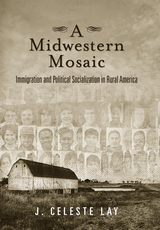
Drawn by low-skilled work and the safety and security of rural life, increasing numbers of families from Latin America and Southeast Asia have migrated to the American heartland. In the path-breaking book A Midwestern Mosaic, J. Celeste Lay examines the effects of political socialization on native white youth growing up in small towns.
Lay studies five Iowa towns to investigate how the political attitudes and inclinations of native adolescents change as a result of rapid ethnic diversification. Using surveys and interviews, she discovers that native adolescents adapt very well to foreign-born citizens, and that over time, gaps diminish between diverse populations and youth in all-white/Anglo towns in regard to tolerance, political knowledge, efficacy, and school participation.
A Midwestern Mosaic looks at the next generation to show how exposure to ethnic and cultural diversity during formative years can shape political behavior and will influence politics in the future.
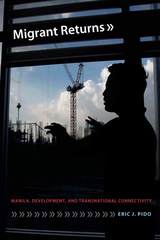
The digital storytelling project Humanizing Deportation invites migrants to present their own stories in the world’s largest and most diverse archive of its kind. Since 2017, more than 300 community storytellers have created their own audiovisual testimonial narratives, sharing their personal experiences of migration and repatriation. With Migrant Feelings, Migrant Knowledge, the project’s coordinator, Robert Irwin, and other team members introduce the project’s innovative participatory methodology, drawing out key issues regarding the human consequences of contemporary migration control regimes, as well as insights from migrants whose world-making endeavors may challenge what we think we know about migration.
In recent decades, migrants in North America have been treated with unprecedented harshness. Migrant Feelings, Migrant Knowledge outlines this recent history, revealing stories both of grave injustice and of seemingly unsurmountable obstacles overcome. As Irwin writes, “The greatest source of expertise on the human consequences of contemporary migration control are the migrants who have experienced them,” and their voices in this searing collection jump off the page and into our hearts and minds.

Elizabeth Zanoni provides a cutting-edge comparative look at Italian people and products on the move between 1880 and 1940. Concentrating on foodstuffs—a trade dominated by Italian entrepreneurs in New York and Buenos Aires—Zanoni reveals how consumption of these increasingly global imports affected consumer habits and identities and sparked changing and competing connections between gender, nationality, and ethnicity. Women in particular—by tradition tasked with buying and preparing food—had complex interactions that influenced both global trade and their community economies. Zanoni conveys the complicated and often fraught values and meanings that surrounded food, meals, and shopping.
A groundbreaking interdisciplinary study, Migrant Marketplaces offers a new perspective on the linkages between migration and trade that helped define globalization in the late nineteenth and early twentieth centuries.

Contributors. Jaime R. Aguila. Rodolfo Casillas-R., Nora Faires, Maria Cristina Garcia, Delia Gonzáles de Reufels, Brian Gratton, Susan E. Gray, James N. Gregory, John Mason Hart, Dirk Hoerder, Dan Killoren, Sarah-Jane (Saje) Mathieu, Catherine O’Donnell, Kerry Preibisch, Lara Putnam, Bruno Ramirez, Angelika Sauer, Melanie Shell-Weiss, Yukari Takai, Omar S. Valerio-Jiménez, Carlos G. Vélez-Ibáñez
Connects global migration with urban marginalization, exploring how “race” maps onto place across the globe, state, and street
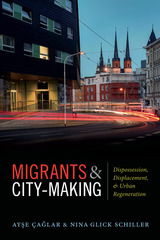
In this richly observed account of migrant shopkeepers in five cities in the United Kingdom, Suzanne Hall examines the brutal contradictions of sovereignty and capitalism in the formation of street livelihoods in the urban margins. Hall locates The Migrant’s Paradox on streets in the far-flung parts of de-industrialized peripheries, where jobs are hard to come by and the impacts of historic state underinvestment are deeply felt.
Drawing on hundreds of in-person interviews on streets in Birmingham, Bristol, Leicester, London, and Manchester, Hall brings together histories of colonization with current forms of coloniality. Her six-year project spans the combined impacts of the 2008 financial crisis, austerity governance, punitive immigration laws and the Brexit Referendum, and processes of state-sanctioned regeneration. She incorporates the spaces of shops, conference halls, and planning offices to capture how official border talk overlaps with everyday formations of work and belonging on the street.
Original and ambitious, Hall’s work complicates understandings of migrants, demonstrating how migrant journeys and claims to space illuminate the relations between global displacement and urban emplacement. In articulating “a citizenship of the edge” as an adaptive and audacious mode of belonging, she shows how sovereignty and inequality are maintained and refuted.

Borders not only demarcate nations and territories but also transform people into migrants. Together with law and law enforcement, borders create residents and foreigners. The law ascertains who crosses borders and who does not, and determines who remains foreign despite being within national borders. Migrating Borders and Citizenship in Law argues that law has multiple roles and mechanisms for breathing life into borders, operating at different locales and scales (from worldwide to the nation, and from the family to the workplace), and through different practices, including preventing entry and withholding access to resources.
This book examines case law, legislation, and press accounts relating to several key events in recent times that have changed the legal landscape on migration control, such as the Immigration and Nationality Acts in the United Kingdom, the end of the empire, the arrival of Empire Windrush, Brexit, the COVID-19 pandemic, and the case of Shamima Begum. Focusing on race and ethnicity, gender, and class, as well as crime and control, Migrating Borders and Citizenship in Law contextualizes the legal debates around these historical and political developments, the question of who belongs, the consequences of behavior for immigration status and citizenship, and the links with conduct and national security.

An imaginative exploration of queer and trans Latinx migrant survival, examining literature, film, and performance to challenge normative constructions of citizenship and belonging.
Queer and trans migrants in the US face persistent fictions depicting them as powerless. Through the lens of “impossible possibilities,” what Ruben Zecena defines as a space between the possible and impossible, the book presents a complex account of undocumented migrants that goes beyond good and bad dichotomies expressed by the state.
Migrating like a Queen highlights the joy, fabulosity, glamour, and complex desires of queer and trans Latinx migrants in the context of dehumanizing legal and representational structures. Analyzing a rich archive of twenty-first century media and literature, Ruben Zecena reveals how individuals imagine a reality that pushes against the constraints of narrative tropes created by the nation-state. The book foregrounds work by and about queer and trans Latinx migrants, including Alexandra DeRuiz, tatiana de la tierra, Sonia Guiñansaca, and Julián Delgado Lopera, illustrating the defining of a movement. Engaging multiple genres and forms, from testimonio to the bildungsroman, this book is a testament to the ever-shifting cultural strategies of survival that seize power from systems of subjection.
International migrants compose more than three percent of the world’s population, and internal migrants—those migrating within countries—are more than triple that number. Population migration has long been, and remains today, one of the central demographic shifts shaping the world around us. The world’s history—and its health—is shaped and colored by stories of migration patterns, the policies and political events that drive these movements, and narratives of individual migrants.
Migration and Health offers the most expansive framework to date for understanding and reckoning with human migration’s implications for public health and its determinants. It interrogates this complex relationship by considering not only the welfare of migrants, but also that of the source, destination, and ensuing-generation populations. The result is an elevated, interdisciplinary resource for understanding what is known—and the considerable territory of what is not known—at an intersection that promises to grow in importance and influence as the century unfolds.
Death threatens migrants physically during perilous border crossings between Central and North America, but many also experience legal, social, and economic mortality. Rooted in histories of colonialism and conquest, exclusionary policies and practices deliberately take aim at racialized, dispossessed people in transit. Once in the new land, migrants endure a web of systems across every facet of their world—work, home, healthcare, culture, justice—that strips them of their personhood, denies them resources, and creates additional obstacles that deprive them of their ability to live fully.
As laws and policies create ripe conditions for the further extraction of money, resources, and labor power from the dispossessed, the contributors to this vibrant anthology, Migration and Mortality, examine restrictive immigration policies and the broader capitalist systems of exploitation and inequality while highlighting the power of migrants’ collective resistance and resilience.
The case studies in this timely collection explore border deaths, detention economies, asylum seeking, as well as the public health and mental health of migrants. Ultimately, these examples of oppression and survival contribute to understanding broader movements for life and justice in the Americas.

Constant migration is a worldwide phenomenon that creates sharp divisions between those who accept the need for migrants and welcome the contributions they make and those who oppose them on xenophobic grounds. Guy Arnold provides a comprehensive survey of the consequences of migration.
Arnold studies both the massive internal migrations in China and India that drive economic development and the influx of cheap labour into the advanced economies of the USA and EU. He shows that migrants are essential to advanced countries, filling skills gaps and bolstering ageing and static populations. He argues that the constant flow of people in all directions should be welcomed as a positive assault upon outdated, narrow nationalism.
Packed with statistics that support the argument that migration is a force for positive change, Arnold's analysis will be an excellent resource for journalists, policy makers and students of sociology, human geography and anthropology.
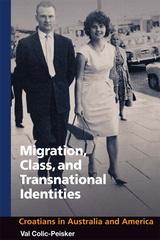
Val Colic-Peisker harnesses concepts and theories from sociology, anthropology, and political science to compare the vastly different experiences of two Croatian immigrant cohorts in the city of Perth, Western Australia. The populations explored represent an earlier group of working-class migrants arriving from communist Yugoslavia from the 1950s to 1970s and a later group of urban professionals arriving in the 1980s and 1990s as 'independent' or skills-based migrants. This latter group integrated into professional ranks but also used their Australian experience as a stepping stone in becoming part of a highly mobile global professional middle class.
Employing a refined theoretical analysis, this rich ethnography challenges the domination of the ethnic perspective in migration studies and the idea of ethnic community itself. It emphasizes the importance of class, focusing on the intersection of class, ethnicity, and gender in the process of migration, migrant incorporation, and transnationalism. In theorizing the connection of the two migrant cohorts with their native Croatia, the study introduces concepts of "ethnic" and "cosmopolitan" transnationalism as two distinctive experiences mediated by class.
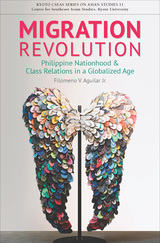
The global nomadism of Filipino workers brought about some fundamental reorientations. It revolutionized Philippine society, reignited a sense of nationhood, imposed new demands on the state, reconfigured the class structure, and transnationalized class and other social relations, even as it deterritorialized the state and impacted the destinations of migrant workers.
Philippine foreign policy now takes surprising turns in consideration of migrant workers and Filipinos living abroad. Many tertiary education institutions aim deliberately at the overseas employability of local graduates. And the “Fil-foreign” offspring of unions with partners from other nationalities add a new inflection to Filipino identity.
Ranging from oral history projects to the asylum process to calls for decolonial justice, the contributors’ analyses illuminate how migrants’ and refugees’ personal narratives influence both perceptions and policies. Their merger of perspectives provides a nuanced understanding of migration and emphasizes the importance of how storytelling can foster empathy, challenge stereotypes, and drive social change. At the same time, the essays center migrants’ and refugees’ voices within public debates and in work done to humanize the reality they face.
Original and multifaceted, Migration Stories provides a vital addition to how we study and frame immigration.

A remarkable young woman flees India to chase the dream of self-reinvention in America
The orphaned girls of St. Ursula’s convent are destined to be nuns or servants, but seventeen-year-old Savi dreams of escape. She is chosen to work as a governess for the wealthy Nandiyar family at their country estate in Tamil Nadu, where she falls for a lively and carefree apprentice sculptor. After the violent and horrific events of a single night, they are forced to flee, leaving their homeland forever in the rearview.
Decades later, Savi has become known to all as “Missy” and runs a successful driving school in Chicago. She is a pillar of the South Asian community and the mother of two brilliant, stubborn young women, Mansi and Shilpa. But when Varun, a charming doctor with mysterious connections to her past, enters their lives, a chain of events is set off that puts Missy’s carefully constructed world in jeopardy. Can Missy outrun her secrets? And, if she is forced to face them, what will become of those she loves?
Using a bold blend of personal narrative and autoethnography, Mai provides intimate portrayals of sex workers from sites including the Balkans, the Maghreb, and West Africa who decided to sell sex as the means to achieve a better life. Mai explores the contrast between how migrants understand themselves and their work and how humanitarian and governmental agencies conceal their stories, often unwittingly, by addressing them all as helpless victims. The culmination of two decades of research, Mobile Orientations sheds new light on the desires and ambitions of migrant sex workers across the world.
During the 1630s, more than 14,000 people sailed from Britain bound for New England, constituting what has come to be known as the Great Migration. This book offers the most extensive study of these emigrants ever undertaken. Focusing on 2,000 individuals who moved from the five counties of eastern England, it provides historians with important new findings on mobility, family life, kinship networks, and community cohesion.
Roger Thompson reveals the personal experiences and ancestral histories of the emigrants. He follows them across the Atlantic and investigates their lives and achievements in the New World. Distinguising between such groups as gentry, entrepreneurs, artisans, farmers, and servants, he explores whether the migration tended to be a solitary uprooting from a stable and predictable world of familiar neighborhoods or simply a longer move among many relocations.
Thompson also sheds light on the issue of motivation: Were these settlers pulled by the hope of eventual enrichment or of founding a purified society, or were they pushed by intolerance and persecution at home? Did they see New England as a haven of escape or an opportunity to exploit? Did New Englanders seek to replicate “English ways,” preserving traditional culture and society, or did they embrace change and innovation? Mobility and Migration provides a wealth of new evidence for historians of both early modern England and colonial America.
During 1995 and 1996, President Bill Clinton signed into law three bills that altered the rights and responsibilities of immigrants: the Antiterrorism and Effective Death Penalty Act, the Personal Responsibility Act, and the Illegal Immigration Reform and Immigrant Responsibility Act. Model Immigrants and Undesirable Aliens examines the changing debates around immigration that preceded and followed the passage of landmark legislation by the U.S. Congress in the mid-1990s, arguing that it represented a new, neoliberal way of thinking and talking about immigration.
Christina Gerken explores the content and the social implications of the deliberations that surrounded the development and passage of immigration reform, analyzing a wide array of writings from congressional debates and committee reports to articles and human-interest stories in mainstream newspapers. The process, she shows, disguised its underlying racism by creating discursive strategies that shaped and upheld an image of “desirable” immigrants—those who could demonstrate “personal responsibility” and an ability to contribute to the U.S. economy. Gerken finds that politicians linked immigration to complex issues: poverty, welfare reform, so-called family values, measures designed to combat terrorism, and the spiraling costs of social welfare programs.
Although immigrants were often at the center of congressional debates, politicians constructed an elaborate, abstract terminology that appeared to be unrelated to race or gender. Instead, politicians promoted neoliberal policies as the avenue to a postracist, postsexist world of opportunity for every rational consumer with an entrepreneurial spirit. Still, Gerken concludes that the passage of pathbreaking legislation was characterized by a useful tension between neoliberal assumptions and hidden anxieties about race, class, gender, and sexuality.
A comparative study of contemporary Israeli and Palestinian diasporas.
Exilic and diasporic experience have become ubiquitous in recent decades. Jews, lacking a homeland, spread to various parts of the world, making the Jewish diaspora paradigmatic. But after the establishment of Israel in 1948, a different kind of diaspora emerged, as more than a tenth of Israeli citizens have chosen to leave their newly established state and resettle. Meanwhile, about half of all Palestinians, including Palestinian citizens of Israel, now reside in exile, predominantly as a result of the ongoing Palestinian-Israeli conflict.
Recognizing that Israeli-Jewish and Palestinian-Arab societies coexist and are engaged in constant relations, Nahum Karlinsky has assembled an impressive array of contributors to explore these diasporas alongside one another and in dialogue with other diasporic communities. The collected essays cover such topics as Palestinian exiles and diasporas, the demographics of today’s Israeli diaspora, immigrant enterprises, transnationalism and development, the unique place of Israeli Jews in the United States, the literature of Palestinian transnationals, and the emergence of Berlin as a queer Israeli-Jewish immigrant enclave.The Modern Israeli and Palestinian Diasporas challenges and reimagines the very notion of a homeland.
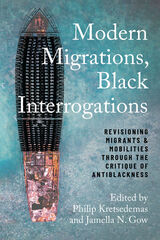
Focusing on antiblackness in immigration and examining restrictions on freedom of movement and on settling alike, chapters address how Black im/mobility operates and how it can be distinguished from that of the migrant and the colonial settler, as well as from the transgressive mobilities of Indigenous populations. Looking at blackness, borders and border practices, and displacement, Modern Migrations, Black Interrogations investigates racialized boundaries that determine immigration policy, citizenship, legality, and inclusion. Additional chapters analyze communities, such as the Haitian diaspora in Miami, antiblackness in the context of Australian migration, and explore literary representations of justice, slavery and Black feminist consciousness.
Modern Migrations, Black Interrogations uses (anti)blackness to rethink the way we understand borders, immigrant identity, barriers to integration, and the dynamics of migrant exclusion, while also providing an understanding of “otherness” for Black populations across nationalities.
Contributors: Maya Hislop, P. Khalil Saucier, Hyacinth Udah, Paula von Gleich, Tryon P. Woods, and the editors
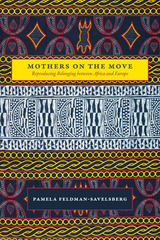
Feldman-Savelsberg introduces readers to several Cameroonian mothers, each with her own unique history, concerns, and voice. Through scenes of their lives—at a hometown association’s year-end party, a celebration for a new baby, a visit to the Foreigners’ Office, and many others—as well as the stories they tell one another, Feldman-Savelsberg enlivens our thinking about migrants’ lives and the networks and repertoires that they draw on to find stability and, ultimately, belonging. Placing women’s individual voices within international social contexts, this book unveils new, intimate links between the geographical and the generational as they intersect in the dreams, frustrations, uncertainties, and resolve of strong women holding families together across continents.
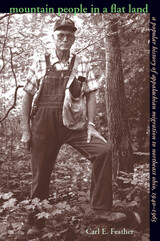
But the cost of a bus ticket was more than a week's wages in a lumber camp, and the mountaineer paid dearly in loss of kin, culture, homeplace, and freedom.
Numerous scholarly works have addressed this migration that brought more than one million mountaineers to Ohio alone. But Mountain People in a Flat Land is the first popular history of Appalachian migration to one community — Ashtabula County, an industrial center in the fabled “best location in the nation.”
These migrants share their stories of life in Appalachia before coming north. There are tales of making moonshine, colorful family members, home remedies harvested from the wild, and life in coal company towns and lumber camps.
The mountaineers explain why, despite the beauty of the mountains and the deep kinship roots, they had to leave Appalachia.
Stories of their hardships, cultural clashes, assimilation, and ultimate successes in the flatland provide a moving look at an often stereotyped people.
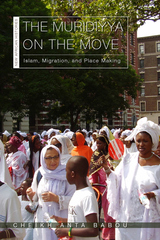
Highlights the role of transnational space making in the construction of diasporic Muridiyya identity.
The construction of collective identity among the Muridiyya abroad is a communal but contested endeavor. Differing conceptions of what should be the mission of Muridiyya institutions in the diaspora reveal disciples’ conflicting politics and challenge the notion of the order’s homogeneity. While some insist on the universal dimension of Ahmadu Bamba Mbakke’s calling and emphasize dawa (proselytizing), others prioritize preserving Muridiyya identity abroad by consolidating the linkages with the leadership in Senegal. Diasporic reimaginings of the Muridiyya abroad, in turn, inspire cultural reconfigurations at home.
Drawing from a wide array of oral and archival sources in multiple languages collected in five countries, The Muridiyya on the Move reconstructs over half a century of the order’s history, focusing on mobility and cultural transformations in urban settings. In this groundbreaking work, Babou highlights the importance of the dahira (urban prayer circle) as he charts the continuities and ruptures between Muridiyya migrations. Throughout, he delineates the economic, socio-political, and other forces that powered these population movements, including colonial rule, the economic crises of the postcolonial era, and natural disasters.
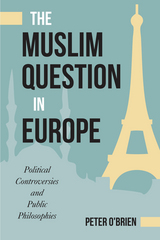
An estimated twenty million Muslims now reside in Europe, mostly as a result of large-scale postwar immigration. In The Muslim Question in Europe, Peter O’Brien challenges the popular notion that the hostilities concerning immigration—which continues to provoke debates about citizenship, headscarves, secularism, and terrorism—are a clash between “Islam and the West.” Rather, he explains, the vehement controversies surrounding European Muslims are better understood as persistent, unresolved intra-European tensions.
O’Brien contends that the best way to understand the politics of state accommodation of European Muslims is through the lens of three competing political ideologies: liberalism, nationalism, and postmodernism. These three broadly understood philosophical traditions represent the most influential normative forces in the politics of immigration in Europe today. He concludes that Muslim Europeans do not represent a monolithic anti-Western bloc within Europe. Although they vehemently disagree among themselves, it is along the same basic liberal, nationalist, and postmodern contours as non-Muslim Europeans.
READERS
Browse our collection.
PUBLISHERS
See BiblioVault's publisher services.
STUDENT SERVICES
Files for college accessibility offices.
RECENTLY PUBLISHED




UChicago Accessibility Resources
home | accessibility | search | about | contact us
BiblioVault ® 2001 - 2026
The University of Chicago Press