
 A SCHOLARLY BOOK REPOSITORY
123 start with N start with N
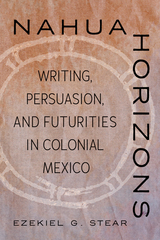
Nahua Horizons: Writing, Persuasion, and Futurities in Colonial Mexico investigates how Nahuas conceptualized their futures in the early colonial period. Scholar Ezekiel G. Stear delves deeply into canonical texts such as the Florentine Codex and the Crónica mexicayotl as well as understudied texts such as the Lienzo de Quauhquechollan, the Tira de Tepechpan, and the Anales de Juan Bautista. The study does more than describe how Nahuas conceived of their own futures: it also shows their specific plans for moving into the coming years.
The book examines how Nahua writers in Central Mexico and other Mesoamerican voices in colonial Spanish America played an active, decisive role in shaping culture, using writing to persuade their communities to mold their own destinies, even amid colonial upheaval. This work opens up new directions for research and teaching, shifting inquiry from how Nahuas preserved cultural continuity to how they envisioned their roles as pathfinders toward times to come.
Nahua Horizons challenges the notion that the Spanish erased Nahua culture. The book emphasizes the ways people kept sovereignty over the futures they envisioned for themselves and their communities. Stear’s bold new approach follows the paths that Nahuas forged ahead into unknown times.
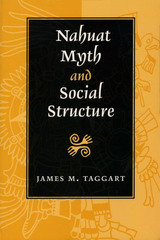
First published in 1983, Nahuat Myth and Social Structure brings together an important collection of modern-day Aztec Indian folktales and vividly demonstrates how these tales have been shaped by the social structure of the communities in which they are told.

Naked in the Woods chronicles Grundstein’s shift from reluctant hippie to committed utopian—sacrificing phones, electricity, and running water to live on 160 acres of remote forest with nothing but a drafty cabin and each other. Grundstein, (whose husband left, seduced by “freer love”) faced tough choices. Could she make it as a single woman in man’s country? Did she still want to? How committed was she to her new life? Although she reveled in the shared transcendence of communal life deep in the natural world, disillusionment slowly eroded the dream. Brotherhood frayed when food became scarce. Rifts formed over land ownership. Dogma and reality clashed.
Many people, baby boomers and millennials alike, have romantic notions about the 1960s and 70s. Grundstein’s vivid account offers an unflinching, authentic portrait of this iconic and often misreported time in American history. Accompanied by a collection of distinctive photographs she took at the time, Naked in the Woods draws readers into a period of convulsive social change and raises timeless questions: how far must we venture to find the meaning we seek, and is it ever far out enough to escape our ingrained human nature?
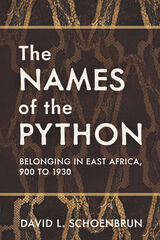
Grounded in Schoenbrun’s skillful mastery of historical linguistics and vernacular texts, The Names of the Python supplements and redirects current debates about ethnicity in ex-colonial Africa and beyond. This timely volume carefully distinguishes past from present and shows the many possibilities that still exist for the creative cultural imagination.
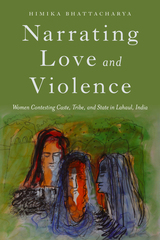
The women in this book tell their stories through love, articulated as rejection, redefinition and reproduction of notions of violence and solidarity. Himika Bhattacharya centers the women’s narratives as a site of knowledge—beyond love and beyond violence. This book shows how women on the margins of tribe and caste know both, love and violence, as agents wishing to re-shape discourses of caste, tribe and community.

Describing the hard working conditions on plantations and the harsh treatment of apprentices unjustly incarcerated, Williams argues that apprenticeship actually worsened the conditions of Jamaican ex-slaves: former owners, no longer legally permitted to directly punish their workers, used the Jamaican legal system as a punitive lever against them. Williams’s story documents the collaboration of local magistrates in this practice, wherein apprentices were routinely jailed and beaten for both real and imaginary infractions of the apprenticeship regulations.
In addition to the complete text of Williams’s original Narrative, this fully annotated edition includes nineteenth-century responses to the controversy from the British and Jamaican press, as well as extensive testimony from the Commission of Enquiry that heard evidence regarding the Narrative’s claims. These fascinating and revealing documents constitute the largest extant body of direct testimony by Caribbean slaves or apprentices.
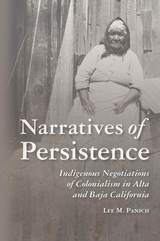
The Ohlone of the San Francisco Bay area and the Paipai of northern Baja California occupy opposite ends of the spectrum of Native Californian identities. Or so it would appear. While the Ohlone lack popular recognition and official acknowledgement from the United States government, the Paipai occupy a large reserve and celebrate their ongoing cultural traditions throughout Baja California and southern California. Yet the two groups share a similar colonial history: entanglements with early European explorers, labor and enculturation at Spanish missions, and sustained interactions with American and Mexican settler colonialism.
Based on fifteen years of archaeological and historical research in the two regions, Narratives of Persistence charts the remarkable persistence of the Ohlone and Paipai alongside a synthesis of Native Californian endurance over the past five centuries. As the case studies demonstrate, Ohlone and Paipai people made intelligent and culturally appropriate choices to cope with the impact of colonialism on their communities, even as they took different pathways to the present day.
Lee M. Panich illustrates how changes in Native identity and practice within these colonial contexts were made to best conduct the groups’ lives within shifting sets of colonial constraints. He draws connections between the events and processes of the deeper past and the way the Ohlone and Paipai today understand their own histories and identities, offering a model for how scholars of Indigenous histories may think about the connections between the past and the present.

Nation and Migration provides a way to understand recent migration events in Europe that have attracted the world's attention. The emergence of the nations in the West promised homogenization, but instead the imagined national communities have everywhere become places of heterogeneity, and modern nation states have been haunted by the specter of minorities. This study analyses experiences relating to migration in 23 European countries. It is based on data from the International Social Survey Programme, a global cross-national collaborative exercise, with surveys made in 1995, 2003, and 2013. In the authors' view, a critical test for Europe will be its ability to find adequate responses to the challenges of globalization.
The book provides a detailed overview of how citizens in Europe are coping with a xenophobia fueled by their own sense of insecurity. The authors reconstruct the competing sociological reactions to migration in the forms of integration, assimilation and segregation. Hungary receives special attention: the data show that people living there are far less closed and xenophobic than they might seem through the prism of a media-instigated moral panic.
Ratna also examines two key cultural objects - the popular films "Bend it Like Beckham" and “Dhan Dhana Dhan Goal” - to examine in detail the gendered representation of South Asian soccer players’ engagement in amateur and elite levels of the sport. She critiques studies of women’s football fandom and sport that fail to acknowledge social differences relating to race, class, age, disability, and sexuality. By linking the social forces (across time and space) that differentially affect their sporting choices and leisure lifestyles, Ratna portrays the women of the South Asian diaspora as active agents in the shaping of their life courses and as skilled navigators of the complexities affecting their own identities. Ultimately Ratna examines the intersections of class, caste, age, generation, gender, and sexuality, to provide a rich and critical exploration of British Asian women's sport and leisure choices, pleasures, and lived realities.
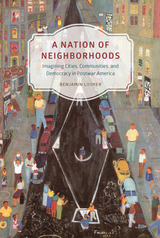
Looker investigates the cultural, social, and political complexities of the idea of “neighborhood” in postwar America and how Americans grappled with vast changes in their urban spaces from World War II to the Reagan era. In the face of urban decline, competing visions of the city neighborhood’s significance and purpose became proxies for broader debates over the meaning and limits of American democracy. By studying the way these contests unfolded across a startling variety of genres—Broadway shows, radio plays, urban ethnographies, real estate documents, and even children’s programming—Looker shows that the neighborhood ideal has functioned as a central symbolic site for advancing and debating theories about American national identity and democratic practice.

In the 1940s, British shipping companies began the large-scale recruitment of African seamen in Lagos. On colonial ships, Nigerian sailors performed menial tasks for low wages and endured discrimination as cheap labor, while countering hardships by nurturing social connections across the black diaspora. Poor employment conditions stirred these seamen to identify with the nationalist sentiment burgeoning in postwar Nigeria, while their travels broadened and invigorated their cultural identities.
Working for the Nigerian National Shipping Line, they encountered new forms of injustice and exploitation. When mismanagement, a lack of technical expertise, and pillaging by elites led to the NNSL’s collapse in the early 1990s, seamen found themselves without prospects. Their disillusionment became a broader critique of corruption in postcolonial Nigeria.
In Nation on Board: Becoming Nigerian at Sea, Lynn Schler traces the fate of these seamen in the transition from colonialism to independence. In so doing, she renews the case for labor history as a lens for understanding decolonization, and brings a vital transnational perspective to her subject. By placing the working-class experience at the fore, she complicates the dominant view of the decolonization process in Nigeria and elsewhere.

This is the epic story of how African-Americans, in the six decades following slavery, transformed themselves into a political people—an embryonic black nation. As Steven Hahn demonstrates, rural African-Americans were central political actors in the great events of disunion, emancipation, and nation-building. At the same time, Hahn asks us to think in more expansive ways about the nature and boundaries of politics and political practice.
Emphasizing the importance of kinship, labor, and networks of communication, A Nation under Our Feet explores the political relations and sensibilities that developed under slavery and shows how they set the stage for grassroots mobilization. Hahn introduces us to local leaders, and shows how political communities were built, defended, and rebuilt. He also identifies the quest for self-governance as an essential goal of black politics across the rural South, from contests for local power during Reconstruction, to emigrationism, biracial electoral alliances, social separatism, and, eventually, migration.
Hahn suggests that Garveyism and other popular forms of black nationalism absorbed and elaborated these earlier struggles, thus linking the first generation of migrants to the urban North with those who remained in the South. He offers a new framework—looking out from slavery—to understand twentieth-century forms of black political consciousness as well as emerging battles for civil rights. It is a powerful story, told here for the first time, and one that presents both an inspiring and a troubling perspective on American democracy.
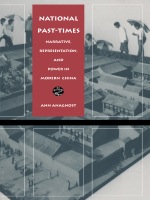
Using interviews and participant observation as well as close readings of official documents, propaganda materials, and popular media, Anagnost notes the discontinuities in the nation’s narrative—moments where this narrative has been radically reorganized at critical junctures in China’s modern history. Covering a broad range of issues relating to representation and power—issues that have presented themselves with particular clarity in the years since the violent crackdown on the student movement of 1989—National Past-Times critiques the ambiguous possibilities produced by the market, as well as new opportunities for "unfreedom" in the discipline of labor and the commodification of women. Anagnost begins with a retrospective reflection on the practice of "speaking bitterness" in socialist revolutionary practice. Subsequent essays discuss the culture debates of the 1980s, the discourse of social disorder, the issue of population control, the film The Story of Qiu Ju, and anomalies at the theme park "Splendid China."
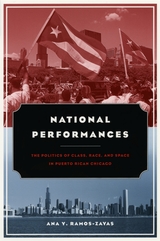
Drawing on extensive ethnographic research, Ramos-Zayas shows how the performance of Puerto Rican nationalism in Chicago serves as a critique of social inequality, colonialism, and imperialism, allowing barrio residents and others to challenge the notion that upward social mobility is equally available to all Americans—or all Puerto Ricans. Paradoxically, however, these activists' efforts also promote upward social mobility, overturning previous notions that resentment and marginalization are the main results of nationalist strategies.
Ramos-Zayas's groundbreaking work allows her here to offer one of the most original and complex analyses of contemporary nationalism and Latino identity in the United States.
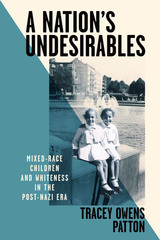
Patton takes up the twins’ story and their reckoning with their mixed-race, Black German identity to disrupt standard narratives around World War II, Black experiences in Germany, and race and adoption. Combining family interviews, historical artifacts, and autoethnographic reflection, Patton composes a new narrative of women and Black German children in the postwar era. In examining the systemic racism of Germany’s efforts to move children like Lore and Lilli out of the country—and the suppression of German women’s bodily autonomy—Patton amplifies the once unacknowledged identities of these Black German children to broaden our understanding of citizenship, racism, and sexism after World War II.

Smith draws on archival research, interviews, and her own participation in Native struggles and Christian Right conferences and events. She considers American Indian activism within the Promise Keepers and new Charismatic movements. She also explores specific opportunities for building unlikely alliances. For instance, while evangelicals’ understanding of the relationship between the Bible and the state may lead to reactionary positions on issues including homosexuality, civil rights, and abortion, it also supports a relatively progressive position on prison reform. In terms of evangelical and Native American feminisms, she reveals antiviolence organizing to be a galvanizing force within both communities, discusses theories of coalition politics among both evangelical and indigenous women, and considers Native women’s visions of sovereignty and nationhood. Smith concludes with a reflection on the implications of her research for the field of Native American studies.
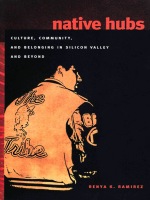
Ramirez’s ethnography revolves around the Paiute American activist Laverne Roberts’s notion of the “hub,” a space that allows for the creation of a sense of belonging away from a geographic center. Ramirez describes “hub-making” activities in Silicon Valley, including sweat lodge ceremonies, powwows, and American Indian Alliance meetings, gatherings at which urban Indians reinforce bonds of social belonging and forge intertribal alliances. She examines the struggle of the Muwekma Ohlone, a tribe aboriginal to the San Francisco Bay area, to maintain a sense of community without a land base and to be recognized as a tribe by the federal government. She considers the crucial role of Native women within urban indigenous communities; a 2004 meeting in which Native Americans from Mexico and the United States discussed cross-border indigenous rights activism; and the ways that young Native Americans in Silicon Valley experience race and ethnicity, especially in relation to the area’s large Chicano community. A unique and important exploration of diaspora, transnationalism, identity, belonging, and community, Native Hubs is intended for scholars and activists alike.
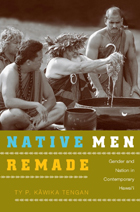
The sharing of personal stories is an integral part of Hale Mua fellowship, and Tengan’s account is filled with members’ first-person narratives. At the same time, Tengan explains how Hale Mua rituals and practices connect to broader projects of cultural revitalization and Hawaiian nationalism. He brings to light the tensions that mark the group’s efforts to reclaim indigenous masculinity as they arise in debates over nineteenth-century historical source materials and during political and cultural gatherings held in spaces designated as tourist sites. He explores class status anxieties expressed through the sharing of individual life stories, critiques of the Hale Mua registered by Hawaiian women, and challenges the group received in dialogues with other indigenous Polynesians. Native Men Remade is the fascinating story of how gender, culture, class, and personality intersect as a group of indigenous Hawaiian men work to overcome the dislocations of colonial history.
Gloria Anzaldua Book Prize, National Women's Studies Association, 2009
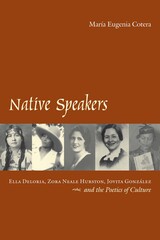
In the early twentieth century, three women of color helped shape a new world of ethnographic discovery. Ella Cara Deloria, a Sioux woman from South Dakota, Zora Neale Hurston, an African American woman from Florida, and Jovita González, a Mexican American woman from the Texas borderlands, achieved renown in the fields of folklore studies, anthropology, and ethnolinguistics during the 1920s and 1930s. While all three collaborated with leading male intellectuals in these disciplines to produce innovative ethnographic accounts of their own communities, they also turned away from ethnographic meaning making at key points in their careers and explored the realm of storytelling through vivid mixed-genre novels centered on the lives of women.
In this book, Cotera offers an intellectual history situated in the "borderlands" between conventional accounts of anthropology, women's history, and African American, Mexican American and Native American intellectual genealogies. At its core is also a meditation on what it means to draw three women—from disparate though nevertheless interconnected histories of marginalization—into conversation with one another. Can such a conversation reveal a shared history that has been erased due to institutional racism, sexism, and simple neglect? Is there a mode of comparative reading that can explore their points of connection even as it remains attentive to their differences? These are the questions at the core of this book, which offers not only a corrective history centered on the lives of women of color intellectuals, but also a methodology for comparative analysis shaped by their visions of the world.

This important contribution to the literature on mobility in nineteenth-century America examines with a fine microscope the world of work in Poughkeepsie, New York. The careers of all workers in each occupation--the entire labor force in this city with an 1870 population of 20,000--are traced over three decades. The book clarifies for the first time in any mobility study the meaning of shifts in employment through detailed examination of individual occupations. It shows concretely how industrialization altered the structure of opportunity; it specifies how the change affected the occupational niches and paths of mobility found by Irish, German, and British newcomers compared to white and black natives. By reassessing the significance of achieving particular occupations such as clerking and craft proprietorships, the book poses important questions for historical interpretations of gross indices of mobility such as shift from blue-collar to white-collar status.
The authors favor comparability in their general analysis of mobility from federal census rolls and city directories, but they refine it through a broad research base, including tax rolls, local newspapers, and voluntary association records. Their study is one of the first to make systematic use of the credit reports on every business in one city from the R. G. Dun & Co. manuscripts. It also provides the first full description of the employment of women, permitting comparison with the opportunities for men. Other distinctive aspects include treatment of the crucial dimension of wealth and income, close attention to shifts in occupations produced by transformations in technology, marketing, and finance, and some disentangling of the influence of religion and nationality upon achievement.
The fine lens of this microscopic study has enabled Clyde Griffen and Sally Griffen to describe geographic, occupational, and property mobility in a small city with statistical precision, to illuminate the larger social processes which shaped that mobility, and, simultaneously, to vivify the working lives of anonymous American men and women.

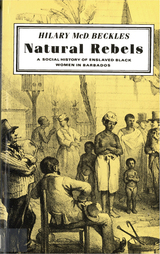
Beckles details the daily lives of slave women in conditions of extreme exploitation. They suffered from harsh conditions, cruel punishments, malnutrition, disease, high mortality, and fear of abandonment when they were too old to work. He described the various categories and responsibilities of slaves, and the roles of children in the slave economy. Beckles looks at family structures and the complexities of interracial unions. He also shows how female slaves regularly resisted slavery, using both violent and nonviolent means. They never accommodated themselves to the system; as natural rebels, they fought in any way they could for survival.
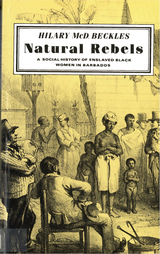
Beckles details the daily lives of slave women in conditions of extreme exploitation. They suffered from harsh conditions, cruel punishments, malnutrition, disease, high mortality, and fear of abandonment when they were too old to work. He described the various categories and responsibilities of slaves, and the roles of children in the slave economy. Beckles looks at family structures and the complexities of interracial unions. He also shows how female slaves regularly resisted slavery, using both violent and nonviolent means. They never accommodated themselves to the system; as natural rebels, they fought in any way they could for survival.


Michela Marcatelli unravels this inequality paradox through an ethnography of water in a rural region of the country. The Waterberg Plateau is a space where agriculture, conservation, and extraction coexist and intersect. Marcatelli examines the connections between neoliberalism, race, and the environment by showing that racialized property relations around water and land are still recognized and protected by the post-apartheid state to sustain green growth. She argues that the government depicts growth as the best, if not only, solution to inequality. While white landowners maintain access to water, however, black ex-farmworkers are dispossessed once again of this essential-to-life resource.
If the promise of growth serves to normalize inequality, the call to save nature has the effect of naturalizing it even further.
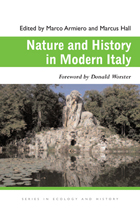
Is Italy il bel paese—the beautiful country—where tourists spend their vacations looking for art, history, and scenery? Or is it a land whose beauty has been cursed by humanity’s greed and nature’s cruelty? The answer is largely a matter of narrative and the narrator’s vision of Italy. The fifteen essays in Nature and History in Modern Italy investigate that nation’s long experience in managing domesxadtixadcated rather than wild natures and offer insight into these conflicting visions. Italians shaped their land in the most literal sense, producing the landscape, sculpting its heritage, embedding memory in nature, and rendering the two different visions inseparxadable. The interplay of Italy’s rich human history and its dramatic natural diversity is a subject with broad appeal to a wide range of readers.
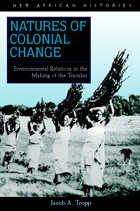
In this groundbreaking study, Jacob A. Tropp explores the interconnections between negotiations over the environment and an emerging colonial relationship in a particular South African context—the Transkei—subsequently the largest of the notorious “homelands” under apartheid.
In the late nineteenth century, South Africa’s Cape Colony completed its incorporation of the area beyond the Kei River, known as the Transkei, and began transforming the region into a labor reserve. It simultaneously restructured popular access to local forests, reserving those resources for the benefit of the white settler economy. This placed new constraints on local Africans in accessing resources for agriculture, livestock management, hunting, building materials, fuel, medicine, and ritual practices.
Drawing from a diverse array of oral and written sources, Tropp reveals how bargaining over resources—between and among colonial officials, chiefs and headmen, and local African men and women—was interwoven with major changes in local political authority, gendered economic relations, and cultural practices as well as with intense struggles over the very meaning and scope of colonial rule itself.
Natures of Colonial Change sheds new light on the colonial era in the Transkei by looking at significant yet neglected dimensions of this history: how both “colonizing” and “colonized” groups negotiated environmental access and how such negotiations helped shape the broader making and meaning of life in the new colonial order.
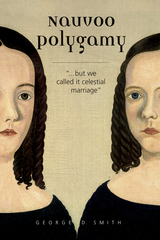
“Nauvoo Polygamy is s a thorough investigation of sexual politics in the City of the Saints, the 1840s Mormon headquarters in the U.S. State of Illinois. Written with precision, clarity, and ease, it is a major contribution to Mormon history, groundbreaking in identifying the other polygamists who followed the lead of their prophet, Joseph Smith, in taking multiple partners.” —Klaus J. Hansen, Professor Emeritus of History, Queen’s University, Ontario
“If for no other reason, the inclusion of chapter 6 makes this book worth its price. The chapter quotes liberally from those like Elizabeth Ann Whitney and Bathsheba Smith who accepted polygamy rather easily, those like Jane Richards who accepted it only reluctantly, and those like Patty Sessions who found plural marriage almost unbearable. A bonus is chapter 9 which provides a concise historical overview of polygamous societies in Reformation Europe, touches on similar societies in America, and offers an extended discussion of Orson Pratt’s 1852 defense of plural marriage.” —Thomas G. Alexander, Professor Emeritus of History, Brigham Young University
“George Smith shows how many of the prophet’s followers embraced plural marriage during a period when the LDS Church was emphatically denying the practice … [and he tells this in] a lucid writing style.” —Daniel Walker Howe, Pulitzer Prize winning author of What Hath God Wrought: The Transformation of America, 1815-1848.
“An extremely important contribution to the history of polygamy … that allows us to see how Joseph Smith’s marriages fit into the context of his daily life.” —Todd M. Compton, author of In Sacred loneliness: The Plural Wives of Joseph Smith


A groundbreaking study of the meaning of childhood in French colonial Senegal
Negotiating Childhood explores how colonial child protection policies and African children’s responses to them produced new ways of defining, measuring, documenting, and experiencing childhood in the French colony of Senegal from 1848 to 1940. In this groundbreaking book, Kelly M. Duke Bryant takes the scholarship in new directions, offering to a literature dominated by studies of British colonies in the twentieth century a study of childhood in a French colony from the immediate post-emancipation period through the 1930s. This focus allows her to complicate the generally accepted timeline of child protection in colonial Africa and question other assumptions about children’s history on the continent.
This deeply researched work uses a wide range of sources to examine children’s experiences in spaces where they encountered French discipline and surveillance, such as wardship courts, public streets, schools, juvenile reformatories, and vaccine clinics. The book shows not only how these spaces re-ordered African childhood, but also how children themselves shaped and limited French efforts to impose order, especially when the state depended on African children’s cooperation to make good on rhetoric about child “protection.” It also charts the rise of documentation in children’s lives, as colonial representatives recorded names, ages, and other details about the African children with whom they interacted. Tracing the “documented” child back to the early colonial period, Negotiating Childhood historicizes the emergence of identity documentation—so crucial to our contemporary world—and questions the naturalness of the very idea of the “child.”
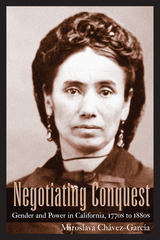
Negotiating Conquest begins with an examination of how gender and ethnicity shaped the policies and practices of the Spanish conquest, showing that Hispanic women, marriage, and the family played a central role in producing a stable society on Mexico’s northernmost frontier. It then examines how gender, law, property, and ethnicity shaped social and class relations among Mexicans and native peoples, focusing particularly on how women dealt with the gender-, class-, and ethnic-based hierarchies that gave Mexican men patriarchal authority. With the American takeover in 1846, the text’s focus shifts to how the imposition of foreign legal, economic, linguistic, and cultural norms affected the status of Mexican women, male-female relations, and the family. Addressing such issues as divorce, legitimacy, and inheritance, it describes the manner in which the conquest weakened the economic position of both Mexican women and men while at the same time increasing the leverage of Mexican women in their personal and social relationships with men.
Drawing on archival materials—including dozens of legal cases—that have been largely ignored by other scholars, Chávez-García examines federal, state, and municipal laws across many periods in order to reveal how women used changing laws, institutions, and norms governing property, marriage and sexuality, and family relations to assert and protect their rights. By showing that mexicanas contested the limits of male rule and insisted that patriarchal relationships be based on reciprocity, Negotiating Conquest expands our knowledge of how patriarchy functioned and evolved as it reveals the ways in which conquest can transform social relationships in both family and community.
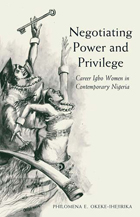

Urbanization was central to development in late imperial China. Yet its impact is heatedly debated, although scholars agree that it triggered neither Weberian urban autonomy nor Habermasian civil society. This book argues that this conceptual impasse derives from the fact that the seemingly continuous urban expansion was in fact punctuated by a wide variety of “dynastic urbanisms.” Historians should, the author contends, view urbanization not as an automatic by-product of commercial forces but as a process shaped by institutional frameworks and cultural trends in each dynasty.
This characteristic is particularly evident in the Ming. As the empire grew increasingly urbanized, the gap between the early Ming valorization of the rural and late Ming reality infringed upon the livelihood and identity of urban residents. This contradiction went almost unremarked in court forums and discussions among elites, leaving its resolution to local initiatives and negotiations. Using Nanjing—a metropolis along the Yangzi River and onetime capital of the Ming—as a central case, the author demonstrates that, prompted by this unique form of urban-rural contradiction, the actions and creations of urban residents transformed the city on multiple levels: as an urban community, as a metropolitan region, as an imagined space, and, finally, as a discursive subject.
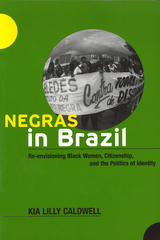
In Negras in Brazil, Kia Lilly Caldwell examines the life experiences of Afro-Brazilian women whose stories have until now been largely untold. This pathbreaking study analyzes the links between race and gender and broader processes of social, economic, and political exclusion. Drawing on ethnographic research with social movement organizations and thirty-five life history interviews, Caldwell explores the everyday struggles Afro-Brazilian women face in their efforts to achieve equal rights and full citizenship. She also shows how the black women's movement, which has emerged in recent decades, has sought to challenge racial and gender discrimination in Brazil. While proposing a broader view of citizenship that includes domains such as popular culture and the body, Negras in Brazil highlights the continuing relevance of identity politics for members of racially marginalized communities. Providing new insights into black women's social activism and a gendered perspective on Brazilian racial dynamics, this book will be of interest to students and scholars of Latin American Studies, African diaspora studies, women's studies, politics, and cultural anthropology.
Rediscovers the crucial role that women played in the influential Negritude movement.
The Negritude movement, which signaled the awakening of a pan-African consciousness among black French intellectuals, has been understood almost exclusively in terms of the contributions of its male founders: Aimé Césaire, Léopold Sédar Senghor, and Léon G. Damas. This masculine genealogy has completely overshadowed the central role played by French-speaking black women in its creation and evolution. In Negritude Women, T. Denean Sharpley-Whiting offers a long-overdue corrective, revealing the contributions made by the women who were not merely integral to the success of the movement, but often in its vanguard.
Through such disparate tactics as Lacascade’s use of Creole expressions in her French prose writings, the literary salon and journal founded by the Martinique-born Nardal sisters, and Roussy-Césaire’s revolutionary blend of surrealism and Negritude in the pages of Tropiques, the journal she founded with her husband, these four remarkable women made vital contributions. In exploring their influence on the development of themes central to Negritude-black humanism, the affirmation of black peoples and their cultures, and the rehabilitation of Africa-Sharpley-Whiting provides the movement’s first genuinely inclusive history.
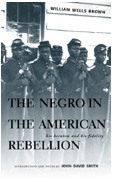
In 1863, as the Civil War raged, the escaped slave, abolitionist, and novelist William Wells Brown identified two groups most harmful to his race. “The first and most relentless,” he explained, “are those who have done them the greatest injury, by being instrumental in their enslavement and consequent degradation. They delight to descant upon the ‘natural inferiority’ of the blacks, and claim that we were destined only for a servile condition, entitled neither to liberty nor the legitimate pursuit of happiness.”
“The second class,” Brown concluded, “are those who are ignorant of the characteristics of the race, and are the mere echoes of the first.” Four years later, Brown wrote the first military history of African Americans, The Negro in the American Rebellion. This text assailed those whose hatred and ignorance inclined them to keep blacks oppressed after Appomattox.
This critical edition of The Negro in the American Rebellion, one of Brown’s least-analyzed texts, is the first to appear in more than three decades. In his introduction, historian John David Smith identifies the text’s Anglo-American abolitionist roots, sets it in the context of Brown’s other writings, appraises it as military history, analyzes its interpretation of black masculinity and honor, and focuses closely on Brown’s assessment of contemporary racial tensions.
Largely ignored by scholars, The Negro in the American Rebellion, Smith argues, is a powerful transitional text, one that confronted squarely the neo-slavery of the Reconstruction era.
“Whites,” Brown wrote, “appear determined to reduce the blacks to a state of serfdom if they cannot have them as slaves.” His important text was a call to arms in the ongoing race struggle. Smith’s analysis, framed within recent scholarship on slavery, emancipation, and African American participation in the U.S. army, is long overdue.

What can one neighborhood reveal about the making of a modern nation? The Neighborhood deciphers the unexpected significance of Xita, a half-square-mile quarter in Shenyang, in Northeast China. As the historian Nianshen Song shows, over nearly four centuries, Xita has been shaped and reshaped by empire, war, migration, and urban transformation. Remarkably, the history of this small area mirrors large-scale changes, including and especially China’s metamorphosis from a multiethnic Eurasian empire to a postindustrial society.
Song begins with Xita’s origins as a Qing-era Tibetan Buddhist center, following the lives of Mongol lamas and their imperial patrons. He tracks the neighborhood through the tumultuous twentieth century, when competing Russian and Japanese railway empires fueled its industrial growth, and Japanese colonizers turned it into a showcase for their imperial ambitions. Later, Xita became a vital enclave for Korea’s diaspora before emerging in the post-Mao era as a neon-lit hub of commerce and entertainment.
A thoroughly researched microhistory, The Neighborhood reveals how global forces play out in everyday spaces. By studying the emperors, warlords, merchants, laborers, and migrants who shaped Xita, Song presents a captivating and original perspective for understanding China’s past—not from the top down, but through the streets and people who lived it.
Carl Degler’s 1971 Pulitzer-Prize-winning study of comparative slavery in Brazil and the United States is reissued in the Wisconsin paperback edition, making it accessible for all students of American and Latin American history and sociology.
Until Degler’s groundbreaking work, scholars were puzzled by the differing courses of slavery and race relations in the two countries. Brazil never developed a system of rigid segregation, such as appeared in the United States, and blacks in Brazil were able to gain economically and retain far more of their African culture. Rejecting the theory of Giberto Freyre and Frank Tannenbaum—that Brazilian slavery was more humane—Degler instead points to a combination of demographic, economic, and cultural factors as the real reason for the differences.
“In the early 1970s when studies in social history were beginning to blossom on the North American scene, Carl Degler’s prize-winning contribution was a thoughtful provocative essay in comparative history. Its thoughtfulness has not diminished with the years. Indeed, it is as topical today as when it was first published. The Brazilian experience with rapid industrialization and its attempt to restore democratic government indicates that the issues which Degler treated in the early 1970s are more pertinent than ever today.”—Franklin W. Knight, Department of History, Johns Hopkins University.
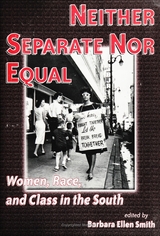
Collecting in one volume the work of such well-known scholars on Appalachia and the South as Carl Stack, Mab Segrest, and Sally Maggard, among others, Neither Separate Nor Equal analyzes the complex and dramatic developments in the lives of contemporary Southern women. Case studies vividly portray women's diverse circumstances activities: from rural African American women in the Mississippi Delta taking on new roles as community builders to female textile workers in North Carolina contending with automation and reorganization of the mills.
Focusing on the South's historical legacies as they are manifested and contested in the lives of women today, including the tensions between long-lasting patterns of regional distinctiveness and the disruptions of globalizations, this collection approaches differences of race and class not as forms of separation among women, but as social -- be they often contentious, difficult, or exploitive -- relationships. Unifying around a theme of relationally, Neither Separate Nor Equal offers searching empirical studies of Southern women and a conceptual model for feminist scholarship as a whole.
After a decade of research in the Johannesburg and Jerusalem regions, Andy Clarno presents here a detailed ethnographic study of the precariousness of the poor in Alexandra township, the dynamics of colonization and enclosure in Bethlehem, the growth of fortress suburbs and private security in Johannesburg, and the regime of security coordination between the Israeli military and the Palestinian Authority in the West Bank. The first comparative study of the changes in these two areas since the early 1990s, the book addresses the limitations of liberation in South Africa, highlights the impact of neoliberal restructuring in Palestine, and argues that a new form of neoliberal apartheid has emerged in both contexts.
Detailed ethnographic fieldwork shows how foreign investment, privatization, deregulation, and elimination of welfare benefits have devastated national industries and natural resources and threatened agriculture, driving the campesinos and working class deeper into poverty. Focusing on specific commodity chains and the changes to production and marketing under neoliberalism, the contributors highlight the detrimental impacts of policies by telling the stories of those most affected by these changes. They detail the complex interplay of local and global forces, from the politically mediated systems of demand found at the local level to the increasingly powerful municipal and state governments and the global trade and banking institutions.
Sharing a common theoretical perspective and method throughout the chapters, Neoliberalism and Commodity Production in Mexico is a multi-sited ethnography that makes a significant contribution to studies of neoliberal ideology in practice.
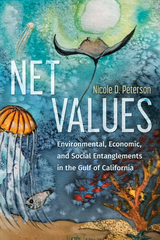
In Loreto, Baja California Sur, Mexico, artisanal fishing families and staff of Loreto Bay National Park face an array of choices as tourism, environmental concerns, and economic precarity challenge livelihoods and natural resource availability. In Net Values, Nicole D. Peterson offers a critical examination of how the idea of “choice” is understood, and what it means for policies, planning, and programs to ignore the social, political, economic, and cultural contexts surrounding these choices.
Anchored by more than twenty years of research, Peterson provides insight into the fishing community of Loreto and reveals an important role in decision-making that diverges from previous studies. She argues that decisions about fishing, natural resource management, and other aspects of life are influenced by context, values, and expectations in ways that go beyond the typical psychological or cognitive theories of choice. Instead, Net Values highlights the ways that choices are constrained and enabled by values and expectations of cultures, histories, relationships, and experiences, both personal and shared. Peterson answers questions such as “why do the fishermen fish?” or “what is the marine park staff doing?” These decisions and choices are related to the larger implication addressed by this book: that in order to make effective policies around natural resource management and other issues, we must understand how those potential policies interact with the decision processes already underway.
Divided into five chapters, Net Values is rich in ethnographic detail, drawing from real people to inform the narratives, chapters, and theoretical elaboration. Peterson’s interactions with fishers such as Don Javier and his family and friends support the ideas offered around choice, values, and strategies, connecting ideas to real experiences.

Immediately granted celebrity status by the powerful Hearst press, Maxwell was also championed as a martyr by advocates of women's causes. National news magazines and even detective magazines picked up her story, Warner Brothers created a screen version, and Eleanor Roosevelt helped secure her early release from prison. Sharon Hatfield's brilliant telling of this true-crime story transforms a dusty piece of history into a vibrant thriller. Throughout the narrative, she discusses yellow journalism, the inequities of the jury system, class and gender tensions in a developing region, and a woman's right to defend herself from family violence.

The fate of Cleveland, Ohio, rides on a web of interdependencies on a regional scale. People and communities throughout that area of Ohio are being forced to adjust to new civic roles. The city of Cleveland must understand how it fits into Greater Cleveland. And suburbs must understand their dependence on the historic central city and be drawn into the Cleveland community.
In this sweeping study by local and national experts, these and more specific issues are raised and examined in depth. The New American City Faces Its Regional Future captures the dynamic thinking concerned with Cleveland and its surrounding region. The authors address questions of importance not only to Cleveland and its region but also to communities across the country that are facing similar issues. How does the city want to grow in the future? How can it become a more livable community? As the population of the region moves farther and farther out from the established urban areas, consuming more and more land, and as it enters its third century, these questions will need to be addressed. This book takes some first, important steps toward providing the answers.

How immigrants helped rebuild a city—and redefined what it means to be American
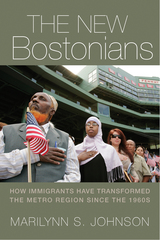
Among the most consequential pieces of Great Society legislation, the Immigration Act of 1965 opened the nation's doors to large-scale immigration from Africa, Asia, and Latin America. A half century later, the impact of the "new immigration" is evident in the transformation of the country's demographics, economy, politics, and culture, particularly in urban America.
In The New Bostonians, Marilynn S. Johnson examines the historical confluence of recent immigration and urban transformation in greater Boston, a region that underwent dramatic decline after World War II. Since the 1980s, the Boston area has experienced an astounding renaissance—a development, she argues, to which immigrants have contributed in numerous ways. From 1970 to 2010, the percentage of foreign-born residents of the city more than doubled, representing far more diversity than earlier waves of immigration. Like the older Irish, Italian, and other European immigrant groups whose labor once powered the region's industrial economy, these newer migrants have been crucial in re-building the population, labor force, and metropolitan landscape of the New Boston, although the fruits of the new prosperity have not been equally shared.
In this detailed and comprehensive study of contemporary Chinese America, Xiaojian Zhao uses class analysis to illuminate the difficulties of everyday survival for poor and undocumented immigrants and analyzes the process through which social mobility occurs. Through ethnic ties, Chinese Americans have built an economy of their own in which entrepreneurs can maintain a competitive edge given their access to low-cost labor; workers who are shut out of the mainstream job market can find work and make a living; and consumers can enjoy high quality services at a great bargain. While the growth of the ethnic economy enhances ethnic bonds by increasing mutual dependencies among different groups of Chinese Americans, it also determines the limits of possibility for various individuals depending on their socioeconomic and immigration status.
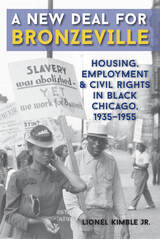
During the Great Migration of the 1920s and 1930s, southern African Americans flocked to the South Side Chicago community of Bronzeville, the cultural, political, social, and economic hub of African American life in the city, if not the Midwest. The area soon became the epicenter of community activism as working-class African Americans struggled for equality in housing and employment. In this study, Lionel Kimble Jr. demonstrates how these struggles led to much of the civil rights activism that occurred from 1935 to 1955 in Chicago and shows how this working-class activism and culture helped to ground the early civil rights movement. Despite the obstacles posed by the Depression, blue-collar African Americans worked with leftist organizations to counter job discrimination and made strong appeals to New Deal allies for access to public housing. Kimble details how growing federal intervention in local issues during World War II helped African Americans make significant inroads into Chicago’s war economy and how returning African American World War II veterans helped to continue the fight against discrimination in housing and employment after the war. The activism that appeared in Bronzeville was not simply motivated by the “class consciousness” rhetoric of the organized labor movement but instead grew out of everyday struggles for racial justice, citizenship rights, and improved economic and material conditions. With its focus on the role of working-class African Americans—as opposed to the middle-class leaders who have received the most attention from civil rights historians in the past—A New Deal for Bronzeville makes a significant contribution to the study of civil rights work in the Windy City and enriches our understanding of African American life in mid-twentieth-century Chicago.
This publication is partially funded by a grant from Furthermore: a program of the J.M. Kaplan fund.
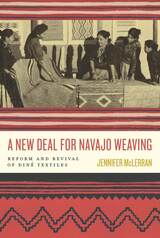
By the 1920s the durability and market value of Diné weavings had declined dramatically. Indian welfare advocates established projects aimed at improving the materials and techniques. Private efforts served as models for federal programs instituted by New Deal administrators. Historian Jennifer McLerran details how federal officials developed programs such as the Southwest Range and Sheep Breeding Laboratory at Fort Wingate in New Mexico and the Navajo Arts and Crafts Guild. Other federal efforts included the publication of Native natural dye recipes; the publication of portfolios of weaving designs to guide artisans; and the education of consumers through the exhibition of weavings, aiding them in their purchases and cultivating an upscale market. McLerran details how government officials sought to use these programs to bring the Diné into the national economy; instead, these federal tactics were ineffective because they marginalized Navajo women and ignored the important role weaving plays in the resilience and endurance of wider Diné culture.


In 1812, New Hampshire shopkeeper Timothy M. Joy abandoned his young family, fleeing the creditors who threatened to imprison him. Within days, he found himself in a Massachusetts jailhouse, charged with defamation of a prominent politician. During the months of his incarceration, Joy kept a remarkable journal that recounts his personal, anguished path toward spiritual redemption. Martin J. Hershock situates Joy's account in the context of the pugnacious politics of the early republic, giving context to a common citizen's perspective on partisanship and the fate of an unfortunate shopkeeper swept along in the transition to market capitalism.
In addition to this close-up view of an ordinary person's experience of a transformative period, Hershock reflects on his own work as a historian. In the final chapter, he discusses the value of diaries as historical sources, the choices he made in telling Joy's story, alternative interpretations of the diary, and other contexts in which he might have placed Joy's experiences. The appendix reproduces Joy's original journal so that readers can develop their own skills using a primary source.

Gay, straight, bisexual: how much does sexual orientation matter to a teenager’s mental health or sense of identity? In this down-to-earth book, filled with the voices of young people speaking for themselves, Ritch Savin-Williams argues that the standard image of gay youth presented by mental health researchers—as depressed, isolated, drug-dependent, even suicidal—may have been exaggerated even twenty years ago, and is far from accurate today.
The New Gay Teenager gives us a refreshing and frequently controversial introduction to confident, competent, upbeat teenagers with same-sex desires, who worry more about the chemistry test or their curfew than they do about their sexuality. What does “gay” mean, when some adolescents who have had sexual encounters with those of their own sex don’t consider themselves gay, when some who consider themselves gay have had sex with the opposite sex, and when many have never had sex at all? What counts as “having sex,” anyway? Teenagers (unlike social science researchers) are not especially interested in neatly categorizing their sexual orientation.
In fact, Savin-Williams learns, teenagers may think a lot about sex, but they don’t think that sexuality is the most important thing about them. And adults, he advises, shouldn’t think so either.
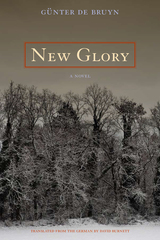
At the time New Glory (Neue Herrlichkeit) was published in 1984, most dissident authors had fled the German Democratic Republic, then in its final years. Günter de Bruyn courageously remained to satirize the regime from behind the Iron Curtain. He is a popular writer and cultural commentator in unified Germany.
New Glory tells the story of Viktor Kösling, a privileged young man from the GDR about to embark on a diplomatic career. He retreats to "New Glory," a state-run resort in rural Brandenburg run by a corrupt director, to finish his dissertation on "The Foreign Policy of the Prussian Government During the French Revolution with Particular Emphasis on the Effects of Artisan and Peasant Unrest in the Provinces." While there he falls, against his parents’ wishes, for the lisping chambermaid, Thilde. The complex drama that follows, which pays tribute to Mann’s The Magic Mountain and its ironic view of human nature, exposes the moral weakness of Viktor’s character and the farcical distance between official East German ideals and the opportunistic functionaries who enabled the system.

The New Japanese Woman is rich in descriptive detail and full of fascinating vignettes from Japan’s interwar media and consumer industries—department stores, film, radio, popular music and the publishing industry. Sato pays particular attention to the enormously influential role of the women’s magazines, which proliferated during this period. She describes the different kinds of magazines, their stories and readerships, and the new genres the emerged at the time, including confessional pieces, articles about family and popular trends, and advice columns. Examining reactions to the images of the modern girl, the housewife, and the professional woman, Sato shows that while these were not revolutionary figures, they caused anxiety among male intellectuals, government officials, and much of the public at large, and they contributed to the significant changes in gender relations in Japan following the Second World War.

Ortner tracked down nearly all 304 of her classmates. She interviewedabout 100 in person and spoke with most of the rest by phone, recording her classmates’ vivid memories of time, place, and identity. Ortner shows how social class affected people’s livesin many hidden and unexamined ways. She also demonstrates that the Class of ‘58’s extreme upward mobility must be understood in relation to the major identity movements of the twentieth century—the campaign against anti-Semitism, the Civil Rights movement, and feminism.
A multisited study combining field research with an interdisciplinary analytical framework, New Jersey Dreaming is a masterly integration of developments at the vanguard of contemporary anthropology. Engaging excerpts from Ortner's field notes are interspersed throughout the book. Whether recording the difficulties and pleasures of studying one's own peer group, the cultures of driving in different parts of the country, or the contrasting experiences of appointment-making in Los Angeles and New York, they provide a rare glimpse into the actual doing of ethnographic research.
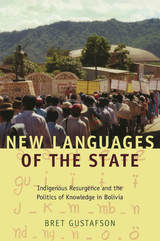
Gustafson shows that bilingual education is an issue that extends far beyond the classroom. Public schools are at the center of a broader battle over territory, power, and knowledge as indigenous movements across Latin America actively defend their languages and knowledge systems. In attempting to decolonize nation-states, the indigenous movements are challenging deep-rooted colonial racism and neoliberal reforms intended to mold public education to serve the market. Meanwhile, market reformers nominally embrace cultural pluralism while implementing political and economic policies that exacerbate inequality. Juxtaposing Guarani life, language, and activism with intimate portraits of reform politics among academics, bureaucrats, and others in and beyond La Paz, Gustafson illuminates the issues, strategic dilemmas, and imperfect alliances behind bilingual intercultural education.

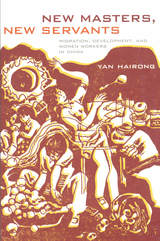
Yan analyzes how the migrant women workers are subjected to, make sense of, and reflect on a range of state and neoliberal discourses about development, modernity, consumption, self-worth, quality, and individual and collective longing and struggle. She offers keen insight into the workers’ desire and efforts to achieve suzhi (quality) through self-improvement, the way workers are treated by their employers, and representations of migrant domestic workers on television and the Internet and in newspapers and magazines. In so doing, Yan demonstrates that contestations over the meanings of migrant workers raise broad questions about the nature of wage labor, market economy, sociality, and postsocialism in contemporary China.
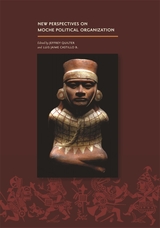
This volume brings together essays on the nature of political organization of the Moche, a complex pre-Inca society that existed on the north coast of Peru from c. 100 to 800 CE. Since the discovery of the royal tombs of Sipán in 1987, the Moche have become one of the best-known pre-Hispanic cultures of the Americas and the focus of a number of archaeological projects. But the nature of Moche political organization is still debated. Some scholars view the Moche as a monolithic state, others see a clear distinction between a northern and southern Moche polity, and yet others argue that the most accurate model is one in which each valley contained an independent polity. In a presentation of new data and new perspectives, the authors debate these competing theories.
Based on a set of papers presented by sixteen international scholars at the Dumbarton Oaks Pre-Columbian Studies symposium held in Lima, Peru, in 2004, this volume marks an important point in the development of Moche archaeology and will be a landmark work in Pre-Columbian studies.
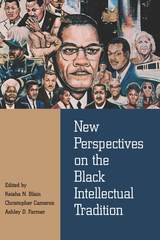
The book examines four central themes within the black intellectual tradition: black internationalism, religion and spirituality, racial politics and struggles for social justice, and black radicalism. The essays identify the emergence of black thought within multiple communities internationally, analyze how black thinkers shaped and were shaped by the historical moment in which they lived, interrogate the ways in which activists and intellectuals connected their theoretical frameworks across time and space, and assess how these strains of thought bolstered black consciousness and resistance worldwide.
Defying traditional temporal and geographical boundaries, New Perspectives on the Black Intellectual Tradition illuminates the origins of and conduits for black ideas, redefines the relationship between black thought and social action, and challenges long-held assumptions about black perspectives on religion, race, and radicalism. The intellectuals profiled in the volume reshape and redefine the contours and boundaries of black thought, further illuminating the depth and diversity of the black intellectual tradition.
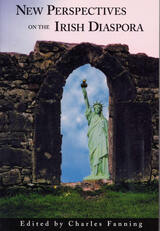
In New Perspectiveson the Irish Diaspora, Charles Fanning incorporates eighteen fresh perspectives on the Irish diaspora over three centuries and around the globe. He enlists scholarly tools from the disciplines of history, sociology, literary criticism, folklore, and culture studies to present a collection of writings about the Irish diaspora of great variety and depth.
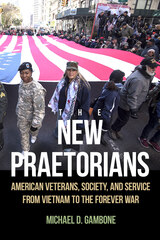
In an engrossing narrative that considers the military, economic, political, and social developments affecting military service after Vietnam, Michael D. Gambone investigates how successive generations have intentionally shaped their identity as veterans. The New Praetorians also highlights the impact of their homecoming, the range of educational opportunities open to veterans, the health care challenges they face, and the unique experiences of minority and women veterans. This groundbreaking study illustrates an important and often neglected group that is key to our understanding of American social history and civil-military affairs.
Unlocking a vital understanding of how literary studies and media studies overlap and are bound together
A synthetic history of new media reception in modern and contemporary Japan, The New Real positions mimesis at the heart of the media concept. Considering both mimicry and representation as the core functions of mediation and remediation, Jonathan E. Abel offers a new model for media studies while explaining the deep and ongoing imbrication of Japan in the history of new media.
From stereoscopy in the late nineteenth century to emoji at the dawn of the twenty-first, Abel presents a pioneering history of new media reception in Japan across the analog and digital divide. He argues that there are two realities created by new media: one marketed to us through advertising that proclaims better, faster, and higher-resolution connections to the real; and the other experienced by users whose daily lives and behaviors are subtly transformed by the presence and penetration of the content carried through new media. Intervening in contemporary conversations about virtuality, copyright, copycat violence, and social media, each chapter unfolds with a focus on a single medium or technology, including 3D photographs, the phonograph, television, videogames, and emoji.
By highlighting the tendency of the mediated to copy the world and the world to copy the mediated, The New Real provides a new path for analysis of media, culture, and their function in the world.
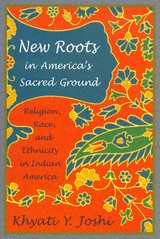
In this compelling look at second-generation Indian Americans, Khyati Y. Joshi draws on case studies and interviews with forty-one second-generation Indian Americans, analyzing their experiences involving religion, race, and ethnicity from elementary school to adulthood. As she maps the crossroads they encounter as they navigate between their homes and the wider American milieu, Joshi shows how their identities have developed differently from their parents’ and their non-Indian peers’ and how religion often exerted a dramatic effect.
The experiences of Joshi’s research participants reveal how race and religion interact, intersect, and affect each other in a society where Christianity and whiteness are the norm. Joshi shows how religion is racialized for Indian Americans and offers important insights in the wake of 9/11 and the backlash against Americans who look Middle Eastern and South Asian.
Through her candid insights into the internal conflicts contemporary Indian Americans face and the religious and racial discrimination they encounter, Joshi provides a timely window into the ways that race, religion, and ethnicity interact in day-to-day life.
First published in 1961, eight years after Cambodia gained independence from French colonial rule, A New Sun Rises Over the Old Land is an iconic work of modern Khmer literature, a singularly illuminating document of the new nation. This is one of the first English translations of a modern Khmer novel, and the text is accompanied by an extended introduction that situates the author in his historical and artistic context and examines the novel’s literary value.
Enabling Kraus’s retelling of the 1850s woman’s rights movement is her theory of “structural aporias,” which takes the institutional structures of any particular society as fully imbricated with the force of language. Kraus reads the antebellum relations of womanhood, contract, property, the economy, and the nation as a fruitful site for analysis of the interconnected power of language, culture, and the law. She combines poststructural theory, particularly deconstructive approaches to discourse analysis; the political economic history of the antebellum era; and the interpretation of archival documents, including woman’s rights speeches, petitions, pamphlets, and convention proceedings, as well as state legislative debates, reports, and constitutional convention proceedings. Arguing that her method provides critical insight not only into social movements and cultural changes of the past but also of the present and future, Kraus concludes A New Type of Womanhood by considering the implications of her theory for contemporary feminist and queer politics.
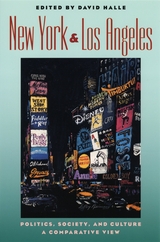
This volume presents advanced studies that consider this fundamental difference between New York and Los Angeles while comparing and contrasting politics and culture in each region. An esteemed group of contributors from a wide variety of disciplines considers issues that include immigration, the effects of race and class on residence, the efficacy of public schools, the value of welfare reform, the meaning of mayoral politics, the function of charter reform, and the respective roles of the cinema and art scenes in each city.
Capturing much of what is new and vibrant in urban studies today, New York and Los Angeles will prove to be must reading for scholars in that field, as well as in sociology, political science, and government.
Contributors:
Andrew Beveridge, Mehdi Bozorgmehr, Geoffrey DeVerteuil, Susan S. Fainstein, Robert Gedeon, Saverio Giovacchini, David L. Gladstone, David Halle, Jack Katz, Karen M. Kaufmann, Rebecca Kim, Mark Levitan, Kevin Rafter, Georges Sabagh, David O. Sears, Heidi Sommer, Raphael J. Sonenshein, András Szántó, Lois Takahashi, Susan Weber, Jennifer Wolch, Julia Wrigley, Min Zhou

To combat behavior they viewed as sexually promiscuous, politically undesirable, or downright criminal, social activists in Progressive-era New York employed private investigators to uncover the roots of society’s problems. New York Undercover follows these investigators—often journalists or social workers with no training in surveillance—on their information-gathering visits to gambling parlors, brothels, and meetings of criminal gangs and radical political organizations.
Drawing on the hundreds of detailed reports that resulted from these missions, Jennifer Fronc reconstructs the process by which organizations like the National Civic Federation and the Committee of Fourteen generated the knowledge they needed to change urban conditions. This information, Fronc demonstrates, eventually empowered government regulators in the Progressive era and beyond, strengthening a federal state that grew increasingly repressive in the interest of pursuing a national security agenda. Revealing the central role of undercover investigation in both social change and the constitution of political authority, New York Undercover narrates previously untold chapters in the history of vice and the emergence of the modern surveillance state.
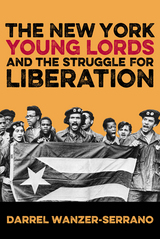
In The New York Young Lords and the Struggle for Liberation, Darrel Wanzer-Serrano details the numerous community initiatives that advanced decolonial sensibilities in El Barrio and beyond. Using archival research and interviews, he crafts an engaging account of the Young Lords’ discourse and activism. He rescues the organization from historical obscurity and makes an argument for its continued relevance, enriching and informing contemporary discussions about Latino/a politics.
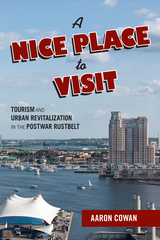
How did tourism gain a central role in the postwar American Rustbelt city? And how did tourism development reshape the meaning and function of these cities? These are the questions at the heart of Aaron Cowan’s groundbreaking book, A Nice Place to Visit.
Cowan provides an insightful, comparative look at the historical development of Cincinnati, St. Louis, Pittsburgh, and Baltimore in the post–World War II period to show how urban tourism provided a potential solution to the economic woes of deindustrialization. A Nice Place to Visit chronicles the visions of urban leaders who planned hotels, convention centers, stadiums, and festival marketplaces to remake these cities as tourist destinations. Cowan also addresses the ever-present tensions between tourist development and the needs and demands of residents in urban communities.
A Nice Place to Visit charts how these Rustbelt cities adapted to urban decline and struggled to meet the challenge of becoming an appealing place to visit, as well as good and just communities in which to live.

Reelfoot Lake has been a hunting and fishing paradise from the time of its creation in 1812, when the New Madrid earthquake caused the Mississippi River to flow backward into low-lying lands. Situated in the northwestern corner of the state of Tennessee, it attracted westward-moving pioneers, enticing some to settle permanently on its shores.
Threatened in 1908 with the loss of their homes and livelihoods to aggressive, outsider capitalists, rural folk whose families had lived for generations on the bountiful lake donned hoods and gowns and engaged in “night riding,” spreading mayhem and death throughout the region as they sought vigilante justice. They had come to regard the lake as their own, by “squatters’ rights,” but now a group of entrepreneurs from St. Louis had bought the titles to the land beneath the shallow lake and were laying legal claim to Reelfoot in its entirety. People were hanged, beaten, and threatened and property destroyed before the state militia finally quelled the uprising. A compromise that made the lake public property did not entirely heal the wounds which continue to this day.
Paul Vanderwood reconstructs these harrowing events from newspapers and other accounts of the time. He also obtained personal interviews with participants and family members who earlier had remained mum, still fearing prosecution. The Journal of American History declares his book “the complete and authentic treatment” of the horrific dispute and its troubled aftermath.
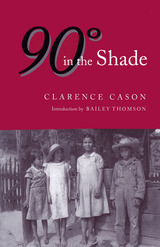
A candid, courageous portrait of the South as told by a writer unafraid to confront its heat, its history, and its humanity.
Clarence Cason belonged to that restless generation of southern intellectuals who, between the world wars, questioned the South's stubborn traditionalism, even as they tried to explain and defend its distinctiveness. From his professorial perch at The University of Alabama, Cason wrote polished essays for leading national publications while contributing weekly editorials for newspaper readers. As a journalist in academia, he cultivated a broad audience for his eloquent though tentative observations about the "character" of a region that seemed to be a separate province of the nation.
In 1935, Cason collected his thoughts in a small book of essays titled 90° in the Shade. In it, he declared that climate and the relaxation afforded by field and stream had given southerners excellent reasons for their notoriously slow pace of life. Still, he wrote, "there is much work that ought to be done below the Potomac." Cason captured the pathos of race relations and other persistent problems and declared that the abominable practice of lynching would end when the best people of the South risked their personal and commercial standing to denounce it. Just days before the book's publication, however, Cason shot himself in his campus office. He left no explanation, but apparently he feared angry reaction from fellow citizens to his mild criticisms and gentle suggestions for change.
The University of Alabama Press brought the book back into print in 1983. This new edition of Cason's classic features an introduction by journalist and UA professor H. Bailey Thomson, allowing yet another generation the enjoyment of Cason's perceptive writing, not so much for any remedy he proposed but rather for the open-minded and loving way in which he addressed the region's tragic experience.
This second reprint edition of a classic work on southern culture will allow a new generation of readers to enjoy Cason's observant, graceful writing.

In 1935, Cason collected his thoughts in a small book of essays titled 90° in the Shade. In it, he declared that climate and the relaxation afforded by field and stream had given southerners excellent reasons for their notoriously slow pace of life. Still, he wrote, "there is much work that ought to be done below the Potomac." Cason captured the pathos of race relations and other persistent problems and declared that the abominable practice of lynching would end when the best people of the South risked their personal and commercial standing to denounce it. Just days before the book's publication, however, Cason shot himself in his campus office. He left no explanation, but apparently he feared angry reaction from fellow citizens to his mild criticisms and gentle suggestions for change.
The University of Alabama Press brought the book back into print in 1983. This new edition of Cason's classic features an introduction by journalist and UA professor H. Bailey Thomson, allowing yet another generation the enjoyment of Cason's perceptive writing, not so much for any remedy he proposed but rather for the open-minded and loving way in which he addressed the region's tragic experience.


Recent anthropological scholarship on “new midwifery” centers on how professional midwives in various countries are helping women reconnect with “nature,” teaching them to trust in their bodies, respecting women’s “choices,” and fighting for women’s right to birth as naturally as possible. In No Alternative, Rosalynn A. Vega uses ethnographic accounts of natural birth practices in Mexico to complicate these narratives about new midwifery and illuminate larger questions of female empowerment, citizenship, and the commodification of indigenous culture, by showing how alternative birth actually reinscribes traditional racial and gender hierarchies.
Vega contrasts the vastly different birthing experiences of upper-class and indigenous Mexican women. Upper-class women often travel to birthing centers to be delivered by professional midwives whose methods are adopted from and represented as indigenous culture, while indigenous women from those same cultures are often forced by lack of resources to use government hospitals regardless of their preferred birthing method. Vega demonstrates that women’s empowerment, having a “choice,” is a privilege of those capable of paying for private medical services—albeit a dubious privilege, as it puts the burden of correctly producing future members of society on women’s shoulders. Vega’s research thus also reveals the limits of citizenship in a neoliberal world, as indigeneity becomes an object of consumption within a transnational racialized economy.
What form does the crisis of modernity take in Latin America when societies are politically demobilized and there is no revolutionary agenda in sight? How does postmodern criticism reflect on enlightenment and utopia in a region marked by incomplete modernization, new waves of privatization, great masses of excluded peoples, and profound sociocultural heterogeneity? In No Apocalypse, No Integration Martín Hopenhayn examines the social and philosophical implications of the triumph of neoliberalism and the collapse of leftist and state-sponsored social planning in Latin America.
With the failure of utopian movements that promised social change, the rupture of the link between the production of knowledge and practical intervention, and the defeat of modernization and development policy established after World War II, Latin American intellectuals and militants have been left at an impasse without a vital program of action. Hopenhayn analyzes these crises from a theoretical perspective and calls upon Latin American intellectuals to reevaluate their objects of study, their political reality, and their society’s cultural production, as well as to seek within their own history the elements for a new collective discourse. Challenging the notion that strict adherence to a single paradigm of action can rescue intellectual and cultural movements, Hopenhayn advocates a course of epistemological pluralism, arguing that such an approach values respect for difference and for cultural and theoretical diversity and heterodoxy.
This essay collection will appeal to readers of sociology, public policy, philosophy, cultural theory, and Latin American history and culture, as well as to those with an interest in Latin America’s current transition.
READERS
Browse our collection.
PUBLISHERS
See BiblioVault's publisher services.
STUDENT SERVICES
Files for college accessibility offices.
RECENTLY PUBLISHED




UChicago Accessibility Resources
home | accessibility | search | about | contact us
BiblioVault ® 2001 - 2026
The University of Chicago Press