
 A SCHOLARLY BOOK REPOSITORY
90 start with R start with R
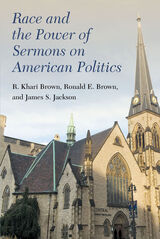
This book examines the intersection of race, political sermons, and social justice. Religious leaders and congregants who discuss and encourage others to do social justice embrace a form of civil religion that falls close to the covenantal wing of American civil religious thought. Clergy and members who share this theological outlook frame the nation as being exceptional in God’s sight. They also emphasize that the nation’s special relationship with the Creator is contingent on the nation working toward providing opportunities for socioeconomic well-being, freedom, and creative pursuits. God’s covenant, thus, requires inclusion of people who may have different life experiences but who, nonetheless, are equally valued by God and worthy of dignity. Adherents to such a civil religious worldview would believe it right to care for and be in solidarity with the poor and powerless, even if they are undocumented immigrants, people living in non-democratic and non-capitalist nations, or members of racial or cultural out-groups. Relying on 44 national and regional surveys conducted between 1941 and 2019, Race and the Power of Sermons on American Politics explores how racial experiences impact the degree to which religion informs social justice attitudes and political behavior. This is the most comprehensive set of analyses of publicly available survey data on this topic.

This volume has a simple, but far-reaching argument: religion is an important thread in BLM. To advance this claim, Race, Religion, and Black Lives Matter examines religion’s place in the movement through the lenses of history, politics, and culture. While this collection is not exhaustive or comprehensive in its coverage of religion and BLM, it selectively anthologizes unique aspects of Black religious history, thought, and culture in relation to political struggle in the contemporary era. The chapters aim to document historical change in light of current trends and current events. The contributors analyze religion and BLM in a current historical moment fraught with aggressive, fascist, authoritarian tendencies and one shaped by profound ingenuity, creativity, and insightful perspectives on Black history and culture.
Radicalization is a major challenge of contemporary global security. It conjures up images of violent ideologies, “homegrown” terrorists and jihad in both the academic sphere and among security and defense experts. While the first instances of religious radicalization were initially limited to second-generation Muslim immigrants, significant changes are currently impacting this phenomenon. Technology is said to amplify the dissemination of radicalism, though there remains uncertainty as to the exact weight of technology on radical behaviors. Moreover, far from being restricted to young men of Muslim heritage suffering from a feeling of social relegation, radicalism concerns a significant number of converted Muslims, women and more heterogeneous profiles (social, academic and geographic), as well as individuals that give the appearance of being fully integrated in the host society. These new and striking dynamics require innovative conceptual lenses.
Radicalization in Theory and Practice identifies the mechanisms that explicitly link radical religious beliefs and radical actions. It describes its nature, singles out the mechanisms that enable radicalism to produce its effects, and develops a conceptual architecture to help scholars and policy-makers to address and evaluate radicalism—or what often passes as such. A variety of empirical chapters fed by first-hand data probe the relevance of theoretical perspectives that shape radicalization studies. By giving a prominent role to first-hand empirical investigations, the authors create a new framework of analysis from the ground up. This book enhances the quality of theorizing in this area, consolidates the quality of methodological enquiries, and articulates security studies insights with broader theoretical debates in different fields including sociology, social psychology, economics, and religious studies.
Radio, Morality, and Culture: Britain, Canada, and the United States, 1919–1945 examines the moral controversies surrounding radio’s development during its formative years. In comparing the fledgling medium in Great Britain, Canada, and the United States, Robert S. Fortner documents how the church failed to participate in radio’s moral development and instead engaged in internecine warfare over issues of legitimacy and orthodoxy.
The church was arguing about theological turf and dealing with internal disputes while radio policy was being developed and communications history was being written. Fortner reveals how the church, doomed to play little more than a bit part in the future of radio, eventually lost its voice altogether in the continuing development of electronic media. Fortner effectively synthesizes cultural history and theory, communication studies, and the role religious organizations played in shaping the content and character of early radio. Geared to scholars of history, communications, and theology, Radio, Morality, and Culture provides a useful resource for research, scholarship, and public policy.

A Choice Outstanding Academic Title of the Year
A Tablet Book of the Year
Marking a departure in our understanding of Christian views of the afterlife from 250 to 650 CE, The Ransom of the Soul explores a revolutionary shift in thinking about the fate of the soul that occurred around the time of Rome’s fall. Peter Brown describes how this shift transformed the Church’s institutional relationship to money and set the stage for its domination of medieval society in the West.
“[An] extraordinary new book…Prodigiously original—an astonishing performance for a historian who has already been so prolific and influential…Peter Brown’s subtle and incisive tracking of the role of money in Christian attitudes toward the afterlife not only breaks down traditional geographical and chronological boundaries across more than four centuries. It provides wholly new perspectives on Christianity itself, its evolution, and, above all, its discontinuities. It demonstrates why the Middle Ages, when they finally arrived, were so very different from late antiquity.”
—G. W. Bowersock, New York Review of Books
“Peter Brown’s explorations of the mindsets of late antiquity have been educating us for nearly half a century…Brown shows brilliantly in this book how the future life of Christians beyond the grave was influenced in particular by money.
—A. N. Wilson, The Spectator
A solid and suggestive foundation for the future of ethnic-racial minority biblical criticism
This volume, edited by Tat-siong Benny Liew and Fernando F. Segovia, expands the work begun in They Were All Together in One Place? Toward Minority Biblical Criticism (2009) by focusing on specific texts for scholarly engagement and exchange. Essays by scholars of racial/ethnic minoritized criticism of the Bible highlight the various factors and dynamics at play in the formation of power relations within and through four biblical texts: two from the Hebrew Bible (Genesis 21 and 1 Kings 12) and two from the New Testament (John 4 and Revelation 18). Contributors include Ahida Calderón Pilarski, Ronald Charles, Stephanie Buckhanon Crowder, Lynne St. Clair Darden, Steed Vernyl Davidson, Mary F. Foskett, Jione Havea, Tat-siong Benny Liew, Roberto Mata, Henry W. Morisada Rietz, Raj Nadella, Miranda N. Pillay, David Arthur Sánchez, Timothy J. Sandoval, Fernando F. Segovia, Mitzi J. Smith, Angeline M. G. Song, Linzie M. Treadway, Nasili Vaka’uta, Demetrius K. Williams, and Gale A. Yee. Each essay expands our understandings of minoritization from a global perspective.


Realized Religion includes research that investigates the impact of spirituality in health and healing, faith healing, religion and mental health, religion and life satisfaction, religion and mental disorders, religion and martial satisfaction, the effect of religion on suicide, and the effect of religion on alcohol use and abuse. This book documents over 300 scientific studies published by reputable scientific journals demonstrating that religion has an ameliorating effect on the survival rate of surgical patients, on depression and anxiety, on suicide rates, and on promotion of a healthy lifestyle.
Realized Religion presents useful and helpful information to researchers and scholars who seek to understand the subtle connection between healing and spirituality. It will be an invaluable resource for libraries and others interested in the emerging field of spirituality and healing.

As early as the sixteenth century the liberal democratic state has been forced to confront the question of religion in politics. The result has been a tense and uncomfortable balancing act. Today, in the public square of liberal democracy, a number of religious confessions and beliefs compete for attention. In the American experience, some sense of religious pluralism and relative social harmony has been maintained. However, for this relationship to prevail, a tension must continue to exist—one that balances the political and social pursuits of self-interest with meeting the objectives of the common good.
In Reaping the Whirlwind, John R. Pottenger shows how this process began in the modern world, and how societies attempt to manage this ongoing conflict. The first part of the book lays the groundwork of his analysis by using examples from history to demonstrate the genesis of political and religious "whirlwinds." It goes on to explore contemporary case studies, such as conflicts between Mormons and Evangelicals in the United States, liberation theology in Latin America, Islam and the state in Uzbekistan, and radical Christian reconstructionism.
Pottenger believes that the formal institutions of liberal democracy should maintain this turbulence, even as religious activism threatens to upset the balance. He concludes by advocating religious liberty and recognizing the individual and social need for expression. At the same time, he maintains that the survival of liberal democracy requires that these religious traditions not dominate the public sphere.
The Rebirth of the Clinic begins with a bold assertion: the doctor-patient relationship is sick. Fortunately, as this engrossing book demonstrates, the damage is not irreparable. Today, patients voice their desires to be seen not just as bodies, but as whole people. Though not willing to give up scientific progress and all it has to offer, they sense the need for more. Patients want a form of medicine that can heal them in body and soul. This movement is reflected in medical school curricula, in which courses in spirituality and health care are taught alongside anatomy and physiology. But how can health care workers translate these concepts into practice? How can they strike an appropriate balance, integrating and affirming spirituality without abandoning centuries of science or unwittingly adopting pseudoscience?
Physician and philosopher Daniel Sulmasy is uniquely qualified to guide readers through this terrain. At the outset of this accessible, engaging volume, he explores the nature of illness and healing, focusing on health care's rich history as a spiritual practice and on the human dignity of the patient. Combining sound theological reflection with doses of healthy skepticism, he goes on to describe empirical research on the effects of spirituality on health, including scientific studies of the healing power of prayer, emphasizing that there are reasons beyond even promising research data to attend to the souls of patients. Finally, Sulmasy devotes special attention and compassion to the care of people at the end of life, incorporating the stories of several of his patients.
Throughout, the author never strays from the theme that, for physicians, attending to the spiritual needs of patients should not be a moral option, but a moral obligation. This book is an essential resource for scholars and students of medicine and medical ethics and especially medical students and health care professionals.
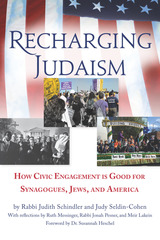
Recharging Judaism is the essential and timely guide for every synagogue and community seeking to strengthen the bonds of Jewish communal life through advocating for social justice. This volume delves into the enriching civic engagement and acts of righteousness already undertaken by Jews and Jewish communities across the country, and further explores the positive differences we can all affect upon the future of America. There are a myriad of ways in which advocating for social justice and participating in civic engagement can create lasting change. Those inspired to affect such change will find new meaning in the texts and history of our tradition. Using real examples from both small and large congregations across the country, Recharging Judaism offers a framework to guide us through our journey of civic responsibility and social duty and into a brighter future for our country.
In a world in which religion and homosexuality are often by definition incompatible, it is crucial to hear from gay men and women about how they perceive themselves to be religious or spiritual people. Eliciting powerful, frank, and sometimes troubling responses, David Shallenberger interviewed gay men and women who grew up in families that belonged to traditional religions-Jewish, Roman Catholic, and Protestant-that rejected homosexuality as an unacceptable life-style. When these children grew into adulthood and "came out," many rejected the religion of their childhood as they sought out a more accepting gay community. But once they became comfortable with their new gay identity, they began to experience a spiritual hunger and a desire to be part of a religious community. Some sought to return to the traditions from which they came; others desired membership in new religious communities.
The quest for an integration of homosexuality and spirituality is the focus of Reclaiming the Spirit. Shallenberger asks how individuals can balance both a gay and a religious identity, whether coming out is a spiritual experience, and how coming out affects an individual's relationship to a traditional religious community. Divided into chapters that correspond to the common stages of spiritual integration, Reclaiming the Spirit is immensely readable and introduces an important group of voices into the hotly contested debates surrounding religion and gay participation.
Drawing on the controversial case of “Ashley X,” a girl with severe developmental disabilities who received interventionist medical treatment to limit her growth and keep her body forever small—a procedure now known as the “Ashley Treatment”—Reconsidering Intellectual Disability explores important questions at the intersection of disability theory, Christian moral theology, and bioethics.
What are the biomedical boundaries of acceptable treatment for those not able to give informed consent? Who gets to decide when a patient cannot communicate their desires and needs? Should we accept the dominance of a form of medicine that identifies those with intellectual impairments as pathological objects in need of the normalizing bodily manipulations of technological medicine?
In a critical exploration of contemporary disability theory, Jason Reimer Greig contends that L'Arche, a federation of faith communities made up of people with and without intellectual disabilities, provides an alternative response to the predominant bioethical worldview that sees disability as a problem to be solved. Reconsidering Intellectual Disability shows how a focus on Christian theological tradition’s moral thinking and practice of friendship with God offers a way to free not only people with intellectual disabilities but all people from the objectifying gaze of modern medicine. L'Arche draws inspiration from Jesus's solidarity with the "least of these" and a commitment to Christian friendship that sees people with profound cognitive disabilities not as anomalous objects of pity but as fellow friends of God. This vital act of social recognition opens the way to understanding the disabled not as objects to be fixed but as teachers whose lives can transform others and open a new way of being human.

In the view of many Christians, the teenage years are simultaneously the most dangerous and the most promising. At the very moment when teens are trying to establish a sense of identity and belonging, they are beset by temptation on all sides—from the pressure of their peers to the nihilism and materialism of popular culture. Add the specter of homosexuality to the mix, and you’ve got a situation ripe for worry, sermonizing, and exploitation.
In Recruiting Young Love, Mark D. Jordan explores more than a half century of American church debate about homosexuality to show that even as the main lesson—homosexuality is bad, teens are vulnerable—has remained constant, the arguments and assumptions have changed remarkably. At the time of the first Kinsey Report, in 1948, homosexuality was simultaneously condemned and little discussed—a teen struggling with same-sex desire would have found little specific guidance. Sixty years later, church rhetoric has undergone a radical shift, as silence has given way to frequent, public, detailed discussion of homosexuality and its perceived dangers. Along the way, churches have quietly adopted much of the language and ideas of modern sexology, psychiatry, and social reformers—deploying it, for example, to buttress the credentials of anti-gay “deprogramming” centers and traditional gender roles.
Jordan tells this story through a wide variety of sources, including oral histories, interviews, memoirs, and even pulp novels; the result is a fascinating window onto the never-ending battle for the teenage soul.
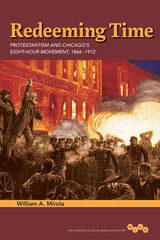
William A. Mirola explores how the city's eight-hour movement intersected with a Protestant religious culture that supported long hours to keep workers from idleness, intemperance, and secular leisure activities. Analyzing how both workers and clergy rewove working-class religious cultures and ideologies into strategic and rhetorical frames, Mirola shows how every faith-based appeal contested whose religious meanings would define labor conditions and conflicts. As he notes, the ongoing worker-employer tension transformed both how clergy spoke about the eight-hour movement and what they were willing to do, until intensified worker protest and employer intransigence spurred Protestant clergy to support the eight-hour movement even as political and economic arguments eclipsed religious framing.
A revealing study of an era and a movement, Redeeming Time illustrates the potential--and the limitations--of religious culture and religious leaders as forces in industrial reform.
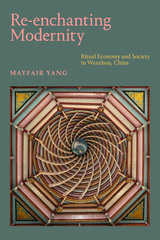
A profound feminist Christian reframing of sexuality examines contemporary social practices and ethical sex
From the sexual abuse crisis in the Roman Catholic Church to the US Supreme Court decision outlawing state-level bans on same-sex marriage, it has become clear that Catholics and other Christians cannot afford to downplay sex or rely on outdated normative understandings of its moral contours. Feminist theological approaches offer a way forward by considering not just what we should do in sexual spheres but also what sort of sexual people we should aspire to be.
In Reenvisioning Sexual Ethics, author Karen Peterson-Iyer adopts a feminist Christian anthropological framework to connect robust theological and ethical analysis to practical sexual issues, particularly those confronting college-aged and younger adults today. The book examines four divergent yet overlapping contemporary social practices and phenomena wherein sex plays a central role: “hookup” culture; “sexting”; sex work; and sex trafficking. Through these case studies, Peterson-Iyer shows that ethical sex is best demarcated not as a matter of chastity on the one hand and purely free consent on the other, but rather as ideally expressing the fullness of human agency, communicating the joy of shared pleasure, and conferring a deep sense of possibility and wholeness upon all participants.
This feminist Christian framework will help facilitate frank and profound discussions of sex, enabling young adults to define themselves and others not by hypersexualized and gendered social norms or attitudes but by their fundamental status as dignified and beloved by God.
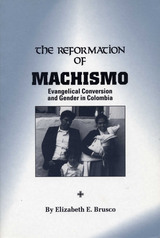
Protestant evangelicalism has spread rapidly in Latin America at the same time that foreign corporations have taken hold of economies there. These concurrent developments have led some observers to view this religious movement as a means of melding converts into a disciplined work force for foreign capitalists rather than as a reflection of conscious individual choices made for a variety of personal, as well as economic, reasons.
In this pioneering study, Elizabeth Brusco challenges such assumptions and explores the intra-household motivations for evangelical conversion in Colombia. She shows how the asceticism required of evangelicals (no drinking, smoking, or extramarital sexual relations are allowed) redirects male income back into the household, thereby raising the living standard of women and children. This benefit helps explain the appeal of evangelicalism for women and questions the traditional assumption that organized religion always disadvantages women.
Brusco also demonstrates how evangelicalism appeals to men by offering an alternative to the more dysfunctional aspects of machismo. Case studies add a fascinating human dimension to her findings.
With the challenges this book poses to conventional wisdom about economic, gender, and religious behavior, it will be important reading for a wide audience in anthropology, women’s studies, economics, and religion. For all students of Latin America, it offers thoughtful new perspectives on a major, grass-roots agent of social change.
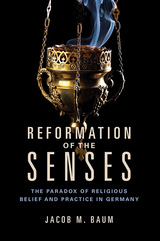
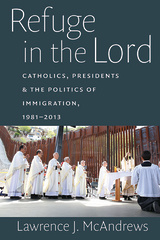
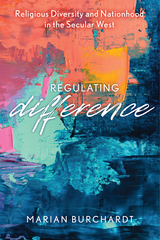
Transnational migration has contributed to the rise of religious diversity and has led to profound changes in the religious make-up of society across the Western world. As a result, societies and nation-states have faced the challenge of crafting ways to bring new religious communities into existing institutions and the legal frameworks. Regulating Difference explores how the state regulates religious diversity and examines the processes whereby religious diversity and expression becomes part of administrative landscapes of nation-states and people’s everyday lives. Arguing that concepts of nationhood are key to understanding the governance of religious diversity, Regulating Difference employs a transatlantic comparison of the Spanish region of Catalonia and the Canadian province of Quebec to show how processes of nation-building, religious heritage-making and the mobilization of divergent interpretations of secularism are co-implicated in shaping religious diversity. It argues that religious diversity has become central for governing national and urban spaces.
This book is also freely available online as an open access digital edition.

A revealing account of how German Protestant leaders embraced democratic ideals after WWII, while firmly and consequentially refusing to account for their earlier complicity with Nazism.
Germany’s Protestant churches, longtime strongholds of nationalism and militarism, largely backed the Nazi dictatorship that took power in 1933. For many Protestant leaders, pastors, and activists, national and religious revival were one and the same. Even those who opposed the regime tended toward antidemocratic attitudes. By the 1950s, however, Church leaders in West Germany had repositioned themselves as prominent advocates for constitutional democracy and human rights.
Brandon Bloch reveals how this remarkable ideological shift came to pass, following the cohort of theologians, pastors, and lay intellectuals who spearheaded the postwar transformation of their church. Born around the turn of the twentieth century, these individuals came of age amid the turbulence of the Weimar Republic and were easily swayed to complicity with the Third Reich. They accommodated the state in hopes of protecting the Church’s independence from it, but they also embraced the Nazi regime’s antisemitic and anticommunist platform. After the war, under the pressures of Allied occupation, these Protestant intellectuals and their heirs creatively reimagined their tradition as a fount of democratic and humanitarian values. But while they campaigned for family law reform, conscientious objection to military service, and the protection of basic rights, they also promoted a narrative of Christian anti-Nazi resistance that whitewashed the Church’s complicity in dictatorship and genocide.
Examining the sources and limits of democratic transformation, Reinventing Protestant Germany sheds new light on the development of postwar European politics and the power of national myths.
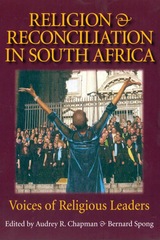
Postapartheid South Africa's efforts to come to terms with its past, particularly its Truth and Reconciliation Commission's emphasis on forgiveness and reconciliation, is of special interest to many in the world community. The Truth and Reconciliation Commission (TRC), led by Archbishop Desmond Tutu, was mandated to go beyond truth-finding and to "promote national unity and reconciliation in a spirit of understanding which transcends the conflict and divisions of the past." In contrast with other truth commissions, the TRC was led by clerics rather than lawyers and judge, and the TRC's approach to reconciliation was shaped by and imbued with religious content. The TRC submitted its final report to the Mandela administration in October 1998.
Over the next two years, the Rev. Bernard Spong, former communications director of the South African Council of Churches, conducted a series of in-depth interviews about the TRC with thirty-three key religious figures. In this volume, they discuss and evaluate the following issues:
•How should we understand the concept of national or political reconciliation and its requirements?•What are the differences and similarities between religious and political approaches to reconciliation?
•Does national or political reconciliation require forgiveness between former victims and perpetrators?
•What is the appropriate role of religious representatives in a truth commission process? And is it recommended that other countries emulate the South African model?
•How do religious leaders assess the contributions and limitations of the TRC?
•What kind of initiatives are contemporary religious communities taking to promote reconciliation among their members and in the wider society?
The conversations presented in this volume, and the essays interpreting them, seek to illuminate issues and questions raised by the TRC model, including how to conceptualize reconciliation and the differences between political and religious approaches.
As Eastern European economies move to capitalism, many people there hope for a better life. But capitalism is no guarantee of prosperity. Economic deprivation, war, social marginalization, and powerlessness mark the lives of millions and spark social movements for economic justice aimed at correcting these conditions. Often these movements are based in religious communities, their activists motivated by religious commitment to human dignity and the need for personal empowerment. Although the new theology contains an economic critique, little dialogue has taken place between the religious and economic communities on matters of economic analysis. Religion and Economic Justice seeks to develop this exchange.
This book contains original essays by distinguished contributors from economics, religious ethics, and biblical studies. The authors provide a powerful critique of the individualism which underlies mainstream economic analysis and which fragments our communities, a critique that extends to the values implicit in the market system. The authors also show how social marginalization and economic deprivation are the consequences of economic organization, not simply the failings of individuals.
Can religion help societies achieve peace and stability? What actions can religious leaders take to facilitate conflict resolution? This book addresses these critical questions in terms of numerous contemporary conflicts within and between countries.
In the aftermath of the 9/11 attacks, public attention to religion shifted away from its relationship to politics and toward its connection to violence in civil conflicts, wars, and terrorism. Religion’s role in sowing discord became more prominent than its ability to unify. Only recently have discussions turned toward the positive impact of religion and spirituality in the public sphere and to the role of faith in resolving diplomatic, political, and social problems. The essays in this book contribute to this discourse by examining past, present, and future opportunities to promote peace through religion and spirituality.
The contributors to this volume explore topics such as humanitarianism, philosophy, counterextremism, human rights, rituals, populism, foreign policy, and environmentalism. Some of the chapters approach these topics from a transnational perspective, while others focus on specific countries in Africa, Asia, Europe, Latin America, and the Middle East.
Contributors:
- Jonathan C. Agensky
- Slavica Jakelić
- Afra Jalabi
- Brandon Kendhammer
- Loren D. Lybarger
- Cecelia Lynch
- Peter Mandaville
- Jeremy Rinker
- Margaret M. Scull
- Amy Erica Smith
The essays in Religion and Political Tolerance in America seek to understand how these elements interrelate. The editor and contributors to this important volume present new and innovative research that wrestles with the fundamental question of the place of religion in democratic society. They address topics ranging from religious contributions to social identity to the political tolerance that religious elites (clergy) hold and advocate to others, and how religion shapes responses to intolerance.
The conclusion, by Ted Jelen, emphasizes that religion’s take on political tolerance is nuanced and that they are not incompatible; religion can sometimes enhance the tolerance of ordinary citizens.
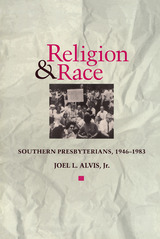
Joel Alvis focuses on the relationships and tensions in the Presbyterian Church, U.S., whose ecclesiastical boundaries never expanded significantly beyond its original territory in the Confederacy and border South. By the time of the civil rights movement, the church was actively involved in ecumenical activities despite its regional isolation, and that involvement created unease in some quarters of the denomination. This concise institutional history traces how the church shaped and was shaped by its regional culture and explores the denomination's own cultural struggle to determine what role race issues would play in the definition of being Presbyterian.
Religion has jumped into the sphere of global and domestic politics in ways that few would have imagined a century ago. Some expected that religion would die as modernity flourished. Instead, it now stares at us almost daily from the front pages of newspapers and television broadcasts. Although it is usually stories about the Christian Right or conservative Islam that grab headlines, there are many religious activists of other political persuasions that are working quietly for social justice. This book examines how religious immigrants and religious activists are working for equitable treatment for immigrants in the United States.
The essays in this book analyze the different ways in which organized religion provides immigrants with an arena for mobilization, civic participation, and solidarity. Contributors explore topics including how non-Western religious groups such as the Vietnamese Caodai are striving for community recognition and addressing problems such as racism, economic issues, and the politics of diaspora; how interfaith groups organize religious people into immigrant civil rights activists at the U.S.–Mexican border; and how Catholic groups advocate governmental legislation and policies on behalf of refugees.
Ben Fallaw argues that previous scholarship has not appreciated the pervasive influence of Catholics and Catholicism on postrevolutionary state formation. By delving into the history of four understudied Mexican states, he is able to show that religion swayed regional politics not just in states such as Guanajuato, in Mexico's central-west "Rosary Belt," but even in those considered much less observant, including Campeche, Guerrero, and Hidalgo. Religion and State Formation in Postrevolutionary Mexico reshapes our understanding of agrarian reform, federal schooling, revolutionary anticlericalism, elections, the Segunda (a second Cristero War in the 1930s), and indigenism, the Revolution's valorization of the Mesoamerican past as the font of national identity.
Religion and the Authority of the Past looks at how the past has influenced religious authority, and demonstrates that authority has been, and continues to be, prevalent in all religions and cultures. This book shows, in a fascinating variety of ways, how religious doctrine, interpretation, behavior, and expression are affected by those in power.
The contributors—distinguished scholars from the fields of history, religion, classics, art, and Asian studies—find authority not only in places where one might expect it—in Islamic doctrine, Hindu religious texts, and the dogma of the Roman Catholic church, for example—but also in unimagined and intriguing locations: in the first U.S. archaeological expedition to the ancient Near East; in representations of heroic action in the Homeric epics and early Chinese classics; in the transmission of religious stereotypes from the Old World to the New; in the poetry of Paul Celan and Dan Pagis; and in a sculptor's attempts to create art for houses of worship, where architects, bishops, priests, and the laity assert a variety of forms of religious authority of their own.
Students and scholars will find in this volume a level of comprehensiveness rarely achieved in Cold War studies. Each chapter reveals that the power and influence of ideas are just as important as military might in the struggles between superpowersand that few ideas, then as now, carry as much force as religious ideology. As Muehlenbeck and his contributors demonstrate, no area of the world, and no religious tenet, was safe from the manipulations of a powerful set of players focused solely on their own sphere of influence.
To understand the nature of religious belief, we must look at how our minds process the world of imagination and make-believe.
We often assume that religious beliefs are no different in kind from ordinary factual beliefs—that believing in the existence of God or of supernatural entities that hear our prayers is akin to believing that May comes before June. Neil Van Leeuwen shows that, in fact, these two forms of belief are strikingly different. Our brains do not process religious beliefs like they do beliefs concerning mundane reality; instead, empirical findings show that religious beliefs function like the imaginings that guide make-believe play.
Van Leeuwen argues that religious belief—which he terms religious “credence”—is best understood as a form of imagination that people use to define the identity of their group and express the values they hold sacred. When a person pretends, they navigate the world by consulting two maps: the first represents mundane reality, and the second superimposes the features of the imagined world atop the first. Drawing on psychological, linguistic, and anthropological evidence, Van Leeuwen posits that religious communities operate in much the same way, consulting a factual-belief map that represents ordinary objects and events and a religious-credence map that accords these objects and events imagined sacred and supernatural significance.
It is hardly controversial to suggest that religion has a social function, but Religion as Make-Believe breaks new ground by theorizing the underlying cognitive mechanisms. Once we recognize that our minds process factual and religious beliefs in fundamentally different ways, we can gain deeper understanding of the complex individual and group psychology of religious faith.
Contributors from varied backgrounds share perspectives and insights gleaned from history, theory, practice, and case studies. While the authors acknowledge the role of religion in generating conflict, they emphasize the part religion can play in conflict resolution. Addressing the centrality of conflict to the human condition, they recognize the consequent difficulty in teasing out the exact role of religion. Overall, the authors assert the necessity of frank, knowledgeable dialogue to understanding sources of, finding grounds for resolving, and managing conflict. Many of the essayists offer creative solutions for building peace. Employing examples and viewpoints drawn from diverse faith traditions, academic traditions, and cultural backgrounds, contributors seek to foster respectful dialogue and debate by exploring the complex dynamic that interconnects religion, violence, and peace.
In Religion, Fundamentalism, and Violence, Andrew Gluck brings together distinguished scholars to address a fiercely debated topic: the intersection of religion and violence. Among the contributions is an anthropological analysis of the violence associated with the Abrahamic monotheistic religions of the Middle East, a compelling essay accounting for the violence in Hindu religious traditions, an informative look at the Israeli-Palestinian tensions of more recent times, and an essay on the Catholic just war theory. Each chapter is followed by a commentary and reply, making this volume indispensable for students and scholars of the history of religions.
Contributors argue that the long-term social relationships characteristic of delayed-return agricultural systems must be based on historical ties to place and to ancestors. They define different forms of history-making, including nondiscursive routinized practices as well as commemorative memorialization. They consider the timing in the Neolithic of an emerging concern with history-making in place in relation to the adoption of farming and settled life in regional sequences. They explore whether such correlations indicate the causal processes in which history-making, ritual practices, agricultural intensification, population increase, and social competition all played a role.
Religion, History, and Place in the Origin of Settled Life takes a major step forward in understanding the adoption of farming and a settled way of life in the Middle East by foregrounding the roles of history-making and religious ritual. This work is relevant to students and scholars of Near Eastern archaeology, as well as those interested in the origins of agriculture and social complexity or the social role of religion in the past.
Contributors: Kurt W. Alt, Mark R. Anspach, Marion Benz, Lee Clare, Anna Belfer-Cohen, Morris Cohen, Oliver Dietrich, Güneş Duru, Yilmaz S. Erdal, Nigel Goring-Morris, Ian Hodder, Rosemary A. Joyce, Nicola Lercari, Wendy Matthews, Jens Notroff, Vecihi Özkaya, Feridun S. Şahin, F. Leron Shults, Devrim Sönmez, Christina Tsoraki, Wesley Wildman

A New York Times Book Review Editors’ Choice
An ABC Australia Best Book on Religion and Ethics of the Year
Distinguished Book Award, Sociology of Religion Section of the American Sociological Association
Religion in Human Evolution is a work of extraordinary ambition—a wide-ranging, nuanced probing of our biological past to discover the kinds of lives that human beings have most often imagined were worth living. It offers what is frequently seen as a forbidden theory of the origin of religion that goes deep into evolution, especially but not exclusively cultural evolution.
“Of Bellah’s brilliance there can be no doubt. The sheer amount this man knows about religion is otherworldly…Bellah stands in the tradition of such stalwarts of the sociological imagination as Emile Durkheim and Max Weber. Only one word is appropriate to characterize this book’s subject as well as its substance, and that is ‘magisterial.’”
—Alan Wolfe, New York Times Book Review
“Religion in Human Evolution is a magnum opus founded on careful research and immersed in the ‘reflective judgment’ of one of our best thinkers and writers.”
—Richard L. Wood, Commonweal
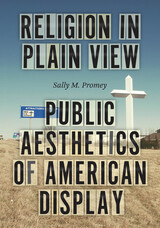
In Religion in Plain View, Sally M. Promey analyzes religion’s visible saturation of American public space and the histories that shaped this exhibitionary aesthetics. In street art, vehicle décor, signs, monuments, architecture, zoning policy, and more, Promey exposes American display’s merger of evangelicalism, capitalism, and imperialism. From this convergence, display materializes a distinctly American drive to advertise, claim territory, invalidate competitors, and fabricate a tractable national heritage. Charting this aesthetics’ strategic work as a Protestant technology of White nation formation, Religion in Plain View offers a dynamic critique of the ways public display perpetuates deeply ingrained assumptions about the proper shape of life and land in the United States.
Prayer in public schools, abortion, gay and lesbian rights—these bitterly divisive issues dominate American politics today, revealing deep disagreements over basic moral values. In a highly readable account that draws on legal arguments, political theory, and philosophy, Ronald F. Thiemann explores the proper role of religious convictions in American public life. He proposes that religion can and should play an active, positive part in our society even as it maintains a fundamental commitment to pluralist, democratic values.
Arguing that both increased secularism and growing religious diversity since the 1960s have fragmented commonly held values, Thiemann observes that there has been an historical ambivalence in American attitudes towards religion in public life. He proposes abandoning the idea of an absolute wall between church and state and all the conceptual framework built around that concept in interpreting the first amendment. He returns instead to James Madison's views and the Constitutional principles of liberty, equality, and toleration. Refuting both political liberalism (as too secular) and communitarianism (as failing to meet the challenge of pluralism), Thiemann offers a new definition of liberalism that gives religions a voice in the public sphere as long as they heed the Constitutional principles of liberty, equality, and toleration or mutual respect.
The American republic, Thiemann notes, is a constantly evolving experiment in constructing a pluralistic society from its many particular communities. Religion can act as a positive force in its moral renewal, by helping to shape common cultural values.
All those interested in finding solutions to today's divisive political discord, in finding ways to disagree civilly in a democracy, and in exploring the extent to which religious convictions should shape the development of public policies will find that this book offers an important new direction for religion and the nation.
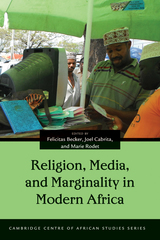
In recent years, anthropologists, historians, and others have been drawn to study the profuse and creative usages of digital media by religious movements. At the same time, scholars of Christian Africa have long been concerned with the history of textual culture, the politics of Bible translation, and the status of the vernacular in Christianity. Students of Islam in Africa have similarly examined politics of knowledge, the transmission of learning in written form, and the influence of new media. Until now, however, these arenas—Christianity and Islam, digital media and “old” media—have been studied separately.
Religion, Media, and Marginality in Modern Africa is one of the first volumes to put new media and old media into significant conversation with one another, and also offers a rare comparison between Christianity and Islam in Africa. The contributors find many previously unacknowledged correspondences among different media and between the two faiths. In the process they challenge the technological determinism—the notion that certain types of media generate particular forms of religious expression—that haunts many studies. In evaluating how media usage and religious commitment intersect in the social, cultural, and political landscapes of modern Africa, this collection will contribute to the development of new paradigms for media and religious studies.
Contributors: Heike Behrend, Andre Chappatte, Maria Frahm-Arp, David Gordon, Liz Gunner, Bruce S. Hall, Sean Hanretta, Jorg Haustein, Katrien Pype, and Asonzeh Ukah.

Contributors. Markus Balkenhol, Elizabeth Bentley, Kambiz GhaneaBassiri, David N. Gibbs, Ori Goldberg, Marcia Klotz, Zeynep Kurtulus Korkman, Leerom Medovoi, Eva Midden, Mohanad Mustafa, Mu-chou Poo, Shaul Setter, John Vignaux Smith, Pooyan Tamimi Arab, Ernst van den Hemel, Albert Welter, Francis Ching-Wah Yip, Raef Zreik
As the contributors to this work suggest, a crucial component of globalization—the breakdown of familiar boundaries and power balances—may open a space in which religion can be deployed to help refabricate new communities. Examples of such deployments can be found in the workings of liberation theology in Latin America. In other cases, however, the operations of globalization have provided a space for strident religious nationalism and identity disputes to flourish. Is there in fact a dialectical tension between religion and globalization, a codependence and codeterminism? While religion can be seen as a globalizing force, it has also been transformed and even victimized by globalization.
A provocative assessment of a contemporary phenomenon with both cultural and political dimensions, Religions/Globalizations will interest not only scholars in religious studies but also those studying Latin America, the Middle East, South Asia, and Africa.
Contributors. David Batstone, Berit Bretthauer, Enrique Dussel, Dwight N. Hopkins, Mark Juergensmeyer, Lois Ann Lorentzen, Eduardo Mendieta, Vijaya Rettakudi Nagarajan, Kathryn Poethig, Lamin Sanneh, Linda E. Thomas

In seventeenth- and eighteenth-century England and America, established society branded as "enthusiasts" those unconventional but religiously devout extremists who stepped across orthodox lines and claimed an intimate, emotional relationship with God. John of Leyden, Anne Hutchinson, William Penn, and George Whitefield all shared the label "enthusiast." This book is a study of the enthusiasts who migrated to the American colonies as well as those who emergedthere--from Pilgrim Fathers to pietistic Moravians, from the martyr-bound Quakers to heaven-bent revivalists of the 1740s.
This study of the role of religious enthusiasm in early America tells us much about English attitudes toward religion in the New World and about the vital part it played in the lives of the colonists. Both friends and enemies of enthusiasm revealed in their arguments and actions their own conceptions of the America they inhabited. Was religion in America to be an extension of Old World institutions or truly a product of the New World? Would enthusiasm undermine civilized institutions, not only established churches, but government, social structure, morality, and the economy as well? Calling enthusiasts first heretics, then subversives and conspirators, conventional society sought ways to suppress or banish them. By 1776 enthusiasm had spilled over into politics and added a radical dimension to the revolutionary struggle.
This timely exploration of the effect of radical religion on the course of early American history provides essential historical perspective to the current interest in popular religion.

Tensions between religious freedom and equality law are newly strained in America. As lawmakers work to protect LGBT citizens and women seeking reproductive freedom, religious traditionalists assert their right to dissent from what they see as a new liberal orthodoxy. Some religious advocates are going further and expressing skepticism that egalitarianism can be defended with reasons at all. Legal experts have not offered a satisfying response—until now.
Nelson Tebbe argues that these disputes, which are admittedly complex, nevertheless can be resolved without irrationality or arbitrariness. In Religious Freedom in an Egalitarian Age, he advances a method called social coherence, based on the way that people reason through moral problems in everyday life. Social coherence provides a way to reach justified conclusions in constitutional law, even in situations that pit multiple values against each other. Tebbe contends that reasons must play a role in the resolution of these conflicts, alongside interests and ideologies. Otherwise, the health of democratic constitutionalism could suffer.
Applying this method to a range of real-world cases, Tebbe offers a set of powerful principles for mediating between religion and equality law, and he shows how they can lead to workable solutions in areas ranging from employment discrimination and public accommodations to government officials and public funding. While social coherence does not guarantee outcomes that will please the liberal Left, it does point the way toward reasoned, nonarbitrary solutions to the current impasse.
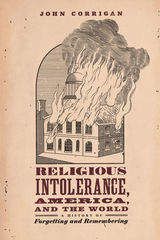
Religious Intolerance, America, and the World spans from Christian colonists’ intolerance of Native Americans and the role of religion in the new republic’s foreign-policy crises to Cold War witch hunts and the persecution complexes that entangle Christians and Muslims today. Corrigan reveals how US churches and institutions have continuously campaigned against intolerance overseas even as they’ve abetted or performed it at home. This selective condemnation of intolerance, he shows, created a legacy of foreign policy interventions promoting religious freedom and human rights that was not reflected within America’s own borders. This timely, captivating book forces America to confront its claims of exceptionalism based on religious liberty—and perhaps begin to break the grotesque cycle of projection and oppression.
The issue of religious authority has long fascinated and ignited scholars across a range of disciplines: history, anthropology, the sociology of religion, and political science. Religious Knowledge, Authority, and Charisma juxtaposes religious leadership in premodern and modern Islam with examples from the Judaic tradition. By illustrating various iterations of authority in numerous historical and cultural contexts, this volume offers fresh insights into the nature of institutions of learning and other systems of establishing and disseminating authority, the mechanisms for cultivating committed adherents, and the processes by which religious leadership is polarized and fragmented.
Remains of Ritual, Steven M. Friedson’s second book on musical experience in African ritual, focuses on the Brekete/Gorovodu religion of the Ewe people. Friedson presents a multifaceted understanding of religious practice through a historical and ethnographic study of one of the dominant ritual sites on the southern coast of Ghana: a medicine shrine whose origins lie in the northern region of the country. Each chapter of this fascinating book considers a different aspect of ritual life, demonstrating throughout that none of them can be conceived of separately from their musicality—in the Brekete world, music functions as ritual and ritual as music. Dance and possession, chanted calls to prayer, animal sacrifice, the sounds and movements of wake keeping, the play of the drums all come under Friedson’s careful scrutiny, as does his own position and experience within this ritual-dominated society.
While religious leaders often have enormous influence over their members’ beliefs and how they translate their beliefs into action in everyday life, the individual family remains the place where religious values are practiced through and ultimately transferred to the next generation. As such, the family is an extremely important, though frequently overlooked, topic of study for sociologists of religion.
In Remaking the Godly Marriage, John Bartkowski studies evangelical Protestants and their views on marriage and gender relations and how they are lived within individual families. The author compares elite evangelical prescriptions for godly family living with the day-to-day practices in conservative Protestant households. He asks: How serious are the debates over gender and the family that are manifested within contemporary evangelicalism? What are the values that underlie this debate? Have these internecine disputes been altered by the emergence of new evangelical movements such as biblical feminism and the Promise Keepers? And given the fact that leading evangelicals advance competing visions of godly family life, how do conservative religious spouses make sense of their own family relationships and gender identities?
Through in-depth interviews with evangelical married couples and an exhaustive study of evangelical family advice manuals, Bartkowski explores the disputes and ambivalence concerning traditional gender roles and patriarchal models of family life, which derive from the tension between evangelical Protestantism as a religious subculture and the broader American secular culture in which it is embedded. Bartkowski reveals how evangelical men and women jointly negotiate gender roles within their families and selectively appropriate values of the larger culture even as they attempt to cope with the conflicting messages of their own faith.
Renewal explores the rise and fall of this movement, which began as an effort to restore the church’s standing but wound up as nothing less than an openhearted crusade to remake our nation’s cities. These campaigns reached beyond church walls to build or lend a hand to scores of organizations fighting for welfare, social justice, and community empowerment among the increasingly nonwhite urban working class. Church leaders extended their efforts far beyond traditional evangelicalism, often dovetailing with many of the contemporaneous social currents coursing through the nation, including black freedom movements and the War on Poverty.
Renewal illuminates the overlooked story of how religious institutions both shaped and were shaped by postwar urban America.
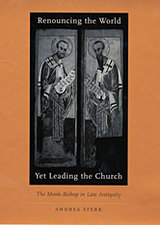
Although an ascetic ideal of leadership had both classical and biblical roots, it found particularly fertile soil in the monastic fervor of the fourth through sixth centuries. Church officials were increasingly recruited from monastic communities, and the monk-bishop became the dominant model of ecclesiastical leadership in the Eastern Roman Empire and Byzantium. In an interesting paradox, Andrea Sterk explains that "from the world-rejecting monasteries and desert hermitages of the east came many of the most powerful leaders in the church and civil society as a whole."
Sterk explores the social, political, intellectual, and theological grounding for this development. Focusing on four foundational figures--Basil of Caesarea, Gregory of Nyssa, Gregory of Nazianzus, and John Chrysostom--she traces the emergence of a new ideal of ecclesiastical leadership: the merging of ascetic and episcopal authority embodied in the monk-bishop. She also studies church histories, legislation, and popular ascetic and hagiographical literature to show how the ideal spread and why it eventually triumphed. The image of a monastic bishop became the convention in the Christian east.
Renouncing the World Yet Leading the Church brings new understanding of asceticism, leadership, and the church in late antiquity.
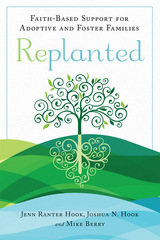
Many people embark on the journey of adoption and foster care but are unprepared for the challenges that await them along the way. Replanted takes an honest look at the joys and hardships that come with choosing this journey and provides a model of faith-based support made up of three parts to help families thrive: Soil, Sunlight, and Water.
- Soil, or emotional support, addresses the need for grace-filled settings where families can connect with other families who understand their experience.
- Sunlight, or informational support, focuses on obtaining helpful training to raise children who may have unique needs or challenges.
- Water, or tangible support, deals with concrete resources such as medical care, child care, and financial support.
Throughout the book, the Replanted model is brought to life by stories and examples based on the clinical work and personal experiences of the authors. Their candid insight will serve families who are actively involved in adoption or foster care, as well as people who are eager to help support those families.
Replanted affirms that with the right support system in place, parents can answer this sacred call not only with open hearts but also with their eyes wide open.
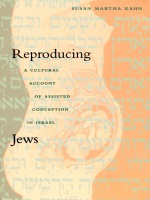
In this ethnographic study of the new reproductive technologies in Israel, Susan Martha Kahn explores the cultural meanings and contemporary rabbinic responses to artificial insemination, in-vitro fertilization, egg donation, and surrogacy. Kahn draws on fieldwork with unmarried Israeli women who are using state-subsidized artificial insemination to get pregnant and on participant-observation in Israeli fertility clinics. Through close readings of traditional Jewish texts and careful analysis of Israeli public discourse, she explains how the Israeli embrace of new reproductive technologies has made Jewish beliefs about kinship startlingly literal. Kahn also reveals how a wide range of contemporary Israelis are using new reproductive technologies to realize their reproductive futures, from ultraorthodox infertile married couples to secular unmarried women.
As the first scholarly account of assisted conception in Israel, this multisited ethnography will contribute to current anthropological debates on kinship studies. It will also interest those involved with Jewish studies.
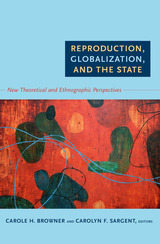
Contributors. Aditya Bharadwaj, Caroline H. Bledsoe, Carole H. Browner, Junjie Chen, Aimee R. Eden, Susan L. Erikson, Didier Fassin, Claudia Lee Williams Fonseca, Ellen Gruenbaum, Matthew Gutmann, Marcia C. Inhorn, Mark B. Padilla, Rayna Rapp, Lisa Ann Richey, Carolyn Sargent, Papa Sow, Cecilia Van Hollen, Linda Whiteford
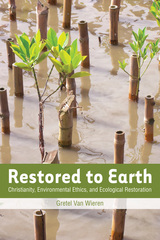
Ecological restoration integrates the science and art of repairing ecosystems damaged by human activities. Despite relatively little attention from environmental ethicists, restoration projects continue to gain significance, drawing on citizen volunteers and large amounts of public funds, providing an important model of responding to ecological crisis. Projects range from the massive, multi-billion dollar Kissimmee River project; restoring 25,000 acres of Everglades' wetlands; to the $30 million effort to restore selected wetlands in industrial Brownfield sites in Chicago's south side Lake Calumet area; to the reintroduction of tall grass prairie ecosystems in various communities in the Midwest.
Restored to Earth provides the first comprehensive examination of the religious and ethical dimensions and significance of contemporary restoration practice, an ethical framework that advances the field of environmental ethics in a more positive, action-oriented, experience-based direction. Van Wieren brings together insights and examples from restoration ecology, environmental ethics, religious studies, and conservation and Christian thought, as well as her own personal experiences in ecological restoration, to propose a new restoration ethic grounded in the concrete, hands-on experience of humans working as partners with the land.

Edith Blumhofer uses the Assemblies of God, the largest classical Pentecostal denomination in the world, as a lens through which to view the changing nature of Anglo Pentecostalism in the United States. She illustrates how the original mission to proclaim the end resulted in the development of Bible schools, the rise of the charismatic movement, and the popularity of such figures as Aimee Semple McPherson, Charles Fox Parham, and David Du Plessis. Blumhofer also examines the sect's use of radio and television and the creation of a parallel Christian culture
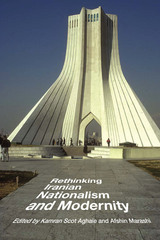
While recent books have explored Arab and Turkish nationalism, the nuances of Iran have received scant book-length study—until now. Capturing the significant changes in approach that have shaped this specialization, Rethinking Iranian Nationalism and Modernity shares innovative research and charts new areas of analysis from an array of scholars in the field.
Delving into a wide range of theoretical and conceptual perspectives, the essays—all previously unpublished—encompass social history, literary theory, postcolonial studies, and comparative analysis to address such topics as:
- Ethnicity in the Islamic Republic of Iran
- Political Islam and religious nationalism
- The evolution of U.S.-Iranian relations before and after the Cold War
- Comparing Islamic and secular nationalism(s) in Egypt and Iran
- The German counterrevolution and its influence on Iranian political alliances
- The effects of Israel’s image as a Euro-American space
- Sufism
- Geocultural concepts in Azar’s Atashkadeh
Interdisciplinary in essence, the essays also draw from sociology, gender studies, and art and architecture. Posing compelling questions while challenging the conventional historiographical traditions, the authors (many of whom represent a new generation of Iranian studies scholars) give voice to a research approach that embraces the modern era’s complexity while emphasizing Iranian nationalism’s contested, multifaceted, and continuously transformative possibilities.
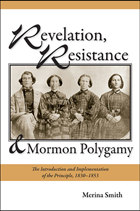
When Joseph Smith began to reveal and teach the doctrine of plural marriage in 1841, even stalwart members like Brigham Young were shocked and confused. In this thoughtful study, Smith argues that the secret introduction of plural marriage among the leadership coincided with an evolving public theology that provided a contextualizing religious narrative that persuaded believers to accept the principle.
This fresh interpretation draws from diaries, letters, newspapers, and other primary sources and is especially effective in its use of family narratives. It will be of great interest not only to scholars and the general public interested in Mormon history but in American history, religion, gender and sexuality, and the history of marriage and families.
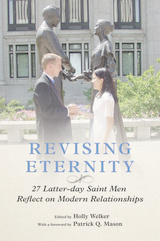
An insightful exploration of the gap between human realities and engrained ideals, Revising Eternity sheds light on how Latter-day Saint men view and experience marriage today.
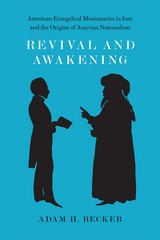
American evangelicals arrived in Iran in the 1830s. Becker examines how these missionaries, working with the “Nestorian” Church of the East—an Aramaic-speaking Christian community in the borderlands between Qajar Iran and the Ottoman Empire—catalyzed, over the span of sixty years, a new national identity. Instructed at missionary schools in both Protestant piety and Western science, this indigenous group eventually used its newfound scriptural and archaeological knowledge to link itself to the history of the ancient Assyrians, which in time led to demands for national autonomy. Exploring the unintended results of this American attempt to reform the Orient, Becker paints a larger picture of religion, nationalism, and ethnic identity in the modern era.
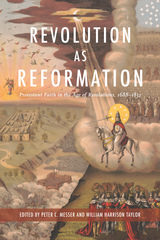
Revolution as Reformation: Protestant Faith in the Age of Revolutions, 1688–1832 highlights the role that Protestantism played in shaping both individual and collective responses to revolution. These essays explore the various ways that the Protestant tradition, rooted in a perpetual process of recalibration and reformulation, provided the lens through which Protestants experienced and understood social and political change in the Age of Revolutions. In particular, they call attention to how Protestants used those changes to continue or accelerate the Protestant imperative of refining their faith toward an improved vision of reformed religion.
The editors and contributors define faith broadly: they incorporate individuals as well as specific sects and denominations, and as much of “life experience” as possible, not just life within a given church. In this way, the volume reveals how believers combined the practical demands of secular society with their personal faith and how, in turn, their attempts to reform religion shaped secular society.
The wide-ranging essays highlight the exchange of Protestant thinkers, traditions, and ideas across the Atlantic during this period. These perspectives reveal similarities between revolutionary movements across and around the Atlantic. The essays also emphasize the foundational role that religion played in people’s attempts to make sense of their world, and the importance they placed on harmonizing their ideas about religion and politics. These efforts produced novel theories of government, encouraged both revolution and counterrevolution, and refined both personal and collective understandings of faith and its relationship to society.

In Rewriting the Word “God”, Romana Huk explores how avant-garde poets have radically reimagined divinity, human identity, and the real—without abandoning their faith traditions. Blending theology, philosophy, and poetic innovation, this expansive study traces how figures like Gerard Manley Hopkins and Fanny Howe challenge religious orthodoxy and literary convention to illuminate new paths toward spiritual and social understanding. Huk’s work is a bold intellectual journey through the intersections of belief, art, and justice.
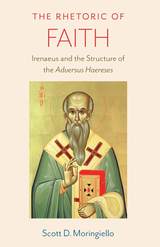
The argument focuses on the Adversus Haereses, although it does begin with some discussion to put Irenaeus in the context of second century Christian literature. Moringiello concludes with a discussion of Irenaeus’s Demonstration of the Apostolic Preaching.Other scholars have provided introductions to Irenaeus’s work, and other scholars have argued for the structural unity of the Adversus Haereses. No other scholar, though, has argued that the faith of the Church is the basis of Irenaeus’s argument. This argument, then, presents an important contribution to the field of Irenaeus studies.
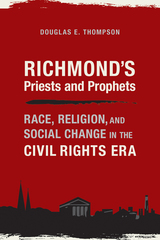
Douglas E. Thompson’s Richmond’s Priests and Prophets: Race, Religion, and Social Change in the Civil Rights Era presents a compelling study of religious leaders’ impact on the political progression of Richmond, Virginia, during the time of desegregation. Scrutinizing this city as an entry point into white Christians’ struggles with segregation during the 1950s, Thompson analyzes the internal tensions between ministers, the members of their churches, and an evolving world.
In the mid-twentieth-century American South, white Christians were challenged repeatedly by new ideas and social criteria. Neighborhood demographics were shifting, public schools were beginning to integrate, and ministers’ influence was expanding. Although many pastors supported the transition into desegregated society, the social pressure to keep life divided along racial lines placed Richmond’s ministers on a collision course with forces inside their own congregations. Thompson reveals that, to navigate the ideals of Christianity within a complex historical setting, white religious leaders adopted priestly and prophetic roles.
Moreover, the author argues that, until now, the historiography has not viewed white Christian churches with the nuance necessary to understand their diverse reactions to desegregation. His approach reveals the ways in which desegregationists attempted to change their communities’ minds, while also demonstrating why change came so slowly—highlighting the deeply emotional and intellectual dilemma of many southerners whose worldview was fundamentally structured by race and class hierarchies.
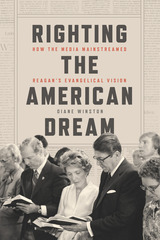
After two years in the White House, an aging and increasingly unpopular Ronald Reagan looked like a one-term president, but in 1983 something changed. Reagan spoke of his embattled agenda as a spiritual rather than a political project and cast his vision for limited government and market economics as the natural outworking of religious conviction. The news media broadcast this message with enthusiasm, and white evangelicals rallied to the president’s cause. With their support, Reagan won reelection and continued to dismantle the welfare state, unraveling a political consensus that stood for half a century.
In Righting the American Dream, Diane Winston reveals how support for Reagan emerged from a new religious vision of American identity circulating in the popular press. Through four key events—the “evil empire” speech, AIDS outbreak, invasion of Grenada, and rise in American poverty rates—Winston shows that many journalists uncritically adopted Reagan’s religious rhetoric and ultimately mainstreamed otherwise unpopular evangelical ideas about individual responsibility. The result is a provocative new account of how Reagan together with the press turned America to the right and initiated a social revolution that continues today.
Promoting Islam as a defender of human rights is laden with difficulties. Advocates of human rights will readily point out numerous humanitarian failures carried out in the name of Islam. In The Rights of God, Irene Oh looks at human rights and Islam as a religious issue rather than a political or legal one and draws on three revered Islamic scholars to offer a broad range of perspectives that challenge our assumptions about the role of religion in human rights.
The theoretical shift from the conception of morality based in natural duty and law to one of rights has created tensions that hinder a fruitful exchange between human rights theorists and religious thinkers. Does the static identification of human rights with lists of specific rights, such as those found in the Universal Declaration of Human Rights, make sense given the cultural, historical, and religious diversity of the societies in which these rights are to be respected and implemented? In examining human rights issues of the contemporary Islamic world, Oh illustrates how the value of religious scholarship cannot be overestimated.
Oh analyzes the commentaries of Abul A'la Maududi, Sayyid Qutb, and Abdolkarim Soroush—all prominent and often controversial Islamic thinkers—on the topics of political participation, religious toleration, and freedom of conscience. While Maududi and Qutb represent traditional Islam, and Soroush a more reform and Western-friendly approach, all three contend that Islam is indeed capable of accommodating and advocating human rights.
Whereas disentangling politics and culture from religion is never easy, Oh shows that the attempt must be made in order to understand and overcome the historical obstacles that prevent genuine dialogue from taking place across religious and cultural boundaries.
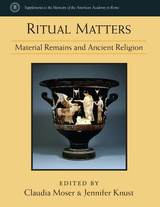
Material remains of religious practices may reveal striking local continuity, but they also highlight points of change, as distinct moments of manufacture and use transformed both sites and objects. Yet not every religious practice leaves a trace: the embodied use of imperial statuary, the rationale for the design of particular sacred books or the ephemeral “magical” implements designed by local religious experts leave few traces, if any, and are therefore less amenable to material investigation. What does remain, however, challenges any neat association between representation and reality or literary claim and practical application.
This volume represents a significant contribution to the material approach of studying the ancient Mediterranean’s diverse religious practices. In addition to volume editors Claudia Moser and Jennifer Knust, contributors include Henri Duday, Gunnel Ekroth, David Frankfurter, Richard Gordon, Valérie Huet, William Van Andringa, and Zsuzsanna Várhelyi. Topics covered include funerary remains, sacrificial practices, “magic,” Roman altars, imperial reliefs and statuary, and the role of sacred books.
In Ritual Soundings, Sarah Weiss reads deeply into and across the ethnographic details of multiple studies while offering a robust framework for studying music and world religion. Her meta-ethnography reveals surprising patterns of similarity between unrelated cultures. Deftly blending ethnomusicology, the study of gender in religion, and sacred music studies, she invites ethnomusicologists back into comparative work, offering them encouragement to think across disciplinary boundaries. As Weiss delves into a number of less-studied rituals, she offers a forceful narrative of how women assert agency within institutional religious structures while remaining faithful to the local cultural practices the rituals represent.
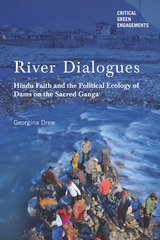
India’s sacred Ganga River is arguably one of the most iconic sites for worship, with a continuity of rituals for the living and the dead that span over two millennia. Along the river, from high in the Himalaya to the vast plains below, people gather daily to worship the Ganga through prayer and song. But large government-sponsored dams threaten to upend these practices.
In River Dialogues, Georgina Drew offers a detailed ethnographic engagement with the social movements contesting hydroelectric development on the Ganga. The book examines the complexity of the cultural politics that, on the one hand, succeeded in influencing an unprecedented reversal of government plans for three contested hydroelectric projects, and how, on the other hand, this decision sparked ripples of discontent after being paired with the declaration of a conservation zone where the projects were situated.
The book follows the work of women who were initially involved in efforts to stop the disputed projects. After looking to their discourses and actions, Drew argues for the use of a political ecology analysis that incorporates the everyday practice and everyday religious connections that animated the cultural politics of development. Drew offers a nuanced understanding of the struggles that communities enact to assert their ways of knowing and caring for resources that serves as an example for others critically engaging with the growing global advocacy of the “green economy” model for environmental stewardship.
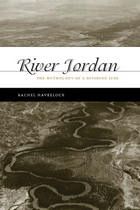
As the site of several miracles in the Jewish and Christian traditions, the Jordan is one of the world’s holiest rivers. It is also the major political and symbolic border contested by Israelis and Palestinians. Combining biblical and folkloric studies with historical geography, Rachel Havrelock explores how the complex religious and mythological representations of the river have shaped the current conflict in the Middle East.
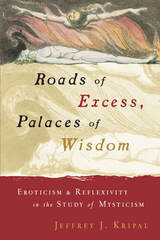
In his new book, Kripal addresses the twentieth-century study of mysticism as a kind of mystical tradition in its own right, with its own unique histories, discourses, sociological dynamics, and rhetorics of secrecy. Fluidly combining autobiography and biography with scholarly exploration, Kripal takes us on a tour of comparative mystical thought by examining the lives and works of five major historians of mysticism—Evelyn Underhill, Louis Massignon, R. C. Zaehner, Agehananda Bharati, and Elliot Wolfson—as well as relating his own mystical experiences. The result, Kripal finds, is seven "palaces of wisdom": the religious power of excess, the necessity of distance in the study of mysticism, the relationship between the mystical and art, the dilemmas of male subjectivity and modern heterosexuality, a call for ethical criticism, the paradox of the insider-outsider problem in the study of religion, and the magical power of texts and their interpretation.
An original and penetrating analysis of modern scholarship and scholars of mysticism, Roads of Excess, Palaces of Wisdom is also a persuasive demonstration of the way this scholarly activity is itself a mystical phenomenon.

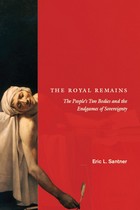
"The king is dead. Long live the king!" In early modern Europe, the king's body was literally sovereign—and the right to rule was immediately transferrable to the next monarch in line upon the king's death. In The Royal Remains, Eric L. Santner argues that the "carnal" dimension of the structures and dynamics of sovereignty hasn't disappeared from politics. Instead, it migrated to a new location—the life of the people—where something royal continues to linger in the way we obsessively track and measure the vicissitudes of our flesh.
Santner demonstrates the ways in which democratic societies have continued many of the rituals and practices associated with kingship in displaced, distorted, and usually, unrecognizable forms. He proposes that those strange mental activities Freud first lumped under the category of the unconscious—which often manifest themselves in peculiar physical ways—are really the uncanny second life of these "royal remains," now animated in the body politic of modern neurotic subjects. Pairing Freud with Kafka, Carl Schmitt with Hugo von Hofmannsthal,and Ernst Kantorowicz with Rainer Maria Rilke, Santner generates brilliant readings of multiple texts and traditions of thought en route to reconsidering the sovereign imaginary. Ultimately, The Royal Remains locates much of modernity—from biopolitical controversies to modernist literary experiments—in this transition from subjecthood to secular citizenship.
This major new work will make a bold and original contribution to discussions of politics, psychoanalysis, and modern art and literature.
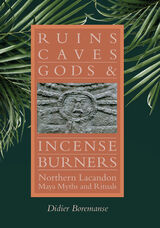
Their cult of incense burners, based on the veneration of Maya ruins and funerary caves and the deities these effigy censers represented, remained free of any Christian influence. Some ceremonies were vestiges of more complex rituals believed to date back to pre-Columbian times. In this volume, Didier Boremanse explores Lacandon beliefs and traditions he observed during the many months of fieldwork he did, spanning four decades.
Throughout the book Boremanse makes Lacandon values and worldviews accessible to readers from western cultures. Rituals are described and explained with extracts of the celebrants’ prayers that were tape-recorded, transcribed, and translated. Other elements of religious oral tradition are included, including incantations, chants, and the myths and beliefs that sustain the rites. Boremanse also discusses how larger social change influences religious change, both through economic means and outside influences. Most of the myths retold in this book have never been published in English. Photographs show rites that are no longer performed and shrines that no longer exist.
READERS
Browse our collection.
PUBLISHERS
See BiblioVault's publisher services.
STUDENT SERVICES
Files for college accessibility offices.
RECENTLY PUBLISHED
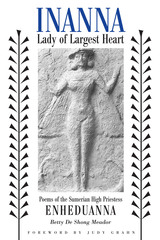


UChicago Accessibility Resources
home | accessibility | search | about | contact us
BiblioVault ® 2001 - 2025
The University of Chicago Press