
 A SCHOLARLY BOOK REPOSITORY
161 start with R start with R
Race is not a subject most people associate with archaeological research. Yet because of archaeologists’ interest in long time-spans they are perfectly positioned to investigate the “naturalness” of racial designations through time.
Race and the Archaeology of Identity brings together twelve of America’s most perceptive and talented historical archaeologists. Their focus is on the recent archaeological record—stretching geographically from Jamaica to northern Michigan; their time frame is from colonial days to the late nineteenth century; and their subjects range from frontier fur traders to Victorian city dwellers. Using textual and archaeological sources, contributors explore such topics as the connections of race to economics, the creation and maintenance of institutionalized poverty, the role of race in structuring and guiding intercultural connections, and the importance of race in creating and defining space.
Contributors explore such topics as the connections of race to economics, the role of race in structuring and guiding intercultural connections, and the importance of race in creating and defining space.
of black Cincinnati. These studies offer insight into both the dynamics of racism and a
community's changing responses to it." -- Peter Rachleff, author of Black Labor in
Richmond

In Race and Class Matters at an Elite College, Elizabeth Aries provides a rare glimpse into the challenges faced by black and white college students from widely different class backgrounds as they come to live together as freshmen. Based on an intensive study Aries conducted with 58 students at Amherst College during the 2005-2006 academic year, this book offers a uniquely personal look at the day-to-day thoughts and feelings of students as they experience racial and economic diversity firsthand, some for the first time.
Through online questionnaires and face-to-face interviews, Aries followed four groups of students throughout their first year of college: affluent whites, affluent blacks, less financially advantaged whites from families with more limited education, and less financially advantaged blacks from the same background. Drawing heavily on the voices of these freshmen, Aries chronicles what they learned from racial and class diversity—and what colleges might do to help their students learn more.
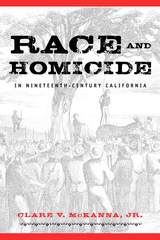
Nineteenth-century California was a society in turmoil, with a rapidly growing population, booming mining camps, insufficient or nonexistent law-enforcement personnel, and a large number of ethnic groups with differing attitudes toward law and personal honor. Violence, including murder, was common, and legal responses varied broadly. Available now for the first time in paperback, Race and Homicide in Nineteenth-Century California examines coroners’ inquest reports, court case files, prison registers, and other primary and printed sources to analyze patterns of homicide and the state’s embryonic justice system. Author Clare V. McKanna discovers that the nature of crimes varied with the ethnicity of perpetrators and victims, as did the conduct and results of trials and sentencing patterns. He presents specific case studies and a vivid portrait of an unruly society in flux. Enhanced with testimony from contemporary sources and illustrated with period photographs, this study richly portrays a frontier society where the law was neither omnipotent nor impartial.
The terrorist attacks against U.S. targets on September 11, 2001, and the subsequent wars in Afghanistan and Iraq, sparked an intense debate about "human rights." According to contributors to this provocative book, the discussion of human rights to date has been far too narrow. They argue that any conversation about human rights in the United States must include equal rights for all residents.
Essays examine the historical and intellectual context for the modern debate about human rights, the racial implications of the war on terrorism, the intersection of racial oppression, and the national security state. Others look at the Pinkerton detective agency as a forerunner of the Federal Bureau of Investigation, the role of Africa in post–World War II American attempts at empire-building, and the role of immigration as a human rights issue.
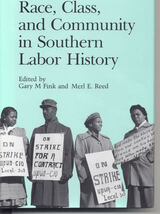
Under the leadership of Gary M. Fink and Merl E. Reed, Georgia State University hosts the Southern Labor Studies Conferences approximately every two years. The conferences have yielded two previous volumes, published in 1977 and 1981, and this volume, which contains selected papers from the seventh conference held in 1991.
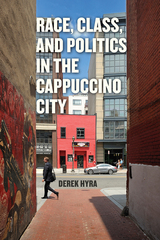
Race, Class, and Politics in the Cappuccino City is an in-depth ethnography of this gilded ghetto. Derek S. Hyra captures here a quickly gentrifying space in which long-time black residents are joined, and variously displaced, by an influx of young, white, relatively wealthy, and/or gay professionals who, in part as a result of global economic forces and the recent development of central business districts, have returned to the cities earlier generations fled decades ago. As a result, America is witnessing the emergence of what Hyra calls “cappuccino cities.” A cappuccino has essentially the same ingredients as a cup of coffee with milk, but is considered upscale, and is double the price. In Hyra’s cappuccino city, the black inner-city neighborhood undergoes enormous transformations and becomes racially “lighter” and more expensive by the year.
To understand racial disparities in COVID-19 infections and deaths, we must first understand how they are linked to racial inequality. In the United States, the material advantages afforded by whiteness lead to lower rates of infections and deaths from COVID-19 when compared to the rates among Black, Latino, and Native American populations. Most experts point to differences in population density, underlying health conditions, and proportions of essential workers as the primary determinants in the levels of COVID-19 deaths.
The national response to the pandemic has laid bare the fundamentals of a racialized social structure. Assembled by a prestigious group of sociologists, this volume examines how particularly during the first year of COVID-19, the socioeconomic impact of the pandemic led to different and poorer outcomes for Black, Latino, and Native American populations. While color-blindness shaped national discussions on essential workers, charity, and differential mortality, minorities were overwhelmingly affected. The essays in this collection provide a mix of critical examination of the progress and direction of our COVID-19 response, personal accounts of the stark difference in care and outcomes for minorities throughout the United States, and offer recommendations to create a foundation for future response and research during the critical early days.
"Race in the Schoolyard is a wonderful book for social scientists studying race, education, and childhood studies. The book showcases the talents of a gifted fieldworker whose theoretically rich work sits on the cutting edge of a growing body of scholarship examining the social worlds of children. School officials, parents, and, most especially, a new generation of teachers will benefit from these lessons on race."-American Journal of Sociology
"Instructors may recommend this book to students to whom the topic is surely vital and engrossing and for whom the text will be lively and engaging."-Contemporary Sociology
"Lewis moves beyond traditional research methods used to examine achievement gaps and differences in test scores to look closely at the realities of schooling. I highly recommend this work for every person involved in teaching and learning."-Multicultural Review
"Through eloquent case studies of three California elementary schools-a white-majority 'good' school, a mostly minority 'tough' school, and an integrated 'alternative' school-[Lewis] demonstrates that schools promote racial inequalities through their daily rituals and practices. Even the notion of a "color-blind" America-an especially popular ideal in the white school-perpetuates racism, Lewis argues, because it denies or dismisses the very real constraints that schools place on minorities. Lewis is nevertheless an optimist, insisting that schools can change ideas of race. . . . Highly recommended. Undergraduate collections and above."-Choice
"In this pioneering ethnography in elementary schools, Lewis shows brilliantly how racism is taught and learned in the small places of everyday life."-Joe Feagin, University of Florida and author of Racist America
"A wonderful and timely book. Ethnographically rich, theoretically sophisticated, and clearly written, this book addresses the ubiquitous issue of race in all its complexity."-Michèle Foster, author of Black Teachers on Teaching
"A compelling ethnography of the racial landscape of contemporary schools."-Barrie Thorne, author of Gender Play: Girls and Boys in School
Could your kids be learning a fourth R at school: reading, writing, 'rithmatic, and race?
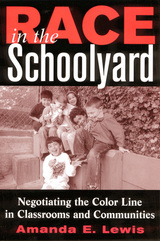
Race in the Schoolyard takes us to a place most of us seldom get to see in action¾ our children's classrooms¾ and reveals the lessons about race that are communicated there. Amanda E. Lewis spent a year observing classes at three elementary schools, two multiracial urban and one white suburban. While race of course is not officially taught like multiplication and punctuation, she finds that it nonetheless insinuates itself into everyday life in schools.
Lewis explains how the curriculum, both expressed and hidden, conveys many racial lessons. While teachers and other school community members verbally deny the salience of race, she illustrates how it does influence the way they understand the world, interact with each other, and teach children. This eye-opening text is important reading for educators, parents, and scholars alike.
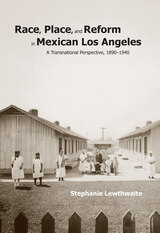
In Race, Place, and Reform in Mexican Los Angeles, Stephanie Lewthwaite presents evidence from a myriad of sources that these varied agendas of reform consistently supported the creation of racial, ethnic, and cultural differences across Los Angeles. Reformers simultaneously promoted acculturation and racialization, creating a “landscape of difference” that significantly shaped the place and status of Mexican immigrants and Mexican Americans from the Progressive era through the New Deal.
The book journeys across the urban, suburban, and rural spaces of Greater Los Angeles as it moves through time and examines the rural–urban migration of Mexicans on both a local and a transnational scale. Part 1 traverses the world of Progressive reform in urban Los Angeles, exploring the link between the region’s territorial and industrial expansion, early campaigns for social and housing reform, and the emergence of a first-generation Mexican immigrant population. Part 2 documents the shift from official Americanization and assimilation toward nativism and exclusion. Here Lewthwaite examines competing cultures of reform and the challenges to assimilation from Mexican nationalists and American nativists. Part 3 analyzes reform during the New Deal, which spawned the active resistance of second-generation Mexican Americans.
Race, Place, and Reform in Mexican Los Angeles achieves a full, broad, and nuanced account of the various—and often contradictory—efforts to reform the Mexican population of Los Angeles. With a transnational approach grounded in historical context, this book will appeal to students of history, cultural studies, and literary studies

Hochschild investigates the root causes of disputes in the arenas of policing, development, schooling, and budgeting. She finds that race and class are central to the Stop-Question-Frisk policing policy in New York City and the development of Atlanta’s Beltline. New York’s Stop-Question-Frisk policy was intended to fight crime and keep all New Yorkers safe. In practice, however, young Black and Latino men in low-income neighborhoods were disproportionately stopped by a predominantly White police force. The goal of the Atlanta Beltline, a redevelopment project that includes public parks, new housing, commercial development, and a robust public transit system, is to expand access around the city and keep working-class residents in the city by constructing affordable housing. Instead, the construction completed thus far has encouraged gentrification and displacement of poor, disproportionately Black residents, and has increased the wealth and power of both Black and White city elites.
However, Hochschild finds that race and class inequality are not central to all urban policy disputes. When investigating the issues of charter schools in Los Angeles and Chicago’s pension system she identifies a third driver: financial threat that feels existential to the policy and political actors. In Los Angeles, there is a battle between traditional public schools and independent charter schools. Increasingly, families with sufficient resources are moving out of L.A. to areas with better school districts. Traditional public schools and charter schools must fight for the remaining students and the funding that comes with them. There are not enough students to teach and not enough money to teach them. The school district risks school closures, layoffs, and pension deficits; in this context, race/class conflict fades into the background.
Chicago’s public sector pension debt is at least three times as large as the city’s annual budget and continues to grow. Policy actors agree that the pension system needs to be stably funded. Yet city leaders, fearful of upsetting constituents and jeopardizing their political careers, fail to implement policies that would do so. Meaningful policy change to rectify the pension deficit continues to get kicked down the line for future policy actors to address. In this context also, race/class conflict fades into the background.
Race/Class Conflict and Urban Financial Threat is a compelling examination of the role that race, class, and political and fiscal threat play in shaping urban policy.

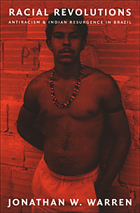
The growing number of pardos who claim Indian identity represents a radical shift in the direction of Brazilian racial formation. For centuries, the predominant trend had been for Indians to shed tribal identities in favor of non-Indian ones. Warren argues that many factors—including the reduction of state-sponsored anti-Indian violence, intervention from the Catholic church, and shifts in anthropological thinking about ethnicity—have prompted a reversal of racial aspirations and reimaginings of Indianness. Challenging the current emphasis on blackness in Brazilian antiracist scholarship and activism, Warren demonstrates that Indians in Brazil recognize and oppose racism far more than any other ethnic group.
Racial Revolutions fills a number of voids in Latin American scholarship on the politics of race, cultural geography, ethnography, social movements, nation building, and state violence.
Designated a John Hope Franklin Center book by the John Hope Franklin Seminar Group on Race, Religion, and Globalization.
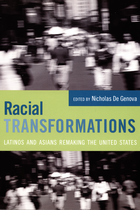
Several contributors illuminate ways that Latinos and Asians were historically racialized: by U.S. occupiers of Puerto Rico and the Philippines at the end of the nineteenth century, by public health discourses and practices in early-twentieth-century Los Angeles, by anthropologists collecting physical data—height, weight, head measurements—from Chinese Americans to show how the American environment affected “foreign” body types in the 1930s, and by Los Angeles public officials seeking to explain the alleged criminal propensities of Mexican American youth during the 1940s. Other contributors focus on the coalitions and tensions between Latinos and Asians in the context of the fight to integrate public schools and debates over political redistricting. One addresses masculinity, race, and U.S. imperialism in the literary works of Junot Díaz and Chang-rae Lee. Another looks at the passions, identifications, and charges of betrayal aroused by the sensationalized cases of Elián González, the young Cuban boy rescued off the shore of Florida, and Wen Ho Lee, the Los Alamos physicist accused of spying on the United States. Throughout this volume contributors interrogate many of the assumptions that underlie American and ethnic studies even as they signal the need for a research agenda that expands the purview of both fields.
Contributors. Nicholas De Genova, Victor Jew, Andrea Levine, Natalia Molina, Gary Y. Okihiro, Crystal Parikh, Greg Robinson, Toni Robinson, Leland T. Saito
In November 2001, the state of Alabama opened a referendum on its long-standing constitutional prohibition against interracial marriage. A bill on the state ballot offered the opportunity to relegate the state's antimiscegenation law to the dustbin of history. The measure passed, but the margin was alarmingly slim: more than half a million voters, 40 percent of those who went to the polls, voted to retain a racist and constitutionally untenable law.
Julie Novkov's Racial Union explains how and why, nearly forty years after the height of the civil rights movement, Alabama struggled to repeal its prohibition against interracial marriage---the last state in the Union to do so. Novkov's compelling history of Alabama's battle over miscegenation shows how the fight shaped the meanings of race and state over ninety years. Novkov's work tells us much about the sometimes parallel, sometimes convergent evolution of our concepts of race and state in the nation as a whole.
"A remarkably nuanced account of interlocked struggles over race, gender, class and state power. Novkov's site is Alabama, but her insights are for all America."
---Rogers M. Smith, Christopher H. Browne Distinguished Professor of Political Science, University of Pennsylvania
"Hannah Arendt shocked Americans in the 1950s by suggesting that interracial intimacy was the true measure of a society's racial order. Julie Novkov's careful, illuminating, powerful book confirms Arendt's judgment. By ruling on who may be sexually linked with whom, Alabama's courts and legislators created a racial order and even a broad political order; Novkov shows us just how it worked in all of its painful, humiliating power."
---Jennifer L. Hochschild, Henry LaBarre Jayne Professor of Government, Professor of African and African American Studies, and Harvard College Professor
Individual chapters engage the themes of ethnicity versus racism, gender inequality, sexuality, and the politics of identity configured with the discourse of postcoloniality and postmodernism. Questions of institutional racism, social justice, democratization, and international power relations between the center and the periphery are explored and analyzed. San Juan fashions a critique of dominant disciplinary approaches in the humanities and social sciences and contends that “the racism question” functions as a catalyst and point of departure for cultural critiques based on a radical democratic vision. He also asks urgent questions regarding globalization and the future of socialist transformation of “third world” peoples and others who face oppression.
As one of the most notable cultural theorists in the United States today, San Juan presents a provocative challenge to the academy and other disciplinary institutions. His intervention will surely compel the attention of all engaged in intellectual exchanges where race/ethnicity serves as an urgent focus of concern.
In Racism in a Racial Democracy, France Winddance Twine asks why Brazilians, particularly Afro-Brazilians, continue to have faith in Brazil's "racial democracy" in the face of pervasive racism in all spheres of Brazilian life. Through a detailed ethnography, Twine provides a cultural analysis of the everyday discursive and material practices that sustain and naturalize white supremacy.
This is the first ethnographic study of racism in southeastern Brazil to place the practices of upwardly mobile Afro-Brazilians at the center of analysis. Based on extensive field research and more than fifty life histories with Afro- and Euro-Brazilians, this book analyzes how Brazilians conceptualize and respond to racial disparities. Twine illuminates the obstacles Brazilian activists face when attempting to generate grassroots support for an antiracist movement among the majority of working class Brazilians. Anyone interested in racism and antiracism in Latin America will find this book compelling.
"Twine offers one of the most sophisticated analyses to date of the intransigence of Brazilian racism. Her nuanced account of the complex interplay of gender, race, and class is particularly exciting. This book will have a powerful impact not only on the field of Brazilian racial studies, but on the whole burgeoning literature on the African Diaspora." -- Howard Winant, author of Racial Conditions: Politics, Theory, Comparisons
"A revealing and sharply observed dissection of how racism works 'on the ground' in Brazil." -- George Reid Andrews, author of Blacks and Whites in Sao Paulo, Brazil, 1888-1988


A personal guide to the transformations, hard truths, profound pleasures, and infinite possibilities of aging
One May morning shortly before her seventy-fifth birthday, Andrea Gilats awoke to a startling, sudden spike in consciousness that she was about to leap from older to old. Radical Endurance is the story of the reckoning that followed, a candid, clear-eyed journey of discovery through the pitfalls and possibilities of aging. Facing the realities of her age, Gilats explores her fears of failing health and loss of independence while navigating the terrain of an ageist culture. But among such troubling uncertainties, she also encounters the singular pleasures of “growing up again,” of finding fresh and unexpected ways of understanding herself and making meaning during this new era of her life.
Reflecting on moments in midlife, from the painful adjustments of widowhood to life-altering medical diagnoses, Gilats arrives at a valuable insight: the journey toward old age begins sooner and lasts longer than we might imagine. Yet from any moment in this process, old age is the future, brimming with potential. In her account, Gilats combines personal and professional experience, offering firsthand knowledge of a stage of life that we each meet in our own time, in our own way. She also contributes the learning and wisdom of her heroes and mentors, including feminist author Barbara Ehrenreich, poet May Sarton, singer and activist Joan Baez, psychiatrist Gene Cohen, archaeologist Arthur C. Parker, physician Jane Hodgson, and Nobel literature laureate Isaac Bashevis Singer.
Enlightening and deeply moving, alive to the sadness and joy of time passing, Radical Endurance is a guide and a companion through the experience of growing old as well as an unconventional coming-of-age story, celebrating a new stage of life when we need it most.
Retail e-book files for this title are screen-reader friendly.
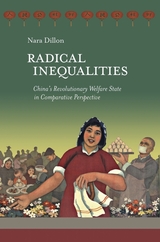
The Chinese Communist welfare state was established with the goal of eradicating income inequality. But paradoxically, it actually widened the income gap, undermining one of the most important objectives of Mao Zedong’s revolution. Nara Dillon traces the origins of the Chinese welfare state from the 1940s through the 1960s, when such inequalities emerged and were institutionalized, to uncover the reasons why the state failed to achieve this goal.
Using newly available archival sources, Dillon focuses on the contradictory role played by labor in the development of the Chinese welfare state. At first, the mobilization of labor helped found a welfare state, but soon labor’s privileges turned into obstacles to the expansion of welfare to cover more of the poor. Under the tight economic constraints of the time, small, temporary differences evolved into large, entrenched inequalities. Placing these developments in the context of the globalization of the welfare state, Dillon focuses on the mismatch between welfare policies originally designed for European economies and the very different conditions found in revolutionary China. Because most developing countries faced similar constraints, the Chinese case provides insight into the development of narrow, unequal welfare states across much of the developing world in the postwar period.
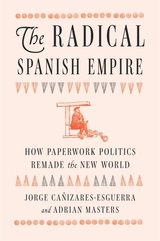
A groundbreaking history of political struggle in the Spanish New World, where commoners and elites alike challenged the social order through the remarkable power of paperwork.
As Spanish conquistadors swept through the New World, the Crown envisioned that a rigidly hierarchical aristocratic order would flourish in their wake. At first, this vision seemed to be within reach: the great conquistadors ruled as noblemen over millions. Yet contrary to all expectations, the Spanish empire in the New World quickly became a hotbed of radical efforts to overturn the emerging order. With the conquistadors in retreat, new enclaves controlled by powerful friars and native lords arose. But they too collapsed, again to the surprise of many.
As Jorge Cañizares-Esguerra and Adrian Masters show, these social orders broke down thanks to the challenges mounted by countless individuals across the Spanish Americas—including non-elite Spanish and Indigenous people, women, and the enslaved. To achieve their goals, they turned not only to outright violence but also to massive amounts of paperwork: petitions, complaints, lawsuits, and secret testimonies. Through this grassroots “lawfare,” vassals undercut the emerging seigneurial dynasties of the conquistadors, stripped the friars of theocratic authority, and curtailed the might of native lords. Collectively, they spearheaded movements against tyranny and slavery, proposed and challenged laws, produced new types of knowledge, created archives and historical accounts, and questioned the nature of truth itself. In the process, however, these actors also gradually co-created a lasting new society of orders—one that would solidify in the 1570s with viceroys, bishops, and inquisitors at its apex.
Dramatically recasting a pivotal era in colonial history, The Radical Spanish Empire illuminates how the power of paperwork forever transformed the New World.
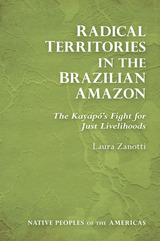
Radical Territories in the Brazilian Amazon sheds light on the creative and groundbreaking efforts Kayapó peoples deploy to protect their lands and livelihoods. Now at the front lines of cultivating diversified strategies for resistance, the Kayapó are creating a powerful activist base, experimenting with nontimber forest projects, and forging strong community conservation partnerships. Tracing the complex politics of the Kayapó’s homeland, Laura Zanotti advances approaches to understanding how indigenous peoples cultivate self-determination strategies in conflict-ridden landscapes.
Kayapó peoples are providing a countervision of what Amazonia can look like in the twenty-first century, dominated neither by agro-industrial interests nor by uninhabited protected landscapes. Instead, Kayapó peoples see their homeland as a living landscape where indigenous vision engages with broader claims for conservation and development in the region.
Weaving together anthropological and ethnographic research with personal interactions with the Kayapó, Zanotti tells the story of activism and justice in the Brazilian Amazon, and how Kayapó communities are using diverse pathways to make a sustainable future for their peoples and lands. The author interweaves Kayapó perspectives with a political ecology framework to show how working with indigenous peoples is vital to addressing national and global challenges in the present time, when many environmentally significant conditions and processes are profoundly altered by human activities.

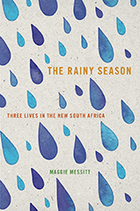
The Rainy Season tells the stories of three generations in the Rainbow Nation one decade after its first democratic elections. This multi-threaded narrative follows Regina, a tapestry weaver in her sixties, standing at the crossroads where her Catholic faith and the AIDS pandemic crash; Thoko, a middle-aged sangoma (traditional healer) taking steps to turn her shebeen into a fully licensed tavern; and Dankie, a young man taking his matriculation exams, coming of age as one of Mandela’s Children, the first academic class educated entirely under democratic governance.
Home to Shangaan, Sotho, and Mozambican Tsonga families, Rooiboklaagte sits in a village where an outdoor butchery occupies an old petrol station and a funeral parlor sits in the attached garage. It’s a place where an AIDS education center sits across the street from a West African doctor selling cures for the pandemic. It’s where BMWs park outside of crumbling cement homes, and the availability of water changes with the day of the week. As the land shifts from dusty winter blond to lush summer green and back again, the duration of northeastern South Africa’s rainy season, Regina, Thoko, and Dankie all face the challenges and possibilities of the new South Africa.
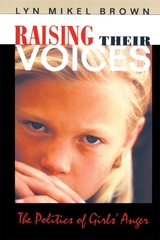
Two fourteen-year-old girls, fed up with the "Hooters" shirts worn by their male classmates, design their own rooster logo: "Cocks: Nothing to crow about." Seventeen-year-old April Schuldt, unmarried, pregnant, and cheated out of her election as homecoming queen by squeamish school administrators, disrupts a pep rally with a protest that engages the whole school.
Where are spirited girls like these in the popular accounts of teenage girlhood, that supposed wasteland of depression, low self-esteem, and passive victimhood? This book, filled with the voices of teenage girls, corrects the misperceptions that have crept into our picture of female adolescence. Based on the author's yearlong conversation with white junior-high and middle-school girls--from the working poor and the middle class--Raising Their Voices allows us to hear how girls adopt some expectations about gender but strenuously resist others, how they use traditionally feminine means to maintain their independence, and how they recognize and resist pressures to ignore their own needs and wishes.
With a psychologist's sensitivity and an anthropologist's attention to cultural variations, Lyn Brown makes provocative observations about individual differences in the girls' experiences and attitudes, and shows how their voices are shaped and constrained by class--with working-class girls more willing to be openly angry than their middle-class peers, and yet more likely to denigrate themselves and attribute their failures to personal weakness.
A compelling and timely corrective to conventional wisdom, this book attunes our hearing to the true voices of teenage girls: determined, confused, amusing, touching, feisty, and clear.
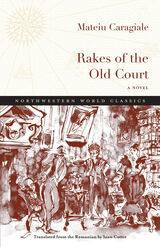
Originally published in 1929, Rakes of the Old Court is considered a jewel of Romanian modernism. Devoted “Mateists” have long read, memorized, and reenacted the novel, and after the Romanian Revolution, it became part of the high school curriculum. Now canonical, Mateiu’s work has been celebrated for its opulent literary style and enigmatic tone.
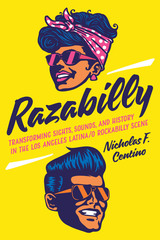
Vocals tinged with pain and desperation. The deep thuds of an upright bass. Women with short bangs and men in cuffed jeans. These elements and others are the unmistakable signatures of rockabilly, a musical genre normally associated with white male musicians of the 1950s. But in Los Angeles today, rockabilly's primary producers and consumers are Latinos and Latinas. Why are these "Razabillies" partaking in a visibly "un-Latino" subculture that's thought of as a white person's fixation everywhere else?
As a Los Angeles Rockabilly insider, Nicholas F. Centino is the right person to answer this question. Pairing a decade of participant observation with interviews and historical research, Centino explores the reasons behind a Rockabilly renaissance in 1990s Los Angeles and demonstrates how, as a form of working-class leisure, this scene provides Razabillies with spaces of respite and conviviality within the alienating landscape of the urban metropolis. A nuanced account revealing how and why Los Angeles Latinas/os have turned to and transformed the music and aesthetic style of 1950s rockabilly, Razabilly offers rare insight into this musical subculture, its place in rock and roll history, and its passionate practitioners.
Jackson argues that authenticity caricatures identity as something imposed on people, imprisoning them within stereotypes: an African American high school student who excels in the classroom, for instance, might be dismissed as "acting white." On the other hand, sincerity, as Jackson defines it, imagines authenticity as an incomplete measuring stick, an analytical model that attempts to deny people agency in their search for identity.
Drawing on more than ten years of ethnographic research in and around New York City, Jackson offers a kaleidoscope of subjects and stories that directly and indirectly address how race is negotiated in today's world—including tales of book-vending numerologists, urban conspiracy theorists, corrupt police officers, mixed-race neo-Nazis, and gospel choirs forbidden to catch the Holy Ghost. Jackson records and retells their interconnected sagas, all the while attempting to reconcile these stories with his own crisis of identity and authority as an anthropologist terrified by fieldwork. Finding ethnographic significance where mere mortals see only bricks and mortar, his invented alter ego Anthroman takes to the streets, showing how race is defined and debated, imposed and confounded every single day.

Winner of the Tennessee History Book Award (Tennessee Historical Society and Tennessee Historical Commission), 2024
The Realms of Oblivion explores the complexities involved in reconciling competing versions of history, channeled through Davies Manor, a historic site near Memphis that once centered a wealthy slave-owning family’s sprawling cotton plantation. Interrogating the forces of memorialization that often go unquestioned in the stories we believe about ourselves and our communities, this book simultaneously tells an informative and engrossing bottom-up history—of the Davies family, of the Black families they enslaved and exploited across generations, and of Memphis and Shelby County—while challenging readers to consider just what upholds the survival of that history into the present day.
Written in an engaging and critical style, The Realms of Oblivion is grounded in a rich source base, ranging from nineteenth-century legal records to the personal papers of the Davies family to twentieth-century African American oral histories. Author Andrew C. Ross uses these sources to unearth the stark contrast between the version of Davies Manor’s history that was built out of nostalgia, and the version that records have proven to actually be true. As a result, Ross illuminates the ongoing need for a deep and honest reckoning with the history of the South and of the United States, on the part of both individuals and community institutions such as local historic sites and small museums.

In this scholarly work, Zirakzadeh argues that there is a calculated reasoning behind ETA's political violence that is often overlooked by researchers. His book is a comprehensive account of the Basque region's grassroots politics.
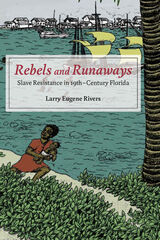
Against a smoldering backdrop of violence, this study analyzes the various degrees of slave resistance--from the perspectives of both slave and master--and how they differed in various regions of antebellum Florida. In particular, Rivers demonstrates how the Atlantic world view of some enslaved blacks successfully aided their escape to freedom, a path that did not always lead North but sometimes farther South to the Bahama Islands and Caribbean. Identifying more commonly known slave rebellions such as the Stono, Louisiana, Denmark (Telemaque) Vesey, Gabriel, and the Nat Turner insurrections, Rivers argues persuasively that the size, scope, and intensity of black resistance in the Second Seminole War makes it the largest sustained slave insurrection ever to occur in American history.
Meticulously researched, Rebels and Runaways offers a detailed account of resistance, protest, and violence as enslaved blacks fought for freedom.
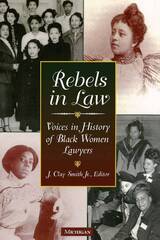
The essays demonstrate the involvement of black women lawyers in important public issues of our time and show them addressing the sensitive subjects of race, equality, justice and freedom. Drawing together many writings that have never been published or have been published in obscure journals or newspapers, Rebels in Law is a groundbreaking study. In addition, it offers historical background information on each writer and on the history of black women lawyers. Providing an opportunity to study the origins of black women as professionals, community leaders, wives, mothers, and feminists, it will be of interest to scholars in the fields of law, history, political science, sociology, black studies and women's studies.
J. Clay Smith, Jr., is Professor of Law, Howard University Law School. He was formerly a member of the United States Equal Employment Opportunity Commission, Dean of Howard University Law School, and President of the Washington Bar Association. He is the author of Emancipation: The Making of the Black Lawyer, 1844-1944 and numerous articles.
Alongside the young rebel, the contemporary concept of identity emerged in the 1950s. It was in that decade that “identity” was first used to define collective selves in the politicized manner that is recognizable today: in terms such as “national identity” and “racial identity.” Medovoi traces the rapid absorption of identity themes across many facets of postwar American culture, including beat literature, the young adult novel, the Hollywood teen film, early rock ‘n’ roll, black drama, and “bad girl” narratives. He demonstrates that youth culture especially began to exhibit telltale motifs of teen, racial, sexual, gender, and generational revolt that would burst into political prominence during the ensuing decades, bequeathing to the progressive wing of contemporary American political culture a potent but ambiguous legacy of identity politics.
The political and social life of India in the last decade has given rise to a variety of questions concerning the nature and resilience of patriarchal systems in a transitional and post-colonial society. The contributors to this interdisciplinary volume recognize that every aspect of reality is gendered, and that such a recognition involves a dismantling of the ideological presuppositions of the so-called gender neutral ideologies, as well as the boundaries of individual disciplines.
The first set of essays seeks to analyze the patriarchal discourses of a colonial society and includes an analysis of the shaping of Hindu-Aryan identity, the parameters of the discourse on widow-immolation, the "defeminization" of popular culture in nineteenth-century urban Calcutta, the nature of the reforms proposed by early women's journals in Hindi, and the implications of the nationalist movement and of Indo-Anglian leterature on middle-class patriarchal norms.
The second set of articles relates to women of the productive classes--the reconstitution of patriarchies in the agrarian transition in Haryana, in the Oudh peasant movement, in the armed peasant struggle in Telangana, and among the working class in Bengal. The contributors explore the interrelation of patriarchies with political economy, law, religion, and culture, and suggest a different history of "reform" movements, and of class and gender relations.
The political and social life of India in the last decade has given rise to a variety of questions concerning the nature and resilience of patriarchal systems in a transitional and post-colonial society. The contributors to this interdisciplinary volume recognize that every aspect of reality is gendered, and that such a recognition involves a dismantling of the ideological presuppositions of the so-called gender neutral ideologies, as well as the boundaries of individual disciplines.
The first set of essays seeks to analyze the patriarchal discourses of a colonial society and includes an analysis of the shaping of Hindu-Aryan identity, the parameters of the discourse on widow-immolation, the "defeminization" of popular culture in nineteenth-century urban Calcutta, the nature of the reforms proposed by early women's journals in Hindi, and the implications of the nationalist movement and of Indo-Anglian leterature on middle-class patriarchal norms.
The second set of articles relates to women of the productive classes--the reconstitution of patriarchies in the agrarian transition in Haryana, in the Oudh peasant movement, in the armed peasant struggle in Telangana, and among the working class in Bengal. The contributors explore the interrelation of patriarchies with political economy, law, religion, and culture, and suggest a different history of "reform" movements, and of class and gender relations.
Although Montreal has been a bilingual city since 1760 and demographically dominated by French-speakers for well over a century and a quarter, it was not until the late 1960s that full-fledged challenges to the city’s English character emerged. Since then. two decades of agitation over la question linguistique as well as the enactment of three language laws have altered the places of French and English in Montreal‘s schools, public administration, economy. and even commercial signs. In this book, Marc Levine examines the nature of this stunning transformation and, in particular, the role of public policy in promoting it.
The reconquest of Montreal by the French-speaking majority makes for interesting history. It includes episodes of intense conflict and occasional violence and tells the fascinating story of how an economically disadvantaged and culturally threatened linguistic community mobilized politically and used the state to redistribute group power in Canada’s second largest city. In addition, the history of Montreal’s language question offers analysts of urban politics and public policy an excellent case study of some of the central issues facing cities containing more than one major linguistic community.
After tracing the politicization of the language question in the 1960s and 1970s, Levine analyzes the impact of the three controversial language laws penacted by the Quebec provincial government between 1969 and 1977. Exhaustively researched, The Reconquest of Montreal is the definitive study of the most explosive issue in Quebec political life.
In the series Conflicts in Urban and Regional Development, edited by John R. Logan and Todd Swanstrom.
Illuminating crucial connections between understandings of race, gender, and place on the one hand and narrative and images on the other, McPherson reads a number of representations of the South produced from the 1930s to the present. These are drawn from fiction, film, television, southern studies scholarship, popular journalism, music, tourist sites, the internet, and autobiography. She examines modes of affect or ways of "feeling southern" to reveal how these feelings, along with the narratives and images she discusses, sanction particular racial logics. A wide-ranging cultural studies critique, Reconstructing Dixie calls for vibrant new ways of thinking about the South and for a revamped and reinvigorated southern studies.
Reconstructing Dixie will appeal to scholars in American, southern, and cultural studies, and to those in African American, media, and women’s studies.
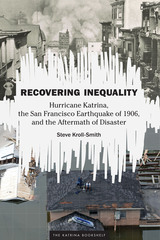
A lethal mix of natural disaster, dangerously flawed construction, and reckless human actions devastated San Francisco in 1906 and New Orleans in 2005. Eighty percent of the built environments of both cities were destroyed in the catastrophes, and the poor, the elderly, and the medically infirm were disproportionately among the thousands who perished. These striking similarities in the impacts of cataclysms separated by a century impelled Steve Kroll-Smith to look for commonalities in how the cities recovered from disaster. In Recovering Inequality, he builds a convincing case that disaster recovery and the reestablishment of social and economic inequality are inseparable.
Kroll-Smith demonstrates that disaster and recovery in New Orleans and San Francisco followed a similar pattern. In the immediate aftermath of the flooding and the firestorm, social boundaries were disordered and the communities came together in expressions of unity and support. But these were quickly replaced by other narratives and actions, including the depiction of the poor as looters, uneven access to disaster assistance, and successful efforts by the powerful to take valuable urban real estate from vulnerable people. Kroll-Smith concludes that inexorable market forces ensured that recovery efforts in both cities would reestablish the patterns of inequality that existed before the catastrophes. The major difference he finds between the cities is that, from a market standpoint, New Orleans was expendable, while San Francisco rose from the ashes because it was a hub of commerce.
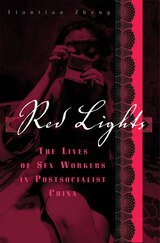
Zheng embarked on two years of intensely embedded ethnographic fieldwork in her birthplace, Dalian, a large northeastern Chinese seaport of over six million people. During this time, Zheng lived and worked with a group of hostesses in a karaoke bar, facing many of the same dangers that they did and forming strong, intimate bonds with them. The result is an especially engaging, moving story of young, rural women struggling to find meaning, develop a modern and autonomous identity, and, ultimately, survive within an oppressively patriarchal state system.
Moving from her case studies to broader theories of sex, gender, and power, Zheng connects a growth in capitalist entrepreneurialism to the emergence of an urban sex industry, brilliantly illuminating the ways in which hostesses, their clients, and the state are mutually created in postsocialist China.
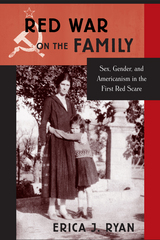
In her probing and engaging book, Red War on the Family, Erica Ryan traces the roots of sexual modernism and the history of antiradicalism and antifeminism. She illuminates how Americans responded to foreign and domestic threats and expressed nationalism by strengthening traditional gender and family roles-especially by imposing them on immigrant groups, workers, women, and young people.
Ryan argues that the environment of political conformity in the 1920s was maintained in part through the quest for cultural and social conformity, exemplified by white, middle-class family life. Red War on the Family charts the ways Americanism both reinforced and was reinforced by these sexual and gender norms in the decades after World War I.
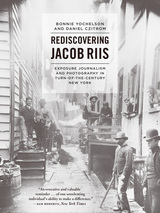
With Rediscovering Jacob Riis, art historian Bonnie Yochelson and historian Daniel Czitrom place Jacob Riis’s images in historical context even as they expose a clear sightline to the present. In the first half of their book, Czitrom explores Riis’s reporting and activism within the gritty specifics of Gilded Age New York: its new immigrants, its political machines, its fiercely competitive journalism, its evangelical reformers, and its labor movement. In delving into Riis’s intellectual education and the lasting impact of How the Other Half Lives, Czitrom shows that though Riis argued for charity, not sociopolitical justice, the empathy that drove his work continues to inspire urban reformers today.
In the second half of the book, Yochelson describes for the first time Riis’s photographic practice: his initial reliance on amateur photographers to take the photographs he needed, his own use of the camera, and then his collecting of photographs by professionals, who by 1900 were documenting social reform efforts for government agencies and charities. She argues that while Riis is rightly considered a revolutionary in the history of photography, he was not a photographic artist. Instead, Riis was a writer and lecturer who first harnessed the power of photography to affect social change.
As staggering inequality continues to be an urgent political topic, this book, illustrated with nearly seventy of Riis’s photographs, will serve as a stunning reminder of what has changed, and what has not.

Lopez investigates how ordinary people, labor activists, journalists, filmmakers, theater managers, and owners all shaped Black film culture. Black girls and women used moviegoing as a means of independence and control over their lives. Race filmmaker Oscar Micheaux fought with New York State’s censorship board to get his films screened with limited edits in local theaters. And Harlem’s Black projectionists battled for unionization and fair pay, while journalists linked cinema to Black New Yorkers’ lived experiences.
In Reel Freedom, Lopez chronicles the wide-ranging and remarkable pervasiveness of Black film culture in New York City, redefining a period and place most associated with the Harlem Renaissance. In doing so, she illustrates how Black New Yorkers leveraged cinema to make the city their own and to enjoy urban living to its fullest.
In the series Urban Life, Landscape, and Policy
Christian evangelicals among native people in Latin America.
What does it mean to be both Maya and Protestant in Guatemala? Burgeoning religious pluralism in Mesoamerica and throughout Latin America is evident as Protestantism permeates a region that had been overwhelmingly Catholic for nearly five centuries.
In considering the interplay between contemporary Protestant practice and native cultural traditions among Maya evangelicals, Samson documents the processes whereby some Maya have converted to new forms of Christianity and the ways in which the Maya are incorporating Christianity for their own purposes. At the intersection of religion and cultural pluralism, contemporary evangelicals focus on easing the tension between Maya identity and the Protestant insistence that old ways must be left behind in the conversion process.
Against the backdrop of the 36-year civil war that ended in 1996 and the rise of the indigenous Maya Movement in the late 1980s, this work provides a unique portrait of social movements, cultural and human rights, and the role that religion plays in relation to the nation-state in post-conflict political processes. Re-enchanting the World fills a niche within the anthropological literature on evangelicals in Latin America during a time of significant social change.
As his central case, Hanks undertakes a comprehensive analysis of deixis—linguistic forms that fix reference in context, such as English I, you, this, that, here, and there. He shows that Maya deixis is a basic cultural construct linking language with body space, domestic space, agricultural and ritual practices, and other fields of social activity. Using this as a guide to ethnographic description, he discovers striking regularities in person reference and modes of participation, the role of perception in reference, and varieties of spatial orientation, including locative deixis. Traditionally considered a marginal area in linguistics and virtually untouched in the ethnographic literature, the study of referential deixis becomes in Hanks's treatment an innovative and revealing methodology.
Referential Practice is the first full-length study of actual deictic use in a non-Western language, the first in-depth study of speech practice in Yucatec Maya culture, and the first detailed account of the relation between routine conversation, embodiment, and ritual discourse.
From rap music to preaching, from Toni Morrison to Leonard Jeffries, from Michael Jackson to Michael Jordan, Reflecting Black explores as never before the varied and complex dimensions of African-American culture through personal reflection, expository journalism, scholarly investigation and even homily.
"A landmark text in Afro-American cultural criticism. There is simply nothing like it that exists. The level of theoretical sophistication and political engagement is rare-and badly needed." -Cornel West"As Reflecting Black so richly demonstrates, Michael Eric Dyson combines cutting-edge theoretical acuity with the passionate, engaged, and accessible stance of a public intellectual. His critical purview encompasses scholarly tomes and mass market periodicals, trends in theology and in hip-hop culture alike. This book is a splendid introduction to a singularly important voice." -Henry Louis Gates, Jr."Dyson is a young black cultural, political and religious critic whose new book directs its nastiest commentary at racism, sexism, capitalism and straight-up immorality. His is a fresh voice seemingly unfazed by Blackademe's battle royal. Dyson's project is very much in the tradition of recent work by a number of young African-American cultural critics like Tricia Rose, Hilton Als, bell hooks, Greg Tate, Wahneema Lubiano, Elizabeth Alexander and Herman Gray, to name but a few. Reflecting Black is much more than a cultural critique in the formal sense. It interrogates the political, social and moral crises confronting American society generally and African-American communities in particular. In the end, Dyson is not one of those cultural studies scholars concerned with debating the fine points of discourse theory. He is an 'oppositional' critic with a much higher purpose than developing analytical tools to make sense of African-American culture. The Reverend Dyson is not only operating within a rich Marxist tradition but within a very old and continuing African-American tradition. Black communities, through newspaper columns, church groups, street corner gatherings, beauty parlor and barber shop discussions, have always debated and taken responsibility for their culture(s). Dyson's constant lecturing, chiding and encouraging embodies what Antonio Gramsci and his own mama expected us to do all along: not just interpret culture but actively change it--through struggle." -The Nation"Where Michael Jackson meets spirituality, where Martin Luther King meets Malcolm X, where the consolidating 'narrative of racial unity' meets the 'perplexing and chaotic politics of racial identity': These are the border zones of Michael Eric Dyson's compassionate, postmodern, eclectic critical project. Reflecting Black is an invigorating reader for our perplexing and chaotic times." -Voice Literary Supplement"He shows an admirable breadth, ranging from issues such as racism and political correctness in the seminary to examinations of such icons of popular culture as filmaker Spike Lee, singer Michael Jackson and athlete Michael Jordan. One entire section of the book is devoted to black religion, and includes an examination of the lives and examples of Martin Luther King, Jr. and Malcom X." -Washington Post Book World"Yet, if Dyson stumbles in his discussions of black popular culture, he soars in his section titled 'Beyond the Mantra: Reflections on Race, Gender, and Class.' In 'Remembering Emmett Till,' Dyson writes not just with his mind, but with his heart." -Boston Globe"Yet his insights are just as often incisive and challenging, and they demand serious consideration. By insisting that we acknowledge the complexities of race in America and by refusing to accept easy answers, Reflecting Black forces us to think harder about how we can create alterna
As a recognized authority on the subject, qualified by multiple degrees in racial and American Indian studies, Deyhle is able to chronicle the lives and “survivance” of three Navajo women in a way that is simultaneously ethnographic and moving. Her critique of the U.S. education system’s underlying yet very real tendency toward structural discrimination takes shape in elegant prose that moves freely into and out of time and place. The combination of substantive sources and touching personal experience forms a profound and enduring narrative of critical and current importance.
While this book stands as a powerful contribution to American Indian studies, its compelling human elements will extend its appeal to anyone concerned with the ongoing plight of American Indians in the education system.

Cambodian history is Cold War history, asserts Y-Dang Troeung in Refugee Lifeworlds. Constructing a genealogy of the afterlife of the Cold War in Cambodia, Troeung mines historical archives and family anecdotes to illuminate the refugee experience, and the enduring impact of war, genocide, and displacement in the lives of Cambodian people.
Troeung, a child of refugees herself, employs a method of autotheory that melds critical theory, autobiography, and textual analysis to examine the work of contemporary artists, filmmakers, and authors. She references a proverb about the Cambodian kapok tree that speaks to the silences, persecutions, and modes of resistance enacted during the Cambodian Genocide, and highlights various literary texts, artworks, and films that seek to document and preserve Cambodian histories nearly extinguished by the Khmer Rouge regime.
Addressing the various artistic responses to prisons and camps, issues of trauma, disability, and aphasia, as well as racism and decolonialism, Refugee Lifeworlds repositions Cambodia within the broader transpacific formation of the Cold War. In doing so, Troeung reframes questions of international complicity and responsibility in ways that implicate us all.

The notion of indigeneity in the Philippines is politically fraught. Most who live on the archipelago are descendants of aboriginal peoples, whether they claim tribal affiliation or not, and those who do enact traditional identities share little else in common. As a result, the term “indigenous” remains unstable and malleable seventy-five years after independence. Connecting insights from Tillian and Foucauldian social theory, Regimes illuminates how the ever-changing Philippine state, from the 1970s through today, constructs artificial subjectivities that Indigenous peoples must embody to access ancestral resources held by the federal government. What emerges is a lucid illustration of how governmentality is entangled with indigeneity in the Philippines.
Shinjuku Ni-chōme is a nightlife district in central Tokyo filled with bars and clubs targeting the city’s gay male community. Typically understood as a “safe space” where same-sex attracted men and women from across Japan’s largest city can gather to find support from a relentlessly heteronormative society, Regimes of Desire reveals that the neighborhood may not be as welcoming as previously depicted in prior literature. Through fieldwork observation and interviews with young men who regularly frequent the neighborhood’s many bars, the book reveals that the district is instead a space where only certain performances of gay identity are considered desirable. In fact, the district is highly stratified, with Shinjuku Ni-chōme’s bar culture privileging “hard” masculine identities as the only legitimate expression of gay desire and thus excluding all those men who supposedly “fail” to live up to these hegemonic gendered ideals.
Through careful analysis of media such as pornographic videos, manga comics, lifestyle magazines and online dating services, this book argues that the commercial imperatives of the Japanese gay media landscape and the bar culture of Shinjuku Ni-chōme act together to limit the agency of young gay men so as to better exploit them economically. Exploring the direct impacts of media consumption on the lives of four key informants who frequent the district’s gay bars in search of community, fun and romance, Regimes of Desire reveals the complexity of Tokyo’s most popular “gay town” and intervenes in debates over the changing nature of masculinity in contemporary Japan.


Rehabilitative Postsocialism names disability, sexuality, and race as central yet invisible to negotiations of the postsocialist consensus. Drawing from a rich and varied archive, Rehabilitative Postsocialism maps the formation of new structures of inequalities and social imaginaries of wellness, merit, and justice in order to understand current articulations of global disenchantment with democracy, social justice, and solidarity. The book also makes clear that disability, race, and ethnicity continue to circulate in depictions of Eastern Europe as suspended in a chronic developmental “delay.” Rehabilitative Postsocialism both situates this positioning within its political and historical formation and offers the analytical tools to challenge its continued deployment.
Winner, 2011 Pulitzer Prize for Drama
Winner, 2012 Tony Award for Best Play
Winner, 1974 National Book Award for Philosophy and Religion
In 1959, Lorraine Hansberry’s A Raisin in the Sun energized the conversation about how Americans live together across lines of race and difference. In Reimagining “A Raisin in the Sun,” Rebecca Ann Rugg and Harvey Young bring together four contemporary plays—including 2011 Pulitzer Prize for Drama winner Clybourne Park—that, in their engagement with Hansberry’s play, illuminate the tensions and anxieties that still surround neighborhood integration.
Although the plays—Robert O’Hara’s Etiquette of Vigilance, Gloria Bond Clunie’s Living Green, Branden Jacobs-Jenkins’s Neighbors, and Bruce Norris’s Clybourne Park—are distinct from one another in terms of style and perspective on their predecessor, they commonly feature characters who are forced to closely examine, and sometimes revise or abandon, their ideas concerning race and their notions of social and economic justice. Above all, the plays use the lenses of neighborliness, privacy, and community to engage the large question of America’s common purpose. Each play is accompanied by an interview with the playwright about the influence of Hansberry’s landmark work. The afterword includes an interview with George C. Wolfe, whose play The Colored Museum laid the groundwork for the titles in this collection.
The conversation around A Raisin in the Sun has continued unabated since its premiere fifty years ago. Rugg and Young’s book will serve as a valuable resource to fans, scholars, and students alike.
Examining events that unfolded between 1992 and 2011, DeLugan both illustrates the idiosyncrasies of state and society in El Salvador and opens a larger portal into conditions of constructing a state in the present day around the globe—particularly the process of democratization in an age of neoliberalism. She demonstrates how academics, culture experts, popular media, and the United Nations and other international agencies have all helped shape ideas about national belonging in El Salvador. She also reveals the efforts that have been made to include populations that might have been overlooked, including indigenous people and faraway citizens not living inside the country’s borders. And she describes how history and memory projects have begun to recall the nation’s violent past with the goal of creating a more just and equitable nation.
This illuminating case study fills a gap in the scholarship about culture and society in contemporary El Salvador, while offering an “ethnography of the state” that situates El Salvador in a global context.

Building on analysis of the failure of the Soviet system, Löwenhardt compares the emergence of Russia as a newborn state with other countries that have undergone transitions from authoritarianism toward democracy. Although it is often claimed that Russia is a unique case, the author argues that the lessons of other nations are relevant to the Russian situation. In conjunction with this comparative analysis and with consideration of the significance of the communist and Russian past, Löwenhardt discusses political and economic developments—including both foreign and domestic policy concerns—in Russia over the last four years. He provides a better understanding of the Russian condition and a guarded optimism regarding the ongoing process taking place in Russia today.
The Reincarnation of Russia will be welcomed by scholars with specialized interests in the democratization of Russia, political leaders, journalists, and general readers concerned with the global impact of Russia’s changing status.
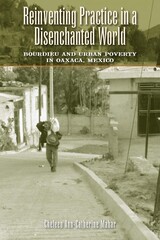
Colonia Hermosa, now considered a suburb of Oaxaca, began as a squatter settlement in the 1950s. The original residents came in search of transformation from migrants to urban citizens, struggling from rural poverty for the chance to be part of the global economy in Oaxaca.
Cheleen Ann-Catherine Mahar charts the lives of a group of residents in Colonia Hermosa over a period of thirty years, as Mexico became more closely tied into the structures of global capital, and the residents of Colonia Hermosa struggled to survive. Residents shape their discussions within a larger narrative, and their talk is the language of the heroic individual, so necessary to the ideology and the functioning of capital. However, this logic only tenuously connects to the actual material circumstances of their lives.
Mahar applies the theories of French sociologist Pierre Bourdieu to her data from Mexico in order to examine the class trajectories of migrant families over more than three decades. Through this investigation, Mahar adds an important intergenerational study to the existing body of literature on Oaxaca, particularly concerning the factors that have reshaped the lives of urban working poor families and have created a working-class fraction of globalized citizenship.
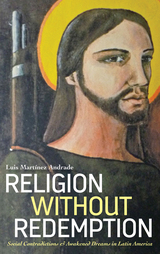
Martínez Andrade focuses on the central role of religion in the region and how it influences people’s interaction with changes in modern economics. Capitalism in Latin America, Martínez Andrade argues, has taken on religious characteristics, with places of worship—shopping malls and department stores—as well as its own prophets. This form of cultural religion is often contradictory in surprising ways: not only does it legitimate oppression, it can also be a powerful source of rebellion, unveiling a subversive side to the status quo. Religion Without Redemption advances the ideas of liberation theory, and challenges the provincialism to which many Latin American thinkers are usually consigned.
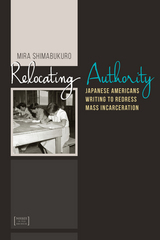
Relocating Authority examines the ways Japanese Americans have continually used writing to respond to the circumstances of their community’s mass imprisonment during World War II. Using both Nikkei cultural frameworks and community-specific history for methodological inspiration and guidance, Mira Shimabukuro shows how writing was used privately and publicly to individually survive and collectively resist the conditions of incarceration.
Examining a wide range of diverse texts and literacy practices such as diary entries, note-taking, manifestos, and multiple drafts of single documents, Relocating Authority draws upon community archives, visual histories, and Asian American history and theory to reveal the ways writing has served as a critical tool for incarcerees and their descendants. Incarcerees not only used writing to redress the “internment” in the moment but also created pieces of text that enabled and inspired further redress long after the camps had closed.
Relocating Authority highlights literacy’s enduring potential to participate in social change and assist an imprisoned people in relocating authority away from their captors and back to their community and themselves. It will be of great interest to students and scholars of ethnic and Asian American rhetorics, American studies, and anyone interested in the relationship between literacy and social justice.
In the early 1800s, the U.S. government attempted to rid the Southeast of Indians in order to make way for trading networks, American immigration, optimal land use, economic development opportunities, and, ultimately, territorial expansion westward to the Pacific. The difficult removal of the Chickasaw Nation to Indian Territory—later to become part of the state of Oklahoma— was exacerbated by the U.S. government’s unenlightened decision to place the Chickasaws on lands it had previously provided solely for the Choctaw Nation.
This volume deals with the challenges the Chickasaw people had from attacking Texans and Plains Indians, the tribe’s ex-slaves, the influence on the tribe of intermarried white men, and the presence of illegal aliens (U.S. citizens) in their territory. By focusing on the tribal and U.S. government policy conflicts, as well as longstanding attempts of the Chickasaw people to remain culturally unique, St. Jean reveals the successes and failures of the Chickasaw in attaining and maintaining sovereignty as a separate and distinct Chickasaw Nation.
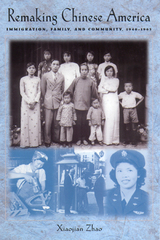
In Remaking Chinese America, Xiaojian Zhao explores the myriad forces that changed and unified Chinese Americans during a key period in American history. Prior to 1940, this immigrant community was predominantly male, but between 1940 and 1965 it was transformed into a family-centered American ethnic community. Zhao pays special attention to forces both inside and outside of the country in order to explain these changing demographics. She scrutinizes the repealed exclusion laws and the immigration laws enacted after 1940. Careful attention is also paid to evolving gender roles, since women constituted the majority of newcomers, significantly changing the sex ratio of the Chinese American population.
As members of a minority sharing a common cultural heritage as well as pressures from the larger society, Chinese Americans networked and struggled to gain equal rights during the cold war period. In defining the political circumstances that brought the Chinese together as a cohesive political body, Zhao also delves into the complexities they faced when questioning their personal national allegiances. Remaking Chinese America uses a wealth of primary sources, including oral histories, newspapers, genealogical documents, and immigration files to illuminate what it was like to be Chinese living in the United States during a period that—until now—has been little studied.
Provocative and laden with eyewitness detail, Remaking Muslim Lives offers a rare sustained look at what it means to be Muslim and live a Muslim life in contemporary Bosnia and Herzegovina.
Contributors. Thomas Jessen Adams, Vincanne Adams, Vern Baxter, Maria Celeste Casati Allegretti, Shannon Lee Dawdy, Rien Fertel, Megan French-Marcelin, Cedric G. Johnson, Alecia P. Long, Vicki Mayer, Toby Miller, Sue Mobley, Marguerite Nguyen, Aaron Nyerges, Adolph Reed Jr., Helen A. Regis, Matt Sakakeeny, Heidi Schmalbach, Felipe Smith, Bryan Wagner
Uses New York City to discuss the ways that policy has mismanaged the effects of globalization
Inequality increases, instability grows, communities fragment: this is the fate of a city in the wake of globalization—but is globalization really the cause? Proposing a new perspective on politics, globalization, and the city, this provocative book argues that such urban problems result in part from U.S. policies that can be changed.
William Sites develops the concept of primitive globalization, identifying a pattern of reactive politics—ad hoc measures to subsidize business, displace the urban poor, and dismantle the welfare state—that uproots social actors (corporations, citizens, urban residents) and facilitates a damaging, short-term-oriented type of international integration. In light of this theory, Sites examines the transformation of New York City since the 1970s, focusing on the logic of political action at national, local, and neighborhood levels. In the process, the story of late twentieth-century New York and its Lower East Side community emerges as something different: not a tale of globalist transformation or of local resurgence but a distinctly American case, one in which urban politics and the state, in their own right, exacerbate inequality and community fragmentation within the city.
In this age of multicultural democracy, the idea of assimilation--that the social distance separating immigrants and their children from the mainstream of American society closes over time--seems outdated and, in some forms, even offensive. But as Richard Alba and Victor Nee show in the first systematic treatment of assimilation since the mid-1960s, it continues to shape the immigrant experience, even though the geography of immigration has shifted from Europe to Asia, Africa, and Latin America. Institutional changes, from civil rights legislation to immigration law, have provided a more favorable environment for nonwhite immigrants and their children than in the past.
Assimilation is still driven, in claim, by the decisions of immigrants and the second generation to improve their social and material circumstances in America. But they also show that immigrants, historically and today, have profoundly changed our mainstream society and culture in the process of becoming Americans.
Surveying a variety of domains--language, socioeconomic attachments, residential patterns, and intermarriage--they demonstrate the continuing importance of assimilation in American life. And they predict that it will blur the boundaries among the major, racially defined populations, as nonwhites and Hispanics are increasingly incorporated into the mainstream.

Remembering Communism examines the formation and transformation of the memory of communism in the post-communist period. The majority of the articles focus on memory practices in the post-Stalinist era in Bulgaria and Romania, with occasional references to the cases of Poland and the GDR. Based on an interdisciplinary approach, including history, anthropology, cultural studies and sociology, the volume examines the mechanisms and processes that influence, determine and mint the private and public memory of communism in the post-1989 era. The common denominator to all essays is the emphasis on the process of remembering in the present, and the modalities by means of which the present perspective shapes processes of remembering, including practices of commemoration and representation of the past.
The volume deals with eight major thematic blocks revisiting specific practices in communism such as popular culture and everyday life, childhood, labor, the secret police, and the perception of “the system”.

The untold stories of resilience in Hmong American education
Re-membering Culture is a deep exploration of the intricate dynamics of cultural memory and education, centering the experiences of Hmong American students and educators. Arguing that the school, as a product of coloniality, perpetuates the marginalization and erasure of non-Western epistemologies, author Bic Ngo sheds light on the subtle yet impactful process of structured forgetting within the American education system. This politics of forgetting, in turn, contributes to the fragmentation of Hmong cultural heritage, identity, and community.
Based on a high school in an urban center with a considerable Hmong immigrant community, Ngo’s work draws on extensive ethnographic research with Hmong American community leaders, school administrators, parents, teachers, staff, and high school students to understand how they navigate the terrain of Western pedagogy while attempting to retain and preserve Hmong knowledge systems. Exploring a range of school experiences, Ngo traverses students’ challenges in balancing school with family life and the everyday cultural racism encountered in the classroom as well as grassroots efforts to preserve culture, including the establishment of a Hmong Cultural Club.
Highlighting these experiences and voices, Ngo provides a nuanced understanding of the challenges Hmong Americans face within an assimilationist society while contesting the dominant anti-immigrant narratives of refugee suffering and poverty. Through these practices of (re)storytelling, resurgence, and refusal, she underscores the agency of the Hmong American community, illuminating how the critical consciousness fostered by re-membering serves as a powerful tool in confronting white hegemonic ideologies in education.
Retail e-book files for this title are screen-reader friendly.
In Remembering Emmett Till, Dave Tell gives us five accounts of the commemoration of this infamous crime. In a development no one could have foreseen, Till’s murder—one of the darkest moments in the region’s history—has become an economic driver for the Delta. Historical tourism has transformed seemingly innocuous places like bridges, boat landings, gas stations, and riverbeds into sites of racial politics, reminders of the still-unsettled question of how best to remember the victim of this heinous crime. Tell builds an insightful and persuasive case for how these memorials have altered the Delta’s physical and cultural landscape, drawing potent connections between the dawn of the civil rights era and our own moment of renewed fire for racial justice.
"Remember the Alamo!" reverberates through Texas history and culture, but what exactly are we remembering? Over nearly two centuries, the Mexican victory over an outnumbered band of Alamo defenders has been transformed into an American victory for the love of liberty. Why did the historical battle of 1836 undergo this metamorphosis in memory and mythology to become such a potent master symbol in Texan and American culture?
In this probing book, Richard Flores seeks to answer that question by examining how the Alamo's transformation into an American cultural icon helped to shape social, economic, and political relations between Anglo and Mexican Texans from the late nineteenth to the mid-twentieth centuries. In the first part of the book, he looks at how the attempts of heritage society members and political leaders to define the Alamo as a place have reflected struggles within Texas society over the place and status of Anglos and Mexicans. In the second part, he explores how Alamo movies and the transformation of Davy Crockett into an Alamo hero/martyr have advanced deeply racialized, ambiguous, and even invented understandings of the past.
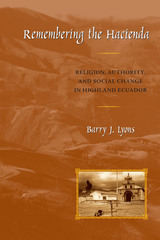
From the colonial period through the mid-twentieth century, haciendas dominated the Latin American countryside. In the Ecuadorian Andes, Runa—Quichua-speaking indigenous people—worked on these large agrarian estates as virtual serfs. In Remembering the Hacienda: Religion, Authority, and Social Change in Highland Ecuador, Barry Lyons probes the workings of power on haciendas and explores the hacienda's contemporary legacy.
Lyons lived for three years in a Runa village and conducted in-depth interviews with elderly former hacienda laborers. He combines their wrenching accounts with archival evidence to paint an astonishing portrait of daily life on haciendas. Lyons also develops an innovative analysis of hacienda discipline and authority relations. Remembering the Hacienda explains the role of religion as well as the reshaping of Runa culture and identity under the impact of land reform and liberation theology.
This beautifully written book is a major contribution to the understanding of social control and domination. It will be valuable reading for a broad audience in anthropology, history, Latin American studies, and religious studies.

On October 15, 1983, a young mother of six was murdered while walking across her village of Huitzilan de Serdán, Mexico, with her infant son and one of her daughters. This woman, Victoria Bonilla, was among more than one hundred villagers who perished in violence that broke out soon after the Mexican army chopped down a cornfield that had been planted on an unused cattle pasture by forty Nahuat villagers.
In this anthropological account, based on years of fieldwork in Huitzilan, James M. Taggart turns to Victoria's husband, Nacho Angel Hernández, to try to understand how a community based on respect and cooperation descended into horrific violence and fratricide. When the army chopped down the cornfield at Talcuaco, the war that broke out resulted in the complete breakdown of the social and moral order of the community.
At its heart, this is a tragic love story, chronicling Nacho's feelings for Victoria spanning their courtship, marriage, family life, and her death. Nacho delivered his testimonio to the author in Nahuat, making it one of the few autobiographical love stories told in an Amerindian language, and a very rare account of love among the indigenous people of Mesoamerica. There is almost nothing in the literature on how a man develops and changes his feelings for his wife over his lifetime. This study contributes to the anthropology of emotion by focusing on how the Nahuat attempt to express love through language and ritual.
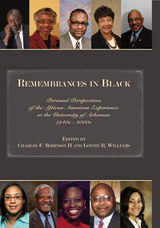

In the course of diagnosis, treatment, and recovery, Adams O’Connell lived through theories she had researched and applied her sociological ideas to help make sense of her personal experiences. Remission Quest chronicles how the reality of living with cancer changed her perspective on what she had studied. Adams O’Connell found her knowledge illustrated and enriched her sociological analysis of our medical institutions and that her own illness narrative shone new light on her theories.
With moving prose, Remission Quest captures the emotions of having cancer and dealing with elaborate medical systems, learning how to be a “good patient” while also managing indescribable fear and fatigue, and confronting questions about the meaning of life. Adams O’Connell’s experiences are both personal and universal. They provide inspiration, compassion, and understanding.
In this rich ethnography of life in Appalachia, Scott examines mountaintop removal in light of controversy and protests from environmental groups calling for its abolishment. But Removing Mountains takes the conversation in a new direction, telling the stories of the businesspeople, miners, and families who believe they depend on the industry to survive. Scott reveals these southern Appalachian coalfields as a meaningful landscape where everyday practices and representations help shape a community's relationship to the environment.
Removing Mountains demonstrates that the paradox that faces this community-forced to destroy their land to make a wage-raises important questions related not only to the environment but also to American national identity, place, and white working-class masculinity.

Nowhere does the process of redefinition hit Gonzalez quite as hard as in his native city of El Paso, Texas. There he finds the “segregated little town of my childhood” transformed into “a metropolis of fast Latino zip codes . . . a world where the cell phone, the quick beer, the rented apartment, and the low-paying job say you can be young and happy on the border.” Readers will wonder, along with the author, whether life along the “new border” is worth “the extermination of the old boundaries.”
But there is another side of the Southwest for this “son of the desert”—the world of dusty canyons, ponderosa pines, ocotillo, and mesquite. Here, he writes, “there is a shadow, and it is called ancient home—structures erased from their seed to grow elsewhere, vultured strings searching for a frame that stands atop history and renames the ground.”
Rooted in the desert sand and in the banks of the Rio Grande, the muddy river that forms the border between nations, these essays are by turns lyrical, mournful, warm to the ways of the land, and lukewarm to the ways of man.
Urban development after disaster, the fading of black political clout, and the onset of gentrification
Like no other American city, New Orleans since Hurricane Katrina offers powerful insight into issues of political economy in urban development and, in particular, how a city’s character changes after a disaster that spurs economic and political transition. In New Orleans, the hurricane upset an existing stalemate among rival factions of economic and political elites, and its aftermath facilitated the rise of a globally oriented faction of local capital.
In Renew Orleans? Aaron Schneider shows how some city leaders were able to access fragmented local institutions and capture areas of public policy vital to their development agenda. Through interviews and surveys with workers and advocates in construction, restaurants, shipyards, and hotel and casino cleaning, Schneider contrasts sectors prioritized during post-Katrina recovery with neglected sectors. The result is a fine-grained view of the way labor markets are structured to the advantage of elites, emphasizing how dual development produces wealth for the few while distributing poverty and exclusion to the many on the basis of race, gender, and ethnicity.
Schneider shows the way exploitation operates both in the workplace and the community, tracing working-class resistance that joins struggles for dignity at home and work. In the process, working classes and popular sectors put forth their own alternative forms of development.
Sharing a focus on reparations as an issue of justice, the contributors provide a historical primer of the movement; introduce the philosophical, political, economic, legal and ethical issues surrounding reparations; explain why government, corporations, universities, and other institutions must take steps to rehabilitate, compensate, and commemorate African Americans; call for the restoration of Black people’s human and civil rights and material and psychological well-being; lay out specific ideas about how reparations can and should be paid; and advance cutting-edge interpretations of the complex long-lasting effects that enslavement, police and vigilante actions, economic discrimination, and other behaviors have had on people of African descent.
Groundbreaking and innovative, Reparations and Reparatory Justice offers a multifaceted resource to anyone wishing to explore a defining moral issue of our time.
Contributors: Dedrick Asante-Muhammad, Hilary McDonald Beckles, Mary Frances Berry, Sundiata Keita Cha-Jua, Chuck Collins, Ron Daniels, V. P. Franklin, Danny Glover, Adom Gretachew, Charles Henry, Kamm Howard, Earl Ofari Hutchinson, Jesse Jackson, Sr., Brian Jones, Sheila Jackson Lee, James B. Stewart, the Movement 4 Black Lives, the National African American Reparations Commission, the National Coalition of Blacks for Reparations in America, the New Afrikan Peoples Organization/Malcolm X Grassroots Movement
Beginning with an exploration of the ways in which women are represented—how they either tell or have their stories told in literature, in the law, in a courtroom—this collection demonstrates the interrelatedness of the legal and the literary. Whether considering the status of medieval women readers or assessing the effectiveness and extent of contemporary rape law reform, the essays show that power first comes with telling one’s own story, and that the degree and effect of that power are determined by the cultural significance of the forum in which the story is presented. But telling the story is not enough. One must also be aware of how the story is contained within traditional constructs or boundaries and is thus limited in its effects, as Carol Sanger’s essay on mothers and legal/sexual identity makes clear. One must also recognize how a story might perpetuate an ideological agenda that is not in the best interests of the storyteller, as Elizabeth Butler Cullingford shows in her reading of Yeats’s "Leda and the Swan" and one must know the historical context of a story and of its telling, as Anne B. Goldstein’s essay on lesbian narratives discloses.
Breaking down the boundaries between law and literature, this anthology makes evident the ways in which the effect of women’s stories has been constrained and expands the range of possibilities for those who represent women, tell women’s stories, or present women’s issues. Representing Women makes the retelling of old stories about women compelling and the telling of new ones both necessary and possible.
Contributors. Kathryn Abrams, Linda Brodkey, Rita Copeland, Elizabeth Butler Cullingford, Margaret Anne Doody, Susan B. Estrich, Michelle Fine, Anne B. Goldstein, Angela P. Harris, Susan Sage Heinzelman, Christine L. Krueger, Martha Minow, Carol Sanger, Judy Scales-Trent
Cotten Seiler combs through a vast number of historical, social scientific, philosophical, and literary sources to illustrate the importance of driving to modern American conceptions of the self and the social and political order. He finds that as the figure of the driver blurred into the figure of the citizen, automobility became a powerful resource for women, African Americans, and others seeking entry into the public sphere. And yet, he argues, the individualistic but anonymous act of driving has also monopolized our thinking about freedom and democracy, discouraging the crafting of a more sustainable way of life. As our fantasies of the open road turn into fears of a looming energy crisis, Seiler shows us just how we ended up a republic of drivers—and where we might be headed.
Most histories of the Spanish Civil War (1936–1939) have examined major leaders or well-established political and social groups to explore class, gender, and ideological struggles. The war in Spain was marked by momentous conflicts between democracy and dictatorship, Communism and fascism, anarchism and authoritarianism, and Catholicism and anticlericalism that still provoke our fascination.
In Republic of Egos, Michael Seidman focuses instead on the personal and individual experiences of the common men and women who were actors in a struggle that defined a generation and helped to shape our world. By examining the roles of anonymous individuals, families, and small groups who fought for their own interests and survival—and not necessarily for an abstract or revolutionary cause—Seidman reveals a powerful but rarely considered pressure on the outcome of history. He shows how price controls and inflation in the Republican zone encouraged peasant hoarding, black marketing, and unrest among urban workers. Soldiers of the Republican Army responded to material shortages by looting, deserting, and fraternizing with the enemy. Seidman’s focus on average, seemingly nonpolitical individuals provides a new vision of both the experience and outcome of the war.
The colonizing wars against Native Americans created the template for anticommunist repression in the United States. Tariq D. Khan’s analysis reveals bloodshed and class war as foundational aspects of capitalist domination and vital elements of the nation’s long history of internal repression and social control. Khan shows how the state wielded the tactics, weapons, myths, and ideology refined in America’s colonizing wars to repress anarchists, labor unions, and a host of others labeled as alien, multi-racial, multi-ethnic urban rabble. The ruling classes considered radicals of all stripes to be anticolonial insurgents. As Khan charts the decades of red scares that began in the 1840s, he reveals how capitalists and government used much-practiced counterinsurgency rhetoric and tactics against the movements they perceived and vilified as “anarchist.”
Original and boldly argued, The Republic Shall Be Kept Clean offers an enlightening new history with relevance for our own time.
The myth of the “plebeian Aventine” became embedded not only in classical scholarship, but also in modern political and cultural consciousness; it has even been used by modern figures to support their political agenda. Yet The Republican Aventine and Rome’s Social Order makes bold new claims regarding the urban design and social history of ancient Rome and raises a significant question about ancient urbanism and social stability more generally: Did social integration reduce violence in premodern cities and promote urban concord?

Jurgen Herbst’s account of growing up in Nazi Germany from 1928 to 1948 is a boy’s experience of anti-Semitism and militarism from the inside. Herbst was a middle-class boy in a Lutheran family that saw value in Prussian military ideals and a mythic German past. His memoir is a compelling, understated tale of moral awakening.
READERS
Browse our collection.
PUBLISHERS
See BiblioVault's publisher services.
STUDENT SERVICES
Files for college accessibility offices.
RECENTLY PUBLISHED




UChicago Accessibility Resources
home | accessibility | search | about | contact us
BiblioVault ® 2001 - 2026
The University of Chicago Press