
 A SCHOLARLY BOOK REPOSITORY
244 start with S start with S


Silent film is more than just a cinema of firsts, greats, or classics. It is a cinema of experimentation, ambition, and connection. To watch a silent film is to be transported into another world. A Silent Film Companion seeks to broaden the silent film canon by focusing on compelling non-canonical films from around the globe to provide a fresh perspective and new view of silent cinema. With over 50 films discussed, this volume captures just a sliver of the many delights silent cinema has to offer. The book encourages discovery, and rediscovery, of the world of silent cinema: one where the movies were still young, full of possibility, eager to entice others to take part in a wonderful adventure. Films covered are from fourteen countries, including Brazil, Mexico, China, Cuba, India, Italy, and Russia, and representing a diversity of subjects. Chapters provide historical and cultural context to each film, the filmmakers, and a concise analysis of each film. A Silent Film Companion is a guidebook to the many pleasures of silent cinema, allowing you to see and understand diverse perspectives. It is a must read for students and fans of silent cinema interested in seeing a side of silent cinema that is rarely explored.
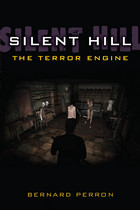
Silent Hill: The Terror Engine, the second of the two inaugural studies in the Landmark Video Games series from series editors Mark J. P. Wolf and Bernard Perron, is both a close analysis of the first three Silent Hill games and a general look at the whole series. Silent Hill, with its first title released in 1999, is one of the most influential of the horror video game series. Perron situates the games within the survival horror genre, both by looking at the history of the genre and by comparing Silent Hill with such important forerunners as Alone in the Dark and Resident Evil. Taking a transmedia approach and underlining the designer's cinematic and literary influences, he uses the narrative structure; the techniques of imagery, sound, and music employed; the game mechanics; and the fiction, artifact, and gameplay emotions elicited by the games to explore the specific fears survival horror games are designed to provoke and how the experience as a whole has made the Silent Hill series one of the major landmarks of video game history.



Speaking to the Heart
After a long night up writing poems,a streak of sunlight leapt into my room.
I ran to the yard,
running as if I were a child,
footprints breaking the earth's first dew,
chest brushing softly the short grass.
Earth and sky seeped into me like wine.
Startled,
I saw my heart in the shape of a ploughshare<
resting on the earth's shoulder,
the heart thumping, steadily ploughing into time.
—Lam Thi My Da

But does it matter that California's 32 million people have the same number of Senate votes as Wyoming's 480,000? Frances Lee and Bruce Oppenheimer systematically show that the Senate's unique apportionment scheme profoundly shapes legislation and representation. The size of a state's population affects the senator-constituent relationship, fund-raising and elections, strategic behavior within the Senate, and, ultimately, policy decisions. They also show that less populous states consistently receive more federal funding than states with more people. In sum, Lee and Oppenheimer reveal that Senate apportionment leaves no aspect of the institution untouched.
This groundbreaking book raises new questions about one of the key institutions of American government and will interest anyone concerned with issues of representation.
The problems Mates discusses are: the Liar paradox and Russell's Antinomy of the class of all nonself-membered classes; the problem of determinism and moral responsibility; and the existence of the external world. Clearly written and effectively organized, the book will be an excellent text for advanced students.


The forgotten air campaign that gave birth to modern air power.
A fascinating examination of the strategies and uses of air power in the First World War, Sky on Fire covers not only developments in military hardware and tactics but also how public policy and political considerations shaped the ways air power was deployed. Providing an excellent balance of data and statistics as well as human insights, Fredette’s book is essential reading for readers interested in the air power, both historically and in contemporary conflicts.

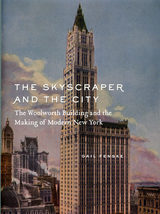
Fenske shows here that the building’s multiplicity of meanings reflected the cultural contradictions that defined New York City’s modernity. For Frank Woolworth—founder of the famous five-and-dime store chain—the building served as a towering trademark, for advocates of the City Beautiful movement it suggested a majestic hotel de ville, for technological enthusiasts it represented the boldest of experiments in vertical construction, and for tenants it provided an evocative setting for high-style consumption. Tourists, meanwhile, experienced a spectacular sightseeing destination and avant-garde artists discovered a twentieth-century future. In emphasizing this faceted significance, Fenske illuminates the process of conceiving, financing, and constructing skyscrapers as well as the mass phenomena of consumerism, marketing, news media, and urban spectatorship that surround them.
As the representative example of the skyscraper as a “cathedral of commerce,” the Woolworth Building remains a commanding presence in the skyline of lower Manhattan, and the generously illustrated Skyscraper and the City is a worthy testament to its importance in American culture.

The book begins with his arrest and moves to the courtroom, telling the tale of Moussaoui's struggle with his defense lawyers and raising questions about his ability to be "represented" given his national and personal identity. Donahue explores his background in France as the son of Moroccan immigrants and follows him to London, Afghanistan, and Malaysia as he joins the growing fraternity of an Islam without borders. He acquires an extra-national identity in which his loyalty is no longer constituted by his national identity, but by his allegiance to fundamental Islam.
In her concise history Slavery and Abolition in Pennsylvania, Beverly Tomek corrects the long-held notion that slavery in the North was “not so bad” as, or somehow “more humane” than, in the South due to the presence of abolitionists. While the Quaker presence focused on moral and practical opposition to bondage, slavery was ubiquitous. Nevertheless, Pennsylvania was the first state to pass an abolition law in the United States.
Slavery and Abolition in Pennsylvania traces this movement from its beginning to the years immediately following the American Civil War. Discussions of the complexities of the state’s antislavery movement illustrate how different groups of Pennsylvanians followed different paths in an effort to achieve their goal. Tomek also examines the backlash abolitionists and Black Americans faced. In addition, she considers the civil rights movement from the period of state reconstruction through the national reconstruction that occurred after the Civil War.
While the past few decades have shed light on enslavement and slavery in the South, much of the story of northern slavery remains hidden. Slavery and Abolition in Pennsylvania tells the full and inclusive story of this history, bringing the realities of slavery, abolition, and Pennsylvania's attempt to reconstruct its post-emancipation society.
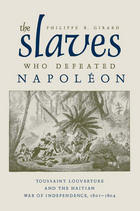
A deeply researched and definitive account of the climactic battle at the end of the Haitian Revolution
Among the many rebellions against European colonial empires, the Haitian Revolution against France is among the most dramatic and complex. Having begun in 1791 as France was in the throes of its own young revolution, the conflict reached its dramatic climax when Napoleon dispatched a heavily armed expeditionary force led by his brother-in-law Charles Leclerc to re-establish slavery and the sugar economy that had so enriched France. Philippe Girard’s Slaves Who Defeated Napoleon is a deeply researched and engrossing account of this invasion and its spectacular defeat.
For this ambitious account, Philippe Girard has studied not only primary records in Haiti itself but also rare documents from nineteen public and private archives and research libraries in French, U.S., British, and Spanish collections. His more inclusive approach provides a fuller, more accurate and detailed narrative. He reveals not only key military movements, but also less-known aspects like the activities of U.S. merchants, in-fighting within Napoleon’s government, and communication between both sides and other European powers. Girard fills the work with unforgettable stories of those who led or were caught up in the war, people like poorly armed Black soldiers who ambushed Bonaparte’s columns, French child drummers, Jewish bankers in Kingston, weapon smugglers from Quaker Philadelphia, Polish artillerists, and mixed-raced people struggling to preserve their freedom against both Black and white opponents.
Transcending pat ideological and racial categories, the book brings into focus an Atlantic society at the crossroads of African and European influences, where Haitian rebels fought France while embracing its ideals.
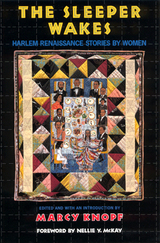
In recent years there has been an explosion of interest in the art and culture of the Harlem Renaissance. Yet this significant collection is the first definitive edition of Harlem Renaissance stories by women. The writers include Gwendolyn Bennett, Jessie Redmon Fauset, Angelina Weld Grimké, Zora Neale Hurston, Nella Larsen, Alice Dunbar-Nelson, and Dorothy West.
Published originally in periodicals such as The Crisis, Fire!!, and Opportunity, these twenty-seven stories have until now been virtually unavailable to readers. These stories are as compelling today as they were in the 1920s and 1930s. In them, we find the themes of black and white racial tension and misunderstanding, economic deprivation, passing, love across and within racial lines, and the attempt to maintain community and uplift the race.
Marcy Knopf's introduction surveys the history of the Harlem Renaissance, the periodicals and books it generated, and describes the rise to prominence of these women writers and their later fall from fame. She also includes a brief biography of each of the writers. Nellie Y. McKay's foreword analyzes the themes and concerns of the stories.
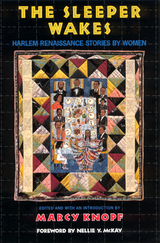
In recent years there has been an explosion of interest in the art and culture of the Harlem Renaissance. Yet this significant collection is the first definitive edition of Harlem Renaissance stories by women. The writers include Gwendolyn Bennett, Jessie Redmon Fauset, Angelina Weld Grimké, Zora Neale Hurston, Nella Larsen, Alice Dunbar-Nelson, and Dorothy West.
Published originally in periodicals such as The Crisis, Fire!!, and Opportunity, these twenty-seven stories have until now been virtually unavailable to readers. These stories are as compelling today as they were in the 1920s and 1930s. In them, we find the themes of black and white racial tension and misunderstanding, economic deprivation, passing, love across and within racial lines, and the attempt to maintain community and uplift the race.
Marcy Knopf's introduction surveys the history of the Harlem Renaissance, the periodicals and books it generated, and describes the rise to prominence of these women writers and their later fall from fame. She also includes a brief biography of each of the writers. Nellie Y. McKay's foreword analyzes the themes and concerns of the stories.

The Mid-American oak woodlands were the scene of vigorous settlement in the late eighteenth and early nineteenth centuries and thus the scene of changing fire practices. The debate over the origin of the prairies—by climate or fire—foreshadowed the more recent debate about fire in oak and hickory hardwoods. In both cases, today’s thinking points to the critical role of fire.
The Pacific Northwest was the great pivot between laissez-faire logging and state-sponsored conservation and the fires that would accompany each. Then fire faded as an environmental issue. But it has returned over the past decade like an avenging angel, forcing the region to again consider the defining dialectic between axe and flame.
And Alaska—Alaska is different, as everyone says. It came late to wildland fire protection, then managed an extraordinary transfiguration into the most successful American region to restore something like the historic fire regime. But Alaska is also a petrostate, and climate change may be making it the vanguard of what the Anthropocene will mean for American fire overall.
Slopovers collates surveys of these three regions into the national narrative. With a unique mixture of journalism, history, and literary imagination, renowned fire expert Stephen J. Pyne shows how culture and nature, fire from nature and fire from people, interact to shape our world with three case studies in public policy and the challenging questions they pose about the future we will share with fire.
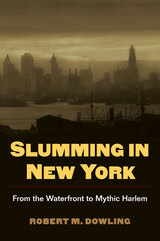
Using the methods of ethnicity theory, black studies, regional studies, literary studies, and popular culture, Robert M. Dowling reveals the way in which "outsider" authors helped alleviate New York's mounting social anxieties by popularizing "insider" voices from neighborhoods as distinctive as the East Side waterfront, the Bowery, the Tenderloin's "black Bohemia," the Jewish Lower East Side, and mythic Harlem.
Smokechasing presents commentaries by one of America's leading fire scholars, who analyzes fire the way another might an election campaign or a literary work. "Smokechasing" is an American coinage describing the practice of sending firefighters into the wild to track down the source of reported smoke. Now a self-described "friendly fire critic" tracks down more of the history and lore of fire in a collection that focuses on wildland fire and its management. Building on and complementing a previous anthology, World Fire, this new collection features thirty-two original articles and substantial revisions of works that have previously appeared in print. Pyne addresses many issues that have sparked public concern in the wake of disastrous wildfires in the West, such as fire ecology, federal fire management, and questions relating to fire suppression. He observes that the mistake in fire policy has been not that wildfires are suppressed but that controlled fires are no longer ignited; yet the attempted forced reintroduction of fire through prescribed burning has proved difficult, and sometimes damaging. There are, Pyne argues, many fire problems; some have technical solutions, some not. But there is no evading humanity's unique power and responsibility: what we don't do may be as ecologically powerful as what we do.
Throughout the collection, Pyne makes it clear that humans and fire interact at particular places and times to profoundly shape the world, and that understanding the contexts in which fire occurs can tell us much about the world's natural and cultural landscapes. Fire's context gives it its meaning, and Smokechasing not only helps illuminate those contexts but also shows us how to devise new contexts for tomorrow's fires.
In a detailed account, drawn on memoirs, private correspondences, and other documents, Sawislak chronicles years of widespread, sometimes bitter, social and political conflict in the fire's wake, from fights over relief soup kitchens to cries against profiteering and marches on city hall by workers burned out of their homes. She shows how through the years of rebuilding the people of Chicago struggled to define civic order—and the role that "good citizens" would play within it. As they rebuilt, she writes, Chicagoans confronted hard questions about charity and social welfare, work and labor relations, morality, and the limits of state power. Their debates in turn exposed the array of values and interests that different class, ethnic, and religious groups brought to these public discussions.
"Sawislak combines the copious detail of a historian with the vivid portrayals of a storyteller in her investigation of the infamous Chicago fire. . . . Highlighted by historical maps, plates and engravings, with an epilogue and notes, Smoldering City presents an extremely thorough and engaging study of this extraordinary disaster."—Publishers Weekly

In these ten alternately poetic and comic tales of adventure in the New York/Philadelphia corridor, the most densely populated chunk of America, Rockland walks and bikes areas meant only for cars and paddles through waters capable of dissolving canoes. He hikes the length of New York's Broadway, camps in New York City, treks across Philadelphia, pedals among the tractor trailers of Route 1 in New Jersey, and paddles around Manhattan and through the dark tunnels under Trenton.
Whereas Henry David Thoreau built his cabin on Walden Pond to get out of town, for Rockland, the challenge is to head into town. As he writes, "in the late twentieth century, a weed and trash-filled city lot . . . may be a better place than the wilderness to contemplate one's relationship to nature."


In Volume 3, Naficy assesses the profound effects of the Islamic Revolution on Iran's cinema and film industry. Throughout the book, he uses the term Islamicate, rather than Islamic, to indicate that the values of the postrevolutionary state, culture, and cinema were informed not only by Islam but also by Persian traditions. Naficy examines documentary films made to record events prior to, during, and in the immediate aftermath of the revolution. He describes how certain institutions and individuals, including prerevolutionary cinema and filmmakers, were associated with the Pahlavi regime, the West, and modernity and therefore perceived as corrupt and immoral. Many of the nation's moviehouses were burned down. Prerevolutionary films were subject to strict review and often banned, to be replaced with films commensurate with Islamicate values. Filmmakers and entertainers were thrown out of the industry, exiled, imprisoned, and even executed. Yet, out of this revolutionary turmoil, an extraordinary Islamicate cinema and film culture emerged. Naficy traces its development and explains how Iran's long war with Iraq, the gendered segregation of space, and the imposition of the veil on women encouraged certain ideological and aesthetic trends in film and related media. Finally, he discusses the structural, administrative, and regulatory measures that helped to institutionalize the new evolving cinema.
A Social History of Iranian Cinema
Volume 1: The Artisanal Era, 1897–1941
Volume 2: The Industrializing Years, 1941–1978
Volume 3: The Islamicate Period, 1978–1984
Volume 4: The Globalizing Era, 1984–2010
Heavily illustrated, this volume is an invaluable social history of modern art during the Napoleonic era.
Stimulating and informative, this volume will become a valuable resource for faculty and undergraduates.—R. W. Liscombe, Choice

Praise for the 3-volume second edition of The Social Medicine Reader:
“A superb collection of essays that illuminate the role of medicine in modern society. Students and general readers are not likely to find anything better.”—Arnold S. Relman, Professor Emeritus of Medicine and Social Medicine, Harvard Medical School
Praise for the first edition:
“This reviewer strongly recommends The Social Medicine Reader to the attention of medical educators.”—Samuel W. Bloom, JAMA: The Journal of the American Medical Association
Volume 3:
Over the past four decades the American health care system has witnessed dramatic changes in private health insurance, campaigns to enact national health insurance, and the rise (and perhaps fall) of managed care. Bringing together seventeen pieces new to this second edition of The Social Medicine Reader and four pieces from the first edition, Health Policy, Markets, and Medicine draws on a broad range of disciplinary perspectives—including political science, economics, history, and bioethics—to consider changes in health care and the future of U.S. health policy. Contributors analyze the historical and moral foundation of today’s policy debates, examine why health care spending is so hard to control in the United States, and explain the political dynamics of Medicare and Medicaid. Selections address the rise of managed care, its impact on patients and physicians, and the ethical implications of applying a business ethos to medical care; they also compare the U.S. health care system to the systems in European countries, Canada, and Japan. Additional readings probe contemporary policy issues, including the emergence of consumer-driven health care, efforts to move quality of care to the top of the policy agenda, and the implications of the aging of America for public policy.
Contributors: Henry J. Aaron, Drew E. Altman, George J. Annas, Robert H. Binstock, Thomas Bodenheimer, Troyen A. Brennan, Robert H. Brook, Lawrence D. Brown, Daniel Callahan, Jafna L. Cox, Victor R. Fuchs, Kevin Grumbach, Rudolf Klein, Robert Kuttner, Larry Levitt, Donald L. Madison, Wendy K. Mariner, Elizabeth A. McGlynn, Jonathan Oberlander, Geov Parrish, Sharon Redmayne, Uwe E. Reinhardt, Michael S. Sparer, Deborah Stone

The Social Programs of Sweden was first published in 1967. Minnesota Archive Editions uses digital technology to make long-unavailable books once again accessible, and are published unaltered from the original University of Minnesota Press editions.
In his forward to this book, Marquis Childs, author of the classic work Sweden: The Middle Way,comments: "There has been a great deal of emotional writing about the effort of the labor government in Stockholm to regulate capitalism and provide a decent standard of living for every citizen. Much of this emotional writing has come from those who for one reason or another have sought to discredit the Swedish experiment ... The net result of much of this highly colored writing has been to ignore the real contribution that Sweden has made in a half dozen fields and particularly in the fields of social security and health. But now comes an author ideally equipped to appraise this contribution by reason of his background. This is the great virtue of this book. It is a careful and thorough examination of Sweden's achievement by a specialist familiar with our own social security, public health and welfare systems ... No subsequent appraisal of what Sweden has done can be made henceforth without this basic work."
The author traces the development of the Swedish programs and provides detailed descriptions of the social security, health insurance, public health, and welfare programs, with case examples. He evaluates and compares the programs with their American counterparts, and, in conclusion, considers the effects of the Swedish system on personal freedom. The work is based on extensive research done in Sweden.



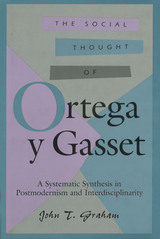
The Social Thought of Ortega y Gasset is the third and final volume of John T. Graham's massive investigation of the thought of Ortega, the renowned twentieth-century Spanish essayist and philosopher. This volume concludes the synthetic trilogy on Ortega's thought as a whole, after previous studies of his philosophy of life and his theory of history.
As the last thing on which he labored, Ortega's social theory completed what he called a "system of life" in three dimensions—a unity in the plurality of philosophy, history, and sociology as three fundamental disciplines that enter into and overlap each other and other humanities. In this volume, Graham investigates Ortega's social thought as expressed in his central work, Man and People, and in several pragmatic fields (politics, culture, education, and religion), interpreting it all in terms of comprehensive categories of postmodernism and interdisciplinarity. While others have studied Ortega's social thought and recently his postmodernity, no one has done so in the context of his thought as a whole or by such a variety of methods.
The "unity in plurality" of Ortega's system is evident in the broad and varied structure of his sociology, which he intended to serve for postmodern times. His own postmodernism was rooted in Nietzsche but also in the pragmatism—from James, Peirce, and Dewey—that informs all parts of this trilogy.
Ortega was the first educator with an interdisciplinary theory and practice—another aspect of the "unity in plurality" of his system. He found inspiration in both ancient and modern precedents for what he saw as a postmodern method of investigating themes and problems that are common to all the human sciences. Innovations at his Institute of Humanities were early postmodern precedents for a new interdisciplinary social method for use by specialists in a variety of fields. All of those interested in Ortega can utilize such methods to elucidate his thought as a whole as well as to pursue their own collaborative work.

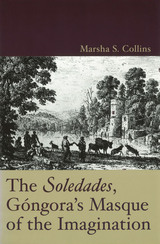
Prince of Darkness or Angel of Light? The pastoral masterpiece the Soledades garnered both titles for its author, Luis de Góngora, one of Spain's premier poets. In The Soledades, Góngora's Masque of the Imagination, Marsha S. Collins focuses on the brilliant seventeenth-century Spanish poet's contentious work of art. The Soledades have sparked controversy since they were first circulated at court in 1612-1614 and continue to do so even now, as Góngora has become for some critics the poster child of postmodernism. These perplexing 2,000-plus line pastoral poems garnered endless debates over the value and meaning of the author's enigmatic, challenging poetry and gave rise to his reputation, causing his very name to become an English term for obscurity.
Collins views these controversial poems in a different light, as a literary work that is a product of European court culture. She shows that the Soledades are in essence a court masque, an elaborate theatrical genre that combines a variety of cultural forms and that unfolds in the mind of the reader. Collins maintains that far from serving as an example of "art for art's sake," the Soledades represent Góngora's bid to transform poetic language into a new kind of visionary discourse that allows readers to access secret truths invisible to the average member of the reading public.
Each of Collins's four chapters analyzes a different facet of the Soledades, offering readers varied means of approaching Góngora's great work and helping the audience read the poems with greater understanding and appreciation.
The Soledades, Góngora's Masque of the Imagination demystifies the daunting, hermetic language of the Soledades to make this masterpiece of imperial Spain accessible to a new, and wider, circle of modern readers. Collins's book transports readers to the court of Habsburg Spain, offering a window to court culture—art, music, alchemy, emblems, garden architecture—and revealing the remarkable beauty of one of Spain's greatest literary masterpieces. Interdisciplinary and cross-cultural in approach, this book will appeal to all Hispanists, including those interested in the current "New Baroque" vogue in Hispanic scholarship, as well as specialists in Renaissance and Baroque English and European literature.

Written over the course of seven years and in many locales in Latin America and Europe, the poems in Cantos de vida y esperanza reflect both Darío’s anguished sense of modern life and his ecstatic visions of transcendence, freedom, and the transformative power of art. They reveal Darío’s familiarity with Spanish, French, and English literature and the wide range of his concerns—existential, religious, erotic, and socio-political. Derusha and Acereda’s translation renders Darío’s themes with meticulous clarity and captures the structural and acoustic dimensions of the poet’s language in all its rhythmic sonority. Their introduction places this singular poet—arguably the greatest to emerge from Latin America in modern literature—and his best and most widely known work in historical and literary context. An extensive glossary offers additional information, explaining terms related to modernismo, Hispanic history, mythological allusions, and artists and writers prominent at the turn of the last century.

The Vietnamese refugee experience calls attention to issues commonly raised by migration: the redefinition of group relations, the reformulation of identity, and the reconstruction of social and musical life in resettlement. Fifteen years ago, Adelaida Reyes began doing fieldwork on the musical activities of Vietnamese refugees. She entered the emotion-driven world of forced migrants through expressive culture; learned to see the lives of refugee-resettlers through the music they made and enjoyed; and, in turn, gained a deeper understanding of their music through knowledge of their lives.
In Songs of the Caged, Songs of the Free, Reyes brings history, politics, and decades of research to her study of four resettlement communities, including refugee centers in Palawan and Bataan; the early refugee community in New Jersey; and the largest of all Vietnamese communities -- Little Saigon, in southern California's Orange County.
Looking closely at diasporic Vietnamese in each location, Reyes demonstrates that expressive culture provides a valuable window into the refugee experience. Showing that Vietnamese immigrants deal with more than simply a new country and culture in these communities, Reyes considers such issues as ethnicity, socio-economic class, and differing generations. She considers in her study music of all kinds -- performed and recorded, public and private -- and looks at music as listened to and performed by all age groups, including church music, club music, and music used in cultural festivals. Moving from traditional folk music to elite and modern music and from the recording industry to pirated tapes. Reyes looks at how Vietnamese in exile struggled, in different ways, to hold onto a part of their home culture and to assimilate into their new, most frequently American, culture.
Songs of the Caged, Songs of the Free will attract the attention of readers in Asian American studies, Asian studies, music, and ethnomusicology.

Spinning off from the "Definition of Sound" column he wrote for Pulse! magazine, Michael Jarrett mixes astute music criticism, an engaging writing style, and a wicked sense of humor to produce three alphabets that will provoke readers to rethink all sorts of popular music. Inventive and whimsical, these small essays coalesce around a serious purpose -- writing about contemporary culture in a way that is meaningful to electronic-age readers and listeners.
Take, for example, the entry on ambient music: like all of the entries in the book, it is preceded by evocative album art that amplify the definition; this one lists related videos as well. But it also presents an interview with Carla Bley and Steve Swallow on the influential music of Erik Satie. Under the Ls, producer George Avakian talks about how the technology that made LPs possible changed the music industry, and Pat Metheny talks about the challenges of sequencing an LP from a musician's point of view. The entry for Carol (as in traditional songs for Christmas and the Middle Age dance craze) opens into a riff on cultural roots and survivals that invokes Chuck Berry's classic song.
Whether it is read start to finish or sampled, Sound Tracks is a book that music lovers and students of contemporary culture will applaud.



The South Korean Film Industry is the first detailed scholarly overview of the South Korean film industry. The thirteen chapters discuss topics from short films to popular television series that have engaged global audiences. Contributors explore the major changes in South Korean film making, marketing, and in the international growth and popularity of South Korean films. By bringing together a wide range of academic specialists, The South Korean Film Industry situates the current scholarship on South Korean cinema within the ongoing theoretical debates in contemporary global film studies. This volume will be widely read in undergraduate and graduate classes related to Korean and East Asian studies, cinema and media studies, cultural studies, and communication studies. Moreover, many institutions offer dedicated modules on South Korean cinema, media, and popular culture, for which The South Korean Film Industry will be ideal.

The contributors represent a new generation of scholars, some of whom are themselves migrants and refugees, who seek to reinvent the study of displaced populations and their diasporas. One essay considers the historical production of the refugee soldier during the “secret wars” of Laos. An ethnography of Southeast Asian American youth protests post-9/11 reveals how neoliberal rationalization of “personal responsibility” created a context for both deportation and the youth movement against it. Several contributions explore concepts of exile, belonging, and the nation-state via media representations of masculinity and the erotic, including the Hmong actors who appear in Clint Eastwood’s film Gran Torino, campy pan-Asian boy bands, and Vietnam Idol, a reality show that, like its British and American counterparts, illustrates specific cultural imagination and national ambitions.
Fiona I. B. Ngô and Mimi Thi Nguyen are both assistant professors of gender and women’s studies and Asian American studies at the University of Illinois, Urbana-Champaign. Nguyen is the author of The Gift of Freedom: War, Debt, and Other Refugee Passages and a co-editor of Alien Encounters: Popular Culture in Asian America, both also published by Duke University Press.
Contributors: Diem-My T. Bui, Long Bui, Thang Dao, Ly Chong Thong Jalao, Soo Ah Kwon, Mariam B. Lam, Viet Le, Fiona I.B. Ngô, Mimi Thi Nguyen, Viet Thanh Nguyen,
Louisa Schein, Cathy J. Schlund-Vials, Va-Megn Thoj, Khatharya Um, Julie Thi Underhill, Bee Vang, Ma Vang

Through a mixture of journalism, history, and literary imagination, fire expert Stephen J. Pyne provides a lively survey of what makes this region distinctive, moving us beyond the usual conversations of science and policy. Pyne explores the Southwest’s sacred mountains, including the Jemez, Mogollon, Huachucas, and Kaibab; its sky islands, among them the Chiricahuas, Mount Graham, and Tanque Verde; and its famous rims and borders. Together, the essays provide a cross-section of how landscape fire looks in the early years of the 21st century, what is being done to manage it, and how fire connects with other themes of southwestern life and culture.
The Southwest is part of the multivolume series describing the nation’s fire scene region by region. The volumes in To the Last Smoke also cover California, the Northern Rockies, the Great Plains, Florida, and several other critical fire regions. The series serves as an important punctuation point to Pyne’s 50-year career with wildland fire—both as a firefighter and a fire scholar. These unique surveys of regional pyrogeography are Pyne’s way of “keeping with it to the end,” encompassing the directive from his rookie season to stay with every fire “to the last smoke.”

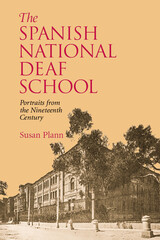
In nineteenth-century Spain, the education of deaf students took shape through various contradictory philosophies and practices. Susan Plann depicts this ambivalence by profiling a select group of teachers and students in her detailed history The Spanish National Deaf School: Portraits from the Nineteenth Century.
Plann’s subjects reveal the political, financial, and identity issues that dominated the operation of the National School for Deaf-Mutes and the Blind in Madrid from 1805 to1899. Roberto Francisco Prádez y Gautier, the first deaf teacher in Spain, taught art from 1805–36; he also was the last deaf teacher for the next 50 years. Juan Manuel Ballesteros, the hearing director from 1835 to1868, enacted an “ableist” policy that barred deaf professors. At the same time, another hearing teacher, Francisco Fernández Villabrille, wrote the first Spanish Sign Language dictionary. In the 1870s, two deaf students, Manuel Tinoco and Patricio García, resisted the physical abuse they received and set the stage for the growth of a Deaf identity that opposed the deprecating medical model of deafness. Marcelina Ruiz Ricote y Fernández a hearing female teacher who taught from 1869 to 1897, combated the school’s sexist polices. The Spanish National Deaf School concludes with Martín de Martín y Ruiz, the most famous deaf-blind student from the Madrid school. Through these portraits, Plann has brought life to the major issues that defined education in nineteenth-century Spain, themes that have influenced the status of deaf Spaniards today.
Sparks Flew is a rich story of creative, tenacious men and women working in a new medium that commercial enterprises soon dominated. At any moment in time, educational broadcasting could have failed if not for a few land-grant institutions like The Ohio State University and prominent stations like WOSU that supported the medium. Sparks Flew is the untold story, a century in the making, of one institution and one educational station that represent the roots of today’s public broadcasting system.

"Patrick did not intend to become a civil rights pioneer, but a minor dispute over a parking spot led to his arrest, beating while in custody, and eventual legal tribulations. His daughter's account of his ordeal is well researched, beautifully narrated, and extremely informative." —Journal of Southern History
On December 11, 1954, Charles Patrick drove to downtown Birmingham to buy a Boy Scout uniform for his son. Christmas traffic around the downtown department stores was heavy, and Patrick circled unsuccessfully until at last a streetside spot opened up and he began to pull in. As he did so, he was cut off by a woman who ordered him out of the way, as she was the wife of a city police officer. Patrick pulled away, remarking, "Ma’am, he doesn’t own the streets of Birmingham."
Normal low-level urban hassle? Not in 1954 Birmingham, when the woman was white and Patrick black. The woman reported to her husband that a black man had sassed her, and Patrick was summarily arrested, charged with disorderly conduct, and placed in a cell where he was beaten by the husband and another police officer.
Usually that would have been the end of it, but Patrick was not the sort of man to meekly endure an injustice. He found an attorney, went to court to fight the charges, and brought his assailants to justice--as whites, blacks, politicians and the press offered public support.
This book tells the story of Patrick’s quest for justice in segregated Alabama on the eve of the civil rights movement and represents a telling instance of the growing determination of African Americans to be treated fairly, part of the broadening and deepening stream of resolve that led to the widespread activism of the civil rights movement.
In Speculative Blackness, André M. Carrington analyzes the highly racialized genre of speculative fiction—including science fiction, fantasy, and utopian works, along with their fan cultures—to illustrate the relationship between genre conventions in media and the meanings ascribed to blackness in the popular imagination.
Carrington’s argument about authorship, fandom, and race in a genre that has been both marginalized and celebrated offers a black perspective on iconic works of science fiction. He examines the career of actor Nichelle Nichols, who portrayed the character Uhura in the original Star Trek television series and later became a recruiter for NASA, and the spin-off series Star Trek: Deep Space Nine, set on a space station commanded by a black captain. He recovers a pivotal but overlooked moment in 1950s science fiction fandom in which readers and writers of fanzines confronted issues of race by dealing with a fictitious black fan writer and questioning the relevance of race to his ostensible contributions to the 'zines. Carrington mines the productions of Marvel comics and the black-owned comics publisher Milestone Media, particularly the representations of black sexuality in its flagship title, Icon. He also interrogates online fan fiction about black British women in Buffy the Vampire Slayer and the Harry Potter series.
Throughout this nuanced analysis, Carrington theorizes the relationship between race and genre in cultural production, revealing new understandings of the significance of blackness in twentieth-century American literature and culture.
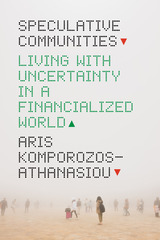
In Speculative Communities, Aris Komporozos-Athanasiou examines the ways that speculation has moved beyond financial markets to shape fundamental aspects of our social and political lives. As ordinary people make exceptional decisions, such as the American election of a populist demagogue or the British vote to leave the European Union, they are moving from time-honored and -tested practices of governance, toward the speculative promise of a new, more uncertain future. This book shows how even our methods of building community have shifted to the speculative realm as social media platforms enable and amplify our volatile wagers.
For Komporozos-Athanasiou, “to speculate” means increasingly “to connect,” to endorse the unknown pre-emptively, and often daringly, as a means of social survival. Grappling with the question of how more uncertainty can lead to its full-throated embrace rather than dissent, Speculative Communities shows how finance has become the model for society writ large. As Komporozos-Athanasiou argues, virtual marketplaces, new social media, and dating apps bring finance’s opaque infrastructures into the most intimate realms of our lives, leading to a new type of speculative imagination across economy, culture, and society.



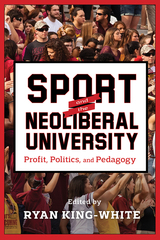
The contributors to Sport and the Neoliberal University examine how intercollegiate athletics became a contested terrain of public/private interests. They look at college sports from economic, social, legal, and cultural perspectives to cut through popular mythologies regarding intercollegiate athletics and to advocate for increased clarity about what is going on at a variety of campuses with regard to athletics. Focusing on current issues, including the NCAA, Title IX, recruitment of high school athletes, and the Penn State scandal, among others, Sport and the Neoliberal University shows the different ways institutions, individuals, and corporations are interacting with university athletics in ways that are profoundly shaped by neoliberal ideologies.
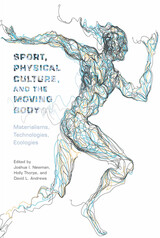
The moving body—pervasively occupied by fitness activities, intense training and dieting regimes, recreational practices, and high-profile sporting mega-events—holds a vital function in contemporary society. As the body moves—as it performs, sweats, runs, and jumps—it sets in motion an intricate web of scientific rationalities, spatial arrangements, corporate imperatives, and identity politics (i.e. politics of gender, race, social class, etc.). It represents vitality in its productive and physiological capacities, it drives a complex economy of experiences and products, and it is a meaningful site of cultural identities and politics.
Contributors to Sport, Physical Culture, and the Moving Body work from a simple premise: as it moves, the material body matters. Adding to the burgeoning fields of sport studies and body studies, the works featured here draw upon the traditions of feminist theory, posthumanism, actor network theory, and new materialism to reposition the physical, moving body as crucial to the cultural, political, environmental, and economic systems that it constitutes and within which is constituted. Once assembled, the book presents a study of bodies in motion—made to move in contexts where technique, performance, speed, strength, and vitality not only define the conduct therein, but provide the very reason for the body’s being within those economies and environments. In so doing, the contributors look to how the body moving for and about rational systems of science, medicine, markets, and geopolity shapes the social and material world in important and unexpected ways.
In Sport, Physical Culture, and the Moving Body, contributors explore the extent to which the body, when moving about both ostensibly active body spaces (i.e., the gymnasium, the ball field, exercise laboratory, the track or running trail, the beach, or the sport stadium) and those places less often connected to physical activity (i.e. the home, the street, the classroom, the automobile), is bounded to technologies of life and living; and to the political arrangements that seek to capitalize upon such frames of biological vitality. To do so, the authors problematize the rise of active body science (i.e. kinesiology, sport and exercise sciences, performance biotechnology) and the effects these scientific interventions have on embodied, lived experience.
Contributors to Sport, Physical Culture, and the Moving Body will be engaging a range of new and emerging theoretical perspectives, including new materialist, political ecology, developmental systems theory, and new material feminist approaches, to examine the actors and assemblages of movement-based material, political, and economic production. In so doing, contributors will vividly and powerfully illustrate the extent to which a focus on the fleshed body and its material conditions can bring forth new insights or ontological and epistemological innovation to the sociology of sport and physical activity. They will also explore the agency of the body as and amongst things. Such a performative materialist approach explicates how complex assemblages of sport and physical activity—bringing into association everything from muscle fibers and dietary proteins to stadium concrete or regional aquifers—are not only meaningful, but ecological.
By focusing on the confluence of agentive materialities, disciplinary technologies, vibrant assemblages, speculative realities, and vital performativities, Sport, Physical Culture, and the Moving Body promises to offer a groundbreaking departure from representationalist tendencies and orthodoxies brought about by the cultural turn in sport and physical cultural studies. It brings the moving body and its physics back into focus: recentering moving flesh and bones as locus of social order, environmental change, and the global political economy.
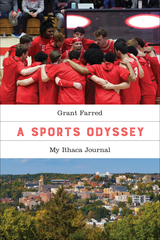
As readers of his Long Distance Love know, Grant Farred has been a supporter of the English Premier League club, Liverpool Football Club, for decades. His fandom for that team launched an unexpected connection with a world beyond the limits of the apartheid state of his upbringing in South Africa. However, A Sports Odyssey shows that as Farred’s fervor for Liverpool ended, he developed a new set of sports attachments in Ithaca, New York: to his son’s youth basketball career, to the men’s basketball team at Cornell University and its coach, and even to professional teams like the New York Knicks. Farred’s bemusement at finding himself a sports parent, a New Yorker, and a company man, only underline the sincerity of his affections.
In A Sports Odyssey, Farred writes elegantly and eloquently about how sports and sports fandom create a sense of belonging, but also loss. This is a heartfelt examination of how we find “home” in who and what we love.
In the series Sporting
Drawing on his workshops in Rochester, Talarico describes a unique approach for eliciting poetry from people of many ages and backgrounds—particularly underpriviledged urban kids and the elderly. The process—from dialogue to self-expression to publication to public event—illuminates the urgency and meaning of releasing the spirit captured in each man and woman and child’s experience. "Some people say that Ross Talarico has done the impossible," the Today Show remarked of his success in Rochester; and with this book Talarico offers the same opportunity to others. Teachers, community leaders, parents, and children will be able to follow his practical, hands-on approach to encouraging self-expression in diverse, even unlikely, settings. They will see here how poetry is indeed relevant, ever more crucial to our identity as the culture evolves—how it is, finally, the place where the inarticulate can come to speak for themselves.








In this first modern book-length biography of native Englander William E. Burton, theatre historian David L. Rinear explores Burton’s diary, letters, published reviews, and various reminiscences to reveal the tumultuous personal and professional lives of the mid-nineteenth-century actor/manager and his role in American literary history. Stage, Page, Scandals, and Vandals: William E. Burton and Nineteenth-Century American Theatre also provides insight into the cultural and artistic climate of an early period in American history when the country was still forming a national identity.
Burton fled England in 1834 and came to America in the wake of a public scandal caused by his marriage to a sixteen-year-old orphan. Burton was then already married with a ten-year-old son. Settling in Philadelphia, the thirty-two-year-old actor rapidly established himself in the city’s theatrical productions and quickly became an audience favorite.
In 1837, while continuing to act, Burton founded and edited The Gentleman’s Magazine, a monthly literary publication later called Burton’s Gentleman’s Magazine. Burton hired struggling author Edgar Allan Poe as coeditor, and the journal achieved literary acclaim as it first published many of Poe’s short stories and poems.
Burton sold the journal in 1841 and used the money to build a new theatre, which he managed, although the depression of the early 1840s soon drove his venture out of business. After declaring bankruptcy the following year, Burton worked as a touring actor before returning to theatre management in 1845. For the next thirteen years, Burton managed a succession of theatres in Philadelphia, Baltimore, and New York.
Burton’s work as a producer of Shakespearean comedies and romances marks him as the first of the intellectual theatre managers to raise the theatrical experience from mere popular culture to high art. Burton made a fortune in his ventures, amassed the finest private Shakespearean library in the country, and built a grand seaside estate in Glen Cove, Long Island. Shrewd in his personal affairs and in business, Burton also had a violent temper, which led him to viciously attack his competitors. His peculiar domestic relationships marred his brilliant career as an actor, manager, and man of letters; he may have been married to three women at once and lived with two of these women simultaneously.
Fully revealing Burton’s contributions to American culture, Rinear traces Burton’s personal and professional pursuits from his emigration to his death in 1860. Bolstered by twenty-two illustrations, Stage, Page, Scandals, and Vandals sheds light on the history of American entertainment during the antebellum era, exposes the ruthless business practices required to succeed in theatre and literary magazine publishing, and reveals a sense of what constituted celebrity status in mid-nineteenth-century America.

Finalist for the 2023 Frank Luther Mott - Kappa Tau Alpha Journalism and Mass Communication Research Award
In 1935, a group of journalists and theater artists embarked on an unusual collaboration. With funds from the Federal Theatre Project (FTP), a Depression-era employment initiative established by President Roosevelt’s New Deal, they set out to produce news for the theatrical stage. Over the next four years, the New York–based team created six productions, known as the Living Newspapers. Covering a variety of public issues that included affordable housing, the plight of Dust Bowl farmers, the Tennessee Valley Authority, and labor law, Living Newspaper productions would reach hundreds of thousands of spectators and inspire adaptations across the country.
Staged News interprets the Living Newspaper’s process and repertoire amid journalists’ changing conceptions of their profession. Jordana Cox spotlights marginalized “newsmakers,” particularly Black artists, who challenged the parameters of public knowledge and assumptions surrounding newsworthiness. This timely analysis reveals how a vital theatrical form sprouted from a changing news landscape and reimagined what journalism could do for people seeking democratic change.
Author Judy Rohrer brings together an analysis of racial formation and colonization in the islands through a study of legal cases, contemporary public discourse (local media and literature), and Hawai‘i scholarship. Her analysis exposes how racialization works to obscure—with the ultimate goal of eliminating—native Hawaiian indigeneity, homeland, nation, and sovereignty.
Staking Claim argues that the dual settler colonial processes of racializing native Hawaiians (erasing their indigeneity), and indigenizing non-Hawaiians, enable the staking of non-Hawaiian claims to Hawai‘i. It encourages us to think beyond a settler-native binary by analyzing the ways racializations of Hawaiians and various non-Hawaiian settlers and arrivants bolster settler colonial claims, structures, and white supremacist ideologies.

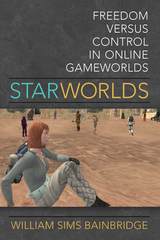
The four “star worlds” explored in this book illustrate the dilemmas concerning the role of technology as liberator or oppressor in our postindustrial society, and represent computer simulations of future possibilities of human experience. Bainbridge considers the relationship between a real person and the role that person plays, the relationship of an individual to society, and the relationship of human beings to computing technology. In addition to collecting ethnographic and quantitative data about the social behavior of other players, he has immersed himself in each of these worlds, role-playing 14 avatars with different skills and goals to gain new insights into the variety of player experience from a personal perspective.
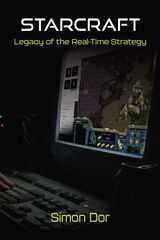
Apart from the game’s clear landmark status, StarCraft offers a unique insight into changes in gaming culture and, more broadly, the marketability and profit of previously niche areas of interest. The book places StarCraft in the history of real-time strategy games in the 1990s—Dune II, Command & Conquer, Age of Empires—in terms of visual style, narrative tropes, and control. It shows how design decisions, technological infrastructures, and a strong contribution from its gaming community through Battle.net and its campaign editor were necessary conditions for the flexibility it needed to grow its success. In exploring the fanatic clusters of competitive players who formed the first tournaments and professionalized gaming, StarCraft shows that the game was key to the transition towards foreseeing play and essential to competitive gaming and e-sports.
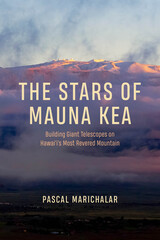
The inside account of how astronomers were able to build the world’s largest observatories on Hawai‘i’s most revered mountain.
In July 2019, a demonstration erupted on Hawai‘i Island to prevent the construction of the Thirty Meter Telescope, which, if built, would be one of the largest and most advanced ground-based telescopes in the world. For months, thousands of people camped on the access road leading to the proposed location: Mauna Kea, a dormant volcano, the highest point in Hawai‘i, and a sacred site for Native Hawaiians. The standoff in 2019 was not the first. For decades, activists had resisted attempts to build the TMT and its predecessors. Even so, many astronomers were startled by opposition to the TMT and the discoveries it promised. Astronomers were focused on the stars; Native Hawaiians and environmentalists were concerned about not only the sky, but also the land.
The Stars of Mauna Kea traces the history of astronomy on Hawai‘i Island, shedding new light on why scientists were granted access to the volcano in the first place. Beginning in 1959, when Hawai‘i became the fiftieth US state, it chronicles the ways astronomers benefited from Hawai‘i’s colonial past to gain free and exclusive land use rights on what had long been the archipelago’s most revered mountain. Drawing on unprecedented archival research and extensive interviews, Pascal Marichalar carefully charts the course of astronomical development on Mauna Kea. He describes the devastating tsunami that led a local businessman to contact scientists just as a renowned astronomer was scouting for places to observe the stars; the controversial authority the University of Hawai‘i assumed over the volcano after 1964; the environmental opposition to the first large international project, the Canada-France-Hawai‘i Telescope; and the resistance to telescope development that became a major focus of the Hawaiian sovereignty movement. Marichalar introduces readers to scientists working on Mauna Kea, as well as the people living in the mountain’s shadow, including key opposition figures involved in recent events.
Like the dark matter that holds together rotating galaxies, the colonial forces that have shaped Hawai‘i exert a gravitational pull on the science undertaken on the volcano’s summit. The Stars of Mauna Kea brings readers inside an ongoing debate over the morality of scientific research conducted on contested ground.

READERS
Browse our collection.
PUBLISHERS
See BiblioVault's publisher services.
STUDENT SERVICES
Files for college accessibility offices.
RECENTLY PUBLISHED





UChicago Accessibility Resources
home | accessibility | search | about | contact us
BiblioVault ® 2001 - 2026
The University of Chicago Press