
 A SCHOLARLY BOOK REPOSITORY
49 start with S start with S

The refugee issue has always been controversial and Lavenex's analyses add fuel to an already heated debate. She analyses the various bi- and multilateral processes by which the countries of Central and Eastern Europe (CEECs) are being gradually incorporated into a restrictive refugee regime established among the EU member states, in which the CEECs serve as "gate-keepers" for refugees and immigrants heading towards Western Europe.
At a time when many transition countries are trying to enter the EU, Lavenex highlights the CEECs consent to adapt to Western European policies aimed at fighting illegal immigration and reducing the numbers of asylum seekers as a political bargaining tool in exchange for future membership in the EU. She also argues that the regime undermines the values of international refugee protection and diffuses states' responsibilities by establishing a system of negative redistribution for the handling of asylum claims.
Safe Third Countries is the first comprehensive study on the extension of the emergent European refugee regime and highlights, in an innovative manner, the complex entanglement of domestic policies, European integration and international relations.
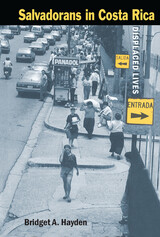
Salvadorans in Costa Rica: Displaced Lives introduces readers to people from a wide range of class and educational backgrounds who had come to Costa Rica from all over El Salvador. All shared the experience of having become refugees and having settled in a new country under the same circumstances, and when the war in their own country ended, they shared a concern about the issues involved in deciding whether to return there. Their diversity allows Hayden to examine the ways in which the language of national identity played out in different contexts and sometimes contradictory ways.
Drawing on contemporary theories of migration and space, Hayden identifies the discourses, narratives, and concepts that Salvadorans in Costa Rica had in common and then analyzes the ways in which their experiences and their uses of those discourses varied. She focuses on key spatial concepts that Salvadorans used in talking about displacement and re-emplacement in order to show how they constructed the experience of settlement and how such variables as gender and age influenced their experiences. Because "nationality" was an idiom they used to relate their experiences, she pays particular attention to the role of national belonging and national difference—in terms of both the ways in which the Salvadorans were received by Costa Ricans and their reactions to their new lives in Costa Rica. A concluding chapter compares them with Salvadorans who emigrated to other countries.
The story of these displaced Salvadorans, focusing on the lives of real people, can give us a new understanding of how individuals feel a sense of belonging to a sociocultural space. By exploring many meanings of the nation and national belonging for different people under varying conditions, Hayden's study provides fresh insights into the dynamics of migration, gender, and nationalism.

In the early twentieth century, historical imaginings of Japan contributed to the Argentine vision of “transpacific modernity." Intellectuals such as Eduardo Wilde and Manuel Domecq García celebrated Japanese customs and traditions as important values that can be integrated into Argentine society. But a new generation of Nikkei or Japanese Argentines is rewriting this conventional narrative in the twenty-first century. Nikkei writers such as Maximiliano Matayoshi and Alejandra Kamiya are challenging the earlier, unapologetic view of Japan based on their own immigrant experiences.
Compared to the experience of political persecution against Japanese immigrants in Brazil and Peru, the Japanese in Argentina generally lived under a more agreeable sociopolitical climate. In order to understand the "positive" perception of Japan in Argentine history and literature, Samurai in the Land of the Gaucho turns to the current debate on race in Argentina, particularly as it relates to the discourse of whiteness. One of the central arguments is that Argentina's century-old interest in Japan represents a disguised method of (re)claiming its white, Western identity.
Through close readings of diverse genres (travel writing, essay, novel, short story, and film) Samurai in the Land of the Gaucho yields a multi-layered analysis in order to underline the role Japan has played in both defining and defying Argentine modernity from the twentieth century to the present.


Taking a Northern California community of migrants from Guatemala as a case study, Medina demonstrates the ways in which immigration policy and educational barriers exclude Indigenous migrant populations. He follows the community at the “Sanctuary”—a Spanish-speaking church in the East Bay Area that serves as a place of worship, English language instruction, and refuge for migrants. Medina assembles participant observations, interviews, surveys, and other data to provide points of entry into intersecting issues of immigration, violence, language, and property and to untangle aspects of citizenship, exclusion, and assumptions about literacy.

Undocumented migration is a huge global phenomenon, yet little is known about the reality of life for those involved. Sans Papiers combines a contemporary account of the theoretical and policy debates with an in-depth exploration of the lived experiences of undocumented migrants in the UK from Zimbabwe, China, Brazil, Ukraine and Turkish Kurdistan.
Built around their voices, the book provides a unique understanding of migratory processes, gendered experiences and migrant aspirations. Moving between the uniqueness of individual experience and the search for commonalities, the book explores the ambiguities and contradictions of being an undocumented migrant.
With its insights into personal experiences alongside analysis of wider policy issues, Sans Papiers will have wide appeal for students, academics, policy-makers and practitioners.


A metaphor for the Swedish migration to America in the mid-nineteenth century, the Sven Svensson family, traced here by historian H. Arnold Barton, a descendant, provides a model for genealogical research with which all persons interested in ancestors can identify and from which anyone can learn.
The field of migration history has taken on new importance as a result of accelerating interest in ethnicity and genealogical research. Though a family history, and in a sense an inner voyage of self-discovery, the search for ancestors told here reveals the broader contours of Swedish and American history in the nineteenth century.
The Search for Ancestors is a microanalysis of those social, economic, and cultural developments that led to the gradual breakup of an ancient way of life in the Swedish countryside and the migration of growing numbers of Swedish peasants across the Atlantic to America.
Barton’s personal odyssey took him to Gowrie, Iowa, the heart of Swedish America, and to the province of Småland in southern Sweden. Research in the Swedish Statistical Central Bureau in Stockholm, contacts with emigration historians in Stockholm, and search in Swedish provincial and national archives, finally gave him the impressive mass of information and statistical data with which to chart his family’s history—over four centuries, back to the 1530s.
A kind of “history with the works showing” or do-it-yourself genealogical kit, the book will be fascinating as well as informative for general readers as well as students of history.
The concepts of home and diaspora are engaged and debated throughout the volume. Drawing on numerous sources—oral histories, interviews, private papers, films, myths, and music—the contributors highlight the role ethnic minorities have played in constructing Brazilian and Japanese national identities. The essayists consider the economic and emotional motivations for migration as well as a range of fascinating cultural outgrowths such as Japanese secret societies in Brazil. They explore intriguing paradoxes, including the feeling among many Japanese-Brazilians who have migrated to Japan that they are more "Brazilian" there than they were in Brazil. Searching for Home Abroad will be of great interest to scholars of immigration and ethnicity in the Americas and Asia.
Contributors. Shuhei Hosokawa, Angelo Ishi, Jeffrey Lesser, Daniel T. Linger, Koichi Mori, Joshua Hotaka Roth, Takeyuki (Gaku) Tsuda, Keiko Yamanaka, Karen Tei Yamashita
Stories of smuggling as acts of resistance and decolonization.
'This conceptually vivid book refreshes our vision' - Ruth Wilson Gilmore
The word smuggler often unleashes a simplified, negative image painted by the media and the authorities. Such state-centric perspectives hide many social, political, and economic relations generated by smuggling. This book looks at the practice through the eyes of the smugglers, revealing how their work can be productive, subversive, and deeply sociopolitical.
By tracing the illegalized movement of people and goods across borders, Seeing Like a Smuggler shows smuggling as a contradiction within the nation-state system, and in a dialectical relation with the national order of things. It raises questions about how smuggling engages and unsettles the ethics, materialities, visualities, histories, and the colonial power relations that form borders and bordering.
Covering a wide spectrum of approaches from personal reflections and ethnographies to historical accounts, cultural analysis, and visual essays, the book spans the globe from Colombia to Ethiopia, Singapore to Guatemala, Afghanistan to Zimbabwe, and from Kurdistan to Bangladesh, to show how people deal with global inequalities and the restrictions of poverty and immobility.
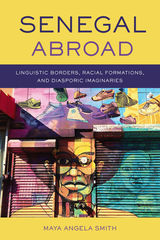
The Senegalese are notable, Smith suggests, both in their capacity for movement and in their multifaceted approach to language. She finds that, although the emigrants she interviews express complicated relationships to the multiple languages they speak and the places they inhabit, they also convey pleasure in both travel and language. Offering a mix of poignant, funny, reflexive, introspective, and witty stories, they blur the lines between the utility and pleasure of language, allowing a more nuanced understanding of why and how Senegalese move.
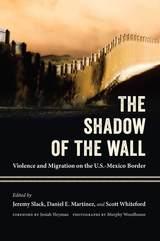
The authors analyze data from the Migrant Border Crossing Study (MBCS), a mixed-methods, binational research project that offers socially relevant, rigorous social science about migration, immigration enforcement, and violence on the border. Using information gathered from more than 1,600 post-deportation surveys, this volume examines the different faces of violence and migration along the Arizona-Sonora border and shows that deportees are highly connected to the United States and will stop at nothing to return to their families. The Shadow of the Wall underscores the unintended social consequences of increased border enforcement, immigrant criminalization, and deportation along the U.S.-Mexico border.
Contributors
Howard Campbell
Josiah Heyman
Alison Elizabeth Lee
Daniel E. Martínez
Ricardo Martínez-Schuldt
Emily Peiffer
Jeremy Slack
Prescott L. Vandervoet
Matthew Ward
Scott Whiteford
Murphy Woodhouse
Solano, who volunteered at shelters in Mexico, chronicles the activity in three of the nearly 100 shelters along a unique humanitarian trail that many Central Americans take to reach the United States. She outlines the constraints faced by these sites and their potential to create social transformation and considers how and why migration security is currently framed and managed as both a criminal and humanitarian issue.
Shelter on the Journey explores the politics of the shelters, their social world, and the dynamics of charity and solidarity, as well as the need for humanitarian assistance and advocacy for dignified and free transit migration.

By studying the historical flows of contraband and vice across North American borders, the contributors seek to bring a greater understanding of borderlanders, the actual agents of historical change who often remain on the periphery of most historical analyses that focus on the state or on policy.
To examine the political, economic, and social shifts resulting from the transnational movement of goods, people, and ideas, these contributions employ the analytical categories of race, class, modernity, and gender that underlie this evolution. Chapters focus on the ways power relations created opportunities for engaging in “deviance,” thus questioning the constructs of economic reality versus concepts of criminal behavior. Looking through the lens of transnational flows of contraband and vice, the authors develop a new understanding of nation, immigration, modernization, globalization, consumer society, and border culture.
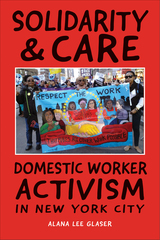
Solidarity & Care examines the political mobilization of diverse care workers who joined together and supported one another through education, protests, lobbying, and storytelling. Domestic work activists used narrative and emotional appeals to build a coalition of religious communities, employers of domestic workers, labor union members, and politicians to first pass and then to enforce the new law.
Through oral history interviews, as well as ethnographic observation during DWU meetings and protest actions, Glaser chronicles how these women fought (and continue to fight) to improve working conditions. She also illustrates how they endure racism, punitive immigration laws, on-the-job indignities, and unemployment that can result in eviction and food insecurity.
The lessons from Solidarity & Care along with the DWU’s precedent-setting legislative success have applications to workers across industries.
All royalties will go directly to the Domestic Workers United
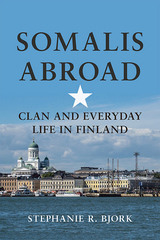

In the early 1990s, Somali refugees arrived in Minneapolis and St. Paul, Minnesota. Later in the decade, an additional influx of immigrants arrived in a second destination of Columbus, Ohio. These refugees found low-skill jobs in warehouses and food processing plants and struggled as social “outsiders,” often facing discrimination based on their religious traditions, dress, and misconceptions that they are terrorists. The immigrant youth also lacked access to quality educational opportunities.
In Somalis in the Twin Cities and Columbus, Stefanie Chambers provides a cogent analysis of these refugees in Midwestern cities where new immigrant communities are growing. Her comparative study uses qualitative and quantitative data to assess the political, economic, and social variations between these urban areas. Chambers examines how culture and history influenced the incorporation of Somali immigrants in the U.S., and recommends policy changes that can advance rather than impede incorporation.
Her robust investigation provides a better understanding of the reasons these refugees establish roots in these areas, as well as how these resettled immigrants struggle to thrive.
In this rich ethnographic study, Vogler reveals how different legal arenas take dramatically different approaches to classifying sexuality and use those classifications to legitimate different forms of social control. By delving into the histories behind these diverging classification practices and analyzing their contemporary reverberations, Vogler shows how the science of sexuality is far more central to state power than we realize.

Cvajner details the personal and collective changes brought about by the experience of migration for these women: from the first hours arriving in a new country with no friends, relatives, or existing support networks, to later remaking themselves for their new environment. In response to their traumatic displacement, the women of Soviet Signoras—nearly all of whom found work in their new Western homes as elder care givers—refashioned themselves in highly sexualized, materialistic, and intentionally conspicuous ways. Cvajner’s focus on overt sexuality and materialism is far from sensationalist, though. By zeroing in on these elements of personal identity, she reveals previously unexplored sides of the social psychology of migration, coloring our contemporary discussion with complex shades of humanity.
Analyzing how artists reimagine migrant disappearance and visibility at the US–Mexico border.
In the mid-1990s, the US government implemented Prevention through Deterrence, a major buildup of troops, walls, and surveillance around El Paso and San Diego. Cut off from these crucial urban crossings, migrants flowed into the dangerous surrounding deserts, where some ten thousand have since died. This is all according to plan: Pentagon documents describe the strategy of funneling migrants toward “mortal danger.”
In this bracing critique, China Medel explores the aesthetics enabling and resisting the crisis of migrant death. The nation-state’s performance of sovereignty along the border, predicated on mass casualties, is tolerated and even celebrated, thanks to the images in our heads of racialized and therefore criminal bodies, made invisible as they disintegrate in the baking sand. Spectral Aesthetics shows how state officials and mainstream media, relying on postracial ideologies and white-supremacist agendas, collectively foster this picture of a brown body so abject that it is disposable. In close readings of artworks contesting this murderous visual regime, Medel discovers an alternative kind of sight, one emphasizing the ghostly traces of the dead. These are images not of the individual “alien” but of life itself, indisposable.
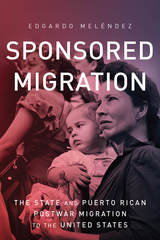
Sponsored Migration places Puerto Rico’s migration policy in its historical context, examining the central role the Puerto Rican government played in encouraging and organizing migration during the postwar period. Meléndez sheds an important new light on the many ways in which the government intervened in the movement of its people: attempting to provide labor to U.S. agriculture, incorporating migrants into places like New York City, seeking to expand the island’s air transportation infrastructure, and even promoting migration in the public school system. One of the first scholars to explore this topic in depth, Meléndez illuminates how migration influenced U.S. and Puerto Rican relations from 1898 onward.
Winner of the 2020 Robert E. Park Award for Best Book from the Community and Urban Sociology Section of the American Sociological Association
Winner of the 2020 Distinguished Contribution to Research Award from the Latino/a Section of the American Sociological Association
Honorable Mention for the 2020 Thomas and Znaniecki Award from the International Migration Section of the American Sociological Association
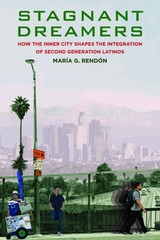
A quarter of young adults in the U.S. today are the children of immigrants, and Latinos are the largest minority group. In Stagnant Dreamers, sociologist and social policy expert María Rendón follows 42 young men from two high-poverty Los Angeles neighborhoods as they transition into adulthood. Based on in-depth interviews and ethnographic observations with them and their immigrant parents, Stagnant Dreamers describes the challenges they face coming of age in the inner city and accessing higher education and good jobs, and demonstrates how family-based social ties and community institutions can serve as buffers against neighborhood violence, chronic poverty, incarceration, and other negative outcomes.
Neighborhoods in East and South Central Los Angeles were sites of acute gang violence that peaked in the 1990s, shattering any romantic notions of American life held by the immigrant parents. Yet, Rendón finds that their children are generally optimistic about their life chances and determined to make good on their parents’ sacrifices. Most are strongly oriented towards work. But despite high rates of employment, most earn modest wages and rely on kinship networks for labor market connections. Those who made social connections outside of their family and neighborhood contexts, more often found higher quality jobs. However, a middle-class lifestyle remains elusive for most, even for college graduates.
Rendón debunks fears of downward assimilation among second-generation Latinos, noting that most of her subjects were employed and many had gone on to college. She questions the ability of institutions of higher education to fully integrate low-income students of color. She shares the story of one Ivy League college graduate who finds himself working in the same low-wage jobs as his parents and peers who did not attend college. Ironically, students who leave their neighborhoods to pursue higher education are often the most exposed to racism, discrimination, and classism.
Rendón demonstrates the importance of social supports in helping second-generation immigrant youth succeed. To further the integration of second-generation Latinos, she suggests investing in community organizations, combating criminalization of Latino youth, and fully integrating them into higher education institutions. Stagnant Dreamers presents a realistic yet hopeful account of how the Latino second generation is attempting to realize its vision of the American dream.

A pathbreaking new genealogy of statelessness
Just as the modern state and the citizenship associated with it are commonly thought of as a European invention, so too is citizenship’s negation in the form of twentieth-century diaspora and statelessness. Statelessness sets forth a new genealogy, suggesting that Europe first encountered mass statelessness neither inside its own borders nor during the twentieth century, as Hannah Arendt so influentially claimed, but outside of itself—in the New World, several hundred years earlier.
Through close readings of political philosophers from Hobbes to Rousseau to Kant, Tony C. Brown argues that statelessness became a central problem for political thought early on, with far-reaching implications for thinking both on the state and on being human. What Europeans thought they saw among the “savages” of the Americas was life without political order, life less than human. Lacking almost everything those deemed clearly human had achieved, the stateless existed in a radically precarious, almost inhuman privation.
And yet this existence also raised the unsettling possibility that state-based existence may not be inevitable, necessary, or even ideal. This possibility, as Brown shows, prompts the response—as defensive as it was aggressive—that we call Enlightenment political philosophy, which arguably still orders much thinking on being stateless today, including our discourses concerning migrants and Indigenous peoples.
Looks at the role of refugees in international relations.
Refugees may flee their country, but can they escape the confining, defining logic of all the voices that speak for them? As refugees multiply in our troubled world, more and more scholars, studies, and pundits focus on their plight. Most of these analyses, says Nevzat Soguk, start from a model that shares the assumptions manifested in traditional definitions of citizen, nation, and state. Within this hierarchy, he argues, a refugee has no place to go. States and Strangers questions this paradigm, particularly its vision of the territoriality of life.
A radical retheorization of the refugee from a Foucauldian perspective, the book views the international refugee regime not as a simple tertiary response, arising from the practice of states regarding refugee problems, but as itself an aspect of the regimentation of statecraft. The attendant discourse negates the multiplicity of refugee events and experience; by assigning the refugee an identity-someone without the citizen’s grounding within a territorial space-the state renders him voiceless and deprives him of representation and protection. States and Strangers asks how this happens and how it can be avoided.Using historical, archival research and interpretive strategies drawn from a genealogical approach, Soguk considers the role of the refugee in the emergence and maintenance of the sovereign territorial state from the late seventeenth century to contemporary times. ISBN 0-8166-3166-2 Cloth/jacket £00.00 $62.95x340 Pages 5 7/8 x 9 MarchBorderlines Series, volume 11Translation inquiries: University of Minnesota Press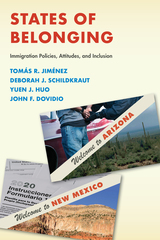
Arizona and New Mexico are historically and demographically similar, but they differ in their immigration policies. Arizona has enacted unwelcoming policies towards immigrants, restricting the access of immigrants to state resources, social services, and public institutions. New Mexico is more welcoming, actively seeking to protect the rights of immigrants and extending access to state resources and institutions. The authors draw on an original survey and in-depth interviews of a cross-section of each state’s population to illustrate how these differing approaches affect the sense of belonging not only among immigrants, but among the U.S.-born as well.
Respondents in Arizona, regardless of whether they were foreign- or native-born or their ethno-racial background, agreed that the state is unwelcoming to immigrants, and they pointed to Arizona’s restrictive policies as the primary factor. The sense of rejection perceived by Latinos in Arizona, including the foreign-born and the U.S.-born, was profound. They felt the effects of administrative and symbolic exclusions of the state’s unwelcoming policies as they went about their daily lives.
New Mexico’s more welcoming approach had positive effects on the Latino immigrant population, and these policies contributed to an increased sense of belonging among U.S.-born Latinos and U.S.-born whites as well. The authors show that exposure to information about welcoming policies is associated with an improved sense of belonging across most population groups. They also find that the primary dividing line when it came to reactions to welcoming policies was political, not ethno-racial. Only self-identified Republicans, Latino as well as white, showed reduced feelings of belonging.
States of Belonging demonstrates that welcoming policies cultivate a greater sense of belonging for immigrants and other state citizens, suggesting that policies aimed at helping immigrants gain a social, economic, and political foothold in this country can pay a broad societal dividend.

Many immigrants to the United States are reluctant to come here. That statement takes many Americans by surprise because we assume that people freely choose to come to this country to make better lives for themselves. After all, what American is unfamiliar with the romantic image of immigrants of yesteryear arriving in New York Harbor, hungry to make their way in the land of opportunity?
But the United States is not the country it was a century ago. Back then, the institutions of family and religion held together American society, establishing the norms, customs, and obligations that smoothed the gears of self-governance. For this reason, the country had a clear national identity into which immigrants could assimilate. They could adapt their cultural heritage to the American way of life and raise their children to do the same. Sadly, this is no longer the case.
The march of modernity has dissolved the institutions that supported a cohesive society, giving rise to a radical individualism that devalued the importance of meaning-making relationships. The fallout has included unprecedented rates of loneliness, historical ignorance, excessive materialism, and moral drift. Immigrants can see this in America better than Americans themselves. The advantage immigrants have is that they come from countries that cherish group belonging; they know that without it, an individual cannot live a fulfilling life.
In The Statue of Libertine, Luma Simms—herself an immigrant from Iraq—argues that we ought to listen to the immigrant perspective and use it as a tool for self-reflection. Drawing from landmark social commentators such as Alexis de Tocqueville, Simms unfolds her argument by sharing her family’s story of coming to America and struggling to make it their home. She also includes firsthand accounts of other immigrants whose experiences underscore how America’s proverbial melting pot has been shattered.
Her objective is to help us see ourselves through the eyes of the modern immigrant and grasp how far we’ve strayed from the tacit social agreements that made America so strong in the first place. With this understanding, we can begin the work of reviving the institutions that made us a beacon of hope for the rest of the world.

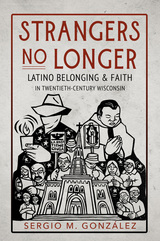
Hospitality practices grounded in religious belief have long exercised a profound influence on Wisconsin’s Latino communities. Sergio M. González examines the power relations at work behind the types of hospitality--welcoming and otherwise--practiced on newcomers in both Milwaukee and rural areas of the Badger State. González’s analysis addresses central issues like the foundational role played by religion and sacred spaces in shaping experiences and facilitating collaboration among disparate Latino groups and across ethnic lines; the connections between sacred spaces and the moral justification for social justice movements; and the ways sacred spaces evolved into places for mitigating prejudice and social alienation, providing sanctuary from nativism and repression, and fostering local and transnational community building.
Perceptive and original, Strangers No Longer reframes the history of Latinos in Wisconsin by revealing religion’s central role in the settlement experience of immigrants, migrants, and refugees.
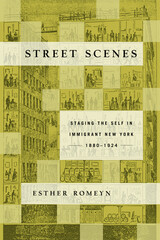
Street Scenes focuses on the intersection of modern city life and stage performance. From street life and slumming to vaudeville and early cinema, to Yiddish theater and blackface comedy, Esther Romeyn discloses racial comedy, passing, and masquerade as gestures of cultural translation. In these performances she detects an obsession with the idea of the city as theater and the self as actor, which was fueled by the challenges that consumer capitalism presented to notions of an “authentic” self.
It was exactly this idea of “authentic” immigrant selfhood that was at stake in many performances on the popular stage, and Romeyn ultimately demonstrates how these diverse and potent immigrant works influenced the emergence of a modern metropolitan culture.
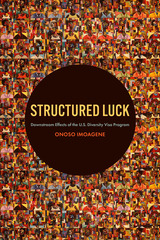
Combining ethnographic observation in Africa and interviews with immigrants, their family members, and friends from Ghana and Nigeria, Imoagene demonstrates that the visa program is a process of “structured luck,” from how people hear about the lottery, who registers for it, and who participates in it to the application requirements for the visa. In Ghana and Nigeria, people often learn about the lottery through friends, colleagues, or relatives who persuade them to enter for the perceived benefits of receiving a visa: opportunities for upward mobility, permanent legal status, and the ability to bring along family members. Though anyone can enter the lottery, not everyone who wins obtains a visa. The visa application process requires proof of a high school diploma or artisan skills, a medical exam, a criminal background check, an interview with U.S. consular officers, and payment of fees. Such requirements have led to the growth of visa entrepreneurs, who often charge exorbitant fees to steer immigrants through the process. Visa recipients who were on track to obtain university degrees at home often leave in the middle of their studies for the United States but struggle to continue their education due to high U.S. tuition costs. And though their legal status allows them to escape the demoralizing situations that face the undocumented, these immigrants lack the social support that the government sometimes provides for refugees and other migrants. Ultimately, Imoagene notes, the real winner of the visa lottery is not the immigrants themselves but the United States, which benefits from their relatively higher levels of education. Consequently, she argues, the U.S. must do more to minimize the visa program’s negative consequences.
Structured Luck illuminates the trauma, resilience, and determination of immigrants who come to the United States through the Diversity Visa Program and calls for the United States to develop policies that will better integrate them into society.

Liz Fekete is a leading authority on issues of racism, Islamophobia and national security legislation. A Suitable Enemy draws on sixteen years of research to present a comprehensive overview of EU immigration, asylum, race and security policies.
Fekete argues that at the same time as the EU introduces selective migration policies, it closes its borders against asylum seekers who were the first victims of the growth of the security state which now embraces Muslims. She explores the way in which anti-terrorist legislation has been used to evict undesirable migrants, how deportation policies commodify and de-humanise the most vulnerable and how these go hand in hand with evolving forms of racism, particularly Islamophobia.
At the heart of the book is an examination of xeno-racism -- a non-colour coded form of institutionalised racism -- where migrants who do not assimilate, or who are believed to be incapable of assimilation, are excluded.
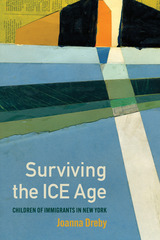
Dreby shows that a restrictive approach to immigration creates problems over time and across generations. These issues occur regardless of one’s citizenship status and go beyond deportations. Despite having pride in their heritage, her interviewees did not talk much about immigration. She refers to this unwillingness—and at times, inability—to speak about immigration as silencing. Silencing in a community or family is often intended to protect children, but this can leave them with little information about their backgrounds and status, leading to fear and anxiety instead. Self-silencing often resulted from traumatic experiences tied to enforcement episodes, which sometimes took the form of memory loss or emotional withholding. Dreby finds that experiences with the immigration system that disrupted relationships in a child’s household arising from family separations, moves, or changing roles in the family had especially long-term effects, causing, at times, ongoing mental health issues. Even the risk of immigration involvement left some young adults feeling vulnerable and undermined their sense of safety and security as U.S. citizens.
Dreby also highlights stories that offer hope. Young adults developed strategies to persevere, and children who grew up in communities and families that openly talked about migration felt empowered and fared much better, especially when they had access to resources, such as adequate food and shelter, mental health services, and community support. Dreby calls for policies and practices to mitigate the harms of restrictive migratory control on children’s wellbeing, such avoiding the arrest of parents in front of children and ensuring that U.S. citizen children’s interests are considered in immigration court without their direct involvement.
Surviving the ICE Age details the generational harms caused by U.S. immigration policy and offers suggestions for a better way forward.

In 1960 S. K. Sharma, a brilliant young astrophysicist at the beginning of his academic career, has finally succeeded in bringing his wife, Sushila, from India to America. Intensely drawn to one another as star university students, the couple pursue an unlikely affair and marriage that crosses caste lines. Their sweeping, decades-long story of love, forgiveness, and coming of age takes place in a country that is both fascinated by and shuns them. The United States, with its exaltation of individualism, offers immense opportunities, but its looser sexual mores threaten to undermine the family’s happiness and devotion to one another.
As their three daughters become young women, they must navigate the tumultuous decades of the Vietnam War, the civil rights movement, and the women’s liberation movement. In their journeys of self-discovery, they upend their parents’ hold on them to craft radically new identities for themselves. As they discover their parents’ faults they grow increasingly puzzled by their devotion to one another, eventually learning how love and forgiveness have the power to overcome the most uncomfortable truths.
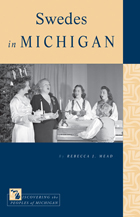
In the late nineteenth and early twentieth centuries, large numbers of Swedish immigrants came to Michigan seeking new opportunities in the United States and relief from economic, religious, or political problems at home. In addition to establishing early farming communities, Swedish immigrants worked on railroad construction, mining, fishing, logging, and urban manufacturing. As a result, Swedish Americans made significant contributions to the economic and cultural landscape of Michigan, a history this book explores in engaging and illustrative depth. Swedes in Michigan traces the evolution of hard-working people who valued education and assimilated actively while simultaneously maintaining their cultural ties and institutions. Moving from past to present, the book examines community patterns, family connections, social organizations, exchange programs, ethnic celebrations, and business and technical achievements that have helped Swedes in Michigan maintain a sense of their heritage even as they have adapted to American life.
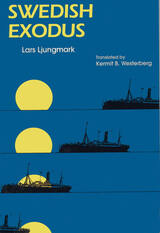
"America fever" gripped Sweden in the middle of the nineteenth century, seethed to a peak in 1910, when one-fifth of the world’s Swedes lived in America, cooled during World War I, and chilled to dead ash with the advent of the Great Depression in 1930.
Swedish Exodus, the first English translation and revision of Lars Ljungmark’s Den Stora Utvandringen, recounts more than a century of Swedish emigration, concentrating on such questions as who came to America, how the character of the emigrants changed with each new wave of emigration, what these people did when they reached their adopted country, and how they gradually became Americanized.
Ljungmark’s essential challenge was to capture in a factual account the broad sweep of emigration history. But often he narrows his focus to look closely at those who took part in this mass migration. Through historical records and personal letters, Ljungmark brings many of these people back to life. One young woman, for example, loved her parents, but loved America more: "I never expect to speak to you in this life. . . . Your loving daughter unto death." Like most immigrants, she never expected to return. Another immigrant wrote back seeking a wife: "I wonder how you have it and if you are living. . . . Are you married or unmarried? If you are unmarried, you can have a good home with me."
Ljungmark also focuses closely on some of the leaders: Peter Cassel, a liberal temperance supporter and free-church leader whose community in America prospered; Hans Mattson, a colonel in the Civil War and founder of a colony in Minnesota; Erik Jansson, a book burner, self-proclaimed messiah, and founder of the Bishop Hill Colony; Gustaf Unonius, a student idealist and founder of a Wisconsin colony that faltered.
The story of Swedish immigrants in the United States is the story in miniature of the greatest mass migration in human history, that of thirty-five million Europeans who left their homes to come to America. It is a human story of interest not only to Swedes but to everyone.
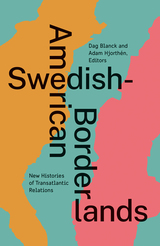
Reframing Swedish–American relations by focusing on contacts, crossings, and convergences beyond migration
Studies of Swedish American history and identity have largely been confined to separate disciplines, such as history, literature, or politics. In Swedish–American Borderlands, this collection edited by Dag Blanck and Adam Hjorthén seeks to reconceptualize and redefine the field of Swedish–American relations by reviewing more complex cultural, social, and economic exchanges and interactions that take a broader approach to the international relationship—ultimately offering an alternative way of studying the history of transatlantic relations.
Swedish–American Borderlands studies connections and contacts between Sweden and the United States from the seventeenth century to today, exploring how movements of people have informed the circulation of knowledge and ideas between the two countries. The volume brings together scholars from a wide range of disciplines within the humanities and social sciences to investigate multiple transcultural exchanges between Sweden and the United States. Rather than concentrating on one-way processes or specific national contexts, Swedish–American Borderlands adopts the concept of borderlands to examine contacts, crossings, and convergences between the nations, featuring specific case studies of topics like jazz, architecture, design, genealogy, and more.
By placing interactions, entanglements, and cross-border relations at the center of the analysis, Swedish–American Borderlands seeks to bridge disciplinary divides, joining a diverse set of scholars and scholarship in writing an innovative history of Swedish–American relations to produce new understandings of what we perceive as Swedish, American, and Swedish American.
Contributors: Philip J. Anderson, North Park U; Jennifer Eastman Attebery, Idaho State U; Marie Bennedahl, Linnaeus U; Ulf Jonas Björk, Indiana U–Indianapolis; Thomas J. Brown, U of South Carolina; Margaret E. Farrar, John Carroll U; Charlotta Forss, Stockholm U; Gunlög Fur, Linnaeus U; Karen V. Hansen, Brandeis U; Angela Hoffman, Uppsala U; Adam Kaul, Augustana College; Maaret Koskinen, Stockholm U; Merja Kytö, Uppsala U; Svea Larson, U of Wisconsin–Madison; Franco Minganti, U of Bologna; Frida Rosenberg, KTH Royal Institute of Technology, Stockholm; Magnus Ullén, Stockholm U.
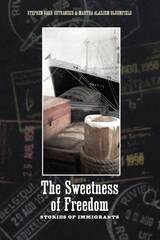
The Sweetness of Freedom presents an eclectic grouping of late nineteenth- and twentieth-century immigrants' narratives and the personal artifacts, historical documents, and photographs these travelers brought on their journeys to Michigan. Most of the oral histories in this volume are based on interviews conducted with the immigrants themselves.
Some of the immigrants presented here hoped to gain better education and jobs. Others—refugees—fled their homelands because of war, poverty, repression, religious persecution, or ethnic discrimination. All dreamt of freedom and opportunity. They tell why they left their homelands, why they chose to settle in Michigan, and what they brought or left behind. Some wanted to preserve their heritage, religious customs, traditions, and ethnic identity. Others wanted to forget past conflicts and lost family members. Their stories reveal how they established new lives far away from home, how they endured homesickness and separation, what they gave up and what they gained.

Oswaldo Truzzi's original work on these so-called patrícios changed the face of Brazilian studies. Now available in an English translation, Truzzi's pioneering book identifies the complex social paths blazed by Syrian and Lebanese immigrants and their descendants from the 1890s to the 1960s. He considers their relationships to other groups within São Paulo's kaleidoscopic mix of cultures. He also reveals the differences--real and perceived--between Syrians and Lebanese in terms of religious and ethnic affinities and in the economic sphere. Finally, he compares the two groups with their counterparts in the United States and looks at the wave of Lebanese Muslims to São Paulo that began in the 1960s.

Of the many state-enacted cruelties to which refugees and asylum seekers are subjected, detention and deportation loom largest in popular consciousness. But there is a third practice, perpetrating a slower violence, that remains hidden: dispersal.
Jonathan Darling provides the first detailed account of how dispersal - the system of accommodation and support for asylum seekers and refugees in Britain - both sustains and produces patterns of violence, suffering and social abjection. He explores the evolution of dispersal as a privatized process, from the first outsourced asylum accommodation contracts in 2012 to the renewed wave of outsourcing pursued by the Home Office today.
Drawing on six years of research into Britain's dispersal system, and foregrounding the voices and experiences of refugees and asylum seekers, Darling argues that dispersal has played a central role in the erasure of asylum from public concern. Systems of Suffering is a vital tool in the arsenal of those fighting to hold the government to account for the violence of its asylum policy and practice.
READERS
Browse our collection.
PUBLISHERS
See BiblioVault's publisher services.
STUDENT SERVICES
Files for college accessibility offices.
RECENTLY PUBLISHED





UChicago Accessibility Resources
home | accessibility | search | about | contact us
BiblioVault ® 2001 - 2026
The University of Chicago Press