
 A SCHOLARLY BOOK REPOSITORY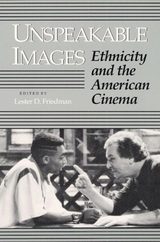
In fourteen chapters on topics ranging from film comedy to reporter movies to Latins in Manhattan, contributors from diverse disciplines explore ethnicity as a broad, complex, multilayered concept. The book's first section scrutinizes ethnicity within the context of traditional modes of film analysis---historical, auteurist, and generic. Essays in the second section relate ethnicity to broader areas of critical thought such as cultural studies, ethnography, postmodernism, psychoanalysis, feminism, and class studies, analyzing how each intersects and amplifies the other.

As gay men and lesbian women increasingly gained recognition and acceptance in twentieth-century literature and film, and subsequently in social and political movements, the Catholic Church reacted by subtly moving away from its overt condemnation of homosexuality as an urgent moral problem and toward tacitly shunning homosexuality as an “unspeakable vice.” In this revealing history, Francesco Torchiani reconstructs the Catholic Church’s shifting attitudes toward homosexuality during this period by drawing on a vast array of internal documents and external accounts. This monograph expands the scholarship on the relationship between Catholicism and homosexuality in terms of both method and content, ultimately concluding that the Catholic Church continues to wholeheartedly condemn homosexuality despite making genuine efforts to reflect on and understand its social and cultural impact. The Unspeakable Vice therefore sheds new light on and places into historical perspective the questions the Catholic Church continues to reckon with regarding its role in contemporary society.

Tucked within Missouri's borders are eight Congressionally designated Wilderness areas. These magnificent forests, scattered across the southern portion of the state, combine a wide variety of unique ecosystems. In Unspoiled Beauty, Charles Farmer captures the essence of the Missouri Wilderness experience, allowing even those who have never set foot in the wilderness to enjoy its wonders and appreciate its importance.
Farmer begins by describing the wilderness region prior to the Congressional Wilderness designation, providing an overview of the numerous battles that were waged to reclaim the state's wilderness and to assure its preservation. Featured are key players who were instrumental in the acquisition and preservation of Missouri wilderness.
Farmer devotes a chapter to each of the eight Wilderness areas, accompanied by numerous engaging photographs, many in color. He provides a brief history of each and shares his own fascinating personal experiences of camping, hiking, backpacking, hunting, and fishing within each. He discusses trails, fauna, flora, and other colorful details along the way. His adventures take place during different seasons of the year; he is sometimes alone, sometimes in company. Through his eyes, each area is brought vividly to life.
"Wilderness Tips" and a guide with rules for the novice camper, hiker, backpacker, hunter, and fisherman enhance the book's usefulness. The final chapter lists the areas in Missouri that qualify for Wilderness designation in the New Forest Plan. Unspoiled Beauty may well play a part in saving Missouri's remaining wilderness candidates. It will also help other states that are preparing campaigns to save their own wilderness areas.
Wilderness advocates, hikers and backpackers, fishermen and hunters, anyone who appreciates the great outdoors will enjoy this important new book.
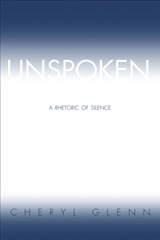
In our talkative Western culture, speech is synonymous with authority and influence while silence is frequently misheard as passive agreement when it often signifies much more. In her groundbreaking exploration of silence as a significant rhetorical art, Cheryl Glenn articulates the ways in which tactical silence can be as expressive and strategic an instrument of human communication as speech itself.
Drawing from linguistics, phenomenology, feminist studies, anthropology, ethnic studies, and literary analysis, Unspoken: A Rhetoric of Silence theorizes both a cartography and grammar of silence. By mapping the range of spaces silence inhabits, Glenn offers a new interpretation of its complex variations and uses.
Glenn contextualizes the rhetoric of silence by focusing on selected contemporary examples. Listening to silence and voice as gendered positions, she analyzes the highly politicized silences and words of a procession of figures she refers to as “all the President’s women,” including Anita Hill, Lani Guiner, Gennifer Flowers, and Chelsea Clinton. She also turns an investigative ear to the cultural taciturnity attributed to various Native American groups—Navajo, Apache, Hopi, and Pueblo—and its true meaning. Through these examples, Glenn reinforces the rhetorical contributions of the unspoken, codifying silence as a rhetorical device with the potential to deploy, defer, and defeat power.
Unspoken concludes by suggesting opportunities for further research into silence and silencing, including music, religion, deaf communities, cross-cultural communication, and the circulation of silence as a creative resource within the college classroom and for college writers.


Unstable Frontiers was first published in 1994. Minnesota Archive Editions uses digital technology to make long-unavailable books once again accessible, and are published unaltered from the original University of Minnesota Press editions.
"John Erni's heartfelt and insightful book is a valuable contribution to the study of the cultural politics of AIDS."–Jeff Nunokawa Princeton University
The "cure" for AIDS: The search goes on, keeping pace with our belief that AIDS is incurable. How such a seeming paradox works-and how it may well work against the proper treatment of the disease-is the subject of Unstable Frontiers, a probing, critical look at the cultural politics behind the quest for a cure for AIDS.
This massive commercial and scientific project, John Erni suggests, actually hinges on our contradictory definitions of the disease as curable and incurable at the same time. Drawing on diverse sources, from popular media to medical literature to cultural theory, he shows how the dual discourse of curability/incurability frames the way we think about and act on issues of medical treatment for AIDS. His work makes a major advance in our understanding of—and, perhaps, humane response to—a national crisis.
In his critique of the logic and fantasies underlying the double definition of AIDS, Erni explores a broad range of issues: the scientific paradigm used to develop AZT; the politics of alternative treatment practices, of clinical drug trials, and of AIDS activism; and the notions of time and temporality operating in AIDS treatment science. He also addresses the problematic popular themes, such as "AIDS is invariably fatal" and "Knowledge = Cure."
Unique in its approach to a social and political issue still in the making, the book reveals how AIDS has challenged technomedicine's historical position of authority-and in doing so, recasts this challenge in a powerful and ultimately hopeful way.
John Nguyet Erni is assistant professor of communication at the University of New Hampshire. He has published essays on AIDS and is currently working on a book about AIDS in Thailand.
In his most probing and expansive work to date, Jerome Kagan—one of this country’s leading psychologists—demonstrates that innovative research methods in the behavioral sciences and neurobiology, together with a renewed philosophical commitment to rigorous empiricism, are transforming our understanding of human behavior. Contemporary psychology, according to Kagan, has been preoccupied with three central themes: How malleable is temperament? How predictable are the milestones of cognitive development? How accurate is consciousness as a window onto the self, its motives, beliefs, and emotions?
In a review of past approaches to these questions, Kagan argues persuasively that behavioral scientists have reached less-than-satisfactory answers because they have failed to appreciate the biases inherent in their frame of reference and the limitations of their investigative procedures. He calls into question a number of techniques that have been mainstays of psychological investigation: the Ainsworth Strange Situation for assessing the emotional attachment of an infant to its mother, and interviews and questionnaires as indexes of personality, to name only two. Kagan’s own research has used novel laboratory situations to discover a group of children who exhibit a pattern of behavior he calls “temperamentally inhibited”—they are restless and irritable from birth, and by twenty-four months cling to the mother and show biological signs of high anxiety in unfamiliar situations.
These findings, coupled with current understanding of the structure and chemistry of the nervous system, lead him to speculate that these children are born with a biological predisposition that favors the development of a shy, fearful personality. Through longitudinal studies of this kind, as well as through his cross-cultural investigations of cognitive development, Kagan has infused new meaning into the nature–nurture debate.
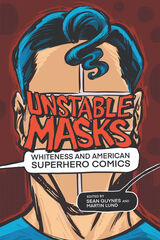
In Unstable Masks: Whiteness and American Superhero Comics, Sean Guynes and Martin Lund bring together a series of essays that contextualize the histories and stakes of whiteness studies, superhero comics, and superhero studies for academics, fans, and media-makers alike. The volume illustrates how the American comic book superhero is fundamentally a figure of white power and white supremacy and ultimately calls for diversity in superhero comics as well as a democratized media culture.
Contributors not only examine superhero narratives but also delve into the production, distribution, audience, and reception of those narratives, highlighting the imbrication of forces that have helped to create, normalize, question, and sometimes even subvert American beliefs about whiteness and race. Unstable Masks considers the co-constitutive nature of identity, representation, narrative, production and consumption, and historical and cultural contexts in forging the stereotypes that decide who gets to be a superhero and who gets to be American on the four-color pages of comic books.

This course-tested book provides a valuable reference for algebraic topologists and includes foundational material essential for graduate study.
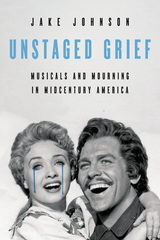
Often dismissed as escapism, screen musicals of the 1960s in fact tapped into unspoken sadness about an America that was slipping away. Jake Johnson delves into film and television musicals of the era to examine their place in networks of grieving in America, for America, and about America.
The Golden Age of musical theater ended just as Elisabeth Kübler-Ross’s On Death and Dying debuted, and Johnson uses Kübler-Ross’s five stages to frame the intertwining of musicals and grief. He analyzes films like Seven Brides for Seven Brothers and State Fair alongside paintings, poetry, and other images and texts to reveal how the musical theater engine built in the first half of the century broke down just as a new language emerged to describe the melancholy felt by people facing the end of the world they had known.
Nuanced and original, Unstaged Grief plumbs the grief, loss, and hope behind the Technicolor spectacle and rousing showstoppers.
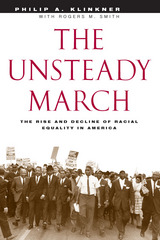
"[An] unflinching portrait of the leviathan of American race relations. . . . This important book should be read by all who aspire to create a more perfect union."—Publishers Weekly, starred review
"Could it be that our unswerving belief in the power of our core values to produce racial equality is nothing but a comforting myth? That is the main argument put forth by Philip Klinkner and Rogers Smith . . . The Unsteady March is disturbing because it calls into question our cherished national belief and does so convincingly. . . . [It] is beautifully written, and the social history it provides is illuminating and penetrating."—Aldon Morris, American Journal of Sociology
Winner of the Horace Mann Bond Award of the W.E.B. Du Bois Institute for Afro-American Research at Harvard University.

This book explores an important side of public employment that most Americans never get the opportunity to see—high-level career executives who make positive contributions to our quality of life. Norma M. Riccucci profiles six "unsung heroes," the people behind the scenes of some of the most successful programs in American government, and identifies the tools, skills, and strategies that make them effective leaders.
Through in-depth interviews and provocative story-telling, Riccucci demonstrates that while these executive-level bureaucrats—or "execucrats"—may have an overall negative public image, they create, develop, execute, and enforce a number of programs and public policies that change our country for the better. She highlights six of these modern execucrats who best exemplify the creativity, determination, and leadership found in such officials:
—William Black, Senior Deputy Chief Counsel, Office of Thrift Supervision, who attacked the rampant corruption and mismanagement that created the savings and loan crisis;
—Eileen Claussen, Director, Atmospheric and Indoor Air Programs, U.S. Environmental Protection Agency, who negotiated as intensely within her own government as with other countries to create an international plan to protect the earth's ozone layer;
—Ambassador Edward Perkins, U.S. State Department, the first African-American Ambassador to South Africa and the first American ambassador to meet with black South African leaders as part of his persistent efforts to end apartheid in that country;
—Stephen Marica, Assistant Inspector General, Small Business Administration, who investigated the Wedtech scandal, which bilked millions of dollars in fraudulent defense contracts from American taxpayers;
—Dr. Vince Hutchins, Director, Division of Maternal and Child Health, U.S. Department of Health and Human Services, who spearheaded the team that developed "Healthy Mothers, Healthy Babies Coalition," a public-private partnership that improved, and even saved, the lives of thousands of newborn babies; and
—Dr. Helene Gayle, Division Chief, HIV-AIDS Division, U.S. Centers for Disease Control, who is actively battling the AIDS virus through education and prevention programs around the world.
Riccucci not only relates the intriguing tales of these six dedicated officials who overcame the challenges before them, but she also analyzes the specific factors—from knowledge of the system to honesty, integrity, and humor—that are needed to become a dynamic government executive. Of interest to those both inside and outside government circles, Unsung Heroes gives captivating insights into effective executive leadership.
A Financial Times Best Book of the Year
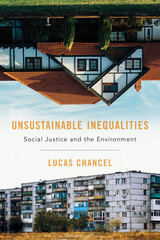
A hardheaded book that confronts and outlines possible solutions to a seemingly intractable problem: that helping the poor often hurts the environment, and vice versa.
Can we fight poverty and inequality while protecting the environment? The challenges are obvious. To rise out of poverty is to consume more resources, almost by definition. And many measures to combat pollution lead to job losses and higher prices that mainly hurt the poor. In Unsustainable Inequalities, economist Lucas Chancel confronts these difficulties head-on, arguing that the goals of social justice and a greener world can be compatible, but that progress requires substantial changes in public policy.
Chancel begins by reviewing the problems. Human actions have put the natural world under unprecedented pressure. The poor are least to blame but suffer the most—forced to live with pollutants that the polluters themselves pay to avoid. But Chancel shows that policy pioneers worldwide are charting a way forward. Building on their success, governments and other large-scale organizations must start by doing much more simply to measure and map environmental inequalities. We need to break down the walls between traditional social policy and environmental protection—making sure, for example, that the poor benefit most from carbon taxes. And we need much better coordination between the center, where policies are set, and local authorities on the front lines of deprivation and contamination.
A rare work that combines the quantitative skills of an economist with the argumentative rigor of a philosopher, Unsustainable Inequalities shows that there is still hope for solving even seemingly intractable social problems.
In rehab, Tave relearns life skills and comes to recognize that her future will be completely different than she’d imagined. Where will she live? How will she find the help she needs? Can her friends rise to the occasion? Or will she be forced to move back in with her mother, putting up with endless talk of faith healers? Her one beacon of hope is Beth, her physical therapist. But Beth’s relationship problems with her own girlfriend push her toward overinvolvement—and risk damaging both her career and Tave’s recovery.
A story of courage, resilience, and love, Unswerving challenges readers’ preconceived notions of disability, of limitations, and of the inevitability of fate.
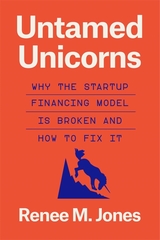
The definitive account of the harms that have come from deregulating venture capital financing and allowing startups to become gigantic while remaining private.
The term “unicorn” for a private startup company worth $1 billion or more was coined to emphasize the rarity of such ventures. But today there are more than 1,500 of them, with a combined valuation of over $4 trillion. By remaining private, these corporate behemoths shield themselves from disclosure requirements, investor oversight, and market discipline—mechanisms designed to protect investors and the public from corporate wrongdoing. It’s no coincidence that in recent years, a number of prominent startups have been the sites of founder misconduct and fraud. This wave of startup scandals exposes significant problems with the venture capital financing model and the deregulation that helped fuel the industry’s explosive growth.
Untamed Unicorns connects the most dramatic startup scandals, including FTX, Theranos, WeWork, and Uber, to structural flaws in the startup financing model. Detailing the deregulatory reforms
implemented by Congress and the Securities and Exchange Commission over the past 40 years, it shows how these have eroded core safeguards of securities law that were first established during the New Deal era.
As Renée M. Jones makes clear, allowing unicorn companies to run wild doesn’t threaten only the sophisticated venture capitalists who finance Silicon Valley. When the largest startups go awry, the consequences are often severe for ordinary investors, employees, and the public at large. Revealing the risks inherent in the current system, Untamed Unicorns presents a roadmap for reform to restore proper boundaries between public and private securities markets.

Maurer begins by reviewing the strengths and limitations of reductionist experimental approaches. Although these studies have produced much valuable data, their small scale restricts the kinds of inferences that can be drawn from them. Maurer then demonstrates how statistical methods can be used to identify processes (such as dispersal or nonrandom extinction) that operate across broad geographic scales, yet which also have profound impacts on local ecosystems. This macroscopic perspective, Maurer suggests, provides a powerful tool for untangling ecological complexity.

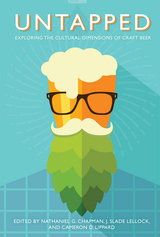
In the United States, the United Kingdom, and Western Europe there has been exponential growth in the number of small independent breweries over the past thirty years – a reversal of the corporate consolidation and narrowing of consumer choice that characterized much of the twentieth century. While there are legal and policy components involved in this shift, the contributors to Untapped ask broader questions. How does the growth of craft beer connect to trends like the farm-to-table movement, gentrification, the rise of the “creative class,” and changing attitudes toward both cities and farms? How do craft beers conjure history, place, and authenticity? At perhaps the most fundamental level, how does the rise of craft beer call into being new communities that may challenge or reinscribe hierarchies based on gender, class, and race?
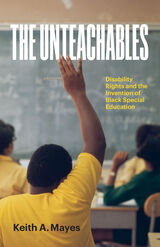
How special education used disability labels to marginalize Black students in public schools
The Unteachables examines the overrepresentation of Black students in special education over the course of the twentieth century. As African American children integrated predominantly white schools, many were disproportionately labeled educable mentally retarded (EMR), learning disabled (LD), and emotionally behavioral disordered (EBD). Keith A. Mayes charts the evolution of disability categories and how these labels kept Black learners segregated in American classrooms.
The civil rights and the educational disability rights movements, Mayes shows, have both collaborated and worked at cross-purposes since the beginning of school desegregation. Disability rights advocates built upon the opportunity provided by the civil rights movement to make claims about student invisibility at the level of intellectual and cognitive disabilities. Although special education ostensibly included children from all racial groups, educational disability rights advocates focused on the needs of white disabled students, while school systems used disability discourses to malign and marginalize Black students.
From the 1940s to the present, social science researchers, policymakers, school administrators, and teachers have each contributed to the overrepresentation of Black students in special education. Excavating the deep-seated racism embedded in both the public school system and public policy, The Unteachables explores the discriminatory labeling of Black students, and how it indelibly contributed to special education disproportionality, to student discipline and push-out practices, and to the school-to-prison pipeline effect.

The shah of Iran, Mohammad Reza Pahlavi, would remain on the throne for the foreseeable future: This was the firm conclusion of a top-secret CIA analysis issued in October 1978. One hundred days later the shah--despite his massive military, fearsome security police, and superpower support was overthrown by a popular and largely peaceful revolution. But the CIA was not alone in its myopia, as Charles Kurzman reveals in this penetrating work; Iranians themselves, except for a tiny minority, considered a revolution inconceivable until it actually occurred. Revisiting the circumstances surrounding the fall of the shah, Kurzman offers rare insight into the nature and evolution of the Iranian revolution and into the ultimate unpredictability of protest movements in general.
As one Iranian recalls, "The future was up in the air." Through interviews and eyewitness accounts, declassified security documents and underground pamphlets, Kurzman documents the overwhelming sense of confusion that gripped pre-revolutionary Iran, and that characterizes major protest movements. His book provides a striking picture of the chaotic conditions under which Iranians acted, participating in protest only when they expected others to do so too, the process approaching critical mass in unforeseen and unforeseeable ways. Only when large numbers of Iranians began to "think the unthinkable," in the words of the U.S. ambassador, did revolutionary expectations become a self-fulfilling prophecy. A corrective to 20-20 hindsight, this book reveals shortcomings of analyses that make the Iranian revolution or any major protest movement seem inevitable in retrospect.
Marshalling fresh insights from neuroscience, cognitive science, cognitive biology, and literature, Hayles expands our understanding of cognition and demonstrates that it involves more than consciousness alone. Cognition, as Hayles defines it, is applicable not only to nonconscious processes in humans but to all forms of life, including unicellular organisms and plants. Startlingly, she also shows that cognition operates in the sophisticated information-processing abilities of technical systems: when humans and cognitive technical systems interact, they form “cognitive assemblages”—as found in urban traffic control, drones, and the trading algorithms of finance capital, for instance—and these assemblages are transforming life on earth. The result is what Hayles calls a “planetary cognitive ecology,” which includes both human and technical actors and which poses urgent questions to humanists and social scientists alike.
At a time when scientific and technological advances are bringing far-reaching aspects of cognition into the public eye, Unthought reflects deeply on our contemporary situation and moves us toward a more sustainable and flourishing environment for all beings.

Eugene Walter’s first novel, and winner of the 1954 Lippincott Fiction Prize for Young Novelists, is about a young man from a small central Alabama town who goes south of the “salt line” to Mobile to work in a bank and study law. As soon as this unnamed pilgrim arrives, he realizes that—although he is still in Alabama—he has entered a separate physical kingdom of banana trees and palm fronds, subtropical heat and humidity, and old houses and lacy wrought-iron balconies. In Mobile, Alabama, the town that can claim the oldest Mardi Gras in America, there is no Puritan work ethic; the only ruling forces are those of chaos, craziness, and caprice. Such forces overtake the pilgrim, seduce him away from the beaten career path, and set him on a zigzag course through life.
The Untidy Pilgrim celebrates the insularity as well as the eccentricity of southerners—and Mobilians, in particular—in the mid-twentieth century. Cut off from the national mainstream, they are portrayed as devoid of that particularly American angst over what to “do” and accomplish with one’s life, and indulge instead in art, music, cooking, nature, and love. In this novel Walter dispels the gloomy southern literary tradition established by Faulkner, Capote, and McCullers to illuminate the joyous quirkiness of human existence.
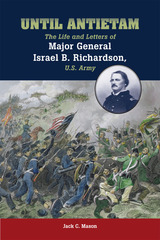
While researching this book, Jack C. Mason made the kind of discovery that historians dream of. He found more than one hundred unpublished and unknown letters from Union general Israel B. Richardson to his family, written from his time as a West Point cadet until the day before his fatal wounding at the Battle of Antietam, the bloodiest day in American history. Using these freshly uncovered primary sources as well as extensive research in secondary materials, Mason has written the first-ever biography of Israel Bush Richardson.
Mason traces Richardson’s growth as a soldier through his experiences and the guidance of his superiors, and then as a leader whose style reflected the actions of the former commanders he respected. Though he was a disciplinarian, Richardson took a relaxed attitude toward military rules, earning him the affection of his men. Unfortunately, his military career was cut short just as high-ranking officials began to recognize his aggressive leadership. He was mortally wounded while leading his men at Antietam and died on November 3, 1862.
Until Antietam brings to life a talented and fearless Civil War infantry leader. Richardson’s story, placed within the context of nineteenth-century warfare, exemplifies how one soldier’s life influenced his commanders, his men, and the army as a whole.
Winner of the Army Historical Foundation 2009 Distinguished Book Award
For centuries, people have been thinking and writing—and fiercely debating—about the meaning of marriage. Just a hundred years ago, Progressive era reformers embraced marriage not as a time-honored repository for conservative values, but as a tool for social change.
In Until Choice Do Us Part, Clare Virginia Eby offers a new account of marriage as it appeared in fiction, journalism, legal decisions, scholarly work, and private correspondence at the turn into the twentieth century. She begins with reformers like sexologist Havelock Ellis, anthropologist Elsie Clews Parsons, and feminist Charlotte Perkins Gilman, who argued that spouses should be “class equals” joined by private affection, not public sanction. Then Eby guides us through the stories of three literary couples—Upton and Meta Fuller Sinclair, Theodore and Sara White Dreiser, and Neith Boyce and Hutchins Hapgood—who sought to reform marriage in their lives and in their writings, with mixed results. With this focus on the intimate side of married life, Eby views a historical moment that changed the nature of American marriage—and that continues to shape marital norms today.

Finalist for the Pulitzer Prize in Nonfiction
The poignant saga of Guatemala’s adoption industry: an international marketplace for children, built on a foundation of inequality, war, and Indigenous dispossession.
In 2009 Dolores Preat went to a small Maya town in Guatemala to find her birth mother. At the address retrieved from her adoption file, she was told that her supposed mother, one Rosario Colop Chim, never gave up a child for adoption—but in 1984 a girl across the street was abducted. At that house, Preat met a woman who strongly resembled her. Colop Chim, it turned out, was not Preat’s mother at all, but a jaladora—a baby broker.
Some 40,000 children, many Indigenous, were kidnapped or otherwise coercively parted from families scarred by Guatemala’s civil war or made desperate by unrelenting poverty. Amid the US-backed army’s genocide against Indigenous Maya, children were wrested from their villages and put up for adoption illegally, mostly in the United States. During the war’s second decade, adoption was privatized, overseen by lawyers who made good money matching children to overseas families. Private adoptions skyrocketed to the point where tiny Guatemala overtook giants like China and Russia as a “sender” state. Drawing on government archives, oral histories, and a rare cache of adoption files opened briefly for war crimes investigations, Rachel Nolan explores the human toll of an international industry that thrives on exploitation.
Would-be parents in rich countries have fostered a commercial market for children from poor countries, with Guatemala becoming the most extreme case. Until I Find You reckons with the hard truths of a practice that builds loving families in the Global North out of economic exploitation, endemic violence, and dislocation in the Global South.
Finalist for the Pulitzer Prize in Nonfiction
Shortlisted for the 2025 Juan E. Méndez Book Award
“Detailed and heartrending . . . uses years of research to show the way that a country destabilized by war can invite merciless profiteers to break apart families” —John Washington, Harper’s
The poignant saga of Guatemala’s adoption industry: an international marketplace for children, built on a foundation of inequality, war, and Indigenous dispossession.
In 2009 Dolores Preat traveled to a small Maya town in Guatemala to find her birth mother. At the address retrieved from her adoption file, she was told that her supposed mother, one Rosario Colop Chim, never gave up a child for adoption—but in 1984, a girl across the street was abducted. At that house, Preat didn’t meet her mother, but she did meet Colop Chim, who turned out to be a jaladora—a baby broker.
Preat and some 40,000 other Guatemalan children, many Indigenous, were kidnapped or otherwise coercively parted from families scarred by poverty and civil war. Amid the US-backed army’s genocide against Indigenous Maya, children were wrested from their villages and put up for adoption illegally, mostly in the United States. Eventually adoption became a private enterprise, overseen by lawyers who made good money matching children to overseas families.
Drawing on government archives, oral histories, and a rare cache of files from war crimes investigations, Until I Find You reckons with the human toll of an industry that builds loving families in the Global North out of exploitation, endemic violence, and dislocation in the Global South.
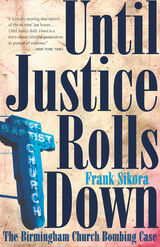
This book tells the story of one grim Sunday in September 1963 when an intentionally planted cache of dynamite ripped through the walls of the Sixteenth Street Baptist Church and ended the dreams and the lives of four young black girls. Their deaths spurred the Kennedy administration to send an army of FBI agents to Alabama and led directly to the passage of the Civil Rights Act. When the Justice Department was unable to bring anyone to trial for this heinous crime, a young Alabama attorney general named Bill Baxley began his own investigation to find the perpetrators. In 1977, 14 years after the bombing, Baxley brought one Klansman to trial and, in a courtroom only blocks from the bombed church (now a memorial to the victims), persuaded a jury to return a guilty verdict. More than 20 years later two other perpetrators were tried for the bombing, found guilty, and remanded to prison.
Frank Sikora has used the court records, FBI reports, oral interviews, and newspaper accounts to weave a story of spellbinding proportions. A reporter by profession, Sikora tells this story compellingly, explaining why the civil rights movement had to be successful and how Birmingham had to change.
Rai recounts his experience of attending the first showing of a Bollywood film in a single-screen theater in Bhopal: the sensory experience of the exhibition space, the sound system, the visual style of the film, the crush of the crowd. From that event, he elicits an understanding of cinema as a historically contingent experience of pleasure, a place where the boundaries of identity and social spaces are dissolved and redrawn. He considers media as a form of contagion, endlessly mutating and spreading, connecting human bodies, organizational structures, and energies, thus creating an inextricable bond between affect and capital. Expanding on the notion of media contagion, Rai traces the emerging correlation between the postcolonial media assemblage and capitalist practices, such as viral marketing and the development of multiplexes and malls in India.
Ross Chambers argues that culture produces itself as civilized by denying the forms of collective violence and other traumatic experience that it cannot control. In the context of such denial, personal accounts of collective disaster can function as a form of counter-denial. By investigating a range of writing on AIDS, the First World War, and the Holocaust, Chambers shows how such writing produces a rhetorical effect of haunting, as it seeks to describe the reality of those experiences culture renders unspeakable.
Ross Chambers is Professor of Romance Languages at the University of Michigan. His other books includeFacing It: AIDS Diaries and the Death of the Author.

Avelar starts by offering new readings of works produced before the dictatorship era, in what is often considered the boom of Latin American fiction. Distancing himself from previous celebratory interpretations, he understands the boom as a manifestation of mourning for literature’s declining aura. Against this background, Avelar offers a reassessment of testimonial forms, social scientific theories of authoritarianism, current transformations undergone by the university, and an analysis of a number of novels by some of today’s foremost Latin American writers—such as Ricardo Piglia, Silviano Santiago, Diamela Eltit, João Gilberto Noll, and Tununa Mercado. Avelar shows how the ‘untimely’ quality of these narratives is related to the position of literature itself, a mode of expression threatened with obsolescence.
This book will appeal to scholars and students of Latin American literature and politics, cultural studies, and comparative literature, as well as to all those interested in the role of literature in postmodernity.
American ruins have become increasingly prominent, whether in discussions of “urban blight” and home foreclosures, in commemorations of 9/11, or in postapocalyptic movies. In this highly original book, Nick Yablon argues that the association between American cities and ruins dates back to a much earlier period in the nation’s history. Recovering numerous scenes of urban desolation—from failed banks, abandoned towns, and dilapidated tenements to the crumbling skyscrapers and bridges envisioned in science fiction and cartoons—Untimely Ruins challenges the myth that ruins were absent or insignificant objects in nineteenth-century America.
The first book to document an American cult of the ruin, Untimely Ruins traces its deviations as well as derivations from European conventions. Unlike classical and Gothic ruins, which decayed gracefully over centuries and inspired philosophical meditations about the fate of civilizations, America’s ruins were often “untimely,” appearing unpredictably and disappearing before they could accrue an aura of age. As modern ruins of steel and iron, they stimulated critical reflections about contemporary cities, and the unfamiliar kinds of experience they enabled. Unearthing evocative sources everywhere from the archives of amateur photographers to the contents of time-capsules, Untimely Ruins exposes crucial debates about the economic, technological, and cultural transformations known as urban modernity. The result is a fascinating cultural history that uncovers fresh perspectives on the American city.
Untimely Women recovers the work of three early-twentieth-century working women, none of whom history has understood as feminists or rhetors: cinema icon and memoirist, Mae West; silent film screenwriter and novelist, Anita Loos; and journalist and mega-publisher, Marcet Haldeman-Julius. While contemporary scholarship tends to highlight and recover women who most resemble academic feminists in their uses of propositional rhetoric, Jason Barrett-Fox uses what he terms a medio-materialist historiography to emphasize the different kinds of political and ontological gender-power that emerged from the inscriptional strategies these women employed to navigate and critique male gatekeepers––from movie stars to directors to editors to abusive husbands.
In recasting the work of West, Loos, and Haldeman-Julius in this way, Barrett-Fox reveals the material and ontological ramifications of their forms of invention, particularly their ability to tell trauma in ways that reach beyond their time to raise the consciousness of audiences unavailable to them in their lifetimes. Untimely Women thus accomplishes important historical and rhetorical work that not only brings together feminist historiography, rhetorical materialism, and posthumanism but also redefines what counts as feminist rhetoric.
No matter what we do, however kind or generous our deeds may seem, a hidden motive of selfishness lurks--or so science has claimed for years. This book, whose publication promises to be a major scientific event, tells us differently. In Unto Others philosopher Elliott Sober and biologist David Sloan Wilson demonstrate once and for all that unselfish behavior is in fact an important feature of both biological and human nature. Their book provides a panoramic view of altruism throughout the animal kingdom--from self-sacrificing parasites to insects that subsume themselves in the superorganism of a colony to the human capacity for selflessness--even as it explains the evolutionary sense of such behavior.
Explaining how altruistic behavior can evolve by natural selection, this book finally gives credence to the idea of group selection that was originally proposed by Darwin but denounced as heretical in the 1960s. With their account of this controversy, Sober and Wilson offer a detailed case study of scientific change as well as an indisputable argument for group selection as a legitimate theory in evolutionary biology.
Unto Others also takes a novel evolutionary approach in explaining the ultimate psychological motives behind unselfish human behavior. Developing a theory of the proximate mechanisms that most likely evolved to motivate adaptive helping behavior, Sober and Wilson show how people and perhaps other species evolved the capacity to care for others as a goal in itself.
A truly interdisciplinary work that blends biology, philosophy, psychology, and anthropology, this book will permanently change not just our view of selfless behavior but also our understanding of many issues in evolutionary biology and the social sciences.

Histories of the book often move straight from the codex to the digital screen. Left out of that familiar account are nearly 150 years of audio recordings. Recounting the fascinating history of audio-recorded literature, Matthew Rubery traces the path of innovation from Edison’s recitation of “Mary Had a Little Lamb” for his tinfoil phonograph in 1877, to the first novel-length talking books made for blinded World War I veterans, to today’s billion-dollar audiobook industry.
The Untold Story of the Talking Book focuses on the social impact of audiobooks, not just the technological history, in telling a story of surprising and impassioned conflicts: from controversies over which books the Library of Congress selected to become talking books—yes to Kipling, no to Flaubert—to debates about what defines a reader. Delving into the vexed relationship between spoken and printed texts, Rubery argues that storytelling can be just as engaging with the ears as with the eyes, and that audiobooks deserve to be taken seriously. They are not mere derivatives of printed books but their own form of entertainment.
We have come a long way from the era of sound recorded on wax cylinders, when people imagined one day hearing entire novels on mini-phonographs tucked inside their hats. Rubery tells the untold story of this incredible evolution and, in doing so, breaks from convention by treating audiobooks as a distinctively modern art form that has profoundly influenced the way we read.
An interlinked collection of essays representing the best of Stephen D. Moore’s groundbreaking scholarship
This collection of previously published essays is a companion to The Bible in Theory: Critical and Postcritical Essays (2010). Chapters engage postcolonial studies, cultural studies, deconstruction, autobiographical criticism, masculinity studies, queer theory, affect theory, and animality studies—methods Moore believes present unprecedented challenges to the monochrome model of Revelation scholarship based on traditional historical-critical methods.
Features:
- Nine essays on biblical literary criticism including two co-written with Jennifer A. Glancy and Catherine Keller
- Contextual introductions for each essay
- Annotated bibliographies
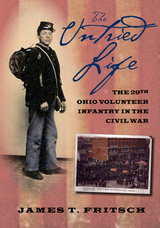
Told in unflinching detail, this is the story of the Twenty-Ninth Ohio Volunteer Infantry, also known as the Giddings Regiment or the Abolition Regiment, after its founder, radical abolitionist Congressman J. R. Giddings. The men who enlisted in the Twenty-Ninth OVI were, according to its lore, handpicked to ensure each was as pure in his antislavery beliefs as its founder. Whether these soldiers would fight harder than other soldiers, and whether the people of their hometowns would remain devoted to the ideals of the regiment, were questions that could only be tested by the experiment of war.
The Untried Life is the story of these men from their very first regimental formation in a county fairground to the devastation of Gettysburg and the march to Atlanta and back again, enduring disease and Confederate prisons. It brings to vivid life the comradeship and loneliness that pervaded their days on the march. Dozens of unforgettable characters emerge, animated by their own letters and diaries: Corporal Nathan Parmenter, whose modest upbringing belies the eloquence of his writings; Colonel Lewis Buckley, one of the Twenty-Ninth’s most charismatic officers; and Chaplain Lyman Ames, whose care of the sick and wounded challenged his spiritual beliefs.
The Untried Life shows how the common soldier lived—his entertainments, methods of cooking, medical treatment, and struggle to maintain family connections—and separates the facts from the mythology created in the decades after the war.
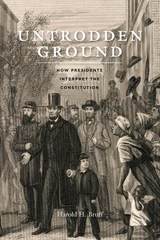
Reviewing the processes taken by all forty-four presidents to form new legal precedents and the constitutional conventions that have developed as a result, Harold H. Bruff shows that the president is both more and less powerful than many suppose. He explores how presidents have been guided by both their predecessors’ and their own interpretations of constitutional text, as well as how they implement policies in ways that statutes do not clearly authorize or forbid. But while executive power has expanded far beyond its original conception, Bruff argues that the modern presidency is appropriately limited by the national political process—their actions are legitimized by the assent of Congress and the American people or rejected through debilitating public outcry, judicial invalidation, reactive legislation, or impeachment. Synthesizing over two hundred years of presidential activity and conflict, this timely book casts new light on executive behavior and the American constitutional system.
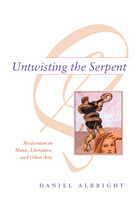
Focusing on collaborations with a musical component, Albright views these works as either figures of dissonance that try to retain the distinctness of their various media (e.g. Guillaume Apollinaire's Les Mamelles de Tirésias) or figures of consonance that try to lose themselves in some total effect (e.g. Arnold Schoenberg's Erwartung). In so doing he offers a fresh picture of Modernism, and provides a compelling model for the analysis of all artistic collaborations.
Untwisting the Serpent is the recipient of the 2001 Susanne M. Glasscock Humanities Book Prize for Interdisciplinary Scholarship of the Center for Humanities Research at Texas A&M University.

Riaz M. Khan, a senior Pakistani diplomat, participated actively in all meetings on Afghanistan in the United Nations, the Non-Aligned Movement, and the Organization of the Islamic Conference, and in all of the Geneva negotiating rounds (1882–1988). Drawing upon his personal experience, official documents, scholarly literature, and press accounts, he provides a unique insider’s view of these precedent-setting negotiations, which were often shrouded in secrecy and misperceptions.
Khan examines the interests, positions, and behind-the-scenes maneuverings of the major players—Afghan governments and resistance groups, Pakistan, the Soviet Union, the United States, and UN mediators—and assesses the impact of military and political developments inside Afghanistan and elsewhere, including the advent of Mikhail Gorbachev. Khan’s authoritative account of these critical diplomatic initiatives sheds important light on the internal dynamics of the multilateral Afghanistan negotiations.
In 1905, Freud published his Three Essays on the Theory of Sexuality, the book that established the core psychoanalytic thesis that sexuality is central to formations of the unconscious. With this book, Eric L. Santner inverts Freud’s title to take up the sexuality of theory—or, more exactly, the modes of enjoyment to be found in the kinds of critical thinking that, since the 1960s, have laid claim to that ancient word, “theory.” Santner unfolds his argument by tracking his own relationship with this tradition and the ways his intellectual and spiritual development has been informed by it.
Untying Things Together is both an intellectual history of major theoretical paradigms and a call for their reexamination and renewal. Revisiting many of the topics he has addressed in previous work, Santner proposes a new way of conceptualizing the eros of thinking, attuned to how our minds and bodies individually and collectively incorporate or “encyst” on a void at the heart of things. Rather than proposing a “return to theory,” Santner’s book simply employs theory as a way of further “(un)tying together” the resources of philosophy, art and literature, theology, psychoanalysis, political thought, and more.
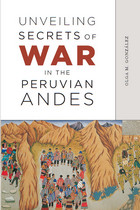
The Maoist guerrilla group Shining Path launched its violent campaign against the government in Peru’s Ayacucho region in 1980. When the military and counterinsurgency police forces were dispatched to oppose the insurrection, the violence quickly escalated. The peasant community of Sarhua was at the epicenter of the conflict, and this small village is the focus of Unveiling Secrets of War in the Peruvian Andes. There, nearly a decade after the event, Olga M. González follows the tangled thread of a public secret: the disappearance of Narciso Huicho, the man blamed for plunging Sarhua into a conflict that would sunder the community for years.
Drawing on extensive fieldwork and a novel use of a cycle of paintings, González examines the relationship between secrecy and memory. Her attention to the gaps and silences within both the Sarhuinos’ oral histories and the paintings reveals the pervasive reality of secrecy for people who have endured episodes of intense violence. González conveys how public secrets turn the process of unmasking into a complex mode of truth telling. Ultimately, public secrecy is an intricate way of “remembering to forget” that establishes a normative truth that makes life livable in the aftermath of a civil war.
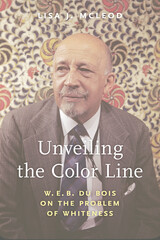
In The Souls of Black Folk, W. E. B. Du Bois brilliantly details the African American experience. Yet the renowned sociologist was also an astute chronicler of white people, particularly their racism. As Unveiling the Color Line demonstrates, Du Bois’s trenchant analysis of whiteness and white supremacy began in his earliest work—his 1890 speech on Jefferson Davis—and continued in every major book he published in his more than sixty-year career, up to The Black Flame Trilogy.
Lisa J. McLeod traces the development of Du Bois’s conception of whiteness, and the racism inherent to it, as an all-encompassing problem, whether predicated on ignorance, moral failure, or the inability to recognize the humanity in other people. In clear, elegant prose, McLeod investigates Du Bois’s complex and nuanced thinking, putting his insights into dialogue with contemporary racial theorists to demonstrate his continuing value to present-day critical thought and activism.

Majid moves beyond Edward Said’s unmasking of orientalism in the West to examine the intellectual assumptions that have prevented a more nuanced understanding of Islam’s legacies. In addition to questioning the pervasive logic that assumes the “naturalness” of European social and political organizations, he argues that it is capitalism that has intensified cultural misunderstanding and created global tensions. Besides examining the resiliency of orientalism, the author critically examines the ideologies of nationalism and colonialist categories that have redefined the identity of Muslims (especially Arabs and Africans) in the modern age and totally remapped their cultural geographies. Majid is aware of the need for Muslims to rethink their own assumptions. Addressing the crisis in Arab-Muslim thought caused by a desire to simultaneously “catch up” with the West and also preserve Muslim cultural authenticity, he challenges Arab and Muslim intellectuals to imagine a post-capitalist, post-Eurocentric future. Critical of Islamic patriarchal practices and capitalist hegemony, Majid contends that Muslim feminists have come closest to theorizing a notion of emancipation that rescues Islam from patriarchal domination and resists Eurocentric prejudices.
Majid’s timely appeal for a progressive, multicultural dialogue that would pave the way to a polycentric world will interest students and scholars of postcolonial, cultural, Islamic, and Marxist studies.
On the foggy, cold morning of February 1, 1896, a boy came upon what he thought was a pile of clothes. It was soon discovered to be the headless body of a young woman, brutally butchered and discarded. She was found just across the river from one of the largest cities in the country, Cincinnati, Ohio. Soon the authorities, the newspapers, and the public were obsessed with finding the poor girl’s identity and killer. Misinformation and rumor spread wildly around the case and led authorities down countless wrong paths. Initially, it appeared the crime would go unsolved. An autopsy, however, revealed that the victim was four months pregnant, presenting a possible motive. It would take the hard work of a sheriff, two detectives, and the unlikely dedication of a shoe dealer to find out who the girl was; and once she had been identified, the case came together. Within a short time the police believed they had her killers—a handsome and charismatic dental student and his roommate—and enough evidence to convict them of first-degree murder. While the suspects seemed to implicate themselves, the police never got a clear answer as to what exactly happened to the girl and they were never able to find her lost head—despite the recovery of a suspicious empty valise.
Centering his riveting new book, Unwanted: A Murder Mystery of the Gilded Age, around this shocking case and how it was solved, historian Andrew Young re-creates late nineteenth- century America, where Coca-Cola in bottles, newfangled movie houses, the Gibson Girl, and ragtime music played alongside prostitution, temperance, racism, homelessness, the rise of corporations, and the women’s rights movement. While the case inspired the sensationalized pulp novel Headless Horror, songs warning girls against falling in love with dangerous men, ghost stories, and the eerie practice of random pennies left heads up on a worn gravestone, the story of an unwanted young woman captures the contradictions of the Gilded Age as America stepped into a new century, and toward a modern age.
The baby abandoned on the doorstep is a phenomenon that has virtually disappeared from our experience, but in the early modern world, unwanted children were a very real problem for parents, government officials, and society. The Unwanted Child skillfully recreates sixteenth-century Nuremberg to explore what befell abandoned, neglected, abused, or delinquent children in this critical period.
Joel F. Harrington tackles this question by focusing on the stories of five individuals. In vivid and poignant detail, he recounts the experiences of an unmarried mother-to-be, a roaming mercenary who drifts in and out of his children’s lives, a civic leader handling the government’s response to problems arising from unwanted children, a homeless teenager turned prolific thief, and orphaned twins who enter state care at the age of nine. Braiding together these compelling portraits, Harrington uncovers and analyzes the key elements that link them, including the impact of war and the vital importance of informal networks among women. From the harrowing to the inspiring, The Unwanted Child paints a gripping picture of life on the streets five centuries ago.

Unwanted Claims is a work of political sociology that provides an illuminating account of political life in the U.S. welfare system that should be of interest to scholars, students, policy practitioners, and the general public. Written in a style that minimizes technical jargon, avoids complex statistical presentations, and makes extensive use of clients' own descriptions of their experiences, beliefs, and actions, it offers an accessible and humanizing portrait of welfare participation that challenges conventional wisdom and raises important questions about poverty, welfare, and democracy in America.
Joe Soss is Assistant Professor of Government, The American University.
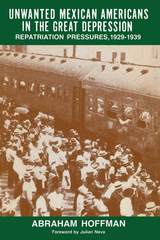
Prior to 1931, many Mexican Americans left the United States voluntarily, prompted by homesickness, unemployment, and the Mexican government’s offer of free small land parcels. As the Great Depression deepened, repatriation pressures increased. Anglo groups lobbied for laws that excluded aliens from jobs and welfare benefits. Many businessmen, government officials, and social workers believed that removing Mexican Americans would open up jobs for U.S. citizens and alleviate some of the burden placed on relief agencies.
The Department of Labor’s federal deportation drive, launched in 1931, created an atmosphere of fear and tension in Mexican American communities. Immigration agents conducted surprise searches for people who had entered the country illegally, and Mexicans who had crossed the border before restrictive legislation was passed became prime targets of the deportation campaign.
Welfare agencies throughout the United States organized repatriation programs. The Los Angeles County Welfare Bureau, with the most extensive program, was responsible for the removal of more than thirteen thousand Mexican Americans. A few well-publicized deportations had frightened Mexicans who were unsure of their immigration status. Many chose repatriation over possible deportation.
Using much archival material and many previously unpublished government documents, Hoffman focuses on the repatriation experience in Los Angeles. The city’s large Mexican American population provides an excellent case study of the entire movement. He also surveys the process of Mexican repatriation throughout the entire United States.
Despite three decades of intense scrutiny and repeated attempts at ambitious reform, our laws against rape and sexual harassment still fail to protect women from sexual overreaching and abuse. What went wrong? In this original, provocative, and enlightening work, Stephen Schulhofer, a distinguished scholar in criminal law, shows the need to refocus our laws against rape and to create a new system of legal safeguards against interference with sexual autonomy.
Our laws provide comprehensive protection for property rights, labor, and other important interests, but sexual autonomy—the right to choose freely whether and when to be sexually intimate with another person—is devalued and ignored. With vivid examples, including stranger assaults, date rapes, and sexual encounters between job supervisors and subordinates, teachers and students, doctors and patients, lawyers and clients, Schulhofer shows that recent reforms of rape and sexual harassment law are overrated and inadequate. From the excessive degree of force necessary for an aggressive action to be defined as rape, to the gray areas in which coercion and exploitation can be used to elicit a false but legally valid “consent,” Schulhofer offers a clear analysis of the limits of current standards. His proposals for a radically different approach hold the promise of genuine respect and effective protection for the sexual autonomy of both women and men. It is an ambitious yet sensible vision, committed to allowing willing partners to seek consensual relationships, while fully protecting each person’s right to refuse sexual encounters that are not genuinely desired.

With over 50 original essays by leading scholars, artists, critics, and curators, this is the first book to trace the “unwatchable” across our contemporary media environment, in which viewers encounter difficult content on various screens and platforms. Appealing to a broad academic and general readership, the volume offers multidisciplinary approaches to the vast array of troubling images that circulate in global visual culture.



The book is broken into sections based on journeying: searching for wellness, finding wellness, and imagining a “well” future that includes a sustainable model of writing center work. Each chapter begins with a personal narrative about wellness issues in writing centers, including the author’s experiences in and responses to local emergencies. She shares findings from a longitudinal assessment study on non-institutional interventions in writing centers and provides resources for administrators to create more ethical "well" writing centers. The book also includes an appendix of training documents, emergency planning documents, and several wellness-specific interventions developed from anti-racist, anti-neoliberal, and organizational theories.
Establishing the need for a field-specific response to the austerity-minded eruption of wellness-focused interventions in higher education, Unwell Writing Centers is a critical text for graduate students and new directors that can easily be applied in workplaces in and outside of higher education.
A comprehensive overview of the controversy surrounding Hitler’s Willing Executioners.
Few if any books of the past fifty years have moved a broad section of the German public to think about their country’s Nazi past as has Daniel Jonah Goldhagen’s Hitler’s Willing Executioners. The main argument of his book is that Germans committed the unthinkable acts of the Holocaust not because they were forced to but out of a deeply held conviction that killing Jews was morally just. Unwilling Germans? traces the intense and varied reception of a book that has created more heated debate than any other treatment of Germany’s genocidal past.
When Goldhagen’s book first appeared, it was almost universally dismissed by journalists and historians alike. However, following a book tour in Germany, Goldhagen started winning over many of his ardent detractors and finding a young, receptive audience. Although German scholars reacted to Goldhagen and his argument with outrage and dismissal, ironically the German public was mesmerized by both the book and Goldhagen himself.Unwilling Germans? reprints articles that originally appeared in German newspapers, the popular press, and journals, as well as offering original essays. Among the writers whose work is represented are historians, journalists, political scientists, and literary critics, including Jürgen Habermas and Klaus Theweleit. The book traces the initial reactions in Germany to the debate surrounding the U.S. publication of the book, the subsequent reviews and reactions upon the publication of the German translation, and recent commentary by Goldhagen and the American historian Christopher Browning. A unique and fascinating collection, Unwilling Germans? will help to sort out the confusing nature of the response to the “Goldhagen Debate,” and shed light on both Germany’s continuing process of coming to terms with its Nazi past and the resonances of that debate in the United States.ISBN 0-8166-3100-X Cloth $44.95xxISBN 0-8166-3101-8 Paper $17.95224 pages 5 7/8 x 9 JuneTranslation inquiries: University of Minnesota Press
The essayists consider the complex state of anthropology, its relation to other disciplines and the public sphere beyond academia, the significance of the convergence of linguistic and cultural anthropology, and whether or not anthropology is the best home for archaeology. While the contributors are not in full agreement with one another, they all critique “official” definitions of anthropology as having a fixed, four-field core. The editors are keenly aware that anthropology is too protean to be remade along the lines of any master plan, and this volume does not offer one. It does open discussions of anthropology’s institutional structure to all possible outcomes, including the refashioning of the discipline as it now exists.
Contributors. James Clifford, Ian Hodder, Rena Lederman, Daniel A. Segal, Michael Silverstein, Sylvia J. Yanagisako
As ts’íib refers to a broad range of artistic production from painted codices and textiles to works composed in Latin script, as well as plastic arts, the authors argue that texts by contemporary Maya writers must be read as dialoguing with a multimodal Indigenous understanding of text. In other words, ts’íib is an alternative to understanding “writing” that does not stand in opposition to but rather fully encompasses alphabetic writing, placing it alongside and in dialogue with a number of other forms of recorded knowledge. This shift in focus allows for a critical reexamination of the role that weaving and bodily performance play in these literatures, as well as for a nuanced understanding of how Maya writers articulate decolonial Maya aesthetics in their works.
Unwriting Maya Literature places contemporary Maya literatures within a context that is situated in Indigenous ways of knowing and being. Through ts’íib, the authors propose an alternative to traditional analysis of Maya cultural production that allows critics, students, and admirers to respectfully interact with the texts and their authors. Unwriting Maya Literature offers critical praxis for understanding Mesoamerican works that encompass non-Western ways of reading and creating texts.
Nathan Gorelick’s The Unwritten Enlightenment: Literature between Ideology and the Unconscious traces the relations between literary criticism and psychoanalysis to their shared origins in the Enlightenment era’s novels and novelistic discourse, where the period’s efforts to invent new notions of subjectivity and individualism are most apparent. Gorelick shows how modern concepts of literature and the unconscious were generated in response to these efforts and by an ethical concern for what the language of the Enlightenment excludes, represses, or struggles to erase. Troubling the idea of the Enlightenment on its own terms, subverting its supposed authority from within, Gorelick thus reveals the workings of unconscious fantasy at the foundations of our contemporary political realities. The Unwritten Enlightenment makes clear that to criticize the Enlightenment’s deficiencies, ambiguities, and legacies of violence without regard for the unconscious fantasies that drive them risks reproducing the very patterns of thought, action, and imagination that the Enlightenment novel already unsettles.

Not since Ireland broke away from the United Kingdom has the British state been so fragile. Northern Ireland now operates under trading rules that are legally separate from the rest of the nation. In Wales, support for independence is running at a historical high, and Scotland is more conscious than ever of its individual identity and has aspirations for a European future. With public trust and confidence in government at record lows, the United Kingdom faces a crisis that can only be repaired by a new constitutional settlement. Unwritten Rule calls for a radical realignment, embracing a federal approach that would accommodate devolution as the best way of bringing about a successful and diverse national life, increasing democratic control over local and national decision-making, and modernizing national political structures.
In The Unwritten War, Daniel Aaron examines the literary output of American writers—major and minor—who treated the Civil War in their works. He seeks to understand why this devastating and defining military conflict has failed to produce more literature of a notably high and lasting order, why there is still no "masterpiece" of Civil War fiction.
In his portraits and analyses of 19th- and some 20th-century writers, Aaron distinguishes between those who dealt with the war only marginally—Henry Adams, Henry James, William Dean Howells, Mark Twain-and those few who sounded the war's tragic import—Herman Melville, Walt Whitman, and William Faulkner. He explores the extent to which the war changed the direction of American literature and how deeply it entered the consciousness of American writers. Aaron also considers how writers, especially those from the South, discerned the war's moral and historical implications.
The Unwritten War was originally published by Alfred A. Knopf in 1973. The New Republic declared, [This book's] major contribution will no doubt be to American literary history. In this respect it resembles Edmund Wilson's Patriotic Gore and is certain to become an indispensable guide for anyone who wants to explore the letters, diaries, journals, essays, novels, short stories, poems-but apparently no plays-which constitute Civil War literature. The mass of material is presented in a systematic, luminous, and useful way.


What can Evelyn Birkby possibly do to follow up the success of Neighboring on the Air: Cooking with the KMA Radio Homemakers? She can do what she has done in writing Up a Country Lane Cookbook. For forty-three years she has written a column entitled "Up a Country Lane" for the Shenandoah Evening Sentinel. Now she has chosen the best recipes from her column and interspersed them with a wealth of stories of rural life in the 1940s and 1950s, supplemented by a generous offering of vintage photographs. She has created a book that encompasses lost time.
With chapters on "The Garden," "Grocery Stores and Lockers," "Planting," and "Saturday Night in Town," to name a few, Up a Country Lane Cookbook recalls the noble simplicity of a life that has all but vanished. This is not to say that farm life in the forties and fifties was idyllic. As Birkby writes, "Underneath the pastoral exterior were threats of storms, droughts, ruined crops, low prices, sickness, and accidents."
Following the Second World War, many soldiers returned to mid-America and a life of farming. From her vantage point as a farm wife living in Mill Creek Valley in southwestern Iowa, Birkby observed the changes that accompanied improved roads, telephone service, and the easy availability of electricity. Her observations have been carefully recorded in her newspaper column, read by thousands of rural Iowans.
Up a Country Lane Cookbook is, then, much more than a cookbook. It is an evocation of a time in all its wonder and complexity which should be read by everyone from Evelyn Birkby's nearest neighbor in Mill Creek Valley to the city slicker seeking an education. Cook a meal of Plum-Glazed Baked Chicken, Elegant Peas, Creamed Cabbage, and Seven-Grain Bread, then finish it off with Frosted Ginger Creams with Fluffy Frosting. While the chicken is baking, read Evelyn's stories and think about the world the way it was.

With Up Against the Real, Nadja Millner-Larsen offers the first comprehensive study of the group Black Mask and its acrimonious relationship to the New York art world of the 1960s. Cited as pioneers of now-common protest aesthetics, the group’s members employed incendiary modes of direct action against racism, colonialism, and the museum system. They shut down the Museum of Modern Art, fired blanks during a poetry reading, stormed the Pentagon in an antiwar protest, sprayed cow’s blood at the secretary of state, and dumped garbage into the fountain at Lincoln Center. Black Mask published a Dadaist broadside until 1968, when it changed its name to Up Against the Wall Motherfucker (after line in a poem by Amiri Baraka) and came to classify itself as “a street gang with analysis.” American activist Abbie Hoffman described the group as “the middle-class nightmare . . . an anti-media phenomenon simply because their name could not be printed.”
Up Against the Real examines how and why the group ultimately rejected art in favor of what its members deemed “real” political action. Exploring this notorious example of cultural activism that rose from the ruins of the avant-garde, Millner-Larsen makes a critical intervention in our understanding of political art.
Los Angeles's experience in managing urban growth and change
America's first truly twenty-first-century metropolis, Los Angeles is often depicted as diverse, fragmented, polarized, and ungovernable, a city without a unifying geographic center or civic culture. The sprawling evolution of the city and its infamous problems—traffic, pollution, growing inequality—are usually attributed to a Wild West version of capitalism—the triumph of an unregulated free market over comprehensive urban planning. But market choices and lack of planning did not set the terrain of Southern California: Los Angeles has been profoundly shaped by a wide range of local, state, and federal public policies and programs.
Up Against the Sprawl details how governmental policies and public agencies have dictated many aspects of the region’s growth: infrastructure, transportation, housing, immigration, finances, civic and regional administration, the environment. The authors also argue that since public policy set the landscape, it can help forge the future. They explore countermovements by progressive activists to use innovative policies—from smart growth initiatives to the actions of living wage advocates—for greater social, economic, and environmental justice. This book is a major contribution to our understanding of past and present urban processes and policy, and highlights practical lessons for urban and regional policy makers and activists in Los Angeles and beyond.Contributors: Carolyn B. Aldana, California State U, San Bernadino; Carol S. Armstrong; Michael Dear, U of Southern California; Gary Dymski, U of California Riverside; Steven P. Erie, USC; Gregory Freeman; William Fulton; Elizabeth Gearin, USC; Genevieve Giuliano, USC; Pascale Joassart-Marcelli, U of Massachusetts, Boston; Enrico A. Marcelli; Myra A. Marks, Loyola Marymount U; Juliet Musso, USC; Stephanie Pincetl, USC; Laura Pulido; Christine M. Ryan; John P. Wilson.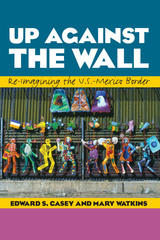
Using the U.S. wall at the border with Mexico as a focal point, two experts examine the global surge of economic and environmental refugees, presenting a new vision of the relationships between citizen and migrant in an era of “Juan Crow,” which systematically creates a perpetual undercaste.
Winner, National Association for Ethnic Studies (NAES) Outstanding Book Award, 2017
As increasing global economic disparities, violence, and climate change provoke a rising tide of forced migration, many countries and local communities are responding by building walls—literal and metaphorical—between citizens and newcomers. Up Against the Wall: Re-imagining the U.S.-Mexico Border examines the temptation to construct such walls through a penetrating analysis of the U.S. wall at the U.S.-Mexico border, as well as investigating the walling out of Mexicans in local communities. Calling into question the building of a wall against a friendly neighboring nation, Up Against the Wall offers an analysis of the differences between borders and boundaries. This analysis opens the way to envisioning alternatives to the stark and policed divisions that are imposed by walls of all kinds. Tracing the consequences of imperialism and colonization as citizens grapple with new migrant neighbors, the book paints compelling examples from key locales affected by the wall—Nogales, Arizona vs. Nogales, Sonora; Tijuana/San Diego; and the lower Rio Grande Valley of Texas. An extended case study of Santa Barbara describes the creation of an internal colony in the aftermath of the U.S. conquest of Mexican land, a history that is relevant to many U.S. cities and towns.
Ranging from human rights issues in the wake of massive global migration to the role of national restorative shame in the United States for the treatment of Mexicans since 1848, the authors delve into the broad repercussions of the unjust and often tragic consequences of excluding others through walled structures along with the withholding of citizenship and full societal inclusion. Through the lens of a detailed examination of forced migration from Mexico to the United States, this transdisciplinary text, drawing on philosophy, psychology, and political theory, opens up multiple insights into how nations and communities can coexist with more justice and more compassion.
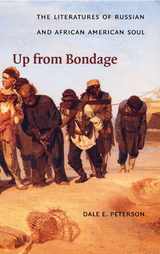
Illuminating a remarkably widespread cross-pollination between the two cultural and intellectual traditions, Dale E. Peterson frames much of his argument around W. E. B. DuBois’s concept of “double-consciousness,” wherein members of an oppressed section of society view themselves simultaneously through their own self-awareness and through the internalized standards of the dominant culture. He shows how the writings of Dostoevsky, Hurston, Chesnutt, Turgenev, Ellison, Wright, Gorky, and Naylor—texts that enacted and described this sense of double awareness—were used both to perform and to contest the established genres of Western literacy. Woven through Peterson’s textual analyses is his consideration of cultural hybridism and its effects: The writers he examines find multiple ways to testify to and challenge the symptoms of postcolonial trauma. After discussing the strong and significant affinity expressed by contemporary African American cultural theorists for the dialogic thought of Russian linguist Mikhail Bakhtin, Peterson argues that a fuller appreciation of the historic connection between the two cultures will enrich the complicated meanings of being black or Russian in a world that has traditionally avoided acknowledging pluralistic standards of civilization and cultural excellence.
This investigation of comparable moments in the development of Russian and African American ethnic self-consciousness will be valuable to students and scholars of comparative literature, philosophy, cultural theory, ethnicity, linguistics, and postcolonialism, in addition to Slavic and African American studies.
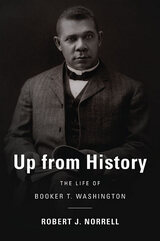
Since the 1960s, Martin Luther King, Jr., has personified black leadership with his use of direct action protests against white authority. A century ago, in the era of Jim Crow, Booker T. Washington pursued a different strategy to lift his people. In this compelling biography, Norrell reveals how conditions in the segregated South led Washington to call for a less contentious path to freedom and equality. He urged black people to acquire economic independence and to develop the moral character that would ultimately gain them full citizenship. Although widely accepted as the most realistic way to integrate blacks into American life during his time, Washington’s strategy has been disparaged since the 1960s.
The first full-length biography of Booker T. in a generation, Up from History recreates the broad contexts in which Washington worked: He struggled against white bigots who hated his economic ambitions for blacks, African-American intellectuals like W. E. B. Du Bois who resented his huge influence, and such inconstant allies as Theodore Roosevelt. Norrell details the positive power of Washington’s vision, one that invoked hope and optimism to overcome past exploitation and present discrimination. Indeed, his ideas have since inspired peoples across the Third World that there are many ways to struggle for equality and justice. Up from History reinstates this extraordinary historical figure to the pantheon of black leaders, illuminating not only his mission and achievement but also, poignantly, the man himself.
The cyclotron laboratory at MSU has been known for years as the best university nuclear physics laboratory in the United States, and perhaps in the world. But very few, even in its hometown of East Lansing, know how it achieved that status or why it prospered when laboratories at many other famous universities faded.
In this book Austin, a nuclear physicist who has been at the laboratory since the beginning of its ascent, gives us a remarkable story. It begins with an exceptional individual, Henry Blosser, who founded the laboratory, built a cyclotron accelerator of uniquely high precision, and recruited a team of nuclear physicists that used it to establish the laboratory’s reputation. Its credibility led to a sequence of accelerators, each operating in a different sub?eld while continuing a tradition of forefront science, and to a laboratory culture that fostered the courage and foresight to compete for the FRIB in the face of daunting odds.
The juveniles’ attitudes toward Dostert change, however, once he begins working as a “Children’s Attendant” at the Audy Home, clocking in for eight hours every day to enforce rules and maintain order on the cellblocks. His colorblind, altruistic volunteer world fractures into a full-time, emotionally charged reality of white and black and brown. When the boys change, he must change too. Despite wanting to help them feel human in such a dehumanizing environment, Dostert realizes he needs to make sure his kindness is not perceived as weakness. Dostert learns to march the juveniles through the facility to school, recreation activities, and chapel. He must strip-search them, interrupt their brawls, root through their cells for drugs and handcrafted weapons, and monitor group showers to thwart sexual extortion and the inscription of gang symbols in soap on walls and mirrors. Week after week and month after month, the job exposes hidden views not only of the juveniles and the “system” incarcerating them, but of Children’s Attendant Dostert himself.
From one man’s struggle to reconcile his humanitarian intentions with his actual job responsibilities in what, to him, is a strange new world, emerges a sincere effort to confront the realities of America’s persisting racial tensions and institutionalized poverty. Dostert’s story is an honest and unflinching journey from thinking he has many of the answers for how to change this world to discovering how little he really knows about the world he is trying to change.

The agenda for transition after the demise of communism in the Western Balkans made the conversion of state radio and television into public service broadcasters a priority, converting mouthpieces of the regime into public forums in which various interests and standpoints could be shared and deliberated. There is general agreement that this endeavor has not been a success. Formally, the countries adopted the legal and institutional requirements of public service media according to European standards. The ruling political elites, however, retained their control over the public media by various means.
Can this trend be reversed? Instead of being marginalized or totally manipulated, can public service media become vehicles of genuine democratization?
A comparison of public service media in seven countries (Albania, Bosnia & Herzegovina, Croatia, Kosovo, Montenegro, North Macedonia, and Serbia) addresses these important questions.
Before the turn of the twentieth century, many Swedish men emigrated to the American Rockies as itinerant laborers, drawn by the region’s developing industries. Single Swedish women ventured west, too, and whole families migrated, settling into farm communities. By 1920, one-fifth of all Swedish immigrants were living in the West.
In Up in the Rocky Mountains, Jennifer Eastman Attebery offers a new perspective on Swedish immigrants’ experiences in Idaho, Montana, Utah, Wyoming, Colorado, and New Mexico from 1880 to 1917 by interpreting their letters home. Considering more than three hundred letters, Attebery analyzes their storytelling, repetitive language, traditional phrasing, and metaphoric images. Recognizing the letters’ power as a folk form, Attebery sees in them the writers’ relationships back in Sweden as well as their encounters with religious and labor movements, regionalism, and nationalism in their new country.
By defining personal letters as a vernacular genre, Attebery provides a model for discerning immigrants’ shared culture in correspondence collections. By studying their words, she brings to life small Swedish communities throughout the Rocky Mountain region.
Jennifer Eastman Attebery is professor of English and director of American studies at Idaho State University.
"The feel of now lives in John Murillo's UP JUMP THE BOOGIE, but it's tempered by bows to the tradition of soulful music and oral poetry. The lived dimensions embodied in this collection say that here's an earned street knowledge and a measured intellectual inquiry that dare to live side by side, in one unique voice. The pages of UP JUMP THE BOOGIE breathe and sing; the tributes and cultural nods are heartfelt, and in these honest poems no one gets off the hook."—Yusef Komunyakaa

Memorable descriptions of the Northern seasons—now in paperback!
In this unforgettable collection of essays, Sam Cook portrays the enchanting North Country as a state of mind as much as a geographical area. Up North captures the mystic moods, seasonal subtleties, and colorful characters that fill the region from the Minnesota canoe country to the vast expanse of the Northwest Territories.
Organized by time of year, Up North describes every season’s pleasures—sled dog racing in winter, hooking a northern pike on the first spring fishing trip, building a summer campfire, watching the aurora borealis in fall. Up North is an invitation to explore canoe country through Sam Cook’s eyes and your own.
And yet the essence of this region, known to many as simply “Up North,” has proved remarkably perennial. Millions of acres of state and national forests and other public lands remain intact. Small towns peppered across the rural countryside have changed little over the decades, pushing back the machinery of progress with the help of dedicated land conservancies, conservation organizations, and other advocacy groups.
Up North in Michigan, the new collection from celebrated nature writer Jerry Dennis, captures its author’s lifelong journey to better know this place he calls home by exploring it in every season, in every kind of weather, on foot, on bicycle, in canoes and cars. The essays in this book are more than an homage to a particular region, its people, and its natural wonders. They are a reflection on the Up North that can only be experienced through your feet and fingertips, through your ears, mouth, and nose—the Up North that makes its way into your bones as surely as sand makes its way into wood grain.
The paperback contains a new chapter by Jerry Dennis that has been written since the publication of the hardcover.

@font-face { font-family: "Times";}@font-face { font-family: "Verdana";}@font-face { font-family: "Palatino";}p.MsoNormal, li.MsoNormal, div.MsoNormal { margin: 0in 0in 0.0001pt; font-size: 12pt; font-family: "Times New Roman"; }div.Section1 { page: Section1; }
Up on the River is John Madson’s loving and often hilarious tribute to the people, animal life, and places of the Upper Mississippi. Madson’s Upper Mississippi is the part “between the saints,” from St. Louis to St. Paul, where for thirty years he explored the bright waters of the upper reaches of the mighty river itself as well as the tangled multitude of sloughs, cuts, and side channels that wander through its wooded islands and floodplain forests.
“Some of my best time on the River has been in the company of game wardens, biologists, commercial fishermen, clammers, trappers, hunters, and a smelly, mud-smeared coterie of river rats in general, and my views of the River are far more likely to reflect theirs than those of the transportation industry,” Madson writes of his thirty-year acquaintance with the Mississippi. Traveling mainly by canoe and johnboat, he tells of encounters between archetypal commercial fishermen and archetypal game wardens over hot fish chowder, fishing for crappies in the tops of submerged trees and for walleyes amid gale force winds, nesting and migrating herons and ducks and eagles, the histories of river logging and pearling and button making, and towboats and barges and the lives of the “ramstugenous” people who move freight on the river.
Learning about the Upper Mississippi via the wry tutelage of John Madson, who discovered that “whenever I am out on a river some of its freeness rubs off on me,” readers of this classic book will also come under the spell of this freeness.
Historian Brooks Blevins has spent his life studying and writing about the people of his native regions—the South and the Ozarks. He has been in the vanguard of a new and vibrant Ozarks Studies movement that has worked to refract the stories of Ozarkers through a more realistic and less exotic lens. In Up South in the Ozarks: Dispatches from the Margins, Blevins introduces us with humor and fairness to mostly unseen lives of the past and present: southern gospel singing schools and ballad collectors, migratory cotton pickers and backroad country storekeepers, fireworks peddlers and impoverished diarists.
Part historical and part journalistic, Blevins’s essays combine the scholarly sensibilities of a respected historian with the insights of someone raised in rural hill country. His stories of marginalized characters often defy stereotype. They entertain as much as they educate. And most of them originate in the same place Blevins does: up south in the Ozarks.
READERS
Browse our collection.
PUBLISHERS
See BiblioVault's publisher services.
STUDENT SERVICES
Files for college accessibility offices.
RECENTLY PUBLISHED





UChicago Accessibility Resources
home | accessibility | search | about | contact us
BiblioVault ® 2001 - 2025
The University of Chicago Press