
 A SCHOLARLY BOOK REPOSITORY
26 start with U start with U

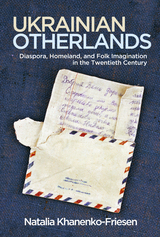
Ukrainian Otherlands is an innovative exploration of modern ethnic identity, focused on diaspora/homeland understandings of each other in Ukraine and in Ukrainian ethnic communities around the globe. Exploring a rich array of folk songs, poetry and stories, trans-Atlantic correspondence, family histories, and rituals of homecoming and hosting that developed in the Ukrainian diaspora and Ukraine during the twentieth century, Natalia Khanenko-Friesen asserts that many important aspects of modern ethnic identity form, develop, and reveal themselves not only through the diaspora's continued yearning for the homeland, but also in a homeland's deeply felt connection to its diaspora. Yet, she finds each group imagines the "otherland" and ethnic identity differently, leading to misunderstandings between Ukrainians and their ethnic-Ukrainian "brothers and sisters" abroad.
An innovative exploration of the persistence of vernacular culture in the modern world, Ukrainian Otherlands, amply informed by theory and fieldwork, will appeal to those interested in folklore, ethnic and diaspora studies, modernity, migration, folk psychology, history, and cultural anthropology.

“Where are you from?” For Catherine Jagoe, a set of complicated assumptions often lies behind this seemingly banal question. While partly an immigrant narrative, Jagoe’s memoir in essays is not so much—or not only—about moving to the US and putting down roots but rather more about feeling perpetually in-between and never quite “home.” Throughout, Jagoe wrestles with what identity and fidelity mean for a woman with three nationalities, a job as a translator who frequently lives in a fourth country, a history of depression, and chronically divided allegiances. Together, these essays paint a deeply personal yet incredibly relatable portrait of what it means to be an American—and an immigrant—in the twenty-first century.
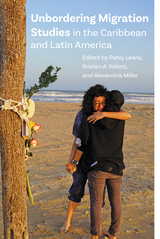
Unbordering Migration Studies in the Caribbean and Latin America brings together scholars and artists across regions, generations, disciplines, and modes of expression to decenter the US-Mexico border as both a site and a concept. Calling for renewed attention to the spaces, identities, and conflicts that remain understudied and excluded from our hemispheric knowledge of forced movement, the volume reveals a wider diversity of migratory realities and considers race, ethnicity, and class beyond the hegemonic formations that eclipse non-US histories. Through multidisciplinary and geographically expansive essays that draw from history, social anthropology, environmental studies, feminist studies, and lived experience, the volume examines diverse migratory flows from Chile and Argentina in the South to Georgia and New York in the North. Individually and collectively, the essays remap migratory movements other than through the most studied South-to-North trajectories and remove the US and US-based racial formations from the center of analysis. By tracking East-West flows, intraregional mobilities, and changing conceptions of racial identity, Unbordering Migration Studies in the Caribbean and Latin America complicates the concepts of forced mobility and border crossing by highlighting alternative liminalities in sites of transit, destination, and return. Demanding engagement with the submerged histories of racism and the production of ethnoracial categories beyond the Black/white binary, the collection brings into focus identities, sites, and forces that have not yet occupied the foreground of global migration study.
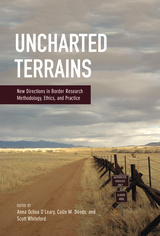
Each chapter raises methodological and ethical questions relevant to conducting research in transnational contexts, which can frequently be unpredictable or even volatile. The volume addresses the central question of how can scholars work with vulnerable migrant populations along the perilous US–Mexico border and maintain ethical and methodological standards, while also providing useful knowledge to stakeholders? Not only may immigrants be afraid to provide information that could be incriminating, but researchers may also be reluctant to allow their findings to become the basis of harsher law enforcement, unjustly penalize the subjects of their research, and inhibit the formulation of humane and effective immigration policy based on scholarly research.
All of these concerns, which are perfectly legitimate from the social scientists’ point of view, can put researchers into conflict with legal authorities. Contributors acknowledge their quandaries and explain how they have dealt with them. They use specific topics—reproductive health issues and sexually transmitted diseases among immigrant women, a study of undocumented business owners, and the administration of the Mexican Household Survey in Phoenix, among others—to outline research methodology that will be useful for generations of border researchers.
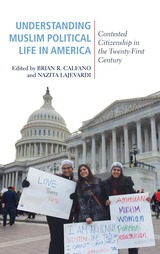
“Muslim Americans are at a political crossroads,” write editors Brian Calfano and Nazita Lajevardi. Whereas Muslims are now widely incorporated in American public life, there are increasing social and political pressures that disenfranchise them or prevent them from realizing the American Dream. Understanding Muslim Political Life in America brings clarity to the social, religious, and political dynamics that this diverse religious community faces.
In this timely volume, leading scholars cover a variety of topics assessing the Muslim American experience in the post-9/11 and pre-Trump era, including law enforcement; identity labels used in Muslim surveys; the role of gender relations; recognition; and how discrimination, tolerance, and politics impact American Muslims.
Understanding Muslim Political Life in America offers an update and reappraisal of what we know about Muslims in American political life. The editors and contributors also consider future directions and important methodological questions for research in Muslim American scholarship.
Contributors include Matt A. Barreto, Alejandro Beutel, Tony Carey, Youssef Chouhoud, Karam Dana, Oz Dincer, Rachel Gillum, Kerem Ozan Kalkan, Anwar Manje, Valerie Martinez-Ebers, Dani McLaughlan, Melissa R. Michelson, Yusuf Sarfati, Ahmet Tekelioglu, Marianne Marar Yacobian, and the editors.

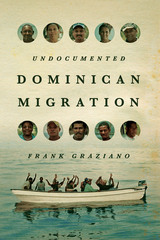
Undocumented Dominican Migration is the first comprehensive study of boat migration from the Dominican Republic to Puerto Rico. It brings together the interactive global, cultural, and personal factors that induce thousands of Dominicans to journey across the Mona Passage in attempts to escape chronic poverty. The book provides in-depth treatment of decision-making, experiences at sea, migrant smuggling operations, and U.S. border enforcement. It also explores several topics that are rare in migration studies. These include the psychology of migrant motivation, religious beliefs, corruption and impunity, procreation and parenting, compulsive recidivism after failed attempts, social values in relation to law, marriage fraud, and the use of false documents for air travel from Puerto Rico to the mainland United States.
Frank Graziano’s extensive fieldwork among migrants, smugglers, and federal agencies provides an authority and immediacy that brings the reader close to the migrants’ experiences. The exhaustive research and multidisciplinary approach, highly readable narrative, and focus on lesser-known emigrants make Undocumented Dominican Migration an essential addition to public and academic debates about migration.
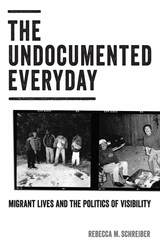
Examining how undocumented migrants are using film, video, and other documentary media to challenge surveillance, detention, and deportation
As debates over immigration increasingly become flashpoints of political contention in the United States, a variety of advocacy groups, social service organizations, filmmakers, and artists have provided undocumented migrants with the tools and training to document their experiences.
In The Undocumented Everyday, Rebecca M. Schreiber examines the significance of self-representation by undocumented Mexican and Central American migrants, arguing that by centering their own subjectivity and presence through their use of documentary media, these migrants are effectively challenging intensified regimes of state surveillance and liberal strategies that emphasize visibility as a form of empowerment and inclusion. Schreiber explores documentation as both an aesthetic practice based on the visual conventions of social realism and a state-administered means of identification and control.
As Schreiber shows, by visualizing new ways of belonging not necessarily defined by citizenship, these migrants are remaking documentary media, combining formal visual strategies with those of amateur photography and performative elements to create a mixed-genre aesthetic. In doing so, they make political claims and create new forms of protection for migrant communities experiencing increased surveillance, detention, and deportation.
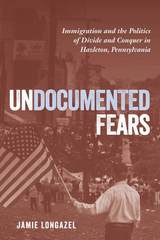
The Illegal Immigration Relief Act (IIRA), passed in the small Rustbelt city of Hazleton, Pennsylvania in 2006, was a local ordinance that laid out penalties for renting to or hiring undocumented immigrants and declared English the city’s official language. The notorious IIRA gained national prominence and kicked off a parade of local and state-level legislative initiatives designed to crack down on undocumented immigrants.
In his cogent and timely book, UndocumentedFears, Jamie Longazel uses the debate around Hazleton’s controversial ordinance as a case study that reveals the mechanics of contemporary divide and conquer politics. He shows how neoliberal ideology, misconceptions about Latina/o immigrants, and nostalgic imagery of “Small Town, America” led to a racialized account of an undocumented immigrant “invasion,” masking the real story of a city beset by large-scale loss of manufacturing jobs.
Offering an up-close look at how the local debate unfolded in the city that set off this broader trend, Undocumented Fears makes an important connection between immigration politics and the perpetuation of racial and economic inequality.

2023 SANA Book Award, Society for the Anthropology of North America
2023 Honorable Mention, Outstanding Book Award NACCS Tejas Foco Award for Non-Fiction, National Association for Chicana and Chicano Studies
2022 Nonfiction Discovery Prize, Writers' League of Texas
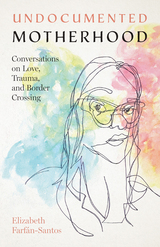
An intimate portrayal of the hardships faced by an undocumented family navigating the medical and educational systems in the United States.
Claudia Garcia crossed the border because her toddler, Natalia, could not hear. Leaving behind everything she knew in Mexico, Claudia recounts the terror of migrating alone with her toddler and the incredible challenges she faced advocating for her daughter’s health in the United States. When she arrived in Texas, Claudia discovered that being undocumented would mean more than just an immigration status—it would be a way of living, of mothering, and of being discarded by even those institutions we count on to care.
Elizabeth Farfán-Santos spent five years with Claudia. As she listened to Claudia’s experiences, she recalled her own mother’s story, another life molded by migration, the US-Mexico border, and the quest for a healthy future on either side. Witnessing Claudia’s struggles with doctors and teachers, we see how the education and medical systems enforce undocumented status and perpetuate disability. At one point, in the midst of advocating for her daughter, Claudia suddenly finds herself struck by debilitating pain. Claudia is lifted up by her comadres, sent to the doctor, and reminded why she must care for herself.
A braided narrative that speaks to the power of stories for creating connection, this book reveals what remains undocumented in the motherhood of Mexican women who find themselves making impossible decisions and multiple sacrifices as they build a future for their families.
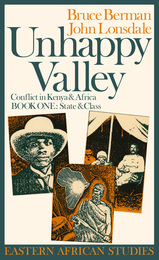
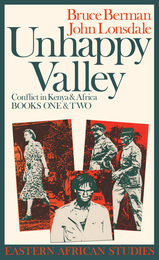
The authors investigate major themes. These include the conquest origins and subsequent development of the colonial state, the contradictory social forces that articulated African societies to European capitalism, and the creation of new political communities and changing meanings of ethnicity in Africa, in the context of social differentiation and class formation. There is substantial new work on the problems of Mau Mau and of wealth, poverty and civic virtue in Kikuyu political thought.
The authors make a fresh contribution to a deeper historical understanding of the development of contemporary Kenyan society and, in particular, of the British and Kukuyu origins of Mau Mau and the emergency of the 1950s.
They also highlight some of the shortcomings of ideas about development, explore the limitations of narrowly structuralist Marxist theory of the state, and reflect on the role of history in the future of Africa.
Book One on State and Class will be used by students of African history as well as of colonial Kenya; it is also concerned with the theory of history and of political science.
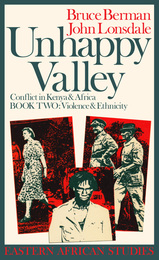
The authors investigate major themes. These include the conquest origins and subsequent development of the colonial state, the contradictory social forces that articulated African societies to European capitalism, and the creation of new political communities and changing meanings of ethnicity in Africa, in the context of social differentiation and class formation. There is substantial new work on the problems of Mau Mau and of wealth, poverty and civic virtue in Kikuyu political thought.
The authors make a fresh contribution to a deeper historical understanding of the development of contemporary Kenyan society and, in particular, of the British and Kukuyu origins of Mau Mau and the emergency of the 1950s.
They also highlight some of the shortcomings of ideas about development, explore the limitations of narrowly structuralist Marxist theory of the state, and reflect on the role of history in the future of Africa.
Book Two on Violence and Ethnicity gives new insights into popular consciousness, into revolutionary change and into the subtle realities of ethnicity; it will be of particular value to readers of Ngugi.
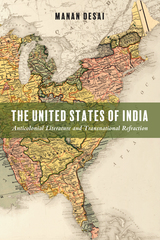
The United States of India shows how Indian and American writers in the United States played a key role in the development of anticolonial thought in the years during and immediately following the First World War. For Indians Lajpat Rai and Dhan Gopal Mukerji, and Americans Agnes Smedley, W.E.B. Du Bois, and Katherine Mayo, the social and historical landscape of America and India acted as a reflective surface. Manan Desai considers how their interactions provided a “transnational refraction”—a political optic and discursive strategy that offered ways to imagine how American history could shed light on an anticolonial Indian future.
Desai traces how various expatriate and immigrant Indians formed political movements that rallied for American support for the cause of Indian independence. These intellectuals also developed new forms of writing about subjugation in the U.S. and India. Providing an examination of race, caste, nationhood, and empire, Desai astutely examines this network of Indian and American writers and the genres and social questions that fomented solidarity across borders.

Unfortunately, we’re all too familiar with the US’s legacy of maligning immigrants. Some Americans see immigrants as inherently threatening, a blank screen onto which the nation’s worst fears are projected. But this phenomenon is neither timeless nor static. Instead, it arose and transformed alongside the unprecedented arrival of immigrants in the early twentieth century—and the federal government’s response. In The Unruly Facts of Race, sociologist Sunmin Kim explains how American ideas about race and ethnicity were transformed in the early twentieth century as an unintended consequence of anti-immigrant mobilization.
Kim presents a wealth of archival evidence, including the proceedings of the 1907 Dillingham Commission, to reconstruct how competing racialized visions of nationhood evolved in the early twentieth-century immigration debate. Immigration restrictionist politicians believed that the United States should be a White, Anglo-Saxon, and Protestant nation. However, when they mobilized researchers—some of whom were women and/or immigrants—to gather data at a massive scale to rationalize their aims, they were met with unruly facts that did not support their racial project. Newer European immigrants, as the data showed, were not much different from descendants of earlier immigrants from northern Europe. When facts failed to support the vilification of immigrants, exclusionist politicians instead turned to race as a marker of ineluctable difference to justify their aims. This led to a new principle of national belonging: the United States transitioned to a country that encompassed various European groups, including Catholics and Jews, but excluded non-White immigrants, as they were deemed too different to become a part of the nation.
Kim’s analysis shows that throughout US history, the opportunity for belonging for some immigrants was predicated on the exclusion of others. His focus on the role of facts in the early twentieth century provides a refreshing take on why the so-called “nation of immigrants” has always demonized some immigrants while cherishing others, highlighting the selection and control of immigrants as the core principles of the American nation-building project. Amid a vitriolic explosion of American immigration discourse, Kim offers a needed corrective to and context for debates around who belongs in the United States.
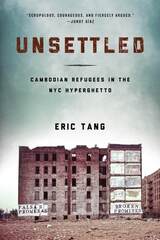
After surviving the Khmer Rouge genocide, followed by years of confinement to international refugee camps, as many as 10,000 Southeast Asian refugees arrived in the Bronx during the 1980s and ‘90s. Unsettled chronicles the unfinished odyssey of Bronx Cambodians, closely following one woman and her family for several years as they survive yet resist their literal insertion into concentrated Bronx poverty.
Eric Tang tells the harrowing and inspiring stories of these refugees to make sense of how and why the displaced migrants have been resettled in the “hyperghetto.” He argues that refuge is never found, that rescue discourses mask a more profound urban reality characterized by racialized geographic enclosure, economic displacement and unrelenting poverty, and the criminalization of daily life.
Unsettled views the hyperghetto as a site of extreme isolation, punishment, and confinement. The refugees remain captives in late-capitalist urban America. Tang ultimately asks: What does it mean for these Cambodians to resettle into this distinct time and space of slavery’s afterlife?
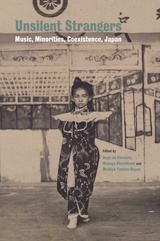
This collection of essays on the music of migrant minorities in and from Japan examines the central role music plays in the ongoing adjustment, conciliation, and transformation of newcomers and “hosts” alike. It is the first academic text to address musical activities across a range of migrant groups in Japan––particularly those of Tokyo and its neighboring areas and the first to juxtapose such communities with those of Japanese emigrants as ethnic minorities elsewhere. It presents both archival and fieldwork-based case studies that highlight music in the dynamics of encounter and attempted identity-making, under a unifying framework of migration.
The 2019 introduction of a new “Specified Skilled Worker” visa category marked the beginning of Japan’s “new immigration era,” led by the slogan of tabunka kyosei, or “multicultural coexistence.” The contributors to this volume analyze the concept itself and the many problems around realizing this ideal through ethnographic accounts of current minorities, including South Indians, Brazilians, Nepalis, Filipinos, Iranians, and Ainu domestic migrants. This volume will be of interest to ethnomusicologists, students of the cultures of migrant communities, and those engaged with cultural change and diversity in Japan and East Asia.
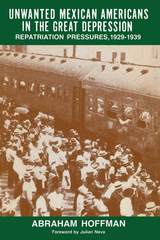
Prior to 1931, many Mexican Americans left the United States voluntarily, prompted by homesickness, unemployment, and the Mexican government’s offer of free small land parcels. As the Great Depression deepened, repatriation pressures increased. Anglo groups lobbied for laws that excluded aliens from jobs and welfare benefits. Many businessmen, government officials, and social workers believed that removing Mexican Americans would open up jobs for U.S. citizens and alleviate some of the burden placed on relief agencies.
The Department of Labor’s federal deportation drive, launched in 1931, created an atmosphere of fear and tension in Mexican American communities. Immigration agents conducted surprise searches for people who had entered the country illegally, and Mexicans who had crossed the border before restrictive legislation was passed became prime targets of the deportation campaign.
Welfare agencies throughout the United States organized repatriation programs. The Los Angeles County Welfare Bureau, with the most extensive program, was responsible for the removal of more than thirteen thousand Mexican Americans. A few well-publicized deportations had frightened Mexicans who were unsure of their immigration status. Many chose repatriation over possible deportation.
Using much archival material and many previously unpublished government documents, Hoffman focuses on the repatriation experience in Los Angeles. The city’s large Mexican American population provides an excellent case study of the entire movement. He also surveys the process of Mexican repatriation throughout the entire United States.
In his new book, Andreas Kossert—the renowned expert on emigration and expulsion in the twentieth century and author of the bestselling Cold Home—places the early twenty-first-century refugee movement in a wider historical context. Movingly told and interwoven with personal accounts, The Uprooted: The Refugee in World History reveals the existential experiences of uprootedness and hostility that go hand in hand with losing one's homeland, and explains why refugees and displaced persons have always found it so difficult to settle into a new country. Whether they have come from East Prussia, Syria, or India, refugees are agents of world history—and with this book Kossert gives them a voice.
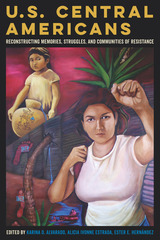
In summer 2014, a surge of unaccompanied child migrants from Central America to the United States gained mainstream visibility—yet migration from Central America has been happening for decades. U.S. Central Americans explores the shared yet distinctive experiences, histories, and cultures of 1.5-and second-generation Central Americans in the United States.
While much has been written about U.S. and Central American military, economic, and political relations, this is the first book to articulate the rich and dynamic cultures, stories, and historical memories of Central American communities in the United States. Contributors to this anthology—often writing from their own experiences as members of this community—articulate U.S. Central Americans’ unique identities as they also explore the contradictions found within this multivocal group.
Working from within Guatemalan, Salvadoran, and Maya communities, contributors to this critical study engage histories and transnational memories of Central Americans in public and intimate spaces through ethnographic, in-depth, semistructured, qualitative interviews, as well as literary and cultural analysis. The volume’s generational, spatial, urban, indigenous, women’s, migrant, and public and cultural memory foci contribute to the development of U.S. Central American thought, theory, and methods. Woven throughout the analysis, migrants’ own oral histories offer witness to the struggles of displacement, travel, navigation, and settlement of new terrain. This timely work addresses demographic changes both at universities and in cities throughout the United States.
U.S. Central Americans draws connections to fields of study such as history, political science, anthropology, ethnic studies, sociology, cultural studies, and literature, as well as diaspora and border studies. The volume is also accessible in size, scope, and language to educators and community and service workers wanting to know about their U.S. Central American families, neighbors, friends, students, employees, and clients.
Contributors:
Leisy Abrego
Karina O. Alvarado
Maritza E. Cárdenas
Alicia Ivonne Estrada
Ester E. Hernández
Floridalma Boj Lopez
Steven Osuna
Yajaira Padilla
Ana Patricia Rodríguez
READERS
Browse our collection.
PUBLISHERS
See BiblioVault's publisher services.
STUDENT SERVICES
Files for college accessibility offices.
RECENTLY PUBLISHED


UChicago Accessibility Resources
home | accessibility | search | about | contact us
BiblioVault ® 2001 - 2026
The University of Chicago Press