
 A SCHOLARLY BOOK REPOSITORY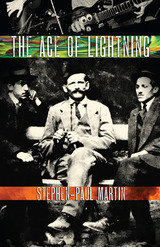
Stephen-Paul Martin’s The Ace of Lightning is a series of interconnected stories focused on a turning point in Western history: the assassination in Sarajevo of Archduke Franz Ferdinand of Austria which triggered World War I, and the mysterious circumstances that led Gavrilo Princip to shoot and kill the heir apparent to one of Europe’s most powerful empires.
Far from being a conventional work of historical fiction, Martin’s collection asks readers to think about what truly constitutes history. What would the past look like if history was written under the influence of Mad Magazine and The Twilight Zone? What happens when the assassination in Sarajevo becomes “the assassination in Sarajevo,” when Gavrilo Princip becomes “Gavrilo Princip,” when the past and the present shape a textual future that looks suspiciously like a past that never was and a present that never is?

Aldo Moro’s kidnapping and violent death in 1978 shocked Italy as no other event has during the entire history of the Republic. It had much the same effect in Italy as the assassination of President John F. Kennedy had in the United States, with both cases giving rise to endless conspiracy theories. The dominant Christian Democratic leader for twenty years, Moro had embodied the country’s peculiar religious politics, its values as well as its practices. He was perceived as the most exemplary representative of the Catholic political tradition in Italy. The Red Brigades who killed him thought that in striking Moro they would cause the collapse of the capitalist establishment and clear the way for a Marxist-Leninist revolution.
In his thorough account of the long and anguished quest for justice in the Moro murder case, Richard Drake provides a detailed portrait of the tragedy and its aftermath as complex symbols of a turbulent age in Italian history. Since Moro’s murder, documents from two parliamentary inquiries and four sets of trials explain the historical and political process and illuminate two enduring themes in Italian history. First, the records contain a wealth of examples bearing on the nation’s longstanding culture of ideological extremism and violence. Second, Moro’s story reveals much about the inner workings of democracy Italian style, including the roles of the United States and the Mafia. These insights are especially valuable today in understanding why the Italian establishment is in a state of collapse.
The Moro case also explores the worldwide problem of terrorism. In great detail, the case reveals the mentality, the tactics, and the strategy of the Red Brigades and related groups. Moro’s fate has a universal poignancy, with aspects of a classical Greek tragedy. Drake provides a full historical account of how the Italian people have come to terms with this tragedy.
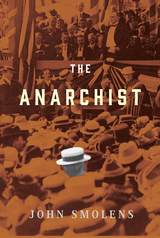

A skeptical follower of James Jesse Strang once wrote: "No man can serve two masters. You cannot serve a temporal king and a republican government at the same time. The thing is preposterous." And yet, under Strang, such a system survived in Michigan for six years. This book traces the life and assassination of King Strang, the extraordinary Mormon leader who, in the 1850s, created a literal kingdom on Beaver Island, in Lake Michigan.
As a young man, Strang was a dreamer of grandiose dreams---dreams of power, of royalty, and of fame. For him, the dreams came true. But in his pursuit of those dreams, Strang walked a tightrope to avoid ever-impending doom. Strang's kingdom flourished despite perennial conflicts with non-Mormons, including a gun battle with mainlanders, and despite a major prosecution by the federal government. His kingdom was designed to be totally independent of the state and nation. And yet, he was a shrewd political tactician who took advantage of Michigan law to be twice elected to the state legislature and become what one Detroit newspaper called the most powerful politician in the state.
Here is Strang the man of contrasts and contradictions, the strident opponent of polygamy and the husband of five wives, the astute editor and the incendiary propagandist, the prophet and the scoundrel, the man who through the sheer force of his personality made his followers a group to be feared in his region.
Vast amount of fresh information, including contemporary journals, documents, and letters never before used by biographers help draw a portrait of one of the most complex and resourceful leaders in American history.
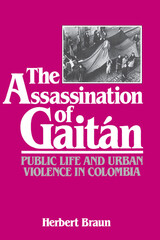
Drawn in part from personal interviews with participants and witnesses, Herbert Braun’s analysis of the riot’s roots, its patterns and consequences, provides a dramatic account of this historic turning point and an illuminating look at the making of modern Colombia.
Braun’s narrative begins in the year 1930 in Bogotá, Colombia, when a generation of Liberals and Conservatives came to power convinced they could kept he peace by being distant, dispassionate, and rational. One of these politicians, Jorge Eliécer Gaitán, was different. Seeking to bring about a society of merit, mass participation, and individualism, he exposed the private interests of the reigning politicians and engendered a passionate relationship with his followers. His assassination called forth urban crowds that sought to destroy every visible evidence of public authority of a society they felt no longer had the moral right to exist.
This is a book about behavior in public: how the actors—the political elite, Gaitán, and the crowds—explained and conducted themselves in public, what they said and felt, and what they sought to preserve or destroy, is the evidence on which Braun draws to explain the conflicts contained in Colombian history. The author demonstrates that the political culture that was emerging through these tensions offered the hope of a peaceful transition to a more open, participatory, and democratic society.
“Most Colombians regard Jorge Eliécer Gaitán as a pivotal figure in their nation’s history, whose assassination on April 9, 1948 irrevocably changed the course of events in the twentieth century. . . . As biography, social history, and political analysis, Braun’s book is a tour de force.”—Jane M. Rausch, Hispanic American Historical Review
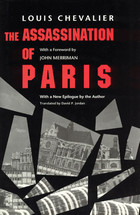
He describes an almost continual parade of garish and grandiose plans: some, like the destruction of the glorious marketplace of les Halles for him the heart of the city, were realized; others, like the superhighway along the left bank of the Seine, were bitterly and successfully resisted.
Almost twenty years later, we find it difficult to remember the city as it was. And while Paris looks to many much the way it always has, behind the carefully sandblasted stone and restored shop fronts is a city radically transformed—emptied of centuries of popular life; of entire neighborhoods and the communities they housed engineered out to desolate suburban slums. The battle over the soul and spirit of the city continues.
This book is not entirely about the loss of physical places. Or a romance about a world that never really was. It is a cautionary tale filled with lessons for all who struggle to protect the human scale, the diversity, and the welcoming public life that are the threatened gifts of all great cities.
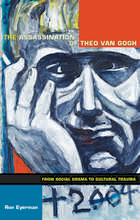
Eyerman utilizes theories of social drama and cultural trauma to evaluate the reactions to and effects of the murder. A social drama is triggered by a public transgression of taken-for-granted norms; one that threatens the collective identity of a society may develop into a cultural trauma. Eyerman contends that the assassination of Theo van Gogh quickly became a cultural trauma because it resonated powerfully with the postwar psyche of the Netherlands. As part of his analysis of the murder and reactions to it, he discusses significant aspects of twentieth-century Dutch history, including the country’s treatment of Jews during the German occupation, the loss of its colonies in the wake of World War II, its recruitment of immigrant workers, and the failure of Dutch troops to protect Muslims in Srebrenica in 1995.

Centering Black grief in the aftermath of Lincoln’s assassination
On April 14, 1865, John Wilkes Booth carried out the first presidential assassination in United States history. The euphoria resulting from General Lee’s surrender evaporated at the news of Abraham Lincoln’s murder. The nation—excepting many white Southerners—found itself consumed with grief, and no group mourned Lincoln more deeply than people of color. African Americans did not speak with a monolithic voice on social or political issues, but even Lincoln’s Black contemporaries who may not have approved of him while he was alive mourned his death, understanding its implications for their future.
Beginning with the assassination itself and chronicling Lincoln’s three-week-long national funeral, historian Leonne M. Hudson captures the profound sadness of Black Americans as they mourned the crafter of the Emancipation Proclamation and the man they thought of as their earthly Moses, father, friend, and benefactor. Hudson continues the narrative by detailing the postwar efforts of African Americans to gain citizenship and voting rights.
Black Americans in Mourning includes the tributes of prominent figures such as Frederick Douglass, Martin R. Delany, and Elizabeth Keckley, who raised their voices to honor Lincoln, as well as formal expressions of grief by institutions and organizations such as the United States Colored Troops. In a triumph of research, Hudson also features the voices of lesser-known Black people who mourned Lincoln across the country, showing that the outpouring of individual and collective grief helped set the stage for his enduring glorification.
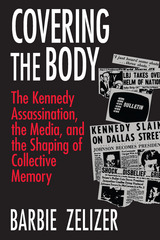
Covering the Body (the title refers to the charge given journalists to follow a president) is a powerful reassessment of the media's role in shaping our collective memory of the assassination—at the same time as it used the assassination coverage to legitimize its own role as official interpreter of American reality. Of the more than fifty reporters covering Kennedy in Dallas, no one actually saw the assassination. And faced with a monumentally important story that was continuously breaking, most journalists had no time to verify leads or substantiate reports. Rather, they took discrete moments of their stories and turned them into one coherent narrative, blurring what was and was not "professional" about their coverage.
Through incisive analyses of the many accounts and investigations in the years since the shooting, Zelizer reveals how journalists used the assassination not just to relay the news but to address the issues they saw as central to the profession and to promote themselves as cultural authorities. Indeed, argues Zelizer, these motivations are still alive and are at the core of the controversy surrounding Oliver Stone's movie, JFK.
At its heart, Covering the Body raises serious questions about the role of the media in defining our reality, and shaping our myths and memories. In tracing how journalists attempted to answer questions that still trouble most Americans, Zelizer offers a fascinating analysis of the role of the media as cultural authorities.
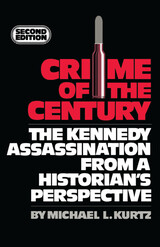
This book recounts the tragic events of November 22, 1963, and provides a detailed critical analysis of the investigations of the Warren Commission and the House Select Committee on Assassinations. Professor Kurtz outlines the major areas of controversy about the assassination and sifts all the known evidence before concluding that both official inquiries failed to evaluate the considerable evidence of an assassination conspiracy. Operating on the a priori assumption that Lee Harvey Oswald was guilty, the Commission and the Committee both ignored and distorted the overwhelming evidence that more than one assassin fired shots at the president. Professor Kurtz also shows why the most prevalent conspiracy theories fail to fit the facts and concludes by offering a new and more plausible theory of how the assassination occurred.
Thoroughly documented and based on the most exhaustive research carried out to date on John Kennedy’s murder, Crime of the Century draws on a variety of primary source materials from the National Archives and the FBI’s and CIA’s declassified assassination files. It utilizes the latest source materials released by the House Select Committee’s investigation. The depth of research, the rigorously objective sifting of evidence, and the incisive critique of official investigative bias make this a book of importance not only to students of the Kennedy assassination in particular, but also to scholars of government response to political violence in general.
Michael L. Kurtz is professor of history at Southeastern Louisiana University, Hammond, Louisiana. He is co-author of LOUISIANA: A HISTORY and was associate editor for READINGS IN LOUISIANA HISTORY.
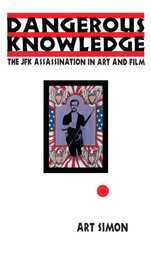
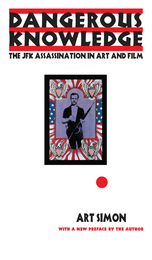
In his new Preface to this edition of Dangerous Knowledge, Art Simon discusses public fascination with celebrity deaths and recent assassination-related media-from documentaries to scholarly books to the scandalous video game JFK Reloaded-to show that the assassination continues to inspire writers, artists, and filmmakers.
Dangerous Knowledge examines the seminal works of art associated with the assassination, including Andy Warhol's silk screens, the underground films of Bruce Conner, and provocative Hollywood films like The Parallax View and JFK. Simon's investigation places assassination art and images within a historical context-one that helps us understand what the assassination has meant to American culture.

The case of the six Jesuits and two women murdered at Central American University (UCA) in San Salvador on November 16, 1989, has come to signify, by extension, a class-action suit on behalf of the 70,000 people tortured and executed over the course of a decade by the Salvadoran Armed Forces, with the complicity of the government. The identification of all those responsible for the Jesuit murders—the intellectual authors as well as the triggermen—would provide a first step toward purging and reforming a system that has made these kinds of crimes possible. This report by the Lawyers Committee for Human Rights, which served as legal counsel to the Jesuits since December 1989, documents the story of the Jesuit murders in the most comprehensive history and analysis to date.
Martha Doggett establishes the background leading up to the murders—the preceding years of human rights abuses and of political distortions promulgated about the Jesuits. She then sifts through the evidence of the crime, scrutinizes the subsequent efforts at cover-up, analyzes the process of the trial itself, and identifies the high-level officials thought to be ultimately responsible for ordering and concealing the truth about the murders. She concludes that a number ofcivilians as well as military paraticlipated and that the decision was made some time before the night of the actual murders. Drawing on primary and journalistic sources, investigative reports, U.S. and Salvadoran government documents, and interviews conducted by the Lawyers Committee for Human Rights and other organizations, Doggett traces the military's repeated obstruction of justice and the ambivalent responses by U.S. officials courting political expediency. She observes the effects of international protests (including the report by U.S. Congressman Joe Moakley) and outlines the limitations inherent in El Salvador's legal system.
Bringing the chronicle up to the present, this volume includes the first published English-language translation of the portion of the Truth Commission report dealing with the Jesuits' case, an analysis of the Truth Commission's conclusions, and reactions to the amnesty and release from prison of all persons convicted for the crime. Appendixes include chronologies of the case and of attacks on El Salvador's Jesuits; lists of the names of all the persons figuring in the case and profiles of the defendants; the report of the Lawyers Committee's trial observer; and a list of previous publications on the case by the Lawyers Committee and UCA, as well as reports of trial observers from other organizations.
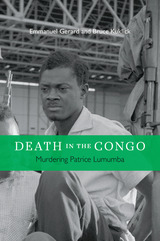
Death in the Congo is a gripping account of a murder that became one of the defining events in postcolonial African history. It is no less the story of the untimely death of a national dream, a hope-filled vision very different from what the war-ravaged Democratic Republic of the Congo became in the second half of the twentieth century.
When Belgium relinquished colonial control in June 1960, a charismatic thirty-five-year-old African nationalist, Patrice Lumumba, became prime minister of the new republic. Yet stability immediately broke down. A mutinous Congolese Army spread havoc, while Katanga Province in southeast Congo seceded altogether. Belgium dispatched its military to protect its citizens, and the United Nations soon intervened with its own peacekeeping troops. Meanwhile, behind the scenes, both the Soviet Union and the United States maneuvered to turn the crisis to their Cold War advantage. A coup in September, secretly aided by the UN, toppled Lumumba’s government. In January 1961, armed men drove Lumumba to a secluded corner of the Katanga bush, stood him up beside a hastily dug grave, and shot him. His rule as Africa’s first democratically elected leader had lasted ten weeks.
More than fifty years later, the murky circumstances and tragic symbolism of Lumumba’s assassination still trouble many people around the world. Emmanuel Gerard and Bruce Kuklick pursue events through a web of international politics, revealing a tangled history in which many people—black and white, well-meaning and ruthless, African, European, and American—bear responsibility for this crime.
The first book-length study of one of the Civil War's most outlandish and mysterious characters
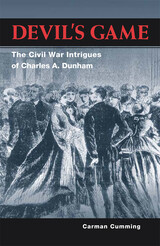
Devil's Game traces the amazing career of Charles A. Dunham, Civil War spy, forger, journalist, and master of dirty tricks. Writing for a variety of New York papers under alternate names, Dunham routinely faked stories, created new identities, and later boldly cast himself to play those roles. He achieved his greatest infamy when he was called to testify in Washington concerning Abraham Lincoln's assassination. Many parts of Dunham's career remain shadowy, but Cumming offers the first detailed tour of Dunham's convoluted, high-stakes, international deceits, including his effort to sell Lincoln on plans for a raid to capture Jefferson Davis.
Exhaustively researched and unprecedented in depth, this carefully crafted assessment of Dunham's motives, personality, and the complex effects of his schemes changes assumptions about covert operations during the Civil War.
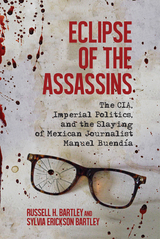
Authors Russell and Sylvia Bartley shed new light on the U.S.-instigated “dirty wars” that ravaged all of Latin America in the 1960s, ’70s, and ’80s and reveal—for the first time—how Mexican officials colluded with Washington in its proxy contra war against the Sandinista government of Nicaragua. They draw together the strands of a clandestine web linking:
- the assassination of prominent Mexican journalist Manuel Buendía
- the torture and murder of U.S. Drug Enforcement Administration agent Enrique Camarena
- the Iran-Contra scandal
- a major DEA sting against key CIA-linked Bolivian, Panamanian, and Mexican drug traffickers
- CIA-orchestrated suppression of investigative journalists
- criminal collusion of successive U.S. and Mexican administrations that has resulted in the unprecedented power of drug kingpins like “El Chapo” Guzmán.
Best books for public & secondary school libraries from university presses, American Library Association
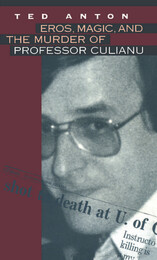
On May 21, 1991, University of Chicago professor Ioan Culianu was murdered execution-style on campus. The crime stunned the school, terrified students, and mystified the FBI. The case remains unsolved. In Eros, Magic, and the Murder of Professor Culianu, award-winning investigative reporter Ted Anton shows that the murder is what Culianu's friends suspected all along: the first political assassination of a professor on American soil.
Why did Caesar have to die--and why did his death solve nothing? The plot was confused, the execution bungled, and within hours different versions of the event were circulating. It was the end of republican Rome and the beginning of the Roman Empire--and yet everything about it remains somewhat mysterious.
Beginning with this legendary political assassination, immortalized in art and literature through the ages, Greg Woolf delivers a remarkable meditation on Caesar's murder as it echoes down the corridors of history, affecting notions and acts of political violence to our day.
Assassins Brutus and Cassius dined with their fiercest enemies within days of the murder--and were then hunted down and killed. After the murder neither conspirators nor Caesar's partisans knew how to react. From these beginnings this book follows the normalization of assassination at Rome, cataloguing the murder of Caesar after Caesar and recording the means, methods, and motives of the perpetrators. How was the Roman Empire so untouched by these events? And how had the Republic contained such violence between friends for so long? Woolf shows how Caesar's death--and the puzzled reactions to it--points back to older ethics of tyrannicide.
When is it justified to kill a head of state? Does extra-judicial execution provide answers worth the cost of the ensuing chaos? Ranging among texts by Cicero, Suetonius, and Seneca, plays by Shakespeare and Corneille, and the ideas of Michel Foucault and Francis Fukuyama, Woolf pursues these questions through the ages. His book tells us not only how, but why, Caesar's Vast Ghost still holds us spellbound.
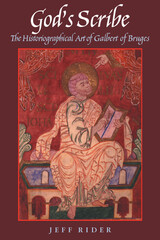
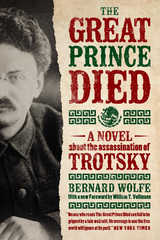
In The Great Prince Died, Bernard Wolfe offers his lyrical, fictionalized account of Trotsky’s assassination as witnessed through the eyes of an array of characters: the young American student helping to translate the exiled Trotsky’s work (and to guard him), the Mexican police chief, a Rumanian revolutionary, the assassin and his handlers, a poor Mexican “peón,” and Trotsky himself. Drawing on his own experiences working as the exiled Trotsky’s secretary and bodyguard and mixing in digressions on Mexican culture, Stalinist tactics, and Bolshevik history, Wolfe interweaves fantasy and fact, delusion and journalistic reporting to create one of the great political novels of the past century.
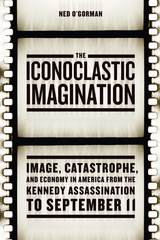
In The Iconoclastic Imagination, Ned O’Gorman approaches each of these moments as an image of icon-destruction that give us distinct ways to imagine social existence in American life. He argues that the Cold War gave rise to crises in political, aesthetic, and political-aesthetic representations. Locating all of these crises within a “neoliberal imaginary,” O’Gorman explains that since the Kennedy assassination, the most powerful way to see “America” has been in the destruction of representative American symbols or icons. This, in turn, has profound implications for a neoliberal economy, social philosophy, and public policy. Richly interwoven with philosophical, theological, and rhetorical traditions, the book offers a new foundation for a complex and innovative approach to studying Cold War America, political theory, and visual culture.
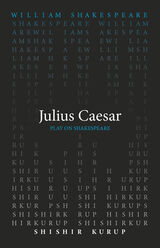
Julius Caesar, Shakespeare’s famous Roman tragedy, chronicles the chaos leading up to the fateful murder of Caesar and the ensuing political fallout upon his death. Shishir Kurup’s translation updates Shakespeare’s language to allow more of the playwright’s ideas to come through; it opens the wonders and blazing relevance of the play’s rhetorical brilliance to the twenty-first century.
This translation of Julius Caesar was written as part of the Oregon Shakespeare Festival’s Play On! project, which commissioned new translations of thirty-nine Shakespeare plays. These translations present the work of “The Bard” in language accessible to modern audiences while never losing the beauty of Shakespeare’s verse. Enlisting the talents of a diverse group of contemporary playwrights, screenwriters, and dramaturges from diverse backgrounds, this project reenvisions Shakespeare for the twenty-first century. These volumes make these works available for the first time in print—a new First Folio for a new era.
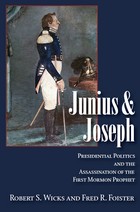
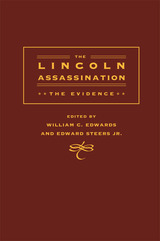
On April 22, 1865, Brevet Colonel H. L. Burnett was assigned to head the investigation into the murder of President Abraham Lincoln and the attempted murder of Secretary of State William H. Seward. Burnett orchestrated the collection of thousands of documents for the Military Commission’s trial of the conspirators. This deep archive of documentary evidence--consisting of letters, depositions, eyewitness accounts, investigative reports, and other documents--provides invaluable insight into the historical, cultural, and judicial context of the investigation. Only a fraction of the information presented in these documents ever made its way into the trial, and most of it has never been readily accessible. By presenting an annotated and indexed transcription of these documents, this volume offers significant new access to information on the events surrounding the assassination and a vast new store of social and political history of the Civil War era.
“With tears in my eyes I think it your duty to hang every rebel caught. I feel as bad as if was my own mother or father & will be one to volunteer to try & shoot every Southern man. May God have mercy on the man’s soul that done such a deed.
With much Respect for our Country,
I remain
Weeping”
--Anonymous letter, New York, April 15, 1865
“I know Booth. He was in the habit of coming to my place to shoot. . . . He shot well, and practiced to shoot with accuracy in every possible position. . . . He was a quick shot; always silent, reticent.”
--Deposition of Benjamin Barker, Pistol Gallery proprietor
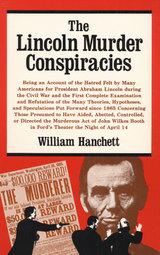
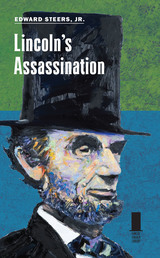
For 150 years, the assassination of Abraham Lincoln has fascinated the American people. Relatively few academic historians, however, have devoted study to it, viewing the murder as a side note tied to neither the Civil War nor Reconstruction. Over time, the traditional story of the assassination has become littered with myths, from the innocence of Mary Surratt and Samuel Mudd to John Wilkes Booth’s escape to Oklahoma or India, where he died by suicide several years later. In this succinct volume, Edward Steers, Jr. sets the record straight, expertly analyzing the historical evidence to explain Lincoln’s assassination.
The decision to kill President Lincoln, Steers shows, was an afterthought. John Wilkes Booth’s original plan involved capturing Lincoln, delivering him to the Confederate leadership in Richmond, and using him as a bargaining chip to exchange for southern soldiers being held in Union prison camps. Only after Robert E. Lee surrendered the Army of Northern Virginia and Richmond fell to Union forces did Booth change his plan from capture to murder. As Steers explains, public perception about Lincoln’s death has been shaped by limited but popular histories that assert, alternately, that Secretary of War Edwin Stanton engineered the assassination or that John Wilkes Booth was a mad actor fueled by delusional revenge. In his detailed chronicle of the planning and execution of Booth’s plot, Steers demonstrates that neither Stanton nor anyone else in Lincoln’s sphere of political confidants participated in Lincoln’s death, and Booth remained a fully rational person whose original plan to capture Lincoln was both reasonable and capable of success. He also implicates both Mary Surratt and Samuel Mudd, as well as other conspirators, clarifying their parts in the scheme.
At the heart of Lincoln’s assassination, Steers reveals, lies the institution of slavery. Lincoln’s move toward ending slavery and his unwillingness to compromise on emancipation spurred the white supremacist Booth and ultimately resulted in the president’s untimely death. With concise chapters and inviting prose, this brief volume will prove essential for anyone seeking a straightforward, authoritative analysis of one of the most dramatic events in American history.

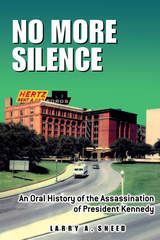

On November 16, 1989, on the campus of El Salvador's University of Central America, six Jesuits and two women were murdered by members of the Salvadoran army, an army funded and trained by the United States. One of the murdered Jesuits was Ignacio Ellacuría, the university's Rector and a key, although controversial, figure in Salvadoran public life. From an opening account of this terrible crime, Paying the Price asks, Why were they killed and what have their deaths meant? Answers come through Teresa Whitfield's detailed examination of Ellacuría's life and work. His story is told in juxtaposition with the crucial role played by the unraveling investigation of the Jesuits' murders within El Salvador's peace process.
A complex and nuanced book, Paying the Price offers a history of the Church in El Salvador in recent decades, an analysis of Ellacuría's philosophy and theology, an introduction to liberation theology, and an account of the critical importance of the University of Central America. In the end, Whitfield's comprehensive picture of conditions in El Salvador suggest that the Jesuits' murders were almost inevitable. A crime that proved a turning point in El Salvador's civil war, the murders expressed the deep tragedy of the Salvadoran people beyond suffering the heartless cruelty, violence, and deceitfulness of a corrupt military and their patrons in the U.S. government.
Whitfield draws on her extensive research of Jesuit archives and private papers, Ellacuría's diaries, documents declassified by the U.S. government, and 200 interviews conducted with sources ranging from Jesuits to Salvadoran military officers, U.S. officials and congressmen to human rights campaigners.
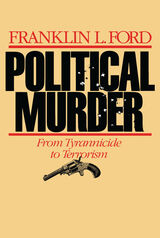
Franklin Ford's unprecedented inquiry into assassination traverses civilizations, cultures, religions, and modes of social behavior to locate the common threads of this often mysterious and always shocking phenomenon.
Are there similarities between the killings of the Gracchi brothers and the Kennedy brothers? Does the Baader-Meinhof terrorist gang have roots in the rightist murder teams of Weimar Germany? Was political context as important to the crucifixion of Jesus as to the death of Martin Luther King in 1968? Are political murders usually produced by elaborate conspiracies, or are they more often the work of lone assassins? What circumstances and impulses motivate an individual to risk his or her own life to kill another for reasons of state? This fast-paced narrative, interspersed with reflections, finds intriguing implications in a multitude of famous cases.
From the first known case of political murder, Ehud the Benjamite's stabbing of Eglon, to the recent gunning down of Indira Gandhi by two trusted Sikh bodyguards, the frequency of such acts has varied greatly over time. Mainland Greece suffered few political murders in the violent century of Pericles. The Romans, despite their bloody record under the Empire, avoided assassination for almost four hundred years under the Republic. There was a third such "remission" during the twelfth and thirteenth centuries, Europe's high Middle Ages, matched by yet another extending from 1650 to 1789. In the interval between, the sixteenth century was an especially violent time in countries such as Scotland, the Netherlands, and France. Assassination and terrorism increased again after 1815, but the nineteenth century did not come close to equaling the twentieth in the number of brutal episodes.
Ford's exploration of calculated, personalized assassination draws on history, literature, law, philosophy, sociology, and religion. Addressing the vast array of cases and combing thousands of years of history, he asks most of all whether assassination works. Does it, in even a minority of cases, produce results consistent with the aims of those who attempt it? Can it forestall evil acts or prevent irreparable damage inflicted by misguided leaders? Or is it "bad politics" in every sense of the term? The questions are large ones, and this book offers a sophisticated basis for seeking answers.
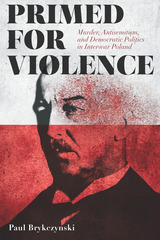
As Paul Brykczynski tells this gripping story, he explores the complex role of antisemitism, nationalism, and violence in Polish politics between the two World Wars. Though focusing on Poland, the book sheds light on the rise of the antisemitic right in Europe and beyond, and on the impact of violence on political culture and discourse.
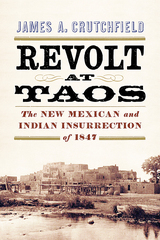
On the morning of January 19, 1847, Charles Bent, the newly appointed governor of the American-claimed territory of New Mexico, was savagely killed at his home in Don Fernando de Taos, a small, remote town located north of Santa Fe. Those responsible for Bent’s murder were New Mexican settlers and Indians from nearby Taos Pueblo who refused to recognize the United States occupation. With emotions rubbed raw, the natives continued their bloodbath until five more leading citizens were massacred in Taos. During the ensuing months, American civilians and soldiers, along with scores of New Mexicans and Taos Indians, were killed and wounded throughout the region. Less than a month following Bent’s murder, in a two-day battle, volunteer and regular elements of an American army under the command of Colonel Sterling Price emerged victorious after bombarding the insurrectionists at their refuge in the church at Taos Pueblo. Surviving participants in the earlier Taos murders were arrested, tried in American-dominated courts, and, within weeks, hanged for their actions. The murder of Bent and the others at Taos and the subsequent trials and executions brought with them misunderstanding, controversy, mistrust, and recrimination on both sides of the issue. The events also subjected President James K. Polk’s administration to censure over what some critics believed was an overextension of presidential authority in claiming New Mexico as a territory.
In Revolt at Taos: The New Mexican and Indian Insurrection of 1847, writer and historian James A. Crutchfield explores the fast-moving events surrounding the bloody revolt which left native inhabitants of New Mexico wondering how their neighbors and kinsmen could be legally tried, found guilty, and executed for acts they considered to have been honorable ones committed in defense of their country. These concerns have never been adequately addressed and their struggle has been all but scrubbed from the history of American expansion.

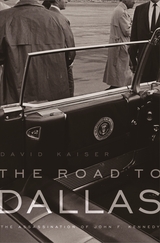
Neither a random event nor the act of a lone madman—the assassination of President John F. Kennedy was an appalling and grisly conspiracy. This is the unvarnished story.
With deft investigative skill, David Kaiser shows that the events of November 22, 1963, cannot be understood without fully grasping the two larger stories of which they were a part: the U.S. government’s campaign against organized crime, which began in the late 1950s and accelerated dramatically under Robert Kennedy; and the furtive quest of two administrations—along with a cadre of private interest groups—to eliminate Fidel Castro.
The seeds of conspiracy go back to the Eisenhower administration, which recruited top mobsters in a series of plots to assassinate the Cuban leader. The CIA created a secretive environment in which illicit networks were allowed to expand in dangerous directions. The agency’s links with the Mafia continued in the Kennedy administration, although the President and his closest advisors—engaged in their own efforts to overthrow Castro—thought this skullduggery had ended. Meanwhile, Cuban exiles, right-wing businessmen, and hard-line anti-Communists established ties with virtually anyone deemed capable of taking out the Cuban premier. Inevitably those ties included the mob.
The conspiracy to kill JFK took shape in response to Robert Kennedy’s relentless attacks on organized crime—legal vendettas that often went well beyond the normal practices of law enforcement. Pushed to the wall, mob leaders merely had to look to the networks already in place for a solution. They found it in Lee Harvey Oswald—the ideal character to enact their desperate revenge against the Kennedys.
Comprehensive, detailed, and informed by original sources, The Road to Dallas adds surprising new material to every aspect of the case. It brings to light the complete, frequently shocking, story of the JFK assassination and its aftermath.
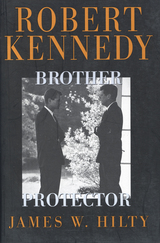
The centerpiece of the book is the remarkable political partnership that formed between Robert and John. As the manager of John's political campaigns Robert proved himself "hard as nails" (in his father's admiring words), relentless in securing his brother's victory and unforgiving in overseeing his brother's presidency. Hilty marshals a great deal of evidence to show that while they did not always see eye to eye -- Lyndon Johnson's selection as John's running mate being a notable disagreement -- Robert and John discussed virtually every issue, gauging the likely political effects of every position. Robert was so close to the President that insiders called him "number one and a-half"; their consultations were so intimate that they spoke in a kind of code, barely intelligible to those around them. In Hilty's evocative but unsentimental recounting of the political crises of the Kennedy Administration, Robert and John prove to have been more calculating and astute leaders than today's pundits allow. Theirs was a partnership that was unprecedented and, thanks to an act signed into law by Lyndon Johnson, is never to be equaled.
The Kennedy family's story seems to have been lived in the public eye and Americans apparently never tire of the photographs and familiar anecdotes. Most of the written accounts, however, either highlight the multiple tragedies and scandals, preserve the latter-day Camelot myth, or follow the elusive traces of some conspiracy.
In contrast, Hilty's concern is for historical perspective -- for accuracy, plausibility, and thoroughness. With facts and reasoned conclusions, he challenges the stories about the Kennedys in relation to Marilyn Monroe, J. Edgar Hoover, and Martin Luther King, Jr. that have passed into American folklore. He develops a portrait of Robert Kennedy as a complex public figure, a man of centrist political allegiances and firm moral convictions who easily adapted to the crusader's role in working for Joseph McCarthy or pursuing James Hoffa for racketeering. Hilty's great care in sifting through the evidence and weighing competing theories gives us a sense of Kennedy as a public servant whose dedication to social justice intensified after he was in office and further deepened after his brother's assassination.
Even as he took charge of family matters and supported Jacqueline during the long ordeal of the state funeral, Robert's own crushing pain was evident to the world. It was then that "Bobby" ceased being a disparaging term and became a mark of respect and affection.
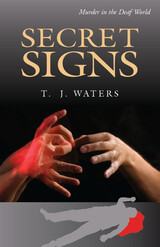
Former golf pro Amy Kellen, recently widowed and the mother of a three-year-old daughter, hoped that her new job as a video relay service interpreter for deaf clients would bring stability into her life. She also wished to stay close to the Deaf community that meant so much to her late husband, who was deaf. Little did she know, however, that her new profession would cause her to witness the vicious killing of a deaf client during a video call. In this way author T. J. Waters thrusts Amy into a murder mystery that catches her up in intersecting worlds of intrigue—Internet scams, burglaries, and presidential politics—all connected through the rich Deaf community in Washington, DC.
During the investigation, Amy meets local detective Mike Seer and Secret Service agent Heath Rasco. Despite Seer’s insistence, she refuses to violate her professional ethics and discuss the content of the fatal call. Agent Rasco, who is hard of hearing, admires her commitment to her deaf clients. Amy admits her own attraction to the agent, but her first concern is to learn more about how her client, a respected deaf political strategist, was killed. Her pursuit causes her to witness two more murders and discover a third. She also finds herself and her daughter the targets of assassins. Secret Signs brings these extraordinary elements together in an electrifying combination that promises to surprise and satisfy.
The gangland style slaying if State Senator Warren G. Hooper on January 11, 1945, three days before he was to testify before a grand jury investigating alleged corruption in the Michigan legislature, forced coverage of Allied war triumphs from the state's newspaper headlines. National media representatives flocked to Michigan to join local reporters in following the efforts of grand jury special prosecutor Kim Sigler and the State Police to apprehend the killers. Because no arrests ever were made, a 1951 journalistic prediction has proven true: "The Hooper case will continue to come back to remind the people and politicians of Michigan of the black days of 1945 when almost every official of the state had his price." For this reason, the Hooper murder has endured as one of the most intriguing unsolved mysteries in the annals of Michigan crime.
Utilizing interviews, trial transcripts, State police files, and a collection of grand jury testimony long thought to have been destroyed, Professors Bruce A. Rubenstein and Lawrence E. Ziewacz set forth the reason for Hooper's assassination. Written in a lively style, using dialogue taken from court records and correspondence, Three Bullets Sealed His Lips demonstrates that historical writing need not be dull.
In August 1870, during a fair in the isolated French village of Hautefaye, a gruesome murder was committed in broad daylight that aroused the indignation of the entire country. A young nobleman, falsely accused of shouting republican slogans, was savagely tortured for hours by a mob of peasants who later burned him alive. Rumors of cannibalism stirred public fascination, and the details of the case were dramatically recounted in the popular press. While the crime was rife with political significance, the official inquiry focused on its brutality. Justice was swift: the mob’s alleged ringleaders were guillotined at the scene of the crime the following winter.
The Village of Cannibals is a fascinating inquiry by historian Alain Corbin into the social and political ingredients of an alchemy that transformed ordinary people into executioners in nineteenth-century France. Corbin’s chronicle of the killing is significant for the new light it sheds on the final eruption of peasant rage in France to end in murder. No other author has investigated this harrowing event in such depth or brought to its study such a wealth of perspectives.
Corbin explores incidents of public violence during and after the French Revolution and illustrates how earlier episodes in France’s history provide insight into the mob’s methods and choice of victim. He describes in detail the peasants’ perception of the political landscape and the climate of fear that fueled their anxiety and ignited long-smoldering hatreds. Drawing on the minutes of court proceedings, accounts of contemporary journalists, and testimony of eyewitnesses, the author offers a precise chronology of the chain of events that unfolded on the fairground that summer afternoon. His detailed investigation into the murder at Hautefaye reveals the political motivations of the murderers and the gulf between their actions and the sensibilities of the majority of French citizens, who no longer tolerated violence as a viable form of political expression. The book will be welcomed by scholars, students, and general readers for its compelling insights into the nature of collective violence.
2004 Clinton Jackson Coley Award, sponsored by Alabama Historical Association
On June 18, 1954, former state senator Albert Patterson, the Democratic Party's nominee for state attorney general, was shot to death as he left his law office in Phenix City, Alabama, infamous for its prostitution, gambling, bootlegging, and political corruption. Patterson had made cleanup of Phenix City his primary campaign promise. With millions of dollars in illegal income and hundreds of political and professional careers at stake, the question surrounding Patterson's murder was not why the trigger was pulled, but who pulled it.
When Good Men Do Nothing is the definitive study of the Albert Patterson murder case. Alan Grady has mined the state's original murder case files; the papers of John Patterson, Albert's son; records from the Office of Alabama Attorney General (who directed the murder investigation); the case files of the Alabama Department of Toxicology and Criminal Investigation; National Guard reports; and more than 30 interviews with eyewitnesses and interested parties.
Grady takes a complex story of multiple dimensions—a large cast of judicial, criminal, and political players; a web of alliances and allegiances; and a knotted sequence of investigative revelations and dead ends—and transforms it into a readable, incisive analysis of the powers and loyalties that governed, and corrupted to the core, the body politic of the state. Readers will be enthralled and educated by this authoritative account of the most compelling crime drama in Alabama during the 20th century.

More than a description of this particular event, however, Who Killed John Clayton? traces patterns of political violence in this section of the South over a three-decade period. Using vivid courtroom-type detail, Barnes describes how violence was used to define and control the political system in the post-Reconstruction South and how this system in turn produced Jim Crow. Although white Unionists and freed blacks had joined under the banner of the Republican Party and gained the upper hand during Reconstruction, during these last decades of the nineteenth century conservative elites, first organized as the Ku Klux Klan and then as the revived Democratic Party, regained power—via such tactics as murdering political opponents, lynching blacks, and defrauding elections.
This important recounting of the struggle over political power will engage those interested in Southern and American history.
Lynn Ellen Patyk contends that the prototype for the terrorist was the Russian writer, whose seditious word was interpreted as an audacious deed—and a violent assault on autocratic authority. The interplay and interchangeability of word and deed, Patyk argues, laid the semiotic groundwork for the symbolic act of violence at the center of revolutionary terrorism. While demonstrating how literary culture fostered the ethos, pathos, and image of the revolutionary terrorist and terrorism, she spotlights Fyodor Dostoevsky and his "terrorism trilogy"—Crime and Punishment (1866), Demons (1870–73), and The Brothers Karamazov (1878–80)—as novels that uniquely illuminate terrorism's methods and trajectory. Deftly combining riveting historical narrative with penetrating literary analysis of major and minor works, Patyk's groundbreaking book reveals the power of the word to spawn deeds and the power of literature to usher new realities into the world.
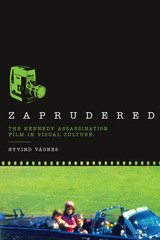
Winner, Peter C. Rollins Book Award, 2012
As the fiftieth anniversary of the Kennedy assassination approaches, the traumatic aspects of the tragedy continue to haunt our perceptions of the 1960s. One reason for this lies in the home movie of the incident filmed by Abraham Zapruder, a bystander who became one of the twentieth century's most important accidental documentarians.
The first book devoted exclusively to the topic, Zaprudered traces the journey of the film and its effect on the world's collective imagination. Providing insightful perspective as an observer of American culture, Norwegian media studies scholar Øyvind Vågnes begins by analyzing three narratives that are projections of Zapruder's images: performance group Ant Farm's video The Eternal Frame, Don DeLillo's novel Underworld, and an episode from Seinfeld. Subsequent topics he investigates include Dealey Plaza's Sixth Floor Museum, Zoran Naskovski's installation Death in Dallas, assassin video games, and other artifacts of the ways in which the footage has made a lasting impact on popular culture and the historical imagination. Vågnes also explores the role of other accidental documentarians, such as those who captured scenes of 9/11.
Zapruder's footage has never yielded a conclusive account of what happened in Dealey Plaza. Zaprudered thoroughly examines both this historical enigma and its indelible afterimages in our collective imagination.
READERS
Browse our collection.
PUBLISHERS
See BiblioVault's publisher services.
STUDENT SERVICES
Files for college accessibility offices.
RECENTLY PUBLISHED



UChicago Accessibility Resources
home | accessibility | search | about | contact us
BiblioVault ® 2001 - 2024
The University of Chicago Press