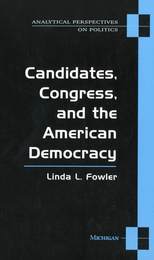
front cover of Candidates, Congress, and the American Democracy
Candidates, Congress, and the American Democracy
Linda L. Fowler
University of Michigan Press, 1993

In Candidates, Congress, and the American Democracy Linda L. Fowler provides a wide-ranging examination of candidacy as a source of both stability and change in U.S. politics. An expert on political candidates, she brings a novel perspective to the topic by emphasizing that candidates are necessary instruments for popular control of government.

Fowler maintains that the ambitions of individual candidates are essential to the functioning of the nation's constitutional system and are important factors in its political history. She traces the influence of candidates in fostering electoral competition, promoting the representation of such newly mobilized groups of citizens as women and ethnic minorities, and transforming political institutions and parties. Despite the importance of candidacy, the institution is poorly understood because both scholars and voters tend to limit their focus on candidates to the narrow context of election campaigns. The author argues that a broader view reveals how candidates are linked to a variety of trends and contradictions in contemporary U.S. politics.

[more]

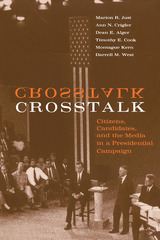
front cover of Crosstalk
Crosstalk
Citizens, Candidates, and the Media in a Presidential Campaign
Marion R. Just, Ann N. Crigler, Dean E. Alger, Timothy E. Cook, Montague Kern, a
University of Chicago Press, 1996
The most comprehensive portrait of a presidential campaign in more than a decade, Crosstalk focuses on the 1992 U.S. presidential race and looks at how citizens use information in the media to make their voting decisions and how politicians and the media interact to shape that information.

Examining political advertisements, news coverage, ad watches, and talk shows in Los Angeles, Boston, Winston-Salem, and Fargo/Moorhead, the authors chart the impact of different information environments on citizens and show how people developed images of candidates over the course of the campaign. Crosstalk presents persuasive evidence that campaigns do matter, that citizens are active participants in the campaign process, and their perceptions of a candidate's character is the central factor in the voting process.

This innovative study contributes significantly to our understanding of the 1992 presidential campaign and of campaigns in general, and shows how election campaigns can play an important role in the long-term vitality of democracy.
[more]


Send via email Share on Facebook Share on Twitter