
 A SCHOLARLY BOOK REPOSITORY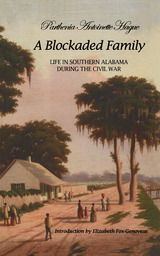
Parthenia Hague experienced the Civil War while employed as a schoolteacher on a plantation near Eufaula, Alabama. This book recounts how a frightened and war-weary household dealt with privations during the blockade imposed on the South by the federal navy. The memoir of Parthenia Hague is a detailed look at the ingenious industry and self-sufficiency employed by anxious citizens as the northern army closed in.
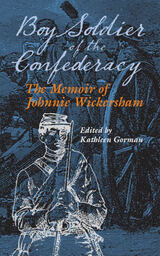
Johnnie Wickersham was fourteen when he ran away from his Missouri home to fight for the Confederacy. Fifty years after the war, he wrote his memoir at the request of family and friends and distributed it privately in 1915. Boy Soldier of the Confederacy: The Memoir of Johnnie Wickersham offers not only a rare look into the Civil War through the eyes of a child but also a coming-of-age story.
Edited by Kathleen Gorman, the volume presents a new introduction and annotations that explain how the war was glorified over time, the harsh realities suppressed in the nation’s collective memory. Gorman describes a man who nostalgically remembers the boy he once was. She maintains that the older Wickersham who put pen to paper decades later likely glorified and embellished the experience, accepting a polished interpretation of his own past.
Wickersham recounts that during his first skirmish he was "wild with the ecstasy of it all" and notes that he was "too young to appreciate the danger." The memoir traces his participation in an October 1861 Confederate charge against Springfield, Missouri; his fight at the battle of Pea Ridge in March 1862; his stay at a plantation he calls Fairyland; and the battle of Corinth.
The volume details Wickersham’s assignment as an orderly for General Sterling Price, his capture at Vicksburg in 1863, his parole, and later his service with General John Bell Hood for the 1864 fighting around Atlanta. Wickersham also describes the Confederate surrender in New Orleans, the reconciliation of the North and the South, and his own return and reunification with his family.
While Gorman’s incisive introduction and annotations allow readers to consider how memories can be affected by the passage of time, Wickersham’s boy-turned-soldier tale offers readers an engaging narrative, detailing the perceptions of a child on the cusp of adulthood during a turbulent period in our nation’s history.
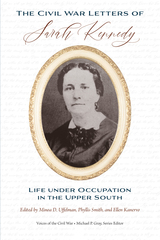
At the outbreak of the Civil War, Sarah Kennedy watched as her husband, D.N., left for Mississippi, leaving her alone to care for their six children and control their slaves in a large home in downtown Clarksville, Tennessee. D. N. Kennedy left to aid the Confederate Treasury Department. He had steadfastly supported secession and helped recruit local boys for the Confederate army. The Civil War Letters of Sarah Kennedy: Life under Occupation in the Upper South showcases the letters Sarah wrote to her husband during their time apart, offering readers an inside look at life on the home front during the Civil War through the eyes of a slave-owning, town-dwelling wife and mother.
Featuring fifty-two of Sarah Kennedy’s letters to her husband from August 16, 1862, to February 20, 1865, this important collection chronicles Sarah Kennedy’s personal struggles during the Civil War years, from periods of illness to lack of consistent contact with her husband and everything in between. Her love and devotion to her family is apparent in each letter, contrasting deeply with her resentment and harsh treatment toward her enslaved people as Emancipation swept through Clarksville. A useful volume to Civil War historians and women’s history scholars alike, The Civil War Letters of Sarah Kennedy pulls back the curtain on upper-middle-class family life and social relations in a mid-sized Middle Tennessee town during the Civil War and reveals the slow demise of slavery during the Union occupation.
Robert Hubard was an enlisted man and officer of the 3rd Virginia Cavalry in the Army of Northern Virginia (CSA) from 1861 through 1865. He wrote his memoir during an extended convalescence spent at his father’s Virginia plantation after being wounded at the battle of Five Forks on April 1, 1865. Hubard served under such Confederate luminaries as Jeb Stuart, Fitz Lee, Wade Hampton, and Thomas L. Rosser. He and his unit fought at the battles of Antietam, on the Chambersburg Raid, in the Shenandoah Valley, at Fredericksburg, Kelly’s Ford, Chancellorsville, Gettysburg, Bristoe Station, and down into Virginia from the Wilderness to nearly the end of the war at Five Forks.
Hubard was like many of his class and station a son of privilege and may have felt that his service was an act of noblesse oblige. Unlike many of his contemporaries, however, he was a keen observer and a writer of unusual grace, clarity, humor, and intelligence. The editor has fleshed out his memoir by judicious use of Hubard’s own wartime letters, which not only fill in gaps but permit the reader to see developments in the writer’s thinking after the passage of time. Because he was a participant in events of high drama and endured the quotidian life of a soldier, Hubard’s memoir should be of value to both scholars and avocational readers.

Co. Aytch, or a Side Show of the Big Show is perhaps the finest memoir of an ordinary Confederate soldier. According to Margaret Mitchell, “a better book there never was.” Sam Watkins served in Company H of the First Tennessee Infantry for the duration of the Civil War. Remarkably, he survived some of the most intense battles of the war, including Shiloh, Chickamauga, Kennesaw Mountain, Atlanta, and Franklin. He was one of only seven of the original members of Company H when it surrendered in April 1865. Watkins’s memoir was written in the winter of 1882–83. The humor and depth of writing at times rises to a level resembling Mark Twain; thus, twenty-first-century readers can still discover the everlasting treasures of Private Sam Watkins’s story just as it was. It is this reason that excerpts were featured frequently in Ken Burns’s documentary on the Civil War. However, since most of Sam’s original readers—or some of their family members—actually lived through the Civil War, much of the context for the narrative was common knowledge. But what was once received history has gradually disappeared, and presently only specialists can fully understand and appreciate Sam’s tale.
The chief aim for this new annotated edition of Co. Aytch—the first of its kind—is to amplify the experience for today’s readers by providing the missing context. Over 240 annotations clarify the situational backgrounds, personalities, and terminology that might not be familiar to most readers. The annotations also identify and explain errors mostly resulting from Sam’s occasionally faulty memory or limited perspective. Similarly, twentyfour battlefield and war theater maps enable readers to track Sam’s combat participation as well as his journeys while marching with the army. Finally fifteen photographs and prints illustrate some of the battles, people, towns, buildings, tools of war, and ruins that Sam witnessed. As someone once cleverly observed, “It’s not an adventure until something goes wrong.” If nothing else, Sam’s memoir is a foot soldier’s view of the resulting horrors, heroics, and healing humor when war planning routinely goes awry.
Joseph M. Bailey’s memoir, Confederate Guerrilla, provides a unique perspective on the fighting that took place behind Union lines in Federal-occupied northwest Arkansas during and after the Civil War. This story—now published for the first time—will appeal to modern readers interested in the grassroots history of the Trans-Mississippi war. Bailey participated in the Battle of Pea Ridge and the siege of Port Hudson, eventually escaping to northwest Arkansas where he fought as a guerrilla against Federal troops and civilian unionists. After Federal forces gained control of the area, Bailey rejoined the Confederate army and continued in regular service in northeast Texas until the end of the war.
Historians will find the descriptions of military campaigns and the observations on guerrilla war especially valuable. According to Bailey, Southern guerrillas were motivated less by a sense of loyalty to either the Confederate or Union side than by a determination to protect their families and neighbors from the “Mountain Federals.” This partisan war waged between the rebel guerrillas and Southern Unionists was essentially a “struggle for supremacy and revenge.”
Comprehensive annotations are provided by editor T. Lindsay Baker to illuminate the clarity and reliability of Bailey’s late-life memoir.

and family as Nannie, began a diary. The Diary of Nannie Haskins Williams: A Southern
Woman’s Story of Rebellion and Reconstruction, 1863–1890 provides valuable insights into
the conditions in occupied Middle Tennessee. A young, elite Confederate sympathizer,
Nannie was on the cusp of adulthood with the expectation of becoming a mistress in
a slaveholding society. The war ended this prospect, and her life was forever changed.
Though this is the first time the diaries have been published in full, they are well known
among Civil War scholars, and a voice-over from the wartime diary was used repeatedly
in Ken Burns’s famous PBS program The Civil War.
Sixteen-year-old Nannie had to come to terms with Union occupation very early in
the war. Amid school assignments, young friendship, social events, worries about her
marital prospects, and tension with her mother, Nannie’s entries also mixed information
about battles, neighbors wounded in combat, U.S. Colored troops, and lawlessness in the
surrounding countryside. Providing rare detail about daily life in an occupied city, Nannie’s
diary poignantly recounts how she and those around her continued to fight long after
the war was over—not in battles, but to maintain their lives in a war-torn community.
Though numerous women’s Civil War diaries exist, Nannie’s is unique in that she also
recounts her postwar life and the unexpected financial struggles she and her family experienced
in the post-Reconstruction South. Nannie’s diary may record only one woman’s
experience, but she represents a generation of young women born into a society based
on slavery but who faced mature adulthood in an entirely new world of decreasing farm
values, increasing industrialization, and young women entering the workforce. Civil War
scholars and students alike will learn much from this firsthand account of coming-of-age
during the Civil War.
Minoa D. Uffelman is an associate professor of history at Austin Peay State University.
Ellen Kanervo is professor emerita of communications at Austin Peay State University.
Phyllis Smith is retired from the U.S. Army and currently teaches high school science in
Montgomery County, Tennessee. Eleanor Williams is the Montgomery County, Tennessee,
historian.
The Civil War was a tragic conflict that destroyed many lives, but for those trying to save lives the tragedy was often compounded. Military doctors labored through the smoke of battle where impossible conditions and fear of infection often forced them to resort to amputation, and most operations were performed without painkillers. Thomas Fanning Wood recorded his wartime experiences as a Confederate Army surgeon, and his recollections of those events allow us to hear a distinct voice of the Civil War.
As a young soldier recovering from fever at a Richmond hospital, Wood developed an interest in medicine that was encouraged by a doctor who steered him toward medical training. After only eight months of study he was made an assistant surgeon in the Third North Carolina Regiment. His narrative—drawn from his memoirs, letters from the front, and articles written for his hometown newspaper—presents a poignant and sometimes horrifying picture of what the Civil War physician had to face both under battlefield conditions and in urban hospitals.
Wood himself spent much of his time at the front, and his vivid narrative describes both a doctor’s daily activities and the campaigns he witnessed. He was present at many of the war’s major engagements: he was near Stonewall Jackson when the general fell at Chancellorsville, manned a field dressing station at the foot of Culp’s Hill at Gettysburg, and was one of the few survivors of the Union attack on the "mule shoe" at Spotsylvania when his entire division was wiped out. Wood’s account also lends new insight into Jubal Early’s 1864 campaigns in the Shenandoah Valley and against Washington.
With its observations of medical care and training not found in standard histories of the war—including a description of the examination required to become an assistant surgeon—Doctor to the Front offers a unique human perspective on the Civil War. With their additional descriptions of key figures and events, Wood’s recollections combine historical significance and human interest to show us another side of that terrible conflict.
The Author: Donald B. Koonce is the great-grandson of Thomas Fanning Wood and has served on the Board of Directors of the South Carolina Historical Society and the Historic Greenville Foundation. He is president of the Koonce Group, Inc., an award-winning communications company whose productions include Daybreak at the Cowpens, a documentary for the National Park Service.
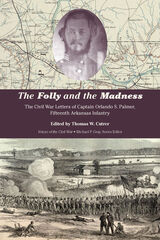
Though he initially felt Americans would see “the folly and the madness” of going to war, Orlando enlisted as a private in what would become Company H of the First (later Fifteenth) Arkansas Infantry, informing his sister that he had volunteered “not for position, not for a name, but from patriotic motivation.” However, he was ambitious enough to secure an appointment as Maj. Gen. William Joseph Hardee’s personal secretary; he then rose to become his regiment’s sergeant major, his company’s first lieutenant, and later captain and brigade adjutant. Soldier letters typically report only what can be observed at the company level, but Palmer’s high-ranking position offers a unique view of strategic rather than tactical operations.
Palmer’s letters are not all related to his military experience, though, and the narrative is enhanced by his nuanced reflections on courtship customs and personal relationships. For instance, Palmer frequently attempts to entertain Missie with witticisms and tales of his active romantic life: “We have so much to do,” he quips, “that we have no time to do anything save to visit the women. I am in love with several dozen of them and am having
a huge time generally.”
The Folly and the Madness adds depth to the genre of Civil War correspondence and provides a window into the lives of ordinary southerners at an extraordinary time.
The American Civil War through the eyes of a French Jesuit chaplain.
"This book has a tantalizing quality, and it certainly is fresh literature for those who have watched the story of the Civil War unfold. . . . One cannot help but marvel at the research undertaken by Fr. Buckley. These letters of Fr. Gache cover such subjects as the duties of a chaplain, the lack of stimulating conversation in camp, whiskey as medication for diarrhea, the chaplain’s uniform, the oversupply of Catholic chaplains, descriptions of battles—Chancellorsville, Fredericksburg—chaplains as prisoners of war, the possibility of General Lee being chosen as the second president of the Confederacy, making candles for the alter and bleaching wax, procuring sacramental wine, conflicts with Protestant preachers, and the surrender of Richmond. Such subjects allow the personality and character of Hippolyte to stand out. . . . [The book] is interesting reading for all who love and admire the Jesuits. Its wealth of information makes it a must for others whose concern is the Confederate soldier and his God."
—Journal of Southern History
“The well-written and candid letters of a reasonably articulate Southern officer, who paints a lucid picture of everyday life in the Confederate army in a little-known theater… Williams’s letters, personally written and shot through with his sharp sense of humor and folksy artwork, provide an excellent account of a long neglected theater of the American Civil War.” – Western Pennsylvania History
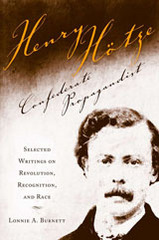
Among the arguments Hotze employed were adaptations of the scientific racism of the period, which attempted to establish a rational basis for assumptions of racial difference. After the collapse of the Confederacy in 1865, Hötze remained in Europe, where he became an active partisan and promoter of the ideas of Arthur de Gobineau (1816–1882) whose work Essai sur L’inégalité des Races Humaines was a founding document in racism’s struggle for intellectual respectability.
This work consists of a biographical essay on Hotze; his contributions to Mobile newspapers during his military service in 1861; his correspondence with Confederate officials during his service in London; articles he published in London to influence British and European opinion; and his correspondence with, and published work in support of, Gobineau.
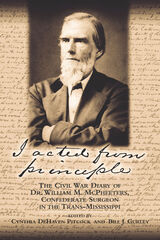
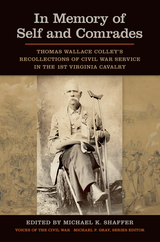
Thomas W. Colley served in one of the most active and famous units in the Civil War, the 1st Virginia Cavalry, which fought in battles in the Eastern Theater, from First Manassas/Bull Run to the defense of Petersburg. Colley was born November 11, 1837, outside Abingdon, Virginia, and grew up knowing the daily demands of life on a farm. In May 1861, along with the other members of the Washington Mounted Rifles, he left his home in Washington County and reported to camp in Richmond. During the war, Colley received wounds on three different occasions: first at Waterloo Bridge in 1862, again at Kelly’s Ford in 1863, and finally at Haw’s Shop in 1864. The engagement at Haw’s Shop resulted in the amputation of his left foot, thereby ending his wartime service.
The first modern scholarly edition of Colley’s writings, In Memory of Self and Comrades dramatizes Colley’s fate as a wounded soldier mustered out before the war’s conclusion. Colley’s postwar reflections on the war reveal his struggle to earn a living and maintain his integrity while remaining somewhat unreconciled to his condition. He found much of his solace through writing and sought to advance his education after the war. As one of an estimated 20,000 soldiers who underwent amputation during the Civil War, his memoirs reveal the challenges of living with what many might recognize today as post-traumatic stress disorder. Annotations from editor Michael K. Shaffer provide further context to Colley’s colorful and insightful writings on both his own condition and the condition of other veterans also dealing with amputations
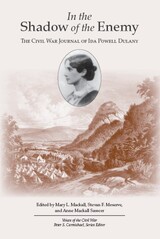
The mistress of a slave-holding estate, Ida Powell Dulany took over control of the extensive family lands once her husband left to fight for the Confederacy. She struggled to manage slaves, maintain contact with her neighbors, and keep up her morale after her region was abandoned by the Confederate government soon after the beginning of hostilities.
More than just an elegantly written account of her own day-to-day experiences in the Civil War, Ida’s journal opens a window into the Southern culture of the time.
Stevan F. Meserve has written extensively for several Civil War publications and is the author of The Civil War in Loudoun County, Virginia: A History of Hard Times.
Anne Mackall Sasscer grew up on Selby, a family farm near The Plains, Virginia, the home of Ida Powell Dulany’s youngest daughter.
Mary LeJeune Mackall spent her early years at Blenheim, a pre-Revolutionary farm near Charlottesville, which inspired her lifelong interest in Virginia history.
Among the finer soldier-diarists of the Civil War, John Edward Dooley first came to the attention of readers when an edition of his wartime journal, edited by Joseph Durkin, was published in 1945. That book, John Dooley, Confederate Soldier, became a widely used resource for historians, who frequently tapped Dooley’s vivid accounts of Second Bull Run, Antietam, and Gettysburg, where he was wounded during Pickett’s Charge and subsequently captured.
As it happens, the 1945 edition is actually a much-truncated version of Dooley’s original journal that fails to capture the full scope of his wartime experience—the oscillating rhythm of life on the campaign trail, in camp, in Union prisons, and on parole. Nor does it recognize how Dooley, the son of a successful Irish-born Richmond businessman, used his reminiscences as a testament to the Lost Cause. John Dooley’s Civil War gives us, for the first time, a comprehensive version of Dooley’s “war notes,” which editor Robert Emmett Curran has reassembled from seven different manuscripts and meticulously annotated. The notes were created as diaries that recorded Dooley’s service as an officer in the famed First Virginia Regiment along with his twenty months as a prisoner of war. After the war, they were expanded and recast years later as Dooley, then studying for the Catholic priesthood, reflected on the war and its aftermath. As Curran points out, Dooley’s reworking of his writings was shaped in large part by his ethnic heritage and the connections he drew between the aspirations of the Irish and those of the white South.
In addition to the war notes, the book includes a prewar essay that Dooley wrote in defense of secession and an extended poem he penned in 1870 on what he perceived as the evils of Reconstruction. The result is a remarkable picture not only of how one articulate southerner endured the hardships of war and imprisonment, but also of how he positioned his own experience within the tragic myth of valor, sacrifice, and crushed dreams of independence that former Confederates fashioned in the postwar era.
Josiah Gorgas was best known as the highly regarded Chief of Confederate Ordnance. Born in 1818, he attended West Point, served in the U.S. Army, and later, after marrying Amelia Gayle, daughter of a former Alabama governor, joined the Confederacy. After the Civil War he served as president of The University of Alabama until ill health forced him to resign. His journals, maintained between 1857 and 1878, reflect the family's economic successes and failures, detail the course of the South through the Civil War, and describe the ordeal of Reconstruction. Few journals cover such a sweep of history. An added dimension is the view of Victorian family life as Gorgas explored his feelings about aspects of parental responsibility and transmission of values to children--a rarely documented account from the male perspective. His son, called Willie in the journals, was William Crawford Gorgas (1854-1920), who was noted for his fight to control yellow fever and who became surgeon general of the United States.
In his foreword to the volume, Frank E. Vandiver states: "Wiggins has done much more than present a well-edited version of Gorgas's diaries and journals; she has interpreted them in full Gorgas family context and in perspective of the times they cover. . . . Wiggins informs with the sort of editorial notes expected of a careful scholar, but she enlightens with wide knowledge of American and southern history. . . . Josiah Gorgas [was] an unusually observant, passionate man, a 'galvanized Rebel' who deserves rank among the true geniuses of American logistics."
Offering a fascinating look at an ordinary soldier's struggle to survive not only the horrors of combat but also the unrelenting hardship of camp life, Lee and Jackson's Bloody Twelfth brings together for the first time the extant correspondence of Confederate lieutenant Irby Goodwin Scott, who served in the hard-fighting Twelfth Georgia Infantry.
The collection begins with Scott's first letter home from Richmond, Virginia, in June 1861, and ends with his last letter to his father in February 1865. Scott miraculously completed the journey from naïve recruit to hardened veteran while seeing action in many of the Eastern Theater's most important campaigns: the Shenandoah Valley, the Peninsula, Second Manassas, and Gettysburg. His writings brim with vivid descriptions of the men's activities in camp, on the march, and in battle. Particularly revelatory are the details the letters provide about the relationship between Scott and his two African American body servants, whom he wrote about with great affection. And in addition to maps, photographs, and a roster of Scott's unit, the book also features an insightful introduction by editor Johnnie Perry Pearson, who highlights the key themes found throughout the correspondence.
By illuminating in depth how one young Confederate stood up to the physical and emotional duress of war, the book stands as a poignant tribute to the ways in which all ordinary Civil War soldiers, whether fighting for the South or the North, sacrificed, suffered, and endured.
Johnnie Perry Pearson is a retired state service officer formerly with the North Carolina Division of Veteran Affairs. He served as an infantry platoon sergeant during the Vietnam War and lives in Hickory, North Carolina.
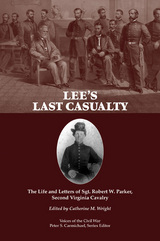
Parker fought in most of the major campaigns in Virginia, including the 1862 Valley Campaign, the 1862 Peninsula Campaign, the 1863 Maryland Campaign, and the 1864 Overland Campaign. In letters to his wife Rebecca back home in Bedford County, Virginia, Parker described his life as an enlisted soldier in the Second Regiment Virginia Cavalry. His letters reveal how local communities worked together to provide the necessary stuff of war to soldiers, from food and clothing to moral support. They also show the importance of correspondence and religion in sustaining Confederate morale and nationalism.
Catherine Wright provides a valuable introduction that illuminates not only these particular letters but also the many roles of correspondence during the Civil War. She points out how women-in this case, Parker's wife and his mother-made sure that men in the ranks understood that more than politics or manly honor was at stake in fighting the Yankees. Parker believed that the war was a supreme test in which God would look deep into the souls of Northerners and Southerners. His private beliefs informed his public views on how Southerners should act as citizens of a Confederate nation. People of all classes, Parker reasoned, had to give themselves to country and to God if Southern armies were to succeed on the battlefield. Parker's steadfastness was surely due in part to the words of his family, who instilled in him “just cause” to continue fighting.
Anyone with an interest in how a typical soldier experienced the Civil War will find these letters both absorbing and enlightening.
A genteel southern intellectual, saloniste, and wife to a prominent colonel in Jefferson Davis’s inner circle, Mary Chesnut today is remembered best for her penetrating Civil War diary. Composed between 1861 and 1865 and revised thoroughly from the late 1870s until Chesnut’s death in 1886, the diary was published first in 1905, again in 1949, and later, to great acclaim, in 1981. This complicated literary history and the questions that attend it—which edition represents the real Chesnut? To what genre does this text belong?—may explain why the document largely has, until now, been overlooked in literary studies.
Julia A. Stern’s critical analysis returns Chesnut to her rightful place among American writers. In Mary Chesnut’s Civil War Epic, Stern argues that the revised diary offers the most trenchant literary account of race and slavery until the work of Faulkner and that, along with his Yoknapatawpha novels, it constitutes one of the two great Civil War epics of the American canon. By restoring Chesnut’s 1880s revision to its complex, multidecade cultural context, Stern argues both for Chesnut’s reinsertion into the pantheon of nineteenth-century American letters and for her centrality to the literary history of women’s writing as it evolved from sentimental to tragic to realist forms.
Memoirs of the Civil War, though relatively little known because of its rarity in the original edition, contains much valuable information and engaging narrative passages. A Virginian whose Confederate career included service in an infantry regiment early in the war, Chamberlaine’s most important military service was as a staff officer attached to Brigadier General Reuben Lindsay Walker, who commanded the Third Corps artillery in the Army of Northern Virginia.
Includes excellent material on the duties of staff officers, operation of Confederate conscription, and the role of artillery in Lee’s campaigns. He is especially eloquent and revealing about a number of famous battles: the Seven Days; Antietam, where Chamberlaine distinguished himself and was wounded; and the Wilderness, where he had a memorable encounter with Lee.
Most surviving correspondence of the Civil War period was written by members of a literate, elite class; few collections exist in which the woman's letters to her soldier husband have been preserved. Here, in the exchange between William and Emily Moxley, a working-class farm couple from Coffee County, Alabama, we see vividly an often-neglected aspect of the Civil War experience: the hardships of civilian life on the home front.
Emily's moving letters to her husband, startling in their immediacy and detail, chronicle such difficulties as a desperate lack of food and clothing for her family, the frustration of depending on others in the community, and her growing terror at facing childbirth without her husband, at the mercy of a doctor with questionable skills. Major Moxley's letters to his wife reveal a decidedly unromantic side of the war, describing his frequent encounters with starvation, disease, and bloody slaughter.
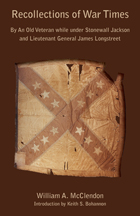
"Gus" McClendon joined the 15th Alabama Infantry Regiment, and served in many of the Eastern Theater engagements. More than fifty years later, he sent down his reminiscences, still an unreconstructed Southern patriot, although able to look back with some amusement on his younger self.
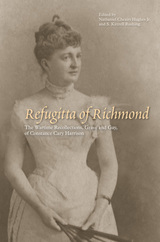
In the expansive canon of Civil War memoirs, relatively few accounts from women exist. Among the most engaging and informative of these rare female perspectives is Constance Cary Harrison’s Recollections Grave and Gay, a lively, first-person account of the collapse of the Confederacy by the wife of President Jefferson Davis’s private secretary. Although equal in literary merit to the well-known and widely available diaries of Mary Boykin Chesnut and Eliza Frances Andrews, Harrison’s memoir failed to remain in print after its original publication in 1916 and, as a result, has been lost to all but the most diligent researcher. In Refugitta of Richmond, Nathaniel Cheairs Hughes Jr. and S. Kittrell Rushing resurrect Harrison’s work, reintroducing an especially insightful perspective on the Southern high command, the home front, and the Confederate elite.
Born into an old, aristocratic Virginia family in 1843, Constance Cary fled with her family from their estate near Alexandria, Virginia, to Richmond in 1862. There, the nineteen-year-old met Burton Norvell Harrison, a young math professor from the University of Mississippi who had come to the Confederate capital to work for Davis. The pair soon became engaged and joined the inner circle of military, political, and social leaders at the Confederate White House. Under the pen name “Refugitta,” Constance also wrote newspaper columns about the war and became a respected member of Richmond’s literary community.
Fifty years later, Constance used her wartime diaries and letters to pen her recollections of her years in Richmond and of the confusing months immediately after the war. She offers lucid, insightful, and detailed observations of the Confederate home front even as she reflects on the racial and class biases characteristic of her time and station. With an informative introduction and thorough annotations by Hughes and Rushing, Refugitta of Richmond provides a highly readable, often amusing, occasionally troubling insider’s look at the Confederate nerve center and its ultimate demise.
Nathaniel Cheairs Hughes Jr. is the author or editor of twenty books relating to the American Civil War, including The Life and Wars of Gideon J. Pillow; Brigadier General Tyree H. Bell, C.S.A.: Forrest’s Fighting Lieutenant; and Yale’s Confederates.
S. Kittrell Rushing, Frank McDonald Professor of History at the University of Tennessee at Chattanooga, is the editor of Eliza Frances Andrews’s A Family Secret and Journal of a Georgia Woman, 1870–1872. Rushing also edited and annotated Judge Garnett Andrews’s Reminiscences of an Old Georgia Lawyer.
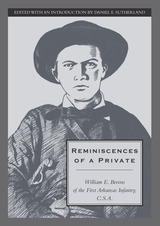
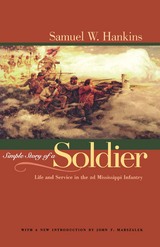
This fast-paced memoir was written in 1905 by 61-year-old Samuel W. Hankins while he was living in the Soldiers Home in Gulfport, Mississippi. It vividly details his years as a Confederate rifleman from the spring of 1861, when at a mere sixteen years of age he volunteered for the 2d Mississippi Infantry, through the end of the war in 1865, when he was just twenty years old and maimed for life.
The 2d Mississippi was part of the Army of Northern Virginia and as such saw action at Bull Run/Manassas, Seven Pines and the Peninsular Campaign, and Gettysburg. Besides being hospitalized with measles, suffering severely frostbitten feet, and being wounded by a minié ball at Railroad Cut, Hankins was captured by Federal forces and sent to a prisoner of war camp on David’s Island, New York. Later, he was transferred to a South Carolina hospital, returned home on furlough, joined a cavalry unit that fought at Atlanta. He was stationed in Selma, Alabama, when the war ended.
The strength of Hankins’s text lies in his straightforward narrative style virtually free of Lost Cause sentiment. Both Union and Confederate veterans could relate to his stories because so many of them had faced similar challenges during the war. Full of valuable information on a common soldier’s experience, the memoir still conjures the sights, sounds, and smells of warfare.
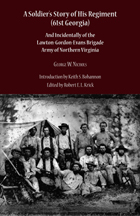
Nichol’s 61st Georgia fought in the renowned brigade commanded consecutively by generals Alexander R. Lawton, John B. Gordon, and Clement A. Evans.
Framed without any excess of sentimental hindsight, in addition to reporting on great battles and dramatic moments, Nichol’s told the story of two cousins killing each other in a quarrel about cooking duties and described maggot-infested corpses around Spotsylvania’s Bloody Angle.
Includes an annotated roster of the 61st supplies which details about Nichol’s fellow veterans, some of which is not available anywhere else.
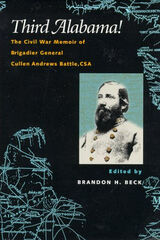
From Seven Pines to Sharpsburg and Chancellorsville to Spotsylvania, the Third Alabama Regiment played a key role in the Civil War. One of the first infantry units from the Deep South to make the journey to Virginia in 1861, the Third Alabama was the first to cross the Potomac into Maryland and to enter the streets of Gettysburg in 1863.
As the regiment’s leader and one of General Robert E. Lee’s brigade commanders, General Cullen Andrews Battle witnessed the extent of the many triumphs and sufferings of the Army of Northern Virginia. Trained as a journalist and lawyer, he records these events honestly and with compassion. Battle captures the courage of citizen soldiers fighting without prior military training, always paying tribute to the heroism of those under his command, while providing vivid accounts of some of the war’s bloodiest fights. He assesses Confederate mistakes, particularly at Seven Pines—and sheds light on the third Battle of Winchester, the only decisive defeat in which the regiment was involved.
Brandon Beck’s introductory notes provide a thorough review of Battle’s life and valuable biographical information on soldiers under his command as well as on other officers in the Army of Northern Virginia. A worthwhile addition to all Civil War libraries, public or private, Third Alabama! offers an informative, dramatic reading of the wartime activities of one of the Confederacy’s bravest fighting units.
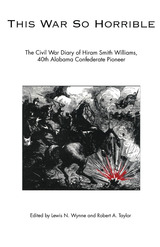
The Civil War diary of Hiram Smith Williams is extremely unusual. A carriage maker and native of New Jersey, Williams only arrived in the Deep South in 1959 and yet enlisted in the Confederate Army. As a middle-class craftsman, he represented neither wealthy Southern planters nor yeoman farmers. Part of the 40th Alabama Volunteer Regiment, he was first in Mobile, where he attempted to transfer to the CSA Navy. Failing that, he went with his regiment to Atlanta to engage in the great battle there.
A careful writer, Williams paid the same attention to his composition as he did to his carriages. Unlike many Civil War veterans, he never revised his diary to embellish his record or heroism. Prized by historians both for providing an unique point of view as well as an exceptionally articulate narrative, Williams' diary is an important addition to any Civil War library.
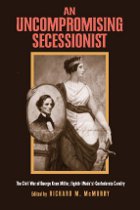
Offers significant insight into the life, heart, mind, and attitudes of an intelligent, educated, young mid-19th-century white Southerner
This book contains the letters of George Knox Miller who served as a line officer in the Confederate cavalry and participated in almost all of the major campaigns of the Army of Tennessee. He was, clearly, a very well-educated young man. Born in 1836 in Talladega, Alabama, he developed a great love for reading and the theater and set his sights upon getting an education that would lead to a career in law or medicine; meanwhile he worked as an apprentice in a painting firm to earn tuition. Miller then enrolled in the University of Virginia, where he excelled in his studies.
Eloquent, bordering on the lyrical, the letters provide riveting first-hand accounts of cavalry raids, the monotony of camp life, and the horror of battlefield carnage. Miller gives detailed descriptions of military uniforms, cavalry tactics, and prison conditions. He conveys a deep commitment to the Confederacy, but he was also critical of Confederate policies that he felt hindered the army's efforts. Dispersed among these war-related topics is the story of Miller's budding relationship with Celestine “Cellie” McCann, the love of his life, whom he would eventually marry.
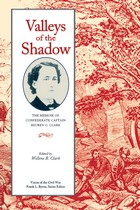
Captain Clark was a twenty-seven-year-old Knoxville businessman when the first shots of the Civil War were fired in 1861. Like many southern gentlemen, Clark was opposed to secession but could not desert his family and friends. Enlisting as a first lieutenant in the Confederacy’s Third Tennessee Infantry Regiment, he spent his first night as a soldier on the bloody battlefield of Manasses. Clark’s recollections of Manasses and the battles and skirmishes that followed pinpoint his regiment’s activities in previously undocumented areas while providing valuable analyses of battles from a participant’s point of view and discussing the irony many soldiers felt when battle pitted them against men they had known before the war in business, politics, and society.
Captured after the battle of Morristown in the fall of 1864, Clark was jailed in Knoxville, then under Federal control. His account of the eight months he spent as a prisoner—his harsh treatment, a near-fatal illness, the false accusations of traitorous activities—offer a detailed description of the physical and legal battles of a Confederate prisoner of war fighting to obtain his freedom. Clark’s post war experiences relate his struggles as a former Rebel living in a conquered state, reflecting the deeply divided loyalties of East Tennessee that continued for years after the war’s end.
This first book in the Voices of the Civil War series shares the story of a man who remained sensible of his kinship with those he was forced to call his enemies. Written a quarter-century after the war began, Clark's memories vividly bring to life the tragedy that was the Civil War.
Willene B. Clark, a granddaughter of Captain Clark, is a professor of art history at Marlboro College, Marlboro, Vermont.
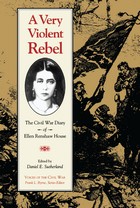
A member of a middle-class family that had moved to Knoxville in 1860 from Georgia, Ellen House became, like her parents and siblings, a fervent Confederate—or, as she called herself, “a very violent Rebel.” When the city fell to Federal forces in September 1863, Ellen’s resentments ran deep, and she filled her diary with scornful words for the occupying Yankees. She eagerly followed the news of military actions that might mean the recapture of the city and became an eyewitness to the war’s dangers when Confederate General James Longstreet launched an ill-fated attack on Knoxville late in 1863. Despite her own privations, Ellen gave much of her time to providing relief to Confederate prisoners of war in the city. Since she made no secret of where her sympathies lay, Federal military authorities eventually suspected her of spying and expelled her to Georgia, where she continued to record her impressions and observations.
Only recently brought to light by the diarist’s descendants, this compelling personal record has been meticulously edited and annotated by Daniel Sutherland. The resulting volume adds a spirited and articulate voice to the chorus of available firsthand testimony on America’s bloodiest conflict.
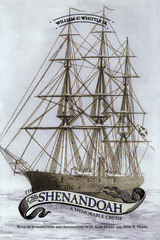
The only Confederate ship to circumnavigate the globe
The Confederate cruiser Shenandoah was the last of a group of commerce raiders deployed to prey on Union merchant ships. Ordered to the Pacific Ocean to “greatly damage and disperse” the Yankee whaling fleet in those waters, the Shenandoah’s successful pursuit of her quarry compared favorably with the exploits of the more celebrated Alabama and Florida but has never been as well known because it coincided with the war’s end and the Confederacy’s downfall. It was, however, one of the best documented naval expeditions—from England to the Indian Ocean, Australia and the South Pacific, the Bering Sea, San Francisco, and finally to port in Liverpool—during the Civil War.
The ship’s log and Captain James Waddell’s notes are well preserved, and a number of the Shenandoah’s officers kept detailed journals of the entire voyage. One of the most significant journals, by Lieutenant William Whittle, is presented here, with annotations from other journals, the official records and logs, and newspaper accounts of the Shenandoah’s activities, together bringing to life the history of this remarkable voyage.
In the Spring of 1861, a 22-year-old Alabamian did what many of his friends and colleagues were doing—he joined the Confederate Army as a volunteer. The first of his family to enlist, William Cowan McClellan, who served as a private in the 9th Alabama Infantry regiment, wrote hundreds of letters throughout the war, often penning for friends who could not write home for themselves. In the letters collected in John C. Carter’s volume, this young soldier comments on his feelings toward his commanding officers, his attitude toward military discipline and camp life, his disdain for the western Confederate armies, and his hopes and fears for the future of the Confederacy.
McClellan’s letters also contain vivid descriptions of camp life, battles, marches, picket duty, and sickness and disease in the army. The correspondence between McClellan and his family dealt with separation due to war as well as with other wartime difficulties such as food shortages, invasion, and occupation. The letters also show the rise and fall of morale on both the home front and on the battlefield, and how they were closely intertwined.
Remarkable for their humor, literacy, and matter-of-fact banter, the letters reveal the attitude a common soldier in the Army of Northern Virginia had toward the day-to-day activity and progression of the war. John C. Carter includes helpful appendixes that list the letters chronologically and offer the regimental roster, casualty/enlistment totals, assignments, and McClellan’s personal military record.
Six of the seven Francis brothers served in the Confederate army, as did their uncle, four servants, and other kinsmen, and all twelve members of the immediate family of Dr. James Carrington Francis and Amy Ingram Francis—as well as several members of their extended family—are represented in this volume. While the letters refer to the war and the brothers’ military service, they also shed light on this family’s struggle to survive the profound cultural, economic, and political upheaval that ensued.

Originally published in 1876 as The Woman in Battle, this Civil War narrative offers Velazquez’s seemingly impossible autobiographical account, as well as a new critical introduction and glossary by Jesse Alemán. Scholars are divided between those who read the book as a generally honest autobiography and those who read it as mostly fiction. According to Alemán’s critical introduction, the book also reads as pulp fiction, spy memoir, seduction narrative, travel literature, and historical account, while it mirrors the literary conventions of other first-person female accounts of cross-dressing published in the United States during wartime, dating back to the Revolutionary War. Whatever the facts are, this is an authentic Civil War narrative, Alemán concludes, that recounts how war disrupts normal gender roles, redefines national borders, and challenges the definition of identity.
McDonald’s story of the Civil War records a personal and distinctly female battle of her own—a southern woman’s lonely struggle in the midst of chaos to provide safety and shelter for herself and her children. For McDonald, history is what happens “inside the house.” She relates the trauma that occurs when the safety of the home is disrupted and destroyed by the forces of war—when women and children are put out of their houses and have nowhere to go.
Whether she is describing a Union soldier’s theft of her Christmas cakes, the discovery of a human foot in her garden, or the death of her baby daughter, McDonald’s story of the Civil War at home is compelling and disturbing. Her tremendous determination and unyielding spirit in the face of the final collapse of her world is testimony to a woman’s will to preserve her family and her own sense of purpose as a “rebel” against all that she regarded as tyrannical and brutal in war itself.
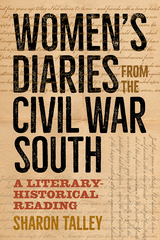
“Traditionally, narratives of war have been male,” Sharon Talley writes. In the pages that follow, she goes on to disrupt this tradition, offering close readings and comparative studies of fourteen women’s diaries from the Civil War era that illuminate women’s experiences in the Confederacy during the war.
While other works highlighting individual diaries exist—and Talley notes that there has been a virtual explosion of published primary sources by women in recent years—this is the first effort of comprehensive synthesis of women’s Civil War diaries to attempt to characterize them as a distinct genre. Deeply informed by autobiographical theory, as well as literary and social history, Talley’s presentation of multiple diaries from women of differing backgrounds illuminates complexities and disparities across female wartime experiences rather than perpetuating overgeneralizations gleaned from a single diary or
preconceived ideas about what these diaries contain.
To facilitate this comparative approach, Talley divides her study into six sections that are organized by location, vocation, and purpose: diaries of elite planter women; diaries of women on the Texas frontier; diaries of women on the Confederate border; diaries of espionage by women in the South; diaries of women nurses near the battlefront; and diaries of women missionaries in the Port Royal Experiment. When read together, these writings illustrate that the female experience in the Civil War South was not one but many.
Women’s Diaries from the Civil War South: A Literary-Historical Reading is an essential text for scholars in women’s studies, autobiography studies, and Civil War studies alike, presenting an in-depth and multifaceted look at how the Civil War reshaped women’s lives in the South—and how their diverse responses shaped the course of the war in return.
READERS
Browse our collection.
PUBLISHERS
See BiblioVault's publisher services.
STUDENT SERVICES
Files for college accessibility offices.
RECENTLY PUBLISHED


UChicago Accessibility Resources
home | accessibility | search | about | contact us
BiblioVault ® 2001 - 2024
The University of Chicago Press