
 A SCHOLARLY BOOK REPOSITORY
But which of these teams was the greatest?
All the Way to #1 is the first book to thoroughly document the nation’s top high school football teams from the 20th century. Identifying seventeen legendary programs, football historian Timothy Hudak tells the exciting and entertaining stories of how these teams came to prominence on the national stage. Fans will be particularly interested in Hudak’s conclusion about which of these teams was the best.
Filled with 330 black and white photos, statistics, and the most comprehensive listing of the 20th century’s high school football champions found anywhere, All the Way to #1 is a one-of-a-kind book that will be perfect for fans across the country.
Displaced before they were born, children living in long-term refugee camps along the East African Rift grow and learn surrounded by ready-made structures. Architecture as a Way of Seeing and Learning explores what these built environments teach us about both childhood development and refugee assistance. With an eye toward architecture, Nerea Amorós Elorduy models how a more empathetic approach to refugee relief might both decolonize humanitarian aid and nurture the learning of young children.
On a December day in 1968, DDT went on trial in Madison, Wisconsin. In Banning DDT: How Citizen Activists in Wisconsin Led the Way, Bill Berry details how the citizens, scientists, reporters, and traditional conservationists drew attention to the harmful effects of “the miracle pesticide” DDT, which was being used to control Dutch elm disease.
Berry tells of the hunters and fishers, bird-watchers, and garden-club ladies like Lorrie Otto, who dropped off twenty-eight dead robins at the Bayside village offices. He tells of university professors and scientists like Joseph Hickey, a professor and researcher in the Department of Wildlife Management in at the University of Wisconsin–Madison, who, years after the fact, wept about the suppression of some of his early DDT research. And he tells of activists like Senator Gaylord Nelson and members of the state’s Citizens Natural Resources who rallied the cause.
The Madison trial was one of the first for the Environmental Defense Fund. The National Audubon Society helped secure the more than $52,000 in donations that offset the environmentalists’ costs associated with the hearing. Today, virtually every reference to the history of DDT mentions the impact of Wisconsin’s battles.
The six-month-long DDT hearing was one of the first chapters in citizen activism in the modern environmental era. Banning DDT is a compelling story of how citizen activism, science, and law merged in Wisconsin’s DDT battles to forge a new way to accomplish public policy. These citizen activists were motivated by the belief that we all deserve a voice on the health of the land and water that sustain us.
"A must-read, with key lessons for the future."—Thomas Piketty
A groundbreaking examination of austerity’s dark intellectual origins.
For more than a century, governments facing financial crisis have resorted to the economic policies of austerity—cuts to wages, fiscal spending, and public benefits—as a path to solvency. While these policies have been successful in appeasing creditors, they’ve had devastating effects on social and economic welfare in countries all over the world. Today, as austerity remains a favored policy among troubled states, an important question remains: What if solvency was never really the goal?
In The Capital Order, political economist Clara E. Mattei explores the intellectual origins of austerity to uncover its originating motives: the protection of capital—and indeed capitalism—in times of social upheaval from below.
Mattei traces modern austerity to its origins in interwar Britain and Italy, revealing how the threat of working-class power in the years after World War I animated a set of top-down economic policies that elevated owners, smothered workers, and imposed a rigid economic hierarchy across their societies. Where these policies “succeeded,” relatively speaking, was in their enrichment of certain parties, including employers and foreign trade interests, who accumulated power and capital at the expense of labor. Here, Mattei argues, is where the true value of austerity can be observed: its insulation of entrenched privilege and its elimination of all alternatives to capitalism.
Drawing on newly uncovered archival material from Britain and Italy, much of it translated for the first time, The Capital Order offers a damning and essential new account of the rise of austerity—and of modern economics—at the levers of contemporary political power.

Inspired and informed by collaboration with contemporary scientists and Goethe’s studies of morphology, as well as the work of artist Paul Klee, this book presents drawing as a means of developing and disseminating knowledge, and of understanding and engaging with the diversity of natural and theoretical forms, such as animal, vegetable, mineral, and four dimensional shapes. Anderson shows that drawing can offer a means of scientific discovery and can be integral to the creation of new knowledge in science as well as in the arts.
By broadening the conversation surrounding Swedenborg’s source and reception histories, Stengel hopes to counter the reductive lenses through which certain of Swedenborg’s experiences have been filtered. In the author’s own words, “this will serve to highlight the perspectives contained within the historical discourse, tracing their seminal influence on later religious and philosophical discussions that, in turn, gave rise, from the eighteenth century onward, to the psychohistorical interpretations of associated supernatural phenomena such as Swedenborg’s visionary propensity.”
Enlightenment All the Way to Heaven is the twenty-fourth installment in the Swedenborg Studies scholarly series.

Moreover, the book demonstrates why popular critical interpretations of Heidegger's relation to the will are untenable, how his so-called "turn" is not a simple "turnaround" from voluntarism to passivism. Davis explains why the later Heidegger's key notions of "non-willing" and "Gelassenheit" do not imply a mere abandonment of human action; rather, they are signposts in a search for an other way of being, a "higher activity" beyond the horizon of the will. While elucidating this search, his work also provides a critical look at the ambiguities, tensions, and inconsistencies of Heidegger's project, and does so in a way that allows us to follow the inner logic of the philosopher's struggles. As meticulous as it is bold, this comprehensive reinterpretation will change the way we think about Heidegger's politics and about the thrust of his philosophy as a whole.
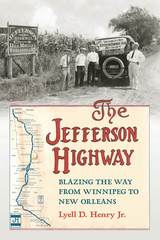
The plight of the rapidly rising numbers of early motorists soon spawned a “good roads” movement that included many efforts to build and pave long-distance, colorfully named auto trails across the length and breadth of the nation. Full of a can-do optimism, these early partisans of motoring sought to link together existing roads and then make them fit for automobile driving—blazing, marking, grading, draining, bridging, and paving them. The most famous of these named highways was the Lincoln Highway between New York City and San Francisco. By early 1916, a proposed counterpart coursing north and south from Winnipeg to New Orleans had also been laid out.
Called the Jefferson Highway, it eventually followed several routes through Minnesota, Iowa, Missouri, Kansas, Oklahoma, Texas, Arkansas, and Louisiana. The Jefferson Highway, the first book on this pioneering road, covers its origin, history, and significance, as well as its eventual fading from most memories following the replacement of names by numbers on long-distance highways after 1926. Saluting one of the most important of the early named highways on the occasion of its 100th anniversary, historian Lyell D. Henry Jr. contributes to the growing literature on the earliest days of road-building and long-distance motoring in the United States. For readers who might also want to drive the original route of the Jefferson Highway, three chapters trace that route through Iowa, pointing out many vintage features of the roadside along the way. The perfect book for a summer road trip!
Using material from a larger qualitative research study that illustrates the Hip Hop DJ as a twenty-first-century new media reader, writer, and literary critic, Craig blends interviews from prominent and influential DJs in the Hip Hop community with narrative and interdisciplinary scholarship from writing studies, Hip Hop studies, African American studies, urban education, and ethnomusicology. The voices of DJs sit front and center, presenting a revolutionary conversation about writing and communication in the twenty-first century.
Weaving Craig’s life experiences with important discussions of racial literacies, “K for the Way” is a layered and utterly singular exploration of culture, identity, and literacy in America.
Kerouac was primarily a religious writer bent on testing and celebrating the profane depths and transcendent heights of experience and reporting both truly. Baptized and buried a Catholic, he was also heavily influenced by Buddhism, especially from 1954 until 1957 when he integrated traditional Eastern belief into several novels. Catholicism remained an essential force in his writing, but his study of Buddhism was serious and not solely in the service of his literary art. As he wrote to Malcolm Cowley in 1954, "Since I saw you I took up the study of Buddhism and for me it’s the word and the way I was looking for."
Giamo also seeks IT—"a vital force in the experience of living that takes one by surprise, suspending for the moment belief in the ‘real’ concrete grey everyday of facts of self and selfhood . . . its various meanings, paths, and oscillations: from romantic lyricism to ‘the ragged and ecstatic joy of pure being and from the void-pit of the Great World Snake to the joyous pain of amorous love, and, finally, from Catholic/Buddhist serenity to the onset of penitential martyrhood."
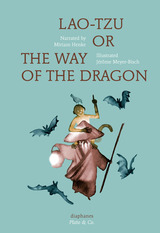
In Lao-Tzu, or the Way of The Dragon, we follow the ancient Chinese philosopher who founded Taoism, from the comet that announced his birth up to his inspired composition, more than fifty years later, of the Tao Te Ching, the Book of the Way. In body and mind an old sage from birth, Lao-Tzu devotes his life to deciphering the endless book of the world. But he soon becomes frustrated with the silliness of human order, impatient kings, and greedy people, and rides off on the back of a water buffalo in search of the Way. He encounters clouds that solidify under his feet, a cave guarded by a golden monkey, and the venerable Confucius himself, and ultimately finds the wisdom of the dragon already residing deep in his own heart.
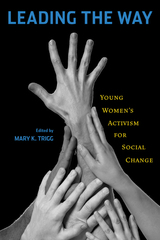
Bringing together graduates of a women's leadership certificate program at Rutgers University's Institute for Women's Leadership, these essays provide a contrasting picture to assumptions about the current death of feminism, the rise of selfishness and individualism, and the disaffected Millennium Generation. Reflecting on a critical juncture in their lives, the years during college and the beginning of careers or graduate studies, the contributors' voices demonstrate the ways that diverse, young, educated women in the United States are embodying and formulating new models of leadership, at the same time as they are finding their own professional paths, ways of being, and places in the world. They reflect on controversial issues such as gay marriage, gender, racial profiling, war, immigration, poverty, urban education, and health care reform in a post-9/11 era.
Leading the Way introduces readers to young women who are being prepared and empowered to assume leadership roles with men in all public arenas, and to accept equal responsibility for making positive social change in the twenty-first century.
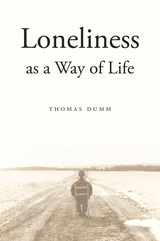
“What does it mean to be lonely?” Thomas Dumm asks. His inquiry, documented in this book, takes us beyond social circumstances and into the deeper forces that shape our very existence as modern individuals. The modern individual, Dumm suggests, is fundamentally a lonely self. Through reflections on philosophy, political theory, literature, and tragic drama, he proceeds to illuminate a hidden dimension of the human condition. His book shows how loneliness shapes the contemporary division between public and private, our inability to live with each other honestly and in comity, the estranged forms that our intimate relationships assume, and the weakness of our common bonds.
A reading of the relationship between Cordelia and her father in Shakespeare’s King Lear points to the most basic dynamic of modern loneliness—how it is a response to the problem of the “missing mother.” Dumm goes on to explore the most important dimensions of lonely experience—Being, Having, Loving, and Grieving. As the book unfolds, he juxtaposes new interpretations of iconic cultural texts—Moby-Dick, Death of a Salesman, the film Paris, Texas, Emerson’s “Experience,” to name a few—with his own experiences of loneliness, as a son, as a father, and as a grieving husband and widower.
Written with deceptive simplicity, Loneliness as a Way of Life is something rare—an intellectual study that is passionately personal. It challenges us, not to overcome our loneliness, but to learn how to re-inhabit it in a better way. To fail to do so, this book reveals, will only intensify the power that it holds over us.
This book is here to help teacher candidates not only survive the challenge of the edTPA®, but also thrive. It maps out precisely what steps aspiring secondary education teachers should take to ensure successful completion of the edTPA®. Demystifying the language used in the assessment, it uniquely connects edTPA® requirements with what teacher candidates learn within their teacher preparation programs, showing them how the assessment relates to what they are already doing in their classrooms. The strategies in this book draw on both academic research and practical experience to guide student teachers as they plan for their edTPA® portfolios and for their teaching careers beyond.
Myths, Muses and Mortals gives new insight into a multitude of life experiences in ancient Greece. The book introduces the lives of the ancient Greeks through extracts taken from a range of sources, including poems, plays, novels, histories, lawsuits, inscriptions, and private note tablets. The voices speak for themselves in fresh translation, but in addition, William Furley gives the narratives historical context and illuminates the literary genre in which they appear. The texts are grouped around important areas of life—love relations, travel and trade, social status, divine signs, daily events, warfare, philosophies, dress code, and private and public celebration—giving voice to the variety of lives experienced by the citizens of ancient Greece and an insight into the Greek mind.

In The Credit Crunch, Graham Turner predicted that banks would be nationalised and interest rates would be reduced too slowly to halt the crisis. His predictions were correct. His new book, No Way to Run an Economy, is the essential guide to the turbulent times ahead.
Turner recommended radical measures, such as quantitative easing, in early 2008 but argues that action has been taken too late and been too timid to make a real difference. He dissects the policy mistakes of the last 12 months including Obama's doomed market-led response to the crisis and the obsession of central banks with the red herring of inflation.
There is no doubt the economy is still in serious trouble, but Turner shows that learning from the mistakes made so far can prevent a situation worse than that of the 1930s crisis.
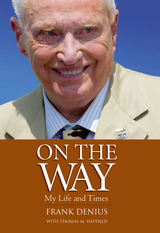
Frank Denius was not yet twenty-one when he fought his way across Europe and was awarded four Silver Stars, a Presidential Unit Citation, and two Purple Hearts. On the Way describes Denius’s formative experiences during World War II in gripping detail and will cause any reader to wonder how he or she might have held up under similar pressure. The powerful opening chapters are followed by a detailed account of Denius’s life and career after the war, assembled into a first-person memoir from conversations between Denius and Thomas Hatfield, and published by the Briscoe Center for American History at the University of Texas at Austin.
Discharged from the army in October 1945, Denius enrolled at the University of Texas within a week. He is a lifelong supporter of the university: as part of the Texas Exes, as a donor to numerous academic programs, and as a fan of Longhorn football. Former UT football coach Mack Brown liked to say, “Frank has been to more practices than I have.”
Denius graduated from the University of Texas School of Law and joined one of Austin’s leading law firms in the late 1940s. Denius recounts how Texas operated in Lyndon Johnson’s prime, observes power plays in the Texas energy industry, and describes his role in building a regional university into a global leader.
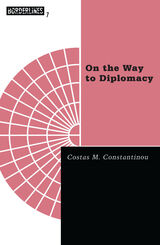
A deconstruction of the idea of diplomacy that explores the links between its theory and practice.
What does theory have to do with the concept-let alone the practice-of diplomacy? More than we might think, as Costas M. Constantinou amply demonstrates in this ambitious reconsideration of both the concept of diplomacy and the working of theory. Here, Constantinou focuses on the language that underwrites and directs theory and diplomacy, and shows that such a critical approach is actually a way of practicing politics.
Constantinou underscores the original intertextual association between theory and diplomacy by employing the ancient Greek term theoria. Theoria once referred to both philosophical thinking and a sacred embassy sent to discharge a religious duty. The use of the term in this book leads to a new view of theory and diplomacy. Constantinou considers the structures of diplomacy and theory together with the notion of representation that is peculiar to Western metaphysical thought. A deconstruction of diplomacy itself, this work bridges classical and contemporary philosophy, ancient and modern political practice, and, ultimately, politics and the arts in general. It will alter the study, understanding, and practice of diplomacy.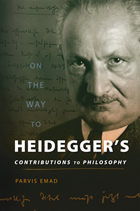
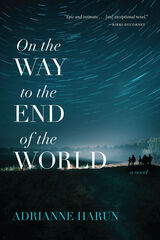
As the Cuban Missile Crisis eases, President Kennedy is casting around for a demonstration of American prowess when one of his Cabinet unearths an old mandate that US Marines be fit enough to walk fifty miles in twenty hours. Perfect! Kennedy decides to throw down the gauntlet to “today’s Marines,” but before he knows it, he’s sparked a wild fad. The entire country has answered the call, it seems, and for a few crazed winter weeks, masses of Americans will embark on their own arduous Big Walks—the “JFK 50-Milers.”
Yet in tiny Humtown—an isolated mill town in the Pacific Northwest—not everyone who shows up for a hastily organized Big Walk is motivated by patriotism. Not Helen Hubka, an inveterate gossip; not the suicidal Caroline, who months earlier lost her beloved husband during the Storm of the Century. Not ex-soldier/fisherman Jaspar Goode, nor the unknown man in their midst, a collared priest who seems to shift identities at will. Certainly not Avis, a battered teenager running from her terrifying brother . . . with a stolen town treasure. And when the walkers stumble upon the abandoned car of a missing young mother, they rekindle a mystery that soon reverberates among them, exposing hidden truths, talents, and alliances.
Splendidly imagined, with prose that sings on the page, On the Way to the End of the World is an adventure story riven with secrets, a national fairy tale twisted into a whodunit.

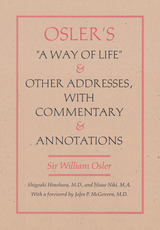
While Osler’s talks were frequently published during his lifetime and they have been published individually and in different compilations since his death, none contain the over 1500 annotations that appear here, notes that serve to explain the many philosophical, biblical, historical, and literary allusions contained in Osler’s writings.
This thoroughly explicated selection of Sir William Osler’s writings will be cherished by physicians, medical students, nurses, philosophers, theologians, and ethicists in this—and future—generations.
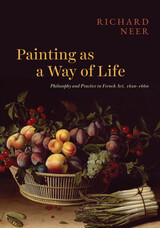
In this wide-ranging study, Richard Neer shows how French painters of the seventeenth century developed radically new ways to connect art, perception, and ethics. Cutting across traditional boundaries of classicism and realism, Neer addresses four case studies: Nicolas Poussin, renowned for marrying ancient philosophy and narrative painting; Louise Moillon, who pioneered French still life in the 1630s; Georges de La Tour, a painter of intense and introspective nocturnes; and the Brothers Le Nain, specialists in genre and portraiture who inspired Courbet, Manet, and other painters of modern life. Setting these artists in dialogue with Montaigne, Descartes, Pascal, and others, ranging from the studios of Rome to the streets of Paris, this book provides fresh accounts of essential artworks—some well-known, others neglected—and new ways to approach the relation of art, theory, and daily life.
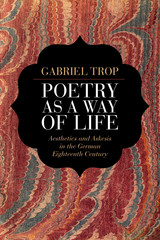
What would it mean to make a work of art the focal point of one’s life practice? Poetry as a Way of Life goes back to the origins of aesthetics as a philosophical discipline in the early eighteenth century in order to uncover an understanding of the work of art as an exercise of the self. Engaging in close readings of works by both canonical and less well-known eighteenth-century German poets such as Friedrich Holderlin, Novalis, Friedrich von Hagedorn, and Johann Wilhelm Ludwig Gleim, Gabriel Trop illustrates the ways in which these authors tap into the potential of poetic form to redefine the limits of human perception and generate alternative ways of being in the world.
Throughout his diverse and highly influential career, Hilary Putnam was famous for changing his mind. As a pragmatist he treated philosophical “positions” as experiments in deliberate living. His aim was not to fix on one position but to attempt to do justice to the depth and complexity of reality. In this new collection, he and Ruth Anna Putnam argue that key elements of the classical pragmatism of William James and John Dewey provide a framework for the most progressive and forward-looking forms of philosophy in contemporary thought. The Putnams present a compelling defense of the radical originality of the philosophical ideas of James and Dewey and their usefulness in confronting the urgent social, political, and moral problems of the twenty-first century.
Pragmatism as a Way of Life brings together almost all of the Putnams’ pragmatist writings—essays they wrote as individuals and as coauthors. The pragmatism they endorse, though respectful of the sciences, is an open experience-based philosophy of our everyday lives that trenchantly criticizes the fact/value dualism running through contemporary culture. Hilary Putnam argues that all facts are dependent on cognitive values, while Ruth Anna Putnam turns the problem around, illuminating the factual basis of moral principles. Together, they offer a shared vision which, in Hilary’s words, “could serve as a manifesto for what the two of us would like philosophy to look like in the twenty-first century and beyond.”
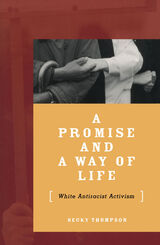
The first in-depth look at white people’s activism in fighting racism during the past fifty years.
Not since the Civil Rights Movement of the 1950s and 1960s, when many white college students went south to fight against Jim Crow laws, has white antiracist activity held the public’s attention. Yet there have always been white people involved in fighting racism. In this passionate work, Becky Thompson looks at white Americans who have struggled against racism, offering examples of both successes and failures, inspirations, practical philosophies, and a way ahead.
A Promise and a Way of Life weaves an account of the past half-century based on the life histories of thirty-nine people who have placed antiracist activism at the center of their lives. Through a rich and fascinating narrative that links individual experiences with social and political history, Thompson shows the ways, both public and personal, in which whites have opposed racism during several social movements: the Civil Rights and Black Power movements, multiracial feminism, the Central American peace movement, the struggle for antiracist education, and activism against the prison industry. Beginning with the diverse catalysts that started these activists on their journeys, this book demonstrates the contributions and limitations of white antiracism in key social justice movements.
Through these stories, crucial questions are raised: Does antiracist work require a repudiation of one’s whiteness or can that identity be transformed through political commitment and alliances? What do white people need to do to undermine white privilege? What would it take to build a multiracial movement in which white people are responsible for creating antiracist alliances while not co-opting people of color?
Unique in its depth and thoroughness, A Promise and a Way of Life is essential for anyone currently fighting racism or wondering how to do so. Through its demonstration of the extraordinary personal and social transformations ordinary people can make, it provides a new paradigm for movement activity, one that will help to incite and guide future antiracist activism.

Kokugaku, or nativism, was one of the most important intellectual movements from the seventeenth through the nineteenth century in Japan, and its worldview continues to be influential today. This scholarly endeavor represented an attempt to use Japanese antiquity to revitalize what many saw as a society in decline. One important figure in this movement was Hirata Atsutane (1776-1843), a center of controversy in his own lifetime. Even though Atsutane's version of nativism came to be the standard form, many modern scholars dismiss him because of his scholarly shortcomings.
The primary goal of this book is to restore historicity to the study of nativism by recognizing Atsutane's role in the creation and perpetuation of an intellectual tradition that remains a significant part of Japanese history and culture. Arguing that conflict among scholars and intellectuals begets ideas, Mark McNally shows that nativism was rife with internal competition. The mid-nineteenth-century suppression of this multiplicity of views led to the emergence of what we now think of as "nativism." By focusing on the competition among the rival strands of nativism, McNally demonstrates that nativism resulted not from Atsutane's conscious attempt to formulate a new intellectual tradition but from his greater political skills at putting his views across.
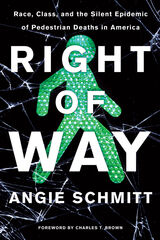
The tragedy of traffic violence has barely registered with the media and wider culture. Disproportionately the victims are like Duarte-Rodriguez—immigrants, the poor, and people of color. They have largely been blamed and forgotten.
In Right of Way, journalist Angie Schmitt shows us that deaths like Duarte-Rodriguez’s are not unavoidable “accidents.” They don’t happen because of jaywalking or distracted walking. They are predictable, occurring in stark geographic patterns that tell a story about systemic inequality. These deaths are the forgotten faces of an increasingly urgent public-health crisis that we have the tools, but not the will, to solve.
Schmitt examines the possible causes of the increase in pedestrian deaths as well as programs and movements that are beginning to respond to the epidemic. Her investigation unveils why pedestrians are dying—and she demands action. Right of Way is a call to reframe the problem, acknowledge the role of racism and classism in the public response to these deaths, and energize advocacy around road safety. Ultimately, Schmitt argues that we need improvements in infrastructure and changes to policy to save lives.
Right of Way unveils a crisis that is rooted in both inequality and the undeterred reign of the automobile in our cities. It challenges us to imagine and demand safer and more equitable cities, where no one is expendable.
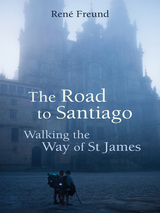
As René Freund learns, when you reach the edge of the European continent having walked along the Way of St. James—which pilgrims of former times thought to be the end of the world—only then do you realize that the old pilgrim’s saying is true: the journey does not end in Santiago. The journey begins in Santiago. In this vivid travelogue, Freund not only introduces us to the overwhelming natural beauty he encountered along the way, but also shares his experience of reaching his physical and psychological limits during the arduous journey.
Speechreading: A Way to Improve Understanding discusses the nature and process of speechreading, its benefits, and its limitations. This useful book clarifies commonly-held misconceptions about speechreading. The beginning chapters address difficult communication situations and problems related to the speaker, the speechreader, and the environment. It then offers strategies to manage them.
Speechreading provides practical exercises illustrating the use ofthese communication strategies in actual situations. It is an excellent book for late-deafened adults, families and friends, parents of children with hearing loss, and professionals and students.
This volume, Paul Grice’s first book, includes the long-delayed publication of his enormously influential 1967 William James Lectures. But there is much, much more in this work. Grice himself has carefully arranged and framed the sequence of essays to emphasize not a certain set of ideas but a habit of mind, a style of philosophizing.
Grice has, to be sure, provided philosophy with crucial ideas. His account of speaker-meaning is the standard that others use to define their own minor divergences or future elaborations. His discussion of conversational implicatures has given philosophers an important tool for the investigation of all sorts of problems; it has also laid the foundation for a great deal of work by other philosophers and linguists about presupposition. His metaphysical defense of absolute values is starting to be considered the beginning of a new phase in philosophy. This is a vital book for all who are interested in Anglo-American philosophy.
An upstart planetary laboratory in Tucson would play a vital role in the nation’s grand new venture, and in doing so, it would help create the field of planetary science. Founded by Gerard P. Kuiper in 1960, the Lunar and Planetary Laboratory (LPL) at the University of Arizona broke free from traditional astronomical techniques to embrace a wide range of disciplines necessary to the study of planets, including geology, atmospheric sciences, and the elegant emerging technology of spacecraft. Brash, optimistic young students crafted a unique sense of camaraderie in the fledgling institution. Driven by curiosity and imagination, LPL scientists lived through—and, indeed, made happen—the shattering transition in which Earth’s nearest neighbors became more than simple points of light in the sky.
Under Desert Skies tells the story of how a small corner of Arizona became Earth’s ambassador to space. From early efforts to reach the Moon to the first glimpses of Mars’s bleak horizons and Titan’s swirling atmosphere to the latest ambitious plans to touch an asteroid, LPL’s history encompasses humanity’s unfolding knowledge about our place in the universe.
The folklore of Texas' Big Bend region was still in the making during Walter Fulcher's lifetime. Born in Lampasas County in 1887, he worked on the Martin Ranch near Sheffield when a young man. There he witnessed events in the last outlaw activities of the Black Jack Ketchum gang.
He also listened to legends told almost as gossip, and some of the legendary figures were still alive—or said to be alive, usually in hiding. In every village there was sure to be some ancient with a good memory and a better imagination, and Walter Fulcher heard many versions of many tales. He has set them down as he heard them, as simple folk tales that reflect the color of a wild and vivid country in 400 years of its settlement.
The book has been edited, with introduction and notes, by Elton Miles, Professor of English at Sul Ross State College.
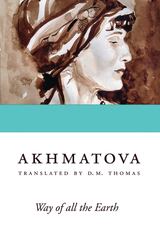
Anna Akhmatova is considered one of Russia’s greatest poets. Her life encompassed the turmoil of the Russian Revolution and the paranoia and persecution of the Stalinist era: her works embody the complexities of the age. At the same time, she was able to merge these complexities into a single, poetic voice to speak to the Russian people with whom she so closely and proudly identified.
Way of All the Earth contains short poems written between 1909 and 1964, selected from Evening, Rosary, White Flock, Plantain, Anno Domini, Reed, and The Seventh Book. Intricately observed and unwavering in their emotional immediacy, these strikingly modern poems represent one of the twentieth century’s most powerful voices.
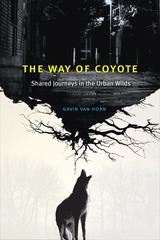
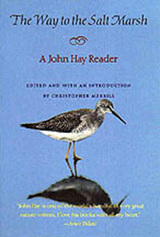
With The Way of Coyote, Gavin Van Horn reveals the stupendous diversity of species that can flourish in urban landscapes like Chicago. That isn’t to say city living is without its challenges. Chicago has been altered dramatically over a relatively short timespan—its soils covered by concrete, its wetlands drained and refilled, its river diverted and made to flow in the opposite direction. The stories in The Way of Coyote occasionally lament lost abundance, but they also point toward incredible adaptability and resilience, such as that displayed by beavers plying the waters of human-constructed canals or peregrine falcons raising their young atop towering skyscrapers. Van Horn populates his stories with a remarkable range of urban wildlife and probes the philosophical and religious dimensions of what it means to coexist, drawing frequently from the wisdom of three unconventional guides—wildlife ecologist Aldo Leopold, Taoist philosopher Lao Tzu, and the North American trickster figure Coyote. Ultimately, Van Horn sees vast potential for a more vibrant collective of ecological citizens as we take our cues from landscapes past and present.
Part urban nature travelogue, part philosophical reflection on the role wildlife can play in waking us to a shared sense of place and fate, The Way of Coyote is a deeply personal journey that questions how we might best reconcile our own needs with the needs of other creatures in our shared urban habitats.
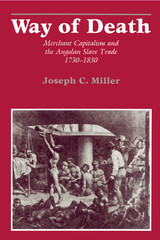
This acclaimed history of Portuguese and Brazilian slaving in the southern Atlantic is now available in paperback.
With extraordinary skill, Joseph C. Miller explores the complex relationships among the separate economies of Africa, Europe, and the South Atlantic that collectively supported the slave trade. He places the grim history of the trade itself within the context of the rise of merchant capitalism in the eighteenth century. Throughout, Miller illuminates the experiences of the slaves themselves, reconstructing what can be known of their sufferings at the hands of their buyers and sellers.
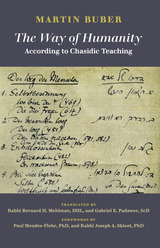
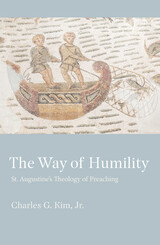
thinkers of the twentieth century. A philosopher, seeker, and nurturer of
dialogue, he responded to the complexities of his times by affirming the
fullness of interpersonal encounter and the spiritual everyday. In 1947,
Buber delivered lectures interpreting six traditional Chasidic stories
to a German-speaking audience, published as The Way of Humanity. In
the first new English translation in over half a century, Rabbi Bernard
H. Mehlman, DHL, and Gabriel E. Padawer, ScD, z"l, bring the work to
contemporary readers in a clear, accessible voice. The teachings within
highlight the subversion and innovation of the early Chasidic masters of
the eighteenth and nineteenth centuries, while providing meaningful
spiritual guidance and insight for any seeker today. Scholarly forewords
by Paul Mendes-Flohr, PhD, and Rabbi Joseph A. Skloot, PhD, as well
as an introduction, epilogue, and notes from the translators, place
Buber’s work in historical context. Timeless and enlightening, The Way
of Humanity guides us to inner meaning and highlights our human
wholeness.
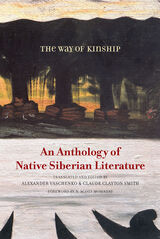
The first anthology of Native Siberian literature in English, The Way of Kinship represents writers from regions extending from the Ob River in the west to the Chukotka peninsula, the easternmost point of the Siberian Russian Arctic. Drawn from seven distinct ethnic groups, this diverse body of work-prose fiction, poetry, drama, and creative nonfiction-chronicles ancient Siberian cultures and traditions threatened with extinction in the contemporary world.
Translated and edited by Alexander Vaschenko and Claude Clayton Smith, leading scholars in Native Siberian literature, The Way of Kinship is an essential collection that will introduce readers to new writers and new worlds.
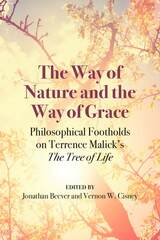

This book can best be described as an extended meditation on suffering, phenomenological in method and dialectical in point of view. The angle the author takes is that of moral self-examination rather that conventional scholarly inquiry, and his aim is to think through and evaluate a fundamental claim of our culture, from Aeschylus to Solzhenitsyn, that suffering is the greatest spiritual teacher.
To bring the argument closer to home, Professor Miller focuses on the experience of crisis as the undermining of our attempts, at all costs, to keep control of our lives. This leads him to discuss topics such as the nature of vulnerability, the difference—as sketched by Heidegger—between ordinary fear and metaphysical dread, the ordinary avoidance of suffering, and the heroic willingness to embrace it exemplified by Nietzsche's Thus Spake Zarathustra.
But this is a philosophical essay, not a historical monograph, and Miller's goal is to lead the reader ever deeper in to the heart of crisis where all our illusions about control are stripped away and we forced to face, like Oedipus, the harshest reality of all: that even our existence is not something we can claim as our own. It is here, and only here, Miller claims, the issue of religious conversion can be and must be seriously faced.
This is a demanding book, as exhilarating as it is relentless in its unmasking of the evasions and duplicities with which we shore up our day-to-day lives. The late William F. Lynch, SJ, author of Christ and Apollo, called it "a profoundly moral study of man." To read it is to risk changing your life.
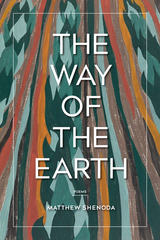
The Way of the Earth is the fourth collection from award-winning poet Matthew Shenoda. In this, his most personal collection to date, he explores the temporal and fleeting nature of human life and the earth we inhabit. Through ruminations on the intersections of culture and ecology, the death of loved ones, and the growing inequities in our midst, Shenoda explores what it means to be a person both grounded to the earth and with a yearning beyond it. Memories of landscapes and histories echo throughout the sensations of the present: the sight of egrets wading in the marshes, the smell of the ocean, a child’s hand nestled in a warm palm. “Time never goes back,” Shenoda writes, “but the imagination must.”
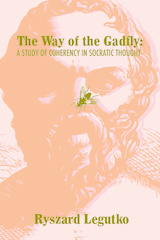
This new series of scholarly reflections on the interpretation of Socratic philosophy is an inviting combination of intuition and meticulous analysis. Ryszard Legutko provides the reader a monumental service in his confrontation of the most important and influential literature written on the subject to date. He likewise opens the conversation to European contributions and renders Socrates truly a figurehead of future philosophy far beyond being a pillar in ancient thought.
Legutko argues that Socrates was systematic, and his moral views were ultimately grounded in his theory of knowledge that was composed of logically connected propositions (logoi). Reading Plato, Legutko's intuition that Socrates was quite the opposite of the quirky, ironic, and enigmatic character is supported by his demonstration of Socrates' consistency, unity, and hierarchy of thought. He extends Socrates' coherency to a criticism of the democratic mind, framing him even less as a random spit-fire and more the grounded observer. Socrates, argues Letgutko, is well aware of the importance of general concepts and he intended to free these concepts from democratic distortions and give them firm and independent foundations.
In short, 'the way of the gadfly' is a beautiful and precise exploration of order that seeks to be changed by the awareness of this order, and how to wield concepts apart from the motives of arrogance and chaos––neither of which represent nature, and therefore are foreign to the way of the gadfly.
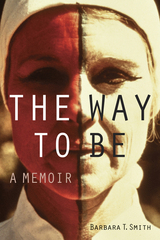
For over fifty years, Barbara T. Smith has been at the forefront of artistic movements in California. Her work across many mediums explores concepts that strike at the core of human nature, including sexuality, physical and spiritual sustenance, technology, and death. In this memoir, Smith weaves together descriptive accounts of her pioneering performances with an intimate narrative of her life.
The Way to Be covers the years 1931 to 1981, up to the artist’s fiftieth birthday, resulting in an exhaustive catalogue of her early work. It reveals the personal stories and events behind her pieces and the challenges she faced in an art world dominated by sexism and machismo. Drawing on Smith’s archive at the Getty Research Institute, this enthralling book presents previously unpublished notes, documents, photographs, and firsthand accounts of her life and practice, as well as her more recent reflections on the past. The Way to Be demonstrates Smith’s lasting contributions to the field of contemporary art and provides an engaging commentary on a recent period of great cultural and political change.
This volume is published to accompany an exhibition on view at the Getty Research Institute at the Getty Center from February 28 to July 16, 2023.
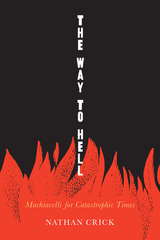
An incisive and erudite survey of Machiavelli, the catastrophes of his times and ours, and his counsel for responding to an era of constant crises
READERS
Browse our collection.
PUBLISHERS
See BiblioVault's publisher services.
STUDENT SERVICES
Files for college accessibility offices.
RECENTLY PUBLISHED




UChicago Accessibility Resources
home | accessibility | search | about | contact us
BiblioVault ® 2001 - 2024
The University of Chicago Press