Results by title
547 books match the query 'California' and 56 start with c
Calaveras Gold
The Impact Of Mining On A Mother Lode CountyRonald H. Limbaugh
University of Nevada Press, 2003
California’s Calaveras County—made famous by Mark Twain and his celebrated Jumping Frog—is the focus of this comprehensive study of Mother Lode mining. Most histories of the California Mother Lode have focused on the mines around the American and Yuba Rivers. However, the “Southern Mines”—those centered around Calaveras County in the central Sierra—were also important in the development of California’s mineral wealth. Calaveras Gold offers a detailed and meticulously researched history of mining and its economic impact in this region from the first discoveries in the 1840s until the present. Mining in Calaveras County covered the full spectrum of technology from the earliest placer efforts through drift and hydraulic mining to advanced hard-rock industrial mining. Subsidiary industries such as agriculture, transportation, lumbering, and water supply, as well as a complex social and political structure, developed around the mines. The authors examine the roles of race, gender, and class in this frontier society; the generation and distribution of capital; and the impact of the mines on the development of political and cultural institutions. They also look at the impact of mining on the Native American population, the realities of day-to-day life in the mining camps, the development of agriculture and commerce, the occurrence of crime and violence, and the cosmopolitan nature of the population. Calaveras County mining continued well into the twentieth century, and the authors examine the ways that mining practices changed as the ores were depleted and how the communities evolved from mining camps into permanent towns with new economic foundations and directions. Mining is no longer the basis of Calaveras’s economy, but memories of the great days of the Mother Lode still attract tourists who bring a new form of wealth to the region.
Calexico
True Lives of the BorderlandsPeter Laufer
University of Arizona Press, 2011
A “sleepy crossroads that exists at a global flashpoint,” Calexico serves as the reference point for veteran journalist Peter Laufer’s chronicle of day-to-day life on the border. This wide-ranging, interview-driven book finds Laufer and travel companion/photographer on a weeklong road trip through the Imperial Valley and other border locales, engaging in earnest and revealing conversations with the people they meet along the way. Laufer talks to secretaries and politicians, restaurateurs and salsa dancers, poets and real estate agents about the issues that matter to them the most.
What draws them to border towns? How do they feel about border security and the fences that may someday run through their backyards? Is “English-only” a realistic policy? Why have some towns flourished and others declined? What does it mean to be Mexican or American in such a place? Waitress Bonnie Peterson banters with customers in Spanish and English. Mayor Lewis Pacheco laments the role that globalization has played in his city’s labor market. Some of their anecdotes are humorous, others grim. Moreover, not everyone agrees. But this very diversity is part of the fabric of the borderlands, and these stories demand to be heard.
Califia Women
Feminist Education against Sexism, Classism, and RacismBy Clark A. Pomerleau
University of Texas Press, 2013
A dynamic exploration of the Califia Community, a long-running Los Angeles based grassroots alternative education group formed in the mid-1970s, whose richly diverse membership offered a compelling array of responses to feminism’s key issues.
Launched in 1975, the Califia Community organized activist educational camps and other programs in southern California until its dissolution in 1987. An alternative to mainstream academia’s attempts to tie feminism to university courses, Califia blended aspects of feminism that spanned the labels “second wave” and “radical,” attracting women from a range of gender expressions, sexual orientations, class backgrounds, and races or ethnicities. Califia Women captures the history of the organization through oral history interviews, archives, and other forms of primary research. The result is a lens for re-reading trends in feminist and social justice activism of the time period, contextualized against a growing conservative backlash.
Throughout each chapter, readers learn about the triumphs and frictions feminists encountered as they attempted to build on the achievements of the postwar Civil Rights movement. With its backdrop of southern California, the book emphasizes a region that has often been overlooked in studies of East Coast or San Francisco Bay–area activism. Califia Women also counters the notions that radical and lesbian feminists were unwilling to address intersectional identities generally and that they withdrew from political activism after 1975. Instead, the Califia Community shows evidence that these and other feminists intentionally created an educational forum that embraced oppositional consciousness and sought to serve a variety of women, including radical Christian reformers, Wiccans, scholars of color, and GLBT activists.
California And The Fictions Of Capital
George Henderson
Temple University Press, 2003
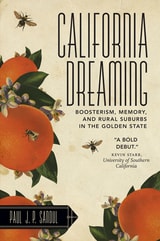
California Dreaming
Boosterism, Memory, and Rural Suburbs in the Golden StatePaul J. P. Sandul
West Virginia University Press, 2014
California Dreaming: Boosterism, Memory, and Rural Suburbs in the Golden State analyzes the growth, promotion, and agricultural colonization that fed this dream during the early 1900s. Through this analysis, Paul J. P. Sandul introduces a newly identified rural-suburban type: the agriburb, a rural suburb deliberately planned, developed, and promoted for profit. Sandul reconceptualizes California’s growth during this time period, establishing the agriburb as a suburban phenomenon that occurred long before the booms of the 1920s and 1950s.
Sandul’s analysis contributes to a new suburban history that includes diverse constituencies and geographies and focuses on the production and construction of place and memory. Boosters purposefully “harvested” suburbs with an eye toward direct profit and metropolitan growth. State boosters boasted of unsurpassable idyllic communities while local boosters bragged of communities that represented the best of the best, both using narratives of place, class, race, lifestyle, and profit to avow images of the rural and suburban ideal.
This suburban dream attracted people who desired a family home, nature, health, culture, refinement, and rural virtue. In the agriburb, a family could live on a small home grove while enjoying the perks of a progressive city. A home located within the landscape of natural California with access to urban amenities provided a good place to live and a way to gain revenue through farming.
To uncover and dissect the agriburb, Sandul focuses on local histories from California’s Central Valley and the Inland Empire of Southern California, including Ontario near Los Angeles and Orangevale and Fair Oaks outside Sacramento. His analysis closely operates between the intersections of history, anthropology, geography, sociology, and the rural and urban, while examining a metanarrative that exposes much about the nature and lasting influence of cultural memory and public history upon agriburban communities.
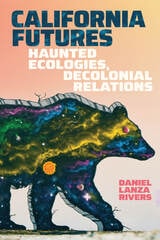
California Futures
Haunted Ecologies, Decolonial RelationsDaniel Lanza Rivers
Duke University Press, 2026
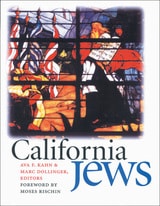
California Jews
Edited by Ava F. Kahn and Marc Dollinger
Brandeis University Press, 2011
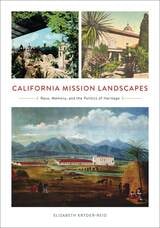
California Mission Landscapes
Race, Memory, and the Politics of HeritageElizabeth Kryder-Reid
University of Minnesota Press, 2016
“Nothing defines California and our nation’s heritage as significantly or emotionally,” says the California Mission Foundation, “as do the twenty-one missions that were founded along the coast from San Diego to Sonoma.” Indeed, the missions collectively represent the state’s most iconic tourist destinations and are touchstones for interpreting its history. Elementary school students today still make model missions evoking the romanticized versions of the 1930s. Does it occur to them or to the tourists that the missions have a dark history?
California Mission Landscapes is an unprecedented and fascinating history of California mission landscapes from colonial outposts to their reinvention as heritage sites through the late nineteenth and twentieth centuries. Illuminating the deeply political nature of this transformation, Elizabeth Kryder-Reid argues that the designed landscapes have long recast the missions from sites of colonial oppression to aestheticized and nostalgia-drenched monasteries. She investigates how such landscapes have been appropriated in social and political power struggles, particularly in the perpetuation of social inequalities across boundaries of gender, race, class, ethnicity, and religion. California Mission Landscapes demonstrates how the gardens planted in mission courtyards over the past 150 years are not merely anachronistic but have become potent ideological spaces. The transformation of these sites of conquest into physical and metaphoric gardens has reinforced the marginalization of indigenous agency and diminished the contemporary consequences of colonialism. And yet, importantly, this book also points to the potential to create very different visitor experiences than these landscapes currently do.
Despite the wealth of scholarship on California history, until now no book has explored the mission landscapes as an avenue into understanding the politics of the past, tracing the continuum between the Spanish colonial period, emerging American nationalism, and the contemporary heritage industry.
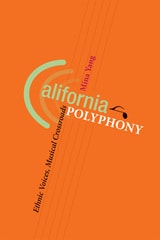
California Polyphony
Ethnic Voices, Musical CrossroadsMina Yang
University of Illinois Press, 2007
In the early twentieth century, an orientalist fascination with Asian music and culture dominated the popular imagination of white Californians and influenced their interactions with the Asian Other. Several decades later, tensions between the Los Angeles Police Department and the African American community made the thriving jazz and blues nightclub scene of 1940s Central Avenue a target for the LAPD's anti-vice crusade. The musical scores for Hollywood's noir films confirmed reactionary notions of the threat to white female sexuality in the face of black culture and urban corruption while Mexican Americans faced a conflicted assimilation into the white American mainstream. Finally, Korean Americans in the twenty-first century turned to hip-hop to express their cultural and national identities.
A compelling journey into the origins of musical identity, California Polyphony explores the intersection of musicology, cultural history, and politics to define Californian.
California's Channel Islands
The Archaeology of Human-Environment InteractionsChristopher S. Jazwa
University of Utah Press, 2013
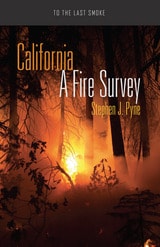
California
A Fire SurveyStephen J. Pyne
University of Arizona Press, 2016
In this collection of essays on the region, Stephen J. Pyne colorfully explores the ways the region has approached fire management and what sets it apart from other parts of the country. Pyne writes that what makes California’s fire scene unique is how its dramatically distinctive biomes have been yoked to a common system, ultimately committed to suppression, and how its fires burn with a character and on a scale commensurate with the state’s size and political power. California has not only a ferocity of flame but a cultural intensity that few places can match. California’s fires are instantly and hugely broadcast. They shape national institutions, and they have repeatedly defined the discourse of fire’s history. No other place has so sculpted the American way of fire.
California is part of the multivolume series describing the nation’s fire scene region by region. The volumes in To the Last Smoke also cover Florida, the Northern Rockies, the Great Plains, the Southwest, and several other critical fire regions. The series serves as an important punctuation point to Pyne’s fifty-year career with wildland fire—both as a firefighter and a fire scholar. These unique surveys of regional pyrogeography are Pyne’s way of “keeping with it to the end,” encompassing the directive from his rookie season to stay with every fire “to the last smoke.”
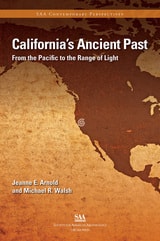
California’s Ancient Past
From Pacific to the Range of LightJeanne E. Arnold
University Press of Colorado, 2010
Californio Voices
The Oral Memoirs of Jose Maria Amador and Lorenzo AsisaraGregorio Mora-Torres
University of North Texas Press, 2005
Californios, Anglos, and the Performance of Oligarchy in the U.S. West
Andrew Gibb
Southern Illinois University Press, 2018
This interdisciplinary study draws on performance studies, theatre historiography, and New Western History to identify how the unique power relations of historical California were constituted and perpetuated through public performances—not only traditional theatrical productions but also social events such as elite weddings and community dances—and historical events like the U.S. seizure of the city of Monterey, the feting of Commodore Stockton in San Francisco, and the Bear Flag Revolt.
Call Me Henri
Lorraine López
Northwestern University Press, 2006
Lorraine López (author of Soy la Avon Lady and Other Stories) has created a vivid picture of barrio life, filled with honesty, insight, and humor for young adults. She paints a balanced and detailed landscape of Enrique's world. Although Enrique is confused and angered by his mother's refusal to stand up for him against the abuse of his stepfather, he also draws strength from the supportive and loving family of his friend Francisco. While some of his teachers are uncaring or inept, others provide help and encouragement at critical moments in his life.
When Enrique witnesses his friend Horacio gunned down in a drive-by shooting and is seen by the assailants, gang members set out to kill him. As the novel reaches its climax, Enrique must make some agonizing decisions.
Although specifically about barrio life, this novel is universal in its themes—the drive for success, the desire for love and family support, and the need for true friendship. López's fully delineated characters provide a rich and credible mural of our human comedy.
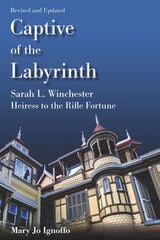
Captive of the Labyrinth
Sarah L. Winchester, Heiress to the Rifle Fortune, Revised and Updated EditionMary Jo Ignoffo
University of Missouri Press, 2022
Author and historian Mary Jo Ignoffo’s definitive biography unearths the truth about this reclusive eccentric, revealing that she was not a maddened spiritualist driven by remorse but an intelligent, articulate woman who sought to protect her private life amidst the chaos of her public existence and the social mores of the time. The author takes readers through Winchester’s several homes, explores her private life, and, by excerpting from personal correspondence, one learns the widow’s true priority was not dissipating her fortune on the mansion in San José but endowing a hospital to eradicate a dread disease.
Sarah Winchester has been exploited for profit for over a century, but Captive of the Labyrinth finally puts to rest the myths about this American heiress, and, in the process, uncovers her true legacies.
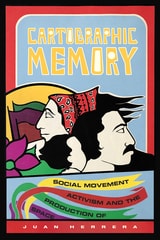
Cartographic Memory
Social Movement Activism and the Production of SpaceJuan Herrera
Duke University Press, 2022
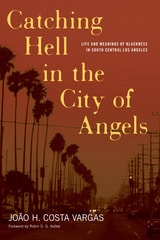
Catching Hell In The City Of Angels
Life And Meanings Of Blackness In South Central Los AngelesJoão H. Costa Vargas
University of Minnesota Press, 2006
Through compelling stories of South Central, including his own experience as an immigrant of color, Vargas presents portraits of four groups. He talks daily with women living in a low-income Watts apartment building; works with activists in a community organization against police brutality; interacts with former gang members trying to maintain a 1992 truce between the Bloods and the Crips; and listens to amateur jazz musicians who perform in a gentrified section of the neighborhood. In each case he describes the worldviews and the definitions of “blackness” these people use to cope with oppression. Vargas finds, in turn, that blackness is a form of racial solidarity, a vehicle for the renewal of African American culture, and a political expression of revolutionary black nationalism.
Vargas reveals that the social fault lines in South Central reflect both contemporary disparities and long-term struggles. In doing so, he shows both the racialized power that makes “blackness” a prized term of identity and the terrible price that African Americans have paid for this emphasis. Ultimately, Catching Hell in the City of Angels tells the story of urban America through the lives of individuals from diverse, overlapping, and vibrant communities.
João H. Costa Vargas is assistant professor in the Center for African and African American Studies and the department of anthropology at the University of Texas, Austin.
Robin D. G. Kelley is the William B. Ransford Professor of Cultural and Historical Studies at Columbia University. He is the author of numerous books, including Yo Mama's Disfunktional: Fighting the Culture Wars in Urban America.
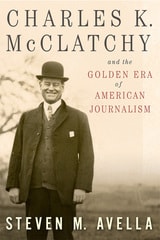
Charles K. McClatchy and the Golden Era of American Journalism
Steven M. Avella
University of Missouri Press, 2016
Charles K. McClatchy was twenty-five when he inherited The Sacramento Bee from his father, and his ensuing career as the paper’s editor extended well beyond the newsroom. Until his death in 1936, McClatchy was a consistent advocate for Progressive politics, a crusader for urban reform, a staunch isolationist, and a voice for Northern California. This biography explores his career as the long-time editor of the Bee in a work that weaves the history of Northern California with that of American newspapers.
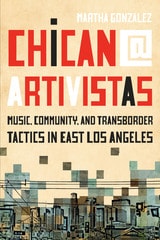
Chican@ Artivistas
Music, Community, and Transborder Tactics in East Los AngelesMartha Gonzalez
University of Texas Press, 2020
As the lead singer of the Grammy Award–winning rock band Quetzal and a scholar of Chicana/o and Latina/o studies, Martha Gonzalez is uniquely positioned to articulate the ways in which creative expression can serve the dual roles of political commentary and community building. Drawing on postcolonial, Chicana, black feminist, and performance theories, Chican@ Artivistas explores the visual, musical, and performance art produced in East Los Angeles since the inception of NAFTA and the subsequent anti-immigration rhetoric of the 1990s.
Showcasing the social impact made by key artist-activists on their communities and on the mainstream art world and music industry, Gonzalez charts the evolution of a now-canonical body of work that took its inspiration from the Zapatista movement, particularly its masked indigenous participants, and that responded to efforts to impose systems of labor exploitation and social subjugation. Incorporating Gonzalez’s memories of the Mexican nationalist music of her childhood and her band’s journey to Chiapas, the book captures the mobilizing music, poetry, dance, and art that emerged in pre-gentrification corners of downtown Los Angeles and that went on to inspire flourishing networks of bold, innovative artivistas.
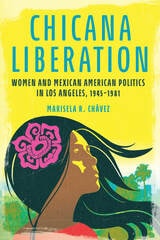
Chicana Liberation
Women and Mexican American Politics in Los Angeles, 1945-1981Marisela R. Chávez
University of Illinois Press, 2024
Mexican American women reached across generations to develop a bridging activism that drew on different methods and ideologies to pursue their goals. Marisela R. Chávez uses a wealth of untapped oral histories to reveal the diverse ways activist Mexican American women in Los Angeles claimed their own voices and space while seeking to leverage power. Chávez tells the stories of the people who honed beliefs and practices before the advent of the Chicano movement and the participants in the movement after its launch in the late 1960s. As she shows, Chicanas across generations challenged societal traditions that at first assumed their place on the sidelines and then assigned them second-class status within political structures built on their work. Fueled by a surging pride in their Mexican heritage and indigenous roots, these activists created spaces for themselves that acknowledged their lives as Mexicans and women.
Vivid and compelling, Chicana Liberation reveals the remarkable range of political beliefs and life experiences behind a new activism and feminism shaped by Mexican American women.
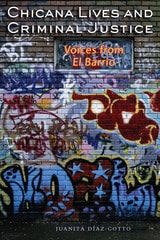
Chicana Lives and Criminal Justice
Voices from El BarrioBy Juanita Díaz-Cotto
University of Texas Press, 2006
This first comprehensive study of Chicanas encountering the U.S. criminal justice system is set within the context of the international war on drugs as witnessed at street level in Chicana/o barrios. Chicana Lives and Criminal Justice uses oral history to chronicle the lives of twenty-four Chicana pintas (prisoners/former prisoners) repeatedly arrested and incarcerated for non-violent, low-level economic and drug-related crimes. It also provides the first documentation of the thirty-four-year history of Sybil Brand Institute, Los Angeles' former women's jail.
In a time and place where drug war policies target people of color and their communities, drug-addicted Chicanas are caught up in an endless cycle of police abuse, arrest, and incarceration. They feel the impact of mandatory sentencing laws, failing social services and endemic poverty, violence, racism, and gender discrimination. The women in this book frankly discuss not only their jail experiences, but also their family histories, involvement with gangs, addiction to drugs, encounters with the juvenile and adult criminal justice systems, and their successful and unsuccessful attempts to recover from addiction and reconstitute fractured families. The Chicanas' stories underscore the amazing resilience and determination that have allowed many of the women to break the cycle of abuse. Díaz-Cotto also makes policy recommendations for those who come in contact with Chicanas/Latinas caught in the criminal justice system.
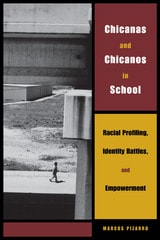
Chicanas and Chicanos in School
Racial Profiling, Identity Battles, and EmpowermentBy Marcos Pizarro
University of Texas Press, 2005
By any measure of test scores and graduation rates, public schools are failing to educate a large percentage of Chicana/o youth. But despite years of analysis of this failure, no consensus has been reached as to how to realistically address it. Taking a new approach to these issues, Marcos Pizarro goes directly to Chicana/o students in both urban and rural school districts to ask what their school experiences are really like, how teachers and administrators support or thwart their educational aspirations, and how schools could better serve their Chicana/o students.
In this accessible, from-the-trenches account of the Chicana/o school experience, Marcos Pizarro makes the case that racial identity formation is the crucial variable in Chicana/o students' success or failure in school. He draws on the insights of students in East Los Angeles and rural Washington State, as well as years of research and activism in public education, to demonstrate that Chicana/o students face the daunting challenge of forming a positive sense of racial identity within an educational system that unintentionally yet consistently holds them to low standards because of their race. From his analysis of this systemic problem, he develops a model for understanding the process of racialization and for empowering Chicana/o students to succeed in school that can be used by teachers, school administrators, parents, community members, and students themselves.
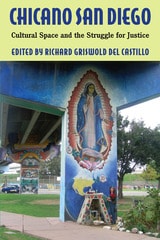
Chicano San Diego
Cultural Space and the Struggle for JusticeRichard Griswold del Castillo
University of Arizona Press, 2008
In chronologically ordered chapters, scholars discuss how Mexican and Chicana/o people have resisted and accommodated the increasingly Anglo-oriented culture of the region. The book’s early chapters recount the historical origins of San Diego and its development through the mid-nineteenth century, describe the “American colonization” that followed, and include examples of Latino resistance that span the twentieth century—from early workers’ strikes to the United Farm Workers movement of the 1960s. Later chapters trace the Chicana/o Movement in the community and in the arts; the struggle against the gentrification of the barrio; and the growth of community organizing (especially around immigrants’ rights) from the perspective of a community organizer.
To tell this sweeping story, the contributors use a variety of approaches. Testimonios retell individual lives, ethnographies relate the stories of communities, and historical narratives uncover what has previously been ignored or discounted. The result is a unique portrait of a marginalized population that has played an important but neglected role in the development of a major American border city.
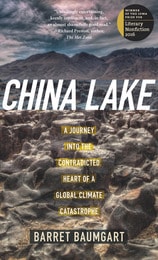
China Lake
A Journey into the Contradicted Heart of a Global Climate CatastropheBarret Baumgart
University of Iowa Press, 2017
Stalking the fringes of Internet conspiracy, speculative science, and contemporary archaeology, Baumgart weaves memoir, military history, and investigative journalism in a dizzying journey that carries him from the cornfields of Iowa to drought-riddled California, from the Vietnam jungle to the caves of prehistoric Europe and eventually the walls of the US Capitol, the sparkling white hallways of the Pentagon, and straight into the contradicted heart of a worldwide climate emergency.
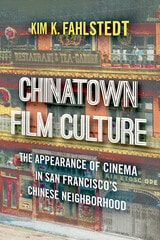
Chinatown Film Culture
The Appearance of Cinema in San Francisco’s Chinese NeighborhoodKim K. Fahlstedt
Rutgers University Press, 2020
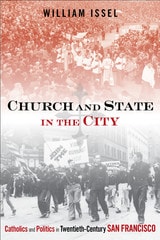
Church and State in the City
Catholics and Politics in Twentieth-Century San FranciscoWilliam Issel
Temple University Press, 2012
Church and State in the City provides the first comprehensive analysis of the city’s long debate about the public interest. Historian William Issel explores the complex ways that the San Francisco Catholic Church—and its lay men and women—developed relationships with the local businesses, unions, other community groups, and city government to shape debates about how to define and implement the common good. Issel’s deeply researched narrative also sheds new light on the city’s socialists, including Communist Party activists—the most important transnational challengers of both capitalism and Catholicism during the twentieth century.
Moreover, Church and State in the City is revisionist in challenging the notion that the history of urban politics and policy can best be understood as the unfolding of a progressive, secular modernization of urban political culture. Issel shows how tussles over the public interest in San Francisco were both distinctive to the city and shaped by its American character.
In the series Urban Life, Landscape, and Policy, edited by Zane L. Miller, David Stradling, and Larry Bennett
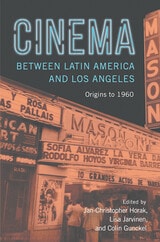
Cinema between Latin America and Los Angeles
Origins to 1960Horak, Jan-Christopher
Rutgers University Press, 2019
Citizen Lobbyists
Local Efforts to Influence Public PolicyBrian Adams
Temple University Press, 2006
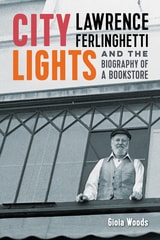
City Lights
Lawrence Ferlinghetti and the Biography of a BookstoreGioia Woods
University of Nevada Press, 2026
City Lights: Lawrence Ferlinghetti and the Biography of a Bookstore is the seminal story of the bookstore, its press, and the inimitable Ferlinghetti.
City Of Plagues
Disease, Poverty, And Deviance In San FranciscoSusan Craddock
University of Minnesota Press, 2004
An eye-opening discussion of the ways disease shapes urban society
Disease may not discriminate, but it helps those who do. In this fascinating book, Susan Craddock examines the role of disease and health policy in the construction of race, gender, and class, and in urban development in nineteenth- and twentieth-century San Francisco. An absorbing look at the role of disease and health policy in the construction of race, gender, and class in urban development during nineteenth- and twentieth-century San Francisco. Susan Craddock considers tuberculosis, plague, smallpox, and syphilis as diseases whose devastations were derived in part from their use as political tools and disciplinary mechanisms
City of Dignity
Christianity, Liberalism, and the Making of Global Los AngelesSean T. Dempsey
University of Chicago Press, 2023
Contemporary Los Angeles is commonly seen as an American bulwark of progressive secular politics, a place that values immigration, equity, diversity, and human rights. But what accounts for the city’s embrace of such staunchly liberal values, which are more hotly contested in other parts of the country? The answer, Sean Dempsey reveals, lies not with those frequent targets of credit and blame—Democrats in Hollywood—but instead with liberal Protestants and other steadfast religious organizations of the postwar era.
As the Religious Right movement emerged in the 1970s, progressive religious activists quietly began promoting an ethical vision that made waves worldwide but saw the largest impact in its place of origin: metropolitan Los Angeles. At the center of this vision lay the concept of human dignity—entwining the integral importance of political and expressive freedom with the moral sanctity of the human condition—which suffused all of the political values that arose from it, whether tolerance, diversity, or equality of opportunity. The work of these religious organizations birthed such phenomena as the Sanctuary Movement—which provided safe haven for refugees fleeing conflict-torn Central America—and advocacy for the homeless, both of which became increasingly fraught issues amid the rising tides of neoliberalism and conservatism. City of Dignity explores how these interwoven spiritual and theological strands found common ground—and made common impacts—in the humanitarian ecosystem of one of America’s largest and most dynamic metro areas.
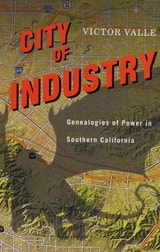
City of Industry
Genealogies of Power in Southern CaliforniaValle, Victor
Rutgers University Press, 2011
Valle investigated an untapped archive of Industry's built landscape, media coverage, and public records, including sealed FBI reports, to uncover a cascading series of scandals. A kaleidoscopic view of the corruption that resulted when local land owners, media barons, and railroads converged to build the city, this suspenseful narrative explores how new governmental technologies and engineering feats propelled the rationality of privatization using their property-owning servants as tools.
Valle's tale of corporate greed begins with the city's founder James M. Stafford and ends with present day corporate heir, Edward Roski Jr., the nation's biggest industrial developerùco-owner of the L.A. Staples Arena and possible future owner of California's next NFL franchise. Not to be forgotten in Valle's captivating story are Latino working class communities living within Los Angeles's distribution corridors, who suffer wealth disparities and exposure to air pollution as a result of diesel-burning trucks, trains, and container ships that bring global trade to their very doorsteps. They are among the many victims of City of Industry.
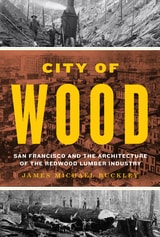
City of Wood
San Francisco and the Architecture of the Redwood Lumber IndustryJames Michael Buckley
University of Texas Press, 2024
2025 John Brinckerhoff Jackson Prize, Association of American Geographers
2025 Abbott Lowell Cummings Award
2025 John Brinckerhoff Jackson Prize, UVA Center for Cultural Landscapes
2026 Hagley Prize in Business History, Hagley Museum and Library
2025 Honorable Mention, PROSE Award, Association of American Publishers (AAP)
California’s 1849 gold rush triggered creation of the “instant city” of San Francisco as a base to exploit the rich natural resources of the American West. City of Wood examines how capitalists and workers logged the state’s vast redwood forests to create the financial capital and construction materials needed to build the regional metropolis of San Francisco. Architectural historian James Michael Buckley investigates the remote forest and its urban core as two poles of a regional “city.” This city consisted of a far-reaching network of spaces, produced as company owners and workers arrayed men and machines to extract resources and create human commodities from the region’s rich natural environment.
Combining labor, urban, industrial, and social history, City of Wood employs a variety of sources—including contemporary newspaper articles, novels, and photographs—to explore the architectural landscape of lumber, from backwoods logging camps and company towns in the woods to busy lumber docks and the homes of workers and owners in San Francisco. By imagining the redwood lumber industry as a single community spread across multiple sites—a “City of Wood”—Buckley demonstrates how capitalist resource extraction links different places along the production value chain. The result is a paradigm shift in architectural history that focuses not just on the evolution of individual building design across time, but also on economic connections that link the center and periphery across space.
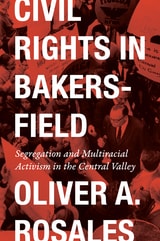
Civil Rights in Bakersfield
Segregation and Multiracial Activism in the Central ValleyOliver A. Rosales
University of Texas Press, 2024
2024 Outstanding Book Award, National Association for Ethnic Studies
2025 Honorable Mention, Norris & Carol Hundley Award, Pacific Coast Branch of the American Historical Association
2025 The Ambassador Julian Nava Best Ethnic Studies Book, International Latino Book Awards
A multiracial history of civil rights coalitions beyond the farm worker movement in twentieth-century Bakersfield, California.
In Civil Rights in Bakersfield, Oliver Rosales uncovers the role of the multiracial west in shaping the course of US civil rights history. Focusing on Bakersfield, one of the few sizable cities within California’s Central Valley for much of the twentieth century in a region most commonly known as a bastion of political conservatism, oil, and industrial agriculture, Rosales documents how multiracial coalitions emerged to challenge histories of racial segregation and discrimination. He recounts how the region was home to both the historic farm worker movement, led by César Chávez, Dolores Huerta, and Larry Itliong, and also a robust multiracial civil rights movement beyond the fields. This multiracial push for civil rights reform included struggles for fair housing, school integration, public health, media representation, and greater political representation for Black and Brown communities. In expanding on this history of multiracial activism, Rosales further explores the challenges activists faced in community organizing and how the legacies of coalition building contribute to ongoing activist efforts in the Central Valley of today.
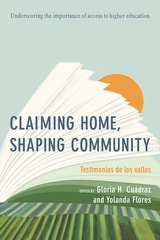
Claiming Home, Shaping Community
Testimonios de los vallesEdited by Gloria H. Cuádraz and Yolanda Flores
University of Arizona Press, 2017
While symbolically their journeys embody the master narrative of the “American Dream,” Claiming Home, Shaping Community does not echo the “rags to riches” trope reified in dominant culture, but rather, it asserts the need to rehumanize the purpose and heart of education. In each chapter, the narrators illustrate myriad supports that allowed them to move forward on their academic and professional journeys: hard work, affirmative action, inclusionary practices, mentors, and their communities’ cultural wealth. Each trajectory is unique, but put together as a collection, the commonalities emerge.
Denoting a sense of political and social urgency that responds to the current accentuated economic disparities between the haves and the have-nots, these essays illuminate the broader societal benefits of federal legislation and resources for state-funded public higher education and policies that broaden access and resources. By telling their stories, the contributors seek to empower others on their journeys to and through higher education.
Contributors:
Daniel “Nane” Alejandrez
Manuel Barajas
Angelica Cárdenas-Chaisson
Gloria H. Cuádraz
Yolanda Flores
Francisco J. Galarte
John J. Halcón
Ester Hernández
Rosa M. Jiménez
Roberto Moreno
José R. Padilla
Enid Pérez
Caroline Sotello Viernes Turner
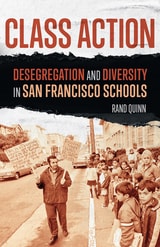
Class Action
Desegregation and Diversity in San Francisco SchoolsRand Quinn
University of Minnesota Press, 2020
A compelling history of school desegregation and activism in San Francisco
The picture of school desegregation in the United States is often painted with broad strokes of generalization and insulated anecdotes. Its true history, however, is remarkably wide ranging. Class Action tells the story of San Francisco’s long struggle over school desegregation in the wake of the 1954 U.S. Supreme Court decision Brown v. Board of Education.
San Francisco’s story provides a critical chapter in the history of American school discrimination and the complicated racial politics that emerged. It was among the first large cities outside the South to face court-ordered desegregation following the Brown rulings, and it experienced the same demographic shifts that transformed other cities throughout the urban West. Rand Quinn argues that the district’s student assignment policies—including busing and other desegregative mechanisms—began as a remedy for state discrimination but transformed into a tool intended to create diversity. Drawing on extensive archival research—from court docket files to school district records—Quinn describes how this transformation was facilitated by the rise of school choice, persistent demand for neighborhood schools, evolving social and legal landscapes, and local community advocacy and activism.
Class Action is the first book to present a comprehensive political history of post-Brown school desegregation in San Francisco. Quinn illuminates the evolving relationship between jurisprudence and community-based activism and brings a deeper understanding to the multiracial politics of urban education reform. He responds to recent calls by scholars to address the connections between ideas and policy change and ultimately provides a fascinating look at race and educational opportunity, school choice, and neighborhood schools in the aftermath of Brown v. Board of Education.
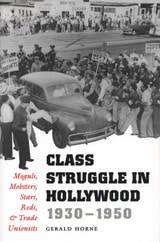
Class Struggle in Hollywood, 1930-1950
Moguls, Mobsters, Stars, Reds, and Trade UnionistsBy Gerald Horne
University of Texas Press, 2001
As World War II wound down in 1945 and the cold war heated up, the skilled trades that made up the Conference of Studio Unions (CSU) began a tumultuous strike at the major Hollywood studios. This turmoil escalated further when the studios retaliated by locking out CSU in 1946. This labor unrest unleashed a fury of Red-baiting that allowed studio moguls to crush the union and seize control of the production process, with far-reaching consequences.
This engrossing book probes the motives and actions of all the players to reveal the full story of the CSU strike and the resulting lockout of 1946. Gerald Horne draws extensively on primary materials and oral histories to document how limited a "threat" the Communist party actually posed in Hollywood, even as studio moguls successfully used the Red scare to undermine union clout, prevent film stars from supporting labor, and prove the moguls' own patriotism.
Horne also discloses that, unnoticed amid the turmoil, organized crime entrenched itself in management and labor, gaining considerable control over both the "product" and the profits of Hollywood. This research demonstrates that the CSU strike and lockout were a pivotal moment in Hollywood history, with consequences for everything from production values, to the kinds of stories told in films, to permanent shifts in the centers of power.
Classic Hollywood
Lifestyles and Film Styles of American Cinema, 1930-1960Veronica Pravadelli
University of Illinois Press, 2015
Pravadelli sets her analysis apart by paying particular attention to the gendered desires and identities exemplified in the films. Availing herself of the significant advances in film theory and modernity studies that have taken place since similar surveys first saw publication, she views Hollywood through strategies as varied as close textural analysis, feminism, psychoanalysis, film style and study of cinematic imagery, revealing the inconsistencies and antithetical traits lurking beneath Classic Hollywood's supposed transparency.
Coffee House Positano
A Bohemian Oasis in Malibu, 1957–1962Jay Ruby
University Press of Colorado, 2013
As an ethnographer analyzing his own culture, author Jay Ruby uses a unique ethnographic method known as “studying sideways.” He combines the exploration of self and others with the theoretical framework of anthropology to provide deep insight into the counterculture of late 1950s and early 1960s America. He shares his connection to Positano, where he lived and worked from 1957 to 1959 and again in 1963, and reflects on Positano in the context of US counterculture and the greater role of countercultures in society.
This intimate and significant work will be of interest to anthropologists as well as scholars and the general reader interested in California history, Beat culture, and countercultural movements.
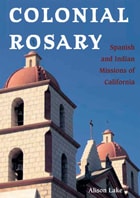
Colonial Rosary
The Spanish and Indian Missions of CaliforniaAlison Lake
Ohio University Press, 2006
California would be a different place today without the imprint of Spanish culture and the legacy of Indian civilization. The colonial Spanish missions that dot the coast and foothills between Sonoma and San Diego are relics of a past that transformed California’s landscape and its people.
In a spare and accessible style, Colonial Rosary looks at the complexity of California’s Indian civilization and the social effects of missionary control. While oppressive institutions lasted in California for almost eighty years under the tight reins of royal Spain, the Catholic Church, and the government of Mexico, letters and government documents reveal the missionaries’ genuine concern for the Indian communities they oversaw for their health, spiritual upbringing, and material needs.
With its balanced attention to the variety of sources on the mission period, Colonial Rosary illuminates ongoing debates over the role of the Franciscan missions in the settlement of California.
By sharing the missions’ stories of tragedy and triumph, author Alison Lake underlines the importance of preserving these vestiges of California’s prestatehood period. An illustrated tour of the missions as well as a sensitive record of their impact on California history and culture, Colonial Rosary brings the story of the Spanish missions of California alive.
Common Ground
The Japanese American National Museum and the Culture of CollaborationsAkemi Kikumura-Yano
University Press of Colorado, 2005
Current scholarship in museum studies is generally limited to interpretations by scholars and curators. Common Ground brings descriptive data to the intellectual canon and illustrates how museum institutions must be transformed and recreated to suit the needs of the twenty-first century.
Confessions of a Horseshoer
Ron Tatum
University of North Texas Press, 2012
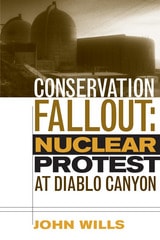
Conservation Fallout
Nuclear Protest At Diablo CanyonJohn Wills
University of Nevada Press, 2012
An unprecedented look at nuclear politics in California Vehement, widespread opposition accompanied the rise of the U.S. nuclear industry during the 1960s and 1970s. In Conservation Fallout, John Wills examines one of the most controversial atomic projects of the period: Pacific Gas and Electric Company’s decision to build its premier nuclear power plant at Diablo Canyon, a relatively unsettled, biologically rich, and especially scenic part of the central California coastline. Two competing visions of California emerged while the plant underwent construction. Environmentalists used Diablo as a symbol of impending ecological doomsday, while PG&E envisioned it as the model that would usher in a new age of energy production. The Sierra Club almost disbanded over whether to condone or protest the reactor project. Divisions also emerged in the local community as residents and politicians, enticed by the promise of cheap electricity and lucrative tax revenues, found themselves pitted against others who feared the dangers of radiation in their own backyards. The controversy intensified when a fault line was discovered within three miles of the plant. Grassroots groups The Mothers for Peace, a local women’s group, and The Abalone Alliance, a statewide nonviolent direct-action organization, did their utmost to stop the plant from going on-line. In 1979, an Alliance rally in San Francisco attracted 25,000 people, while 40,000 others gathered in San Luis Obispo. During a two-week-long blockade of the Diablo plant in 1981, over 1,900 activists were jailed, the largest arrest in the history of American antinuclear protest. Despite its significance in the history of twentieth-century environmental issues and the continuing debate over the safety of nuclear power, the full story of Diablo Canyon has not been told until now. Wills bases his account on extensive interviews with the individuals involved, as well as on the archives of the Sierra Club, several protest organizations, public agencies, PG&E, and others. The result is an engaging, balanced examination of nuclear politics in California. By focusing on one of the last wild places in the state and its transformation into a major technological center, and on the evolution and strategies of the little-studied grassroots protest groups determined to protect California and resist the spread of nuclear technology, Wills has made a major contribution to our understanding of America’s nuclear age.
Corpus Vasorum Antiquorum, Fascicule 10
Athenian Red-Figure Column and Volute KratersDespoina Tsiafakis
J. Paul Getty Trust, The, 2019
This new fascicule of the CVA—the tenth issued by the J. Paul Getty Museum and the first ever to be published open access—presents a selection of Attic red-figure column and volute kraters ranging from 520 to 510 BCE through the early fourth century BCE. Among the works included are a significant dinoid volute krater and a volute krater with the Labors of Herakles that is attributed to the Kleophrades Painter.
The free online edition of this open-access catalogue is available at www.getty.edu/publications/cva10/. Also available are free PDF, EPUB, and Kindle/MOBI downloads of the book, CSV and JSON downloads of the object data, and JPG downloads of the catalogue images.
Counterculture Kaleidoscope
Musical and Cultural Perspectives on Late Sixties San FranciscoNadya Zimmerman
University of Michigan Press, 2013
In a bold reconsideration of the late sixties San Francisco counterculture movement, Counterculture Kaleidoscope takes a close look at the cultural and musical practices of that era. Addressing the conventional wisdom that the movement was grounded in rebellion and opposition, the book exposes two myths: first, that the counterculture was an organized social and political movement of progressives with a shared agenda who opposed the mainstream (dubbed "hippies"); and second, that the counterculture was an innocent entity hijacked by commercialism and transformed over time into a vehicle of so-called "hip consumerism."
Seeking an alternative to the now common narrative, Nadya Zimmerman examines primary source material including music, artwork, popular literature, personal narratives, and firsthand historical accounts. She reveals that the San Francisco counterculture wasn't interested in commitments to causes and made no association with divisive issues---that it embraced everything in general and nothing in particular.
"Astute and accessible, Counterculture Kaleidoscope provides thought-provoking insights into the historical, cultural and social context of the San Francisco counter-culture and its music scene, including discussions of Vietnam and student protest, the Haight-Ashbury Diggers, the Grateful Dead, Led Zeppelin, Altamont, and Charlie Manson. A must for students and scholars of socio-musical activity and for all of us to whom music matters."
---Sheila Whiteley, author of The Space Between the Notes: Rock and the Counter-Culture and Too Much Too Young: Popular Music, Age and Gender
"The hippie counterculture has never garnered the scholarly attention accorded the new left and the black freedom struggle. Overviews of the period ritualistically mention it as part and parcel of that apparently incandescent era---the Sixties---but rarely capture its distinctiveness. Counterculture Kaleidoscope is a timely and provocative intervention in Sixties scholarship that significantly deepens our understanding of this important but understudied phenomenon."
—Alice Echols, Associate Professor, University of Southern California, and author of Scars of Sweet Paradise: The Life and Times of Janis Joplin

Court of Last Resort
Mental Illness and the LawCarol A. B. Warren
University of Chicago Press, 1982

Coyote Stories
Edited by William Bright
University of Chicago Press Journals, 1978
Coyotes and Culture
Essays from Old MalibuClaire McEachern
University of Nevada Press, 2025
This unique collection of essays offers a gripping exploration of the precarious beauty and peril of California’s iconic coastline. Through essays blending personal narrative, cultural analysis, and history, author Claire McEachern takes us behind the scenes of surf and celebrities to paint a vivid portrait of life on the edge —both literally and metaphorically. From the rugged Santa Monica Mountains to the shimmering Pacific, this work captures the paradoxes of Old Malibu: a place of luxury and risk, natural splendor and ecological vulnerability.
As an East Coast academic married to a fifth-generation Californian cowboy, McEachern brings a wry yet tender lens to the modern American story, delving into what happens to love and community in a land of both devastating wildfires and extravagant wildflowers. Her reflections weave together questions of beauty, resilience, and humanity’s uneasy relationship with nature, creating an unforgettable narrative of place and survival. Readers drawn to the drama of human stories set against larger cultural and environmental forces will find this book both thought-provoking and deeply moving.
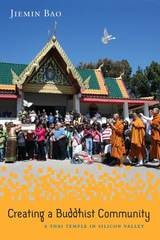
Creating a Buddhist Community
A Thai Temple in Silicon ValleyJiemin Bao
Temple University Press, 2015
In Creating a Buddhist Community, Jiemin Bao shows how the Wat Thai participants practice Buddhism and rework gender relationships in the course of organizing temple space, teaching meditation, schooling children in Thai language and culture, merit making, fundraising, and celebrating festivals.
Bao’s detailed account of the process of creating an inclusive temple community with Thai immigrants as the majority helps to deconstruct the exoticized view of Buddhism in American culture. Creating a Buddhist Community also explores Wat Thai’s identification with both the United States and Thailand and how this transnational perspective reimagines and reterritorializes what is called American Buddhism.