Results by title
18284 books match the query 'United States' and 552 start with h
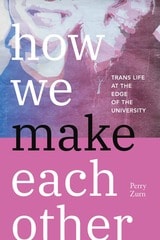
How We Make Each Other
Trans Life at the Edge of the UniversityPerry Zurn
Duke University Press, 2025
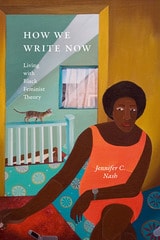
How We Write Now
Living with Black Feminist TheoryJennifer C. Nash
Duke University Press, 2024
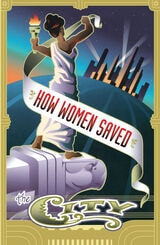
How Women Saved The City
Daphne Spain
University of Minnesota Press, 2001
Reclaims the lost history of women’s contributions to the development of American cities
In the days between the Civil War and World War I, women rarely worked outside the home, rarely went to college, and, if our histories are to be believed, rarely put their mark on the urban spaces unfolding around them. And yet, as this book clearly demonstrates, women did play a key role in shaping the American urban landscape.
To uncover the contribution of women to urban development during this period, Daphne Spain looks at the places where women participated most actively in public life—voluntary organizations like the Young Women’s Christian Association, the Salvation Army, the College Settlements Association, and the National Association of Colored Women. In the extensive building projects of these associations—boarding houses, vocational schools, settlement houses, public baths, and playgrounds—she finds clear evidence of a built environment created by women. Exploring this environment, Spain reconstructs the story of the "redemptive places" that addressed the real needs of city dwellers—especially single women, African-Americans, immigrants, and the poor—and established an environment in which newcomers could learn to become urban Americans.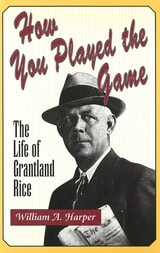
How You Played the Game
The Life of Grantland RiceWilliam Harper
University of Missouri Press, 1999
Centering around the life and times of the revered American sportswriter Grantland Rice (1880-1954), How You Played the Game takes us back to those magical days of sporting tales and mythic heroes. Through Rice's eyes we behold such sports as bicycle racing, boxing, golf, baseball, football, and tennis as they were played before 1950. We witness ups and downs in the careers of such legendary figures as Christy Mathewson, Jack Dempsey, Ty Cobb, Babe Ruth, Jim Thorpe, Red Grange, Bobby Jones, Bill Tilden, Notre Dame's Four Horsemen, Gene Tunney, and Babe Didrikson--all of whom Rice helped become household names.
Grantland Rice was a remarkably gifted and honorable sportswriter. From his early days in Nashville and Atlanta, to his famed years in New York, Rice was acknowledged by all for his uncanny grasp of the ins and outs of a dozen sports, as well as his personal friendship with hundreds of sportsmen and sportswomen. As a pioneer in American sportswriting, Rice helped establish and dignify the profession, sitting shoulder to shoulder in press boxes around the nation with the likes of Ring Lardner, Damon Runyon, Heywood Broun, and Red Smith.
Besides being a first-rate reporter, Rice was also a columnist, poet, magazine and book writer, film producer, family man, war veteran, fund-raiser, and skillful golfer. His personal accomplishments over a half century as an advocate for sports and good sportsmanship are astounding by any standard. What truly set Rice apart from so many of his peers, however, was the idea behind his sports reporting and writing. He believed that good sportsmanship was capable of lifting individuals, societies, and even nations to remarkable heights of moral and social action.
More than just a biography of Grantland Rice, How You Played the Game is about the rise of American sports and the early days of those who created the art and craft of sportswriting. Exploring the life of a man who perfectly blended journalism and sporting culture, this book is sure to appeal to all, sports lovers or not.
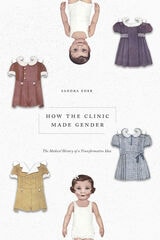
How the Clinic Made Gender
The Medical History of a Transformative IdeaSandra Eder
University of Chicago Press, 2022
Today, a world without “gender” is hard to imagine. Gender is at the center of contentious political and social debates, shapes policy decisions, and informs our everyday lives. Its formulation, however, is lesser known: Gender was first used in clinical practice. This book tells the story of the invention of gender in American medicine, detailing how it was shaped by mid-twentieth-century American notions of culture, personality, and social engineering.
Sandra Eder shows how the concept of gender transformed from a pragmatic tool in the sex assignment of children with intersex traits in the 1950s to an essential category in clinics for transgender individuals in the 1960s. Following gender outside the clinic, she reconstructs the variable ways feminists integrated gender into their theories and practices in the 1970s. The process by which ideas about gender became medicalized, enforced, and popularized was messy, and the route by which gender came to be understood and applied through the treatment of patients with intersex traits was fraught and contested. In historicizing the emergence of the sex/gender binary, Eder reveals the role of medical practice in developing a transformative idea and the interdependence between practice and wider social norms that inform the attitudes of physicians and researchers. She shows that ideas like gender can take on a life of their own and may be used to question the normative perceptions they were based on. Illuminating and deeply researched, the book closes a notable gap in the history of gender and will inspire current debates on the relationship between social norms and medical practice.
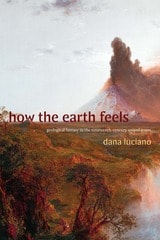
How the Earth Feels
Geological Fantasy in the Nineteenth-Century United StatesDana Luciano
Duke University Press, 2024
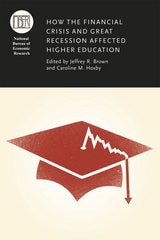
How the Financial Crisis and Great Recession Affected Higher Education
Edited by Jeffrey R. Brown and Caroline M. Hoxby
University of Chicago Press, 2014
The studies in this volume explore how various practices at institutions of higher education, such as the drawdown of endowment resources, the awarding of financial aid, and spending on research, responded to the financial crisis. The studies examine universities as economic organizations that operate in a complex institutional and financial environment. The authors examine the role of endowments in university finances and the interaction of spending policies, asset allocation strategies, and investment opportunities. They demonstrate that universities’ behavior can be modeled using economic principles.
How the New Deal Was Run
Edited by Sarah E. Igo and Ganesh Sitaraman
University of Chicago Press, 2027
Notable historians delve into the brass tacks of launching and sustaining federal agencies.
Critics today complain that the United States government can’t do big things, can’t do them quickly, and certainly can’t do many of them at once. The New Deal offers a striking contrast. During the 1930s, the United States created a wealth of new agencies, departments, offices, and programs—all at once and in very short order—that enabled a stunning expansion of state capacity. The question is: how?
In this illuminating collection, leading American historians explore the nuts and bolts of New Deal implementation to offer answers. From the Civilian Conservation Corps to the Rural Electrification Administration to the Securities and Exchange Commission, they uncover exactly how the New Dealers did so much so quickly. They detail the choices before state builders who, operating under the pressure and immediacy of the era, made decisions that had momentous consequences in the longer term.
At a time when federal agencies are under stress as never before, the contributors suggest what future administrations can learn from the New Deal’s extraordinary achievements—and how they can build state capacity and deliver for Americans once again.
Features contributions by W. Tanner Allread, Mary Bridges, Brent Cebul, Sarah E. Igo, Meg Jacobs, Richard R. John, Neil M. Maher, Sharon Ann Musher, Sarah T. Phillips, Kathryn Olmsted and Eric Rauchway, Alex Platt, Jason Scott Smith, Ganesh Sitaraman, Abby Spinak, Chloe Thurston, and Mason B. Williams.
How the News Feels
The Empathic Power of Literary JournalistsJonathan D. Fitzgerald
University of Massachusetts Press, 2023
Literary journalism’s origins can be traced to the nineteenth century, when it developed alongside the era’s sentimental literature. Combining fact-based reporting with the sentimentality of popular fiction, literary journalism encouraged readers to empathize with subjects by presenting more nuanced and engaging stories than typical news coverage. While women writers were central to the formation and ongoing significance of the genre, literary journalism scholarship has largely ignored their contributions.
How the News Feels re-centers the work of a range of writers who were active from the nineteenth century until today, including Catharine Williams, Margaret Fuller, Nellie Bly, Winifred Black, Zora Neale Hurston, Joan Didion, Adrian Nicole LeBlanc, and Alexis Okeowo. Offering intimate access to their subjects’ thoughts, motivations, and yearnings, these journalists encouraged readers to empathize with society’s outcasts, from asylum inmates and murder suspects to “fallen women” and the working poor. As this carefully researched study shows, these writers succeeded in defining and developing the genre of literary journalism, with stories that inspire action, engender empathy, and narrow the gap between writer, subject, and audience.

How the North Won
A MILITARY HISTORY OF THE CIVIL WARHerman Hattaway and Archer Jones
University of Illinois Press, 1983
“To those unacquainted with military history, [this book] provides an elementary, instructive, and readable military account of the American Civil War. The basic concepts of war, its conduct, management, and support, are thoroughly explained and explicitly applied throughout in order to make clear what many authors often incorrectly take for granted that readers already know. . . .
We have tried to tell the military history of the war from the viewpoint of the higher commanders on both sides. We therefore emphasize strategy and logistics rather than tactics. . . .Strategy, management, and execution weigh more than superior numbers and resources in dictating the outcomes of wars, and the Civil War is no exception. The weaker side can win; the South almost did.”
How the Other Half Worships
Camilo José Vergara
Rutgers University Press, 2005
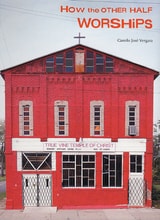
Domestically and abroad, America is known as the richest country in the world. It is hard not to be impressed by the standard of living in the nation’s most affluent suburban and urban neighborhoods. Yet, scattered amid stretches that abound in wealth, the country is home to neighborhoods rife with violence, poverty, segregation, and decay. Within these blighted urban landscapes, however, there is at least one notable example of plenty: churches. They do not always appear as traditional houses of worship, but often emerge from the retrofitted shells of former storefronts, garages, factories, warehouses, domestic dwellings, and public institutions. Regardless of the façade, churches populate America’s poorest neighborhoods.
Bringing together more than 300 richly textured color photographs and a series of candid interviews with pastors, church officials, and congregation members, this extraordinary book explores the conditions, beliefs, and practices that shape the churches and the lives of the nation’s urban poor. Over a period of thirty years, sociologist and photographer Camilo José Vergara repeatedly visited these places of worship and the eclectic mix of buildings that house them. In twenty-one cities located in ten states across the country, photographic sequences coupled with insightful narrative show how ordinary structures assume, modify, and shed a religious character, how traditional churches—if they fail to adapt to new congregations—are demolished, and how new churches are designed and built from the ground up.
Vergara pays special attention to the objects, texts, and imagery that religious leaders make use of to create environments that inspire devotion. Pastors of developing congregations often arrive as crusaders, with missions that cannot be served by traditional religious iconography, and with budgets that force them to use inexpensive materials. In some cases, pastors bring objects of worship from their home towns in places such as Mexico, Puerto Rico, Africa, and the West Indies. Despite the idiosyncratic features and folk decoration that distinguish ghetto churches from one another, however, Vergara shows that, for the most part, they are driven by similar religious agendas. They tend to preach about resilience, avoid involving themselves in national and international events, and consider their truths to be absolute and eternal.
A powerful, poignant, and visually arresting portrait, How the Other Half Worships stands as a stark witness to how churches are being rebuilt in the dilapidated streets of America’s cities and how religion is being reinvented by the nation’s poor.
How the Religious Right Shaped Lesbian and Gay Activism
Tina Fetner
University of Minnesota Press, 2008
An unexpected analysis of the battle between opposing activist movements
While gay rights are on the national agenda now, activists have spent decades fighting for their platform, seeing themselves as David against the religious right’s Goliath. At the same time, the religious right has continuously and effectively countered the endeavors of lesbian and gay activists, working to repeal many of the laws prohibiting discrimination based on sexual orientation and to progress a constitutional amendment “protecting” marriage.
In this accessible and grounded work, Tina Fetner uncovers a remarkably complex relationship between the two movements—one that transcends political rivalry. Fetner shows how gay activists and the religious right have established in effect a symbiotic relationship in which each side very much affects the development of its counterpart. As lesbian and gay activists demand an end to prejudice, inclusion in marriage, the right to serve in the military, and full citizenship regardless of sexual orientation, the religious right has responded with antigay planks in Republican party platforms and the blocking of social and political change efforts. Fetner examines how the lesbian and gay movement reacts to opposition by changing rhetoric, tone, and tactics and reveals how this connection has influenced—and made more successful—the evolution of gay activism in the United States. Fetner addresses debates that lie at the center of the culture wars and, ultimately, she demonstrates how the contentious relationship between gay and lesbian rights activists and the religious right—a dynamic that is surprisingly necessary to both—challenges assumptions about how social movements are significantly shaped by their rivals.
How the States Shaped the Nation
American Electoral Institutions and Voter Turnout, 1920-2000Melanie Jean Springer
University of Chicago Press, 2014
With How the States Shaped the Nation, Melanie Jean Springer places contemporary reforms in historical context and systematically explores how state electoral institutions have been instrumental in shaping voting behavior throughout the twentieth century. Although reformers often assume that more convenient voting procedures will produce equivalent effects wherever they are implemented, Springer reveals that this is not the case. In fact, convenience-voting methods have had almost no effect in the southern states where turnout rates are lowest. In contrast, the adverse effects associated with restrictive institutions like poll taxes and literacy tests have been persistent and dramatic. Ultimately, Springer argues, no single institutional fix will uniformly resolve problems of low or unequal participation. If we want to reliably increase national voter turnout rates, we must explore how states’ voting histories differ and better understand the role of political and geographical context in shaping institutional effects.
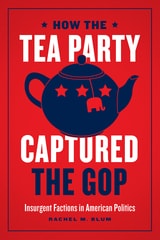
How the Tea Party Captured the GOP
Insurgent Factions in American PoliticsRachel M. Blum
University of Chicago Press, 2020
In How the Tea Party Captured the GOP, Rachel Marie Blum approaches the Tea Party from the angle of party politics, explaining the Tea Party’s insurgent strategies as those of a party faction. Blum offers a novel theory of factions as miniature parties within parties, discussing how fringe groups can use factions to increase their political influence in the US two-party system. In this richly researched book, the author uncovers how the electoral losses of 2008 sparked disgruntled Republicans to form the Tea Party faction, and the strategies the Tea Party used to wage a systematic takeover of the Republican Party. This book not only illuminates how the Tea Party achieved its influence, but also provides a framework for identifying other factional insurgencies.
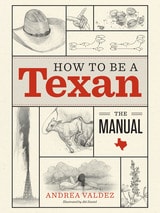
How to Be a Texan
The ManualBy Andrea Valdez
University of Texas Press, 2016
There are certain things every Texan should know how to do and say, whether your Lone Star roots reach all the way back to the 1836 Republic or you were just transplanted here yesterday. Some of these may be second nature to you, but others . . . well, maybe it wouldn’t hurt to have a few handy hints if, say, branding the herd or hosting a tamalada aren’t your usual pastimes. That’s where How to Be a Texan can help.
In a friendly, lighthearted style, Andrea Valdez offers illustrated, easy-to-follow steps for dozens of authentic Texas activities and sayings. In no time, you’ll be talking like a Texan and dressing the part; hunting, fishing, and ranching; cooking your favorite Texas dishes; and dancing cumbia and two-step. You’ll learn how to take a proper bluebonnet photo and build a Día de los Muertos altar, and you’ll have a bucket list of all the places Texans should visit in their lifetime. Not only will you know how to do all these things, you’ll finish the book with a whole new appreciation for what it means to be a Texan and even more pride in saying “I’m from Texas” anywhere you wander in the world.
How to Be an Intellectual in the Age of TV
The Lessons of Gore VidalMarcie Frank
Duke University Press, 2005
Frank highlights the connections between Vidal’s attitudes toward TV, sex, and American politics as they have informed his literary and political writings and screen appearances. She deftly situates his public persona in relation to those of Andy Warhol, Jacqueline Susann, Mary McCarthy, Susan Sontag, and others. By describing Vidal’s shrewd maneuvering between different media, Frank suggests that his career offers a model to aspiring public intellectuals and a refutation to those who argue that electronic media have eviscerated public discourse.
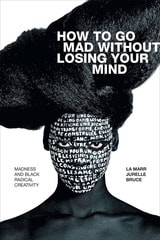
How to Go Mad without Losing Your Mind
Madness and Black Radical CreativityLa Marr Jurelle Bruce
Duke University Press, 2020
How to House the Homeless
Ingrid Gould Ellen
Russell Sage Foundation, 2010
How to Live/What to Do
H.D.'s Cultural PoeticsAdalaide Morris
University of Illinois Press, 2002
Ever since the publication of her first H.D. essay in 1985 (included here in an expanded version), Morris has eschewed prevailing literary trends in favor of new approaches that both challenge and overpass dominant critical constructs. As she argues in this volume, the writing and, crucially, the reading of poetry is a process in which meaning is produced by the interplay of words on a page and in the ear of the reader. This quality of being not heard but overheard, composed within the body, is crucial to an appreciation of H.D.
Morris shows H.D. to be a playful linguistic innovator whose writings bear on debates in science, technology, and cinema as well as on poetry. Foremost, however, H.D. was a profound reshaper of the boundaries and possibilities of poetry, a generative form that, as this book shows, can indeed serve the cultural work of survival and resistance against the violence of modern culture.
How to Make Dances in an Epidemic
Tracking Choreography in the Age of AIDSDavid Gere
University of Wisconsin Press, 2004
David Gere, who came of age as a dance critic at the height of the AIDS epidemic, offers the first book to examine in depth the interplay of AIDS and choreography in the United States, specifically in relation to gay men. The time he writes about is one of extremes. A life-threatening medical syndrome is spreading, its transmission linked to sex. Blame is settling on gay men. What is possible in such a highly charged moment, when art and politics coincide?
Gere expands the definition of choreography to analyze not only theatrical dances but also the protests conceived by ACT-UP and the NAMES Project AIDS quilt. These exist on a continuum in which dance, protest, and wrenching emotional expression have become essentially indistinguishable. Gere offers a portrait of gay male choreographers struggling to cope with AIDS and its meanings.

How to Make a Life
A Tibetan Refugee Family and the Midwestern Woman They AdoptedMadeline Uraneck
Wisconsin Historical Society Press, 2018
When Madeline Uraneck said hello to the Tibetan woman cleaning her office cubicle, she never imagined the moment would change her life. After learning that Tenzin Kalsang had left her husband and four children behind in a Tibetan refugee settlement in India to try to forge a better life for them, Madeline took on the task of helping her apply for US visas. When the family reunited in their new Midwestern home, Madeline became swept up in their lives, from homework and soccer games to family dinners and shared holiday traditions. By reaching out, she found more than she bargained for—a family who welcomed her as their own and taught her more than she offered them.
An evocative blend of immersion journalism and memoir, How to Make a Life shares the immigration story of a Tibetan refugee family who crossed real and cultural bridges to make a life in Madison, Wisconsin, with the assistance of the Midwestern woman they befriended. From tales of escaping Tibet over the Himalayas, to striking a balance between old traditions with new, to bridging divides one friendly gesture at a time, readers will expand their understanding of family, culture, and belonging.

How to Respond Better to the Next Pandemic
Remedying Institutional FailuresAllen Buchanan, with contributions by Cécile Fabre and Sir Paul Tucker
University of Utah Press, 2024
In How to Respond Better to the Next Pandemic Allen Buchanan argues that, contrary to widespread opinion, the primary cause of flawed COVID-19 policy was not defective leadership, but rather institutional failure. Decisions were made through processes that lacked the most basic safeguards against the large-institution “yes-man” and group-think phenomena and included virtually no provisions for holding decision makers accountable. More fundamentally, policy makers did not fulfill the crucial duty to provide plausible public justifications for their decisions. They disguised the fact that scientific opinion was divided on the appropriateness of the policies they endorsed and labeled those who disagreed with them as anti-scientific. In some cases, they responded to criticism, not by engaging it on the issues, but by branding their critics as quacks.
How to Save a Constitutional Democracy
Tom Ginsburg and Aziz Z. Huq
University of Chicago Press, 2018
How to Save a Constitutional Democracy mounts an urgent argument that we can no longer afford to be complacent. Drawing on a rich array of other countries’ experiences with democratic backsliding, Tom Ginsburg and Aziz Z. Huq show how constitutional rules can both hinder and hasten the decline of democratic institutions. The checks and balances of the federal government, a robust civil society and media, and individual rights—such as those enshrined in the First Amendment—often fail as bulwarks against democratic decline. The sobering reality for the United States, Ginsburg and Huq contend, is that the Constitution’s design makes democratic erosion more, not less, likely. Its structural rigidity has had unforeseen consequence—leaving the presidency weakly regulated and empowering the Supreme Court conjure up doctrines that ultimately facilitate rather than inhibit rights violations. Even the bright spots in the Constitution—the First Amendment, for example—may have perverse consequences in the hands of a deft communicator who can degrade the public sphere by wielding hateful language banned in many other democracies. We—and the rest of the world—can do better. The authors conclude by laying out practical steps for how laws and constitutional design can play a more positive role in managing the risk of democratic decline.
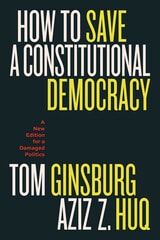
How to Save a Constitutional Democracy
A New Edition for a Damaged PoliticsTom Ginsburg and Aziz Z. Huq
University of Chicago Press, 2026
Updated to take stock of recent developments, Tom Ginsburg and Aziz Z. Huq’s prescient and insightful book shows how constitutional rules both hinder and hasten democratic decline.
Around the world, autocratic leaders threaten the core structures of democratic self-rule. But democratic constitutions are not fail-proof safeguards. By looking at how such leaders exploit legal mechanisms to advance their aims, we can see how democratic constitutions can sometimes abet—and even accelerate—democratic decline. In this new edition of How to Save a Constitutional Democracy, constitutional law experts Tom Ginsburg and Aziz Z. Huq offer a powerful analysis of today’s challenges while arguing that the time has come for meaningful, actionable change.
This new edition takes up the torch of its predecessor, canvasing developments in the United States and other countries that have transpired since 2018. Drawing lessons from countries around the world and reflecting on the prospects for American democracy, the authors show how constitutional design can, in fact, either undermine or support democratic institutions. The sobering reality for the United States is that the Constitution’s design makes democratic erosion eminently feasible. But Ginsburg and Huq do not stop there. They suggest practical ways that law and constitutional design can better manage these mounting threats, analyzing constitutional and legal questions that are consequential yet poorly understood, all while cautioning against an overreliance on technocratic fixes.
Even more urgent and salient in its new edition, How to Save a Constitutional Democracy reflects on why autocrats tend to pose even greater danger the second time they come to power and asks how we can begin to repair a democracy that has failed.
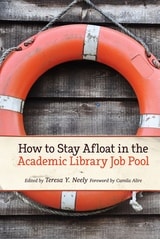
How to Stay Afloat in the Academic Library Job Pool
Teresa Y. Neely
American Library Association, 2011
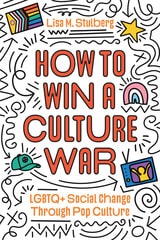
How to Win a Culture War
LGBTQ+ Social Change Through Pop CultureLisa M. Stulberg
University of Chicago Press, 2026
How elite athletes and entertainment industry movers and shakers work to win the culture war for LGBTQ+ social justice.
The unquestionable runaway television hit of late 2025 was Crave/HBO Max’s Heated Rivalry, a show that tells the love story of two queer ice hockey players. This show—and the wider social context around it—would have been unthinkable without the courageous writing, art, and advocacy of previous generations of LGBTQ+ people and their allies in the entertainment industry. In How to Win a Culture War, sociologist Lisa M. Stulberg argues that, despite substantial barriers, past and current creatives and athletes are changing American culture through their contributions to arts, sports, and politics.
Stulberg conducted in-depth interviews with 170 culture workers—including television, film, and theater actors and creators; musicians; elite athletes; and activists over the span of 14 years. These include stars such as Will & Grace's Eric McCormack, Orange Is the New Black’s Lea DeLaria, Olympic diver Greg Louganis, and several former NFL players, as well as the TV and movie writers, producers, and directors behind some of pop culture’s boldest moves. These culture makers take six primary steps toward LGBTQ+ social change: they become visible, use available platforms, change their workplaces, overachieve, become normal, and stay queer. In this work, they are opening up the culture, changing hearts and minds, and building community, even amid a fresh round of ruthless political attacks on LGBTQ+ people.
Providing rich behind-the-scenes insight and cultural material, Stulberg outlines an urgently needed playbook for how to win a culture war.
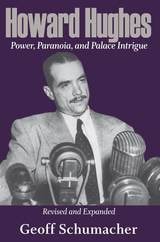
Howard Hughes
Power, Paranoia, and Palace Intrigue, Revised and ExpandedGeoff Schumacher
University of Nevada Press, 2020
Although the public viewed Hughes as a heroic and independent-minded trailblazer, behind closed doors he suffered from germophobia, obsessive-compulsive disorder, and an addiction to painkillers. He became paranoid and reclusive, surrounding himself with a small cadre of loyal caretakers. As executives battled each other over his empire, Hughes’ physical and mental health deteriorated to the point where he lost control of his business affairs.
This second edition includes more insider details on Hughes’ personal interactions with actresses, journalists, and employees. New chapters provide insights into Hughes’s involvement with the mob, his ownership and struggles as the majority shareholder of TWA and the wide-ranging activities of Hughes Aircraft Company, Hughes’s critical role in the Glomar Explorer CIA project (a deep-sea drillship platform built to recover the Soviet submarine K-129), and more. Based on in-depth interviews with individuals who knew and worked with Hughes, this fascinating biography provides a colorful and comprehensive look at Hughes—from his life and career to his final years and lasting influence. This penetrating depiction of the man behind the curtain demonstrates Hughes’s legacy, and enduring impact on popular culture.

Howard Stansbury's Survey of the Great Salt Lake, 1850
Brigham D. Madsen
University of Utah Press, 2027

Huckleberry Finn as Idol and Target
The Functions of Criticism in Our TimeJonathan Arac
University of Wisconsin Press, 1997
If racially offensive epithets are banned on CNN air time and in the pages of USA Today, Jonathan Arac asks, shouldn’t a fair hearing be given to those who protest their use in an eighth-grade classroom? Placing Mark Twain’s comic masterpiece, Huckleberry Finn, in the context of long-standing American debates about race and culture, Jonathan Arac has written a work of scholarship in the service of citizenship.
Huckleberry Finn, Arac points out, is America’s most beloved book, assigned in schools more than any other work because it is considered both the “quintessential American novel” and “an important weapon against racism.” But when some parents, students, and teachers have condemned the book’s repeated use of the word “nigger,” their protests have been vehemently and often snidely countered by cultural authorities, whether in the universities or in the New York Times and the Washington Post. The paradoxical result, Arac contends, is to reinforce racist structures in our society and to make a sacred text of an important book that deserves thoughtful reading and criticism. Arac does not want to ban Huckleberry Finn, but to provide a context for fairer, fuller, and better-informed debates.
Arac shows how, as the Cold War began and the Civil Rights movement took hold, the American critics Lionel Trilling, Henry Nash Smith, and Leo Marx transformed the public image of Twain’s novel from a popular “boy’s book” to a central document of American culture. Huck’s feelings of brotherhood with the slave Jim, it was implied, represented all that was right and good in American culture and democracy. Drawing on writings by novelists, literary scholars, journalists, and historians, Arac revisits the era of the novel’s setting in the 1840s, the period in the 1880s when Twain wrote and published the book, and the post–World War II era, to refute many deeply entrenched assumptions about Huckleberry Finn and its place in cultural history, both nationally and globally. Encompassing discussion of Harriet Beecher Stowe, Frederick Douglass, Ralph Ellison, Archie Bunker, James Baldwin, Shelley Fisher Fishkin, and Mark Fuhrman, Arac’s book is trenchant, lucid, and timely.
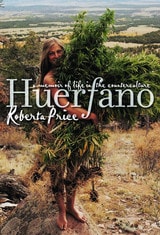
Huerfano
A Memoir of Life in the CountercultureRoberta M. Price
University of Massachusetts Press, 2004
In the late 1960s, new age communes began springing up in the American Southwest with names like Drop City, New Buffalo, Lama Foundation, Morning Star, Reality Construction Company, and the Hog Farm. In the summer of 1969, Roberta Price, a recent college graduate, secured a grant to visit these communities and photograph them. When she and her lover David arrived at Libre in the Huerfano Valley of southern Colorado, they were so taken with what they found that they wanted to participate instead of observe. The following spring they married, dropped out of graduate school in upstate New York, packed their belongings into a 1947 Chrysler Windsor Coupe, and moved to Libre, leaving family and academia behind.
Huerfano is Price's captivating memoir of the seven years she spent in the Huerfano ("Orphan") Valley when it was a petri dish of countercultural experiments. She and David joined with fellow baby boomers in learning to mix cement, strip logs, weave rugs, tan leather, grow marijuana, build houses, fix cars, give birth, and make cheese, beer, and furniture as well as poetry, art, music, and love. They built a house around a boulder high on a ridge overlooking the valley and made ends meet by growing their own food, selling homemade goods, and hiring themselves out as day laborers. Over time their collective ranks swelled to more than three hundred, only to diminish again as, for many participants, the dream of a life of unbridled possibility gradually yielded to the hard realities of a life of voluntary poverty.
Price tells her story with a clear, distinctive voice, documenting her experiences with photos as well as words. Placing her story in the larger context of the times, she describes her participation in the antiwar movement, the advent of the women's movement, and her encounters with such icons as Ken Kesey, Gary Snyder, Abbie Hoffman, Stewart Brand, Allen Ginsberg, and Baba Ram Dass.
At once comic, poignant, and above all honest, Huerfano recaptures the sense of affirmation and experimentation that fueled the counterculture without lapsing into nostalgic sentimentality on the one hand or cynicism on the other.

Hugh Davis and His Alabama Plantation
Weymouth T. Jordan
University of Alabama Press, 1948
Scholars and readers continue to illuminate the complex financial arrangements of the Antebellum South, many regions of which lacked basic banking services. Following the life of Davis traces his early years of apprenticeship and debt, the use of rotating credit, and the relationship of slaves to finances. The book is also full of fascinating details of his life, such as the setting out in one month of 750 yards of roses. This account also recounts the how this financial system and lifestyle were swept away by the Civil War.
Scholars and general readers interested in Southern history as illuminated not in macroeconomic theories but in the quotidian life and choices of one man will find much of interest in Davis's life.
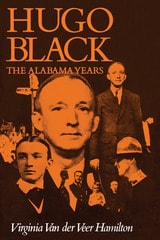
Hugo Black
The Alabama YearsVirginia Van Der Veer Hamilton
University of Alabama Press, 1982
The making of a Supreme Court justice in the crucible of Alabama politics.
Hugo Black: The Alabama Years by Virginia Van der Veer Hamilton is a richly researched political biography that explores the formative experiences of Hugo L. Black, one of the most influential justices in the history of the United States Supreme Court. Focusing on his early life and career in Alabama, Hamilton traces Black's journey from his rural upbringing and legal training to his emergence as a prominent attorney, politician, and United States senator. Through careful analysis of Alabama's social, economic, and political landscape, the book reveals the forces that shaped Black's ideas about government, democracy, and constitutional rights.
Hamilton examines Black's rise during a period of profound change in the South, highlighting the alliances, controversies, and challenges that defined his political career. The study places Black within the broader context of Progressive Era reform, the transformation of Southern politics, and the expanding role of the federal government in American life. At the same time, it provides a nuanced portrait of a complex public figure whose beliefs and actions continue to inspire debate among historians and legal scholars.
Essential reading for students of legal history, political science, Southern studies, and American government, this volume offers valuable insight into the Alabama roots of a justice who would profoundly influence modern constitutional interpretation and civil liberties jurisprudence.
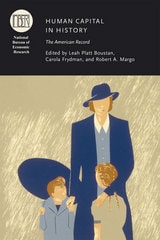
Human Capital in History
The American RecordEdited by Leah Platt Boustan, Carola Frydman, and Robert A. Margo
University of Chicago Press, 2014
Human Capital in History brings together contributions from leading researchers in economic history, labor economics, the economics of education, and related fields. Building on Claudia Goldin’s landmark research on the labor history of the United States, the authors consider the roles of education and technology in contributing to American economic growth and well-being, the experience of women in the workforce, and how trends in marriage and family affected broader economic outcomes. The volume provides important new insights on the forces that affect the accumulation of human capital.
Human Capital
A Theoretical and Empirical Analysis, with Special Reference to Education, 3rd EditionGary S. Becker
University of Chicago Press, 1993
This expanded edition includes four new chapters, covering recent ideas about human capital, fertility and economic growth, the division of labor, economic considerations within the family, and inequality in earnings.

Human Programming
Brainwashing, Automatons, and American UnfreedomScott Selisker
University of Minnesota Press, 2016
Do our ways of talking about contemporary terrorism have a history in the science, technology, and culture of the Cold War? Human Programming explores this history in a groundbreaking work that draws connections across decades and throughout American culture, high and low. Scott Selisker argues that literary, cinematic, and scientific representations of the programmed mind have long shaped conversations in U.S. political culture about freedom and unfreedom, and about democracy and its enemies.
Selisker demonstrates how American conceptions of freedom and of humanity have changed in tandem with developments in science and technology, including media technology, cybernetics, behaviorist psychology, and sociology. Since World War II, propagandists, scientists, and creative artists have adapted visions of human programmability as they sought to imagine the psychological manipulation and institutional controls that could produce the inscrutable subjects of totalitarian states, cults, and terrorist cells. At the same time, writers across the political spectrum reimagined ideals of American freedom, democracy, and diversity by way of contrast with these posthuman specters of mental unfreedom. Images of such “human automatons” circulated in popular films, trials, travelogues, and the news media, giving form to the nebulous enemies of the postwar and contemporary United States: totalitarianism, communism, total institutions, cult extremism, and fundamentalist terrorism.
Ranging from discussions of The Manchurian Candidate and cyberpunk science fiction to the cases of Patty Hearst and the “American Taliban” John Walker Lindh, Human Programming opens new ways of understanding the intertwined roles of literature, film, science, and technology in American culture.

Human Resource for Results
American Library Association, 2007
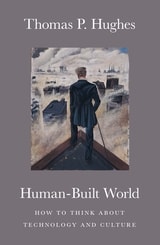
Human-Built World
How to Think about Technology and CultureThomas P. Hughes
University of Chicago Press, 2004
Hughes draws on an enormous range of literature, art, and architecture to explore what technology has brought to society and culture, and to explain how we might begin to develop an "ecotechnology" that works with, not against, ecological systems. From the "Creator" model of development of the sixteenth century to the "big science" of the 1940s and 1950s to the architecture of Frank Gehry, Hughes nimbly charts the myriad ways that technology has been woven into the social and cultural fabric of different eras and the promises and problems it has offered. Thomas Jefferson, for instance, optimistically hoped that technology could be combined with nature to create an Edenic environment; Lewis Mumford, two centuries later, warned of the increasing mechanization of American life.
Such divergent views, Hughes shows, have existed side by side, demonstrating the fundamental idea that "in its variety, technology is full of contradictions, laden with human folly, saved by occasional benign deeds, and rich with unintended consequences." In Human-Built World, he offers the highly engaging history of these contradictions, follies, and consequences, a history that resurrects technology, rightfully, as more than gadgetry; it is in fact no less than an embodiment of human values.
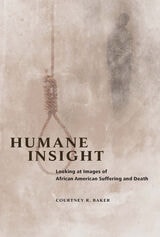
Humane Insight
Looking at Images of African American Suffering and DeathCourtney Baker
University of Illinois Press, 2017
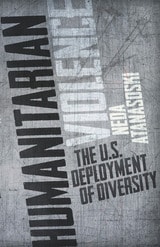
Humanitarian Violence
The U.S. Deployment of DiversityNeda Atanasoski
University of Minnesota Press, 2013
When is a war not a war? When it is undertaken in the name of democracy, against the forces of racism, sexism, and religious and political persecution? This is the new world of warfare that Neda Atanasoski observes in Humanitarian Violence, different in name from the old imperialism but not so different in kind. In particular, she considers U.S. militarism—humanitarian militarism—during the Vietnam War, the Soviet-Afghan War, and the 1990s wars of secession in the former Yugoslavia.
What this book brings to light—through novels, travel narratives, photojournalism, films, news media, and political rhetoric—is in fact a system of postsocialist imperialism based on humanitarian ethics. In the fiction of the United States as a multicultural haven, which morally underwrites the nation’s equally brutal waging of war and making of peace, parts of the world are subject to the violence of U.S. power because they are portrayed to be homogeneous and racially, religiously, and sexually intolerant—and thus permanently in need of reform. The entangled notions of humanity and atrocity that follow from such mediations of war and crisis have refigured conceptions of racial and religious freedom in the post–Cold War era. The resulting cultural narratives, Atanasoski suggests, tend to racialize ideological differences—whereas previous forms of imperialism racialized bodies. In place of the European racial imperialism, U.S. settler colonialism, and pre–civil rights racial constructions that associated racial difference with a devaluing of nonwhite bodies, Humanitarian Violence identifies an emerging discourse of race that focuses on ideological and cultural differences and makes postsocialist and Islamic nations the potential targets of U.S. disciplining violence.
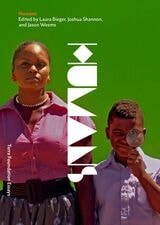
Humans
Edited by Laura Bieger, Joshua Shannon, and Jason Weems
Terra Foundation for American Art, 2021
Humans are organisms, but “the human being” is a term referring to a complicated, self-contradictory, and historically evolving set of concepts and practices. Humans explores competing versions, constructs, and ideas of the human being that have figured prominently in the arts of the United States. These essays consider a range of artworks from the colonial period to the present, examining how they have reflected, shaped, and modeled ideas of the human in American culture and politics. The book addresses to what extent artworks have conferred more humanity on some human beings than others, how art has shaped ideas about the relationships between humans and other beings and things, and in what ways different artistic constructions of the human being evolved, clashed, and intermingled over the course of American history. Humans both tells the history of a concept foundational to US civilization and proposes new means for its urgently needed rethinking.
Humbug
The Art of P. T. BarnumNeil Harris
University of Chicago Press, 1981
Hungary in the Cold War, 1945-1956
Between the United States and the Soviet UnionLászló Borhi
Central European University Press, 2004
Hungry Hill
A MemoirCarole O'Malley Gaunt
University of Massachusetts Press, 2007
On a sweltering June night in 1959, Betty O'Malley died from lymphatic cancer, leaving behind an alcoholic husband and eight shell-shocked children—seven sons and one daughter, ranging in age from two to fifteen years. The daughter, Carole, was thirteen at the time. In this poignant memoir, she recalls in vivid detail the chaotic course of her family life over the next four years.
The setting for the story is Hungry Hill, an Irish-Catholic working-class neighborhood in Springfield, Massachusetts. The author recounts her sad and turbulent story with remarkable clarity, humor, and insight, punctuating the narrative with occasional fictional scenes that allow the adult Carole to comment on her teenage experiences and to probe the impact of her mother's death and her father's alcoholism.
Hungry Hill
A MemoirCarole O'Malley Gaunt
University of Massachusetts Press, 2007
On a sweltering June night in 1959, Betty O'Malley died from lymphatic cancer, leaving behind an alcoholic husband and eight shell-shocked children—seven sons and one daughter, ranging in age from two to fifteen years. The daughter, Carole, was thirteen at the time. In this poignant memoir, she recalls in vivid detail the chaotic course of her family life over the next four years.
The setting for the story is Hungry Hill, an Irish-Catholic working-class neighborhood in Springfield, Massachusetts. The author recounts her sad and turbulent story with remarkable clarity, humor, and insight, punctuating the narrative with occasional fictional scenes that allow the adult Carole to comment on her teenage experiences and to probe the impact of her mother's death and her father's alcoholism.
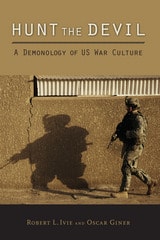
Hunt the Devil
A Demonology of US War CultureRobert L. Ivie and Oscar Giner
University of Alabama Press, 2015
Meticulously researched, documented, and argued, Hunt the Devil opens with contemporary images of the US’s global war on terror in the aftermath of 9/11. In five chapters devoted to the demonization of evildoers, witches, Indians, dictators, and Reds by American writers, in presidential rhetoric, and in popular culture, Ivie and Giner show how the use of demonization in the war on terror is only the most recent manifestation of a process that has recurred throughout American history.
In a sixth chapter, the authors introduce the archetype of the Trickster. Though not opposed to the Devil per se, the Trickster’s democratic impulses have often provided a corrective antidote to the corrosive and distorting effects of demonization. Invoking the framework of Carl Jung’s shadow aspect, Hunt the Devil offers the Trickster as a figure who can break the cycle of demonization and war.
The role of the mythic Devil in the American psyche has profound implications, not just for American diplomacy and the use of American arms in the world, but for the possibility of domestic peace within an increasingly diverse society. Hunt the Devil provides much of interest to readers and scholars in the fields of war, rhetorical studies, American Studies, US political culture, Jungian psychology, and mythography.
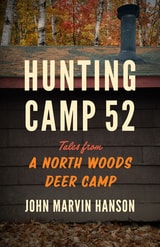
Hunting Camp 52
Tales from a North Woods Deer CampJohn Marvin Hanson
Wisconsin Historical Society Press, 2016
Meet the Jolly Boys—five men from northern Wisconsin who built a deer hunting shack in 1955 and established a tradition that has now lasted over six decades. Hunting Camp 52, affectionately known as Blue Heaven, is a place where every trail, rock, and ravine has its own nickname; every kill is recorded by hand on a window shade; every hunter happily croons along during evening songfests; and every rowdy poker game lasts late into the night. The outhouse is always cold, the porcupines are always a problem, and the vehicles are always getting stuck in the mud, but there’s nowhere else these men would rather be.
In Hunting Camp 52: Tales from a North Woods Deer Camp, John Marvin Hanson—the son of one of the original Jolly Boys—recounts the sidesplitting antics, the memorable hunts, and the profound camaraderie that has developed over almost sixty seasons at Blue Heaven. Hanson also includes more than twenty recipes for gourmet comfort foods prepared each year at camp, from pickled venison hearts to Norwegian meatballs to the treasured recipe for Reali Spaghetti. As the Jolly Boys age and younger generations take up the mantle of Blue Heaven, Hanson comes to appreciate that hunting camp is not about bagging a trophy buck as much as it is about spending time with the friends and family members who matter most.
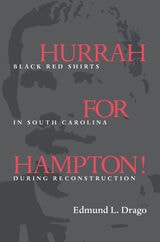
Hurrah for Hampton!
Black Red Shirts in South Carolina during ReconstructionEdmund L. Drago
University of Arkansas Press, 1999
This post-revisionist study examines the motives and the concerns of the ex-slaves in South Carolina who supported a movement that eventually led to white supremacy.
Although most freedmen throughout the states of the former Confederacy were Republicans loyal to the party of the Federal government that had emancipated them, they were factions of African-American voters who aligned themselves with local white Democratic leaders. one such group of black conservatives joined the “Red Shirts,” white paramilitary clubs that attempted to restore antebellum values in electing former Confederate general Wade Hampton governor of South Carolina in 1876.
Drago’s fine analysis recovers and explains this lost aspect of Southern black history. Drawing on primary sources that include testimonies of several black Red Shirts before a Congressional investigation of the election and eleven slave narratives, he de-romanticizes the black experience by examining the relationship between black initiative and southern paternalism.
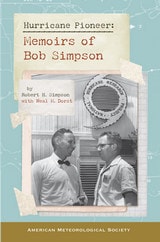
Hurricane Pioneer
Memoirs of Bob SimpsonRobert H. Simpson with Neal M. Dorst
American Meteorological Society, 2014
For Simpson this was just one of his many pioneering explorations of hurricanes and extreme storms. Over his decades-long career his research led to great leaps in our understanding of tropical meteorology and our approach to hurricane safety. He was the first director of the National Hurricane Research Project and the second director of the National Hurricane Center, though he may be best known as co-creator of the widely used Saffir-Simpson Hurricane Scale, familiar to anyone who has heard a reporter use the words “category five.”
Simpson’s memoirs take readers from his experience with the Corpus Christi hurricane of 1919 to his travels to study weather across the globe. Along the way he crosses paths with other weather greats, including his trailblazing wife, meteorologist Joanne Simpson. Hurricane Pioneer is a riveting first-hand account at a revolutionary time in meteorology.
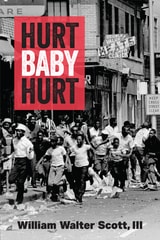
Hurt, Baby, Hurt
William Walter Scott, III
University of Michigan Press, 2025
This memoir recounts Scott’s life from his birth up through the Rebellion. It tells the story of how the Rebellion started and provides an on-the-ground account of the Rebellion and its immediate aftermath, including the police detainment of the people involved. Now with a new foreword by Austin McCoy that considers the lasting impact of the rebellion, Hurt, Baby, Hurt offers valuable insight into an important part of Detroit history.
Hush
Media and Sonic Self-ControlMack Hagood
Duke University Press, 2019