Results by title
4917 books match the query 'Philosophy' and 205 start with h
Heidegger and Marx
A Productive Dialogue over the Language of HumanismLaurence Paul Hemming
Northwestern University Press, 2013
Heidegger and Plato
Toward DialogueCatalin Partenie and Tom Rockmore
Northwestern University Press, 2005
As editors Catalin Partenie and Tom Rockmore remark, a simple way to describe Heidegger's reading of Plato might be to say that what began as an attempt to appropriate Plato (and through him a large portion of Western philosophy) finally ended in an estrangement from both Plato and Western philosophy. The authors of this volume consider Heidegger's thought in relation to Plato before and after the "Kehre" or turn. In doing so, they take up various central issues in Heidegger's Being and Time (1927) and thereafter, and the questions of hermeneutics, truth, and language. The result is a subtle and multifaceted reinterpretation of Heidegger's position in the tradition of philosophy, and of Plato's role in determining that position.

Heidegger and Whitehead
A Phenomenological Examination into the Intelligibility of ExperienceRon L. Cooper
Ohio University Press, 1993
Martin Heidegger’s Being and Time can be broadly termed a transcendental inquiry into the structures that make human experience possible. Such an inquiry reveals the conditions that render human experience intelligible. Using Being and Time as a model, I attempt to show that Alfred North Whitehead’s Process and Reality not only aligns with Being and Time in opposing many elements of traditional Western philosophy but also exhibits a similar transcendental inquiry.
With this reading, Process and Reality contains concepts much like Being-in-the-world, ecstatic temporality, and others found in Being and Time. More important, this interpretation considers Whitehead’s treatment of human experience paradigmatic for understanding his cosmological scheme in general. Finally, the results of this study are employed to sketch a phenomenology of holy experience.
— Prefatory Note to Heidegger and Whitehead
Heidegger and the Destruction of Aristotle
On How to Read the TraditionSean D. Kirkland
Northwestern University Press, 2023
A bold new conception of Heidegger’s project of Destruktion as a method of interpreting history
For Martin Heidegger, our inherited traditions provide the concepts through which we make our world intelligible. Concepts we can also oppose, disrupt, and even exceed. First, however, if Western philosophy is our inheritance, we must submit it to Destruktion—starting with Aristotle. Heidegger and the Destruction of Aristotle: On How to Read the Tradition presents a new conception of Heidegger’s “destruction” as a way of reading.
Situated between Nietzschean genealogy and Derridean deconstruction, this method uncovers in Aristotle the most vital originating articulations of the Western tradition and gives us the means to confront it. Sean D. Kirkland argues this is not a rejection of the past but a sophisticated and indeed timely hermeneutic tool—a complex, illuminating, and powerful method for interpreting historical texts at our present moment. Acknowledging the historical Heidegger as a politically compromised and still divisive figure, Kirkland demonstrates that Heideggerian destruction is a method of interpreting history that enables us to reorient and indeed transform its own most troubling legacies.

Heidegger and the Myth of a Jewish World Conspiracy
Peter Trawny
University of Chicago Press, 2015
While Heidegger’s affiliation with National Socialism is well known, the anti-Semitic dimension of that engagement could not be fully told until now. Trawny traces Heidegger’s development of a grand “narrative” of the history of being, the “being-historical thinking” at the center of Heidegger’s work after Being and Time. Two of the protagonists of this narrative are well known to Heidegger’s readers: the Greeks and the Germans. The world-historical antagonist of this narrative, however, has remained hitherto undisclosed: the Jews, or, more specifically, “world Judaism.” As Trawny shows, world Judaism emerges as a racialized, destructive, and technological threat to the German homeland, indeed, to any homeland whatsoever. Trawny pinpoints recurrent, anti-Semitic themes in the Notebooks, including Heidegger’s adoption of crude cultural stereotypes, his assigning of racial reasons to philosophical decisions (even undermining his Jewish teacher, Edmund Husserl), his endorsement of a Jewish “world conspiracy,” and his first published remarks on the extermination camps and gas chambers (under the troubling aegis of a Jewish “self-annihilation”). Trawny concludes with a thoughtful meditation on how Heidegger’s achievements might still be valued despite these horrifying facets. Unflinching and systematic, this is one of the most important assessments of one of the most important philosophers in our history.

Heidegger and the Politics of Poetry
Philippe Lacoue-Labarthe
University of Illinois Press, 2006
This volume collects and translates Philippe Lacoue-Labarthe’s studies of Heidegger, written and revised between 1990 and 2002. All deal with Heidegger’s relation to politics, specifically through Heidegger’s interpretations of the poetry of Hölderlin. Lacoue-Labarthe argues that it is through Hölderlin that Heidegger expresses most explicitly his ideas on politics, his nationalism, and the importance of myth in his thinking, all of which point to substantial affinities with National Socialism.
Lacoue-Labarthe not only examines the intellectual background--including Romanticism and "German ideology"--of Heidegger's uses and abuses of poetry, he also attempts to reestablish the vexed relationship between poetry and philosophy outside the bounds of the Heideggerian reading. He turns to Walter Benjamin and Theodor Adorno, as well as Paul Celan, arguing for the necessity of poetry as an engagement with history. While Heidegger's readings of Hölderlin attempt to appropriate poetry for mythic and political ends, Lacoue-Labarthe insists that poetry and thought can, and must, converge in another way. Jeff Fort provides a precise translation capturing the spirit and clarity of Lacoue-Labarthe’s writing, as well as an introduction clearly situating the debates addressed in these essays.
Heidegger and the Tradition
Werner Marx
Northwestern University Press, 1971
Heidegger and the Will
On the Way to GelassenheitBret W. Davis
Northwestern University Press, 2007
Moreover, the book demonstrates why popular critical interpretations of Heidegger's relation to the will are untenable, how his so-called "turn" is not a simple "turnaround" from voluntarism to passivism. Davis explains why the later Heidegger's key notions of "non-willing" and "Gelassenheit" do not imply a mere abandonment of human action; rather, they are signposts in a search for an other way of being, a "higher activity" beyond the horizon of the will. While elucidating this search, his work also provides a critical look at the ambiguities, tensions, and inconsistencies of Heidegger's project, and does so in a way that allows us to follow the inner logic of the philosopher's struggles. As meticulous as it is bold, this comprehensive reinterpretation will change the way we think about Heidegger's politics and about the thrust of his philosophy as a whole.
Heidegger's Confessions
The Remains of Saint Augustine in "Being and Time" and BeyondRyan Coyne
University of Chicago Press, 2015
Coyne first examines the role of Augustine in Heidegger’s early period and the development of his magnum opus, Being and Time. He then goes on to show that Heidegger owed an abiding debt to Augustine even following his own rise as a secular philosopher, tracing his early encounters with theological texts through to his late thoughts and writings. Bringing a fresh and unexpected perspective to bear on Heidegger’s profoundly influential critique of modern metaphysics, Coyne traces a larger lineage between religious and theological discourse and continental philosophy.

Heidegger's De(con)struction of Metaphysics
Reiner Schürmann
Diaphanes, 2021
“The destruction has no other intent than to win back the original experience of metaphysics through a deconstruction of those conceptions which have become current and empty.” The purpose of taking to pieces the fabric of Western metaphysics is to show how at each important stage “the question of the meaning of Being has not only remained unattended to or inadequately raised, but that it has become quite forgotten in spite of all our interest in 'metaphysics'.”
Heidegger's Political Thinking
James F. Ward
University of Massachusetts Press, 1995
In recent years there has been much controversy concerning Martin Heidegger’s politics, prompted by new research on the nature and extent of his engagement with National Socialism. Examining the political ideas embedded in Heidegger’s larger philosophical oeuvre, James F. Ward moves beyond the narrow preoccupation with Heidegger’s overtly pro-Nazi utterances and activities to show how the central theme of Heidegger’s philosophy—the question of Being—is itself inherently political.
Ward builds his case on close readings of texts drawn from nearly all of the writings published during Heidegger’s lifetime as well as from lectures, course transcripts, and other materials that appeared posthumously. With subtlety and insight, he uncovers the political content of Heidegger’s thinking on such topics as the temporality of Being, the role of science in the crisis of the West, and the presumed special status and destiny of the German people. In an epilogue, Ward reflects on the implications of Heidegger’s political thinking for postmodern political theory.
Heidegger's Question of Being
Holger Zaborowski
Catholic University of America Press, 2017
The contributions to this volume, written by leading scholars in the field of Heidegger research, address many of these questions in close readings of Heidegger’s texts and thus provide sound orientation in the field of contemporary Heidegger research. They show how the different trajectories of Heidegger’s thought—his early interest in the meaning of Being and in Dasein, his discussion of, and involvement with, politics, his understanding of art, poetry, and technology, his concept of truth and the idea of a history of Being—all converge at one point: the question of Being. It thus becomes clear that, all differences notwithstanding, Heidegger followed one very consistent path of thinking.
Heidegger, Strauss, and the Premises of Philosophy
On Original ForgettingRichard L. Velkley
University of Chicago Press, 2011
Heidegger
Phenomenology, Ecology, PoliticsMichael Marder
University of Minnesota Press, 2018
Understanding the political and ecological implications of Heidegger’s work without ignoring his noxious public engagements
The most controversial philosopher of the twentieth century, Martin Heidegger has influenced generations of intellectuals even as his involvement with Nazism and blatant anti-Semitism, made even clearer after the publication of his Black Notebooks, have recently prompted some to discard his contributions entirely. For Michael Marder, Heidegger’s thought remains critical for interpretations of contemporary politics and our relation to the natural environment.
Bringing together and reframing more than a decade of Marder’s work on Heidegger, this volume questions the wholesale rejection of Heidegger, arguing that dismissive readings of his project overlook the fact that it is impossible to grasp without appreciating his lifelong commitment to phenomenology and that Heidegger’s anti-Semitism is an aberration in his still-relevant ecological and political thought, rather than a defining characteristic. Through close readings of Heidegger’s books and seminars, along with writings by other key phenomenologists and political philosophers, Marder contends that neither Heidegger’s politics nor his reflections on ecology should be considered in isolation from his phenomenology. By demonstrating the codetermination of his phenomenological, ecological, and political thinking, Marder accounts for Heidegger’s failures without either justifying them or suggesting that they invalidate his philosophical endeavor as a whole.
Heidegger
The Question of Being and HistoryJacques Derrida
University of Chicago Press, 2016
Derrida performs an almost surgical reading of the notoriously difficult text, marrying pedagogical clarity with patient rigor and acting as a lucid guide through the thickets of Heidegger’s prose. At this time in intellectual history, Heidegger was still somewhat unfamiliar to French readers, and Being and Time had only been partially translated into French. Here Derrida mostly uses his own translations, giving his own reading of Heidegger that directly challenges the French existential reception initiated earlier by Sartre. He focuses especially on Heidegger’s Destruktion (which Derrida would translate both into “solicitation” and “deconstruction”) of the history of ontology, and indeed of ontology as such, concentrating on passages that call for a rethinking of the place of history in the question of being, and developing a radical account of the place of metaphoricity in Heidegger’s thinking.
This is a rare window onto Derrida’s formative years, and in it we can already see the philosopher we’ve come to recognize—one characterized by a bravura of exegesis and an inventiveness of thought that are particularly and singularly his.
Heirs and Ancestors
John K. Ryan
Catholic University of America Press, 2018

Hell and the Mercy of God
Adrian J. Reimers
Catholic University of America Press, 2017
Catholic philosopher Adrian Reimers takes on these challenges in Hell and the Mercy of God, drawing on relevant sources from Aristotle to Aquinas, from Dante to Tolkien, from Wagner to John Paul II, along with Billie Holliday, The Godfather, and the music of George Gershwin. He presents a philosophical theology, grounded in Scripture, of the nature of goodness and evil, exploring various types of pain, the seven capital sins, the resurrection of the body, the meaning of mammon, the core meaning of idolatry, the psychology of Satan and those who choose his path, and the moral responsibility of the human person.
These reflections illuminate the intelligibility of orthodox Catholic teachings on the goodness of God and the reality of hell. Hell is not an arbitrary imposition set up for human rule-breakers but a continuation of a freely chosen way of life manifest even in this world. Examples from history, art, and contemporary culture lead the author to conclude that anyone who does not believe in the reality of hell is not paying enough attention. And yet, mercy and hope remain triumphant, because, just as Christ offers entrance into paradise to the “good thief” Dismas on the cross, God continues to offer repentance and salvation to all who live.
Henri Bergson
Vladimir Jankélévitch
Duke University Press, 2015
Henri Lefebvre on Space
Architecture, Urban Research, and the Production of TheoryLukasz Stanek
University of Minnesota Press, 2010
Countering the prevailing view, which reduces Lefebvre’s theory of space to a projection of his philosophical positions, Stanek argues that Lefebvre’s work grew out of his concrete, empirical engagement with everyday practices of dwelling in postwar France and his exchanges with architects and planners. Stanek focuses on the interaction between architecture, urbanism, sociology, and philosophy that occurred in France in the 1960s and 1970s, which was marked by a shift in the processes of urbanization at all scales, from the neighborhood to the global level. Lefebvre’s thinking was central to this encounter, which informed both his theory of space and the concept of urbanization becoming global.
Stanek offers a deeper and clearer understanding of Lefebvre’s thought and its implications for the present day. At a time when cities are increasingly important to our political, spatial, and architectural world, this reassessment proposes a new empirical, and practical, interpretation of Lefebvre’s ideas on urbanism.

Henry David Thoreau
A LifeLaura Dassow Walls
University of Chicago Press, 2017
But there was much more to Thoreau than his brief experiment in living at Walden Pond. A member of the vibrant intellectual circle centered on his neighbor Ralph Waldo Emerson, he was also an ardent naturalist, a manual laborer and inventor, a radical political activist, and more. Many books have taken up various aspects of Thoreau’s character and achievements, but, as Laura Dassow Walls writes, “Thoreau has never been captured between covers; he was too quixotic, mischievous, many-sided.” Two hundred years after his birth, and two generations after the last full-scale biography, Walls restores Henry David Thoreau to us in all his profound, inspiring complexity.
Walls traces the full arc of Thoreau’s life, from his early days in the intellectual hothouse of Concord, when the American experiment still felt fresh and precarious, and “America was a family affair, earned by one generation and about to pass to the next.” By the time he died in 1862, at only forty-four years of age, Thoreau had witnessed the transformation of his world from a community of farmers and artisans into a bustling, interconnected commercial nation. What did that portend for the contemplative individual and abundant, wild nature that Thoreau celebrated?
Drawing on Thoreau’s copious writings, published and unpublished, Walls presents a Thoreau vigorously alive in all his quirks and contradictions: the young man shattered by the sudden death of his brother; the ambitious Harvard College student; the ecstatic visionary who closed Walden with an account of the regenerative power of the Cosmos. We meet the man whose belief in human freedom and the value of labor made him an uncompromising abolitionist; the solitary walker who found society in nature, but also found his own nature in the society of which he was a deeply interwoven part. And, running through it all, Thoreau the passionate naturalist, who, long before the age of environmentalism, saw tragedy for future generations in the human heedlessness around him.
“The Thoreau I sought was not in any book, so I wrote this one,” says Walls. The result is a Thoreau unlike any seen since he walked the streets of Concord, a Thoreau for our time and all time.
Henry Hotze, Confederate Propagandist
Selected Writings on Revolution, Recognition, and RaceLonnie A. Burnett
University of Alabama Press, 2008
Among the arguments Hotze employed were adaptations of the scientific racism of the period, which attempted to establish a rational basis for assumptions of racial difference. After the collapse of the Confederacy in 1865, Hötze remained in Europe, where he became an active partisan and promoter of the ideas of Arthur de Gobineau (1816–1882) whose work Essai sur L’inégalité des Races Humaines was a founding document in racism’s struggle for intellectual respectability.
This work consists of a biographical essay on Hotze; his contributions to Mobile newspapers during his military service in 1861; his correspondence with Confederate officials during his service in London; articles he published in London to influence British and European opinion; and his correspondence with, and published work in support of, Gobineau.
Henry van de Velde
Selected Essays, 1889–1914Henry van de Velde
J. Paul Getty Trust, The, 2022
Belgian artist, architect, designer, and theorist Henry van de Velde (1863–1957) was a highly original and influential figure in Europe beginning in the 1890s. A founding member of the Art Nouveau and Jugendstil movements, he also directed the Grand-Ducal Saxon School of Arts and Crafts in Weimar, Germany, which eventually became the Bauhaus under Walter Gropius.
This selection of twenty-six essays, translated from French and German, includes van de Velde’s writings on William Morris and the English Arts and Crafts movement, Neo-Impressionist painting, and relationships between ornament, line, and abstraction in German aesthetics. The texts trace the evolution of van de Velde’s thoughts during his most productive period as a theorist in the artistic debates in France, Germany, Belgium, and the Netherlands. Katherine M. Kuenzli expertly guides readers to see how van de Velde’s writings reconcile themes of aesthetics and function, and expression and reason, throughout the artistic periods and regions represented by these texts. With introductory discussions of each essay and full annotations, this is an essential volume for a broad range of scholars and students of the history of fine and applied arts and ideas.
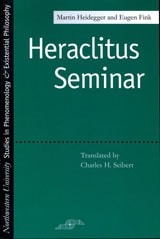
Heraclitus Seminar
Martin Heidegger
Northwestern University Press, 1993
Heidegger's remarks in this seminar illuminate his interpretations not only of pre-Socratic philosophy, but also of figures such as Hegel and Holderllin. At the same time, Heidegger clarifies many late developments in his own understanding of truth, Being, and understanding. Heidegger and Fink, both deeply rooted in the Freiburg phenomenological tradition, offer two competing approaches to the phenomenological reading of the ancient text-a kind of reading that, as Fink says, is "not so much concerned with the philological problematic . . . as with advancing into the matter itself, that is, toward the matter that must have stood before Heraclitus's spiritual view."

Heresy in the Heartland
The Controversy at The University of Dayton, 1960-67Mary Jude Brown
Catholic University of America Press, 2022
Heritage Dynamics
Understanding and Adapting to Change in Diverse Heritage ContextsKalliopi Fouseki
University College London, 2022
As a sociocultural concept, heritage flows through cycles of emergence, change, disappearance, and revival. These lifecycles are influenced by heritage environments such as museums, landscapes, cities, and intangible networks of cultural circulation. In Heritage Dynamics, Kalliopi Fouseki develops a new theoretical and methodological framework that will enable heritage scholars and practitioners to unpack the ways and conditions under which heritage changes. Under the contexts of urban cities, residential buildings, museum collections, and subjects of intangible heritage especially concerning flamenco, this work re-orients the consideration of heritage as an object, process, or discourse, towards a more systemic thinking that captures the complexity of this historical-cultural force.
Hermann Cohen
Writings on Neo-Kantianism and Jewish PhilosophyEdited by Samuel Moyn and Robert Schine
Brandeis University Press, 2021
Hermann Cohen (1842–1918) was among the most accomplished Jewish philosophers of modern times—if not the single most significant. But his work has not yet received the attention it deserves. This newly translated collection of his writings—most of which are appearing in English for the first time—illuminates his achievements for student readers and rectifies lapses in his intellectual reception by prior generations. It presents chapters from Cohen’s Ethics of Pure Will, conflicting interpretations of Cohen by Franz Rosenzweig and Alexander Altmann, and finally the eulogy to Cohen delivered at graveside by Ernst Cassirer. Containing full annotations and selections that concentrate both on the philosophical core of Cohen’s writings and the politics of interpretation of his work at the time of his death and after, Hermann Cohen truly brings to light all of Cohen’s accomplishments.
Hermeneutic Phenomenology
The Philosopher of Paul RicoeurDon Ihde
Northwestern University Press, 1971
Hermeneutical Heidegger
Edited by Michael Bowler and Ingo Farin
Northwestern University Press, 2016
Hermeneutics and Truth
Brice R. Wachterhauser
Northwestern University Press, 1994
No thinkers have wrestled with the issue of truth and interpretation in more illuminating ways for the Continental tradition of philosophy than Heidegger and Gadamer. Hermeneutics and Truth is a dual focus on Heidegger and Gadamer, but it concentrates primarily on Gadamer's efforts to think through the issue of truth for hermeneutics and only secondarily on Heidegger's thought on this issue.
Hermeneutics
Interpretation Theory in Schleiermacher, Dilthey, Heidegger, and GadamerRichard E. Palmer
Northwestern University Press, 1969
Palmer principally treats the conception of hermeneutics enunciated by Heidegger and developed into a “philosophical hermeneutics” by Hans-Georg Gadamer. He provides a brief overview of the field of hermeneutics by surveying some half-dozen alternate definitions of the term and by examining in detail the contributions of Friedrich Schleiermacher and Wilhelm Dilthey. In the “Manifesto” which concludes the book, Palmer suggests the potential significance of hermeneutics for literary interpretation.
When the context of interpretation is pressed to its limits, hermeneutics becomes the philosophical analysis of what is involved in every act of understanding. In this context, hermeneutics becomes relevant not simply to the humanistic disciplines, in which linguistic and historical understanding are crucial, but to scientific forms of interpretation as well, for it asserts the principles involved in any and every act of interpretation.
Hermes I
CommunicationMichel Serres
University of Minnesota Press, 2023
For the first time in English, the introductory volume in a major French philosopher’s groundbreaking series of poetic transdisciplinary works
Michel Serres is recognized as one of the giants of postwar French philosophy of knowledge, along with Gilles Deleuze, Jacques Derrida, Michel Foucault, and Gilbert Simondon. His early five-volume series Hermes, which appeared in the 1960s and 1970s, was an intellectual supernova in its proposition that culture and science shared the same mythic and narrative structures. Hermes I: Communication marks the start of a major publishing endeavor to introduce this foundational series into English.
Building on the figure of the Greek god Hermes, who presides over the realms of communication and interpretation, Hermes I embarks on a reflection concerning the history of mathematics via Descartes and Leibniz and culminates by way of a Bachelardian logoanalytic reading of Homer, Dumas, Molière, Verne, and the story of Cinderella. We observe a singular poetic philosopher seeking to bridge the gap between the liberal arts and the sciences through a profound mathematical and poetic fable regarding information theory, history, and art, establishing a new way to think about the production of knowledge during the late twentieth century. In these pages, students and scholars of philosophy will discover an extraordinary project of thought as vital to critical reflection today as it was fifty years ago.
Hermes II
InterferenceMichel Serres
University of Minnesota Press, 2025
Unveiling the hidden connections in the network of knowledge
Hermes II: Interference is the second in a series of works by philosopher Michel Serres using Hermes, god of communication, as an archetypal symbolic figure for reflecting on philosophy and the arts and sciences. Serres delves into the concept of interreferentiality, proposing that every node—whether it be knowledge, objects, or people—exists within a network where it both receives and transmits information. He argues against the existence of a dominant center or pole within these networks, emphasizing that each node can temporarily serve as a focal point depending on context.
Serres presents unique insights into topics such as the nature of knowledge, the world of objects, intersubjectivity, the origins of geometry, the interplay of music and background noise, and empiricism. By identifying parallel structures across these areas, Serres unifies them into a comprehensive theoretical framework, revealing hidden connections and potential future influences. Additionally, this work includes a critique of Gaston Bachelard’s The Formation of the Scientific Mind and concludes with an analysis of communication in Hergé’s The Castafiore Emerald.
Hermes II is a unique blend of ancient and modern perspectives, combining rigorous analysis with an optimistic outlook and highlighting the interconnectedness of knowledge and its implications for fostering peaceful relations within the network of life.
Hermes III
TranslationMichel Serres
University of Minnesota Press, 2026
Unlocking the hidden patterns of knowledge—where science, art, and philosophy speak a common language
Hermes III: Translation is the third volume in Michel Serres’s renowned Hermes series, an ambitious exploration of the deep interconnections among disparate fields of knowledge. While Hermes II: Interference traced the overlapping echoes of ideas across realms, Hermes III moves to translate the structural logics of one field—be it genetics, painting, or philosophy—into the language of another. Revealing how the humanities, science, and art share hidden combinatory architectures, Serres exposes the underlying unity of knowledge systems typically thought distinct.
Through an array of examples—from Monod’s Chance and Necessity to works by Descartes, Leibniz, Comte, Turner, and Roumain—Serres shows how translation uncovers informational and mathematical patterns that shape both ancient and modern thought. This illuminating methodology leads Serres to issue a stark warning: when knowledge is detached from its guiding purpose, it becomes vulnerable to appropriation by destructive political forces.
Yet Serres’s vision remains ultimately hopeful. By tracing knowledge systems back to their mythic and structural roots, Hermes III: Translation gestures toward more harmonious relationships between fields. A rare synthesis of philosophy, science, art, and literature, this work will engage readers interested in the interdependence of disciplines and the possibilities for a more unified, humane understanding of knowledge.
Hermes IV
DistributionMichel Serres
University of Minnesota Press, 2026
How order, meaning, and knowledge emerge from noise across science, literature, and philosophy
Hermes IV: Distribution is the fourth and penultimate volume in Michel Serres’s landmark series on knowledge and communication across disciplines. This collection of essays investigates how order emerges from noise, using thermodynamics and information theory as structural models applicable to science, literature, and culture alike. Moving beyond the themes of interference and translation developed in earlier volumes, Serres focuses on distribution: the processes by which systems take shape, endure, and eventually disperse.
At the core of the book is a dynamic vision of knowledge as an unstable formation. Systems arise from chance encounters or deviations that, through repetition, harden into law. They resist entropy by remaining open to external inputs, forming temporary pockets of negentropy within a wider field of chaos. Space, time, energy, language, and meaning are all shown to emerge from such conditions of mixture and imbalance.
Serres develops his argument through a striking range of materials, including fables, myths, literary texts, philosophy, and the history of science. The result is an uncommon synthesis of hard science and the humanities that reveals shared structures across domains while affirming the irreducible plurality of their laws and methods.
Retail e-book files for this title are screen-reader friendly with images accompanied by short alt text and/or extended descriptions.
Heterologies
Discourse on the OtherMichel De Certeau
University of Minnesota Press, 1986

Heterology and the Postmodern
Bataille, Baudrillard, and LyotardJulian Pefanis
Duke University Press, 1991
Beginning with the introduction of Hegel in French postmodernist thought—largely but not exclusively through the thought of Georges Bataille—Pefanis argues that the core problematics of postmodern aesthetics—history, exchange, representation, and writing—are related to Bataille’s reconceptualization of the Hegelian framework. Pefanis explores how Bataille was influenced by Hegel, Marcel Mauss, Freud, and Nietzsche, and traces the effects of this influence on the analyses and critiques of later postmodernists, most notably Lyotard and Baudrillard. Finally, employing these postmodernists along with Freud and Jacques Lacan, Pefanis discusses discourse on postmodernism and its relation to Freud’s concept of the death drive.
This intellectual history makes valuable contributions to the debates over what the “postmodern” may mean for intellectual and political activity.

Hiding
Mark C. Taylor
University of Chicago Press, 1997
Nothing defines postmodernism so well as its refusal of depth, its emphasis on appearance and spectacle, its tendency to collapse a three-dimensional world in which image and reality are distinct into a two-dimensional world in which they merge. The postmodern world, Taylor argues, is a world of surfaces, and the postmodern condition is one of profound superficiality.
For many cultural commentators, postmodernism's inescapable play of surfaces is cause for despair. Taylor, on the other hand, shows that the disappearance of depth in postmodern culture is actually a liberation repleat with creative possibilities. Taylor introduces readers to a popular culture in which detectives—the postmodern heroes of Paul Auster and Dennis Potter—lift surfaces only to find more surfaces, and in which fashion advertising plays transparency against hiding. Taylor looks at the contemporary preoccupation with body piercing and tattooing, and asks whether these practices actually reveal or conceal. Phrenology and skin diseases, the "religious" architecture of Las Vegas, the limitless spread of computer networks—all are brought within the scope of Taylor's brilliant analysis. Postmodernism, he shows, has given us a new sense of the superficial, one in which the issue is not the absence of meaning but its uncontrollable, ecstatic proliferation.
Embodying the very tendencies it analyzes, Hiding is unique. Conceived and developed with well-known designers Michael Rock and Susan Sellars, this work transgresses the boundary that customarily separates graphic design from the story within a text. The product of nearly three decades of reflection and writing, Hiding opens a window on contemporary culture. To follow the remarkable course Taylor charts is to see both our present and past differently and to encounter a future as disorienting as it is alluring.
Hierarchy
Perspectives for Ecological ComplexityT. F. H. Allen and Thomas B. Starr
University of Chicago Press, 2017
This thoroughly revised and expanded second edition of Hierarchy reflects the assimilation of hierarchy theory into ecological research, its successful application to the understanding of complex systems, and the many developments in thought since. Because hierarchies and levels are habitual parts of human thinking, hierarchy theory has proven to be the most intuitive and tractable vehicle for addressing complexity. By allowing researchers to look explicitly at only the entities and interconnections that are relevant to a specific research question, hierarchically informed data analysis has enabled a revolution in ecological understanding. With this new edition of Hierarchy, that revolution continues.
High Techne
Art and Technology from the Machine Aesthetic to the PosthumanR.L. Rutsky
University of Minnesota Press, 1999
Explores our changing cultural perceptions of the relations between technology and art.
In an age of high tech, our experience of technology has changed tremendously, yet the definition of technology has remained largely unquestioned. High Techne redresses this gap in thinking about technology, examining the shifting relations of technology, art, and culture from the beginnings of modernity to contemporary technocultures.
Drawing on the Greek root of technology, (techne, generally translated as “art, skill, or craft”), R. L. Rutsky challenges both the modernist notion of technology as an instrument or tool and the conventional idea of a noninstrumental aesthetics. Today, technology and aesthetics have again begun to come together: even basketball shoes are said to exhibit a “high-tech style” and the most advanced technology is called “state of the art.” Rutsky charts the history and vicissitudes of this new high-tech techne up to our day—from Fritz Lang to Octavia Butler, Thomas Edison to Japanese Anime, constructivism to cyberspace.Progressing from the major art movements of modernism to contemporary science fiction and cultural theory, Rutsky provides clear and compelling evidence of a shift in the cultural conceptions of technology and art and demonstrates the centrality of technology to modernism and postmodernism.
Hispanic Philosophy in the Age of Discovery
Kevin White
Catholic University of America Press, 2018
Historical Evidence and Argument
David Henige
University of Wisconsin Press, 2005
Historians know about the past because they examine the evidence. But what exactly is “evidence,” how do historians know what it means—and how can we trust them to get it right? Historian David Henige tackles such questions of historical reliability head-on in his skeptical, unsparing, and acerbically witty Historical Evidence and Argument. “Systematic doubt” is his watchword, and he practices what he preaches through a variety of insightful assessments of historical controversies—for example, over the dating of artifacts and the textual analysis of translated documents. Skepticism, Henige contends, forces us to recognize the limits of our knowledge, but is also a positive force that stimulates new scholarship to counter it.
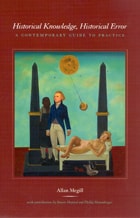
Historical Knowledge, Historical Error
A Contemporary Guide to PracticeAllan Megill
University of Chicago Press, 2006
In the past thirty years, historians have broadened the scope of their discipline to include many previously neglected topics and perspectives. They have chronicled language, madness, gender, and sexuality and have experimented with new forms of presentation. They have turned to the histories of non-Western peoples and to the troubled relations between “the West” and the rest. Allan Megill welcomes these developments, but he also suggests that there is now confusion among historians about what counts as a justified account of the past.
In Historical Knowledge, Historical Error, Megill dispels some of the confusion. Here, he discusses issues of narrative, objectivity, and memory. He attacks what he sees as irresponsible uses of evidence while accepting the art of speculation, which incomplete evidence forces upon historians. Along the way, he offers succinct accounts of the epistemological road historians have traveled from Herodotus and Thucydides through Leopold von Ranke and Alexis de Tocqueville, and on to Hayden White, Natalie Zemon Davis, and Lynn Hunt.
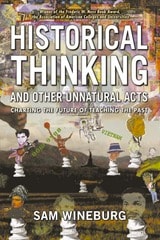
Historical Thinking
Sam Wineburg
Temple University Press, 2001
Although most of us think of history -- and learn it -- as a conglomeration of facts, dates, and key figures, for professional historians it is a way of knowing, a method for developing and understanding about the relationships of peoples and events in the past. A cognitive psychologist, Wineburg has been engaged in studying what is intrinsic to historical thinking, how it might be taught, and why most students still adhere to the "one damned thing after another" concept of history.
Whether he is comparing how students and historians interpret documentary evidence or analyzing children's drawings, Wineburg's essays offer "rough maps of how ordinary people think about the past and use it to understand the present." Arguing that we all absorb lessons about history in many settings -- in kitchen table conversations, at the movies, or on the world-wide web, for instance -- these essays acknowledge the role of collective memory in filtering what we learn in school and shaping our historical thinking.
Historicizing the Enlightenment, Volume 2
Literature, the Arts, and the Aesthetic in BritainMichael McKeon
Bucknell University Press, 2023
Published by Bucknell University Press. Distributed worldwide by Rutgers University Press.
History & Subjectivity
Roger Gottlieb
Temple University Press, 1987
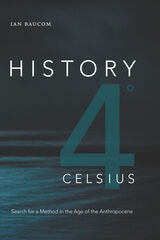
History 4° Celsius
Search for a Method in the Age of the AnthropoceneIan Baucom
Duke University Press, 2020
History and Myth in Romanian Consciousness
Lucian Boia
Central European University Press, 2001
There is a considerable difference between real history and discourse history - this book stems from this idea. The author points out that history is constantly reconstructed, adapted and sometimes mythified from the perspective of the present day, of present states of mind and ideologies. Boia closely examines the process of historical culture and conscience in nineteenth and twentieth century Romania, particularly concentrating on the impact of the national ideology on history. Based upon his findings, the author identifies several key mythical configurations and analyses the manner in which Romanians have reconstituted their own highly ideologized history over the last two centuries.
The strength of History and Myth in Romanian Consciousness lies in the author's ability to fully deconstruct the entire Romanian historiographic system and demonstrate the increasing acuteness of national problems in general, and in particular the exploitation of history to support national ideology.

History and Philosophy of Modern Mathematics
Volume XIWilliam Aspray and Philip Kitcher, Editors
University of Minnesota Press, 1988
History and Philosophy of Modern Mathematics was first published in 1988. Minnesota Archive Editions uses digital technology to make long-unavailable books once again accessible, and are published unaltered from the original University of Minnesota Press editions.
The fourteen essays in this volume build on the pioneering effort of Garrett Birkhoff, professor of mathematics at Harvard University, who in 1974 organized a conference of mathematicians and historians of modern mathematics to examine how the two disciplines approach the history of mathematics. In History and Philosophy of Modern Mathematics, William Aspray and Philip Kitcher bring together distinguished scholars from mathematics, history, and philosophy to assess the current state of the field. Their essays, which grow out of a 1985 conference at the University of Minnesota, develop the basic premise that mathematical thought needs to be studied from an interdisciplinary perspective.
The opening essays study issues arising within logic and the foundations of mathematics, a traditional area of interest to historians and philosophers. The second section examines issues in the history of mathematics within the framework of established historical periods and questions. Next come case studies that illustrate the power of an interdisciplinary approach to the study of mathematics. The collection closes with a look at mathematics from a sociohistorical perspective, including the way institutions affect what constitutes mathematical knowledge.
History and Philosophy of the Humanities
An IntroductionMichiel Leezenberg
Amsterdam University Press, 2018
History and Philosophy of the Humanities
An IntroductionMichiel Leezenberg
Amsterdam University Press, 2019
'History and Philosophy of the Humanities: An Introduction' presents a reasoned overview of the conceptual and historical backgrounds of the humanities. In four sections, it discusses:
- the most influential views on scientific knowledge from Aristotle to Thomas Kuhn;
- the birth of the modern humanities and its relation to the natural and social sciences;
- the various methodological schools and conceptual issues in the humanities;
- several themes that set the agenda for current debates in the humanities: critiques of modernity; gender, sexuality and identity; and postcolonialism.
Thus, it provides students in the humanities with a comprehensive understanding of the backgrounds of their own discipline, its relation to other disciplines, and the state of the art of the humanities at large.