Results by title
5550 books match the query 'Biography & Autobiography' and 191 start with h
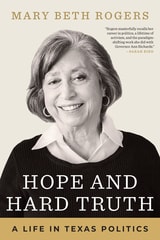
Hope and Hard Truth
A Life in Texas PoliticsMary Beth Rogers
University of Texas Press, 2022
Mary Beth Rogers has led an eventful life rooted in the weeds of Texas politics, occasionally savoring a few victories—particularly the 1990 governor’s race when, as campaign manager for Ann Richards, she did the impossible and put a Democratic woman in office. She also learned to absorb her losses—after all, she was a liberal feminist in America’s most aggressively conservative state.
Rogers’s road to a political life was complex. Candidly and vulnerably, she shares both public and private memories of how she tried to maintain a rich family life with growing children and a husband with a debilitating illness. She goes on to provide an insider’s account of her experiences as Richards’s first chief of staff while weaving her way through the highs and lows of political intrigue and legislative maneuvering.
Reflecting on her family heritage and nascent spiritual quest, Rogers discovers a reality at once sobering and invigorating: nothing is ever completely lost or completely won. It is a constant struggle to create humane public policies built on a foundation of fairness and justice—particularly in her beloved Texas.
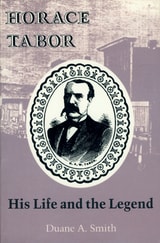
Horace Tabor
His Life and the LegendDuane A. Smith
University Press of Colorado, 1989
An 1858er who had spent nearly two decades following the will-o-the-wisp Colorado mining frontier, in 1876 Tabor was then living and working in out-of-the-way Oro City, near where Leadville would be one day. Soon thereafter came the Little Pittsburg silver strike, and Tabor's fortune took flight. Very quickly, Colorado - and the rest of the nation - was hearing about Horace Tabor. "Denver's lucky star was on high when Governor Tabor decided to spend his fortune here," praised the Denver Tribune in 1881. The Leadville Daily Herald (July 8, 1882) also understood his contribution: "Colorado has produced fortunes for many men, but no man who has met with success has so freely made investments in this state, as has Governor Tabor."
The events that followed that amazing silver discovery on Fryer Hill, May 1878 unfolded like a classic Greek tragedy. Tabor weathered them all, and his name has resounded through the succeeding decades. No other Coloradan of his generation is so well remembered, nor does anyone else so typify the tempo of this legendary mining era.
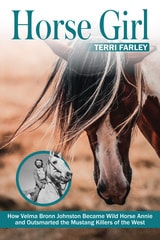
Horse Girl
How Velma Bronn Johnston Became Wild Horse Annie and Outsmarted the Mustang Killers of the WestTerri Farley
University of Nevada Press, 2026
The American mustang—wild, wind-tossed, and thundering across the open West—might have vanished into myth if not for Velma Bronn Johnston. A shy woman who was left with physical effects from a childhood battle with polio, Johnston was living a quiet life on a struggling ranch near Reno, Nevada, when she discovered wild horses being brutally transported to slaughter. Outraged, she reported it—only to be offered a permit allowing her to do the same horrific deed. But instead of backing down, Johnston took a stand.
Her refusal to profit from cruelty launched her into a firestorm of activism, upending her life. Laughed at, threatened, and dismissed, she pressed on. When a rival mocked her as “Wild Horse Annie,” she seized the name as a badge of honor and purpose. Embracing her new identity, she began to raid illegal holding pens under the cover of darkness, captivated the media, and became the voice of a movement. Her biggest allies? Schoolchildren across America, whose letter-writing campaign swept the country.
Johnston’s commitment to these majestic animals was finally recognized in 1971 when Congress unanimously passed legislation to protect the nation’s wild horses—an enduring victory for one determined woman and the animals she refused to abandon.
Award-winning author Terri Farley presents the captivating story of Horse Girl, revealing Velma Bronn Johnston in a new light through family photos and journal entries never before published. Farley’s storytelling brings Johnston’s unwavering courage into the spotlight, revealing a woman determined to protect the wild mustang—no matter the cost.
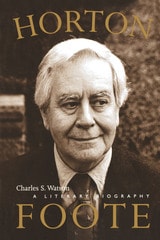
Horton Foote
A Literary BiographyBy Charles S. Watson
University of Texas Press, 2003
Winner of the Pulitzer Prize for Drama for The Young Man from Atlanta and Academy Awards for the screen adaptation of To Kill a Mockingbird and the original screenplay Tender Mercies, as well as the recipient of an Academy Award nomination for the screenplay of The Trip to Bountiful and the William Inge Lifetime Achievement Award, Horton Foote is one of America's most respected writers for stage and screen. The deep compassion he shows for his characters, the moral vision that infuses his social commentary, and the kindness and humanity that Foote himself radiates have also made him one of our most revered artists—the father-figure who understands our longings for home, for human connections, and for certainty in a world largely bereft of these.
This literary biography thoroughly investigates how Horton Foote's life and worldview have shaped his works for stage, television, and film. Tracing the whole trajectory of Foote's career from his small-town Texas upbringing to the present day, Charles Watson demonstrates that Foote has created a fully imagined mythical world from the materials supplied by his own and his family's and friends' lives in Wharton, Texas, in the early twentieth century. Devoting attention to each of Foote's major works in turn, he shows how this world took shape in Foote's writing for the New York stage, Golden Age television, Hollywood films, and in his nine-play masterpiece, The Orphan's Home Cycle. Throughout, Watson's focus on Foote as a master playwright and his extensive use of the dramatist's unpublished correspondence make this literary biography required reading for all who admire the work of Horton Foote.
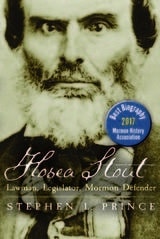
Hosea Stout
Lawman, Legislator, Mormon DefenderStephen L. Prince
Utah State University Press, 2016
Stout joined the Mormons in Missouri in 1838 and followed them to Nauvoo, where he rose quickly to become a top leader in the Nauvoo Legion and chief of police, a position he also held at Winter Quarters. He became the first attorney general for the Territory of Utah, was elected to the Utah Territorial Legislature, and served as regent for the University of Deseret (which later became the University of Utah) and as judge advocate of the Nauvoo Legion in Utah. In 1862, Stout was appointed US attorney for the Territory of Utah by President Abraham Lincoln. In 1867, he became city attorney of Salt Lake City and he was elected to the Utah House of Representatives in 1881.
But Stout’s history also had its troubled moments. Known as a violent man and aggressive enforcer, he was often at the center of controversy during his days on the police force and was accused of having a connection with deaths in Nauvoo and Utah. Ultimately, however, none of these allegations ever found traction, and the leaders of the LDS community, especially Brigham Young, saw to it that Stout was promoted to roles of increasing responsibility throughout his life. When he died in 1889, Hosea Stout left a complicated legacy of service to his state, his church, and the members of his faith community.
Hospital Time
Amy Hoffman
Duke University Press, 1997
Hoffman became central to Riegle’s caregiving when he asked her to be his health-care proxy, and although she willingly chose to do this, she explores her conflicting feelings about herself in this role and about her involvement with Riegle and his grueling struggle with hospitalization, illness, and, finally, death. She tells of the waves of grief that echoed throughout her life, awakening memories of other losses, entering her dreams and fantasies, and altering her relationships with friends, family, and even total strangers.
Hoffman’s memoir gives voice to the psychological and emotional havoc AIDS creates for those in the difficult role of caring for the terminally ill and it gives recognition to the role that lesbians continue to play in the AIDS emergency. A foreword by Urvashi Vaid, former executive director of the National Gay and Lesbian Task Force, offers a meditation on the politics of AIDS and the role of family in the lives of lesbians and gay men.
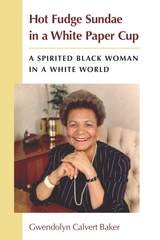
Hot Fudge Sundae in a White Paper Cup
A Spirited Black Woman in a White WorldGwendolyn Calvert Baker
University of Michigan Press, 2014

House Hold
A Memoir of PlaceAnn Peters
University of Wisconsin Press, 2013
More than a memoir of remembered landscapes, House Hold is also an expansive contemplation of America, a meditation on place and property, and an exploration of how literature shapes our thinking about the places we live. A gifted prose stylist, Peters seamlessly combines her love of buildings with her love of books. She wanders through the rooms of her past but also through what Henry James called “the house of fiction,” interweaving personal narrative with musings on James, Willa Cather, William Dean Howells, Paule Marshall, William Maxwell, and others. Peters reflects on the romance of pastoral retreat, the hazards of nostalgia, America’s history of expansion and land ownership, and the conflicted desires to put down roots and to hit the road. Throughout House Hold, she asks how places make us who we are.
House of Houses
Pat Mora
University of Arizona Press, 1997
How I Became a Human Being
A Disabled Man’s Quest for IndependenceMark O’Brien, with Gillian Kendall
University of Wisconsin Press, 2003
For the first time in paperback, How I Became a Human Being is O’Brien’s account of his struggles to lead an independent life despite a lifelong disability. In 1955 he contracted polio and became permanently paralyzed from the neck down. O’Brien describes growing up without the use of his limbs, his adolescence struggling with physical rehabilitation and suffering the bureaucracy of hospitals and institutions, and his adult life as an independent student and writer. Despite his physical limitations, O’Brien crafts a narrative that is as rich and vivid as the life he led.
How I Escaped from Gilligan's Island
And Other Misadventures of a Hollywood Writer-ProducerWilliam Froug
University of Wisconsin Press, 2005
In the early 1950s writers were leaving radio en masse to try their hand at another promising medium—television. William Froug was in the thick of that exodus, a young man full of ideas in a Hollywood bursting with opportunities. In his forty-year career Froug would write and/or produce many of the shows that America has grown up with. From the drama of Playhouse 90 and the mind-bending premises of The Twilight Zone to the escapist scenarios of Adventures in Paradise, Gilligan’s Island, Bewitched, and Charlie’s Angels, Froug played a role in shaping his trade. He crossed paths with some of the memorable personalities in the industry, including Jack Benny, Lucille Ball, Agnes Moorehead, Elizabeth Montgomery, Robert Blake, Rod Serling, Gene Roddenberry, Aaron Spelling, and Sherwood Schwartz.
Froug reveals a post-WWII America giddy with the success of its newest medium—yet sobered at moments by strikes and union politics, McCarthyism and anti-Semitism. It was a world of hastily written scripts, sudden firings, thwarted creativity, and fickle tastes. And yet, while clearly exasperated with many aspects of Hollywood, Froug was a man utterly in his element, his frustration with the industry ultimately eclipsed by his dedication to his craft.
How I Got Cultured
A Nevada MemoirPhyllis Barber
University of Nevada Press, 1994
How I Got Cultured is a moving, candid, and sometimes hilarious account of an American adolescence, negotiated between the strictures of a demanding faith and the allures of one of the most flamboyant cities in the world.
How I Married Michele
and Other Journeys, EssaysGary Gildner
BkMk Press, 2021
Essays from this collection have appeared in such venues as the New York Times Magazine, The Southern Review, and New Letters.
How Joyce Wrote Finnegans Wake
A Chapter-by-Chapter Genetic GuideEdited by Luca Crispi and Sarn Slote
University of Wisconsin Press, 2008
The introduction by Luca Crispi, Sam Slote, and Dirk Van Hulle offers a chronology of the composition of Finnegans Wake, an archival survey of the manuscripts, and an introduction to genetic criticism. Then, the volume provides a chapter-by-chapter interpretation of Finnegans Wake from a variety of perspectives, probing the book as a work in progress. The fruit of more than two decades’ worth of Wakean genetic studies, this book is the essential starting point for all future studies of Joyce’s most complex and fascinating work.
How We Came to Be
An Intellectual Genealogy of Chicano ScholarsEdited by Teresa Córdova, Aída Hurtado, Francisco J. Hernández, Avelardo Valdez; Foreword by Juan González
University of Arizona Press, 2026
This work chronicles the lives and legacies of Chicana and Chicano scholars whose formative experiences in the Chicano Movement shaped the development of Chicano studies and transformed higher education. Originating from the Reuniónes de Colegas—gatherings of veteran scholars reflecting on their shared histories—the volume features sixteen essays organized into five thematic sections that explore the intersections of activism, scholarship, and institutional change.
The contributors document how grassroots organizing evolved into academic inquiry, leading to the creation of departments, student support systems, and policy reforms that advanced equity and representation in universities. Essays address how community-engaged research influenced urban planning, health advocacy, and cultural production, while also highlighting Indigenous and transnational epistemologies that redefined theoretical frameworks in Chicano studies. The volume concludes with reflections on academic leadership and the breaking of barriers by Chicana scholars in higher education administration.
Together, these essays offer a powerful intellectual history and a testament to a generation’s enduring commitment to social justice. How We Came to Be is both a scholarly archive and a call to action, preserving the legacy of those who built Chicano studies and inspiring future generations to continue the work of transformation within and beyond the academy.
Contributors
José Calderón
Gilberto Cárdenas
Teresa Carrillo
Teresa Córdova
Estevan Flores
Yvette G. Flores
Felipe Gonzales
Deena J. González
Francisco J. Hernández
Inés Hernández-Ávila
Francisco Hernández Vázquez
Aída Hurtado
Larry Trujillo
Avelardo Valdez
Carlos G. Vélez-Ibáñez
James Diego Vigil
How Will the Heart Endure
Elizabeth Bowen and the Landscape of WarHeather Bryant Jordan
University of Michigan Press, 1992
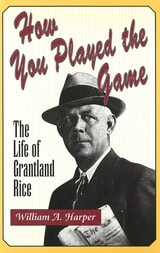
How You Played the Game
The Life of Grantland RiceWilliam Harper
University of Missouri Press, 1999
Centering around the life and times of the revered American sportswriter Grantland Rice (1880-1954), How You Played the Game takes us back to those magical days of sporting tales and mythic heroes. Through Rice's eyes we behold such sports as bicycle racing, boxing, golf, baseball, football, and tennis as they were played before 1950. We witness ups and downs in the careers of such legendary figures as Christy Mathewson, Jack Dempsey, Ty Cobb, Babe Ruth, Jim Thorpe, Red Grange, Bobby Jones, Bill Tilden, Notre Dame's Four Horsemen, Gene Tunney, and Babe Didrikson--all of whom Rice helped become household names.
Grantland Rice was a remarkably gifted and honorable sportswriter. From his early days in Nashville and Atlanta, to his famed years in New York, Rice was acknowledged by all for his uncanny grasp of the ins and outs of a dozen sports, as well as his personal friendship with hundreds of sportsmen and sportswomen. As a pioneer in American sportswriting, Rice helped establish and dignify the profession, sitting shoulder to shoulder in press boxes around the nation with the likes of Ring Lardner, Damon Runyon, Heywood Broun, and Red Smith.
Besides being a first-rate reporter, Rice was also a columnist, poet, magazine and book writer, film producer, family man, war veteran, fund-raiser, and skillful golfer. His personal accomplishments over a half century as an advocate for sports and good sportsmanship are astounding by any standard. What truly set Rice apart from so many of his peers, however, was the idea behind his sports reporting and writing. He believed that good sportsmanship was capable of lifting individuals, societies, and even nations to remarkable heights of moral and social action.
More than just a biography of Grantland Rice, How You Played the Game is about the rise of American sports and the early days of those who created the art and craft of sportswriting. Exploring the life of a man who perfectly blended journalism and sporting culture, this book is sure to appeal to all, sports lovers or not.
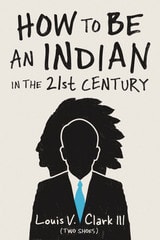
How to Be an Indian in the 21st Century
Louis V. Clark (Two Shoes)
Wisconsin Historical Society Press, 2017
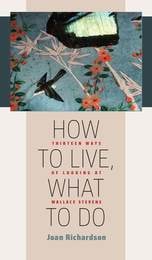
How to Live, What to Do
Thirteen Ways of Looking at Wallace StevensJoan Richardson
University of Iowa Press, 2018
How to Live, What to Do is an indispensable introduction to and guide through the work of a poet equal in power and sensibility to Shakespeare and Milton. Like them, Stevens shaped a new language, fashioning an instrument adequate to describing a completely changed environment of fact, extending perception through his poems to align what Emerson called our “axis of vision” with the universe as it came to be understood during his lifetime, 1879–1955, a span shared with Albert Einstein. Projecting his own imagination into spacetime as “a priest of the invisible,” persistently cultivating his cosmic consciousness through reading, keeping abreast of the latest discoveries of Einstein, Max Planck, Niels Bohr, Louis de Broglie, and others, Stevens pushed the boundaries of language into the exotic territories of relativity and quantum mechanics while at the same time honoring the continuing human need for belief in some larger order. His work records how to live, what to do in this strange new world of experience, seeing what was always seen but never seen before.
Joan Richardson, author of the standard two-volume critical biography of Stevens and coeditor with Frank Kermode of the Library of America edition of the Collected Poetry and Prose, offers concise, lucid captures of Stevens’s development and achievement. Over the ten years of researching her Stevens biography, Richardson read all that he read, as well as his complete correspondence, journals, and notebooks. She weaves the details drawn from this deep involvement into the background of American cultural history of the period. This fabric is further enlivened by her preparation in philosophy and the sciences, creating in these thirteen panels a contemporary version of a medieval tapestry sequence, with Stevens in the place of the unicorn, as it were, holding our attention and eliciting, as necessary angel, individual solutions to the riddles of our existence on this planet spinning and hissing around its cooling star at 18.5 miles per second.

How to Live
A memoir-in-essaysKelle Groom
Tupelo Press, 2023
—Joan Wickersham
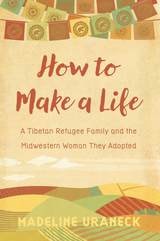
How to Make a Life
A Tibetan Refugee Family and the Midwestern Woman They AdoptedMadeline Uraneck
Wisconsin Historical Society Press, 2018
When Madeline Uraneck said hello to the Tibetan woman cleaning her office cubicle, she never imagined the moment would change her life. After learning that Tenzin Kalsang had left her husband and four children behind in a Tibetan refugee settlement in India to try to forge a better life for them, Madeline took on the task of helping her apply for US visas. When the family reunited in their new Midwestern home, Madeline became swept up in their lives, from homework and soccer games to family dinners and shared holiday traditions. By reaching out, she found more than she bargained for—a family who welcomed her as their own and taught her more than she offered them.
An evocative blend of immersion journalism and memoir, How to Make a Life shares the immigration story of a Tibetan refugee family who crossed real and cultural bridges to make a life in Madison, Wisconsin, with the assistance of the Midwestern woman they befriended. From tales of escaping Tibet over the Himalayas, to striking a balance between old traditions with new, to bridging divides one friendly gesture at a time, readers will expand their understanding of family, culture, and belonging.
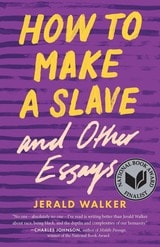
How to Make a Slave and Other Essays
Jerald Walker
The Ohio State University Press, 2020
Winner, 2021 Massachusetts Book Award, Nonfiction Category
A Book of the Year pick from Kirkus, BuzzFeed, and Literary Hub
“The essays in this collection are restless, brilliant and short. . . . The brevity suits not just Walker’s style but his worldview, too.…Keeping things quick gives him the freedom to move; he can alight on a truth without pinning it into place.” —Jennifer Szalai, the New York Times
For the black community, Jerald Walker asserts in How to Make a Slave, “anger is often a prelude to a joke, as there is broad understanding that the triumph over this destructive emotion lay in finding its punchline.” It is on the knife’s edge between fury and farce that the essays in this exquisite collection balance. Whether confronting the medical profession’s racial biases, considering the complicated legacy of Michael Jackson, paying homage to his writing mentor James Alan McPherson, or attempting to break free of personal and societal stereotypes, Walker elegantly blends personal revelation and cultural critique. The result is a bracing and often humorous examination by one of America’s most acclaimed essayists of what it is to grow, parent, write, and exist as a black American male. Walker refuses to lull his readers; instead his missives urge them to do better as they consider, through his eyes, how to be a good citizen, how to be a good father, how to live, and how to love.

Howard Barker Interviews 1980-2010
Conversations in CatastropheEdited and Introduced by Mark Brown
Intellect Books, 2011
British playwright Howard Barker coined the term “theatre of catastrophe” to describe his unique brand of complex, ambiguous, and often unsettling drama. Revered in continental Europe, North America, and Australia as one of the greatest living dramatists working in the English language, Barker is also a celebrated poet, theater theorist, and painter. The first collection of interviews conducted with Barker, Howard Barker Interviews 1980–2010 covers his entire career and gives a strong sense of the life and work of this innovative dramatist.
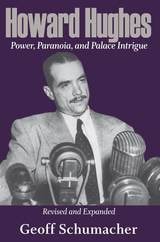
Howard Hughes
Power, Paranoia, and Palace Intrigue, Revised and ExpandedGeoff Schumacher
University of Nevada Press, 2020
Although the public viewed Hughes as a heroic and independent-minded trailblazer, behind closed doors he suffered from germophobia, obsessive-compulsive disorder, and an addiction to painkillers. He became paranoid and reclusive, surrounding himself with a small cadre of loyal caretakers. As executives battled each other over his empire, Hughes’ physical and mental health deteriorated to the point where he lost control of his business affairs.
This second edition includes more insider details on Hughes’ personal interactions with actresses, journalists, and employees. New chapters provide insights into Hughes’s involvement with the mob, his ownership and struggles as the majority shareholder of TWA and the wide-ranging activities of Hughes Aircraft Company, Hughes’s critical role in the Glomar Explorer CIA project (a deep-sea drillship platform built to recover the Soviet submarine K-129), and more. Based on in-depth interviews with individuals who knew and worked with Hughes, this fascinating biography provides a colorful and comprehensive look at Hughes—from his life and career to his final years and lasting influence. This penetrating depiction of the man behind the curtain demonstrates Hughes’s legacy, and enduring impact on popular culture.

Howard Nemerov - American Writers 70
University of Minnesota Pamphlets on American WritersPeter Meinke
University of Minnesota Press, 1968
Howard Nemerov - American Writers 70 was first published in 1968. Minnesota Archive Editions uses digital technology to make long-unavailable books once again accessible, and are published unaltered from the original University of Minnesota Press editions.
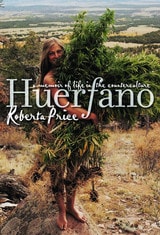
Huerfano
A Memoir of Life in the CountercultureRoberta M. Price
University of Massachusetts Press, 2004
In the late 1960s, new age communes began springing up in the American Southwest with names like Drop City, New Buffalo, Lama Foundation, Morning Star, Reality Construction Company, and the Hog Farm. In the summer of 1969, Roberta Price, a recent college graduate, secured a grant to visit these communities and photograph them. When she and her lover David arrived at Libre in the Huerfano Valley of southern Colorado, they were so taken with what they found that they wanted to participate instead of observe. The following spring they married, dropped out of graduate school in upstate New York, packed their belongings into a 1947 Chrysler Windsor Coupe, and moved to Libre, leaving family and academia behind.
Huerfano is Price's captivating memoir of the seven years she spent in the Huerfano ("Orphan") Valley when it was a petri dish of countercultural experiments. She and David joined with fellow baby boomers in learning to mix cement, strip logs, weave rugs, tan leather, grow marijuana, build houses, fix cars, give birth, and make cheese, beer, and furniture as well as poetry, art, music, and love. They built a house around a boulder high on a ridge overlooking the valley and made ends meet by growing their own food, selling homemade goods, and hiring themselves out as day laborers. Over time their collective ranks swelled to more than three hundred, only to diminish again as, for many participants, the dream of a life of unbridled possibility gradually yielded to the hard realities of a life of voluntary poverty.
Price tells her story with a clear, distinctive voice, documenting her experiences with photos as well as words. Placing her story in the larger context of the times, she describes her participation in the antiwar movement, the advent of the women's movement, and her encounters with such icons as Ken Kesey, Gary Snyder, Abbie Hoffman, Stewart Brand, Allen Ginsberg, and Baba Ram Dass.
At once comic, poignant, and above all honest, Huerfano recaptures the sense of affirmation and experimentation that fueled the counterculture without lapsing into nostalgic sentimentality on the one hand or cynicism on the other.

Hugh Nibley
A Mormon ScholarJoseph M. Spencer
University of Illinois Press, 2027
Joseph M. Spencer examines Nibley’s theology, social criticism, and thought. Nibley’s elite academic training led to a long career at Brigham Young University. There he used ancient texts and comparative history to support his religious claims and confront modern culture and values. Spencer reveals Nibley as a serious thinker whose theology of grace buttressed the whole of his work. As he shows, readers misinterpret Nibley by seeing his scholarship as separate from his theology and social criticism, rather than as a unified project that emerged from the many streams of his wide-ranging thought.
Clear-eyed and accessible, Hugh Nibley provides a much-needed guide to the work of an important yet misunderstood theologian and intellectual.
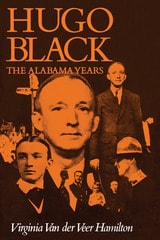
Hugo Black
The Alabama YearsVirginia Van Der Veer Hamilton
University of Alabama Press, 1982
The making of a Supreme Court justice in the crucible of Alabama politics.
Hugo Black: The Alabama Years by Virginia Van der Veer Hamilton is a richly researched political biography that explores the formative experiences of Hugo L. Black, one of the most influential justices in the history of the United States Supreme Court. Focusing on his early life and career in Alabama, Hamilton traces Black's journey from his rural upbringing and legal training to his emergence as a prominent attorney, politician, and United States senator. Through careful analysis of Alabama's social, economic, and political landscape, the book reveals the forces that shaped Black's ideas about government, democracy, and constitutional rights.
Hamilton examines Black's rise during a period of profound change in the South, highlighting the alliances, controversies, and challenges that defined his political career. The study places Black within the broader context of Progressive Era reform, the transformation of Southern politics, and the expanding role of the federal government in American life. At the same time, it provides a nuanced portrait of a complex public figure whose beliefs and actions continue to inspire debate among historians and legal scholars.
Essential reading for students of legal history, political science, Southern studies, and American government, this volume offers valuable insight into the Alabama roots of a justice who would profoundly influence modern constitutional interpretation and civil liberties jurisprudence.
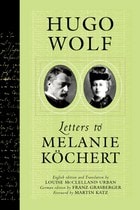
Hugo Wolf
Letters To Melanie KochertHugo Wolf
University of Wisconsin Press, 2003
Wolf’s letters to Köchert—he wrote 245 between 1887 and 1899—were composed during a period of almost unprecedented cultural upheaval in Europe, in the shadow of Vienna during the era of Freud, Mahler, and Klimt. They reveal Wolf at his most optimistic, celebrating his concert successes and the solitude he believed was so precious to his ability to compose. They follow Wolf through times of overwhelming despair, when his musical failures left him profoundly alienated, overcome, as he revealed to Köchert, "by a feeling of unspeakable emptiness and desolation." And they follow Wolf as he struggled to compose the 250 astounding art songs that are his creative legacy, and his almost simultaneous descent into madness.
Hugo Wolf: Letters to Melanie Köchert, sensitively translated by Wolf scholar and interpreter Louise McClelland Urban, is a literary and musical even of the highest order
Hugo von Hofmannsthal and His Time
The European Imagination, 1860-1920Hermann Broch
University of Chicago Press, 1984
Through an analysis of the changing thought and career of the Austrian poet, librettist, and essaist Hugo von Hofmannsthal (1874-1929), Broch attempts to define and analyze the major intellectual issues of the European fin de siècle, a period that he characterizes according to the Nietzschean concepts of the breakdown of rationality and the loss of a central value system. The result is a major examination of European thought as well as a comparative study of political systems and artistic styles.
Human Goodness
Tuan, Yi-Fu
University of Wisconsin Press, 2008
Human Goodness
Yi-Fu Tuan
University of Wisconsin Press, 2008
In his many best-selling books, Yi-Fu Tuan seizes big, metaphysical issues and considers them in uniquely accessible ways. Human Goodness is evidence of this talent and is both as simple, and as epic, as it sounds.
Genuinely good people and their actions, Tuan contends, are far from boring, naive, and trite; they are complex, varied, and enormously exciting. In a refreshing antidote to skeptical times, he writes of ordinary human courtesies, as simple as busing your dishes after eating, that make society functional and livable. And he writes of extraordinary courage and inventiveness under the weight of adversity and evil. He considers the impact of communal goodness over time, and his sketches of six very different individuals—Confucius, Socrates, Wolfgang Amadeus Mozart, John Keats, Dr. Albert Schweitzer, and Simone Weil—confirm that there are human lives that can encourage and lead us to our better selves.
Humbug
The Art of P. T. BarnumNeil Harris
University of Chicago Press, 1981
Hummingbirds Between the Pages
Chris Arthur
The Ohio State University Press, 2018
Hungry Heart
The Literary Emergence of Julia Ward HoweGary Williams
University of Massachusetts Press, 2009
Hungry Hill
A MemoirCarole O'Malley Gaunt
University of Massachusetts Press, 2007
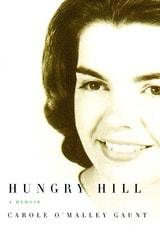
On a sweltering June night in 1959, Betty O'Malley died from lymphatic cancer, leaving behind an alcoholic husband and eight shell-shocked children—seven sons and one daughter, ranging in age from two to fifteen years. The daughter, Carole, was thirteen at the time. In this poignant memoir, she recalls in vivid detail the chaotic course of her family life over the next four years.
The setting for the story is Hungry Hill, an Irish-Catholic working-class neighborhood in Springfield, Massachusetts. The author recounts her sad and turbulent story with remarkable clarity, humor, and insight, punctuating the narrative with occasional fictional scenes that allow the adult Carole to comment on her teenage experiences and to probe the impact of her mother's death and her father's alcoholism.
Hungry Hill
A MemoirCarole O'Malley Gaunt
University of Massachusetts Press, 2007
On a sweltering June night in 1959, Betty O'Malley died from lymphatic cancer, leaving behind an alcoholic husband and eight shell-shocked children—seven sons and one daughter, ranging in age from two to fifteen years. The daughter, Carole, was thirteen at the time. In this poignant memoir, she recalls in vivid detail the chaotic course of her family life over the next four years.
The setting for the story is Hungry Hill, an Irish-Catholic working-class neighborhood in Springfield, Massachusetts. The author recounts her sad and turbulent story with remarkable clarity, humor, and insight, punctuating the narrative with occasional fictional scenes that allow the adult Carole to comment on her teenage experiences and to probe the impact of her mother's death and her father's alcoholism.
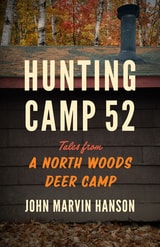
Hunting Camp 52
Tales from a North Woods Deer CampJohn Marvin Hanson
Wisconsin Historical Society Press, 2016
Meet the Jolly Boys—five men from northern Wisconsin who built a deer hunting shack in 1955 and established a tradition that has now lasted over six decades. Hunting Camp 52, affectionately known as Blue Heaven, is a place where every trail, rock, and ravine has its own nickname; every kill is recorded by hand on a window shade; every hunter happily croons along during evening songfests; and every rowdy poker game lasts late into the night. The outhouse is always cold, the porcupines are always a problem, and the vehicles are always getting stuck in the mud, but there’s nowhere else these men would rather be.
In Hunting Camp 52: Tales from a North Woods Deer Camp, John Marvin Hanson—the son of one of the original Jolly Boys—recounts the sidesplitting antics, the memorable hunts, and the profound camaraderie that has developed over almost sixty seasons at Blue Heaven. Hanson also includes more than twenty recipes for gourmet comfort foods prepared each year at camp, from pickled venison hearts to Norwegian meatballs to the treasured recipe for Reali Spaghetti. As the Jolly Boys age and younger generations take up the mantle of Blue Heaven, Hanson comes to appreciate that hunting camp is not about bagging a trophy buck as much as it is about spending time with the friends and family members who matter most.
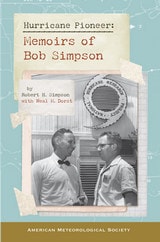
Hurricane Pioneer
Memoirs of Bob SimpsonRobert H. Simpson with Neal M. Dorst
American Meteorological Society, 2014
For Simpson this was just one of his many pioneering explorations of hurricanes and extreme storms. Over his decades-long career his research led to great leaps in our understanding of tropical meteorology and our approach to hurricane safety. He was the first director of the National Hurricane Research Project and the second director of the National Hurricane Center, though he may be best known as co-creator of the widely used Saffir-Simpson Hurricane Scale, familiar to anyone who has heard a reporter use the words “category five.”
Simpson’s memoirs take readers from his experience with the Corpus Christi hurricane of 1919 to his travels to study weather across the globe. Along the way he crosses paths with other weather greats, including his trailblazing wife, meteorologist Joanne Simpson. Hurricane Pioneer is a riveting first-hand account at a revolutionary time in meteorology.
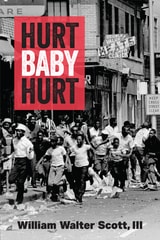
Hurt, Baby, Hurt
William Walter Scott, III
University of Michigan Press, 2025
This memoir recounts Scott’s life from his birth up through the Rebellion. It tells the story of how the Rebellion started and provides an on-the-ground account of the Rebellion and its immediate aftermath, including the police detainment of the people involved. Now with a new foreword by Austin McCoy that considers the lasting impact of the rebellion, Hurt, Baby, Hurt offers valuable insight into an important part of Detroit history.
Hypnos
René Char
Seagull Books, 2014
Hailed by the poet Paul Eluard as an "absolute masterpiece" upon its first appearance in 1946, René Char’s Hypnos is both a remarkable work of literature and a document of unique significance in the history of the French Resistance. Based on a journal Char kept during his time in the Maquis, it ranges in style from abrupt and sometimes enigmatic reflections, in which the poet seeks to establish compass bearings in the darkness of Occupied France, to narrative descriptions that throw into vivid relief the dramatic and often tragic nature of the issues he had to confront as the head of his Resistance network. A tribute to the individual men and women who fought at his side, this volume is also a meditation on the white magic of poetry and a celebration of the power of beauty to combat terror and transform our lives.
Translated into German by Paul Celan and into Italian by Vittorio Sereni, the book has never been carried over into English with the attention to style and detail that it deserves. Published in full here for the first time, this long-awaited new translation does justice at last to the incandescence and pathos of the original French.