Results by title
18284 books match the query 'United States' and 636 start with i
Indebted Mobilities
Indian Youth, Migration, and the Internationalizing UniversitySusan Thomas
University of Chicago Press, 2024
As states have reduced funding to public universities, many of those institutions have turned to overseas students as a vital, alternative source of revenue. Students from India have especially been seen as among the most desirable populations, as they’re typically fluent in English and overwhelmingly enroll in professional fields deemed critical to the knowledge economy. The large numbers of these youth migrating for their education tend to be viewed as a shining example of the value of the contemporary global university and how it enables ambitious people to secure opportunities not available to them in their home nation.
However, a deeper examination of these young people’s encounters reveals a more complicated story than glossy brochures and paeans to American higher education would suggest. Indebted Mobilities draws on Susan Thomas’s close shadowing of a group of middle-class Indian migrant men who attended a public university in New York just as the institution sought to “internationalize” its campus in the wake of ongoing withdrawal of state funding. Thomas takes the reader along with the young men as they study, work, and socialize, pursuing the successful futures they believed to be promised when they migrated for an American education. All the while, they must face their marginalization as they become enmeshed in the fraught inclusion politics of contemporary university life in the United States. At the heart of these encounters is these students’ relationship to debt—not just material ones that include student loans, but moral and affective debts as well. This indebtedness, which keeps them tied to both India and the United States, is meaningful to how Indian middle-class men make sense of their experiences as student-migrants. These youth long to be modern “men of the world.” Yet Thomas illuminates how the complex realities that arise for them, informed by the logic of US exceptionalism, force a reckoning with their anxieties about successful masculinities and the precarity of being drawn into the global knowledge economy as indebted migrants.

Indecision in American Legislatures
Jeffrey J. Harden and Justin H. Kirkland
University of Michigan Press, 2018
Lawmaking provides many opportunities for proposals to be altered, amended, tabled, or stopped completely. The ideal legislator should assess evidence, update his or her beliefs with new information, and sometimes be willing to change course. In practice, however, lawmakers face criticism from the media, the public, and their colleagues for “flip-flopping.” Legislators may also only appear to change positions in some cases as a means of voting strategically.
This book presents a systematic examination of legislative indecision in American politics. This might occur via “waffling”—where a legislator cosponsors a bill, then votes against it at roll call. Or it might occur when a legislator votes one way on a bill, then switches her vote to the other side. In Indecision in American Legislatures, Jeffrey J. Harden and Justin H. Kirkland develop a theoretical framework to explain indecision itself, as well as the public’s attitudes toward indecision. They test their expectations with data sources from American state legislatures, the U.S. Congress, and survey questions administered to American citizens. Understanding legislative indecision from both the legislator and citizen perspectives is important for discussions about the quality of representation in American politics.
Independence Corrupted
How America's Judges Make Their DecisionsCharles Benjamin Schudson
University of Wisconsin Press, 2018
As political attacks on judges increase, Schudson calls for reforms to protect judicial independence and for vigilance to ensure justice for all. Independence Corrupted is invaluable for students and scholars, lawyers and judges, and all citizens concerned about the future of America's courts.
Independence
A Guide to Historic PhiladelphiaGeorge Boudreau
Westholme Publishing, 2012
An Intimate Illustrated Tour of America’s Most Iconic Colonial City
From its beginning as a haven for English Quakers in the colony William Penn founded in 1681, the city of Philadelphia prospered, becoming a leading port in the English Atlantic World and a center of American culture and politics. Grounded in enlightenment ideals, Philadelphia attracted diverse settlers from the Old and New Worlds. By the 1760s, a cash-strapped England set its sights on taxing the American colonies to pay its debts. Philadelphia assumed roles as a center of revolutionary protests, a meeting place for colonial delegates to decide on independence and a new form of government, and, finally, the first capital of the United States of America.
Richly illustrated with both new photography and an amazing array of early American art drawn from the collections of some of America’s leading museums and archives, Independence: A Guide to Historic Philadelphia reveals the stories of the persons who experienced the early years of the new nation in America’s first capital. Based on meticulous research, Independence walks its readers through the lives of the residents and visitors of the revolutionary city, and through the streets and buildings that they knew. Famous names are here: Franklin, Jefferson, Adams, Washington. But Independence also focuses on the fascinating stories of less famous American founders. Enslaved and free, women and men, rich and poor, patriot and Tory, shaped Philadelphia’s and America’s experience in the revolutionary era, and all have their say here. In addition, this guide tells the stories of the iconic buildings and streets where America was founded. The book explores the dozens of buildings that make up Independence National Historical Park and connects these with neighboring sites that are also intimately associated with the story of America’s birth.
Independence will enrich the experience of those who travel to these historic sites, as well as offer a vivid and fascinating story for the general reader.
Independent Immigrants
A Settlement of Hanoverian Germans in Western MissouriRobert W. Frizzell
University of Missouri Press, 2007
Between 1838 and the early 1890s, German peasant farmers from the Kingdom of Hanover made their way to Lafayette County, Missouri, to form a new community centered on the town of Concordia. Their story has much to tell us about the American immigrant experience—and about how newcomers were caught up in the violence that swept through their adoptive home.
Robert Frizzell grew up near Concordia, and in this first book-length history of the German settlement, he chronicles its life and times during those formative years. Founded by Hanoverian Friedrich Dierking—known as “Dierking the Comforter” for the aid he gave his countrymen—the Concordia settlement blossomed from 72 households in 1850 to 375 over the course of twenty years. Frizzell traces that growth as he examines the success of early agricultural efforts, but he also tells how the community strayed from the cultural path set by its freethinker founder to become a center of religious conservatism.
Drawing on archival material from both sides of the Atlantic, Frizzell offers a compelling account for scholars and general readers alike, showing how Concordia differed from other German immigrant communities in America. He also explores the conditions in Hanover—particularly the village of Esperke, from which many of the settlers hailed—that caused people to leave, shedding new light on theological, political, and economic circumstances in both the Old World and the New.
When the Civil War came, the antislavery Hanoverians found themselves in the Missouri county with the greatest number of slaves, and the Germans supported the Union while most of their neighbors sympathized with Confederate guerrillas. Frizzell tells how the notorious “Bloody Bill” Anderson attacked the community three times, committing atrocities as gruesome as any recorded in the state—then how the community flourished after the war and even bought out the farmsteads of former slaveholders.
Frizzell’s account challenges many historians’ assumptions about German motives for immigration and includes portraits of families and individuals that show the high price in toil and blood required to meet the challenges of making a home in a new land. Independent Immigrants reveals the untold story of these newcomers as it reveals a little-known aspect of the Civil War in Missouri.
Independent for Life
Homes and Neighborhoods for an Aging AmericaEdited by Henry Cisneros, Margaret Dyer-Chamberlain, and Jane Hickie
University of Texas Press, 2012
Do you want to age independently in your own home and neighborhood? Staying home, aging in place, is most people's preference, but most American housing and communities are not adapted to the needs of older people. And with the fastest population growth among people over 65, finding solutions for successful aging is important not only for individual families, but for our whole society. In Independent for Life, former HUD Secretary Henry Cisneros and a team of experts on aging, architecture, construction, health, finance, and politics assess the current state of housing and present new possibilities that realistically address the interrelated issues of housing, communities, services, and financial concerns.
Independent for Life covers a wide range of smart solutions, including remodeling current housing and building new homes for accessibility and safety, retrofitting existing neighborhoods to connect needed services and amenities, and planning new communities that work well for people of all ages. Case studies show how the proposals can be implemented. The authors offer action plans for working with policy makers at local, state, and national levels to address the larger issues of aging in place, including family financial security, real estate markets, and the limitations of public support. Lists of essential resources, including a detailed "to do" list of aging in place priorities and an individual home assessment, complete the volume.
Indian Accents
Brown Voice and Racial Performance in American Television and FilmShilpa S. Dave
University of Illinois Press, 2013
Indian Given
Racial Geographies across Mexico and the United StatesMaría Josefina Saldaña-Portillo
Duke University Press, 2016
Indian Giving
Economies of Power in Indian-White ExchangesDavid Murray
University of Massachusetts Press, 2000
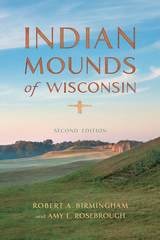
Indian Mounds of Wisconsin
Robert A. Birmingham and Amy L. Rosebrough
University of Wisconsin Press, 2017
Citing evidence from past excavations, ethnography, the traditions of present-day Native Americans in the Midwest, ground-penetrating radar and LIDAR imaging, and recent findings of other archaeologists, Robert A. Birmingham and Amy L. Rosebrough argue that effigy mound groups are cosmological maps that model belief systems and relations with the spirit world. The authors advocate for their preservation and emphasize that Native peoples consider the mounds sacred places.
This edition also includes an expanded list of public parks and preserves where mounds can be respectfully viewed, such as the Kingsley Bend mounds near Wisconsin Dells, an outstanding effigy group maintained by the Ho-Chunk Nation, and the Man Mound Park near Baraboo, the only extant human-shaped effigy mound in the world.
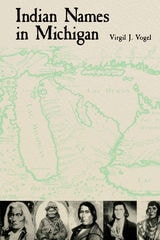
Indian Names in Michigan
Virgil J. Vogel
University of Michigan Press, 1986
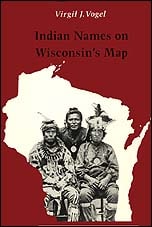
Indian Names on Wisconsin's Map
Virgil J. Vogel
University of Wisconsin Press, 1992
Place names are cultural artifacts that tell us as much about how people lived as do relics dug from the ground, writes Virgil Vogel, one of America's foremost authorities on place names. They are historical records from which the location and migration of people, plants, and animals can be charted. Onalaska and Aztalan, not surprisingly, are place names transplanted to Wisconsin from the far north and south. Some names tell of topographic features that have long since disappeared or are little noticed today. Beaver Dam once had an Indian name meaning just that; Sheboygan, "big pipe" in Ojibwa, described the shape of a river bend. Other names are vestiges of ancient languages nowhere else recorded. Some commemorate historic events: Winneconne is believed by many to mean "place of the skulls."
The Indian names of Wisconsin's towns, rivers, and lakes reveal the minds of the Indian peoples, their cosmic views, their values, their relation to their environment , and their ways of life and convey as well something of the history of their white invaders.
Virgil Vogel's thirty years of research into Native American influence on geographical names has resulted in an absorbing account that illuminates the history and culture of Wisconsin Indians. Vogel tells his story thematically—names from the spirit world, names of trails and portages, French-Indian personal names, tribal names, and so on—to show that place names are part of a larger cultural and natural world. In recovering the history and meaning of these names, he has restored an important and colorful part of America's heritage.
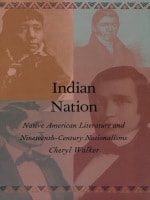
Indian Nation
Native American Literature and Nineteenth-Century NationalismsCheryl Walker
Duke University Press, 1997
Walker examines the rhetoric and writings of nineteenth-century Native Americans, including William Apess, Black Hawk, George Copway, John Rollin Ridge, and Sarah Winnemucca. Demonstrating with unique detail how these authors worked to transform venerable myths and icons of American identity, Indian Nation chronicles Native American participation in the forming of an American nationalism in both published texts and speeches that were delivered throughout the United States. Pottawattomie Chief Simon Pokagon’s "The Red Man’s Rebuke," an important document of Indian oratory, is published here in its entirety for the first time since 1893.
By looking at this writing through the lens of the best theoretical work on nationality, postcoloniality, and the subaltern, Walker creates a new and encompassing picture of the relationship between Native Americans and whites. She shows that, contrary to previous studies, America in the nineteenth century was intercultural in significant ways.
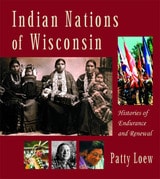
Indian Nations of Wisconsin
Histories of Endurance and RenewalPatty Loew
Wisconsin Historical Society Press, 2001
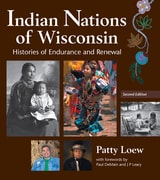
Indian Nations of Wisconsin
Histories of Endurance and Renewal, 2 EditionPatty Loew
Wisconsin Historical Society Press, 2013
From origin stories to contemporary struggles over treaty rights and sovereignty issues, Indian Nations of Wisconsin explores Wisconsin's rich Native tradition. This unique volume—based on the historical perspectives of the state’s Native peoples—includes compact tribal histories of the Ojibwe, Potawatomi, Oneida, Menominee, Mohican, Ho-Chunk, and Brothertown Indians. Author Patty Loew focuses on oral tradition—stories, songs, the recorded words of Indian treaty negotiators, and interviews—along with other untapped Native sources, such as tribal newspapers, to present a distinctly different view of history. Lavishly illustrated with maps and photographs, Indian Nations of Wisconsin is indispensable to anyone interested in the region's history and its Native peoples.
The first edition of Indian Nations of Wisconsin: Histories of Endurance and Renewal, won the Wisconsin Library Association's 2002 Outstanding Book Award.
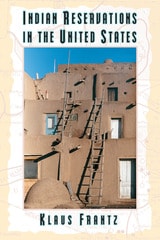
Indian Reservations in the United States
Territory, Sovereignty, and Socioeconomic ChangeKlaus Frantz
University of Chicago Press, 1999
Informed by both historical research and extensive fieldwork, this book pays special attention to the natural resource base and economic outlook of the reservations, as well as the crucial issue of tribal sovereignty. Chapters also cover the demography of American Indian groups and their socioeconomic status (including standard of living, employment, and education). A new afterword treats some of the developments since the book's initial publication in German, such as the effects of the 1988 Indian gaming law that allowed Indian reservations to operate gambling establishments (with mixed success).
"Provides a good overview of the basic questions and problems facing reservation Indians today."—Peter Bolz, Journal of American History (on the German edition)
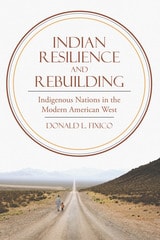
Indian Resilience and Rebuilding
Indigenous Nations in the Modern American WestDonald L. Fixico
University of Arizona Press, 2013
Fixico identifies the tools to this empowerment such as education, navigation within cultural systems, modern Indian leadership, and indigenized political economy. He explains how these tools helped Indian communities to rebuild their nations. Fixico constructs an Indigenous paradigm of Native ethos and reality that drives Indian modern political economies heading into the twenty-first century.
This illuminating and comprehensive analysis of Native nation’s resilience in the twentieth century demonstrates how Native Americans reinvented themselves, rebuilt their nations, and ultimately became major forces in the United States. Indian Resilience and Rebuilding, redefines how modern American history can and should be told.
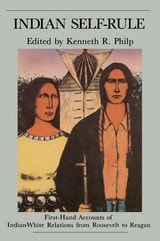
Indian Self Rule
First-Hand Accounts of Indian-White Relations from Roosevelt to Reaganedited by Kenneth R. Philp
Utah State University Press, 1995
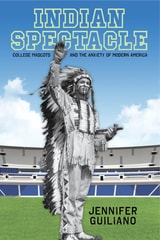
Indian Spectacle
College Mascots and the Anxiety of Modern AmericaGuiliano, Jennifer
Rutgers University Press, 2015

Indian Stereotypes in TV Science Fiction
First Nations' Voices Speak OutBy Sierra S. Adare
University of Texas Press, 2005
According to an early 1990s study, 95 percent of what college students know about Native Americans was acquired through the media, leading to widespread misunderstandings of First Nations peoples. Sierra Adare contends that negative "Indian" stereotypes do physical, mental, emotional, and financial harm to First Nations individuals.
At its core, this book is a social study whose purpose is to explore the responses of First Nations peoples to representative "Indian" stereotypes portrayed within the TV science fiction genre. Participants in Adare's study viewed episodes from My Favorite Martian, Star Trek, Star Trek: Voyager, Quantum Leap, The Adventures of Superman, and Star Trek: The Next Generation. Reactions by viewers range from optimism to a deep-rooted sadness. The strongest responses came after viewing a Superman episode's depiction of an "evil medicine man" who uses a ceremonial pipe to kill a warrior. The significance of First Nations peoples' responses and reactions are both surprising and profound. After publication of "Indian" Stereotypes in TV Science Fiction, ignorance can no longer be used as an excuse for Hollywood's irresponsible depiction of First Nations peoples' culture, traditions, elders, religious beliefs, and sacred objects.
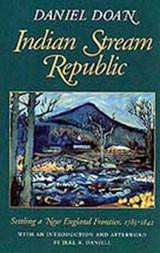
Indian Stream Republic
Settling a New England Frontier, 1785-1842Daniel Doan
Brandeis University Press, 1996
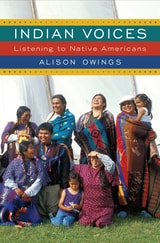
Indian Voices
Listening to Native AmericansOwings, Alison
Rutgers University Press, 2012
In Indian Voices, Alison Owings takes readers on a fresh journey across America, east to west, north to south, and around again. Owings's most recent oral history—engagingly written in a style that entertains and informs—documents what Native Americans say about themselves, their daily lives, and the world around them.
Young and old from many tribal nations speak with candor, insight, and (unknown to many non-Natives) humor about what it is like to be a Native American in the twenty-first century. Through intimate interviews many also express their thoughts about the sometimes staggeringly ignorant, if often well-meaning, non-Natives they encounter—some who do not realize Native Americans still exist, much less that they speak English, have cell phones, use the Internet, and might attend powwows and power lunches.
Indian Voices, an inspiring and important contribution to the literature about the original Americans, will make every reader rethink the past—and present—of the United States.
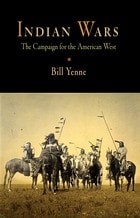
Indian Wars
The Campaign for the American WestBill Yenne
Westholme Publishing, 2006
A Chronicle of the Longest Military Action in American History
"Splendid. . . .a book that has the rare quality of being both an excellent reference work and a pleasure to read."—Wall Street Journal
"As complete and balanced an overview of nearly a century of fighting between the U.S. Army and dozens of Indian nations as there is." —Martin Naparsteck, Salt Lake Tribune
"Excellent. . . . Indian Wars is an outstanding introduction to the 'longest campaign ever waged by any of the United States armed forces.' It also has the virtue of speaking eloquently to the past while offering valuable guidance for the future."—Military.com
The Indian wars remain the most misunderstood campaign ever waged by the U. S. Army. From the first sustained skirmishes west of the Mississippi River in the 1850s to the sweeping clashes of hundreds of soldiers and warriors along the upper plains decades later, these wars consumed most of the active duty resources of the army for the greater part of the nineteenth century and resulted in the disruption of nearly all of the native cultures in the West. Yet the popular understanding of the Indian wars is marred by stereotypes and misinformation as well as a tendency to view these individual wars—the battles against the Sioux, the Cheyenne, the Nez Perce, the Apache, and other groups—as distinct incidents rather than parts of a single overarching campaign. Dispelling notions that American Indians were simply attempting to stop encroachment on their homelands or that they shared common views on how to approach the Europeans, Bill Yenne explains in Indian Wars: The Campaign for the American West, that these wars, fought for more than five decades across a landscape the size of continental Europe, were part of a general long-term strategy by the U. S. Army to control the West as well as extensions of conflicts among native peoples that predated European contact.
Complete with a general history of Indian and European relations from the earliest encounters to the opening of the west, and featuring legendary figures from both sides, including Crazy Horse, Chief Joseph, Sitting Bull, Geronimo, George Custer, Kit Carson, and George Crook, Indian Wars allows the reader to better understand the sequence of events that transformed the West and helped define the American temperament.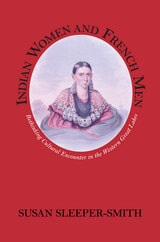
Indian Women and French Men
Rethinking Cultural Encounter in the Western Great LakesSusan Sleeper-Smith
University of Massachusetts Press, 2001
A center of the lucrative fur trade throughout the colonial period, the Great Lakes region was an important site of cultural as well as economic exchange between native and European peoples. In this well-researched study, Susan Sleeper-Smith focuses on an often overlooked aspect of these interactions—the role played by Indian women who married French traders. Drawing on a broad range of primary and secondary sources, she shows how these women used a variety of means to negotiate a middle ground between two disparate cultures. Many were converts to Catholicism who constructed elaborate mixed-blood kinship networks that paralleled those of native society, thus facilitating the integration of Indian and French values. By the mid-eighteenth century, native women had extended these kin linkages to fur trade communities throughout the Great Lakes, not only enhancing access to the region's highly prized pelts but also ensuring safe transport for other goods.
Indian Women and French Men depicts the encounter of Old World and New as an extended process of indigenous adaptation and change rather than one of conflict and inevitable demise. By serving as brokers between those two worlds, Indian women who married French men helped connect the Great Lakes to a larger, expanding transatlantic economy while securing the survival of their own native culture. As such, Sleeper-Smith points out, their experiences illuminate those of other traditional cultures forced to adapt to market-motivated Europeans.
Indiana 1816-1850
The Pioneer EraDonald F. Carmony
Indiana Historical Society Press, 1998
Indiana Out Loud
Dan Carpenter on the Heartland BeatDan Carpenter
Indiana Historical Society Press, 2013
Indiana Political Heroes
Geoff Paddock
Indiana Historical Society Press, 2008
Indiana Quakers Confront the Civil War
Jacquelyn S. Nelson
Indiana Historical Society Press, 1991
Indiana Through Tradition and Change
A History of the Hoosier State and Its People, 1920-1945James H. Madison
Indiana Historical Society Press, 1982
Indiana in Transition
The Emergence of an Industrial Commonwealth, 1880-1920Clifton J. Phillips
Indiana Historical Society Press, 1968
Indiana in the Civil War Era, 1850-1880
Emma Lou Thornbrough
Indiana Historical Society Press, 1965
Indiana to 1816
The Colonial PeriodJohn D. Barnhart
Indiana Historical Society Press, 2016

Indiana's 200
The People Who Shaped the Hoosier StateLinda C. Gugin
Indiana Historical Society Press, 2015
Indiana
A HistoryHoward H. Peckham
University of Illinois Press, 1978
During the Civil War, the state found itself divided, with Indianans' allegiances split between Southern partisans and zealous Yankees. Throughout this period, the workshops and farms of Indiana continued to provide the growing nation with food and other necessities. Countless small towns prospered; Indianapolis grew, and Gary, on the southern shore of Lake Michigan, became synonymous with steel production, symbolizing the industrial might of America. Readers all over the country embraced the writings of Indianans such as James Whitcomb Riley and Booth Tarkington, while Indiana's painters disseminated iconic and idyllic images of America.
This comprehensive history traces the history of the Hoosier state, revealing its most significant contributions to the nation as a whole, while also exploring the unique character of its land and people. Howard H. Peckham relates recent changes in Indiana as a variety of ethnic and racial groups have come seeking a share in the good life, enriching and redefining this ever-changing state for the new millennium.

Indianapolis
The Bass Photo Company CollectionSusan Sutton
Indiana Historical Society Press, 2008
Indiana’s War
The Civil War in DocumentsRichard F. Nation
Ohio University Press, 2009
Indiana’s War is a primary source collection featuring the writings of Indiana’s citizens during the Civil War era. Using private letters, official records, newspaper articles, and other original sources, the volume presents the varied experiences of Indiana’s participants in the war both on the battlefield and on the home front. Starting in the 1850s, the documents show the sharp political divisions over issues such as slavery, race, and secession in Indiana, divisions that boiled over into extraordinary strife and violence in the state during the rebellion. This conflict touched all levels and members of society, including men, women, and children, whites and African Americans, native-born citizens and immigrants, farmers and city and town dwellers.
Collecting the writings of Indiana’s peoples on a wide range of issues, chapters focus on the politics of race prior to the war, the secession crisis, war fever in 1861, the experiences of soldiers at the front, homefront hardships, political conflict between partisan foes and civil and military authorities, reactions to the Emancipation Proclamation, and antiwar dissent, violence, and conspiracy.
Indiana’s War is an excellent accompanying primary source text for undergraduate and graduate courses on the American Civil War. It documents the experiences of Indiana’s citizens, from the African American soldier to the antiwar dissenter, from the prewar politician to the postwar veteran, from the battle-scarred soldier to the impoverished soldier’s wife, all showing the harsh realities of the war.
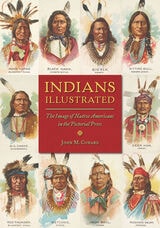
Indians Illustrated
The Image of Native Americans in the Pictorial PressJohn M Coward
University of Illinois Press, 2016
Indians Playing Indian
Multiculturalism and Contemporary Indigenous Art in North AmericaMonika Siebert
University of Alabama Press, 2015
Explores how American Indian artists have responded to the pervasive misunderstanding of indigenous peoples as cultural minorities in the United States and Canada
Contemporary indigenous peoples in North America confront a unique predicament. While they are reclaiming their historic status as sovereign nations, mainstream popular culture continues to depict them as cultural minorities similar to other ethnic Americans. These depictions of indigenous peoples as “Native Americans” complete the broader narrative of America as a refuge to the world’s immigrants and a home to contemporary multicultural democracies, such as the United States and Canada. But they fundamentally misrepresent indigenous peoples, whose American history has been not of immigration but of colonization.
Monika Siebert’s Indians Playing Indian first identifies this phenomenon as multicultural misrecognition, explains its sources in North American colonial history and in the political mandates of multiculturalism, and describes its consequences for contemporary indigenous cultural production. It then explores the responses of indigenous artists who take advantage of the ongoing popular interest in Native American culture and art while offering narratives of the political histories of their nations in order to resist multicultural incorporation.
Each chapter of Indians Playing Indian showcases a different medium of contemporary indigenous art—museum exhibition, cinema, digital fine art, sculpture, multimedia installation, and literary fiction—and explores specific rhetorical strategies artists deploy to forestall multicultural misrecognition and recover political meanings of indigeneity. The sites and artists discussed include the National Museum of the American Indian in Washington, DC; filmmakers at Inuit Isuma Productions; digital artists/photographers Dugan Aguilar, Pamela Shields, and Hulleah Tsinhnahjinnie; sculptor Jimmie Durham; and novelist LeAnne Howe.
Indians of the Rio Grande Delta
Their Role in the History of Southern Texas and Northeastern MexicoBy Martín Salinas
University of Texas Press, 1990
Indians of the Rio Grande Delta is the first single-volume source on these little-known peoples. Working from innumerable primary documents in various Texan and Mexican archives, Martin Salinas has compiled data on more than six dozen named groups that inhabited the area in the sixteenth through the eighteenth centuries. Depending on available information, he reconstructs something of their history, geographical range and migrations, demography, language, and culture. He also offers general information on various unnamed groups of Indians, on the lifeways of the indigenous peoples, and on the relations between the Indian groups and the colonial Spanish missions in the region.
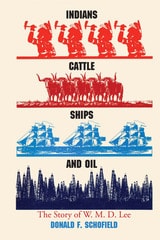
Indians, Cattle, Ships, and Oil
The Story of W. M. D. LeeBy Donald F. Schofield
University of Texas Press, 1985
Indian trader, rancher, harbor developer, oil impresario—these are the many worlds of one of the least chronicled but most fascinating characters of the American West. In the early, bustling years of the frontier, a brazen young man named William McDole Lee moved from Wisconsin to Kansas and then to Texas to forge a life for himself. Becoming a driving entrepreneurial force in Texas's development, Lee soon garnered the alliances and resources necessary to shape the financial destinies of disparate groups throughout the state. His story is expertly told in Donald F. Schofield's Indians, Cattle, Ships, and Oil.
Beginning in 1869 as a trader to the southern Cheyenne and Arapaho tribes and fort provisioner to troops garrisoned at Camp Supply, Indian Territory, Lee gained a partner and amassed a fortune in short order from trading buffalo hides and robes. Vast herds of buffalo grazing on the southern plains were killed largely on his order. When buffalo were no longer a profitable commodity, Lee tackled his next challenge—the cattle trade.
He began with herds branded LR that grazed on pastures near Fort Supply. Then came his LE herd in the Texas Panhandle. Another partnership, with noted cattle rancher Lucien Scott, resulted in the vast LS ranch, one of the most successful operations of its day. Lee even introduced a new breed of cattle, the Aberdeen-Angus, to the western range. But as his partnership faded, Lee moved on to his next undertaking—the development of Texas' first deep-water harbor.
In 1888, Lee and other financiers put up one million dollars to finance a dream: opening international trade from the waters of the Gulf of Mexico to the mainland at the mouth of the Brazos River. Their Brazos River Channel and Dock Company was to construct, own, and operate a deep-water harbor at Velasco, with a railroad link to Houston. Though threats of financial disaster loomed large, the Velasco facility was to welcome, in its day, tugs, barges, and three-masted schooners and to provide impetus for Houston's boom. Yet with success, the mercurial Lee turned to yet another challenge—oil.
Starting still another partnership, Lee committed himself to prospecting for oil on the West Columbia Ridge in Brazoria County. Lee and crew struck oil in 1907, developing one of the first producing wells of Brazoria County, but inadequate drilling equipment hampered further fruitful exploration. Lee moved his rigs to the famed Spindletop, where he perfected the technique of shallow drilling. Though spectacular success in the oil business eluded him, Lee's accomplishments set him squarely among the great entrepreneurs of the Texas oil industry.
Lee's exploits led him to roles in some of the most dramatic moments in Texas and the West—Indian uprisings, buffalo hunts, political scandals, cowboy strikes and shoot-outs, railroad promotions, oil-well blow-outs and gushers. The people he encountered are the famous and infamous of western history: Cheyenne Chief Little Robe and the outlaw "Hurricane Bill" Martin; Indian Agent John D. Miles and Major General John Pope; outlaws Tom Harris and William Bonney, and Sheriff Pat Garrett. Altogether, Lee's biography vividly shows one man's manipulation of people and events during the settlement of the American frontier.
Indicators of Change in the American Family
Abbott Lamoyne Ferriss
Russell Sage Foundation, 1970
Indicators of Children's Well-Being
Robert M. Hauser
Russell Sage Foundation, 1997
Indicators of Trends in the Status of American Women
Abbott Lamoyne Ferriss
Russell Sage Foundation, 1971

Indie, Inc.
Miramax and the Transformation of Hollywood in the 1990sBy Alisa Perren
University of Texas Press, 2012
During the 1990s, films such as sex, lies, and videotape, The Crying Game, Pulp Fiction, Good Will Hunting, and Shakespeare in Love earned substantial sums at the box office along with extensive critical acclaim. A disproportionate number of these hits came from one company: Miramax. Indie, Inc. surveys Miramax’s evolution from independent producer-distributor to studio subsidiary, chronicling how one company transformed not just the independent film world but the film and media industries more broadly. As Alisa Perren illustrates, Miramax’s activities had an impact on everything from film festival practices to marketing strategies, talent development to awards campaigning.
Case studies of key films, including The Piano, Kids, Scream, The English Patient, and Life Is Beautiful, reveal how Miramax went beyond influencing Hollywood business practices and motion picture aesthetics to shaping popular and critical discourses about cinema during the 1990s. Indie, Inc. does what other books about contemporary low-budget cinema have not—it transcends discussions of “American indies” to look at the range of Miramax-released genre films, foreign-language films, and English-language imports released over the course of the decade. The book illustrates that what both the press and scholars have typically represented as the “rise of the American independent” was in fact part of a larger reconfiguration of the media industries toward niche-oriented products.

Indigenomicon
American Indians, Video Games, and the Structures of DispossessionJodi A. Byrd
Duke University Press, 2025
Indigenous Bodies, Maya Minds
Religion and Modernity in a Transnational K'iche' CommunityC. James MacKenzie
University Press of Colorado, 2016
Indigenous Bodies, Maya Minds examines tension and conflict over ethnic and religious identity in the K’iche’ Maya community of San Andrés Xecul in the Guatemalan Highlands and considers how religious and ethnic attachments are sustained and transformed through the transnational experiences of locals who have migrated to the United States.
Author C. James MacKenzie explores the relationship among four coexisting religious communities within Highland Maya villages in contemporary Guatemala—costumbre, traditionalist religion with a shamanic substrate; “Enthusiastic Christianity,” versions of Charismaticism and Pentecostalism; an “inculturated” and Mayanized version of Catholicism; and a purified and antisyncretic Maya Spirituality—with attention to the modern and nonmodern worldviews that sustain them. He introduces a sophisticated set of theories to interpret both traditional religion and its relationship to other contemporary religious options, analyzing the relation among these various worldviews in terms of the indigenization of modernity and the various ways modernity can be apprehended as an intellectual project or an embodied experience.
Indigenous Bodies, Maya Minds investigates the way an increasingly plural religious landscape intersects with ethnic and other identities. It will be of interest to Mesoamerican and Mayan ethnographers, as well as students and scholars of cultural anthropology, indigenous cultures, globalization, and religion.
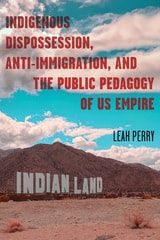
Indigenous Dispossession, Anti-Immigration, and the Public Pedagogy of US Empire
Leah Perry
The Ohio State University Press, 2024
From the founding of the United States, enduringly consequential debates over Indigeneity and immigration have occurred on the battlefield and in Congress, in courtrooms, at territorial borders, and in mainstream culture. In Indigenous Dispossession, Anti-Immigration, and the Public Pedagogy of US Empire, Leah Perry traces the ways that the US created its empire through public pedagogies—which she defines as policy and media discourses—surrounding Indigenous dispossession, gendered state violence, and racialized immigration. These pedagogies have propelled the expansion of US empire, including the redrawing of the US as a neoliberal democracy. Perry argues that by changing the discourse around gender, race, immigration, and Indigeneity, the United States has continued its imperial project through different eras, always predicated on Indigenous dispossession.
In exploring crucial components of empire, such as welfare, eugenics, disability, sexual violence, foodways, queerness, and policing, Perry interrogates violence against Indigenous peoples and against immigrants, examining these not independently—as is so often the case—but as co-constitutive. Indigenous Dispossession, Anti-Immigration, and the Public Pedagogy of US Empire thus intervenes in and fills a gap in immigration studies, Indigenous studies, race and ethnic studies, gender and sexuality studies, and US history.
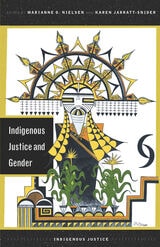
Indigenous Justice and Gender
Edited by Marianne O. Nielsen and Karen Jarratt-Snider
University of Arizona Press, 2023
This new volume offers a broad overview of topics pertaining to gender-related health, violence, and healing. Employing a strength-based approach (as opposed to a deficit model), the chapters address the resiliency of Indigenous women and two-spirit people in the face of colonial violence and structural racism.
The book centers the concept of “rematriation”—the concerted effort to place power, peace, and decision making back into the female space, land, body, and sovereignty—as a decolonial practice to combat injustice. Chapters include such topics as reproductive health, diabetes, missing and murdered Indigenous women, Indigenous women in the academy, and Indigenous women and food sovereignty.
As part of the Indigenous Justice series, this book provides an overview of the topic, geared toward undergraduate and graduate classes.
Contributors
Alisse Ali-Joseph
Michèle Companion
Mary Jo Tippeconnic Fox
Brooke de Heer
Lomayumtewa K. Ishii
Karen Jarratt-Snider
Lynn C. Jones
Anne Luna-Gordinier
Kelly McCue
Marianne O. Nielsen
Linda M. Robyn
Melinda S. Smith
Jamie Wilson
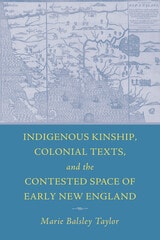
Indigenous Kinship, Colonial Texts, and the Contested Space of Early New England
Marie Balsley Taylor
University of Massachusetts Press, 2023
New England history often treats Indigenous people as minor or secondary actors within the larger colonial story. Focusing on those Native Americans who were sachems, or leaders, in local tribes when Europeans began arriving, Marie Balsley Taylor reframes stories of Indigenous and British interactions and illuminates the vital role that Indigenous kinship and diplomacy played in shaping the textual production of English colonial settlers in New England from the 1630s until King Philip’s War.
Taylor argues that genres like the conversion narrative, the post-sermon question and answer session, and scientific treatise—despite being written in English for European audiences—were jointly created by Indigenous sachems and settlers to facilitate interaction within the contested space of colonial New England. Analyzing the writings of Thomas Shepard, John Eliot, John Winthrop Jr., and Daniel Gookin and the relationships these English Protestants formed with Indigenous leaders like Wequash, Cutshamekin, Cassacinamon, and Waban, this innovative study offers a new approach to early American literature—indicating that Native thought and culture played a profound role in shaping the words and deeds of colonial writers.
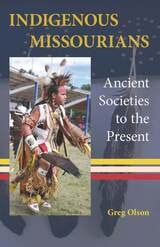
Indigenous Missourians
Ancient Societies to the PresentGreg Olson
University of Missouri Press, 2023
The history of Indigenous people in present-day Missouri is far more nuanced, complex, and vibrant than the often-told tragic stories of conflict with white settlers and forced Indian removal would lead us to believe. In this path-breaking narrative, Greg Olson presents the Show Me State’s Indigenous past as one spanning twelve millennia of Native presence, resilience, and evolution. While previous Missouri histories have tended to include Indigenous people only during periods when they constituted a threat to the state’s white settlement, Olson shows us the continuous presence of Native people that includes the present day.
Beginning thousands of years before the state of Missouri existed, Olson recounts how centuries of inventiveness and adaptability enabled Native people to create innovations in pottery, agriculture, architecture, weaponry, and intertribal diplomacy. Olson also shows how the resilience of Indigenous people like the Osages allowed them to thrive as fur traders, even as settler colonialists waged an all-out policy of cultural genocide against them.
Though the state of Missouri claimed to have forced Indigenous people from its borders after the 1830s, Olson uses U.S. Census records and government rolls from the allotment period to show that thousands remained. In the end, he argues that, with a current population of 27,000 Indigenous people, Missouri remains very much a part of Indian Country, and that Indigenous history is Missouri history.