Results by title
8113 books match the query 'Literary Criticism' and 41 start with k

Kafka Goes to the Movies
Hanns Zischler
University of Chicago Press, 2002
Since many of Kafka's visits to the cinema occurred during bachelor trips with Max Brod, Zischler's research took him not only to Kafka's native Prague but to film archives in Munich, Milan, and Paris. Matching Kafka's cinematic references to reviews and stills from daily papers, Zischler hunted down rare films in collections all across Europe. A labor of love, then, by a true man of the cinema, Kafka Goes to the Movies brims with discoveries about the pioneering years of European film. With a wealth of illustrations, including reproductions of movie posters and other rare materials, Zischler opens a fascinating window onto movies that have been long forgotten or assumed lost.
But the real highlights of the book are those about Kafka himself. Long considered one of the most enigmatic figures in literature, the Kafka that emerges in this work is strikingly human. Kafka Goes to the Movies offers an absorbing look at a witty, passionate, and indulgently curious writer, one who discovered and used the cinema as a place of enjoyment and escape, as a medium for the ambivalent encounter with modern life, and as a filter for the changing world around him.
Kafka and Cultural Zionism
Dates in PalestineIris Bruce
University of Wisconsin Press, 2007
Kafka and Noise
The Discovery of Cinematic Sound in Literary ModernismKata Gellen
Northwestern University Press, 2019
Kafka and Noise offers a method for pursuing intermedial research in the humanities—namely, via the productive "misapplication" of theoretical tools, which exposes the contours, conditions, and expressive possibilities of the media in question. This book will be of interest to scholars of modernism, literature, cinema, and sound, as well as to anyone wishing to explore how artistic and technological media shape our experience of the world and the possibilities for representing it.
Kafka and Wittgenstein
The Case for an Analytic ModernismRebecca Schuman
Northwestern University Press, 2015
In Kafka and Wittgenstein, Rebecca Schuman undertakes the first ever book-length scholarly examination of Ludwig Wittgenstein’s philosophy of language alongside Franz Kafka’s prose fiction. In groundbreaking readings, she argues that although many readers of Kafka are searching for what his texts mean, in this search we are sorely mistaken. Instead, the problems and illusions we portend to uncover, the im-portant questions we attempt to answer—Is Josef K. guilty? If so, of what? What does Gregor Samsa’s transformed body mean? Is Land-Surveyor K. a real land surveyor?— themselves presuppose a bigger delusion: that such questions can be asked in the first place. Drawing deeply on the entire range of Wittgenstein’s writings, Schuman can-nily sheds new light on the enigmatic Kafka.
Kafka's Ethics of Interpretation
Between Tyranny and DespairJennifer L. Geddes
Northwestern University Press, 2016
Geddes explores the interpretation that takes place within, and in response to, Kafka's writings, and pairs Kafka's works with readings of Sigmund Freud, Pierre Bourdieu, Tzvetan Todorov, Emmanuel Levinas, and others. She argues that Kafka explores interpretation as a mode of power and violence, but also as a mode of engagement with the world and others. Kafka, she argues, challenges us to rethink the ways we read texts, engage others, and navigate the world through our interpretations of them.
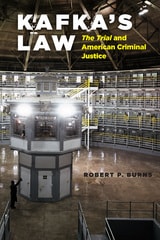
Kafka's Law
"The Trial" and American Criminal JusticeRobert P. Burns
University of Chicago Press, 2014
With Kafka’s Law, Robert P. Burns shows how The Trial provides an uncanny lens through which to consider flaws in the American criminal justice system today. Burns begins with the story, at once funny and grim, of Josef K., caught in the Law’s grip and then crushed by it. Laying out the features of the Law that eventually destroy K., Burns argues that the American criminal justice system has taken on many of these same features. In the overwhelming majority of contemporary cases, police interrogation is followed by a plea bargain, in which the court’s only function is to set a largely predetermined sentence for an individual already presumed guilty. Like Kafka’s nightmarish vision, much of American criminal law and procedure has become unknowable, ubiquitous, and bureaucratic. It, too, has come to rely on deception in dealing with suspects and jurors, to limit the role of defense, and to increasingly dispense justice without the protection of formal procedures. But, while Kennedy may be correct in his grim assessment, a remedy is available in the tradition of trial by jury, and Burns concludes by convincingly arguing for its return to a more central place in American criminal justice.
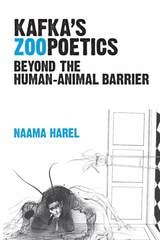
Kafka's Zoopoetics
Beyond the Human-Animal BarrierNaama Harel
University of Michigan Press, 2020
Nonhuman figures are ubiquitous in the work of Franz Kafka, from his early stories down to his very last one. Despite their prominence throughout his oeuvre, Kafka’s animal representations have been considered first and foremost as mere allegories of intrahuman matters. In recent years, the allegorization of Kafka’s animals has been poetically dismissed by Kafka’s commentators and politically rejected by posthumanist scholars. Such critique, however, has yet to inspire either an overarching or an interdiscursive account. This book aims to fill this lacuna. Positing animal stories as a distinct and significant corpus within Kafka’s entire poetics, and closely examining them in dialogue with both literary and posthumanist analysis, Kafka’s Zoopoetics critically revisits animality, interspecies relations, and the very human-animal contradistinction in the writings of Franz Kafka.
Kafka’s animals typically stand at the threshold between humanity and animality, fusing together human and nonhuman features. Among his liminal creatures we find a human transformed into vermin (in “The Metamorphosis”), an ape turned into a human being (in “A Report to an Academy”), talking jackals (in “Jackals and Arabs”), a philosophical dog (in “Researches of a Dog”), a contemplative mole-like creature (in “The Burrow”), and indiscernible beings (in “Josefine, the Singer or the Mouse People”). Depicting species boundaries as mutable and obscure, Kafka creates a fluid human-animal space, which can be described as “humanimal.” The constitution of a humanimal space radically undermines the stark barrier between human and other animals, dictated by the anthropocentric paradigm. Through denying animalistic elements in humans, and disavowing the agency of nonhuman animals, excluding them from social life, and neutralizing compassion for them, this barrier has been designed to regularize both humanity and animality. The contextualization of Kafka's animals within posthumanist theory engenders a post-anthropocentric arena, which is simultaneously both imagined and very real.
Kafka
Toward a Minor LiteratureGilles Deleuze
University of Minnesota Press, 1986
Kafka’s Blues
Figurations of Racial Blackness in the Construction of an AestheticMark Christian Thompson
Northwestern University Press, 2016
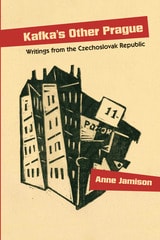
Kafka’s Other Prague
Writings from the Czechoslovak RepublicAnne Jamison
Northwestern University Press, 2018
Franz Kafka was born in Prague, a bilingual city in the Habsburg Empire. He died a citizen of Czechoslovakia. Yet Kafka was not Czech in any way he himself would have understood. He could speak Czech, but, like many Prague Jews, he was raised and educated and wrote in German. Kafka critics to date have had little to say about the majority language of his native city or its “minor literature,” as he referred to it in a 1913 journal entry. Kafka’s Other Prague explains why Kafka’s later experience of Czech language and culture matters.
Bringing to light newly available archival material, Anne Jamison’s innovative study demonstrates how Czechoslovakia’s founding and Kafka’s own dramatic political, professional, and personal upheavals altered his relationship to this “other Prague.” It destabilized Kafka’s understanding of nationality, language, gender, and sex—and how all these issues related to his own writing.
Kafka’s Other Prague juxtaposes Kafka’s German-language work with Czechoslovak Prague’s language politics, intellectual currents, and print culture—including the influence of his lover and translator, the journalist Milena Jesenská—and shows how this changed cultural and linguistic landscape transformed one of the great literary minds of the last century.
Kafu the Scribbler
The Life and Writings of Nagai Kafu, 1897–1959Edward Seidensticker
University of Michigan Press, 1990
Kallimachos
The Alexandrian Library and the Origins of BibliographyRudolf Blum
University of Wisconsin Press, 1991
The famous library of Alexandria, founded around 295 BCE by Ptolemaios I, housed the greatest collection of texts in the ancient world and was a fertile site of Hellenistic scholarship. Rudolf Blum’s landmark study, originally published in German in 1977, argues that Kallimachos of Kyrene was not only the second director of the Alexandrian library but also the inventor of two essential scholarly tools still in use to this day: the library catalog and the “biobibliographical” reference work. Kallimachos expanded the library’s inventory lists into volumes called the Pinakes, which extensively described and categorized each work and became in effect a Greek national bibliography and the source and paradigm for most later bibliographic lists of Greek literature. Though the Pinakes have not survived, Blum attempts a detailed reconstruction of Kallimachos’s inventories and catalogs based on a careful analysis of surviving sources, which are presented here in full translation.
Kant and the Southern New Critics
By William J. Handy
University of Texas Press, 1963
An author’s true meaning has always been largely a matter of opinion among literary critics, even when only objective language was analyzed. However, a writer’s inner meaning, which perhaps not even he or she consciously realizes, interests the “new critics,” who base their theory of criticism on the writings of Immanuel Kant and hold philosophical values to be essential in studying a literary work.
William J. Handy, a former student of John Crowe Ransom, himself a critic of note, reveals the inadequacy of logical concept to represent the full quality of human experience. In Kant and the Southern New Critics he discusses the theories and practices of some pioneers of philosophical criticism—John Crowe Ransom, Allen Tate, Cleanth Brooks, and others—and traces the influence of the Kantian generative idea on their assumption that a work of art is the celebration of one’s qualitative experience.
Critics in the new school believe that knowledge of experience is distorted when abstracted into scientific, quantitative notations, and that the artist, to portray things in their more natural state, must employ particulars in order to achieve “universals.” Knowledge of any subject or object must include the aesthetic qualities of imagination and emotion that cannot be discovered through analysis.
This study explores Ransom’s theory of “ontological criticism.” The basic difference in symbols representing things and those representing ideas was discerned by Kant, who distinguished between understanding (analysis of an object in order to classify it)and imagination (realization of an object undistorted by logical reduction). Handysuggests that ontological structure requires a writer to use the logic that springs from his image-making faculty—a thought also expressed by T. S. Eliot, who says, “The only way of expressing emotion in the form of art is by finding an ‘objective correlative.’ ”
The discipline of philosophical aesthetics is necessary for the critic, Handy says, if his principles are to be substantial enough to make a significant contribution to knowledge of literary theory. This book clearly delineates the origins of a philosophical approach and leads the reader to an appreciation of the deeper enjoyment and meaning it can give to literary experience.
Karl Kraus and the Discourse of Modernity
Ari Linden
Northwestern University Press, 2020
Kraus’s central insight, Linden argues, is that the medial representations of such events have produced less an informed audience than one increasingly unmoved by mass violence. In the second part of the book, Linden explores this insight as he sees it inflected in the writings of Søren Kierkegaard, Walter Benjamin, and Theodor Adorno. This hidden dialogue, Linden claims, offers us a richer understanding of the often-neglected relationship between satire and critical theory writ large.
Katherine Anne Porter Remembered
Darlene Harbour Unrue
University of Alabama Press, 2010
Katherine Anne Porter Remembered is a collection of reminiscences and memoirs by contemporaries, friends, and associates of Porter offering a revealing and intimate portrait of the elusive and complex American writer.
From a fractured and vagabond girlhood in Texas, Porter led a wildly itinerant life that took her through five marriages, innumerable love affairs, and homes in Colorado, New York, Paris, Mexico, Louisiana, California, and Maryland. With very little formal education, she grew through sheer force of will to become a major American writer of short stories and the author of several books including Flowering Judas and other stories; Ship of Fools; Pale Horse; Pale Ride; Noon Wine; and The Collected Stories of Katherine Anne Porter, which won both the Pulitzer Prize and the National Book Award.
Because of Porter’s own dissembling and half-truths about her life, as well as the numerous factual errors that persist in biographical entries and literary dictionaries, a complete and accurate portrait of her life has been hard to establish. The 63 reminiscences gathered in this book paint a vivid portrait of Porter and are testaments to her extraordinary beauty, her gift for mesmerizing and charming audiences and friends, her yearnings for a lasting home, her delusions about love, the astonishing range and scope of her reading, her sharp tongue and vindictiveness, and her final paranoid renunciations of friends and family. Along the way, Porter formed friendships with Eudora Welty, Elizabeth Hardwick, Flannery O’Connor, and CleanthBrooks whose remembrances of her are included in this volume.
Katherine Anne Porter and Mexico
The Illusion of EdenBy Thomas F. Walsh
University of Texas Press, 1992
In 1920, an unknown journalist named Katherine Anne Porter first sojourned in Mexico. When she left her "familiar country" for the last time in 1931, she was the celebrated author of Flowering Judas and Other Stories and had accumulated a wealth of experiences and impressions that would inspire numerous short stories, essays, and reviews, as well as the opening section of her only novel, Ship of Fools.
In this perceptive study of Porter's Mexican experiences, Thomas Walsh traces the important connections between those events and her literary works. Separating fact from the fictions that Porter constantly created about her life, he follows the active role that she played in Mexican political and intellectual life—even to the discovery of a plot to overthrow the Mexican government, which eventually figured in Flowering Judas.
Most important, Walsh discerns how the great swings between depression and elation that characterized Porter's emotional life influenced her alternating visions of Mexico. In such works as "Xochimilco," Porter saw Mexico as an earthly Eden where hopes for a better society could be realized, but in other stories, including "The Fiesta of Guadalupe," she depicts Mexico as a place of hopeless oppression for the native peoples.
Mexico, Porter once said, gave her back her Texas past. Given the unhappiness of that past, her feelings toward Mexico would always be ambivalent, but her Mexican experiences influenced all her subsequent works to some degree, even those pieces not specifically Mexican in setting. Walsh's study, then, is an essential key for anyone seeking greater understanding of the life or works of Katherine Anne Porter.
Katherine Parr
Complete Works and CorrespondenceKatherine Parr
University of Chicago Press, 2011
To the extent that she is popularly known, Katherine Parr (1512–48) is the woman who survived King Henry VIII as his sixth and last wife. She merits far greater recognition, however, on several other fronts. Fluent in French, Italian, and Latin, Parr also began, out of necessity, to learn Spanish when she ascended to the throne in 1543. As Henry’s wife and queen of England, she was a noted patron of the arts and music and took a personal interest in the education of her stepchildren, Princesses Mary and Elizabeth and Prince Edward. Above all, Parr commands interest for her literary labors: she was the first woman to publish under her own name in English in England.
For this new edition, Janel Mueller has assembled the four publications attributed to Parr—Psalms or Prayers, Prayers or Meditations, The Lamentation of a Sinner, and a compilation of prayers and Biblical excerpts written in her hand—as well as her extensive correspondence, which is collected here for the first time. Mueller brings to this volume a wealth of knowledge of sixteenth-century English culture. She marshals the impeccable skills of a textual scholar in rendering Parr’s sixteenth-century English for modern readers and provides useful background on the circumstances of and references in Parr’s letters and compositions. Given its scope and ambition, Katherine Parr: Complete Works and Correspondence will be an event for the English publishing world and will make an immediate contribution to the fields of sixteenth-century literature, reformation studies, women’s writing, and Tudor politics.
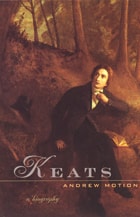
Keats
Andrew Motion
University of Chicago Press, 1999
"Motion has given us a new Keats, one who is skinned alive, a genius who wrote in a single month all the poems we cherish, a victim who was tormented by the best doctors of the age. . . . This portrait, stripped of its layers of varnish and restored to glowing colours, should last us for another generation."—Edmund White, The Observer Review
"Keats's letters fairly leap off the page. . . . [Motion] listens for the 'freely associating inquiry and incomparable verve and dash,' the 'headlong charge,' of Keats's jazzlike improvisations, which give us, like no other writing in English, the actual rush of a man thinking, a mind hurtling forward unpredictably and sweeping us along."—Morris Dickstein, New York Times Book Review
"Scrupulous and eloquent."—Gregory Feeley, Philadelphia Inquirer
Keats's Odes
A Lover's DiscourseAnahid Nersessian
University of Chicago Press, 2021
In 1819, the poet John Keats wrote six poems that would become known as the Great Odes. Some of them—“Ode to a Nightingale,” “To Autumn”—are among the most celebrated poems in the English language. Anahid Nersessian here collects and elucidates each of the odes and offers a meditative, personal essay in response to each, revealing why these poems still have so much to say to us, especially in a time of ongoing political crisis. Her Keats is an unflinching antagonist of modern life—of capitalism, of the British Empire, of the destruction of the planet—as well as a passionate idealist for whom every poem is a love poem.
The book emerges from Nersessian’s lifelong attachment to Keats’s poetry; but more, it “is a love story: between me and Keats, and not just Keats.” Drawing on experiences from her own life, Nersessian celebrates Keats even as she grieves him and counts her own losses—and Nersessian, like Keats, has a passionate awareness of the reality of human suffering, but also a willingness to explore the possibility that the world, at least, could still be saved. Intimate and speculative, this brilliant mix of the poetic and the personal will find its home among the numerous fans of Keats’s enduring work.
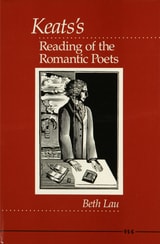
Keats's Reading of the Romantic Poets
Beth Lau
University of Michigan Press, 1991
Keeping the Feast
Metaphors of Sacrifice in 1 Corinthians and PhilippiansJane Lancaster Patterson
SBL Press, 2015
Develop a keener ear for Paul’s rhetorical strategy
Patterson uses cognitive metaphor theory to trace the apostle Paul’s use of metaphors from the Jewish sacrificial system in his moral counsels to the Philippians and the Corinthians. In these letters, Paul moves from the known (the practice of sacrifice) to the unknown (how to live in accord with the life, death, and resurrection of Jesus Christ). Patterson illustrates that the significant sacrificial metaphors in 1 Corinthians and Philippians are not derived from Jewish sacrifices of atonement, but rather from the Passover and sacrifices of thanksgiving. Attention to these metaphors demonstrates that imagery drawn from these sacrifices shapes the overall moral counsel of the letters, reveals more varied and nuanced interpretations of sacrificial references in Paul’s letters, and sheds light on Paul’s continuity with Jewish cultic practice.
Features
- Clarification of the strategic function of metaphors as a means of establishing an imaginative framework for ethical deliberation
- Evidence of Paul’s active processes of theological reflection
- Exploration of the intertwining of Jewish cultic practice with the rhetoric of moral commitment within early Christian churches
Kept Secret
The Half-Truth in NonfictionJen Hirt
Michigan State University Press, 2017
Kerouac's Crooked Road
The Development of a FictionTim Hunt
Southern Illinois University Press, 1996
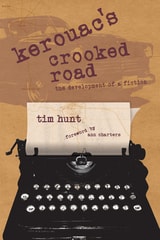
Now a classic, Kerouac’s Crooked Road was one of the first critical works on the legendary Beat writer to analyze his work as serious literary art, placing it in the broader American literary tradition with canonical writers like Herman Melville and Mark Twain. Author Tim Hunt explores Kerouac’s creative process and puts his work in conversation with classic American literature and with critical theory.
This edition includes a new preface by the author, which takes a discerning look at the implications of the 2007 publication of the original typewriter scroll version of On the Road for the understanding of Kerouac and his novel. Although some critics see the scroll version of the novel as embodying Kerouac’s true artistic vision and the 1957 Viking edition as a commercialized compromise of that vision, Hunt argues that the two versions should not be viewed as antithetical but rather as discrete perspectives of a writer deeply immersed in writing as both performance and evolving process.
Hunt moves beyond the mythos surrounding the “spontaneous creation” of On the Road, which upholds Kerouac’s reputation as a cultural icon, to look more closely at an innovative writer who wanted to bridge the gap between the luscious, talk-filled world of real life and the sterilized version of that world circumscribed by overly intellectualized, literary texts, through the use of written language driven by effusive passion rather than sober reflection. With close, erudite readings of Kerouac’s major and minor works, from On the Road to Visions of Cody,Hunt draws on Kerouac’s letters, novels, poetry, and experimental drafts to position Kerouac in both historical and literary contexts, emphasizing the influence of writers such as Emerson, Melville, Wolfe, and Hemingway on his provocative work.
Kerouac, the Word and the Way
Prose Artist as Spiritual QuesterBen Giamo
Southern Illinois University Press, 2000
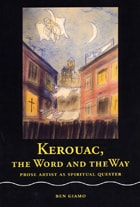
Kerouac was primarily a religious writer bent on testing and celebrating the profane depths and transcendent heights of experience and reporting both truly. Baptized and buried a Catholic, he was also heavily influenced by Buddhism, especially from 1954 until 1957 when he integrated traditional Eastern belief into several novels. Catholicism remained an essential force in his writing, but his study of Buddhism was serious and not solely in the service of his literary art. As he wrote to Malcolm Cowley in 1954, "Since I saw you I took up the study of Buddhism and for me it’s the word and the way I was looking for."
Giamo also seeks IT—"a vital force in the experience of living that takes one by surprise, suspending for the moment belief in the ‘real’ concrete grey everyday of facts of self and selfhood . . . its various meanings, paths, and oscillations: from romantic lyricism to ‘the ragged and ecstatic joy of pure being and from the void-pit of the Great World Snake to the joyous pain of amorous love, and, finally, from Catholic/Buddhist serenity to the onset of penitential martyrhood."
Killer Bodies
The Rise and Fall of "Bad Girl" ComicsJoseph Crawford
Rutgers University Press, 2026
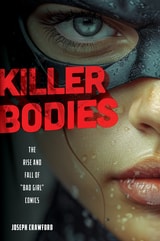
Killer Bodies offers a history of the single most critically derided subgenre in American superhero comics: the “bad girl” comics of the 1990s, which chronicled the blood-soaked adventures of barely dressed and improbably proportioned action heroines for an audience of adolescent boys. While not in any way attempting to rehabilitate the genre, which for the most part amply deserved its reputation as sexist and borderline pornographic, this book situates it within its original cultural context, as the result of a matrix of influences that included third-wave feminism, neopaganism, “girl power,” the rise of the internet, the growing popularity of manga, supermodel beauty ideals, and the mainstreaming of pornography. It explores why and how the figure of the antiheroic, physically aggressive, sexually objectified heroine arose within American comics culture, and the commercial and ideological factors that led to the genre’s rapid rise and equally rapid decline amidst the crisis-racked comics industry of the mid-1990s.
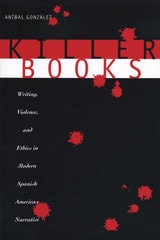
Killer Books
Writing, Violence, and Ethics in Modern Spanish American NarrativeBy Aníbal González
University of Texas Press, 2002
Writing and violence have been inextricably linked in Spanish America from the Conquest onward. Spanish authorities used written edicts, laws, permits, regulations, logbooks, and account books to control indigenous peoples whose cultures were predominantly oral, giving rise to a mingled awe and mistrust of the power of the written word that persists in Spanish American culture to the present day.
In this masterful study, Aníbal González traces and describes how Spanish American writers have reflected ethically in their works about writing's relation to violence and about their own relation to writing. Using an approach that owes much to the recent "turn to ethics" in deconstruction and to the works of Jacques Derrida and Emmanuel Levinas, he examines selected short stories and novels by major Spanish American authors from the late nineteenth through the twentieth centuries: Manuel Gutiérrez Nájera, Manuel Zeno Gandía, Teresa de la Parra, Jorge Luis Borges, Alejo Carpentier, Gabriel García Márquez, and Julio Cortázar. He shows how these authors frequently display an attitude he calls "graphophobia," an intense awareness of the potential dangers of the written word.
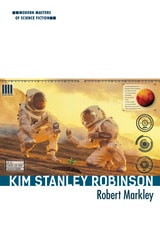
Kim Stanley Robinson
Robert Markley
University of Illinois Press, 2019
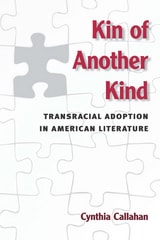
Kin of Another Kind
Transracial Adoption in American LiteratureCynthia Callahan
University of Michigan Press, 2010
"The study of transracial adoption has long been dominated by historians, legal scholars, and social scientists, but with the growth of the lively field of humanistic adoption studies comes a growing understanding of the importance of cultural representations to the social meanings and even the practices of adoption itself . . . This book makes a valuable contribution in showing how important the theme of adoption has been throughout the twentieth century in representations of race relations, and in showing that the adoption theme has served to challenge racial norms as well as uphold them."
---Margaret Homans, Yale University
The subject of transracial adoption seems to be enjoying unprecedented media attention of late, particularly as white celebrities have made headlines by adopting children of color from overseas. But interest in transracial adoption is nothing new---it has long occupied a space in the public imagination, a space disproportionate with the number of people actually adopted across racial lines.
Even before World War II, when transracial adoption was neither legally nor socially sanctioned, American authors wrote about it, often depicting it as an "accident"---the result of racial ambiguity that prevented adopters from knowing who is white or black. After World War II, as the real-world practice of transracial and international adoption increased, American literary representations of it became an index not only of the changing cultural attitudes toward adoption as a way of creating families but also of the social issues that informed it and made it, at times, controversial.
Kin of Another Kind examines the appearance of transracial adoption in American literature at certain key moments from the turn of the twentieth century to the turn of the twenty-first to help understand its literary and social significance to authors and readers alike. In juxtaposing representations of African American, American Indian, and Korean and Chinese adoptions across racial (and national) lines, Kin of Another Kind traces the metaphorical significance of adoption when it appears in fiction. At the same time, aligning these groups calls attention to their unique and divergent cultural histories with adoption, which serve as important contexts for the fiction discussed in this study.
The book explores the fiction of canonical authors such as William Faulkner and Toni Morrison and places it alongside lesser-known works by Robert E. Boles, Dallas Chief Eagle (Lakota), and Sui Sin Far that, when reconsidered, can advance our understanding both of adoption in literature and of twentieth-century American literature in general.
Kin of Another Kind will appeal to students and scholars in adoption in literature, American literature, and comparative multiethnic literatures. It adds to the growing body of work on adoption in literature, which focuses on orphancy and adoption in the nineteenth and early twentieth centuries.
Cynthia Callahan is Assistant Professor in the Department of English at Ohio State University, Mansfield.
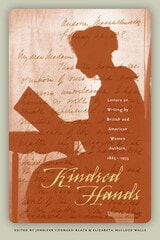
Kindred Hands
Letters on Writing by British and American Women Authors, 1865-1935Jennifer Cognard-Black
University of Iowa Press, 2006
Representing some of the most important female writers of the nineteenth and early twentieth centuries, including transatlantic correspondents, women of color, canonical writers, regional writers, and women living in the British empire, Kindred Hands will enliven scholarship on a host of topics, including reception theory, feminist studies, social history, composition theory, modernism, and nineteenth-century studies. Moreover, because it represents previously unpublished primary sources, the collection will initiate new discussions on race, class, sexuality, ethnicity, and gender with an eye to writing at the turn of the twentieth century.
King Lear and the Naked Truth
Rethinking the Language of Religion and ResistanceJudy Kronenfeld
Duke University Press, 1998
Kronenfeld’s focus expands from the text of Shakespeare’s play to a discussion of a shared Christian culture—a shared language and set of values—a common discursive field that frames the social ethics of the play. That expanded focus is used to address the multiple ways that clothing and nakedness function in the play, as well as the ways that these particular images and terms are understood in that shared context. As Kronenfeld moves beyond Lear to uncover the complex resonances of clothing and nakedness in sermons, polemical tracts, legislation, rhetoric, morality plays, and actual or alleged practices such as naked revolts by Anabaptists and the Adamians’ ritual disrobing during religious services, she demonstrates that many key terms and concepts of the period cannot be tied to a single ideology. Instead, they represent part of an intricate network of thought shared by people of seemingly opposite views, and it is within such shared cultural networks that dissent, resistance, and creativity can emerge. Warning her readers not to take the language of literary texts out of the linguistic context within which it first appeared, Kronenfeld has written a book that reinterprets the linguistic model that has been the basis for much poststructuralist criticism.
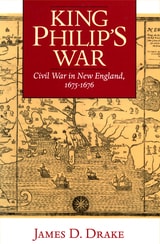
King Philip's War
Civil War in New England, 1675-1676James D. Drake
University of Massachusetts Press, 1999
Sometimes described as “America's deadliest war,” King Philip's War proved a critical turning point in the history of New England, leaving English colonists decisively in command of the region at the expense of native peoples. Although traditionally understood as an inevitable clash of cultures or as a classic example of conflict on the frontier between Indians and whites, in the view of James D. Drake it was neither. Instead, he argues, King Philip's War was a civil war, whose divisions cut across ethnic lines and tore apart a society composed of English colonizers and Native Americans alike. According to Drake, the interdependence that developed between English and Indian in the years leading up to the war helps explain its notorious brutality. Believing they were dealing with an internal rebellion and therefore with an act of treason, the colonists and their native allies often meted out harsh punishments. The end result was nothing less than the decimation of New England's indigenous peoples and the consequent social, political, and cultural reorganization of the region. In short, by waging war among themselves, the English and Indians of New England destroyed the world they had constructed together. In its place a new society emerged, one in which native peoples were marginalized and the culture of the New England Way receded into the past.
Kiss My Relics
Hermaphroditic Fictions of the Middle AgesDavid Rollo
University of Chicago Press, 2011
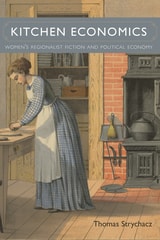
Kitchen Economics
Women’s Regionalist Fiction and Political EconomyThomas Strychacz
University of Alabama Press, 2020
WINNER OF THE ELIZABETH AGEE PRIZE IN AMERICAN LITERATURE
Readers of late nineteenth-century female American authors are familiar with plots, characters, and households that make a virtue of economizing. Scholars often interpret these scenarios in terms of a mythos of parsimony, frequently accompanied by a sort of elegiac republicanism whereby self-sufficiency and autonomy are put to the service of the greater good—a counterworld to the actual economic conditions of the period.
In Kitchen Economics: Women’s Regionalist Fiction and Political Economy, Thomas Strychacz takes a new approach to the question of how female regionalist fictions represent “the economic” by situating them within traditions of classical political economic thought. Offering case studies of key works by Sarah Orne Jewett, Mary Wilkins Freeman, Harriet Beecher Stowe, Rose Terry Cooke, and Alice Dunbar-Nelson, this study focuses on three complex cultural fables—the island commonwealth, stadialism (or stage theory), and feeding the body politic—which found formal expression in political economic thought, made their way into endless public debates about the economic turmoil of the late nineteenth century, and informed female authors. These works represent counterparts, not counterworlds, to modernity; and their characteristic stance is captured in the complex trope of feminaeconomica.
This approach ultimately leads us to reconsider what we mean by the term “economic,” for the emphasis of contemporary neoclassical economics on economic agents given over to infinite wants and complete self-interest has caused the “sufficiency” and “common good” models of female regionalist authors to be misinterpreted and misvalued. These fictions are nowhere more pertinent to modernity than in their alliance with today’s important alternative economic discourses.
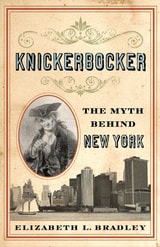
Knickerbocker
The Myth behind New YorkBradley, Elizabeth L
Rutgers University Press, 2009
Includes a gallery of images that brings Diedrich Knickerbocker, his myth, time, and place to life Knickerbocker engagingly traces the creation, evolution, and prevalence of Irving's imaginary historian in New York literature and history, art and advertising, from the early nineteenth century to the present day. Who would imagine this satiric character, at once a snob and a champion of the people, would endure for two hundred years? In Elizabeth L. Bradley's words, "Whether you call it 'blood,' style, attitude, or moxie, the little Dutchman could deliver." And, from this engaging work, it is clear that he does.
Bradley's stunning volume offers a surprising and delightful glimpse behind the scenes of New York history, and invites readers into the world of Knickerbocker, the antihero who surprised everyone by becoming the standard-bearer for the city's exceptional sense of self, or what we now call a New York "attitude."
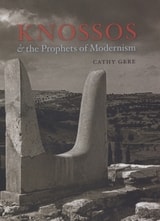
Knossos and the Prophets of Modernism
Cathy Gere
University of Chicago Press, 2009
In the spring of 1900, British archaeologist Arthur Evans began to excavate the palace of Knossos on Crete, bringing ancient Greek legends to life just as a new century dawned amid far-reaching questions about human history, art, and culture. With Knossos and the Prophets of Modernism, Cathy Gere relates the fascinating story of Evans’s excavation and its long-term effects on Western culture. After the World War I left the Enlightenment dream in tatters, the lost paradise that Evans offered in the concrete labyrinth—pacifist and matriarchal, pagan and cosmic—seemed to offer a new way forward for writers, artists, and thinkers such as Sigmund Freud, James Joyce, Giorgio de Chirico, Robert Graves, and Hilda Doolittle.
Assembling a brilliant, talented, and eccentric cast at a moment of tremendous intellectual vitality and wrenching change, Cathy Gere paints an unforgettable portrait of the age of concrete and the birth of modernism.
Knowing, Seeing, Being
Jonathan Edwards, Emily Dickinson, Marianne Moore, and the American Typological TraditionJennifer L. Leader
University of Massachusetts Press, 2016
Scholars no longer see Jonathan Edwards as the fire-and-brimstone preacher who deemed his parishioners “sinners in the hands of an angry god.” Edwards now figures as caring and socially conscious and exerts increased influence as a philosopher of the American school of Protestantism. In this study, he becomes the progenitor of an alternative tradition in American letters.
In Knowing, Seeing, Being, Jennifer L. Leader argues that Edwards, the nineteenth-century poet Emily Dickinson, and the twentieth-century poet Marianne Moore share a heretofore underrecognized set of religious and philosophical preoccupations. She contends that they represent an alternative tradition within American literature, one that differs from Transcendentalism and is grounded in Reformed Protestantism and its ways of reading and interpreting the King James Bible and the natural world. According to Leader, these three writers' most significant commonality is the Protestant tradition of typology, a rigorous mode of interpreting scripture and nature through which certain figures or phenomena are read as the fulfillment of prophecy and of God's work. Following from their similar ways of reading, they also share philosophical and spiritual questions about language, epistemology (knowing), perception (seeing), and physical and spiritual ontology (being). In connecting Edwards to these two poets, in exploring each writer's typological imagination, and through a series of insightful readings, this innovative book reevaluates three major figures in American intellectual and literary history and compels a reconsideration of these writers and their legacies.
Knowledge, Understanding, Well-Being
Cognitive Literary StudiesNancy Easterlin, special issue editor
Duke University Press, 0
Contributors. Marshall Alcorn, Paul B. Armstrong, Katalin Bálint, Mark Bracher, Elizabeth Bradburn, M. Soledad Caballero, Nancy Easterlin, Richard J. Gerrig, Erin James, Aimee Knupsky, Anežka Kuzmičová, Micah L. Mumper, Michael O’Neill, Margrethe Bruun Vaage, Alexa Weik von Mossner
Knut Hamsun Remembers America
Essays and Stories, 1885-1949Knut Hamsun, Edited & Translated by Richard Nelson Current
University of Missouri Press, 2003
Korea Letters in the William Elliot Griffis Collection
An Annotated SelectionYoung-mee Yu Cho
Rutgers University Press, 2024
The Korean materials in the Griffis Collection at Rutgers University consist of journals, correspondence, articles, maps, prints, photos, postcards, manuscripts, scrapbooks, and ephemera. These papers reflect Griffis's interests and activities in relation to Korea as a historian, scholar, and theologian. They provide a rare window into the turbulent period of late nineteenth- and twentieth-century Korea, witnessed and evaluated by Griffis and early American missionaries in East Asia. The Korea Letters in the William Elliot Griffis Collection are divided into two parts: letters from missionaries and letters from Japanese and Korean political figures. Newly available and accessible through this collection, these letters develop a multifaceted history of early American missionaries in Korea, the Korean independence movement, and Griffis's views on Korean culture.
Krúdy's Chronicles
Turn-of-the-Century Hungary in Gyula Krudy's JournalismJohn Batki
Central European University Press, 2000
Written during the 1910s '20s and '30s, these articles offer a wistful and nostalgic image of the waning years of the Austro-Hungarian empire, with portraits of the Habsburgs, culminating in first-hand reports in 1916, from Vienna on the funeral of Emperor Francis Joseph I, and from Budapest on the coronation of Charles IV, the last king of Hungary. Krúdy's reports follow the bloodless democratic revolution of 1918, the Károlyi government and the short-lived Soviet Republic, and present cameos of the leading political figures of the day such as Ferenc Kossuth, Mihály Károlyi and Béla Kun.
In his lively, casual pieces Krúdy displays his intimate knowledge of Hungarian society with a special emphasis on literature and publishing.
Kujibizana
Questions of Language and Power in Nineteenth- and Twentieth-Century Poetry in KishwahiliAnn Biersteker
Michigan State University Press, 1996
The author argues that reading poetry in Kiswahili provides important insights into questions of language and power, as well as into discussions of socialist practice in East Africa and East African resistance to colonialism and neo-colonialism. Includes the text of numerous poems and footnotes.