Results by title
4917 books match the query 'Philosophy' and 321 start with p
Plato's Philosophers
The Coherence of the DialoguesCatherine H. Zuckert
University of Chicago Press, 2009
Faced with the difficult task of discerning Plato’s true ideas from the contradictory voices he used to express them, scholars have never fully made sense of the many incompatibilities within and between the dialogues. In the magisterial Plato’s Philosophers, Catherine Zuckert explains for the first time how these prose dramas cohere to reveal a comprehensive Platonic understanding of philosophy.
To expose this coherence, Zuckert examines the dialogues not in their supposed order of composition but according to the dramatic order in which Plato indicates they took place. This unconventional arrangement lays bare a narrative of the rise, development, and limitations of Socratic philosophy. In the drama’s earliest dialogues, for example, non-Socratic philosophers introduce the political and philosophical problems to which Socrates tries to respond. A second dramatic group shows how Socrates develops his distinctive philosophical style. And, finally, the later dialogues feature interlocutors who reveal his philosophy’s limitations. Despite these limitations, Zuckert concludes, Plato made Socrates the dialogues’ central figure because Socrates raises the fundamental human question: what is the best way to live?
Plato’s dramatization of Socratic imperfections suggests, moreover, that he recognized the apparently unbridgeable gap between our understandings of human life and the nonhuman world. At a time when this gap continues to raise questions—about the division between sciences and the humanities and the potentially dehumanizing effects of scientific progress—Zuckert’s brilliant interpretation of the entire Platonic corpus offers genuinely new insights into worlds past and present.
Plato's Sophist
Part II of The Being of the BeautifulPlato
University of Chicago Press, 1986
"Seth Benardete is one of the very few contemporary classicists who combine the highest philological competence with a subtlety and taste that approximate that of the ancients. At the same time, he as set himself the entirely modern hermeneutical task of uncovering what the ancients preferred to keep veiled, of making explicit what they indicated, and hence...of showing the naked ugliness of artificial beauty."—Stanley Rose, Graduate Faculty Philosophy Journal
Seth Benardete (1930-2001) was professor of classics at New York University. He was the author or translator of many books, most recently The Argument of the Action, Plato's "Laws," and Plato's "Symposium," all published by the University of Chicago Press.
Plato's Statesman
Part III of The Being of the BeautifulPlato
University of Chicago Press, 1986
Theaetetus is the first of a trilogy of Platonic dialogues that show Socrates formulating his conception of philosophy as he prepares the defense for his trial. This translation is particularly faithful to the original Greek, and it is accompanied by an introduction, extensive notes, and comprehensive commentary that puts the dialogue in context with Plato's thought and its influence over the centuries.
Seth Benardete (1930-2001) was professor of classics at New York University.
Plato's Symposium
Stanley Rosen
St. Augustine's Press, 1999
This is the first full-length study of the Symposium to be published in English, and one of the first English works on Plato to take its bearings by the dramatic form of the Platonic dialogue, a thesis that was regarded as heterodox at the time but which today is widely accepted by scholars of the most diverse standpoint. Rosen was also one of the first to study in detail the philosophical significance of the phenomenon of concrete human sexuality, as it is presented by Plato in the diverse characters of the main speakers in the dialogue. His analysis of the theoretical significance of pederasty in the dialogue was highly controversial at the time, but is today accepted as central to Plato's dramatic phenomenology of human existence.
Rosen discusses a variety of topics that had previously been neglected in the secondary literature, including the problem of the hybristic nature of the philosopher, the poetical dimension of Plato's conception of philosophy, and the theoretical implication of the difference between Platonic writing and Socratic conversation.
Plato's Symposium
A Translation by Seth Benardete with Commentaries by Allan Bloom and Seth BenardetePlato
University of Chicago Press, 2001
Plato's Theaetetus
Part I of The Being of the BeautifulPlato
University of Chicago Press, 1986
"Seth Benardete is one of the very few contemporary classicists who combine the highest philological competence with a subtlety and taste that approximate that of the ancients. At the same time, he as set himself the entirely modern hermeneutical task of uncovering what the ancients preferred to keep veiled, of making explicit what they indicated, and hence...of showing the naked ugliness of artificial beauty."—Stanley Rose, Graduate Faculty Philosophy Journal
Seth Benardete (1930-2001) was professor of classics at New York University. He was the author or translator of many books, most recently The Argument of the Action, Plato's "Laws," and Plato's "Symposium," all published by the University of Chicago Press.
Plato's World
Man's Place in the CosmosJoseph Cropsey
University of Chicago Press, 1995
Cropsey interprets seven of Plato's dialogues—Theaetetus, Euthyphro, Sophist, Statesman, Apology, Crito, and Phaedo—in light of their dramatic consecutiveness and thus as a conceptual and dramatic whole. The cosmos depicted by Plato in these dialogues, Cropsey argues, is often unreasonable, and populated by human beings unaided by gods and dealt with equivocally by nature. Masterfully leading the reader through the seven scenes of the drama, Cropsey shows how they are, to an astonishing degree, concerned with the resources available to help us survive in such a world.
This is a world—and a Plato—quite at odds with most other portraits. Much more than a summary of Plato's thinking, this book is an eloquent, sometimes amusing, often moving guide to the paradoxes and insights of Plato's philosophy.
Plato, Derrida, and Writing
Jasper Neel
Southern Illinois University Press, 1988
Winner, Mina P. Shaughnessy Prize
Achieving the remarkable feat of linking composition theory, deconstruction, and classical rhetoric, this book has been admirably summarized by the theorist G. Douglas Atkins, who writes: "This lively and engaging, informed and informative book constitutes an important contribution. Though its ‘field’ is most obviously composition, composition theory, and pedagogy, part of its importance derives from the way it transcends disciplinary boundaries to bear on writing in general. . . I know of no book that so fully and well discusses, and evaluates, the implications of deconstruction for composition and pedagogy. That [it] goes ‘beyond deconstruction,’ rather than merely ‘applying’ it, increases its importance and signals a clear contribution to the understanding of writing."
Jasper Neel analyzes the emerging field of composition studies within the epistemological and ontological debate over writing precipitated by Plato, who would have us abandon writing entirely, and continued by Derrida, who argues that all human beings are written. This book offers a three-part exploration of that debate. In the first part, a deconstructive reading of Plato’s Phaedrus, Neel shows the elaborate sleight-of-hand that Plato must employ as he uses writing to engage in a semblance of spoken dialogue.
The second part describes Derrida’s theory of writing and presents his famous argument that "the history of truth, of the truth of truth, has always been. . .the debasement of writing, and its repression outside full speech." A lexicon of nine Derridean terms, the key to his theory of writing, is also included. At the end of this section, Neel turns deconstruction against itself, demonstrating that Derridean analysis collapses of its own weight.
The concluding section of the book juxtaposes the implications of Platonic and Derridean views of writing, warning that Derrida’s approach may lock writing inside philosophy. The conclusion suggests that writing may be liberated from philosophical judgment by turning to Derrida’s predecessors, the sophists, particularly Protagoras and Gorgias. Drawing on Protagoras’s idea of strong discourse, Neel shows that sophistry is the foundation of democracy: "Strong discourse is public discourse, which, though based on probability and not truth, remains persuasive over a long period of time to a great number of people. This publicly tested discourse exists only among competitors, never alone, but its ability to remain persuasive even when surrounded by other discourses enables the ideas of democracy to emerge and then keeps democracy alive."
Platonic Investigations
Dominic J. O'Meara
Catholic University of America Press, 2018
Play Reconsidered
Sociological Perspectives on Human ExpressionThomas S. Henricks
University of Illinois Press, 2006
Understanding the significance of adult play in the life of modern societies
Within the social sciences, few matters are as significant as the study of human play--or as neglected. In Play Reconsidered, rather than viewing play simply as a preoccupation of the young and a vehicle for skill development, Thomas S. Henricks argues that it’s a social and cultural phenomenon of adult life, enveloped by wider structures and processes of society. In that context, he argues that a truly sociological approach to play should begin with a consideration of the largely overlooked writings on play and play-related topics by some of the classic sociological thinkers of the twentieth century.
Henricks explores Karl Marx’s analysis of creativity in human labor, examines Emile Durkheim’s observations on the role of ritual and the formation of collective consciousness, extends Max Weber’s ideas about the process of rationalization to the realm of expressive culture and play, surveys Georg Simmel’s distinctive approach to sociology and sociability, and discusses Erving Goffman’s focus on human conduct as process and play as “encounter.” These and other discussions of the contributions of more recent sociologists are framed by an initial consideration of Johan Huizinga’s famous challenge to understand the nature and significance of play. In a closing synthesis, Henricks distinguishes play from other forms of human social expression, particularly ritual, communitas, and work.
Playing Sociology
Theory and Games for Coping with Mimetic Crisis and Social ConflictMartino Doni
Michigan State University Press, 2024
Please RSVP
Questions on Collaborative Aesthetics, Trans-Subjectivity, and the Politics of LoveApril Durham
Dartmouth College Press, 2019
Plotinus ENNEAD IV.8
On the Descent of the Soul into Bodies: Translation, with an Introduction, and CommentaryBarrie Fleet
Parmenides Publishing, 2012
Plotinus Ennead I.5
On Whether Well-Being Increases with Time: Translation with an Introduction and CommentaryDanielle A. Layne
Parmenides Publishing, 2023
Plotinus Ennead I.8
On the Nature and Source of Evil: Translation with an Introduction and CommentaryAnne Sheppard
Parmenides Publishing, 2025
Plotinus Ennead II.4
On Matter: Translation with an Introduction and CommentaryA.A. Long
Parmenides Publishing, 2022
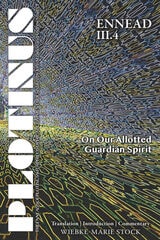
Plotinus Ennead III.4
On Our Allotted Guardian Spirit: Translation with an Introduction and CommentaryWiebke-Marie Stock
Parmenides Publishing, 2020
The introduction offers an overview of ancient demonologies, starting with Homer and the Presocratics, and is followed by an in-depth examination of Plato, the Stoics, Plotinus, and later Neoplatonic developments. As such the book presents Plotinus’ specific rationalizing response to the idea of a guardian spirit in the context of ancient philosophical demonologies.
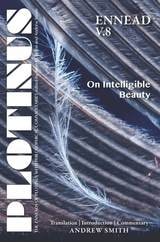
Plotinus Ennead V.8
On Intelligible Beauty: Translation with an Introduction and CommentaryAndrew Smith
Parmenides Publishing, 2017
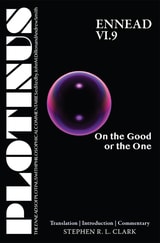
Plotinus Ennead VI.9
On the Good or the One: Translation with an Introduction and CommentaryStephen R. L. Clark
Parmenides Publishing, 2020
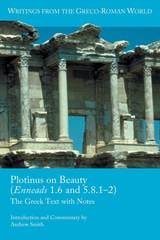
Plotinus on Beauty (Enneads 1.6 and 5.8.1–2)
The Greek Text with NotesAndrew Smith
SBL Press, 2019
A Greek edition of Plotinus's philosophical works with notes for students of Classical Greek
Plotinus, the father of Neoplatonism, composed the treatise On Beauty (Ennead 1.6) as the first of a series of philosophical essays devoted to interpreting and elucidating Platonic ideas. This treatise is one of the most accessible and influential of Plotinus's works, and it provides a stimulating entrée into the many facets of his philosophical activity. In this volume Andrew Smith first introduces readers to the Greek of Plotinus and to his philosophy in general, then provides the Greek text of and English notes on Plotinus's systematic argument and engaging exhortation to foster the inner self. The volume ends with the text of and notes on Plotinus's complementary statements in On Intelligible Beauty (Ennead 5.8.1–2).
Features:
- An overview of Plotinus's life
- Background discussion of Plotinus's thought and outline of his philosophical system
- Analysis of the relationship of Plotinus's thought to Plato’s
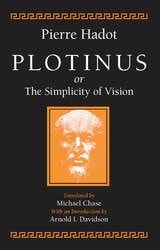
Plotinus or the Simplicity of Vision
Pierre Hadot
University of Chicago Press, 1993
Pierre Hadot's lively philosophical portrait of Plotinus is the preeminent introduction to the man and his thought. Michael Chase's lucid translation—complete with a useful chronology and analytical bibliography—at last makes this book available to the English-speaking world.
Hadot carefully examines Plotinus's views on the self, existence, love, virtue, gentleness, and solitude. He shows that Plotinus, like other philosophers of his day, believed that Plato and Aristotle had already articulated the essential truths; for him, the purpose of practicing philosophy was not to profess new truths but to engage in spiritual exercises so as to live philosophically. Seen in this light, Plotinus's counsel against fixation on the body and all earthly matters stemmed not from disgust or fear, but rather from his awareness of the negative effect that bodily preoccupation and material concern could have on spiritual exercises.
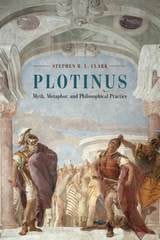
Plotinus
Myth, Metaphor, and Philosophical PracticeStephen R. L. Clark
University of Chicago Press, 2016
Clark examines a variety of Plotinus’s myths and metaphors within the cultural and philosophical context of his time, asking probing questions about their contemplative effects. What is it, for example, to “think away the spatiality” of material things? What state of mind is Plotinus recommending when he speaks of love, or drunkenness, or nakedness? What star-like consciousness is intended when he declares that we were once stars or are stars eternally? What does it mean to say that the soul goes around God? And how are we supposed to “bring the god in us back to the god in all”? Through these rich images and structures, Clark casts Plotinus as a philosopher deeply concerned with philosophy as a way of life.
Plough, Sword, and Book
The Structure of Human HistoryErnest Gellner
University of Chicago Press, 1990
"A thoughtful and lively meditation upon probably the greatest transformation in human history, upon the difficult problems it poses and the scant resources it has left us to solve them."—Charles Larmore, New Republic
Pluralism
William E. Connolly
Duke University Press, 2005
Connolly looks at pluralism not only in light of faith but also in relation to evil, ethics, relativism, globalization, and sovereignty. In the process, he engages many writers and theorists—among them, Spinoza, William James, Henri Bergson, Marcel Proust, Gilles Deleuze, Giorgio Agamben, Talal Asad, Michael Hardt, and Antonio Negri. Pluralism is the first book in which Connolly explains the relationship between pluralism and the experience of time, and he offers readings of several films that address how time is understood, including Time Code, Far from Heaven, Waking Life, and The Maltese Falcon. In this necessary book Connolly brings a compelling, accessible philosophical critique together with his personal commitment to an inclusive political agenda to suggest how we might—and why we must—cultivate pluralism within both society and ourselves.

Pluralism in Theory and Practice
Richard McKeon and American PhilosophyEugene Garver
Vanderbilt University Press, 2000
Poetic Interaction
Language, Freedom, ReasonJohn McCumber
University of Chicago Press, 1989
Poetic Justice
Rereading Plato's "Republic"Jill Frank
University of Chicago Press, 2018
With Poetic Justice, Jill Frank overturns the conventional view that the Republic endorses a hierarchical ascent to knowledge and the authoritarian politics associated with that philosophy. When learning to read is understood as the passive absorption of a teacher’s beliefs, this reflects the account of Platonic philosophy as authoritative knowledge wielded by philosopher kings who ruled the ideal city. When we learn to read by way of the method Socrates introduces in the Republic, Frank argues, we are offered an education in ethical and political self-governance, one that prompts citizens to challenge all claims to authority, including those of philosophy.
Poetry and Photography
Yves Bonnefoy
Seagull Books, 2017
Bonnefoy's compact essay focuses on one of the disturbing effects of the earliest photographs: their introduction of a notion of non-being—if not, indeed, nothingness—into the world of images. But it also foregrounds a tale which seems to have picked up figuratively on this effect and examined its dangers with a sense of horror: Guy de Maupassant’s extraordinary short story “The Night,” one of the nightmarish works of his last period of conscious creation.
Poetry of the Possible
Spontaneity, Modernism, and the MultitudeJoel Nickels
University of Minnesota Press, 2012
The Poetry of the Possible challenges the conventional image of modernism as a socially phobic formation, arguing that modernism’s abstractions and difficulties are ways of imagining unrealized powers of collective self-organization. Establishing a conceptual continuum between modernism and contemporary theorists such as Paulo Virno, Michael Hardt, Antonio Negri, and Alain Badiou, Joel Nickels rediscovers modernism’s attempts to document the creative potenza of the multitude.
By examining scenes of collective life in works by William Carlos Williams, Wyndham Lewis, Laura Riding, and Wallace Stevens, Nickels resurrects modernism’s obsession with constituent power: the raw, indeterminate capacity for reciprocal counsel that continually constitutes and reconstitutes established political regimes. In doing so, he reminds us that our own attempts to imagine leaderless networks of collective initiative are not so much breaks with modernist forms of knowledge as restagings of some of modernism’s most radical moments of political speculation.
Setting modernism’s individual and collective models of spontaneity in dialogue with theorists of political spontaneity such as Antonio Gramsci, Herbert Marcuse, and Theodor Adorno, Nickels retells the story of modernism as the struggle to represent powers of collective self-organization that lie outside established regimes of political representation.
Poetry, Beauty, and Contemplation
The Complete Aesthetics of Jacques MaritainJohn G. Trapani Jr.
Catholic University of America Press, 2011

Poiesis and Modernity in the Old and New Worlds
Anthony J. Cascardi
Vanderbilt University Press, 2012
Point of View
Talks on EducationEdward H. Levi
University of Chicago Press, 2007
Points of Departure
Samuel Weber between Spectrality and ReadingEdited by Peter Fenves, Kevin McLaughlin, and Marc Redfield
Northwestern University Press, 2016

Polarizing Development
Alternatives to Neoliberalism and the CrisisEdited by Lucia Pradella and Thomas Marois
Pluto Press, 2015
The global economic crisis has exposed the limits of neoliberalism and dramatically deepened social polarization. Yet, despite increasing social resistance and opposition, neoliberalism prevails globally.
Radical alternatives, moreover, are only rarely debated. And if they are, such alternatives are reduced to new Keynesian and new developmental agendas, which fail to address existing class divisions and imperialist relations of domination.
This collection of essays polarizes the debate between radical and reformist alternatives by exploring head-on the antagonistic structure of capitalist development. The contributors ground their proposals in an international, non-Eurocentric and Marxian inspired analysis of capitalism and its crises. From Latin America to Asia, Africa to the Middle East and Europe to the US, social and labour movements have emerged as the protagonists behind creating alternatives.
This book’s new generation of scholars has written accessible yet theoretically informed and empirically rich chapters elaborating radical worldwide strategies for moving beyond neoliberalism, and beyond capitalism. The intent is to provoke critical reflection and positive action towards substantive change.
Policing and the Poetics of Everyday Life
Jonathan M. Wender
University of Illinois Press, 2008
This book reflects a conscious attempt to follow the general model of Martin Heidegger’s Zollikon Seminars, in which Heidegger engaged psychiatrists and psychologists in a sustained dialogue aimed at developing their critical awareness of the unexamined philosophical foundations informing their everyday clinical practice. Wender draws on Heidegger to argue that “praxis is poetry” and from this standpoint interprets all social action as intentional creation (or “poiesis”), which by its very nature is intrinsically meaningful. Using an interpretive framework that he calls a “phenomenological aesthetics of encounter,” Wender takes up a number of case studies of police-citizen encounters, including cases of domestic violence, contacts with juveniles, drug-related situations, instances of mental and emotional crisis, and death.
Polish Liberal Thought Before 1918
Maciej Janowski
Central European University Press, 2004
Political Affect
Connecting the Social and the SomaticJohn Protevi
University of Minnesota Press, 2010
For many philosophers, the rational cognitive (Cartesian) subject defines the human, or at least defines what humans should be. Yet some recent cognitive science, as well as the philosophy of Deleuze and Guattari, has called into question such individuality and rationality and emphasized social and emotional subjectivity. Understanding such embodied and embedded subjectivity, John Protevi argues, demands the notion of bodies politic.
In Political Affect, Protevi investigates the relationship between the social and the somatic: how our bodies, minds, and social settings are intricately and intimately linked. Bringing together concepts from science, philosophy, and politics, he develops a perspective he calls political physiology to indicate that subjectivity is socially conditioned and sometimes bypassed in favor of a direct connection of the social and the somatic, as with the politically triggered basic emotions of rage and panic. Protevi's treatment of affective cognition in social context breaks new theoretical ground, insisting that subjectivity be studied both in its embodied expression and in terms of the distribution of affective cognitive responses in a population.
Moving beyond the theoretical, Protevi applies his concept of political affect to show how unconscious emotional valuing shaped three recent, emotionally charged events: the cold rage of the Columbine High School slayings, the racialized panic that delayed rescue efforts in Hurricane Katrina, and the twists and turns of empathy occasioned by the Terry Schiavo case. These powerful individual and collective political events require new philosophical understanding.
Political Anthropology
Helmuth Plessner, Translated from the German by Nils F. Schott, Edited and with an introduction by Heike Delitz and Robert Seyfert and an epilogue by Joachim Fischer
Northwestern University Press, 2018
In Political Anthropology (originally published in 1931 as Macht und menschliche Natur), Helmuth Plessner considers whether politics—conceived as the struggle for power between groups, nations, and states—belongs to the essence of the human. Building on and complementing ideas from his Levels of the Organic and the Human (1928), Plessner proposes a genealogy of political life and outlines an anthropological foundation of the political. In critical dialogue with thinkers such as Carl Schmitt, Eric Voegelin, and Martin Heidegger, Plessner argues that the political relationships cultures entertain with one other, their struggle for acknowledgement and assertion, are expressions of certain possibilities of the openness and unfathomability of the human.
Translated into English for the first time, and accompanied by an introduction and an epilogue that situate Plessner's thinking both within the context of Weimar-era German political and social thought and within current debates, this succinct book should be of great interest to philosophers, political theorists, and sociologists interested in questions of power and the foundations of the political.
Political Myth
On the Use and Abuse of Biblical ThemesRoland Boer
Duke University Press, 2009
Boer elaborates a theory of political myth in dialogue with Ernst Bloch, Theodor Adorno, Alain Badiou, Jacques Lacan, and Slavoj Žižek. Through close readings of well-known biblical stories he then scrutinizes the nature of political myth in light of feminism, psychoanalysis, and Marxism. Turning to contemporary politics, he examines the statements of prominent American and Australian politicians to show how the stories of Creation, conquest, Paradise, and the Promised Land have been distorted into a fantasy of Israel as a perpetual state in the making and a land in need of protection. Boer explains how this fantasy of Israel shapes U.S. and Australian foreign and domestic policies, and he highlights the links between it and the fantasy of unfettered global capitalism. Contending that political myths have repressed dimensions which if exposed undermine the myths’ authority, Boer urges the Left to expose the weakness in the Right’s mythos. He suggests that the Left make clear what the world would look like were the dream of unconstrained capitalism to be realized.
Political Peoplehood
The Roles of Values, Interests, and IdentitiesRogers M. Smith
University of Chicago Press, 2015
This book gathers Smith’s most important writings on peoplehood to build a coherent theoretical and historical account of what peoplehood has meant in American political life, informed by frequent comparisons to other political societies. From the revolutionary-era adoption of individual rights rhetoric to today’s battles over the place of immigrants in a rapidly diversifying American society, Smith shows how modern America’s growing embrace of overlapping identities is in tension with the providentialism and exceptionalism that continue to make up so much of what many believe it means to be an American.
A major work that brings a lifetime of thought to bear on questions that are as urgent now as they have ever been, Political Peoplehood will be essential reading for social scientists, political philosophers, policy analysts, and historians alike.

Political Philosophy 1
Rights--The New Quarrel between the Ancients and the ModernsLuc Ferry
University of Chicago Press, 1990
In this first of four volumes that aim to revitalize the fundamental values of modern political thought, one of the leading figures in the contemporary revival of liberalism in France responds to these critics and offers a philosophically cogent defense of a humanistic modernity. Luc Ferry reexamines the philosopical basis of the contemporary retreat from the Enlightenment and then suggests his own alternative, which defends the ideals of modernity while giving due consideration to the objections of the critics.
Political Philosophy 2
The System of Philosophies of HistoryLuc Ferry
University of Chicago Press, 1992
Ferry begins this second volume of his ambitious three-volume Political Philosophy by considering both the structure and the potential political effects of the various philosophies of history born of German Idealism. He focuses on the key question of whether, and to what extent, the principle of reason may be said to govern the totality of the historically real. This leads to an examination of Hegel's criticism of the moral view of the world and to an assessment of the phenomenological criticism of Hegel put forth by Heidegger and Arendt.
Political Philosophy 3
From the Rights of Man to the Republican IdeaLuc Ferry and Alain Renaut
University of Chicago Press, 1992
Several French theorists have recently attempted a new account of rights, one that would replace the discredited Marxist view of rights as mere formalities concealing the realities of class domination. In this final volume of Political Philosophy, Luc Ferry and Alain Renaut summarize these efforts and put forward their own set of arguments.
Political Philosophy and Revelation
James V. Schall, SJ
Catholic University of America Press, 2013
Political Philosophy and the Challenge of Revealed Religion
Heinrich Meier
University of Chicago Press, 2017
In the first of three chapters, Meier determines four intertwined moments constituting the concept of political philosophy as an articulated and internally dynamic whole. The following two chapters develop the concept through the interpretation of two masterpieces of political philosophy that have occupied Meier’s attention for more than thirty years: Leo Strauss’s Thoughts on Machiavelli and Jean-Jacques Rousseau’s Social Contract. Meier provides a detailed investigation of Thoughts on Machiavelli, with an appendix containing Strauss’s original manuscript headings for each of his paragraphs. Linking the problem of Socrates (the origin of political philosophy) with the problem of Machiavelli (the beginning of modern political philosophy), while placing between them the political and theological claims opposed to philosophy, Strauss’s most complex and controversial book proves to be, as Meier shows, the most astonishing treatise on the challenge of revealed religion. The final chapter, which offers a new interpretation of the Social Contract, demonstrates that Rousseau’s most famous work can be adequately understood only as a coherent political-philosophic response to theocracy in all its forms.
Political Philosophy
From Plato to MaoMartin Cohen
Pluto Press, 2008
Guiding the reader through the key arguments of the classic figures of Western political philosophy, from Plato through to the modern era, this revised edition includes new essays on Aristotle's 'Politics', Confucianism, Islamic social philosophy and Nazism, as well as additional material on 'Roman Law', Anarchism and 'anti-capitalism'.
Cohen moves chronologically through the development of political philosophy. He presents key texts in their own terms, before offering short, precise analyses of their strengths, weaknesses and influence. The book finishes with a discussion of modern liberalism and conservatism.
Providing both a broad overview and precise summaries of key ideas, this is an invaluable guide for all students of political thought.
Political Reasoning and Cognition
A Piagetian ViewShawn Rosenberg, Dana Ward, and Stephen Chilton
Duke University Press, 1989
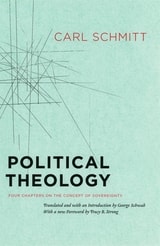
Political Theology
Four Chapters on the Concept of SovereigntyCarl Schmitt
University of Chicago Press, 2005
Focusing on the relationships among political leadership, the norms of the legal order, and the state of political emergency, Schmitt argues in Political Theology that legal order ultimately rests upon the decisions of the sovereign. According to Schmitt, only the sovereign can meet the needs of an "exceptional" time and transcend legal order so that order can then be reestablished. Convinced that the state is governed by the ever-present possibility of conflict, Schmitt theorizes that the state exists only to maintain its integrity in order to ensure order and stability. Suggesting that all concepts of modern political thought are secularized theological concepts, Schmitt concludes Political Theology with a critique of liberalism and its attempt to depoliticize political thought by avoiding fundamental political decisions.

Political Theory and Praxis
New PerspectivesTerence Ball, Editor
University of Minnesota Press, 1977
Political Theory and Praxis was first published in 1977. Minnesota Archive Editions uses digital technology to make long-unavailable books once again accessible, and are published unaltered from the original University of Minnesota Press editions.
Nine distinguished contributors—philosophers and political scientists at universities and colleges in the United States, Europe, Canada, and Australia—write essays for this volume in political philosophy. The book is dedicated to the memory of Hannah Arendt, the writer and philosopher who died in 1975. The contributors discuss various aspects of the concepts of theory and practice and their interrelationship. All of the essays were written expressly for this volume. In an introduction, Professor Ball, the volume editor, notes that the essays reflect the diversity of conceptions of theory, of practice, and of their conceptual and practical interrelations, and that the contributors explore various ways and byways of approaching the age-old questions of theory and its relation to practice.
Part I: Origins
"On the History of 'Theory' and 'Praxis'," Nicholas Lobkowicz; "Creatures of a Day: Thought and Action in Thucydides,"J. Peter Euben; " Plato and Aristotle: The Unity Versus the Autonomy of Theory and Practice." Terence Ball.Part II: Developments
"Kant on Theory and Practice," Carl Raschke; "Theory and Practice in Hegel and Marx: An Unfinished Dialogue,"Peter Fuss; "The Unity of Theory and Practice: The Science of Marx and Nietzsche," Edward Andrew.Part II: Dilemmas and New Directions
"Hannah Arendt: The Ambiguities of Theory and Practice," Richard J. Bernstein; "Rebels, Beginners, and Buffoons: Politics as Action," Raymond L. Nichols; "How People Change Themselves: The Relationship between Critical Theory and Its Audience," Brian Fay
Political Tolerance and American Democracy
John L. Sullivan, James Piereson, and George E. Marcus
University of Chicago Press, 1982