Results by title
935 books match the query 'Ancient' and 53 start with s
Saeculum
Defining Historical Eras in Ancient Roman ThoughtPaul Hay
University of Texas Press, 2023
How the notion of unique eras influenced the Roman view of time and the narration of history from various perspectives.
The Victorian Era. The Age of Enlightenment. The post-9/11 years. We are accustomed to demarcating history, fencing off one period from the next. But societies have not always operated in this way. Paul Hay returns to Rome in the first century BCE to glimpse the beginnings of periodization as it is still commonly practiced, exploring how the ancient Romans developed a novel sense of time and used it to construct their views of the past and of the possibilities of the future.
It was the Roman general Sulla who first sought to portray himself as the inaugurator of a new age of prosperity, and through him Romans adopted the Etruscan term saeculum to refer to a unique era of history. Romans went on to deepen their investment in periodization by linking notions of time to moments of catastrophe, allowing them to conceptualize their own epoch and its conclusion, as in the literature of Vergil and Horace. Periodization further introduced the idea of specific agents of change into Roman thought—agents that were foundational to narratives of progress and decline. An eye-opening account, Saeculum describes nothing less than an intellectual and cognitive revolution, that fundamentally reorganized the meanings of history and time.
Sailing Close to the Clouds
Selected Worlds of Lucian of SamosataLucian of Samosata
University of Chicago Press, 0
Approachable translations and discussions of Lucian that reveal his world-building, world-bending, and multiversal thinking.
Lucian of Samosata was ahead of his time. A rhetorician and writer active in the second century CE, he was one of the earliest known worldbuilders and science-fiction enthusiasts. Popular and prolific in antiquity—more than eighty texts attributed to him have come down to us today, including satires, dialogues, and part of a fictional work called True History—Lucian crafted astonishing tales that unfold on the surface of the moon or other planets, high above in Earth’s atmosphere, or through the eyes of underworld inhabitants or other entities who view mortal humans as otherworldly beings.
Ideal for readers interested in science fiction, fantasy, and mythology, this accessible collection offers a guided journey through Lucian’s many worlds. Bringing together fresh vernacular translations of eight works with substantial discussion, this selection showcases Lucian as a proto-multiversal thinker, presenting multiform narratives that herald developments in modern genres ranging from literature and film to gaming and fan fiction. Translator and editor Cynthia Polsley introduces each with a short excerpt from another piece of classical literature, showing how other ancient authors—including Homer, Ovid, and Vergil—influenced Lucian’s literary landscapes or were inspired by him in turn.
Sardonic Smile
Nonverbal Behavior in Homeric EpicDonald Lateiner
University of Michigan Press, 1998
Sargon II, King of Assyria
Josette Elayi
SBL Press, 2017
A critical resource that traces the reign of Sargon in context
Josette Elayi's book is the only existing biography of Sargon II, the famous Assyrian king, who was a megalomaniac and a warlord. Elayi addresses such important questions, including what was his precise role in the disappearance of the kingdom of Israel; how did Sargon II succeed in enlarging the borders of the Assyrian Empire by several successful campaigns; how did he organize his empire (administration, trade, agriculture, libraries), and what was the so-called sin of Sargon?
Features:
- Interpretations of decisive events during the life and reign of the Assyrian king
- An evaluation of Sargon II s reign
- Maps, tables, and illustrations
Satiric Advice on Women and Marriage
From Plautus to ChaucerWarren S. Smith, Editor
University of Michigan Press, 2005
Advice on sex and marriage in the literature of antiquity and the middle ages typically stressed the negative: from stereotypes of nagging wives and cheating husbands to nightmarish visions of women empowered through marriage. Satiric Advice on Women and Marriage brings together the leading scholars of this fascinating body of literature. Their essays examine a variety of ancient and early medieval writers' cautionary and often eccentric marital satire beginning with Plautus in the third century B.C.E. through Chaucer (the only non-Latin author studied). The volume demonstrates the continuity in the Latin tradition which taps into the fear of marriage and intimacy shared by ancient ascetics (Lucretius), satirists (Juvenal), comic novelists (Apuleius), and by subsequent Christian writers starting with Tertullian and Jerome, who freely used these ancient sources for their own purposes, including propaganda for recruiting a celibate clergy and the promotion of detachment and asceticism as Christian ideals.
Warren S. Smith is Professor of Classical Languages at the University of New Mexico.
Savage Energies
Lessons of Myth and Ritual in Ancient GreeceWalter Burkert
University of Chicago Press, 2001
For example, in a much-cited essay on the Athenian religious festival of the Arrephoria, Burkert uncovers deep connections between this strange nocturnal ritual, in which two virgin girls carried sacred offerings into a cave and later returned with something given to them there, and tribal puberty initiations by linking the festival with the myth of the daughters of Kekrops. Other chapters explore the origins of tragedy in blood sacrifice; the role of myth in the ritual of the new fire on Lemnos; the ties between violence, the Athenian courts, and the annual purification of the divine image; and how failed political propaganda entered the realm of myth at the time of the Persian Wars.
Scribal Worlds
Scholarship and Classification in Cuneiform CulturesEdited by Eduardo A. Escobar, Kiersten Neumann, and C. Jay Crisostomo
University College London, 2026
Revealing the scholarly worlds behind the world’s first writing system, this volume explores how cuneiform cultures classified, transmitted, and interpreted knowledge.
Cuneiform is the world’s first preserved writing system, yet cuneiform texts and the associated cultures and practices remain undervalued across several disciplines. Scribal Worlds: Scholarship and Classification in Cuneiform Cultures explores the history of the earliest writing cultures of the ancient Middle East. Case studies reconstruct the intellectual frameworks and the transmission of knowledge of scribal cultures to show how specific texts and objects can be interpreted within their cultural contexts.
Secret History
Procopius
University of Michigan Press, 1961
. . . How the Great General Belisarius was hoodwinked by his wife, whose lover became a monk.
. . . How Theodora, most depraved of all empresses, won Justinian's love.
. . . How she saved five hundred harlots from a life of sin, made off with her own natural son, and other curious incidents of her passion.
Sedulius, The Paschal Song and Hymns
Carl P. Springer
SBL Press, 2013
Selected Epigrams
Martial, Translated with notes by Susan McLean, Introduction by Marc Kleijwegt
University of Wisconsin Press, 2014
Self
Ancient and Modern Insights about Individuality, Life, and DeathRichard Sorabji
University of Chicago Press, 2006
Seneca
Fifty Letters of a Roman StoicLucius Annaeus Seneca
University of Chicago Press, 2021
“There is only one course of action that can make you happy. . . . rejoice in what is yours. What is it that is yours? Yourself; the best part of you.”
In the year 62, citing health issues, the Roman philosopher Seneca withdrew from public service and devoted his time to writing. His letters from this period offer a window onto his experience as a landowner, a traveler, and a man coping with the onset of old age. They share his ideas on everything from the treatment of enslaved people to the perils of seafaring, and they provide lucid explanations for many key points of Stoic philosophy.
This selection of fifty letters brings out the essentials of Seneca’s thought, with much that speaks directly to the modern reader. Above all, they explore the inner life of the individual who proceeds through philosophical inquiry from a state of emotional turmoil to true friendship, self-determination, and personal excellence.
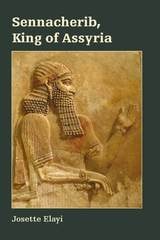
Sennacherib, King of Assyria
Josette Elayi
SBL Press, 2018
A critical resource for students and scholars of the ancient Near East and the Bible
Josette Elayi’s Sennacherib, King of Assyria is the only biography of Sargon II’s famous son. Elayi traces the reign of Sennacherib in context in order to illuminate more fully the life and contributions of this warlord, builder, innovator, and social reformer—a unique figure among the Assyrian kings. Elayi offers both an evaluation of this royal figure and an assessment of the Assyrian Empire by interpreting the historical information surrounding the decisive events of his reign.
Features:
- Exploration of why Sennacherib did not seize Jerusalem or remove Hezekiah from the throne
- An extensive investigation of annals, royal inscriptions, letters, palace reliefs, clay tablets, and excavation reports
- Maps and tables
Sepher Ha-Razim
The Book of MysteriesMichael A. Morgan
SBL Press, 1983
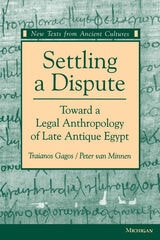
Settling a Dispute
Toward a Legal Anthropology of Late Antique EgyptTraianos Gagos and Peter van Minnen
University of Michigan Press, 1994
Traianos Gagos and Peter van Minnen offer an English translation and a clear Greek text of the two papyrus fragments, as well as an important discussion of the nature of such mediation, its role in contemporary society, a consideration of the town of Aphrodito and its social and political elite, as well as many other topics that spring from this kind of document.
The use of methodologies from modern jurisprudence and anthropology together with an accessible style of writing mean that Settling a Dispute will be of interest to persons in many fields, including history, Classics, and Near Eastern studies. All Greek is translated, and an extensive commentary offers much helpful information on the text.
Traianos Gagos is Associate Archivist of the University of Michigan's papyri collection. Peter van Minnen is Senior Research Associate in the papyri collection at Duke University.
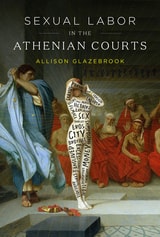
Sexual Labor in the Athenian Courts
Allison Glazebrook
University of Texas Press, 2021
Oratory is a valuable source for reconstructing the practices, legalities, and attitudes surrounding sexual labor in classical Athens. It provides evidence of male and female sex laborers, sex slaves, brothels, sex traffickers, the cost of sex, contracts for sexual labor, and manumission practices for sex slaves. Yet the witty, wealthy, and independent hetaira, well-known from other genres, does not feature. Its detailed narratives and character portrayals provide a unique discourse on sexual labor and reveal the complex relationship between such labor and Athenian society.
Through a holistic examination of five key speeches, Sexual Labor in the Athenian Courts considers how portrayals of sex laborers intersected with gender, the body, sexuality, the family, urban spaces, and the polis in the context of the Athenian courts. Drawing on gender theory and exploring questions of space, place, and mobility, Allison Glazebrook shows how sex laborers represented a diverse set of anxieties concerning social legitimacy and how the public discourse about them is in fact a discourse on Athenian society, values, and institutions.
Shamanism, History, and the State
Nicholas Thomas and Caroline Humphrey, Editors
University of Michigan Press, 1994
The literature on shamanism and related topics is extensive, but has in general been biased toward curing and trance; the political and historical significance of shamanic activities has been largely neglected. The contributors to Shamanism, History, and the State—distinguished anthropologists and historians from England, Australia, and France—show that shamanism is not static and stable, but always changing as a result of political dynamics and historical processes. Contributors are Tamsyn Barton, Sysan Bayly, Mary Beard, Maurice Bloch, Peter Gow, Roberte N. Hamayon, Stephen Hugh-Jones, Caroline Humphrey, and Nicholas Thomas.
"The importance of this collection lies in the painstaking, many-sided ways in which it shows 'shamanism' to be a multifarious and continuously changing 'dialogue' or interaction with specific, local contexts. . . . Thus, rather than tackling the issue in principle, this collection tries to demonstrate through 'case studies' just how different 'shamanism' becomes if seen through a lens sensitive to history and the influence of institutions, such as the state, which seem far removed from it. I think the demonstrations add up to an impressive force." --Michael Taussig
"This new, ably edited volume provides . . . chapters that are rich in historic detail and that provide insights into general cultural processes and social interactions.
Shaping Ceremony
Monumental Steps and Greek ArchitectureMary B. Hollinshead
University of Wisconsin Press, 2014
The heart of the study is a close reading of thirty-eight sites with monumental steps from the sixth through second centuries B.C. Organized by century, the book tracks the development of built pathways and grandstands for crowds of worshippers as evidence of the Greeks' increasing awareness of the power of architecture to shape behavior and concentrate social energy. With photographs and illustrations of plans, Shaping Ceremony offers a clear account of how Greeks' adaptation of terrain for human use promoted social cohesion and integrated architectural compositions.
Signs from Silence
Ur of the First SumeriansPetr Charvát
Karolinum Press, 2015
Silence in Catullus
Benjamin Eldon Stevens
University of Wisconsin Press, 2014
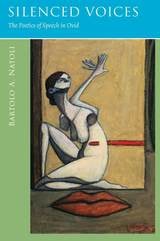
Silenced Voices
The Poetics of Speech in OvidBartolo A. Natoli
University of Wisconsin Press, 2021
Bartolo A. Natoli provides a unique cross-reading of these works. He examines how the motifs and ideas articulated in the Metamorphoses provide the template for the poet's representation of his own exile. Ovid depicts his transformation with an eye toward memory, reformulating how his exile would be perceived by his audience. His exilic poems are an attempt to recover the voice he lost and to reconnect with the community of Rome.
Siren Songs
Gender, Audiences, and Narrators in the OdysseyLillian Eileen Doherty
University of Michigan Press, 1995
Siren Songs synthesizes audience-oriented and narratological approaches, and examines the relationships among three kinds of audiences: internal, implied, and actual. The author prefaces her own reading of the Odyssey with an analysis of the issues posed by the earlier feminist readings on which she builds. Should the Odyssey be read as a "closed" text, that is, as one whose meaning is highly determined, or as an "open" text whose contradictions and ambiguities undercut its overt meanings?
Siren Songs presents a feminist critique of the Odyssey in an accessible manner aimed at a more general audience. All Greek is translated, and critical terminology is clearly defined.
Lillian Eileen Doherty is Associate Professor of Classics, University of Maryland, College Park.
Slavery and Sexuality in Classical Antiquity
Edited by Deborah Kamen and C. W. Marshall
University of Wisconsin Press, 2021
Slavery and Sexuality in Classical Antiquity reveals the often hidden and contradictory attitudes concerning the sexual identities and expression of enslaved people. These individuals were typically objectified by both social convention and legal description but were also recognized as human subjects, with subjectivity and sexual desires of their own. The contributors provoke valuable and fascinating questions that not only recognize the trauma and struggles of enslaved people but also point to the apparent inconsistencies in the mindsets of the enslavers. The resulting volume expands our understanding of both sexuality and slavery in ancient Greece and Rome, as separate subjects and as they impacted each other.
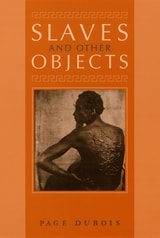
Slaves and Other Objects
Page duBois
University of Chicago Press, 2003
DuBois begins her study by exploring the material culture of slavery, including how most museum exhibits erase the presence of slaves in the classical world. Shifting her focus to literature, she considers the place of slaves in Plato's Meno, Aristotle's Politics, Aesop's Fables, Aristophanes' Wasps, and Euripides' Orestes. She contends throughout that portraying the difference between slave and free as natural was pivotal to Greek concepts of selfhood and political freedom, and that scholars who idealize such concepts too often fail to recognize the role that slavery played in their articulation.
Opening new lines of inquiry into ancient culture, Slaves and Other Objects will enlighten classicists and historians alike.
Social Memory in Athenian Public Discourse
Uses and Meanings of the PastBernd Steinbock
University of Michigan Press, 2013
Integrating literary, epigraphic, and archaeological evidence with recent scholarship on memory, identity, rhetoric, and international relations, Social Memory in Athenian Public Discourse: Uses and Meanings of the Past enhances our understanding of both the function of memory in Athenian public discourse and the history of Athenian-Theban relations. It should be of interest not only to students of Greek history and oratory but to everybody interested in memory studies, Athenian democracy, and political decision making.
Social Theory and the Study of Israelite Religion
Essays in Retrospect and ProspectSaul M. Olyan
SBL Press, 2012
Socrates of Constantinople
Historian of Church and StateTheresa Urbainczyk
University of Michigan Press, 1997
Socrates' Children
Ancient: The 100 Greatest PhilosophersPeter Kreeft
St. Augustine's Press, 2019
This is the first of a four-volume history of philosophy . . . on ancient, medieval, modern, and contemporary philosophy. After the fourth volume is produced in paper, a one-volume clothbound edition, containing all four paperbound editions, will be published.
Kreeft focuses on the “big ideas” that have influenced present people and present times, and includes relevant biographical data, proportionate to its importance for each thinker. Moreover, the aim of the work is to stimulate philosophizing, controversy, and argument. It uses ordinary language and logic, not jargon and symbolic logic, and it is commonsensical (like Aristotle) and existential in the sense that it sees philosophy as something to be lived and experienced in life. Philosophy, after all, is not about philosophy but reality . . . about wisdom, life and death, good and evil, and God.
Kreeft seeks to be simple and direct and clear. But it is not dumbed down and patronizing. It will stretch the reader, but it is meant for beginners, not just scholars. It can be used for college classes or do-it-yourselfers. It emphasizes surprises; remember, “philosophy begins in wonder.” And it includes visual aids: charts, cartoons, line drawings, and drawings of each philosopher.
Soldiers and Silver
Mobilizing Resources in the Age of Roman ConquestBy Michael J. Taylor
University of Texas Press, 2020
Soldiers, Cities, and Civilians in Roman Syria
Nigel Pollard
University of Michigan Press, 2000
Nigel Pollard is currently a Research Assistant at the Institute of Archaeology, University of Oxford.
Soul Matters
Plato and Platonists on the Nature of the SoulSara Ahbel-Rappe
SBL Press, 2023
Platonic discourses concerning the soul are incredibly rich and multitiered. Plato's own diverse and disparate arguments and images offer competing accounts of how we are to understand the nature of the soul. Consequently, it should come as no surprise that the accounts of Platonists who engage Plato’s dialogues are often riddled with questions. This volume takes up the theories of well-known philosophers and theologians, including Plato, Plotinus, Proclus, the emperor Julian, and Origen, as well as lesser-known but equally important figures in a collection of essays on topics such as transmigration of the soul, the nature of the Platonist enlightenment experience, soul and gender, pagan ritual practices, Christian and pagan differences about the soul, mental health and illness, and many other topics. Contributors include Crystal Addey, Sara Ahbel-Rappe, Dirk Baltzly, Robert Berchman, Jay Bregman, Luc Brisson, Kevin Corrigan, John Dillon, John F. Finamore, Lloyd P. Gerson, Dorian Gieseler Greenbaum, Elizabeth Hill, Sarah Klitenic Wear, Danielle A. Layne, Ilaria L. E. Ramelli, Gregory Shaw, Svetla Slaveva-Griffine, Suzanne Stern-Gillet, Harold Tarrant, Van Tu, and John D. Turner.

Soundings at Tell Fakhariyah
Calvin W. McEwan, Linda S. Braidwood, Henri Frankfort, Hans G. Guterbock, Richar
University of Chicago Press, 1958
Sourcebook for Ancient Mesopotamian Medicine
JoAnn Scurlock
SBL Press, 2014
In this collection JoAnn Scurlock assembles and translates medical texts that provided instructions for ancient doctors and pharmacists. Scurlock unpacks the difficult, technical vocabulary that describes signs and symptoms as well as procedures and plants used in treatments. This fascinating material shines light on the development of medicine in the ancient Near East, yet these tablets were essentially inaccessible to anyone without an expertise in cuneiform. Scurlock’s work fills this gap by providing a key resource for teaching and research.
Features:
- Accessible translations and transliterations for both specialists and non-specialists
- Texts include a range of historical periods and regions
- Therapeutic, pharmacological, and diagnostic texts
Sources for the Study of Greek Religion, Corrected Edition
David G. Rice
SBL Press, 2009
Sowing the Body
Psychoanalysis and Ancient Representations of WomenPage duBois
University of Chicago Press, 1988

Space in Greek Tragedy (BICS Supplement 131)
Edited by Vassiliki Kampourelli
University of London Press, 2016
Space, Geography, and Politics in the Early Roman Empire
Claude Nicolet
University of Michigan Press, 2015
Speaking the Same Language
Speech and Audience in Thucydides' Spartan DebatesPaula Debnar
University of Michigan Press, 2002
Speaking the Same Language seeks to recover the role played by the audiences within the History. By restoring the internal audiences to a more prominent place, Debnar emphasizes the perspective of the participants in the war and heightens the dramatic immediacy of the debates. She thoroughly analyzes twelve speeches delivered by or to the Spartans, demonstrating how the earlier speeches illustrate the role of discourse in the construction of Sparta's identity and the unification of her Dorian allies in the face of their primarily Ionian adversaries.
Combining close textual analysis with an examination of narrative and historical context, Debnar bridges the gap between literary and historical studies of Thucydides. Accessible to specialists and nonspecialists alike, her work will interest those working in the fields of Greek literature, ancient historiography, rhetoric, political science, and ethnic studies.
Paula Debnar is Associate Professor of Classics, Mount Holyoke College.
Spear-Won Land
Sardis from the King's Peace to the Peace of ApameaEdited by Andrea M. Berlin and Paul J. Kosmin
University of Wisconsin Press, 2019
The contributors to this volume are members of the Hellenistic Sardis Project, a research collaboration between long-standing expedition members and scholars keenly interested in the site. These new discussions on the pre-Roman history of Sardis restore the city in the scholarship of the Hellenistic East and will be enlightening to scholars of classical archaeology.
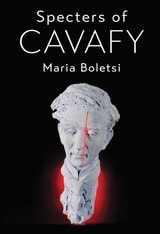
Specters of Cavafy
Maria Boletsi
University of Michigan Press, 2024
Winner of the European Society of Modern Greek Studies Best Monograph Award
The Greek Alexandrian poet C. P. Cavafy (1863–1933) has been recognized as a central figure in European modernism and world literature. His poetry explored the conditions for animating the past and making lost worlds or people haunt the present. Yet he also described himself as “a poet of the future generations.” Indeed, his writings address concerns and desires that permeate the twentieth and twenty-first centuries. How does poetry concerned with the past, memory, loss, and death, carry futurity? How does it haunt, and how is it haunted by, future presents?
Specters of Cavafy broaches these questions by proposing spectral poetics as a novel approach to Cavafy’s work. Drawing from theorizations of specters and haunting, it develops spectrality as a lens for revisiting Cavafy’s poetry and prose, fiction and nonfiction, as well as his poetry’s bearing on our present. By examining Cavafy’s spectral poetics, the book’s first part shows how conjurations work in his writings, and how the spectral permeates the entanglement of modernity and haunting, and of irony and affect. The second part traces the afterlives of specific poems in the Western imagination since the 1990s, in Egypt’s history of debt and colonization, and in Greece during the country’s recent debt crisis. Beyond its original contribution to Cavafy studies, the book proposes tools and modes of reading that are broadly applicable in literary and cultural studies.
Speculum Iuris
Roman Law as a Reflection of Social and Economic Life in AntiquityJean-Jacques Aubert and Boudewijn Sirks, Editors
University of Michigan Press, 2002
Speculum Iuris examines the complex relationship between law and social practice from the particular angle of Roman legislation and jurisprudence as conditioned by or reacting to a specific social, economic, and political context. Using various strategies, the editors and contributors mine a huge body of texts to study attitudes and behaviors of the Roman upper class, whose social concerns are reflected in the development of legal rules.
A close reading of juristic opinions and Republican or imperial legislation allows the contributors to find rationales behind rules and decisions in order to explain practices and mentalities of the elite within a larger social context. This book demonstrates clearly that Roman law was not divorced from the realities of daily life, even if some jurists may have been working with purely hypothetical cases.
Speculum Iuris provides a multidisciplinary approach to the question of the interplay of legal and social forces in the Roman world. As such, it will be a helpful study for general classicists and ancient historians, as well as for legal historians, social historians, economic historians, sociologists, and cultural anthropologists.
Jean-Jacques Aubert is Professor of Latin Language and Literature, University of Neuchâtel, Switzerland. Boudewijn Sirks is Professor of the History of Ancient Law, the History of European Private Law, and German Civil Law, Institute for the History of Law, Germany.
Speeches from Athenian Law
Edited by Michael Gagarin
University of Texas Press, 2011
This is the sixteenth volume in the Oratory of Classical Greece. This series presents all of the surviving speeches from the late fifth and fourth centuries BC in new translations prepared by classical scholars who are at the forefront of the discipline. These translations are especially designed for the needs and interests of today's undergraduates, Greekless scholars in other disciplines, and the general public.
Classical oratory is an invaluable resource for the study of ancient Greek life and culture. The speeches offer evidence on Greek moral views, social and economic conditions, political and social ideology, law and legal procedure, and other aspects of Athenian culture that have recently been attracting particular interest: women and family life, slavery, and religion, to name just a few.
This volume assembles twenty-two speeches previously published in the Oratory series. The speeches are taken from a wide range of different kinds of cases—homicide, assault, commercial law, civic status, sexual offenses, and others—and include many of the best-known speeches in these areas. They are Antiphon, Speeches 1, 2, 5, and 6; Lysias 1, 3, 23, 24, and 32; Isocrates 17, 20; Isaeus 1, 7, 8; Hyperides 3; Demosthenes 27, 35, 54, 55, 57, and 59; and Aeschines 1. The volume is intended primarily for use in teaching courses in Greek law or related areas such as Greek history. It also provides the introductions and notes that originally accompanied the individual speeches, revised slightly to shift the focus onto law.
Staging Masculinity
The Rhetoric of Performance in the Roman WorldErik Gunderson
University of Michigan Press, 2000
Staple Security
Bread and Wheat in EgyptJessica Barnes
Duke University Press, 2022
Stealing from the Gods
Temple Robbery in the Roman ImaginationIsabel K. Köster
University of Michigan Press, 2026
Ancient authors including Cicero, Caesar, Livy, Appian, and Pausanias present isolated, grotesque individuals whose actions have no bearing on the conduct of Romans as a whole, rendering temple robbery not a matter of collective responsibility, but of individual moral failure. By revealing how narratives of temple robbery are constructed from a literary perspective and how they inform discourses about military conquest and imperial rule, Isabel K. Köster shines a new light on how the Romans coped with the more pernicious aspects of their empire.
Stock Characters Speaking
Eight Libanian Declamations Introduced and TranslatedRobert J. Penella
University of Michigan Press, 2023
Declamations were composed and orally delivered in the Roman Empire by sophists, or teachers of rhetoric, of whom the Greek-speaking Libanius was one of the most distinguished. Stock Characters Speaking may be thought of as emerging from three developments of recent decades: an explosive interest in late antiquity, a newly sympathetic interest in rhetoric (including ancient declamation), and a desire to bring Libanius’s massive corpus into English and other modern languages.
In this book, author Robert J. Penella translates eight of Libanius’s declamations: 29, 30, 34, 35, 37, 45, 46, 47, and, in an appendix, the thirteenth-century Gregory of Cyprus’s response to Declamation 34. Each translation is accompanied by an introduction, in which Penella examines the themes, structure, and the stasis, or key issue, of the declamations. Figures who appear in the translated declamations include a parasite who has lost his patron, a man envious of his rich neighbor, a miser’s son, a poor man willing to die for his city, a rich war-hero accused of aiming at tyranny, and a convict asking for exile. Three of these declamations have appeared in German; otherwise, these translations are the first into a modern language.
Stones, Bones, and the Sacred
Essays on Material Culture and Ancient Religion in Honor of Dennis E.Alan H. Cadwallader
SBL Press, 2016
A crucial text for any university course on the interaction of archaeology and the Bible
The world of early Christians was not a world lived in texts; it was a world saturated with material reality and concerns: what, where and when to eat or drink; how to present oneself in the space of bodily life and that of death; how to move from one place to another; what impacted status or the adjudication of legal charges. All these and more controlled so much of life in the ancient world. The Christians were not immune from the impact of these realities. Sometimes they absorbed their surrounds; sometimes they quite explicitly rejected the material practices bearing in on them; frequently they modified the practice and the rationale to create a significant Christian alternative. The collection of essays in this volume come from a range of international scholars who, for all their different interests and critical commitments, are yet united in treasuring research into the Greek and Roman worlds in which Christians sought to make their way. They offer these essays in honor of one who has made a lifetime's work in mining ancient material culture to extract nuggets of insight into early Christian dining practices: Dennis E. Smith.
Features
- Rich examples of method in the utilization of ancient material culture for biblical interpretation.
- Thirteen essays with a response from Dennis E. Smith
- Maps, diagrams, and plates

Stories and Histories of Islamic Art in Italy
Supplements to the Memoirs of the American Academy in RomeEdited by Silvia Armando
University of Michigan Press, 2027
In the past decades, scholarship on Islamic art has challenged the parameters of the discipline, but in the process, the Italian context has often been overlooked. Gathering the voices of prominent international specialists, the book fills an important gap by presenting new research on topics ranging from the medieval to modern periods. Contributors investigate how Islamic artifacts were collected, categorized, and studied; examine Orientalism(s) in Italy and beyond; reconstruct the genealogies of scholars who helped found and develop the academic discipline and museum practices; and offer new scholarship on ceramics, textiles, metalwork, rock crystals, numismatics, and archaeology. The volume reveals the interchange between romantic reveries and more “scientific” Islamic art studies. Following the model of counter-Orientalism proposed by Karla Mallette, it raises questions of identity, otherness, and self-representation within a cultural and geographical context where the Islamic “component” was—and is—perceived either as exotic or integral to Italian identity.
With over 100 illustrations, Stories and Histories of Islamic Art in Italy explores how amateurs, artists, and intellectuals perceived of, depicted, and wrote about the Islamic world, offering new ways to examine Italy’s Islamic past.
Strength to Strength
Essays in Honor of Shaye J. D. CohenMichael L. Satlow
SBL Press, 2018
Essays that engage the scholarship of Shaye J. D. Cohen
The essays in Strength to Strength honor Shaye J. D. Cohen across a range of ancient to modern topics. The essays seek to create an ongoing conversation on issues of identity, cultural interchange, and Jewish literature and history in antiquity, all areas of particular interest for Cohen. Contributors include: Moshe J. Bernstein, Daniel Boyarin, Jonathan Cohen, Yaakov Elman, Ari Finkelstein, Charlotte Elisheva Fonrobert, Steven D. Fraade, Isaiah M. Gafni, Gregg E. Gardner, William K. Gilders, Martin Goodman, Leonard Gordon, Edward L. Greenstein, Erich S. Gruen, Judith Hauptman, Jan Willem van Henten, Catherine Hezser, Tal Ilan, Richard Kalmin, Yishai Kiel, Ross S. Kraemer, Hayim Lapin, Lee I. Levine, Timothy H. Lim, Duncan E. MacRae, Ivan Marcus, Mahnaz Moazami, Rachel Neis, Saul M. Olyan, Jonathan J. Price, Jeffrey L. Rubenstein, Michael L. Satlow, Lawrence H. Schiffman, Daniel R. Schwartz, Joshua Schwartz, Karen Stern, Stanley Stowers, and Burton L. Visotzky.
Features:
- A full bibliography of Cohen’s published works
- An essay on the contributions of Cohen
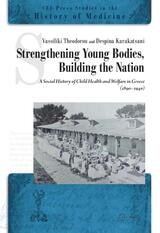
Strengthening Young Bodies, Building the Nation
A Social History of the Child Health and Welfare in Greece (1890–1940)Vassiliki Theodorou
Central European University Press, 2019