Results by title
314 books match the query 'African' and 60 start with t
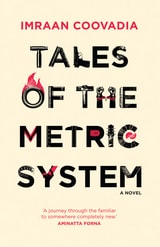
Tales of the Metric System
A NovelImraan Coovadia
Ohio University Press, 2016
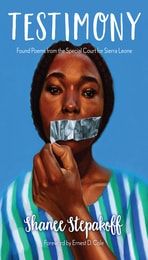
Testimony
Found Poems from the Special Court for Sierra LeoneShanee Stepakoff
Bucknell University Press, 2021
Sierra Leone’s devastating civil war barely caught the attention of Western media, but it raged on for over a decade, bringing misery to millions of people in West Africa from 1991 to 2002. The atrocities committed in this war and the accounts of its survivors were duly recorded by international organizations, but they run the risk of being consigned to dusty historical archives.
Derived from public testimonies at a UN-backed war crimes tribunal in Freetown, this remarkable poetry collection aims to breathe new life into the records of Sierra Leone’s civil war, delicately extracting heartbreaking human stories from the morass of legal jargon. By rendering selected trial transcripts in poetic form, Shanee Stepakoff finds a novel way to communicate not only the suffering of Sierra Leone’s people, but also their courage, dignity, and resilience. Her use of innovative literary techniques helps to ensure that the voices of survivors are not forgotten, but rather heard across the world.
This volume also includes an introduction that explores how the genre of “found poetry” can serve as a uniquely powerful means through which writers may bear witness to atrocity. This book’s unforgettable excavation and shaping of survivor testimonies opens new possibilities for speaking about the unspeakable.

The ANC and the Liberation Struggle
A Critical Political BiographyDale T. McKinley
Pluto Press, 1997
eloquent testimony of the continuing vitality of the South African left' Modern African Studies
The African National Congress, the ANC, negotiated a transition of government and power in South Africa in the early 1990s and gained widespread respect and legitimacy when Nelson Mandela was voted in as President in 1994.
In this controversial and radical critique of the ANC and the struggle for liberation in South Africa, Dale T. McKinley challenges conventional public perceptions of the organisation and its celebrated rise to power. McKinley offers the first detailed analysis of the ANC's leadership, tactics and strategies from the 1920s, through the years of exile, to the 1990s, focusing on its close alliance with the South African Communist Party. he reveals that the organisation, despite historical claims to the contrary, failed to stay in touch with the south African masses. The ANC made fundamental compromises to gain political power, and in so doing has ensured that the economic power-base of the ruling elites in South Africa remains essentially unaltered.
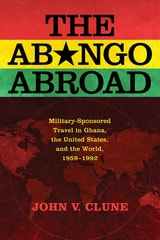
The Abongo Abroad
Military-Sponsored Travel in Ghana, the United States, and the World, 1959-1992John V. Clune
Vanderbilt University Press, 2017
Merging newly discovered documents from Ghana's armed forces and declassified sources on American military assistance to Africa, this work argues that military-sponsored travel made individual Ghanaians' outlooks on the world more international, just as military assistance planners hoped they would, but the Ghanaian state struggled to turn that new identity into political or economic progress.
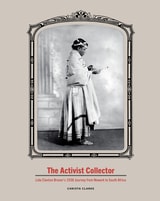
The Activist Collector
Lida Clanton Broner’s 1938 Journey from Newark to South AfricaChrista Clarke
Rutgers University Press, 2023
Published by the Newark Museum. Distributed worldwide by Rutgers University Press.
“After twenty-eight years of desire and determination, I have visited Africa, the land of my forefathers.” So wrote Lida Clanton Broner (1895–1982), an African American housekeeper and hairstylist from Newark, New Jersey, upon her return from an extraordinary nine-month journey to South Africa in 1938. This epic trip was motivated not only by Broner’s sense of ancestral heritage, but also a grassroots resolve to connect the socio-political concerns of African Americans with those of black South Africans under the segregationist policies of the time. During her travels, this woman of modest means circulated among South Africa’s Black intellectual elite, including many leaders of South Africa’s freedom struggle. Her lectures at Black schools on “race consciousness and race pride” had a decidedly political bent, even as she was presented as an “American beauty specialist.”
How did Broner—a working class mother—come to be a globally connected activist? What were her experiences as an African American woman in segregated South Africa and how did she further her work after her return? Broner’s remarkable story is the subject of this book, which draws upon a deep visual and documentary record now held in the collection of the Newark Museum of Art. This extraordinary archive includes more than one hundred and fifty objects, ranging from beadwork and pottery to mission school crafts, acquired by Broner in South Africa, along with her diary, correspondence, scrapbooks, and hundreds of photographs with handwritten notations.

The Afro-Bolivian Spanish Determiner Phrase
A Microparametric AccountSandro Sessarego
The Ohio State University Press, 2014
This dialect presents phenomena that offer a real challenge to current linguistic theory. The Afro-Bolivian Spanish Determiner Phrase elaborates on the importance of enhancing a stronger dialogue between formal generative theory and sociolinguistic methodology, in line with recent work in the field of minimalist syntax. Sessarego’s study combines sociolinguistic techniques of data collection with generative models of data analysis to obtain more fine-grained, empirically testable generalizations.
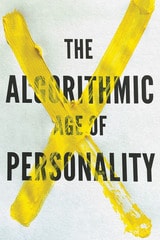
The Algorithmic Age of Personality
African Literature and Cancel CultureJames Yékú
Michigan State University Press, 2025
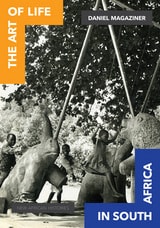
The Art of Life in South Africa
Daniel Magaziner
Ohio University Press, 2016
From 1952 to 1981, South Africa’s apartheid government ran an art school for the training of African art teachers at Indaleni, in what is today KwaZulu-Natal. The Art of Life in South Africa is the story of the students, teachers, art, and politics that circulated through a small school, housed in a remote former mission station. It is the story of a community that made its way through the travails of white supremacist South Africa and demonstrates how the art students and teachers made together became the art of their lives.
Daniel Magaziner radically reframes apartheid-era South African history. Against the dominant narrative of apartheid oppression and black resistance, as well as recent scholarship that explores violence, criminality, and the hopeless entanglements of the apartheid state, this book focuses instead on a small group’s efforts to fashion more fulfilling lives for its members and their community through the ironic medium of the apartheid-era school.
There is no book like this in South African historiography. Lushly illustrated and poetically written, it gives us fully formed lives that offer remarkable insights into the now clichéd experience of black life under segregation and apartheid.
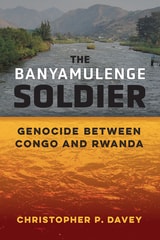
The Banyamulenge Soldier
Genocide between Congo and RwandaChristopher P. Davey
University of Michigan Press, 2025
Challenging the preconceived perpetrator and victim categories with a forward-thinking approach using the concept of genocide narrative identity—meaning a narrative identity shaped by experiences of social destruction or uses of genocide as a concept—Christopher P. Davey reveals how the stories we tell about ourselves shapes who we are. He shows that Banyamulenge experiences of genocide between Congo and Rwanda are layered around agencies of victimhood and perpetration of genocide. Using soldier and other community narratives, Davey examines the subjective nature of genocide in perception of an event, strategic deployment of the label, and in the (re)shaping of social worlds inhabited by this community and therefore impacting others in Congo and Rwanda. The Banyamulenge Soldier offers an insider view of the historical dynamics of current conflicts in South Kivu while adding to our understanding of relational genocide theory.

The Beautiful Skin
Football, Fantasy, and Cinematic Bodies in AfricaVlad Dima
Michigan State University Press, 2020
The Black Aesthetic Unbound
Theorizing the Dilemma of Eighteenth-Century African American LiteratureApril C. E. Langley
The Ohio State University Press, 2007
Consequently, this book has three aims: to locate the eighteenth century as the genesis of the cultural and historical movements which mark twentieth-century black aestheticism—known as the Black Aesthetic; to analyze problematic associations of African identity as manifested in an essentialized Afro-America; and to study the relationship between specific West African modes of thought and expression and the emergence of a black aesthetic in eighteenth-century North America. By exploring how Senegalese, Igbo, and other West African traditions provide striking new lenses for reading poetry and prose by six significant writers, Langley offers a fresh perspective on this important era in our literary history. Ultimately, the author confronts the difficult dilemma of how to use diasporic, syncretic, and vernacular theories of Black culture to think through the massive cultural transformations wrought by the Middle Passage.

The Black Mind
A History of African LiteratureO.R. Dathorne
University of Minnesota Press, 1974
The Black Mind was first published in 1974. Minnesota Archive Editions uses digital technology to make long-unavailable books once again accessible, and are published unaltered from the original University of Minnesota Press editions.
The comprehensive account of the development of African literature from its beginnings in oral tradition to its contemporary expression in the writings of Africans in various African and European languages provides insight, both broad and deep, into the Black intellect. Professor Dathorne examines the literature of Africans as spoken or written in their local languages and in Latin, French, Portuguese, and English. This extensive survey and interpretation gives the reader a remarkable pathway to an understanding of the Black imagination and its relevance to thought and creativity throughout the world.
The author himself lived in Africa for ten years, and his view in not that of an outsider, since it is as a Black man that he speaks about Black people. Throughout the book, a major theme is the demonstration that, despite slavery and colonialism, Africans remained very close to their own cultures. Professor Dathorne shows that African writers may be, like some Afro-American writers, "marginal men," but that they are Black men and it is as Black men that they feel the nostalgia of their past and the corrosive influences of their present.
The chapters are divided into sections: Tradition; Heritage; The Presence of Europe; and Crosscurrents. In the final chapters the author extends the thread of continuity to the New World—Africa as present in the work of Black writers in the United States and in the Caribbean.
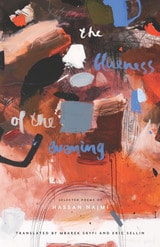
The Blueness of the Evening
Selected Poems of Hassan NajmiMbarek Sryfi
University of Arkansas Press, 2018
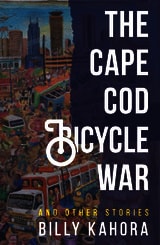
The Cape Cod Bicycle War
and Other StoriesBilly Kahora
Ohio University Press, 2020
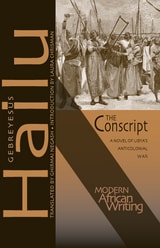
The Conscript
A Novel of Libya’s Anticolonial WarGebreyesus Hailu
Ohio University Press, 2013
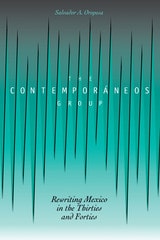
The Contemporáneos Group
Rewriting Mexico in the Thirties and FortiesBy Salvador A. Oropesa
University of Texas Press, 2003
In the years following the Mexican Revolution, a nationalist and masculinist image of Mexico emerged through the novels of the Revolution, the murals of Diego Rivera, and the movies of Golden Age cinema. Challenging this image were the Contemporáneos, a group of writers whose status as outsiders (sophisticated urbanites, gay men, women) gave them not just a different perspective, but a different gaze, a new way of viewing the diverse Mexicos that exist within Mexican society. In this book, Salvador Oropesa offers original readings of the works of five Contemporáneos—Salvador Novo, Xavier Villaurrutia, Agustín Lazo, Guadalupe Marín, and Jorge Cuesta—and their efforts to create a Mexican literature that was international, attuned to the realities of modern Mexico, and flexible enough to speak to the masses as well as the elites.
Oropesa discusses Novo and Villaurrutia in relation to neo-baroque literature and satiric poetry, showing how these inherently subversive genres provided the means of expressing difference and otherness that they needed as gay men. He explores the theatrical works of Lazo, Villaurrutia's partner, who offered new representations of the closet and of Mexican history from an emerging middle-class viewpoint. Oropesa also looks at women's participation in the Contemporáneos through Guadalupe Marín, the sometime wife of Diego Rivera and Jorge Cuesta, whose novels present women's struggles to have a view and a voice of their own. He concludes the book with Novo's self-transformation from intellectual into celebrity, which fulfilled the Contemporáneos' desire to merge high and popular culture and create a space where those on the margins could move to the center.

The Desert Is Alive
Aesthetic Cartographies and the SaharaJill Jarvis
University of Chicago Press, 0
How contemporary writers and filmmakers from across the African Sahara confront the colonial ideology of desert emptiness.
Jill Jarvis’s The Desert Is Alive challenges the image of the Sahara desert as a historical and cultural blank zone through a new “aesthetic cartography” that combines literary and film study with interdisciplinary thinking about space, borders, and infrastructures. In fields that still bear the imprint of a French colonial mindset, the Sahara has long been overlooked as a site of intellectual and cultural vitality. The Desert Is Alive breaks with a longstanding conceptual divide between “North” and “Subsaharan” Africa by resolutely centering the African Sahara and recognizing that the desert is not just full, but “peopled” in unexpected ways.
Jarvis accounts for colonial transformations of Saharan land during the twentieth century, attesting to the tactical and symbolic allure that this desert’s purported “emptiness” has held for French empire-building. Jarvis also considers how such tactics have been repurposed by postcolonial states. She takes up the last manuscript composed by Swiss writer Isabelle Eberhardt, who died in a flood at Aïn Sefra, Algeria in 1904, and examines the first novel published by French writer and aviator Antoine de Saint-Exupéry, composed while he worked as a pilot at Tarfaya, Morocco, in order to build the first trans-Saharan flight line during the 1920s. Jarvis then explores depictions of Timbuktu (Mali) and Nouadhibou (Mauretania) in films by Mauritanian-French director Abderrahmane Sissako. Jarvis concludes with chapters that unfold the unfinished history of French nuclear violence in the Sahara. First, she discusses multimedia and documentary works that reckon with the enduring impact of the seventeen nuclear bombs that France detonated in the Algerian desert in the 1960s. Finally, Jarvis turns to works by Tuareg poet and artist Hawad that confront the ongoing legacy of uranium mining on Indigenous land in northern Niger. The result is a rich contribution to Francophone cultural studies, African studies, postcolonial studies, and ecocriticism.
The Dictator Novel
Writers and Politics in the Global SouthMagalí Armillas-Tiseyra
Northwestern University Press, 2019
The Dictator Novel positions novels about dictators as a vital genre in the literatures of the Global South. Primarily identified with Latin America, the dictator novel also has underacknowledged importance in the postcolonial literatures of francophone and anglophone Africa. Although scholars have noted similarities, this book is the first extensive comparative analysis of these traditions; it includes discussions of authors including Gabriel García Márquez, Ngũgĩ wa Thiong’o, Alejo Carpentier, Augusto Roa Bastos, Domingo Faustino Sarmiento, José Mármol, Esteban Echeverría, Ousmane Sembène , Chinua Achebe, Aminata Sow Fall, Henri Lopès, Sony Labou Tansi, and Ahmadou Kourouma. This juxtaposition illuminates the internal dynamics of the dictator novel as a literary genre. In so doing, Armillas-Tiseyra puts forward a comparative model relevant to scholars working across the Global South.
The Dying Sahara
US Imperialism and Terror in AfricaJeremy Keenan
Pluto Press, 2013
In The Dark Sahara (Pluto, 2009), Jeremy Keenan exposed the collusion between the US and Algeria in fabricating terrorism to justify a new ‘Saharan front’ in Washington’s War on Terror. Now, in The Dying Sahara, he reveals how the designation of the region as a ‘Terror Zone’ has destroyed the lives and livelihoods of thousands of innocent people.
Beginning in 2004, with what local people called the US ‘invasion’ of the Sahel, The Dying Sahara shows how repressive, authoritarian regimes - cashing in on US terrorism ‘rents’ - provoked Tuareg rebellions in both Niger and Mali. Further, he argues that US activity has unleashed a new, narco-trafficking branch of Al-Qaeda.
Keenan's chillingly detailed research shows that the US and its new combatant African command (AFRICOM) have created instability in a region the size of western Europe.
The Extinction of Menai
A NovelChuma Nwokolo
Ohio University Press, 2017
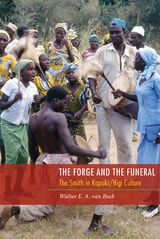
The Forge and the Funeral
The Smith in Kapsiki/Higi CultureWalter E. A. van Beek
Michigan State University Press, 2015

The Hairdresser of Harare
A NovelTendai Huchu
Ohio University Press, 2015
The History of Intimacy
PoemsGabeba Baderoon
Northwestern University Press, 2021
Born on the coastal shores of Port Elizabeth, Baderoon is one of South Africa’s most acclaimed literary voices. In The History of Intimacy—originally published by Kwela Books—she crafts resonant poems about a writer’s beginnings, love across boundaries, and “how not to be alone.”
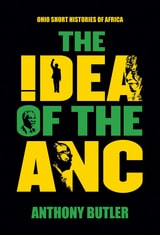
The Idea of the ANC
Anthony Butler
Ohio University Press, 2013
The African National Congress (ANC) is Africa’s most famous liberation movement. It has recently celebrated its centenary, a milestone that has prompted partisans to detail a century of unparalleled achievement in the struggle against colonialism and racial discrimination. Critics paint a less flattering portrait of the historical ANC as a communist puppet, a moribund dinosaur, or an elitist political parasite. For such skeptics, the ANC—now in government for two decades—has betrayed South Africans rather than liberating them.
South Africans endure deep inequality and unemployment, violent community protests, murders of foreign residents, major policy blunders, an AIDS crisis, and deepening corruption. Inside the ANC there are episodes of open rebellion against the leadership, conflicts over the character of a postliberation movement, and debilitating battles for succession to the movement’s presidency. The ANC is nevertheless likely to remain the party of government for the foreseeable future.
This remarkable book explores how ANC intellectuals and leaders interpret the historical project of their movement. It investigates three interlocking ideas: a conception of power, a responsibility for promoting unity, and a commitment to human liberation. Anthony Butler explores how these notions have shaped South African politics in the past and how they will inform ANC leaders’ responses to the challenges of the future.
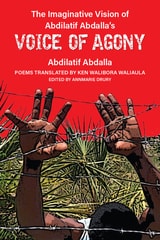
The Imaginative Vision of Abdilatif Abdalla’s Voice of Agony
Abdilatif Abdalla, edited by Annmarie Drury
University of Michigan Press, 2024
Yet, Imaginative Vision is also something more. Even as it centers on a literary translation of a singularly beautiful and influential book of poetry, it tells English-language readers the story of that book. Supporting materials illuminate the circumstances of its inception when Abdilatif, aged 22, was arrested and tried. They explore what the volume meant to its first readers and its affiliations with subsequent extraordinary works of prison literature by Alamin Mazrui and Ngũgĩ wa Thiong’o. They trace its links to literary art of the past, including the nineteenth-century poet Muyaka bin Haji, and to writing that followed. And they explain social and historical aspects of the Swahili coastal world that nurtured Abdilatif’s political engagement and stunning verbal art. Under the editorship of scholar, translator, and poet Annmarie Drury, contributors bring insights from their diverse backgrounds to present contextualizing material that illuminates the poems at the heart of this book.
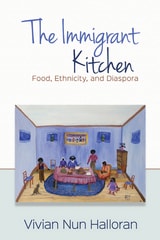
The Immigrant Kitchen
Food, Ethnicity, and DiasporaVivian Nun Halloran
The Ohio State University Press, 2016
The Immigrant Kitchen describes how these memoirs function as a complex and engaging mass media genre that caters to multiple reading constituencies. Specifically, they entertain readers with personal anecdotes and recollections, teach new culinary skills through recipes, share insight into different cultural mores through ethnographic and reportorial discussions of life in other countries, and attest to the impact that an individual’s legal immigration into the United States continues to have down through the generations of his or her American-born families.

The Infrastructures of Security
Technologies of Risk Management in JohannesburgMartin J. Murray
University of Michigan Press, 2022
In The Infrastructures of Security, author Martin J. Murray concentrates on not only the turn toward technological solutions to managing the risk of crime through digital (and software-based) surveillance and automated information systems, but also the introduction of somewhat bizarre and fly-by-night experimental “answers” to perceived risk and danger. Digitalized surveillance is significant for two reasons: first, it enables monitoring to take place across wide "geographical distances with little time delay"; and second, it allows for the active sorting, identification, and "tracking of bodies, behaviors, and characteristics of subject populations on a continuous, real-time basis." These new software-based surveillance technologies represent monitoring, tracking, and information gathering without walls, towers, or guards.
The Knight and His Shadow
Boubacar Boris Diop
Michigan State University Press, 2015
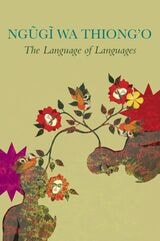
The Language of Languages
Ngugi wa Thiong’o
Seagull Books, 2023
With clear, conversational prose, this is the first book dedicated entirely to Ngũgĩ wa Thiong’o’s writings on translation.
Through his many critically acclaimed novels, stories, essays, plays, and memoirs, Kenyan writer Ngũgĩ wa Thiong’o has been at the forefront of world literature for decades. He has also been, in his own words, “a language warrior,” fighting for indigenous African languages to find their rightful place in the literary world. Having begun his writing career in English, Ngũgĩ shifted to writing in his native language Gikũyũ in 1977, a stance both creatively and politically significant. For decades now, Ngũgĩ has been translating his Gikũyũ works into English himself, and he has used many platforms to champion the practice and cause of literary translations, which he calls “the language of languages.”
This volume brings together for the first time Ngũgĩ’s essays and lectures about translation, written and delivered over the past two decades. Here we find Ngũgĩ discussing translation as a conversation between cultures, proposing that dialogue among African languages is the way to unify African peoples, reflecting on the complexities of auto-translation or translating one’s own work, exploring the essential task translation performed in the history of the propagation of thought, and pleading for the hierarchy of languages to be torn down. He also shares his many experiences of writing across languages, including his story The Upright Revolution, which has been translated into more than a hundred languages around the globe and is the most widely translated text written by an African author.
At a time when dialogues between cultures and peoples are more essential than ever, The Language of Languages makes an outspoken case for the value of literature without borders.
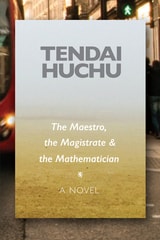
The Maestro, the Magistrate and the Mathematician
A NovelTendai Huchu
Ohio University Press, 2016
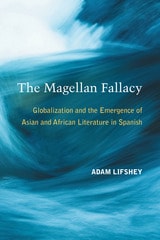
The Magellan Fallacy
Globalization and the Emergence of Asian and African Literature in SpanishAdam Lifshey
University of Michigan Press, 2012
The Magellan Fallacy argues that literature in Spanish from Asia and Africa, though virtually unknown, reimagines the supposed centers and peripheries of the modern world in fundamental ways. Through archival research and comparative readings, The Magellan Fallacy rethinks mainstream mappings of diverse cultures while advocating the creation of a new field of scholarship: global literature in Spanish. As the first attempt to analyze Asian and African literature in Spanish together, and doing so while ranging over all continents, The Magellan Fallacy crosses geopolitical and cultural borders without end. The implications of the book, therefore, extend far beyond the lands formerly ruled by the Spanish empire. The Magellan Fallacy shows that all theories of globalization, including those focused on the Americas and Europe, must be able to account for the varied significances of hispanophone Asia and Africa as well.
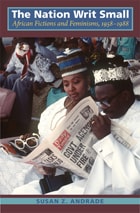
The Nation Writ Small
African Fictions and Feminisms, 1958-1988Susan Z. Andrade
Duke University Press, 2011
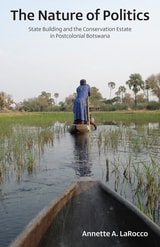
The Nature of Politics
State Building and the Conservation Estate in Postcolonial BotswanaAnnette A. LaRocco
Ohio University Press, 2024
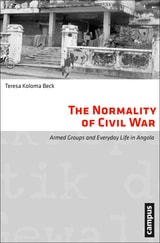
The Normality of Civil War
Armed Groups and Everyday Life in AngolaTeresa Koloma Beck
Campus Verlag, 2012
The Novels of Nadine Gordimer
History from the InsideStephen Clingman
University of Massachusetts Press, 1986
In Nadine Gordimer's view, the novel can present history as historians cannot. Moreover, this presentation is not fictional in the sense of being “untrue.” Rather, fiction deals with an area of activity usually inaccessible to the sciences of greater externally: the area in which historical process is registered as the subjective experience of individuals in society; fiction give us “history from the inside.” Gordimer's novels give us an extraordinary and unique insight into historical experience in the period in which she writes.
The Passport That Does Not Pass Ports
African Literature of Travel in the Twenty-First CenturyIsabel Balseiro
Michigan State University Press, 2020
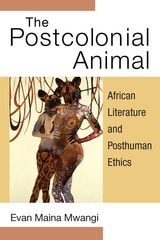
The Postcolonial Animal
African Literature and Posthuman EthicsEvan Maina Mwangi
University of Michigan Press, 2019
Despite the central role that animals play in African writing and daily life, African literature and African thinkers remain conspicuously absent from the field of animal studies. The Postcolonial Animal: African Literature and Posthuman Ethics demonstrates the importance of African writing to animal studies by analyzing how postcolonial African writing—including folktales, religion, philosophy, and anticolonial movements—has been mobilized to call for humane treatment of nonhuman others. Mwangi illustrates how African authors grapple with the possibility of an alternative to eating meat, and how they present postcolonial animal-consuming cultures as shifting toward an embrace of cultural and political practices that avoid the use of animals and minimize animal suffering. The Postcolonial Animal analyzes texts that imagine a world where animals are not abused or used as a source of food, clothing, or labor, and that offer instruction in how we might act responsibly and how we should relate to others—both human and nonhuman—in order to ensure a world free of oppression. The result is an equitable world where even those who are utterly foreign to us are accorded respect and where we recognize the rights of all marginalized groups.
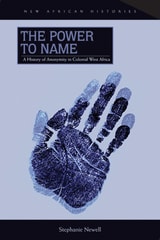
The Power to Name
A History of Anonymity in Colonial West AfricaStephanie Newell
Ohio University Press, 2013
Between the 1880s and the 1940s, the region known as British West Africa became a dynamic zone of literary creativity and textual experimentation. African-owned newspapers offered local writers numerous opportunities to contribute material for publication, and editors repeatedly defined the press as a vehicle to host public debates rather than simply as an organ to disseminate news or editorial ideology. Literate locals responded with great zeal, and in increasing numbers as the twentieth century progressed, they sent in letters, articles, fiction, and poetry for publication in English- and African-language newspapers.
The Power to Name offers a rich cultural history of this phenomenon, examining the wide array of anonymous and pseudonymous writing practices to be found in African-owned newspapers between the 1880s and the 1940s, and the rise of celebrity journalism in the period of anticolonial nationalism. Stephanie Newell has produced an account of colonial West Africa that skillfully shows the ways in which colonized subjects used pseudonyms and anonymity to alter and play with colonial power and constructions of African identity.
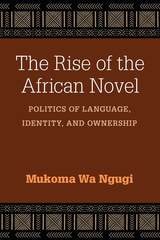
The Rise of the African Novel
Politics of Language, Identity, and OwnershipMukoma Wa Ngugi
University of Michigan Press, 2018
Calling it a major crisis in African literary criticism, Mukoma Wa Ngugi considers key questions around the misreading of African literature: Why did Chinua Achebe’s generation privilege African literature in English despite the early South African example? What are the costs of locating the start of Africa’s literary tradition in the wrong literary and historical period? What does it mean for the current generation of writers and scholars of African literature not to have an imaginative consciousness of their literary past?
This book will become a foundational text in African literary studies, as it raises questions about the very nature of African literature and criticism. It will be essential reading for scholars of African literary studies as well as general readers seeking a greater understanding of African literary history and the ways in which critical consensus can be manufactured and rewarded at the expense of a larger and historical literary tradition.
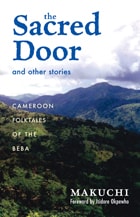
The Sacred Door and Other Stories
Cameroon Folktales of the BebaMakuchi
Ohio University Press, 2007
The State, Ethnicity, and Gender in Africa
Intellectual Legacies of Crawford YoungEdited by Scott Straus and Aili Mari Tripp
University of Wisconsin Press, 2024
Written in honor of Crawford Young, a foundational figure in the study of African politics, the essays reflect the breadth and intellectual legacy of this towering scholar and illustrate the vast impact Young had, and continues to have, on the field. The book’s themes build from his seminal publications, and the essays were written by leading scholars who were trained by Young.
The Struggling State
Nationalism, Mass Militarization, and the Education of EritreaJennifer Riggan
Temple University Press, 2016
In her provocative ethnography, The Struggling State, Jennifer Riggan examines the contradictions of state power as simultaneously oppressive to and enacted by teachers. Riggan, who conducted participant observation with teachers in and out of schools, explores the tenuous hyphen between nation and state under lived conditions of everyday authoritarianism.
The Struggling State shows how the hopes of Eritrean teachers and students for the future of their nation have turned to a hopelessness in which they cannot imagine a future at all.
The Trials of Mrs. K.
Seeking Justice in a World with WitchesAdam Ashforth
University of Chicago Press, 2018
In The Trials of Mrs. K., Adam Ashforth studies this and similar stories of witchcraft that continue to circulate in Malawi. At the heart of the book is Ashforth’s desire to understand how claims to truth, the pursuit of justice, and demands for security work in contemporary Africa, where stories of witchcraft can be terrifying. Guiding us through the history of legal customs and their interactions with the court of public opinion, Ashforth asks challenging questions about responsibility, occult forces, and the imperfect but vital mechanisms of law. A beautifully written and provocative book, The Trials of Mrs. K. will be an essential text for understanding what justice means in a fragile and dangerous world.
The Twelve Best Books by African Women
Critical ReadingsChikwenye Okonjo Ogunyemi
Ohio University Press, 2009
The Twelve Best Books by African Women is a collection of critical essays on eleven works of fiction and one play. The titles by African women that were included in the list of “Africa’s 100 Best Books of the Twentieth Century” are: Anowa, Ama Ata Aidoo (1970); A Question of Power, Bessie Head (1974); Woman at Point Zero, Nawal El Saadawi (1975); The Beggars’ Strike, Aminata Sow Fall (1979); Burger’s Daughter, Nadine Gordimer (1979); The Joys of Motherhood, Buchi Emesheta (1979); So Long a Letter, Mariama Bâ (1980); Fantasia: An Algerian Cavalcade, Assia Djebar (1983); Nervous Conditions, Tsitsi Dangarembga (1988); Living, Loving and Lying Awake at Night, Sindiwe Magona (1991); Butterfly Burning, Yvonne Vera (1998); Riwan ou le chemin de sable, Ken Bugul (1999).
This collection of original essays recognizes the gesture of inclusion as an important shift in consciousness and creates a fresh awareness of the literary works by African women writers. Each essay offers a penetrating analysis of individual texts and opens up a fresh perspective that allows scholars and students alike to explore new dimensions of these writers’ work.
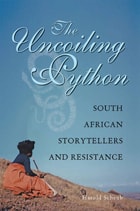
The Uncoiling Python
South African Storytellers and ResistanceHarold Scheub
Ohio University Press, 2010
There are many collections of African oral traditions, but few as carefully organized as The Uncoiling Python. Harold Scheub, one of the world’s leading scholars of African oral traditions and folklore, explores the ways in which oral traditions have served to combat and subvert colonial domination in South Africa. From the time colonial forces first came to southern Africa in 1487, oral and written traditions have been a bulwark against what became 350 years of colonial rule, characterized by the racist policies of apartheid. The Uncoiling Python: South African Storytellers and Resistance is the first in-depth study of oral tradition as a means of survival.
In open insurrections and other subversive activities Africans resisted the daily humiliations of colonial rule, but perhaps the most effective and least apparent expression of subversion was through indigenous storytelling and poetic traditions. Harold Scheub has collected the stories and poetry of the Xhosa, Zulu, Swati, and Ndebele peoples to present a fascinating analysis of how the apparently harmless tellers of tales and creators of poetry acted as front-line soldiers.
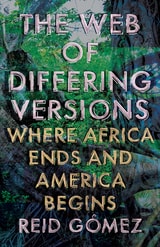
The Web of Differing Versions
Where Africa Ends and America BeginsReid Gómez
University of Minnesota Press, 2026
A visionary reckoning with prophecy, possession, and the grammar of liberation
A bold, experimental intervention in literary and theoretical discourse of colonialism and diaspora, The Web of Differing Versions engages with Leslie Marmon Silko’s 1991 Almanac of the Dead as literature, prophecy, and philosophy. Reid Gómez makes “The Indian Connection” that Silko prophesizes—Land Back!—and offers a prescient response to Silko’s enduring question: who has spiritual possession of the Américas?
Realizing the great capacity of Black and Native studies, Gómez crafts a visionary mode of scholarship that resists acknowledging conceptual, political, spiritual, formal, or linguistic borders. Rather than comparing or separating, she demonstrates how to stop telling things apart: Black|Indian, slavery|colonization, and writing|translation. Gómez shifts focus from racialized identities to the prophesied world itself, working with music, literature, and language to elaborate the connections that exist between racialized bodies, land, and sea as she emphasizes the ubiquity of escape, revolt, and beauty/hózhǫ́.
A theoretical composition, this book enacts a practice of re-visioning that uses Silko’s Almanac to challenge the limits of thought, language, and the very idea of scholarship. Attending the multiplicity of time into times, past into pasts, future into futures, The Web of Differing Versions offers a new grammar for a shared and violent world.
Retail e-book files for this title are screen-reader friendly.
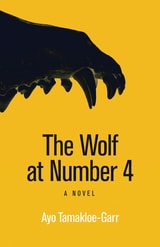
The Wolf at Number 4
A NovelAyo Tamakloe-Garr
Ohio University Press, 2018
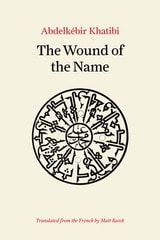
The Wound of the Name
Abdelkébir Khatibi and Matt Reeck
Northwestern University Press, 2025
Winner of the Global Humanities Translation Prize
Abdelkébir Khatibi’s The Wound of the Name (1974) is a classic work of North African critical theory that seeks to decolonize French ways of looking at and writing about Maghreb cultures. Writing at the height of French semiotics’ popularity and prestige, Khatibi proposes intersemiotics as a study of signs that pass through related but different cultural geographies, times, and expressions. Proverbs, tattoos, the rhetoric of lovemaking, calligraphy, and oral storytelling show a circulation of cultural signifiers over, across, and against borders. Signs are not stagnant; meaning is not fixed. Khatibi’s intent is in keeping with his emergent double critique, which aims to redefine not only European understanding of North African culture but also North African self-understanding, by freeing it from the anthropological mandates of the modern colonial era as well as from the retrenched theocratic models that were characteristic of North African postcolonial states.
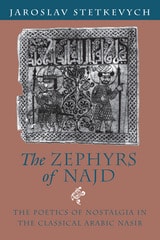
The Zephyrs of Najd
The Poetics of Nostalgia in The Classical Arabic NasibJaroslav Stetkevych
University of Chicago Press, 1993
Stetkevych concentrates on the "places of lost bliss" that furnish the dominant motif in the lyric-elegiac opening section (nasib) of the classic Arab code, or qusidah. In defining the Arabic lyrical genre, he shows how pre-Islamic lamentations over abandoned campsites evolved, in Arabo-Islamic mystical poetry, into expressions of spiritual nostalgia. Stetkevych also draws intriguing parallels between the highlands of Najd in Arabic poetry and Arcadia in the European tradition. He concludes by exploring the degree to which the pastoral-paradisiacal archetype of the nasib pervades Arabic literary perception, from the pre-Islamic ode through the Thousand and One Nights and later texts.
Enhanced by Stetkevych's sensitive translations of all the Arabic texts discussed, The Zephyrs of Najd brings the classical Arabic ode fully into the purview of contemporary literary and critical discourse.
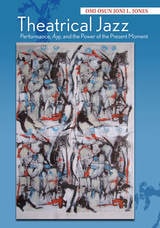
Theatrical Jazz
Performance, À??, and the Power of the Present MomentOmi Osun Joni L. Jones
The Ohio State University Press, 2015
Theatrical Jazz examines how artists are made and how artists make art. In charting their overlapping artistic genealogies, the book also discusses the work of veteran artists Aishah Rahman, Robbie McCauley, Sekou Sundiata, Ntozake Shange, and Erik Ehn, as well as the next generation of theatrical jazz innovators, Grisha Coleman, Walter Kitundu, Florinda Bryant, and Zell Miller III. Using autocritography as a primary methodology, the author draws on her role as performer, collaborator, audience/witness, and dramaturg in theatrical jazz, and her experiences with Yoruba spiritual traditions, to excavate the layers and nuances of this performance form. Jones’s use of performative writing, a blend of intellectual, artistic, and sensory experiences, allows scholars and students not only to read but also to “hear” the principles of theatrical jazz on the page.