Results by title
133 books match the query 'Classics' and 43 start with t
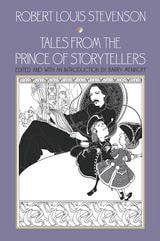
Tales from the Prince of Storytellers
Robert Louis Stevenson
Northwestern University Press, 1993
Included in this volume for the first time are versions of the stories "Markheim" and "The Isle of Voices" as they appear in Stevenson' s holograph manuscripts, plus his classics The Suicide Club, The Rajah's Diamond, "The Bottle Imp," "The Pavilion on the Links," "A Lodging for the Night," "The Merry Men," and "Thrawn Janet."
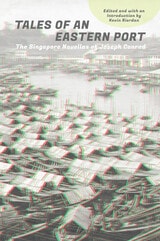
Tales of an Eastern Port
The Singapore Novellas of Joseph ConradJoseph Conrad
National University of Singapore Press, 2023
In the 1880s, Joseph Conrad spent three extended stints in the colonial port city of Singapore, while working on ships around the region. Over the next thirty years, he would return to this place many times in his writing. Singapore is the principal, if sometimes obscured, port of call in Conrad’s fiction; it is the center of overlapping networks, colonial and commercial, religious and literary. His characters travel to upriver Borneo and to Bangkok, to Shanghai and to Sydney, and yet they tend to return to Singapore.
This volume pairs for the first time two Conrad novellas that start in Singapore: The End of the Tether and The Shadow-Line.Together they provide a fleeting portrait of the developing city, through narrators who are uneasy with the trappings and workings of the colonial enterprise. These stories have renewed relevance as part of global modernist and oceanic literatures, and reading them now helps recall one chapter in Singapore’s long history as a vital site of cultural exchange, one that harbors and inspires distinctive storytelling traditions.
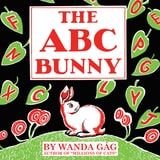
The ABC Bunny
Wanda Gág
University of Minnesota Press, 0
A Newbery Honor Book (1934)
An unfortunate accident with an Apple drives Bunny from Bunnyland to Elsewhere. Every letter in the alphabet is represented in Bunny’s journey, through what he eats (Greens), to whom he meets (Insects, Jay, Kitten, Lizard), and then a little sleep (Nap), to Tripping back to town, right side Up and Up-side-down.
The creation of The ABC Bunny was a Gág family affair, with sister Flavia composing the “ABC Song,” included in this faithful edition; brother Howard penning the lettering; and Wanda writing and illustrating the story.
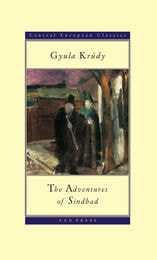
The Adventures of Sindbad
Gyula Krúdy
Central European University Press, 1998
In these marvellously written tales, Sindbad, a voyager in the realms of memory and imagination, travels through the centuries in pursuit of an ideal of love that is directed as much at the feminine essence as at his individual lovers. He is by nature a melancholy sensualist, but whether the women he seduces and loves are projections of his desire, or he of theirs, is a moot question.
These short stories flow without a strict narrative framework Sindbad journeys between the past and the present and is merely a ghost in many of his adventures. Although Sindbad can move through time, it is time that proves his chief enemy, and youth that remains his real love. This deeply autumnal book, full of resonances and associations, is an erotic elegy to the dying Habsburg Empire.
The stories are taken from the omnibus triple-volume Hungarian edition published as The Three Books of Sindbad in Hungary in 1944, which includes The Travels of Sindbad (1912), The Resurrection of Sindbad (1916), and The Youth and Grief of Sindbad (1917).

The Aeneid
Virgil
University of Chicago Press, 2017
The paperback and e-book editions include a new introduction by Richard F. Thomas, along with a new glossary of names that makes the book even more accessible for students and for general readers coming to the Aeneid for the first time who may need help acclimating to Virgil’s world.
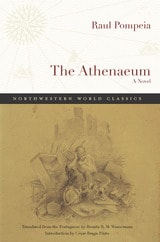
The Athenaeum
A NovelRaul Pompeia, Translated from the Portuguese by Renata R. M. Wasserman with an Introduction by César Braga-Pinto
Northwestern University Press, 2015
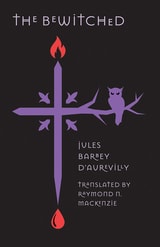
The Bewitched
Jules Barbey d’Aurevilly
University of Minnesota Press, 2026
A haunting, resonant novel of passion and betrayal—in its first English translation since 1928
“When we bring true passions into our works, we don’t fear the cries of the offended.” So declared Jules Barbey d’Aurevilly in 1853 as he prepared to publish The Bewitched in book form, restoring the sections that were unceremoniously deleted from its serialized release by an editor who deemed them too explicit, irreverent, and inflammatory. Newly translated into English for modern readers, The Bewitched is a beguiling tale of politics, obsession, and horror set against the backdrop of Normandy in postrevolutionary France.
Late at night in a foggy moor, the far clock tower rends the still air to mark the midnight hour. As the darkness settles back into silence, another bell rings out, slow and somber, calling all who hear it to the abbé de La Croix-Jugan’s Mass of the Dead. Returned to the priesthood in shame after breaking his vows by shedding blood in battle and attempting suicide in defeat, the disfigured man enthralls the inhabitants of this small village. Before long, a young married woman becomes infatuated with the enigmatic priest, and their fates are irrevocably intertwined. When she succumbs to despair over her unrequited love, her husband is consumed by jealousy and vows revenge.
Layering stories within stories and continually shifting points of view, Barbey d’Aurevilly engages a mosaic of narrators to depict the era’s tensions between the aristocracy, the peasant class, and the church. Raymond N. MacKenzie’s lively translation is accompanied by his detailed introduction and notes that ground the novel in its historical, political, and literary contexts. A classic of French Gothic literature, The Bewitched blends religious transgression, satanic possession, and political upheaval into a fatal love story that is as gripping now as it was nearly two centuries ago.
Retail e-book files for this title are screen-reader friendly.
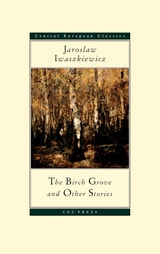
The Birch Grove and Other Stories
Jaroslaw Iwaszkiewicz
Central European University Press, 2002
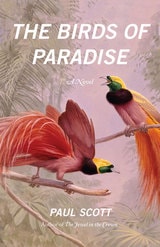
The Birds of Paradise
A NovelPaul Scott
University of Chicago Press, 2013

The Bombardment of Åbo
A Novella Based on a Historical Event in Modern TimesCarl Spitteler
Central European University Press, 2022
This farcical tale tells how the British bombing of a Finnish port city changes the life of the Russian governor, his wife, their cook, and the cook's Finnish fiancé. The story takes place during a Nordic offshoot of the Crimean conflict, known as the Åland War, in which a British-French naval force attacked military and civilian facilities on the coast of the Grand Duchy of Finland in 1854–1856. The location of the novella is Åbo, today’s Turku, where soldiers in the Russian garrison enjoy life, Cossacks dance and drink, and the governor’s wife is preoccupied about her cook’s marriage to a local lad, against which the governor and the English admiral devise a plot.
After studies in Swiss and German universities, Carl Spitteler worked in Russia between 1871 and 1879 as the private tutor in the family of a Finnish general. In the process he came to know Finnish and Baltic noble families in Saint Petersburg and Finland. He published this story in 1889, and went on to become, in 1919, the first Swiss winner of the Nobel Prize for literature. The Bombardment of Åbo is an ironic Western gaze on life and culture in the Tsarist Empire. Spitteler’s deeply held pacifism breaks through his otherwise sarcastic description of the characters and episodes in the novella.
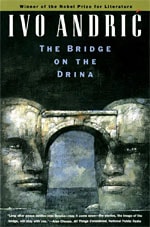
The Bridge on the Drina
Ivo Andric
University of Chicago Press, 1977
Internationally acclaimed since its original publication just after World War II, The Bridge on the Drina is a vivid historical novel that uses the Mehmed Paša Sokolović Bridge as the centerpiece of the story of Bosnia and its people from the late sixteenth century to the beginning of World War I. As we seek to make sense of the current nightmare in this region, this remarkable, timely book serves as a reliable guide to its people and history. Through powerful stories of the people who make history—and the people suffer under those who do—Ivo Andric traces the story of the Bosnian people from the Ottoman Empire through the domination of Austria-Hungary and into the rising tide of competing nationalist ideologies that set the stage for the tragedy of World War I.
Written while Andric was under house arrest during the Nazi occupation, The Bridge on the Drina is as gripping as a soap opera, bringing history down to the level of compelling individual lives and experiences. It is one of the landmark works of twentieth-century literature, as powerful today as it ever was.

The Bureaucrats
Honore De Balzac
Northwestern University Press, 1993
The novel contains the recognizable themes of Balzac's work: obsessive ambition, conspiracy and human pettiness, and a melodramatic struggle between the social good and the evils of folly and stupidity. It is also an unusual, dramatized analysis of a developing political institution and its role in shaping social class and mentality.

The Centenary Edition of the Works of Nathaniel Hawthorne
VOL. X, MOSSES FROM AN OLD MANSENathaniel Hawthorne
The Ohio State University Press, 1974
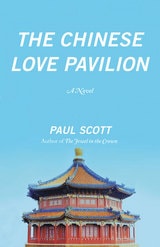
The Chinese Love Pavilion
A NovelPaul Scott
University of Chicago Press, 2013
The Chinese Love Pavilion follows a young British clerk, Tom Brent, who must track down a former friend—now suspected of murder—in Malaya. Tom faces great danger, both from the mysterious Malayan jungles and the political tensions between British officers, but the novel is perhaps most memorable for the strange, beautiful romance between Tom and a protean Eurasian beauty whom he meets in the eponymous Chinese Love Pavilion.
The Confidence-Man
His MasqueradeHerman Melville
Northwestern University Press, 2002
This scholarly edition includes a Historical Note offering a detailed account of the novel's composition, publication, reception, and subsequent critical history. In addition the editors present the twenty-six surviving manuscript leaves and scraps with full transcriptions and analytical commentary.
This scholarly edition aims to present a text as close to the author's intention as surviving evidence permits. Based on collations of both editions publishing during Melville's lifetime, it incorporates 138 emendations made by the present editors. It is an Approved Text of the Center for Editions of American Authors (Modern Language Association of America).
The Confidence-Man
Volume Ten, Scholarly EditionHerman Melville
Northwestern University Press, 1984
This scholarly edition includes a Historical Note offering a detailed account of the novel's composition, publication, reception, and subsequent critical history. In addition the editors present the twenty-six surviving manuscript leaves and scraps with full transcriptions and analytical commentary.
This scholarly edition aims to present a text as close to the author's intention as surviving evidence permits. Based on collations of both editions publishing during Melville's lifetime, it incorporates 138 emendations made by the present editors. It is an Approved Text of the Center for Editions of American Authors (Modern Language Association of America).
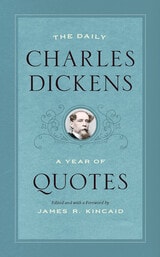
The Daily Charles Dickens
A Year of QuotesCharles Dickens
University of Chicago Press, 2018
A bedside companion to dip into year round, this book introduces each month with a longer seasonal quote, while concise bits of wisdom and whimsy mark each day. Hopping gleefully from Esther Summerson’s abandonment by her mother in Bleak House to a meditation on the difficult posture of letter-writing in The Pickwick Papers, this anthology displays the wide range of Dickens’s stylistic virtuosity—his humor and his deep tragic sense, his ear for repetition, and his genius at all sorts of voices. Even the devotee will find between these pages a mix of old friends and strangers—from Oliver Twist and Ebenezer Scrooge to the likes of Lord Coodle, Sir Thomas Doodle, Mrs. Todgers, and Edwin Drood—as well as a delightful assortment of the some of the novelist’s most famous, peculiar, witty, and incisive passages, tailored to fit the season. To give one particularly apt example: David Copperfield blunders, in a letter of apology to Agnes Wickfield, “I began one note, in a six-syllable line, ‘Oh, do not remember’—but that associated itself with the fifth of November, and became an absurdity.”
Never Pecksniffian or Gradgrindish, this daily dose of Dickens crystallizes the novelist’s agile humor and his reformist zeal alike. This is a book to accompany you through the best of times and the worst of times.
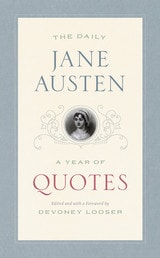
The Daily Jane Austen
A Year of QuotesJane Austen
University of Chicago Press, 2019
Devoney Looser, a.k.a. Stone Cold Jane Austen, has drawn 378 genuine, Austen-authored passages from across the canon, resulting in an anthology that is compulsively readable and repeatable. Whether you approach the collection on a one-a-day model or in a satisfying binge read, you will emerge wiser about Austen, if not about life. The Daily Jane Austen will amuse and inspire skeptical beginners, Janeite experts, and every reader in between by showcasing some of the greatest sentences ever crafted in the history of fiction.
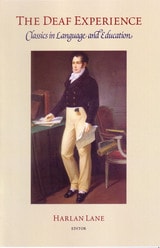
The Deaf Experience
Classics in Language and EducationHarlan Lane
Gallaudet University Press, 2006
The fifth volume in the Gallaudet Classics in Deaf Studies series features works written from 1764 up to1840. Pierre Desloges offers a stirring paean to sign language in an excerpt from his book, the first ever published by a deaf person. Saboureux de Fontenay and Jean Massieu, two prominent leaders, relate their respective experiences in autobiographical accounts. In separate essays, Charles-Michel de l’Epée and Roch-Ambroise Sicard describe systems for teaching manual French, followed by a critique of these methods by Roch-Ambroise Bébian, a well-known hearing friend of Deaf people during that era. Ferdinand Berthier, a renowned Deaf teacher and writer in the 19th century, concludes with a history of Deaf people up to that time.
The Deaf Experience shows clearly how this extraordinary era of French deaf education influenced the adoption of the manual method by the first schools for deaf students in America, in sharp contrast to the oral movement that repressed sign-language-centered education for nearly a century afterward. Deaf studies scholars and students alike will welcome the return of this invaluable resource.

The Doll
Boleslaw Prus
Central European University Press, 1997
The city of Warsaw, under Russian rule in the late 1870s, is the setting for this story. The middle-aged hero, Wokulski, bold and successful in business, is being destroyed by his obsessive love for the frigid, aristocratic society ‘doll’ Izabela. The embattled aristocracy, the new men of finance, Dickensian tradesmen and the urban poor all come vividly to life on the vast, superbly detailed canvas.
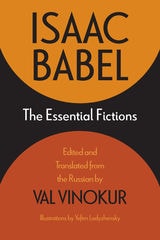
The Essential Fictions
Isaac Babel; Edited and translated from the Russian by Val Vinokur; Illustrations by Yefim Ladyzhensky
Northwestern University Press, 2018
Babel was born in 1894 into multicultural Odessa’s thriving Jewish community. Working as a journalist, he witnessed the Bolshevik Revolution and Civil War, and accompanied the Cossack horsemen of the Red Cavalry during the 1920 Polish-Soviet War, distilling these experiences into his fiction. Vinokur highlights Babel’s “horrified hopefulness” and “doleful and bespectacled Jewish comedy” in the face of the bloody conflicts that plagued his generation.
On the centenary of the revolution that toppled the Romanov tsars, Babel’s fictions continue to absorb and fascinate contemporary readers interested in eastern European and Jewish literature as well as the history and politics of the twentieth century.
The Farther Adventures of Robinson Crusoe
The Stoke Newington EditionMaximillian E. Novak
Bucknell University Press, 2022
Published by Bucknell University Press. Distributed worldwide by Rutgers University Press.

The Hidden Hand
Or, Capitola the Madcap by E. D. E. N. SouthworthDobson, Joanne
Rutgers University Press, 1988
E.D.E.N. Southworth was one of the most popular and prolific writers of the nineteenth century and her Capitola Black, or Black Cap - a cross-dressing, adventure-seeking girl-woman - was so well-loved that the book was serialized three times between 1859 and 1888 and was dramatized in forty different versions.
When we first meet sharp and witty Capitola she is living among beggars and street urchins, and dressed as a boy because a boy can get work and be safe, whereas a girl is left to starve for want of "proper" employment. Unknown to her, Capitola has a very rich elderly guardian who finds her at a providential moment and takes her back to his palatial mansion where she finds herself "decomposing above ground for want of having my blood stirred." But not to fear. There are bandits, true-loves, evil men, long-lost mothers, and sweet women friends in Capitola's future - not to mention thunder storms, kidnap attempts, and duels.
The pace is fast, the action wonderfully unbelievable. This is escape literature at its nineteenth-century best, with a woman at its center who makes you feel strong, daring, and reckless.
The Life and Strange Surprizing Adventures of Robinson Crusoe
The Stoke Newington EditionDaniel Defoe
Bucknell University Press, 2019
Published by Bucknell University Press. Distributed worldwide by Rutgers University Press.

The Mahabharata, Volume 8
Book 12, The Book of Peace, Part 2Translated and Edited by James L. Fitzgerald
University of Chicago Press, 2026
A remarkable composition of 100,000 couplets, The Mahābhārata is the second-longest poem in world literature. In this volume, James L. Fitzgerald completes his translation of the twelfth of The Mahābhārata’s eighteen books, the vast Shanti Parvan, or The Book of Peace. Covering a wide range of ancient Indian intellectual history, The Book of Peace was intended to serve as a comprehensive, brahmin-inspired basis for living a Good Life in a Good Society in a Good Polity and is one of the most important and complex books of the poem.
Fitzgerald’s previous contribution to the Chicago edition of The Mahābhārata, volume 7, opened with Book 11, The Book of the Women, which movingly portrayed the grief of the wives, mothers, and sisters of the many warriors slain in the epic’s central war narrative. The crises of grief presented in The Book of the Women give particular poignancy and depth to the shanti, or pacification, that is the theme of Book 12, The Book of Peace. Volume 7 included the first half of The Book of Peace, and volume 8 now completes it with the second half, which is focused particularly on the ways people can escape the cycle of rebirth and realize sublime beatitude by way of saving knowledge or yoga meditation or devotion to God Viṣṇu-Nārāyaṇa. Supported by an extensive introduction and notes, this publication will be greeted as a major event in Sanskrit studies.
The Mahabharata
A Shortened Modern Prose Version of the Indian EpicR. K. Narayan
University of Chicago Press, 2013
Centuries of listeners and readers have been drawn to The Mahabharata, which began as disparate oral ballads and grew into a sprawling epic. The modern version is famously long, and at more than 1.8 million words—seven times the combined lengths of the Iliad and Odyssey—it can be incredibly daunting.
Contemporary readers have a much more accessible entry point to this important work, thanks to R. K. Narayan’s masterful translation and abridgement of the poem. Now with a new foreword by Wendy Doniger, as well as a concise character and place guide and a family tree, The Mahabharata is ready for a new generation of readers. As Wendy Doniger explains in the foreword, “Narayan tells the stories so well because they’re all his stories.” He grew up hearing them, internalizing their mythology, which gave him an innate ability to choose the right passages and their best translations.
In this elegant translation, Narayan ably distills a tale that is both traditional and constantly changing. He draws from both scholarly analysis and creative interpretation and vividly fuses the spiritual with the secular. Through this balance he has produced a translation that is not only clear, but graceful, one that stands as its own story as much as an adaptation of a larger work.
The Mirror of the Sea
Joseph Conrad
Northwestern University Press, 1988

The Monkey and the Monk
An Abridgment of The Journey to the WestTranslated by Anthony C. Yu
University of Chicago Press, 2006
A compact abridgment of the legendary Chinese classic that inspired the hit game Black Myth: Wukong!
Anthony C. Yu’s celebrated translation of The Journey to the West reinvigorated one of Chinese literature’s most beloved classics for English-speaking audiences when it first appeared thirty years ago. Yu’s abridgment of his four-volume translation, The Monkey and the Monk, finally distills the epic novel’s most exciting and meaningful episodes without taking anything away from their true spirit.
These fantastic episodes recount the adventures of Xuanzang, a seventh-century monk who became one of China’s most illustrious religious heroes after traveling for sixteen years in search of Buddhist scriptures. Powerfully combining religious allegory with humor, fantasy, and satire, accounts of Xuanzang’s journey were passed down for a millennium before culminating in the sixteenth century with The Journey to the West. Now, readers of The Monkey and the Monk can experience the full force of his lengthy quest as he travels to India with four animal disciples, most significant among them a guardian-monkey known as “the Great Sage, Equal to Heaven.” Moreover, in its newly streamlined form, this acclaimed translation of a seminal work of world literature is sure to attract an entirely new following of students and fans.
“A new translation of a major literary text which totally supersedes the best existing version. . . . It establishes beyond contention the position of The Journey to the West in world literature, while at the same time throwing open wide the doors to interpretive study on the part of the English audience.”—Modern Language Notes, on the unabridged translation
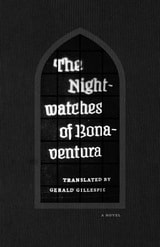
The Nightwatches of Bonaventura
Bonaventura
University of Chicago Press, 2014
Since its publication, fans have speculated on the novel’s authorship, and it is now believed to be by theater director August Klingemann, who first staged Goethe’s Faust. Organized into sixteen separate nightwatches, the sordid scenes glimpsed through parted curtains, framed by door chinks, and lit by candles and shadows anticipate the cinematic. A cross between the gothic and the romantic, The Nightwatches of Bonaventura is brilliant in its perverse intensity, presenting an inventory of human despair and disgust through the eyes of a bitter, sardonic watcher who draws laughter from tragedy.
Translated by Gerald Gillespie, who supplies a fresh introduction, The Nightwatches of Bonaventura will be welcomed by a new generation of English-language fans eager to sample the night’s dark offerings.

The Piazza Tales and Other Prose Pieces, 1839-1860
Volume Nine, Scholarly EditionHerman Melville
Northwestern University Press, 1987
This scholarly edition presents texts as close to the author's intentions as surviving evidence permits. Based on surviving manuscripts, on original newspaper and magazine printings, and on collations of magazine printings with the book of editions of The Piazza Tales, the text incorporates over 800 emendations by the editors and over 200 from later printings during Melville's lifetime.
This edition is an Approved Text of the Center for Editions of American Authors (Modern Language Association of America).
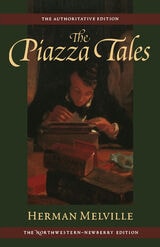
The Piazza Tales
Volume NineHerman Melville
Northwestern University Press, 1996
This scholarly edition presents texts as close to the author's intentions as surviving evidence permits. Based on surviving manuscripts, on original newspaper and magazine printings, and on collations of magazine printings with the book of editions of The Piazza Tales, the text incorporates over 800 emendations by the editors and over 200 from later printings during Melville's lifetime.
This edition is an Approved Text of the Center for Editions of American Authors (Modern Language Association of America).
The Poet and the Idiot
Friedebert Tuglas
Central European University Press, 2007
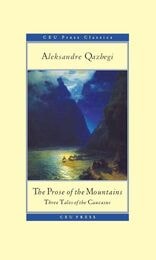
The Prose of the Mountains
Three Tales of the CaucasusAleksandre Qazbegi
Central European University Press, 2015
The Prose of the Mountains contains three tales of the Caucasus by Aleksandre Qazbegi, one of the most prescient and gifted chroniclers of the Georgian encounter with colonial modernity. His stories offer an invaluable counterpoint to the predominantly Russian narratives that have hitherto shaped scholarly accounts of the nineteenth-century Caucasus. “Memoirs of a Shepherd” poignantly chronicles the young author’s decision to pass seven years of his life as a shepherd with Georgian mountaineers. “Eliso” (the name of a Chechen girl) offers one of the most searing accounts on record of the forced migration of this people from their homeland to Ottoman lands. Set in the sixteenth century, “Khevis Beri Gocha” (the name of a Georgian village chief) classically chronicles a tragic misunderstanding between a severe father and his loving son.
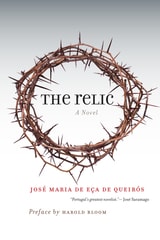
The Relic
A NovelJosé Maria De Eça De Queirós
Tagus Press, 2012
The Relic is an irreverent fictional autobiography narrating the picaresque adventures of Teodorico, a Portuguese playboy determined to be the sole heir of his absurdly pious, sexually repressed, and tyrannical Auntie. Sent to the Holy Land, he returns with what he presumes is the “relic of relics” in hopes of persuading Auntie to bequeath her vast fortune to him. While in Jerusalem, Teodorico has a vision in which he witnesses Christ's trial and crucifixion and the founding of Christianity—with a twist.
The Snobs of England and Punch's Prize Novelists
William Makepeace Thackeray
University of Michigan Press, 2005
This volume of The Snobs of England and Punch's Prize Novelists is an addition to The Thackeray Edition collection, the first full-scale scholarly edition of William Makepeace Thackeray's works to appear in over seventy years, and the only one ever to be based on an examination of manuscripts and relevant printed texts. It is also a concrete attempt to put into practice a theory of scholarly editing that gives new insight into Thackeray's own compositional process. In The Snobs of England, a series of amusing satirical sketches, Thackeray provides a panoramic awareness of the many varieties of human folly, identifying snobbery not as a social attitude but as the unworthy admiration of foolish things. Punch's Prize Novelists presents a series of illustrated burlesque parodies of Thackeray's contemporary writers, including Edward Bulwer, Benjamin Disraeli, Mrs. Catherine Gore, G.P.R. James, Charles Lever, and James Fenimore Cooper. The works are edited here from a comparative study of all relevant documents: from the first published appearances to the last editions touched by the author.
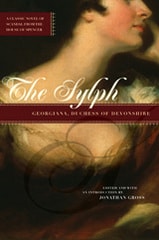
The Sylph
Georgiana, Duchess of Devonshire
Northwestern University Press, 2007
This ranging epistolary novel follows Julia Grenville, a Welsh beauty who knows little of the world until her marriage to the older Lord Stanley. Through Julia’s letters to her sister, readers learn more of Julia’s new life in London—her unfaithful husband, her miscarriage, her disillusionment with the city and its fashions. Other letters reveal that Julia has a longtime admirer, Harry Woodley, from her former life, as well as a mysterious guardian angel: her Sylph. This character guides Julia away from the depravities of her life in London, including her gambling problem. The Sylph is also another sympathetic ear to Julia’s increasing marital dissatisfaction and growing affinity for another man, the Baron Ton-hausen. As Julia nearly falls prey to the overzealous admirations of one of her husband’s associates, her husband is consumed by gambling debts to that same associate. She is shocked to discover the depths of her husband’s ruin and plans to flee to Wales before she too can be claimed in payment. Her disgraced husband takes the ultimate way out and Julia goes home to her father and sister in Wales. Her Sylph is not far behind, however, and soon reveals himself to Julia to be more than she could have ever imagined.
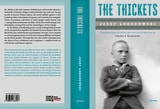
The Thickets
Józef Lobodowski
Central European University Press, 2026
In The Thickets, Lobodowski paints a stark, unforgettable portrait of the turmoil that engulfed the former Russian Empire after the fall of the Tsar and Kerensky’s government. For Stas, once a student at a classical gymnasium, survival now means peddling contraband on the black market. Through his eyes, the reader is plunged into the chaos of war, revolution, and occupation—rendered with visceral power and human urgency.

The Tower
and other storiesJanis Ezerins
Central European University Press, 2012

The Wife of Martin Guerre
Janet Lewis
Ohio University Press, 1967
In this new edition of Janet Lewis’s classic short novel, The Wife of Martin Guerre, Swallow Press executive editor Kevin Haworth writes that Lewis’s story is “a short novel of astonishing depth and resonance, a sharply drawn historical tale that asks contemporary questions about identity and belonging, about men and women, and about an individual’s capacity to act within an inflexible system.” Originally published in 1941, The Wife of Martin Guerre has earned the respect and admiration of critics and readers for over sixty years.
Based on a notorious trial in sixteenth-century France, this story of Bertrande de Rols is the first of three novels making up Lewis’s Cases of Circumstantial Evidence suite (the other two are The Trial of Sören Qvist and The Ghost of Monsieur Scarron).
Swallow Press is delighted and honored to offer readers beautiful new editions of all three Cases of Circumstantial Evidence novels, each featuring a new introduction by Kevin Haworth.
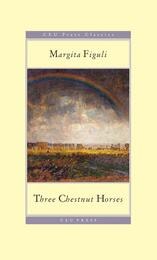
Three Chestnut Horses
Margita Figuli
Central European University Press, 2014

Trixy
A NovelElizabeth Stuart Phelps, Edited and with an introduction by Emily E. VanDette
Northwestern University Press, 2019
Trixy is a 1904 novel by the best-selling but largely forgotten American author and women’s rights activist Elizabeth Stuart Phelps. The book decries the then common practice of vivisection, or scientific experiments on live animals. In Trixy, contemporary readers can trace the roots of the early animal rights movement in Phelps’s influential campaign to introduce legislation to regulate or end this practice. Phelps not only presents a narrative polemic against the cruelty of vivisection but argues that training young doctors in it makes them bad physicians. Emily E. VanDette’s introduction demonstrates that Phelps’s protest writing, which included fiction, pamphlets, essays, and speeches, was well ahead of its time.
Though not well known today, Phelps’s 1868 spiritualist novel, The Gates Ajar, which offered a comforting view of the afterlife to readers traumatized by the Civil War, was the century’s second best-selling American novel, surpassed only by Uncle Tom’s Cabin. Recently scholars and readers have begun to reexamine Phelps’s significance. As contemporary authors, including Peter Singer, Jonathan Safran Foer, Donna J. Haraway, Gary L. Francione, and Carol J. Adams, have extended her vision, they have also created new audiences for her work.
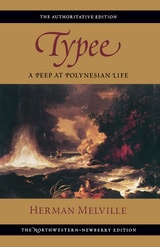
Typee
A Peep at Polynesian LifeHerman Melville
Northwestern University Press, 2003
This scholarly edition is based on collations of all editions published during his lifetime, incorporating many authorial readings that have often been omitted and some that have been misprinted in all previous editions. This edition is an Approved Text of the Center for Editions of American Authors (Modern Language Association of America).
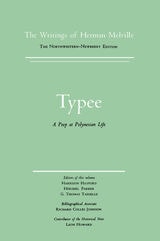
Typee
Volume One, Scholarly EditionHerman Melville
Northwestern University Press, 1968
This scholarly edition is based on collations of all editions published during his lifetime, incorporating many authorial readings that have often been omitted and some that have been misprinted in all previous editions. This edition is an Approved Text of the Center for Editions of American Authors (Modern Language Association of America).