Results by title
527 books match the query 'Translations into English' and 139 start with t
Tales and Trials of Love, Concerning Venus’s Punishment of Those Who Scorn True Love and Denounce Cupid’s Sovereignty
A Bilingual Edition and StudyJeanne Flore
Iter Press, 2014
Tales from the Kingdom of Lailonia and The Key to Heaven
Leszek Kolakowski
University of Chicago Press, 1989
Tales of Dionysus
The Dionysiaca of Nonnus of PanopolisEdited by William Levitan and Stanley Lombardo
University of Michigan Press, 2022
Tales of Dionysus is the first English verse translation of one of the most extraordinary poems of the Greek literary tradition, the Dionysiaca of Nonnus of Panopolis. By any standard, the Dionysiaca is a formidable work. It is by far the longest poem surviving from the classical world, a massive mythological epic stretching to over 20,000 lines, written in the tradition of Homer, using Homer’s verse, Homer’s language, his narrative turns and motifs, and invoking his ancient Muses. But it is also the last ancient epic to follow a Homeric model, composed so late in fact that it stands as close in time to the Renaissance as it does to archaic Greece. Like its titular hero, Dionysus, with his fluidity of forms, names, and divine incarnations, the poem itself is continually shifting shape. Out of its formal epic frame spills a tumult of ancient literary types: tragedy, elegy, didactic, panegyric, pastoral idyll, and the novel are all parts of this gigantic enterprise, each genre coming to the fore one after the other.
Tales of Dionysus brings together forty-two translators from a wide range of backgrounds, with different experiences and different potential relationships to the text of Nonnus’ poem. All work in their own styles and with their own individual approaches to the poem, to translation, and to poetic form. This variety turns Tales of Dionysus into a showcase of the multiple possibilities open to classical translation in the contemporary world.
Tales of E. T. A. Hoffmann
E. T. A. Hoffmann
University of Chicago Press, 1972
"The editors have made an excellent selection, and the result is a book of great distinction."—Denis Donoghue, New York Review of Books
"The translators have proved fully equal to all the challenges of Hoffmann's romantic irony and his richly allusive prose, giving us an accurate and idiomatic rendering that also retains much of the original flavor."—Harry Zohn, Saturday Review
Tales of Times Now Past
Sixty-Two Stories from a Medieval Japanese CollectionMarian Ury
University of Michigan Press, 1993
Tales of Trilussa
Carlo Albert Salustri
University of Arkansas Press, 1990
Testaments
Two Novellas of Emigration and ExileDanuta Mostwin
Ohio University Press, 2005
Translated from Polish by Marta Erdman and Nina Dyke.
Polish émigrés have written poignantly about the pain of exile in letters, diaries, and essays; others, more recently, have recreated Polish-American communities in works of fiction. But it is Danuta Mostwin’s fiction, until now unavailable in English translation, that bridges the divide between Poland and America, exile and emigration.
Mostwin and her husband survived the ravages of World War II, traveled to Britain, and then emigrated to the United States. Mostwin devoted her scholarly career to the study of immigrants trapped between cultural worlds. Winner of international awards for her fiction, Danuta Mostwin here offers two novellas, translated by the late Marta Erdman, which are the first of her works published in English in the United States.
Deeply melancholic and moving in its unsentimental depiction of ordinary people trying to make sense of their uprooted lives, Testaments presents two powerful vignettes of life in immigrant America, The Last Will of Blaise Twardowski and Jocasta. This timely publication provides an introduction to Mostwin’s work that will ensure that she is recognized as the creator of one of the most nuanced and deeply moving pictures of emigration and exile in Polish-American literature.
Texts from the Pyramid Age
Nigel C. Strudwick
SBL Press, 2005
Textual Sources for the Study of Hinduism
Edited by Wendy Doniger O'Flaherty
University of Chicago Press, 1990
The Academic Sermons (The Fathers of the Church, Mediaeval Continuation, Volume 11)
Thomas Aquinas
Catholic University of America Press, 2010
The Aeneid
Virgil
University of Chicago Press, 2017
The paperback and e-book editions include a new introduction by Richard F. Thomas, along with a new glossary of names that makes the book even more accessible for students and for general readers coming to the Aeneid for the first time who may need help acclimating to Virgil’s world.
The Aeneid of Virgil
Virgil
University of Michigan Press, 1995
In this new translation Edward McCrorie has performed the difficult task of rendering Virgil's compact, dense Latin into fine, readable, modern English verse. The sometimes complex text is made clear and comprehensible even for first-time readers, and a glossary of names helps identify characters and place-names in the poem. The translation is well suited for students at all levels, and readers already familiar with Virgil will find many fresh images and ideas.
"A brilliant effort."--Robert Bly
"I admire the ambition of the project, and the generosity of many of the lines."--Robert Fagles
Edward McCrorie is Professor of English, Providence College. His poetry and translations of Latin verse have been widely published.
The Americas' First Sermons
The Nahuatl Sermonary of Fray Bernardino de SahagúnTranslation and Introduction study by Ben Leeming
University of Utah Press, 2025
The Americas’ First Sermons presents the first English translation and critical study of the complete set of sermons composed by Franciscan friar Bernardino de Sahagún and his Nahua students at the Imperial College of Santa Cruz in Tlatelolco, Mexico in 1540. The volume represents a crucial moment in the cultural exchange between European and Indigenous civilizations in sixteenth-century colonial Mexico.
With the collaboration of Mario Alberto Sánchez Aguilera, this edition offers unprecedented access to the collaboration between European friars and Nahua scholars in translating Christian concepts into Native languages. It captures Sahagún’s evolving methods across three phases (1530s–1560s) through his extensive annotations, bridging the divide between his ethnographic and doctrinal works. Unique in its analysis of both text and manuscript features—such as rare maguey paper—it highlights Indigenous intellectual contributions at the Colegio de Santa Cruz. This translation provides essential insights into early colonial religious negotiations and makes previously inaccessible material available to scholars across multiple disciplines.

The Anchor’s Long Chain
Yves Bonnefoy
Seagull Books, 2015
Yves Bonnefoy has wowed the literary world for decades with his diffuse volumes. First published in France in 2008, The Anchor’s Long Chain is an indispensable addition to his oeuvre. Enriching Bonnefoy’s earlier work, the volume, translated by Beverley Bie Brahic, also innovates, including an unprecedented sequence of nineteen sonnets. These sonnets combine the strictness of the form with the freedom to vary line length and create evocative fragments. Compressed, emotionally powerful, and allusive, the poems are also autobiographical—but only in glimpses. Throughout, Bonnefoy conjures up life’s eternal questions with each new poem.
Longer, discursive pieces, including the title poem’s meditation on a prehistoric stone circle and a legend about a ship, are also part of this volume, as are a number of poetic prose pieces in which Bonnefoy, like several of his great French predecessors, excels. Long-time fans will find much to praise here, while newer readers will quickly find themselves under the spell of Bonnefoy’s powerful, discursive poetry.
The Ancient Egyptian Netherworld Books
John Coleman Darnell
SBL Press, 2018
The first, complete English translation of the ancient Egyptian Netherworld Books
The ancient Egyptian Netherworld Books, important compositions that decorated the New Kingdom royal tombs in the Valley of the Kings, present humanity's oldest surviving attempts to provide a scientific map of the unseen realms beyond the visible cosmos and contain imagery and annotations that represent ancient Egyptian speculation (essentially philosophical and theological) about the events of the solar journey through the twelve hours of the night. The Netherworld Books describe one of the central mysteries of Egyptian religious belief—the union of the solar god Re with the underworldly god Osiris—and provide information on aspects of Egyptian theology and cosmography not present in the now more widely read Book of the Dead. Numerous illustrations provide overview images and individual scenes from each Netherworld Book, emphasizing the unity of text and image within the compositions. The major texts translated include the Book of Adoring Re in the West (the Litany of Re), the Book of the Hidden Chamber (Amduat), the Book of Gates, the Book of Caverns, the Books of the Creation of the Solar Disk, and the Books of the Solar-Osirian Unity.
Features:
- Accessible presentations of the main concepts of the Netherworld Books and the chief features of each text
- Notes and commentary address major theological themes within the texts as well as lexicographic and/or grammatical issues
- An overview of later uses of these compositions during the first millennium BCE
The Ancient Egyptian Pyramid Texts
James P. Allen
SBL Press, 2005
The Ancient Egyptian Pyramid Texts, Second Edition
James P. Allen
SBL Press, 2015
Completely revised and updated
James P. Allen provides a translation of the oldest corpus of ancient Egyptian religious texts from the six royal pyramids of the Fifth and Sixth Dynasties (ca. 2350–2150 BCE). Allen’s revisions take into account recent advances in the understanding of Egyptian grammar.
Features:
- Sequential translations based on all available sources, including texts newly discovered in the last decade
- Texts numbered according to the most widely used numbering system with new numbers from the latest 2013 concordance
- Translations reflect the primarily atemporal verbal system of Old Egyptian, which conveys the timeless quality that the text’s authors understood the texts to have
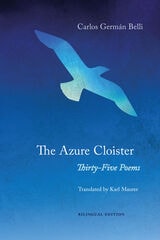
The Azure Cloister
Thirty-Five PoemsCarlos Germán Belli
Swan Isle Press, 2021
This selection of poems by internationally renowned Peruvian poet Carlos Germán Belli tempers a dark, ironic vision of worldly injustice with the “red midnight sun” of hope. Belli’s contemplative verses express faith in language, in bodily joy, and in artistic form. These thirty-five poems explore public and domestic spaces of confinement and freedom, from paralysis to the ease of a bird in its “azure cloister.”
Translations by Karl Maurer retain Belli’s original meter, follow his complex syntax, and meet the challenges of his poetic language, which ranges from colloquial Peruvian slang to the ironic use of seventeenth-century Spanish. This bilingual edition also includes notes and reflections on Belli and on the art of translation. Beyond introducing American readers to a major presence in world poetry, The Azure Cloister offers a fresh approach to the translation of contemporary verse in Spanish.

The Bamboo Grove
An Introduction to SijoRichard Rutt
University of Michigan Press, 1998
The popularity of the sijo in Korea--writers range from royalty to common citizens--is always a challenge for the translator, who must often inhabit widely differing backgrounds to completely understand a poem's subtle nuances. Richard Rutt's translations, considered to be some of the best available in English, remain true to the unique structure of the original Korean lyric.
The Bamboo Grove will interest not only poets and students of poetry, but scholars of Korean culture curious to view history through this important and significant form of verse.
The white snow has left the valleys where the clouds are lowering,
Is it true that somewhere the plum trees have happily blossomed?
I stand here alone in the dusk and do not know where to go.
YI SAEK (1328-1396)
Richard Rutt is also the editor and translator of the book Virtuous Women: Three Classic Korean Novels and, most recently, The Zhou Yi: A New Translation with Commentary of the Book of Changes. David R. McCann is Korea Foundation Professor of Korean Literature and Professor of East Asian Languages and Civilizations, Harvard University.

The Best of Rilke
72 Form-True Verse Translations with Facing Originals, Commentary, and Compact BiographyRainer Maria Rilke
Dartmouth College Press, 1991
The Birch Grove and Other Stories
Jaroslaw Iwaszkiewicz
Central European University Press, 2002
The Bitter Smell of Almonds
Arnost Lustig
Northwestern University Press, 2001
The Blueness of the Evening
Selected Poems of Hassan NajmiMbarek Sryfi
University of Arkansas Press, 2018
The Book of Korean Poetry
Songs of Shilla and KoryoKevin O'Rourke
University of Iowa Press, 2006
The Booke of Ovyde Named Methamorphose
William Caxton
Bodleian Library Publishing, 2013
The Censors
A Bilingual Selection of StoriesLuisa Valenzuela
Northwestern University Press, 1995
The Chreia and Ancient Rhetoric
Commentaries on Aphthonius's ProgymnasmataRonald F. Hock
SBL Press, 2012
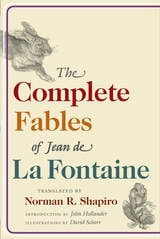
The Complete Fables of Jean de La Fontaine
Jean de La Fontaine
University of Illinois Press, 2007
Told in an elegant style, Jean de la Fontaine's (1621-95) charming animal fables depict sly foxes and scheming cats, vain birds and greedy wolves, all of which subtly express his penetrating insights into French society and the beasts found in all of us. Norman R. Shapiro has been translating La Fontaine's fables for over twenty years, capturing the original work's lively mix of plain and archaic language. This newly complete translation is destined to set the English standard for this work.
Awarded the Lewis Galantière Prize by the American Translators Association, 2008.

The Complete Greek Tragedies, Volume 1
AeschylusEdited by David Grene and Richmond Lattimore
University of Chicago Press, 1992
For the Centennial Edition two of the original translations have been replaced. In the original publication David Grene translated only one of the three Theban plays, Oedipus the King. Now he has added his own translations of the remaining two, Oedipus at Colonus and Antigone, thus bringing a new unity of tone and style to this group. Grene has also revised his earlier translation of Prometheus Bound and rendered some of the former prose sections in verse. These new translations replace the originals included in the paperback volumes Sophocles I (which contains all three Theban plays), Aeschylus II, Greek Tragedies, Volume I, and Greek Tragedies, Volume III, all of which are now being published in second editions.
All other volumes contain the translations of the tragedies of Aeschylus, Sophocles, and Euripides for the most part from the original versions first published in the 1940s and 1950s. These translations have been the choice of generations of teachers and students, selling in the past forty years over three million copies.
The Complete Greek Tragedies, Volume 2
SophoclesEdited by David Grene and Richmond Lattimore
University of Chicago Press, 1992
For the Centennial Edition two of the original translations have been replaced. In the original publication David Grene translated only one of the three Theban plays, Oedipus the King. Now he has added his own translations of the remaining two, Oedipus at Colonus and Antigone, thus bringing a new unity of tone and style to this group. Grene has also revised his earlier translation of Prometheus Bound and rendered some of the former prose sections in verse. These new translations replace the originals included in the paperback volumes Sophocles I (which contains all three Theban plays), Aeschylus II, Greek Tragedies, Volume I, and Greek Tragedies, Volume III, all of which are now being published in second editions.
All other volumes contain the translations of the tragedies of Aeschylus, Sophocles, and Euripides for the most part from the original versions first published in the 1940s and 1950s. These translations have been the choice of generations of teachers and students, selling in the past forty years over three million copies.
The Complete Greek Tragedies, Volume 3
EuripidesEdited by David Grene and Richmond Lattimore
University of Chicago Press, 1992
For the Centennial Edition two of the original translations have been replaced. In the original publication David Grene translated only one of the three Theban plays, Oedipus the King. Now he has added his own translations of the remaining two, Oedipus at Colonus and Antigone, thus bringing a new unity of tone and style to this group. Grene has also revised his earlier translation of Prometheus Bound and rendered some of the former prose sections in verse. These new translations replace the originals included in the paperback volumes Sophocles I (which contains all three Theban plays), Aeschylus II, Greek Tragedies, Volume I, and Greek Tragedies, Volume III, all of which are now being published in second editions.
All other volumes contain the translations of the tragedies of Aeschylus, Sophocles, and Euripides for the most part from the original versions first published in the 1940s and 1950s. These translations have been the choice of generations of teachers and students, selling in the past forty years over three million copies.
The Complete Greek Tragedies, Volume 4
EuripidesEdited by David Grene and Richmond Lattimore
University of Chicago Press, 1992
For the Centennial Edition two of the original translations have been replaced. In the original publication David Grene translated only one of the three Theban plays, Oedipus the King. Now he has added his own translations of the remaining two, Oedipus at Colonus and Antigone, thus bringing a new unity of tone and style to this group. Grene has also revised his earlier translation of Prometheus Bound and rendered some of the former prose sections in verse. These new translations replace the originals included in the paperback volumes Sophocles I (which contains all three Theban plays), Aeschylus II, Greek Tragedies, Volume I, and Greek Tragedies, Volume III, all of which are now being published in second editions.
All other volumes contain the translations of the tragedies of Aeschylus, Sophocles, and Euripides for the most part from the original versions first published in the 1940s and 1950s. These translations have been the choice of generations of teachers and students, selling in the past forty years over three million copies.
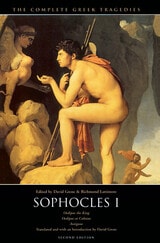
The Complete Greek Tragedies
Sophocles IEdited by David Grene
University of Chicago Press, 1991
"This is it. No qualifications. Go out and buy it everybody."—Kenneth Rexroth, The Nation
"The translations deliberately avoid the highly wrought and affectedly poetic; their idiom is contemporary....They have life and speed and suppleness of phrase."—Times Education Supplement
"These translations belong to our time. A keen poetic sensibility repeatedly quickens them; and without this inner fire the most academically flawless rendering is dead."—Warren D. Anderson, American Oxonian
"The critical commentaries and the versions themselves...are fresh, unpretentious, above all, functional."—Commonweal
"Grene is one of the great translators."—Conor Cruise O'Brien, London Sunday Times
"Richmond Lattimore is that rara avis in our age, the classical scholar who is at the same time an accomplished poet."—Dudley Fitts, New York Times Book Review
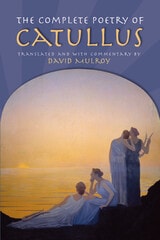
The Complete Poetry of Catullus
Catullus; Translated and with commentary by David Mulroy
University of Wisconsin Press, 2002
Catullus’ life was akin to pulp fiction. In Julius Caesar’s Rome, he engages in a stormy affair with a consul’s wife. He writes her passionate poems of love, hate, and jealousy. The consul, a vehement opponent of Caesar, dies under suspicious circumstances. The merry widow romances numerous young men. Catullus is drawn into politics and becomes a cocky critic of Caesar, writing poems that dub Julius a low-life pig and a pervert. Not surprisingly, soon after, no more is heard of Catullus.
David Mulroy brings to life the witty, poignant, and brutally direct voice of a flesh-and-blood man, a young provincial in the Eternal City, reacting to real people and events in a Rome full of violent conflict among individuals marked by genius and megalomaniacal passions. Mulroy’s lively, rhythmic translations of the poems are enhanced by an introduction and commentary that provide biographical and bibliographical information about Catullus, a history of his times, a discussion of the translations, and definitions and notes that ease the way for anyone who is not a Latin scholar.
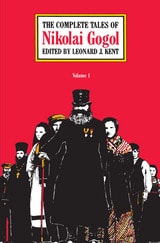
The Complete Tales of Nikolai Gogol, Volume 1
Nikolai Gogol
University of Chicago Press, 1985
The Complete Tales of Nikolai Gogol, Volume 2
Nikolai Gogol
University of Chicago Press, 1983
The Complete Tragedies, Volume 1
Medea, The Phoenician Women, Phaedra, The Trojan Women, OctaviaLucius Annaeus Seneca
University of Chicago Press, 2017
Edited by world-renowned classicists Elizabeth Asmis, Shadi Bartsch, and Martha C. Nussbaum, the Complete Works of Lucius Annaeus Seneca series offers authoritative, modern English translations of the writings of the Stoic philosopher and playwright (4 BCE–65 CE). The two volumes of The Complete Tragedies present all of his dramas, expertly rendered by preeminent scholars and translators.
This first volume contains Medea, The Phoenician Women, Phaedra, The Trojan Women, and Octavia, the last of which was written in emulation of Senecan tragedies and serves as a unique example of political tragedy. High standards of accuracy, clarity, and style are maintained throughout the translations, which render Seneca into verse with as close a correspondence, line for line, to the original as possible, and with special attention paid to meter and overall flow. In addition, each tragedy is prefaced by an original translator’s introduction offering reflections on the work’s context and meaning. Notes are provided for the reader unfamiliar with the culture and history of classical antiquity. Accordingly, The Complete Tragedies will be of use to a general audience and professionals alike, from the Latinless student to scholars and instructors of comparative literature, classics, philosophy, drama, and more.
The Complete Tragedies, Volume 2
Oedipus, Hercules Mad, Hercules on Oeta, Thyestes, AgamemnonLucius Annaeus Seneca
University of Chicago Press, 2017
Edited by world-renowned classicists Elizabeth Asmis, Shadi Bartsch, and Martha C. Nussbaum, the Complete Works of Lucius Annaeus Seneca offers authoritative, modern English translations of the writings of the Stoic philosopher and playwright (4 BCE–65 CE). The two volumes of The Complete Tragedies presents all of his dramas, expertly rendered by preeminent scholars and translators.
The first volume contains Medea, The Phoenician Women, Phaedra, The Trojan Women, and Octavia, the last of which was written in emulation of Senecan tragedies and serves as a unique example of political tragedy. This second volume includes Oedipus, Hercules Mad, Hercules on Oeta, Thyestes, and Agamemnon. High standards of accuracy, clarity, and style are maintained throughout the translations, which render Seneca into verse with as close a correspondence, line for line, to the original as possible, and with special attention paid to meter and overall flow. In addition, each tragedy is prefaced by an original translator’s introduction offering reflections on the work’s context and meaning. Notes are provided for the reader unfamiliar with the culture and history of classical antiquity. Accordingly, The Complete Tragedies will be of use to a general audience and professionals alike, from the Latinless student to scholars and instructors of comparative literature, classics, philosophy, drama, and more.
The Counterpunch (and Other Horizontal Poems)/El contragolpe (y otros poemas horizontales)
Juan Carlos Flores
University of Alabama Press, 2016
Mapping contemporary Cuba through the architecture of poetry and place.
Alamar, the home of award-winning Cuban poet Juan Carlos Flores, is the setting for his collection, The Counterpunch and Other Horizontal Poems) / El contragolpe (y otros poemas horizontales). Constructed as a self-help community in eastern Havana, Alamar is the largest housing complex in the world. Flores’s highly structured texts, organized into “art galleries,” present prose paintings of a big place in very small form.
Flores builds a poetic landscape with repeating structures that mirror Alamar’s five-floor walkups. Exploring life and dream on the flat surfaces of the poems, he gives fleeting glimpses of perception and survival at the urban margins. As the poet ages, so ages Alamar itself. Yet both find renewal through poetry.
The eighty poems in this bilingual edition offer the first English translation of a complete Flores collection. It will also be of interest to Spanish-language readers seeking access to Cuban literature abroad. Award-winning scholar and translator Kristin Dykstra has compiled an introduction in which she presents Flores, his literary contexts, and references in his poems. Because Flores made specific requests regarding translation, fascinating notes also clarify and expound on choices Dykstra makes in the English version.
The Crooked Mirror
Plays from a Modernist Russian CabaretEdited and translated from the Russian by Laurence Senelick
Northwestern University Press, 2023
“Don’t blame the mirror if your mug is crooked!”
Parody dominated early twentieth-century Russian cabaret, but the Crooked Mirror extended its lampooning to theatrical practice itself. Eclectic in its targets, the Saint Petersburg theater mocked not only naturalism but also symbolism, futurism, and “Meyerholditis.” Its shows parodied both the stale conventions of melodrama and opera and the stylized trends in staging, wielding satire to provoke artistic and social reform. Though the theater was liquidated in 1931, many of its innovations would become standard techniques in cabaret repertoires and improv revues.
As a cultural phenomenon of the Silver Age, the Crooked Mirror deserves critical attention, yet it has received only fleeting mention in histories of Russian theater and biographies of its major figures. This anthology fills a critical gap in our understanding of that heady era by bringing together key plays—most appearing in English here for the first time—together with short biographies of their authors and robust commentary and annotations. Laurence Senelick guides readers through the artistic and ideological evolution of the Crooked Mirror and provides performers with the material to bring its innovations back to the stage.
The Danton Case and Thermidor
Two PlaysStanislawa Przybyszewska
Northwestern University Press, 1989
The Death of Mr. Baltisberger
Bohumil Hrabal
Northwestern University Press, 2010
The Decapitated Chicken and Other Stories
By Horacio Quiroga
University of Texas Press, 1976
Tales of horror, madness, and death, tales of fantasy and morality: these are the works of South American master storyteller Horacio Quiroga. Author of some 200 pieces of fiction that have been compared to the works of Poe, Kipling, and Jack London, Quiroga experienced a life that surpassed in morbidity and horror many of the inventions of his fevered mind. As a young man, he suffered his father's accidental death and the suicide of his beloved stepfather. As a teenager, he shot and accidentally killed one of his closest friends. Seemingly cursed in love, he lost his first wife to suicide by poison. In the end, Quiroga himself downed cyanide to end his own life when he learned he was suffering from an incurable cancer.
In life Quiroga was obsessed with death, a legacy of the violence he had experienced. His stories are infused with death, too, but they span a wide range of short fiction genres: jungle tale, Gothic horror story, morality tale, psychological study. Many of his stories are set in the steaming jungle of the Misiones district of northern Argentina, where he spent much of his life, but his tales possess a universality that elevates them far above the work of a regional writer.
The first representative collection of his work in English, The Decapitated Chicken and Other Stories provides a valuable overview of the scope of Quiroga's fiction and the versatility and skill that have made him a classic Latin American writer.
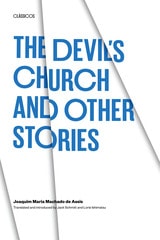
The Devil's Church and Other Stories
By Joaquim Maria Machado de Assis
University of Texas Press, 1977
The modem Brazilian short story begins with the mature work of Joaquim Maria Machado de Assis (1839-1908), acclaimed almost unanimously as Brazil's greatest writer. Collectively, these nineteen stories are representative of Machado's unique style and world view, and this translation doubles the number of his stories previously available in English.
The stories in this volume reflect Machado's post-1880 emphasis on social satire and experimentation in psychological realism. If he had continued to produce the moralistic love stories and parlor intrigues of his earlier fiction, Machado's legacy would have been an entertaining but inconsequent body of work. However, by 1880 he had begun a devastating satirical assault on society through his fiction. In spite of his ruthlessness, Machado does at times reveal an ironic sympathy for his characters. He is not indifferent to human conflict but uses humor and irony to stress the absurdity of these conflicts, acted out against the backdrop of an indifferent universe. Such a spectacle creates a sense of helplessness that can only inspire wistful amusement.
In his technical mastery of the short story. Machado was decades ahead of his contemporaries and can still be considered more modern than most of the modernists themselves. That his stories elicit such strong and diverse reactions today is a tribute to their richness, complexity, and significance.
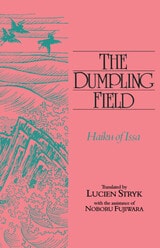
The Dumpling Field
Haiku of IssaKobayashi Issa
Ohio University Press, 1991
Kobayashi Issa (1763–1827), long considered among Japan’s four greatest haiku poets (along with Basho, Buson, and Shiki) is probably the best loved. This collection of more than 360 haiku, arranged seasonally and many rendered into English for the first time, attempts to reveal the full range of the poet’s extraordinary life as if it were concentrated within a year. Issa’s haiku are traditionally structured, of seventeen syllables in the original, tonally unified and highly suggestive, yet they differ from those of fellow haikuists in a few important respects. Given his character, they had to. The poet never tries to hide his feelings, and again and again we find him grieving over the lot of the unfortunate – of any and all species.
No poet, of any time or culture, feels greater compassion for his life of creatures. No Buddhist—Issa was to become a monk—acts out the credos of his faith more genuinely. The poet, a devoted follower of Basho, traveled throughout the country, often doing the most menial work, seeking spiritual companionship and inspiration for the thousands of haiku he was to write. Yet his emotional and creative life was centered in his native place, Kashiwabara in the province of Shinano (now Nagano Prefecture), and his severest pain was the result of being denied a place in his dead father’s house by his stepmother and half brother.
By the time he was able to share the house of his beloved father, Issa had experienced more than most the grief of living, and much more was to follow with the death of his wife and their four children. In the face of all he continued to write, celebrating passionately the lives of all that shared the world with him, all creatures, all humans. Small wonder that Issa is so greatly loved by his fellow poets throughout the world, and by poetry lovers of all ages.
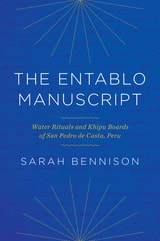
The Entablo Manuscript
Water Rituals and Khipu Boards of San Pedro de Casta, PeruSarah Bennison
University of Texas Press, 2022
A unique study of an Andean community’s water rituals and the extraordinary document describing how they should be performed
In the dry season in the Andes, water from springs, lakes, reservoirs, and melting glaciers feeds irrigation canals that have sustained communities for thousands of years. Managing and maintaining these water infrastructures is essential, and in 1921, in the village of San Pedro de Casta, Peru, local authorities recorded their ritual canal-cleaning duties in a Spanish-language document called the Entablo. It is only the second book (along with the Huarochirí Manuscript) ever seen by scholars in which an Andean community explains its customs and ritual laws in its own words.
Sarah Bennison offers a critical introduction to the Entablo, a Spanish transcription of the document, and an English translation. Among its other revelations, the Entablo delves into the use of khipu boards, devices that meld the traditional knotted strings known as khipus with a written alphabet. Only in the Entablo do we learn that there were multiple khipu boards associated with a single canal-cleaning ritual, or that there were separate khipu records for men and women. The Entablo manuscript furnishes unparalleled insights into Andean rituals, religion, and community history at a historical moment when rural highland communities were changing rapidly.
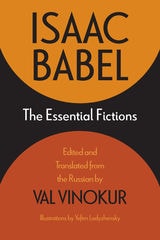
The Essential Fictions
Isaac Babel; Edited and translated from the Russian by Val Vinokur; Illustrations by Yefim Ladyzhensky
Northwestern University Press, 2018
Babel was born in 1894 into multicultural Odessa’s thriving Jewish community. Working as a journalist, he witnessed the Bolshevik Revolution and Civil War, and accompanied the Cossack horsemen of the Red Cavalry during the 1920 Polish-Soviet War, distilling these experiences into his fiction. Vinokur highlights Babel’s “horrified hopefulness” and “doleful and bespectacled Jewish comedy” in the face of the bloody conflicts that plagued his generation.
On the centenary of the revolution that toppled the Romanov tsars, Babel’s fictions continue to absorb and fascinate contemporary readers interested in eastern European and Jewish literature as well as the history and politics of the twentieth century.
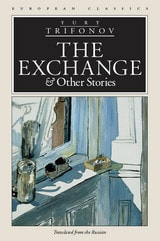
The Exchange and Other Stories
Yuri Trifonov
Northwestern University Press, 2002
Yury Trifonov took a turn toward the controversial, and a leap toward greatness, with the publication of the two novellas included in this collection. "The Exchange" and "The Long Goodbye" depict the complex dilemmas and compromises of Russian life after World War II. These works, along with the short stories "Games at Dusk" and "A Short Stay in the Torture Chamber," detail the moral and spiritual decline in Russia that resulted from the growing distance between the theoretical idealism of the Soviet state and the actual materialism and careerism that increasingly marked society.
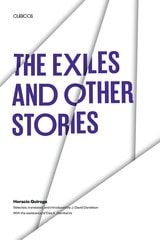
The Exiles and Other Stories
By Horacio Quiroga
University of Texas Press, 1987
Tales of risk and danger, suffering, disease, horror, and death. Tales, also, of courage and dignity, hard work, and human endurance in the face of hostile nature and the frequent brutality of men. And tales flavored with piquant touches of humor and bemused irony.
These are the stories of the Uruguayan writer Horacio Quiroga, here presented in an important compilation of thirteen of his most compelling tales, sensitively selected and translated by J. David Danielson. Author of some two hundred pieces of fiction, often compared to the works of Kipling, Jack London, and Edgar Allan Poe, Quiroga set many of his stories in the territory of Misiones in northeastern Argentina, the subtropical jungle region where he spent much of his life.
Included here are stories from Los desterrados (1926) often said to be his best book, as well as others from Cuentos de amor de locura y de muerte (1917), Anaconda (1921), and El Desierto (1924). The publication of this selection marks the first appearance in English of all but two of the thirteen stories.
Quiroga here presents a wide range of characters: parents and children, servant girls and prostitutes, landowners and lumber barons, foremen and laborers, natives and immigrants, in stories pervaded by a vision of life that is elemental, incisive, and essentially tragic. The Exiles and Other Stories shows the versatility and skill that have made him a classic Spanish American writer. It complements and illumines The Decapitated Chicken and Other Stories, selected and translated by Margaret Sayers Peden, also published by the University of Texas Press.
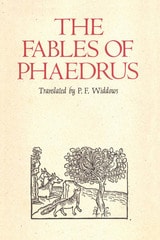
The Fables of Phaedrus
Translated by P. F. Widdows
University of Texas Press, 1992
Animal fables are said to have originated with Aesop, a semilegendary Samian slave, but the earliest surviving record of the fables comes from the Latin poet Phaedrus, who introduced the new genre to Latin literature. This verse translation of The Fables is the first in English in more than two hundred years.
In addition to the familiar animal fables, about a quarter of the book includes such diverse material as prologues and epilogues, historical anecdotes, short stories, enlarged proverbs and sayings, comic episodes and folk wisdom, and many incidental glimpses of Greek and Roman life in the classical period.
The Fables also sheds light on the personal history of Phaedrus, who seems to have been an educated slave, eventually granted his freedom by the emperor Augustus. Phaedrus' style is lively, clean, and sparse, though not at the cost of all detail and elaboration. It serves well as a vehicle for his two avowed purposes—to entertain and to give wise counsel for the conduct of life. Like all fabulists, Phaedrus was a moralist, albeit on a modest and popular level.
An excellent introduction by P. F. Widdows provides information about Phaedrus, the history of The Fables, the metric style of the original and of this translation, and something of the place of these fables in Western folklore. The translation is done in a free version of Anglo-Saxon alliterative verse, a form used by W. H. Auden and chosen here to match the popular tone of Phaedrus' Latin verse.