Results by title
2916 books match the query 'Politics and government' and 650 start with t
Through French Windows
An Introduction to France in the NinetiesJames Corbett
University of Michigan Press, 1994
Thunder Cross
Fascist Antisemitism in Twentieth-Century LatviaPaula A. Oppermann
University of Wisconsin Press, 2025
Thunder Cross is the most comprehensive study of Latvia’s fascist movement in English to date, and the only work that investigates the often neglected continuities of fascist antisemitism after World War II. Formulated as an empirical case study, this book draws on international and interdisciplinary secondary literature and sources in seven languages to broaden our understanding of fascism, antisemitism, and mass violence from Germany and Italy to the larger European context.
Thunder from the Right
Ezra Taft Benson in Mormonism and PoliticsEdited by Matthew L. Harris
University of Illinois Press, 2019

Time and Chance
Gerald Ford's Appointment with HistoryJames Cannon
University of Michigan Press, 1998
"James Cannon, formerly national affairs editor at Newsweek and Ford's domestic policy advisor, has written a superbly provocative and arresting biography that traces Ford's life from his July 4, 1913, birth in Omaha, Nebraska, to his September 8,1974, decision to pardon Nixon of the Watergate conspiracy." --Washington Post Book World
James M. Cannon is a journalist and was Domestic Policy Adviser to President Ford and Chief of Staff to Senate Majority Leader Howard Baker.
Tippecanoe and Tyler Too
Famous Slogans and Catchphrases in American HistoryJan R. Van Meter
University of Chicago Press, 2008
“By necessity, by proclivity, by delight,” Ralph Waldo Emerson said in 1876, “we all quote.” But often the phrases that fall most readily from our collective lips—like “fire when ready,” “speak softly and carry a big stick,” or “nice guys finish last”—are those whose origins and true meanings we have ceased to consider. Restoring three-dimensionality to more than fifty of these American sayings, Tippecanoe and Tyler Too turns clichés back into history by telling the life stories of the words that have served as our most powerful battle cries, rallying points, laments, and inspirations.
In individual entries on slogans and catchphrases from the early seventeenth to the late twentieth century, Jan Van Meter reveals that each one is a living, malleable entity that has profoundly shaped and continues to influence our public culture. From John Winthrop’s “We shall be as a city upon a hill” and the 1840 Log Cabin Campaign’s “Tippecanoe and Tyler Too” to Martin Luther King Jr.’s “I have a dream” and Ronald Reagan’s “Mr. Gorbachev, tear down this wall,” each of Van Meter’s selections emerges as a memory device for a larger political or cultural story. Taken together in Van Meter’s able hands, these famous slogans and catchphrases give voice to our common history even as we argue about where it should lead us.
“As Van Meter argues, these are important ‘memory devices for a larger story.’ . . . The author has thoroughly researched all the catchphrases . . . . This book would make delightful in-flight reading or a nice gift for a trivia buff. Recommended.”—Choice
To Be Nsala's Daughter
Decomposing the Colonial GazeChérie N. Rivers
Duke University Press, 2023
To Be the Main Leaders of Our People
A History of Minnesota Ojibwe Politics, 1825-1898Rebecca Kugel
Michigan State University Press, 1998
In the spring of 1868, people from several Ojibwe villages located along the upper Mississippi River were relocated to a new reservation at White Earth, more than 100 miles to the west. In many public declarations that accompanied their forced migration, these people appeared to embrace the move, as well as their conversion to Christianity and the new agrarian lifestyle imposed on them. Beneath this surface piety and apparent acceptance of change, however, lay deep and bitter political divisions that were to define fundamental struggles that shaped Ojibwe society for several generations.
In order to reveal the nature and extent of this struggle for legitimacy and authority, To Be The Main Leaders of Our People reconstructs the political and social history of these Minnesota Ojibwe communities between the years 1825 and 1898. Ojibwe political concerns, the thoughts and actions of Ojibwe political leaders, and the operation of the Ojibwe political system define the work's focus. Kugel examines this particular period of time because of its significance to contemporary Ojibwe history. The year 1825, for instance, marked the beginning of a formal alliance with the United States; 1898 represented not an end, but a striking point of continuity, defying the easy categorizations of Native peoples made by non-Indians, especially in the closing years of the nineteenth century.
In this volume, the Ojibwe "speak for themselves," as their words were recorded by government officials, Christian missionaries, fur traders, soldiers, lumbermen, homesteaders, and journalists. While they were nearly always recorded in English translation, Ojibwe thoughts, perceptions, concerns, and even humor, clearly emerge. To Be The Main Leaders of Our People expands the parameters of how oral traditions can be used in historical writing and sheds new light on a complex, but critical, series of events in ongoing relations between Native and non-Native people.
To Defend This Sunrise
Black Women’s Activism and the Authoritarian Turn in NicaraguaCourtney Desiree Morris
Rutgers University Press, 2023
To Keep the Republic
Thinking, Talking, and Acting Like a Democratic CitizenElizabeth C. Matto
Rutgers University Press, 2024
To Keep the Republic is a wake-up call about the responsibilities that come with being a citizen in a participatory democracy. It describes the many ways that individuals can make a difference on both local and national levels—and explains why they matter. Political scientist Elizabeth C. Matto highlights the multiple facets of democratic citizenship, identifies American democracy’s sometimes competing values and ideals, and explains how civic engagement can take various forms, including political conversation. Combining political philosophy with concrete suggestions for how to become a more engaged citizen, To Keep the Republic reminds us that democracy is not a spectator sport; it only works when we get off the sidelines and enter the political arena to make our voices heard.

To Russia with Love
An Alaskan's JourneyVictor Fischer with Charles Wohlforth
University of Alaska Press, 2012
Son of the famous American journalist Louis Fischer, who corresponded from Germany and then Moscow, and the Russian writer Markoosha Fischer, Victor Fischer grew up in the shadow of Hitler and Stalin, watching his friends’ parents disappear after political arrests. Eleanor Roosevelt personally engineered the Fischer family’s escape from Russia, and soon after Victor was serving in the United States Army in World War II and fighting opposite his childhood friends in the Russian and German armies.
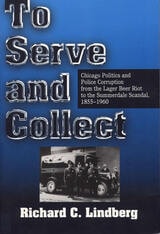
To Serve and Collect
Chicago Politics and Police Corruption from the Lager Beer Riot to the Summerdale Scandal, 1855-1960Richard C. Lindberg
Southern Illinois University Press, 1998
Crooked politicians, gangsters, madams, and cops on the take: To Serve and Collect tells the story of Chicago during its formative years through the history of its legendary police department.
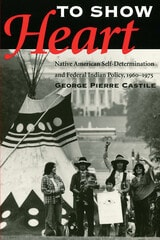
To Show Heart
Native American Self-Determination and Federal Indian Policy, 1960-1975George Pierre Castile
University of Arizona Press, 1998
To Show Heart is a detailed and unbiased account of one of the least understood periods in Indian affairs. It tells how "termination" became a political embarrassment during the civil rights movement, how Lyndon Johnson's War on Poverty prompted politicians to rethink Indian policy, and how championing self-determination presented an opportunity for Presidents Nixon and Ford to "show heart" toward Native Americans. Along the way, Castile assesses the impact of the Indian activism of the 1960s and 1970s and offers an objective view of the American Indian Movement and the standoff at Wounded Knee. He also discusses the recent history of individual tribes, which gives greater meaning to decisions made at the national level. Castile's work greatly enhances our understanding of the formulation of current Indian policy and of the changes that have occurred since 1975. To Show Heart is an important book not only for anthropologists and historians but also for Native Americans themselves, who will benefit from this inside look at how bureaucrats have sought to determine their destinies.
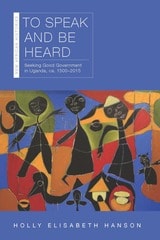
To Speak and Be Heard
Seeking Good Government in Uganda, ca. 1500–2015Holly Elisabeth Hanson
Ohio University Press, 2021
A history of a political practice through which East Africans have sought to create calm, harmonious polities for five hundred years.
“To speak and be heard” is a uniquely Ugandan approach to government that aligns power with groups of people that actively demonstrate their assent both through their physical presence and through essential gifts of goods and labor. In contrast to a parliamentary democracy, the Ugandan system requires a level of active engagement much higher than simply casting a vote in periodic elections.
These political strategies—assembly, assent, and powerful gifts—can be traced from before the emergence of kingship in East Africa (ca. 1500) through enslavement, colonial intervention, and anticolonial protest. They appear in the violence of the Idi Amin years and are present, sometimes in dysfunctional ways, in postcolonial politics. Ugandans insisted on the necessity of multiple voices contributing to and affirming authority, and citizens continued to believe in those principles even when colonial interference made good governance through building relationships almost impossible.
Through meticulous research, Holly Hanson tells a history of the region that differs from commonly accepted views. In contrast to the well-established perception that colonial manipulation of Uganda’s tribes made state failure inevitable, Hanson argues that postcolonial Ugandans had the capacity to launch a united, functional nation-state and could have done so if leaders in Buganda, Britain, and Uganda’s first governments had made different choices.

To Swim with Crocodiles
Land, Violence, and Belonging in South Africa, 1800-1996Jill E Kelly
Michigan State University Press, 2018
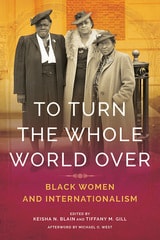
To Turn the Whole World Over
Black Women and InternationalismEdited by Keisha N. Blain and Tiffany M. Gill
University of Illinois Press, 2019
To the Promised Land
A History of Government and Politics in OregonTom Marsh
Oregon State University Press, 2012
From Jason Lee’s first letter urging Congress to take possession of the Oregon Country to John Kitzhaber’s precedent-setting third term as governor, from the land frauds of the early 20th century to the state’s land-use planning goals, from the Beach Bill to the Bottle Bill, this book tells Oregon’s story.
Featuring interesting trivia, historical photographs, and biographical sketches of key politicians, To the Promised Land is an essential volume for readers interested in Oregon’s history.
Tom's Town
Kansas City and the Pendergast LegendWilliam M. Reddig
University of Missouri Press, 1986
The Pendergast machine rose to power riding the industrial and business boom of the 1920s, strengthened its grip during the chaos of the depression years, and grew fat and arrogant during the spending spree that followed. It fell apart in a fantastic series of crimes, including voting fraud and tax evasion, that shocked the nation and resulted in the incarceration of Tom Pendergast in a federal prison in 1939. Now available in paperback with a foreword by Charles Glaab, William M. Reddig's political and social history of Kansas City from the mid-1800s to 1945, focusing on the lives of Alderman Jim Pendergast and especially his younger sibling, Big Tom Pendergast, chronicles both the influence of the brothers on the growing metropolitan area and the national phenomenon of bossism.
"The story of the Pendergasts has been told ... in many places and in many ways. It has hardly been told anywhere, however, with more fascinating detail and healthy irony than in this volume of William M. Reddig." --New York Times
"Reddig has written his history of the Pendergast machine in a reportorial style which manages to combine plain city desk prose with a great deal of humor, irony, and insight. He has dwelt with obvious delight on the local characters, the factions, and feuds, and has given several brilliant personality sketches." --Saturday Review of Literature
Tomorrow Is Another Country
The Inside Story of South Africa's Road to ChangeAllister Sparks
University of Chicago Press, 1996
"A gripping, fast-paced, authoritative account of the long and mostly secret negotiations that brought South Africa's bitter conflict to its near-miraculous end. Sparks's description of these talks sometimes brings a lump to one's throat. He shows how the participants' deep mutual suspicion was gradually replaced by excitement at the prospect of making a momentous agreement—and also by the dawning realization that the people on the other side were human beings, perhaps even decent human beings."—Adam Hochschild, New York Times Book Review
"A splendid and original history. . . . Sparks's skillful weaving of myriad strands—Mandela's secret sessions with the committee, the clandestine talks in England between the African National Congress and the government, the back-channel communications between Mandela and the A.N.C. in exile, the trepidation of Botha and the apparent transformation of his successor, De Klerk—possesses the drama and intrigue of a diplomatic whodunit."—Richard Stengel, Time
"Sparks offers many reasons for hope, but the most profound of them is the story this book tells."—Jacob Weisberg, Washington Post
"The most riveting of the many [accounts] that have been published about the end of apartheid."—The Economist
Torture in Brazil
A Shocking Report on the Pervasive Use of Torture by Brazilian Military Governments, 1964-1979, Secretly Prepared by the Archiodese of São PauloArchdiocese of São Paulo, Brazil
University of Texas Press, 1998
Winner, A Choice Outstanding Academic Book
From 1964 until 1985, Brazil was ruled by a military regime that sanctioned the systematic use of torture in dealing with its political opponents. The catalog of what went on during that grim period was originally published in Portuguese as Brasil: Nunca Mais (Brazil: Never Again) in 1985.
The volume was based on the official documentation kept by the very military that perpetrated the horrific acts. These extensive documents include military court proceedings of actual trials, secretly photocopied by lawyers associated with the Catholic Church and analyzed by a team of researchers. Their daring project—known as BNM for Brasil: Nunca Mais—compiled more than 2,700 pages of testimony by political prisoners documenting close to three hundred forms of torture.
The BNM project proves conclusively that torture was an essential part of the military justice system and that judicial authorities were clearly aware of the use of torture to extract confessions. Still, it took more than a decade after the publication of Brasil: Nunca Mais for the armed forces to admit publicly that such torture had ever taken place. Torture in Brazil, the English version of the book re-edited here, serves as a timely reminder of the role of Brazil's military in past repression.
Totalitarian Societies and Democratic Transition
Essays in Memory of Victor ZaslavskyRiccardo James Vargiu
Central European University Press, 2017
Tours of Vietnam
War, Travel Guides, and MemoryScott Laderman
Duke University Press, 2009
Tracing a history of ideological assertions embedded in travel discourse, Laderman analyzes the use of tourism in the Republic of Vietnam as a form of Cold War cultural diplomacy by a fledgling state that, according to one pamphlet published by the Vietnamese tourism authorities, was joining the “family of free nations.” He chronicles the evolution of the Defense Department pocket guides to Vietnam, the first of which, published in 1963, promoted military service in Southeast Asia by touting the exciting opportunities offered by Vietnam to sightsee, swim, hunt, and water-ski. Laderman points out that, despite historians’ ongoing and well-documented uncertainty about the facts of the 1968 “Hue Massacre” during the National Liberation Front’s occupation of the former imperial capital, the incident often appears in English-language guidebooks as a settled narrative of revolutionary Vietnamese atrocity. And turning to the War Remnants Museum in Ho Chi Minh City, he notes that, while most contemporary accounts concede that the United States perpetrated gruesome acts of violence in Vietnam, many tourists and travel writers still dismiss the museum’s display of that record as little more than “propaganda.”
Toward a Cooperative Commonwealth
The Transplanted Roots of Farmer-Labor Radicalism in TexasThomas Alter II
University of Illinois Press, 2022
A rare look at the German roots of radicalism in Texas, Toward a Cooperative Commonwealth illuminates the labor movements and populist ideas that changed the nation’s course at a pivotal time in its history.
Towards a New Malaysia?
The 2018 Election and Its AftermathMeredith L. Weiss and Faizal S. Hazis
National University of Singapore Press, 2020
After the election, many Malaysians were optimistic about the possibility of a more representative, accountable, participatory, and equitable polity, but Meredith L. Weiss and Faisal S. Hazis do not see GE14 as a clear harbinger of full-on liberalization. While the political aftermath of the election continues to play out, the authors provide a clarion call for deeper, more critical, more comparative research on Malaysia’s politics. They upend commonly held beliefs about Malaysian politics and bring forward lesser-known theories, and they suggest agendas for empirically interesting, theoretically relevant further research. They also point to the broader insights Malaysia’s experience provides for the study of elections and political change in one-party dominant states around the world.
Transformation of the Mormon Culture Region
Ethan R. Yorgason
University of Illinois Press, 2010
Transformative Political Leadership
Making a Difference in the Developing WorldRobert I. Rotberg
University of Chicago Press, 2012
Transforming Citizenship
Democracy, Membership, and Belonging in Latino CommunitiesRaymond A. Rocco
Michigan State University Press, 2014
Translocalities/Translocalidades
Feminist Politics of Translation in the Latin/a AméricasSonia E. Alvarez, Claudia de Lima Costa, Verónica Feliu, Rebecca J. Hester, Norma Klahn, and Millie Thayer, eds.
Duke University Press, 2014
Contributors. Sonia E. Alvarez, Kiran Asher, Victoria (Vicky) M. Bañales, Marisa Belausteguigoitia Rius, Maylei Blackwell, Cruz C. Bueno, Pascha Bueno-Hansen, Mirangela Buggs, Teresa Carrillo, Claudia de Lima Costa, Isabel Espinal, Verónica Feliu, Macarena Gómez-Barris, Rebecca J. Hester, Norma Klahn, Agustín Lao-Montes, Suzana Maia, Márgara Millán, Adriana Piscitelli, Ana Rebeca Prada, Ester R. Shapiro, Simone Pereira Schmidt, Millie Thayer
Transnational Nationalism and Collective Identity among the American Irish
Howard Lune
Temple University Press, 2020
In Transnational Nationalism and Collective Identity among the American Irish, Howard Lune considers the development and mobilization of different nationalisms over 125 years of Irish diasporic history (1791–1920) and how these campaigns defined the Irish nation and Irish citizenship.
Lune takes a collective approach to exploring identity, concentrating on social identities in which organizations are the primary creative agent to understand who we are and how we come to define ourselves. As exiled Irishmen moved to the United States, they sought to create a new Irish republic following the American model. Lune traces the construction of Irish American identity through the establishment and development of Irish nationalist organizations in the United States. He looks at how networks—such as societies, clubs, and private organizations—can influence and foster diaspora, nationalism, and nationalist movements.
By separating nationalism from the physical nation, Transnational Nationalism and Collective Identity among the American Irish uniquely captures the processes and mechanisms by which collective identities are constructed, negotiated, and disseminated. Inevitably, this work tackles the question of what it means to be Irish—to have a nationality, a community, or a shared history.
Tribal Administration Handbook
A Guide for Native Nations in the United StatesRebecca M. Webster
Michigan State University Press, 2022
Tribal Government Today, Revised Edition
James J. Lopach
University Press of Colorado, 1998
An account of Fourth World peoples within a First World nation, Tribal Government Today, Revised Edition is a critical analysis of the contemporary progress of Indian tribes toward self-government and economic sufficiency. Focusing on seven reservations in Montana representing the diverse opportunities and problems facing Indian tribes in the West, this book approaches tribal government from the twin perspectives of reservation politics and the legal context within which reservation conflicts must be solved.
Unlike previous studies of Indian politics, Tribal Government Today is neither a critique of American Indian policy over the years nor an analysis of federal, state, and tribal jurisdictional ambiguities. The authors—a political scientist, a lawyer, and a historian—focus instead on the distinctive political culture that has evolved on each reservation in terms of the reservation settings, governmental structures and procedures, and a particular brand of politics. The critical inquiry is how far the reservations are from genuine self-determination and whether that goal is impossibility for some. The authors conclude with suggestions for reforming tribal government within three main areas: the separation of powers, the role of the Bureau of Indian Affairs, and tribal acceptance of the concept of fundamental law.
The contents include: The Contours of Reservations Politics, Indian Law and Tribal Government; The Blackfeet: Their Own Government to Help Them; The Crow: A Politics of Rick; The Northern Cheyenne: A Politics of Values; The Fort Peck Reservation: The Factor of Leadership; The Fort Belknap Reservation: The Reality of Poverty; The Rocky Boy's Reservation: A Struggle for Government; The Flathead Reservation: A Struggle for Government; The Flathead Reservation: From Enclave to Self-Government; and Reflection on Tribal Government.
There has been surprisingly little writing about the condition of contemporary tribal government. Library shelves are filled with works on other American and foreign governments, but an inquirer must learn about tribal government incidentally and in piecemeal fashion. This state of scholarship is regrettable because of the importance of the modern Indian self-determination movement. Reservation politics certainly affect the quality of life in Indian communities, and the outlook for Indian self-determination cannot be assessed without an understanding of tribal government.
Troubled Pasts
News and the Collective Memory of Social UnrestJill A. Edy
Temple University Press, 2006
Trouillot Remixed
The Michel-Rolph Trouillot ReaderMichel-Rolph Trouillot. Edited by Yarimar Bonilla, Greg Beckett, and Mayanthi L. Fernando
Duke University Press, 2021
Truman and Korea
The Political Culture of the Early Cold WarPaul G. Pierpaoli, Jr.
University of Missouri Press, 1999
Detailing for the first time the story of America's homefront during the Korean War, Truman and Korea fills an important gap in the historical scholarship of the postwar era. Paul Pierpaoli analyzes the political, economic, social, and international ramifications of America's first war of Soviet containment, never losing sight of the larger context of the cold war. He focuses on how and why the Truman administration undertook a bloody, inconclusive war on the Korean peninsula while permanently placing the nation on a war footing.
Truman and Korea illuminates the importance of the Korean conflict as a critical turning point in the cold war by examining both the immediate and the long-term domestic and foreign policy effects of the conflict. Pierpaoli addresses such important topics as presidential war powers and debates concerning the Defense Production Act; the inner workings of the many war mobilization agencies; the operations and politics of nationwide price and wage controls; questions concerning cold war tax policies and fiscal and monetary policies; and the evolution of national security policy.
Pierpaoli shows that President Truman's decision to intervene in the Korean War quickly became subsumed by larger cold war concerns. By the autumn of 1950 the Korean mobilization program had become the nation's de facto cold war preparedness program, which would come to span nearly forty years and eight presidential administrations. After 1950 the cold war not only continued to significantly shape political and ideological discourse in the United States but also began to reshape aggregate economic policy. By doing so, it altered the nation's industrial and economic contours, giving birth to the concept of an institutionalized "national security state," which in turn spawned the cold war military-industrial-scientific complex.
Based upon extensive research in the papers and official presidential files of Harry S. Truman, as well as many manuscript collections and records of wartime and government agencies, Truman and Korea offers a new perspective on the Korean War era and its inextricable ties to broader cold war decision making.
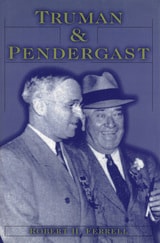
Truman and Pendergast
Robert H. Ferrell
University of Missouri Press, 1999
No portion of the political career of Harry S. Truman was more fraught with drama than his relationship with Thomas J. Pendergast. In one of their earliest meetings, the two men were momentarily at odds after Truman, who was then presiding judge of Jackson County, gave a $400,000 road contract to a construction company in South Dakota, and Pendergast, the boss of Kansas City, wasn't very happy about it. He had someone else in mind for the contract. Their association thus had its disagreements, but their common interest in politics was enough to establish a long-lasting relationship.
In 1934, after considering fourteen other men, Pendergast sponsored Truman for the Senate. Although Truman had often cooperated with Pendergast on patronage issues, he had never involved himself in the illegalities that would eventually destroy the Pendergast machine. In fact, Truman had no idea how deeply the Boss had engaged in corruption in his personal affairs, as well as in managing the government of Kansas City. When the Boss was sent to Leavenworth for tax evasion in 1939, Truman was astonished.
Despite Truman's honesty, his relationship with Pendergast almost caused his defeat during the Missouri senatorial primary in August 1940. The main challenger for Truman's Senate seat was the ambitious governor of Missouri, Lloyd C. Stark, who after destroying Truman's sponsor, the Pendergast machine, denounced Truman as "the Pendergast senator." Behind the governor was President Franklin D. Roosevelt, whom Stark turned against Truman. Roosevelt wanted Missouri's electoral votes in his forthcoming bid for a third term, and he believed that Stark could give them to him.
Because of the stigma of Truman's Pendergast connection, the 1940 Democratic primary was the tightest election in his entire political career. He won by fewer than eight thousand votes. In Truman and Pendergast, Robert H. Ferrell masterfully presents Truman's struggle to keep his Senate seat without the aid of Pendergast and despite Stark's enlistment of Roosevelt against him. Ferrell shows that Truman won the election in his typical fashion—going directly to the people, speaking honestly and like one of them.
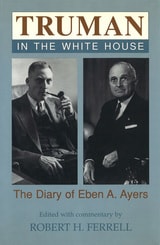
Truman in the White House
The Diary of Eben A. AyersEdited & Commentaries by Robert H. Ferrell
University of Missouri Press, 1991
As assistant press secretary to President Harry S. Truman, Eben A. Ayers brought with him twenty-six years of experience as a newspaperman. He knew when he had a good story and knew how to record it. His private diary, which he kept unbeknownst to his associates, tells the inside story of the Truman White House clearly, colorfully, and with an acute sense of history.
Trusteeship in Change
Toward Tribal Autonomy in Resource ManagementRichmond L. Clow
University Press of Colorado, 2001
This book also includes case studies focused on wildlife management, forest preservation, tribal hunting laws, and other specific concerns in management, preservation and utilization of Native American land. An excellent source for scholars in the fields of Native American and environmental studies, Trusteeship in Change is sure to spark debate and to be an important reference book for years to come.
Tulsa Speaks
A City Council, Reparations, and Race in America TodayKristal Brent Zook
Rutgers University Press, 2026
In 2021, the international media descended upon Tulsa, Oklahoma, for the centennial commemoration of the May 31–June 1, 1921, massacre in which a white mob killed more than three hundred African American residents, burned homes and businesses, and decimated a thriving town once referred to as “Black Wall Street.”
Tulsa Speaks is about the ongoing work of the Tulsa City Council, both before the Centennial and afterward, when the cameras were no longer trained on the city. It dives deep into the interpersonal dynamics among the nine councilors, exploring the continuing fight for reparations and racial justice and the long-running efforts of councilor, Vanessa Hall-Harper of District 1, to bring repair to Greenwood.
Tulsa, like many municipal bodies across the country, serves as a hopeful sign of what we might become, as Americans and as a microcosm of race relations in America today.
Tumult
Hans Magnus Enzensberger
Seagull Books, 2016
Hans Magnus Enzensberger, widely regarded as Germany’s greatest living poet, was already well known in the 1960s, the tempestuous decade of which Tumult is an autobiographical record. Derived from old papers, notes, jottings, photos, and letters that the poet stumbled upon years later in his attic, the volume is not so much about the man, but rather the many places he visited and people whom he met on his travels through the Soviet Union and Cuba during the 1960s. The book is made up of four long-form pieces written from 1963 to 1970, each episode concluding with a poem and postscript written in 2014. Translated by Mike Mitchell, the book is a lively and deftly written travelogue offering a glimpse into the history of leftist thought. Dedicated to “those who disappeared,” Tumult is a document of that which remains one of humanity’s headiest times.
Tumultuous Years
The Presidency of Harry S. Truman, 1949-1953Robert J. Donovan
University of Missouri Press, 1996

Turkey Reframed
Constituting Neoliberal HegemonyBaris Ozden
Pluto Press, 2013
Turkey Reframed documents the first decade of the 2000s, a period of radical change in Turkish society and politics, which has been marked by the major economic crisis of 2001 and the coming to power of ex-Islamist cadres organised under the Justice and Development Party (AKP).
The contributors analyse this period of radical change, with its continuities and breaks, and its main actor, the AKP, in relation to the creation of a neoliberal hegemony in post-1980 Turkey. They look at the conflictual, turbulent and painful history of neoliberal hegemony and the contested stabilisation strategy of the AKP government.
Turkey Reframed is a cutting-edge guide for students, scholars and other interested readers who want to understand this period in Turkey’s recent history and its social tensions.

Turkey and the Kurdish Peace Process
Actors, Issues, and ContextArin Y. Savran
University of Michigan Press, 2022
After the fall of the Ottoman Empire following World War I, the Kurds in the Middle East became the largest ethnic group in the region without a state of their own. Divided between Turkey, Syria, Iran, and Iraq, the Kurds have fought for their right to exist as a distinct national group, as well as for governing themselves. Turkey and the Kurdish Peace Process provides a historical and conceptual account of events in order to detail the key conditions, factors, and events that gave rise to the PKK (Kurdistan Workers’ Party) conflict in Turkey, as well as the conditions influencing the emergence, management, and collapse of the peace talks. Drawing from conflict resolution theories, this book investigates the transformation of key conflict actors and changes, over time, in their approach to the main conflict issues.
Moreover, Arin Y. Savran expands the concept of conflict transformation to encompass the ideological transformation of a movement as a result of a rigorous and deep intellectual epiphany on the part of the political leaders—a phenomenon that is unusual and little is known about, making it all the more relevant to include in future theoretical approaches in peace process studies. Methodologically, she rethinks conflict transformation/resolution approaches to focus on shifts in beliefs and relationships that occur prior to a peace process or the start of peace negotiations, when often much focus on peace processes is on the post-agreement phase. This book is among the first comprehensive, scholarly accounts to date (in the English language) that analyzes the Kurdish peace process.
Turkey's July 15th Coup
What Happened and WhyEdited by M. Hakan Yavuz and Bayram Balci
University of Utah Press, 2018
Utah Series in Middle East Studies
On July 15, 2016, a faction of the Turkish military attempted to overthrow the government of President Recep Tayyip Erdoğan. The Turkish government blamed the unsuccessful coup attempt on Gülenists, adherents of an Islamist movement led by Fethullah Gülen. They had helped elect Erdoğan and his AK Party, with the goal of bringing an ostensibly “soft” version of Islam into the secular Turkish government. In alliance with the AK Party, Gülenists steadfastly increased their representation in various government institutions, including the military, the police, and the judiciary. This volume focuses on the historical and sociopolitical contexts of the Gülen Movement’s origins and political ascendancy along with its possible role in the failed coup.
Editors Yavuz and Balcı are among the first international scholars to have studied the movement from its nascent stages in Turkey. The volume's contributors include scholars who have researched the movement in Turkey, Central Asia, and the Balkans. The result is a comprehensive, timely assessment of numerous dimensions of Gülenist activities, including its social and political networks and the institutions that supported the movement as it became a major economic and educational force in Turkey and elsewhere. This volume reflects exchanges among scholars who having studied the Gülenists, assembled to discuss how and why the movement became belligerent opponents of Erdoğan’s government, and it addresses questions such as how this major, still continuing disruption in Turkey’s politics will affect not only the future of the movement but also that of Turkey's embattled democracy as well.
Twelve Ways to Save Democracy in Wisconsin
Matthew Rothschild
University of Wisconsin Press, 2021
From tightening campaign finance laws and banning gerrymandering to rooting out structural racism and moving toward economic equality, each chapter focuses on one of the dozen reforms that are required to heal democracy within the state. Rothschild provides an in-depth rationale for each, dismantling the counterarguments against them and exploring the complexities involved in implementing them. He offers concrete proposals and action items for grassroots organizers and concerned community advocates to restore constituent control of state politics. This pocket-sized handbook is essential for politically aware citizens as well as journalists and watchdogs who see Wisconsin as a crucial battleground state and political bellwether for the nation.
Twenty Theses on Politics
Enrique Dussel
Duke University Press, 2008
Twenty Theses on Politics is inspired by recent political transformations in Latin America. As Dussel writes in Thesis 15, regarding the liberation praxis of social and political movements, “The winds that arrive from the South—from Nestor Kirchner, Tabaré Vásquez, Luiz Inácio Lula da Silva, Evo Morales, Hugo Chávez, Fidel Castro, and so many others—show us that things can be changed. The people must reclaim sovereignty!” Throughout the twenty theses Dussel engages with Latin American thinkers and activists and with radical political projects such as the World Social Forum. He is also in dialogue with the ideas of Marx, Hegel, Habermas, Rawls, and Negri, offering insights into the applications and limits of their thinking in light of recent Latin American political thought and practice.
Twenty-Five Sides of a Post-Communist Mafia State
Bálint Magyar
Central European University Press, 2017

Twilight of the American State
Pierre Schlag
University of Michigan Press, 2023
Finalist: 2024 Order of the Coif Book Award | March 3, 2025
The sudden emergence of the Trump nation surprised nearly everyone, including journalists, pundits, political consultants, and academics. When Trump won in 2016, his ascendancy was widely viewed as a fluke. Yet time showed it was instead the rise of a movement—angry, militant, revanchist, and unabashedly authoritarian.
How did this happen? Twilight of the American State offers a sweeping exploration of how law and legal institutions helped prepare the grounds for this rebellious movement. The controversial argument is that, viewed as a legal matter, the American state is not just a liberal democracy, as most Americans believe. Rather, the American state is composed of an uneasy and unstable combination of different versions of the state—liberal democratic, administered, neoliberal, and dissociative. Each of these versions arose through its own law and legal institutions. Each emerged at different times historically. Each was prompted by deficits in the prior versions. Each has survived displacement by succeeding versions. All remain active in the contemporary moment—creating the political-legal dysfunction America confronts today.
Pierre Schlag maps out a big picture view of the tribulations of the American state. The book abjures conventional academic frameworks, sets aside prescriptions for quick fixes, dispenses with lamentations about polarization, and bypasses historical celebrations of the American Spirit.
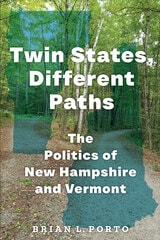
Twin States, Different Paths
The Politics of New Hampshire and VermontBrian L. Porto
University of Massachusetts Press, 2026
A cultural and policy history that explains why two neighboring states developed divergent attitudes toward government and culture
At first glance, New Hampshire and Vermont seem like mirror images. Separated only by the Connecticut River, the oft-termed “Twin States” share a common history, relatively small populations, and heavily mountainous and forested landscapes dotted with small towns. Yet despite their similarities, they have evolved strikingly different political cultures, with Vermont prizing cooperation and community and New Hampshire celebrating independence and freedom from government. Perhaps nowhere is this divergence in political visions more pronounced than in their respective state mottos: Vermont’s communal "Freedom and Unity" and New Hampshire’s libertarian “Live Free or Die.”
Twin States, Different Paths explores these contrasting political cultures. Brian Porto traces these differences back to the land itself: to the geology and geography that shaped early settlement, patterns of land use, and the distinct ways people built their communities. From these origins emerged two enduring civic philosophies—New Hampshire’s devotion to low taxes and limited government, and Vermont’s emphasis on equality and shared responsibility. Bringing historical and cultural analysis together with contemporary case studies, Porto examines how these traditions influence each state’s approach to today’s policy challenges, including affordable housing and public-school funding. The result is a clear, balanced portrait of how deeply rooted attitudes toward freedom, unity, and governance continue to shape public life in both states.
Written with scholarly rigor yet in an engaging and accessible style, Twin States, Different Paths fills a notable gap in the study of New England politics. It offers insights not only for scholars and students of political culture, history, and public policy, but also for general readers, policymakers, and residents who wish to understand how two neighbors—so similar in geography and spirit—continue to follow such different paths in defining the role of government and community.

Two Counties in Crisis
Measuring Political Change in Reconstruction TexasRobert J. Dillard
University of North Texas Press, 2023

Two NATO Allies at the Threshold of War
Parker T. Hart
Duke University Press, 1990
Hart has relied on his own papers from the period, as well as on United Nations sources from the Lyndon B. Johnson Presidential Library, and on the papers of the other key participants in the Crisis, Ambassador to Greece Phillips Talbot, Ambassador to Cyprus Taylor G. Belcher, and Cyrus Vance, to provide a rare play-by-play analysis of the crisis and its resolution.
Two-Party Politics in the One-Party South
Alabama's Hill Country, 1874–1920Samuel L. Webb
University of Alabama Press, 1997
A challenge to the long-held view that the only important and influential politicians in post-Reconstruction Deep South states were Democrats.
In this insightful and exhaustively researched volume, Samuel L. Webb presents new evidence that, contrary to popular belief, voters in at least one Deep South state did not flee en masse from the Republican party after Reconstruction. As Webb demonstrates conclusively, the party gained strength among white voters in Upcountry areas of northern Alabama between 1896 and 1920. Not only did GOP presidential candidates win more than a dozen area counties but Republican congressional candidates made progress in Democratic strongholds, and local GOP officials gained control of several county courthouses.
Nor were these new Republicans simply the descendants of anti-Confederate families, as some historians have claimed. Rather, they were former independents, Greenbackers, and Populists, who, in keeping with the 1890s Populist movement, were reacting against what they perceived as the control of the Democratic party by "moneyed elites" and planter landlords. Webb also breaks with previous historical opinion by showing that ex-Populists in the Hill Country, who had been radical reformers during the 1890s, remained reform minded after 1900.
Webb's ground-breaking reassessment of Alabama state politics from Reconstruction to the 1920s describes a people whose political culture had strong roots in the democratic and egalitarian Jacksonian ideology that dominated north Alabama in the antebellum period. These people carried forward elements of Jacksonianism into the late 19th century, with its tenets continuing to influence them well into the early 20th century.