Results by title
28167 books match the query 'History' and 6372 start with t

The Sanchez Family
Mexican American High School and Collegiate Wrestlers from Cheyenne, WyominJorge Iber
University of Wyoming Press, 2025
The first members of this particular Sanchez clan arrived in Wyoming during the early decades of the twentieth century. The first-generation American grandchildren of these families—Gilbert, David, Arthur, and Ray—used wrestling to radically alter their social and economic status by attending college with athletic scholarships, graduating, and moving on to professional, middle-class careers. Subsequent generations of the family followed their fathers and uncles to the mats at various institutions, also going on to earn degrees and enter professional occupations. Indeed, Iber contends that wrestling became the family’s “business,” the mechanism by which the Sanchezes extricated themselves from Cheyenne’s working class.
Revealing a previously unstudied aspect of Mexican American life in the state, The Sanchez Family sheds light on another vehicle for the educational, social, and economic advancement of Latinos in other parts of the United States. The first book to examine the role of wrestling in the lives of Mexican Americans, it serves as a foundational text for Latino studies of sports and constructing racial counterscripts.
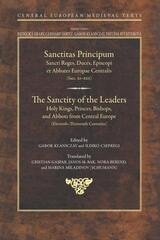
The Sanctity of the Leaders
Holy Kings, Princes, Bishops and Abbots from Central Europe (11th to 13th Centuries)Gábor Klaniczay
Central European University Press, 2023
The latest title in the Central European Medieval Texts series contains the lives of saints who were canonized in the eleventh through thirteenth centuries in the newly Christianized countries of Central and Eastern Europe (Bohemia, Poland, Hungary, and Dalmatia). A rejoinder to the earlier volume in the series, the Saints of the Christianization Age of Central Europe (CEMT, Vol. 6), containing hermits, missionaries, and martyrs, this second volume of hagiography is dominated by political or ecclesiastical leaders who became saintly patrons of their region and were highly venerated throughout the Middle Ages.
The legends in the volume present the two Hungarian holy kings Stephen and Ladislas, the holy duke Emeric, the Czech holy abbot Prokop of Sázava, three bishops, the Venetian-Hungarian Gellért of Csanád, the Polish Stanislas of Cracow (both martyrs), and the Dalmatian holy bishop Saint John of Trogir. Each “vita” is published in Latin original with an English translation and with prefaces discussing the textual tradition.
Saints’ lives have been recognized as an invaluable source of information on social and economic history, the history of mentalities and everyday life, cultural history, and, above all, as a special genre with crucial importance and prevalence in medieval literature.
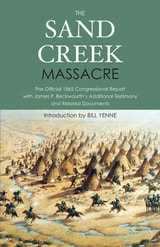
The Sand Creek Massacre
The Official 1865 Congressional Report with James P. Beckwourth's Additional Testimony and Related DocumentsUnited States Congress
Westholme Publishing, 2015
On the morning of November 29, 1864, Colorado state cavalry under the command of Col. John Chivington attacked a peaceful encampment of mostly Cheyenne Indians along the Sand Creek in Colorado, slaughtering perhaps as many as 160 people, mostly women and children. It was one of the most egregious atrocities of the Indian Wars. Even with the country embroiled in a Civil War, the gravity of the situation can be gauged by the fact that within six weeks of the killings, a Joint Committee of Congress conducted a public hearing. Congress vilified Chivington in summarizing his cowardly and racist attack in their published report: “Wearing the uniform of the United States, which should be the emblem of justice and humanity . . . he deliberately planned and executed a foul and dastardly massacre.” The Sand Creek Massacre: The Official 1865 Report contains a facsimile of the “Report of the Joint Committee on the Conduct of the War: Massacre of the Cheyenne Indians” along with unique annotations made by a reader at the time and the attached typescript testimony of the African American pioneer James P. Beckwourth, in which he recounts the atrocity. This edition is introduced by Bill Yenne. who places the Sand Creek Massacre in context within the Civil War and Indian Wars and provides biographical information about the main persons involved.

The Sandy Ridge and Halstead Paleo-Indian Sites
Unifacial Tool Use and Gainey Phase Definition in South-Central OntarioLawrence J. Jackson with a foreword by Henry T. Wright and phytolith analysis by Anita Buehrle
University of Michigan Press, 1998

The Sangamo Frontier
History and Archaeology in the Shadow of LincolnRobert Mazrim
University of Chicago Press, 2006
When Abraham Lincoln moved to Illinois’ Sangamo Country in 1831, he found a pioneer community transforming from a cluster of log houses along an ancient trail to a community of new towns and state roads. But two of the towns vanished in a matter of years, and many of the activities and lifestyles that shaped them were almost entirely forgotten. In The Sangamo Frontier, archaeologist Robert Mazrim unearths the buried history of this early American community, breathing new life into a region that still rests in Lincoln’s shadow.
Named after a shallow river that cuts through the prairies of central Illinois, the Sangamo Country—an area that now encompasses the capital city of Springfield and present-day Sangamon County—was first colonized after the War of 1812. For the past fifteen years, Mazrim has conducted dozens of excavations there, digging up pieces of pioneer life, from hand-forged iron and locally made crockery to pewter spoons and Staffordshire teacups. And here, in beautifully illustrated stories of each dig, he shows how each of these small artifacts can teach us something about the lifestyles of people who lived on the frontier nearly two hundred years ago. Allowing us to see past the changed modern landscape and the clichés of pioneer history, Mazrim deftly uses his findings to portray the homes, farms, taverns, and pottery shops where Lincoln’s neighbors once lived and worked.
Drawing readers into the thrill of discovery, The Sangamo Frontier inaugurates a new kind of archaeological history that both enhances and challenges our written history. It imbues today’s landscape with an authentic ghostliness that will reawaken the curiosity of anyone interested in the forgotten people and places that helped shape our nation.

The Sanitary Arts
Aesthetic Culture and the Victorian Cleanliness CampaignsEileen Cleere
The Ohio State University Press, 2014
The Sanitary Arts covers the mid-forties controversy over cleaning the dirt from the pictures in the National Gallery, the debate over decorative “dust traps” in the overstuffed Victorian home, and the late-century proliferation of hygienic breeding principles as a program of aesthetic perfectibility, to demonstrate the unintentionally collaborative work of seemingly unrelated events and discourses. Bringing figures like Edwin Chadwick and John Ruskin into close conversation about the sanitary status of beauty in a variety of forms and environments, Cleere forcefully demonstrates that aesthetic development and scientific discovery can no longer be understood as separate or discrete forces of cultural change.
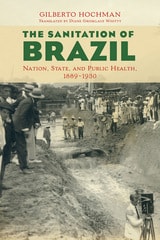
The Sanitation of Brazil
Nation, State, and Public Health, 1889-1930Gilberto Hochman
University of Illinois Press, 2016

The Santa Fe Trail in Missouri
Mary Collins Barile
University of Missouri Press, 2010

The Sarah Siddons Audio Files
Romanticism and the Lost VoiceJudith Pascoe
University of Michigan Press, 2013
“The theatre scholar’s daunting but irresistible quest to recover some echoes of performance of the past has never been more engagingly presented than in Pascoe’s account of tracing the long-silenced voice of Sarah Siddons. Her report is a warm, witty, and highly informative exploration of the methodology and the pleasures of historical research.”
—Marvin Carlson, author of The Haunted Stage: The Theatre as Memory Machine
During her lifetime (1755–1831), English actress Sarah Siddons was an international celebrity acclaimed for her performances of tragic heroines. We know what she looked like—an endless number of artists asked her to sit for portraits and sculptures—but what of her famous voice, reported to cause audiences to hyperventilate or faint? In The Sarah Siddons Audio Files, Judith Pascoe takes readers on a journey to discover how the actor’s voice actually sounded. In lively and engaging prose, Pascoe retraces her quixotic search, which leads her to enroll in a “Voice for Actors” class, to collect Lady Macbeth voice prints, and to listen more carefully to the soundscape of her life.
Bringing together archival discoveries, sound recording history, and media theory, Pascoe shows how romantic poets’ preoccupation with voices is linked to a larger cultural anxiety about the voice’s ephemerality. The Sarah Siddons Audio Files contributes to a growing body of work on the fascinating history of sound and will engage a broad audience interested in how recording technology has altered human experience.
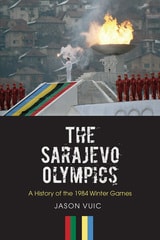
The Sarajevo Olympics
A History of the 1984 Winter GamesJason Vuic
University of Massachusetts Press, 2015
To most observers, the 1984 Winter Olympics in Sarajevo, Yugoslavia, were an unmitigated success. That year, the unlikeliest of candidate cities in the unlikeliest of candidate countries did what many had thought impossible: it hosted an international sports competition at the highest level, housing and feeding hundreds of athletes and thousands of tourists while broadcasting a positive image of socialist Yugoslavia to the world.
The first Winter Games held in a communist country, Sarajevo also marked the first Olympic confrontation of Soviet and American athletes since the U.S. boycott of the 1980 Moscow Summer Games. And the competitions themselves were spectacular and memorable. This was the Olympics of British ice dancers Jayne Torvill and Christopher Dean, American skiers “Wild Bill” Johnson and Debbie Armstrong, and East German skaters Katarina Witt and Karin Enke, not to mention a Soviet hockey team that rebounded from its stunning loss to the Americans at Lake Placid four years earlier to win all seven of its matches.
Yet The Sarajevo Olympics is more than just a history of sport. Jason Vuic also retraces the history of the Olympic movement, analyzes the inner workings of the International Olympic Committee during the troubled 1970s and 1980s, and places the 1984 Winter Games in the context of Cold War geopolitics. The book begins and ends by reminding readers that less than a decade after it hosted the Olympics, the Bosnian city of Sarajevo found itself at the vortex of a bloody and brutal civil war that would end with the dissolution of the multiethnic Yugoslavian state.

The Saratoga Campaign
Uncovering an Embattled LandscapeEdited by William A. Griswold and Donald W. Linebaugh
University Press of New England, 2016
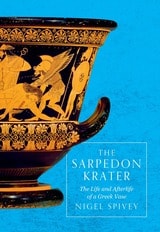
The Sarpedon Krater
The Life and Afterlife of a Greek VaseNigel Spivey
University of Chicago Press, 2019
Spivey takes the reader on a dramatic journey, beginning with the krater’s looting from an Etruscan tomb in 1971 and its acquisition by the Metropolitan Museum of Art, New York, followed by a high-profile lawsuit over its status and its eventual return to Italy. He explains where, how, and why the vase was produced, retrieving what we know about the life and legend of Sarpedon. Spivey also pursues the figural motif of the slain Sarpedon portrayed on the vase and traces how this motif became a standard way of representing the dead and dying in Western art, especially during the Renaissance.
Fascinating and informative, The Sarpedon Krater is a multifaceted introduction to the enduring influence of Greek art on the world.
The Sasanian Empire at War
Persia, Rome, and the Rise of Islam, 224–651Michael J. Decker
Westholme Publishing, 2025
A comprehensive military history of one of the most important empires of Late Antiquity
The Sasanian Empire at War: Persia, Rome, and the Rise of Islam, 224–651 is the first comprehensive study in English examining war and society in one of the most important empires in world history: the Persian Empire of 224-651 AD, ruled by the Sasanian clan. At its height the Sasanians governed lands from the Indus River in the east to Egypt and the Mediterranean in the west. Adversaries of Rome, they also faced grave challenges from nomadic powers from Central Asia, notably the Huns and Turks. The Sasanians were able to maintain their empire for hundreds of years through nearly constant warfare, but when their expansion was checked in the north by the Byzantines at Constantinople in 626, and with the Muslim invasions to their south and west beginning in the 630s, the empire could no longer be sustained, and it finally collapsed.
In this book, Michael J. Decker examines Sasanian warfare, including military capabilities, major confrontations, organization and weapons of the Persian army. In addition to providing a comprehensive overview of the conflicts that marked this vital period in the history of Eurasia, The Sasanian Empire at War challenges long cherished notions of the inferiority of Sasanian military capabilities and renders a new image of a sophisticated, confident culture astride the heart of Eurasia at the end of the ancient world and birth of the Silk Road. Persian arms were among the many features of their culture that drew widespread admiration and was one of the keys to the survival of Iranian culture beyond the Arab Conquest and into the present day.

The Savannah River Chiefdoms
Political Change in the Late Prehistoric SoutheastDavid G. Anderson
University of Alabama Press, 1994
This volume explores political change in chiefdoms, specifically how complex chiefdoms emerge and collapse, and how this process—called cycling—can be examined using archaeological, ethnohistoric, paleoclimatic, paleosubsistence, and physical anthropological data. The focus for the research is the prehistoric and initial contact-era Mississippian chiefdoms of the Southeastern United States, specifically the societies occupying the Savannah River basin from ca. A.D. 1000 to 1600. This regional focus and the multidisciplinary nature of the investigation provide a solid introduction to the Southeastern Mississippian archaeological record and the study of cultural evolution in general.
The Saving Lie
Harold Bloom and DeconstructionAgata Bielik-Robson
Northwestern University Press, 2011
Bloom is indeed a party of one, a truly strong poet of his own mode of religious-literary criticism, who, in a typically Emersonian manner, makes his own circumstances and sheds influences by incorporating them into his idiosyncratic theory.In this unprecedented full-length study on Harold Bloom, Agata Bielik-Robson explores the many facets of Bloom’s critical writings and career. In his work, she argues, Bloom draws on a variety of disparate traditions—Judaism, gnosis, Romanticism, American pragmatism, and Freudianism, but also, especially recently, Victorian aestheticism—that comprise a dialectical, difficult whole in a constant quarrel with itself. Yet, this is precisely the image of "life-in-antithesis," which constitutes Bloom’s highest speculative achievement, she observes. The Saving Lie brings all these "Blooms" together and, despite their own tendencies toward dissociation, lets them speak unisono: in one almost harmonious voice that will clearly utter the principles of a new speculative position—Bloom’s antithetical vitalism. This study of Bloom and his contributions will not soon be surpassed.
The Sawdust Trail
Billy Sunday in His Own WordsWilliam A. Sunday
University of Iowa Press, 2005
Published serially in the Ladies’ Home Journal in 1932 and 1933 and now in book form for the first time, The Sawdust Trail is the only autobiography that this hugely popular and hugely controversial preacher ever wrote. From his childhood days in Iowa to the early days of his conversion in Illinois, from his baseball career with the National League teams in Chicago, Pittsburgh, and Philadelphia to the challenges of preaching in New York City during his heyday, the sections of Sunday’s autobiography roll out like so many exuberant sermons, yet the sympathetic reader can hear echoes of the loneliness and misery of his early years.
In The Sawdust Trail the sometimes appalling but always appealing Billy Sunday creates a usable past for himself, notable for what he omits as well as for what he includes, which gives us insight not just into his own life and career but also into the peculiar history of evangelism in America.

The Saxon War
Bruno of Merseburg
Catholic University of America Press, 2022
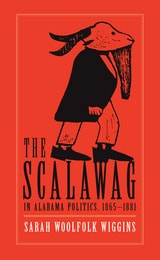
The Scalawag In Alabama Politics, 1865–1881
Sarah Woolfolk Wiggins
University of Alabama Press, 1977
Who was this scalawag? Simply a native, white, Alabama Republican! Scorned by his fellow white Southerners, he suffered, in his desire for socioeconomic reform and political power, more than mere verbal abuse and social ostracism; he lived constantly under the threat of physical violence. When first published in 1977, Wiggin’s treatment of the scalawag was the first book-length study of scalawags in any state, and it remains the most thorough treatment. According to The Journal of American History, this is the “most effective challenge to the scalawag stereotype yet to appear.”
The Scandal of Reform
The Grand Failures of New York's Political Crusaders and the Death of NonpartisanshipBarry, Francis S
Rutgers University Press, 2009
The Scandal of Reform pulls the curtain back on New York's reformers past and present, revealing the bonds they have always shared with the bosses they disdain, the policy failures they still refuse to recognize, and the transition they have made from nonpartisan outsiders to ideological insiders.
Francis S. Barry examines the evolution of political reform from the frontlines of New York City's recent reform wars. He offers an insider's account and analysis of the controversial 2003 referendum debate on nonpartisan elections, and he challenges reformersùand members of both partiesùto reconsider their faith in reforms that are no longer serving the public interest.
The Scar of Visibility
Medical Performances and Contemporary ArtPetra Kuppers
University of Minnesota Press, 2007

The Scarith of Scornello
A Tale of Renaissance ForgeryIngrid D. Rowland
University of Chicago Press, 2004
As recounted here with relish by Ingrid D. Rowland, Curzio preyed on the Italian fixation with ancestry to forge an array of ancient Latin and Etruscan documents. For authenticity's sake, he stashed the counterfeit treasure in scarith (capsules made of hair and mud) near Scornello. To the seventeenth-century Tuscans who were so eager to establish proof of their heritage and history, the scarith symbolized a link to the prestigious culture of their past. But because none of these proud Italians could actually read the ancient Etruscan language, they couldn't know for certain that the documents were frauds. The Scarith of Scornello traces the career of this young scam artist whose "discoveries" reached the Vatican shortly after Galileo was condemned by the Inquisition, inspiring participants on both sides of the affair to clash again—this time over Etruscan history.
An expert on the Italian Renaissance and one of only a few people in the world to work with the Etruscan language, Rowland writes a tale so enchanting it seems it could only be fiction. In her investigation of this seventeenth-century caper, Rowland will captivate readers with her sense of humor and obvious delight in Curzio's far-reaching prank. And even long after the inauthenticity of Curzio's creation had been established, this practical joke endured: the scarith were stolen in the 1980s by a thief who mistook them for the real thing.
The Scarlet Mob of Scribblers
Rereading Hester PrynneJamie Barlowe
Southern Illinois University Press, 2000
Jamie Barlowe finds it bitterly ironic that in literary criticism of The Scarlet Letter, a major American novel about a woman, the voices of female critics have been virtually excluded.
Barlowe examines the causes and consequences of the continuing disregard for women's scholarship. To that end, she chronicles The Scarlet Letter's critical reception, analyzes the history of Hester Prynne as a cultural icon in literature and film, rereads the canonized criticism of the novel, and offers a new reading of Hawthorne's work by rescuing marginalized interpretations from the alternative canon of women critics.
Despite the fervent protestations of scholars that women and minorities are no longer excluded from the arena of academic debate, Barlowe's investigation reveals that mainstream scholarship on The Scarlet Letter—studied as models by generations of students and teachers—remains male-dominated in its comprising population and in its attitudes and practices, which function as the source of its truth-claims. Rather than celebrating the minimal handouts of the academy to women and minorities—and of the culture that nurtures and supports the academy's continuing discrimination—Barlowe constructs a case study that reveals the "rather pitiful state of affairs at the close of the twentieth century."
By interrogating canonized assumptions, Barlowe charts new directions for Hawthorne studies and American literary studies. Through this exposé of ingrained institutional bias, perpetuated myths, and privileged critics, Barlowe provides a refigured perception of the field and state of contemporary literary scholarship.

The Scars of Project 459
The Environmental Story of the Lake of the OzarksTraci Angel
University of Arkansas Press, 2014

The Scattered Court
Hindustani Music in Colonial BengalRichard David Williams
University of Chicago Press, 2023
How far did colonialism transform north Indian music? In the period between the Mughal empire and the British Raj, how did the political landscape bleed into aesthetics, music, dance, and poetry? Examining musical culture through a diverse and multilingual archive, primarily using sources in Urdu, Bengali, and Hindi that have not been translated or critically examined before, The Scattered Court challenges our assumptions about the period. Richard David Williams presents a long history of interactions between northern India and Bengal, with a core focus on the two courts of Wajid Ali Shah (1822–1887), the last ruler of the kingdom of Awadh. He charts the movement of musicians and dancers between the two courts in Lucknow and Matiyaburj, as well as the transregional circulation of intellectual traditions and musical genres, and demonstrates the importance of the exile period for the rise of Calcutta as a celebrated center of Hindustani classical music. Since Lucknow is associated with late Mughal or Nawabi society and Calcutta with colonial modernity, examining the relationship between the two cities sheds light on forms of continuity and transition over the nineteenth century, as artists and their patrons navigated political ruptures and social transformations. The Scattered Court challenges the existing historiography of Hindustani music and Indian culture under colonialism by arguing that our focus on Anglophone sources and modernizing impulses has directed us away from the aesthetic subtleties, historical continuities, and emotional dimensions of nineteenth-century music.
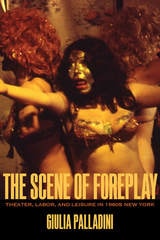
The Scene of Foreplay
Theater, Labor, and Leisure in 1960s New YorkGiulia Palladini
Northwestern University Press, 2017
Matching an original approach to historical materials and theoretical reflection, Palladini addresses the peculiar forms of production, reproduction, and consumption developed in the 1960s as labors of love, creating for artists a condition of “preliminarity” toward professional work and also functioning as a counterforce within productive economy, as a prelude where value is not yet assigned to labor.
The Scene of Foreplay proposes that such labors of love can be considered both as paradigmatic for contemporary forms of precarious labor and also resonating with echoes from marginal histories of the performing arts, in a nonlinear genealogy of queer resistance to ideas of capitalist productivity and professionalism. The book offers much for those interested in performance theory as well asin the history of theater and performance arts in the 1960s.
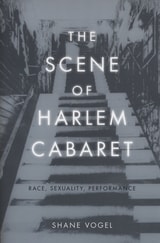
The Scene of Harlem Cabaret
Race, Sexuality, PerformanceShane Vogel
University of Chicago Press, 2009
Harlem’s nightclubs in the 1920s and ’30s were a crucible for testing society’s racial and sexual limits. Normally tacit divisions were there made spectacularly public in the vibrant, but often fraught, relationship between performer and audience. The cabaret scene, Shane Vogel contends, also played a key role in the Harlem Renaissance by offering an alternative to the politics of sexual respectability and racial uplift that sought to dictate the proper subject matter for black arts and letters. Individually and collectively, luminaries such as Duke Ellington, Lena Horne, Langston Hughes, Claude McKay, Wallace Thurman, and Ethel Waters expanded the possibilities of blackness and sexuality in America, resulting in a queer nightlife that flourished in music, in print, and on stage.
Deftly combining performance theory, literary criticism, historical research, and biographical study, The Scene of Harlem Cabaret brings this rich moment in history to life, while exploring the role of nightlife performance as a definitive touchstone for understanding the racial and sexual politics of the early twentieth century.
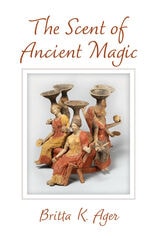
The Scent of Ancient Magic
Britta K. Ager
University of Michigan Press, 2022
The Scent of Ancient Magic explores the complex interconnection of scent and magic in the Greco-Roman world between 800 BCE and CE 600, drawing on ancient literature and the modern study of the senses to examine the sensory depth and richness of ancient magic. Author Britta K. Ager looks at how ancient magicians used scents as part of their spells, to put themselves in the right mindset for an encounter with a god or to attack their enemies through scent. Ager also examines the magicians who appear in ancient fiction, like Medea and Circe, and the more metaphorical ways in which their spells are confused with perfumes and herbs. This book brings together recent scholarship on ancient magic from classical studies and on scent from the interdisciplinary field of sensory studies in order to examine how practicing ancient magicians used scents for ritual purposes, how scent and magic were conceptually related in ancient literature and culture, and how the assumption that strong scents convey powerful effects of various sorts was also found in related areas like ancient medical practices and normative religious ritual.

The Schlemiel as Metaphor, Revised and Enlarged Edition
Studies in Yiddish and American Jewish FictionSanford Pinsker
Southern Illinois University Press, 1991
The certainty that deep down we are all schlemiels is perhaps what makes America love an inept ball team or a Woody Allen who unburdens his neurotic heart in public.
In this unique, revised history of the schlemiel, Sanford Pinsker uses psychological, linguistic, and anecdotal approaches, as well as his considerable skills as a spritely storyteller, to trace the schlemiel from his beginnings in the Old Testament through his appearance in the nineteenth-century literature of Mendele Mocher Seforim and Sholom Aleichem to his final development as the beautiful loser in the works of Isaac Bashevis Singer, Bernard Malamud, Saul Bellow, Philip Roth, and Woody Allen. Horatio Alger might have once been a good emblem of the American sensibility, but today Woody Allen’s anxious, bespectacled punin (face) seems closer, and truer, to our national experience. His urban, end-of-the-century anxieties mirror—albeit in exaggeration—our own.
This expanded study of the schlemiel is especially relevant now, when scholarship of Yiddish and American Jewish literature is on the increase. By sketching the family tree of that durable anti-hero the schlemiel, Pinsker proves that Jewish humor is built upon the very foundations of the Jewish experience. Pinsker shows the evolution of the schlemiel from the comic butt of Yiddish jokes to a literary figure that speaks to the heart of our modern problems, and he demonstrates the way that Yiddish humor provides a sorely needed correction, a way of pulling down the vanities we all live by.
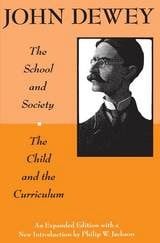
The School and Society and The Child and the Curriculum
John Dewey
University of Chicago Press, 1990
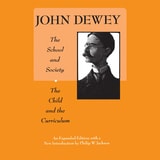
The School and Society and The Child and the Curriculum
John Dewey
University of Chicago Press, 1990
This edition brings Dewey's educational theory into sharp focus, framing his two classic works by frank assessments, past and present, of the practical applications of Dewey's ideas. In addition to a substantial introduction in which Philip W. Jackson explains why more of Dewey's ideas haven't been put into practice, this edition restores a "lost" chapter, dropped from the book by Dewey in 1915.

The School of Prague
Thomas DaCosta Kaufmann
University of Chicago Press, 1988

The School-Prison Trust
Sabina E. Vaught
University of Minnesota Press, 2022
Considers colonial school–prison systems in relation to the self-determination of Native communities, nations, and peoples
The School–Prison Trust describes interrelated histories, ongoing ideologies, and contemporary expressions of what the authors call the “school–prison trust”: a conquest strategy encompassing the boarding school and juvenile prison models, and deployed in the long war against Native peoples. At its heart, the book is a constellation of stories of Indigenous self-determination in the face of this ongoing conquest.
Following the stories of an incarcerated young man named Jakes, the authors consider features of school–prison relations for young Native people to ask urgent questions about Indigenous sovereignty, conquest, survivance, and refusal.

The Schoolhouse Door
Segregation's Last Stand at the University of AlabamaE. Culpepper Clark
University of Alabama Press, 2007
E. Culpepper Clark's book is a well-researched and crisply written narrative that draws its energy from the drama of the desegregation crisis in the postwar South. The first part of the story, covering the period 1943-57, centers on the admission to and expulsion from the University of Alabama of Autherine Lucy in 1956. In retrospect this appears as an opportunity for peaceful change that was tragically lost by inept university administrators and trustees, who stalled until Alabama's populist-New Deal politics shifted sharply toward segregationist defiance following the bus boycott in Montgomery in 1955-56. The second part centers on the events culminating in Wallace’s spectacular stand at Foster Auditorium in June 1963.
The flagship at Tuscaloosa, threatened by the research pace of the branch campuses at Birmingham and Huntsville, unable to keep or recruit superior faculty during the post-Sputnik boom years, weakly led by strong politicians like John Patterson and Wallace, emerged from the drama as a badly mauled institution, notable chiefly for its football team and Coach Paul 'Bear' Bryant
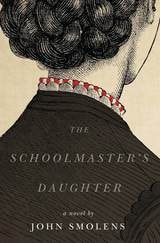
The Schoolmaster's Daughter
John Smolens
Michigan State University Press, 2019

The Schultz Site at Green Point
A Stratified Occupation Area in the Saginaw Valley of MichiganEdited by James E. Fitting
University of Michigan Press, 1972

The Science and Politics of Racial Research
William H. Tucker
University of Illinois Press, 1994
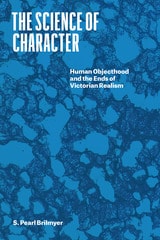
The Science of Character
Human Objecthood and the Ends of Victorian RealismS. Pearl Brilmyer
University of Chicago Press, 2022
In 1843, the Victorian philosopher John Stuart Mill called for the establishment of a new science, “the science of the formation of character.” Although Mill’s proposal failed as scientific practice, S. Pearl Brilmyer maintains that it found its true home in realist fiction of the period, which employed the literary figure of character to investigate the nature of embodied experience. Bringing to life Mill’s unrealized dream of a science of character, novelists such as George Eliot, Thomas Hardy, and Olive Schreiner turned to narrative to explore how traits and behaviors in organisms emerge and develop, and how aesthetic features—shapes, colors, and gestures—come to take on cultural meaning through certain categories, such as race and sex. Engaged with materialist science and philosophy, these authors transformed character from the liberal notion of the inner truth of an individual into a materially determined figuration produced through shifts in the boundaries between the body’s inside and outside. In their hands, Brilmyer argues, literature became a science, not in the sense that its claims were falsifiable or even systematically articulated, but in its commitment to uncovering, through a fictional staging of realistic events, the laws governing physical and affective life. The Science of Character redraws late Victorian literary history to show how women and feminist novelists pushed realism to its aesthetic and philosophical limits in the crucial span between 1870 and 1920.

The Science of Deception
Psychology and Commerce in AmericaMichael Pettit
University of Chicago Press, 2012
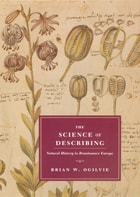
The Science of Describing
Natural History in Renaissance EuropeBrian W. Ogilvie
University of Chicago Press, 2006
In the late fifteenth and early sixteenth centuries, naturalists focused on understanding ancient and medieval descriptions of the natural world, but by the mid-sixteenth century naturalists turned toward distinguishing and cataloguing new plant and animal species. To do so, they developed new techniques of observing and recording, created botanical gardens and herbaria, and exchanged correspondence and specimens within an international community. By the early seventeenth century, naturalists began the daunting task of sorting through the wealth of information they had accumulated, putting a new emphasis on taxonomy and classification.
Illustrated with woodcuts, engravings, and photographs, The Science of Describing is the first broad interpretation of Renaissance natural history in more than a generation and will appeal widely to an interdisciplinary audience.

The Science of Energy
A Cultural History of Energy Physics in Victorian BritainCrosbie Smith
University of Chicago Press, 1999
Replacing the language and concepts of classical mechanics with terms such as "actual" and "potential" energy, the North British group conducted their revolution in physics so astutely and vigorously that the concept of "energy"—a valuable commodity in the early days of industrialization—became their intellectual property. Smith skillfully places this revolution in its scientific and cultural context, exploring the actual creation of scientific knowledge during one of the most significant episodes in the history of physics.
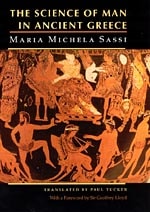
The Science of Man in Ancient Greece
Maria Michela Sassi
University of Chicago Press, 2000
Maria Michela Sassi reconstructs Greek attempts to answer such questions from Homer's day to late antiquity, ranging across physiognomy, ethnography, geography, medicine, and astrology. Sassi demonstrates that in the Greek science of man, empirical observations were inextricably bound up with a prejudiced view of the free Greek male as superior to all others. Thus, because women were assumed to have pale skin from staying indoors too much, Greek biology and medicine sought to explain this feature as an indication of the "cold" nature of women, as opposed to the "hot" constitution of men.
For this English translation, Sassi has rewritten the introduction and updated the text and references throughout, and Sir Geoffrey Lloyd has provided a new foreword.
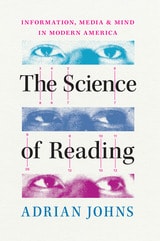
The Science of Reading
Information, Media, and Mind in Modern AmericaAdrian Johns
University of Chicago Press, 2023
Reading is perhaps the essential practice of modern civilization. For centuries, it has been seen as key to both personal fulfillment and social progress, and millions today depend on it to participate fully in our society. Yet, at its heart, reading is a surprisingly elusive practice. This book tells for the first time the story of how American scientists and others have sought to understand reading, and, by understanding it, to improve how people do it.
Starting around 1900, researchers—convinced of the urgent need to comprehend a practice central to industrial democracy—began to devise instruments and experiments to investigate what happened to people when they read. They traced how a good reader’s eyes moved across a page of printed characters, and they asked how their mind apprehended meanings as they did so. In schools across the country, millions of Americans learned to read through the application of this science of reading. At the same time, workers fanned out across the land to extend the science of reading into the social realm, mapping the very geography of information for the first time. Their pioneering efforts revealed that the nation’s most pressing problems were rooted in drastic informational inequities, between North and South, city and country, and white and Black—and they suggested ways to tackle those problems.
Today, much of how we experience our information society reflects the influence of these enterprises. This book explains both how the science of reading shaped our age and why, with so-called reading wars still plaguing schools across the nation, it remains bitterly contested.
The Science of Reading
Information, Media, and Mind in Modern AmericaAdrian Johns
University of Chicago Press, 2023
For the first time, the story of how and why we have plumbed the mysteries of reading, and why it matters today.
Reading is perhaps the essential practice of modern civilization. For centuries, it has been seen as key to both personal fulfillment and social progress, and millions today depend on it to participate fully in our society. Yet, at its heart, reading is a surprisingly elusive practice. This book tells for the first time the story of how American scientists and others have sought to understand reading, and, by understanding it, to improve how people do it.
Starting around 1900, researchers—convinced of the urgent need to comprehend a practice central to industrial democracy—began to devise instruments and experiments to investigate what happened to people when they read. They traced how a good reader’s eyes moved across a page of printed characters, and they asked how their mind apprehended meanings as they did so. In schools across the country, millions of Americans learned to read through the application of this science of reading. At the same time, workers fanned out across the land to extend the science of reading into the social realm, mapping the very geography of information for the first time. Their pioneering efforts revealed that the nation’s most pressing problems were rooted in drastic informational inequities, between North and South, city and country, and white and Black—and they suggested ways to tackle those problems.
Today, much of how we experience our information society reflects the influence of these enterprises. This book explains both how the science of reading shaped our age and why, with so-called reading wars still plaguing schools across the nation, it remains bitterly contested.
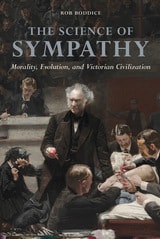
The Science of Sympathy
Morality, Evolution, and Victorian CivilizationRob Boddice
University of Illinois Press, 2016
The Science of Walking
Investigations into Locomotion in the Long Nineteenth CenturyAndreas Mayer
University of Chicago Press, 2020
Looking back at more than a century of locomotion research, Mayer charts, for the first time, the rise of scientific endeavors to control and codify locomotion and analyzes their social, political, and aesthetic ramifications throughout the long nineteenth century. In an engaging narrative that weaves together science and history, Mayer sets the work of the most important representatives of the physiology of locomotion—including Wilhelm and Eduard Weber and Étienne-Jules Marey—in their proper medical, political, and artistic contexts. In tracing the effects of locomotion studies across other cultural domains, Mayer reframes the history of the science of walking and gives us a deeper understanding of human movement.
The Science of the Swastika
Bernard Mees
Central European University Press, 2008

The Sciences in Enlightened Europe
Edited by William Clark, Jan Golinski, and Simon Schaffer
University of Chicago Press, 1999
The contributors examine the production of new disciplines through work with instruments and techniques; consider how institutions of public taste and conversation helped provide a common frame for the study of human and nonhuman natures; and explore the regional operations of scientific culture at the geographical fringes of Europe.
Implicated in the rise of both fascism and liberal secularism, the moral and political values that shaped the Enlightenment remain controversial today. Through careful scrutiny of how these values influenced and were influenced by the concrete practices of its sciences, this book gives us an entirely new sense of the Enlightenment.

The Sciences of the Soul
The Early Modern Origins of PsychologyFernando Vidal
University of Chicago Press, 2011
Fernando Vidal’s trailblazing text on the origins of psychology traces the development of the discipline from its appearance in the late sixteenth century to its redefinition at the end of the seventeenth and its emergence as an institutionalized field in the eighteenth. Originally published in 2011, The Sciences of the Soul continues to be of wide importance in the history and philosophy of psychology, the history of the human sciences more generally, and in the social and intellectual history of eighteenth-century Europe.
The Scientific Enterprise in America
Readings from IsisEdited by Ronald L. Numbers and Charles E. Rosenberg
University of Chicago Press, 1996
Contributions include Sally Gregory Kohlstedt, "Parlors, Primers, and Public Schooling: Education for Science in Nineteenth-Century America;" Margaret Rossiter, "'Women's Work' in Science, 1880-1910;" Philip J. Pauly, "The Development of High School Biology: New York City, 1900-1925;" Susan E. Lederer, "Political Animals: The Shaping of Biomedical Research Literature in Twentieth-Century America;" Stanley Goldberg, "Inventing a Climate of Opinion: Vannevar Bush and the Decision to Build the Bomb;" Daniel J. Kevles, "The National Science Foundation and the Debate over Postwar Research Policy, 1942-1945: A Political Interpretation of Science: The Endless Frontier;" David A. Hollinger, "Science as a Weapon in Kulturkämpfe in the United States During and After World War II;" and others.
These essays originally were published in Isis, a publication of the History of Science Society.
The Scientific Enterprise in Antiquity and Middle Ages
Readings from IsisEdited by Michael H. Shank
University of Chicago Press, 2001
Contributors include Francesca Rochberg, David Pingree, G. E. R. Lloyd, Heinrich von Staden, Martin Bernal, Alexander Jones, Bernard Goldstein, Alan Bowen, Owsei Temkin, David Lindberg, Steven McCluskey, Linda Voigts, Edward Grant, Bernard Goldstein, Victor Roberts, Lynn Thorndike, Helen Lemay, William Newman, A. Mark Smith, Nancy Siraisi, Michael McVaugh, and Brian P. Copenhaver.