"Recommended." —CHOICE
— -
"Rumold's encyclopedic knowledge of European modernism allows him to draw connections among a diverse group of thinkers and creative figures, who are seldom treated together within a single study... on the whole, his book is a thought-provoking review of the German historical avant-garde." —Seminar: A Journal of Germanic Studies
— -
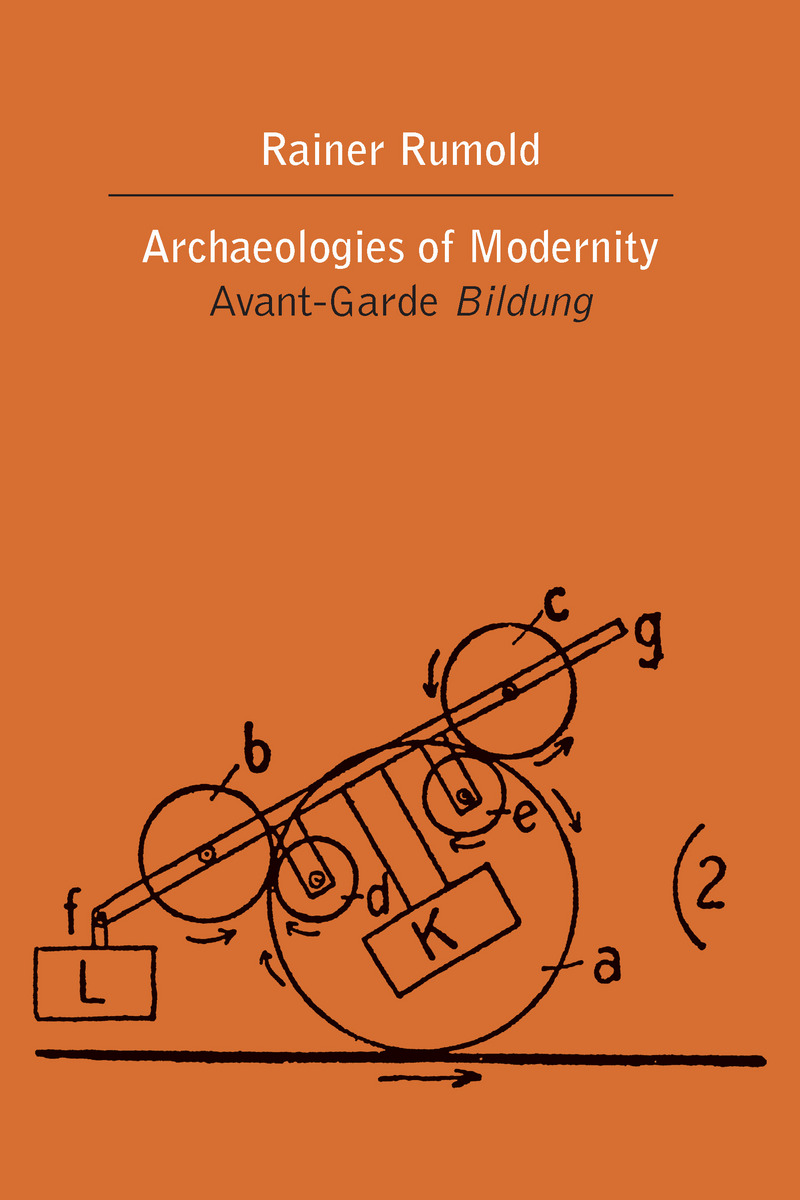
"This fascinating and wide-ranging book makes an eloquent argument for reconsidering the German avant-garde in around 1900–40. The avant-garde under discussion here comprises artists, writers and thinkers from Kokoschka to Benjamin who cut across conventional categorizations such as Expressionism, Dada, Surrealism or ‘theory.' Rumold’s ‘archaeological’ aim is to uncover the German avant-garde’s turns towards the visual, its desire for a pure imagery free from literary representation, the burden of history and Western conceptualizations of the self. According to Rumold, the avant-garde’s visual turns subvert the culture of metaphor perpetuated and institutionalized by literature, displacing symbolic representations of the Western subject into a range of pre-logical and progressive forms, figures, and ‘unsymbolizable, singular images.' Rumold maps a rich repertoire of avant-garde ‘image zones’ (the term is Walter Benjamin’s, from his 1929 essay on Surrealism), paying close attention to their historical and theoretical contexts as well as their shared modality which, he suggests, amounts to an interplay of materiality and mental creativity to give us ‘the sight, touch, feel, not of utopia, but of a ground unspoiled by hypertrophic conceptuality and metaphors.’ The book thus bears out the author’s claim to the productivity of thinking about the avant-garde’s visual turns, where previous accounts have emphasized its artistic and/or political failure." —Journal of European Studies— -
"Recommended." —CHOICE
— -
"Rumold's encyclopedic knowledge of European modernism allows him to draw connections among a diverse group of thinkers and creative figures, who are seldom treated together within a single study... on the whole, his book is a thought-provoking review of the German historical avant-garde." —Seminar: A Journal of Germanic Studies
— -
"This fascinating and wide-ranging book makes an eloquent argument for reconsidering the German avant-garde in around 1900–40. The avant-garde under discussion here comprises artists, writers and thinkers from Kokoschka to Benjamin who cut across conventional categorizations such as Expressionism, Dada, Surrealism or ‘theory.' Rumold’s ‘archaeological’ aim is to uncover the German avant-garde’s turns towards the visual, its desire for a pure imagery free from literary representation, the burden of history and Western conceptualizations of the self. According to Rumold, the avant-garde’s visual turns subvert the culture of metaphor perpetuated and institutionalized by literature, displacing symbolic representations of the Western subject into a range of pre-logical and progressive forms, figures, and ‘unsymbolizable, singular images.' Rumold maps a rich repertoire of avant-garde ‘image zones’ (the term is Walter Benjamin’s, from his 1929 essay on Surrealism), paying close attention to their historical and theoretical contexts as well as their shared modality which, he suggests, amounts to an interplay of materiality and mental creativity to give us ‘the sight, touch, feel, not of utopia, but of a ground unspoiled by hypertrophic conceptuality and metaphors.’ The book thus bears out the author’s claim to the productivity of thinking about the avant-garde’s visual turns, where previous accounts have emphasized its artistic and/or political failure." —Journal of European Studies— -