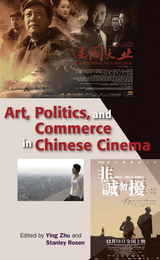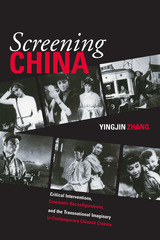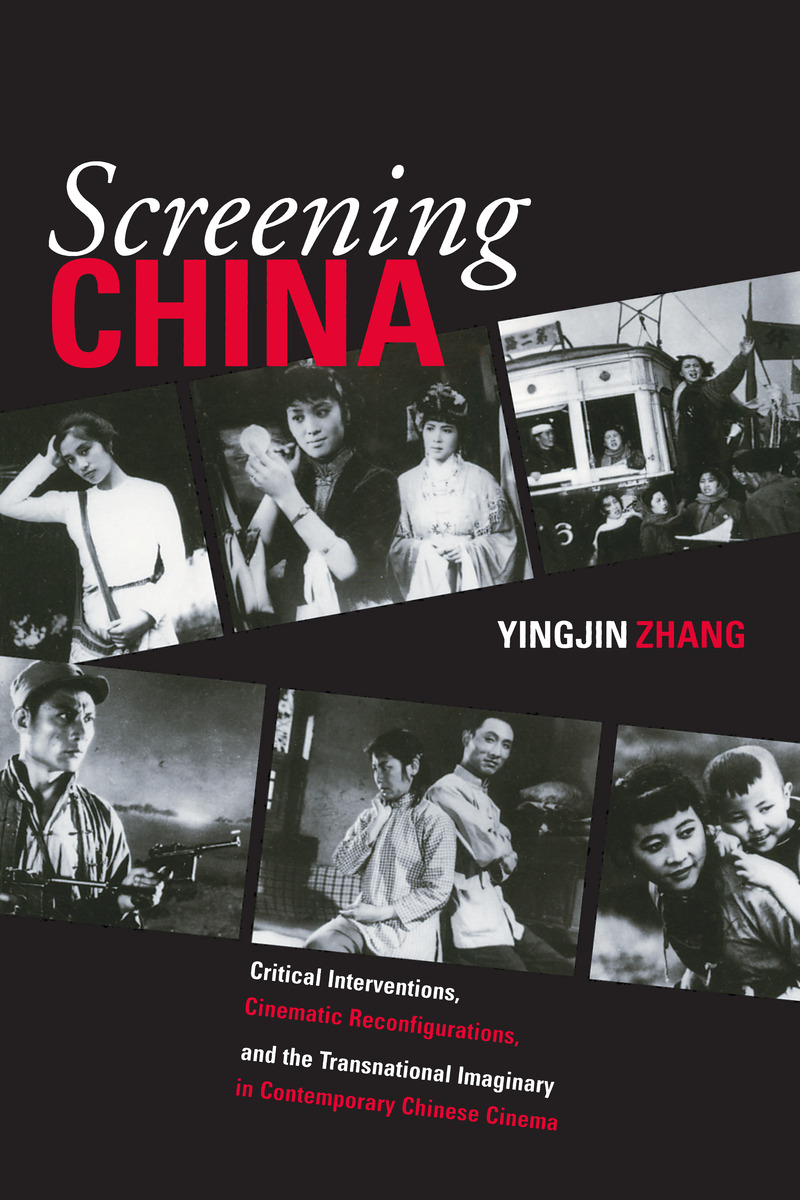
Screening China: Critical Interventions, Cinematic Reconfigurations, and the Transnational Imaginary in Contemporary Chinese Cinema
University of Michigan Press, 2001
Cloth: 978-0-89264-147-5 | Paper: 978-0-89264-158-1 | eISBN: 978-0-472-90694-9 (OA) | eISBN: 978-0-472-22605-4 (standard)
Library of Congress Classification PN1993.5.C4Z54 2002
Dewey Decimal Classification 791.430951
Cloth: 978-0-89264-147-5 | Paper: 978-0-89264-158-1 | eISBN: 978-0-472-90694-9 (OA) | eISBN: 978-0-472-22605-4 (standard)
Library of Congress Classification PN1993.5.C4Z54 2002
Dewey Decimal Classification 791.430951
ABOUT THIS BOOK | AUTHOR BIOGRAPHY | TOC | REQUEST ACCESSIBLE FILE
ABOUT THIS BOOK
Even as lawsuits challenging its admissions policies made their way through the courts, the University of Michigan carried the torch for affirmative action in higher education.In June 2003, the Supreme Court vindicated UM's position on affirmative action when it ruled that race may be used as a factor for universities in their admissions programs, thus confirming what the UM had argued all along: diversity in the classroom translates to a beneficial and wide-ranging social value. With the green light given to the law school's admissions policies, Defending Diversity validates the positive benefits gained by students in a diverse educational setting.Written by prominent University of Michigan faculty, Defending Diversity is a timely response to the court's ruling. Providing factual background, historical setting, and the psychosocial implications of affirmative action, the book illuminates the many benefits of a diverse higher educational setting -- including preparing students to be full participants in a pluralistic democracy -- and demonstrates why affirmative action is necessary to achieve that diversity.Defending Diversity is a significant contribution to the ongoing discussion on affirmative action in higher education. Perhaps more important, it is a valuable record of the history, events, arguments, and issues surrounding the original lawsuits and the Supreme Court's subsequent ruling, and helps reclaim the debate from those forces opposed to affirmative action.
See other books on: China | Critical Interventions | Motion pictures | Performing Arts | Transnational Imaginary
See other titles from University of Michigan Press