
 A SCHOLARLY BOOK REPOSITORY
169 start with A start with A
This volume, originally published in 1922, constitutes the most complete summary of anthropological information on Florida up until that point. Not only does it consider all previous research on Florida archaeology, physical anthropology, and aboriginal history, it also contains Hrdlicka’s analysis of every human bone from Florida that he could find in collections. He made remarkably accurate observations about the general physical types of prehistoric Florida Indians and how they compared to native peoples of surrounding regions.
A Dan Josselyn Memorial Publication
This reissue of Charles Jones’s classic investigations of the Mound Builders will be an invaluable resource for archaeologists today
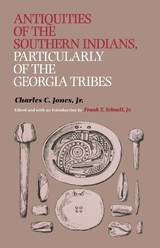
Long a classic of southeastern archaeology, Charles Jones’s Antiquities of the Southern Indians was a groundbreaking work that linked historic tribes with prehistoric “antiquities.” Published in 1873, it predated the work of Cyrus Thomas and Clarence Moore and remains a rich resource for modern scholars.
Jones was a pioneer of archaeology who not only excavated important sites but also related his findings to other sites, to contemporary Indians, and to artifacts from other areas. His work covers all of the southeastern states, from Virginia to Louisiana, and is noted for its insights into the De Soto expedition and the history of the Creek Indians.
Best known for refuting the popular myth of the Mound Builders, Jones proposed a connection between living Native Americans of the 1800s and the prehistoric peoples who had created the Southeast’s large earthen mounds. His early research and culture comparisons led to the eventual demise of the Mound Builder myth.
For this reissue of Jones’s book, a new introduction by Frank Schnell places Jones’s work in the context of his times and relates it to current research in the Southeast. An engagingly written work enhanced by numerous maps and engravings, Antiquities of the Southern Indians will serve today’s scholars and fascinate all readers interested in the region’s prehistory.

A first-hand account of the USS England's accomplishments, written by its commanding officer
The USS England was a 1200-ton, 306-foot, long-hull destroyer escort. Commissioned into service in late 1943 and dispatched to the Pacific the following February, the England and its crew, in one 12-day period in 1944, sank more submarines than any other ship in U.S. naval history: of the six targets attacked, all six were destroyed. For this distinction, legendary in the annals of antisubmarine warfare, the ship and her crew were honored with the Presidential Unit Citation.
After convoying in the Atlantic, John A. Williamson was assigned to the England—first as its executive officer, then as its commanding officer—from the time of her commissioning until she was dry-docked for battle damage repairs in the Philadelphia Naval Yard fifteen months later. Besides being a key participant in the remarkable antisubmarine actions, Williamson commanded the England in the battle of Okinawa, where she was attacked by kamikaze planes.
Williamson narrates his memoir with authority and authenticity, describes naval tactics and weaponry precisely, and provides information gleaned from translations of the orders from the Japanese high command to Submarine Squadron 7. The author details the challenges of communal life aboard ship and explains the intense loyalty that bonds crew members for life. Ultimately, Williamson offers a compelling portrait of himself, an inexperienced naval officer who, having come of age in Alabama during the Depression, rose to become the most successful World War II antisubmarine warfare officer in the Pacific.
*
The first in-depth study in English to analyze post-utopian historical novels written during and in the wake of brutal Latin American dictatorships and authoritarian regimes
During neoliberal reforms in the 1980s and 1990s, murder, repression, and exile had reduced the number of intellectuals and Leftists, and many succumbed to or were coopted by market forces and ideologies. The opposition to the economic violence of neoliberal projects lacked a united front, and feasible alternatives to the contemporary order no longer seemed to exist. In this context, some Latin American literary intellectuals penned post-utopian historical novels as a means to reconstruct memory of significant moments in national history. Through the distortion and superimposition of distinct genres within the narratives, authors of post-utopian historical novels incorporated literary, cultural, and political traditions to expose contemporary challenges that were rooted in unresolved past conflicts.
In Anything but Novel, Jennie Irene Daniels closely examines four post-utopian novels—César Aira’s Ema, la cautiva, Rubem Fonseca’s O Selvagem da Ópera, José Miguel Varas’s El correo de Bagdad, and Santiago Páez’s Crónicas del Breve Reino—to make their contributions more accessible and to synthesize and highlight the literary and social interventions they make. Although the countries the novels focus on (Argentina, Brazil, Chile, and Ecuador) differ widely in politics, regime changes, historical precedents, geography, and demographics, the development of a shared subgenre among the literary elite suggests a common experience and interpretation of contemporary events across Latin America. These novels complement one another, extending shared themes and critiques.
Daniels argues the novels demonstrate that alternatives exist to neoliberalism even in times when it appears there are none. Another contribution of these novels is their repositioning of the Latin American literary intellectuals who have advocated for the marginalized in their societies. Their work has opened new avenues and developed previous lines of research in feminist, queer, and ethnic studies and for nonwhite, nonmale writers.
The definitive archaeological record and what is known or speculated about the ancient Apalachicola and lower Chattahoochee Valley region of northwest Florida, southeast Alabama, and southwest Georgia
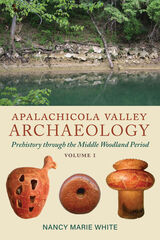
In this meticulously researched volume, Nancy Marie White provides a major holistic synthesis of the archaeological record and what is known or surmised about the peoples of the Apalachicola and lower Chattahoochee Valley region of northwest Florida, southeast Alabama, and southwest Georgia. White transforms a neglected research area into a lively saga that spans the time of the first human settlement, around 14,000 years ago, through the Middle Woodland period, ending about AD 700.
White reveals that Paleoindian habitation was more extensive than once surmised. Archaic sites were widespread, and those societies persisted when the Ice Age ended 10,000 years ago. Pottery appeared in the Late Archaic period (before 4000 BP), and Early Woodland–period burial mounds demonstrate a flowering of religious and ritual systems. Middle Woodland societies expanded this mortuary ceremony, and the complex pottery of the Swift Creek and the early Weeden Island ceramic series show an increased fascination with the ornate and unusual. Yet, basic Native American lifeways continued with gathering-fishing-hunting subsistence traditions similar to those of their ancestors.
This volume and its companion form the definitive work on the Apalachicola–lower Chattahoochee Valley region for both scholars and general readers interested in Native Americans of the Southeast.
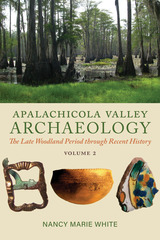
Synthesizes the archaeology of the Apalachicola–lower Chattahoochee Valley region of northwest Florida, southeast Alabama, and southwest Georgia, from 1,300 years ago to recent times
Applications of Research in Music Behavior stresses the practical applications and implications of investigating music behavior in a systematic, objective manner. Specifically, the book focuses on factors influencing the teaching of children; efficient methods for instructing future teachers; elements affecting musical perception, likes, and dislikes; and innovative efforts to investigate new areas of study. Recent studies by twenty-six nationally known educators that use objective strategies associated with experimental and behavioral research are presented to illustrate how people learn about music and how people are taught to make music.
The research studies are introduced by an article emphasizing the usefulness of research literature in devising a teaching strategy and are grouped into four sections: Teaching Music to Children, Teaching Future Teachers, Preference and Perception, and New Horizons. The concluding article is an allegorical proposal for balance and perspective in the consideration of music education.
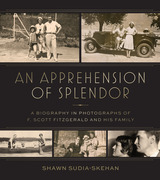
Enter the Jazz Age glamour of F. Scott and Zelda Fitzgerald and their daughter, Scottie. An Apprehension of Splendor is a rich pictorial biography that illuminates the lives of this brilliant literary family in 344 rare photographs, 180 of which have never been published.
The Fitzgeralds are chiefly known from a small number of iconic, posed images, but the dashing couple and their daughter amassed hundreds of candid snapshots now housed in archives and university library collections throughout North America. These rare photos reveal the full, vivid lives behind the icons—a Buffalo boy cradling a velvety puppy, a jaunty southern gamine in the shade of a loblolly pine laughing at a secret, the stoic gloom of an enlistee in a scratchy woolen uniform, a plot taking shape in the mind of a fledgling writer with bed-tousled hair, an amorous young couple struggling to light a cigarette in the chiaroscuro of a Riviera beach, an unhappy baby tugged through the snow in a laundry basket lashed to a sled, and a myriad of other images that will rekindle fascination with the Fitzgeralds and their time.
With unparalleled access to the family’s personal papers and photographs, Shawn Sudia-Skehan, former director of acquisitions at the Scott and Zelda Fitzgerald Museum, handpicked and annotated this collection of images that brings readers closer to the Fitzgeralds than any other work. Readers of Tender Is the Night, The Beautiful and Damned, and many other works by F. Scott and Zelda will recognize some of the places and experiences that inspired their unforgettable fictions.
A captivating portrait of Jazz Age celebrity, young passion, and artistic ambition, An Apprehension of Splendor returns the perfume to the luminous flower of the Fitzgeralds.
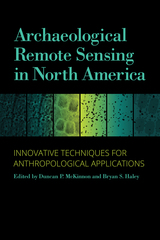
Updating the highly praised 2006 publication Remote Sensing in Archaeology, edited by Jay K. Johnson, Archaeological Remote Sensing in North America: Innovative Techniques for Anthropological Applications is a must-have volume for today’s archaeologist. Targeted to practitioners of archaeological remote sensing as well as students, this suite of current and exemplary applications adheres to high standards for methodology, processing, presentation, and interpretation.
The use of remote sensing technologies to address academic and applied archaeological and anthropological research problems is growing at a tremendous rate in North America. Fueling this growth are new research paradigms using innovative instrumentation technologies and broader-area data collection methods. Increasingly, investigators pursuing these new approaches are integrating remote sensing data collection with theory-based interpretations to address anthropological questions within larger research programs.
In this indispensable volume, case studies from around the country demonstrate the technically diverse and major remote sensing methods and their integration with relevant technologies, such as geographic information systems (GIS) and global positioning systems (GPS), and include various uses of the “big four”: magnetometry, resistivity, ground-penetrating radar (GPR), and electromagnetic induction.
The study explores four major anthropological themes: site structure and community organization; technological transformation and economic change; archaeological landscapes; and earthen mound construction and composition. Concluding commentary from renowned expert Kenneth L. Kvamme overviews the practices, advances, and trends of geophysics and remote sensing in the past decade.
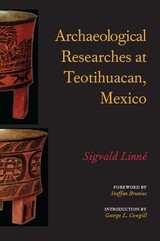
In 1932, the Ethnographical Museum of Sweden sent an archaeological expedition to Mexico under the direction of Sigvald Linné to determine the full extent of this ancient Teotihuacan occupation and to collect exhibit-quality artifacts. Of an estimated 2,000-plus residential compounds at Teotihuacan, only 20 apartment-like structures were excavated at the time. Yet Linné’s work revealed residential patterns that have been confirmed later in other locations.
Some of the curated objects from the Valley of Mexico and the adjacent state of Puebla are among the most rare and unique artifacts yet found. Another important aspect of this research was that, with the aid of the Museum of Natural History in Washington, Linné’s team conducted ethnographic interviews with remnant native Mexican peoples whose culture had not been entirely destroyed by the Conquest, thereby collecting and preserving valuable information for later research.
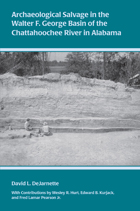
David L. DeJarnette, the founder of scientific archaeology in the state of Alabama, reports on archaeological surveys and excavations undertaken in the Chattahoochee River Valley between 1947 and 1962. The three contributors, Wesley R. Hurt, Edward B. Kurjack, and Fred Lamar Pearson Jr., each made signal contributions to the archaeology of the southeastern states. With their mentor, David L. DeJarnette, they worked out a viable cultural chronology of the region from the earliest Paleoindian and Archaic foragers to the period of early European-Indian contact. They excavated key sites, including the Woodland period Shorter Mound, the protohistoric Abercrombie village, and Spanish Fort Apalachicola, in addition to a number of important Creek Indian town sites of the eighteenth century. All are here, illustrated abundantly by site photographs, maps, and of course, the artifacts recovered from these remarkable investigations.
Copublication with the Historic Chattahoochee Commission
A Dan Josselyn Memorial Publication
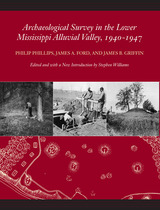
The Lower Mississippi Survey was initiated in 1939 as a joint undertaking of three institutions: the School of Geology at Louisiana State University, the Museum of Anthropology at the University of Michigan, and the Peabody Museum at Harvard. Fieldwork began in 1940 but was halted during the war years. When fieldwork resumed in 1946, James Ford had joined the American Museum of Natural History, which assumed co-sponsorship from LSU. The purpose of the Lower Mississippi Survey (LMS)—a term used to identify both the fieldwork and the resultant volume—was to investigate the northern two-thirds of the alluvial valley of the lower Mississippi River, roughly from the mouth of the Ohio River to Vicksburg. This area covers about 350 miles and had been long regarded as one of the principal hot spots in eastern North American archaeology.
Phillips, Ford, and Griffin surveyed over 12,000 square miles, identified 382 archaeological sites, and analyzed over 350,000 potsherds in order to define ceramic typologies and establish a number of cultural periods. The commitment of these scholars to developing a coherent understanding of the archaeology of the area, as well as their mutual respect for one another, enabled the publication of what is now commonly considered the bible of southeastern archaeology. Originally published in 1951 as volume 25 of the Papers of the Peabody Museum of American Archaeology and Ethnology, this work has been long out of print.
Because Stephen Williams served for 35 years as director of the LMS at Harvard, succeeding Phillips, and was closely associated with the authors during their lifetimes, his new introduction offers a broad overview of the work’s influence and value, placing it in a contemporary context.
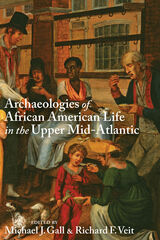
New scholarship provides insights into the archaeology and cultural history of African American life from a collection of sites in the Mid-Atlantic
This groundbreaking volume explores the archaeology of African American life and cultures in the Upper Mid-Atlantic region, using sites dating from the eighteenth through the twentieth centuries. Sites in Delaware, Pennsylvania, New Jersey, and New York are all examined, highlighting the potential for historical archaeology to illuminate the often overlooked contributions and experiences of the region’s free and enslaved African American settlers.
Archaeologies of African American Life in the Upper Mid-Atlantic brings together cutting-edge scholarship from both emerging and established scholars. Analyzing the research through sophisticated theoretical lenses and employing up-to-date methodologies, the essays reveal the diverse ways in which African Americans reacted to and resisted the challenges posed by life in a borderland between the North and South through the transition from slavery to freedom. In addition to extensive archival research, contributors synthesize the material finds of archaeological work in slave quarter sites, tenant farms, communities, and graveyards.
Editors Michael J. Gall and Richard F. Veit have gathered new and nuanced perspectives on the important role free and enslaved African Americans played in the region’s cultural history. This collection provides scholars of the Mid-Atlantic and Northeast regions, African American studies, material culture studies, religious studies, slavery, the African diaspora, and historical archaeologists with a well-balanced array of rural archaeological sites that represent cultural traditions and developments among African Americans in the region. Collectively, these sites illustrate African Americans’ formation of fluid cultural and racial identities, communities, religious traditions, and modes of navigating complex cultural landscapes in the region under harsh and disenfranchising circumstances.
Could archaeologists benefit contemporary cultures and be a factor in solving world problems? Can archaeologists help individuals? Can archaeologists change the world? These questions form the root of “archaeology activism” or “activist archaeology”: using archaeology to advocate for and affect change in contemporary communities.
Archaeologists currently change the world through the products of their archaeological research that contribute to our collective historical and cultural knowledge. Their work helps to shape and reshape our perceptions of the past and our understanding of written history. Archaeologists affect contemporary communities through the consequences of their work as they become embroiled in controversies over negotiating the past and the present with native peoples. Beyond the obvious economic contributions to local communities caused by heritage tourism established on the research of archaeologists at cultural sites, archaeologists have begun to use the process of their work as a means to benefit the public and even advocate for communities.
In this volume, Stottman and his colleagues examine the various ways in which archaeologists can and do use their research to forge a partnership with the past and guide the ongoing dialogue between the archaeological record and the various contemporary stakeholders. They draw inspiration and guidance from applied anthropology, social history, public history, heritage studies, museum studies, historic preservation, philosophy, and education to develop an activist approach to archaeology—theoretically, methodologically, and ethically.
Unlock the chemical secrets of ancient pottery in this guide for mastering organic residue pottery analysis.
Pottery analysis is a crucial component of excavating an archaeological site. Organic residues in pottery are made up of chemicals that absorb into pots over their lifetime. These residues can reveal what people ate, whether different types of vessels were used for different cooking or foodstuffs preparation, and whether “elite” vessels were in use.
Organic residue analysis is a technical specialty that blends an unusual type of instrumental organic chemistry and archaeology. Because it is considered an obscure technique, archaeologists of all degrees of experience tend to struggle with how to apply the technology to archaeological questions and how to sample effectively in the field to answer these questions.
Eleanora A. Reber’s An Archaeologist’s Guide to Organic Residues in Pottery is a user-friendly resource for all archaeologists. Composed of case studies gleaned from Reber’s more than twenty years of archaeological research, this guide covers the range of residues encountered in the field and explains the methods and application of organic residue analysis.
Reber illustrates the useful aspects of residue analysis, such as compound-specific isotope analysis for the identification of traces of maize and marine resources, conifer resins, and the psychoactive alkaloid biomarkers caffeine and nicotine. Special attention is paid to sampling and construction of meaning as well as research questions to help field archaeologists integrate residue analysis seamlessly into their projects
Across North America, huge data accumulations derived from decades of cultural resource management studies, combined with old museum collections, provide archaeologists with unparalleled opportunities to explore new questions about the lives of ancient native peoples. For many years the topics of technology, economy, and political organization have received the most research attention, while ritual, religion, and symbolic expression have largely been ignored. This was often the case because researchers considered such topics beyond reach of their methods and data.
In Archaeology and Ancient Religion in the American Midcontinent, editors Brad H. Koldehoff and Timothy R. Pauketat and their contributors demonstrate that this notion is outdated through their analyses of a series of large datasets from the midcontinent, ranging from tiny charred seeds to the cosmic alignments of mounds, they consider new questions about the religious practices and lives of native peoples. At the core of this volume are case studies that explore religious practices from the Cahokia area and surrounding Illinois uplands. Additional chapters explore these topics using data collected from sites and landscapes scattered along the Mississippi and Ohio River valleys.
This innovative work facilitates a greater appreciation for, and understanding of, ancient native religious practices, especially their seamless connections to everyday life and livelihood. The contributors do not advocate for a reduced emphasis on technology, economy, and political organization; rather, they recommend expanding the scope of such studies to include considerations of how religious practices shaped the locations of sites, the character of artifacts, and the content and arrangement of sites and features. They also highlight analytical approaches that are applicable to archaeological datasets from across the Americas and beyond.
Addressing the use of geoinformatics in Caribbean archaeology, this volume is based on case studies drawn from specific island territories, namely, Barbados, St. John, Puerto Rico, Jamaica, Nevis, St. Eustatius, and Trinidad and Tobago, as well as inter-island interaction and landscape conceptualization in the Caribbean region. Geoinformatics is especially critical within the Caribbean where site destruction is intense due to storm surges, hurricanes, ocean and riverine erosion, urbanization, industrialization, and agriculture, as well as commercial development along the very waterfronts that were home to many prehistoric peoples. By demonstrating that the region is fertile ground for the application of geoinformatics in archaeology, this volume places a well-needed scholarly spotlight on the Caribbean.
The Shiloh Indian Mounds archaeological site, a National Historic Landmark, is a late prehistoric community within the boundaries of the Shiloh National Military Park on the banks of the Tennessee River, where one of the bloodiest battles of the Civil War was fought in April 1862. Dating between AD 1000 and 1450, the archaeological site includes at least eight mounds and more than 100 houses. It is unique in that the land has never been plowed, so visitors can walk around the area and find the collapsed remains of 800-year-old houses and the 900-meter-long palisade with bastions that protected the village in prehistoric times. Although its location within a National Park boundary has protected the area from the recent ravages of man, riverbank erosion began to undermine the site in the 1970s. In the mid-1990s, Paul Welch began a four-year investigation culminating in a comprehensive report to the National Park Service on the Shiloh Indian Mounds.
These published findings confirm that the Shiloh site was one of at least fourteen Mississippian mound sites located within a 50 km area and that Shiloh was abandoned in approximately AD 1450. It also establishes other parameters for the Shiloh archaeological phase. This current volume is intended to make information about the first 100 years of excavations at the Shiloh site available to the archaeological community.
Archaeology below the Cliff: Race, Class, and Redlegs in Barbadian Sugar Society is the first archaeological study of the poor whites of Barbados, the descendants of seventeenth-century European indentured servants and small farmers. “Redlegs” is a pejorative to describe the marginalized group who remained after the island transitioned to a sugar monoculture economy dependent on the labor of enslaved Africans. A sizable portion of the “white” minority, the Redlegs largely existed on the peripheries of the plantation landscape in an area called “Below Cliff,” which was deemed unsuitable for profitable agricultural production. Just as the land on which they resided was cast as marginal, so too have the poor whites historically and contemporarily been derided as peripheral and isolated as well as idle, alcoholic, degenerate, inbred, and irrelevant to a functional island society and economy.
Using archaeological, historical, and oral sources, Matthew C. Reilly shows how the precarious existence of the Barbadian Redlegs challenged elite hypercapitalistic notions of economics, race, and class as they were developing in colonial society. Experiencing pronounced economic hardship, similar to that of the enslaved, albeit under very different circumstances, Barbadian Redlegs developed strategies to live in a harsh environment. Reilly’s investigations reveal that what developed in Below Cliff was a moral economy, based on community needs rather than free-market prices.
Reilly extensively excavated households from the tenantry area on the boundaries of the Clifton Hall Plantation, which was abandoned in the 1960s, to explore the daily lives of poor white tenants and investigate their relationships with island economic processes and networks. Despite misconceptions of strict racial isolation, evidence also highlights the importance of poor white encounters and relationships with Afro-Barbadians. Historical data are also incorporated to address how an underrepresented demographic experienced the plantation landscape. Ultimately, Reilly’s narrative situates the Redlegs within island history, privileging inclusion and embeddedness over exclusion and isolation.
Fort Polk Military Reservation encompasses approximately 139,000 acres in western Louisiana 40 miles southwest of Alexandria. As a result of federal mandates for cultural resource investigation, more archaeological work has been undertaken there, beginning in the 1970s, than has occurred at any other comparably sized area in Louisiana or at most other localities in the southeastern United States. The extensive program of survey, excavation, testing, and large-scale data and artifact recovery, as well as historic and archival research, has yielded a massive amount of information. While superbly curated by the U.S. Army, the material has been difficult to examine and comprehend in its totality.
With this volume, Anderson and Smith collate and synthesize all the information into a comprehensive whole. Included are previous investigations, an overview of local environmental conditions, base military history and architecture, and the prehistoric and historic cultural sequence. An analysis of location, environmental, and assemblage data employing a sample of more than 2,800 sites and isolated finds was used to develop a predictive model that identifies areas where significant cultural resources are likely to occur. Developed in 1995, this model has already proven to be highly accurate and easy to use.
Archaeology, History, and Predictive Modeling will allow scholars to more easily examine the record of human activity over the past 13,000 or more years in this part of western Louisiana and adjacent portions of east Texas. It will be useful to southeastern archaeologists and anthropologists, both professional and amateur.
The varied case studies in this volume focus on specific communities, how they evolved, and the types of archaeological data that have been used to assess them. Part I, “Defining the Domestic Unit in Arcuate Communities,” reveals social distinctions between households and household clusters in arcuate communities, how they differ in terms of stylistic patterns and exchange, and how they combined to form distinct social groups at different scales within a broader community. Part II, “Organizing Principles of Arcuate Communities,” broadens the scope to identify the organizing principles of entire arcuate communities, such as the central role of plazas in structuring their development, how the distribution of households and central features within communities was contested and reorganized, and the importance of mounds in both delineating arcuate communities and marking their position on the landscape. Part III, “Comparison and Change in Arcuate Communities,” comprises case studies that examine changes in the organization of arcuate communities over time. Rounding out the volume is a concluding chapter that assesses how and why communities around the world formed in circular patterns.
A valuable resource for archaeologists, this collection will also be of interest to those seeking to learn about Native North American settlement, ceremony, and community organization.
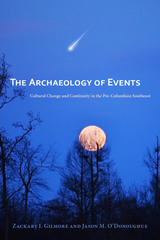
Across the social sciences, gradualist evolutionary models of historical dynamics are giving way to explanations focused on the punctuated and contingent “events” through which history is actually experienced. The Archaeology of Events is the first book-length work that systematically applies this new eventful approach to major developments in the pre-Columbian Southeast.
Traditional accounts of pre-Columbian societies often portray them as “cold” and unchanging for centuries or millennia. Events-based analyses have opened up archaeological discourse to the more nuanced and flexible idea of context-specific, rapidly transpiring, and broadly consequential historical “events” as catalysts of cultural change.
The Archaeology of Events, edited by Zackary I. Gilmore and Jason M. O’Donoughue, considers a variety of perspectives on the nature and scale of events and their role in historical change. These perspectives are applied to a broad range of archeological contexts stretching across the Southeast and spanning more than 7,000 years of the region’s pre-Columbian history. New data suggest that several of this region’s most pivotal historical developments, such as the founding of Cahokia, the transformation of Moundville from urban center to vacated necropolis, and the construction of Poverty Point’s Mound A, were not protracted incremental processes, but rather watershed moments that significantly altered the long-term trajectories of indigenous Southeastern societies.
In addition to exceptional occurrences that impacted entire communities or peoples, southeastern archaeologists are increasingly recognizing the historical importance of localized, everyday events, such as building a house, crafting a pot, or depositing shell. The essays collected by Gilmore and O’Donoughue show that small-scale events can make significant contributions to the unfolding of broad, regional-scale historical processes and to the reproduction or transformation of social structures.
The Archaeology of Events is the first volume to explore the archaeological record of events in the Southeastern United States, the methodologies that archaeologists bring to bear on this kind of research, and considerations of the event as an important theoretical concept.
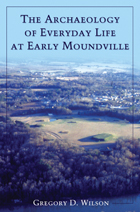
Complex Mississippian polities were neither developed nor sustained in a vacuum. A broad range of small-scale social groups played a variety of roles in the emergence of regionally organized political hierarchies that governed large-scale ceremonial centers. Recent research has revealed the extent to which interactions among corporately organized clans led to the development, success, and collapse of Moundville. These insights into Moundville’s social complexity are based primarily on the study of monumental architecture and mortuary ceremonialism. Less is known about how everyday domestic practices produced and were produced by broader networks of power and inequality in the region.
Wilson’s research addresses this gap in our understanding by analyzing and interpreting large-scale architectural and ceramic data sets from domestic contexts. This study has revealed that the early Mississippian Moundville community consisted of numerous spatially discrete multi-household groups, similar to ethnohistorically described kin groups from the southeastern United States. Hosting feasts, dances, and other ceremonial events were important strategies by which elite groups created social debts and legitimized their positions of authority. Non-elite groups, on the other hand, maintained considerable economic and ritual autonomy through diversified production activities, risk sharing, and household ceremonialism. Organizational changes in Moundville’s residential occupation highlight the different ways kin groups defined and redefined their corporate status and identities over the long term.
The Archaeology of Houses and Households in the Native Southeast contributes enormously to the study of household archaeology and domestic architecture in the region. This significant volume combines both previously published and unpublished data on communities from the Southeast and is the first systematic attempt to understand the development of houses and households as interpreted through a theoretical framework developed from broad-ranging studies in cultural anthropology and archaeology.
Steere’s major achievement is the compilation of one of the largest and most detailed architectural datasets for the Southeast, including data for 1,258 domestic and public structures from 65 archaeological sites in North Carolina, Georgia, Alabama, Tennessee, Kentucky, and the southern parts of Missouri, Indiana, and Illinois. Rare data from hard-to-find cultural resource management reports is also incorporated, creating a broad temporal and geographic scope and serving as one of many remarkable features of the book, which is sure to be of considerable value to archaeologists and anthropologists interested in comparative studies of architecture.
Similar to other analyses, Steere’s research uses multiple theoretical angles and lines of evidence to answer archaeological questions about houses and the people who built them. However, unlike other examinations of household archaeology, this project spans multiple time periods (Woodland, Mississippian, and Historic); is focused squarely on the Southeast; features a more unified approach, using data from a single, uniform database; and privileges domestic architecture as a line of evidence for reconstructing daily life at major archaeological sites on a much broader scale than other investigations.
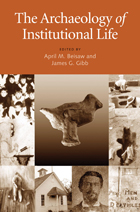
Institutions pervade social life. They express community goals and values by defining the limits of socially acceptable behavior. Institutions are often vested with the resources, authority, and power to enforce the orthodoxy of their time. But institutions are also arenas in which both orthodoxies and authority can be contested. Between power and opposition lies the individual experience of the institutionalized. Whether in a boarding school, hospital, prison, almshouse, commune, or asylum, their experiences can reflect the positive impact of an institution or its greatest failings. This interplay of orthodoxy, authority, opposition, and individual experience are all expressed in the materiality of institutions and are eminently subject to archaeological investigation.
A few archaeological and historical publications, in widely scattered venues, have examined individual institutional sites. Each work focused on the development of a specific establishment within its narrowly defined historical context; e.g., a fort and its role in a particular war, a schoolhouse viewed in terms of the educational history of its region, an asylum or prison seen as an expression of the prevailing attitudes toward the mentally ill and sociopaths. In contrast, this volume brings together twelve contributors whose research on a broad range of social institutions taken in tandem now illuminates the experience of these institutions. Rather than a culmination of research on institutions, it is a landmark work that will instigate vigorous and wide-ranging discussions on institutions in Western life, and the power of material culture to both enforce and negate cultural norms.
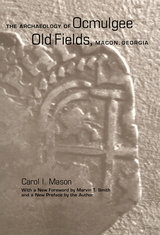
A 17th-century trading post and Indian town in central Georgia reveal evidence of culture contact and change
Ocmulgee Old Fields near Macon, Georgia, is the site of a Lower Creek village and associated English trading house dating from the late 17th and early 18th centuries. It was excavated in the early 1930s as part of a WPA project directed by A. R. Kelly, which focused primarily on the major Mississippian temple mounds of Macon Plateau. The specific data for the Old Fields was not analyzed until nearly 30 years after the excavation.
Part of the significance of this site lies in its secure identification with a known group of people and the linkage of those people with recognizable archaeological remains. The Old Fields site was among the very first for which this kind of identification was possible and stands at the head of a continuing tradition of historic sites archaeology in the Southeast.
Carol I. Mason's classic study of the Ocmulgee Old Fields site has been a model for contact-period Indian archaeology since the 1960s. The report includes a discussion of the historic setting and an analysis of the archaeological materials with an identification of the Lower Creek town and possibly of the English trader who lived there. Now, for the first time, the original report is widely available in book form. With a new foreword by the author and a new introduction from Southeastern archaeology expert Marvin T. Smith, readers have the benefit of a contemporary view of this very fine piece of careful scholarship.
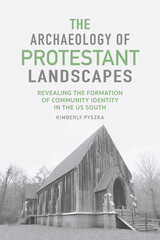
The Archaeology of Protestant Landscapes focuses on three religious institutions in the US South in the eighteenth and nineteenth centuries: St. Paul’s Parish Church in coastal South Carolina, St. Luke’s Episcopal Church in central Alabama, and Cane Hill College in Northwest Arkansas. Drawing from archaeological surveys and excavations, artifact analysis, archival research, geophysical testing, and architectural information on religious structures, Kimberly Pyszka offers case studies of these institutions, which were located in developing communities that varied socially, politically, and economically.
Pyszka uses these case studies to demonstrate that select religious institutions used and modified natural landscape features to create cultural landscapes to express their ideology, identity, goals, and social, religious, and political power. She notes that where those structures were constructed, how they sat on the landscape, their architectural style, and their overall visual appearance were well-considered decisions made by religious leaders to benefit their organizations, communities, and, sometimes, themselves.
Pyszka also uses these case studies to highlight the social roles that religious organizations played in the development of communities. She points to landscape decisions—specifically to how the architectural design of religious structures was used, intentionally or not, to unite people, often those of differing religious backgrounds—as contributing to the creation of a common identity among people living in new and still-growing settlements, aiding in community development. This book contributes to the growing body of work within historical archaeology on churches, churchyards, and cemeteries and to the increasing awareness among archaeologists of how these sites contribute to questions of identity, consumerism, trade, and colonialism.
Groundbreaking essays in urban archaeology highlight the impact of towns and cities on the southern landscape.
The rapid growth and development of urban areas in the South have resulted in an increase in the number of urban archaeology projects required by federal and state agencies. These projects provide opportunities not only to investigate marginal areas between the town and countryside but also to recover information long buried beneath the earliest urban structures. Such projects have also created a need for a one-volume update on archaeology as it is practiced in the urban areas of the southeastern United States.
Archaeology of Southern Urban Landscapes will assist practitioners and scholars in the burgeoning fields of urban and landscape archaeology by treating the South as a distinctive social, geographic, and material entity and by focusing on the urban South rather than the stereotypical South of rural plantations. The case studies in this volume span the entire southeastern United States, from Annapolis to New Orleans and from colonial times to the 19th century. The authors address questions involving the function of cities, interregional diversity, the evolution of the urban landscape, and the impact of the urban landscape on southern culture. By identifying the relationship between southern culture and the South's urban landscapes, this book will help us understand the built landscape of the past and predict future growth in the region.
The earliest recorded description of the Central Mississippi Valley and its inhabitants is contained within the DeSoto chronicles written after the conquistadors passed through the area between 1539 and 1543. In 1882 a field agent for the Bureau of American Ethnology conducted the first systematic archaeological survey of the region, an area that extends from near the mouth of the Ohio River to the mouth of the Arkansas River, bounded on the east by the Mississippi River and on the west by the Ozark Highlands and Grand Prairie. One hundred years later, the authors produced this first comprehensive overview of all of the archaeological research conducted in the valley during the interim. It is a well-organized compendium, written with both the professional archaeologist and the layperson in mind, and is profusely illustrated with maps, charts, artifact photographs, and drawings. This volume was the first published history of the archaeology of the region and stands as the basic resource for that work today.
The Muskogee Indians who lived along the lower Chattahoochee and Flint River watersheds had, and continue to have, a profound influence on the development of the southeastern United States, especially during the historic period (circa 1540–1836). Our knowledge of that culture is limited to what we can learn from their descendants and from archaeological and historical sources.
Combining historical documents and archaeological research on all known Lower Muskogee Creek sites, Thomas Foster has accurately pinpointed town locations discussed in the literature and reported in contemporary Creek oral histories. In so doing, this volume synthesizes the archaeological diversity and variation within the Lower Creek Indians between 1715 and 1836. The book is a study of archaeological methods because it analyzes the temporal and geographic variation within a single archaeological phase and the biases of that archaeological data. Foster’s research segregates the variation between Lower Creek Indian towns through a regional and direct historic approach. Consequently, he is able to discern the unique differences between individual Creek Indian towns.
Foster argues that the study of Creek Indian history should be at the level of towns instead of archaeological phases and that there is significant continuity between the culture of the Historic Period Indians and the Prehistoric and Protohistoric peoples.
Built on a flat terrace overlooking the Black Warrior River in Alabama, the Moundville ceremonial center was at its height a densely occupied town of approximately 1,000 residents, with at least 29 earthen mounds surrounding a central plaza. Today Moundville is not only one of the largest and best-preserved Mississippian sites in the United States but also one of the most intensively studied. This volume brings together nine Moundville specialists who trace the site’s evolution and eventual decline.

The Archaeology of Tibes offers a groundbreaking reevaluation of Puerto Rico’s earliest known ceremonial center, challenging long-held assumptions about social hierarchy and power in ancient Caribbean societies. Through a rich collection of essays, this volume shifts the focus from elite chiefdoms to the everyday lives, rituals, and memories of the people who shaped Tibes between 400 and 1300 CE. Featuring cutting-edge research in geoarchaeology, ceramic analysis, faunal studies, and rock art, the book presents a more nuanced and humanized view of social organization and cultural expression. Essential reading for scholars and students of Caribbean archaeology, this work invites fresh dialogue and sets a new standard for interpreting sacred spaces and community life in the ancient Americas.
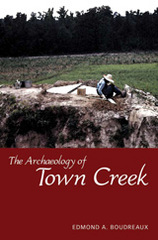
The sequence of change for public architecture during the Mississippian period may reflect a centralization of political power through time. In the research presented here, some of the community-level assumptions attributed to the appearance of Mississippian mounds are tested against the archaeological record of the Town Creek site—the remains of a town located on the northeastern edge of the Mississippian culture area. In particular, the archaeological record of Town Creek is used to test the idea that the appearance of Mississippian platform mounds was accompanied by the centralization of political authority in the hands of a powerful chief.
A compelling argument has been made that mounds were the seats and symbols of political power within Mississippian societies. While platform mounds have been a part of Southeastern Native American communities since at least 100 B.C., around A.D. 400 leaders in some communities began to place their houses on top of earthen mounds—an act that has been interpreted as an attempt to legitimize personal authority by a community leader through the appropriation of a powerful, traditional, community-oriented symbol. Platform mounds at a number of sites were preceded by a distinctive type of building called an earthlodge—a structure with earth-embanked walls and an entrance indicated by short, parallel wall trenches. Earthlodges in the Southeast have been interpreted as places where a council of community leaders came together to make decisions based on consensus. In contrast to the more inclusive function proposed for premound earthlodges, it has been argued that access to the buildings on top of Mississippian platform mounds was limited to a much smaller subset of the community. If this was the case and if ground-level earthlodges were more accessible than mound-summit structures, then access to leaders and leadership may have decreased through time.
Excavations at the Town Creek archaeological site have shown that the public architecture there follows the earthlodge-to-platform mound sequence that is well known across the South Appalachian subarea of the Mississippian world. The clear changes in public architecture coupled with the extensive exposure of the site's domestic sphere make Town Creek an excellent case study for examining the relationship among changes in public architecture and leadership within a Mississippian society.
Archaeopoetics explores “archaeological poetry,” ground-breaking and experimental writing by innovative poets whose work opens up broad new avenues by which contemporary readers may approach the past, illuminating the dense web of interconnections often lost in traditional historiography.
Critic Mandy Bloomfield traces the emergence of a significant historicist orientation in recent poetry, exemplified by the work of five writers: American poet Susan Howe, Korean-American artist Theresa Hak Kyung Cha, British poet Maggie O’Sullivan, and diasporic African Caribbean writers Kamau Brathwaite and M. NourbeSe Philip. Bloomfield sets the work of these five authors within a vigorous tradition, including earlier work by Ezra Pound and Walter Benjamin, and then shows how these five poets create poems that engender new encounters with pivotal episodes in history, such as the English regicide or Korea’s traumatized twentieth century.
Exploring our shared but imperfectly understood history as well as omissions and blind spots in historiography, Bloomfield outlines the tension between the irretrievability of effaced historical evidence and the hope that poetry may reconstitute such unrecoverable histories. She posits that this tension is fertile, engendering a form of aesthetically enacted epistemological enquiry.
Fascinating and seminal, Archaeopoetics pays special attention to the sensuous materiality of texts and most especially to the visual manifestations of poetry. The poems in this volume employ the visual imagery of the word itself or incorporate imagery into the poetry to propose persuasive alternatives to narrative or discursive frameworks of historical knowledge.
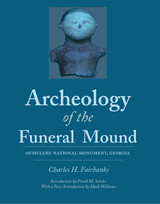
The largest prehistoric mound site in Georgia is located in modern-day Macon and is known as Ocmulgee. It was first recorded in August 1739 by General James Oglethorpe’s rangers during an expedition to the territory of the Lower Creeks. The botanist William Bartram wrote extensively of the ecology of the area during his visit in 1773, but the 1873 volume by Charles C. Jones, Antiquities of the Southern Indians, Particularly of the Georgia Tribes, was the first to treat the archaeological significance of the site.
Professional excavations began at Ocmulgee in 1933 under the auspices of the Smithsonian Institution, using Civil Works Administration labor. Investigations continued under a variety of sponsorships until December 1936, when the locality was formally named a national monument. Excavation of the mounds, village sites, earth lodge, and funeral mound revealed an occupation of the Macon Plateau spanning more than 7,000 years. The funeral mound was found to contain log tombs, bundles of disarticulated bones, flexed burials, and cremations. Grave goods included uniquely patterned copper sun disks that were found at only one other site in the Southeast—the Bessemer site in Alabama—so the two ceremonial centers were established as contemporaries.
In this classic work of archaeological research and analysis, Charles Fairbanks has not only offered a full treatment of the cultural development and lifeways of the builders of Ocmulgee but has also related them effectively to other known cultures of the prehistoric Southeast.
“The tourist archipelagoes of my South / are prisons, too, corruptible” writes the poet Derek Walcott. While Walcott refers to the islands of the Caribbean, the analogous idea of a land made into solitary islands by an imprisoned and inherited corruption is historian J. Mills Thornton III’s American South. The captivating essays in Archipelagoes of My South: Episodes in the Shaping of a Region, 1830–1965 address this overarching and underlying narrative of Alabama politics and the history of the South.
Highlighting events as significant as the role of social and economic conflict in the southern secession movement, various aspects of Reconstruction, and the role of the Ku Klux Klan in the politics of the 1920s, Thornton draws from various points in the southern past in an effort to identify and understand the sources of the region’s power. Moreover, each essay investigates its subject matter and peels back layers with an aim to clarify why the enormous diversity of the southern experience makes that power so great, all the while allowing the reader to see connections that would not otherwise be apparent.
Archipelagoes of My South gathers previously uncollected essays into a single volume covering the entire length and breadth of Thornton’s career. The author’s principal concerns have always been the arc of regional evolution and the significance of the local. Thus, the mechanisms of political and social change and the interrelationships across eras and generations are recurring themes in many of these essays.
Even those who have spent their entire lives in the South may be unaware of the fractured layers of history that lie beneath the landscape they inhabit. For those southern residents who seek to comprehend more of their own past, this landmark compilation of essays on Alabama and southern history endeavors to provide illumination and enlightenment.
We are now living in the richest age of public memory. From museums and memorials to the vast digital infrastructure of the internet, access to the past is only a click away. Even so, the methods and technologies created by scientists, espionage agencies, and information management coders and programmers have drastically delimited the ways that communities across the globe remember and forget our wealth of retrievable knowledge.
In Architects of Memory: Information and Rhetoric in a Networked Archival Age, Nathan R. Johnson charts turning points where concepts of memory became durable in new computational technologies and modern memory infrastructures took hold. He works through both familiar and esoteric memory technologies—from the card catalog to the book cart to Zatocoding and keyword indexing—as he delineates histories of librarianship and information science and provides a working vocabulary for understanding rhetoric’s role in contemporary memory practices.
This volume draws upon the twin concepts of memory infrastructure and mnemonic technê to illuminate the seemingly opaque wall of mundane algorithmic techniques that determine what is worth remembering and what should be forgotten. Each chapter highlights a conflict in the development of twentieth-century librarianship and its rapidly evolving competitor, the discipline of information science. As these two disciplines progressed, they contributed practical techniques and technologies for making sense of explosive scientific advancement in the wake of World War II. Taming postwar science became part and parcel of practices and information technologies that undergird uncountable modern communication systems, including search engines, algorithms, and databases for nearly every national clearinghouse of the twenty-first century.
This revolutionary work by artist-architects Arakawa and Madeline Gins demonstrates the inter-connectedness of innovative architectural design, the poetic process, and philosophical inquiry. Together, they have created an experimental and widely admired body of work--museum installations, landscape and park commissions, home and office designs, avant-garde films, poetry collections--that challenges traditional notions about the built environment. This book promotes a deliberate use of architecture and design in dealing with the blight of the human condition; it recommends that people seek architectural and aesthetic solutions to the dilemma of mortality.
In 1997 the Guggenheim Museum presented an Arakawa/Gins retrospective and published a comprehensive volume of their work titled Reversible Destiny: We Have Decided Not to Die. Architectural Body continues the philosophical definition of that project and demands a fundamental rethinking of the terms “human” and “being.” When organisms assume full responsibility for inventing themselves, where they live and how they live will merge. The artists believe that a thorough re-visioning of architecture will redefine life and its limitations and render death passe. The authors explain that “Another way to read reversible destiny . . . Is as an open challenge to our species to reinvent itself and to desist from foreclosing on any possibility.”
Audacious and liberating, this volume will be of interest to students and scholars of 20th-century poetry, postmodern critical theory, conceptual art and architecture, contemporary avant-garde poetics, and to serious readers interested in architecture's influence on imaginative expression.
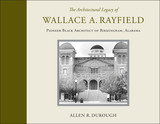
In the early 1990s, while cleaning out the barn on his property in Bessemer, Alabama, Allen Durough discovered the remnants of the lifework of African American architect Wallace A. Rayfield, including several hundred of Rayfield’s drawings, floor plans, business advertisements, family portraits, and graphic art pieces. This book gathers that priceless material legacy into a cohesive whole, reproducing 159 illustrations that document Rayfield’s life and work on two continents.
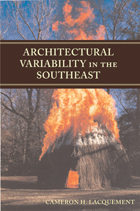
Some of the most visible expressions of human culture are illustrated architecturally. Unfortunately for archaeologists, the architecture being studied is not always visible and must be inferred from soil inconsistencies or charred remains. This study deals with research into roughly a millennium of Native American architecture in the Southeast and includes research on the variation of construction techniques employed both above and below ground. Most of the architecture discussed is that of domestic houses with some emphasis on large public buildings and sweat lodges. The authors use an array of methods and techniques in examining native architecture including experimental archaeology, ethnohistory, ethnography, multi-variant analysis, structural engineering, and wood science technology. A major portion of the work, and probably the most important in terms of overall significance, is that it addresses the debate of early Mississippian houses and what they looked like above ground and the changes that occurred both before and after the arrival of Europeans.

An updated classic of public administration
This fresh publication of James W. Fesler’s classic, Area and Administration is a powerful work of intellectual history. Richly illustrating how the Great Depression and World War II shaped the thinking of scholars who helped build modern American government.
It is also an authoritative work of powerful insight. The challenges of linking the center with the front lines, or securing vertical and horizonal coordination, and of connecting area and function, have only become more important in twenty-first century government. Fesler’s path-breaking book provides an extraordinarily useful foundation for grappling with issues that have become even more important for governance.
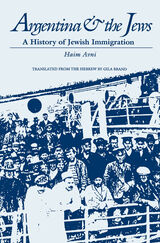
Argentina is home to the largest Jewish community in the Hispanic world, the second largest in the Western hemisphere. During successive political and social regimes, Argentina alternately barred Jews from entering the country and recruited them to immigrate, persecuted Jews as heretics or worse and welcomed them as productive settlers, restricted Jews by law and invested them with the fullest rights of citizenship. This volume traces the shifting patterns of Jewish immigration and Argentine immigration policy, both as manifestations of cultural and historical processes and as forces shaping the emergence of a large and energetic Jewish community.
The eleven essays coalesce around the general question of "When, if ever, is assent justified?" And, as Professor Cox astutely notes in his introduction, such a question immediately leads into considerations of argument and power. In these considerations, many differing perspectives are represented in this volume: aesthetic and symbolist approaches, rationalistic and formalistic approaches, field theory perspectives, orientations toward various conceptualizations of a public sphere, etc.
Argumentation Theory and the Rhetoric of Assent is intended not as a primer on argument theory but rather as a look at American approaches to a philosophy of argumentation and argument criticism. As such, the essays probe the implications of both current practices and theoretical approaches: the objective is not to map the terrain argumentation theory has traversed in recent years but rather to plot a route for the direction in which argumentation studies should move. The concluding essays by James Arnt Aune and G. Thomas Goodnight confront these concerns explicitly.
Armed with the Constitution stresses the courage of a black man, Rosco Jones, and a white woman, Grace Marsh, who dared to challenge the status quo in Alabama in the early 1940s. These two Jehovah’s Witnesses helped to lay a foundation for testing the constitutionality of state and local laws, establishing precedents that the Civil Rights movement, the feminist movement, and similar forces could follow. Newton has prepared a finely woven tale of oral, legal, and social history that opens a window on the world of the Jehovah’s Witnesses in Alabama.
More than a legal study, this book is also a dramatic history of two powerful personalities whose total commitment to their faith enabled them to carry the Jehovah’s Witnesses’ battle from rural Alabama to the halls of the U.S. Supreme Court.
Army life has always been known as a life of sacrifice, challenge, and frustration, yet one filled also with deep satisfactions. This is so for the soldiers’ families as much as for the soldiers themselves. Over the years, military and civilian leaders of the US Army have tried to reduce the hardships of military life by creating an array of community services designed to provide social support for soldiers and families and help them live satisfying lives in military communities.
Unfortunately, this effort has not been particularly successful, and frustration, dissatisfaction, and alienation persist among soldiers and family member in the US Army communities in Germany. Discontent continues because the underlying sources of alienation in the Army and among its families are highly complex, poorly understood, and therefore hardly addressed by the Army’s quality-of-life programs that are intended to make soldier and family life more bearable.
In Army of Hope, Army of Alienation: Culture and Contradiction in the American Army Communities of Cold War Germany, the author seeks to penetrate the logic, social structure, and daily practice of life in the American military communities that lay scattered along the frontier between East and West Germany during the final years of the Cold War. In coming to understand the life and thought of these American soldiers and families, ordinary American citizens can learn much about their military forces and about their own society and culture. In addition, a greater understanding about how people work and live around an institution that is at once so important and yet tasked with a mission so different from that of ordinary pursuits can stimulate social scientists and concerned citizens to think differently about culture, society, and behavior in general.

From film to film, Jeffrey DeShell follows a forty-something failed film studies academic—The Professor. While The Professor is reinvented with each new chapter (or film), what remains is DeShell’s inventive deconstruction and representation of modern cinema. At times borrowing imagery, plot, or character elements, and at times rendering lighting, rhythm, costuming, or shot sequences into fictional language, The Professor’s journey sends him from the Southwestern town of Pueblo, Colorado, into the role of rescuer as he aids an attempted-rape victim, and finally to Italy. Ultimately though, The Professor is left alone, struggling to reconcile the real world with his life in cinema.

Arthur M. Schlesinger, Jr., is a historian and political advocate whose ideas and activities have significantly influenced the shape and direction of American liberalism during the past fifty years. A central feature of Schlesinger’s ideological perspective is his belief that American history has been marked by alternating periods of conservative and liberal dominance, which he has termed the “tides of national politics.” Throughout his career, Schlesinger has used the “tides of national politics” to defend the legitimacy and superiority of active liberal government and leadership.
The study investigates how the “tides” concept has functioned in both Schlesinger’s historical scholarship and his partisan political discourse. Depoe also explores the ways in which the “tides” concept has shaped and channeled Schlesinger’s political thought over time, leading him toward certain definitions of situations and away from others. Finally, Depoe offers Schlesinger’s life and work as a case study of the highs and lows of postwar American liberalism. By tracing Schlesinger’s responses to Eisenhower-era conservatism, Kennedy’s New Frontier, and the problems of Vietnam and violence during the 1960s, and the gradual delegitimation of liberalism from the 1970s to the present, this book offers a road map that can guide the reader toward a better understanding of the past, present, and future of liberalism in America.
Artifice and Indeterminacy gathers the strongest and most representative writings of the past two decades and shows more clearly than ever before the depth and breadth of contemporary American poetics. Collectively, these essays break with conventional interpretive frameworks and traditional generic boundaries of poetry to give fresh voice to the poetics of our time.
Neither dismissive of the aesthetic value(s) of poetry, nor reluctant to articulate the ways in which aesthetic evaluation is complicated by the mediating influences of history, culture, class, gender, race, and academic status, the writers presented in this anthology celebrate the artifice of the poetic text while also accepting as a given the indeterminacy of its inception and reception.
Individual pieces range in style and approach from theoretical writings to discussions of individual poets such as Emily Dickinson, Louis Zukofsky, and Bob Kaufman. The authors consider such critical issues as gender and the possibilities of a feminist poetics, the textual politics of race and class, and the broader implications of an avant-garde practice.

Though today we commonly read major works of nineteenth-century American literature in unillustrated paperbacks or anthologies, many of them first appeared as magazine serials, accompanied by ample illustrations that sometimes made their way into the serials’ first printings as books. The graphic artists creating these illustrations often visually addressed questions that the authors had left for the reader to interpret, such as the complexions of racially ambiguous characters in Uncle Tom’s Cabin. The artists created illustrations that depicted what outsiders saw in Huck and Jim in Adventures of Huckleberry Finn, rather than what Huck and Jim learned to see in one another. These artists even worked against the texts on occasion—for instance, when the illustrators reinforced the same racial stereotypes that writers such as Paul Laurence Dunbar had intended to subvert in their works.
Authors of American realism commonly submitted their writing to editors who allowed them little control over the aesthetic appearance of their work. In his groundbreaking Artistic Liberties, Adam Sonstegard studies the illustrations from these works in detail and finds that the editors employed illustrators who were often unfamiliar with the authors’ intentions and who themselves selected the literary material they wished to illustrate, thereby taking artistic liberties through the tableaux they created.
Sonstegard examines the key role that the appointed artists played in visually shaping narratives—among them Mark Twain’s Pudd’nhead Wilson, Stephen Crane’s The Monster, and Edith Wharton’s The House of Mirth—as audiences tended to accept their illustrations as guidelines for understanding the texts. In viewing these works as originally published, received, and interpreted, Sonstegard offers a deeper knowledge not only of the works, but also of the realities surrounding publication during this formative period in American literature.

“The world is full of continuous conversations: Now is surrounded by Past, and both are encircled by Forever.” So states an unnamed narrator in As if a Bird Flew by Me.
Celia lives in the contemporary Midwest. Ann is an accused witch, executed during the Salem witch trials. Two women separated by time and place yet yoked by heritage and history. Set in three time periods, stories within stories unfold, and Greenslit’s language seamlessly weaves Celia’s modern life with the historical record of Ann’s demise alongside dazzling renderings of animal life. Greenslit’s hybrid of fiction and nonfiction occupies that rarest of airs: it is a book that illuminates, line by line and page by page, how it should be read.

Three lives. One song. A fire that reveals what cannot be hidden.
As If Fire Could Hide Us explores the expansiveness of consciousness and compassion through and beyond the human body.
A twelve-year-old girl slips out a basement window, steals a bike, and sets off on a perilous adventure. Injured and slowly bleeding out, Orelia enters a vast, spectacularly animate environment where she senses the limits of self disintegrating, her being entangled with the forest.
A prison guard and member of the strap down team witnesses a painfully prolonged execution and is delivered to a heart-cracking sense of identification with the ones he’s killed. Every grieving mother is his own. Any man might be himself, his closest friend, his brother.
An organ donor’s body is restored and resurrected through the bodies of multitudes. Spiritually and physically, one human being becomes many. Everything in the cosmos is intertwined and interchangeable. Embracing this awareness may bring fear or euphoria—desolation, peace, despair, rapture.

A visually stunning narrative of three eras in humankind’s vexed relationship with nature.
Ascension is a novel about the end of nature, or rather, the end of three “natures”: the time just before Darwin changed the natural world; the 1980s, just as the digital and genetic revolutions begin to replace “nature” with “environment”; and today, a time when we have the ability to manipulate nature at both the scale of the planet and at the genome. The narrative follows three different biologists on the brink of each of these cultural extinctions to explore how nature occupies our imaginations and how our imaginations bring the natural world, and our place in it, into existence.
Ascension is a story of how we continually remake the world and are in turn remade by the new nature we’ve created. It is the story of humans yearning to understand their families, themselves, and the world they live in as it comes to a close, leaving them to anticipate what will follow. Rich in visual depictions of the natural world—from nineteenth century engraving and paintings to twentieth century photography and twenty-first century databases—Ascension uses the materials of three eras to drive home our inability to escape nature, and the ways our fates are irrevocably bound together even as our actions usher in an end-time.
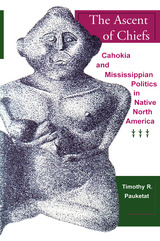
Considering Cahokia in terms of class struggle, Pauketat claims that the political consolidation in this region of the Mississippi Valley happened quite suddenly, around A.D. 1000, after which the lords of Cahokia innovated strategies to preserve their power and ultimately emerged as divine chiefs. The new ideas and new data in this volume will invigorate the debate surrounding one of the most important developments in North American prehistory.

A belief in progress is a fundamental ethos in American history and culture. The Assault on Progress probes American literary works that challenge the prevailing notion of technology as a manifestation of progress. J. Adam Johns argues that the idea of technology-as-destiny has long been explored—and undercut—in American literary works and that literature remains a crucial site for ongoing debates in this area.
Johns studies the phenomenon by which each generation comes to regard itself as the hinge upon which history turns. He explores several works by historians of technology, focusing in detail on the works of literary critic Lewis Mumford, whose examinations of Herman Melville’s novels provide an early example of critical interest in the abandonment of progress as a value.
He goes on to study the works of William Faulkner and Ralph Ellison, focusing on the convergence of technology and race—machines and slavery, and highlights the ways that these writers have portrayed humans as reduced to machines, evidence that technological “progress” is not always progressive, or liberating to humanity.
The conclusion argues for a shift in our understanding of the relationship between technology and time. According to Johns, writers like Melville, Faulkner, and Ellison help us to think of technology separate from notions of progress, and therefore help us to escape from a perilous ideological bind that forever situates humankind at the end of history.

Robin Blaser moved from his native Idaho to attend the University of California, Berkeley, in 1944. While there, he developed as a poet, explored his homosexuality, engaged in a lively arts community, and met fellow travelers and poets Robert Duncan and Jack Spicer. The three men became the founding members of the Berkeley core of what is now known as the San Francisco Renaissance in New American Poetry.
In the company of a small group of friends and writers in 1974, Blaser was asked to narrate his personal story and to comment on the Berkeley poetry scene. In twenty autobiographical audiotapes, Blaser talks about his childhood in Idaho, his time in Berkeley, and his participation in the making of a new kind of poetry. The Astonishment Tapes is the expertly edited transcript of these recordings by Miriam Nichols, Blaser’s editor and biographer.
In The Astonishment Tapes Blaser comments extensively on the poetic principles that he, Duncan, and Spicer worked through, as well as the differences and dissonances between the three of them. Nichols has edited the transcripts only minimally, allowing readers to make their own interpretations of Blaser’s intentions.
Sometimes gossipy, sometimes profound, Blaser offers his version on the inside story of one of the most significant moments in mid-twentieth century American poetry. The Astonishment Tapes is of considerable value and interest, not only to readers of Blaser, Duncan, and Spicer, but also to scholars of the early postmodern and twentieth-century American poetry.
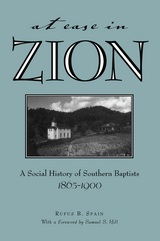
First published in 1967, Rufus Spain’s thorough investigation into Southern Baptist attitudes set the stage for research on religion in the American South. In At Ease in Zion, Spain questions the titular “ease” with society that Southern Baptists seemed to maintain following the Civil War. His analysis of denominational newspapers, as well as reports from the Southern Baptist Convention and state conventions, paint a compelling picture of the subjects’ complacency with their social existence, even as they criticized personal and recreational ethics.
While the South faced significant social, economic, and political changes after the Civil War, religion remained the primary moral influence. As the Southern Baptist denomination made up a significant majority of the population at that time, its leaders and attitudes had a clear and undeniable impact on social norms. Rufus Spain was one of the first writers to actively demonstrate the relationship between Southern religion and Southern society, and his work displays meticulous attention to the ways in which we are affected by complacency. He asserts that Southern Baptists viewed the American South as a version of God’s ideal society; any issues they wished to address were caused by individuals (such as those who did not conform to societal norms) or external attitudes (such as those in differing religions or regions).
At Ease in Zion is a critical part of the scholarly discussion on religion in society. Spain’s research offers a bold analysis of the American South and its citizens during one of the most tumultuous times in its history while providing a basis for arguments on “social Christianity” and its ever-shifting role in the world.

At the Moon’s Inn, first published in 1941, provides a fictional account of De Soto’s famous Spanish expedition to La Florida and through the southeastern United States between 1539 and 1543. The novel begins in Spain in 1538, where De Soto and his chief lieutenants, veterans of the campaigns in South America, pledge themselves to a new enterprise to explore and exploit La Florida. The narrative follows them on their voyage to Cuba, where they rest and obtain additional supplies, then set sail for the area now known as Tampa Bay. Lytle’s brilliant historical novel takes the readers with the conquistadores through the hot, humid land, where despite their advantage in military technology they found they must rely on the Indians for food. The author explores the cultural confrontation that seriously weakened the Indians, while the Spaniards’ dreams of gold gradually turned to hopes of survival in the hostile environment.
Drawing his facts from the 1939 United States De Soto Commission Report and from the surviving historical chronicles of the expedition, Lytle weaves a fascinating tale that brings to life the history of Spanish efforts to establish a controlling presence in the New World during the first half of the 16th century.
In his introduction, Douglas Jones places At the Moon’s Inn within the context of the documentary record, as well as within the framework of its distinguished author’s career.
Efforts to develop an economic base within the Black community began even before the Civil War. These efforts gained new meaning in the post-Reconstruction period as Blacks strove to adapt to radically changing economic circumstances and the emergence of the Jim Crow South. In Atlanta, shortly after the turn of the century, Alonzo Franklin Herndon, a former slave, joined a long line of Black entrepreneurs by creating Atlanta Life Insurance Company. More than three-quarters of a century later, it remains an important enterprise that is the nation’s largest Black-controlled shareholder insurance company. The firm is today a significant example of the efforts of Black Americans to achieve economic independence and dignity in America.
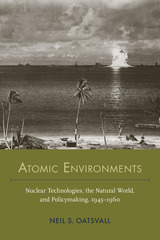
Demonstrates how policymakers influenced environmental science during the early nuclear age
In Atomic Environments: Nuclear Technologies, the Natural World, and Policymaking, 1945–1960, Neil S. Oatsvall examines how top officials in the Truman and Eisenhower administrations used environmental science to develop nuclear strategy at the beginning of the Cold War. While many people were involved in research and analysis during the period in question, it was at highest levels of executive decision-making where environmental science and nuclear science most clearly combined to shape the nation’s policies.
Oatsvall clearly demonstrates how the natural world and the scientific disciplines that study it became integral parts of nuclear science rather than adversarial fields of knowledge. But while nuclear technologies heavily depended on environmental science to develop, those same technologies frequently caused great harm to the natural world. Moreover, while some individuals expressed real anxieties about the damage wrought by nuclear technologies, policymakers as a class consistently made choices that privileged nuclear boosterism and secrecy, prioritizing institutional values over the lives and living systems that they were ostensibly charged to protect.
By scrutinizing institutional policymaking practices and agendas at the birth of the nuclear age, a constant set of values becomes clear. Oatsvall reveals an emerging technocratic class that routinely valued knowledge about the environment to help create and maintain a nuclear arsenal, despite its existential threat to life on earth and the negative effects many nuclear technologies had on ecosystems and the American people alike. Although policymakers took their charge to protect and advance the welfare of the United States and its people seriously, Atomic Environments demonstrates how they often failed to do so because their allegiance to the US nuclear hierarchy blinded them to the real risks and dangers of the nuclear age.

A moving personal account of a man’s flight for freedom—above the clouds and beyond prejudice—by one of the first Tuskegee airmen.
A-Train is the story of one of the black Americans who, during World War II, graduated from Tuskegee (AL) Flying School and served as a pilot in the Army Air Corps’ 99th Pursuit Squadron. Charles W. Dryden presents a fast-paced, balanced, and personal account of what it was like to prepare for a career traditionally closed to African Americans, how he coped with the frustrations and dangers of combat, and how he, along with many fellow black pilots, navigators, bombardiers, and crewmen, emerged with a magnificent war record.
Under the command of Colonel Benjamin O. Davis Jr., the Tuskegee airmen fought over North Africa, Sicily, and Europe, escorting American bomber crews who respected their "no-losses" record. Some were shot down, many of them were killed or captured by the enemy, and several won medals of valor and honor. But the airmen still faced great barriers of racial prejudice in the armed forces and at home. As a member of that elite group of young pilots who fought for their country overseas while being denied civil liberties at home, Dryden presents an eloquent story that will touch every reader.
Why did the Confederacy lose so many men? The authors contend that the Confederates bled themselves nearly to death in the first three years of the war by making costly attacks more often than the Federals. Offensive tactics, which had been used successfully by Americans in the Mexican War, were much less effective in the 1860s because an improved weapon—the rifle—had given increased strength to defenders. This book describes tactical theory in the 1850s and suggests how each related to Civil War tactics. It also considers the development of tactics in all three arms of the service during the Civil War.
In examining the Civil War the book separates Southern from Northern tactical practice and discusses Confederate military history in the context of Southern social history. Although the Southerners could have offset their numerical disadvantage by remaining on the defensive and forcing the Federals to attack, they failed to do so. The authors argue that the Southerners’ consistent favoring of offensive warfare was attributable, in large measure, to their Celtic heritage: they fought with the same courageous dash and reckless abandon that had characterized their Celtic forebears since ancient times. The Southerners of the Civil War generation were prisoners of their social and cultural history: they attacked courageously and were killed—on battlefields so totally defended by the Federals that “not even a chicken could get through.”
William Bartram, author of Travels through North and South Carolina, Georgia, East and West Florida, the Cherokee Country, the Extensive Territories of the Muscogulees, or Creek Confederacy, and the Country of the Chactaws, was colonial America’s first native born naturalist and artist, and the first author in the modern genre of writers who portrayed nature through personal experience as well as scientific observation. His book, first published in 1791, was based on his journeys through southern Indian nations and Britain’s southern colonies in the years just prior to the American Revolution and provides descriptions of the natural and cultural environments of what would soon become the American South. Scholars and general readers alike have long appreciated Bartram’s lush, vivid prose, his clarity of observation and evident wonder at the landscapes he traversed, and his engagement with the native nations whose lands he traveled through.
The Attention of a Traveller: Essays on William Bartram’s “Travels” and Legacy offers an interdisciplinary assessment of Bartram’s influence and evolving legacy, opening new avenues of research concerning the flora, fauna, and people connected to Bartram and his writings. Featuring 13 essays divided into five sections, contributors to the volume weave together scholarly perspectives from geology, art history, literary criticism, geography, and philosophy, alongside the more traditional Bartram-affiliated disciplines of biology and history. The collection concludes with a comprehensive treatment of the book as a material historical artifact.
During the decades of Bourbon ascendancy after 1874, Alabama institutions like those in other southern states were dominated by whites. Former slave and sharecropper Jack Turner refused to accept a society so structured. Highly intelligent, physically imposing, and an orator of persuasive talents, Turner was fearless before whites and emerged as a leader of his race. He helped to forge a political alliance between blacks and whites that defeated and humiliated the Bourbons in Choctaw County, the heart of the Black Belt, in the election of 1882. That summer, after a series of bogus charges and arrests, Turner was accused of planning to lead his private army of blacks in a general slaughter of the county whites. Justice was forgotten in the resultant fear and hysteria.

A fascinating biography about Augusta Jane Evans, a nearly forgotten writer who was nevertheless one of the most popular writers of her era. She wrote nine novels about southern women, including St. Elmo, which sold a staggering one million copies within four months of its release in 1866. William Fidler traces the life of Augusta Jane Evans from her birth in 1835 in Columbus, Georgia till her death in Alabama in 1909.

In Aunt Rachel’s Fur, Raymond Federman—French by birth, American by adoption, Jew by memory—plays with the language of his childhood to construct a story from digressions. Federman’s narrative spirals into a temporal abyss as he rummages in old memories tattooed with cabbages, plump breasts, and the Final Solution. His book swirls with the narrative innovations that mark him as a leading experimental surfictioneer.
Aunt Rachel’s Fur is a novel about its own telling, an intimate meeting between voice and reader, in which flesh and blood are reduced to fiction, and fiction, by its telling, becomes fact. Reymond Namredef, a French expatriate, has returned to France after a disastrous decade in America, with 365 boxes of pasta and the hope of publishing his novel about a novelist. In a cafe in Paris, he meets a "professional listener," and, through a series of conversations, offers a loose account of his life that shows little respect for chronology. His story is woven of fragments, branching out over a lifetime and capturing the alchemy of fiction and memory.
Faced with the chaos of the twentieth century, Federman finds humanity in the absurd. Like novelists Mark Amerika and Ronald Sukenick, he skewers literary convention and pushes the boundary of postmodernism. Aunt Rachel’s Fur is both a tribute to his love of the word—the story as it is told—and a further exploration of our understanding of fiction.
By examining six mainline white denominations—Episcopalians, Methodists, Presbyterians, Baptists, Disciples of Christ, and Lutherans—Samuel C. Shepherd Jr. emphasizes the extent to which the city fostered religious diversity, even as “blind spots” remained regarding Catholics, African Americans, Mormons, and Jews. Shepherd explores such topics as evangelism, interdenominational cooperation, the temperance campaign, the Sunday school movement, the international peace initiatives, and the expanding role of lay people of both sexes. He also notes the community’s widespread rejection of fundamentalism, a religious phenomenon almost automatically associated with the South, and shows how it nurtured social reform to combat a host of urban problems associated with public health, education, housing, women’s suffrage, prohibition, children, and prisons.
In lucid prose and with excellent use of primary sources, Shepherd delivers a fresh portrait of Richmond Protestants who embraced change and transformed their community, making it an active, progressive religious center of the New South.

Aymara Indians are a geographically isolated, indigenous people living in the Andes Mountains near Chile’s Atacama Desert, one of the most arid regions of the world. As rapid economic growth in the area has begun to divert scarce water to hydroelectric and agricultural projects, the Aymara struggle to maintain their sustainable and traditional systems of water use, agriculture, and pastoralism.
In Aymara Indian Perspectives on Development in the Andes, Amy Eisenberg provides a detailed exploration of the ethnoecological dimensions of the tension between the Aymara, whose economic, spiritual, and social life are inextricably tied to land and water, and three major challenges: the paving of Chile Highway 11, the diversion of the Altiplano waters of the Río Lauca for irrigation and power-generation, and Chilean national park policies regarding Aymara communities, their natural resources, and cultural properties within Parque Nacional Lauca, the International Biosphere Reserve.
Pursuing collaborative research, Eisenberg performed ethnographic interviews with Aymara people in more than sixteen Andean villages, some at altitudes of 4,600 meters. Drawing upon botany, agriculture, natural history, physical and cultural geography, history, archaeology, and social and environmental impact assessment, she presents deep, multifaceted insights from the Aymara’s point of view.
Illustrated with maps and dramatic photographs by John Amato, Aymara Indian Perspectives on Development in the Andes provides an account of indigenous perspectives and concerns related to economic development that will be invaluable to scholars and policy-makers in the fields of natural and cultural resource preservation in and beyond Chile.

Originally, young Tio wanted to perfect the comic role of the Aztec Love God, his ideal persona. Along the way, he meets Jester, an older, Caucasian comedian who makes Tio an offer he’s like to refuse. Jester offers Tio an opportunity to join his act. The only condition is that he, Tio, has to perform Latino stereotypes. Tio has to decide if he is going to take the blank check for easy thoughts or develop the Aztec Love God on his own.
The Aztec Love God combines humor, politics, and street knowledge. Diaz comes at the reader from all angles. His mixture of styles and influences pushes The Aztec Love God to a multi-multiculturalism.
The Aztec Love God is a vato but not too loco.
READERS
Browse our collection.
PUBLISHERS
See BiblioVault's publisher services.
STUDENT SERVICES
Files for college accessibility offices.
RECENTLY PUBLISHED


UChicago Accessibility Resources
home | accessibility | search | about | contact us
BiblioVault ® 2001 - 2025
The University of Chicago Press