front cover of C. L. R. James in Imperial Britain
C. L. R. James in Imperial Britain
Christian Høgsbjerg
Duke University Press, 2014
C. L. R. James in Imperial Britain chronicles the life and work of the Trinidadian intellectual and writer C. L. R. James during his first extended stay in Britain, from 1932 to 1938. It reveals the radicalizing effect of this critical period on James's intellectual and political trajectory. During this time, James turned from liberal humanism to revolutionary socialism. Rejecting the "imperial Britishness" he had absorbed growing up in a crown colony in the British West Indies, he became a leading anticolonial activist and Pan-Africanist thinker. Christian Høgsbjerg reconstructs the circumstances and milieus in which James wrote works including his magisterial study The Black Jacobins. First published in 1938, James's examination of the dynamics of anticolonial revolution in Haiti continues to influence scholarship on Atlantic slavery and abolition. Høgsbjerg contends that during the Depression C. L. R. James advanced public understanding of the African diaspora and emerged as one of the most significant and creative revolutionary Marxists in Britain.
 
[more]

front cover of Cabin Stories
Cabin Stories
The Best of Dark Winter Nights: True Stories from Alaska
Rob Prince
University of Alaska Press, 2022
Cabin Stories: The Best of Dark Winter Nights: True Stories from Alaska is a collection of favorite stories selected by the executive producers of the hit live event, radio show, and podcast Dark Winter Nights. These hilarious, heartwarming, and riveting stories depict true adventures, impossible situations, and the stranger side of life in Alaska—falling through ice, surviving a plane crash, living through a shipwreck in a hurricane, discovering a bear trapped in a woman’s front entryway, finding a pet goose frozen to a porch in a pile of its own poop, and more—as told by the everyday Alaskans who experienced them.
 
From the humorous to the heart-wrenching, these are the stories told up north on dark winter nights. Anyone curious about what living in Alaska is really like will appreciate this wild and fun anthology.
 
 
Contributors: Glenner Anderson, Kat Betters, Randy Brown, Melissa Buchta, JB Carnahan, Philip Charette, Roy Churchwell, Richard Coleman, Michael Daku, Wendy Demers, Alexandra Dunlap, Alyssa Enriquez, Jan Hanscom, Mike Hopper, James Mennaker, Ken Moore, Steve Neumeth, Kaiti Ott, Lori Schoening, Bill Schnabel, Guy Schroder, Ed Shirk, Eric Stevens, Chris Zwolinski

 
[more]

front cover of Cafe Indiana
Cafe Indiana
A Guide to Indiana’s Down-Home Cafes
Joanne Raetz Stuttgen
University of Wisconsin Press, 2007
Cafe Indiana is both a guide to Indiana’s hometown mom-and-pop restaurants and a reclamation and celebration of small-town Midwest culture. The hungry diner looking for adventure and authenticity can use Cafe Indiana simply as a guide to the state’s quintessential eats: the best fiddlers, macaroni and cheese, soup beans, and beef Manhattan. But Stuttgen also captures the spirit of the locals, bringing to life the people whose stories give the book—and the food—its soul.
     Over plates of chicken and noodles, fried bologna sandwiches, and sugar cream pie, folks are crafting community at the Main Street eatery. In Cafe Indiana, Hoosiers and out-of-staters alike are invited to pull out a chair and sit a spell.
[more]

front cover of Cafe Indiana Cookbook
Cafe Indiana Cookbook
Joanne Raetz Stuttgen
University of Wisconsin Press, 2010

Joanne Raetz Stuttgen’s cafe guides showcase popular regional diner traditions. In her companion book Cafe Indiana she introduces travelers to the state’s top mom-and-pop restaurants. Now, Cafe Indiana Cookbook allows you to whip up local cafe classics yourself. Breakfast dishes range from Swiss Mennonite eier datch (egg pancakes) to biscuits and gravy; entree highlights include chicken with noodles (or with dumplings) and the iconic Hoosier breaded pork tenderloin sandwich. For dessert, try such Indiana favorites as apple dapple cake or rhubarb, coconut cream, or sugar cream pie . All 130 recipes have been kitchen-tested by Jolene Ketzenberger, food writer for the Indianapolis Star.
    Cafe Indiana Cookbook reveals the favorite recipes of Indiana’s Main Street eateries, including some rescued for publication before a diner’s sad closure, and documents old-fashioned delicacies now fading from the culinary landscape—like southern Indiana’s fried brain sandwiches.

Finalist, Cookbook, Midwest Book Awards

 

[more]

front cover of Cafe Wisconsin
Cafe Wisconsin
A Guide To Wisconsin's Down-Home Cafes
Joanne Raetz Stuttgen
University of Wisconsin Press, 2004
    Cafe Wisconsin returns in a new, updated version that provides a sure-bet guide to Wisconsin’s best small town, home-cooking cafes. For this second edition, author Joanne Raetz Stuttgen traveled more than 12,000 miles in six months, revisiting old business districts and main streets in search of the ultimate cafe, the perfect slice of homemade pie, and the meaning of life in Wisconsin’s down-home cafes.
    Featuring 133 cafes, with another 101 Next Best Bets alternatives, Cafe Wisconsin is every hungry traveler’s guide to real mashed potatoes, melt-in-your-mouth hot beef, from-scratch baked goods, and colorful coffee klatches. At the counter of aptly named cafes like the Coffee Cup, Main Street, and Chatterbox, you’ll laugh with owners, shake dice with customers, and find the authentic taste and flavor of Wisconsin.
    Come on. Let’s go out to eat!

[more]

front cover of Cafe Wisconsin Cookbook
Cafe Wisconsin Cookbook
Joanne Raetz Stuttgen and Terese Allen
University of Wisconsin Press, 2007
     Joanne Stuttgen's popular book Cafe Wisconsin guides travelers to Wisconsin's best home-style cafes. Now, continue the journey with the Cafe Wisconsin Cookbook, a compilation of more than one hundred cherished recipes that showcase the distinct culinary and cultural traditions of Wisconsin. From classic pot roasts and country-style pies to long-simmering soups and heritage specialties, the whole soul-satisfying spectrum of Wisconsin cafe fare is here. 
     Stuttgen tracked down Wisconsin's best small town cafes, from Boscobel to Sturgeon Bay, chatted with owners and customers, took notes, and recorded the history, anecdotes, and recipes behind the food. Tested and fine-tuned by Wisconsin food writer and former chef Terese Allen, these favorite recipes will bring an authentic slice of Wisconsin into your home kitchen.
[more]

front cover of Cairo Traffic
Cairo Traffic
Lloyd Schwartz
University of Chicago Press, 2000
In Cairo Traffic, his third book of poems, Lloyd Schwartz asks the Sphinx to explain the riddle "about, you know, / Time and Power and Families-the one you think you / have the answer to. Tell me your answer! / No . . . don't." The search for answers takes the poet to some surprising, often phantasmagoric places, and back again to the self, to dreams, to home, and even to the nursing home where his mother-sphinxlike herself-becomes the person asking the dark questions and providing some unexpected answers. These extraordinary narratives-funny and frightening, seductive and profoundly moving-explore the intersections of character and language, the places where common speech mysteriously transforms itself into poetry. This book, which includes several translations of contemporary Brazilian poems, confirms Schwartz's growing reputation as an intensely compelling and original poet.
[more]

front cover of California And The Fictions Of Capital
California And The Fictions Of Capital
George Henderson
Temple University Press, 2003
In part a tour of California as a virtual laboratory for refining the circulation of capital, and in part an investigation of how the state's literati, with rare exception, reconceived economy in the name of class, gender, and racial privilege, this study will appeal to all students and scholars of California's—and the American West's—economic, environmental, and cultural past.
[more]

front cover of Call Her by Her Name
Call Her by Her Name
Poems
Bianca Lynne Spriggs
Northwestern University Press, 2016

In Call Her by Her Name, the poet and performance artist Bianca Lynne Spriggs creates a twenty-first-century feminist manifesto suffused with metaphoric depth. This collection is a call-and-response of women—divine and domestic, legend and literal—who shape-shift and traverse generations. Through these narratives and cinematic poems, a chorus emerges of stories and lives rarely told.

Call Her by Her Name seeks to give voice to the voiceless, including lynched black women, the biblical "Potiphar’s wife," and women who tread the rims of phenomenal worlds—the goddess, the bird-woman, the oracle. While these poems reflect an array of women and women’s experiences, each piece could be considered a hue of the same woman, whether home-wrecker, Madonna, or midwife. The woman who sees dragons was perhaps once the roller-skating girl-child. The aging geisha may also be the roots woman next door. The woman who did not speak for ten years could have ended up sinking to the ocean floor. Spriggs gives each one life and limb, breath and voice, in a collection that adds up unequivocally to a poetic celebration of women.
[more]

front cover of Call This Mutiny
Call This Mutiny
[uncollected poems]
Craig Santos Perez
Omnidawn, 2024
A collection of previously published poems by renowned National Book Award-winning Chamoru poet Craig Santos Perez. 

The seventh book from award-winning Chamoru author Craig Santos Perez, Call This Mutiny brings together poems that were originally published in journals and anthologies from 2008 to 2023. Throughout these selected poems, Perez offers critical explorations of native cultures, decolonial politics, colonial histories, and the entangled ecologies of his homeland of Guam, his current home of Hawaiʻi, and the larger Pacific region in relation to the Global South and the Indigenous Fourth World. Perez’s poetry draws on the power of storytelling to share Indigenous history and culture and to offer healing from the trauma of colonialism and injustice. As he writes, “If we can write the ocean, we will never be silenced.”
 
[more]

front cover of Calle Florista
Calle Florista
Connie Voisine
University of Chicago Press, 2015
This World and That One

Sometimes you defy it,
I am not that, watching a stranger
cry like a dog when she thinks she’s alone
at the kitchen window, hands forgotten
under the running tap.
The curtains blow out, flap the other side of the sill.
In you one hole fills another,
stacked like cups.
You remember your hands.

Connie Voisine’s third book of poems centers on the border between the United States and Mexico, celebrating the stunning, severe desert landscape found there. This setting marks the occasion as well for Voisine to explore themes of splitting and friction in both human and political contexts. Whose space is this border, she asks, and what voice can possibly tell the story of this place?

In a wry, elegiac mode, the poems of Calle Florista take us both to the edge of our country and the edge of our faith in art and the world. This is mature work, offering us poems that oscillate between the articulation of complex, private sensibilities and the directness of a poet cracking the private self open—and making it vulnerable to the wider world.
[more]

front cover of Calligraphy Typewriters
Calligraphy Typewriters
The Selected Poems of Larry Eigner
Larry Eigner, Edited and introduced by Curtis Faville and Robert Grenier, Foreword by Charles Bernstein
University of Alabama Press, 2016
The first and only single-volume collection of Larry Eigner’s most significant poems, gathering in one place the most celebrated of the several thousand poems that constitute his remarkable life’s work

Larry Eigner began writing poetry at age eight and was first published at age nine. Revered by poets and artists across a broad spectrum of generations and schools, Eigner’s remarkably moving poetry was created through enormous effort: because of severe physical disabilities, he produced his texts by typing with only one index finger and thumb on a 1940 Royal manual typewriter, creating a body of work that is unparalleled in its originality.
 
Calligraphy Typewriters showcases the most celebrated of Eigner's several thousand poems, which are an important part of the Black Mountain/Projectivist movement that began in the 1950s and which remain a primary inspiration for many younger writers, including those in the Language movement that began in the 1970s. In its two sections—Swampscott and Berkeley, named for the two locales where Eigner lived and worked—the volume traces his fantastic perception of the ordinary and his zeal for language. Eigner’s use of visual space, metaphor, and description provide fascinating insights into both his own life and the world that surrounded him. This volume maintains the distinctive visual spacing of his original typescripts, reminders of his method, aesthetic sensibility, and creative ability to compose on the typewriter.
 
A collection that reimagines the ordinary, Calligraphy Typewriters is the definitive selection of Eigner’s poems, and will serve well not only poets and students of poetry, but readers and writers of every vein.

[more]

front cover of Calling the Soul Back
Calling the Soul Back
Embodied Spirituality in Chicanx Narrative
Christina Garcia Lopez
University of Arizona Press, 2019
Spirituality has consistently been present in the political and cultural counternarratives of Chicanx literature. Calling the Soul Back focuses on the embodied aspects of a spirituality integrating body, mind, and soul. Centering the relationship between embodiment and literary narrative, Christina Garcia Lopez shows narrative as healing work through which writers and readers ritually call back the soul—one’s unique immaterial essence—into union with the body, counteracting the wounding fragmentation that emerged out of colonization and imperialism. These readings feature both underanalyzed and more popular works by pivotal writers such as Gloria Anzaldúa, Sandra Cisneros, and Rudolfo Anaya, in addition to works by less commonly acknowledged authors.

Calling the Soul Back explores the spiritual and ancestral knowledge offered in narratives of bodies in trauma, bodies engaged in ritual, grieving bodies, bodies immersed in and becoming part of nature, and dreaming bodies. Reading across narrative nonfiction, performative monologue, short fiction, fables, illustrated children’s books, and a novel, Garcia Lopez asks how these narratives draw on the embodied intersections of ways of knowing and being to shift readers’ consciousness regarding relationships to space, time, and natural environments.

Using an interdisciplinary approach, Calling the Soul Back draws on literary and Chicanx studies scholars as well as those in religious studies, feminist studies, sociology, environmental studies, philosophy, and Indigenous studies, to reveal narrative’s healing potential to bring the soul into balance with the body and mind.
[more]

front cover of Camino del Sol
Camino del Sol
Fifteen Years of Latina and Latino Writing
Edited by Rigoberto González
University of Arizona Press, 2010
Since 1994, the Camino del Sol series has been one of the premier vehicles for Latina/o literary voices. Launched under the auspices of Chicana/o luminary Ray Gonzalez, it quickly established itself in both the Latina/o community and the publishing world as it garnered awards for its outstanding writing.

Featuring both established writers and first-time authors, Camino del Sol has published poetry and prose that convey something about the Latina/o experience—works that tap into universal truths through a distinct cultural lens. This volume celebrates fifteen years of books by bringing together some of the series’ best work, such as poetry from Francisco X. Alarcón, fiction from Christine Granados, and nonfiction from Luis Alberto Urrea. These voices echo the entire spectrum of Latina/o writing, from Chicana/o to Puerto Rican to Brazilian-American, and take in themes ranging from migration to gender.

Awards bestowed upon Camino del Sol titles include the PEN/Beyond Margins Award to Richard Blanco’s Directions to the Beach of the Dead; Before Columbus Foundation American Book Awards to Diana García’s When Living Was a Labor Camp and Luis Alberto Urrea’s Nobody’s Son; International Latino Book Awards to Pat Mora’s Adobe Odes and Kathleen Alcalá’s The Desert Remembers My Name; the Premio Aztlán literary prize to Sergio Troncoso’s The Last Tortilla; and the PEN Oakland-Josephine Miles National Literary Award to Kathleen de Azevedo’s Samba Dreamers. All of these works are represented in this outstanding collection.

In a short span of time, Camino del Sol has cultivated an admirable and sizeable list of distinguished contemporary authors—and even garnered the first National Book Critics Circle Award for a Chicana/o for Juan Felipe Herrera’s Half of the World in Light. Camino del Sol: Fifteen Years of Latina and Latino Writing is a benchmark for the series and a wonderful introduction to the world of Latina/o literature.

[more]

front cover of Caminos
Caminos
Memoirs from the Center for Mexican American Studies at the University of Texas at Austin
Edited by Zita Arocha
University of Texas Press, 2026

Fourteen writers reflect on the complexities of Mexican American identity in hyphenated America.

At a time when memoir has become an increasingly popular form of self-expression, fourteen writers from diverse backgrounds engaged with one another in a series of writing workshops sponsored by the Center for Mexican American Studies at UT Austin to reflect on their life journeys. They wrestle with issues that shaped them in provocative, evocative, and sometimes humorous short essays. The writers include a lawyer, a civil rights activist, actors, journalists, and professors who write of belonging, national and sexual identity, coping with illness and loss, career challenges, and life-altering events familiar to us all. The contributors write poignantly about losing a parent at an early age; growing up in segregated communities; bravely confronting serious health problems; living in a household with a mentally disturbed family member; the complexity of being “American” as well as “Mexican”; and the professional challenges facing all hyphenated Americans, many of whom are often the first person of color in their workplaces.
[more]

front cover of Camp Harmony
Camp Harmony
Japanese American Internment and the Puyallup Assembly Center
Louis Fiset
University of Illinois Press, 2009

This book is the first full portrait of a single assembly center--located at the Western Washington fairgrounds at Puyallup, outside Seattle--that held Japanese Americans for four months prior to their transfer to a relocation center during World War II. Gathering archival evidence and eyewitness accounts, Louis Fiset reconstructs the events leading up to the incarceration as they unfolded on a local level: arrests of Issei leaders, Nikkei response to the war dynamics, debates within the white community, and the forced evacuation of the Nikkei community from Bainbridge Island. The book explores the daily lives of the more than seven thousand inmates at "Camp Harmony," detailing how they worked, played, ate, and occasionally fought with each other and with their captors. Fiset also examines the inmates' community life, health care, and religious activities. He includes details on how army surveyors selected the center's site, oversaw its construction, and managed the transfer of inmates to the more permanent Minidoka Relocation Center in Idaho.
[more]

front cover of Camp Notes and Other Writings
Camp Notes and Other Writings
Yamada, Mitsuye
Rutgers University Press, 1998

Honorable Mention of the 1999 Gustavus Myers Outstanding Book Awards

Two collections by an important Asian American writer -- Camp Notes and Other Poeems and Desert Run: Poems and Stories -- return to print in one volume.

Mitsuye Yamada was born in Kyushu, Japan, and raised in Seattle, Washington, until the outbreak of World War II when her family was removed to a concentration camp in Idaho. Camp Notes and Other Writings recounts this experience.

Yamada's poetry yields a terse blend of emotions and imagery. Her twist of words creates a twist of vision that make her poetry come alive. The weight of her cultural experience-the pain of being perceived as an outsider all of her life-permeates her work.

Yamada's strength as a poet stems from the fact that she has managed to integrate both individual and collective aspects of her background, giving her poems a double impact. Her strong portrayal of individual and collective life experience stands out as a distinct thread in the fabric of contemporary literature by women.

"The core poems of Camp Notes and the title come from the notes I had taken when I was in camp, and it wasn’t published until thirty years after most of it was written. I was simply describing what was happening to me, and my thoughts. But, in retrospect, the collection takes on a kind of expanded meaning about that period in our history. As invariably happens, because Japanese American internment became such an issue in American history, I suppose I will be forever identified as the author of Camp Notes. Of course, I try to show that it’s not the only thing I ever did in my whole life; I did other things besides go to an internment camp during World War II. So, in some ways I keep producing to counteract that one image that gets set in the public mind. At the time that I was writing it, I wasn’t necessarily a political person. Now, when I reread it, even to myself, I think it probably has a greater warning about the dangers of being not aware, not aware of one’s own rights, not aware of helping other people who may be in trouble. I think that it does speak to our present age very acutely." -- Mitsuye Yamada, "You should not be invisible”: An Interview with Mitsuye Yamada, Contemporary Women's Writing, March 2014, Vol. 8 Issue 1

Read the whole interview at: https://academic.oup.com/cww/article/8/1/1/414906/You-should-not-be-invisible-An-Interview-with

[more]

front cover of Campaigns of Knowledge
Campaigns of Knowledge
U.S. Pedagogies of Colonialism and Occupation in the Philippines and Japan
Malini Johar Schueller
Temple University Press, 2019

The creation of a new school system in the Philippines in 1898 and educational reforms in occupied Japan, both with stated goals of democratization, speaks to a singular vision of America as savior, following its politics of violence with benevolent recuperation. The pedagogy of recovery—in which schooling was central and natives were forced to accept empire through education—might have shown how Americans could be good occupiers, but it also created projects of Orientalist racial management: Filipinos had to be educated and civilized, while the Japanese had to be reeducated and “de-civilized.” 

In Campaigns of Knowledge, Malini Schueller contrapuntally reads state-sanctioned proclamations, educational agendas, and school textbooks alongside political cartoons, novels, short stories, and films to demonstrate how the U.S. tutelary project was rerouted, appropriated, reinterpreted, and resisted. In doing so, she highlights how schooling was conceived as a process of subjectification, creating particular modes of thought, behaviors, aspirations, and desires that would render the natives docile subjects amenable to American-style colonialism in the Philippines and occupation in Japan.

[more]

logo for University of Illinois Press
Canaan Bound
The African-American Great Migration Novel
Lawrence R. Rodgers
University of Illinois Press, 1997
 
      The Great Migration--the exodus of more than six million blacks from
        their southern homes hoping for better lives in the North--is a defining
        event of post-emancipation African-American life and a central feature
        of twentieth-century black literature. Lawrence Rodgers explores the historical
        and literary significance of this event and in the process identifies
        the Great Migration novel as a literary form that intertwines geography
        and identity.
      Drawing on a wide range of major literary voices, including Richard Wright,
        Ralph Ellison, and Toni Morrison, as well as lesser-known writers such
        as William Attaway (Blood on the Forge) and Dorothy West (The Living Is
        Easy), Rodgers conducts a kind of literary archaeology of the Great Migration.
        He mines the writers' biographical connections to migration and teases
        apart the ways in which individual novels relate to one another, to the
        historical situation of black America, and to African-American literature
        as a whole.
      In reading migration novels in relation to African-American literary
        texts such as slave narratives, folk tales, and urban fiction, Rodgers
        affirms the southern folk roots of African-American culture and argues
        for a need to stem the erosion of southern memory.

 
[more]

front cover of Cane Fires
Cane Fires
The Anti-Japanese Movement in Hawaii, 1865-1945
Gary Y. Okihiro
Temple University Press, 1992
Outstanding Book in History and Social Science Award, Association for Asian American Studies, 1992 "Okihiro's account is an important corrective to our understanding of the Japanese American Experience in World War II." --The Hawaiian Journal of History Challenging the prevailing view of Hawaii as a mythical "racial paradise," Gary Okihiro presents this history of a systematic anti-Japanese movement in the islands from the time migrant workers were brought to the sugar cane fields until the end of World War II. He demonstrates that the racial discrimination against Japanese Americans that occurred on the West Coast during the second World War closely paralleled the less familiar oppression of Hawaii's Japanese, which evolved from the production needs of the sugar planters to the military's concern over the "menace of alien domination." Okihiro convincingly argues that those concerns motivated the consolidation of the plantation owners, the Territorial government, and the U.S. military-Hawaii's elite-into a single force that propelled the anti-Japanese movement, while the military devised secret plans for martial law and the removal and detention of Japanese Americans in Hawaii two decades before World War II. Excerpt Read an excerpt from Chapter 1 (pdf). Reviews "Scholars of American race relations will want to read this book. So will anyone interested in Hawaii's history or in the experiences of Japanese or Asian Americans. It will go far in putting to rest any residual notion that the WWII experiences of the Japanese Americans represented 'aberration' or 'hysterical' reaction to wartime exigencies." --Franklin S. Odo, University of Hawaii at Manoa "A well-researched and well-written treatment of the subject." --Library Journal Contents Illustrations Preface Part I: Years of Migrant Labor, 1986-1909 1. So Much Charity, So Little Democracy 2. Hole Hole Bushi 3. With the Force of Wildfire Part II: Years of Dependency, 1910-1940 4. Cane Fires 5. In the National Defense 6. Race War 7. Extinguishing the Dawn 8. Dark Designs Part III: World War II, 1941-1945 9. Into the Cold Night Rain 10. Bivouac Song 11. In Morning Sunlight Notes Index About the Author(s) Gary Y. Okihiro is Associate Professor of History at Cornell University.
[more]

logo for University of Minnesota Press
Cannibal Democracy
Race and Representation in the Literature of the Americas
Zita Nunes
University of Minnesota Press, 2008

Zita Nunes argues that the prevailing narratives of identity formation throughout the Americas share a dependence on metaphors of incorporation and, often, of cannibalism. From the position of the incorporating body, the construction of a national and racial identity through a process of assimilation presupposes a remainder, a residue.

Nunes addresses works by writers and artists who explore what is left behind in the formation of national identities and speak to the limits of the contemporary discourse of democracy. Cannibal Democracy tracks its central metaphor’s circulation through the work of writers such as Mário de Andrade, W. E. B. Du Bois, and Toni Morrison and journalists of the black press, as well as work by visual artists including Magdalena Campos-Pons and Keith Piper, and reveals how exclusion-understood in terms of what is left out-can be fruitfully understood in terms of what is left over from a process of unification or incorporation.

Nunes shows that while this remainder can be deferred into the future-lurking as a threat to the desired stability of the present-the residue haunts discourses of national unity, undermining the ideologies of democracy that claim to resolve issues of race.

Zita Nunes is associate professor of English at the University of Maryland, College Park.
[more]

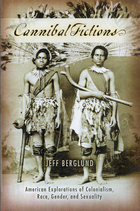
front cover of Cannibal Fictions
Cannibal Fictions
American Explorations of Colonialism, Race, Gender, and Sexuality
Jeff Berglund
University of Wisconsin Press, 2006
    Objects of fear and fascination, cannibals have long signified an elemental "otherness," an existence outside the bounds of normalcy. In the American imagination, the figure of the cannibal has evolved tellingly over time, as Jeff Berglund shows in this study encompassing a strikingly eclectic collection of cultural, literary, and cinematic texts.
    Cannibal Fictions brings together two discrete periods in U.S. history: the years between the Civil War and World War I, the high-water mark in America's imperial presence, and the post-Vietnam era, when the nation was beginning to seriously question its own global agenda. Berglund shows how P. T. Barnum, in a traveling exhibit featuring so-called "Fiji cannibals," served up an alien "other" for popular consumption, while Edgar Rice Burroughs in his Tarzan of the Apes series tapped into similar anxieties about the eruption of foreign elements into a homogeneous culture. Turning to the last decades of the twentieth century, Berglund considers how treatments of cannibalism variously perpetuated or subverted racist, sexist, and homophobic ideologies rooted in earlier times. Fannie Flagg's novel Fried Green Tomatoes invokes cannibalism to new effect, offering an explicit critique of racial, gender, and sexual politics (an element to a large extent suppressed in the movie adaptation). Recurring motifs in contemporary Native American writing suggest how Western expansion has, cannibalistically, laid the seeds of its own destruction. And James Dobson's recent efforts to link the pro-life agenda to allegations of cannibalism in China testify still further to the currency and pervasiveness of this powerful trope.
    By highlighting practices that preclude the many from becoming one, these representations of cannibalism, Berglund argues, call into question the comforting national narrative of e pluribus unum.
[more]

front cover of Canons by Consensus
Canons by Consensus
Critical Trends and American Literature Anthologies
Joseph Csicsila, with a foreword by Tom Quirk
University of Alabama Press, 2004

The first systematic analysis of American literature textbooks used by college instructors in the last century

Scholars have long noted the role that college literary anthologies play in the rising and falling reputations of American authors. Canons by Consensus examines this classroom fixture in detail to challenge and correct a number of assumptions about the development of the literary canon throughout the 20th century.

Joseph Csicsila analyzes more than 80 anthologies published since 1919 and traces not only the critical fortunes of individual authors, but also the treatment of entire genres and groupings of authors by race, region, gender, and formal approach. In doing so, he calls into question accusations of deliberate or inadvertent sexism and racism. Selections by anthology editors, Csicsila demonstrates, have always been governed far more by prevailing trends in academic criticism than by personal bias.

Academic anthologies are found to constitute a rich and often overlooked resource for studying American literature, as well as an irrefutable record of the academy’s changing literary tastes throughout the last century.
[more]

front cover of Canto hondo / Deep Song
Canto hondo / Deep Song
Francisco X. Alarcón
University of Arizona Press, 2015
Canto hondo / Deep Song honors the Andalusian deep lyric, or canto hondo, poetry of famed Spanish writer Federico García Lorca through rich and expressive poems. Francisco X. Alarcón deftly places Spanish and English side-by-side in this bilingual collection that is a modern meditation on love, self, loss, and universal truths.

In this new collection, Alarcón creates poetry with roots in Gypsy songs clapped out in the distinctively short rhythms of flamenco music. Each page lifts the heart and stirs the soul by delving deep into the struggle for self and sexual identity.

Canto hondo / Deep Song includes 106 poems divided into four sections that articulate struggle, otherness, and the meaning of the poetic landscape. Like Lorca, Alarcón seeks out the fault lines where the lyric and the political bleed productively and proactively into one another.

An important voice in Chicano and GLBT poetry, Alarcón writes with a complex, emotionally powerful style that is accessible to students and all lovers of poetry and poetic traditions.

[more]

front cover of Cape Cod
Cape Cod
An Environmental History of a Fragile Ecosystem
John T. Cumbler
University of Massachusetts Press, 2014
To many, Cape Cod represents the classic setting for an American summer vacation. Attracting seasonal tourists with picturesque beaches and abundant seafood, the Cape has held a place in our national imagination for almost two hundred years. People have been drawn to its beauty and resources since Native Americans wandered up its long sandy peninsula some 12,000 years ago, while writers such as Henry David Thoreau and Norman Mailer have celebrated its mystery and allure. But, despite its idealized image, Cape Cod has a long history of scarcity and an increasingly evident fragility.

John T. Cumbler's book offers an environmental, social, and economic history of Cape Cod told through the experiences of residents as well as visitors. He notes that over the past four hundred years the Cape has experienced three regimes of resource utilization. The first regime of Native Americans who lived relatively lightly on the land was supplanted by European settlers who focused on production and extraction. This second regime began in the age of sail but declined through the age of steam as the soil and seas failed to yield the resources necessary to sustain continuing growth. Environmental and then economic crises during the second half of the nineteenth century eventually gave way to the third regime of tourism and recreation. But this regime has its own environmental costs, as residents have learned over the last half century.

Although the Cape remains a special place, its history of resource scarcity and its attempts to deal with that scarcity offer useful lessons for anyone addressing similar issues around the globe.
[more]

logo for Pluto Press
Capital, Class & Technology in Contemporary American Culture
Projecting Post-Fordism
Nick Heffernan
Pluto Press, 2000
In the tradition of Mike Davis and Fredric Jameson, Nick Heffernan engages in a series of meditations on capital, class and technology in contemporary America. 

He turns to the stories we generate and tell ourselves - via fiction, film journalism, theory - to see how change is registered. By investigating a variety of texts, he observes how structural change affects the way people organise their lives economically, socially and culturally. Case studies include Ridley Scott's Blade Runner, William Gibson's cyberspace trilogy, Thomas Pynchon's The Crying of Lot 49, and Wim Wenders's Until the End of the World.

Using the links between narrative cultural forms and the process of historical understanding, he brings together debates that have so far been conducted largely within the separate domains of political economy, social theory and cultural criticism to provide a compelling analysis of contemporary cultural change. By relocating postmodernism in the context of changing modes of capitalism, Heffernan puts the question of class and class agency back at the centre of the critical agenda.
[more]

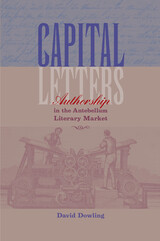
front cover of Capital Letters
Capital Letters
Authorship in the Antebellum Literary Market
David Dowling
University of Iowa Press, 2009

In the 1840s and 1850s, as the market revolution swept the United States, the world of literature confronted for the first time the gaudy glare of commercial culture. Amid growing technological sophistication and mounting artistic rejection of the soullessness of materialism, authorship passed from an era of patronage and entered the clamoring free market. In this setting, romantic notions of what it meant to be an author came under attack, and authors became professionals.

In lively and provocative writing, David Dowling moves beyond a study of the emotional toll that this crisis in self-definition had on writers to examine how three sets of authors—in pairings of men and women: Harriet Wilson and Henry David Thoreau, Fanny Fern and Walt Whitman, and Rebecca Harding Davis and Herman Melville—engaged with and transformed the book market. What were their critiques of the capitalism that was transforming the world around them? How did they respond to the changing marketplace that came to define their very success as authors? How was the role of women influenced by these conditions?

Capital Letters concludes with a fascinating and daring transhistorical comparison of how two superstar authors—Herman Melville in the nineteenth century and Stephen King today—have negotiated the shifty terrain of the literary marketplace. The result is an important contribution to our understanding of print culture and literary work.

[more]

logo for Duke University Press
Captive Ecologies
The Environmental Afterlives of Slavery
Jennifer C. James
Duke University Press, 2026

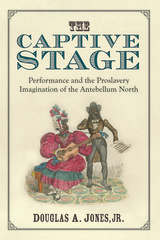
front cover of The Captive Stage
The Captive Stage
Performance and the Proslavery Imagination of the Antebellum North
Douglas A. Jones, Jr.
University of Michigan Press, 2014
In The Captive Stage, Douglas A. Jones, Jr. argues that proslavery ideology remained the dominant mode of racial thought in the antebellum north, even though chattel slavery had virtually disappeared from the region by the turn of the nineteenth century—and that northerners cultivated their proslavery imagination most forcefully in their performance practices. Jones explores how multiple constituencies, ranging from early national artisans and Jacksonian wage laborers to patrician elites and bourgeois social reformers, used the stage to appropriate and refashion defenses of black bondage as means to affirm their varying and often conflicting economic, political, and social objectives. Joining performance studies with literary criticism and cultural theory, he uncovers the proslavery conceptions animating a wide array of performance texts and practices, such as the “Bobalition” series of broadsides, blackface minstrelsy, stagings of the American Revolution, reform melodrama, and abolitionist discourse. Taken together, he suggests, these works did not amount to a call for the re-enslavement of African Americans but, rather, justifications for everyday and state-sanctioned racial inequities in their post-slavery society. Throughout, The Captive Stage elucidates how the proslavery imagination of the free north emerged in direct opposition to the inclusionary claims black publics enacted in their own performance cultures. In doing so, the book offers fresh contexts and readings of several forms of black cultural production, including early black nationalist parades, slave dance, the historiography of the revolutionary era, the oratory of radical abolitionists and the black convention movement, and the autobiographical and dramatic work of ex-slave William Wells Brown.
[more]

logo for Dartmouth College Press
Captivity and Sentiment
Cultural Exchange in American Literature, 1682–1861
Michelle Burnham
Dartmouth College Press, 2000
In a radically new interpretation and synthesis of highly popular 18th- and 19th-century genres, Michelle Burnham examines the literature of captivity, and, using Homi Bhabha's concept of interstitiality as a base, provides a valuable redescription of the ambivalent origins of the US national narrative. Stories of colonial captives, sentimental heroines, or fugitive slaves embody a "binary division between captive and captor that is based on cultural, national, or racial difference," but they also transcend these pre-existing antagonistic dichotomies by creating a new social space, and herein lies their emotional power. Beginning from a simple question on why captivity, particularly that of women, so often inspires a sentimental response, Burnham examines how these narratives elicit both sympathy and pleasure. The texts carry such great emotional impact precisely because they "traverse those very cultural, national, and racial boundaries that they seem so indelibly to inscribe. Captivity literature, like its heroines, constantly negotiates zones of contact," and crossing those borders reveals new cultural paradigms to the captive and, ultimately, the reader.
[more]

front cover of Captivity Beyond Prisons
Captivity Beyond Prisons
Criminalization Experiences of Latina (Im)migrants
By Martha D. Escobar
University of Texas Press, 2016

Today the United States leads the world in incarceration rates. The country increasingly relies on the prison system as a “fix” for the regulation of societal issues. Captivity Beyond Prisons is the first full-length book to explicitly link prisons and incarceration to the criminalization of Latina (im)migrants.

Starting in the 1990s, the United States saw tremendous expansion in the number of imprisoned (im)migrants, specifically Latinas/os. Consequently, there was also an increase in the number of deportations. In addition to regulating society, prisons also serve as a reproductive control strategy, both in preventing female inmates from having children and by separating them from their families. With an eye to racialized and gendered technologies of power, Escobar argues that incarcerated Latinas are especially depicted as socially irrecuperable because they are not considered useful within the neoliberal labor market. This perception impacts how they are criminalized, which is not limited to incarceration but also extends to and affects Latina (im)migrants’ everyday lives. Escobar also explores the relationship between the immigrant rights movement and the prison abolition movement, scrutinizing a variety of social institutions working on solutions to social problems that lead to imprisonment.

Accessible to both academics and those in the justice and social service sectors, Escobar’s book pushes readers to consider how, even in radical spaces, unequal power relations can be reproduced by the very entities that attempt to undo them.
[more]

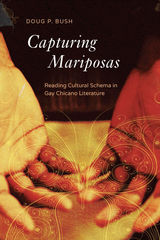
front cover of Capturing Mariposas
Capturing Mariposas
Reading Cultural Schema in Gay Chicano Literature
Doug P. Bush
The Ohio State University Press, 2019
Gay Chicano/Latinx literature often holds an intensely personal meaning for its readers, sometimes being the first artistic expression encountered that affirms their own identity as a double minority in a world that is frequently hostile to both. Nevertheless, much of the academic discourse surrounding this body of literature has overlooked how critical audience reaction can be in this inherently political genre, instead seeing the power of a work as resting within the piece itself.
 
In Capturing Mariposas: Reading Cultural Schema in Gay Chicano Literature, Doug P. Bush looks at the book as only the beginning, considering how this literature has the power to bring understanding to disparate groups, speak truth about repressed sexuality and repressive communities, and recast traditional spaces as ones of inclusion, all through the idea of the cultural schema. Integrating elements of narratology and cognitive studies of literature, the cultural schema speaks to how these authors challenge, reaffirm, and transform commonly held experiences of gay Chicanos—or potentially any audience who reads their works. Focusing on twenty-first-century writers such as Manuel Muñoz, Rigoberto González, and Alex Espinoza, Bush examines the cultural schema of their works and then moves toward a more holistic discussion of the publishing and political implications of this genre. In addition to Bush’s important scholarship, the book includes extensive interviews with the authors themselves.
 
[more]

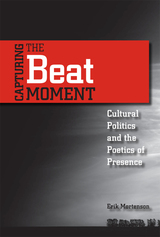
front cover of Capturing the Beat Moment
Capturing the Beat Moment
Cultural Politics and the Poetics of Presence
Erik Mortenson
Southern Illinois University Press, 2010

CHOICE Outstanding Academic Title

Examining “the moment” as one of the primary motifs of Beat writing, Erik Mortenson offers the first book to investigate immediacy and its presence and importance in Beat writing. Capturing the Beat Moment: Cultural Politics and the Poetics of Presence places an expanded canon of Beat writers in an early postmodern context that highlights their importance in American poetics and provides an account of Beat practices that reveal how gender and race affect Beat politics of the moment.

Mortenson argues that Beat writers focused on action, desire, and spontaneity to establish an authentic connection to the world around them and believed that “living in the moment” was the only way in which they might establish the kind of life that led to good writing. With this in mind, he explores the possibility that, far from being the antithesis of their times, the Beats actually were a product of them. Mortenson outlines the effects of gender and race on Beat writing in the postwar years, as well as the Beats’ attempts to break free of the constrictive notions of time and space prevalent during the 1950s.

Mortenson discusses such topics as the importance of personal visionary experiences; the embodiment of sexuality and the moment of ecstasy in Beat writing; how the Beats used photographs to evoke the past; and the ways that Beat culture was designed to offer alternatives to existing political and social structures. Throughout the volume, Mortenson moves beyond the Kerouac-Ginsberg-Burroughs triumvirate commonly associated with Beat literature, discussing women—such as Diane di Prima, Janine Pommy Vega, and Joyce Johnson—and African American writers, including Bob Kaufman and Amiri Baraka. With the inclusion of these authors comes a richer understanding of the Beat writers’ value and influence in American literary history.
[more]

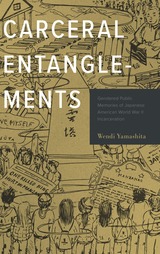
front cover of Carceral Entanglements
Carceral Entanglements
Gendered Public Memories of Japanese American World War II Incarceration
Wendi Yamashita
Temple University Press, 2024
Japanese Americans have long contended with settler colonization and mass criminalization by the state, most notably during the WWII era when they were forced into incarceration camps. In Carceral Entanglements, Wendi Yamashita asks, how do narratives of worth and success that make Japanese Americans legible to the state come to be? What are the consequences of such narratives?

Carceral Entanglements features interviews, archival research, and texts to explore racial violence and patriotic masculinity and explain how Japanese American history and identity are publicly memorialized. Yamashita examines museums, digital archives, pilgrimages, and student-run and performed plays to understand how Japanese Americans occupy a “contradictory location” produced by the state. She also addresses historical erasure, race relations and the struggle for redress and reparations.

Carceral Entanglements is about the interlocking relationship Japanese American incarceration memories have to the prison industrial complex and the settler colonial logics that at times unknowingly sustain it.
[more]

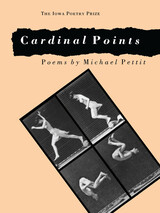
front cover of Cardinal Points
Cardinal Points
Pettit, Michael
University of Iowa Press, 1988

Strung throughout the book are poems based on the Scottish photographer Eadwaerd Muybridge's Animal Locomotion, a historic photographic document. Pettit uses these pioneering images as the basis for his poetic dreaming, and the result is a poignant, integrated sequence of highly moving poems, studded between other vivid lyrics.


[more]

front cover of Care at the End of the World
Care at the End of the World
Dreaming of Infrastructure in Crip-of-Color Writing
Jina B. Kim
Duke University Press, 2025
In Care at the End of the World, Jina B. Kim develops what she calls crip-of-color critique, bringing a disability lens to bear on feminist- and queer-of-color literature in the aftermath of 1996 US welfare reform and the subsequent evisceration of social safety nets. She examines literature by contemporary feminist, queer, and disabled writers of color such as Jesmyn Ward, Octavia Butler, Karen Tei Yamashita, Samuel Delany, and Aurora Levins Morales, who each bring disability and dependency to the forefront of their literary freedom dreaming. Kim shows that in their writing, liberation does not take the shape of the unfettered individual or hinge on achieving independence. Instead, liberation emerges by recuperating dependency, cultivating radical interdependency, and recognizing the numerous support systems upon which survival depends. At the same time, Kim demonstrates how theories and narratives of disability can intervene into state-authored myths of resource parasitism, such as the welfare queen. In so doing, she highlights the alternate structures of care these writers envision and their dreams of life organized around reciprocity and mutual support.
[more]

front cover of Caribbean Crusaders and the Harlem Renaissance
Caribbean Crusaders and the Harlem Renaissance
Joyce Moore Turner
University of Illinois Press, 2005
Joyce Moore Turner's Caribbean Crusaders and the Harlem Renaissance is a study of the emergence of African American radicalism in Harlem, a crossroads of the African Diaspora in the early twentieth century. Turner reveals that the Harlem Renaissance was more than just an artistic fluorescence; it was also a political movement to counter racism and colonialism.
To explore the roots of the Caribbean emigres' radical ideology and the strategies used to extend agitation from Harlem to national and international platforms, the study draws on the papers and writings of Hermina Huiswoud, Cyril Briggs, the Reverend E. Ethelred Brown, Langston Hughes, and Richard B. Moore, as well as from interviews and biographies of related contemporary figures. It also incorporates census records, FBI files, and hundreds of documents from the recently opened Russian Archive.
Through a focus on Otto Huiswoud, the sole African American charter member of the Communist Party, and his wife, Hermina, Turner exposes the complex developments within the socialist and communist parties on the question of race. The account ranges beyond Harlem to Europe, Africa, and the Soviet Union to reveal the breadth, depth, and nearly global reach of the Afro-Caribbean activists' activities.

 
[more]

front cover of Caribes 2.0
Caribes 2.0
New Media, Globalization, and the Afterlives of Disaster
Jossianna Arroyo
Rutgers University Press, 2023
In Caribes 2.0, author Jossianna Arroyo looks at the Caribbean mediasphere in the twenty-first century. Arroyo argues that we have seen a return to tropes such as blackface, brownface, cultural and ethnic stereotypes, and violent representations of the poor, the marginalized, and the racialized. Caribes 2.0 looks at these tropes as well as the work of writers, vloggers, performers, and photographers that have become media figures or have used new media platforms to promote their work and examines how they are challenging and negotiating these media representations. It analyzes contemporary Caribbean cultures to discuss, taste, guides, and actions (social and virtual) that shape Caribbean global communities today. Departing from Edouard Glissant’s insight that “Caribbean reality might not be accessed by remote control” the book considers what types of political and social agencies are created by mediation. Caribes 2.0 deviates from these historical-globalized views of subjected, colonized Caribbean bodies, and their material conditions, to examine the relationship between the local and the global in contemporary Caribbean cultures, and the role that media is playing in the invisibility or hyper-visibilty of Caribbean cultures in the islands and the U.S. diaspora.
 
[more]

front cover of Caring for Red
Caring for Red
A Daughter's Memoir
Mindy Fried
Vanderbilt University Press, 2016
Eric Hoffer Book Award Finalist, 2018

Caring for Red is Mindy Fried's moving and colorful account of caring for her ninety-seven-year-old father, Manny--an actor, writer, and labor organizer--in the final year of his life. This memoir chronicles the actions of two sisters as they discover concentric circles of support for their father and attempt to provide him with an experience of "engaged aging" in an assisted living facility.

The story is also that of a daughter of a powerful and outspoken man who took risks throughout his life and whose political beliefs had an enduring impact on his family. (After Manny was called before the House Un-American Activities Committee, he was blacklisted and his family was shunned.)

As an actor, Manny was affiliated with Elia Kazan's Group Theatre and the Federal Theatre Project. He did Shakespeare, Chekhov, and Ibsen, and played everything from the tormented father in Arthur Miller's All My Sons to an infant in a baby carriage in Thornton Wilder's Infancy, from the Rabbi in Fiddler on the Roof to--poignantly for this book--the role of Morrie in Tuesdays with Morrie.

As she devotes herself to caring for her dying father, Mindy grapples anew with the complexity of their relationship. She questions whether she can be there for him and how to assert her own voice as her father's caregiver in his last days.
[more]

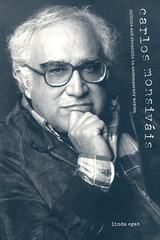
front cover of Carlos Monsiváis
Carlos Monsiváis
Culture and Chronicle in Contemporary Mexico
Linda Egan
University of Arizona Press, 2001

One of Mexico’s foremost social and political chroniclers and its most celebrated cultural critic, Carlos Monsiváis has read the pulse of his country over the past half century. The author of five collections of literary journalism pieces called crónicas, he is perhaps best known for his analytic and often satirical descriptions of Mexico City’s popular culture.

This comprehensive study of Monsiváis’s crónicas is the first book to offer an analysis of these works and to place Monsiváis’s work within a theoretical framework that recognizes the importance of his vision of Mexican culture. Linda Egan examines his ideology in relation to theoretical postures in Latin America, the United States, and Europe to cast Monsiváis as both a heterodox pioneer and a mainstream spokesman. She then explores the poetics of the contemporary chronicle in Mexico, reviewing the genre’s history and its relation to other narrative forms. Finally, she focuses on the canonical status of Monsiváis’s work, devoting a chapter to each of his five principal collections.

Egan argues that the five books that are the focus of her study tell a story of ever-renewing suspense: we cannot know “the end” until Monsiváis is through constructing his literary project. Despite this, she observes, his work between 1970 and 1995 documents important discoveries in his search for causes, effects, and deconstructions of historical obstacles to Mexico’s passage into modernity.

While anthropologists and historians continue to introduce new paradigms for the study of Mexico’s cultural space, Egan’s book provides a reflexive twist by examining the work of one of the thinkers who first inspired such a critical movement. More than an appraisal of Monsiváis, it offers a valuable discussion of theoretical issues surrounding the study of the chronicle as it is currently practiced in Mexico. It balances theory and criticism to lend new insight into the ties between Mexican society, social conscience, and literature.
[more]

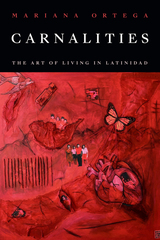
front cover of Carnalities
Carnalities
The Art of Living in Latinidad
Mariana Ortega
Duke University Press, 2025
In Carnalities, Mariana Ortega presents a phenomenological study of aesthetics grounded in the work of primarily Latinx artists. She introduces the idea of carnal aesthetics informed by carnalities, creative practices shaped by the self’s affective attunement to the material, cultural, historical, communal, and spiritual. For Ortega, carnal aesthetics offers a way to think about the affective and bodily experiences of racialized selves. Drawing on Gloria Anzaldúa, Chela Sandoval, José Esteban Muñoz, Alia Al-Saji, Helen Ngo, Maurice Merleau-Ponty, Roland Barthes, and others, Ortega examines photographic works on Latinx subjects. She analyzes the photography of Laura Aguilar, Verónica Gabriela Cárdenas, and Susan Meiselas, among others, theorizing photography as a carnal, affective medium that is crucial for processes of self-formation, resistance, and mourning in Latinx life. She ends with an intimate reading of photography through a reflection of her own crossing from Nicaragua to the United States in 1979. Motivated by her experience of loss and exile, Ortega argues for the importance of carnal aesthetics in destabilizing and transforming normative, colonial, and decolonial subjects, imaginaries, and structures.
[more]

front cover of Carne de Dios
Carne de Dios
A Novel
Homero Aridjis; Translated by Chloe Garcia Roberts
University of Arizona Press, 2025
In the remote mountains of Oaxaca, the Beatniks have arrived.

María Sabina, the renowned Mazatec healer, spends her days in the small town of Huautla de Jiménez selling produce at the market and foraging under the new moon for the sacred mushrooms that grow near her home—her Holy Children, Carne de Dios, or Flesh of God. But her life changes forever when an amateur mycologist from New York, with a cameraman in tow, visits her to experience for himself the mushroom ceremony, or velada, he knows only from whispers in anthropological records. When he publishes an unauthorized article about his experience in LIFE Magazine 1957, the stage is set for an explosive encounter between the burgeoning international counterculture and the woman who became an unwilling icon of the psychedelic revolution.

Homero Aridjis’s novel, vividly translated by Chloe Garcia Roberts, tells the story of the motley crew of bohemians, researchers, and holy fools, both real and imagined, who descend on the town of Huautla de Jiménez searching for inspiration, distraction, and salvation in the sacred mushrooms. These seekers melt in and out of a narrative infiltrated by the slipstream logic of dreams. As John Lennon plays jazz on the patio of the Hotel Grande, Juan Rulfo contemplates horror movies, and Allen Ginsberg recites mantras at Philip Lamantia’s wedding, María Sabina’s life is increasingly thrown into turmoil.

Carne de Dios is a masterful and often humorous blend of history, myth, and poetic imagination, captured in a translation that mirrors the hallucinatory beauty of Aridjis’s original Spanish. Aridjis’s intimate portrayal of María Sabina, informed by his personal connection to her, serves as both a tribute to her enduring legacy and a critical reflection on the wave of global interest in mushroom culture still gaining momentum today.

This English translation includes an introduction by the translator and an afterword by the author.
 
[more]

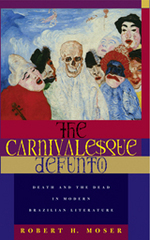
front cover of The Carnivalesque Defunto
The Carnivalesque Defunto
Death and the Dead in Modern Brazilian Literature
Robert H. Moser
Ohio University Press, 2008
The Carnivalesque Defunto explores the representations of death and the dead in Brazil’s collective and literary imagination. The recurring stereotype of Brazil as the land of samba, soccer, and sandy beaches overlooks a more complex cultural heritage in which, since colonial times, a relationship of proximity and reciprocity has been cultivated between the living and the dead.

Robert H. Moser details the emergence of a prominent motif in modern Brazilian literature, namely the carnivalesque defunto (the dead) that, in the form of a protagonist or narrator, returns to beseech, instruct, chastise, or even seduce the living. Drawing upon the works of esteemed Brazilian writers such as Machado de Assis, Érico Veríssimo, and Jorge Amado, Moser demonstrates how the defunto, through its mocking laughter and Dionysian resurrection, simultaneously subverts and inverts the status quo, thereby exposing underlying points of tension within Brazilian social and political history.

Incorporating elements of both a celestial advocate and an untrustworthy specter, the defunto also serves as a metaphor for one of modern Brazil’s greatest dilemmas: reconciling the past with the present.

The Carnivalesque Defunto offers a comparative framework by juxtaposing the Brazilian literary ghost with other Latin American, Caribbean, and North American examples. It also presents a cross-disciplinary approach toward understanding the complex relationship forged between Brazil’s spiritual traditions and literary expressions.

[more]

front cover of Cartographic Fictions
Cartographic Fictions
Maps, Race, and Identity
Piper, Karen
Rutgers University Press, 2002

Maps are stories as much about us as about the landscape. They reveal changing perceptions of the natural world, as well as conflicts over the acquisition of territories. Cartographic Fictions looks at maps in relation to journals, correspondence, advertisements, and novels by authors such as Joseph Conrad and Michael Ondaatje. In her innovative study, Karen Piper follows the history of cartography through three stages: the establishment of the prime meridian, the development of aerial photography, and the emergence of satellite and computer mapping.

Piper follows the cartographer’s impulse to “leave the ground” as the desire to escape the racialized or gendered subject. With the distance that the aerial view provided, maps could then be produced “objectively,” that is, devoid of “problematic” native interference. Piper attempts to bring back the dialogue of the “native informant,” demonstrating how maps have historically constructed or betrayed anxieties about race. The book also attempts to bring back key areas of contact to the map between explorer/native and masculine/feminine definitions of space.
[more]

front cover of Cartoons and Caricatures of Mark Twain in Context
Cartoons and Caricatures of Mark Twain in Context
Reformer and Social Critic, 1869–1910
Leslie Diane Myrick and Gary Scharnhorst
University of Alabama Press, 2023
The first book-length treatment of Mark Twain’s public persona as depicted in newspaper and magazine illustrations
 
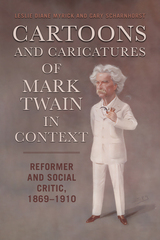
Cartoons and Caricatures of Mark Twain in Context: Reformer and Social Critic, 1869–1910 examines the production, reception, and history of Twain’s reputation as a social and political satirist. Myrick and Scharnhorst trace the evolution of Twain’s depiction throughout his life, career, and even death and across more than seventy illustrations—from portrayals of the famous author as a court jester adorned with cap and bells, to a regally haloed king with a royal train—offering a new perspective on his influence and reputation. Although he was among the most photographed figures of the nineteenth century, Myrick and Scharnhorst focus on a medium that Twain, an expert ofself-promotion and brand management, could not control. As a result, Myrick and Scharnhorst have compiled an innovative and incisive visual reception history.

Cartoons and Caricatures of Mark Twainin Context illustrates the popular and often critical response to many famous and infamous episodes in his career, such as the storm of controversy that surrounded the publication of his anti-imperialist writings at the turn of the twentieth century. Routinely depicted with hair like a fright wig, a beak-like nose, and a cigar in hand, no matter the context or the costume, Twain was instantly recognizable. Yet it was not merely the familiarity of his image that made him a regular feature in visual commentary, but also his willingness to speak out against corruption and to insert himself into controversies of his day.

 
[more]

front cover of Cases of Circumstantial Evidence
Cases of Circumstantial Evidence
Janet Lewis
Ohio University Press, 2013

This is the first digital version of Cases of Circumstantial Evidence, a collection of three historical novels by noted American writer Janet Lewis. For the first time, these works have been brought together in a single edition, each with a new introduction by Kevin Haworth:

The Wife of Martin Guerre
Based on a notorious trial in sixteenth-century France, The Wife of Martin Guerre follows Bertrande de Rois and her lost-and-returned husband through a tale of impersonation, conspiracy, and small-town intrigue. Their fascinating story has also inspired a bestselling historical study and two films, including The Return of Martin Guerre.

The Trial of Sören Qvist
Although set in seventeenth-century Denmark, The Trial of Sören Qvist has a contemporary feel and has been praised for its intriguing plot and for Lewis’s powerful writing. In this second novel in the Cases of Circumstantial Evidence, Lewis recounts the story of a murder, an investigation, and a pious town pastor who confesses to the crime, driven perhaps more by a recognition of his own moral flaws than by guilt for the acts of which he stood accused.

The Ghost of Monsieur Scarron
The court of Louis XIV and a modest Paris street provide the incongruous settings for this tale of a humble bookbinder, his wife, and the young craftsman who seduces her and blackmails her husband into covering up a terrible crime. This third and last case of circumstantial evidence bristles with character, the smell of blood, and considerable suspense against a backdrop of national political unrest in the cruel and dingy Paris of the seventeenth century.
[more]

front cover of Caste and Class in a Southern Town
Caste and Class in a Southern Town
John Dollard
University of Wisconsin Press, 1989

An extraordinary powerful exposition of social patterns in a small town, Caste and Class in a Southern Town has become a benchmark in social science methodology and a classic in American studies. Now fifty years after its original publication, John Dollard’s most famous work offers timeless insights and remains essential to those interested in race-related social issues.

In 1937, W. E. B. Du Bois observed, "Dr. Dollard’s study is one of the most interesting and penetrating that has been made concerning the South and is marked by courage and real insight. . . . Dr. Dollard’s book marks a distinct advance in the study of the Southern scene."
 

[more]

front cover of Castle Nowhere
Castle Nowhere
Lake-Country Sketches
Constance Fenimore Woolson
University of Michigan Press, 2004

Castle Nowhere is Constance Woolson's collection of stories set for the most part in the Great Lakes, in particular northern Lake Michigan and Lake Huron near Detroit.

Several themes inhabit Woolson's writing: an environmental consciousness and concern with landscapes; an awareness of the complexities of race; and an abidingly careful eye for the shallowness that sometimes accompanies wealth or social pretensions. She also had a unique perspective as a woman who pioneered the use of controversial subjects---such as unrequited or misplaced passion---and methods in fiction during a time that valorized domesticity.

As Margot Livesey notes in her introduction, reading about thwarted love is only one of the pleasures to be found in Castle Nowhere. "The majority of these stories are set in remote areas on the shores of Lake Michigan, which Woolson evokes with great vividness and beauty while always remaining keenly aware that beauty in no way mitigates hardship. As a writer, she was nearly always looking over her shoulder, and many, if not all, of these stories were written at a time when she no longer visited the Lake and her beloved Mackinac Island."

Contemporary readers will find a curiously modern atmosphere in Woolson's stories, as well as a distinct regional flavor in her careful renderings of the Great Lakes landscape. As such, Castle Nowhere represents a rare woman's voice in literature of its period and setting.

Constance Fenimore Woolson (1840-1894) was born in New Hampshire and moved to Cleveland shortly thereafter. She spent time on Mackinac Island, Michigan, then traveled to Florida before moving to Europe. Much of her time there was spent in Italy. She died in Venice in 1894. Novelist Margot Livesey is the author of Eva Moves the Furniture and Homework.

[more]

front cover of The Casual
The Casual
Downplaying Art Since California Conceptualism
Jacob Stewart-Halevy
University of Chicago Press, 2026
Considers the enduring legacy of California Conceptualism, known for its lax approaches to creating, writing about, and exhibiting art.
 
Moving away from making objects, and turning instead to staging scenes, the artists associated with California Conceptualism—including Eleanor Antin, John Baldessari, David Lamelas, Tony Ramos, Ilene Segalove, and William Wegman—behaved indifferently toward their art, denied making it and knowing what it was about, and displayed a lack of concern for its future. Their casual attitude and aesthetic transformed relationships between artists, critics, and viewers, separating those who could recognize these practices from those who could not.
 
Contemporary artists have continued this trajectory, finding new ways to act casually through their “stance.” In the humanities, this term is often taken to mean the beliefs, values, and intentions of authors, and it has offered a useful way to think about how artists position themselves toward their work and audiences. Jacob Stewart-Halevy builds on recent social theory to show how artists, critics, and other members of the art world wield stance to make sense of artworks and their social circumstances, arguing that, through the rise of conceptual art, stance has come to supplement—and in some cases replace—the aesthetic quality of artworks.  

 
[more]

front cover of The Cat and the Human Imagination
The Cat and the Human Imagination
Feline Images from Bast to Garfield
Katharine M. Rogers
University of Michigan Press, 2001
The Cat and the Human Imagination is a fascinating historical survey of the changing cultural attitudes towards cats and the myriad ways that they have been depicted in literature and art. Feline images have permeated civilization since the time of the ancient Egyptians, and during this time the status of the cat has changed dramatically. The book examines the changing images-- fertility goddess, sly little predator, agent of Satan, avenging witness, aristocrat, friend, spirit of the home, bloodthirsty killer, seductive female--and relates them to the contexts in which they arose. It also analyzes how human attitudes towards cats seem to have evolved in parallel with attitudes towards animals, towards authority, and towards gender.
Western literature and visual art have reflected this change, developing from bare sketches to richly varied expressions of feline personality and human interaction with cats. Katharine M. Rogers seeks out the cats who make appearances in an impressive range of literary and artistic works, providing the first critical look at the symbolic functioning of cat characters in Poe's "The Black Cat," Dickens's Bleak House, and Zola's Therese Raquin, among other literary works. The historical and artistic range covered is impressive, creating a rich compendium that is the ideal book for the cat lover seeking a refreshingly substantial and scholarly work about this fascinating animal.
"This book is a classic-- something every cat-loving intellectual will have to own. (No one, of course, ever really owns a cat--but everyone should own this book.) It's the kind of book you want to quote from at the vet's, or cocktail parties, or whenever you get the urge to convert a dog lover to the true faith." --Emily Toth, Louisiana State University
Katharine M. Rogers is Professor Emerita of English, City University of New York. Her previous books include Feminism in Eighteenth-Century England and Frances Burney: The World of "Female Difficulties."
[more]

front cover of Catching Hell In The City Of Angels
Catching Hell In The City Of Angels
Life And Meanings Of Blackness In South Central Los Angeles
João H. Costa Vargas
University of Minnesota Press, 2006
Since the 1980s, Los Angeles has become the most racially and economically divided city in the United States. In the poorest parts of South Central Los Angeles, buildings in disrepair—the legacy of racial unrest. Moving beyond stereotypes of South Central's predominantly African American residents, João H. Costa Vargas recounts his almost two years living in the district. Personal, critical, and disquieting, Catching Hell in the City of Angels examines the ways in which economic and social changes in the twentieth century have affected the black community, and powerfully conveys the experiences that bind and divide its people.

Through compelling stories of South Central, including his own experience as an immigrant of color, Vargas presents portraits of four groups. He talks daily with women living in a low-income Watts apartment building; works with activists in a community organization against police brutality; interacts with former gang members trying to maintain a 1992 truce between the Bloods and the Crips; and listens to amateur jazz musicians who perform in a gentrified section of the neighborhood. In each case he describes the worldviews and the definitions of “blackness” these people use to cope with oppression. Vargas finds, in turn, that blackness is a form of racial solidarity, a vehicle for the renewal of African American culture, and a political expression of revolutionary black nationalism.

Vargas reveals that the social fault lines in South Central reflect both contemporary disparities and long-term struggles. In doing so, he shows both the racialized power that makes “blackness” a prized term of identity and the terrible price that African Americans have paid for this emphasis. Ultimately, Catching Hell in the City of Angels tells the story of urban America through the lives of individuals from diverse, overlapping, and vibrant communities.

João H. Costa Vargas is assistant professor in the Center for African and African American Studies and the department of anthropology at the University of Texas, Austin.

Robin D. G. Kelley is the William B. Ransford Professor of Cultural and Historical Studies at Columbia University. He is the author of numerous books, including Yo Mama's Disfunktional: Fighting the Culture Wars in Urban America.
[more]

front cover of Catering an Affair
Catering an Affair
Alberta Skaggs
Southern Illinois University Press, 2018
The story of a woman simultaneously sustained and stifled by her affair, this book invites readers to ask how we come to be who we are and what it is exactly that we believe about ourselves. Skaggs investigates the heartbreaks we witness, the experiences we take into ourselves, and those we internalize through the pretense of avoidance. This book will leave readers feeling stronger and more capable.
 
[more]

front cover of Cather Among the Moderns
Cather Among the Moderns
Janis P. Stout
University of Alabama Press, 2019
A masterful study by a preeminent scholar that situates Cather as a visionary practitioner of literary modernism

Willa Cather is often pegged as a regionalist, a feminine and domestic writer, or a social realist. In Cather Among the Moderns, Janis P. Stout firmly situates Cather as a visionary practitioner of literary modernism, something other scholars have hinted at but rarely affirmed. Stout presents Cather on a large, dramatic stage among a sizable cast of characters and against a brightly lit social and historical backdrop, invoking numerous figures and instances from the broad movement in the arts and culture that we call modernism.

Early on, Stout addresses the matter of gender. The term “cross-dresser” has often been applied to Cather, but Stout sees Cather’s identity as fractured or ambiguous, a reading that links her firmly to early twentieth-century modernity. Later chapters take up topics of significance both to Cather and to twentieth-century American modernists, including shifting gender roles, World War I’s devastation of social and artistic norms, and strains in racial relations. She explores Cather’s links to a small group of modernists who, after the war, embraced life in New Mexico, a destination of choice for many artists, and which led to two of Cather’s most fully realized modernist novels, The Professor’s House and Death Comes for the Archbishop.

The last chapter addresses Cather’s place within modernism. Stout first places her in relation to Ezra Pound and T. S. Eliot with their shared ties to tradition even while making, sometimes startling, innovations in literary form, then showing parallels with William Faulkner with respect to economic disparity and social injustice.
[more]

front cover of Catherine
Catherine
A Story
William Makepeace Thackeray
University of Michigan Press, 1999

The Thackeray Edition proudly announces two additions to its collection: Catherine and The Luck of Barry Lyndon. The Thackeray Edition is the first full-scale scholarly edition of William Makepeace Thackeray's works to appear in over seventy years, and the only one ever to be based on an examination of manuscripts and relevant printed texts. It is also a concrete attempt to put into practice a theory of scholarly editing that gives new insight into Thackeray's own compositional process.

Written in 1839-40 for Fraser's Magazine, Catherine was Thackeray's first novel. Although originally intended as a spoof of the 1830s Newgate school of criminal romance, it has intrinsic merit of its own for its cynical narrator and roguish heroine, both of whom harbinger similar creations in Vanity Fair eight years later.

[more]

front cover of Cattle Bring Us to Our Enemies
Cattle Bring Us to Our Enemies
Turkana Ecology, Politics, and Raiding in a Disequilibrium System
J. Terrence McCabe
University of Michigan Press, 2004
An in-depth look at the ecology, history, and politics of land use among the Turkana pastoral people in Northern Kenya

Based on sixteen years of fieldwork among the pastoral Turkana people, McCabe examines how individuals use the land and make decisions about mobility, livestock, and the use of natural resources in an environment characterized by aridity, unpredictability, insecurity, and violence. The Turkana are one of the world's most mobile peoples, but understanding why and how they move is a complex task influenced by politics, violence, historical relations among ethnic groups, and the government, as well as by the arid land they call home.

As one of the original members of the South Turkana Ecosystem Project, McCabe draws on a wealth of ecological data in his analysis. His long-standing relationship with four Turkana families personalize his insights and conclusions, inviting readers into the lives of these individuals, their families, and the way they cope with their environment and political events in daily life.

J. Terrence McCabe is Associate Professor of Anthropology, University of Colorado at Boulder.

[more]

front cover of Cedric J. Robinson
Cedric J. Robinson
On Racial Capitalism, Black Internationalism, and Cultures of Resistance
Cedric J. Robinson
Pluto Press, 2019
"Before the movement for black lives made black radicalism cool for millennials, Cedric Robinson did the work of excavating an intellectual history we rely upon today."—The Root

"Like W. E. B. Du Bois, Michel Foucault, Sylvia Wynter, and Edward Said, Robinson was that rare polymath capable of seeing the whole....He left behind a body of work to which we must return constantly and urgently"—Robin D. G. Kelley, author of Freedom Dreams


Cedric J. Robinson is one of the doyens of Black Studies and a pioneer in study of the Black Radical Tradition. His works have been essential texts, deconstructing racial capitalism and inspiring insurgent movements from Ferguson, Missouri to the West Bank. For the first time, Robinson's essays come together, spanning over four decades and reflective of his diverse interests in the interconnections between culture and politics, radical social theory, and classic and modern political philosophy.

Themes explored include Africa and Black internationalism, World politics, race and US Foreign Policy, representations of blackness in popular culture, and reflections on popular resistance to racial capitalism, white supremacy and more. Essays here include:

*The Black Detective and American Memory
*Slavery and the Platonic Origins of Anti-Democracy
*Africa: In Hock to History and the Banks
*Blaxploitation and the Misrepresentation of Liberalism
*The Mulatta on Film
*Race, Capitalism, and Anti-democracy
*The Killing in Ferguson
*And much more!


Accompanied by an introduction by H. L. T. Quan and a foreword by Ruth Wilson Gilmore, this collection, which includes previously unpublished materials, extends the many contributions by a giant in Black radical thought.
[more]

front cover of The Celebration of Death in Contemporary Culture
The Celebration of Death in Contemporary Culture
Dina Khapaeva
University of Michigan Press, 2017
The Celebration of Death in Contemporary Culture investigates the emergence and meaning of the cult of death. Over the last three decades, Halloween has grown to rival Christmas in its popularity. Dark tourism has emerged as a rapidly expanding industry. “Corpse chic” and “skull style” have entered mainstream fashion, while elements of gothic, horror, torture porn, and slasher movies have streamed into more conventional genres. Monsters have become pop culture heroes: vampires, zombies, and serial killers now appeal broadly to audiences of all ages. This book breaks new ground by viewing these phenomena as aspects of a single movement and documenting its development in contemporary Western culture.

This book links the mounting demand for images of violent death with dramatic changes in death-related social rituals. It offers a conceptual framework that connects observations of fictional worlds—including The Twilight Saga, The Vampire Diaries, and the Harry Potter series—with real-world sociocultural practices, analyzing the aesthetic, intellectual, and historical underpinnings of the cult of death. It also places the celebration of death in the context of a longstanding critique of humanism and investigates the role played by 20th-century French theory, posthumanism, transhumanism, and the animal rights movement in shaping the current antihumanist atmosphere.

This timely, thought-provoking book will appeal to scholars of culture, film, literature, anthropology, and American and Russian studies, as well as general readers seeking to understand a defining phenomenon of our age.

 
[more]

front cover of Celebrity Chefs of New Jersey
Celebrity Chefs of New Jersey
Their Stories, Recipes, and Secrets
Teresa Politano
Rutgers University Press, 2010
One demanding New Jersey chef once tied his cooks to the stove by their apron strings. Another was such a finicky eater as a child, he refused to allow his cereal to touch his milk. One was kissed by Fidel Castro, another played onstage with Todd Rundgren. Celebrity Chefs of New Jersey peeks into the kitchens and the lives of some of the most famous chefs in the Garden State, where foodies and other gourmands will discover passions, kitchen secrets, life lessons, and signature recipes.

Not so long ago, perhaps even just at the turn of this century, it was easy to lament the lack of sophisticated food in New Jersey. Oh sure, a few restaurants always sparkled, but, for the most part, New Jerseyans looked across at the bright lights of the big city, wistfully yearning for a table in glamorous Manhattan. Now, however, the most sought- after tables are right here and we have the best seats in the house, made even sweeter perhaps because they're our own little secret. We can dine frequently and dine well, with a smug sense that if only New Yorkers knew, they'd be looking across the river wishing they were us.

In Celebrity Chefs of New Jersey, Teresa Politano profiles Craig Shelton, the chef who crystallized New Jersey's place in culinary history with his legendary Ryland Inn, along with other chefs, telling their personal stories of both creativity and survival. Some of these men and women rose from humble or difficult childhoods to fame in the food world. Others were not only talented but lucky enough to be in the right place at the right time. Their stories are arranged into three categories: legends, stars, and chefs to watch, and then topped off with a sweet surprise finish. Politano includes photographs, cooking secrets, and some of their sought-after signature recipes that are sophisticated but manageable for the skilled home chef.

[more]

front cover of Celibacies
Celibacies
American Modernism and Sexual Life
Benjamin Kahan
Duke University Press, 2013
In this innovative study, Benjamin Kahan traces the elusive history of modern celibacy. Arguing that celibacy is a distinct sexuality with its own practices and pleasures, Kahan shows it to be much more than the renunciation of sex or a cover for homosexuality. Celibacies focuses on a diverse group of authors, social activists, and artists, spanning from the suffragettes to Henry James, and from the Harlem Renaissance's Father Divine to Andy Warhol. This array of figures reveals the many varieties of celibacy that have until now escaped scholars of literary modernism and sexuality. Ultimately, this book wrests the discussion of celibacy and sexual restraint away from social and religious conservatism, resituating celibacy within a history of political protest and artistic experimentation. Celibacies offers an entirely new perspective on this little-understood sexual identity and initiates a profound reconsideration of the nature and constitution of sexuality.
[more]

front cover of Cell Traffic
Cell Traffic
New and Selected Poems
Heid E. Erdrich
University of Arizona Press, 2012
Cell Traffic presents new poems and uncollected prose poetry along with selected work from award-winning poet Heid Erdrich's three previous poetry collections. Erdrich's new work reflects her continuing concerns with the tensions between science and tradition, between spirit and body. She finds surprising common ground while exploring indigenous experience in multifaceted ways: personal, familial, biological, and cultural. The title, Cell Traffic, suggests motion and Erdrich considers multiple movements-cellular transfer, the traffic of DNA through body parts and bones, "migration" through procreation, and the larger "movements" of indigenousness and ancestral inheritance.
 
Erdrich's wry sensibility, sly wit, and keenly insightful mind have earned her a loyal following. Her point of view is always slightly off center, and this lends a particular freshness to her poetry. The debunking and debating of the science of origins is one of Erdrich's focal subjects. In this collection, she turns her observational eye to the search for a genetic mother of humanity, forensic anthropology's quest for the oldest known bones, and online offers of genetic testing. But her interests are not limited to science. She freely admits popular culture into her purview as well, referencing sci-fi television series and Internet pop-up ads.
[more]

front cover of Cenizas
Cenizas
Poems
Cynthia Guardado
University of Arizona Press, 2022
Cenizas offers an arresting portrait of a Salvadoran family whose lives have been shaped by the upheavals of global politics. The speaker of these poems—the daughter of Salvadoran immigrants—questions the meaning of homeland as she navigates life in the United States while remaining tethered to El Salvador by the long shadows cast by personal and public history. Cynthia Guardado’s poems give voice to the grief of family trauma, while capturing moments of beauty and tenderness. Maternal figures preside over the verses, guiding the speaker as she searches the ashes of history to tell her family’s story. The spare, narrative style of the poems are filled with depth as the family’s layers come to light.

Guardado crafted the poems in Cenizas over a ten-year period, often traveling to El Salvador for research and to conduct interviews. The Salvadoran Civil War haunts the pages of this collection as it unflinchingly explores war, its aftermath, and the bittersweet legacies that are passed down from one generation to the next. The poems mourn those who were lost and honor the strength of the speaker’s ancestors. “All my people have been born from the ashes of volcanoes,” she writes, invoking a family lineage that has endured the atrocities committed against them. Even so, El Salvador keeps pulling the speaker back—and despite warnings of danger, she still manages to find beauty among the ruins.
 
[more]

front cover of Cenotaph
Cenotaph
Poems
Brock Jones
University of Arkansas Press, 2016

Finalist, 2016 Miller Williams Poetry Prize, edited by Billy Collins

Out of the contradiction, paradox, loss, and strange beauty of contemporary warfare, Brock Jones brings us Cenotaph, a collection of poems that have as their genesis Jones’s deployments to Iraq in 2002 and 2005, when he was in the US Army.

These are war poems, but also love poems and hate poems, poems about dying and living, poems about hope and hopelessness. These are poems that beautifully reflect Jones’s resignation to and rejection of the impossibility of saying anything definitive or honest about war.

These are poems that strive to do what poet Bruce Weigl described as the poet’s job: to find “some kind of miraculous way th at if you work hard enough to get the words right, that which you call horrific and wrong is defeated.”

Cenotaph is a poet doing the poet’s work: trying, hoping to get the words right.

[more]

front cover of Censorship in Vietnam
Censorship in Vietnam
Brave New World
Thomas A. Bass
University of Massachusetts Press, 2017
What does censorship do to a culture? How do censors justify their work? What are the mechanisms by which censorship—and self-censorship—alter people's sense of time and memory, truth and reality? Thomas Bass faced these questions when The Spy Who Loved Us, his account of the famous Time magazine journalist and double agent Pham Xuan An, was published in a Vietnamese edition. When the book finally appeared in 2014, after five years of negotiations with Vietnamese censors, more than four hundred passages had been altered or cut from the text.

After the book was published, Bass flew to Vietnam to meet his censors, at least the half dozen who would speak with him. In Censorship in Vietnam, he describes these meetings and examines how censorship works, both in Vietnam and elsewhere in the world. An exemplary piece of investigative reporting, Censorship in Vietnam opens a window into the country today and shows us the precarious nature of intellectual freedom in a world governed by suppression.
[more]

front cover of Centaur
Centaur
Greg Wrenn
University of Wisconsin Press, 2013
Greg Wrenn's debut collection opens with a long poem in which a man undergoes surgery to become a centaur. Other poems speak in voices as varied as those of Robert Mapplethorpe, Hercules, and a Wise Man at the birth of Jesus. Centaur skitters along the blurred lines between compulsivity and following one's heart, stasis and self-realization, human and animal. Here, suffering and transcendence are restlessly conjoined.
[more]

front cover of Centaur, The
Centaur, The
May Swenson
Utah State University Press, 2007

First published in 1956, May Swenson's "The Centaur" remains one of her most popular and most anthologized poems. This is its first appearance as a picture book for children.

In images bright and brisk and nearly tangible, the poet re-creates the joy of riding a stick horse through a small-town summer. We find ourselves, with her, straddling "a long limber horse with . . . a few leaves for a tail," and pounding through the lovely dust along the path by the old canal. As her shape shifts from child to horse and back, we know exactly what she feels.

Sherry Meidell's water-color illustrations perfectly convey the wit and wisdom of May Swenson's poem. These are playful, satisfying images full of vitality and imagination. Meidell handles the joy of poem's fantasy and the joy of its occasional naughtiness with equal success.

Other books by and about May Swenson: Body My House, May Swenson, Dear Elizabeth, May Out West

[more]

logo for The Ohio State University Press
CENTENARY ED WORKS NATHANIEL HAWTHORNE
VOL. XVII, THE LETTERS, 18531856
NATHANIEL HAWTHORNE
The Ohio State University Press, 1988
"Because it represents the first scholarly effort to establish texts as close as possible to the intentions of the author, this Centenary Edition makes obsolete all previous editions, notorious for their textual corruption. An eminent staff . . . has analyzed and synthesized the evidence of all MSS and worthwhile printed editions. Each volume includes a well documented introduction concerning such matters as circumstances leading to composition and history of publication as well as textual notes on alterations in the MSS, editorial emendations, etc." --Choice "The Centenary Edition, which has been producing weighty volumes of definitively edited texts of Hawthorne for a full generation, is now the sine qua non of Hawthorne scholarship. As an example of editorial care and research thoroughness it has been a model for the profession and as a physical object a model for publishers. In addition to the immensely important achievement of producing fully accurate texts of the romances, tales, and sketches, the Centenary editors have made available, for the very first time, all of the various Notebooks and letters. For the letters, especially, the wait has been long but the result is gratifying. Reading straight through the Centenary's six volumes of letters is a self-indulgent pleasure that brings us markedly closer to the man than we can get in any other way." --American Literature Representing decades of work, this is the definitive edition of Hawthorne's works. Each volume includes comprehensive notes and explanatory material. I: The Scarlet Letter $62.95 cloth 0-8142-0059-1 II: The House of the Seven Gables $69.95 cloth 0-8142-0060-5 III: The Blithedale Romance and Fanshawe $72.95 cloth 0-8142-0061-3 IV: The Marble Faun $83.95 cloth 0-8142-0062-1 V: Our Old Home $72.95 cloth 0-8142-0002-8 VI: True Stories from History and Biography $72.95 cloth 0-8142-0157-1 VII: A Wonder Book and Tanglewood Tales $72.95 cloth 0-8142-0158-X VIII: The American Notebooks $98.95 cloth 0-8142-0159-8 IX: Twice-told Tales $83.95 cloth 0-8142-0202-0 X: Mosses from an Old Manse $83.95 cloth 0-8142-0203-9 XI: The Snow Image and Uncollected Tales $72.95 cloth 0-8142-0204-7 XII: The American Claimant Manuscripts $83.95 cloth 0-8142-0251-9 XIII: The Elixir of Life Manuscripts $98.95 cloth 0-8142-0252-7 XIV: The French and Italian Notebooks $98.95 cloth 0-8142-0256-X XV: The Letters, 1813-1843 $98.95 cloth 0-8142-0363-9 XVI: The Letters, 1843-1853 $98.95 cloth 0-8142-0364-7 XVII: The Letters, 1853-1856 $83.95 cloth 0-8142-0365-5 XVIII: The Letters, 1857-1864 $98.95 cloth 0-8142-0383-3 XIX: The Consular Letters, 1853-1855 $83.95 cloth 0-8142-0384-1 XX: The Consular Letters, 1856-1857 $83.95 cloth 0-8142-0462-7 XXI: The English Notebooks, 1853-1856 $98.95 cloth 0-8142-0670-0 XXII: The English Notebooks, 1856-1860 $98.95 cloth 0-8142-0671-9 XXIII: Miscellaneous Prose and Verse $98.95 cloth 0-8142-0644-1
[more]

logo for The Ohio State University Press
CENTENARY ED WORKS NATHANIEL HAWTHORNE
VOL. XXII, THE ENGLISH NOTEBOOKS, 185618
NATHANIEL HAWTHORNE
The Ohio State University Press, 1997
"Because it represents the first scholarly effort to establish texts as close as possible to the intentions of the author, this Centenary Edition makes obsolete all previous editions, notorious for their textual corruption. An eminent staff . . . has analyzed and synthesized the evidence of all MSS and worthwhile printed editions. Each volume includes a well documented introduction concerning such matters as circumstances leading to composition and history of publication as well as textual notes on alterations in the MSS, editorial emendations, etc." --Choice "The Centenary Edition, which has been producing weighty volumes of definitively edited texts of Hawthorne for a full generation, is now the sine qua non of Hawthorne scholarship. As an example of editorial care and research thoroughness it has been a model for the profession and as a physical object a model for publishers. In addition to the immensely important achievement of producing fully accurate texts of the romances, tales, and sketches, the Centenary editors have made available, for the very first time, all of the various Notebooks and letters. For the letters, especially, the wait has been long but the result is gratifying. Reading straight through the Centenary's six volumes of letters is a self-indulgent pleasure that brings us markedly closer to the man than we can get in any other way." --American Literature Representing decades of work, this is the definitive edition of Hawthorne's works. Each volume includes comprehensive notes and explanatory material. I: The Scarlet Letter $62.95 cloth 0-8142-0059-1 II: The House of the Seven Gables $69.95 cloth 0-8142-0060-5 III: The Blithedale Romance and Fanshawe $72.95 cloth 0-8142-0061-3 IV: The Marble Faun $83.95 cloth 0-8142-0062-1 V: Our Old Home $72.95 cloth 0-8142-0002-8 VI: True Stories from History and Biography $72.95 cloth 0-8142-0157-1 VII: A Wonder Book and Tanglewood Tales $72.95 cloth 0-8142-0158-X VIII: The American Notebooks $98.95 cloth 0-8142-0159-8 IX: Twice-told Tales $83.95 cloth 0-8142-0202-0 X: Mosses from an Old Manse $83.95 cloth 0-8142-0203-9 XI: The Snow Image and Uncollected Tales $72.95 cloth 0-8142-0204-7 XII: The American Claimant Manuscripts $83.95 cloth 0-8142-0251-9 XIII: The Elixir of Life Manuscripts $98.95 cloth 0-8142-0252-7 XIV: The French and Italian Notebooks $98.95 cloth 0-8142-0256-X XV: The Letters, 1813-1843 $98.95 cloth 0-8142-0363-9 XVI: The Letters, 1843-1853 $98.95 cloth 0-8142-0364-7 XVII: The Letters, 1853-1856 $83.95 cloth 0-8142-0365-5 XVIII: The Letters, 1857-1864 $98.95 cloth 0-8142-0383-3 XIX: The Consular Letters, 1853-1855 $83.95 cloth 0-8142-0384-1 XX: The Consular Letters, 1856-1857 $83.95 cloth 0-8142-0462-7 XXI: The English Notebooks, 1853-1856 $98.95 cloth 0-8142-0670-0 XXII: The English Notebooks, 1856-1860 $98.95 cloth 0-8142-0671-9 XXIII: Miscellaneous Prose and Verse $98.95 cloth 0-8142-0644-1
[more]

front cover of The Centenary Edition of the Works of Nathaniel Hawthorne
The Centenary Edition of the Works of Nathaniel Hawthorne
MISCELLANEOUS PROSE AND VERSE
Nathaniel Hawthorne
The Ohio State University Press, 1995
"Because it represents the first scholarly effort to establish texts as close as possible to the intentions of the author, this Centenary Edition makes obsolete all previous editions, notorious for their textual corruption. An eminent staff . . . has analyzed and synthesized the evidence of all MSS and worthwhile printed editions. Each volume includes a well documented introduction concerning such matters as circumstances leading to composition and history of publication as well as textual notes on alterations in the MSS, editorial emendations, etc." --Choice "The Centenary Edition, which has been producing weighty volumes of definitively edited texts of Hawthorne for a full generation, is now the sine qua non of Hawthorne scholarship. As an example of editorial care and research thoroughness it has been a model for the profession and as a physical object a model for publishers. In addition to the immensely important achievement of producing fully accurate texts of the romances, tales, and sketches, the Centenary editors have made available, for the very first time, all of the various Notebooks and letters. For the letters, especially, the wait has been long but the result is gratifying. Reading straight through the Centenary's six volumes of letters is a self-indulgent pleasure that brings us markedly closer to the man than we can get in any other way." --American Literature Representing decades of work, this is the definitive edition of Hawthorne's works. Each volume includes comprehensive notes and explanatory material. I: The Scarlet Letter $62.95 cloth 0-8142-0059-1 II: The House of the Seven Gables $69.95 cloth 0-8142-0060-5 III: The Blithedale Romance and Fanshawe $72.95 cloth 0-8142-0061-3 IV: The Marble Faun $83.95 cloth 0-8142-0062-1 V: Our Old Home $72.95 cloth 0-8142-0002-8 VI: True Stories from History and Biography $72.95 cloth 0-8142-0157-1 VII: A Wonder Book and Tanglewood Tales $72.95 cloth 0-8142-0158-X VIII: The American Notebooks $98.95 cloth 0-8142-0159-8 IX: Twice-told Tales $83.95 cloth 0-8142-0202-0 X: Mosses from an Old Manse $83.95 cloth 0-8142-0203-9 XI: The Snow Image and Uncollected Tales $72.95 cloth 0-8142-0204-7 XII: The American Claimant Manuscripts $83.95 cloth 0-8142-0251-9 XIII: The Elixir of Life Manuscripts $98.95 cloth 0-8142-0252-7 XIV: The French and Italian Notebooks $98.95 cloth 0-8142-0256-X XV: The Letters, 1813-1843 $98.95 cloth 0-8142-0363-9 XVI: The Letters, 1843-1853 $98.95 cloth 0-8142-0364-7 XVII: The Letters, 1853-1856 $83.95 cloth 0-8142-0365-5 XVIII: The Letters, 1857-1864 $98.95 cloth 0-8142-0383-3 XIX: The Consular Letters, 1853-1855 $83.95 cloth 0-8142-0384-1 XX: The Consular Letters, 1856-1857 $83.95 cloth 0-8142-0462-7 XXI: The English Notebooks, 1853-1856 $98.95 cloth 0-8142-0670-0 XXII: The English Notebooks, 1856-1860 $98.95 cloth 0-8142-0671-9 XXIII: Miscellaneous Prose and Verse $98.95 cloth 0-8142-0644-1
[more]

front cover of The Centenary Edition of the Works of Nathaniel Hawthorne
The Centenary Edition of the Works of Nathaniel Hawthorne
VOL. II, THE HOUSE OF THE SEVEN GABLES
Nathaniel Hawthorne
The Ohio State University Press, 1965
"Because it represents the first scholarly effort to establish texts as close as possible to the intentions of the author, this Centenary Edition makes obsolete all previous editions, notorious for their textual corruption. An eminent staff . . . has analyzed and synthesized the evidence of all MSS and worthwhile printed editions. Each volume includes a well documented introduction concerning such matters as circumstances leading to composition and history of publication as well as textual notes on alterations in the MSS, editorial emendations, etc." --Choice "The Centenary Edition, which has been producing weighty volumes of definitively edited texts of Hawthorne for a full generation, is now the sine qua non of Hawthorne scholarship. As an example of editorial care and research thoroughness it has been a model for the profession and as a physical object a model for publishers. In addition to the immensely important achievement of producing fully accurate texts of the romances, tales, and sketches, the Centenary editors have made available, for the very first time, all of the various Notebooks and letters. For the letters, especially, the wait has been long but the result is gratifying. Reading straight through the Centenary's six volumes of letters is a self-indulgent pleasure that brings us markedly closer to the man than we can get in any other way." --American Literature Representing decades of work, this is the definitive edition of Hawthorne's works. Each volume includes comprehensive notes and explanatory material. I: The Scarlet Letter $62.95 cloth 0-8142-0059-1 II: The House of the Seven Gables $69.95 cloth 0-8142-0060-5 III: The Blithedale Romance and Fanshawe $72.95 cloth 0-8142-0061-3 IV: The Marble Faun $83.95 cloth 0-8142-0062-1 V: Our Old Home $72.95 cloth 0-8142-0002-8 VI: True Stories from History and Biography $72.95 cloth 0-8142-0157-1 VII: A Wonder Book and Tanglewood Tales $72.95 cloth 0-8142-0158-X VIII: The American Notebooks $98.95 cloth 0-8142-0159-8 IX: Twice-told Tales $83.95 cloth 0-8142-0202-0 X: Mosses from an Old Manse $83.95 cloth 0-8142-0203-9 XI: The Snow Image and Uncollected Tales $72.95 cloth 0-8142-0204-7 XII: The American Claimant Manuscripts $83.95 cloth 0-8142-0251-9 XIII: The Elixir of Life Manuscripts $98.95 cloth 0-8142-0252-7 XIV: The French and Italian Notebooks $98.95 cloth 0-8142-0256-X XV: The Letters, 1813-1843 $98.95 cloth 0-8142-0363-9 XVI: The Letters, 1843-1853 $98.95 cloth 0-8142-0364-7 XVII: The Letters, 1853-1856 $83.95 cloth 0-8142-0365-5 XVIII: The Letters, 1857-1864 $98.95 cloth 0-8142-0383-3 XIX: The Consular Letters, 1853-1855 $83.95 cloth 0-8142-0384-1 XX: The Consular Letters, 1856-1857 $83.95 cloth 0-8142-0462-7 XXI: The English Notebooks, 1853-1856 $98.95 cloth 0-8142-0670-0 XXII: The English Notebooks, 1856-1860 $98.95 cloth 0-8142-0671-9 XXIII: Miscellaneous Prose and Verse $98.95 cloth 0-8142-0644-1
[more]

logo for The Ohio State University Press
The Centenary Edition of the Works of Nathaniel Hawthorne
Vol. III, The Blithedale Romance and Fanshawe
Nathaniel Hawthorne
The Ohio State University Press, 1965
"Because it represents the first scholarly effort to establish texts as close as possible to the intentions of the author, this Centenary Edition makes obsolete all previous editions, notorious for their textual corruption. An eminent staff . . . has analyzed and synthesized the evidence of all MSS and worthwhile printed editions. Each volume includes a well documented introduction concerning such matters as circumstances leading to composition and history of publication as well as textual notes on alterations in the MSS, editorial emendations, etc." --Choice "The Centenary Edition, which has been producing weighty volumes of definitively edited texts of Hawthorne for a full generation, is now the sine qua non of Hawthorne scholarship. As an example of editorial care and research thoroughness it has been a model for the profession and as a physical object a model for publishers. In addition to the immensely important achievement of producing fully accurate texts of the romances, tales, and sketches, the Centenary editors have made available, for the very first time, all of the various Notebooks and letters. For the letters, especially, the wait has been long but the result is gratifying. Reading straight through the Centenary's six volumes of letters is a self-indulgent pleasure that brings us markedly closer to the man than we can get in any other way." --American Literature Representing decades of work, this is the definitive edition of Hawthorne's works. Each volume includes comprehensive notes and explanatory material. I: The Scarlet Letter $62.95 cloth 0-8142-0059-1 II: The House of the Seven Gables $69.95 cloth 0-8142-0060-5 III: The Blithedale Romance and Fanshawe $72.95 cloth 0-8142-0061-3 IV: The Marble Faun $83.95 cloth 0-8142-0062-1 V: Our Old Home $72.95 cloth 0-8142-0002-8 VI: True Stories from History and Biography $72.95 cloth 0-8142-0157-1 VII: A Wonder Book and Tanglewood Tales $72.95 cloth 0-8142-0158-X VIII: The American Notebooks $98.95 cloth 0-8142-0159-8 IX: Twice-told Tales $83.95 cloth 0-8142-0202-0 X: Mosses from an Old Manse $83.95 cloth 0-8142-0203-9 XI: The Snow Image and Uncollected Tales $72.95 cloth 0-8142-0204-7 XII: The American Claimant Manuscripts $83.95 cloth 0-8142-0251-9 XIII: The Elixir of Life Manuscripts $98.95 cloth 0-8142-0252-7 XIV: The French and Italian Notebooks $98.95 cloth 0-8142-0256-X XV: The Letters, 1813-1843 $98.95 cloth 0-8142-0363-9 XVI: The Letters, 1843-1853 $98.95 cloth 0-8142-0364-7 XVII: The Letters, 1853-1856 $83.95 cloth 0-8142-0365-5 XVIII: The Letters, 1857-1864 $98.95 cloth 0-8142-0383-3 XIX: The Consular Letters, 1853-1855 $83.95 cloth 0-8142-0384-1 XX: The Consular Letters, 1856-1857 $83.95 cloth 0-8142-0462-7 XXI: The English Notebooks, 1853-1856 $98.95 cloth 0-8142-0670-0 XXII: The English Notebooks, 1856-1860 $98.95 cloth 0-8142-0671-9 XXIII: Miscellaneous Prose and Verse $98.95 cloth 0-8142-0644-1
[more]

logo for The Ohio State University Press
The Centenary Edition of the Works of Nathaniel Hawthorne
VOL. IV, THE MARBLE FAUN
Nathaniel Hawthorne
The Ohio State University Press, 1969
"Because it represents the first scholarly effort to establish texts as close as possible to the intentions of the author, this Centenary Edition makes obsolete all previous editions, notorious for their textual corruption. An eminent staff . . . has analyzed and synthesized the evidence of all MSS and worthwhile printed editions. Each volume includes a well documented introduction concerning such matters as circumstances leading to composition and history of publication as well as textual notes on alterations in the MSS, editorial emendations, etc." --Choice "The Centenary Edition, which has been producing weighty volumes of definitively edited texts of Hawthorne for a full generation, is now the sine qua non of Hawthorne scholarship. As an example of editorial care and research thoroughness it has been a model for the profession and as a physical object a model for publishers. In addition to the immensely important achievement of producing fully accurate texts of the romances, tales, and sketches, the Centenary editors have made available, for the very first time, all of the various Notebooks and letters. For the letters, especially, the wait has been long but the result is gratifying. Reading straight through the Centenary's six volumes of letters is a self-indulgent pleasure that brings us markedly closer to the man than we can get in any other way." --American Literature Representing decades of work, this is the definitive edition of Hawthorne's works. Each volume includes comprehensive notes and explanatory material. I: The Scarlet Letter $62.95 cloth 0-8142-0059-1 II: The House of the Seven Gables $69.95 cloth 0-8142-0060-5 III: The Blithedale Romance and Fanshawe $72.95 cloth 0-8142-0061-3 IV: The Marble Faun $83.95 cloth 0-8142-0062-1 V: Our Old Home $72.95 cloth 0-8142-0002-8 VI: True Stories from History and Biography $72.95 cloth 0-8142-0157-1 VII: A Wonder Book and Tanglewood Tales $72.95 cloth 0-8142-0158-X VIII: The American Notebooks $98.95 cloth 0-8142-0159-8 IX: Twice-told Tales $83.95 cloth 0-8142-0202-0 X: Mosses from an Old Manse $83.95 cloth 0-8142-0203-9 XI: The Snow Image and Uncollected Tales $72.95 cloth 0-8142-0204-7 XII: The American Claimant Manuscripts $83.95 cloth 0-8142-0251-9 XIII: The Elixir of Life Manuscripts $98.95 cloth 0-8142-0252-7 XIV: The French and Italian Notebooks $98.95 cloth 0-8142-0256-X XV: The Letters, 1813-1843 $98.95 cloth 0-8142-0363-9 XVI: The Letters, 1843-1853 $98.95 cloth 0-8142-0364-7 XVII: The Letters, 1853-1856 $83.95 cloth 0-8142-0365-5 XVIII: The Letters, 1857-1864 $98.95 cloth 0-8142-0383-3 XIX: The Consular Letters, 1853-1855 $83.95 cloth 0-8142-0384-1 XX: The Consular Letters, 1856-1857 $83.95 cloth 0-8142-0462-7 XXI: The English Notebooks, 1853-1856 $98.95 cloth 0-8142-0670-0 XXII: The English Notebooks, 1856-1860 $98.95 cloth 0-8142-0671-9 XXIII: Miscellaneous Prose and Verse $98.95 cloth 0-8142-0644-1
[more]

front cover of The Centenary Edition of the Works of Nathaniel Hawthorne
The Centenary Edition of the Works of Nathaniel Hawthorne
Vol. VI, True Stories From History and Biography
Nathaniel Hawthorne
The Ohio State University Press, 1972
"Because it represents the first scholarly effort to establish texts as close as possible to the intentions of the author, this Centenary Edition makes obsolete all previous editions, notorious for their textual corruption. An eminent staff . . . has analyzed and synthesized the evidence of all MSS and worthwhile printed editions. Each volume includes a well documented introduction concerning such matters as circumstances leading to composition and history of publication as well as textual notes on alterations in the MSS, editorial emendations, etc." --Choice "The Centenary Edition, which has been producing weighty volumes of definitively edited texts of Hawthorne for a full generation, is now the sine qua non of Hawthorne scholarship. As an example of editorial care and research thoroughness it has been a model for the profession and as a physical object a model for publishers. In addition to the immensely important achievement of producing fully accurate texts of the romances, tales, and sketches, the Centenary editors have made available, for the very first time, all of the various Notebooks and letters. For the letters, especially, the wait has been long but the result is gratifying. Reading straight through the Centenary's six volumes of letters is a self-indulgent pleasure that brings us markedly closer to the man than we can get in any other way." --American Literature Representing decades of work, this is the definitive edition of Hawthorne's works. Each volume includes comprehensive notes and explanatory material. I: The Scarlet Letter $62.95 cloth 0-8142-0059-1 II: The House of the Seven Gables $69.95 cloth 0-8142-0060-5 III: The Blithedale Romance and Fanshawe $72.95 cloth 0-8142-0061-3 IV: The Marble Faun $83.95 cloth 0-8142-0062-1 V: Our Old Home $72.95 cloth 0-8142-0002-8 VI: True Stories from History and Biography $72.95 cloth 0-8142-0157-1 VII: A Wonder Book and Tanglewood Tales $72.95 cloth 0-8142-0158-X VIII: The American Notebooks $98.95 cloth 0-8142-0159-8 IX: Twice-told Tales $83.95 cloth 0-8142-0202-0 X: Mosses from an Old Manse $83.95 cloth 0-8142-0203-9 XI: The Snow Image and Uncollected Tales $72.95 cloth 0-8142-0204-7 XII: The American Claimant Manuscripts $83.95 cloth 0-8142-0251-9 XIII: The Elixir of Life Manuscripts $98.95 cloth 0-8142-0252-7 XIV: The French and Italian Notebooks $98.95 cloth 0-8142-0256-X XV: The Letters, 1813-1843 $98.95 cloth 0-8142-0363-9 XVI: The Letters, 1843-1853 $98.95 cloth 0-8142-0364-7 XVII: The Letters, 1853-1856 $83.95 cloth 0-8142-0365-5 XVIII: The Letters, 1857-1864 $98.95 cloth 0-8142-0383-3 XIX: The Consular Letters, 1853-1855 $83.95 cloth 0-8142-0384-1 XX: The Consular Letters, 1856-1857 $83.95 cloth 0-8142-0462-7 XXI: The English Notebooks, 1853-1856 $98.95 cloth 0-8142-0670-0 XXII: The English Notebooks, 1856-1860 $98.95 cloth 0-8142-0671-9 XXIII: Miscellaneous Prose and Verse $98.95 cloth 0-8142-0644-1
[more]

logo for The Ohio State University Press
The Centenary Edition of the Works of Nathaniel Hawthorne
VOL. X, MOSSES FROM AN OLD MANSE
Nathaniel Hawthorne
The Ohio State University Press, 1974
"Because it represents the first scholarly effort to establish texts as close as possible to the intentions of the author, this Centenary Edition makes obsolete all previous editions, notorious for their textual corruption. An eminent staff . . . has analyzed and synthesized the evidence of all MSS and worthwhile printed editions. Each volume includes a well documented introduction concerning such matters as circumstances leading to composition and history of publication as well as textual notes on alterations in the MSS, editorial emendations, etc." --Choice "The Centenary Edition, which has been producing weighty volumes of definitively edited texts of Hawthorne for a full generation, is now the sine qua non of Hawthorne scholarship. As an example of editorial care and research thoroughness it has been a model for the profession and as a physical object a model for publishers. In addition to the immensely important achievement of producing fully accurate texts of the romances, tales, and sketches, the Centenary editors have made available, for the very first time, all of the various Notebooks and letters. For the letters, especially, the wait has been long but the result is gratifying. Reading straight through the Centenary's six volumes of letters is a self-indulgent pleasure that brings us markedly closer to the man than we can get in any other way." --American Literature Representing decades of work, this is the definitive edition of Hawthorne's works. Each volume includes comprehensive notes and explanatory material. I: The Scarlet Letter $62.95 cloth 0-8142-0059-1 II: The House of the Seven Gables $69.95 cloth 0-8142-0060-5 III: The Blithedale Romance and Fanshawe $72.95 cloth 0-8142-0061-3 IV: The Marble Faun $83.95 cloth 0-8142-0062-1 V: Our Old Home $72.95 cloth 0-8142-0002-8 VI: True Stories from History and Biography $72.95 cloth 0-8142-0157-1 VII: A Wonder Book and Tanglewood Tales $72.95 cloth 0-8142-0158-X VIII: The American Notebooks $98.95 cloth 0-8142-0159-8 IX: Twice-told Tales $83.95 cloth 0-8142-0202-0 X: Mosses from an Old Manse $83.95 cloth 0-8142-0203-9 XI: The Snow Image and Uncollected Tales $72.95 cloth 0-8142-0204-7 XII: The American Claimant Manuscripts $83.95 cloth 0-8142-0251-9 XIII: The Elixir of Life Manuscripts $98.95 cloth 0-8142-0252-7 XIV: The French and Italian Notebooks $98.95 cloth 0-8142-0256-X XV: The Letters, 1813-1843 $98.95 cloth 0-8142-0363-9 XVI: The Letters, 1843-1853 $98.95 cloth 0-8142-0364-7 XVII: The Letters, 1853-1856 $83.95 cloth 0-8142-0365-5 XVIII: The Letters, 1857-1864 $98.95 cloth 0-8142-0383-3 XIX: The Consular Letters, 1853-1855 $83.95 cloth 0-8142-0384-1 XX: The Consular Letters, 1856-1857 $83.95 cloth 0-8142-0462-7 XXI: The English Notebooks, 1853-1856 $98.95 cloth 0-8142-0670-0 XXII: The English Notebooks, 1856-1860 $98.95 cloth 0-8142-0671-9 XXIII: Miscellaneous Prose and Verse $98.95 cloth 0-8142-0644-1
[more]

logo for The Ohio State University Press
The Centenary Edition of the Works of Nathaniel Hawthorne
Vol. XII, The American Claimant Manuscripts
Nathaniel Hawthorne
The Ohio State University Press, 1977
"Because it represents the first scholarly effort to establish texts as close as possible to the intentions of the author, this Centenary Edition makes obsolete all previous editions, notorious for their textual corruption. An eminent staff . . . has analyzed and synthesized the evidence of all MSS and worthwhile printed editions. Each volume includes a well documented introduction concerning such matters as circumstances leading to composition and history of publication as well as textual notes on alterations in the MSS, editorial emendations, etc." --Choice "The Centenary Edition, which has been producing weighty volumes of definitively edited texts of Hawthorne for a full generation, is now the sine qua non of Hawthorne scholarship. As an example of editorial care and research thoroughness it has been a model for the profession and as a physical object a model for publishers. In addition to the immensely important achievement of producing fully accurate texts of the romances, tales, and sketches, the Centenary editors have made available, for the very first time, all of the various Notebooks and letters. For the letters, especially, the wait has been long but the result is gratifying. Reading straight through the Centenary's six volumes of letters is a self-indulgent pleasure that brings us markedly closer to the man than we can get in any other way." --American Literature Representing decades of work, this is the definitive edition of Hawthorne's works. Each volume includes comprehensive notes and explanatory material. I: The Scarlet Letter $62.95 cloth 0-8142-0059-1 II: The House of the Seven Gables $69.95 cloth 0-8142-0060-5 III: The Blithedale Romance and Fanshawe $72.95 cloth 0-8142-0061-3 IV: The Marble Faun $83.95 cloth 0-8142-0062-1 V: Our Old Home $72.95 cloth 0-8142-0002-8 VI: True Stories from History and Biography $72.95 cloth 0-8142-0157-1 VII: A Wonder Book and Tanglewood Tales $72.95 cloth 0-8142-0158-X VIII: The American Notebooks $98.95 cloth 0-8142-0159-8 IX: Twice-told Tales $83.95 cloth 0-8142-0202-0 X: Mosses from an Old Manse $83.95 cloth 0-8142-0203-9 XI: The Snow Image and Uncollected Tales $72.95 cloth 0-8142-0204-7 XII: The American Claimant Manuscripts $83.95 cloth 0-8142-0251-9 XIII: The Elixir of Life Manuscripts $98.95 cloth 0-8142-0252-7 XIV: The French and Italian Notebooks $98.95 cloth 0-8142-0256-X XV: The Letters, 1813-1843 $98.95 cloth 0-8142-0363-9 XVI: The Letters, 1843-1853 $98.95 cloth 0-8142-0364-7 XVII: The Letters, 1853-1856 $83.95 cloth 0-8142-0365-5 XVIII: The Letters, 1857-1864 $98.95 cloth 0-8142-0383-3 XIX: The Consular Letters, 1853-1855 $83.95 cloth 0-8142-0384-1 XX: The Consular Letters, 1856-1857 $83.95 cloth 0-8142-0462-7 XXI: The English Notebooks, 1853-1856 $98.95 cloth 0-8142-0670-0 XXII: The English Notebooks, 1856-1860 $98.95 cloth 0-8142-0671-9 XXIII: Miscellaneous Prose and Verse $98.95 cloth 0-8142-0644-1
[more]

logo for The Ohio State University Press
The Centenary Edition of the Works of Nathaniel Hawthorne
Vol. XIII, The Elixir of Life Manuscripts
Nathaniel Hawthorne
The Ohio State University Press, 1978

logo for The Ohio State University Press
The Centenary Edition of the Works of Nathaniel Hawthorne
Vol. XIX, The Consular Letters, 1853–1855
Nathaniel Hawthorne
The Ohio State University Press, 1988
"Because it represents the first scholarly effort to establish texts as close as possible to the intentions of the author, this Centenary Edition makes obsolete all previous editions, notorious for their textual corruption. An eminent staff . . . has analyzed and synthesized the evidence of all MSS and worthwhile printed editions. Each volume includes a well documented introduction concerning such matters as circumstances leading to composition and history of publication as well as textual notes on alterations in the MSS, editorial emendations, etc." --Choice "The Centenary Edition, which has been producing weighty volumes of definitively edited texts of Hawthorne for a full generation, is now the sine qua non of Hawthorne scholarship. As an example of editorial care and research thoroughness it has been a model for the profession and as a physical object a model for publishers. In addition to the immensely important achievement of producing fully accurate texts of the romances, tales, and sketches, the Centenary editors have made available, for the very first time, all of the various Notebooks and letters. For the letters, especially, the wait has been long but the result is gratifying. Reading straight through the Centenary's six volumes of letters is a self-indulgent pleasure that brings us markedly closer to the man than we can get in any other way." --American Literature Representing decades of work, this is the definitive edition of Hawthorne's works. Each volume includes comprehensive notes and explanatory material. I: The Scarlet Letter $62.95 cloth 0-8142-0059-1 II: The House of the Seven Gables $69.95 cloth 0-8142-0060-5 III: The Blithedale Romance and Fanshawe $72.95 cloth 0-8142-0061-3 IV: The Marble Faun $83.95 cloth 0-8142-0062-1 V: Our Old Home $72.95 cloth 0-8142-0002-8 VI: True Stories from History and Biography $72.95 cloth 0-8142-0157-1 VII: A Wonder Book and Tanglewood Tales $72.95 cloth 0-8142-0158-X VIII: The American Notebooks $98.95 cloth 0-8142-0159-8 IX: Twice-told Tales $83.95 cloth 0-8142-0202-0 X: Mosses from an Old Manse $83.95 cloth 0-8142-0203-9 XI: The Snow Image and Uncollected Tales $72.95 cloth 0-8142-0204-7 XII: The American Claimant Manuscripts $83.95 cloth 0-8142-0251-9 XIII: The Elixir of Life Manuscripts $98.95 cloth 0-8142-0252-7 XIV: The French and Italian Notebooks $98.95 cloth 0-8142-0256-X XV: The Letters, 1813-1843 $98.95 cloth 0-8142-0363-9 XVI: The Letters, 1843-1853 $98.95 cloth 0-8142-0364-7 XVII: The Letters, 1853-1856 $83.95 cloth 0-8142-0365-5 XVIII: The Letters, 1857-1864 $98.95 cloth 0-8142-0383-3 XIX: The Consular Letters, 1853-1855 $83.95 cloth 0-8142-0384-1 XX: The Consular Letters, 1856-1857 $83.95 cloth 0-8142-0462-7 XXI: The English Notebooks, 1853-1856 $98.95 cloth 0-8142-0670-0 XXII: The English Notebooks, 1856-1860 $98.95 cloth 0-8142-0671-9 XXIII: Miscellaneous Prose and Verse $98.95 cloth 0-8142-0644-1
[more]

logo for The Ohio State University Press
The Centenary Edition of the Works of Nathaniel Hawthorne
Vol. XV, The Letters, 1813-1843
Nathaniel Hawthorne
The Ohio State University Press, 1985
"Because it represents the first scholarly effort to establish texts as close as possible to the intentions of the author, this Centenary Edition makes obsolete all previous editions, notorious for their textual corruption. An eminent staff . . . has analyzed and synthesized the evidence of all MSS and worthwhile printed editions. Each volume includes a well documented introduction concerning such matters as circumstances leading to composition and history of publication as well as textual notes on alterations in the MSS, editorial emendations, etc." --Choice "The Centenary Edition, which has been producing weighty volumes of definitively edited texts of Hawthorne for a full generation, is now the sine qua non of Hawthorne scholarship. As an example of editorial care and research thoroughness it has been a model for the profession and as a physical object a model for publishers. In addition to the immensely important achievement of producing fully accurate texts of the romances, tales, and sketches, the Centenary editors have made available, for the very first time, all of the various Notebooks and letters. For the letters, especially, the wait has been long but the result is gratifying. Reading straight through the Centenary's six volumes of letters is a self-indulgent pleasure that brings us markedly closer to the man than we can get in any other way." --American Literature Representing decades of work, this is the definitive edition of Hawthorne's works. Each volume includes comprehensive notes and explanatory material. I: The Scarlet Letter $62.95 cloth 0-8142-0059-1 II: The House of the Seven Gables $69.95 cloth 0-8142-0060-5 III: The Blithedale Romance and Fanshawe $72.95 cloth 0-8142-0061-3 IV: The Marble Faun $83.95 cloth 0-8142-0062-1 V: Our Old Home $72.95 cloth 0-8142-0002-8 VI: True Stories from History and Biography $72.95 cloth 0-8142-0157-1 VII: A Wonder Book and Tanglewood Tales $72.95 cloth 0-8142-0158-X VIII: The American Notebooks $98.95 cloth 0-8142-0159-8 IX: Twice-told Tales $83.95 cloth 0-8142-0202-0 X: Mosses from an Old Manse $83.95 cloth 0-8142-0203-9 XI: The Snow Image and Uncollected Tales $72.95 cloth 0-8142-0204-7 XII: The American Claimant Manuscripts $83.95 cloth 0-8142-0251-9 XIII: The Elixir of Life Manuscripts $98.95 cloth 0-8142-0252-7 XIV: The French and Italian Notebooks $98.95 cloth 0-8142-0256-X XV: The Letters, 1813-1843 $98.95 cloth 0-8142-0363-9 XVI: The Letters, 1843-1853 $98.95 cloth 0-8142-0364-7 XVII: The Letters, 1853-1856 $83.95 cloth 0-8142-0365-5 XVIII: The Letters, 1857-1864 $98.95 cloth 0-8142-0383-3 XIX: The Consular Letters, 1853-1855 $83.95 cloth 0-8142-0384-1 XX: The Consular Letters, 1856-1857 $83.95 cloth 0-8142-0462-7 XXI: The English Notebooks, 1853-1856 $98.95 cloth 0-8142-0670-0 XXII: The English Notebooks, 1856-1860 $98.95 cloth 0-8142-0671-9 XXIII: Miscellaneous Prose and Verse $98.95 cloth 0-8142-0644-1
[more]

logo for The Ohio State University Press
The Centenary Edition of the Works of Nathaniel Hawthorne
Vol. XVI, The Letters, 1843–1853
Nathaniel Hawthorne
The Ohio State University Press, 1985
"Because it represents the first scholarly effort to establish texts as close as possible to the intentions of the author, this Centenary Edition makes obsolete all previous editions, notorious for their textual corruption. An eminent staff . . . has analyzed and synthesized the evidence of all MSS and worthwhile printed editions. Each volume includes a well documented introduction concerning such matters as circumstances leading to composition and history of publication as well as textual notes on alterations in the MSS, editorial emendations, etc." --Choice "The Centenary Edition, which has been producing weighty volumes of definitively edited texts of Hawthorne for a full generation, is now the sine qua non of Hawthorne scholarship. As an example of editorial care and research thoroughness it has been a model for the profession and as a physical object a model for publishers. In addition to the immensely important achievement of producing fully accurate texts of the romances, tales, and sketches, the Centenary editors have made available, for the very first time, all of the various Notebooks and letters. For the letters, especially, the wait has been long but the result is gratifying. Reading straight through the Centenary's six volumes of letters is a self-indulgent pleasure that brings us markedly closer to the man than we can get in any other way." --American Literature Representing decades of work, this is the definitive edition of Hawthorne's works. Each volume includes comprehensive notes and explanatory material. I: The Scarlet Letter $62.95 cloth 0-8142-0059-1 II: The House of the Seven Gables $69.95 cloth 0-8142-0060-5 III: The Blithedale Romance and Fanshawe $72.95 cloth 0-8142-0061-3 IV: The Marble Faun $83.95 cloth 0-8142-0062-1 V: Our Old Home $72.95 cloth 0-8142-0002-8 VI: True Stories from History and Biography $72.95 cloth 0-8142-0157-1 VII: A Wonder Book and Tanglewood Tales $72.95 cloth 0-8142-0158-X VIII: The American Notebooks $98.95 cloth 0-8142-0159-8 IX: Twice-told Tales $83.95 cloth 0-8142-0202-0 X: Mosses from an Old Manse $83.95 cloth 0-8142-0203-9 XI: The Snow Image and Uncollected Tales $72.95 cloth 0-8142-0204-7 XII: The American Claimant Manuscripts $83.95 cloth 0-8142-0251-9 XIII: The Elixir of Life Manuscripts $98.95 cloth 0-8142-0252-7 XIV: The French and Italian Notebooks $98.95 cloth 0-8142-0256-X XV: The Letters, 1813-1843 $98.95 cloth 0-8142-0363-9 XVI: The Letters, 1843-1853 $98.95 cloth 0-8142-0364-7 XVII: The Letters, 1853-1856 $83.95 cloth 0-8142-0365-5 XVIII: The Letters, 1857-1864 $98.95 cloth 0-8142-0383-3 XIX: The Consular Letters, 1853-1855 $83.95 cloth 0-8142-0384-1 XX: The Consular Letters, 1856-1857 $83.95 cloth 0-8142-0462-7 XXI: The English Notebooks, 1853-1856 $98.95 cloth 0-8142-0670-0 XXII: The English Notebooks, 1856-1860 $98.95 cloth 0-8142-0671-9 XXIII: Miscellaneous Prose and Verse $98.95 cloth 0-8142-0644-1
[more]

front cover of The Centenary Edition of the Works of Nathaniel Hawthorne
The Centenary Edition of the Works of Nathaniel Hawthorne
Vol. XVIII, The Letters, 1857–1864
Nathaniel Hawthorne
The Ohio State University Press, 1987
"Because it represents the first scholarly effort to establish texts as close as possible to the intentions of the author, this Centenary Edition makes obsolete all previous editions, notorious for their textual corruption. An eminent staff . . . has analyzed and synthesized the evidence of all MSS and worthwhile printed editions. Each volume includes a well documented introduction concerning such matters as circumstances leading to composition and history of publication as well as textual notes on alterations in the MSS, editorial emendations, etc." --Choice "The Centenary Edition, which has been producing weighty volumes of definitively edited texts of Hawthorne for a full generation, is now the sine qua non of Hawthorne scholarship. As an example of editorial care and research thoroughness it has been a model for the profession and as a physical object a model for publishers. In addition to the immensely important achievement of producing fully accurate texts of the romances, tales, and sketches, the Centenary editors have made available, for the very first time, all of the various Notebooks and letters. For the letters, especially, the wait has been long but the result is gratifying. Reading straight through the Centenary's six volumes of letters is a self-indulgent pleasure that brings us markedly closer to the man than we can get in any other way." --American Literature Representing decades of work, this is the definitive edition of Hawthorne's works. Each volume includes comprehensive notes and explanatory material. I: The Scarlet Letter $62.95 cloth 0-8142-0059-1 II: The House of the Seven Gables $69.95 cloth 0-8142-0060-5 III: The Blithedale Romance and Fanshawe $72.95 cloth 0-8142-0061-3 IV: The Marble Faun $83.95 cloth 0-8142-0062-1 V: Our Old Home $72.95 cloth 0-8142-0002-8 VI: True Stories from History and Biography $72.95 cloth 0-8142-0157-1 VII: A Wonder Book and Tanglewood Tales $72.95 cloth 0-8142-0158-X VIII: The American Notebooks $98.95 cloth 0-8142-0159-8 IX: Twice-told Tales $83.95 cloth 0-8142-0202-0 X: Mosses from an Old Manse $83.95 cloth 0-8142-0203-9 XI: The Snow Image and Uncollected Tales $72.95 cloth 0-8142-0204-7 XII: The American Claimant Manuscripts $83.95 cloth 0-8142-0251-9 XIII: The Elixir of Life Manuscripts $98.95 cloth 0-8142-0252-7 XIV: The French and Italian Notebooks $98.95 cloth 0-8142-0256-X XV: The Letters, 1813-1843 $98.95 cloth 0-8142-0363-9 XVI: The Letters, 1843-1853 $98.95 cloth 0-8142-0364-7 XVII: The Letters, 1853-1856 $83.95 cloth 0-8142-0365-5 XVIII: The Letters, 1857-1864 $98.95 cloth 0-8142-0383-3 XIX: The Consular Letters, 1853-1855 $83.95 cloth 0-8142-0384-1 XX: The Consular Letters, 1856-1857 $83.95 cloth 0-8142-0462-7 XXI: The English Notebooks, 1853-1856 $98.95 cloth 0-8142-0670-0 XXII: The English Notebooks, 1856-1860 $98.95 cloth 0-8142-0671-9 XXIII: Miscellaneous Prose and Verse $98.95 cloth 0-8142-0644-1
[more]

front cover of Centenary Reflections on Mark Twain's No. 44, The Mysterious Stranger
Centenary Reflections on Mark Twain's No. 44, The Mysterious Stranger
Edited with an introduction by Joseph Csicsila and Chad Rohman
University of Missouri Press, 2009
In this first book on No. 44 in thirty years, thirteen especially commissioned essays by some of today’s most accomplished Twain scholars cover an array of topics, from domesticity and transnationalism to race and religion, and reflect a variety of scholarly and theoretical approaches to the work. This far-reaching collection considers the status of No. 44 within Twain’s oeuvre as they offer cogent insights into such broad topics as cross-culturalism, pain and redemption, philosophical paradox, and comparative studies of the “Mysterious Stranger” manuscripts.

All of these essays attest to the importance of this late work in Twain’s canon, whether considering how Twain’s efforts at truth-telling are premeditated and shaped by his own experiences, tracing the biblical and religious influences that resonate in No. 44, or exploring the text’s psychological dimensions. Several address its importance as a culminating work in which Twain’s seemingly disjointed story lines coalesce in meaningful, albeit not always satisfactory, ways. An afterword by Alan Gribben traces the critical history of the “Mysterious Stranger” manuscripts and the contributions of previous critics. A wide-ranging critical introduction and a comprehensive bibliography on the last century of scholarship bracket the contributions.

Close inspection of this multidimensional novel shows how Twain evolved as a self-conscious thinker and humorist—and that he was a more conscious artist throughout his career than has been previously thought. Centenary Reflections deepens our understanding of one of Twain’s most misunderstood texts, confirming that the author of No. 44 was a pursuer of an elusive truth that was often as mysterious a stranger as Twain himself.
[more]

front cover of Central Air
Central Air
Poems
Mike Puican
Northwestern University Press, 2020
Set in the urban Chicago landscape, Central Air explores the human challenge of living with strong desires, limited knowledge, and no saving direction. The voices in this mix of elegies and soft litanies negotiate lives within the strangeness and unpredictability of each moment. In every case, language is a swift prayer, ode, and lyric. Chicago is an intensely experienced, blue-collar homeplace where injustice is a given. The poems are stern, compressed, and unsentimental. But they are also empathic to human shortcomings and doubts, scored in unobtrusive consistency in both voice and language.
 
Puican’s focus on the city, its people and underbellied spaces, pays homage in the tradition of the great Chicago masters: Carl Sandburg, Gwendolyn Brooks, and Campbell McGrath. This contemporary Chicago son finds his own place with lyrical integrity.
 
[more]

front cover of Central American Counterpoetics
Central American Counterpoetics
Diaspora and Rememory
Karina Alma
University of Arizona Press, 2024
Connecting past and present, Central American Counterpoetics proposes the concepts of rememory and counterpoetics as decolonial tools for studying the art, popular culture, literature music, and healing practices of Central America and the diaspora in the United States.

Author Karina Alma offers a systemic method and artistic mode for unpacking social and political memory formation that resists dominant histories. Central American Counterpoetics responds to political repression through acts of creativity that prioritize the well-being of anticolonial communities. Building on Toni Morrison’s theory of rememory, the volume examines the concept as an embodied experience of a sensory place and time lived in the here and now. By employing primary sources of image and word, interviews of creatives, and a critical self-reflection as a Salvadoran immigrant woman in academia, Alma’s research breaks ground in subject matter and methods by considering cultural and historical ties across countries, regions, and traditions. The diverse creatives included explore critical perspectives on topics such as immigration, forced assimilation, maternal love, gender violence, community arts, and decolonization.

[more]

front cover of Central American Migrations in the Twenty-First Century
Central American Migrations in the Twenty-First Century
Edited by Mauricio Espinoza, Miroslava Arely Rosales Vásquez, and Ignacio Sarmiento
University of Arizona Press, 2023
The reality of Central American migrations is broad, diverse, multidirectional, and uncertain. It also offers hope, resistance, affection, solidarity, and a sense of community for a region that has one of the highest rates of human displacement in the world.

Central American Migrations in the Twenty-First Century tackles head-on the way Central America has been portrayed as a region profoundly marked by the migration of its people. Through an intersectional approach, this volume demonstrates how the migration experience is complex and affected by gender, age, language, ethnicity, social class, migratory status, and other variables. Contributors carefully examine a broad range of topics, including forced migration, deportation and outsourcing, intraregional displacements, the role of social media, and the representations of human mobility in performance, film, and literature. The volume establishes a productive dialogue between humanities and social sciences scholars, and it paves the way for fruitful future discussions on the region’s complex migratory processes.

Contributors
Guillermo Acuña
Andrew Bentley
Fiore Bran-Aragón
Tiffanie Clark
Mauricio Espinoza
Hilary Goodfriend
Leda Carolina Lozier
Judith Martínez
Alicia V. Nuñez
Miroslava Arely Rosales Vásquez
Manuel Sánchez Cabrera
Ignacio Sarmiento
Gracia Silva
Carolina Simbaña González
María Victoria Véliz
[more]

front cover of Central American Women in Diaspora
Central American Women in Diaspora
Testimonios of the Generations
Edited by Karina Alma and Ester E. Hernández
University of Arizona Press, 2026
This collection centers Central American women’s voices within the growing narrative of the Central American diaspora. It provides a tapestry of testimonios—from grandmothers, mothers, daughters, and sisters—who explore what it means to be Central American women in the United States.
 
Through the practice of testimonio, contributors create intergenerational dialogues between mothers and daughters, engage with Indigenous oral traditions, and reflect on the violent histories of war in Guatemala, El Salvador, Honduras, and Nicaragua. The volume is organized around five themes: political histories, migration, gender and sexuality, navigating institutions, and healing. Within each theme contributors tackle a range of issues, including Central American political histories, healing, grief, Indigenous knowledge, memory, trauma, post-traumatic growth, organizing, creativity, and agency.
 
This anthology spans genres such as poetry, essay, and visual art to present diverse perspectives, including Indigenous, Afro-Indigenous, queer, and working-class voices. An intervention that centers gendered experiences and challenges oppressive structures, this volume celebrates the solidarity, cultural memory, and healing found within transnational ties.
 
Contributors
Leisy J. Abrego
Margoth Abrego
Bella
Juanita Cabrera
Jennifer A. Cárcamo
Sandra Castro
Karla Cativo
Kency Cornejo
Gabriela Corona Valencia
Jessica Delgado
Carolina Rivera Escamilla
Rafael Escamilla
Mildred Fuentes-Chung
Diana Gamez
Joanna Beltrán Girón
Ruth Girón
Victoria Gonzalez-Rivera
Claudia D. Hernández
Jessica Hernandez
Leticia Hernández-Linares
Leigh-Anna Hidalgo
Andrea Nikté Juarez Mendoza
Amanda Macal
Carla Macal
Patricia Veliz Macal
Kiara Aileen Machado
Beatriz Maldonado
Jacqueline Munguía
Johanna Perez
Rossana Pérez
Katy Pinto
Claudia A. Portillo
Suyapa Portillo Villeda
Nalya Rodriguez
Andrea Zelaya
[more]

front cover of Ceremonies Of The Damned
Ceremonies Of The Damned
Poems
Adrian C. Louis
University of Nevada Press, 1997
The world of acclaimed Native American poet Adrian Louis is harsh and full of pain—the blizzard-blasted plains and dusty towns of the northern Midwest, the hopeless barrenness of the Reservation, and a bleak interior world of loss, illness, and despair. Louis’s poems bring us to a place where ghosts hitchhike and the traditional pow-wow becomes an affirmation of bitter survival, where the lives of the young end too often in acts of meaningless self-destruction, and where his own existence becomes a daily battle with his cherished wife’s decline into the dementia of Alzheimer’s disease. Louis is a writer of extraordinary courage and skill, and these powerful, moving poems, wrested from the harsh experience of the Rez and his own lonely struggle with a merciless illness, will awe their readers with their brilliance and desperate humanity.
[more]

front cover of The Certain Body
The Certain Body
Julia Guez
Four Way Books, 2022
In the long limbo of post-viral syndrome, Julia Guez aptly frames the recursive paralysis of pandemic rhetoric, whose seeming transitions always arrive at the same uncertainty: "and then what / and then / what, what / then." The Certain Body captures life with illness-how the body moves through disease and rests in the liminal space of otherness. Following the speaker through a harrowing and disorienting SARS-Cov-2 infection, readers witness the poet's gradual refortification as Guez traverses all facets of sickness: its mercies, its pleasures, its gratitudes, its reliefs, its gorgeousnesses. Probing, sharp poems centering an awareness of human ephemerality answer the words of Viktor Shklovsky: "And art exists that one may recover the sensation of life; it exists to make one feel things, to make the stone stony." In "If Indeed I Am Ill," Guez writes, "These sonatas, these scores, tell me / what of them will last when everything falls away-" Through these lyric expressions, Guez shows us not just how art can heal but how healing is art, a modality of acceptance, the meaning in the process, a mosaic of imperfections that creates and embraces what is.
[more]

front cover of Certain Concealments
Certain Concealments
Poe, Hawthorne, and Early Nineteenth-Century Abortion
Dana Medoro
University of Massachusetts Press, 2022

Antebellum America saw a great upsurge in abortion, driven in part by the rise of the pharmaceutical industry. Unsurprisingly, the practice became increasingly visible in the popular culture and literature of the era, appearing openly in advertisements, popular fiction, and newspaper reports. One figure would come to dominate national headlines from the 1840s onward: Madame Restell. Facing public condemnation and mob attacks at her home for her dogged support of women’s reproductive rights, Restell built an empire selling her powders, pills, and services along the Eastern Seaboard.

Edgar Allan Poe and Nathaniel Hawthorne undoubtedly knew of Restell’s work and would go on to depict the incompatibility of abortion and nationalism in their writings. Through the thwarted plotlines, genealogical interruptions, and terminated ideas of Poe’s Dupin trilogy and Hawthorne’s The Scarlet Letter, The House of Seven Gables, and The Blithedale Romance, these authors consider new concepts around race, reproduction, and American exceptionalism. Dana Medoro demonstrates that their work can be usefully read in the context of debates on fetal life and personhood that circulated in the era.


[more]

front cover of Cesare Pavese and America
Cesare Pavese and America
Life, Love, and Literature
Lawrence G. Smith
University of Massachusetts Press, 2008
When he committed suicide at age forty-one, Cesare Pavese (1908–1950) was one of Italy's best-known writers. A poet, novelist, literary critic, and translator, he had been profoundly influenced in his early years by American literature. But later he grew disaffected with American culture, coming to see it as materialistic and shallow. This book, the first full-length English-language study of Pavese in twenty years, examines his life and the evolution of his views of America through a chronological reading of his works.
[more]

front cover of The Chain
The Chain
Tom Sleigh
University of Chicago Press, 1996
After One and Waking established Tom Sleigh as one of the most original and accomplished poets in contemporary America. In The Chain, Sleigh explores the nature of memory—its uncanny ability to recast events in contradictory ways as it links individual lives to history. The poet reveals the ways in which the individual consciousness, alternately resisting and embracing its ancestral legacy, seeks to transform, in order to comprehend, the meaning of cultural inheritance. In a series of elegies, portraits, and love poems, he movingly dramatizes the ambiguous nature of truth and the difficulties the moral imagination must overcome in recalling, understanding, and judging the past. The publication of The Chain confirms Tom Sleigh's place among the most imaginative, unpredictable, and formally sophisticated poets of his generation.

"Tom Sleigh's precision marks him as the diamond cutter of poetry; his verse has a tense musicality, and his ability to convey exact emotions, even the state of consciousness itself, is unerring."—The New York Times Book Review, Notable Books of the Year, 1990-1991

[more]

front cover of Chains of Babylon
Chains of Babylon
The Rise of Asian America
Daryl J. Maeda
University of Minnesota Press, 2009

In Chains of Babylon, Daryl J. Maeda presents a cultural history of Asian American activism in the late 1960s and early 1970s, showing how the movement created the category of "Asian American" to join Asians of many ethnicities in racial solidarity. Drawing on the Black Power and antiwar movements, Asian American radicals argued that all Asians in the United States should resist assimilation and band together to oppose racism within the country and imperialism abroad.

As revealed in Maeda's in-depth work, the Asian American movement contended that people of all Asian ethnicities in the United States shared a common relationship to oppression and exploitation with each other and with other nonwhite peoples. In the early stages of the civil rights era, the possibility of assimilation was held out to Asian Americans under a model minority myth. Maeda insists that it was only in the disruption of that myth for both African Americans and Asian Americans in the 1960s and 1970s that the full Asian American culture and movement he describes could emerge. Maeda challenges accounts of the post-1968 era as hopelessly divisive by examining how racial and cultural identity enabled Asian Americans to see eye-to-eye with and support other groups of color in their campaigns for social justice.

Asian American opposition to the war in Vietnam, unlike that of the broader antiwar movement, was predicated on understanding it as a racial, specifically anti-Asian genocide. Throughout he argues that cultural critiques of racism and imperialism, the twin "chains of Babylon" of the title, informed the construction of a multiethnic Asian American identity committed to interracial and transnational solidarity.
[more]

front cover of Chains of Love
Chains of Love
Slave Couples in Antebellum South Carolina
Emily West
University of Illinois Press, 2004
Historians have traditionally neglected relationships between slave men and women during the antebellum period. In Chains of Love, historian Emily West remedies this situation by investigating the social and cultural history of slave relationships in the very heart of the South. 
 
Focusing on South Carolina, West deals directly with the most intimate areas of the slave experience including courtship, love and affection between spouses, the abuse of slave women by white men, and the devastating consequences of forced separations. Slaves fought these separations through cross-gender bonding and cross-plantation marriages, illustrating West's thesis about slave marriage as a fierce source of resistance to the oppression of slavery in general.
 
Making expert use of sources such as the Works Progress Administration narratives, slave autobiographies, slave owner records, and church records, this book-length study is the first to focus on the primacy of spousal support as a means for facing oppression. Chains of Love provides telling insights into the nature of the slave family that emerged from these tensions, celebrates its strength, and reveals new dimensions to the slaves' struggle for freedom.

 
[more]

front cover of Challenges of Diversity
Challenges of Diversity
Essays on America
Sollors, Werner
Rutgers University Press, 2017

What unites and what divides Americans as a nation? Who are we, and can we strike a balance between an emphasis on our divergent ethnic origins and what we have in common? Opening with a survey of American literature through the vantage point of ethnicity, Werner Sollors examines our evolving understanding of ourselves as an Anglo-American nation to a multicultural one and the key role writing has played in that process. 

Challenges of Diversity contains stories of American myths of arrival (pilgrims at Plymouth Rock, slave ships at Jamestown, steerage passengers at Ellis Island), the powerful rhetoric of egalitarian promise in the Declaration of Independence and the heterogeneous ends to which it has been put, and the recurring tropes of multiculturalism over time (e pluribus unum, melting pot, cultural pluralism). Sollors suggests that although the transformation of this settler country into a polyethnic and self-consciously multicultural nation may appear as a story of great progress toward the fulfillment of egalitarian ideals, deepening economic inequality actually exacerbates the divisions among Americans today.   
 
[more]

front cover of Challenging the Boundaries of Slavery
Challenging the Boundaries of Slavery
David Brion Davis
Harvard University Press, 2003

In this engaging book, David Brion Davis offers an illuminating perspective on American slavery. Starting with a long view across the temporal and spatial boundaries of world slavery, he traces continuities from the ancient world to the era of exploration, with its expanding markets and rise in consumption of such products as sugar, tobacco, spices, and chocolate, to the conditions of the New World settlement that gave rise to a dependence on the forced labor of millions of African slaves. With the American Revolution, slavery crossed another kind of boundary, in a psychological inversion that placed black slaves outside the dream of liberty and equality—and turned them into the Great American Problem.

Davis then delves into a single year, 1819, to explain how an explosive conflict over the expansion and legitimacy of slavery, together with reinterpretations of the Bible and the Constitution, pointed toward revolutionary changes in American culture. Finally, he widens the angle again, in a regional perspective, to discuss the movement to colonize blacks outside the United States, the African-American impact on abolitionism, and the South's response to slave emancipation in the British Caribbean, which led to attempts to morally vindicate slavery and export it into future American states. Challenging the boundaries of slavery ultimately brought on the Civil War and the unexpected, immediate emancipation of slaves long before it could have been achieved in any other way.

This imaginative and fascinating book puts slavery into a brilliant new light and underscores anew the desperate human tragedy lying at the very heart of the American story.

[more]

front cover of Challenging U.S. Apartheid
Challenging U.S. Apartheid
Atlanta and Black Struggles for Human Rights, 1960–1977
Winston A. Grady-Willis
Duke University Press, 2006
Challenging U.S. Apartheid is an innovative, richly detailed history of Black struggles for human dignity, equality, and opportunity in Atlanta from the early 1960s through the end of the initial term of Maynard Jackson, the city’s first Black mayor, in 1977. Winston A. Grady-Willis provides a seamless narrative stretching from the student nonviolent direct action movement and the first experiments in urban field organizing through efforts to define and realize the meaning of Black Power to the reemergence of Black women-centered activism. The work of African Americans in Atlanta, Grady-Willis argues, was crucial to the broader development of late-twentieth-century Black freedom struggles.

Grady-Willis describes Black activism within a framework of human rights rather than in terms of civil rights. As he demonstrates, civil rights were only one part of a larger struggle for self-determination, a fight to dismantle a system of inequalities that he conceptualizes as “apartheid structures.” Drawing on archival research and interviews with activists of the 1960s and 1970s, he illuminates a wide range of activities, organizations, and achievements, including the neighborhood-based efforts of Atlanta’s Black working poor, clandestine associations such as the African American women’s group Sojourner South, and the establishment of autonomous Black intellectual institutions such as the Institute of the Black World. Grady-Willis’s chronicle of the politics within the Black freedom movement in Atlanta brings to light overlapping ideologies, gender and class tensions, and conflicts over divergent policies, strategies, and tactics. It also highlights the work of grassroots activists, who take center stage alongside well-known figures in Challenging U.S. Apartheid. Women, who played central roles in the human rights struggle in Atlanta, are at the foreground of this history.

[more]

front cover of Chamber after Chamber
Chamber after Chamber
Saara Myrene Raappana
University of Massachusetts Press, 2024

Chamber after Chamber is about what fractures, fixes, and refills the hearts of two girls as they grow into women. A loose narrative in three sections, the poems follow a speaker and her cousin through their hardscrabble, backwoods childhood to their separation—both physical and emotional—as adults. From the make-believe apocalypses and cut-and-paste valentines of elementary school to the stadium-seating classrooms and multiplexes of southern China, our speaker tries to leave the shame and dysfunction of her family behind. In China, she begins to see America—and herself—clearly for the first time, and in doing so discovers that both her cousin and her country are inextricably woven into

[her body] part             that never sleeps            the blood
and chambered meat      that’s like a rock squeezed
in a fist             rapping its knuckles
on the sweet door             of the body.

[more]

front cover of Chameleon Hours
Chameleon Hours
Elise Partridge
University of Chicago Press, 2008
 
From Ways of Going
for Steve

Will it be like paragliding
gossamer takeoff, seedlike drifting down
into a sunlit, unexpected grove?

Or ski-jumping—headlong soaring,
ski-tips piercing clouds,
crystal revelations astonishing my goggles?

. . . . Skittery flicker of a glare-weary lizard
startled into the sheltering wings of a leaf,

rusting freighter with a brimming hold
shimmering onto a crimson edge. . . .

Sad rower pushed from shore,
I'll disappear like circles summoned
by an oar's dip.

However I burn through to the next atmosphere,
let your dear face be the last thing I see.


Whether writing poems about North American life and landscape; or love poems; or elegies for family and friends; or poems on serious, debilitating illness and the transformations it can effect—Elise Partridge offers in Chameleon Hours words forged by suffering and courage. Full of wit and empathy, Partridge’s poems draw inspiration from sources as whimsical as tortoises and pontoons, as poignant as a homeless woman taking shelter inside a post office on a winter night, and as deeply personal as her own cancer diagnosis at a young age. Chameleon Hours is a book about the rewards of being reminded of one’s own mortality and the lyric expression of life in all its intensity.
 
“In their ample, embracing, nuanced appetite for sensory experience, [Partridge’s] poems achieve an ardent, compassionate and unsentimental vision.”—Robert Pinsky, Washington Post
 
“Partridge’s impressive poems pursue a careful thinker’s yearning for abandon, a loyal friend and partner’s wish for change. Attentive to fact, to what she sees and knows, Partridge nonetheless makes space for what is wild, outside and within us—for the fears and the blanks of chemotherapy, for sharp variations within (and without) frames of metre and rhyme, and for the welcome consistencies of married love. She has learned detail-work, and patience, from Elizabeth Bishop, but she has made other virtues her own: riffs on familiar phrases open startling vistas and even her love poems get attractively practical. Hers is a welcome invitation: let’s listen in.”—Stephen Burt
 
“Reading Chameleon Hours, I find myself marveling at the luck of each heron, mosquito, field of Queen Anne’s Lace, each person, place, thing or circumstance in this beautiful book, to have Elise Partridge’s exquisite and precise attention. And how lucky we are to get to listen in as she offers each of them her flawless ear; the book is full of understated sonic gems like ‘a kickball straight into pink lilac.’ In ‘Chemo Side Effects: Memory,’ after describing ‘groping in the thicket’ for ‘the word I want . . . scrabbling like a squirrel on the oak’s far side,’ she tells us ‘I could always pull the gift / from the lucky-dip barrel; scoop the right jewel / from my dragon’s trove. . . .’ We of course already know this. It’s evident in every one of these poems.”—Jacqueline Osherow


Praise for Fielder’s Choice
“Partridge is a technical wizard for whom thinking and feeling are not separate activities. She is a hawk-like observer of the particular . . . many times ascending to pitch-perfect verse.”—Ken Babstock, Globe and Mail (Canada)



[more]

front cover of Chamorrita Song
Chamorrita Song
Danielle P. Williams
University of Arizona Press, 2026
For poet and spoken-word artist Danielle P. Williams, Kantan Chamorrita is more than just the ancient craft of Chamorro folk song. It is also a return and a homecoming. This impromptu style of communal call-and response performance art forms the spokes for Williams’s debut collection. 
 
Rooted in oral tradition, Chamorrita Song pays homage to Black and Chamorro cultures, honoring the artistic expressions that these communities have created to reconcile lifetimes of imposed trauma. Bearing witness to these many narratives, Williams intertwines spoken word poetry and gospel music with Chamorro storytelling, weaving together the nuanced histories of queer, Black, and Indigenous existence and literature.

Here Williams reveals capacious contemporary forms that speak to the future as well as to the past and that further ground lineages in homelands, finding strength and beauty in collective pain and triumph. These poems transform and spread the messages of those long silenced. They act as song and prayer.
[more]

front cover of Chang and Eng Reconnected
Chang and Eng Reconnected
The Original Siamese Twins in American Culture
Cynthia Wu
Temple University Press, 2012

Conjoined twins Chang and Eng Bunker have fascinated the world since the nineteenth century. In her captivating book, Chang and Eng Reconnected, Cynthia Wu traces the “Original Siamese Twins” through the terrain of American culture, showing how their inseparability underscored tensions between individuality and collectivity in the American popular imagination. 

Using letters, medical documents and exhibits, literature, art, film, and family lore, Wu provides a trans-historical analysis that presents the Bunkers as both a material presence and as metaphor. She also shows how the twins figure in representations of race, disability, and science in fictional narratives about nation building.

As astute entrepreneurs, the twins managed their own lives; nonetheless, as Chang and Eng Reconnected shows, American culture has always viewed them through the multiple lenses of difference.

[more]

front cover of A Change in the Weather
A Change in the Weather
Modernist Imagination, African American Imaginary
Geoffrey Jacques
University of Massachusetts Press, 2009
This book explores the impact of African American culture on modernist poetic language by placing black literature and culture at the center of an inquiry into the genealogy of avant-garde poetics. Geoffrey Jacques looks at how blackface minstrelsy, ragtime, vernacular languages, advertising copy, Freud's idea of the Uncanny, vaudeville, the cliché, and Tin Pan Alley–style song all influenced modernist poetry. In a key insight, Jacques points out that the black urban community in the United States did not live in ghettos during the years before World War I, but in smaller enclaves spread out among the general population. This circumstance helped catalyze African American culture's dramatic and surprising impact on the emergent avant-garde. By using a wide range of theoretical tools, Jacques poses new questions about literary, cultural, and social history, the history and structure of modernist poetic language, canon formation, and the history of criticism.This contribution to the ongoing debate over early twentieth-century culture presents modernism as an interracial, cross-cultural project, arguing for a new appreciation of the central role black culture played within it. Writers and artists whose works are discussed include Marianne Moore, Charles Chesnutt, Jean Toomer, Wallace Stevens, James A. Bland, Paul Laurence Dunbar, Gertrude Stein, Bert Williams, Zora Neale Hurston, Samuel Beckett, W. C. Handy, Hart Crane, and Clement Greenberg.
[more]

front cover of A Change Is Gonna Come
A Change Is Gonna Come
Music, Race & the Soul of America
Craig Werner
University of Michigan Press, 2006
". . . extraordinarily far-reaching. . . . highly accessible."
Notes

"No one has written this way about music in a long, long time. Lucid, insightful, with real spiritual, political, intellectual, and emotional grasp of the whole picture. A book about why music matters, and how, and to whom."
—Dave Marsh, author of Louie, Louie and Born to Run: The Bruce Springsteen Story

"This book is urgently needed: a comprehensive look at the various forms of black popular music, both as music and as seen in a larger social context. No one can do this better than Craig Werner."
—Henry Louis Gates, Jr., W.E.B. Du Bois Professor of the Humanities, Harvard University

"[Werner has] mastered the extremely difficult art of writing about music as both an aesthetic and social force that conveys, implies, symbolizes, and represents ideas as well as emotion, but without reducing its complexities and ambiguities to merely didactic categories."
African American Review

A Change Is Gonna Come is the story of more than four decades of enormously influential black music, from the hopeful, angry refrains of the Freedom movement, to the slick pop of Motown; from the disco inferno to the Million Man March; from Woodstock's "Summer of Love" to the war in Vietnam and the race riots that inspired Marvin Gaye to write "What's Going On."

Originally published in 1998, A Change Is Gonna Come drew the attention of scholars and general readers alike. This new edition, featuring four new and updated chapters, will reintroduce Werner's seminal study of black music to a new generation of readers.

Craig Werner is Professor of Afro-American Studies at the University of Wisconsin, and author of many books, including Playing the Changes: From Afro-Modernism to the Jazz Impulse and Up Around the Bend: An Oral History of Creedence Clearwater Revival. His most recent book is Higher Ground: Stevie Wonder, Aretha Franklin, Curtis Mayfield, and the Rise and Fall of American Soul.
[more]


Send via email Share on Facebook Share on Twitter