
 A SCHOLARLY BOOK REPOSITORY
74 start with F start with F
In case studies including Supernatural, Harry Styles, YouTube influencers, film location sites, Keanu Reeves, and celebrities as fans, readers find new approaches to fan/celebrity encounters and parasocial relationships. This is the go-to volume on the symbiotic relationship between fame and fandom.
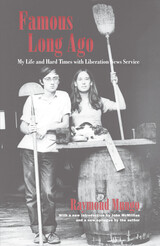
Originally published in 1970, Raymond Mungo's picaresque account of his adventures with Liberation News Service in the wild years of 1967 and 1968 has been variously described as youthful, passionate, lyrical, demented, and an iconic symbol of the sixties counterculture. A review in The Nation described it as “hip Huck Finn.”
A college editor at the height of the Vietnam War, Mungo found himself smack in the middle of a mad swirl of activism and dissent, vigorously protesting everything from the draft to abortion laws to the university itself. Then he connected with Marshall Bloom to cofound LNS in Washington, D.C., as a news service catering to the burgeoning underground press. One thing led to another, until LNS, like so many other radical organizations, eventually disintegrated into violently warring factions. Mungo's memoir tracks its development and destruction with wicked humor and literary panache.
In an introduction to this new edition, John McMillian discusses the enduring appeal of Famous Long Ago and situates it within its broader historical context, while the author provides his own retrospective take in a new afterword.
Organized into four thematic sections, the essays address fan-created works as literary artifacts; the relationship between fandom, identity, and feminism; fandom and affect; and the role of creativity and performance in fan activities. Considered as literary artifacts, fan works pose important questions about the nature of authorship, the meaning of “originality,” and modes of transmission. Sociologically, fan fiction is and long has been a mostly female enterprise, from the fanzines of the 1960s to online forums today, and this fact has shaped its themes and its standing among fans. The questions of how and why people become fans, and what the difference is between liking something and being a fan of it, have also drawn considerable scholarly attention, as has the question of how fans perform their fannish identities for diverse audiences.
Thanks to the overlap between fan studies and other disciplines related to popular and cultural studies—including social, digital, and transmedia studies—an increasing number of scholars are turning to fan studies to engage their students. Fan fiction is the most extensively explored aspect of fan works and fan engagement, and so studies of it can often serve as a basis for addressing other aspects of fandom. These classic essays introduce the field’s key questions and some of its major figures. Those new to the field or in search of context for their own research will find this reader an invaluable resource.

With the seventh season of the HBO series in production, Game of Thrones has been nominated for multiple awards, its cast has been catapulted to celebrity, and references to it proliferate throughout popular culture. Often positioned as the grittier antithesis to J. R. R. Tolkien’s Lord of the Rings, Martin’s narrative focuses on the darker side of chivalry and heroism, stripping away these higher ideals to reveal the greed, amorality, and lust for power underpinning them.
Fan Phenomena: Game of Thrones is an exciting new addition to the Intellect series, bringing together academics and fans of Martin’s universe to consider not just the content of the books and HBO series, but fan responses to both. From trivia nights dedicated to minutiae to forums speculating on plot twists to academics trying to make sense of the bizarre climate of Westeros, everyone is talking about Game of Thrones. Edited by Kavita Mudan Finn, the book focuses on the communities created by the books and television series and how these communities envision themselves as consumers, critics, and even creators of fanworks in a wide variety of media, including fiction, art, fancasting, and cosplay.
Fan Phenomena: James Bond explores the devoted fanbase that has helped make Bond what he is, offering a serious but wholly accessible take on the many different ways that fans have approached, appreciated, and appropriated Bond over the sixty years of his existence from the pages of Ian Fleming’s novels to the screen. Including analyses of Bond as a lifestyle icon, the Bond brand, Bond-inspired fan works, and the many versions of 007, the book reveals a fan culture that is vibrant, powerfully engaged, and richly aware of the history and complexity of the character of Bond and what he represents.
Whether your favorite Bond is Daniel Craig or Sean Connery (or even George Lazenby!), Fan Phenomena: James Bond is sure to go down as smooth as a shaken—not stirred—martini.

Contributors:
Maria Alberto, University of Utah
Mélanie Bourdaa, University of Bordeaux Montaigne
Meredith Dabek, Maynooth University
Simone Driessen, Erasmus University Rotterdam
Yektanurşin Duyan, Mardin Artuklu University
Dan Golding, Swinburne University of Technology
Bethan Jones, Aberdale, Wales (UK)
Siobhan Lyons, Sydney, New South Wales (Australia)
L. N. Rosales, University of Nebraska, Lincoln
Andrew Scahill, University of Colorado, Denver
Janelle Vermaak, Nelson Mandela University
Cynthia W. Walker, St. Peter’s University
Dawn Walls-Thumma, independent scholar
Neta Yodovich, University of Haifa
Fashion is among the biggest polluters, yet the media still promote throwaway fast fashion. The growing fashion public relations industry encourages and enables this media coverage. This policy brief identifies patterns in the way journalists and influencers cover fashion which contribute to unsustainable buying behaviours.
Recent research recommends practical steps to improve media coverage to make consumption sustainable, by changing consumers’ understanding and reducing the pressure on them to buy ‘fast’ satisfaction. Policy recommendations here suggested are based on original analysis of 1,000+ media artefacts in the UK – from magazines to newspapers, gossip weeklies to Instagram influencers.
Researcher Anastasia Denisova proposes regulation of vocabulary and of affiliated links in journalism and social media, greater discussion of the psychology of buying and a ‘paid advertisement label’. Also recommended is a more proactive approach to be taken by magazines and other media with the aim of promoting restyling advice and more sustainable coverage for readers of differing financial means.

Veteran sports journalist and academic Jane McManus examines both this upward trend and the forces that have held women’s sports back since the early 1970s when Title IX became law (and Billie Jean King soundly defeated Bobby Riggs). As the fervor for Caitlin Clark during the 2024 NCAA Women’s Basketball championship illustrates, there is big money to be made from broadcasting, merchandising, and investing in women’s sports.
The Fast Track chronicles how pioneering sponsorships, broadcast opportunities, and surges in ratings contradict the myths about disinterest. Interviews counter the resistance toward women’s leagues, reveal how women are covered in the media, and consider the possibilities for further investment. McManus also addresses racial inclusivity, transgender athletes, women’s health issues, and equal pay.
An essential road map to capitalize on untapped potential, The Fast Track provides a snapshot of where women’s sports as an industry and investment stand at this moment in time.

Fear, Reverence, Terror invites us to look at images slowly, with the help of a few examples: Picasso’s Guernica, the “Lord Kitchener Wants You” World War I recruitment poster, Jacques-Louis David’s Marat, the frontispiece of Thomas Hobbes’s Leviathan, and a cup of gilded silver with scenes from the conquest of the New World. Are these political images, Carlo Ginzburg asks? Yes, because every image is, in a sense, political—an instrument of power. Tacitus once wrote, unforgettably, that we are enslaved by lies of which we ourselves are the authors. Is it possible to break this bond? Fear, Reverence, Terror will answer this question.
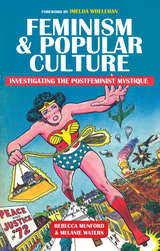
In Feminism and Popular Culture, Rebecca Munford and Melanie Waters consider why the twenty-first century media landscape is so haunted by the ghosts of these traditional figures that feminism otherwise laid to rest. Why, over fifty years since Betty Friedan’s critique, does the feminine mystique exert such a strong spectral presence, and how has it been reimagined to speak to the concerns of a postfeminist audience?
To answer these questions, Munford and Waters draw from a rich array of examples from contemporary film, fiction, music, and television, from the shadowy cityscapes of Homeland to the haunted houses of American Horror Story. Alongside this comprehensive analysis of today’s popular culture, they offer a vivid portrait of feminism’s social and intellectual history, as well as an innovative application of Jacques Derrida’s theories of “hauntology.” Feminism and Popular Culture thus not only considers how contemporary media is being visited by the ghosts of feminism’s past, it raises vital questions about what this means for feminism’s future.

For over a dozen years, the Vectors Lab has experimented with digital scholarship through its online publication, Vectors, and through Scalar, a multimedia authoring platform. The history of this software lab intersects a much longer tale about computation in the humanities, as well as tensions about the role of theory in related projects.
Tara McPherson considers debates around the role of cultural theory within the digital humanities and addresses Gary Hall’s claim that the goals of critical theory and of quantitative or computational analysis may be irreconcilable (or at the very least require “far more time and care”). She then asks what it might mean to design—from conception—digital tools and applications that emerge from contextual concerns of cultural theory and, in particular, from a feminist concern for difference. This path leads back to the Vectors Lab and its ongoing efforts at the intersection of theory and praxis.
An acclaimed political theorist offers a fresh, interdisciplinary analysis of the politics of refusal, highlighting the promise of a feminist politics that does not simply withdraw from the status quo but also transforms it.
The Bacchae, Euripides’s fifth-century tragedy, famously depicts the wine god Dionysus and the women who follow him as indolent, drunken, mad. But Bonnie Honig sees the women differently. They reject work, not out of laziness, but because they have had enough of women’s routine obedience. Later they escape prison, leave the city of Thebes, explore alternative lifestyles, kill the king, and then return to claim the city. Their “arc of refusal,” Honig argues, can inspire a new feminist politics of refusal.
Refusal, the withdrawal from unjust political and economic systems, is a key theme in political philosophy. Its best-known literary avatar is Herman Melville’s Bartleby, whose response to every request is, “I prefer not to.” A feminist politics of refusal, by contrast, cannot simply decline to participate in the machinations of power. Honig argues that a feminist refusal aims at transformation and, ultimately, self-governance. Withdrawal is a first step, not the end game.
Rethinking the concepts of refusal in the work of Giorgio Agamben, Adriana Cavarero, and Saidiya Hartman, Honig places collective efforts toward self-governance at refusal’s core and, in doing so, invigorates discourse on civil and uncivil disobedience. She seeks new protagonists in film, art, and in historical and fictional figures including Sophocles’s Antigone, Ovid’s Procne, Charlie Chaplin’s Tramp, Leonardo da Vinci’s Madonna, and Muhammad Ali. Rather than decline the corruptions of politics, these agents of refusal join the women of Thebes first in saying no and then in risking to undertake transformative action.
This book offers readers a concise look at over a century of femmes fatales on both the silver screen and the TV screen. Starting with ethnically exoticized silent film vamps like Theda Bara and Pola Negri, it examines classic film noir femmes fatales like Barbara Stanwyck in Double Indemnity, as well as postmodern revisions of the archetype in films like Basic Instinct and Memento. Finally, it explores how contemporary film and television creators like Fleabag and Killing Eve’s Phoebe Waller-Bridge have appropriated the femme fatale in sympathetic and surprising ways.
Analyzing not only the films themselves, but also studio press kits and reviews, The Femme Fatale considers how discourses about the pleasures and dangers of female performance are projected onto the figure of the femme fatale. Ultimately, it is a celebration of how “bad girl” roles have provided some of Hollywood’s most talented actresses opportunities to fully express their on-screen charisma.
What might become of anthropology if it were to suspend its sometime claims to be a social science? What if it were to turn instead to exploring its affinities with art and literature as a mode of engaged creative practice carried forward in a world heterogeneously composed of humans and other than humans? Stuart McLean claims that anthropology stands to learn most from art and literature not as “evidence” to support explanations based on an appeal to social context or history but as modes of engagement with the materiality of expressive media—including language—that always retain the capacity to disrupt or exceed the human projects enacted through them.
At once comparative in scope and ethnographically informed, Fictionalizing Anthropology draws on an eclectic range of sources, including ancient Mesopotamian myth, Norse saga literature, Hesiod, Lucretius, Joyce, Artaud, and Lispector, as well as film, multimedia, and performance art, along with the concept of “fabulation” (the making of fictions capable of intervening in and transforming reality) developed in the writings of Bergson and Deleuze. Sharing with proponents of anthropology’s recent “ontological turn,” McLean insists that experiments with language and form are a performative means of exploring alternative possibilities of collective existence, new ways of being human and other than human, and that such experiments must therefore be indispensable to anthropology’s engagement with the contemporary world.
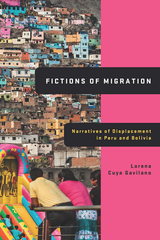

Montse Feu merges España Libre's story with the drama of the Spanish immigrant community's fight against fascism. The periodical emerged as part of a transnational effort to link migrants and new exiles living in the United States to antifascist networks abroad. In addition to showing how workers' culture and politics shaped their antifascism, Feu brings to light creative works that ranged from literature to satire to cartoons to theater. As España Libre opened up radical practices, it encouraged allies to reject violence in favor of social revolution's potential for joy and inclusion.
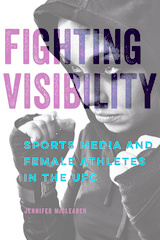
Mixed martial arts stars like Amanda Nunes, Zhang Weili, and Ronda Rousey have made female athletes top draws in the Ultimate Fighting Championship (UFC). Jennifer McClearen charts how the promotion incorporates women into its far-flung media ventures and investigates the complexities surrounding female inclusion. On the one hand, the undeniable popularity of cards headlined by women add much-needed diversity to the sporting landscape. On the other, the UFC leverages an illusion of promoting difference—whether gender, racial, ethnic, or sexual—to grow its empire with an inexpensive and expendable pool of female fighters. McClearen illuminates how the UFC's half-hearted efforts at representation generate profit and cultural cachet while covering up the fact it exploits women of color, lesbians, gender non-conforming women, and others.
Thought provoking and timely, Fighting Visibility tells the story of how a sports entertainment phenomenon made difference a part of its brand—and the ways women paid the price for success.

A philosophical exploration of how modern global cinema represents everyday means of resisting authoritarianism and totalitarianism
Václav Havel’s concept of “living within the truth” in an authoritarian regime frames Marguerite La Caze’s readings of international cinema, highlighting forms of resistance in which seemingly pre- or nonpolitical aspects of life—such as professional labor, exile, and truth telling—can be recognized as political when seen against a backdrop of general acquiescence. La Caze’s case studies cross genres, historical eras, and national contexts: the apartheid regime in South Africa, in A Dry White Season; post-Suharto Indonesia, in The Look of Silence; 1980s East Germany, in Barbara; the Chilean military dictatorship, in No; contemporary Iran, in A Separation; and current-day Saudi Arabia, in Wadjda. This book explores the films’ use of image, sound, narrative, and character in dialogue with the work of Simone de Beauvoir, Aimé Cesaire, Hannah Arendt, Sara Ahmed, and W. E. B. Du Bois to reveal how cinema depicts ordinary people enacting their own philosophies of defiance.

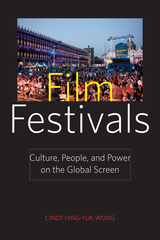
Movies, stars, auteurs, critics, and the sheer excitement of cinema come together in film festivals as quintessential constellations of art, business, and glamour. Yet, how well do we actually understand the forces and meanings that these events embody?
Film Festivals offers the first comprehensive overview of the history, people, films, and multiple functions of the festival world. From Sundance to Hong Kong, from the glitter of Cannes to edgier festivals that challenge boundaries or foster LGBTQ cultural production, film festivals celebrate art, promote business, bring cinema to diverse audiences, and raise key issues about how we see our world. Cindy Hing-Yuk Wong situates festivals within changing global practices of film, including their important ties to both Hollywood and independent cinema. She explores how these events have become central in the construction of cinema knowledge as well as the behind-the-scene mechanics of finance, distribution, and evaluation. By linking general structures and connections to specific films and auteurs, Wong addresses the components and creation of film festivals that continue to reshape filmmaking as art and business.
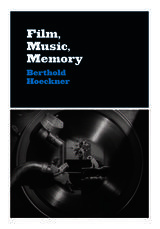
Hoeckner examines films that reflect directly on memory, whether by featuring an amnesic character, a traumatic event, or a surge of nostalgia. As the history of cinema unfolded, movies even began to recall their own history through quotations, remakes, and stories about how cinema contributed to the soundtrack of people’s lives. Ultimately, Film, Music, Memory demonstrates that music has transformed not only what we remember about the cinematic experience, but also how we relate to memory itself.
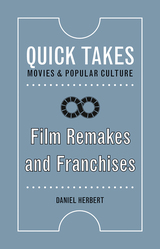
Film Remakes and Franchises examines how remakes and sequels have been central to the film industry from its very inception, yet also considers how the recent trends toward reboots and transmedia franchises depart from those historical precedents. Film scholar Daniel Herbert not only analyzes the film industry’s increasing reliance on recycled product, but also asks why audiences are currently so drawn to such movies. In addition, he explores how contemporary filmmakers have used reboots and franchise movies to inject timely social commentary and diversity into established media properties. A lively and accessible overview that covers everything from You’ve Got Mail to The Force Awakens, Film Remakes and Franchises raises important questions about the intersection of business and creativity in Hollywood today.

Bong Joon Ho won the Oscar® for Best Director for Parasite (2019), which also won Best Picture, the first foreign film to do so, and two other Academy Awards. Parasite was the first Korean film to win the Palme d’Or at Cannes. These achievements mark a new career peak for the director, who first achieved wide international acclaim with 2006’s monster movie The Host and whose forays into English-language film with Snowpiercer (2013) and Okja (2017) brought him further recognition.
As this timely book reveals, even as Bong Joon Ho has emerged as an internationally known director, his films still engage with distinctly Korean social and political contexts that may elude many Western viewers. The Films of Bong Joon Ho demonstrates how he hybridizes Hollywood conventions with local realities in order to create a cinema that foregrounds the absurd cultural anomie Koreans have experienced in tandem with their rapid economic development. Film critic and scholar Nam Lee explores how Bong subverts the structures of the genres he works within, from the crime thriller to the sci-fi film, in order to be truthful to Korean realities that often deny the reassurances of the happy Hollywood ending. With detailed readings of Bong’s films from Barking Dogs Never Bite (2000) through Parasite (2019), the book will give readers a new appreciation of this world-class cinematic talent.

https://manifold.ecds.emory.edu/projects/finding-god-in-all-the-black-places
(https://dhjhkxawhe8q4.cloudfront.net/rup-wp-v2/wp-content/uploads/2025/01/28132142/9781978839809.pdf)
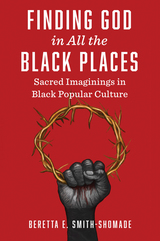
In Finding God in All the Black Places, Beretta E. Smith-Shomade contends that Black spirituality and Black church religiosity are the critical crux of Black popular culture. She argues that cultural, community, and social support live within the Black church and that spirit, art, and progress are deeply entwined and seal this connection. Including the work of artists such as Mary J. Blige, D’Angelo, Erykah Badu, Prince, Spike Lee, and Oprah Winfrey, the book examines contemporary Black television, film, music and digital culture to demonstrate the role, impact, and dominance of spirituality and religion in Black popular culture. Smith-Shomade believes that acknowledging and comprehending the foundations of Black spirituality and Black church religiosity within Black popular culture provide a way for viewers, listeners, and users not only to endure but also to revitalize.


Newspaper publishers played a crucial role in transforming Texas into a modern state. By promoting expanded industrialization and urbanization, as well as a more modern image of Texas as a southwestern, rather than southern, state, news barons in the early decades of the twentieth century laid the groundwork for the enormous economic growth and social changes that followed World War II. Yet their contribution to the modernization of Texas is largely unrecognized.
This book investigates how newspaper owners such as A. H. Belo and George B. Dealey of the Dallas Morning News, Edwin Kiest of the Dallas Times Herald, William P. Hobby and Oveta Culp Hobby of the Houston Post, Jesse H. Jones and Marcellus Foster of the Houston Chronicle, and Amon G. Carter Sr. of the Fort Worth Star-Telegram paved the way for the modern state of Texas. Patrick Cox explores how these news barons identified the needs of the state and set out to attract the private investors and public funding that would boost the state's civic and military infrastructure, oil and gas industries, real estate market, and agricultural production. He shows how newspaper owners used events such as the Texas Centennial to promote tourism and create a uniquely Texan identity for the state. To balance the record, Cox also demonstrates that the news barons downplayed the interests of significant groups of Texans, including minorities, the poor and underemployed, union members, and a majority of women.
In Flickers of Film, Jason Sperb offers nuanced and unexpected answers to these questions, examining the benefits of certain types of film nostalgia, while also critiquing how Hollywood’s nostalgic representations of old technologies obscure important aspects of their histories. He interprets this affection for the prehistory and infancy of digital technologies in relation to an industry-wide anxiety about how the digital has grown to dominate Hollywood, pushing it into an uncertain creative and economic future. Yet he also suggests that Hollywood’s nostalgia for old technologies ignores the professionals who once employed them, as well as the labor opportunities that have been lost through the computerization and outsourcing of film industry jobs.
Though it deals with nostalgia, Flickers of Film is strikingly cutting-edge, one of the first studies to critically examine Pixar’s role in the film industry, cinematic representations of videogames, and the economic effects of participatory culture. As he takes in everything from Terminator: Salvation to The Lego Movie, Sperb helps us see what’s distinct about this recent wave of self-aware nostalgic films—how Hollywood nostalgia today isn’t what it used to be.
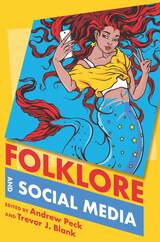
This book features twelve chapters ranging in topics from legend transmission and fake news to case studies of memes, joke cycles, and Twitter hashtag campaigns and offers fresh insights on digital heritage and web archiving. The editors and contributors take both the “digital” and “folklore” elements seriously because social media fundamentally changes folk practices in new, though often invisible, ways. Social media platforms encourage hybrid performances that appear informal and ordinary while also offering significant space to obfuscate backstage behaviors through editing and retakes. The result is that expression online becomes increasingly reminiscent of traditional forms of face-to-face interaction, while also hiding its fundamental differences.
Folklore and Social Media demonstrates various ways to refine methods and analyses in order to develop a better understanding of the informal and traditional dynamics that define an era of folklore and social media. It is an invaluable addition to the literature on digital folklore scholarship that will be of interest to students and scholars alike.
Contributors:
Sheila Bock, Peter M. Broadwell, Bill Ellis, Jeana Jorgensen, Liisi Laineste, John Laudun, Linda J. Lee, Lynne S. McNeill, Ryan M. Milner, Whitney Phillips, Vwani Roychowdhury, Timothy R. Tangherlini, Tok Thompson, Elizabeth Tucker, Kristiana Willsey

Image by image and hashtag by hashtag, Instagram has redefined the ways we relate to food. Emily J. H. Contois and Zenia Kish edit contributions that explore the massively popular social media platform as a space for self-identification, influence, transformation, and resistance. Artists and journalists join a wide range of scholars to look at food’s connection to Instagram from vantage points as diverse as Hong Kong’s camera-centric foodie culture, the platform’s long history with feminist eateries, and the photography of Australia’s livestock producers. What emerges is a portrait of an arena where people do more than build identities and influence. Users negotiate cultural, social, and economic practices in a place that, for all its democratic potential, reinforces entrenched dynamics of power.
Interdisciplinary in approach and transnational in scope, Food Instagram offers general readers and experts alike new perspectives on an important social media space and its impact on a fundamental area of our lives.
Contributors: Laurence Allard, Joceline Andersen, Emily Buddle, Robin Caldwell, Emily J. H. Contois, Sarah E. Cramer, Gaby David, Deborah A. Harris, KC Hysmith, Alex Ketchum, Katherine Kirkwood, Zenia Kish, Stinne Gunder Strøm Krogager, Jonathan Leer, Yue-Chiu Bonni Leung, Yi-Chieh Jessica Lin, Michael Z. Newman, Tsugumi Okabe, Rachel Phillips, Sarah Garcia Santamaria, Tara J. Schuwerk, Sarah E. Tracy, Emily Truman, Dawn Woolley, and Zara Worth
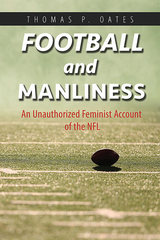
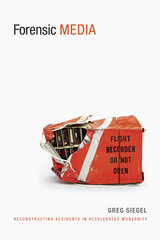

Kieran focuses his analysis on the recent remembrance of six events, three of which occurred before the Vietnam War and three after it ended. The first group includes the siege of the Alamo in 1836, the incarceration of Union troops at Andersonville during the Civil War, and the experience of American combat troops during World War II. The second comprises the 1993 U.S. intervention in Somalia, the crash of United Airlines Flight 93 on September 11, 2001, and the Iraq and Afghanistan wars.
In each case a range of actors—military veterans, policymakers, memorial planners, and the general public—used memorial practices associated with the Vietnam War to reinterpret the contemporary significance of past events. A PBS program about Andersonville sought to cultivate a sense of national responsibility for the My Lai massacre. A group of Vietnam veterans occupied the Alamo in 1985, seeing themselves as patriotic heirs to another lost cause. A World War II veteran published a memoir in 1980 that reads like a narrative of combat in Vietnam. Through these and other examples, Forever Vietnam reveals not only the persistence of the past in public memory but also its malleability in the service of the political present.
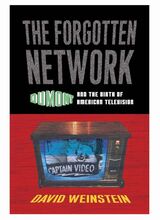
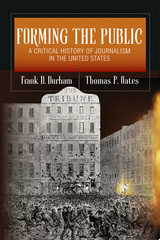
Weaving eyewitness history through US history, Forming the Public reveals what understanding the journalism landscape can teach us about the nature of journalism’s own interests in race, gender, and class while tracing the factors that shaped the contours of dominant American culture.
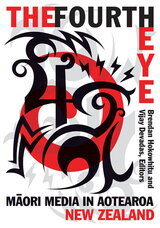
From the signing of the Treaty of Waitangi between Indigenous and settler cultures to the emergence of the first-ever state-funded Māori television network, New Zealand has been a hotbed of Indigenous concerns. Given its history of colonization, coping with biculturalism is central to New Zealand life. Much of this “bicultural drama” plays out in the media and is molded by an anxiety surrounding the ongoing struggle over citizenship rights that is seated within the politics of recognition. The Fourth Eye brings together Indigenous and non-Indigenous scholars to provide a critical and comprehensive account of the intricate and complex relationship between the media and Māori culture.
Examining the Indigenous mediascape, The Fourth Eye shows how Māori filmmakers, actors, and media producers have depicted conflicts over citizenship rights and negotiated the representation of Indigenous people. From nineteenth-century Māori-language newspapers to contemporary Māori film and television, the contributors explore a variety of media forms including magazine cover stories, print advertisements, commercial images, and current Māori-language newspapers to illustrate the construction, expression, and production of indigeneity through media.
Focusing on New Zealand as a case study, the authors address the broader question: what is Indigenous media? While engaging with distinct themes such as the misrepresentation of Māori people in the media, access of Indigenous communities to media technologies, and the use of media for activism, the essays in this much-needed new collection articulate an Indigenous media landscape that converses with issues that reach far beyond New Zealand.
Contributors: Sue Abel, U of Auckland; Joost de Bruin, Victoria U of Wellington; Suzanne Duncan, U of Otago; Kevin Fisher, U of Otago; Allen Meek, Massey U; Lachy Paterson, U of Otago; Chris Prentice, U of Otago; Jay Scherer, U of Alberta; Jo Smith, Victoria U of Wellington; April Strickland; Stephen Turner, U of Auckland.

Which stories attract attention and why? What strategies do journalists and campaigners use to persuade people and how do we respond? Answering these and other questions, Kitzinger demonstrates how media reporting can impact on people's knowledge of the 'facts', perceptions of risk, sense of appropriate policy responses and even how we interpret our own experiences.
Kitzinger examines feminist initiatives to challenge sexual violence, the emergence of incest as a social problem and the development of new survivor identities. She also explores stereotypes around sex offenders,interrogates protests against 'paedophiles-in-the-community' and presents a detailed analysis of the impact of scandals about disputed abuse accusations.
This book is essential reading for anyone interested in theories of media influence, identity and social change or who wishes to encourage responsible journalism. It is also a key resource for anyone concerned about sexual violence and the protection of children or who is attempting to design intervention strategies.
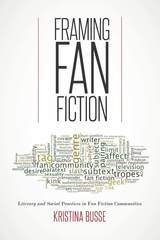
Framing Fan Fiction deploys personal history and the interpretations of specific stories to contextualize fan fiction culture and its particular forms of intertextuality and performativity. In doing so, it highlights the way fans use fan fiction’s reimagining of the source material to explore issues of identities and peformativities, gender and sexualities, within a community of like-minded people. In contrast to the celebration of originality in many other areas of artistic endeavor, fan fiction celebrates repetition, especially the collective creation and circulation of tropes.
An essential resource for scholars, Framing Fan Fiction is also an ideal starting point for those new to the study of fan fiction and its communities of writers.
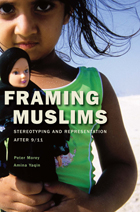
Can Muslims ever fully be citizens of the West? Can the values of Islam ever be brought into accord with the individual freedoms central to the civic identity of Western nations? Not if you believe what you see on TV. Whether the bearded fanatic, the veiled, oppressed female, or the shadowy terrorist plotting our destruction, crude stereotypes permeate public representations of Muslims in the United States and western Europe. But these "Muslims" are caricatures—distorted abstractions, wrought in the most garish colors, that serve to reduce the diversity and complexity of the Muslim world to a set of fixed objects suitable for sound bites and not much else.
In Framing Muslims: Stereotyping and Representation after 9/11, Peter Morey and Amina Yaqin dissect the ways in which stereotypes depicting Muslims as an inherently problematic presence in the West are constructed, deployed, and circulated in the public imagination, producing an immense gulf between representation and a considerably more complex reality. Crucially, they show that these stereotypes are not solely the province of crude-minded demagogues and their tabloid megaphones, but multiply as well from the lips of supposedly progressive elites, even those who presume to speak "from within," on Muslims' behalf. Based on nuanced analyses of cultural representations in both the United States and the UK, the authors draw our attention to a circulation of stereotypes about Muslims that sometimes globalizes local biases and, at other times, brings national differences into sharper relief.
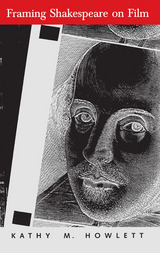
The aesthetics of frame theory form the basis of Framing Shakespeare on Film. This groundbreaking work expands on the discussion of film constructivists in its claim that the spectacle of Shakespeare on film is a problem-solving activity.
Kathy Howlett demonstrates convincingly how viewers’ expectations for understanding Shakespeare on film can be manipulated by the director’s cinematic technique. Emphasizing that the successful film can transform Shakespeare’s text while remaining rooted in Shakespearean conceptions, Howlett raises the question of how directors and audiences understand the genre of Shakespeare on film and reveals how the medium alters the patterns through which the audience views Shakespeare.

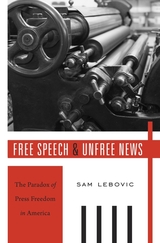
Does America have a free press? Many who answer yes appeal to First Amendment protections that shield the press from government censorship. But in this comprehensive history of American press freedom as it has existed in theory, law, and practice, Sam Lebovic shows that, on its own, the right of free speech has been insufficient to guarantee a free press.
Lebovic recovers a vision of press freedom, prevalent in the mid-twentieth century, based on the idea of unfettered public access to accurate information. This “right to the news” responded to persistent worries about the quality and diversity of the information circulating in the nation’s news. Yet as the meaning of press freedom was contested in various arenas—Supreme Court cases on government censorship, efforts to regulate the corporate newspaper industry, the drafting of state secrecy and freedom of information laws, the unionization of journalists, and the rise of the New Journalism—Americans chose to define freedom of the press as nothing more than the right to publish without government censorship. The idea of a public right to all the news and information was abandoned, and is today largely forgotten.
Free Speech and Unfree News compels us to reexamine assumptions about what freedom of the press means in a democratic society—and helps us make better sense of the crises that beset the press in an age of aggressive corporate consolidation in media industries, an increasingly secretive national security state, and the daily newspaper’s continued decline.
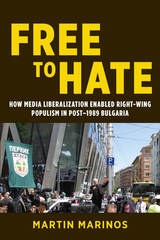
Bulgaria’s media-driven pivot to right-wing populism parallels political developments taking place around the world. Martin Marinos applies a critical political economy approach to place Bulgarian right-wing populism within the structural transformation of the country’s media institutions. As Marinos shows, media concentration under Western giants like Westdeutsche Allgemeine Zeitung and News Corporation have led to a neoliberal turn of commercialization, concentration, and tabloidization across media. The Right have used the anticommunism and racism bred by this environment to not only undermine traditional media but position their own outlets to boost new political entities like the nationalist party Ataka. Marinos’s ethnographic observations and interviews with local journalists, politicians, and media experts add on-the-ground detail to his account. He also examines several related issues, including the performative appeal of populist media and the money behind it.
A timely and innovative analysis, Free to Hate reveals where structural changes in media intersect with right-wing populism.
In Friending the Past, Alan Liu proposes fresh answers to these innovative questions of connection. He explores how we can learn from the relationship between past societies whose media forms fostered a communal and self-aware sense of history—such as prehistorical oral societies with robust storytelling cultures, or the great print works of nineteenth-century historicism—and our own instantaneous present. He concludes with a surprising look at how the sense of history exemplified in today’s JavaScript timelines compares to the temporality found in Romantic poetry.
Interlaced among these inquiries, Liu shows how extensive “network archaeologies” can be constructed as novel ways of thinking about our affiliations with time and with each other. These conceptual architectures of period and age are also always media structures, scaffolded with the outlines of what we mean by history. Thinking about our own time, Liu wonders if the digital, networked future can sustain a similar sense of history.

Recent scholarship in different disciplinary fields as well as activist literature have brought attention to the political possibilities within friendship. The essays, memoirs, poems, and artwork in Friendship as Social Justice Activism address these political possibilities within the context of gender, sexuality, and economic justice movements.

Applying the insights of feminist scholarship to the study of food, the thirteen essays in this volume are arranged under four headings—the marketplace, histories, representations, and resistances. The editors open the book with a substantial introduction that traces the history of scholarly writing on food and maps the terrain of feminist food studies. In the essays that follow, contributors pay particular attention to the ways in which gender, race, ethnicity, class, colonialism, and capitalism have both shaped and been shaped by the production and consumption of food.
In the first section, four essays analyze the influence of large corporations in determining what came to be accepted as proper meals in the United States, including what mothers were expected to feed their babies. The essays in the second section explore how women have held families together by keeping them nourished, from the routines of an early nineteenth-century New Englander to the plight of women who endured the siege of Leningrad.
The essays in the third section focus on the centrality of gender and race in the formation of identities as enacted through food discourse and practices. These case studies range from the Caribbean to the San Luis Valley of Colorado. The final section documents acts of female resistance within the contexts of national or ethnic oppression. From women in colonial India to Armenian American feminists, these essays show how food has served as a means to assert independence and personal identity.
In addition to the editors, contributors include Amy Bentley, Carole M. Counihan, Darra Goldstein, Nancy Jenkins, Alice P. Julier, Leslie Land, Laura Lindenfield, Beheroze F. Shroff, Sharmila Sen, Laura Shapiro, and Jan Whitaker.
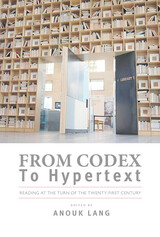
In From Codex to Hypertext, scholars from multiple disciplines engage with both of these strands. This volume includes essays that consider how changes such as the mounting ubiquity of digital technology and the globalization of structures of publication and book distribution are shaping the way readers participate in the encoding and decoding of textual meaning. Contributors also examine how and why reading communities cohere in a range of contexts, including prisons, book clubs, networks of zinesters, state-funded programs designed to promote active citizenship, and online spaces devoted to sharing one's tastes in books.
As concerns circulate in the media about the ways that reading—for so long anchored in print culture and the codex—is at risk of being irrevocably altered by technological shifts, this book insists on the importance of tracing the historical continuities that emerge between these reading practices and those of previous eras.
In addition to the volume editor, contributors include Daniel Allington, Bethan Benwell, Jin Feng, Ed Finn, Danielle Fuller, David S. Miall, Julian Pinder, Janice Radway, Julie Rak, DeNel Rehberg Sedo, Megan Sweeney, Joan Bessman Taylor, Molly Abel Travis, and David Wright.
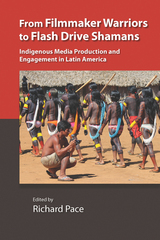
The authors cover a range of topics such as the prospects of collaborative film production, the complications of archiving materials, and the contrasting meanings of and even conflict over "embedded aesthetics" in media production—i.e., how media reflects in some fashion the ownership, authorship, and/or cultural sensibilities of its community of origin. Other topics include active audiences engaging television programming in unanticipated ways, philosophical ruminations about the voices of the dead captured on digital recorders, the innovative uses of digital platforms on the internet to connect across generations and even across cultures, and the overall challenges to obtaining media sovereignty in all manner of media production.
The book opens with contributions from the founders of Indigenous Media Studies, with an overview of global Indigenous media by Faye Ginsburg and an interview with Terence Turner that took place shortly before his death.
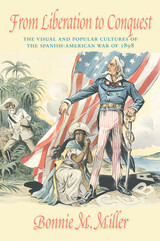
Although media campaigns initially advocated for the United States to step in to rescue Cuba from the horrors of colonial oppression, the war ended just months later with the U.S. acquisition of Spain's remaining empire, including Cuba, Puerto Rico, Guam, and the Philippines. President William McKinley heeded the call for war, with the American people behind him, and then proceeded to use the conflict to further his foreign policy agenda of expanding U.S. interests in the Caribbean and Far East.
Miller examines the shifting media portrayals of U.S. actions for the duration of the conflict, from liberation to conquest. She shows how the media capitalized on the public's thirst for drama, action, and spectacle and adapted to emerging imperial possibilities. Growing resistance to American imperialism by the war's end unraveled the consensus in support of U.S policy abroad and produced a rich debate that found expression in American visual and popular culture.
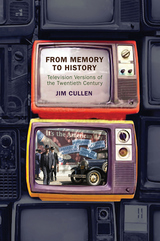
From Memory to History takes readers on a journey through over fifty years of historical dramas and sitcoms that were set in earlier decades of the twentieth century. Along the way, it explores how comedies like M*A*S*H and Hogan’s Heroes offered veiled commentary on the Vietnam War, how dramas ranging like Mad Men echoed current economic concerns, and how The Americans and Halt and Catch Fire used the Cold War and the rise of the internet to reflect upon the present day. Cultural critic Jim Cullen is lively, informative, and incisive, and this book will help readers look at past times, present times, and prime time in a new light.
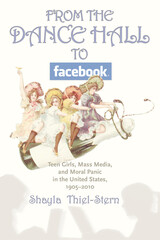
In From the Dance Hall to Facebook, Shayla Thiel-Stern takes a close look at several historical snapshots, including working-class girls in dance halls of the early 1900s; girls' track and field teams in the 1920s to 1940s; Elvis Presley fans in the mid-1950s; punk rockers in the late 1970s and early 1980s; and girls using the Internet in the early twenty-first century. In each case, issues of gender, socioeconomic status, and race are explored within their historical context. The book argues that by marginalizing and stereotyping teen girls over the past century, mass media have perpetuated a pattern of gendered crisis that ultimately limits the cultural and political power of the young women it covers.
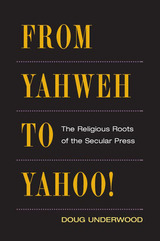
Presenting religion as journalism's silent partner, From Yahweh to Yahoo!provides a fresh and surprising view of the religious impulses at work in contemporary newsrooms. Focusing on how the history of religion in the United States entwines with the growth of the media, Doug Underwood argues that American journalists draw from the nation's moral and religious heritage and operate, in important ways, as personifications of the old religious virtues.
Underwood traces religion's influence on mass communication from the biblical prophets to the Protestant Reformation, from the muckraker and Social Gospel campaigns of the late nineteenth and early twentieth centuries to the modern age of mass media. While forces have pushed journalists away from identifying themselves with religion, they still approach such secular topics as science, technology, and psychology in reverential ways. Underwood thoughtful analysis covers the press's formulaic coverage of spiritual experience, its failure to cover new and non-Christian religions in America, and the complicity of the mainstream media in launching the religious broadcasting movement.

Front office executives have become high-profile commentators, movie and video game protagonists, and role models for a generation raised in the data-driven, financialized world of contemporary sports. Branden Buehler examines the media transformation of these once obscure management figures into esteemed experts and sporting idols.
Moving from Moneyball and Football Manager to coverage of analytics gurus like Daryl Morey, Buehler shows how a fixation on managerial moves has taken hold across the entire sports media landscape. Buehler’s chapter-by-chapter look at specific media forms illustrates different facets of the managerial craze while analyzing the related effects on what fans see, hear, and play. Throughout, Buehler explores the unsettling implications of exalting the management class and its logics, in the process arguing that sports media’s managerial lionization serves as one of the clearest reflections of major material and ideological changes taking place across culture and society.
Insightful and timely, Front Office Fantasies reveals how sports media moved the action from the field to the executive suite.
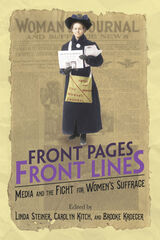
This collection offers new research on media issues related to the women's suffrage movement. Contributors incorporate media theory, historiography, and innovative approaches to social movements while discussing the vexed relationship between the media and debates over suffrage. Aiming to correct past oversights, the essays explore overlooked topics such as coverage by African American and Mormon-oriented media, media portrayals of black women in the movement, suffragist rhetorical strategies, elites within the movement, suffrage as part of broader campaigns for social transformation, and the influence views of white masculinity had on press coverage.
Contributors: Maurine H. Beasley, Sherilyn Cox Bennion, Jinx C. Broussard, Teri Finneman, Kathy Roberts Forde, Linda M. Grasso, Carolyn Kitch, Brooke Kroeger, Linda J. Lumsden, Jane Marcellus, Jane Rhodes, Linda Steiner, and Robin Sundaramoorthy
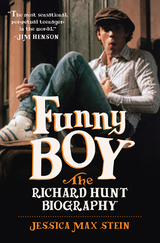
"The most sensational, perpetual teenager in the world.” —Jim Henson
"To know him was to love him, and we do." —Mark Hamill
Funny Boy: The Richard Hunt Biography tells the life story of a gifted performer whose gleeful irreverence, sharp wit and generous spirit inspired millions. Richard Hunt was one of the original main five performers in the Muppet troupe. He brought to life an impressive range of characters on The Muppet Show, Sesame Street, Fraggle Rock and various Muppet movies, everyone from eager gofer Scooter to elderly heckler Statler, groovy girl Janice to freaked-out lab helper Beaker, even early versions of Miss Piggy and Elmo. Hunt also acted, directed and mentored the next generation of performers. His accomplishments are all the more remarkable in that he crammed them all into only 40 years.
Richard Hunt was just 18 years old when he joined Jim Henson’s company, where his edgy humor quickly helped launch the Muppets into international stardom. Hunt lived large, savoring life’s delights, amassing a vivid, disparate community of friends. Even when the AIDS epidemic wrought its devastation, claiming the love of Hunt’s life and threatening his own life, he showed an extraordinary sense of resilience, openness and joy. Hunt’s story exemplifies how to follow your passion, foster your talents, adapt to life’s surprises, genuinely connect with everyone from glitzy celebrities to gruff cab drivers – and have a hell of a lot of fun along the way.
A Junior Library Guild Gold Standard Selection
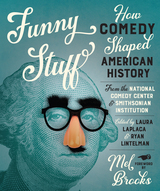
The National Comedy Center and Smithsonian Institution hold unparalleled collections of artifacts that illustrate the vitality and importance of comedy in American life, from vaudeville, silent films, and TV sitcoms to stand-up, sketch, and cartoons. Now, for the first time, these collections are brought together in vibrant photographs and illuminating essays that tell the story of how comedy shaped American history.
Written by historians responsible for safeguarding these cultural treasures, the book takes readers behind the scenes to uncover the stories behind American heirlooms like Groucho Marx’s tailcoat, George Carlin’s joke files, Carol Burnett’s “Went with the Wind” dress, Johnny Carson’s monologues, and the very first Saturday Night Live script, alongside materials from cultural touchstones like The Simpsons, The Muppet Show, In Living Color, All In the Family, and I Love Lucy.
With a foreword by comedy legend Mel Brooks, this dynamic work offers pop culture aficionados, history lovers, and comedy nerds alike a new perspective on America’s past and who we are as a nation through our comedy.

An eye-opening account of how the information gap in business journalism is eroding civic life and impacting the economy––and how we can fix it
Business owners, consumers, and employees have long relied on the news to make financial decisions—what to buy, who to hire, and what products to sell. In the twenty-first century, that news has shifted. Only the big businesses and executives can afford expensive subscriptions, while most consumers and small business owners are left scrambling to find the news they need to succeed and thrive. The Future of Business Journalism explores how the field evolved into this divide and offers solutions on how business journalism can once again provide the stories and content that a broad society needs.
In The Future of Business Journalism, veteran business journalist and professor Chris Roush explains the causes, reveals the consequences, and offers potential solutions to this pressing problem. Roush delves into how the crisis occurred, from the disintegration of the once-strong relationship between businesses and media to the media’s focus on national coverage at the expense of local news. He reveals how these trends result in major “coverage deserts.”
Roush’s proposal for a way forward shows how businesses, journalists, and media can work together to support the economic and financial literacy needed for an informed citizenry. He recommends that media organizations take advantage of technological innovations to provide better business news content, suggests that journalism programs require budding reporters to take more business courses, and encourages businesses to fund journalism school programs. This insightful overview of the current state of business journalism reveals its strengths and weaknesses and shows how Main Street can regain access to the news it needs.

Drawing on interviews with archivists and developers, Jones and Jancovic reveal the archive as a dynamic space where deeply entrenched social practices produce disagreements but also resourceful collaborations. They contrast the unprecedented rise of archivist-driven standardization and controversies around non-standard technology with the historical dominance of the film and broadcast industries. Throughout, the authors clarify the role of tech companies, software developers, film pirates, hackers, and other players with poorly understood roles in the process.
A timely look at the state of audiovisual preservation, The Future of Memory provides a history of recent innovations alongside a snapshot of a field in the midst of profound technological change.
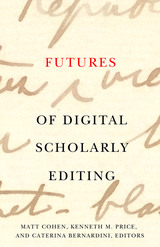
Exploring technology, ethics, and culture to unlock digital scholarship’s future
Futures of Digital Scholarly Editing navigates the ever-shifting terrain of digital academia, examining practical and ethical considerations as technology continues to evolve. In this indispensable collection, digital humanities practitioners and scholars work with a wide range of archival materials to confront key challenges surrounding the adaptation and sustainability of digital editorial projects as well as their societal impact.
Broaching essential questions at the nexus of technology and culture, Futures of Digital Scholarly Editing is organized around three principal frameworks: access, sustainability, and interoperability; ethics and community involvement; and the evolution of textual scholarship. From addressing outdated technical infrastructures to fostering new collaborations, this volume serves as a beacon guiding scholars and institutions through the complexities of digital editing in an era of profound technological and societal transformation.
Contributors: Stephanie P. Browner, The New School; Julia Flanders, Northeastern U; Ed Folsom, U of Iowa; Nicole Gray, U of Nebraska–Lincoln; Cassidy Holahan, U of Nevada, Las Vegas; Fotis Jannidis, U of Würzburg; Aylin Malcolm, U of Guelph; Sarah Lynn Patterson, U of Massachusetts Amherst; Elena Pierazzo, U of Tours; K.J. Rawson, Northeastern U; Whitney Trettien, U of Pennsylvania; John Unsworth, U of Virginia; Dirk Van Hulle, U of Oxford; Robert Warrior, U of Kansas; Marta L. Werner, Loyola U Chicago.
Retail e-book files for this title are screen-reader friendly with images accompanied by short alt text and/or extended descriptions.
READERS
Browse our collection.
PUBLISHERS
See BiblioVault's publisher services.
STUDENT SERVICES
Files for college accessibility offices.
RECENTLY PUBLISHED




UChicago Accessibility Resources
home | accessibility | search | about | contact us
BiblioVault ® 2001 - 2026
The University of Chicago Press