
 A SCHOLARLY BOOK REPOSITORY
271 start with L start with L
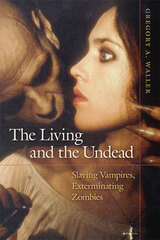
Examining a broad range of novels, stories, plays, films, and made-for-television movies, Waller focuses upon a series of interrelated texts: Bram Stoker's Dracula (1897); several film adaptations of Stoker's novel; F. W. Murnau's Nosferatu, A Symphony of Horror (1922); Richard Matheson's I Am Legend (1954); Stephen King's 'Salem's Lot (1975); Werner Herzog's Nosferatu the Vampyre (1979); and George Romero's Night of the Living Dead (1968) and Dawn of the Dead (1979). All of these works, Waller argues, speak to our understanding and fear of evil and chaos, of desire and egotism, of slavish dependence and masterful control. This paperback edition of The Living and the Undead features a new preface in which Waller positions his analysis in relation to the explosion of vampire and zombie films, fiction, and criticism in the past twenty-five years.

Offering a wide-ranging study of contemporary literature, film, visual art, and performance by writers and artists who live and work in the United Kingdom but also maintain strong ties to postcolonial Africa and the Caribbean, Living Cargo explores how contemporary black British culture makers have engaged with the institutional archives of colonialism and the Atlantic slave trade in order to reimagine blackness in British history and to make claims for social and political redress.
Steven Blevins calls this reimagining “unhousing history”—an aesthetic and political practice that animates and improvises on the institutional archive, repurposing it toward different ends and new possibilities. He discusses the work of novelists, including Caryl Phillips, Fred D’Aguiar, David Dabydeen, and Bernardine Evaristo; filmmakers Isaac Julien and Inge Blackman; performance poet Dorothea Smartt; fashion designer Ozwald Boateng; artists Hew Locke and Yinka Shonibare; and the urban redevelopment of Bristol, England, which unfolded alongside the public demand to remember the city’s slave-trading past.
Living Cargo argues that the colonial archive is neither static nor residual but emergent. By reassembling historical fragments and traces consolidated in the archive, these artists not only perform a kind of counter-historiography, they also imagine future worlds that might offer amends for the atrocities of the past.
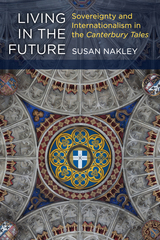
Chaucer uses two extant national ideals, sovereignty and domesticity, to introduce the concept of an English nation into the contemporary popular imagination and reinvent an idealized England as a hallowed homeland. For nationalist thinkers, sovereignty governs communities with linguistic, historical, cultural, and religious affinities. Chaucerian sovereignty appears primarily in romantic and household contexts that function as microcosms of the nation, reflecting a pseudo-familial love between sovereign and subjects and relying on a sense of shared ownership and judgment. This notion also has deep affinities with popular and political theories flourishing throughout Europe. Chaucer’s internationalism, matched with his artistic use of the vernacular and skillful distortions of both time and space, frames a discrete sovereign English nation within its diverse interconnected world.
As it opens up significant new points of resonance between postcolonial theories and medieval ideas of nationhood, Living in the Future marks an important contribution to medieval literary studies. It will be essential for scholars of Middle English literature, literary history, literary political and postcolonial theory, and literary transnationalism.
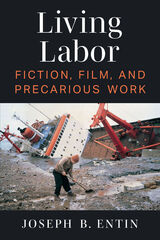
Cover attribution: Allan Sekula, Shipwreck and worker, Istanbul, from TITANIC’s wake, 1998/2000. Courtesy of the Allan Sekula Studio.
In the spirit of Lionel Trilling, Edmund Wilson, and Susan Sontag, the renowned literary critic Jeffrey Hart writes The Living Moment, a close reading of literature as it intersects with the political. Hart’s book is an even-handed guide for anyone toddling into the mists of the modernist moment, effortlessly moving between such modernist monuments as Eliot’s “The Waste Land,” Hemingway’s A Farewell to Arms, Mann’s Doctor Faustus, and Fitzgerald’s The Great Gatsby. Hart’s most stunning achievement is his brilliant inclusion of Marilynne Robinson’s Gilead as a modernist text, for the way the novel teaches us to see more, to hear more, to feel more. Hart’s dazzling study is an examination of important works of literature as they explore the experience of living in a broken world with thought and sometimes with examples of resolve that possess permanent validity. The Living Moment is for anyone who is wearied by so much of today’s trendy, narrow, and ideologically driven criticism.
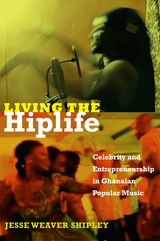
Shipley shows how young hiplife musicians produce and transform different kinds of value—aesthetic, moral, linguistic, economic—using music to gain social status and wealth, and to become respectable public figures. In this entrepreneurial age, youth use celebrity as a form of currency, aligning music-making with self-making and aesthetic pleasure with business success. Registering both the globalization of electronic, digital media and the changing nature of African diasporic relations to Africa, hiplife links collective Pan-Africanist visions with individualist aspiration, highlighting the potential and limits of social mobility for African youth.
The author has also directed a film entitled Living the Hiplife and with two DJs produced mixtapes that feature the music in the book available for free download.
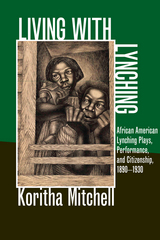
In closely analyzing the political and spiritual uses of black theatre during the Progressive Era, Mitchell demonstrates that audiences were shown affective ties in black families, a subject often erased in mainstream images of African Americans. Examining lynching plays as archival texts that embody and reflect broad networks of sociocultural activism and exchange in the lives of black Americans, Mitchell finds that audiences were rehearsing and improvising new ways of enduring in the face of widespread racial terrorism. Images of the black soldier, lawyer, mother, and wife helped readers assure each other that they were upstanding individuals who deserved the right to participate in national culture and politics. These powerful community coping efforts helped African Americans band together and withstand the nation's rejection of them as viable citizens.
The Left of Black interview with author Koritha Mitchell begins at 14:00.
An interview with Koritha Mitchell at The Ohio Channel.


James Loeb (1867–1933), one of the great patrons and philanthropists of his time, left many enduring legacies both to America, where he was born and educated, and to his ancestral Germany, where he spent the second half of his life. Organized in celebration of the sesquicentenary of his birth, the James Loeb Biennial Conferences were convened to commemorate his achievements in four areas: the Loeb Classical Library (2017), collection and connoisseurship (2019), psychology and medicine (2021), and music (2023).
The subject of the inaugural conference was the legacy for which Loeb is best known and the only one to which he attached his name—the Loeb Classical Library, and the three series it has inspired: the I Tatti Renaissance Library, the Dumbarton Oaks Medieval Library, and the Murty Classical Library of India. Including discussions by the four General Editors of each Library’s unique history, mission, operations, and challenges, the papers collected in The Loeb Classical Library and Its Progeny also take stock of these series in light of more general themes and questions bearing on translations of “classical” texts and their audiences in a variety of societies past, present, and future.
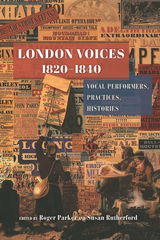
It is the London of this period that editors Roger Parker and Susan Rutherford pinpoint in this book, which chooses one broad musical category—voice—and engages with it through essays on music of the streets, theaters, opera houses, and concert halls; on the raising of voices in religious and sociopolitical contexts; and on the perception of voice in literary works and scientific experiments with acoustics. Emphasizing human subjects, this focus on voice allows the authors to explore the multifaceted issues that shaped London, from the anxiety surrounding the city’s importance in the musical world at large to the changing vocal imaginations that permeated the epoch. Capturing the breadth of sonic stimulations and cultures available—and sometimes unavoidable—to residents at the time, London Voices, 1820–1840 sheds new light on music in Britain and the richness of London culture during this period.
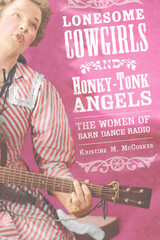
Drawing on personal interviews and rich archival material from the Grand Ole Opry, Kristine M. McCusker examines the gendered politics of the images through the lives and careers of six women performers: Linda Parker, the Girls of the Golden West (Milly and Dolly Good), Lily May Ledford, Minnie Pearl, and Rose Lee Maphis.
For decades, Rachel Blau DuPlessis has shown readers how genres, forms, and the literal acts of writing and reception can be understood as sites of struggle. In her own words, “writing is . . . a praxis . . . in which the author disappears into a process, into a community, into discontinuities, and into a desire for discovery.” It is cause for celebration, then, that we have another work of warm, incisive, exploratory writing from DuPlessis in A Long Essay on the Long Poem.
Long poems, DuPlessis notes, are elusive, particularly in the slippery forms that have emerged in the postmodern mode. She cites both Nathaniel Mackey and Anne Waldman in thinking of the poem as a “box,” both in the sense of a vessel that contains and as a machine that processes, an instrument on which language is played. This study’s central attention is on the long poem as a sociocultural Book, distinctively envisioned by a range of authors.
To reckon with these shifting and evolving forms, DuPlessis works in a polyvalent mode, a hybrid of critical analysis and speculative essay. She divides the long poem and the long poets into three genres: epics, quests, and a composite she terms “assemblages.” The poets she surveys include T. S. Eliot, Ezra Pound, H.D., Louis Zukofsky, Gwendolyn Brooks, Charles Olson, Alice Notley, Nathaniel Mackey, Ron Silliman, Robert Duncan, Kamau Brathwaite, and, finally, Mallarmé and Dante. Instead of a traditional lineage, she deliberately seeks intersecting patterns of connection between poems and projects, a nexus rather than a family tree. In doing so she navigates both some challenges of long poems and her own attempt to “essay” them. The result is a fascinating and generous work that defies categorization as anything other than essential.
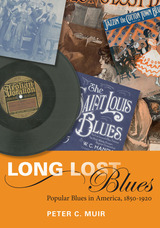
Long Lost Blues exposes for the first time the full scope and importance of early popular blues to mainstream American culture in the early twentieth century. Closely analyzing sheet music and other print sources that have previously gone unexamined, Muir revises our understanding of the evolution and sociology of blues at its inception.
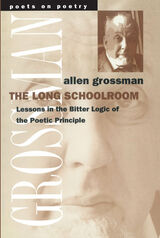
The jist of what he learned--of what his "lessons" taught him--was (in the sentence of Oliver Wendell Holmes): "Where most men have died, there is the greatest interest." According to Grossman, violence arises not merely from the "barbarian" outside of the culture the poet serves, but from the inner logic of that culture; not, as he would now say, from the defeat of cultural membership but from the terms of cultural membership itself.
Grossman analyzes the "bitter logic of the poetic principle" as it is articulated in exemplary texts and figures, including Bede's Caedmon and Milton. But the heart of The Long Schoolroom is American, ranging from essays on Whitman and Lincoln to an in-depth review of the work of Hart Crane. His final essays probe the example of postmodern Jewish and Christian poetry in this country, most notably the work of Robert Lowell and Allen Ginsburg, as it searches for an understanding of "holiness" in the production and control of violence.
Allen Grossman is author of The Ether Dome and Other Poems: New and Selected, The Sighted Singer: Two Works on Poetry for Readers and Writers (with Mark Halliday), and most recently, The Philosopher's Window. He is Mellon Professor in the Humanities at The Johns Hopkins University.
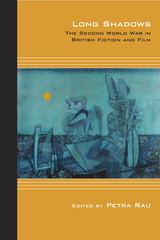

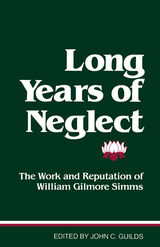
With this collection of essays, the literary record of one of the first and most important men of letters from the South is finally reevaluated from the critical perspective time provides.
William Gilmore Simms (1806-1870) was a poet, critic, novelist, and correspondent whose accomplishment has long been overshadowed by the events of history. As a leading writer and advocate of the antebellum south, Simms suffered from the mercurial judgments of the established publishing and literary circles of the North. Since his death he has slipped into relative obscurity with the inability or unwillingness of most of his critics to separate Simms’s artistic achievements from what have been perceived as flaws in his character.
Together witht he collected letters of Simms—coedited by T.C. Duncan Eaves, to whose memory this book is dedicated—the essays included in Long Years of Neglect can now begin to rectify the damage done over time to the reputation of Simms and his writing, to supersede the options of the past with scholarly and critical appraisal of the work itself, and to offer fresh insight into William Gilmore Simms as a significant and intriguing figure in early American letters.
As editor Guilds speculates in his introduction, “It is conceivable that replacing myth with fact will become fashionable in Simms scholarship, and, even more important, that reading the works—instead of reading the reasons they should be avoided—will become standard practice for Simms as it is for other authors of his stamp.” It was the aim of this book to initiate the realization of that goal.
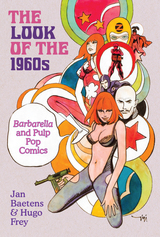
How the classic aesthetic of 1960s pulp comics influenced art, culture, and politics.
As a form of visual art, comic books rely on a distinct and eye-catching aesthetic. This is especially true of the iconic comics, graphic novels, and illustrations of the 1960s and 1970s. The Look of the 1960s explores the sources of inspiration that influenced the world of comics, beginning with the well-known French comics series Barbarella.
Noted comics scholars Jan Baetens and Hugo Frey analyze the impacts of the often-provocative images featured in the comics of the 1960s, which pushed back against French censorship in a politically tense time, and detail how women resisted their objectification in the comic book industry. Barbarella left its mark on the world and gained international attention, inspiring a movie adaptation and changing the look and content of other popular comics. The “Pulp Pop” movement remains relevant today, continuing to influence the art and political world. With new information about artists and an astute analysis of sociopolitical influence, The Look of the 1960s offers deep insights, making it a must read for comics fans all over the world.

Reising suggests that these "non-endings" entirely refocus the narrative structures they appear to conclude, accentuate the narrative stresses and ideological fissures that the texts seem to suppress, and reveal "shadow narratives" that trail alongside the dominant story line. He argues that unless the reader notices the ruptures in the closing moments of these works, the social and historical moments in which the narrative and the reader are embedded will be missed. This reading not only offers new interpretive possibilities, but also uncovers startling affinities between the poetry of Phillis Wheatley and the fiction of Henry James, between Charles Brockden Brown’s Wieland and Melville’s least-studied novel, and between Emily Dickinson’s poem "I Started Early—Took My Dog" and Disney’s animated classic.
Pursuing the implications of these failed moments of closure, Reising elaborates on topics ranging from the roots of domestic violence and mass murder in early American religious texts to the pornographic imperative of mid-century nature writing, and from James’s "descent" into naturalist and feminist fiction to Dumbo’s explosive projection of commercial, racial, and political agendas for postwar U. S. culture.
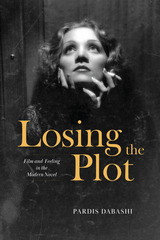
The modernist novel sought to escape what Virginia Woolf called the “tyranny” of plot. Yet even as twentieth-century writers pushed against the constraints of plot-driven Victorian novels, plot kept its hold on them through the influence of another medium: the cinema. Focusing on the novels of Nella Larsen, Djuna Barnes, and William Faulkner—writers known for their affinities and connections to classical Hollywood—Pardis Dabashi links the moviegoing practices of these writers to the tensions between the formal properties of their novels and the characters in them. Even when they did not feature outright happy endings, classical Hollywood films often provided satisfying formal resolutions and promoted normative social and political values. Watching these films, modernist authors were reminded of what they were leaving behind—both formally and in the name of aesthetic experimentalism—by losing the plot.
What if we didn’t always historicize when we read Victorian fiction?
Lost Causes shows that Victorian writers frequently appear to have a more supple and interesting understanding of the relationship between history, causality, and narrative than the one typically offered by readers who are burdened by the new historicism. As a return to these writers emphasizes, the press of modern historicism deforms Victorian novels, encouraging us to read deviations from strict historical accuracy as ideological bad faith. By contrast, Jason B. Jones argues through readings of works ranging from The French Revolution to Middlemarch that literature’s engagement with history has to be read otherwise.Perhaps perversely, Lost Causes suggests simultaneously that psychoanalysis speaks pressingly to the vexed relationship between history and narrative, and that the theory is neither a- nor anti-historical. Through his readings of Victorian fiction addressing the recent past, Jones finds in psychoanalysis not a set of truths, but rather a method for rhetorical reading, ultimately revealing how its troubled account of psychic causality can help us follow literary language’s representation of the real. Victorian narratives of the recent past and psychoanalytic interpretation share a fascination with effects that persist despite baffling, inexplicable, or absent causes.
In chapters focusing on Thomas Carlyle, Charles Dickens, Charlotte Brontë, and George Eliot, Lost Causes demonstrates that history can carry an ontological, as well as an epistemological, charge—one that suggests a condition of being in the world as well as a way of knowing the world as it really is. From this point of view, Victorian fiction that addresses the recent past is not a failed realism, as it is so frequently claimed, but rather an exploration of possibility in history.

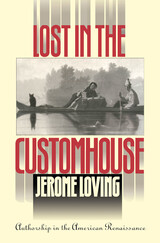

R. Dixon Smith has captured the enchanting story of the well known pulp writer Carl Jacobi. Jacobi wrote many fantasy and weird tales, while leading a somewhat bizarre yet magical life.
Scholars of modernism have long addressed how literature, painting, and music reflected the radical reconceptualization of space and time in the early twentieth century—a veritable revolution in both physics and philosophy that has been characterized as precipitating an “epistemic trauma” around the world. In this wide-ranging study, Benjamin Paloff contends that writers in Central and Eastern Europe felt this impact quite distinctly from their counterparts in Western Europe. For the latter, the destabilization of traditional notions of space and time inspired works that saw in it a new kind of freedom. However, for many Central and Eastern European authors, who were writing from within public discourses about how to construct new social realities, the need for escape met the realization that there was both nowhere to escape to and no stable delineation of what to escape from. In reading the prose and poetry of Czech, Polish, and Russian writers, Paloff imbues the term “Kafkaesque” with a complexity so far missing from our understanding of this moment in literary history.
Through a historical and ethnographic account of the Andalusi music of Algiers, Tlemcen, and their Algerian and Moroccan borderlands since the end of the nineteenth century, Glasser shows how anxiety about Andalusi music’s disappearance has emerged from within the practice itself and come to be central to its ethos. The result is a sophisticated examination of musical survival and transformation that is also a meditation on temporality, labor, colonialism and nationalism, and the relationship of the living to the dead.

Lost Property traces the representation of women writers from Margery Kempe and Christine de Pizan to Elizabeth I and Mary Queen of Scots, exploring how the woman writer became a focal point for emerging theories of literature and authorship in English precisely because of her perceived alienation from tradition. Through original archival research and readings of key literary texts, Summit writes a new history of the woman writer that reflects the impact of such developments as the introduction of printing, the Reformation, and the rise of the English court as a literary center.
A major rethinking of the place of women writers in the histories of books, authorship, and canon-formation, Lost Property demonstrates that, rather than being an unimaginable anomaly, the idea of the woman writer played a key role in the invention of English literature.
Of all the writings on theory and aesthetics—ancient, medieval, or modern—the most important is indisputably Aristotle’s Poetics, the first philosophical treatise to propound a theory of literature. In the Poetics, Aristotle writes that he will speak of comedy—but there is no further mention of comedy. Aristotle writes also that he will address catharsis and an analysis of what is funny. But he does not actually address any of those ideas. The surviving Poetics is incomplete.
Until today. Here, Walter Watson offers a new interpretation of the lost second book of Aristotle's Poetics. Based on Richard Janko’s philological reconstruction of the epitome, a summary first recovered in 1839 and hotly contested thereafter, Watson mounts a compelling philosophical argument that places the statements of this summary of the Aristotelian text in their true context. Watson renders lucid and complete explanations of Aristotle’s ideas about catharsis, comedy, and a summary account of the different types of poetry, ideas that influenced not only Cicero’s theory of the ridiculous, but also Freud’s theory of jokes, humor, and the comic.
Finally, more than two millennia after it was first written, and after five hundred years of scrutiny, Aristotle’s Poetics is more complete than ever before. Here, at last, Aristotle’s lost second book is found again.
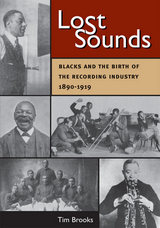
Drawing on more than thirty years of scholarship, Tim Brooks identifies key black recording artists and profiles forty audio pioneers. Brooks assesses the careers and recordings of George W. Johnson, Bert Williams, George Walker, Noble Sissle, Eubie Blake, the Fisk Jubilee Singers, W. C. Handy, James Reese Europe, Wilbur Sweatman, Harry T. Burleigh, Roland Hayes, Booker T. Washington, and boxing champion Jack Johnson, plus a host of lesser-known voices. Many of these pioneers struggled to be heard in an era of rampant discrimination. Their stories detail the forces––black and white––that gradually allowed African Americans to enter the mainstream entertainment industry.
Lost Sounds includes Brooks's selected discography of CD reissues and an appendix by Dick Spottswood describing early recordings by black artists in the Caribbean and South America.
Published by Bucknell University Press. Distributed worldwide by Rutgers University Press.
"A tale as compelling as any John Grisham thriller."
-Rolling Stone
"Dave Marsh's Louie Louie is part rant, part rock criticism and part cultural analysis, with a good dose of Ripley's Believe It or Not! thrown in."
-The New York Times Book Review
"Marsh keeps the story of one trashy song interesting by revealing how 'three chords and a cloud of dust' contains within it the history and future of rock 'n' roll."
-Booklist
"What you don't know about 'Louie Louie' probably won't hurt you. But everything you need to know is in Marsh's book, including the lyrics-the real ones and the ones people thought they heard. If there is a better measure of your pop-cultural IQ, I don't know where to find it."
-USA Today

The eleventh-century masterpiece The Tale of Genji casts a long shadow across the literary terrain of the Heian period (794-1185). It has dominated critical and popular reception of Heian literary production and become the definitive expression of the aesthetics, poetics, and politics of life in the Heian court.
But the brilliance of Genji has eclipsed the works of later Heian authors, who have since been displaced from the canon and relegated to critical obscurity.
Charo B. D'Etcheverry calls for a reevaluation of late Heian fiction by shedding new light upon this undervalued body of work. D'Etcheverry examines three representative texts—The Tale of Sagoromo, The Tale of the Hamamatsu Middle Counselor, and Nezame at Night—as legitimate heirs to the literary legacy of Genji and as valuable indexes to the literary tastes and readerly expectations that evolved over the Heian period.
Balancing careful analyses of plot, character, and motif with keen insights into the cultural and political milieu of the late Heian period, D'Etcheverry argues that we should read such works not as mere derivatives of a canonical text, but as dynamic fictional commentaries and variations upon the tropes and subplots that continue to resonate with readers of Genji.
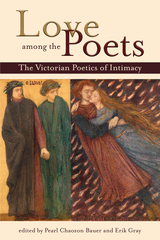
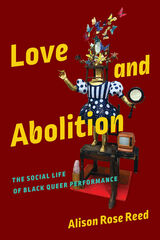
Reed identifies abolition literature as an emergent field of inquiry that emphasizes social relationships in the ongoing struggle to dismantle systems of coercion, criminalization, and control. Focusing on love as an affective modality and organizing tool rooted in the Black radical tradition’s insistence on collective sociality amidst unrelenting state violence, Reed provides fresh readings of visionaries such as James Baldwin, Ntozake Shange, Sharon Bridgforth, and vanessa german. Both abolitionist manifesto and examination of how Black queer performance offers affective modulations of tough and tender love, Love and Abolition ultimately calls for a critical reconsideration of the genre of prison literature—and the role of the humanities—during an age of mass incarceration.
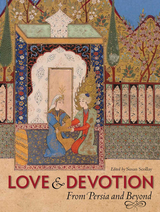
Yusuf and Zulaykha. Khusrau and Shirin. Layla and Majnun. For hundreds of years, Persian poets have captivated audiences with recitations and reinterpretations of timeless tales of earthly and spiritual love. These tales were treasured not only in Iran, but also across the neighboring Mughal and Ottoman Empires.
In Love and Devotion, leading specialists in literature, art history, and philosophy reveal new perspectives on these evocative stories and the exquisite illustrated manuscripts that convey them. Particularly in courtly settings, poetry was a key component of Persian cultural life from the fourteenth through the eighteenth century, and elite patrons commissioned copies of lyrical poems and epics told in verse. Beautifully presented here in full-page reproductions are more than one hundred folios from these illustrated manuscripts, representing masterful works from Hafiz, Rumi, and many others. Echoes of works by Persian poets are manifest across European literature from Dante and Shakespeare to the present, and this lavishly illustrated book reveals new perspectives on the universal theme of love.
Intended for both specialists and non-specialists, Love and Ethics addresses many of the specific concerns of current Gower criticism, provides complete translations of all foreign quotation, and guides the novice reader through Gower's Middle English.
Love and Good Reasons combines postliberal narrative theology—especially Stanley Hauerwas’s Christian ethics and Alasdair MacIntyre’s idea of traditional inquiry—with recent scholarship in literature and ethics including the work of Martha Nussbaum, J. Hillis Miller, Wayne Booth, Jeffrey Stout, and Richard Rorty. Oehlschlaeger offers detailed readings of literature by five major authors—Herman Melville, Jane Austen, Anthony Trollope, Henry James, and Stephen Crane. He examines their works in light of biblical scripture and the grand narratives of Israel, Jesus, and the Church. Discussing the role of religion in contemporary higher education, Oehlschlaeger shares his own experiences of teaching literature from a religious perspective at a state university.
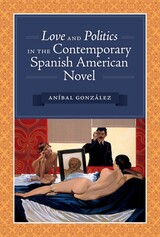
The Latin American Literary Boom was marked by complex novels steeped in magical realism and questions of nationalism, often with themes of surreal violence. In recent years, however, those revolutionary projects of the sixties and seventies have given way to quite a different narrative vision and ideology. Dubbed the new sentimentalism, this trend is now keenly elucidated in Love and Politics in the Contemporary Spanish American Novel.
Offering a rich account of the rise of this new mode, as well as its political and cultural implications, Aníbal González delivers a close reading of novels by Miguel Barnet, Elena Poniatowska, Isabel Allende, Alfredo Bryce Echenique, Gabriel García Márquez, Antonio Skármeta, Luis Rafael Sánchez, and others. González proposes that new sentimental novels are inspired principally by a desire to heal the division, rancor, and fear produced by decades of social and political upheaval. Valuing pop culture above the avant-garde, such works also tend to celebrate agape—the love of one's neighbor—while denouncing the negative effects of passion (eros). Illuminating these and other aspects of post-Boom prose, Love and Politics in the Contemporary Spanish American Novel takes a fresh look at contemporary works.
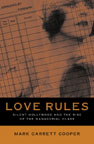
Traces the surprising connections between silent films and the rise of bureaucracy
Arguing for a sweeping new consideration of the shift from print to cinema as a governing system for organizing modern American social relations, this book uncovers an intimate connection between Hollywood romances of the silent era and the empowerment of a managerial class.
During the 1910s and 1920s, American movies told love stories through what rapidly became ubiquitous images. Again and again, silent features showed lovers separated by seeming happenstance and reunited as if by magical forces. Mark Garrett Cooper argues that this “magic” implies the expertise of the corporate movie studio with its hierarchies of professional experts. In other words, the Hollywood love story amounts to a managerial technique. Through close study of such films as Birth of a Nation, Enoch Arden, The Crowd, Why Change Your Wife? and The Jazz Singer, Love Rules shows how cinematic romance offers an object lesson in how to arrange American society—a lesson that implies that such work can be accomplished only by a managerial class.Love Rules offers a boldly original account of how the Hollywood feature film supplanted the “imagined community” of print culture and, in doing so, played a key role in the transformation of American mass culture.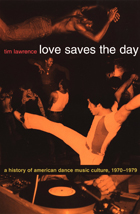
Tales of nocturnal journeys, radical music making, and polymorphous sexuality flow through the arteries of Love Saves the Day like hot liquid vinyl. They are interspersed with a detailed examination of the era’s most powerful djs, the venues in which they played, and the records they loved to spin—as well as the labels, musicians, vocalists, producers, remixers, party promoters, journalists, and dance crowds that fueled dance music’s tireless engine.
Love Saves the Day includes material from over three hundred original interviews with the scene's most influential players, including David Mancuso, Nicky Siano, Tom Moulton, Loleatta Holloway, Giorgio Moroder, Francis Grasso, Frankie Knuckles, and Earl Young. It incorporates more than twenty special dj discographies—listing the favorite records of the most important spinners of the disco decade—and a more general discography cataloging some six hundred releases. Love Saves the Day also contains a unique collection of more than seventy rare photos.
Love, Sex, Gender, and Superheroes examines a full range of superhero media, from comics to films to television to merchandising. With a keen eye for the genre’s complex and internally contradictory mythology, comics scholar Jeffrey A. Brown considers its mixed messages. Superhero comics may reinforce sex roles with their litany of phallic musclemen and slinky femme fatales, but they also blur gender binaries with their emphasis on transformation and body swaps. Similarly, while most heroes have heterosexual love interests, the genre prioritizes homosocial bonding, and it both celebrates and condemns gendered and sexualized violence.
With examples spanning from the Golden Ages of DC and Marvel comics up to recent works like the TV series The Boys, this study provides a comprehensive look at how superhero media shapes our perceptions of love, sex, and gender.
At first listen, both music and talk about love are conspicuously absent from Somaliland’s public soundscapes. The lingering effects of war, the contested place of music in Islam, and gendered norms of emotional expression limit opportunities for making music and sharing personal feelings. But while Christina J. Woolner was researching peacebuilding in Somaliland’s capital, Hargeysa, she kept hearing snippets of songs. Almost all of these, she learned, were about love. In these songs, poets, musicians, and singers collaborate to give voice to personal love aspirations and often painful experiences of love-suffering. Once in circulation, the intimate and heartfelt voices of love songs provide rare and deeply therapeutic opportunities for dareen-wadaag (feeling-sharing). In a region of political instability, these songs also work to powerfully unite listeners on the basis of shared vulnerability, transcending social and political divisions and opening space for a different kind of politics.
Taking us from 1950s recordings preserved on dusty cassettes to new releases on YouTube and live performances at Somaliland’s first postwar music venue—where the author herself eventually takes the stage—Woolner offers an account of love songs in motion that reveals the capacity of music to connect people and feelings across time and space, creating new possibilities for relating to oneself and others.
A Midsummer Night's Dream, in its "perfection," is Tave's point of departure. Its characters fall neatly into the three groups of Tave's title and fulfill to perfection their functions of desire, foolishness, and power. From the magical concord of Shakespeare's resolution, Tave moves to works whose character face ever greater difficulties in reaching a happy conclusion. From Jonson and Austen to Chekhov and Beckett, he meets comedies on their own terms, illuminating the complex and individual genius of each. A masterpiece of practical criticism, Lovers, Clowns, and Fairies rediscovers the pleasure of reading comedies.
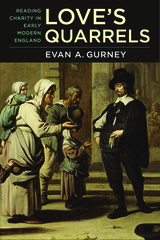
Early modern English writers often complained that “charity had grown cold,” lamenting the dissolution of society's communal bonds. But far from diminishing in scope or influence, charity generated heated debates, animated by social, political, and religious changes that prompted urgent questions about the virtue's powers and functions. Charity was as much a problem as it was a solution, a sure sign of trouble even when invoked on behalf of peace and community.
Love's Quarrels charts charity's complex history from the 1520s to the 1640s and details the ways in which it can be best understood in biblical translations of the early sixteenth century, in Elizabethan polemic and satire, and in the political and religious controversies arriving at the outset of civil war. As key works from Edmund Spenser, Ben Jonson, and John Milton reveal, “reading charity” was fraught with difficulty as early modern England reconsidered its deepest held convictions in the face of mounting social disruption and spiritual pressure.
Love’s $weet Return examines the phenomenon of romance fiction, focusing specifically on one of the most successful book publishers in the world, the Canadian-based Harlequin Enterprises. Margaret Jensen details the rise of the company, examines the Harlequin formula, and evaluates the growth and impact of both Harlequin and its competition. She also assesses recent shifts in the content of Harlequins, particularly as they pertain to women's changing roles in society.
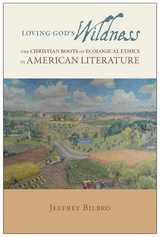
Loving God’s Wildness rediscovers the environmental roots of America’s Puritan heritage. In tracing this history, Jeffrey Bilbro demonstrates how the dualistic Christianity that the Puritans brought to America led them to see the land as an empty wilderness that God would turn into a productive source of marketable commodities. Bilbro carefully explores the effect of this dichotomy in the nature writings of Henry David Thoreau, John Muir, Willa Cather, and Wendell Berry.
Thoreau, Muir, Cather, and Berry imaginatively developed the Puritan theological tradition to propose practical, physical means by which humans should live and worship within the natural temple of God’s creation. They reshaped Puritan dualism, each according to the particular needs of his or her own ecological and cultural contexts, into a theology that demands care for the entire created community. While differing in their approaches and respective ecological ethics, the four authors Bilbro examines all share the conviction that God remains active in creation and that humans ought to relinquish their selfish ends to participate in his wild ecology.
Loving God’s Wildness fills a critical gap in literary criticism and environmental studies by offering a sustained, detailed argument regarding how Christian theology has had a profound and enduring legacy in shaping the contours of the American ecological imagination. Literary critics, scholars of religion and environmental studies, and thoughtful Christians who are concerned about environmental issues will profit from this engaging new book.
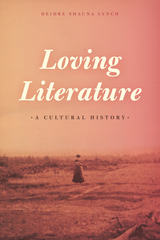
That question led Deidre Shauna Lynch into the historical and cultural investigation of Loving Literature. How did it come to be that professional literary scholars are expected not just to study, but to love literature, and to inculcate that love in generations of students? What Lynch discovers is that books, and the attachments we form to them, have played a vital role in the formation of private life—that the love of literature, in other words, is deeply embedded in the history of literature. Yet at the same time, our love is neither self-evident nor ahistorical: our views of books as objects of affection have clear roots in eighteenth- and nineteenth-century publishing, reading habits, and domestic history.
While never denying the very real feelings that warm our relationship to books, Loving Literature nonetheless serves as a riposte to those who use the phrase “the love of literature” as if its meaning were transparent. Lynch writes, “It is as if those on the side of love of literature had forgotten what literary texts themselves say about love’s edginess and complexities.” With this masterly volume, Lynch restores those edges and allows us to revel in those complexities.
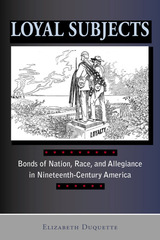
Loyal Subjects considers how the Civil War complicated the cultural value of emotion, especially the ideal of sympathy. Through an analysis of literary works written during and after the conflict-from Nathaniel Hawthorne's "Chiefly About War Matters" through Henry James's The Bostonians and Charles Chestnutt's "The Wife of His Youth," to the Pledge of Allegiance and W.E.B. Du Bois's John Brown, among many others-Duquette reveals that although American literary criticism has tended to dismiss the Civil War's impact, postwar literature was profoundly shaped by loyalty.
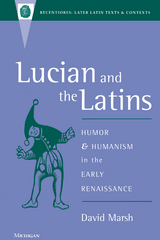
Until now, no study has attempted to connect the Latin translators and imitators of Lucian with his wider European influence. In Lucian and the Latins, David Marsh describes how Renaissance authors rediscovered the comic writings of Lucian. He traces how Lucianic themes and structures made an essential contribution to European literature beginning with a survey of Latin translations and imitations, which gave new direction to European letters in the fifteenth and sixteenth centuries. The Lucianic dialogues of the dead and dialogues of the gods were immensely popular, despite the religious backlash of the sixteenth century. The paradoxical encomium, represented by Lucian's "The Fly" and "The Parasite," inspired so-called serious humanists like Leonardo Bruni and Guarino of Verona. Lucian's "True Story" initiated the genre of the fantastic journey, which enjoyed considerable popularity during the Renaissance age of discovery. Humanist descendants of this work include Thomas More's Utopia and much of Rabelais' Pantagruel.
Lucian and the Latins will attract readers interested in a wide variety of subjects: the classical tradition, the early Italian Renaissance, the origins of modern European literature, and the uses of humor and satire as instruments of cultural critique.
David Marsh is Professor of Italian, Rutgers University.
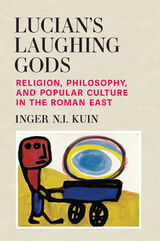
In Lucian's Laughing Gods, author Inger N. I. Kuin argues that in ancient Greek thought, comedic depictions of divinities were not necessarily desacralizing. In religion, laughter was accommodated to such an extent as to actually be constituent of some ritual practices, and the gods were imagined either to reciprocate or push back against human laughter—they were never deflated by it. Lucian uses the gods as comic characters, but in doing so, he does not automatically negate their power. Instead, with his depiction of the gods and of how they relate to humans—frivolous, insecure, callous—Lucian challenges the dominant theologies of his day as he refuses to interpret the gods as ethical models. This book contextualizes Lucian’s comedic performances in the intellectual life of the second century CE Roman East broadly, including philosophy, early Christian thought, and popular culture (dance, fables, standard jokes, etc.). His texts are analyzed as providing a window onto non-elite attitudes and experiences, and methodologies from religious studies and the sociology of religion are used to conceptualize Lucian’s engagement with the religiosity of his contemporaries.
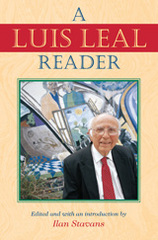
Instrumental in establishing Mexican literary studies in the United States, Leal’s writings on the topic are especially instructive, ranging from essays on the significance of symbolism, culture, and history in early Chicano literature to studies of the more recent use of magical realism and of individual New Mexican, Tejano, and Mexican authors such as Juan Rulfo, Carlos Fuentes, José Montoya, and Mariano Azuela. Clearly and cogently written, these writings bring to bear an encyclopedic knowledge, a deep understanding of history and politics, and an unparalleled command of the aesthetics of storytelling, from folklore to theory. This collection affords readers the opportunity to consider—or reconsider—Latino literature under the deft guidance of its greatest reader.
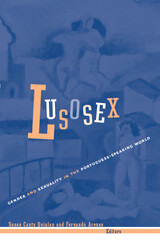
The first book to examine these essential issues in a Lusophone context.
Some of the most compelling theoretical debates in the humanities today center on representations of sexuality. This volume is the first to focus on the topic-in particular, the connections between nationhood, sex, and gender-in the lusophone, or Portuguese-speaking, world. Written by prominent scholars in Brazilian, Portuguese, and Lusophone African literary and cultural studies, the essays range across multiple discourses and cultural expressions, historical periods and theoretical approaches to offer a uniquely comprehensive perspective on the issues of sex and sexuality in the literature and culture of the Portuguese-speaking world that extends from Portugal to Brazil to Angola, Cape Verde, and Mozambique.
Through the critical lenses of gay and lesbian studies, queer theory, postcolonial studies, feminist theory, and postmodern theory, the authors consider the work of such influential literary figures as Clarice Lispector and Silviano Santiago. An important aspect of the volume is the publication of a newly discovered-and explicitly homoerotic-poem by Fernando Pessoa, published here for the first time in the original Portuguese and in English translation. Chapters take up questions of queer performativity and activism, female subjectivity and erotic desire, the sexual customs of indigenous versus European Brazilians, and the impact of popular music (as represented by Caetano Veloso and others) on interpretations of gender and sexuality. Challenging static notions of sexualities within the Portuguese-speaking world, these essays expand our understanding of the multiplicity of differences and marginalized subjectivities that fall under the intersections of sexuality, gender, and race.Contributors: Severino João Albuquerque, U of Wisconsin; Jossianna Arroyo, U of Michigan; César Braga-Pinto, Rutgers; Ana Paula Ferreira, U of California, Irvine; John Gledson, U of Liverpool; Russell G. Hamilton, Vanderbilt; André Torres Lepecki; Mário César Lugarinho, Universidade Federal Fluminense, Brazil; Phyllis Peres, U of Maryland; Ronald W. Sousa, U of Illinois; João Silvério Trevisan; Richard Zenith.
Vibrant and strikingly original, Lying in the Middle discovers some of the most potent musical theater taking place in the hoping, beating hearts of Americans.
Lyric Complicity helps modern readers recover Russian poetry’s former uses and functions—life situations that moved people to quote or perform a specific passage from a poem or a forgotten occasion that created unforgettable verse.
Lyric Interventions explores linguistically innovative poetry by contemporary women in North America and Britain whose experiments give rise to fresh feminist readings of the lyric subject. The works discussed by Linda Kinnahan explore the lyric subject in relation to the social: an “I” as a product of social discourse and as a conduit for change.
Contributing to discussions of language-oriented poetries through its focus on women writers and feminist perspectives, this study of lyric experimentation brings attention to the cultural contexts of nation, gender, and race as they significantly shift the terms by which the “experimental” is produced, defined, and understood.
This study focuses upon lyric intervention in distinct but related spheres as they link public and ideological norms of identity. Firstly, lyric innovations with visual and spatial realms of cultural practice and meaning, particularly as they naturalize ideologies of gender and race in North America and the post-colonial legacies of the Caribbean, are investigated in the works of Barbara Guest, Kathleen Fraser, Erica Hunt, and M. Nourbese Philip. Secondly, experimental engagements with nationalist rhetorics of identity, marking the works of Carol Ann Duffy, Denise Riley, Wendy Mulford, and Geraldine Monk, are explored in relation to contemporary evocations of “self” in Britain. And thirdly, in discussions of all of the poets, but particularly accenuated in regard to Guest, Fraser, Riley, Mulford, and Monk, formal experimentation with the lyric “I” is considered through gendered encounters with critical and avant-garde discourses of poetics.
This fresh, energetic study will be of great interest to literary critics and womens studies scholars, as well as poets on both sides of the Atlantic.
In poet and critic James Longenbach’s title, the word “now” does double duty, evoking both a lyric sense of the present and twentieth-century writers’ assertion of “nowness” as they crafted their poetry in the wake of Modernism. Longenbach examines the fruitfulness of poetic repetition and indecision, of naming and renaming, and of the evolving search for newness in the construction, history, and life of lyrics. Looking to the work of thirteen poets, from Marianne Moore and T. S. Eliot through George Oppen and Jorie Graham to Carl Phillips and Sally Keith, and several musicians, including Virgil Thomson and Patti Smith, he shows how immediacy is constructed through language. Longenbach also considers the life and times of these poets, taking a close look at the syntax and diction of poetry, and offers an original look at the nowness of lyrics.

What does it mean to be a person? One might think of the possession of certain rights, having the capacity for love, or being self-determined. But if words like “person” or “love” seem to carry an internal meaning, where does this meaningfulness come from? Lyric Personhood contends that to be encultured in the modern West is to learn, on top of everything else, an unspoken and mostly felt sense of what it means to be someone, a sense transmitted not only in language but also through encounters with aesthetic form. Through close readings that span nineteenth-century European opera, commercial cinema, and amateur YouTube proposal videos, Dan Wang shows that a “person” has become an aesthetic concept—and not just a legal, moral, political, or philosophical one—in the last two hundred years of Western culture.
It’s hard to let go of the organizing promise of romantic love, the dream of therapeutic “health,” and the aspiration to belong to national culture, Wang argues, because these longings have been shaped by an archive of sentimental and melodramatic works that trains people's expectations for life, genre, and even the knowing promised in theory itself. Tracing a surprisingly continuous imagination of personhood through opera and film aesthetics, Lyric Personhood introduces modes of reading audiovisual works that allow a longer story to be told about the forms that make personhood sensible in the West.
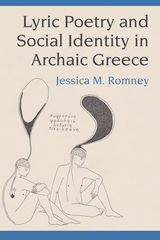
All non-English text and quotes are translated, with the original languages given alongside the translation or in the endnotes.
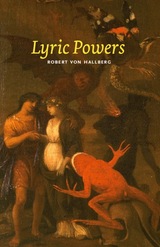
To explain why a reader might prefer one kind of poem to another, von Hallberg analyzes—beyond the political and intellectual significance of poems—the musicality of both lyric poetry and popular song, including that of Tin Pan Alley and doo-wop. He shows that poets have distinctive intellectual resources—not just rhetorical resources—for examining their subjects, and that the power of poetic language to generalize, not particularize, is what justly deserves a critic’s attention.
The first book in more than a decade from this respected critic, Lyric Powers will be celebrated as a genuine event by readers of poetry and literary criticism.
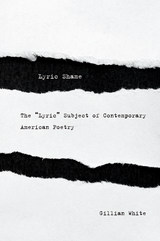
Bringing a provocative perspective to the poetry wars that have divided practitioners and critics for decades, Gillian White argues that the sharp disagreements surrounding contemporary poetics have been shaped by “lyric shame”—an unspoken but pervasive embarrassment over what poetry is, should be, and fails to be.
Favored particularly by modern American poets, lyric poetry has long been considered an expression of the writer’s innermost thoughts and feelings. But by the 1970s the “lyric I” had become persona non grata in literary circles. Poets and critics accused one another of “identifying” with lyric, which increasingly bore the stigma of egotism and political backwardness. In close readings of Elizabeth Bishop, Anne Sexton, Bernadette Mayer, James Tate, and others, White examines the social and critical dynamics by which certain poems become identified as “lyric,” arguing that the term refers less to a specific literary genre than to an abstract way of projecting subjectivity onto poems. Arguments about whether lyric poetry is deserving of praise or censure circle around what White calls “the missing lyric object”: an idealized poem that is nowhere and yet everywhere, and which is the product of reading practices that both the advocates and detractors of lyric impose on poems. Drawing on current trends in both affect and lyric theory, Lyric Shame unsettles the assumptions that inform much contemporary poetry criticism and explains why the emotional, confessional expressivity attributed to American lyric has become so controversial.
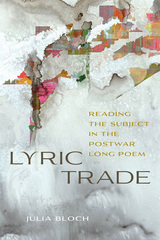
Engaging with poets such as Gwendolyn Brooks, H.D., Lorine Niedecker, Alice Notley, and Myung Mi Kim, this book asks: What does lyric mean, and why should it matter to poets and readers? Lyric Trade argues that lyric in the postwar long poem not only registers the ideological contradictions of modernism’s insistence on new forms, but that it also maps spaces for formal reimaginings of the subject.
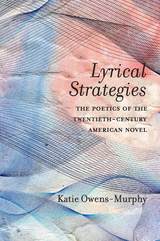
Owens-Murphy surveys a broad array of writers: poets from the lyrical transatlantic tradition, as well as American novelists including Gertrude Stein, Jean Toomer, William Faulkner, Toni Morrison, Louise Erdrich, and Cormac McCarthy. Through a masterful reexamination of canonical works of twentieth-century American fiction through the lens of lyric poetry, she reveals how many elements in these novels can be better understood as poetic and rhetorical figures (metaphysical conceit, polysyndeton, dramatic monologue, apostrophe, and so on) than as narrative ones.
Making fresh contributions to literary theory and American fiction, Lyrical Strategies will fascinate readers and scholars of the American novel, fiction, poetry, and poetics alike.
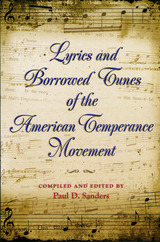
Cold water is the drink for me / Of all the drinks the best, sir; / Your grog, of whate’er name it be, / I dare not for to taste, sir.
Such a lyric, sung to the tune of “Yankee Doodle,” was typical ammunition in the temperance movement’s battle against alcohol. By the 1830s, Americans drank an average of 9.5 gallons of hard liquor each year. From the 1840s until the beginning of Prohibition, well over one hundred temperance songbooks were published in which inspirational lyrics were set to mostly borrowed tunes in the hope of persuading citizens to put down the bottle.
READERS
Browse our collection.
PUBLISHERS
See BiblioVault's publisher services.
STUDENT SERVICES
Files for college accessibility offices.
RECENTLY PUBLISHED


UChicago Accessibility Resources
home | accessibility | search | about | contact us
BiblioVault ® 2001 - 2025
The University of Chicago Press