
 A SCHOLARLY BOOK REPOSITORY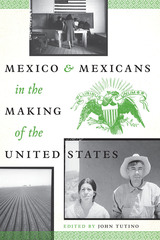
Mexico and Mexicans have been involved in every aspect of making the United States from colonial times until the present. Yet our shared history is a largely untold story, eclipsed by headlines about illegal immigration and the drug war. Placing Mexicans and Mexico in the center of American history, this volume elucidates how economic, social, and cultural legacies grounded in colonial New Spain shaped both Mexico and the United States, as well as how Mexican Americans have constructively participated in North American ways of production, politics, social relations, and cultural understandings.
Combining historical, sociological, and cultural perspectives, the contributors to this volume explore the following topics: the Hispanic foundations of North American capitalism; indigenous peoples’ actions and adaptations to living between Mexico and the United States; U.S. literary constructions of a Mexican “other” during the U.S.-Mexican War and the Civil War; the Mexican cotton trade, which helped sustain the Confederacy during the Civil War; the transformation of the Arizona borderlands from a multiethnic Mexican frontier into an industrializing place of “whites” and “Mexicans”; the early-twentieth-century roles of indigenous Mexicans in organizing to demand rights for all workers; the rise of Mexican Americans to claim middle-class lives during and after World War II; and the persistence of a Mexican tradition of racial/ethnic mixing—mestizaje—as an alternative to the racial polarities so long at the center of American life.
Few developments in the history of the Spanish colonial system in Mexico have been more carelessly treated or more often misinterpreted than the attempt to establish constitutional government in New Spain under the Spanish monarchy during the 1809–1814 and 1820–1822 periods. Yet the broad outlines of the Mexican constitutional system were laid then, largely through the insistent efforts of the Mexican deputies to the Cortes, the Spanish legislative body. Some of the delegates also grasped this opportunity to inform their countrymen and train them in the effectiveness of parliamentary debate and resolution as a more intelligent road to democratic and representative government.
The 70 Mexican deputies (of the 160 elected) who actively participated in the sessions of the Cortes either helped draw up the Constitution of 1812, which initiated provisions for many needed reforms relating to military, religious, economic, educational, judicial, and governmental affairs in Mexico, or contributed to the enabling acts consequent to these provisions. The prime reason for calling the Cortes, however, and especially for inviting the participation of the Mexicans, was to attempt to maintain New Spain’s loyalty to the mother country, an unrealized objective in the long run, although much constructive discussion of this goal was offered by the Mexican delegates.
These eight essays trace the establishment and implementation of the Mexican electoral system, both national and municipal, and of reforms in the economic, journalistic, religious, and military systems. They serve as an informative introduction to the revolutionary role the Cortes of Spain played in Mexican history and as a record of the contribution of Mexican delegates to the beginning of liberal reform in their country.
From reviews of the Spanish edition:
“Meyer’s perceptive commentary on Mexican power politics presents new insights into the petroleum lobbies in Mexico City and Washington. With unbiased empathy he shows the validity of Mexico’s complaints about foreigners’ deriving an overabundance of profit from a nonrenewable natural resource. He understands United States history and never abuses his license to criticize.” —Hispanic American Historical Review
“This useful addition to the literature on twentieth-century Mexican–United States diplomatic relations is a scholarly work, worthy of consideration by all students of the subject.”—American Historical Review
Mexico and the United States in the Oil Controversy, 1917–1942 explores the relationship between the United States and Mexico during the first half of the twentieth century, with special attention to the Mexican nationalization of the oil industry. Relying on Mexican archival material never before analyzed, the author presents a unique perspective on the period following the Mexican Revolution and Mexico’s efforts to diminish its economic dependency on the United States. This work not only describes the political and economic struggle between the Mexican government and the U.S. oil companies but also serves to illustrate in general the nature of dependency between Latin American countries and the United States. It will be of interest not only to Mexican specialists but also to diplomatic and economic historians.
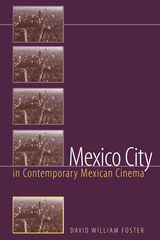
Just as Mexican national life has come to center on the sprawling, dynamic, almost indefinable metropolis of Mexico City, so recent Mexican cinema has focused on the city not merely as a setting for films but almost as a protagonist in its own right, whose conditions both create meaning for and receive meaning from the human lives lived in its midst. Through close readings of fourteen recent critically acclaimed films, this book watches Mexican cinema in this process of producing cultural meaning through its creation, enaction, and interpretation of the idea of Mexico City.
David William Foster analyzes how Mexican filmmakers have used Mexico City as a vehicle for exploring such issues as crime, living space, street life, youth culture, political and police corruption, safety hazards, gender roles, and ethnic and social identities. The book is divided into three sections. "Politics of the City" examines the films Rojo amanecer,Novia que te vea,Frida, naturaleza viva, and Sexo, pudor y lágrimas. "Human Geographies" looks at El Callejón de los Milagros,Mecánica nacional,El castillo de la pureza,Todo el poder, and Lolo. "Mapping Gender" discusses Danzón,De noche vienes,Esmeralda,La tarea,Lola, and Entre Pancho Villa y una mujer desnuda.

Mexico City is one of Latin America’s cultural capitals, and one of the most vibrant urban spaces in the world. The Mexico City Reader is an anthology of "Cronicas"—short, hybrid texts that are part literary essay, part urban reportage—about life in the capital. This is not the "City of Palaces" of yesteryear, but the vibrant, chaotic, anarchic urban space of the1980s and 1990s—the city of garbage mafias, necrophiliac artists, and kitschy millionaires.
Like the visitor wandering through the city streets, the reader will be constantly surprised by the visions encountered in this mosaic of writings—a textual space brimming with life and crowded with flâneurs, flirtatious students, Indian dancers,
food vendors, fortune tellers, political activists, and peasant protesters.
The essays included in this anthology were written by a panoply of writers, from well-known authors like Carlos Monsiváis and Jorge Ibagüengoitia to younger figures like Fabrizio Mejía Madrid and Juieta García González, all of whom are experienced practitioners of the city. The texts collected in this anthology are among the most striking examples of this concomitant "theory and practice" of Mexico City, that most delirious of megalopolises.
“[An] exciting literary journey . . .”—Carolyn Malloy, Multicultural Review

Throughout the twentieth century, the post-revolutionary Mexican State had used mestizaje as a symbol of national unity and social integration. By the end of the millennium, however, Mexico had gone from a PRI-dominated, economically protectionist nation to a more democratic, economically globalizing one. More importantly, the homogenizing, mestizophile national identity that pervaded Mexico throughout the past century had given way to official admission of Mexico's ethnic and linguistic diversity--or 'pluriculture' according to President Salinas's 1992 constitutional revision.
This book is the first interdisciplinary study of literary, cinematic, and graphic images of Mexican national identity in the 1980s and '90s. Discussing, in depth, writings, films, and cartoons from a vast array of contemporary sources, Carrie C. Chorba creates a social history of this important shift.

Mexico in Its Novel is a perceptive examination of the Mexican reality as revealed through the nation's novel. The author presents the Mexican novel as a cultural phenomenon: a manifestation of the impact of history upon the nation, an attempt by a people to come to grips with and understand what has happened and is happening to them.
Written in a clear and graceful style, this study examines the life of the novel as a genre against the background of Mexican chronology. It begins with a survey of the mid-twentieth-century novel, the Mexican novel which came of age in the period following the 1947 publication of Agustín Yáñez's The Edge of the Storm. During this time the novel resolved some of its most complicated problems and, as a result, offered a wider and deeper view of reality.
Having established this circumstance, John Brushwood goes back in time to the Conquest and then moves forward to the twentieth-century novel. Passing from the Colonial Period into the nineteenth century, the author recognizes the relationship between Romanticism and the desire for logical social behavior, and then views this relationship in the perspective of the Reform, an attempt to bring order out of chaos. The novel under the Díaz dictatorship is seen in three different phases, and the last Díaz chapter actually moves into the Revolution itself. The novel during the years of fighting is considered along with the first post-Revolutionary fiction. From that point the developing conflict within Mexican reality itself—a conflict between introversion and extroversion, nationalism and cosmopolitanism—reaches out to seek its solution in the novels of the first chapter.
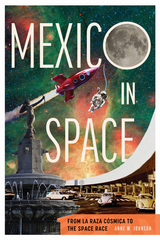
From Aztec sun stones to satellite launches, from muralist visions to dark sky parks, Mexico’s engagement with outer space is fundamental to its identity. Mexico in Space offers a groundbreaking look at how the country has navigated the tensions between technological dependence and sovereign dreams.
Anthropologist Anne W. Johnson reveals Mexico’s unique relationship with outer space, describing Indigenous knowledge, nationalist projects, artistic visions, and community practices. Through rich ethnographic detail and historical insight, Johnson challenges the notion that space is for everyone and shows whose voices truly shape the world’s cosmic futures. Johnson introduces us to satellite engineers, community astronomers, space generation youth, and artists imagining Mars, each crafting alternative cosmic futures.
As space exploration increasingly becomes the domain of billionaires and superpowers, this book offers a compelling counternarrative, demonstrating how Mexican cosmic engagements suggest more just, inclusive ways of inhabiting Earth and beyond and providing vital lessons for reimagining humanity’s place in the cosmos.
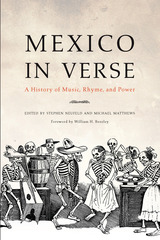
Focusing on modern Mexico, from 1840 to the 1980s, this volume examines the cultural venues in which people articulated their understanding of the social, political, and economic change they witnessed taking place during times of tremendous upheaval, such as the Mexican-American War, the Porfiriato, and the Mexican Revolution. The words of diverse peoples—people of the street, of the field, of the cantinas—reveal the development of the modern nation. Neufeld and Matthews have chosen sources so far unexplored by Mexicanist scholars in order to investigate the ways that individuals interpreted—whether resisting or reinforcing—official narratives about formative historical moments.
The contributors offer new research that reveals how different social groups interpreted and understood the Mexican experience. The collected essays cover a wide range of topics: military life, railroad accidents, religious upheaval, children’s literature, alcohol consumption, and the 1985 earthquake. Each chapter provides a translated song or poem that encourages readers to participate in the interpretive practice of historical research and cultural scholarship. In this regard, Mexico in Verse serves both as a volume of collected essays and as a classroom-ready primary document reader.

Mexican independence was, in a sense, an economic event. Through economic concerns, elites created a common ground with non-elites in their demands against foreign domination, and independence was imagined by the lettered men of Mexico as a feat that would nationalize a rich and productive economic apparatus.
Mexico, Interrupted investigates these economic hopes during the difficult decades between 1821, the year of the country’s definite separation from Spain, and 1852, a period of political polarization after the US-Mexico War that led the country to the brink of another armed conflict. Drawing on political and popular media, this book studies the Mexican intelligentsia’s obsession with labor and idleness in their attempts to create a wealthy, independent nation.
Focusing on figures of work and its opposites, Mexico, Interrupted reconstructs these decades’ “economic imaginaries of independence”: the political and cultural discourses that structured understandings, beliefs, and fantasies of the relationship between “the economy” and the life of an independent polity. By bringing together intellectual history, critical theory, and cultural studies, Gutiérrez Negrón offers a new account of the Mexican nineteenth century and complicates the history of the “spirit of capitalism” in the Americas.

In Mexico Mystique Frank Waters draws us deeply into the ancient but still-living myths of Mexico. To reveal their hidden meanings and their powerful symbolism, he brings to bear his gift for intuitive imagination as well as a broad knowledge of anthropology, Jungian psychology, astrology, and Eastern and esoteric religions. He offers a startling interpretation of the Mayan Great Cycle — our present Fifth World — whose beginning has been projected to 3113 B.C., and whose cataclysmic end has been predicted by 2011 A.D.
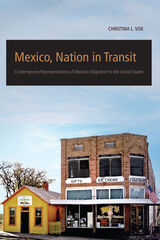
Sisk’s transnational investigation moves easily across the US–Mexico border, analyzing films made on both sides, literature de la frontera, Mexican rock music, migrant narratives, and texts written by second- and third-generation immigrants. Included are the perspectives of those who left Mexico, those who were left behind, and the children who travel back “home.” Sisk discovers that the loss of Mexicans to the United States through emigration has had an effect on Mexico similar to the impact of the perceived Mexican invasion of the United States.
Spanning the social sciences and the humanities, Mexico, Nation in Transit poses a new transnational alternative to the postnational view that geopolitical borders are being erased by the forces of migration and globalization, and the nationalist view that borders must be strictly enforced. It shows that borders, like identities, are not easy to locate precisely.
A diverse collection of more than eighty selections, The Mexico Reader brings together poetry, folklore, fiction, polemics, photoessays, songs, political cartoons, memoirs, satire, and scholarly writing. Many pieces are by Mexicans, and a substantial number appear for the first time in English. Works by Octavio Paz and Carlos Fuentes are included along with pieces about such well-known figures as the larger-than-life revolutionary leaders Pancho Villa and Emiliano Zapata; there is also a comminiqué from a more recent rebel, Subcomandante Marcos. At the same time, the book highlights the perspectives of many others—indigenous peoples, women, politicians, patriots, artists, soldiers, rebels, priests, workers, peasants, foreign diplomats, and travelers.
The Mexico Reader explores what it means to be Mexican, tracing the history of Mexico from pre-Columbian times through the country’s epic revolution (1910–17) to the present day. The materials relating to the latter half of the twentieth century focus on the contradictions and costs of postrevolutionary modernization, the rise of civil society, and the dynamic cross-cultural zone marked by the two thousand-mile Mexico-U.S. border. The editors have divided the book into several sections organized roughly in chronological order and have provided brief historical contexts for each section. They have also furnished a lengthy list of resources about Mexico, including websites and suggestions for further reading.

In a time of ever-increasing migration of capital and human beings, this book turns on its head the usual perspective of U.S. economic and cultural dominance in order to deepen understanding of the bi-national relationship.

All the contributors to this issue agree on the importance and relevance of a historical study of culture in its most inclusive sense. But there is much less consensus about the promise and potential of a "new cultural history" of Mexico and Latin America. While some of the contributors celebrate new interpretive and methodological advances, others express concern about the dangers of overinterpretation, untoward speculation, and the imposition of postmodernist concepts.
Contributors and topics covered include:
Susan Deans-Smith and Gilbert M. Joseph on the Arena of Dispute
Eric Van Young on the New Cultural History
William E. French on Cultural History of Nineteenth-Century Mexico
Mary Kay Vaughan on Cultural Approaches to Peasant Politics in the Mexican Revolution
Stephen Haber on Mexico’s "New" Cultural History
Florencia E. Mallon on Cycles of Revisionism
Susan Migden Socolow on Putting the "Cult" in Culture
Claudio Lomnitz on the Politics of the "New Cultural History of Mexico"

In three engaging essays written in a peerless prose style, Pereda considers the persistent influence of European colonialism on Mexican intellectual life, the politics of inclusion, and the changing ideas of what it means to be Mexican. He identifies three “vices”—social habits, customs, and beliefs inherited from European colonialism—that have influenced the development of Mexican national identity: subaltern fervor, craving for novelty, and nationalist zeal. Pereda demonstrates that these three tendencies have led Mexican intellectuals, and Mexican society more generally, to uncritically adopt a politics of exclusion and destructive nationalist attitudes.
Using a strategy he calls “nomadic” thinking—the act of moving beyond our cultural preconceptions and habits of thinking—Pereda guides readers through a number of examples drawn from Mexican philosophy and culture that illustrate these tendencies. At its core, Mexico Unveiled is an accessible and entertaining introduction to the philosophical themes that have long occupied Pereda’s life and work and Mexican philosophy more generally.
Mexico presents a unique case in which much of the nation’s forests were placed as commons in the hands of communities, who, with state support and their own entrepreneurial vigor, created community forest enterprises (CFEs). David Barton Bray, who has spent more than thirty years engaged with and researching Mexican community forestry, shows that this reform has transformed forest management in that country at a scale and level of maturity unmatched anywhere else in the world.
For decades Mexico has been conducting a de facto large-scale experiment in the design of a national social-ecological system (SES) focused on community forests. What happens when you give subsistence communities rights over forests, as well as training, organizational support, equipment, and financial capital? Do the communities destroy the forest in the name of economic development, or do they manage them sustainably, generating current income while maintaining intergenerational value as a resource for their children? Bray shares the scientific and social evidence that can now begin to answer these questions. This is an invaluable resource for students, researchers, and the interested public on the future of global forest resilience and the possibilities for a good Anthropocene.
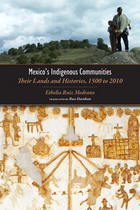
Ethelia Ruiz Medrano focuses on a series of individual cases, falling within successive historical epochs, that illustrate how the practice of drawing up and preserving historical documents-in particular, maps, oral accounts, and painted manuscripts-has been a determining factor in the history of Mexico's Indian communities for a variety of purposes, including the significant issue of land and its rightful ownership. Since the sixteenth century, numerous Indian pueblos have presented colonial and national courts with historical evidence that defends their landholdings.
Because of its sweeping scope, groundbreaking research, and the author's intimate knowledge of specific communities, Mexico's Indigenous Communities is a unique and exceptional contribution to Mexican history. It will appeal to students and specialists of history, indigenous studies, ethnohistory, and anthropology of Latin America and Mexico

Through extensive archival research, Hoberman brings to light new data that illuminate the formation, behavior, and power of the merchant class in New Spain. She documents sources and uses of merchant wealth, tracing the relative importance of mining, agriculture, trade, and public office. By delving into biographical information on prominent families, Hoberman also reveals much about the longevity of the first generation’s social and economic achievements.
The author’s broad analysis situates her study in the overall environment in which the merchants thrived. Among the topics discussed are the mining and operation of the mint, Mexico’s political position vis-a-vis Spain, and the question of an economic depression in the seventeenth century.

Blending the personal narratives of middle-class Mexicans with analyses of national surveys of households and voters, Dennis Gilbert traces the development of the middle class since the 1940s. He describes how middle-class Mexicans were affected by the economic upheavals of the 1980s and 1990s and examines their shifting relations with the ruling Partido Revolucionario Institucional (PRI).
Long faithful to the PRI, the middle class gradually grew disenchanted. Gilbert examines middle-class reactions to the 1968 Tlatelolco massacre, the 1982 debt crisis, the government’s feeble response to the 1985 Mexico City earthquake, and its brazen manipulation of the vote count in the 1988 presidential election. Drawing on detailed interviews with Mexican families, he describes the effects of the 1994–95 peso crisis on middle-class households and their economic and political responses to it. His analysis of exit poll data from the 2000 elections shows that the lopsided middle-class vote in favor of opposition candidate Vicente Fox played a critical role in the election that drove the PRI from power after seven decades.
The book closes with an epilogue on the middle class and the July 2006 presidential elections.
The Mexican economy underwent a process of growth and transformation in the twentieth century, which was confirmed by the indexes and figures that economists use to chart the rate of growth, even allowing for possible inaccuracies in these figures.
This volume of six essays makes readily available to English-speaking readers a selection of significant contributions by outstanding Mexican economists dealing with the mid-twentieth-century growth of the Mexican economy.
Enrique Pérez López provides an overview of the development of the gross national product in the economy and the structural changes that were imperative if basic social goals were to be implemented and the optimal adjustments to changing world conditions effected. Ernesto Fernández Hurtado discusses the process of accommodation and cooperation between the public and the private sectors that has contributed significantly to economic growth, stressing particularly the role of agriculture. Mario Ramón Beteta describes central bank policy and the functioning of the Central Bank, showing how control over credit and the banking system assures stability and accelerating growth through its credit rationing.
Alfredo Navarrete R. traces the sources of domestic savings that have provided 90 percent of the capital employed in the economy since the Revolution, and Ifigenia M. de Navarrete demonstrates that rapid economic growth has not resulted in a more equitable distribution of income. Victor Urquidi stresses the balanced growth, achieved by allocating public capital formation to basic infrastructure, that has helped develop agriculture as well as industry, and indicates the nature of the structural change that must occur if the economy is to expand rapidly.
In his introduction Tom E. Davis compares growth in Mexico with developments during the same period in Chile and Argentina.
The country reached its midcentury standard of living after fifty years of drastic social and political changes under a constitution that altered the system and the concept of private property and the role of the state. These new concepts brought about changes in the structure of production and social relationships, together with a rise to new cultural, technical, and moral levels. These changes, in turn, placed Mexico in a new position with new problems. A question that must be answered is whether the economic goals of the future require a reappraisal of social relationships and of the ways of administering and utilizing the country’s resources and potential productivity.
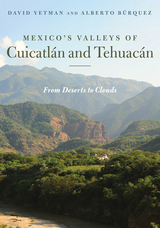
Through firsthand experience and engaging prose, the authors provide a synthesis of the geology, ecology, history, and cultures of the valleys, showing their importance and influence as Mesoamerican arteries for environmental and cultural interchange through Mexico. It also reveals the extraordinary plant life that draws from habitats ranging from deserts to tropical forests.
The authors, both experts in their respective fields, begin with a general description of the geography of the valleys, followed by an introduction to climate and hydrology, a look at the valleys’ often bewildering geology. The book delves into cultural and linguistic backgrounds of the valleys and discusses archaeological sites that that encapsulate the valleys’ fascinating history prior to the arrival of Europeans. The book concludes by describing the flora that makes the region so singular.

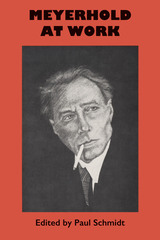
“Not a mirror but a magnifying glass”—such, in the poet Mayakovsky’s words, was the theater of Vsevolod Meyerhold. The first to insist on the primacy of the director’s role, indeed the first to conceive of it as a role, this passionately dedicated Russian director tore down the fourth wall and forced the actors and audience together into one inescapable community of experience.
Yet Meyerhold recorded few of his theories in writing, and the intensity and brilliance of his work must be recaptured through the actors and artists who helped create the performances. Focusing on Meyerhold’s postrevolutionary career, Paul Schmidt has assembled in this book journals, letters, reminiscences, and, of special interest, actual rehearsal notes that build a fascinating, intimate picture of Meyerhold as a theorist and as a man.
Included are Meyerhold’s frantic notes to his teacher, friend, and bête noire Stanislavsky; detailed descriptions of how he trained his actors in “biomechanics”; and memories by such students as Eisenstein and such friends as Pasternak and Ehrenburg. One chapter deals with Meyerhold’s never-realized conception of Boris Godunov, while another describes his direction of Camille, which starred Zinaida Raikh, his wife, and which played its 725th and last performance on the day Stalin’s government liquidated Meyerhold’s theater. Paul Schmidt’s introduction and headnotes enhance our understanding of Meyerhold as a pioneer of modern theater.

Praise for Mezcal:
"Mezcal is also a lyrical meditation upon the ultimate strength of the land, specifically the desert Southwest, and how that land prevails and endures despite every effort of modern industry and development to rape and savage it in the name of progress. Mezcal lingers in the mind as only the very best books manage to do."—Harry Crews
"The author . . . excavates his own tormented life—and its relation to the land he loves—in a series of powerful, imagistic autobiographical essays. Like the desert he cherishes, this memoir is harsh yet lovely, full of sour self-truth. . . . A potent presentation of the wounds of one man's life, packed with indelible impressions; but there's little healing here, making this a bitter if beautiful read."—Kirkus Review
"In Mezcal . . . Bowden drops the journalistic veil, exploring the ecology of his interior landscape at least as thoroughly as the changing scenery that surrounds him. . . . Others—Aldo Leopold, Edward Abbey—have already staked inviolate claims on the Southwestern deserts. But Bowden owns the complex terrain where, like a mezcal-inspired mirage, the Sonoran sun-belt overlaps the gray convolutions of the American mind."—Los Angeles Times
An ethnography of mezcal and how it has become a global, "artisanal" good.
Mezcal is booming. Once considered a peasant drink—the rough, lowbrow cousin of the more refined tequila—the smoky spirit is now prized by connoisseurs the world over. It is also hailed as a savior of Oaxaca, powering a craft industry that can uphold rural economies and Indigenous traditions.
Ronda L. Brulotte traces mezcal’s swift rise and its effects on communities that have distilled and enjoyed the beverage for generations. Only in the late 1990s did mezcal begin to escape its longstanding associations with Indigenous and working-class life, even as these very qualities supply the “authenticity” that elite consumers crave. Through a detailed ethnography of the spirits industry in Oaxaca, Brulotte compares the ideal of the artisanal economy with the reality of participation in global markets. Her findings—focused on tourism-led development and gentrification, the exploitation of women and smallholders, and swelling regional migration pressures—raise troubling questions about the ecological and social sustainability of a new craft imaginary that rebrands rustic products as luxury goods.
This paperback edition of M.I.A. or Mythmaking in America adds major new material about Ross Perot's role, the 1991-1992 Senate investigation, and illegal operations authorized by Ronald Reagan.

Reimagining adaptation amidst climate change–driven mutations of urban space and life
Between its susceptibility to flooding and an ever-expanding real estate market powered by global surges of people and capital, Miami is an epicenter of the urban Anthropocene and a living laboratory for adaptation to sea level rise. Miami in the Anthropocene explores the social, environmental, and technical transformations involved in climate adaptation infrastructure and imaginaries in a global city seen as climate change ground zero.
Using Miami as a compelling microcosm for understanding the complex interplay between urbanization and environmental upheaval in the twenty-first century, Stephanie Wakefield shows how “aqua-urban futures” are being imagined for the city, from governmental scenario exercises for severe weather events to proposals to transform the city’s metropolitan area into an archipelago of islands connected by bridges. She examines the shifts reweaving the fabric of urban life and presents designs that imagine dramatic new ways of living with water.
Grounded in the dynamic landscape of Miami but reaching far beyond its shores, Miami in the Anthropocene delves into the broader debates shaping urban thought and practice in the Anthropocene. Focusing on postresilience urban designs, Wakefield illuminates the path toward a future where cities embrace opportunities for evolution rather than merely for survival.


Mice in the Freezer, Owls on the Porch is in many ways a love story—about a quiet scientist and his flamboyant wife, but also about their passions for hunting, for wild lands, and for the grouse and raptor species that they were instrumental in saving from destruction.
From the papers and letters of Frederick and Frances Hamerstrom, the reminiscences of contemporaries, and her own long friendship with this extraordinary couple who were her neighbors, Helen Corneli draws an intimate picture of Fran and "Hammy" from childhood through the genesis and maturation of a romantic, creative, and scientific relationship. Following the Hamerstroms as they give up a life of sophisticated convention and comfort for the more "civilized" (as Aldo Leopold would have it) pleasures of living and conducting on-the-spot research into diminishing species, Corneli captures the spirit of the Hamerstroms, their profession, and the natural and human environments in which they worked. A nuanced account of the labors, adventures, and achievements that distinguished the Hamerstroms over the years—and that inspired a generation of naturalists—this book also provides a dramatic account of conservation history over the course of the twentieth century, particularly in Wisconsin during the eventful years from the 1920s through the 1970s.

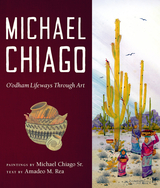
A wide array of Chiago’s paintings are represented in this book, illustrating past and present Akimel O’odham and Tohono O’odham culture. The paintings show the lives and traditions of O’odham people from both the artist’s parents’ and grandparents’ generations and today. The paintings demonstrate the colonial Spanish, Mexican, and Anglo-American influences on O’odham culture throughout the decades, and the text explains how wells and windmills, schools, border walls, and nonnative crops have brought about significant change in O’odham life. The paintings and text in this book beautifully depict a variety of O’odham lifeways, including the striking Sonoran Desert environment of O’odham country, gathering local foods and cooking meals, shrines, ceremonies, dances, and more.
By combining Chiago’s paintings of his lived experiences with Rea’s ethnographic work, this book offers a full, colorful, and powerful picture of O’odham heritage, culture, and language, creating a teaching reference for future generations.

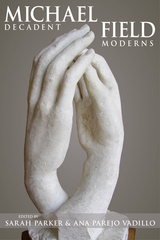
In the last twenty years, Michael Field has emerged as one of the most fascinating poets of the Victorian era. Through their collaborative partnership as “Michael Field,” Katharine Bradley and Edith Cooper engaged in the aesthetic and decadent movements of the fin de siècle, while their poetry and verse drama articulate ideas associated with the New Woman and boldly express queer and lesbian desire. Michael Field: Decadent Moderns extends the focus on these key literary and cultural contexts by emphasizing their continuing significance within twentieth-century literary modernism. Through a series of interdisciplinary essays, this book addresses Michael Field’s energetic engagements with a range of topics including ecology, perfume, tourism, art history, sculpture, formalism, classics, and book history. In doing so, Michael Field: Decadent Moderns highlights the modernity, radicalism, and relevance of their work, both within the nineteenth and twentieth centuries as well as in our own cultural moment.
Contributors: Leire Barrera-Medrano, Joseph Bristow, Jill R. Ehnenn, Sarah E. Kersh, Kristin Mahoney, Catherine Maxwell, Alex Murray, Sarah Parker, Margaret D. Stetz, Kate Thomas, and Ana Parejo Vadillo.

When the author becomes the story, the possibilities are endless.
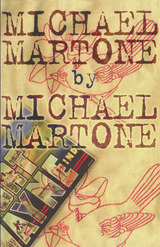
Michael Martone, by Michael Martone, continues the author's giddy exploration of the parts of books nobody ever reads. Michael Martone is its own appendix, comprising fifty “contributors notes,” each of which identifies in exorbitant biographical detail the author of the other forty-nine. Full of fanciful anecdotes and preposterous reminiscences, Martone’s self-inventions include the multiple deaths of himself and all his family members, his Kafkaesque rebirth as a giant insect, and his stints as circus performer, assembly-line worker, photographer, and movie extra.
Expect no autobiographical consistency here. A note revealing Martone's mother as the ghost-writer of all his books precedes the note beginning, “Michael Martone, an orphan . . . “ We learn of Martone’s university career and sketchy formal education, his misguided caretaking of his teacher John Barth’s lawn, and his impersonation of a poor African republic in political science class, where Martone's population is allowed to starve as his more fortunate fellow republics fight over development and natural resource trading-cards.
The author of Michael Martone, whose other names include Missy, Dolly, Peanut, Bug, Gigi-tone, Tony's boy, Patty's boy, Junior's, Mickey, Monk, Mr. Martone, and “the contributor named in this note," proves as Protean as fiction itself, continuously transforming the past with every new attribution but never identifying himself by name. It is this missing personage who, from first note to last, constitutes the unformed subject of Michael Martone.

Not afraid to tackle provocative topics in American culture, from gun violence and labor policies to terrorism and health care, Michael Moore has earned both applause and invective in his career as a documentarian. In such polarizing films as Bowling for Columbine, Fahrenheit 9/11, and Sicko, Moore has established a unique voice of radical nostalgia for progressivism, and in doing so has become one of the most recognized documentary filmmakers of all time.
In the first in-depth study of Moore’s feature-length documentary films, editors Thomas W. Benson and Brian J. Snee have gathered leading rhetoric scholars to examine the production, rhetorical appeals, and audience reception of these films. Contributors critique the films primarily as modes of public argument and political art. Each essay is devoted to one of Moore’s films and traces in detail how each film invites specific audience responses.
Michael Moore and the Rhetoric of Documentary reveals not only the art, the argument, and the emotional appeals of Moore’s documentaries but also how these films have revolutionized the genre of documentary filmmaking.

For more than twenty years, Michael Moore has transformed himself from a marginal filmmaker into a cultural icon, unofficial spokesperson for liberals and the Left. American conservatives constantly use him for target practice and target. Book author, film director, television personality, and Web presence, Moore is now a one-man cultural phenomenon. Although Michael Moore is a constant presence on the media landscape, this is the first volume to focus on the Moore phenomenom. It explores Moore's work in film and elsewhere, bringing diverse perspectives on his activities and status as voice of liberal America and the disenfranchised working class. Topics examined include the disjunction between Moore's celebrity status and everyman, middle-western persona, his self-mocking ironic sensibility, his tendency to diagnose American social and political problems in terms of class rather than gender, his reception abroad, and his uneasy relationship with the conventions of documentary filmmaking. The contributors are leading scholars and film critics, including Paul Arthur, Cary Elza, Jeffrey P. Jones, Douglas Kellner, Richard Kilborn, William Luhr, Charles Musser, Richard R. Ness, Miles Orvell, Richard Porton, Sergio Rizzo, Christopher Sharrett, Gaylyn Studlar, and David Teztlaff. The volume features both assessments of Moore's work in general and close analyses of his most successful films. The result is a definitive assessment of Moore's career to date.
Matthew Bernstein is Professor and Chair of Film Studies at Emory University. He is author of Walter Wanger: Hollywood Independent.

For much of his career, British political philosopher Michael Oakeshott was identified with Margaret Thatcher’s conservative policies. He has been called by some a guru to the Tories, while others have considered him one of the last proponents of British Idealism. Best known for such books as Experience and Its Modes and Rationalism in Politics, Oakeshott has been the subject of numerous studies, but always with an emphasis on his political thought.
Gnosticism and considers both thinkers’ treatment of Hobbes to delineate their philosophical differences.


With articles that engage directly—as well as theoretically—with de Certeau, this collection corrects a long-standing imbalance in the criticism by covering works from two periods about which little is known in anglophone circles: his early books on religious history and his midlife histories of mysticism and possession. It also includes critiques from queer theory and feminist theory, as well as comparative readings that assess de Certeau alongside his famous contemporary, Michel Foucault. With articles by an international array of scholars who address both the secular and the religious thinker, this special issue is the most definitive study to date of this important twentieth-century thinker.
Contributors. Jeremy Ahearne, Frederick C. Bauerschmidt, Ian Buchanan, Philippe Carrard, Claire Colebrook, Tom Conley, Verena Andermatt Conley, Catherine Driscoll, Carla Freccero, John Frow, Richard Terdiman, Timothy Tomasik, Marie-Claire Vallois, Graham Ward
To demonstrate the sense in which Foucault's work is beyond structuralism and hermeneutics, the authors unfold a careful, analytical exposition of his oeuvre. They argue that during the of Foucault's work became a sustained and largely successful effort to develop a new method—"interpretative analytics"—capable fo explaining both the logic of structuralism's claim to be an objective science and the apparent validity of the hermeneutical counterclaim that the human sciences can proceed only by understanding the deepest meaning of the subject and his tradition.
"There are many new secondary sources [on Foucault]. None surpass the book by Hubert Dreyfus and Paul Rabinow. . . . The American paperback edition contains Foucault's 'On the Genealogy of Ethics,' a lucid interview that is now our best source for seeing how he construed the whole project of the history of sexuality."—David Hoy, London Review of Books

The Michel Henry Reader is an indispensable resource for those who are approaching Henry for the first time as well as for those who are already familiar with his work. It provides broad coverage of the major themes in his philosophy and new translations of Henry’s most important essays. Sixteen chapters are divided into four parts that demonstrate the profound implications of Henry’s philosophy of life: for phenomenology; for subjectivity; for politics, art, and language; and for ethics and religion.
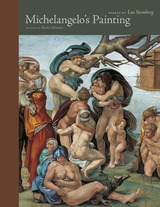
For half a century, Steinberg delved into Michelangelo’s work, revealing the symbolic structures underlying the artist’s highly charged idiom. This volume of essays and unpublished lectures elucidates many of Michelangelo’s paintings, from frescoes in the Sistine Chapel to the Conversion of St. Paul and the Crucifixion of St. Peter, the artist’s lesser-known works in the Vatican’s Pauline Chapel; also included is a study of the relationship of the Doni Madonna to Leonardo.
Steinberg’s perceptions evolved from long, hard looking. Almost everything he wrote included passages of old-fashioned formal analysis, but always put into the service of interpretation. He understood that Michelangelo’s rendering of figures, as well as their gestures and interrelations, conveys an emblematic significance masquerading under the guise of naturalism. Michelangelo pushed Renaissance naturalism into the furthest reaches of metaphor, using the language of the body to express fundamental Christian tenets once expressible only by poets and preachers.
Leo Steinberg was one of the most original art historians of the twentieth century, known for taking interpretive risks that challenged the profession by overturning reigning orthodoxies. Michelangelo’s Painting is the second volume in a series that presents Steinberg’s writings, selected and edited by his longtime associate Sheila Schwartz.

For half a century, Steinberg delved into Michelangelo’s work, revealing the symbolic structures underlying the artist’s highly charged idiom. This volume of essays and unpublished lectures explicates many of Michelangelo’s most celebrated sculptures, applying principles gleaned from long, hard looking. Almost everything Steinberg wrote included passages of old-fashioned formal analysis, but here put to the service of interpretation. He understood that Michelangelo’s rendering of figures as well as their gestures and interrelations conveys an emblematic significance masquerading under the guise of naturalism. Michelangelo pushed Renaissance naturalism into the furthest reaches of metaphor, using the language of the body and its actions to express fundamental Christian tenets once expressible only by poets and preachers—or, as Steinberg put it, in Michelangelo’s art, “anatomy becomes theology.”
Michelangelo’s Sculpture is the first in a series of volumes of Steinberg’s selected writings and unpublished lectures, edited by his longtime associate Sheila Schwartz. The volume also includes a book review debunking psychoanalytic interpretation of the master’s work, a light-hearted look at Michelangelo and the medical profession and, finally, the shortest piece Steinberg ever published.
The history of Michigan is a fascinating story of breathtaking geography enriched by an abundant water supply, of bold fur traders and missionaries who developed settlements that grew into major cities, of ingenious entrepreneurs who established thriving industries, and of celebrated cultural icons like the Motown sound. It is also the story of the exploitation of Native Americans, racial discord that resulted in a devastating riot, and ongoing tensions between employers and unions. Michigan: A History of Explorers, Entrepreneurs, and Everyday People recounts this colorful past and the significant role the state has played in shaping the United States. Well-researched and engagingly written, the book spans from Michigan’s geologic formation to important 21st-century developments in a concise but detailed chronicle that will appeal to general readers, scholars, and students interested in Michigan’s past, present, and future.
Michigan at the Millennium provides objective background and analysis on a wide variety of key economic and fiscal issues. The chapters are written by economists and policy analysts at leading universities and other institutions in Michigan. Written in clear, non-technical language, the articles are aimed at an audience that includes members of the legislative and executive branches of state government, members of the judicial system, local government officials, policy analysts, and informed citizens.
This volume follows in the tradition of the landmark 1982 study, Michigan’s Fiscal and Economic Structure, edited by Harvey E. Brazer. The first section of the volume focuses on broad aspects of the economy, people, and land of Michigan, including chapters on demographics, the labor force, land use, the manufacturing sector, high-technology industries, and health care. Section two focuses on public expenditures and public services, and includes chapters on economic-development efforts, K–12 education, the transportation system, the welfare system, policies for low-wage workers and displaced workers, and pensions. The third section is concerned with taxes and other government revenues. It includes chapters on the Headlee Amendment, income taxes, sales and use taxes, property taxes, the Single Business Tax, intergovernmental fiscal relations, and other sources of revenue.

Whether you’re a weekend traveler, extreme adventurer, or family on vacation, The Michigan Eco-Travelerlights the way to a greener getaway. Naturalists, conservationists, and hospitality experts will find the book equally helpful in responding to the ever rising demand for sustainable recreation.

Eight family-farm case studies display farm buildings' relationship to the land they sit on, their function on the farm, the materials they're made with, the farm enterprises themselves, and the families who own them. Photographs, plans, elevations, and sections of typical, exemplary traditional farm buildings show the aesthetic and architectural qualities of those types of buildings across the state.
The ways in which the buildings serve the productive activities of the farm, shelter and nourish the people and livestock, yield a living, and enable the aspirations of farm people are shown in the words and photographs of the farmers themselves. The buildings form a window into the lives of Michigan's family farms and into the hearts and minds of the people who have lived and worked in them their entire lives.

Unlike the well-studied flowering plants and gymnosperms, Michigan’s ferns and lycophytes have long lacked a reliable, up-to-date guidebook, and this book fills that gap. Covering all 120 taxa found in the state, it features detailed keys, species descriptions, and range maps alongside precise illustrations. Readers learn about the etymology of species’ common and scientific names as well as interesting facts about their historic uses by humans and place within the Michigan ecosystem. The book also provides information on the challenging taxonomy of many ferns and lycophytes, with special attention given to the species likely to hybridize and those prone to misidentification. This is a must-have reference for anyone who wishes to learn about these important components of the Great Lakes flora.


It's all here---step-by-step guidance for gardening success in Michigan's varying soil types and often difficult climate. Veteran garden writer Jerry Minnich presents detailed directions and practical tips for growing vegetables, herbs, flowers, landscaping plants, and house plants, as well as dependable advice on hundreds of garden operations.
Minnich begins where gardening begins---in the soil---as he tells how to build a healthy and productive soil, and how to solve soil problems. In subsequent chapters he reveals composting and mulching techniques, and what to do when the weather is less than congenial for gardens. Minnich describes more than sixty Michigan vegetables, tells how to grow them, and lists recommended varieties for each. There are also chapters on growing fruits, berries, and nuts, and on food storage. Minnich devotes a chapter to growing annuals and perennials, another on lawns, trees, and ornamental woody plants. He tells how to deal with insect and animal pests without using harmful chemicals, and he includes a major section on houseplants.
Throughout, Minnich approaches the subject with experience, wit, and style. Readers will learn how to deal with weeds in the lawn, how to surf the landscape for com-posting materials, and how to grow mulch at home. He explains intercropping, companion planting, seed saving, cover cropping, strip composting and other techniques. He tells how to raise unusual crops such as tomatillos and radicchio, as well as the standard favorites. He explains how the science of phenology can help the gardener, how to take a soil test, how to use earthworms to turn household wastes in to compost, and how to attract birds and toads to the garden. And he lists more than a thousand varieties of vegetables, herbs, fruits, and ornamentals that can be trusted to grow in the Michigan climate.
The Michigan Gardening Guide is the one backyard guide that Michigan gardeners can trust. It is a tool as indispensable as the hoe and the shovel.
Jerry Minnich has written about gardening for more than twenty years and has been commended with a Certificate of Merit by the Garden Writers Association of America. His interest in gardening began when he joined the staff of Organic Gardening in the 1950s.

As the state continues to deal with many of these challenges, Michiganders more than ever need a clear picture of how their state’s political institutions, actors, and processes work. To that end, this book provides a comprehensive analysis of Michigan’s politics and government that will help readers better understand the state’s history and its future prospects. Chapters elucidate the foundational aspects of the state’s government (the Michigan Constitution and intergovernmental relations); its political institutions (the state legislature, governor, and court system); its politics (political parties and elections); and its public policy (education, economic development, and budget and fiscal policy). The book’s four themes—historical context, decline, responses to challenges, and state-local government relations—run throughout and are buttressed by coverage of recent events. Moreover, they are brought together in a compelling chapter with a particular focus on the Flint water crisis.
An ideal fit for courses on state and local government, this thorough, well-written text will also appeal to readers simply interested in learning more about the inner workings of government in the Great Lakes State.

The Guidelines address five of the most difficult issues of refugee status: what is the meaning of a “well-founded fear”; when may refugee status be denied on grounds of an “internal protection alternative”; how is the causal connection to a Convention ground to be assessed; when is a risk fairly said to be for reasons of “political opinion”; and under what circumstances are persons believed to have violated rules of international criminal law to be excluded from refugee status? Additionally, this volume also addresses three critical aspects of refugee rights – when may a refugee be required to seek protection in a country not of his or her choosing; to what extent is a refugee entitled to undertake employment or other economic activity; and what is the scope of a refugee’s right to freedom of movement, both between states and within the asylum country?

If you're interested in cooking with herbs and want to use the best of Michigan and the Midwest's seasonal foods, then this is the cookbook for you.
The recipe section is written for both the novice and the more experienced cook. Each recipe has helpful information about serving suggestions and menu ideas. Scattered throughout the book are handy tips related to foods, herbs, and cooking. In addition, Michigan Herb Cookbook includes a section on herb growing and designing in which planting, growing, freezing, drying, and storage tips for over thirty herbs are explained in detail.
You will find over 150 recipes in the book's seven chapters. More than half are low-fat, and there are many vegetarian favorites. Also, a chapter devoted to condiments and "little extras" contains various herb blend, vinegar, chutney, pesto, and sauce recipes, such as Sun-Dried-Tomato Pesto and Roasted Red Pepper Sage Sauce.
Suzanne Breckenridge, formerly a ceramics and cooking instructor, is now a food stylist and caterer. Marjorie Snyder is a freelance food writer, a cooking teacher at a junior college, and cofounder and president of the Madison Wisconsin Herb Society.
Each issue consists of articles at the cutting edge of research, theory, pedagogy, and other matters related to academic service-learning, campus-community partnerships, and engaged, public scholarship in higher education that extend the knowledge base and support and strengthen researchers’ and practitioners’ work. We also publish review essays of newly-released books pertinent to service-learning and community engagement.
Each issue consists of articles at the cutting edge of research, theory, pedagogy, and other matters related to academic service-learning, campus-community partnerships, and engaged, public scholarship in higher education that extend the knowledge base and support and strengthen researchers’ and practitioners’ work. We also publish review essays of newly-released books pertinent to service-learning and community engagement.

Launched in 1994, the Michigan Journal of Community Service Learning (MJCSL) is an international, peer-reviewed, multi-disciplinary academic journal for college and university faculty and administrators, with an editorial board and cadre of peer reviewers representing faculty from many higher education disciplines and professional fields. It is a publication of the University of Michigan’s Ginsberg Center.
Each issue consists of articles at the cutting edge of research, theory, pedagogy, and other matters related to academic service-learning, campus-community partnerships, and engaged, public scholarship in higher education that extend the knowledge base and support and strengthen researchers’ and practitioners’ work. We also publish review essays of newly-released books pertinent to service-learning and community engagement.
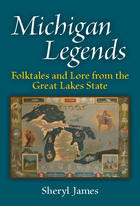
Over the course of its history, the state of Michigan has produced its share of folktales and lore. Many are familiar with the Ojibwa legend of Sleeping Bear Dunes, and most have heard a yarn or two told of Michigan’s herculean lumberjack, Paul Bunyan.
But what about Detroit’s Nain Rouge, the red-eyed imp they say bedeviled the city’s earliest residents? Or Le Griffon, the Great Lakes’ original ghost ship that some believe haunts the waters to this day? Or the Bloodstoppers, Upper Peninsula folk who’ve been known to halt a wound’s bleeding with a simple touch thanks to their magic healing powers?
In Michigan Legends, Sheryl James collects these and more stories of the legendary people, events, and places from Michigan’s real and imaginary past. Set in a range of historical time periods and locales as well as featuring a collage of ethnic traditions—including Native American, French, English, African American, and Finnish—these tales are a vivid sample of the state’s rich cultural heritage. This book will appeal to all Michiganders and anyone else interested in good folktales, myths, legends, or lore.


"True crime devotees won't want to miss this one!"
---Publishers Weekly
"Very engrossing . . . in the finest you can't put it down tradition."
---Hartford Courant
"This factual account of each murder, through the conviction of the killer, has all the excitement of a first-rate work of fiction, and is told straight, without the usual sociological jargon. Keyes collaborated with Robin Moore on The French Connection; The Michigan Murders is his first solo effort, and it is a good one."
---Miami Herald
"The Michigan Murders is the ultimate True Crime classic, unfolding like great mystery fiction while still delivering the powerful charge of real life."
---Jamie Agnew, Aunt Agatha's Mystery Bookshop
With a new prologue by Mardi Link and a new epilogue by Laura James
The true story of the savage coed killings---by the boy who could have lived next door!
Southeastern Michigan was rocked in the late 1960s by the terrifying serial murders of young women, whose bodies were dumped in Ann Arbor and Ypsilanti. In each case, few clues were left at the scene, and six separate police agencies were unable to end the horror. Then, almost by accident, a break came. The suspect: John Norman Collins, a young, quiet, all-American boy.
Collins was caught, went to trial, and, on August 19, 1970, was found guilty and sentenced to life imprisonment with no possibility of parole. He is now in his sixties and is serving his sentence in Marquette, Michigan.
Collins was one of the first serial killers exposed in the region, and his crimes had many in the area locking their doors for the first time. Edward Keyes's harrowing The Michigan Murders covers every step of the case. It fell out of print for more than a decade before being revived for this special edition.
Mardi Link, author of the new prologue, is the author of two regionally best-selling true crime books based in northern Michigan, When Evil Came to Good Hart and Isadore's Secret.
Laura James, author of the new epilogue, is a trial lawyer, crime historian, and true crime author who blogs about the true crime genre at her Web site CLEWS (www.laurajames.com).
Edward Keyes, now deceased, spent several years in the early 1970s investigating the Michigan murders. He also authored the works Double Dare and Cocoanut Grove. The Michigan Murders was a finalist for the Edgar Allan Poe Award for Best Fact Crime in 1977.
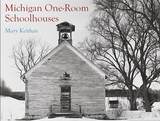
Nostalgic reminders of a time now past, one-room schoolhouses are deeply embedded in our heritage. Decades after their original purpose and inhabitants have vanished, they dot the rural landscape in all conditions, from neglected and near collapse to handsomely renovated places repurposed into a new existence as living quarters. Today no matter their state they stand as miniature gems of nineteenth-century American history as well as charming examples of rural architecture---above all, things to be treasured and preserved. Mary Keithan's Michigan One-Room Schoolhouses is a beautifully illustrated chronicle that details nearly a hundred of the state's early schoolhouses. Together with information about each schoolhouse's architecture and history, including interviews with former students and teachers, Keithan's photographs bring these structures back to life and assure their place in history.
Mary Keithan is a professional photographer living in Ray, Michigan. Her previous books include Michigan's Heritage Barns and A Time in Michigan: A Photographic Series. New York Times critic Vicki Goldberg selected Keithan's 1995 image "Desert Storm Barn" for the Light Impression Biennial.


Michigan Railroads and Railroad Companies is an invaluable reference manual for everyone interested in regional transportation history, the history of railroading, and Michigan history in general. It contains complete, cross-referenced listings for every company formed to operate a railroad in the state of Michigan. In addition to the comprehensive entries for major lines, Graydon Meints has included details about the many small, common-carrier steam and electric companies, logging roads, and numerous other primitive and contemporary rail systems. This encyclopedic reference guide also contains information on the so-called "paper railroads," companies that were projected but which never laid a foot of track.
Michigan Railroads is divided into three parts. One includes alphabetical entries for the actual and intended railroad companies themselves, the date and purpose for their organization, and a brief history from their origins to their dispositions. Included in this portion of the work are a number of railroad "family trees" showing the corporate antecedents of the largest of the rail lines operating in the state today. Another contains a chronology of significant corporate events; it works as a useful finding aid for accessing source data contained in the first section. A third contains a statewide county-by-county listing of railroads, both paper and real.

This also explores how electric railway history is intertwined with the state of Michigan. The interurban electric rail system supported automobile manufacturing, allowing for the shipment of parts supplies, and finished automobiles through Michigan, Indiana, Ohio, and Kentucky. Major auto plants like REO and Oldsmobile had rail sidetracks served by Michigan Railway’s interurban freight trains. Electric railway history is thus an essential, previously overlooked factor in Michigan’s industrial development.
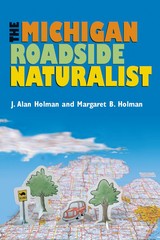
Did you know . . . ?
- Michigan is seventeenth in oil production in the United States.
- The Great Lakes are said to be the only glacially produced structures that can be seen from the moon.
- Michigan was once part of a coral reef.
- The wood frog is one of the commonest true frogs of moist woodland floors in Michigan today and is able to freeze solid during the winter without harmful effects.
These and many more amazing facts await the curious traveler in The Michigan Roadside Naturalist, J. Alan and Margaret B. Holman's captivating guide to the natural treasures of Michigan. A perfect accompaniment to the classic Michigan Trees and The Forests of Michigan, this user-friendly guide offers a Who's Who of the geology, biology, and archaeology of the Great Lakes State, as well as highway adventures along the state's major routes.
The book begins with an educational yet accessible tour of important points in Michigan's natural and archaeological history, followed by seven road trips based on commonly traveled state routes, moving from south to north in the Lower Peninsula and east to west in the Upper Peninsula. Readers can proceed directly to the road trips or familiarize themselves with the state's treasure trove of fascinating features before embarking. Either way, an informative and fun odyssey awaits the passionate naturalist, amateur or otherwise.
J. Alan Holman is Curator Emeritus of Vertebrate Paleontology at the Michigan State University Museum and Emeritus Professor of Geology and Zoology at Michigan State University. Margaret B. Holman is Research Associate at Michigan State University Museum and Department of Anthropology, Michigan State University.


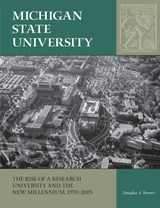
Through the vicissitudes of government funding and other challenges, the university has established itself as a renowned research and educational institution with a remarkably rich array of facilities, scientists, and researchers who continue to make landmark contributions to their fields. At the same time it has strived to be known for its accessibility, diversity, equality of opportunity, and antidiscrimination policies and practices. Michigan State University sheds new light on the growth of this dynamic and multifaceted institution.

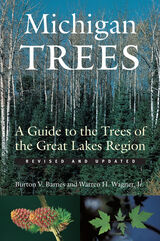
Now in its tenth decade of publication, Michigan Trees has been, since it was first introduced in 1913, the must-have reference book for anyone who wants to know about the trees of this unique North American region.
In this new and updated edition, several new species have been added to the lineup, as well as sections on tree ecology and fall color. Written and illustrated in a style that appeals at once to academic botanists and armchair arborphiles alike, Michigan Trees gives readers everything they need to know for identifying trees in the Great Lakes state. Included with each description are fascinating notes and asides (for example, this tidbit on the jack pine: "Parklike or savanna stands in north-central Michigan are prime habitat for the rare Kirtland's warbler that breeds nowhere else in the world."). Also includes a tree key and identification section illustrated with elegantly simple line drawings that reveal the tiny, signature details that make each tree unique.
Burton V. Barnes is Professor of Forestry at the University of Michigan. Formerly a research forester, he is best known for his research and publications in forest ecology and forest genetics.
Warren H. Wagner, Jr. was a world authority on ferns. He had been Professor Emeritus of Botany and Natural Resources at the University of Michigan before his death at the age of 80 in 2000.
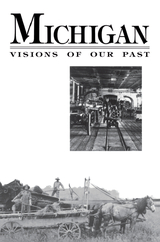
Throughout the history of michigan, many problems occur and recur: satisfying a diverse population, economic booms and busts, business and labor conflicts, religion in public education, environmental concerns.
A number of writers collaborated to bring such themes to light in 18 illuminating essays. The collection provides a tool for the teacher, a sourse for the scholar, and a pleasurable trip through Michigan history. Michigan: Visions of Our Past, also provides a challenge; a challenge to citizens to understand the past, and apply its lessons to the future of Michigan.

Michigan's Capitol: Construction and Restoration is the history of a great American landmark, one among fifty statehouses. Construction of Michigan's State Capitol began in 1871, six years after the close of the Civil War, and was brought to completion less than a decade later. It has survived for more than a century to become the object of one of America's most authentic restorations. This volume allows the reader to chronicle the building and restoration of Michigan's Capitol through words and magnificent color and black-and-white photographs. An archive of treasured historical images, beginning with a group scene at the time the cornerstone was placed, is also included alongside original architectural drawings and sketches.
Michigan's Capitol: Construction and Restoration is not only the history of a great vision realized, but a celebration of the rediscovery and revival of that vision in the 1980s and 1990s culminating in one of the most comprehensive restorations ever carried out on an American building. The author, William Seale, a part of the restoration team for Michigan's Capitol from the start, has written extensively about many American buildings, including the White House.
Written in a lively, narrative style accessible to readers of all ages, Michigan's Capitol: Construction and Restoration is an especially useful introduction to the art of building as well as the politics of public building.

John Fedynsky documents in narrative and photos every county courthouse of Michigan's eighty-three counties, as well as the Michigan Hall of Justice. These buildings are symbols: physically they stand, but figuratively they speak. They embody the purposes for which they were created: law, order, justice, and the promise of a better tomorrow.
Fedynsky tells the story of each building. For Michigan, the typical evolution begins in the cabin, tavern, or hotel of a prominent local settler and progresses through incarnations of simple log or wooden clapboard, and then opulent stone or brick, before the structure arrives in modern and utilitarian form. But there are myriad exceptions to this rule, and they add to the diversity of Michigan's county courthouses.
In Fedynsky's descriptions, verifiable facts and local lore weave together in dramatic tales of outrageous crime, courtroom intrigue, backroom dealing, jury determination, and judicial prerogative. Released jail inmates assist with evacuating and extinguishing a courthouse fire, residents during a natural disaster seek and find physical refuge behind the sure walls of the courthouse, and vigilant legions of homebound defenders are stationed in wartime throughout the courthouse towers scanning the skies for signs of foreign aircraft.
Then there are the homey touches that emphasize the "house" half of Michigan's courthouses: local folks dropping off plants in the courthouse atrium to use it as a winter greenhouse, cows grazing on the public square, county fairs in or near the courthouse, and locally made artwork hanging in public hallways. The courthouses bear within their walls a richness of soul endowed by the good people who make each one special.
Cover design by Heidi Dailey
Cover photos: John Fedynsky

This accessible, engaging text examines the impact of the trends that have shaped Michigan’s economy, and offers innovative solutions to the current economic crisis. Charles Ballard’s illuminating book explores the structure of Michigan’s economy, including its roots in agriculture, the rise and fall of the automotive industry, and the long-term decline of manufacturing. Ballard proposes that investing in education to create a highly skilled workforce can help Michigan’s people to compete in the rapidly evolving global economy. Discussing the state’s transportation infrastructure, environment, public expenditures, and tax system, Ballard describes how changes in attitudes, policies, and political institutions will help to promote economic recovery and growth.


It has been said that Michigan’s nineteenth century white pine stands were the finest the world has ever seen. Dense, parklike stands, more than 150 feet tall, covered vast areas northward from the Bay City– Muskegon line. The sheer quantity of timber lured many adventurous entrepreneurs and enterprising farmers to Michigan. Lumber became a mainstay of Michigan’s economy as logging interests and railroad entrepreneurs became adept at harvesting, transporting, and processing pine logs. Many considered the pine to be practically limitless.
In October of 1871, the first indication of a troubled future occurred when Michigan settlers experienced fires unlike any they had ever seen. Following two months of serious drought, and fed by hundreds of small fires set by land-clearing operations, much of northern Lower Michigan erupted in flames; dry winds fanned the many small fires into one unbelievable conflagration that swept entirely across the Lower Peninsula, from Lake Michigan to Lake Huron. Many towns were reduced to ashes, among them Holland, Glen Haven, Huron City, Sand Beach, White Rock, and Forestville. Navigation was interrupted on Lake Huron and as far downriver as Detroit because of the heavy smoke. More than 200 people lost their lives.
Michigan’s State Forests recounts how an abandoned, cutover, and often burned wilderness has been converted once again into highly productive and protected public lands. For more than 100 years, these lands have been preserved, managed and developed to form one of Michigan’s great assets, not only for economic development but also as enhancements to our quality of life.

The fifth edition of Michigan’s Town & Country Inns is a guide to more than 50 inns, bed-and-breakfast homes, and historic lodgings in the Upper and Lower Peninsulas of Michigan.
Choose from lighthouses anchored to the rugged shores of Lake Superior, Victorian mansions built by lumber and mining barons, rustic log lodges, and romantic small town hideaways. Meet the innkeepers themselves, who range from retired military officers and corporate heads to artists and poets. You’ll find detailed descriptions of the accommodations along with information about rates, suitability for children, and policies on smoking and pets. Get a sense of the flavor and mood of each and learn about fun things to do in the surrounding areas. Numerous photos enhance the descriptions and provide a visitor’s-eye view of some of the most unusual and delightful places to stay in Michigan.

When it came to the Civil War, Michiganians never spoke with one voice. At the beginning of the conflict, family farms defined the southern Lower Peninsula, while a sparsely settled frontier characterized the state’s north. Although differing strategies for economic development initially divided Michigan’s settlers, by the 1850s Michiganians’ attention increasingly focused on slavery, race, and the future of the national union. They exchanged charges of treason and political opportunism while wrestling with the meanings of secession, the national union, emancipation, citizenship, race, and their changing economy. Their actions launched transformations in their communities, their state, and their nation in ways that Americans still struggle to understand.
Building upon the current scholarship of the Civil War, the Midwest, and Michigan’s role in the national experience, Michigan’s War is a documentary history of the Civil War era as told by the state’s residents and observers in private letters, reminiscences, newspapers, and other contemporary sources. Clear annotations and thoughtful editing allow teachers and students to delve into the political, social, and military context of the war, making it ideal for classroom use.
Don Vasco de Quiroga (1470-1565) was the first bishop of Michoacán in Western Mexico. Driven by the desire to convert the native Purhépecha-Chichimec peoples to a purified form of Christianity, free of the corruptions of European Catholicism, he sought to establish New World Edens in Michoacán by congregating the people into pueblo-hospital communities, where mendicant friars could more easily teach them the fundamental beliefs of Christianity and the values of Spanish culture.
In this broadly synthetic study, Bernardino Verástique explores Vasco de Quiroga's evangelizing project in its full cultural and historical context. He begins by recreating the complex and not wholly incompatible worldviews of the Purhépecha and the Spaniards at the time of their first encounter in 1521. With Quiroga as a focal point, Verástique then traces the uneasy process of assimilation and resistance that occurred on both sides as the Spaniards established political and religious dominance in Michoacán. He describes the syncretisms, or fusions, between Christianity and indigenous beliefs and practices that arose among the Purhépecha and relates these to similar developments in other regions of Mexico.
Written especially for students and general readers, this book demonstrates how cultural and geographical environments influence religious experience, while it adds to our understanding of the process of indigenous appropriation of Christian theological concepts in the New World.


Mickey Dunmore’s story begins with the sinking of his father’s merchant sailing ship and ends with a cliffhanger in World War I. In school, after an illness caused his deafness, Mickey finds himself constantly fighting the hearing boys and later competing with the signing students when he attends a residential school for deaf students. In college, he and his best friend Dick Wagner leave early to travel the nation with the hobos, carnies, and grifters. In one town, they outfox a barker who was using a deaf girl to “read” the minds of their marks. Further on, they meet Bunny, the Mighty Mite deaf man who helps expose a hearing woman posing as deaf to scam sympathetic people. Mickey faces his greatest challenge when he falls in love with Marion Carrel, a deaf girl whose hearing father forbids their romance on eugenics grounds.
Terry, who became deaf at the age of 11, states from the outset that he means for his novel to reveal the biases confronting deaf people at the time. As a tonic, he populates Mickey’s Harvest with artistic, talented deaf individuals who engage readers in an earlier, colorful time as they “show their stuff.”

The Micmac Indians of Eastern Canada was first published in 1955. Minnesota Archive Editions uses digital technology to make long-unavailable books once again accessible, and are published unaltered from the original University of Minnesota Press editions.
The culture of an Indian tribe over a period of 300 years is described in this comprehensive ethnographic study by a husband and wife anthropologist team. The earliest accounts of the Micmac Indians were written by seventeenth-century French explorers and missionaries. These give historical perspective to the work done by the Wallises, whose research is based on field trips that bridged a 40-years span. Dr. Wallis first observed the Micmac tribes in 1911–12. He and Mrs. Wallis revisited them in 1950 and 1953, assessing the changes in material cultural and in orientation, drives, and motivations. In addition, they have preserved a rich collection of Micmac folktales and traditions, published as a separate section of the book.


In Microbes from Hell, one of the world’s leading experts on archaea and hyperthermophiles, or organisms that have evolved to flourish in extreme temperatures, offers a colorful, engaging account of this taxonomic upheaval. Blending tales of his own search for thermophiles with discussions of both the physiological challenges thermophiles face and the unique adaptations they have evolved to live in high-temperature environments, Forterre illuminates our developing understanding of the relationship between archaea and the rest of Earth’s organisms. From biotech applications to the latest discoveries in thermophile research, from microbiomes to the communities of organisms that dwell on deep-sea vents, Forterre’s exploration of life-forms that seem to thrive at the mouth of hell provides a glimpse into the early days of Earth, offering deep insight into what life may have looked like in the extreme environments of our planet’s dawn.
READERS
Browse our collection.
PUBLISHERS
See BiblioVault's publisher services.
STUDENT SERVICES
Files for college accessibility offices.
RECENTLY PUBLISHED


UChicago Accessibility Resources
home | accessibility | search | about | contact us
BiblioVault ® 2001 - 2026
The University of Chicago Press