
 A SCHOLARLY BOOK REPOSITORY
137 start with T start with T

Winner of the Anisfield-Wolf Book Award
Winner of the Frederick Douglass Book Prize
Winner of the Elsa Goveia Book Prize
Winner of the James A. Rawley Prize in the History of Race Relations
Winner of the P. Sterling Stuckey Book Prize
Winner of the Harriet Tubman Prize
Winner of the Phillis Wheatley Book Award
Finalist for the Cundill Prize
“Brilliant…groundbreaking…Brown’s profound analysis and revolutionary vision of the Age of Slave War—from the too-often overlooked Tacky’s Revolt to the better-known Haitian Revolution—gives us an original view of the birth of modern freedom in the New World.”
—Cornel West
“Not only a story of the insurrection, but ‘a martial geography of Atlantic slavery,’ vividly demonstrating how warfare shaped every aspect of bondage…Forty years after Tacky’s defeat, new arrivals from Africa were still hearing about the daring rebels who upended the island.”
—Harper’s
“A sobering read for contemporary audiences in countries engaged in forever wars…It is also a useful reminder that the distinction between victory and defeat, when it comes to insurgencies, is often fleeting: Tacky may have lost his battle, but the enslaved did eventually win the war.”
—New Yorker
In the second half of the eighteenth century, as European imperial conflicts extended their domain, warring African factions fed their captives to the transatlantic slave trade while masters struggled to keep their restive slaves under the yoke. In this contentious atmosphere, a movement of enslaved West Africans in Jamaica organized to throw off that yoke by violence. Their uprising—which became known as Tacky’s Revolt—featured a style of fighting increasingly familiar today: scattered militias opposing great powers, with fighters hard to distinguish from noncombatants. Even after it was put down, the insurgency rumbled throughout the British Empire at a time when slavery seemed the dependable bedrock of its dominion. That certitude would never be the same, nor would the views of black lives, which came to inspire both more fear and more sympathy than before.
Tracing the roots, routes, and reverberations of this event, Tacky’s Revolt expands our understanding of the relationship between European, African, and American history as it speaks to our understanding of wars of terror today.
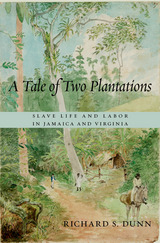
Forty years ago, after publication of his pathbreaking book Sugar and Slaves, Richard Dunn began an intensive investigation of two thousand slaves living on two plantations, one in North America and one in the Caribbean. Digging deeply into the archives, he has reconstructed the individual lives and collective experiences of three generations of slaves on the Mesopotamia sugar estate in Jamaica and the Mount Airy plantation in tidewater Virginia, to understand the starkly different forms slavery could take. Dunn’s stunning achievement is a rich and compelling history of bondage in two very different Atlantic world settings.
From the mid-eighteenth century to emancipation in 1834, life in Mesopotamia was shaped and stunted by deadly work regimens, rampant disease, and dependence on the slave trade for new laborers. At Mount Airy, where the population continually expanded until emancipation in 1865, the “surplus” slaves were sold or moved to distant work sites, and families were routinely broken up. Over two hundred of these Virginia slaves were sent eight hundred miles to the Cotton South.
In the genealogies that Dunn has painstakingly assembled, we can trace a Mesopotamia fieldhand through every stage of her bondage, and contrast her harsh treatment with the fortunes of her rebellious mulatto son and clever quadroon granddaughter. We track a Mount Airy craftworker through a stormy life of interracial sex, escape, and family breakup. The details of individuals’ lives enable us to grasp the full experience of both slave communities as they labored and loved, and ultimately became free.

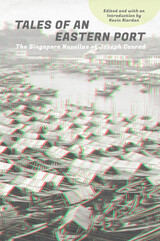
In the 1880s, Joseph Conrad spent three extended stints in the colonial port city of Singapore, while working on ships around the region. Over the next thirty years, he would return to this place many times in his writing. Singapore is the principal, if sometimes obscured, port of call in Conrad’s fiction; it is the center of overlapping networks, colonial and commercial, religious and literary. His characters travel to upriver Borneo and to Bangkok, to Shanghai and to Sydney, and yet they tend to return to Singapore.
This volume pairs for the first time two Conrad novellas that start in Singapore: The End of the Tether and The Shadow-Line.Together they provide a fleeting portrait of the developing city, through narrators who are uneasy with the trappings and workings of the colonial enterprise. These stories have renewed relevance as part of global modernist and oceanic literatures, and reading them now helps recall one chapter in Singapore’s long history as a vital site of cultural exchange, one that harbors and inspires distinctive storytelling traditions.
A Taste for the Foreign examines foreignness as a crucial aesthetic category for the development of prose fiction from Jacques Amyot’s 1547 translation of The Ethiopian Story to Antoine Galland’s early eighteenth-century version of The Thousand and One Nights. While fantastic storylines and elements of magic were increasingly shunned by a neo-classicist literary culture that valued verisimilitude above all else, writers and critics surmised that the depiction of exotic lands could offer a superior source for the novelty, variety, and marvelousness that constituted fiction’s appeal. In this sense, early modern fiction presents itself as privileged site for thinking through the literary and cultural stakes of exoticism, or the taste for the foreign. Long before the term exoticism came into common parlance in France, fiction writers thus demonstrated their understanding of the special kinds of aesthetic pleasure produced by evocations of foreignness, developing techniques to simulate those delights through imitations of the exotic. As early modern readers eagerly consumed travel narratives, maps, and international newsletters, novelists discovered ways to blur the distinction between true and imaginary representations of the foreign, tantalizing readers with an illusion of learning about the faraway lands that captured their imaginations.
This book analyzes the creative appropriations of those scientific or documentary forms of writing that claimed to inform the French public about exotic places. Concentrating on the most successful examples of some of the most important sub-genres of prose fiction in the long seventeenth century—heroic romances, shorter urban novels, fictional memoirs, and extraordinary voyages—the book examines how these types of fiction creatively appropriate the scientific or documentary forms of writing that claimed to inform the French public about exotic places.
Published by University of Delaware Press. Distributed worldwide by Rutgers University Press.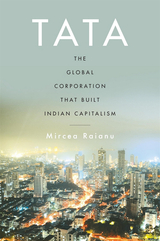
An eye-opening portrait of global capitalism spanning 150 years, told through the history of the Tata corporation.
Nearly a century old, the grand façade of Bombay House is hard to miss in the historic business district of Mumbai. This is the iconic global headquarters of the Tata Group, a multinational corporation that produces everything from salt to software. After getting their start in the cotton and opium trades, the Tatas, a Parsi family from Navsari, Gujarat, ascended to commanding heights in the Indian economy by the time of independence in 1947. Over the course of its 150-year history Tata spun textiles, forged steel, generated hydroelectric power, and took to the skies. It also faced challenges from restive workers fighting for their rights and political leaders who sought to curb its power.
In this sweeping history, Mircea Raianu tracks the fortunes of a family-run business that was born during the high noon of the British Empire and went on to capture the world’s attention with the headline-making acquisition of luxury car manufacturer Jaguar Land Rover. The growth of Tata was a complex process shaped by world historical forces: the eclipse of imperial free trade, the intertwined rise of nationalism and the developmental state, and finally the return of globalization and market liberalization. Today Tata is the leading light of one of the world’s major economies, selling steel, chemicals, food, financial services, and nearly everything else, while operating philanthropic institutions that channel expert knowledge in fields such as engineering and medicine.
Based on painstaking research in the company’s archive, Tata elucidates how a titan of industry was created and what lessons its story may hold for the future of global capitalism.
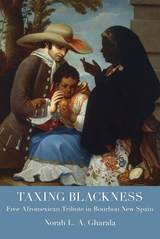
A definitive analysis of the most successful tribute system in the Americas as applied to Afromexicans
During the eighteenth century, hundreds of thousands of free descendants of Africans in Mexico faced a highly specific obligation to the Spanish crown, a tax based on their genealogy and status. This royal tribute symbolized imperial loyalties and social hierarchies. As the number of free people of color soared, this tax became a reliable source of revenue for the crown as well as a signal that colonial officials and ordinary people referenced to define and debate the nature of blackness.
Taxing Blackness: Free Afromexican Tribute in Bourbon New Spain examines the experiences of Afromexicans and this tribute to explore the meanings of race, political loyalty, and legal privileges within the Spanish colonial regime. Norah L. A. Gharala focuses on both the mechanisms officials used to define the status of free people of African descent and the responses of free Afromexicans to these categories and strategies. This study spans the eighteenth century and focuses on a single institution to offer readers a closer look at the place of Afromexican individuals in Bourbon New Spain, which was the most profitable and populous colony of the Spanish Atlantic.
As taxable subjects, many Afromexicans were deeply connected to the colonial regime and ongoing debates about how taxpayers should be defined, whether in terms of reputation or physical appearance. Gharala shows the profound ambivalence, and often hostility, that free people of African descent faced as they navigated a regime that simultaneously labeled them sources of tax revenue and dangerous vagabonds. Some free Afromexicans paid tribute to affirm their belonging and community ties. Others contested what they saw as a shameful imposition that could harm their families for generations. The microhistory includes numerous anecdotes from specific cases and people, bringing their history alive, resulting in a wealth of rural and urban, gender, and family insight.
Published by Bucknell University Press. Distributed worldwide by Rutgers University Press.
Travis and DeSpain curate conversations on the value of project-based, collaborative learning; examples of real-world assignments where students combine close, collaborative, and computational reading; how digital humanities aids in the consideration of marginal texts; the ways in which an ethics of care can help students organize artifacts; and how an activist approach affects debates central to the study of difference in the nineteenth century.
A supplemental companion website with substantial appendixes of syllabi and assignments is now available for readers of Teaching with Digital Humanities.
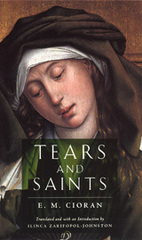
"Who can tell?" he wrote in the first paragraph of this book, first published in Romania in 1937. "To be sure, tears are their trace. Tears did not enter the world through the saints; but without them we would never have known that we cry because we long for a lost paradise." By following in their traces, "wetting the soles of one's feet in their tears," Cioran hoped to understand how a human being can renounce being human. Written in Cioran's characteristic aphoristic style, this flamboyant, bold, and provocative book is one of his most important—and revelatory—works.
Cioran focuses not on martyrs or heroes but on the mystics—primarily female—famous for their keening spirituality and intimate knowledge of God. Their Christianity was anti-theological, anti-institutional, and based solely on intuition and sentiment. Many, such as Catherine of Siena, Teresa of Avila, and Saint John of the Cross, have produced classic works of mystical literature; but Cioran celebrates many more minor and unusual figures as well.
Following Nietzsche, he focuses explicitly on the political element hidden in saints' lives. In his hands, however, their charitable deeds are much less interesting than their thirst for pain and their equally powerful capacity to endure it. Behind their suffering and their uncanny ability to renounce everything through ascetic practices, Cioran detects a fanatical will to power.
"Like Nietzsche, Cioran is an important religious thinker. His book intertwines God and music with passion and tears. . . . [Tears and Saints] has a chillingly contemporary ring that makes this translation important here and now."—Booklist
Published by University of Delaware Press. Distributed worldwide by Rutgers University Press.

After the second World War, the term “technology” came to signify both the anxieties of possible annihilation in a rapidly changing world and the exhilaration of accelerating cultural change. Technomodern Poetics examines how some of the most well-known writers of the era described the tensions between technical, literary, and media cultures at the dawn of the Digital Age. Poets and writers such as Allen Ginsberg, Charles Olson, Jack Kerouac, and Frank O’Hara, among others, anthologized in Donald Allen’s iconic The New American Poetry, 1945–1960, provided a canon of work that has proven increasingly relevant to our technological present. Elaborating on the theories of contemporaneous technologists such as Norbert Wiener, Claude Shannon, J. C. R. Licklider, and a host of noteworthy others, these artists express the anxieties and avant-garde impulses they wrestled with as they came to terms with a complex array of issues raised by the dawning of the nuclear age, computer-based automation, and the expansive reach of electronic media. As author Todd Tietchen reveals, even as these writers were generating novel forms and concerns, they often continued to question whether such technological changes were inherently progressive or destructive.
With an undeniable timeliness, Tietchen’s book is sure to appeal to courses in modern English literature and American studies, as well as among fans of Beat writers and early Cold War culture.
This collection raises timely questions about peace and stability as it interrogates the past and present status of international relations.
The post–World War II liberal international order, upheld by organizations such as the United Nations, the North Atlantic Treaty Organization, and similar alliances, aspired to ensure decades of collective security, economic stability, and the rule of law. All of this was a negotiated process that required compromise—and yet it did not make for a peaceful world.
When Winston Churchill referred to the UN framework as “the temple of peace” in his famous 1946 Iron Curtain speech, he maintained that international alliances could help provide necessary stability so free people could prosper, both economically and politically. Though the pillars of international order remain in place today, in a world defined as much by populism as protest, leaders in the United States no longer seem inclined to serve as the indispensable power in an alliance framework that is built on shared values, human rights, and an admixture of hard and soft power.
In this book, nine scholars and practitioners of diplomacy explore both the successes and the flaws of international cooperation over the past seventy years. Collectively, the authors seek to address questions about how the liberal international order was built and what challenges it has faced, as well as to offer perspectives on what could be lost in a post-American world.
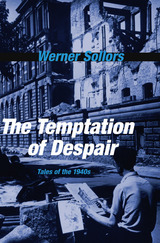
In Germany, the years immediately following World War II call forward images of obliterated cities, hungry refugees, and ghostly monuments to Nazi crimes. The temptation of despair was hard to resist, and to contemporary observers the road toward democracy in the Western zones of occupation seemed rather uncertain. Drawing on a vast array of American, German, and other sources—diaries, photographs, newspaper articles, government reports, essays, works of fiction, and film—Werner Sollors makes visceral the experiences of defeat and liberation, homelessness and repatriation, concentration camps and denazification.
These tales reveal writers, visual artists, and filmmakers as well as common people struggling to express the sheer magnitude of the human catastrophe they witnessed. Some relied on traditional images of suffering and death, on Biblical scenes of the Flood and the Apocalypse. Others shaped the mangled, nightmarish landscape through abstract or surreal forms of art. Still others turned to irony and black humor to cope with the incongruities around them. Questions about guilt and complicity in a totalitarian country were raised by awareness of the Holocaust, making “After Dachau” a new epoch in Western history.
The Temptation of Despair is a book about coming to terms with the mid-1940s, the contradictory emotions of a defeated people—sorrow and anger, guilt and pride, despondency and resilience—as well as the ambiguities and paradoxes of Allied victory and occupation.

An imprisoned bookbinder wrote these words in a small blank book that he had secretly crafted from pilfered materials at the Terezín (Theresienstadt) concentration camp in September 1944. He presented the album to a fellow prisoner, twenty-one-year-old Marianka Zadików. Over the next several months, as the Nazis pressed forward with mass deportations from Terezín to Auschwitz, Marianka began to collect inscriptions and sketches from her fellow inmates.
Marianka Zadików’salbum, presented here in a facsimile edition, is a poignant document from the last months of the Holocaust. The words and images inscribed here—by children and grandparents, factory workers and farmhands, professionals and intellectuals, musicians and artists—reflect both joy and trepidation. They include passages of remembered verse, lovingly executed drawings, and hurried farewells on the eve of transport to Auschwitz. The great German-Jewish scholar Rabbi Leo Baeck, one of the elders of the camp, offers Marianka an inscription about Jewish self-discovery, and participants in Terezín’s now-famous musical performances fill several pages with musical annotation.
Facing-page translations render the book’s multitude of languages into English, while historical and biographical notes give details, where known, of the fates of those whose words are recorded here. An introduction by acclaimed Holocaust scholar Debórah Dwork tells the story of the Terezín camp and how Marianka and her family fared while imprisoned there.
The array of voices and the glimpses into individual lives afforded us by The Terezín Album make it an arresting reminder of the sustaining power of care, community, and hope amid darkness.
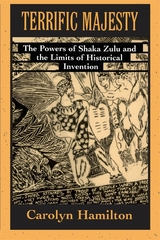
Since his assassination in 1828, King Shaka Zulu—founder of the powerful Zulu kingdom and leader of the army that nearly toppled British colonial rule in South Africa—has made his empire in popular imaginations throughout Africa and the West. Shaka is today the hero of Zulu nationalism, the centerpiece of Inkatha ideology, a demon of apartheid, the namesake of a South African theme park, even the subject of a major TV film.
Terrific Majesty explores the reasons for the potency of Shaka’s image, examining the ways it has changed over time—from colonial legend, through Africanist idealization, to modern cultural icon. This study suggests that “tradition” cannot be freely invented, either by European observers who recorded it or by subsequent African ideologues. There are particular historical limits and constraints that operate on the activities of invention and imagination and give the various images of Shaka their power. These insights are illustrated with subtlety and authority in a series of highly original analyses.
Terrific Majesty is an exceptional work whose special contribution lies in the methodological lessons it delivers; above all its sophisticated rehabilitation of colonial sources for the precolonial period, through the demonstration that colonial texts were critically shaped by indigenous African discourse. With its sensitivity to recent critical studies, the book will also have a wider resonance in the fields of history, anthropology, cultural studies, and postcolonial literature.

Facing directly a central problem for our day—the future form and policies of the Soviet Union—Barrington Moore explores the possible alternatives confronting the Soviet leaders and sets up a framework into which anyone—scholar, student, or “general reader”—can place events as they happen and thus assess the direction in which the USSR is moving.
The author elucidates traditionalism as found in Russia, among the peasantry as well as in other walks of life. This factor, in addition to totalitarianism's complex and technical rationalism, will play an important part in the future of Soviet life. Thus the tendency toward change is in delicate balance with the sources of stability. Both elements are analyzed in this groundbreaking, farseeing book.
The missing act in the late nineteenth-century Russian revolutionary drama is played in this pioneering book. Norman Naimark reinterprets the decade of the 1880s as one full of radical underground circles, grouping and regrouping in kaleidoscopic fashion. Along with later celebrated sects, they laid the foundation of Russian Marxism. Naimark is the first Western historian to research systematically the criminal records of the old Ministry of Justice in the Soviet Union. The political cases and trials of some 5,000 anti-czarists form the backbone of the study. The author patiently sorts out these defendants and relates their many histories, especially those of three groups. In broad outline, they were the narodovol’tsy, who believed in terrorism and state power to introduce socialism; the social democrats, who tried to prepare urban workers for a future role in parliamentary institutions; and the populists, who believed in raising people’s consciousness for change. It was the narodovol’tsy, however, who dominated all the revolutionary movements by hewing closest to the radical spirit of the age, that of realizing the “people’s will” by directly attacking to government.
Naimark has written a master guidebook to hitherto uncharted revolutionary territory and a valuable corrective to earlier histories in several languages. In the tradition of high scholarship pioneered by Franco Venturi in his now classic work Roots of Revolution, which covered an earlier period, Terrorists and Social Democrats will lay claim to a place on the small shelf of books illuminating Russian revolutionary politics.

A compendium of one hundred sources, preceded by a short author’s bio and an introduction, this volume offers an English language selection of the most representative texts on feminism and women’s rights from East Central Europe between the end of the Second World War and the early 1990s. While communist era is the primary focus, the interwar years and the post-1989 transition period also receive attention. All texts are new translations from the original.
The book is organised around themes instead of countries; the similarities and differences between nations are nevertheless pointed out. The editors consider women not only in their local context, but also in conjunction with other systems of thought—including shared agendas with socialism, liberalism, nationalism, and even eugenics.
The choice of texts seeks to demonstrate how feminism as political thought was shaped and organised in the region. They vary in type and format from political treatises, philosophy to literary works, even films and the visual arts, with the necessary inclusion of the personal and the private. Women’s political rights, right to education, their role in nation-building, women, and war (and especially women and peace) are part of the anthology, alongside the gendered division of labour, violence against women, the body, and reproduction.

When the world descended into war in 1939, few European countries remained neutral; but of those that did, none provoked more controversy than Ireland.
Despite Winston Churchill's best efforts to the contrary, the Irish premier Eamon de Valera stuck determinedly to Ireland's right to remain outside a conflict in which it had no enemies. Accusations of betrayal and hypocrisy poisoned the media; legends of Nazi spies roaming the country depicted Ireland as a haven for Hitler's friends. Where previous histories of Ireland in the war years have focused on high politics, That Neutral Island mines deeper layers of experience. Sean O'Faolain, Kate O'Brien, Elizabeth Bowen, Flann O'Brien and Louis MacNeice are a handful of writers whose stories, letters, and diaries illuminate this small country as it suffered rationing, censorship, the threat of invasion, and a strange detachment from the war.
Clair Wills brings to life the atmosphere of a country forced largely to do without modern technology. She describes the work of those who recovered the bodies of British sailors and airmen from the sea. She unearths the motivations of thousands who left to join the British forces. And she shows how ordinary people struggled to make sense of the Nazi threat through the lens of antagonism to Britain, the former colonial power. She acutely targets the sleight-of-hand that hovers around the Irish definition of "neutrality."
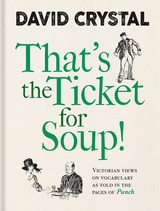
The vocabulary of the past is always intriguing, especially when it is no longer used in modern English. Many of the words and phrases that were popular in Victorian England may sound foreign today, but looking to original sources and texts can yield fascinating insight, especially when we see how vocabulary was pilloried by the satirists of the day.
In That’s the Ticket for Soup!, the renowned language expert David Crystal returns to the pages of Punch magazine, England’s widely read satirical publication. Crystal has pored through the pages of Punch between its first issue in 1841 and the death of Queen Victoria in 1901 and extracted the articles and cartoons that poked fun at the jargon of the day. Here we have Victorian high and low society, with its fashionable and unfashionable slang, its class awareness on display in the vocabulary of steam engines, motor cars, and other products of the Industrial Revolution. Then, as now, people had strong feelings about the flood of new words entering English. Swearing, new street names, and the many borrowings from French provoked continual irritation and mockery, as did the Americanisms increasingly encountered in the British press. In addition to these entertaining examples, Crystal includes commentary on the context of the times and informative glossaries. This original and amusing collection reveals how many present-day feelings about words can be traced to the satire of a century ago.
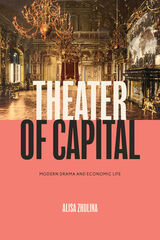
Emerging amid the turbulent rise of market finance and wider socioeconomic changes, modern drama enacted vital critiques of art and life under capitalism. Alisa Zhulina shows how fin-de-siècle playwrights such as Henrik Ibsen, August Strindberg, Anton Chekhov, George Bernard Shaw, and Gerhart Hauptmann interrogated the meaning of this newly coined economic concept. Acutely aware of their complicity in the system they sought to challenge, these playwrights staged economic questions as moral and political concerns, using their plays to explore the theories of Adam Smith, Karl Marx and Friedrich Engels, Max Weber, and others within the boundaries of bourgeois theater.
Theater of Capital: Modern Drama and Economic Life reveals the prescient and unsettling visions of life in a new financial and societal reality in now-canonical plays such as A Doll’s House, Miss Julie, and The Cherry Orchard, as well as in lesser-known and long-overlooked works. This wide-ranging study prompts us to reevaluate modern drama and its legacy for the urgent economic and political questions that haunt our present moment.
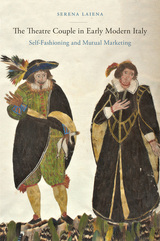
Who were the first celebrity couples? How was their success forged? Which forces influenced their self-fashioning and marketing strategies?
These questions are at the core of this study, which looks at the birth of a phenomenon, that of the couple in show business, with a focus on the promotional strategies devised by two professional performers: Giovan Battista Andreini (1576–1654) and Virginia Ramponi (1583–ca.1631). This book examines their artistic path – a deliberately crafted and mutually beneficial joint career – and links it to the historical, social, and cultural context of post-Tridentine Italy. Rooted in a broad research field, encompassing theatre history, Italian studies, celebrity studies, gender studies, and performance studies, The Theatre Couple in Early Modern Italy revises the conventional view of the Italian diva, investigates the deployment of Catholic devotion as a marketing tool, and argues for the importance of the couple system in the history of Commedia dell’Arte, a system that continues to shape celebrity today.
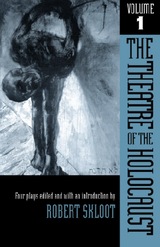
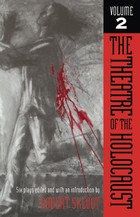
This volume contains these four plays:
Resort 76 by Shimon Wincelberg
Will the relentless oppression of the starving workers in a ghetto factory destroy their faith in God? Their love of life? Their ability to resist? If a cat is more valuable than a human being, have hope and goodness been eliminated from the world? A moving and terrifying melodrama.
Throne of Straw by Harold and Edith Lieberman
Through the career of Mordechai Chaim Rumkowski, head of the Lodz, Poland Judenrat, we come to understand the horror of “choiceless choice,” of how giving up some to save others was the worst nightmare for those who sought the responsibilities of ghetto leadership. An epic play with music and song.
The Cannibals by George Tabori
The children of murder victims assemble to enact ritually the destruction of their fathers in the presence of two survivors. As the sons become their fathers, the most profound ethical questions of the Holocaust are raised concerning the limits of humanity in a world of absolute evil. A daring tragicomedy.
Who Will Carry the Word? by Charlotte Delbo (translated by Cynthia Haft)
In the austere, degraded setting of a concentration camp, twenty-two French women attempt to keep their sanity and hope as, one by one, they fall victim to the Nazi terror. Will anyone believe the story of the survivors? A poetic drama of resistance and witness.

Investigating late imperial Russian and early Soviet modernism’s reinvention of the actor
In this wide-ranging study, Alisa Ballard Lin argues that Russian theatrical theory and practice contributed to a broad pre- and postrevolutionary discourse about the mind, profoundly reshaping concepts of consciousness, perception, identity, and the constitution of the subject. Theatrical Consciousness: The Actor’s Mind in Russian Modernism examines efforts in Russian theater—from around the turn of the century through the mid-1930s—to stimulate, train, imagine, and ultimately understand the actor’s, as well as the spectator’s, mind. Discussing key figures of the period, including Nikolai Evreinov, Konstantin Stanislavsky, Vsevolod Meyerhold, and Alexander Tairov, Lin identifies an underappreciated dimension of humanism within Russian modernism: a humanism that resisted the pressures of an increasingly technologized, industrialized, and politicized modernity that challenged the place of the human within it.
Published by University of Delaware Press. Distributed worldwide by Rutgers University Press.

Even in the period following the electoral defeat of the Sandinista National Liberation Front (FSLN) in 1990, the revolution of 1979 continues to have a profound effect on the political economy of Nicaragua. Wright’s study, which is based on interviews with people from all walks of life—from government and party officials to academics and campesinos—as well as on the large volume of literature in both English and Spanish, focuses on the FSLN understanding of the relationships between the state, the party, and mass actors, and the nature of social classes. Wright considers the topics of agrarian reform, the development of mass organizations, the role of labor, and other aspects of the Nicaraguan political economy in order to assess their significance in theoretical as well as practical terms.

In There is No Humor in Heaven, Dwayne Eutsey challenges the persistent view of Twain as a hostile critic of religion by placing him within the prevailing liberal religious ethos of his time. From Hannibal to the western frontier and from Hartford to the wider world, Eutsey contends Twain’s vocation as a humorist was rooted in his frustrated youthful ambition to become a preacher of the Gospel. Throughout his life, his friendships with several influential liberal ministers, each of them espousing various forms of the era’s diverse progressive theology, informed not only Twain’s evolving religious worldview but his lecture performances and literary output.
There is No Humor in Heaven traces unconventional theological influences on Twain ranging from African-American spirituality, Freemasonry, and frontier Unitarianism to devout Liberal Christianity, radical Free Religion, and esoteric Hinduism. Drawing from Twain’s writings, documents, personal notes, and more, There is No Humor in Heaven offers readers a radical re-examination of the spiritually creative vitality of a controversial literary giant.
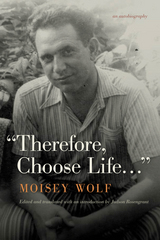
Wolf describes his Jewish childhood and youth in pre-war Poland, his escape from the Holocaust and subsequent medical service in the Soviet Army during World War II and the following decade, his distinguished career in psychiatry in post-Stalinist Soviet Russia, and his final years in Portland, Oregon, after his departure from the Soviet Union in 1992.
Wolf’s narrative skill and evocative personal insights, combined with Judson Rosengrant’s judicious editing and annotation and elegant translation, provide the reader with direct access to a world that has seemingly ceased to exist, yet continues to resonate and inform our own lives in powerful ways.
“Therefore, Choose Life…” will appeal to readers interested in the history of the East-European twentieth century, pre-Holocaust Jewish family life in Poland, and in the survival of a man of deep religious faith and cultivation in the face of the catastrophes and vicissitudes of his time and place.
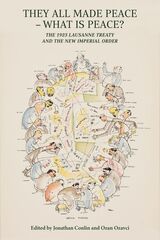
The last of the post-World War One peace settlements, the 1923 Treaty of Lausanne departed from methods used in the Treaty of Versailles and took on a new peace-making initiative: a forced population exchange that affected one and a half million people. Like its German and Austro-Hungarian allies, the defeated Ottoman Empire had initially been presented with a dictated peace in 1920. In just two years, however, the Kemalist insurgency enabled Turkey to become the first sovereign state in the Middle East, while the Greeks, Armenians, Arabs, Egyptians, Kurds, and other communities previously under the Ottoman Empire sought their own forms of sovereignty.
Featuring historical analysis from multiple perspectives, They All Made Peace, What Is Peace? considers the Lausanne Treaty and its legacy. Chapters investigate British, Turkish, and Soviet designs in the post-Ottoman world, situate the population exchanges relative to other peacemaking efforts, and discuss the economic factors behind the reallocation of Ottoman debt and the management of refugee flows. Further chapters examine Kurdish, Arab, Iranian, Armenian, and other communities that were refused formal accreditation at Lausanne, but which were still forced to live with the consequences, consequences that are still emerging, one hundred years on.
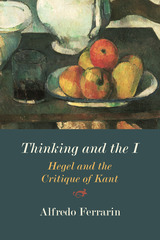
What is the relation between thinking and the I that thinks? And what is the relation between thought and reality? The ordinary view shared by modern philosophers from Descartes to Kant, as well as by common sense, is that there is only thought when someone thinks something, and thoughts and concepts are mental acts that refer to objects outside us.
In Thinking and the I: Hegel and the Critique of Kant, Alfredo Ferrarin shows that Hegel’s philosophy entails a radical criticism of this ordinary conception of thinking. Breaking with the habitual presuppositions of both modern philosophy and common sense, Ferrarin explains that thought, negation, truth, reflection, and dialectic for Hegel are not properties of an I and cannot be reduced to the subjective activity of a self-conscious subject. Rather, he elucidates, thought is objective for Hegel in different senses. Reality as a whole is animated by a movement of thought and an unconscious logic as a spontaneity that reifies itself in determinate forms. Ferrarin concludes the book with a comprehensive comparison of Hegel’s and Kant’s concepts of reason.
While it mainly focuses on Hegel’s Phenomenology, Science of Logic, and Encyclopaedia, this ambitious book covers all aspects of Hegel’s philosophy. Its originality and strength lie in its recovery of the original core of Hegel’s dialectic over and above its currently predominant transcendental, neopragmatist, or realist appropriations. It will be essential reading for all students of Hegel, Kant, and German idealism in general for years to come.
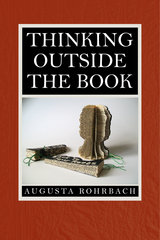
In Thinking Outside the Book, Augusta Rohrbach works through the increasing convergences between digital humanities and literary studies to explore the meaning and primacy of the book as a literary, material, and cultural artifact. Rohrbach assembles a rather unlikely cohort of nineteenth-century women writers—Jane Johnston Schoolcraft, Sojourner Truth, Hannah Crafts, Augusta Evans, and Mary Chesnut—to consider the publishing culture of their period from the perspective of our current digital age, bringing together scholarly concepts from both print culture and new media studies.
In nineteenth-century America, women from a variety of racial and class affiliations were bombarding the print market with their literary productions, taking advantage of burgeoning rates of literacy and advances in publishing technology. Their work challenged prevailing modes of authorship and continues to do so today. Each chapter of Thinking Outside the Book positions a focal figure as both paradigmatic and problematic within the context of key terms that define the study of the book. In lieu of terms such as literacy, authorship, publication, edition, and editor, Rohrbach develops an alternate typology that includes mediation, memory, history, testimony, and loss. Recognizing that the field spans radio, cinema, television, and the Internet, she draws comparisons to the present day, when Web 2.0 allows writers from varying backgrounds and positions to seek out readers without “gatekeepers” limiting their exposure.
More than a literary history, this book takes up theories of recovery, literacy, authorship, narrative, the book, and new media in connection with race, gender, class, and region.
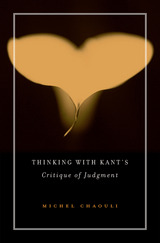
Why read Kant’s Critique of Judgment today? Does this classic of aesthetic theory still possess the vitality to prompt those of us engaged with art and criticism to think more deeply about issues that move us, issues such as the force of aesthetic experience, the essence of art, and the relationship of beauty and meaning? It does, if we find the right way into it.
Michel Chaouli shows us one such way. He unwraps the gray packing paper of Kant’s prose to reveal the fresh and fierce ideas that dwell in this masterpiece—not just the philosopher’s theory of beauty but also his ruminations on organisms and life. Each chapter in Thinking with Kant’s Critique of Judgment unfolds the complexity of a key concept, to disclose its role in Kant’s thought and to highlight the significance it holds for our own thinking.
Chaouli invites all who are interested in art and interpretation—novice and expert alike—to set out on the path of thinking with the Critique of Judgment. The rewards are handsome: we see just how profoundly Kant’s book can shape our own ideas about aesthetic experience and meaning. By thinking with Kant, we learn to surpass the horizon of his thought and find ourselves pushed to the very edge of what can be grasped firmly. That is where Kant’s book is at its most thrilling.
Recognizing the creative power of pluralism, the RHR editors have marshalled a diverse troop of historical scholars in this issue. In “Forum on Radical History,” sixteen historians discuss how the notion of radicalism has affected the way they write, teach, and live, and in "A Conversation about the Radical History Review," past and present members of the editorial board zero in on the journal itself and the political and academic context in which it was born. Offering a more personal perspective, Mike Wallace, Pulitzer Prize winner and radical history founder, shares his thoughts on RHR and the movement. Other articles in this special issue tackle the state of radicalism today, analyzing the academic labor movement, the significance of physical space in Pinochet’s reign of terror, and the enduring symbolism of a particular statue in Prague.
This retrospective issue celebrates the journal’s past, but it also reflects on the present and looks forward to a future in which radicalism will continue to shape the landscape of historical and political discourse.
Contributors. Tani E. Barlow, Dan Bender, Paul Buhle, Gabriela Cano, Anna Clark, Martin Duberman, Ellen Carol DuBois, Ian Christopher Fletcher, Rob Gregg, Harry D. Harootunian, Winston James, Nikki R. Keddie, Dave Kinkela, Staughton Lynd, Teresa Meade, Joanne Pope Melish, Ellen Noonan, Enrique C. Ochoa, Gary Y. Okihiro, Cynthia Paces, Max Page, Vijay Prashad, David Price, David Roediger, Andor Skotnes, Mike Wallace
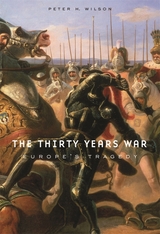
A deadly continental struggle, the Thirty Years War devastated seventeenth-century Europe, killing nearly a quarter of all Germans and laying waste to towns and countryside alike. Peter Wilson offers the first new history in a generation of a horrifying conflict that transformed the map of the modern world.
When defiant Bohemians tossed the Habsburg emperor’s envoys from the castle windows in Prague in 1618, the Holy Roman Empire struck back with a vengeance. Bohemia was ravaged by mercenary troops in the first battle of a conflagration that would engulf Europe from Spain to Sweden. The sweeping narrative encompasses dramatic events and unforgettable individuals—the sack of Magdeburg; the Dutch revolt; the Swedish militant king Gustavus Adolphus; the imperial generals, opportunistic Wallenstein and pious Tilly; and crafty diplomat Cardinal Richelieu. In a major reassessment, Wilson argues that religion was not the catalyst, but one element in a lethal stew of political, social, and dynastic forces that fed the conflict.
By war’s end a recognizably modern Europe had been created, but at what price? The Thirty Years War condemned the Germans to two centuries of internal division and international impotence and became a benchmark of brutality for centuries. As late as the 1960s, Germans placed it ahead of both world wars and the Black Death as their country’s greatest disaster.
An understanding of the Thirty Years War is essential to comprehending modern European history. Wilson’s masterful book will stand as the definitive account of this epic conflict.
For a map of Central Europe in 1618, referenced on page XVI, please visit this book’s page on the Harvard University Press website.
A Financial Times Book of the Year
A Foreign Affairs Book of the Year
A Spectator Book of the Year
“A landmark contribution to the study of these epochal events.”
—Times Literary Supplement
“Brilliantly researched and written…casts a careful eye upon the ghastly events that took place in the final decades of the Ottoman empire, when its rulers decided to annihilate their Christian subjects…Hitler and the Nazis gleaned lessons from this genocide that they then applied to their own efforts to extirpate Jews.”
—Jacob Heilbrun, The Spectator
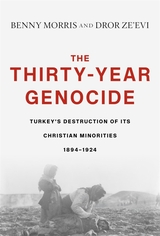
Between 1894 and 1924, three waves of violence swept across Anatolia, targeting the region’s Christian minorities. By 1924, the Armenians, Assyrians, and Greeks, once nearly a quarter of the population, had been reduced to 2 percent. Most historians have treated these waves as distinct, isolated events, and successive Turkish governments presented them as an unfortunate sequence of accidents. The Thirty-Year Genocide is the first account to show that all three were actually part of a single, continuing, and intentional effort to wipe out Anatolia’s Christian population. Despite the dramatic swing from the Islamizing autocracy of the sultan to the secularizing republicanism of the post–World War I period, the nation’s annihilationist policies were remarkably constant, with continual recourse to premeditated mass killing, homicidal deportation, forced conversion, and mass rape. And one thing more was a constant: the rallying cry of jihad. While not justified under the teachings of Islam, the killing of two million Christians was effected through the calculated exhortation of the Turks to create a pure Muslim nation.
“A subtle diagnosis of why, at particular moments over a span of three decades, Ottoman rulers and their successors unleashed torrents of suffering.”
—Bruce Clark, New York Times Book Review
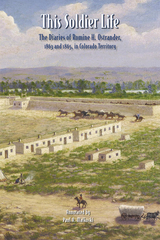
Jan. 24, 1865:
"I have had pretty spirited arguments with these third reg't ducks sometimes about the barbarity of indiscriminately murdering defenseless women and children of the Indians at sand creek. Some of them deny that any thing of the kind was done except in the general action when there was no telling the difference; and some acknowledge that there were women and children killed after the general action was over; but argue that it was right because Indians have done the same."
Oct. 17, 1863:
"I know that I have written a great many foolish - yes silly things in this book, and - well, what of it? What if I have? Who's business is it? Who's going to read them? I am!"
Published by the Colorado Historical Society
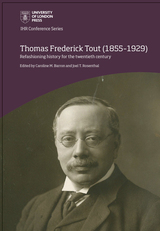

Because Thomas Hardy is so closely associated with the rural Wessex of his novels, stories, and poems, it is easy to forget that he was, in his own words, half a Londoner. Focusing on the formative five years in his early twenties when Hardy lived in the city, but also on his subsequent movement back and forth between Dorset and the capital, Mark Ford shows that the Dorset-London axis is critical to an understanding of his identity as a man and his achievement as a writer.
Thomas Hardy: Half a Londoner presents a detailed account of Hardy’s London experiences, from his arrival as a shy, impressionable youth, to his embrace of radical views, to his lionization by upper-class hostesses eager to fête the creator of Tess. Drawing on Hardy’s poems, letters, fiction, and autobiography, it offers a subtle, moving exploration of the author’s complex relationship with the metropolis and those he met or observed there: publishers, fellow authors, street-walkers, benighted lovers, and the aristocratic women who adored his writing but spurned his romantic advances.
The young Hardy’s oscillations between the routines and concerns of Dorset’s Higher Bockhampton and the excitements and dangers of London were crucial to his profound sense of being torn between mutually dependent but often mutually uncomprehending worlds. This fundamental self-division, Ford argues, can be traced not only in the poetry and fiction explicitly set in London but in novels as regionally circumscribed as Far from the Madding Crowd and Tess of the d’Urbervilles.
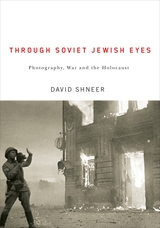
These wartime photographers were the first liberators to bear witness with cameras to Nazi atrocities, three years before Americans arrived at Buchenwald and Dachau. In this passionate work, David Shneer tells their stories and highlights their work through their very own images-he has amassed never-before-published photographs from families, collectors, and private archives.
Through Soviet Jewish Eyes helps us understand why so many Jews flocked to Soviet photography; what their lives and work looked like during the rise of Stalinism, during and then after the war; and why Jews were the ones charged with documenting the Soviet experiment and then its near destruction at the hands of the Nazis.
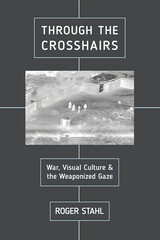
Through the Crosshairs traces the genealogy of this weapon’s-eye view across a wide range of genres, including news reports, military public relations images, action movies, video games, and social media posts. As he tracks how gun-camera footage has spilled from the battlefield onto the screens of everyday civilian life, Roger Stahl exposes how this raw video is carefully curated and edited to promote identification with military weaponry, rather than with the targeted victims. He reveals how the weaponized gaze is not only a powerful propagandistic frame, but also a prime site of struggle over the representation of state violence.
In a series of readings that engage American and European works of fiction, drama, and theory from the late nineteenth through the early twenty-first centuries, critic and playwright Julia Jarcho argues that these works conceive writing itself as masochistic, and masochism as sexuality enacted in writing. Throw Yourself Away is distinctive in its sustained focus on masochism as an engine of literary production across multiple authors and genres. In particular, Jarcho shows that theater has played a central role in modern erotic fantasies of the literary.
Jarcho foregrounds writing as a project of distressed subjects: When masochistic writing is examined as a strategy of response to injurious social systems, it yields a surprisingly feminized—and less uniformly white—image of both masochism and authorship. Ultimately, Jarcho argues that a retheorized concept of masochism helps us understand literature itself as a sex act and shows us how writing can tend to our burdened, desirous bodies. With startling insights into such writers as Henry James, Henrik Ibsen, Mary Gaitskill, and Adrienne Kennedy, Throw Yourself Away furnishes a new masochistic theory of literature itself.
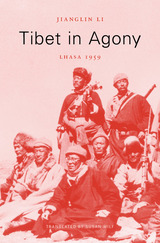
The Chinese Communist government has twice invoked large-scale military might to crush popular uprisings in capital cities. The second incident—the notorious massacre in Tiananmen Square in 1989—is well known. The first, thirty years earlier in Tibet, remains little understood today. Yet in wages of destruction, bloodshed, and trampling of human rights, the tragic toll of March 1959 surpassed Tiananmen.
Tibet in Agony provides the first clear historical account of the Chinese crackdown in Lhasa. Sifting facts from the distortions of propaganda and partisan politics, Jianglin Li reconstructs a chronology of events that lays to rest lingering questions about what happened in those fate-filled days and why. Her story begins with throngs of Tibetan demonstrators who—fearful that Chinese authorities were planning to abduct the Dalai Lama, their beloved leader—formed a protective ring around his palace. On the night of March 17, he fled in disguise, only to reemerge in India weeks later to set up a government in exile. But no peaceful resolution awaited Tibet. The Chinese army soon began shelling Lhasa, inflicting thousands of casualties and ravaging heritage sites in the bombardment and the infantry onslaught that followed. Unable to resist this show of force, the Tibetans capitulated, putting Mao Zedong in a position to fulfill his long-cherished dream of bringing Tibet under the Communist yoke.
Li’s extensive investigation, including eyewitness interviews and examination of classified government records, tells a gripping story of a crisis whose aftershocks continue to rattle the region today.
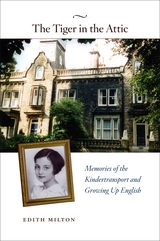
In this illuminating chronicle, Edith describes how she struggled to fit in and to conquer self-doubts about her German identity. Her realistic portrayal of the seemingly mundane yet historically momentous details of daily life during World War II slowly reveals istelf as a hopeful story about the kindness and generosity of strangers. She paints an account rich with colorful characters and intense relationships, uncanny close calls and unnerving bouts of luck that led to survival. Edith's journey between cultures continues with her final passage to America—yet another chapter in her life that required adjustment to a new world—allowing her, as she narrates it here, to visit her past as an exile all over again.
The Tiger in the Attic is a literary gem from a skilled fiction writer, the story of a thoughtful and observant child growing up against the backdrop of the most dangerous and decisive moment in modern European history. Offering a unique perspective on Holocaust studies, this book is both an exceptional and universal story of a young German-Jewish girl caught between worlds.
“Milton is brilliant at the small stroke . . . as well as broader ones.”—Alana Newhouse, New York Times Book Review
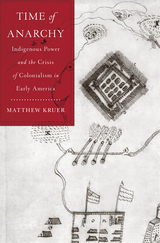
A gripping account of the violence and turmoil that engulfed England’s fledgling colonies and the crucial role played by Native Americans in determining the future of North America.
In 1675, eastern North America descended into chaos. Virginia exploded into civil war, as rebel colonists decried the corruption of planter oligarchs and massacred allied Indians. Maryland colonists, gripped by fears that Catholics were conspiring with enemy Indians, rose up against their rulers. Separatist movements and ethnic riots swept through New York and New Jersey. Dissidents in northern Carolina launched a revolution, proclaiming themselves independent of any authority but their own. English America teetered on the edge of anarchy.
Though seemingly distinct, these conflicts were in fact connected through the Susquehannock Indians, a once-mighty nation reduced to a small remnant. Forced to scatter by colonial militia, Susquehannock bands called upon connections with Indigenous nations from the Great Lakes to the Deep South, mobilizing sources of power that colonists could barely perceive, much less understand. Although the Susquehannock nation seemed weak and divided, it exercised influence wildly disproportionate to its size, often tipping settler societies into chaos. Colonial anarchy was intertwined with Indigenous power.
Piecing together Susquehannock strategies from a wide range of archival documents and material evidence, Matthew Kruer shows how one people’s struggle for survival and renewal changed the shape of eastern North America. Susquehannock actions rocked the foundations of the fledging English territories, forcing colonial societies and governments to respond. Time of Anarchy recasts our understanding of the late seventeenth century and places Indigenous power at the heart of the story.
Edited by well-respected Mead scholars Hans Joas and Daniel R. Huebner, the volume as a whole makes a coherent statement that places Mead in dialogue with current research, pushing these domains of scholarship forward while also revitalizing the growing literature on an author who has an ongoing and major influence on sociology, psychology, and philosophy.
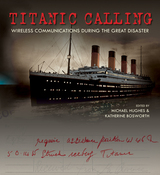
Published in commemoration of the one-hundredth anniversary of the Titanic’s sinking, this book tells the story of that fateful night from an unusual angle: through the many wireless communications sent to and from the land stations and the ships involved as the tragic events unfolded.
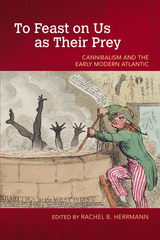
Winner, 2020 Association for the Study of Food and Society Book Award, Edited Volume
Long before the founding of the Jamestown, Virginia, colony and its Starving Time of 1609–1610—one of the most famous cannibalism narratives in North American colonial history—cannibalism played an important role in shaping the human relationship to food, hunger, and moral outrage. Why did colonial invaders go out of their way to accuse women of cannibalism? What challenges did Spaniards face in trying to explain Eucharist rites to Native peoples? What roles did preconceived notions about non-Europeans play in inflating accounts of cannibalism in Christopher Columbus’s reports as they moved through Italian merchant circles?
Asking questions such as these and exploring what it meant to accuse someone of eating people as well as how cannibalism rumors facilitated slavery and the rise of empires, To Feast on Us as Their Prey posits that it is impossible to separate histories of cannibalism from the role food and hunger have played in the colonization efforts that shaped our modern world.
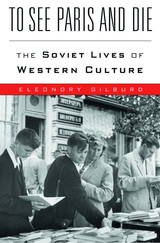
A Foreign Affairs Best Book of the Year
Winner of the AATSEEL Prize for Best Book in Cultural Studies
Winner of the Laura Shannon Prize in Contemporary European Studies
Winner of the Marshall D. Shulman Book Prize
Winner of the Wayne S. Vucinich Book Prize
The Soviet Union was a notoriously closed society until Stalin’s death in 1953. Then, in the mid-1950s, a torrent of Western novels, films, and paintings invaded Soviet streets and homes, acquiring heightened emotional significance. To See Paris and Die is a history of this momentous opening to the West.
At the heart of this history is a process of translation, in which Western figures took on Soviet roles: Pablo Picasso as a political rabble-rouser; Rockwell Kent as a quintessential American painter; Erich Maria Remarque and Ernest Hemingway as teachers of love and courage under fire; J. D. Salinger and Giuseppe De Santis as saviors from Soviet clichés. Imported novels challenged fundamental tenets of Soviet ethics, while modernist paintings tested deep-seated notions of culture. Western films were eroticized even before viewers took their seats. The drama of cultural exchange and translation encompassed discovery as well as loss.
Eleonory Gilburd explores the pleasure, longing, humiliation, and anger that Soviet citizens felt as they found themselves in the midst of this cross-cultural encounter. The main protagonists of To See Paris and Die are small-town teachers daydreaming of faraway places, college students vicariously discovering a wider world, and factory engineers striving for self-improvement. They invested Western imports with political and personal significance, transforming foreign texts into intimate belongings.
With the end of the Soviet Union, the Soviet West disappeared from the cultural map. Gilburd’s history reveals how domesticated Western imports defined the last three decades of the Soviet Union, as well as its death and afterlife.
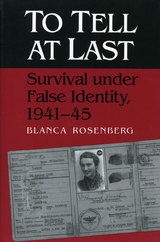
an even hand and understated prose, Ms. Rosenberg, now a New York City
psychotherapist, bravely depicts Nazi carnage in chilling detail."
-- Susan Shapiro, New York Times Book Review
"[A] harrowing account
of intrigue and danger with all the elements of a war movie adventure."
-- Miriam Rinn, The Forward
This memoir of how a Jewish
woman survived Nazi Germany by passing as an Aryan was selected as the
best book on Holocaust and Jewish Resistance Literature by the Israeli
committee of the Egit Grants.
Published by Bucknell University Press. Distributed worldwide by Rutgers University Press.

In this first English-language history of the origins and impact of the Japanese pop music industry, Hiromu Nagahara connects the rise of mass entertainment, epitomized by ryūkōka (“popular songs”), with Japan’s transformation into a middle-class society in the years after World War II.
With the arrival of major international recording companies like Columbia and Victor in the 1920s, Japan’s pop music scene soon grew into a full-fledged culture industry that reached out to an avid consumer base through radio, cinema, and other media. The stream of songs that poured forth over the next four decades represented something new in the nation’s cultural landscape. Emerging during some of the most volatile decades in Japan’s history, popular songs struck a deep chord in Japanese society, gaining a devoted following but also galvanizing a vociferous band of opponents. A range of critics—intellectuals, journalists, government officials, self-appointed arbiters of taste—engaged in contentious debates on the merits of pop music. Many regarded it as a scandal, evidence of an increasingly debased and Americanized culture. For others, popular songs represented liberation from the oppressive political climate of the war years.
Tokyo Boogie-Woogie is a tale of competing cultural dynamics coming to a head just as Japan’s traditionally hierarchical society was shifting toward middle-class democracy. The pop soundscape of these years became the audible symbol of changing times.

At the turn of the twentieth century, Symbolist writers and thinkers at the forefront of Russian modernism cast Fyodor Dostoevsky and Leo Tolstoy as their chosen ancestors—examples to be exalted, repudiated, and ultimately surpassed. Their writings transformed the way these novelists were read within and beyond the Russian Empire. But many of these seminal essays either have never been translated from Russian, or exist in unreliable translations that are now over a hundred years old. Tolstoy and Dostoevsky in Russian Symbolist Criticism: A Reader opens this globally influential body of criticism to a new anglophone audience. The volume gathers fresh annotated translations of essays by Zinaida Vengerova, Vasily Rozanov, Dmitry Merezhkovsky, Valery Bryusov, Lev Shestov, Zinaida Gippius, and Vyacheslav Ivanov. In these foundational selections, readers will discover threads that extend toward writers from Sigmund Freud and J. M. Coetzee to Virginia Woolf and Mikhail Bakhtin. Tolstoy and Dostoevsky in Russian Symbolist Criticism will appeal alike to students encountering Tolstoy’s and Dostoevsky’s novels for the first time, and to scholars of literary history and theory who do not read Russian. It fills a longstanding gap in the study of Dostoevsky’s and Tolstoy’s novels and provides English-speaking readers with a missing key to the absorbing—and ongoing—story of their reception.
A new classic of science reporting.”—The New York Times
The true story of a small town ravaged by industrial pollution, Toms River won the 2014 Pulitzer Prize and has been hailed by The New York Times as "a new classic of science reporting." Now available in paperback with a new afterword by acclaimed author Dan Fagin, the book masterfully blends hard-hitting investigative journalism, scientific discovery, and unforgettable characters.
One of New Jersey’s seemingly innumerable quiet seaside towns, Toms River became the unlikely setting for a decades-long drama that culminated in 2001 with one of the largest environmental legal settlements in history. For years, large chemical companies had been using Toms River as their private dumping ground, burying tens of thousands of leaky drums in open pits and discharging billions of gallons of acid-laced wastewater into the town’s namesake river. The result was a notorious cluster of childhood cancers scientifically linked to local air and water pollution.
Fagin recounts the sixty-year saga of rampant pollution and inadequate oversight that made Toms River a cautionary tale. He brings to life the pioneering scientists and physicians who first identified pollutants as a cause of cancer and the everyday people in Toms River who struggled for justice: a young boy whose cherubic smile belied the fast-growing tumors that had decimated his body from birth; a nurse who fought to bring the alarming incidence of childhood cancers to the attention of authorities who didn’t want to listen; and a mother whose love for her stricken child transformed her into a tenacious advocate for change.
Rooted in a centuries-old scientific quest, Toms River is an epic of dumpers at midnight and deceptions in broad daylight, of corporate avarice and government neglect, and of a few brave individuals who refused to keep silent until the truth was exposed.
A landmark in contemporary social science, this pioneering work by Thomas Piketty explains the facts and dynamics of income inequality in France in the twentieth century. On its publication in French in 2001, it helped launch the international program led by Piketty and others to explore the grand patterns and causes of global inequality—research that has since transformed public debate. Appearing here in English for the first time, this stunning achievement will take its place alongside Capital in the Twenty-First Century as a modern classic of economic analysis.
Top Incomes in France in the Twentieth Century is essential in part because of Piketty’s unprecedented efforts to uncover, untangle, and present in clear form data about patterns in tax and inheritance in France dating back to 1900. But it is also an exceptional work of analysis, tracking and explaining with Piketty’s characteristically lucid prose the effects of political conflict, war, and social change on the economic pressures and public policies that determined the lives of millions. A work of unusual intellectual power and ambition, Top Incomes in France in the Twentieth Century is a vital resource for anyone concerned with the economic, political, and social history of France, and it is central to ongoing debates about social justice, inequality, taxation, and the evolution of capitalism around the world.
When President Eisenhower referred to the “military–industrial complex” in his 1961 Farewell Address, he summed up in a phrase the merger of government and industry that dominated the Cold War United States. In this bold reappraisal, Katherine Epstein uncovers the origins of the military–industrial complex in the decades preceding World War I, as the United States and Great Britain struggled to perfect a crucial new weapon: the self-propelled torpedo.
Torpedoes epitomized the intersection of geopolitics, globalization, and industrialization at the turn of the twentieth century. They threatened to revolutionize naval warfare by upending the delicate balance among the world’s naval powers. They were bought and sold in a global marketplace, and they were cutting-edge industrial technologies. Building them, however, required substantial capital investments and close collaboration among scientists, engineers, businessmen, and naval officers. To address these formidable challenges, the U.S. and British navies created a new procurement paradigm: instead of buying finished armaments from the private sector or developing them from scratch at public expense, they began to invest in private-sector research and development. The inventions emerging from torpedo R&D sparked legal battles over intellectual property rights that reshaped national security law.
Blending military, legal, and business history with the history of science and technology, Torpedo recasts the role of naval power in the run-up to World War I and exposes how national security can clash with property rights in the modern era.
Finalist, 2024 PEN Translation Prize
In The Torture Camp on Paradise Street, Ukrainian journalist and writer Stanislav Aseyev details his experience as a prisoner from 2015 to 2017 in a modern-day concentration camp overseen by the Federal Security Bureau of the Russian Federation (FSB) in the Russian-controlled city of Donetsk. This memoir recounts an endless ordeal of psychological and physical abuse, including torture and rape, inflicted upon the author and his fellow inmates over the course of nearly three years of illegal incarceration spent largely in the prison called Izoliatsiia (Isolation). Aseyev also reflects on how a human can survive such atrocities and reenter the world to share his story.
Since February 2022, numerous cases of illegal detainment and extreme mistreatment have been reported in the Ukrainian towns and villages occupied by Russian forces during the full-scale invasion. These and other war crimes committed by Russian troops speak to the horrors wreaked upon Ukrainians forced to live in Russian-occupied zones. It is important to remember, however, that the torture and killing of Ukrainians by Russian security and military forces began long before 2022. Rendered deftly into English, Aseyev’s compelling account offers a critical insight into the operations of Russian forces in the occupied territories of Ukraine.
Tough Enough traces the careers of these women and their challenges to the pre-eminence of empathy as the ethical posture from which to examine pain. Their writing and art reveal an adamant belief that the hurts of the world must be treated concretely, directly, and realistically, without recourse to either melodrama or callousness. As Deborah Nelson shows, this stance offers an important counter-tradition to the familiar postwar poles of emotional expressivity on the one hand and cool irony on the other. Ultimately, in its insistence on facing reality without consolation or compensation, this austere “school of the unsentimental” offers new ways to approach suffering in both its spectacular forms and all of its ordinariness.

Toward a Democratic New Order was first published in 1945. Minnesota Archive Editions uses digital technology to make long-unavailable books once again accessible, and are published unaltered from the original University of Minnesota Press editions.
We have succeeded, at a tremendous cost in human suffering, in preventing the imposition of a totalitarian new order upon the world. But our victory will be hollow and temporary unless democracy, in whose name we have fought, can gird itself to meet the challenges of a rapidly changing world. It cannot remain a static faith, whose triumph in its nineteenth-century form is taken for granted. It must be re-examined and redefined, not in terms of shibboleths and tenets a century old, but in the light of today's conditions and problems. That this redefinition is an urgent need of our time is the underlying conviction of Toward a Democratic New Order.
Men have not made the utmost sacrifice for a return to the world as it was before 1939. That world crashed because of its inherent weaknesses. Restored with inadequate modifications, it may well crash again. Can a stronger, more stable order be established within the democratic framework? Is democracy the best form of government? Can the normal processes of democratic government effect the far-reaching changes now necessary? Can the industrial problems of our age be solved on democratic lines? Can labor and management free themselves from the prejudices of an era that is now dead? Are we justified in believing the democratic order capable of securing and maintaining the welfare of the individual and society as a whole? Can democracy resolve the conflict between nationalistic claims on the one hand and conditions essential for economic stability and efficiency on the other?
These are some of the questions considered in this philosophical approach to world problems by David Bryn-Jones. His provocative analysis and interpretations make Toward a Democratic New Order truly significant reading for our postwar world.
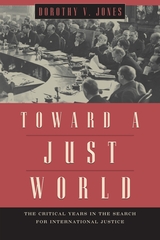
A century ago, there was no such thing as international justice, and until recently, the idea of permanent international courts and formal war crimes tribunals would have been almost unthinkable. Yet now we depend on institutions such as these to air and punish crimes against humanity, as we have seen in the International Criminal Tribunal for Rwanda and the appearance of Serbian leader Slobodan Milosevic before the Tribunal for the Former Yugoslavia.
Toward a Just World tells the remarkable story of the long struggle to craft the concept of international justice that we have today. Dorothy V. Jones focuses on the first half of the twentieth century, the pivotal years in which justice took on expanded meaning in conjunction with ideas like world peace, human rights, and international law. Fashioning both political and legal history into a compelling narrative, Jones recovers little-known events from undeserved obscurity and helps us see with new eyes the pivotal ones that we think we know. Jones also covers many of the milestones in the history of diplomacy, from the Treaty of Versailles and the creation of the League of Nations to the Nuremberg war crimes tribunal and the making of the United Nations.
As newspapers continue to fill their front pages with stories about how to administer justice to al Qaeda and Saddam Hussein, Toward a Just World will serve as a timely reminder of how the twentieth century achieved one of its most enduring triumphs: giving justice an international meaning.

Drawing on early modern French thought to free nature and aesthetics from metaphysical humanism
What good is aesthetics in a time of ecological crisis? Toward a Premodern Posthumanism: Anarchic Ontologies of Earthly Life in Early Modern France shows that philosophical aesthetics contains unheeded potentialities for challenging the ontological subjection of nature to the human subject. Drawing on deconstructive, ecological, and biopolitical thought, Chad Córdova uncovers in aesthetics something irreducible to humanist metaphysics: an account of how beings emerge and are interrelated, responsive, and even response-able without reason or why.
This anarchic and atelic ontology, recovered from Kant, becomes the guiding thread for a new, premodern trajectory of posthumanism. Charting a path from Aristotle to Heidegger to today’s plant-thinking, with new readings of Montaigne, Pascal, Diderot, Rousseau, and others along the way, this capacious study reveals the untimely relevance of pre-1800 practices of writing, science, and art. Enacting a multitemporal mode of reading, Córdova offers a defense and illustration of the importance of returning to early modern texts as a way to rethink nature, art, ethics, and politics in a time when these concepts are in flux and more contentious than ever.

The chapters in the volume capture the widest possible variety of political and administrative systems in the region. Transylvanian towns were structured and governed similarly to other small Central European urban centers, however significant diversity can be discerned following the Reformation. Moldavian and Wallachian towns in the 18th and 19th century are little known to international scholarship, and the chapters in this volume will fill this gap.
Winner of the 2024 Roberto Reis Book Award
Winner of the LASA Environment Section Best Book of 2023
Winner of the LASA Amazonian Studies Section Best Book of 2024
Co-Winner of the LASA Book Award for the Visual Culture Studies 2024
A richly illustrated examination of photography as a technology for documenting, creating, and understanding the processes of modernization in turn-of-the-century Brazil and the Amazon
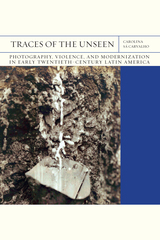
Photography at the turn of the twentieth century was not only a product of modernity but also an increasingly available medium to chronicle the processes of modernization. Traces of the Unseen: Photography, Violence, and Modernization in Early Twentieth-Century Latin America situates photography’s role in documenting the destruction wrought by infrastructure development and extractive capitalist expansion in the Amazon and outside the Brazilian metropole. Combining formal analysis of individual photographs with their inclusion in larger multimedia assemblages, Carolina Sá Carvalho explores how this visual evidence of violence was framed, captioned, cropped, and circulated. As she explains, this photographic creation and circulation generated a pedagogy of the gaze with which increasingly connected urban audiences were taught what and how to see: viewers learned to interpret the traces of violence captured in these images within the larger context of modernization.
Traces of the Unseen draws on works by Flavio de Barros, Euclides da Cunha, Roger Casement, Claude Lévi-Strauss, and Mario de Andrade to situate an unruly photographic body at the center of modernity, in all its disputed meanings. Moreover, Sá Carvalho locates historically specific practices of seeing within the geopolitical peripheries of capitalism. What emerges is a consideration of photography as a technology through which modern aspirations, moral inclinations, imagined futures, and lost pasts were represented, critiqued, and mourned.
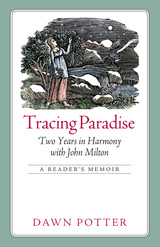
One winter morning, poet Dawn Potter sat down at her desk in Harmony, Maine, and began copying out the opening lines of John Milton's Paradise Lost. Her intent was to spend half an hour with a poem she had never liked, her goal to transcribe a page or two. Maybe she would begin to appreciate the poet's art, though she had no real expectations that the exercise would change her mind about the poem. Yet what began as a whim turned rapidly into an obsession, and soon Potter was immersed in a strange and unexpected project: she found herself copying out every single word of Milton's immense, convoluted epic.
Tracing Paradise: Two Years in Harmony with John Milton is her memoir of that long task. Over the course of twelve chapters, Potter explores her very personal response to Milton and Paradise Lost, tracing the surprising intersections between a seventeenth-century biblical epic and the routine joys and tragedies of domestic life in contemporary rural Maine. Curious, opinionated, and eager, she engages with the canon on mutable, individual terms. Though she writes perceptively about the details and techniques of Milton's art, always her reactions are linked to her present-tense experiences as a poet, small-time farmer, family member, and citizen of a poor and beleaguered north-country town.
A skilled and entertaining writer, Potter is also a wide-ranging and sophisticated reader. Yet her memoir is not a scholarly treatise: her enthusiasms and misgivings about both Milton and Paradise Lost ebb and flow with the days. Tracing Paradise reminds us that close engagement with another artist's task may itself be a form of creation. Above all, Potter's memoir celebrates one reader's difficult yet transformative love affair with Milton's glorious, irritating, inscrutable masterpiece.

Sara Caputo’s Tracks on the Ocean is a sweeping history of how we have understood routes of travel over the ocean and how we came to represent that movement as a cartographical line. Focusing on the representation of sea journeys in the Western world from the early sixteenth century to the present, Caputo deftly argues that the depiction of these lines is inextricable from European imperialism, the rise of modernity, and attempts at mastery over nature. Caputo recounts the history of ocean tracks through an array of lively stories and characters, from the expeditions of Captain James Cook in the eighteenth century to tracks depicted in Moby Dick and popular culture of the nineteenth century to the use of navigational techniques by the British navy. She discusses how tracks evolved from tools of surveying into tools of surveillance and, eventually, into paths of environmental calamity. The impulse to record tracks on the ocean is, Caputo argues, reflective of an ongoing desire for order, schematization, and personal visibility, as well as occupation and permanent ownership—in this case over something that is unoccupiable and impossible to truly possess. Both beautifully written and deeply researched, Tracks on the Ocean shares how the lines drawn on maps tell the audacious and often tragic and violent stories of ocean voyages.
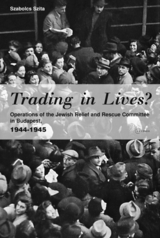
Relations between the Chosŏn and Qing states are often cited as the prime example of the operation of the “traditional” Chinese ”tribute system.” In contrast, this work contends that the motivations, tactics, and successes (and failures) of the late Qing Empire in Chosŏn Korea mirrored those of other nineteenth-century imperialists. Between 1850 and 1910, the Qing attempted to defend its informal empire in Korea by intervening directly, not only to preserve its geopolitical position but also to promote its commercial interests. And it utilized the technology of empire—treaties, international law, the telegraph, steamships, and gunboats.
Although the transformation of Qing–Chosŏn diplomacy was based on modern imperialism, this work argues that it is more accurate to describe the dramatic shift in relations in terms of flexible adaptation by one of the world’s major empires in response to new challenges. Moreover, the new modes of Qing imperialism were a hybrid of East Asian and Western mechanisms and institutions. Through these means, the Qing Empire played a fundamental role in Korea’s integration into regional and global political and economic systems.
A statistician and pioneer in the treatment of the mentally ill, Edward Jarvis (1803–1884) decided late in life to record his recollections of Concord, Massachusetts, the town in which he was raised. Using Lemuel Shattuck's History of Concord as the springboard for his thoughts, Jarvis produced a remarkable document. Traditions and Reminiscences is encyclopedic in scope but intimate in style; it provides an astonishingly detailed account of life in early nineteenth-century Concord. Jarvis escorts us through the family home, making certain we understand the function and value of each item in the domestic scene. Then he is off to the neighbors' houses, to the schoolhouse, the church, the social clubs, the library, the post office, the town hall, and even the tavern, where he unabashedly counts patrons' drinks. Along the way we learn about neighborly cooperation—quiltings, husking bees, and barn raisings—about social manners and respectability, and about local vices. The result is a vast storehouse of information and a vivid portrait of life in an early nineteenth-century preindustrial community. The memoir also provides a first-hand witness to the crusade for moral reform that transformed mid-nineteenth-century New England.
The Tragedy of a Generation is the story of the rise and fall of an ideal: an autonomous Jewish nation in Europe. It traces the origins of two influential but overlooked strains of Jewish thought—Yiddishism and Diaspora Nationalism—and documents the waning hopes and painful reassessments of their leading representatives against the rising tide of Nazism and, later, the Holocaust.
Joshua M. Karlip presents three figures—Elias Tcherikower, Yisroel Efroikin, and Zelig Kalmanovitch—seen through the lens of Imperial Russia on the brink of revolution. Leaders in the struggle for recognition of the Jewish people as a national entity, these men would prove instrumental in formulating the politics of Diaspora Nationalism, a middle path that rejected both the Zionist emphasis on Palestine and the Marxist faith in class struggle. Closely allied with this ideology was Yiddishism, a movement whose adherents envisioned the Yiddish language and culture, not religious tradition, as the unifying force of Jewish identity.
We follow Tcherikower, Efroikin, and Kalmanovitch as they navigate the tumultuous early decades of the twentieth century in pursuit of a Jewish national renaissance in Eastern Europe. Correcting the misconception of Yiddishism as a radically secular movement, Karlip uncovers surprising confluences between Judaism and the avowedly nonreligious forms of Jewish nationalism. An essential contribution to Jewish historiography, The Tragedy of a Generation is a probing and poignant chronicle of lives shaped by ideological conviction and tested to the limits by historical crisis.
The ancient Greek tragedies of Aeschylus, Sophocles, and Euripides have long been considered foundational works of Western literature, revered for their aesthetic perfection and timeless truths. Under the microscope of recent scholarship, however, the presumed universality of Greek tragedy has started to fade, as the particularities of Athenian culture have come into sharper focus. The world revealed is so far removed from modern sensibilities that, in the eyes of many, tragedy’s viability as a modern art form has been fatally undermined. Tragic Modernities steers a new course between the uncritical appreciation and the resolute historicism of the past two centuries, to explore the continuing relevance of tragedy in contemporary life.
Through the writings of such influential figures as Hegel, Marx, Nietzsche, and Freud, tragedy became a crucial reference point for philosophical and intellectual arguments. These thinkers turned to Greek tragedy in particular to support their claims about history, revolution, gender, and sexuality. From Freud’s Oedipus complex to Nietzsche’s Dionysiac, from Hegel’s dialectics to Marx’s alienation, tragedy provided the key terms and mental architecture of the nineteenth and twentieth centuries. By highlighting the philosophical significance of tragedy, Miriam Leonard makes a compelling case for the ways tragedy has shaped the experience of modernity and elucidates why modern conceptualizations of tragedy necessarily color our understanding of antiquity. Exceptional in its scope and argument, Tragic Modernities contests the idea of the death of tragedy and argues powerfully for the continued vitality of Greek tragic theater in the central debates of contemporary culture.
A timely, politically savvy examination of how impossible disasters shape the very real possibilities of our world
Why would the normally buttoned-down national security state imagine lurid future scenarios like a zombie apocalypse? In Training for Catastrophe, author Lindsay Thomas shows how our security regime reimagines plausibility to focus on unlikely and even unreal events rather than probable ones. With an in-depth focus on preparedness (a pivotal, emergent national security paradigm since 9/11) she explores how fiction shapes national security.
Thomas finds fiction at work in unexpected settings, from policy documents and workplace training manuals to comics and video games. Through these texts—as well as plenty of science fiction—she examines the philosophy of preparedness, interrogating the roots of why it asks us to treat explicitly fictional events as real. Thomas connects this philosophical underpinning to how preparedness plays out in contemporary politics, emphasizing how it uses aesthetic elements like realism, genre, character, and plot to train people both to regard some disasters as normal and to ignore others.
Training for Catastrophe makes an important case for how these documents elicit consent and compliance. Thomas draws from a huge archive of texts—including a Centers for Disease Control comic about a zombie apocalypse, the work of Audre Lorde, and the political thrillers of former national security advisor Richard Clarke—to ask difficult questions about the uses and values of fiction. A major statement on how national security intrudes into questions of art and life, Training for Catastrophe is a timely intervention into how we confront disasters.
Winner, Transatlantic Studies Association and Cambridge University Press Book Prize, 2023
During the antebellum period, British publishers increasingly brought out their own authorized and unauthorized editions of American literary works as the popularity of print exploded and literacy rates grew. Playing a formative role in the shaping of American literature, the industry championed the work of US-based writers, highlighted the cultural value of American literary works, and intervened in debates about the future of American literature, authorship, and print culture.
The Transatlantic Materials of American Literature examines the British editions of American fiction, poetry, essays, and autobiographies from writers like Edgar Allan Poe, Harriet Beecher Stowe, Frederick Douglass, and Hannah Flagg Gould. Putting these publications into historical context, Katie McGettigan considers key issues of the day, including developments in copyright law, changing print technologies, and the financial considerations at play for authors and publishers. This innovative study also uncovers how the transatlantic circulation of these works exposed the racial violence and cultural nationalism at the heart of the American experiment, producing overlapping and competing visions of American nationhood in the process.

Journalist, editor, critic, translator, and women’s rights advocate, Margaret Fuller was America’s first major female intellectual. Throughout much of the late-19th and 20th centuries, however, critics and scholars largely saw her as a minor figure in the transcendentalist movement with which she is associated, and her work was considered secondary to that of male figures like Emerson and Hawthorne. While her biography—including her marriage to an Italian noble and her dramatic death in a shipwreck—was often the focus, her skill as a writer was generally overlooked, and her intellectual development largely ignored.
In the early 1980s, David M. Robinson was one of the first scholars to publish an article that focused on Fuller’s mind and art. Now Transcendent Woman completes and extends this early work. Outlining the development of her philosophy, which Robinson defines as a “purpose-oriented form of thinking, tailored to the commitment and assets of each individual,” he traces Fuller’s intellectual journey, first in relation to her family and the people around her in New England and later in her travels in the midwestern United States and, more importantly, through Europe and her residency in Italy. He focuses first and foremost on what Fuller was reading (Goethe was key), what she was thinking as revealed in her letters and journals, and what she was writing, including seminal works such as Summer on the Lakes and Woman in the Nineteenth Century as well as lesser-known essays, translations, and short stories. Drawing extensively on primary sources, Robinson charts Fuller’s development and achievement as an original thinker and fearless advocate of democracy.
Throughout the first half of the nineteenth century, America was captivated by a muddled notion of “etymology.” New England Transcendentalism was only one outcropping of a nationwide movement in which schoolmasters across small-town America taught students the roots of words in ways that dramatized religious issues and sparked wordplay.
Shaped by this ferment, our major romantic authors shared the sensibility that Friedrich Schlegel linked to punning and christened “romantic irony.” Notable punsters or etymologists all, they gleefully set up as sages, creating jocular masterpieces from their zest for oracular wordplay. Their search for a primal language lurking beneath all natural languages provided them with something like a secret language that encodes their meanings. To fathom their essentially comic masterpieces we must decipher it.
Interpreting Thoreau as an ironic moralist, satirist, and social critic rather than a nature-loving mystic, Transcendental Wordplay suggests that the major American Romantics shared a surprising conservatism. In this award-winning study, Professor West rescues the pun from critical contempt and allows readers to enjoy it as a serious form of American humor.
This book proposes that in a number of French Renaissance texts, produced in varying contexts and genres, we observe a shift in thinking about memory and forgetting. Focusing on a corpus of texts by Marguerite de Navarre, Pierre de Ronsard, and Michel de Montaigne, it explores several parallel transformations of and challenges to traditional discourses on the human faculty of memory.
Throughout Classical Antiquity and the Middle Ages, a number of influential authors described memory as a powerful tool used to engage important human concerns such as spirituality, knowledge, politics, and ethics. This tradition had great esteem for memory and made great efforts to cultivate it in their pedagogical programs. In the early sixteenth century, this attitude toward memory started to be widely questioned. The invention of the printing press and the early stages of the scientific revolution changed the intellectual landscape in ways that would make memory less important in intellectual endeavors. Sixteenth-century writers began to question the reliability and stability of memory. They became wary of this mental faculty, which they portrayed as stubbornly independent, mysterious, unruly, and uncontrollable–an attitude that became the norm in modern Western thought as is illustrated by the works of Descartes, Locke, Freud, Proust, Foucault, and Nora, for example.
Writing in this new intellectual landscape, Marguerite de Navarre, Ronsard, and Montaigne describe memory not as a powerful tool of the intellect but rather as an uncontrollable mental faculty that mirrored the uncertainty of human life. Their characterization of memory emerges from an engagement with a number of traditional ideas about memory. Notwithstanding the great many differences in concerns of these writers and in the nature of their texts, they react against or transform their classical and medieval models in similar ways. They focus on memory’s unruly side, the ways that memory functions independently of the will. They associate memory with the fluctuations of the body (the organic soul) rather than the stability of the mind (the intellectual soul). In their descriptions of memory, these authors both reflect and contribute to a modern understanding of and attitude towards this mental faculty.
Published by University of Delaware Press. Distributed worldwide by Rutgers University Press.

Royston bolsters this concept through readings of classics such as Back to the Future and Octavia E. Butler’s Kindred, contemporary works such as the video game Outer Wilds and Scott Alexander Howard’s The Other Valley, and lesser-known works such as the nineteenth-century Spanish novel El Anacronópete. These readings demonstrate how time travel functions across different mediums and genres and spotlights the ways authors and creators have used anachronic metalepsis to contend with themes of exile, freedom and consequences, the powers and pitfalls of nostalgia, the nature of history and our relationship to it, and the nature of time itself.

The impact of the passage of war refugees on the lives and minds of local residents and officials is the subject of this study. Between 2017 and 2020, Beatrix Futak-Campbell conducted interviews with over fifty people who live and work near the Hungarian-Serbian border. This area was exposed to the unprecedented stream of refugees, most of them seeking safety from the Syrian civil war. The Hungarian government’s hostility to migrants has been widely criticized, and news coverage has tended to reiterate unhelpful characterisations of Hungarian citizens as being anti-migrant, anti-Muslim and racist.
The situation is, however, more nuanced. There is a substantial difference between the border police, local communities, and organizations, on the one hand, and national politicians and the international media perception of the refugee ‘crisis’, on the other. Those living and working with migrants at the border were caught between the domestic political situation, the plight of the refugees and the international support the latter receive, and the exigencies of their own livelihoods. This book explores these communities and their own security concerns.

The expanding number of migrants to the United States from continental Africa since the 1960s has led to a flourishing twenty-first-century literary corpus by immigrants and the children of immigrants. Transit Lit: Fictions of Migration in Twenty-First-Century African Immigrant Literature analyzes key works by African immigrant authors such as Chimamanda Ngozi Adichie, Teju Cole, and Yaa Gyasi to argue that such texts reveal the tensions between the authors’ own cosmopolitan ideals and a necessary critique of how such ideals become co-opted and commodified within contemporary geopolitics. Cameron Leader-Picone offers a new conceptual framework for reading contemporary diasporic texts that do not fit easily into national or continental traditions or previous literary models. Instead, he argues for the need to embrace the overlapping instabilities—of meaning, identity, and citizenship—that characterize twenty-first-century diasporic movement in an interconnected world. These texts, and the constructions of identity that they trace, map the terrain of contemporary migration.
Historians have traditionally used the discourses of free trade and laissez faire to explain the development of political economy during the Enlightenment. But from Sophus Reinert’s perspective, eighteenth-century political economy can be understood only in the context of the often brutal imperial rivalries then unfolding in Europe and its former colonies and the positive consequences of active economic policy. The idea of economic emulation was the prism through which philosophers, ministers, reformers, and even merchants thought about economics, as well as industrial policy and reform, in the early modern period. With the rise of the British Empire, European powers and others sought to selectively emulate the British model.
In mapping the general history of economic translations between 1500 and 1849, and particularly tracing the successive translations of the Bristol merchant John Cary’s seminal 1695 Essay on the State of England, Reinert makes a compelling case for the way that England’s aggressively nationalist policies, especially extensive tariffs and other intrusive market interventions, were adopted in France, Italy, Germany, and Scandinavia before providing the blueprint for independence in the New World. Relatively forgotten today, Cary’s work served as the basis for an international move toward using political economy as the prime tool of policymaking and industrial expansion.
Reinert’s work challenges previous narratives about the origins of political economy and invites the current generation of economists to reexamine the foundations, and future, of their discipline.
A revealing account of the lives and work of Ethiopian Orthodox pilgrims in sixteenth-century Rome, examining how this African diasporic community navigated the challenges of religious pluralism in the capital of Latin Christianity.
Tucked behind the apse of Saint Peter’s Basilica in Rome is the ancient church of Santo Stefano. During the sixteenth century, Santo Stefano hosted an unusual community: a group of Ethiopian Orthodox pilgrims whose faith and culture were both like and unlike those of Latin Europe. The pilgrims of Santo Stefano were the only African community in premodern Europe to leave extensive documents in their own language (Gǝʿǝz). They also frequently collaborated with Latin Christians to disseminate their expert knowledge of Ethiopia and Ethiopian Christianity, negotiating the era’s heated debates over the boundaries of religious belonging.
Translating Faith is the first book-length study of this community in nearly a century. Drawing on Gǝʿǝz and European-language sources, Samantha Kelly documents how pilgrims maintained Ethiopian Orthodox practices while adapting to a society increasingly committed to Catholic conformity. Focusing especially on the pilgrims’ scholarly collaborations, Kelly shows how they came to produce and share Ethiopian knowledge—as well as how Latin Christian assumptions and priorities transformed that knowledge in unexpected ways. The ambivalent legacies of these exchanges linger today in the European tradition of Ethiopian Studies, which Santo Stefano is credited with founding.
Kelly’s account of the Santo Stefano pilgrim community is a rich tale about the possibilities and pitfalls of ecumenical dialogue, as well as a timely history in our own age marked by intensive and often violent negotiations of religious and racial difference.
Transnational Currents in a Shrinking World examines the wide variety of social and cultural networks that emerged from the global exchanges of the late-nineteenth and twentieth centuries. Emily Rosenberg shows how transnational connections were being formed many decades before “globalization” became a commonplace term in economic and political discourse.
Suggesting crisscrossing flows of power, “currents” provide an especially apt metaphor for transnational exchanges in the age of the telegraph and incandescent light bulb. Rosenberg traces the internationalizing currents that impelled a desire to create global rule-setting institutions, from the Universal Postal Union to the International Olympic Committee to the League of Nations. Other transnational currents coalesced around social networks of class, ethnic, gender, and religious affiliations; around exhibitions such as world fairs, museums, and botanical gardens; around networks of expertise in engineering, medicine, social science, and urban planning; and around mass media and cultures of consumption.
Rosenberg suggests that these currents brought a modernity that mixed faith in the rationality of science and technology with a fascination for emotional and spectacle-driven entertainments. In this age of nationalism and imperialism, they both assisted and disrupted ambitions for territorial expansion; they ushered in a new world in which fast-moving technologies of representation brought multiple and shifting codes of meaning. Often overlooked in histories centered on nation-states, transnational currents highlight the irregular patterns of global change and underscore the fluidity of spatial and personal identifications in the period from 1870 to the end of World War II.
READERS
Browse our collection.
PUBLISHERS
See BiblioVault's publisher services.
STUDENT SERVICES
Files for college accessibility offices.
RECENTLY PUBLISHED


UChicago Accessibility Resources
home | accessibility | search | about | contact us
BiblioVault ® 2001 - 2026
The University of Chicago Press