
 A SCHOLARLY BOOK REPOSITORY
149 start with W start with W
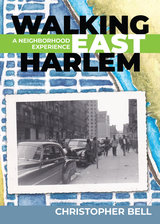
Now East Harlem native Christopher Bell takes you on a tour of his beloved neighborhood. He takes you on three separate walking tours, each visiting a different part of East Harlem and each full of stories about its theaters, museums, art spaces, schools, community centers, churches, mosques, and synagogues. You’ll also learn about the famous people who lived in El Barrio, such as actress Cecily Tyson, opera singer Marian Anderson, portrait artist Alice Neel, incomparable poet Julia De Burgos, and King of Latin Music Tito Puente.
Lavishly illustrated with over fifty photos, Walking East Harlem points out not only the many architectural and cultural landmarks in the neighborhood but also the historical buildings that have since been demolished. Whether you are a tourist or a resident, this guide will give you a new appreciation for El Barrio’s exciting history, cultural diversity, and continued artistic vibrancy.
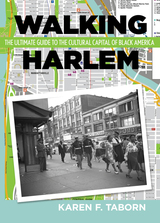
This illustrated guide takes readers on five separate walking tours of Harlem, covering ninety-one different historical sites. Alongside major tourist destinations like the Apollo Theater and the Abyssinian Baptist Church, longtime Harlem resident Karen Taborn includes little-known local secrets like Jazz Age speakeasies, literati, political and arts community locales. Drawing from rare historical archives, she also provides plenty of interesting background information on each location.
This guide was designed with the needs of walkers in mind. Each tour consists of eight to twenty-nine nearby sites, and at the start of each section, readers will find detailed maps of the tour sites, as well as an estimated time for each walk. In case individuals would like to take a more leisurely tour, it provides recommendations for restaurants and cafes where they can stop along the way.
Walking Harlem gives readers all the tools they need to thoroughly explore over a century’s worth of this vital neighborhood’s cultural, political, religious, and artistic heritage. With its informative text and nearly seventy stunning photographs, this is the most comprehensive, engaging, and educational walking tour guidebook on one of New York’s historic neighborhoods.
Walking on Fire opens up new conversations about content and emotion for writers and offers exciting answers to the questions of why we make drama and why we connect to it. Linnell’s userfriendly theory and passionate approach create a framework for understanding the links between the writer’s work in creating the text, the text itself, and the audience’s engagement.
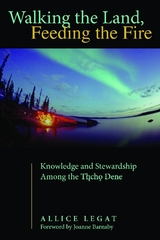
In the Dene worldview, relationships form the foundation of a distinct way of knowing. For the Tlicho Dene, indigenous peoples of Canada's Northwest Territories, as stories from the past unfold as experiences in the present, so unfolds a philosophy for the future. Walking the Land, Feeding the Fire vividly shows how—through stories and relationships with all beings—Tlicho knowledge is produced and rooted in the land.
Tlicho-speaking people are part of the more widespread Athapaskan-speaking community, which spans the western sub-arctic and includes pockets in British Columbia, Alberta, California, and Arizona. Anthropologist Allice Legat undertook this work at the request of Tlicho Dene community elders, who wanted to provide younger Tlicho with narratives that originated in the past but provide a way of thinking through current critical land-use issues. Legat illustrates that, for the Tlicho Dene, being knowledgeable and being of the land are one and the same.
Walking the Land, Feeding the Fire marks the beginning of a new era of understanding, drawing both connections to and unique aspects of ways of knowing among other Dene peoples, such as the Western Apache. As Keith Basso did with his studies among the Western Apache in earlier decades, Legat sets a new standard for research by presenting Dene perceptions of the environment and the personal truths of the storytellers without forcing them into scientific or public-policy frameworks. Legat approaches her work as a community partner—providing a powerful methodology that will impact the way research is conducted for decades to come—and provides unique insights and understandings available only through traditional knowledge.

Wallace Stevens - American Writers 11 was first published in 1961. Minnesota Archive Editions uses digital technology to make long-unavailable books once again accessible, and are published unaltered from the original University of Minnesota Press editions.
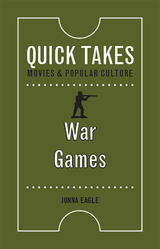
This Quick Take considers how various war games and simulations shape the ways we imagine war. Paradoxically, these games grant us a sense of mastery and control as we strategize and scrutinize the enemy, yet also allow us the thrilling sense of being immersed in the carnage and chaos of battle. But as simulations of war become more integrated into both popular culture and military practice, how do they shape our apprehension of the traumatic realities of warfare?
Covering everything from chess to football, from Saving Private Ryan to American Sniper, and from Call of Duty to drone interfaces, War Games is an essential guide for anyone seeking to understand the militarization of American culture, offering a compact yet comprehensive look at how we play with images of war.
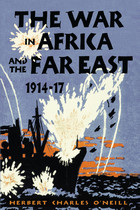
"This account will be welcome to a large circle of readers. . . . The arduous nature of these campaigns deserves to be far more widely known, and this is just the book for the purpose--short, clear, and easy to read."--Journal of the African Society
The largest battles of World War I were fought in Europe, and it is there where most critical studies focus. The fate of the far-flung colonies of Germany, however, are what gave the war its global scope, with campaigns reaching from China to New Guinea and East to West Africa. While there are detailed accounts of most of these campaigns, The War in Africa and the Far East, 1914-17 is unique in providing a concise history of the entire series of military events in Africa and Asia, giving the reader a better idea of the relationship and chronology of these wide-ranging events. While Germany was stripped of all its overseas colonies, the change in power had unintended consequences, most importantly the rise of Japan in the Pacific, where former German colonies now stood at the territorial boundary between Japan and the United States.
Waged by Allied troops from Britain, Kenya, Zambia, Portugal, Japan, India, Netherlands, and other countries and led by such personalities as General Jan Christian Smuts, the theater of operations crossed modern-day Tanzania, Rwanda, Burundi, Togo, Cameroon, Namibia, New Guinea, Qingdau, the Bismarck Archipelago, and other Pacific Island chains. Originally published in 1918 using official dispatches and other sources, and presented here for the first time in paperback, completely retypeset and with the original maps and additional photographs, The War in Africa and the Far East is a compact overview of an important aspect of the First World War.
How did slavery and race impact American literature in the nineteenth century? In this ambitious book, Michael T. Gilmore argues that they were the carriers of linguistic restriction, and writers from Frederick Douglass to Stephen Crane wrestled with the demands for silence and circumspection that accompanied the antebellum fear of disunion and the postwar reconciliation between the North and South.
Proposing a radical new interpretation of nineteenth-century American literature, The War on Words examines struggles over permissible and impermissible utterance in works ranging from Thoreau’s “Civil Disobedience” to Henry James’s The Bostonians. Combining historical knowledge with groundbreaking readings of some of the classic texts of the American past, The War on Words places Lincoln’s Cooper Union address in the same constellation as Margaret Fuller’s feminism and Thomas Dixon’s defense of lynching. Arguing that slavery and race exerted coercive pressure on freedom of expression, Gilmore offers here a transformative study that alters our understanding of nineteenth-century literary culture and its fraught engagement with the right to speak.
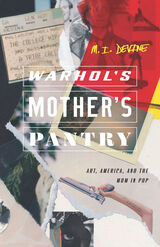
“What are these fragments we’ve Jersey Shored against our ruin?” asks M. I. Devine, remixing T. S. Eliot, in this dizzying collection of essays that pays homage to the cultural forms that hold us steady. These fragments are stored in Warhol’s Mother’s Pantry, which takes us deep beneath the surfaces of pop to explore our shared quest for meaning today. Julia Warhola, an immigrant who arrived as the US was closing its borders a century ago, is the muse of reuse in these essays that cross boundaries—between now and then, high and low. She is the mom in pop who cut tin cans into flowers and taught Andy (and us) how to reshape and redeem our world. In essays as lyrical, witty, and experimental as the works they cover, Devine offers a new account of pop humanism. How we cut new things from the traditions we’re given, why we don’t stop believin’ (and carry on, wayward sons) when so much is stacked against us. Here are Leonard Cohen’s last songs and Molly Bloom’s last words; Vampire Weekend’s Rostam and Philip Larkin too; Stevie Smith, John Donne, and Kendrick Lamar; sonnets and selfies; early cinema and post–9/11 film, pop hooks, and pop art. In Devine’s hands, these literary and cultural artifacts are provocatively reassembled into an urgent and refreshing history that refuses to let its readers forget where pop came from and where it can go.
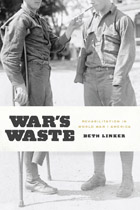
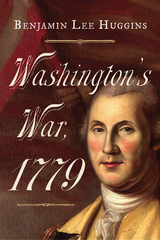
Despite great limits of money and manpower, George Washington sought to wage an aggressive war in 1779. He launched the Sullivan–Clinton campaign against Britain’s Iroquois allies in upstate New York, and in response to British attacks up the Hudson River and against coastal Connecticut, he authorized raids on British outposts at Stony Point and Paulus Hook. But given power by Congress to plan and execute operations with the French on a continental scale, Washington planned his boldest campaign. When it appeared that the French would bring a fleet and an army to America, and supported by intelligence from his famed “Culper” spy network, the American commander proposed a joint Franco-American attack on the bastion of British power in North America—New York City—to capture its garrison. Such a blow, he hoped, would end the war in 1779.
Based on extensive primary source material, Washington’s War 1779, by historian Benjamin Lee Huggins, describes Washington’s highly detailed plans and extensive preparations for his potentially decisive Franco-American campaign to defeat the British at New York in the fall of 1779. With an emphasis on Washington's generalship in that year—from strategic and operational planning to logistics to diplomacy—and how it had evolved since the early years of the war, the book also details the other offensive operations in 1779, including the attacks in upstate New York, Stony Point, and Paulus Hook. Although the American and French defeat at Savannah, Georgia, prevented Washington from carrying out his New York offensive, Washington gained valuable experience in planning for joint operations that would help him win at Yorktown two years later.

Watch this Space examines key emerging and evolving practices, theories, and methodologies that operate in the blurred boundary between spatial design disciplines and moving image studies more broadly. The collection is premised on the argument that the understanding of “space” in these areas continues to expand, reaching the point in which it blurs with multiple other disciplines including media art, cultural studies, art practice, and more. The result of this evolving interdisciplinary understating of space in design disciplines and moving image studies is an expanded field of haptic-visual practice and theory that can be investigated as both a material and an image-based construct.
The work engages with an evolving set of ideas, underlining how each of its primary discipline areas now increasingly incorporates tools and methodologies from each other’s fields. For example, architects routinely engage with cinematic practice as a means of exploring space; cultural theorists inspect filmic space as a two-dimensional surrogate of the real; media artists incorporate knowledge of spatial design in video installations; and filmmakers create spaces on screen that are informed by architectural theory. This all follows what can be defined as a discursive turn in our view of spatial relationships across disciplines which, by definition, is complex, eclectic, occasionally contradictory, and at times characterized by surprising confluences.
The varied essays collected here explore the diversity of how we today define, understand, and engage with notions of the body in architectural–urban space. It does so through a triadic structure that progresses from haptic relationships of the body in architectural space, through film readings of represented space in mainstream cinema, to experimental spatial projects inspired by film and the moving image. This tripartite structure specifically encourages a look across disciplines, broadening architectural, urbanist, media, and cinematic concerns through insightful case studies.
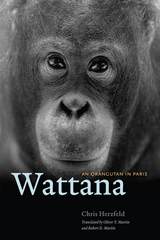
Offering a uniquely intimate look at the daily lives of captive great apes, Herzfeld uses Wattana’s life to trace the history of orangutans from their first arrival in Europe in 1776 to the inhabitants of the Zoo of Paris and other zoos today. She provides a close look at the habits, technical know-how, and skills of Wattana, who, remarkably, uses strings, paper rolls, rope, and even pieces of wood to make things. And she thoughtfully explores how apes individually—and often with ingenuity—come to terms with and adapt to their captive environments and caretakers. Through these stories, Wattana sympathetically reveals the extraordinary psychology and distinctive personalities of great apes as well as the interconnections between animal and human lives, especially in zoos.
Scientists predict that orangutans will disappear from the wild by 2030, and captive animals like Wattana may, as a result, provide our best chance to understand and appreciate their astonishing intelligence and abilities. Wattana, the accomplished maker of knots, is the hero of this poignant book, which will enthrall anyone curious about the lives of our primate cousins.
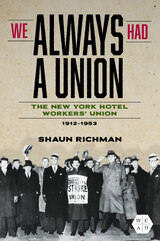
From the start, New York’s organized hotel workers experimented with and adapted how they organized and governed members and related to other labor unions. Richman follows union fortunes from early IWW activity through the Communist-led affiliates of the American Federation of Labor in the 1920s and 1930s, the shaping of breakthrough negotiating strategies, and the postwar era. As Richman shows, workers adopted a radicalism and militancy seldom associated with an AFL organization while openly negotiating the Communist Party’s power and influence within the union, until the Party’s eclipse in the 1950s.
An inspiring story of action and perseverance, We Always Had a Union profiles a foundational American labor union and offers lessons for today’s workers and organizers.
Second place, Presidio La Bahia Award, Sons of the Republic of Texas, 2003
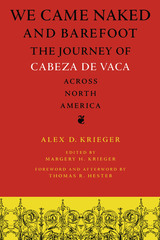
Perhaps no one has ever been such a survivor as álvar Núñez Cabeza de Vaca. Member of a 600-man expedition sent out from Spain to colonize "La Florida" in 1527, he survived a failed exploration of the west coast of Florida, an open-boat crossing of the Gulf of Mexico, shipwreck on the Texas coast, six years of captivity among native peoples, and an arduous, overland journey in which he and the three other remaining survivors of the original expedition walked some 1,500 miles from the central Texas coast to the Gulf of California, then another 1,300 miles to Mexico City.
The story of Cabeza de Vaca has been told many times, beginning with his own account, Relación de los naufragios, which was included and amplified in Gonzalo Fernando de Oviedo y Váldez's Historia general de las Indias. Yet the route taken by Cabeza de Vaca and his companions remains the subject of enduring controversy. In this book, Alex D. Krieger correlates the accounts in these two primary sources with his own extensive knowledge of the geography, archaeology, and anthropology of southern Texas and northern Mexico to plot out stage by stage the most probable route of the 2,800-mile journey of Cabeza de Vaca.
This book consists of several parts, foremost of which is the original English version of Alex Krieger's dissertation (edited by Margery Krieger), in which he traces the route of Cabeza de Vaca and his companions from the coast of Texas to Spanish settlements in western Mexico. This document is rich in information about the native groups, vegetation, geography, and material culture that the companions encountered. Thomas R. Hester's foreword and afterword set the 1955 dissertation in the context of more recent scholarship and archaeological discoveries, some of which have supported Krieger's plot of the journey. Margery Krieger's preface explains how she prepared her late husband's work for publication. Alex Krieger's original translations of the Cabeza de Vaca and Oviedo accounts round out the volume.
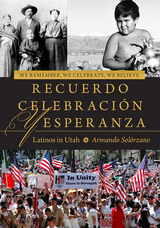
As Armando Solórzano and other researchers conducted oral history interviews with Mexicans, Mexican Americans, and other Latinos throughout the state, a number of participants began giving the team photographs, some dating back to 1895, which provided an opportunity to begin reconstructing a history through pictures, as a community project. Within two years, Solórzano and his colleagues were able to create the pictorial history of Mexican-Americans and Latinos in Utah and launched their efforts as a photo-documentary exhibit. This book collects photographs to represent different historical periods and the manifold contributions of Latinos to the state of Utah.
Readers who delve into this book may see these photos as artistic expressions or artifacts of history and photographic technique. Some readers will see images of their relatives and precursors who labored to create a better life in Utah. The images evoke both nostalgia for a time gone by and the possibility of reconstructing history with a fairer premise. The book does not tell the full story of Latinos in Utah but should prove to be a catalyst, inspiring others to continue documenting and reconstructing the neglected threads of Utah’s history, making it truly the history of all of us.
Recipient of the Meritorious Book Award from the Utah Division of State History.
Howard draws on FBI files, Moscow documents, and the records of the U.S. Communist Party. He surveys these black Communists addressing a wide range of vital issues such as the Great Depression, World War II, genocide and the Cold War.
We Shall Be Free! presents an important section of the African American community whose thought has been minimized, discounted, or overlooked altogether by the historical profession in general.

Weapon of the Strong analyses the forms of US state terrorism through exclusive, never before published interviews with leading commentators and theorists, including Noam Chomsky, Edward S. Herman, Richard A. Falk, Judith Butler, Ted Honderich, Norman Finkelstein and Gilbert Achcar. The interviews explore the different aspects of state terrorism: its functions, institutional supports and the legal and moral arguments surrounding it, and consider specific case studies in Europe, Latin America and the Middle East.
Weapon of the Strong makes an indispensable contribution to contemporary debates on terrorism and constructs a damning critique of US foreign policy from World War Two to the present day.
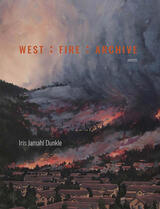


In early 1947 residents of the west side of Carbondale, Pennsylvania began noticing a peculiar steam escaping from the ground. An investigation into this phenomenon revealed that Carbondale was slowly but steadily being destroyed by a burning inferno deep below its surface—a fire raging through the deserted anthracite coal mine shafts that twisted and turned beneath that part of the city. After several years of attempting to contain the fire by flushing, municipal leaders decided that the only sure way of eliminating the threat to the community was by digging it out. To eradicate the burning menace, hundreds of homes and buildings were purchased and destroyed, and what was once a vibrant neighborhood became an abandoned wasteland.
Historian Kathleen Purcell Munley narrates here the story of this great fire, identifying its source, tracing its history, and, through personal interviews with former Carbondale residents, reveals its physical and psychological toll. The mine fire destroyed the West Side as it was, but this volume will keep its memory alive and preserve an important chapter in the history of Carbondale and Pennsylvania.
Using comparative data from the Upper Little Colorado and Zuni regions, Duff demonstrates differences in patterns of interaction within and between regions with different population densities. He then links these differences to such factors as occupational history, immigrant populations, the negotiation of social identities, and the emergence of new ritual systems. Following abandonments in the Four Corners area in the late 1200s, immigrants with different historical backgrounds occupied many Western Pueblo regions—in contrast to the Hopi and Zuni regions, which had more stable populations and deeper historical roots.
Duff uses chemical analyses of ceramics to document exchange among several communities within these regions, showing that people in less densely settled regions were actively recruited by residents of the Hopi and Zuni regions to join their settlements. By the time of the arrival of the Spaniards, two distinct social and territorial groups—the Hopi and Zuni peoples—had emerged from this scattering of communities. Duff's new interpretations, along with new data on ceramic exchange patterns, suggest that interaction is a better way to measure identity than more commonly used criteria. His work offers new perspectives on the role of ritual in social organization and on identity formation in Pueblo IV society and is rich in implications for the study of other sedentary, middle-range societies.
This compelling collection of fourteen essays explores the enduring theme of exile in Shakespeare’s works and their global afterlives, offering a timely and thought-provoking response to the modern age of displacement. Building on Edward Said’s observation that exile today is marked by its unprecedented scale—driven by war, imperialism, totalitarianism, climate change, and systemic injustice—this volume traces the ideological and cultural forces that shape experiences of exile across time and geography.
Shakespeare’s plays, deeply haunted by exile in its many guises—political, religious, cultural, and gendered—serve as a rich site for interrogating identity, belonging, and otherness.

José García
put a thirty-five to me
my mother was in the other room
He would have done us both
if not for the lust of my fear
This new Mexican American/Chicano voice is all at once arresting, bracing, shocking, and refreshing. This is not the poetry you learned in school. It owes as much to hip hop as it does to the canon. But Valadez has paid his academic dues, and he certainly knows how to craft a poem. It’s just that he does it his way.
i anagram and look and subject to deformation and reconfiguring . . .
it ain’t events or blocks that ahm jettisoning through this process
it be layers of meaning, identity, narrative, and ego that gets peeled off
i can only increase my own understanding
Newly published lectures by Foucault on critique, Enlightenment, and the care of the self—now in paperback.
On May 27, 1978, Michel Foucault gave a lecture to the French Society of Philosophy where he redefined his entire philosophical project in light of Immanuel Kant’s 1784 text “What Is Enlightenment?” Foucault strikingly characterizes critique as the political and moral attitude consisting in the “art of not being governed like this,” one that performs the function of destabilizing power relations and creating the space for a new formation of the self within the “politics of truth.”
This volume presents the first critical edition of this crucial lecture alongside a previously unpublished lecture about the culture of the self and three public debates with Foucault at the University of California, Berkeley, in April 1983. There, for the first time, Foucault establishes a direct connection between his reflections on the Enlightenment and his analyses of Greco-Roman antiquity. However, far from suggesting a return to the ancient culture of the self, Foucault invites his audience to build a “new ethics” that bypasses the traditional references to religion, law, and science.
In this book, Jean Clottes, one of the most renowned figures in the study of cave paintings, pursues an answer to this “why” of Paleolithic art. While other books focus on particular sites and surveys, Clottes’s work is a contemplative journey across the world, a personal reflection on how we have viewed these paintings in the past, what we learn from looking at them across geographies, and what these paintings may have meant—what function they may have served—for their artists. Steeped in Clottes’s shamanistic theories of cave painting, What Is Paleolithic Art? travels from well-known Ice Age sites like Chauvet, Altamira, and Lascaux to visits with contemporary aboriginal artists, evoking a continuum between the cave paintings of our prehistoric past and the living rock art of today. Clottes’s work lifts us from the darkness of our Paleolithic origins to reveal, by firelight, how we think, why we create, why we believe, and who we are.
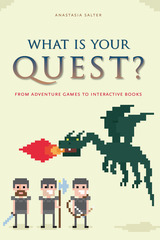
One of the earliest models for this new way of telling stories was the adventure game, the kind of game centered on quests in which the characters must overcome obstacles and puzzles. After they fell out of fashion in the 1990s, fans made strenuous efforts to keep them alive and to create new games in the genre. Such activities highlight both the convergence of game and story and the collapsing distinction between reader and author. Continually defying the forces of obsolescence, fans return abandoned games to a playable state and treat stories as ever-evolving narratives. Similarly, players of massive multiplayer games become co-creators of the game experience, building characters and creating social networks that recombine a reading and gaming community.
The interactions between storytellers and readers, between programmers and creators, and among fans turned world-builders are essential to the development of innovative ways of telling stories. And at the same time that fan activities foster the convergence of digital gaming and storytelling, new and increasingly accessible tools and models for interactive narrative empower a broadening range of storytellers. It is precisely this interactivity among a range of users surrounding these new platforms that is radically reshaping both e-books and games and those who read and play with them.
Throughout the book, readers encounter scenes from over two thousand years of history, mathematics, and music: Pythagoras using pebbles to articulate didactic number games to his disciples; Galileo fretting a hill and listening with a musician’s ear to calculate the rate of acceleration under gravity; Rameau trapping Western music in a five-limit tuning system, and what could have been if he were more adept with numbers. Even when drawing on classical sources to explore canonical figures like Saint Augustine, What Music Did offers idiosyncratic critical insights that highlight our ongoing cultural reverence when answers result in simple whole number ratios like 3:2, 4:3, or 5:4. What Music Did is Tony Conrad’s extended indictment of music’s role, from the Pythagoreans to the twentieth century, in upholding the use of number as a clandestine and circumscribed armature of power.

Shonna Trinch and Edward Snajdr, a sociolinguist and an anthropologist respectively, show how the beliefs and ideas that people take as truths about language and its speakers are deployed in these different sign types. They also present in-depth ethnographic case studies that reveal how gentrification and corporate redevelopment in Brooklyn are intimately connected to public communication, literacy practices, the transformation of motherhood and gender roles, notions of historical preservation, urban planning, and systems of privilege. Far from peripheral or irrelevant, shop signs say loud and clear that language displayed in public always matters.
This book is the recipient of the 2021 Norman L. and Roselea J. Goldberg Prize from Vanderbilt University Press for the best book in the area of art or medicine.
In this lively and provocative book, two feminist public sociologists turn to classical social thinkers—W. E. B. Du Bois, Max Weber, Karl Marx, and Émile Durkheim—to understand a series of twenty-first century social traumas, including the massacre at Columbine High School, the 9/11 attacks, the torture at Abu Ghraib prison, and Hurricane Katrina. Each event was overwhelming in its own right, while the relentless pace at which they occurred made it nearly impossible to absorb and interpret them in any but the most superficial ways. Yet, each uncovered social problems that cry out for our understanding and remediation.
In When the Center Is on Fire, Becky Thompson and Diane Harriford assert that classical social theorists grappled with the human condition in ways that remain profoundly relevant. They show, for example, that the loss of "double consciousness" that Du Bois identified in African Americans enabled political elites to turn a blind eye to the poverty and vulnerability of many of New Orleans's citizens. The authors' compelling, sometimes irreverent, often searing interpretations make this book essential reading for students, activists, generations X, Y, and Z, and everybody bored by the 6 o'clock news.
Heather D. Switzer's interviews with over one hundred Kenyan Maasai schoolgirls challenge the widespread view of education as a silver bullet solution to global poverty. In their own voices, the girls offer incisive insights into their commitments, aspirations, and desires. Switzer weaves this ethnographic material into an astute analysis of historical literature, education and development documents, and theoretical literature. Maasai schoolgirls express a particular knowledge about themselves and provocative hopes for their futures. Yet, as Switzer shows, new opportunities force them to face, and navigate, new vulnerabilities and insecurities within a society that is itself in flux.
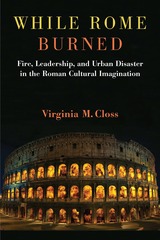
Working in the increasingly repressive environment of the early principate, Roman authors frequently employed “figured” speech and mythopoetic narratives to address politically risky topics. In response to shifting political and social realities, the literature of the early imperial period reimagines and reanimates not just historical fires, but also archetypal and mythic representations of conflagration. Throughout, the author engages critically with the growing subfield of disaster studies, as well as with theoretical approaches to language, allusion, and cultural memory.
What might a sensible community choose to do if its economy has fallen apart and becoming a ghost town is not an acceptable option? Unfortunately, answers to this question have long been measured against an implicit standard: the postwar economy of the 1950s. After showing why that economy provides an implausible standard—made possible by the lack of economic competition from the European and Asian countries, winners or losers, touched by the war—John Henry Schlegel attempts to answer the question of what to do.
While Waiting for Rain first examines the economic history of the United States as well as that of Buffalo, New York: an appropriate stand-in for any city that may have seen its economy start to fall apart in the 1960s, 70s, and 80s. It makes clear that neither Buffalo nor the United States as a whole has had an economy in the sense of “a persistent market structure that is the fusion of an understanding of economic life with the patterns of behavior within the economic, political, and social institutions that enact that understanding” since both economies collapsed. Next, this book builds a plausible theory of how economic growth might take place by examining the work of the famous urbanist, Jane Jacobs, especially her book Cities and the Wealth of Nations. Her work, like that of many others, emphasizes the importance of innovation for economic growth, but is singular in its insistence that such innovation has to come from local resources. It can neither be bought nor given, even by well-intentioned political actors. As a result Americans generally, as well as locally, are like farmers in the midst of a drought, left to review their resources and wait. Finally, it returns to both the local Buffalo and the national economies to consider what these political units might plausibly do while waiting for an economy to emerge.
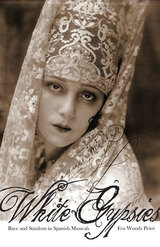
Little has been written about the Spanish film musical, a genre usually associated with the early Franco dictatorship and dismissed by critics as reactionary, escapist fare. A timely and valuable corrective, White Gypsies shows how the Spanish folkloric musical films of the 1940s and ’50s are inextricably tied to anxious concerns about race—especially, but not only, Gypsiness.
Focusing on the processes of identity formation in twentieth-century Spain—with multifaceted readings of the cinematic construction of class, gender, and sexuality—Eva Woods Peiró explores how these popular films allowed audiences to negotiate and imaginatively, at times problematically, resolve complex social contradictions. The intricate interweaving of race and modernity is particularly evident in her scrutiny of a striking popular phenomenon: how the musicals progressively whitened their stars, even as their story lines became increasingly Andalusianized and Gypsified.
White Gypsies reveals how these imaginary individuals constituted a veritable cultural barometer of how racial thinking was projected and understood across a broad swath of popular Spanish cinema.
Page shows how the New York Times presented a restricted set of opinions on whether to go to war with Iraq, shutting out discussion of compromises favored by many Americans. He then examines the media's negative reaction to the Bush administration's claim that riots in Los Angeles were caused by welfare programs. Finally, he shows how talk shows overcame the elite media's indifference to widespread concern about Zoe Baird's hiring of illegal aliens. Page's provocative conclusion identifies the conditions under which media outlets become political actors and actively shape and limit the ideas and information available to the public.
Arguing persuasively that a diversity of viewpoints is essential to true public deliberation, this book will interest students of American politics, communications, and media studies.
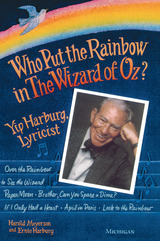
Many of us can sing along with Dorothy when she imagines a place "Over the Rainbow." And we all remember the Depression-era classic "Brother, Can You Spare a Dime?" But very few can name the man who put the words to these celebrated hallmarks of American music- Yip Harburg. Five hundred songs spanning a fifty-year career bear witness to the brilliance of this until-now obscure figure.
Plunge into this scrupulously documented volume and discover how Harburg, once a poet of light verse, played a major role in the transformation of the Broadway revue into the sophisticated musical of the 1940s and 1950s. With extensive and exclusive interviews and lyrical analysis, the authors capture Harburg's wit, distinctive voice, and creative and collaborative methods.
Inquiry into Harburg's Jewish, New York City roots, apprenticeship in his craft, and involvement in the radical politics of the 1930s- he was blacklisted in the 1950s- puts into context the seemingly irreconcilable skepticism and optimism that contoured this lyrical genius's life and work.
Harold Meyerson is Executive Editor and chief political columnist, L.A. Weekly, and is on the editorial board of Dissent. Ernie Harburg is a social psychologist and epidemiologist at the University of Michigan, coauthor (with Bernard Rosenberg) of The Broadway Musical: Collaboration in Commerce and Art, and Yip Harburg's son.
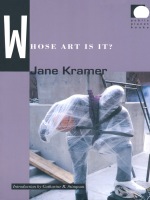
This compelling narrative raises questions about community and public art policies, about stereotypes and multiculturalism. With wit, drama, sympathy, and circumspection, Kramer draws the reader into the multicultural debate, challenging our assumptions about art, image, and their relation to community. Her portrait of the South Bronx takes the argument to its grass roots—provocative, surprising in its contradictions and complexities and not at all easy to resolve.
Accompanied by an introduction by Catharine R. Stimpson exploring the issues of artistic freedom, "political correctness," and multiculturalism, Whose Art Is It? is a lively and accessible introduction to the ongoing debate on representation and private expression in the public sphere.
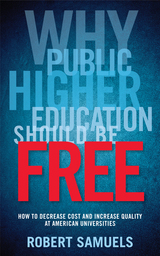
In Why Public Higher Education Should Be Free, Robert Samuels argues that many institutions of higher education squander funds and mislead the public about such things as average class size, faculty-to-student ratios, number of faculty with PhDs, and other indicators of educational quality. Parents and students seem to have little knowledge of how colleges and universities have been restructured over the past thirty years.
Samuels shows how research universities have begun to function as giant investment banks or hedge funds that spend money on athletics and administration while increasing tuition costs and actually lowering the quality of undergraduate education. In order to fight higher costs and lower quality, Samuels suggests, universities must reallocate these misused funds and concentrate on their core mission of instruction and related research.
Throughout the book, Samuels argues that the future of our economy and democracy rests on our ability to train students to be thoughtful participants in the production and analysis of knowledge. If leading universities serve only to grant credentials and prestige, our society will suffer irrevocable harm. Presenting the problem of how universities make and spend money, Samuels provides solutions to make these important institutions less expensive and more vital. By using current resources in a more effective manner, we could even, he contends, make all public higher education free.
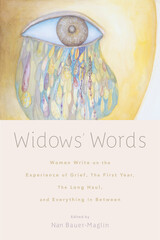
Some were widowed young, while others were married for decades. Some cared for their late partners through long terminal illnesses, while others lost their partners suddenly. Some had male partners, while others had female partners. Yet each of these women faced the same basic dilemma: how to go on living when a part of you is gone.
Widows’ Words is arranged chronologically, starting with stories of women preparing for their partners’ deaths, followed by the experiences of recent widows still reeling from their fresh loss, and culminating in the accounts of women who lost their partners many years ago but still experience waves of grief. Their accounts deal honestly with feelings of pain, sorrow, and despair, and yet there are also powerful expressions of strength, hope, and even joy. Whether you are a widow yourself or have simply experienced loss, you will be sure to find something moving and profound in these diverse tales of mourning, remembrance, and resilience.
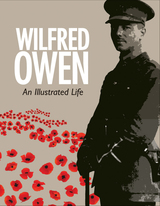
This generously illustrated book tells the story of Owen’s life and work, from his birth in 1893 to his tragic death just one week before the signing of the armistice that would end the war. The shocking realism of poems such as “Strange Meeting” and the angry disillusionment of “Anthem for Doomed Youth” reveal Owen’s transformation from a romantic youth steeped in the poetry of Keats to a mature soldier awakened to the horrors of the Western Front.
Drawing on numerous manuscripts, artifacts, and family photographs, this book gives a comprehensive view of the relationship between the poet’s lived experience and his writing that will appeal equally to both those well-versed in Owen’s work and those seeking a well-researched, accessible introduction.
William Faulkner - American Writers 3 was first published in 1959. Minnesota Archive Editions uses digital technology to make long-unavailable books once again accessible, and are published unaltered from the original University of Minnesota Press editions.
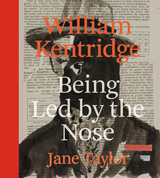
Kentridge has long been admired for his unconventional use of conventional media to produce art that is stunning, evocative, and narratively powerful—and how he works is as important as what he creates. This book is more than just a simple record of The Nose. The opera serves as a springboard into a bracing conversation about how Kentridge’s methods serve his unique mode of expression as a narrative and political artist. Taylor draws on his etchings, sculptures, and drawings to render visible the communication that occurs between his mind and hand as he thinks through the activity of making. Beautifully illustrated in color, William Kentridge offers striking insights about one of the most innovative artists of our present moment.


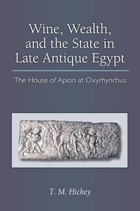
The "glorious house" of the senatorial family of the Flavii Apiones is the best documented economic entity of the Roman Empire during the fifth through seventh centuries, that critical period of transition between the classical world and the Middle Ages. For decades, the rich but fragmentary manuscript evidence that this large agricultural estate left behind, preserved for 1,400 years by the desiccating sands of Egypt, has been central to arguments concerning the agrarian and fiscal history of Late Antiquity, including the rise of feudalism.
Wine, Wealth, and the State in Late Antique Egypt is the most authoritative synthesis concerning the economy of the Apion estate to appear to date. T. M. Hickey examines the records of the family's wine production in the sixth century in order to shed light on ancient economic practices and economic theory, as well as on the wine industry and on estate management. Based on careful study of the original manuscripts, including unpublished documents from the estate archive, he presents controversial conclusions, much at odds with the "top down" models currently dominating the scholarship.

Winner, 2024 J. G. Ragsdale Book Award, Arkansas Historical Association
Winner, 2024 Booker Worthen Literary Prize
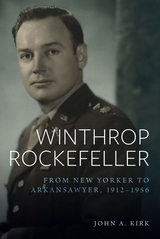
Why did Winthrop Rockefeller, scion of one of the most powerful families in American history, leave New York for an Arkansas mountaintop in the 1950s? In this richly detailed biography of the former Arkansas governor, John A. Kirk delves into the historical record to fully unravel that mystery for the first time. Kirk pursues clues threaded throughout Rockefeller’s life, tracing his family background, childhood, and education; his rise in the oil industry from roustabout to junior executive; his military service in the Pacific during World War II, including his involvement in the battles of Guam, Leyte, and Okinawa; his postwar work in race relations, health, education, and philanthropy; his marriage to and divorce from Barbara “Bobo” Sears; and the birth of his only child, future Arkansas lieutenant governor Win Paul Rockefeller. This careful examination of Winthrop Rockefeller’s first forty-four years casts a powerful new light on his relationship with his adopted state, where his legacy continues to be felt more than half a century after his governorship.

-Anthony Lewis, New York Times columnist, and Pulitzer Prize-winning
author of Gideon's Trumpet
"The fascinating, eloquent, and skillfully edited oral memoir of a distinguished public servant, who was at the epicenter of major legal controversies that his memoir illuminates. A major contribution to modern American legal history."
-Richard A. Posner
"With All Deliberate Speed provides an insider's rich account, spanning over thirty years, of the inner workings of the Supreme Court, the Solicitor General's Office and the Federal Trade Commission that anyone seriously interested in a frank behind-the-scenes view of the federal government should find exceptionally provocative and intriguing"
-Drew Days III, Alfred M. Rankin Professor of Law, Yale University, and former Solicitor General of the United States, 1993-96
From a modest childhood in Patterson, N. J., Philip Elman rose to become clerk for the great Supreme Court Justice Felix Frankfurter, and then to a position in the U.S. Solicitor General's Office. As a member of that office, Philip Elman had an exceptional vantage point on one of the most momentous cases in U.S. Supreme Court history: Brown v. Board of Education.
In this oral history memoir of Elman's life, With All Deliberate Speed, author Norman I. Silber reveals the maneuvering that led to the Court's overturning the doctrine of "separate but equal." Working behind the scenes, it was Justice Department attorney Elman who came up with the concept of gradual integration-an idea that worked its way into the final decision as the famous phrase "with all deliberate speed." Though this expression angered those pressing for immediate desegregation, Elman claims that it unified a divided Court, thus enabling them to stand together against the evil of segregation.
With All Deliberate Speed records a decisive moment in Supreme Court history, but it is also Philip Elman's unforgettable oral memoir-the story of his entire career in government service, including his work with Attorney General Robert F. Kennedy as commissioner of the FTC, and his role in founding the modern consumer protection movement, which includes the antismoking campaign that put the Surgeon General's warning on cigarette packs.
At once rich historical testimony and a gripping read, With All Deliberate Speed offers a rarely glimpsed insider's understanding of the politics of the American legal system.
When Arkansas seceded from the Union in 1861, it was a thriving state. But the Civil War and Reconstruction left it reeling, impoverished, and so deeply divided that it never regained the level of prosperity it had previously enjoyed. Although most of the major battles of the war occurred elsewhere, Arkansas was critical to the Confederate war effort in the vast Trans-Mississippi region, and Arkansas soldiers served—some for the Union and more for the Confederacy—in every major theater of the war. And the war within the state was devastating. Union troops occupied various areas, citizens suffered greatly from the war’s economic disruption, and guerilla conflict and factional tensions left a bitter legacy. Reconstruction was in many ways a continuation of the war as the prewar elite fought to regain economic and political power.
In this, the fourth volume in the Histories of Arkansas series, Thomas DeBlack not only describes the major players and events in this dramatic and painful story, but also explores the experiences of ordinary people. Although the historical evidence is complex—and much of the secondary literature is extraordinarily partisan—DeBlack offers a balanced, vivid overview of the state’s most tumultuous period.
“The story of the marines in France is told with authority and interest.”—Booklist
“It is one of the books about the American war effort which is well worth keeping as well as reading.”—Outlook
“A well-written and complete account.”—Library Bulletin
In an area of woods smaller than New York City’s Central Park, the United States Marines made a desperate and dramatic stand against the might of the Imperial Germany Army’s final offensive in June 1918. Had the Germans broken through the lines as planned, there would have been no Allied forces between them and Paris. World War I had stagnated for nearly four years, and this last German push was a desperate, but powerful gamble to finally bring the war to a close. As at Guadalcanal during World War II, the enemy had not anticipated the ferocity and doggedness of the United States Marines. Leading this small expeditionary force was Brigadier General Albertus Wright Catlin. For most of the month of June the marines fought the Germans at close range, using their rifles effectively and engaging in hand-to-hand combat. Toward the end of the battle, Catlin was shot in the chest by a sniper and removed from the field. While recuperating, he began “With the Help of God and a Few Marines”, his account of the marines’ experience in France, including what became known as the Battle of Belleau Wood. First published in 1919, and considered among the finest American memoirs from World War I, it is notable for its description of what it means to be a United States Marine—an account as relevant today as it was nearly a century ago—and its straightforward depiction of life and death on the Western Front in the last months of the war.
The essays in this collection—many of which are not widely available today—either initiated or gave critical definition to specific periods or movements of African American literature. They address issues such as integration, separatism, political action, black nationalism, Afrocentricity, black feminism, as well as the role of art, the artist, the critic, and the audience. With selections from Langston Hughes, Sterling Brown, W. E. B. DuBois, Zora Neale Hurston, Richard Wright, James Baldwin, Toni Morrison, Barbara Smith, Alice Walker, Henry Louis Gates, Jr., and many others, this definitive collection provides a dynamic model of the cultural, ideological, historical, and aesthetic considerations in African American literature and literary criticism.
A major contribution to the study of African American literature, this volume will serve as a foundation for future work by students and scholars. Its importance will be recognized by all those interested in modern literary theory as well as general readers concerned with the African American experience.
Selections by (partial list): Houston A. Baker, Jr., James Baldwin, Sterling Brown, Barbara Christian, W. E. B. DuBois, Ralph Ellison, LeRoi Jones, Sarah Webster Fabio, Henry Louis Gates, Jr., W. Lawrence Hogue, Langston Hughes, Zora Neale Hurston, Alain Locke, Deborah E. McDowell, Toni Morrison, J. Saunders Redding, George Schuyler, Barbara Smith, Valerie Smith, Hortense J. Spillers, Robert B. Stepto, Alice Walker, Margaret Walker, Mary Helen Washington, Richard Wright
In Without Empathy, MK Raghavendra investigates how irony and satire function in cinema by focusing on the work of eight visionary directors—Luis Buñuel, R.W. Fassbinder, Stanley Kubrick, Robert Altman, Paul Verhoeven, Aki Kaurismäki, Aleksei Balabanov, and David Lynch. At a time when irony is increasingly scrutinized as a mode of expression, this book reconsiders its role in film, revealing how these auteurs deploy wit and subversion in ways that unsettle audience expectations.
Through close readings of selected works, Raghavendra identifies layers of meaning beneath the surface of films often misread. The book situates these directors within broader traditions of cinematic satire, while simultaneously interrogating what their work has to say about society, culture, and human folly. Without Empathy is a lucid read for scholars and students of film studies and communication, providing a provocative lens on how satirical intent is not always recognizable today and how its actual targets can make society uncomfortable.

In the final months of World War I, President Woodrow Wilson and many US allies decided to intervene in Siberia in order to protect Allied wartime and business interests, among them the Trans-Siberian Railroad, from the turmoil surrounding the Russian Revolution. American troops would remain until April 1920 with some of our allies keeping troops in Siberia even longer.
Few American citizens have any idea that the United States ever deployed soldiers to Siberia and that those soldiers eventually played a role in the Russian revolution while protecting the Trans-Siberian Railroad. Wolfhounds and Polar Bears relies on the detailed reports of the American Expeditionary Force (AEF) as well as on personal stories to bring this rarely discussed expedition to life.
Initial chapters recount the period in World War I when conditions in Russia pointed to the need for intervention as well as the varied reasons for that decision. A description of the military forces and the geographic difficulties faced by those forces operating in Siberia provide the baseline necessary to understand the AEF’s actions in Siberia. A short discussion of the Russian Railway Service Corps explains their essential and sometimes overlooked role in this story, and subsequent chapters provide a description of actual operations by the AEF.
Wolfhounds and Polar Bears: The American Expeditionary Force in Siberia, 1918–1920 may well be the most detailed study of the military aspects of the American intervention in Siberia ever undertaken, offering a multitude of details not available in any other book-length history.
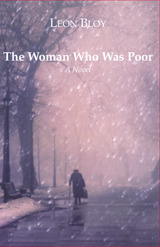
It is the story of a woman who is abysmally poor, brutally treated and exploited by her parents, living in the gutters of Paris, yet she retains the spiritual outlook and purity of a saint. We are spared no brutality, yet there are scenes of the most tender beauty.
The woman, Clotilde, becomes an artist's model, meeting all the great French writers, among them the gloomy and magnificent Marchenoir, who is Bloy himself. They are all impressed by the depth of her thoughts and feelings; she finally marries one of them. They are pitifully poor, and the pages that cover the birth and death of their child shock with horror while moving the reader in their tragic beauty and tenderness––for this is Bloy, always hovering between death and ecstasy. Left a widow, Clotilda finds her true vocation, a vocation of poverty. She is the woman who is poor, no other words describe her more accurately. The novel ends with those famous words of extraordinary optimism: "There is only one misery…not to be saints."

Maparyan organizes the contributions around five key ideas. The first section looks at womanist self-care as a life-saving strategy. The second examines healing the Earth as a prerequisite to healing ourselves. In Part Three, the essays illuminate how womanism’s politics of invitation provides a strategy for enlarging humanity’s circle of inclusion, while Part Four considers womanism as both a challenge and antidote to dehumanization. The final section delves into womanism’s potential for constructing worlds and futures. In addition, Maparyan includes a section of works by womanist visual artists.
Defiant and far-sighted, Womanism Rising takes readers on a journey into a new generation of concepts, ideas, and strategies for womanist studies.
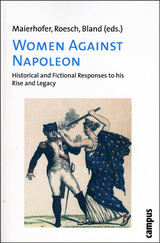

Following the conference in The Hague, Addams and Balch traveled around Europe as members of delegations visiting various governmental leaders to demand an end to the war. In this book they describe the activities of these delegations, painting a vivid portrait of the emerging women's peace movement.
With the continuing growth of the peace movement, the essays in Women at the Hague remain as timely as they were when first published in 1915. Addams, Balch, and Hamilton write compellingly about the organizing methods and collaborative spirit of the women's peace movement, conveying a strong awareness of the responsibility of women to protect the global community from the devastating effects of war.
In Women, Fire, and Dangerous Things, George M. Lakoff takes on the classical theory of categorization, which argues that the classes into which our minds and language group things and people are clearly defined and have strict boundaries. Lakoff argues instead that the mind and language build categories around protoypical examples, and that categories then radiate out from those central types. The book argues for embodied cognition and makes a powerful case that meaning cannot be reduced to abstract symbols or removed from the physical experiences of human perception.

Beyond women’s contribution to the war, the book also examines the effects of the First World War on gender roles in Romania. Feminist leaders expected that a wartime “training service” would entitle women to a life with full rights as citizens. Yet after the war, the situation returned to “normal,” and women largely continued to be excluded from the public sphere.
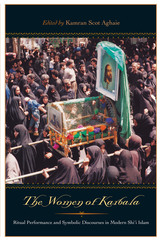
Commemorating the Battle of Karbala, in which the Prophet Mohammad's grandson Hosayn and seventy-two of his family members and supporters were martyred in 680 CE, is the central religious observance of Shi'i Islam. Though much has been written about the rituals that reenact and venerate Karbala, until now no one has studied women's participation in these observances. This collection of original essays by a multidisciplinary team of scholars analyzes the diverse roles that women have played in the Karbala rituals, as well as the varied ways in which gender-coded symbols have been used within religious and political discourses.
The contributors to this volume consider women as participants in and observers of the Karbala rituals in Iran, Iraq, Lebanon, India, Pakistan, and the United States. They find that women's experiences in the Shi'i rituals vary considerably from one community to another, based on regional customs, personal preferences, religious interpretations, popular culture, and socioeconomic background. The authors also examine the gender symbolism within the rituals, showing how it reinforces distinctions between the genders while it also highlights the centrality of women to the symbolic repertory of Shi'ism. Overall, the authors conclude that while Shi'i rituals and symbols have in some ways been used to restrict women's social roles, in other ways they have served to provide women with a sense of independence and empowerment.
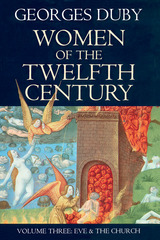
Drawing on these writings, Duby describes how women were thought to embody particular sins, such as sorcery, disobedience, and licentiousness. He evaluates Eve's role in man's fall from grace in the Garden of Eden and analyzes the reasoning behind the view that women are unstable, curious, frivolous creatures. He also notes that these charges are leveled against women, even as praise is heaped upon them for the conventional virtues they exhibit in their roles as wives and mothers.
As the final installment in Duby's three-volume study of French noblewomen of the twelfth century, Eve and the Church is the last work of this superb historian. It will be of interest to scholars of medieval history and women's history as well as to anyone interested in current debates about women and religion.
Georges Duby (1919-1996) was a member of the Académie française and for many years held the distinguished chair in medieval history at the Collège de France. His books include The Three Orders; The Age of Cathedrals; The Knight, the Lady, and the Priest; Love and Marriage in the Middle Ages; and History Continues, all published by the University of Chicago Press.
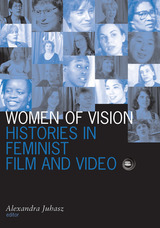
Legends and rising stars of feminist film and video tell their stories.
Alexandra Juhasz asked twenty-one women to tell their stories-women whose names make up a who is (and who will be) who of independent and experimental film and video. What emerged in the resulting conversations is a compelling (and previously underdocumented) history of feminism and feminist film and video, from its origins in the fifties and sixties to its apex in the seventies, to today.
Women of Vision is a companion piece to Juhasz’s 1998 documentary of the same name. The book presents the complete interviews, allowing readers to hear directly the voices of these articulate, passionate women in an interactive remembering of feminist media history. Juhasz’s introduction provides a historical, theoretical, and aesthetic context for the interviews. These subjects have all shaped late twentieth-century film and video in fundamental ways, either as artists, producers, distributors, critics, or scholars, and they all believe that media are the most powerful tools for effecting change. Yet they are a very diverse group, with widely varying personal and professional backgrounds. By presenting their interviews together, Juhasz shows the differences among those involved in feminist media, but also the connections among them, and the way in which the field has been enriched by their sharing of knowledge and power. In the end, Juhasz not only records these women’s careers, she broadens our understanding of feminism and shows how feminist history and documentary are made.Interviewees: Pearl Bowser; Margaret Caples; Michelle Citron; Megan Cunningham; Cheryl Dunye; Vanalyne Green; Barbara Hammer; Kate Horsfield; Carol Leigh; Susan Mogul; Juanita Mohammed; Frances Negrón-Muntaner; Eve Oishi; Constance Penley; Wendy Quinn; Julia Reichert; Carolee Schneemann; Valerie Soe; Victoria Vesna; and Yvonne Welbon.
The concluding volume of Women's History in Global Perspective discusses contemporary trends in gender and women's history. Bonnie G. Smith edits essays that include women and gender in the history of sub-Saharan Africa and Middle Eastern women since the rise of Islam. Other contributors offer a transnational approach to women in early and modern Europe; look at women's history in Russia and the Soviet Union; discuss the national period in Latin American women's history; and provide a global perspective on women in North American history after 1865.
Contributors: Bonnie S. Anderson, Ellen Dubois, Barbara Engel, Cheryl Johnson-Odim, Nikki R. Keddie, Asunción Lavrin, and Judith P. Zinsser
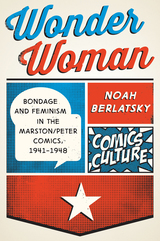
Comics expert Noah Berlatsky takes us on a wild ride through the Wonder Woman comics of the 1940s, vividly illustrating how Marston’s many quirks and contradictions, along with the odd disproportionate composition created by illustrator Harry Peter, produced a comic that was radically ahead of its time in terms of its bold presentation of female power and sexuality. Himself a committed polyamorist, Marston created a universe that was friendly to queer sexualities and lifestyles, from kink to lesbianism to cross-dressing. Written with a deep affection for the fantastically pulpy elements of the early Wonder Woman comics, from invisible jets to giant multi-lunged space kangaroos, the book also reveals how the comic addressed serious, even taboo issues like rape and incest.
Wonder Woman: Bondage and Feminism in the Marston/Peter Comics 1941-1948 reveals how illustrator and writer came together to create a unique, visionary work of art, filled with bizarre ambition, revolutionary fervor, and love, far different from the action hero symbol of the feminist movement many of us recall from television.
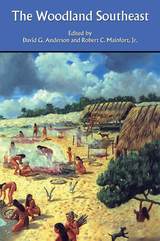
This collection presents, for the first time, a much-needed synthesis of the major research themes and findings that characterize the Woodland Period in the southeastern United States.
The Woodland Period (ca. 1200 B.C. to A.D. 1000) has been the subject of a great deal of archaeological research over the past 25 years. Researchers have learned that in this approximately 2000-year era the peoples of the Southeast experienced increasing sedentism, population growth, and organizational complexity. At the beginning of the period, people are assumed to have been living in small groups, loosely bound by collective burial rituals. But by the first millennium A.D., some parts of the region had densely packed civic ceremonial centers ruled by hereditary elites. Maize was now the primary food crop. Perhaps most importantly, the ancient animal-focused and hunting-based religion and cosmology were being replaced by solar and warfare iconography, consistent with societies dependent on agriculture, and whose elites were increasingly in competition with one another. This volume synthesizes the research on what happened during this era and how these changes came about while analyzing the period's archaeological record.
In gathering the latest research available on the Woodland Period, the editors have included contributions from the full range of specialists working in the field, highlighted major themes, and directed readers to the proper primary sources. Of interest to archaeologists and anthropologists, both professional and amateur, this will be a valuable reference work essential to understanding the Woodland Period in the Southeast.
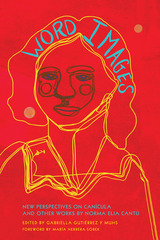
Contributors:
Steven W. Bender
Aurora Chang
Vanessa Fonseca
Gabriella Gutiérrez y Muhs
María Herrera-Sobek
Ellen McCracken
María Esther Quintana Millamoto
Aldo Ulisses Reséndiz Ramírez
Rose Rodríguez-Rabin
Jesús Rosales
Carlos Sibaja García
María Socorro Tabuenca
Juan Velasco
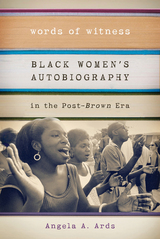
Exploring works by the critically acclaimed June Jordan and Edwidge Danticat, as well as by popular and emerging authors such as Melba Beals, Rosemary Bray, and Eisa Davis, Ards demonstrates how each text asserts countermemories to official—and often nostalgic—understandings of the civil rights and Black Power movements. She situates each writer as activist-citizen, adopting and remaking particular roles—warrior, “the least of these,” immigrant, hip-hop head—to crystallize a range of black feminist responses to urgent but unresolved political issues.

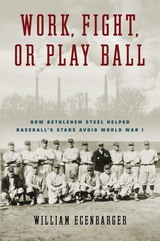
Some players used the steel mill and shipyard leagues to avoid wartime military duty, irking Major League owners, who saw their rosters dwindling. Bethlehem Steel President Charles Schwab (no relation to the financier) saw the league as a means to stave off employee and union organizing. Most fans loudly criticized the ballplayers, but nevertheless showed up to watch the action on the diamond.
Ecenbarger traces the 1918 Steel League’s season and compares the fates of the players who defected to industry or continued to play stateside with the travails of the Major Leaguers, such as Christy Mathewson, Ty Cobb, and Grover Cleveland Alexander, who served during the war.
Work, Fight, or Play Ball reveals the home field advantage brought on by the war, which allowed companies to profit from Major League players.
Clear-eyed and comprehensive, Workers against the City revises the view of a milestone case that continues to impact Americans' constitutional rights today.
The first book-length empirical investigation of writing center directors’ labor, The Working Lives of New Writing Center Directors presents a longitudinal qualitative study of the individual professional lives of nine new directors. Inspired by Kinkead and Harris’s Writing Centers in Context (1993), the authors adopt a case study approach to examine the labor these directors performed and the varied motivations for their labor, as well as the labor they ignored, deferred, or sidelined temporarily, whether or not they wanted to.
The study shows directors engaged in various types of labor—everyday, disciplinary, and emotional—and reveals that labor is never restricted to a list of job responsibilities, although those play a role. Instead, labor is motivated and shaped by complex and unique combinations of requirements, expectations, values, perceived strengths, interests and desires, identities, and knowledge. The cases collectively distill how different institutions define writing and appropriate resources to writing instruction and support, informing the ongoing wider cultural debates about skills (writing and otherwise), the preparation of educators, the renewal/tenuring of educators, and administrative “bloat” in academe.
The nine new directors discuss more than just their labor; they address their motivations, their sense of self, and their own thoughts about the work they do, facets of writing center director labor that other types of research or scholarship have up to now left invisible. The Working Lives of New Writing Center Directors strikes a new path in scholarship on writing center administration and is essential reading for present and future writing center administrators and those who mentor them.
Featuring both Greek and foreign productions from various genres and historical periods, the book ultimately works to establish connections between the various aesthetics of dominant representations of Athens.
Many iconic American classics, blockbusters, romantic comedies, and legal thrillers, as well as films examining Boston’s criminal underside, particularly in juxtaposition to the city’s elitist high society, were filmed on location in the city’s streets and back lots. World Film Locations: Boston looks in depth into a highly select group of forty-six films such as Love Story, Good Will Hunting, The Friends of Eddy Coyle, and The Social Network, among many others, presented at the intersection of critical analysis and stunning visual critique (with material from the films themselves as well as photographs of the contemporary city locations). Featuring articles and film scene reviews written by a variety of leading contemporary film writers, critics, and scholars, this book is a multimedia resource that will find a welcome audience in movie lovers in Beantown and beyond.
With World Film Locations: Chicago, critic Scott Jordan Harris takes readers on a cinematic tour of the city, featuring modern blockbusters and beloved classics. Along the way, scenes from almost fifty films made or set in the city are discussed, accompanied by full-color stills and interspersed with essays examining the city’s unique character onscreen. Among the contributors are Gordon Quinn, cofounder of Chicago’s Kartemquim Films; Elizabeth Weitzman, film critic for the New York Daily News; the BBC’s Samira Ahmed; and Steve James, director of the coming-of-age classic Hoop Dreams. For readers hoping to locate landmarks from favorite films, the book also includes detailed maps that point out key scenes.
A fun and fact-packed read, World Film Locations: Chicago will be welcomed by film fans and anyone planning a trip to the Windy City.
This new entry in the World Film Locations series offers the first-ever extended look at Cleveland on screen. Richly illustrated with images from dozens of productions, it reveals Cleveland to be usefully chameleonic, appealing to some filmmakers for its modern downtown’s ability to mimic more prominent (and more expensive) cities, to others for the way its shuttered factories and decaying docks signify contemporary urban distress. With entries on such classics as The Fortune Cookie, The Deer Hunter, A Christmas Story, and Marvel’s The Avengers, as well as lesser-known films, the volume reveals Cleveland to be a far more compelling, and far more varied, on-screen presence than even most film buffs would expect.
Like all the books in this series, World Film Locations: Cleveland is designed to appeal to cinephiles and scholars alike, while also serving as a silver screen souvenir for those who make the city their home as well as for those who visit it.
READERS
Browse our collection.
PUBLISHERS
See BiblioVault's publisher services.
STUDENT SERVICES
Files for college accessibility offices.
RECENTLY PUBLISHED



UChicago Accessibility Resources
home | accessibility | search | about | contact us
BiblioVault ® 2001 - 2026
The University of Chicago Press