
 A SCHOLARLY BOOK REPOSITORY
The commentators include leading preservation professionals, historians, writers, activists, journalists, architects, and urbanists. The essays offer a distinct vision for the future and address related questions, including, Who is a preservationist? What should be preserved? Why? How? What stories do we tell in preservation? How does preservation contribute to the financial, environmental, social, and cultural well-being of communities? And if the "arc of the moral universe . . . bends towards justice," how can preservation be a tool for achieving a more just society and world?
A history of the activism that made public spaces in American cities more accessible to women.
From the closing years of the nineteenth century, women received subtle—and not so subtle—messages that they shouldn’t be in public. Or, if they were, that they were not safe. Breaking the Gender Code tells the story of both this danger narrative and the resistance to it.
Historian Georgina Hickey investigates challenges to the code of urban gender segregation in the twentieth century, focusing on organized advocacy to make the public spaces of American cities accessible to women. She traces waves of activism from the Progressive Era, with its calls for public restrooms, safe and accessible transportation, and public accommodations, through and beyond second-wave feminism, and its focus on the creation of alternative, women-only spaces and extensive anti-violence efforts. In doing so, Hickey explores how gender segregation intertwined with other systems of social control, as well as how class, race, and sexuality shaped activists' agendas and women's experiences of urban space. Drawing connections between the vulnerability of women in public spaces, real and presumed, and contemporary debates surrounding rape culture, bathroom bills, and domestic violence, Hickey unveils both the strikingly successful and the incomplete initiatives of activists who worked to open up public space to women.

In Bridging a Great Divide, award-winning environmental journalist Kathie Durbin draws on interviews, correspondence, and extensive research to tell the story of the major shifts in the Gorge since the Act’s passage. Sweeping change has altered the Gorge’s landscape: upscale tourism and outdoor recreation, gentrification, the end of logging in national forests, the closing of aluminum plants, wind farms, and a population explosion in the metropolitan area to its west. Yet, to the casual observer, the Gorge looks much the same as it did twenty-five years ago.
How can we measure the success of the Columbia River Gorge National Scenic Area Act? In this insightful and revealing history, Durbin suggests that the answer depends on who you are: a small business owner, an environmental watchdog group, a chamber of commerce. The story of the Columbia River Gorge National Scenic Area is the story of the Pacific Northwest in microcosm, as the region shifts from a natural-resource-based economy to one based on recreation, technology, and quality of life.
A Wolfson History Prize Finalist
A New Statesman Book of the Year
A Sunday Times Book of the Year
“Timely and authoritative…I enjoyed it immensely.”
—Philip Pullman
“If you care about books, and if you believe we must all stand up to the destruction of knowledge and cultural heritage, this is a brilliant read—both powerful and prescient.”
—Elif Shafak
Libraries have been attacked since ancient times but they have been especially threatened in the modern era, through war as well as willful neglect. Burning the Books describes the deliberate destruction of the knowledge safeguarded in libraries from Alexandria to Sarajevo, from smashed Assyrian tablets to the torching of the Library of Congress. The director of the world-famous Bodleian Libraries, Richard Ovenden, captures the political, religious, and cultural motivations behind these acts. He also shines a light on the librarians and archivists preserving history and memory, often risking their lives in the process.
More than simply repositories for knowledge, libraries support the rule of law and inspire and inform citizens. Ovenden reminds us of their social and political importance, challenging us to protect and support these essential institutions.
“Wonderful…full of good stories and burning with passion.”
—Sunday Times
“The sound of a warning vibrates through this book.”
—The Guardian
“Essential reading for anyone concerned with libraries and what Ovenden outlines as their role in ‘the support of democracy, the rule of law and open society.’”
—Wall Street Journal
“Ovenden emphasizes that attacks on books, archives, and recorded information are the usual practice of authoritarian regimes.”
—Michael Dirda, Washington Post
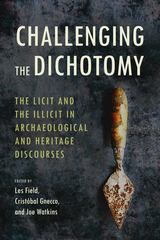
Utilizing both ethnographic and archaeological examples, contributors ask big questions vital to anyone working in cultural heritage. What are the issues surrounding private versus museum collections? What is considered looting? Is archaeology still a form of colonialization? The contributors discuss this vis-à-vis a global variety of contexts and cultures from the United States, South Africa, Argentina, New Zealand, Honduras, Colombia, Palestine, Greece, Canada, and from the Nasa, Choctaw, and Maori nations.
Challenging the Dichotomy underscores how dichotomies—such as licit/illicit, state/nonstate, public/private, scientific/nonscientific—have been constructed and how they are now being challenged by multiple forces. Throughout the eleven chapters, contributors provide examples of hegemonic relationships of power between nations and institutions. Scholars also reflect on exchanges between Western and non-Western epistemologies and ontologies.
The book’s contributions are significant, timely, and inclusive. Challenging the Dichotomy examines the scale and scope of “illicit” forms of excavation, as well as the demands from minority and indigenous subaltern peoples to decolonize anthropological and archaeological research.

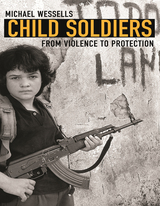
Compelling and humane, this book reveals the lives of the 300,000 child soldiers around the world, challenging stereotypes of them as predators or a lost generation. Kidnapped or lured by the promise of food, protection, revenge, or a better life, children serve not only as combatants but as porters, spies, human land mine detectors, and sexual slaves. Nearly one-third are girls, and Michael Wessells movingly reveals the particular dangers they face from pregnancy, childbirth complications, and the rejection they and their babies encounter in their local contexts.
Based mainly on participatory research and interviews with hundreds of former child soldiers worldwide, Wessells allows these ex-soldiers to speak for themselves and reveal the enormous complexity of their experiences and situations. The author argues that despite the social, moral, and psychological wounds of war, a surprising number of former child soldiers enter civilian life, and he describes the healing, livelihood, education, reconciliation, family integration, protection, and cultural supports that make it possible. A passionate call for action, Child Soldiers pushes readers to go beyond the horror stories to develop local and global strategies to stop this theft of childhood.
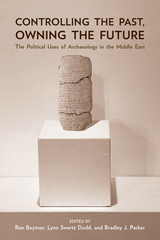
The diverse contributions to this volume share a common framework in which the political use of the past is viewed as a process of social discourse. According to this model, political appropriations are seen as acts of social communication designed to accrue benefits to particular groups. Thus the contributors pay special attention to competing social visions and the filters these impose on archaeological data. But they are also attentive to the potential consequences of their own work. Indeed, as the editors remind us, “people’s lives may be affected, sometimes dramatically, because of the material remains that surround them.”
Rounding out this important volume are critiques by two top scholars who summarize and synthesize the preceding chapters.

The Copan Sculpture Museum in western Honduras features the extraordinary stone carvings of the ancient Maya city known as Copan. The city’s sculptors produced some of the finest and most animated buildings and temples in the Maya area, in addition to stunning monolithic statues and altars. The ruins of Copan were named a UNESCO World Heritage site in 1980, and more than 150,000 national and international tourists visit the ancient city each year.
Opened in 1996, the Copan Sculpture Museum was initiated as an international collaboration to preserve Copan’s original stone monuments. Its exhibits represent the best-known examples of building façades and sculptural achievements from the ancient kingdom of Copan. The creation of this on-site museum involved people from all walks of life: archaeologists, artists, architects, and local craftspeople. Today it fosters cultural understanding and promotes Hondurans’ identity with the past.
In The Copan Sculpture Museum, Barbara Fash—one of the principle creators of the museum—tells the inside story of conceiving, designing, and building a local museum with global significance. Along with numerous illustrations and detailed archaeological context for each exhibit in the museum, the book provides a comprehensive introduction to the history and culture of the ancient Maya and a model for working with local communities to preserve cultural heritage.
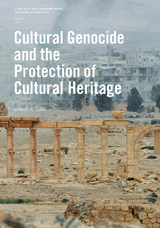

Intentional destruction of cultural heritage has a long history. Contemporary examples include the Bamiyan Buddhas in Afghanistan, mosques in Xinjiang, mausoleums in Timbuktu, and Greco-Roman remains in Syria. Cultural heritage destruction invariably accompanies assaults on civilians, making heritage attacks impossible to disentangle from the mass atrocities of genocide, war crimes, crimes against humanity, and ethnic cleansing. Both seek to eliminate people and the heritage with which they identify.
Cultural Heritage and Mass Atrocities assembles essays by thirty-eight experts from the heritage, social science, humanitarian, legal, and military communities. Focusing on immovable cultural heritage vulnerable to attack, the volume's guiding framework is the Responsibility to Protect (R2P), a United Nations resolution adopted unanimously in 2005 to permit international intervention against crimes of war or genocide. Based on the three pillars of prevent, react, and rebuild, R2P offers today's policymakers a set of existing laws and international norms that can and—as this book argues—must be extended to the protection of cultural heritage. Contributions consider the global value of cultural heritage and document recent attacks on people and sites in China, Guatemala, Iraq, Mali, Sri Lanka and Afghanistan, Syria, and Yemen. Comprehensive sections on vulnerable populations as well as the role of international law and the military offer readers critical insights and point toward research, policy, and action agendas to protect both people and cultural heritage. A concise abstract of each chapter is offered online in Arabic, Chinese, French, Russian, and Spanish to facilitate robust, global dissemination of the strategies and tactics offered in this pathbreaking call to action.
The free online edition of this publication is available at getty.edu/publications/cultural-heritage-mass-atrocities. Also available are free PDF, EPUB, and Kindle/MOBI downloads of the book.
Increasingly, the role of heritage management is to anticipate and guide future environmental change rather than to simply protect landscapes of the past. This charge presents a paradox for those invested in the preservation of the past: in order to preserve the historic environment, they have to collaborate with others who wish to change it, and in order to apply their expert knowledge, they must demonstrate its benefits for policy and society. The solution advocated here is an integrative landscape approach that draws on multiple disciplines and establishes links between archaeological-historical heritage and planning and between research and policy.

Preservation has traditionally focused on saving prominent buildings of historical or architectural significance. Preserving cultural landscapes-the combined fabric of the natural and man-made environments-is a relatively new and often misunderstood idea among preservationists, but it is of increasing importance. The essays collected in this volume-case studies that include the Little Tokyo neighborhood in Los Angeles, the Cross Bronx Expressway, and a rural island in Puget Sound-underscore how this approach can be fruitfully applied. Together, they make clear that a cultural landscape perspective can be an essential underpinning for all historic preservation projects.
Contributors: Susan Calafate Boyle, National Park Service; Susan Buggey, U of Montreal; Michael Caratzas, Landmarks Preservation Commission (NYC); Courtney P. Fint, West Virginia Historic Preservation Office; Heidi Hohmann, Iowa State U; Hillary Jenks, USC; Randall Mason, U Penn; Robert Z. Melnick, U of Oregon; Nora Mitchell, National Park Service; Julie Riesenweber, U of Kentucky; Nancy Rottle, U of Washington; Bonnie Stepenoff, Southeast Missouri State U.
Richard Longstreth is professor of American civilization and director of the graduate program in historic preservation at George Washington University.
Winner, 2022 Landscape Studies Initiative Award
Most people view cultural heritage sites as static places, frozen in time. In Cultural Landscapes of India, Amita Sinha subverts the idea of heritage as static and examines the ways that landscapes influence culture and that culture influences landscapes. The book centers around imagining, enacting, and reclaiming landscapes as subjects and settings of living cultural heritage. Drawing on case studies from different regions of India, Sinha offers new interpretations of links between land and culture using different ways of seeing—transcendental, romantic, and utilitarian. The idea of cultural landscape can be seen in ancient practices such as circumambulation and immersion in bodies of water that sustain engagement with natural elements. Pilgrim towns, medieval forts, religious sites, and contemporary memorial parks are sites of memory where myth and history converge. Engaging with these spaces allows us to reconstruct collective memory and reclaim not only historic landscapes, but ways of seeing, making, and remembering. Cultural Landscapes of India makes the case for reclaiming iconic landscapes and rethinking conventional approaches to conservation that take into consideration performative landscape as heritage.
The protection and accumulation of intellectual property rights—like property rights in general—is one of the most important contemporary American values. In his cogent book, The Cultural Production of Intellectual Property Rights, Sean Johnson Andrews shows that the meaning, power, and value of intellectual properties are the consequence of an extended process of cultural production.
Johnson Andrews argues that it is deeper ideological and historical roots which demand that, in the contemporary global, digital economy, all property rights be held sacrosanct and all value must flow back to the legal owner.
Johnson Andrews explains that if we want to rebalance the protection of copyrights and trademarks, we should focus on undermining the reified culture of property that underpins capitalism as a whole. He outlines a framework for analyzing culture; situates intellectual property rights in the history of capitalist property relations; synthesizes key theories of media, politics, and law; and ultimately provides scholars and activists a path to imagining a different future where we prioritize our collective production of value in the commons.
Cultural Resource Management (CRM) refers to the discovery, evaluation, and preservation of culturally significant sites, focusing on but not limited to archaeological and historical sites of significance. CRM stems from the National Historic Preservation Act, passed in 1966. In 1986, archaeologists reviewed the practice of CRM in the Great Basin. They concluded that it was mainly a system of finding, flagging, and avoiding—a means of keeping sites and artifacts safe. Success was measured by counting the number of sites recorded and acres surveyed.
This volume provides an updated review some thirty years later. The product of a 2016 symposium, its measures are the increase in knowledge obtained through CRM projects and the inclusion of tribes, the general public, industry, and others in the discovery and interpretation of Great Basin prehistory and history. Revealing both successes and shortcomings, it considers how CRM can face the challenges of the future. Chapters offer a variety of perspectives, covering highway archaeology, inclusion of Native American tribes, and the legacy of the NHPA, among other topics.

Drawing on court transcripts, gallery archives, exhibition reviews, private correspondence—and a striking series of cartoons and photographs—The Culture of Property traverses the history of gender, material culture, urban life, colonialism, Irish and Scottish nationalism, and British citizenship. This fascinating book challenges recent scholarship in museum studies in light of ongoing culture wars. It should be required reading for cultural policy makers, museum professionals, and anyone interested in the history of art and Britain.
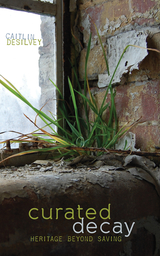
Transporting readers from derelict homesteads to imperiled harbors, postindustrial ruins to Cold War test sites, Curated Decay presents an unparalleled provocation to conventional thinking on the conservation of cultural heritage. Caitlin DeSilvey proposes rethinking the care of certain vulnerable sites in terms of ecology and entropy, and explains how we must adopt an ethical stance that allows us to collaborate with—rather than defend against—natural processes.
Curated Decay chronicles DeSilvey’s travels to places where experiments in curated ruination and creative collapse are under way, or under consideration. It uses case studies from the United States, Europe, and elsewhere to explore how objects and structures produce meaning not only in their preservation and persistence, but also in their decay and disintegration. Through accessible and engaging discussion of specific places and their stories, it traces how cultural memory is generated in encounters with ephemeral artifacts and architectures.
An interdisciplinary reframing of the concept of the ruin that combines historical and philosophical depth with attentive storytelling, Curated Decay represents the first attempt to apply new theories of materiality and ecology to the concerns of critical heritage studies.
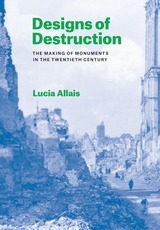
The twentieth century was the most destructive in human history, but from its vast landscapes of ruins was born a new architectural type: the cultural monument. In the wake of World War I, an international movement arose which aimed to protect architectural monuments in large numbers, and regardless of style, hoping not only to keep them safe from future conflicts, but also to make them worthy of protection from more quotidian forms of destruction. This movement was motivated by hopeful idealism as much as by a pragmatic belief in bureaucracy. An evolving group—including architects, intellectuals, art historians, archaeologists, curators, and lawyers—grew out of the new diplomacy of the League of Nations. During and after World War II, it became affiliated with the Allied Military Government, and was eventually absorbed by the UN as UNESCO. By the 1970s, this organization had begun granting World Heritage status to a global register of significant sites—from buildings to bridges, shrines to city centers, ruins to colossi.
Examining key episodes in the history of this preservation effort—including projects for the Parthenon, for the Cathedral of St-Lô, the temples of Abu Simbel, and the Bamyian Buddahs —Lucia Allais demonstrates how the group deployed the notion of culture to shape architectural sites, and how architecture in turn shaped the very idea of global culture. More than the story of an emergent canon, Designs of Destruction emphasizes how the technical project of ensuring various buildings’ longevity jolted preservation into establishing a transnational set of codes, values, practices. Yet as entire nations’ monumental geographies became part of survival plans, Allais also shows, this paradoxically helped integrate technologies of destruction—from bombs to bulldozers—into cultural governance. Thus Designs of Destruction not only offers a fascinating narrative of cultural diplomacy, based on extensive archival findings; it also contributes an important new chapter in the intellectual history of modernity by showing the manifold ways architectural form is charged with concretizing abstract ideas and ideals, even in its destruction.

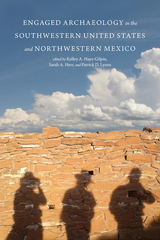
Organized around the theme of interdisciplinary perspectives, the book highlights collaborations with those who have other ways of knowing the past, from the traditional and proprietary knowledge of communities to new scientific methods, and considers the social context of archaeological practice and the modern relationships that inform interpretations of the past. Chapters show how cutting-edge practices lead to new archaeological understandings when archaeologists work in partnership with descendant and stakeholder communities and across international and disciplinary borders. Authors work across anthropological subfields and with the sciences, demonstrating that anthropological archaeology’s methods are starting points for investigation that allow for the expansion of understanding by incorporating long-remembered histories with innovative analytic methods.
Engaged Archaeology in the Southwestern United States and Northwestern Mexico identifies current and near-future trends in archaeological practice in the US Southwest and northwestern Mexico, including repatriation, community engagement, and cross-disciplinary approaches, and focuses on Native American archaeologists and their communities, research, collaborations, and interests. It will be of interest to archaeologists and anthropologists working in the Southwest and to any researchers interested in interdisciplinary approaches to archaeology, heritage studies, and the natural sciences.
Contributors: Christopher Caseldine, Chip Colwell, Guillermo Córdova Tello, Patrick Cruz, T. J. Ferguson, Cécile R. Ganteaume, Vernelda Grant, Neysa Grider-Potter, Christopher Grivas, Michael Heilen, Jane H. Hill, Leigh J. Kuwanwisiwma, Teresita Majewski, Debra L. Martin, Estela Martínez Mora, John A. McClelland, Emiliano Ricardo Melgar Tísoc, Darsita R. North, Scott Ortman, Peter J. Pilles Jr., Susan Sekaquaptewa, Arleyn W. Simon, Kimberly Spurr, Sarah Striker, Kerry F. Thompson, John A. Ware, Peter M. Whiteley, Lisa C. Young

Drawing on congressional hearing and debates, previously unpublished public opinion surveys, interviews with state officials and employees of the Department of the Interior, and internal documents from this and other government agencies, Tobin provides an in-depth analysis of the policies on endangered species and the policy relationships among the different units of government involved in implementation. He examines the resources that are available for the protection of endangered species and the way in which those resources are matched to the priorities. Tobin also discusses the processes by which species are classified as endangered, how these species’ critical habitats are determined and protected, and the successes, and mostly failures, of current recovery programs.
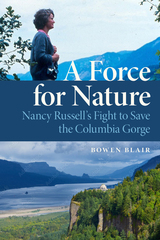
The 85-mile-long Columbia Gorge forms part of the border between Oregon and Washington and is one of the nation’s most historic and scenic landscapes. Many of the region’s cultural divisions boil over here—urban versus rural, west of the mountains versus east—as well as clashes over private property rights, management of public lands, and tribal treaty rights.
In the early 1980s, as a new interstate bridge linked the City of Portland to rural counties in Washington, the Gorge’s renowned vistas were on the brink of destruction. Nancy Russell, forty-eight years old and with no experience in advocacy, fundraising, or politics, built a grassroots movement that overcame 70 years of failed efforts and bitter opposition from both Oregon and Washington governors, five of the six Gorge counties, 41,000 Gorge residents, and the Reagan administration. While building her campaign, Russell stopped subdivisions, factories, and government neglect through litigation brought by her organization, Friends of the Columbia Gorge, and last-second land purchases by the Trust for Public Land (TPL). Initially ignored, then demonized, Russell’s tires were slashed and her life threatened.
The Columbia River Gorge National Scenic Area Act barely passed—on the last day of the congressional session in 1986—and was signed by a reluctant President Reagan hours before the bill would die. Russell positioned the Friends to be a watchdog and orchestrated the purchase of thousands of acres of land for the public. Bowen Blair, an attorney, former executive director of Friends of the Columbia Gorge, and TPL senior vice president, brings an insider’s perspective to the tumultuous and inspiring story of this conservation battle.
In this wide-ranging primer, leading experts in the field provide a detailed how-to for planners, designers, landscape architects, and citizen activists
Situated at the intersection of scholarship and practice, Heritage Keywords positions cultural heritage as a transformative tool for social change. This volume unlocks the persuasive power of cultural heritage—as it shapes experiences of change and crafts present and future possibilities from historic conditions—by offering new ways forward for cultivating positive change and social justice in contemporary social debates and struggles. It draws inspiration from deliberative democratic practice, with its focus on rhetoric and redescription, to complement participatory turns in recent heritage work.
Through attention to the rhetorical edge of cultural heritage, contributors to this volume offer innovative reworkings of critical heritage categories. Each of the fifteen chapters examines a key term from the field of heritage practice—authenticity, civil society, cultural diversity, cultural property, democratization, difficult heritage, discourse, equity, intangible heritage, memory, natural heritage, place, risk, rights, and sustainability—to showcase the creative potential of cultural heritage as it becomes mobilized within a wide array of social, political, economic, and moral contexts.
This highly readable collection will be of interest to students, scholars, and professionals in heritage studies, cultural resource management, public archaeology, historic preservation, and related cultural policy fields.
Contributors include Jeffrey Adams, Sigrid Van der Auwera, Melissa F. Baird, Alexander Bauer, Malcolm A. Cooper, Anna Karlström, Paul J. Lane, Alicia Ebbitt McGill, Gabriel Moshenska, Regis Pecos, Robert Preucel, Trinidad Rico, Cecelia Rodéhn, Joshua Samuels, Kathryn Lafrenz Samuels, and Klaus Zehbe.
A critical first step in the conservation of cultural heritage is to identify and understand the places we want to protect. Inventories and surveys are essential tools in this effort, and their use in managing national, regional, and local heritage is mandated in heritage-related legislation across the globe. Despite the widespread understanding of the importance of inventories and surveys, however, practical, up-to-date guidance on how they should be created, implemented, and maintained has been substantially lacking—until now.
This publication draws from the Getty Conservation Institute’s ongoing work with heritage inventories and on the Los Angeles Office of Historic Resources’ experience with SurveyLA. It provides technical advice, guidance, and lessons learned for employing inventories and surveys as tools for heritage conservation and management.
The free online edition of this open-access publication will be available at www.getty.edu/publications/inventories-and-surveys. Also available are free PDF and EPUB downloads of the book.
Legacies of Space and Intangible Heritage is an interdisciplinary exploration of the intersections between the study and management of physical sites and the reproduction of intangible cultural legacies. The volume provides nine case studies that explore different ways in which place is mediated by social, political, and ecological processes that have deep historical roots and that continue to affect the politics of heritage management.
Spaces of human habitation are both historical records of the past and key elements in reproducing the knowledge and values that define lives in the present. Practices, knowledge, and skills that communities recognize as part of their culture—and that a range of legal statutes define as protected intangible heritages—are threatened by increased migration, the displacement of indigenous peoples, and limits on access to culturally or historically significant sites. This volume addresses how different physical environments contribute to the reproduction of cultural forms even in the wake of these processes of displacement and change. Case studies from North and South America reveal a pattern of abandonment and reestablishment of settlements and show how collective memory drives people back to culturally meaningful sites.
This tendency for communities to return to the sites that shaped their collective histories, along with the growing importance granted to intangible heritage, challenges archaeologists and other heritage workers to find new ways of incorporating the cultural legacies that link societies to place into the work of research and stewardship. By examining the politics of cultural continuity through the lenses of archaeology and ethnohistory, Legacies of Space and Intangible Heritage demonstrates this complex relationship between a people’s heritage and the landscape that affects the making of "place."
Contributors: Rani Alexander, Hannah Becker, Minette Church, Bonnie Clark, Chip Colwell, Winifred Creamer, Emiliana Cruz, T. J. Ferguson, Julio Hoil Gutierrez, Jonathan Haas, Saul Hedquist, Maren Hopkins, Stuart B. Koyiyumptewa, Christine Kray, Henry Marcelo Castillo, Anna Roosevelt, Jason Yaeger, Keiko Yoneda
Such sentiments get echoed around the world, from aging Trump supporters in West Virginia to young villagers in West Africa. But what is triggering this sense of cultural loss, and to what ends does this rhetoric get deployed?
To answer these questions, anthropologist David Berliner travels around the world, from Guinea-Conakry, where globalization affects the traditional patriarchal structure of cultural transmission, to Laos, where foreign UNESCO experts have become self-appointed saviors of the nation’s cultural heritage. He also embarks on a voyage of critical self-exploration, reflecting on how anthropologists handle their own sense of cultural alienation while becoming deeply embedded in other cultures. This leads into a larger examination of how and why we experience exonostalgia, a longing for vanished cultural heydays we never directly experienced.
Losing Culture provides a nuanced analysis of these phenomena, addressing why intergenerational cultural transmission is vital to humans, yet also considering how efforts to preserve disappearing cultures are sometimes misguided or even reactionary. Blending anthropological theory with vivid case studies, this book teaches us how to appreciate the multitudes of different ways we might understand loss, memory, transmission, and heritage.
From ancient Maya cities in Mexico and Central America to the Taj Mahal in India, cultural heritage sites around the world are being drawn into the wave of privatization that has already swept through such economic sectors as telecommunications, transportation, and utilities. As nation-states decide they can no longer afford to maintain cultural properties—or find it economically advantageous not to do so in the globalizing economy—private actors are stepping in to excavate, conserve, interpret, and represent archaeological and historical sites. But what are the ramifications when a multinational corporation, or even an indigenous village, owns a piece of national patrimony which holds cultural and perhaps sacred meaning for all the country's people, as well as for visitors from the rest of the world?
In this ambitious book, Lisa Breglia investigates "heritage" as an arena in which a variety of private and public actors compete for the right to benefit, economically and otherwise, from controlling cultural patrimony. She presents ethnographic case studies of two archaeological sites in the Yucatán Peninsula—Chichén Itzá and Chunchucmil and their surrounding modern communities—to demonstrate how indigenous landholders, foreign archaeologists, and the Mexican state use heritage properties to position themselves as legitimate "heirs" and beneficiaries of Mexican national patrimony. Breglia's research masterfully describes the "monumental ambivalence" that results when local residents, excavation laborers, site managers, and state agencies all enact their claims to cultural patrimony. Her findings make it clear that informal and partial privatizations—which go on quietly and continually—are as real a threat to a nation's heritage as the prospect of fast-food restaurants and shopping centers in the ruins of a sacred site.
By examining international efforts to protect migratory birds, the threatened European bison, and the mountain gorilla in the interior of the Belgian Congo, Nature’s Diplomats sheds new light on the launch of major international organizations for nature protection in the aftermath of World War II. Additionally, it covers how the rise of ecological science, the advent of the Cold War, and looming decolonization forced a rethinking of approach and rhetoric; and how old ideas and practices lingered on. It provides much-needed historical context for present-day convictions about and approaches to the preservation of species and the conservation of natural resources, the involvement of local communities in conservation projects, the fate of extinct species and vanished habitats, and the management of global nature.
This provocative collection of essays—a series of case studies in cultural ownership by scholars from a range of fields—explores issues of cultural heritage and intellectual property in a variety of contexts, from contests over tangible artifacts as well as more abstract forms of culture such as language and oral traditions to current studies of DNA and genes that combine nature and culture, and even new, nonproprietary models for the sharing of digital technologies. Each chapter sets the debate in its historical and disciplinary context and suggests how the approaches to these issues are changing or should change.
One of the most innovative aspects of the volume is the way each author recognizes the social dimensions of group ownership and demonstrates the need for negotiation and new models. The collection as a whole thus challenges the reader to reevaluate traditional ways of thinking about cultural ownership and to examine the broader social contexts within which negotiation over the ownership of culture is taking place.
In addition to Laetitia La Follette, contributors include David Bollier, Stephen Clingman, Susan DiGiacomo, Oriol Pi-Sunyer, Margaret Speas, Banu Subramaniam, Joe Watkins, and H. Martin Wobst.


Painting Culture describes in detail the actual practice of painting, insisting that such a focus is necessary to engage directly with the role of the art in the lives of contemporary Aboriginals. The book includes a unique local art history, a study of the complete corpus of two painters over a two-year period. It also explores the awkward local issues around the valuation and sale of the acrylic paintings, traces the shifting approaches of the Australian government and key organizations such as the Aboriginal Arts Board to the promotion of the work, and describes the early and subsequent phases of the works’ inclusion in major Australian and international exhibitions. Myers provides an account of some of the events related to these exhibits, most notably the Asia Society’s 1988 "Dreamings" show in New York, which was so pivotal in bringing the work to North American notice. He also traces the approaches and concerns of dealers, ranging from semi-tourist outlets in Alice Springs to more prestigious venues in Sydney and Melbourne.
With its innovative approach to the transnational circulation of culture, this book will appeal to art historians, as well as those in cultural anthropology, cultural studies, museum studies, and performance studies.
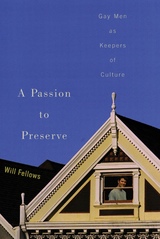
From large cities to rural communities, gay men have long been impassioned pioneers as keepers of culture: rescuing and restoring decrepit buildings, revitalizing blighted neighborhoods, saving artifacts and documents of historical significance. A Passion to Preserve explores this authentic and complex dimension of gay men’s lives by profiling early and contemporary preservationists from throughout the United States, highlighting contributions to the larger culture that gays are exceptionally inclined to make.
This urban resurgence is a national phenomenon, boosting cities from Cleveland to Buffalo and Portland to Pittsburgh. Experts offer a range of theories on what is driving the return to the city—from the impact of the recent housing crisis to a desire to be socially engaged, live near work, and reduce automobile use. But there’s also more to it. Time and again, when asked why they moved to the city, people talk about the desire to live somewhere distinctive, to be some place rather than no place. Often these distinguishing urban landmarks are exciting neighborhoods—Miami boasts its Art Deco district, New Orleans the French Quarter. Sometimes, as in the case of Baltimore’s historic rowhouses, the most distinguishing feature is the urban fabric itself.
While many aspects of this urban resurgence are a cause for celebration, the changes have also brought to the forefront issues of access, affordable housing, inequality, sustainability, and how we should commemorate difficult history. This book speaks directly to all of these issues.
In The Past and Future City, Stephanie Meeks, the president of the National Trust for Historic Preservation, describes in detail, and with unique empirical research, the many ways that saving and restoring historic fabric can help a city create thriving neighborhoods, good jobs, and a vibrant economy. She explains the critical importance of preservation for all our communities, the ways the historic preservation field has evolved to embrace the challenges of the twenty-first century, and the innovative work being done in the preservation space now.
This book is for anyone who cares about cities, places, and saving America’s diverse stories, in a way that will bring us together and help us better understand our past, present, and future.
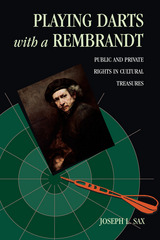
Some incidents are famous. A great artist's mural is demolished because the rich man who commissioned it is offended by its political implications. One of America's most famous collections is closed to virtually every notable person in the art world, whose requests for visits produce only a postcard from the owner saying "go to Blazes." Scholars who seek access to the Dead Sea Scrolls, monopolized and secreted by a handful of individuals for nearly forty years, are dismissed as "slime," "fleas," "gang-snatchers," and "manure," and told, "You will not see these things in your lifetime."
Playing Darts with a Rembrandt explores abuses of ownership of cultural treasures in a wide range of settings, including material of historic and scientific interest, as well as art and antiquities. It examines the claims made on behalf of the public for preservation, protection, and access to important artifacts, balancing those claims against proprietary and privacy interests, and discusses the proper role of institutions such as museums and libraries that act as repositories. Acknowledging the complexities that sometimes arise (such as the claims of history against the desire of a great figure's family to withhold private letters), Playing Darts with a Rembrandt proposes a new species of qualified ownership: to own an object of great public importance is to become a "fortunate, if provisional, trustee, having no right to deprive others who value the objects as much as they do themselves."
The fascinating stories that comprise the bulk of the book, ranging from dinosaur excavations and the Dead Sea Scrolls to the fate of presidential papers and the secrets held by the Library of Congress, will be of interest to a wide range of general readers. The extensive discussion of collectors, and their role, should commend the book to those in the art world, as well as to those professionally associated with museums, libraries, and archives. While written in a readable and untechnical way, it should also be of interest to those in the legal community who are interested in the philosophical and theoretical underpinnings of our property system.
"Sax turns his attention from public rights to conserve land and water to protection of cultural treasures. As always, he sees both sides of the argument and comes to reasoned and wise conclusions, balancing private and public interests. His prose is lucid, and his examples are both instructive and entertaining. An invaluable book for anyone interested in the preservation of our cultural resources." --I. Michael Heyman, Secretary, Smithsonian Institution
Joseph L. Sax is Professor of Law, University of California, Berkeley. He was formerly the counselor to the Secretary of the Interior and Professor of Law, the University of Michigan Law School.
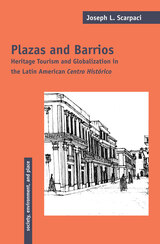
This book explores how heritage tourism and globalization are reshaping the Latin American centro histórico, analyzing the transformation of the urban core from town plaza to historic center in nine cities: Bogotá, Colombia; Buenos Aires, Argentina; Cartagena, Colombia; Cuenca, Ecuador; Havana, Cuba; Montevideo, Uruguay; Puebla, Mexico; Quito, Ecuador; and Trinidad, Cuba. It tells how these pressures, combined with the advantage of a downtown location, have raised the potential of redeveloping these inner city areas but have also created the dilemma of how to restore and conserve them while responding to new economic imperatives.
In an eclectic and interdisciplinary study, Joseph Scarpaci documents changes in far-flung corners of the Latin American metropolis using a broad palette of tools: urban morphology profiles, an original land-use survey of 30,000 doorways in nine historic districts, numerous photographs, and a review of the political, economic, and globalizing forces at work in historic districts. He examines urban change as reflected in architectural styles, neighborhood growth and decline, real estate markets, and local politics in order to show the long reach of globalization and modernity.
Plazas and Barrios spans all of Spanish-speaking America to address the socio-political dimensions of urban change. It offers a means for understanding the tensions between the modern and traditional aspects of the built environment in each city and provides a key resource for geographers, urban planners, architectural historians, and all concerned with the implications of the emerging global economy.
The relationship between the states and the national government is among the most contested issues in the United States. And questions about where power should reside, how decisions should be made, and how responsibility should be allocated have been central to the American experiment in federalism. In Polyphonic Federalism, Robert A. Schapiro defends the advantages of multiple perspectives in government, arguing that the resulting “polyphony” creates a system that is more efficient, democratic, and protective of liberties.
This groundbreaking volume contends that contemporary views of federalism are plagued by outmoded dualist notions that seek to separate state and federal authority. Instead, Schapiro proposes a polyphonic model that emphasizes the valuable interaction of state and federal law, one that more accurately describes the intersecting realities of local and national power. Through an analysis of several legal and policy debates, Polyphonic Federalism demonstrates how a multifaceted government can best realize the potential of federalism to protect fundamental rights.
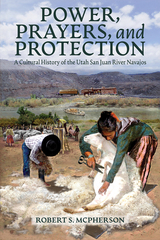
Navajo oral tradition is rich in stories and themes that form the basis for ceremonial performance. Everything that is physical, emotional, or spiritual has been placed in this world by the holy people at the time of creation, a process recognized in these accounts and teachings. Each chapter references sacred narratives that provide power through prayers that bring protection and a path for believers to follow. Topics include life on the river before and during the introduction of the white man, efficacy of the chantways, teachings of medicine people, childhood memories, arrival of trading posts, encounters with the automobile and other technology, livestock reduction and its aftermath, and the development of the Aneth oilfield with its ensuing protests. This is the Navajo elders’ story as seen through their eyes and told in their voice.
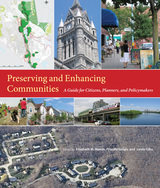
In this volume, twenty-nine experts from a variety of fields describe in very practical terms the "community preservation" approach to these issues. As opposed to the top-down regulatory mechanisms that are sometimes used to manage growth, the contributors favor a more flexible, locally based approach that has proven successful in Massachusetts and elsewhere. They show how residents can be empowered to become involved in local decision-making, building coalitions and expressing their views on a wide range of issues, such as zoning, water and land protection, transportation, historic preservation, economic diversity, affordable housing, and reuse of brown-fields. When done properly, development can enhance the sense of place and provide needed homes and jobs. Done improperly, it can generate sprawl and a multitude of problems.
Preserving and Enhancing Communities will be particularly useful to members of planning and other regulatory boards, as well as students of community planning. The book covers not just typical ways of doing things, but also the full spectrum of innovative and emerging practices. Each chapter includes illustrations and case studies, some from Massachusetts and many from other states. The volume concludes with a set of indicators that communities can use to track their progress in community preservation
and enhancement.
A searching account of nineteenth-century salvage anthropology, an effort to preserve the culture of “vanishing” Indigenous peoples through dispossession of the very communities it was meant to protect.
In the late nineteenth century, anthropologists, linguists, archaeologists, and other chroniclers began amassing Indigenous cultural objects—crafts, clothing, images, song recordings—by the millions. Convinced that Indigenous peoples were doomed to disappear, collectors donated these objects to museums and universities that would preserve and exhibit them. Samuel Redman dives into the archive to understand what the collectors deemed the tradition of the “vanishing Indian” and what we can learn from the complex legacy of salvage anthropology.
The salvage catalog betrays a vision of Native cultures clouded by racist assumptions—a vision that had lasting consequences. The collecting practice became an engine of the American museum and significantly shaped public education and preservation, as well as popular ideas about Indigenous cultures. Prophets and Ghosts teases out the moral challenges inherent in the salvage project. Preservationists successfully maintained an important human inheritance, sometimes through collaboration with Indigenous people, but collectors’ methods also included outright theft. The resulting portrait of Indigenous culture reinforced the public’s confidence in the hierarchies of superiority and inferiority invented by “scientific” racism.
Today the same salvaged objects are sources of invaluable knowledge for researchers and museum visitors. But the question of what should be done with such collections is nonetheless urgent. Redman interviews Indigenous artists and curators, who offer fresh perspectives on the history and impact of cultural salvage, pointing to new ideas on how we might contend with a challenging inheritance.


A properly coordinated protection system is vital to ensure that an electricity distribution network can operate within preset requirements for safety for individual items of equipment, staff and public, and the network overall. Suitable and reliable equipment should be installed on all circuits and electrical equipment and to do this, protective relays are used to initiate the isolation of faulted sections of a network in order to maintain supplies elsewhere on the system. This then leads to an improved electricity service with better continuity and quality of supply.
Although the global community has recently adopted a Convention of Biological Diversity, the agreement sets forth only abstract goals. Contributors to this volume advance the Convention’s initial steps by providing workable solutions that can be implemented regionally, nationally, and locally. The contributors—including natural, social, and political scientists; economists; lawyers; and environmentalists; and decisionmakers in business, agriculture, and government—have united to create a common discourse and to evaluate and propose strategies for halting this alarming loss of biodiversity. In recognizing the diverse aspects of this task—scientific, economic, institutional, moral, and legal—this book presents a new picture of emerging action.
Contributors. S. James Anaya, Gregory Benford, Graciela Chichilnisky, S. Todd Crider, Yvonne Cripps, Robert T. Fraley, Anil K. Gupta, Lakshman D. Guruswamy, G. M. Heal, Brent Hendricks, Robert B. Horsch, Laura L. Jackson, Annie Lovejoy, Ariel E. Lugo, Jeffrey A. McNeely, Brian G. Norton, Elinor Ostrom, Peter H. Raven, John W. Reid, Walter V. Reid, Mark Sagoff, Roger A. Sedgo, R. David Simpson, Ana Sittenfeld, Christopher D. Stone, Gary H. Toenniessen

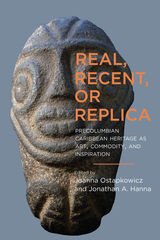
Examines the largely unexplored topics in Caribbean archaeology of looting of heritage sites, fraudulent artifacts, and illicit trade of archaeological materials
Real, Recent, or Replica: Precolumbian Caribbean Heritage as Art, Commodity, and Inspiration is the first book-length study of its kind to highlight the increasing commodification of Caribbean Precolumbian heritage. Amerindian art, including “Taíno” art, has become highly coveted by collectors, spurring a prolific and increasingly sophisticated black market of forgeries, but also contemporary artistic engagement, openly appreciated as modern artworks taking inspiration from the past. The contributors to this volume contend with difficult subject matter including the continued looting of archaeological sites in the region, the seismic increase of forgeries, and the imbalance of power and economic relations between the producers and consumers of neo-Amerindian art.
The case studies document the considerable time depth of forgeries in the region (since the late nineteenth century), address the policies put in place by Caribbean governments and institutions to safeguard national patrimony, and explore the impact looted and forged artifacts have on how museums and institutions collect and ultimately represent the Caribbean past to their audiences. Overall, the volume emphasizes the continued desire for the “authentic” Precolumbian artifact, no matter the cost. It provides insights for archaeologists, museum professionals, art historians, and collectors to combat illegal trade and support communities in creating sustainable heritage industries.
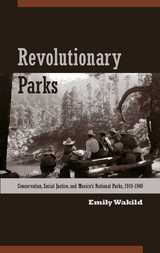
Revolutionary Parks tells the surprising story of how forty national parks were created in Mexico during the latter stages of the first social revolution of the twentieth century. By 1940 Mexico had more national parks than any other country. Together they protected more than two million acres of land in fourteen states. Even more remarkable, Lázaro Cárdenas, president of Mexico in the 1930s, began to promote concepts akin to sustainable development and ecotourism.
Conventional wisdom indicates that tropical and post-colonial countries, especially in the early twentieth century, have seldom had the ability or the ambition to protect nature on a national scale. It is also unusual for any country to make conservation a political priority in the middle of major reforms after a revolution. What emerges in Emily Wakild’s deft inquiry is the story of a nature protection program that takes into account the history, society, and culture of the times. Wakild employs case studies of four parks to show how the revolutionary momentum coalesced to create early environmentalism in Mexico.
According to Wakild, Mexico’s national parks were the outgrowth of revolutionary affinities for both rational science and social justice. Yet, rather than reserves set aside solely for ecology or politics, rural people continued to inhabit these landscapes and use them for a range of activities, from growing crops to producing charcoal. Sympathy for rural people tempered the radicalism of scientific conservationists. This fine balance between recognizing the morally valuable, if not always economically profitable, work of rural people and designing a revolutionary state that respected ecological limits proved to be a radical episode of government foresight.
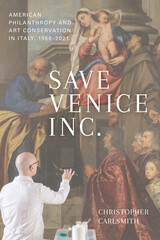
In 1966, the most destructive flood in the history of Venice temporarily submerged the city and threatened its extraordinary art and architecture. Among the organizations that mobilized to protect this fragile heritage was Save Venice Inc. Founded in Boston and now headquartered in New York City, this nonprofit has become the largest and most active committee dedicated to preserving the artistic legacy of Venice.
Christopher Carlsmith tells the fascinating story of Save Venice Inc., from its origins to its fiftieth anniversary. It continues to provide an influential model for philanthropy in the cultural sector, raising substantial funds to conserve and restore paintings, sculptures, books, mosaics, and entire buildings at risk from human and environmental impacts. Employing extensive archival research, oral interviews, and newspaper accounts, Save Venice Inc. explores a range of topics, including leadership, conservation projects, fundraising, and educational outreach. Using a range of methodologies from cultural history and art history, Carlsmith traces the achievements and challenges faced by this and other historic preservation organizations and by this unique city on the sea.
In a world of relentless and often violent change, what does it take for a culture to survive? Steven Weitzman addresses this question by exploring the "arts of cultural persistence"--the tactics that cultures employ to sustain themselves in the face of intractable realities. Surviving Sacrilege focuses on a famously resilient culture caught between two disruptive acts of sacrilege: ancient Judaism between the destruction of the First Temple (by the Babylonians) in 586 B.C. and the destruction of the Second Temple (by the Romans) in 70 C.E..
Throughout this period Jews faced the challenge of preserving their religious traditions in a world largely out of their control--a world ruled first by the Persians, then by the Hellenistic Seleucid Kingdom, and finally by the Roman Empire. Their struggle to answer this challenge yields insight into the ingenuity, resourcefulness, and creativity of a distinctive period in Jewish history, but one with broad implications for the study of religious and cultural survival.
Detecting something tenaciously self-preserving at the core of the imagination, Weitzman argues that its expression in storytelling, fantasy, imitation, metaphor, and magic allows a culture's survival instinct to maneuver within, beyond, and even against the limits of reality.
Duke University Press Scholars of Color First Book Award recipient
How much does a country's commercial policy affect its economic efficiency? How would free trade change the structure of a country’s economy and foreign trade? William Penfield Travis extends the Heckscher-Ohlin trade theory and addresses it to an empirical study of these and related questions. He argues that trade flows fail to reflect relative factor endowments because protection systematically nullifies their effects, and that therefore protection must be incorporated in any positive trade theory.
The author begins by developing a new concept—the equalization region—which he uses to reexamine the assumptions and the logic of the Heckscher-Ohlin theory and of its principal part, the factor-price equalization theorem. This analysis produces a fundamental reinterpretation of Leontief’s scarce-factor paradox, one which justifies Leontief’s work as an empirical test of trade theory under free trade which indicates its necessary modifications under protection. These modifications are then used to show that Leontief in fact measured the effects of American and foreign tariffs and other trade restriction on relative factor prices here and abroad.
To corroborate his theoretical analysis, Travis makes a detailed study of the commercial policies of five main industrial countries; he shows the common structure of protection and its systematic relationship to relative factor endowments. He shows also that protection, by distorting their relative prices, causes considerable substitution of raw materials for labor and capital inputs in manufacturing. The author concludes this important book by indicating some of the new forms which protection is taking throughout the world and by arguing that protection, past and present, is the main force preventing the spread of high living standards to the impoverished areas of the world.
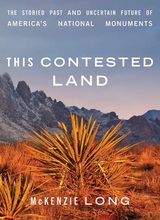
This land is your land. When it comes to national monuments, the sentiment could hardly be more fraught. Gold Butte in Nevada, Organ Mountains–Desert Peaks in New Mexico, Katahdin Woods and Waters in Maine, Cascade–Siskiyou in Oregon and California: these are among the thirteen natural sites McKenzie Long visits in This Contested Land, an eye-opening exploration of the stories these national monuments tell, the passions they stir, and the controversies surrounding them today.
Starting amid the fragrant sagebrush and red dirt of Bears Ears National Monument on the eve of the Trump Administration’s decision to reduce the site by 85 percent, Long climbs sandstone cliffs, is awed by Ancestral Pueblo cliff dwellings and is intrigued by 4,000-year-old petroglyphs. She hikes through remote pink canyons recently removed from the boundary of Grand Staircase–Escalante, skis to a backcountry hut in Maine to view a truly dark night sky, snorkels in warm Hawaiian waters to plumb the meaning of marine preserves, volunteers near the most contaminated nuclear site in the United States, and witnesses firsthand the diverse forms of devotion evoked by the Rio Grande. In essays both contemplative and resonant, This Contested Land confronts an unjust past and imagines a collaborative future that bears witness to these regions’ enduring Indigenous connections.
From hazardous climate change realities to volatile tensions between economic development and environmental conservation, practical and philosophical issues arise as Long seeks the complicated and often overlooked—or suppressed—stories of these incomparable places. Her journey, mindfully undertaken and movingly described, emphasizes in clear and urgent terms the unique significance of, and grave threats to, these contested lands.

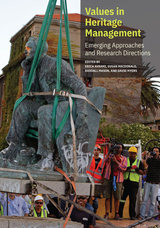
Over the last fifty years, conservation professionals have confronted increasingly complex political, economic, and cultural dynamics. This volume, with contributions by leading international practitioners and scholars, reviews how values-based methods have come to influence conservation, takes stock of emerging approaches to values in heritage practice and policy, identifies common challenges and related spheres of knowledge, and proposes specific areas in which the development of new approaches and future research may help advance the field.
The free online edition of this open-access book is available at www.getty.edu/publications/heritagemanagement/ and includes zoomable illustrations. Also available are free PDF, EPUB, and Kindle/MOBI downloads of the book.
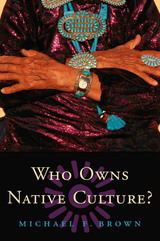
The practical and artistic creations of native peoples permeate everyday life in settler nations, from the design elements on our clothing to the plot-lines of books we read to our children. Rarely, however, do native communities benefit materially from this use of their heritage, a situation that drives growing resistance to what some denounce as "cultural theft."
Who Owns Native Culture? documents the efforts of indigenous peoples to redefine heritage as a proprietary resource. Michael Brown takes readers into settings where native peoples defend what they consider their cultural property: a courtroom in Darwin, Australia, where an Aboriginal artist and a clan leader bring suit against a textile firm that infringes sacred art; archives and museums in the United States, where Indian tribes seek control over early photographs and sound recordings collected in their communities; and the Mexican state of Chiapas, site of a bioprospecting venture whose legitimacy is questioned by native-rights activists.
By focusing on the complexity of actual cases, Brown casts light on indigenous claims in diverse fields--religion, art, sacred places, and botanical knowledge. He finds both genuine injustice and, among advocates for native peoples, a troubling tendency to mimic the privatizing logic of major corporations.
The author proposes alternative strategies for defending the heritage of vulnerable native communities without blocking the open communication essential to the life of pluralist democracies. Who Owns Native Culture? is a lively, accessible introduction to questions of cultural ownership, group privacy, intellectual property, and the recovery of indigenous identities.
READERS
Browse our collection.
PUBLISHERS
See BiblioVault's publisher services.
STUDENT SERVICES
Files for college accessibility offices.
RECENTLY PUBLISHED


UChicago Accessibility Resources
home | accessibility | search | about | contact us
BiblioVault ® 2001 - 2024
The University of Chicago Press