Results by title
1677 books match the query 'Archaeology' and 57 start with f
Fabrica San Jose and Middle Formative Society in the Valley of Oaxaca
Robert D. Drennan
University of Michigan Press, 2019
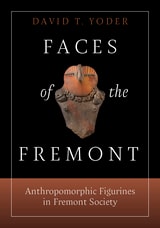
Faces of the Fremont
Anthropomorphic Figurines in Fremont SocietyDavid T. Yoder
University of Utah Press, 2025
The Fremont culture is famous for its anthropomorphic figurines—small clay figures occasionally dressed in clothing and decorated with jewelry—but surprisingly, archaeologists know very little about these important artifacts and their place in Fremont society. In Faces of the Fremont, the largest study of the subject ever undertaken, David T. Yoder takes a straightforward approach to cultural commentary through artifactual analysis as he interprets over 800 figurines and anthropomorphic objects.
Unlike previous research on the subject, this volume explores neglected topics within Fremont studies, including sex and gender, clothing and body decoration, hairstyles, and childhood. Complete with in-depth analysis and interpretation of the significance of the figurines to the Fremont people, as well as hundreds of beautiful color photographs, Faces of the Fremont provides a nuanced understanding of figurine manufacture, formalizes a classification system for figurine traits, and documents new and interesting geographic and temporal patterns.
Faction and Conversion in a Plural Society
Religious Alignments in the Hindu KushRobert Leroy Canfield
University of Michigan Press, 1973
Facts on the Ground
Archaeological Practice and Territorial Self-Fashioning in Israeli SocietyNadia Abu El-Haj
University of Chicago Press, 2002
Boldly uncovering an Israel in which science and politics are mutually constituted, this book shows the ongoing role that archaeology plays in defining the past, present, and future of Palestine and Israel.
Faithful Generations
Race and New Asian American ChurchesJeung, Russell
Rutgers University Press, 2004
Religion—both personal faith and institutional tradition—plays a central role in the lives of the 12.5 million Asians in the United States. It provides comfort and meaning, shapes ethical and political beliefs, and influences culture and arts. Faithful Generations details the significance of religion in the construction of Asian American identity. As an institutional base for the movement toward Asian American panethnicity, churches provide a space for theological and political reflection and ethnic reinvention.
With rich description and insightful interviews, Russell Jeung uncovers why and how Chinese and Japanese American Christians are building new, pan-Asian organizations. Detailed surveys of over fifty Chinese and Japanese American congregations in the San Francisco Bay area show how symbolic racial identities structure Asian American congregations. Evangelical ministers differ from mainline Christian ministers in their construction of Asian American identity. Mobilizing around these distinct identities, evangelicals and mainline Christians have developed unique pan-Asian styles of worship, ministries, and church activities. Portraits of two churches further illustrate how symbolic racial identities affect congregational life and ministries. The book concludes with a look at Asian American–led multiethnic churches.
This engaging study of the shifting relationship between religion and ethnicity is an ideal text for classes in ethnicity, religion, and Asian American studies.
Far Western Basketmaker Beginnings
The Jackson Flat ProjectEdited by Heidi Roberts, Richard V. N. Ahlstrom, and Jerry D. Spangler
University of Utah Press, 2022
This volume, based on the results of excavations at Jackson Flat Reservoir south of Kanab, examines a litany of firsts: the earliest Archaic pithouses ever found in this region, evidence that maize farmers arrived here a thousand years earlier than previously reported, and the emergence of a complex Basketmaker farming and foraging culture. Specialists in Far Western Puebloan culture, architecture, settlement patterns, subsistence, chronometry, and prehistoric technologies make a compelling case that farming was introduced to the region by San Pedro immigrants, and that the blending of farmers with local foraging groups gave rise to a Basketmaker lifeway by 200 BC. This book marks a giant leap forward in archaeologists’ understanding of the earliest maize farmers north and west of the Colorado River.
Farmers, Hunters, and Colonists
Interaction Between the Southwest and the Southern PlainsEdited by Katherine A. Spielmann
University of Arizona Press, 1991
Contributors:
Timothy G. Baugh
Judith A. Habicht-Mauche
Frances Levine
Christopher Lintz
David H. Snow
John D. Speth
Katherine A. Spielmann
David R. Wilcox

Farming, Hunting, and Fishing in the Olmec World
By Amber M. VanDerwarker
University of Texas Press, 2006
The Olmec who anciently inhabited Mexico's southern Gulf Coast organized their once-egalitarian society into chiefdoms during the Formative period (1400 BC to AD 300). This increase in political complexity coincided with the development of village agriculture, which has led scholars to theorize that agricultural surpluses gave aspiring Olmec leaders control over vital resources and thus a power base on which to build authority and exact tribute.
In this book, Amber VanDerwarker conducts the first multidisciplinary analysis of subsistence patterns at two Olmec settlements to offer a fuller understanding of how the development of political complexity was tied to both agricultural practices and environmental factors. She uses plant and animal remains, as well as isotopic data, to trace the intensification of maize agriculture during the Late Formative period. She also examines how volcanic eruptions in the region affected subsistence practices and settlement patterns. Through these multiple sets of data, VanDerwarker presents convincing evidence that Olmec and epi-Olmec lifeways of farming, hunting, and fishing were driven by both political and environmental pressures and that the rise of institutionalized leadership must be understood within the ecological context in which it occurred.
Feasts
Archaeological and Ethnographic Pespectives on Food, Politics, and PowerMichael Dietler
University of Alabama Press, 2010
From the ancient Near East to modern-day North America, communal consumption of food and drink punctuates the rhythms of human societies. Feasts serve many social purposes, establishing alliances for war and marriage, mobilizing labor, creating political power and economic advantages, and redistributing wealth. In this collection of fifteen essays, archaeologists and ethnographers explore the material record of food and its consumption as social practice. They examine the locations of roasting pits, hearths, and refuse deposits, or the presence of special decorative ceramics, and infer ways in which feasting traditions reveal social structures of lineage, clan, moiety, and polity.
Feeding Cahokia
Early Agriculture in the North American HeartlandGayle J. Fritz
University of Alabama Press, 2019
WINNER OF THE 2020 SOCIETY FOR ECONOMIC BOTANY'S MARY W. KLINGER BOOK AWARD
An authoritative and thoroughly accessible overview of farming and food practices at Cahokia
Agriculture is rightly emphasized as the center of the economy in most studies of Cahokian society, but the focus is often predominantly on corn. This farming economy is typically framed in terms of ruling elites living in mound centers who demanded tribute and a mass surplus to be hoarded or distributed as they saw fit. Farmers are cast as commoners who grew enough surplus corn to provide for the elites.
Feeding Cahokia: Early Agriculture in the North American Heartland presents evidence to demonstrate that the emphasis on corn has created a distorted picture of Cahokia’s agricultural practices. Farming at Cahokia was biologically diverse and, as such, less prone to risk than was maize-dominated agriculture. Gayle J. Fritz shows that the division between the so-called elites and commoners simplifies and misrepresents the statuses of farmers—a workforce consisting of adult women and their daughters who belonged to kin groups crosscutting all levels of the Cahokian social order. Many farmers had considerable influence and decision-making authority, and they were valued for their economic contributions, their skills, and their expertise in all matters relating to soils and crops. Fritz examines the possible roles played by farmers in the processes of producing and preparing food and in maintaining cosmological balance.
This highly accessible narrative by an internationally known paleoethnobotanist highlights the biologically diverse agricultural system by focusing on plants, such as erect knotweed, chenopod, and maygrass, which were domesticated in the midcontinent and grown by generations of farmers before Cahokia Mounds grew to be the largest Native American population center north of Mexico. Fritz also looks at traditional farming systems to apply strategies that would be helpful to modern agriculture, including reviving wild and weedy descendants of these lost crops for redomestication. With a wealth of detail on specific sites, traditional foods, artifacts such as famous figurines, and color photos of significant plants, Feeding Cahokia will satisfy both scholars and interested readers.
Festivals of Attica
An Archaeological CommentaryErika Simon
University of Wisconsin Press, 2002
The festivals of the Athenian sacred calendar constitute a vital key to classical Greek culture and religion. Erika Simon sets out here to explicate those complex and often obscure festivals. By careful marshaling of a variety of proofs from literary, historical, and archaeological sources, she is able to justify some startling conclusions and achieve a comprehensive and truly original synthesis that clarifies, as never before, the probable origins and meanings of the Attic cults.
Field Man
Life as a Desert ArchaeologistJulian D. Hayden; Edited by Bill Broyles and Diane E. Boyer
University of Arizona Press, 2012
Field Seasons
Reflections on Career Paths and Research in American ArchaeologyAnna Marie Prentiss
University of Utah Press, 2012
In Field Seasons, Anna Marie Prentiss chronicles her experiences as an archaeologist, providing an insider’s look at the diverse cultures, personal agendas, and career pathways associated with American archaeology since the late twentieth century. As the narrative moves from her academic training to employment in government and private consulting to her eventual professorship at a state university, several themes emerge.
This book is about career paths. Its discussion of the diverse jobs within the archaeological profession makes it valuable to students seeking guidance about their career options. It also provides insight into the cultures of American archaeology, a discipline with many schools of thought and unique subcultures. The world of archaeological field technicians is quite different from that of government bureaucrats or academics. Prentiss also explores the elements of cultural change within archaeology while she reflects on her personal evolution throughout her thirty years within the discipline.
The book’s unique personal assessment of the state of American archaeology will appeal to a broad swath of students and professionals. Students will find it an entertaining road map to possible careers while professionals will find plenty of scholarly material concerning ethics, archaeological theory, and interpretations of the archaeological record.
Fierce and Indomitable
The Protohistoric Non-Pueblo World in the American SouthwestEdited by Deni J. Seymour
University of Utah Press, 2016
Trending upward as an archaeological field of study, protohistoric mobile groups provide fascinating new directions for cutting-edge research in the American Southwest and beyond. These mobile residents represent the ancient and ancestral roots of many modern indigenous peoples, including the Apaches, Jumano, Yavapai, and Ute. These important protohistoric and historic mobile people have tended to be ignored because their archaeological sites were deemed too difficult to identify, too scant to be worthy of study, and too different to incorporate. This book brings together information from a diverse collection of authors working throughout the American Southwest and its fringes to make the bold statement that these groups can be identified in the archaeological record and their sites have much to contribute to the study of cultural process, method and theory, and past lifeways. Mobile groups are integral for assessing the grand reorganizational events of the Late Prehistoric period and are key to understanding colonial contact and transformations. Now, the only analyses, overviews, and class lectures that will be considered comprehensive will be those that address the presence of these many widespread mobile peoples.
Finding People in Early Greece
Carol G. Thomas
University of Missouri Press, 2005
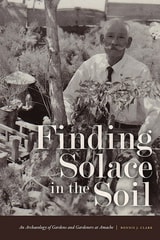
Finding Solace in the Soil
An Archaeology of Gardens and Gardeners at AmacheBonnie J. Clark
University Press of Colorado, 2022
Before incarceration, many at Amache had been farmers, gardeners, or nursery workers. Between 1942 and 1945, they applied their horticultural expertise to the difficult high plains landscape of southeastern Colorado. At Amache they worked to form microclimates, reduce blowing sand, grow better food, and achieve stability and preserve community at a time of dehumanizing dispossession. In this book archaeologist Bonnie J. Clark examines botanical data like seeds, garden-related artifacts, and other material evidence found at Amache, as well as oral histories from survivors and archival data including personal letters and government records, to recount how the prisoners of Amache transformed the harsh military setting of the camp into something resembling a town. She discusses the varieties of gardens found at the site, their place within Japanese and Japanese American horticultural traditions, and innovations brought about by the creative use of limited camp resources.
The gardens were regarded by the incarcerees as a gift to themselves and to each other. And they were also, it turns out, a gift to the future as repositories of generational knowledge where a philosophical stance toward nature was made manifest through innovation and horticultural skill. Framing the gardens and gardeners of Amache within the larger context of the incarceration of Japanese Americans and of recent scholarship on displacement and confinement, Finding Solace in the Soil will be of interest to gardeners, historical archaeologists, landscape archaeologists, cultural anthropologists, and scholars of Japanese American history and horticultural history.
Finding the People who Flaked the Stone at English Camp
Close, Angela E
University of Utah Press, 2006

Flinders Petrie
A Life in ArchaeologyMargaret S. Drower
University of Wisconsin Press, 1995
Flinders Petrie has been called the “Father of Modern Egyptology”—and indeed he is one of the pioneers of modern archaeological methods. This fascinating biography of Petrie was first published to high acclaim in England in 1985. Margaret S. Drower, a student of Petrie’s in the early 1930s, traces his life from his boyhood, when he was already a budding scholar, through his stunning career in the deserts of Egypt to his death in Jerusalem at the age of eighty-nine. Drower combines her first-hand knowledge with Petrie’s own voluminous personal and professional diaries to forge a lively account of this influential and sometimes controversial figure.
Drower presents Petrie as he was: an enthusiastic eccentric, diligently plunging into the uncharted past of ancient Egypt. She tells not only of his spectacular finds, including the tombs of the first Pharaohs, the earliest alphabetic script, a Homer manuscript, and a collection of painted portraits on mummy cases, but also of Petrie’s important contributions to the science of modern archaeology, such as orderly record-keeping of the progress of a dig and the use of pottery sherds in historical dating. Petrie's careful academic methods often pitted him against such rival archaeologists as Amélineau, who boasted he had smashed the stone jars he could not carry away to be sold, and Maspero and Naville, who mangled a pyramid at El Kula they had vainly tried to break into.
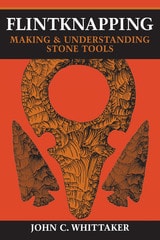
Flintknapping
Making and Understanding Stone ToolsBy John C. Whittaker
University of Texas Press, 1994
Flintknapping is an ancient craft enjoying a resurgence of interest among both amateur and professional students of prehistoric cultures. John C. Whitaker's bestselling guide is a detailed handbook on flintknapping, written from the archaeological perspective of interpreting stone tools as well as making them.
Flintknapping contains detailed, practical information on making stone tools. Whittaker starts at the beginner level and progresses to discussion of a wide range of techniques. He includes information on necessary tools and materials, as well as step-by-step instructions for making several basic stone tool types. Numerous diagrams allow the reader to visualize the flintknapping process, and drawings of many stone tools illustrate the discussions and serve as models for beginning knappers.
Written for a wide amateur and professional audience, Flintknapping will be essential for practicing knappers as well as for teachers of the history of technology, experimental archaeology, and stone tool analysis.
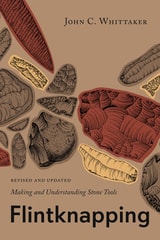
Flintknapping
Making and Understanding Stone ToolsJohn C. Whittaker
University of Texas Press, 2026
An updated edition of the classic guide to the ancient skill of flintknapping.
Flintknapping, the art of making stone tools, is an ancient craft generating renewed interest among both amateurs and professional students of prehistoric cultures. John C. Whittaker’s best-selling guide is a foundational and highly regarded handbook that combines practical instruction with the archaeological perspective of interpreting as well as making stone tools.
This updated edition provides clear, step-by-step guidance on tools, materials, and techniques for producing basic stone tool types. Diagrams and illustrations help readers visualize each stage and model their work. Whittaker also introduces the history of the field, the role of stone tools in human technological development, and experimental archaeology, concluding with an accessible discussion of how archaeologists study stone tools to understand the lives of our ancestors. For more than thirty years, Flintknapping has been essential for knappers, archaeologists, and teachers. This expanded and revised edition adds new insights, illustrations, and guidance for a new generation of readers.
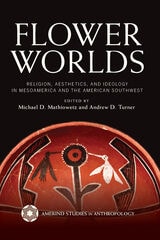
Flower Worlds
Religion, Aesthetics, and Ideology in Mesoamerica and the American SouthwestEdited by Michael D. Mathiowetz and Andrew D. Turner
University of Arizona Press, 2021
The recognition of Flower Worlds is one of the most significant breakthroughs in the study of Indigenous spirituality in the Americas. These worlds are solar and floral spiritual domains that are widely shared among both pre-Hispanic and contemporary Native cultures in Mesoamerica and the American Southwest. Flower Worldsis the first volume to bring together a diverse range of scholars to create a truly multidisciplinary understanding of Flower Worlds. During the last thirty years, archaeologists, art historians, ethnologists, Indigenous scholars, and linguists have emphasized the antiquity and geographical extent of similar Flower World beliefs among ethnic and linguistic groups in the New World.
Flower Worlds are not simply ethereal, otherworldly domains, but rather they are embodied in lived experience, activated, invoked, and materialized through ritual practices, expressed in verbal and visual metaphors, and embedded in the use of material objects and ritual spaces. This comprehensive book illuminates the origins of Flower Worlds as a key aspect of religions and histories among societies in Mesoamerica and the American Southwest. It also explores the role of Flower Worlds in shaping ritual economies, politics, and cross-cultural interaction among Indigenous peoples.
Flower Worlds reaches into multisensory realms that extend back at least 2,500 years, offering many different disciplines, perspectives, and collaborations to understand these domains. Today, Flower Worlds are expressed in everyday work and lived experiences, embedded in sacred geographies, and ritually practiced both individually and in communities. This volume stresses the importance of contemporary perspectives and experiences by opening with living traditions before delving into the historical trajectories of Flower Worlds, creating a book that melds scientific and humanistic research and emphasizes Indigenous voices.
Contributors: Oswaldo Chinchilla Mazariegos, James M. Córdova, Davide Domenici, Ángel González López, Kelley Hays-Gilpin, Michael D. Mathiowetz, Cameron L. McNeil, Felipe S. Molina, Johannes Neurath, John M. D. Pohl, Alan R. Sandstrom, David Delgado Shorter, Karl A. Taube, Andrew D. Turner, Lorena Vázquez Vallín, Dorothy Washburn
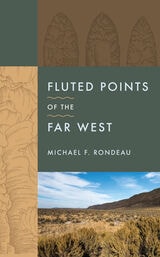
Fluted Points of the Far West
Michael F. Rondeau
University of Utah Press, 2022
Fluted Points of the Far West provides the first large-scale overview of fluted points in the far western United States, including details of their attributes, trends in production, and range of variability. It serves as a compendium of groundbreaking research by the California Fluted Lanceolate Uniform Testing and Evaluation Database (CalFLUTED) project. Details regarding size, morphology, material, basal flaking technology, breakage patterns, repair patterns, manufacturing (as revealed by unfinished fluted bifaces), margin grinding, and flute scratching are provided through this research, both in terms of general trends and noteworthy exceptions.
Designed as a ready reference, these data are also summarized for each of the four sample states covered: California, Nevada, Oregon, and Utah. Summaries introduce the history and circumstances of fluted point studies by state, a list of references for each state used in the CalFLUTED study reports, a comprehensive listing of the relevant CalFLUTED study reports, and a breakdown by state of fluted point attribute details as listed above.
Reviews and discussions cover a range of topics, including classification of fluted points, identifying flute scars, and indicative traits that a fluted point is not from the prehistoric Far West. Additional discussions cover hafting alternatives, fluted point dating, far western fluted point typology, and the likely direction of further research on a range of fluted point topics.
Folklore of the Atayal of Formosa and the Mountain Tribes of Luzon
Edward Norbeck
University of Michigan Press, 1950
Food Production in Native North America
An Archaeological PerspectiveKristen J. Gremillion
University Press of Colorado, 2018
Food Provisioning in Complex Societies
Zooarchaeological PerspectivesLevent Atici
University Press of Colorado, 2022
Through creative combinations of ethnohistoric evidence, iconography, and contextual analysis of faunal remains, this work offers new insight into the mechanisms involved in food provisioning for complex societies. Contributors combine zooarchaeological and historical data from global case studies to analyze patterns in centralization and bureaucratic control, asymmetrical access and inequalities, and production-distribution-consumption dynamics of urban food provisioning and animal management.
Taking a global perspective and including both prehistoric and historic case studies, the chapters in the volume reflect some of the current best practices in the zooarchaeology of complex societies. Embedding faunal evidence within a broader anthropological explanatory framework and integrating archaeological contexts, historic texts, iconography, and ethnohistorical sources, the book discerns myriad ways that animals are key contributors to, and cocreators of, complex societies in all periods and all places. Chapters cover the diverse sociopolitical and economic roles wild animals played in Bronze Age Turkey; the production and consumption of animal products in medieval Ireland; the importance of belief systems, politics, and cosmologies in Shang Dynasty animal provisioning in the Yellow River Valley; the significance of external trade routes in the kingdom of Aksum (modern Sudan); hunting and animal husbandry at El Zotz; animal economies from two Mississippian period sites; and more.
Food Provisioning in Complex Societies provides an optimistic roadmap and heuristic tools to explore the diverse, resilient, and contingent processes involved in food provisioning. The book represents a novel and productive way forward for understanding the unique, yet predictably structured, provisioning systems that emerged in the context of complex societies in all parts of the world. It will be of interest to zooarchaeologists and archaeologists alike.
Contributors: Joaquin Arroyo-Cabrales, Fiona Beglane, Roderick Campbell, Kathryn Grossman, Patricia Martinez-Lira, Jacqueline S. Meier, Sarah E. Newman, Terry O'Connor, Tanya M. Peres, Gypsy C. Price, Elizabeth J. Reitz, Kim Shelton, Marcus Winter, Helina S. Woldekiros

Food Storage in Michigan's Late Woodland
The Work of Indigenous WomenKathryn M. Frederick
University of Alabama Press, 2026
Incorporates experimental archaeology to understand the food-caching strategies led by Indigenous women in Late Woodland Michigan.
This experimental archaeology book centers on the decision of Indigenous women in Michigan’s Late Woodland to store food in cache pits for later use, to ensure a stable food supply. These food storage techniques were efforts to increase communal chances of survival in direct responses to sociopolitical changes. Kathryn M. Frederick highlights the importance of food storage in these communities and the decision-making and behaviors behind it.
To discover why food storage became a popular practice at that period, Frederick considered the efficacy of subterranean food storage and constructed experiments to understand the timing and use of cache pits and to test their reliability and efficiency. She also compiled ethnographic data on location, environmental conditions, movement strategies, and types of foodstuffs stored for dozens of hunter-gatherer groups. Two distinct patterns of food storage emerged: “reliant” and “redundant.” Frederick argues that the Indigenous women utilized a system of reliant storage during times of abundance but could switch to a redundant system as the socioeconomic climate shifted. This book will interest a wide swath of archaeologists and others interested in Indigenous foodways and women’s key roles.
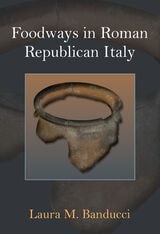
Foodways in Roman Republican Italy
Laura M. Banducci
University of Michigan Press, 2021
Foodways in Roman Republican Italy explores the production, preparation, and consumption of food and drink in Republican Italy to illuminate the nature of cultural change during this period. Traditionally, studies of the cultural effects of Roman contact and conquest have focused on observing changes in the public realm: that is, changing urban organization and landscape, and monumental construction. Foodways studies reach into the domestic realm: How do the daily behaviors of individuals express their personal identity, and How does this relate to changes and expressions of identity in broader society? Laura M. Banducci tracks through time the foodways of three sites in Etruria from about the third century BCE to the first century CE: Populonia, Musarna, and Cetamura del Chianti. All were established Etruscan sites that came under Roman political control over the course of the third and second centuries BCE. The book examines the morphology and use wear of ceramics used for cooking, preparing, and serving food in order to deduce cooking methods and the types of foods being prepared and consumed. Change in domestic behaviors was gradual and regionally varied, depending on local social and environmental conditions, shaping rather than responding to an explicitly “Roman” presence.
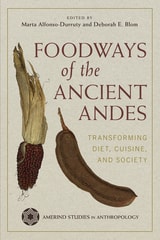
Foodways of the Ancient Andes
Transforming Diet, Cuisine, and SocietyMarta P Alfonso-Durruty
University of Arizona Press, 2023
Exploring the multiple social, ecological, cultural, and ontological dimensions of food in the Andean past, the contributors of Foodways of the Ancient Andes offer diverse theoretical perspectives and methodological approaches that reveal the richness, sophistication, and ingenuity of Andean peoples. The volume spans time periods and localities in the Andean region to reveal how food is intertwined with multiple aspects of the human experience, from production and consumption to ideology and sociopolitical organization. It illustrates the Andean peoples’ resilience in the face of challenges brought about by food scarcity and environmental change. Chapters dissect the intersection of food, power, and status in early states and empires; examine the impact of food during times of conflict and instability; and illuminate how sacred and high-status foods contributed to the building of the Inka Empire.
Featuring forty-six contributors from ten countries, the chapters employ new analytical methods, integrating different food data and interdisciplinary research to show that food can provide not only simple nutrition but also a multitude of strategies, social and political relationships, and ontologies that are otherwise invisible in the archaeological record.
Contributors
Aleksa K. Alaica
Sonia Alconini
Marta Alfonso-Durruty
Sarah I. Baitzel
Véronique Bélisle
Carolina Belmar
Carrie Anne Berryman
Matthew E. Biwer
Deborah E. Blom
Tamara L. Bray
Matthew T. Brown
Maria C. Bruno
José M. Capriles
Katherine L. Chiou
Susan D. deFrance
Lucia M. Diaz
Richard P. Evershed
Maureen E. Folk
Alexandra Greenwald
Chris Harrod
Christine A. Hastorf
Iain Kendall
Kelly J. Knudson
BrieAnna S. Langlie
Cecilia Lemp
Petrus le Roux
Marcos Martinez
Anahí Maturana-Fernández
Weston C. McCool
Melanie J. Miller
Nicole Misarti
Flavia Morello
Patricia Quiñonez Cuzcano
Omar Reyes
Arturo F. Rivera Infante
Manuel San Román
Francisca Santana-Sagredo
Beth K. Scaffidi
Augusto Tessone
Andrés Troncoso
Tiffiny A. Tung
Mauricio Uribe
Natasha P. Vang
Sadie L. Weber
Kurt M. Wilson
Michelle E. Young
Footprints of Hopi History
Hopihiniwtiput Kukveni'atEdited by Leigh J. Kuwanwisiwma, T. J. Ferguson, and Chip Colwell
University of Arizona Press, 2018
The fourteen chapters in Footprints of Hopi History: Hopihiniwtiput Kukveni’at focus on these Hopi footprints as they are understood through a variety of research techniques, including archaeology, ethnography, documentary history, plant genetics, and educational outreach. The editors and contributors offer fresh and innovative perspectives on Hopi archaeology and history, and demonstrate how one tribe has significantly advanced knowledge about its past through collaboration with archaeologists and cultural anthropologists.
The book features managerial uses of research, cultural landscape theory, use of GIS in research, archaeological interpretations of social identity and immigration, analysis of corn genetics, heritage education of youth, and research of oral traditions and documentary history. Footprints of Hopi History highlights the Hopi tribe’s leadership in sustained efforts to create bridges between tribal goals and anthropology, forging a path for others to follow.
Contributors
E. Charles Adams
Wesley Bernardini
Joëlle Clark
Chip Colwell
T. J. Ferguson
Dennis Gilpin
Kelley Hays-Gilpin
George Gumerman IV
Saul L. Hedquist
Maren P. Hopkins
Stewart B. Koyiyumptewa
Leigh J. Kuwanwisiwma
Lee Wayne Lomayestewa
Patrick D. Lyons
Shirley Powell
Gregson Schachner
Thomas E. Sheridan
Mark D. Varien
Laurie D. Webster
Peter M. Whiteley
Michael Yeatts
For Those Who Sleep in the Dust
Essays on Archaeology and the BibleWilliam G. Dever
SBL Press, 2026
For the Director
Research Essays in Honor of James B. GriffinEdited by Charles E. Cleland
University of Michigan Press, 1977
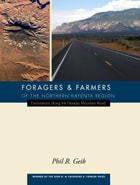
Foragers and Farmers of the Northern Kayenta Region
Excavations along the Navajo Mountain RoadPhil Geib
University of Utah Press, 2011
Foragers and Farmers of the Northern Kayenta Region presents the results of a major archaeological excavation project on Navajo tribal land in the Four Corners area and integrates this new information with existing knowledge of the archaeology of the northern Kayenta region. The excavation of thirty-three sites provides a cross section of prehistory from which Navajo Nation archaeologists retrieved a wealth of information about subsistence, settlement, architecture, and other aspects of past lifeways. The project’s most important contributions involve the Basketmaker and Archaic periods, and include a large number of radiocarbon dates on high-quality samples. Dating back to the early Archaic period (ca. 7000 BC) and ranging forward through the Basketmaker components to the Puebloan period, this volume is a powerful record of ancient peoples and their cultures. Detailed supplementary data will be available on the University of Utah Press Web site upon publication of this summary volume.
Volume 2: Archaic Site Descriptions
Volume 3: Basketmaker Site Descriptions
Volume 4: Puebloan Site Descriptions
Volume 5: Analyses and Interpretation
Appendix Volume

Foragers on America's Western Edge
The Archaeology of California's Pecho CoastTerry L. Jones and Brian F. Codding
University of Utah Press, 2018
The first people of the Pecho Coast were part-time residents who exploited shellfish, fish, and marine birds, including the flightless duck, Chendytes lawi, which sustained hunting drove to extinction ca. 2800 cal BP. This marked the only unequivocal case of prehistoric, human-caused extinction in western North America. Cold, productive seas allowed inhabitants to weather droughts of the Medieval Climatic Anomaly (950–600 cal BP), after which shell beads became increasingly abundant, representing either the initial appearance of Chumash-speaking peoples or attempts by Chumash leaders to consolidate power through gifting, reciprocal exchange, or forced conquest. During the mission era, fishing sustained the Native community as, for the first time, individuals became fully sedentary, foraging within a limited radius to avoid contact with the Spanish.
This record reveals a unique story of local adaptation, anthropogenic habitat change, social differentiation, and, ultimately, resistance to colonial invasion.
Foraging in the Past
Archaeological Studies of Hunter-Gatherer DiversityUniversity Press of Colorado, 2018
Well-established and young scholars present new prehistoric data and describe new methods and theories to investigate ancient forager lifeways and document hunter-gatherer variability across the globe. The authors use relationships established by cross-cultural data as a background for examining the empirical patterns of prehistory. Covering underwater sites in North America, the peaks of the Andes, Asian rainforests, and beyond, chapters are data rich, methodologically sound, and theoretically nuanced, effectively exploring the latest evidence for behavioral diversity in the fundamental process of hunting and gathering.
Foraging in the Past establishes how hunter-gatherers can be considered archaeologically, extending beyond the reach of ethnographers and historians to argue that only through archaeological research can the full range of hunter-gatherer variability be documented. Presenting a comprehensive and integrated approach to forager diversity in the past, the volume will be of significance to both students and scholars working with or teaching about hunter-gatherers.
Contributors: Nicholas J. Conard, Raven Garvey, Keiko Kitagawa, John Krigbaum, Petra Krönneck, Steven Kuhn, Julia Lee-Thorp, Peter Mitchell, Katherine Moore, Susanne C. Münzel, Kurt Rademaker, Patrick Roberts, Britt Starkovich, Brian A. Stewart, Mary Stiner
Foraging in the Tennessee River Valley
12,500 to 8,000 Years AgoKandace D. Hollenbach
University of Alabama Press, 2009
Foreign Objects
Rethinking Indigenous Consumption in American ArchaeologyEdited by Craig N. Cipolla
University of Arizona Press, 2017
Brass tinklers and pendants. Owl effigies, copper kettles, crucifixes with blue glass stones. What do they have in common? The answer spans thousands of years and a multitude of peoples and places, and reveals how people made sense of their world as they collected and used the objects they encountered.
Foreign Objects demonstrates the breadth and vibrancy of contemporary archaeology. Taking a broad set of archaeological cases from across the Americas, editor Craig N. Cipolla and the volume contributors explore how indigenous communities have socialized foreign objects over time. The book critiques the artificial divide between prehistory and history, studying instead the long-term indigenous histories of consumption, a term typically associated with capitalism and modern-world colonialism.
The case studies range from “exotic” stone tools used millennia ago to nineteenth-century patent medicines made and marketed by an Indian doctress. Foreign Objects focuses on how indigenous groups and foreign objects became entangled with one another in myriad ways. The book explores how the framework of consumption can shed new light on trade, exchange, materiality, and cultural production.
Contributors place foreign objects in the spotlight and offer a comparison of how this general class of material played a part in indigenous and colonial worlds. Each chapter illustrates how notions of consumption fit into their place in time and also delves into how foreign objects related to ideas of the body and personhood, how people used them to participate in political and spiritual worlds, and how they presented new ways of enduring or resisting European colonialism and capitalism. Foreign Objects is a critical look at consumption through the lens of indigenous knowledge and archaeological theory.
Contributors:
Matthew A. Beaudoin
Lewis Borck
Kathleen J. Bragdon
Craig N. Cipolla
Charles R. Cobb
John L. Creese
Diana DiPaolo Loren
Martin Gallivan
Meghan C. L. Howey
Barbara J. Mills
Maxine Oland
Lee M. Panich
Patricia E. Rubertone
Christopher Shephard
Keith D. Stephenson
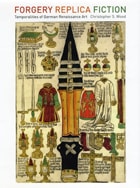
Forgery, Replica, Fiction
Temporalities of German Renaissance ArtChristopher S. Wood
University of Chicago Press, 2008
But Wood shows that over the course of the fifteenth and early sixteenth centuries, emerging replication technologies—such as woodcut, copper engraving, and movable type—altered the relationship between artifacts and time. Mechanization highlighted the artifice, materials, and individual authorship necessary to create an object, calling into question the replica’s ability to represent a history that was not its own. Meanwhile, print catalyzed the new discipline of archaeological scholarship, which began to draw sharp distinctions between true and false claims about the past. Ultimately, as forged replicas lost their value as historical evidence, they found a new identity as the intentionally fictional image-making we have come to understand as art.
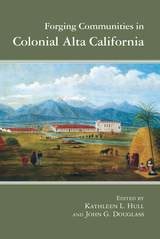
Forging Communities in Colonial Alta California
Edited by Kathleen L. Hull and John G. Douglass
University of Arizona Press, 2018
Forging Communities in Colonial Alta California reorients understandings of this dynamic period, which challenged both Native and non-Native people to reimagine communities not only in different places and spaces but also in novel forms and practices. The contributors draw on archaeological and historical archival sources to analyze the generative processes and nature of communities of belonging in the face of rapid demographic change and perceived or enforced difference.
Contributors provide important historical background on the effects that colonialism, missions, and lives lived beyond mission walls had on Indigenous settlement, marriage patterns, trade, and interactions. They also show the agency with which Indigenous peoples make their own decisions as they construct and reconstruct their communities. With nine different case studies and an insightful epilogue, this book offers analyses that can be applied broadly across the Americas, deepening our understanding of colonialism and community.
Contributors:
Julienne Bernard
James F. Brooks
John Dietler
Stella D’Oro
John G. Douglass
John Ellison
Glenn Farris
Heather Gibson
Kathleen L. Hull
Linda Hylkema
John R. Johnson
Kent G. Lightfoot
Lee M. Panich
Sarah Peelo
Seetha N. Reddy
David W. Robinson
Tsim D. Schneider
Christina Spellman
Benjamin Vargas
Forging Southeastern Identities
Social Archaeology, Ethnohistory, and Folklore of the Mississippian to Early Historic SouthGregory A. Waselkov
University of Alabama Press, 2017
Forging Southeastern Identities explores the many ways archaeologists and ethnohistorians define and trace the origins of Native Americans’ collective social identity.
Forging Southeastern Identities: Social Archaeology and Ethnohistory of the Mississippian to Early Historic South, a groundbreaking collection of ten essays, covers a broad expanse of time—from the ninth to the nineteenth centuries—and focuses on a common theme of identity. These essays represent the various methods used by esteemed scholars today to study how Native Americans in the distant past created new social identities when old ideas of the self were challenged by changes in circumstance or by historical contingencies.
Archaeologists, anthropologists, and folklorists working in the Southeast have always recognized the region’s social diversity; indeed, the central purpose of these disciplines is to study peoples overlooked by the mainstream. Yet the ability to define and trace the origins of a collective social identity—the means by which individuals or groups align themselves, always in contrast to others—has proven to be an elusive goal. Here, editors Gregory A. Waselkov and Marvin T. Smith champion the relational identification and categorical identification processes, taken from sociological theory, as effective analytical tools.
Taking up the challenge, the contributors have deployed an eclectic range of approaches to establish and inform an overarching theme of identity. Some investigate shell gorgets, textiles, shell trade, infrastructure, specific sites, or plant usage. Others focus on the edges of the Mississippian world or examine colonial encounters between Europeans and native peoples. A final chapter considers the adaptive malleability of historical legend in the telling and hearing of slave narratives.
Formation Processes of the Archaeological Record
Michael Brian Schiffer
University of Utah Press, 1987
This handbook synthesizes the most important principles of cultural and environmental formation processes for both students and practicing archaeologists.
Formation Process of the Archaeological Record embodies a vision that the cultural past is knowable, but only when the nature of the evidence is thoroughly understood. It shows how the past is accessible in practice by identifying variability introduced by the diverse effects of people and nature that in some sum, form the archaeological record.
For students, it is intended as both an introduction and guide in method and theory, field work, and analysis. Practicing archaeologists will find it a valuable checklist of sources of variability when observations on the archaeological record are used to justify inferences.
Formative Mesoamerican Exchange Networks with Special Reference to the Valley of Oaxaca
Jane W. Pires-Ferreira
University of Michigan Press, 2019
Fort Bowie Material Culture
Robert M. Herskovitz
University of Arizona Press, 1978
Foundations of Anasazi Culture
The Basketmaker Pueblo TransitionPaul F Reed
University of Utah Press, 2002
This major synthesis of work explores new evidence gathered at Basketmaker III sites on the Colorado Plateau in search of further understanding of Anasazi development.
Since the 1960s, large-scale cultural resource management projects have revealed the former presence of Anasazi within the entire northern Southwest. These discoveries have resulted in a greatly expanded view of the BMIII period (A.D. 550-750) which immediately proceeds the Pueblo phase. Particularly noteworthy are finding of Basketmaker remains under those of later periods and in sites with open settings, as opposed to the more classic Basketmaker cave and rock shelter sites.
Foundations of Anasazi Culture explores this new evidence in search of further understanding of Anasazi development. Several chapters address the BMII-BMIII transition, including the initial production and use of pottery, greater reliance on agriculture, and the construction of increasingly elaborate structures. Other chapters move beyond the transitional period to discuss key elements of the Anasazi lifestyle, including the use of gray-,red-, and white-ware ceramics, pit structures, storage cists, surface rooms, full dependence on agriculture, and varying degrees of social specialization and differentiation. A number of contributions address one or more of these issues as they occur at specific sites. Other contributors consider the material culture of the period in terms of common elements in architecture, ceramics, lithic technology, and decorative media.
This work on BMIII sites on the Colorado Plateau will be useful to anyone with an interest in the earliest days of Anasazi civilization.
Foundations of New World Cultural Astronomy
A Reader with CommentaryAnthony Aveni
University Press of Colorado, 2008
Cultural astronomy, first called archaeoastronomy, has evolved at ferocious speed since its genesis in the 1960s, with seminal essays and powerful rebuttals published in far-flung, specialized journals. Until now, only the most closely involved scholars could follow the intellectual fireworks. In Foundations of New World Cultural Astronomy, Anthony Aveni, one of cultural astronomy's founders and top scholars, offers a selection of the essays that built the field, from foundational works to contemporary scholarship.
Including four decades of research throughout the Americas by linguists, archaeologists, historians, ethnologists, astronomers, and engineers, this reader highlights the evolution of the field through thematic organization and point-counterpoint articles. Aveni - an award-winning author and former National Professor of the Year - serves up incisive commentary, background for the uninitiated, and suggested reading, questions, and essay topics. Students, readers, and scholars will relish this collection and its tour of a new field in which discoveries about ancient ways of looking at the skies cast light on our contemporary views.
Framing Complexity in Formative Mesoamerica
Lisa Delance
University Press of Colorado, 2022
Contributors present multiple lines of evidence demonstrating the process of social complexity and reconsider a number of traditionally accepted models and presumed tenets as a result of the wealth of empirical data that has been gathered over the past four decades. Their chapters approach complexity as a process rather than a state of being by exploring social aggregation, the emergence of ethnic affiliations, and aspects of regional and macroregional variability.
Framing Complexity in Formative Mesoamerica presents some of the most recent data—and the implications of that data—for understanding the development of complex societies as human beings moved into urban environments. The book is an especially important volume for researchers and students working in Mesoamerica, as well as archaeologists taking a comparative approach to questions of complexity.
Contributors: Jaime J. Awe, Sarah B. Barber, Jeffrey S. Brezezinski, M. Kathryn Brown, Ryan H. Collins, Kaitlin Crow, Lisa DeLance, Gary M. Feinman, Sara Dzul Gongora, Guy David Hepp, Arthur A. Joyce, Rodrigo Martin Morales, George Micheletti, Deborah L. Nichols, Terry G. Powis, Zoe J. Rawski, Prudence M. Rice, Michael P. Smyth, Katherine E. South, Jon Spenard, Travis W. Stanton, Wesley D. Stoner, Teresa Tremblay Wagner
French Colonial Archaeology
The Illinois Country and the Western Great LakesEdited by John A. Walthall
University of Illinois Press, 1991
results of many of the investigations of French colonial sites made in
the mid-continent during the last decade. It includes work done at Fort
St. Louis, Fort de Chartres, Fort Massac, French Peoria, Cahokia, Prairie
du Pont, Prairie du Rocher, and other locations controlled by the French
during a time when their dominance in North America was more than twice
that of Britain and Spain combined.
Five of the book's fifteen chapters summarize major excavations at colonial
fortifications, four of which are public monuments that currently attract
thousands of visitors each year. Another five chapters deal with French
colonial villages, and the remainder of the book is devoted to diet, trade,
the role of historic documents in the reconstruction of life on the French
colonial frontier, and other topics.
From Colonization to Domestication
Population, Environment, and the Origins of Agriculture in Eastern North AmericaD. Shane Miller
University of Utah Press, 2018
Eastern North America is one of only a handful of places in the world where people first discovered how to domesticate plants. In this book, anthropologist Shane Miller uses two common, although unconventional, sources of archaeological data—stone tools and the distribution of archaeological sites—to trace subsistence decisions from the initial colonization of the American Southeast at the end of the last Ice Age to the appearance of indigenous domesticated plants roughly 5,000 years ago.
Miller argues that the origins of plant domestication lie within the context of a boom/bust cycle that culminated in the mid-Holocene, when hunter-gatherers were able to intensively exploit shellfish, deer, oak, and hickory. After this resource “boom” ended, some groups shifted to other plants in place of oak and hickory, which included the suite of plants that were later domesticated. Accompanying these subsistence trends is evidence for increasing population pressure and declining returns from hunting. Miller contends, however, that the appearance of domesticated plants in eastern North America, rather than simply being an example of necessity as the mother of invention, is the result of individuals adjusting to periods of both abundance and shortfall driven by climate change.
From Household to Empire
Society and Economy in Early Colonial New MexicoHeather B. Trigg
University of Arizona Press, 2005
William P. Clements Center for Southwest Studies, Southern Methodist University
Settlers at Santa Fe and outlying homesteads during the seventeenth century established a thriving economy that saw the exchange of commodities produced by indigenous peoples, settlers, and Franciscan friars for goods manufactured as far away as China, France, and Turkey. This early Spanish colonial period in New Mexico provides an opportunity to explore both economic activity within a colony and the relations between colony and homeland. By examining the material remains of this era from 1598 to 1680, Heather Trigg reveals a more complete picture of colonial life. Drawing on both archaeological and historical sources, Trigg analyzes the various levels of economic activity that developed: production of items in colonial households, exchanges between households, and trade between the colony and Mexico. Rather than focusing only on the flow of products and services, she also explores the social mechanisms that likely had a significant impact on the economic life of the colony. Because economic activity was important to so many aspects of daily life, she is able to show how and why colonial society worked the way it did. While focusing on the colonists, she also explores their relations with Pueblo peoples. Through her analysis of these two pools of data, Trigg generates insights not usually gleaned from the limited texts of the period, providing information about average colonists in addition to the governors and clergy usually covered in historical accounts. By using specific examples from historical documents and archaeological materials, she shows that colonists from all levels of society modified both formal and informal rules of economic behavior to better fit the reality of the colonial frontier. With its valuable comparative data on colonization, From Household to Empire provides a novel way of examining colonial economies by focusing on the maintenance and modification of social values. For all readers fascinated by the history of the Southwest, this book provides a fuller picture of life in early New Mexico than has previously been seen.
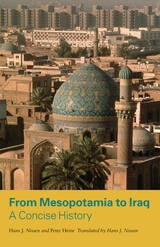
From Mesopotamia to Iraq
A Concise HistoryHans J. Nissen and Peter Heine
University of Chicago Press, 2009
The recent reopening of Iraq’s National Museum attracted worldwide attention, underscoring the country’s dual image as both the cradle of civilization and a contemporary geopolitical battleground. A sweeping account of the rich history that has played out between these chronological poles, From Mesopotamia to Iraq looks back through 10,000 years of the region’s deeply significant yet increasingly overshadowed past.
Hans J. Nissen and Peter Heine begin by explaining how ancient Mesopotamian inventions—including urban society, a system of writing, and mathematical texts that anticipated Pythagoras—profoundly influenced the course of human history. These towering innovations, they go on to reveal, have sometimes obscured the major role Mesopotamia continued to play on the world stage. Alexander the Great, for example, was fascinated by Babylon and eventually died there. Seventh-century Muslim armies made the region one of their first conquests outside the Arabian peninsula. And the Arab caliphs who ruled for centuries after the invasion built the magnificent city of Baghdad, attracting legions of artists and scientists. Tracing the evolution of this vibrant country into a contested part of the Ottoman Empire, a twentieth-century British colony, a republic ruled by Saddam Hussein, and the democracy it has become, Nissen and Heine repair the fragmented image of Iraq that has come to dominate our collective imagination.
In hardly any other continuously inhabited part of the globe can we chart such developments in politics, economy, and culture across so extended a period of time. By doing just that, the authors illuminate nothing less than the forces that have made the world what it is today.
From Moon Goddesses to Virgins
The Colonization of Yucatecan Maya Sexual DesireBy Pete Sigal
University of Texas Press, 2000
For the preconquest Maya, sexuality was a part of ritual discourse and performance, and all sex acts were understood in terms of their power to create, maintain, and destroy society. As postconquest Maya adapted to life under colonial rule, they neither fully abandoned these views nor completely adopted the formulation of sexuality prescribed by Spanish Catholicism. Instead, they evolved hybridized notions of sexual desire, represented in the figure of the Virgin Mary as a sexual goddess, whose sex acts embodied both creative and destructive components.
This highly innovative book decodes the process through which this colonization of Yucatan Maya sexual desire occurred. Pete Sigal frames the discussion around a series of texts, including the Books of Chilam Balam and the Ritual of the Bacabs, that were written by seventeenth and eighteenth century Maya nobles to elucidate the history, religion, and philosophy of the Yucatecan Maya communities. Drawing on the insights of philology, discourse analysis, and deconstruction, he analyzes the sexual fantasies, fears, and desires that are presented, often unintentionally, in the "margins" of these texts and shows how they illuminate issues of colonialism, power, ritual, and gender.