Results by title
28164 books match the query 'History' and 997 start with i
Inca Religion and Customs
By Bernabe Cobo
University of Texas Press, 1990

Incarceration Games
A History of Role-Play in Psychology, Prisons, and PerformanceStephen Scott-Bottoms
University of Michigan Press, 2024

Incarnate Meaning
Lonergan on NewmanRichard M. Liddy
Catholic University of America Press, 2027
Incense and Performance
The Lives of Mexica Ritual SpecialistsSánchez-Perry, Josefrayn
University of Arizona Press, 2026
At the time of the conquest of Mexico, the anonymous authors of the Anales de Tlatelolco (1560s) recorded the deaths of two Mexica ritual specialists. During the tumultuous events of the times, Quauhnochtli (a telpochcalli specialist) and Quauhcoatl (a calmecac specialist) died protecting the temple of Huitzilopochtli and his bundled embodiement in the neighborhood of Huitznahuac.
Scholar Josefrayn Sánchez-Perry reconstructs the lives and labors of the two specialists, articulated through Nahuatl-language texts, material culture from neighborhood and temple spaces, and the academic study of religion. The book expands on known theories on Mexica ritual specialists by providing new insights about telpochcalli and calmecac duties, their interrelated educational models, and the collective practices that brought people, animals, flora, specialists, and teteo (more-than-human forces) together. The book demonstrates that telpochcalli and calmecac specialists shared the ritual responsibilities of collective and elective practices.
Giving care to teteo, giving life, and giving offerings were balanced with giving war, giving council, and giving music and dance. As Quauhnochtli and Quauhcoatl ensured the safety of the bundled Huitzilopochtli, they characterized how a Mexica ritual specialist lived and what they did.

Incidental Architect
William Thornton and the Cultural Life of Early Washington, D.C., 1794–1828Gordon S. Brown
Ohio University Press, 2009
While the majority of scholarship on early Washington focuses on its political and physical development, in Incidental ArchitectGordon S. Brown describes the intellectual and social scene of the 1790s and early 1800s through the lives of a prominent couple whose cultural aspirations served as both model and mirror for the city’s own.
When William and Anna Maria Thornton arrived in Washington, D.C., in 1794, the new nation’s capital was little more than a raw village. The Edinburgh–educated Thornton and his accomplished wife brought with them the values of the Scottish Enlightenment, an enthusiasm for the arts, and a polished urbanity that was lacking in the little city emerging from the swamps along the Potomac. Thornton’s talents were manifold: He is perhaps best known as the original architect of the Capitol building, but he also served as a city commissioner and as director of the Patent Office, where his own experimentation in steam navigation embroiled him in a long-running dispute with inventor Robert Fulton.
In spite of their general preoccupation with politics and real estate development, Washington’s citizens gradually created a network of cultural institutions—theaters, libraries and booksellers, music venues, churches, schools, and even colleges and intellectual associations—that began to satisfy their aspirations.
Incidental Architect is a fascinating account of how the city’s cultural and social institutions were shaped by its earliest citizens.
Incognegro
A Memoir of Exile and ApartheidFrank B. Wilderson III
Duke University Press, 2008
Inconstant Companions
Archaeology and North American Indian Oral TraditionsRonald J. Mason
University of Alabama Press, 2008
Incorrigibles and Innocents
Constructing Childhood and Citizenship in Progressive Era ComicsSaguisag, Lara
Rutgers University Press, 2019
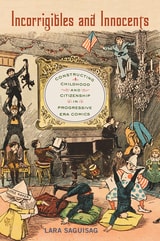
Histories and criticism of comics note that comic strips published in the Progressive Era were dynamic spaces in which anxieties about race, ethnicity, class, and gender were expressed, perpetuated, and alleviated. The proliferation of comic strip children—white and nonwhite, middle-class and lower class, male and female—suggests that childhood was a subject that fascinated and preoccupied Americans at the turn of the century. Many of these strips, including R.F. Outcault’s Hogan’s Alley and Buster Brown, Rudolph Dirks’s The Katzenjammer Kids and Winsor McCay’s Little Nemo in Slumberland were headlined by child characters. Yet no major study has explored the significance of these verbal-visual representations of childhood. Incorrigibles and Innocents addresses this gap in scholarship, examining the ways childhood was depicted and theorized in late nineteenth- and early twentieth-century comic strips. Drawing from and building on histories and theories of childhood, comics, and Progressive Era conceptualizations of citizenship and nationhood, Lara Saguisag demonstrates that child characters in comic strips expressed and complicated contemporary notions of who had a right to claim membership in a modernizing, expanding nation.
Increase And Multiply
Governing Cultural Reproduction In Early Modern EnglandDavid Glimp
University of Minnesota Press, 2003
A wide-ranging study of the ideology of population control in early modern England
Across the sixteenth and seventeenth centuries, a growing notion of the value of a large populace created a sense of urgency about reproduction; accordingly, a wide array of English writers of the time voiced the need not merely to add more people but also to ensure that England had an abundance of the right kinds of people. This need, in turn, called for a variety of institutions to train—and thus make, through a kind of nonbiological procreation—pious, enterprising, and dutiful subjects. In Increase and Multiply, David Glimp examines previously unexplored links between this emergent demographic mentality and Renaissance literature.
Glimp’s analysis centers on humanist pedagogy as a mechanism for creating people capable of governing both themselves and others. Acknowledging the ways in which authors such as Sidney, Shakespeare, and Milton advance their own work by appealing to this vision, Glimp argues that their texts allow us to read the scope and limits of this generative ideal, its capacity to reinforce order and to become excessive and destabilizing. His work provides unprecedented insight into the role of fantasies of nonbiological reproduction in early modern political theory, government practice, and literary production.
Incurable and Intolerable
Chronic Disease and Slow Death in Nineteenth-Century FranceJason Szabo
Rutgers University Press, 2009
Incurable and Intolerable looks at the history of incurable illness from a variety of perspectives, including those of doctors, patients, families, religious counsel, and policy makers. This compellingly documented and well-written history illuminates the physical, emotional, social, and existential consequences of chronic disease and terminal illness, and offers an original look at the world of palliative medicine, politics, religion, and charity. Revealing the ways in which history can shed new light on contemporary thinking, Jason Szabo encourages a more careful scrutiny of today's attitudes, policies, and practices surrounding "imminent death" and its effects on society.

Indelible Inequalities in Latin America
Insights from History, Politics, and CulturePaul Gootenberg and Luis Reygadas, eds.
Duke University Press, 2010
Contributors
Jeanine Anderson
Javier Auyero
Odette Casamayor
Christina Ewig
Paul Gootenberg
Margaret Gray
Eric Hershberg
Lucio Renno
Luis Reygadas

Indenture Aesthetics
Afro-Indian Femininities and the Queer Limits of South African BlacknessJordache A. Ellapen
Duke University Press, 2025
Independence in Latin America
Contrasts and ComparisonsBy Richard Graham
University of Texas Press, 2013
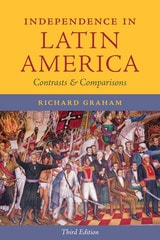
In the course of fifteen momentous years, the Spanish- and the Portuguese-American empires that had endured for three centuries came to an end in the mid-1820s. How did this come about? Not all Latin Americans desired such a change, and the independence wars were civil wars, often cruel and always violent. What social and economic groups lined up on one side or the other? Were there variations from place to place, region to region? Did men and women differ in their experience of war? How did Indians and blacks participate and how did they fare as a result? In the end, who won and who lost?
Independence in Latin America is about the reciprocal effect of war and social dislocation. It also demonstrates that the war itself led to national identity and so to the creation of new states. These governments generally acknowledged the novel principle of constitutionalism and popular sovereignty, even when sometimes carving out exceptions to such rules. The notion that society consisted of individuals and was not a body made up of castes, guilds, and other corporate orders had become commonplace by the end of these wars. So international politics and military confrontations are only part of the intriguing story recounted here.
For this third edition, Richard Graham has written a new introduction and extensively revised and updated the text. He has also added new illustrations and maps.
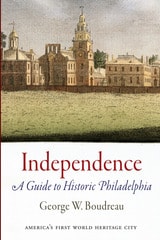
Independence
A Guide to Historic PhiladelphiaGeorge Boudreau
Westholme Publishing, 2012
An Intimate Illustrated Tour of America’s Most Iconic Colonial City
From its beginning as a haven for English Quakers in the colony William Penn founded in 1681, the city of Philadelphia prospered, becoming a leading port in the English Atlantic World and a center of American culture and politics. Grounded in enlightenment ideals, Philadelphia attracted diverse settlers from the Old and New Worlds. By the 1760s, a cash-strapped England set its sights on taxing the American colonies to pay its debts. Philadelphia assumed roles as a center of revolutionary protests, a meeting place for colonial delegates to decide on independence and a new form of government, and, finally, the first capital of the United States of America.
Richly illustrated with both new photography and an amazing array of early American art drawn from the collections of some of America’s leading museums and archives, Independence: A Guide to Historic Philadelphia reveals the stories of the persons who experienced the early years of the new nation in America’s first capital. Based on meticulous research, Independence walks its readers through the lives of the residents and visitors of the revolutionary city, and through the streets and buildings that they knew. Famous names are here: Franklin, Jefferson, Adams, Washington. But Independence also focuses on the fascinating stories of less famous American founders. Enslaved and free, women and men, rich and poor, patriot and Tory, shaped Philadelphia’s and America’s experience in the revolutionary era, and all have their say here. In addition, this guide tells the stories of the iconic buildings and streets where America was founded. The book explores the dozens of buildings that make up Independence National Historical Park and connects these with neighboring sites that are also intimately associated with the story of America’s birth.
Independence will enrich the experience of those who travel to these historic sites, as well as offer a vivid and fascinating story for the general reader.
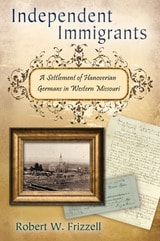
Independent Immigrants
A Settlement of Hanoverian Germans in Western MissouriRobert W. Frizzell
University of Missouri Press, 2007
Between 1838 and the early 1890s, German peasant farmers from the Kingdom of Hanover made their way to Lafayette County, Missouri, to form a new community centered on the town of Concordia. Their story has much to tell us about the American immigrant experience—and about how newcomers were caught up in the violence that swept through their adoptive home.
Robert Frizzell grew up near Concordia, and in this first book-length history of the German settlement, he chronicles its life and times during those formative years. Founded by Hanoverian Friedrich Dierking—known as “Dierking the Comforter” for the aid he gave his countrymen—the Concordia settlement blossomed from 72 households in 1850 to 375 over the course of twenty years. Frizzell traces that growth as he examines the success of early agricultural efforts, but he also tells how the community strayed from the cultural path set by its freethinker founder to become a center of religious conservatism.
Drawing on archival material from both sides of the Atlantic, Frizzell offers a compelling account for scholars and general readers alike, showing how Concordia differed from other German immigrant communities in America. He also explores the conditions in Hanover—particularly the village of Esperke, from which many of the settlers hailed—that caused people to leave, shedding new light on theological, political, and economic circumstances in both the Old World and the New.
When the Civil War came, the antislavery Hanoverians found themselves in the Missouri county with the greatest number of slaves, and the Germans supported the Union while most of their neighbors sympathized with Confederate guerrillas. Frizzell tells how the notorious “Bloody Bill” Anderson attacked the community three times, committing atrocities as gruesome as any recorded in the state—then how the community flourished after the war and even bought out the farmsteads of former slaveholders.
Frizzell’s account challenges many historians’ assumptions about German motives for immigration and includes portraits of families and individuals that show the high price in toil and blood required to meet the challenges of making a home in a new land. Independent Immigrants reveals the untold story of these newcomers as it reveals a little-known aspect of the Civil War in Missouri.

Independent Stardom
Freelance Women in the Hollywood Studio SystemBy Emily Carman
University of Texas Press, 2015
Bringing to light an often-ignored aspect of Hollywood studio system history, this book focuses on female stars who broke the mold of a male-dominated, often manipulative industry to dictate the path of their own careers through freelancing.
Runner-up, Richard Wall Memorial Award, Theatre Library Association, 2016
During the heyday of Hollywood’s studio system, stars were carefully cultivated and promoted, but at the price of their independence. This familiar narrative of Hollywood stardom receives a long-overdue shakeup in Emily Carman’s new book. Far from passive victims of coercive seven-year contracts, a number of classic Hollywood’s best-known actresses worked on a freelance basis within the restrictive studio system. In leveraging their stardom to play an active role in shaping their careers, female stars including Irene Dunne, Janet Gaynor, Miriam Hopkins, Carole Lombard, and Barbara Stanwyck challenged Hollywood’s patriarchal structure.
Through extensive, original archival research, Independent Stardom uncovers this hidden history of women’s labor and celebrity in studio-era Hollywood. Carman weaves a compelling narrative that reveals the risks these women took in deciding to work autonomously. Additionally, she looks at actresses of color, such as Anna May Wong and Lupe Vélez, whose careers suffered from the enforced independence that resulted from being denied long-term studio contracts. Tracing the freelance phenomenon among American motion picture talent in the 1930s, Independent Stardom rethinks standard histories of Hollywood to recognize female stars as creative artists, sophisticated businesswomen, and active players in the then (as now) male-dominated film industry.
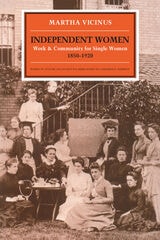
Independent Women
Work and Community for Single Women, 1850-1920Martha Vicinus
University of Chicago Press, 1985
"Feminist insight combines with vast research to produce a dramatic narrative. Independent Women chronicles the energetic lives and imaginative communal structures invented by women who 'pioneered new occupations, new living conditions, and new public roles.'"—Lee R. Edwards, Ms.
"Vicinus is to be congratulated for her brave and unflinching portraits of twisted spinsters as well as stolid saints. That she stretches her net up into the '20s and covers the women's suffrage momement is a brilliant stroke, for one may see clearly how it was possible for women to mount such an enormous and successful political campaign."—Jane Marcus, Chicago Tribune Book World
"Vicinus' beautifully written book abounds in rich historical detail and in subtle psychological insights in the character of its protagonists. The author understands the complexities of the interplay between economic and social conditions, cultural values, and the aims and aspirations of individual personalities who act in history. . . . A superb achievement."—Gerda Lerner, Reviews in American History
"Martha Vicinus has with intelligence and energy paved and landscaped the road on which scholars and students of activist women all travel for many years."—Blanche Wiesen Cook, Women's Review of Books
"Independent Women can be read by anyone with an interest in women's history. But for all contemporary women, unconsciously enjoying privileges and freedoms once bought so dearly, this book should be required reading."—Catharine E. Boyd, History
Indian Assimilation in the Franciscan Area of Nueva Vizcaya
William B. Griffen
University of Arizona Press, 1979
Indian Culture and European Trade Goods
The Archeology of the Historic Period in the Western Great Lakes RegionGeorge Irving Quimby
University of Wisconsin Press, 1970
Indian Given
Racial Geographies across Mexico and the United StatesMaría Josefina Saldaña-Portillo
Duke University Press, 2016
Indian Giving
Economies of Power in Indian-White ExchangesDavid Murray
University of Massachusetts Press, 2000
Indian Ink
Script and Print in the Making of the English East India CompanyMiles Ogborn
University of Chicago Press, 2007
A commercial company established in 1600 to monopolize trade between England and the Far East, the East India Company grew to govern an Indian empire. Exploring the relationship between power and knowledge in European engagement with Asia, Indian Ink examines the Company at work and reveals how writing and print shaped authority on a global scale in the seventeenth and eighteenth centuries.
Tracing the history of the Company from its first tentative trading voyages in the early seventeenth century to the foundation of an empire in Bengal in the late eighteenth century, Miles Ogborn takes readers into the scriptoria, ships, offices, print shops, coffeehouses, and palaces to investigate the forms of writing needed to exert power and extract profit in the mercantile and imperial worlds. Interpreting the making and use of a variety of forms of writing in script and print, Ogborn argues that material and political circumstances always undermined attempts at domination through the power of the written word.
Navigating the juncture of imperial history and the history of the book, Indian Ink uncovers the intellectual and political legacies of early modern trade and empire and charts a new understanding of the geography of print culture.
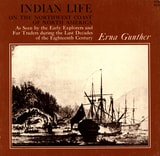
Indian Life on the Northwest Coast of North America as seen by the Early Explorers and Fur Traders during the Last Decades of the Eighteenth Century
Erna Gunther
University of Chicago Press, 1972
Drawing on a wide range of evidence, this volume is a carefully researched investigation into the ethnohistory of the Pacific Northwest during the period of European exploration of the region. The book supplements the archeological evidence from the area with a detailed investigation of the journals, diaries, and sketchbooks of Russian, Spanish, and English explorers and traders who reached the region, as well as artifacts that those explorers and traders obtained on their expeditions and that are now held in museums worldwide. In doing so, Gunther's research extends anthropological study of the region a century earlier, and sheds light on the understudied tribal cultures of the Haida and the Tlingit. The volume contains splendid reproductions of contemporary drawings, and appendices mapping the museum locations of artifacts and describing the processes of native technology.
Indian Migration and Empire
A Colonial Genealogy of the Modern StateRadhika Mongia
Duke University Press, 2018
Indian Mounds of Wisconsin
Robert A. Birmingham and Amy L. Rosebrough
University of Wisconsin Press, 2017
Citing evidence from past excavations, ethnography, the traditions of present-day Native Americans in the Midwest, ground-penetrating radar and LIDAR imaging, and recent findings of other archaeologists, Robert A. Birmingham and Amy L. Rosebrough argue that effigy mound groups are cosmological maps that model belief systems and relations with the spirit world. The authors advocate for their preservation and emphasize that Native peoples consider the mounds sacred places.
This edition also includes an expanded list of public parks and preserves where mounds can be respectfully viewed, such as the Kingsley Bend mounds near Wisconsin Dells, an outstanding effigy group maintained by the Ho-Chunk Nation, and the Man Mound Park near Baraboo, the only extant human-shaped effigy mound in the world.
Indian Names in Michigan
Virgil J. Vogel
University of Michigan Press, 1986
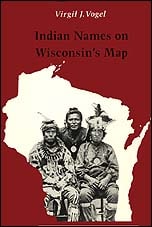
Indian Names on Wisconsin's Map
Virgil J. Vogel
University of Wisconsin Press, 1992
Place names are cultural artifacts that tell us as much about how people lived as do relics dug from the ground, writes Virgil Vogel, one of America's foremost authorities on place names. They are historical records from which the location and migration of people, plants, and animals can be charted. Onalaska and Aztalan, not surprisingly, are place names transplanted to Wisconsin from the far north and south. Some names tell of topographic features that have long since disappeared or are little noticed today. Beaver Dam once had an Indian name meaning just that; Sheboygan, "big pipe" in Ojibwa, described the shape of a river bend. Other names are vestiges of ancient languages nowhere else recorded. Some commemorate historic events: Winneconne is believed by many to mean "place of the skulls."
The Indian names of Wisconsin's towns, rivers, and lakes reveal the minds of the Indian peoples, their cosmic views, their values, their relation to their environment , and their ways of life and convey as well something of the history of their white invaders.
Virgil Vogel's thirty years of research into Native American influence on geographical names has resulted in an absorbing account that illuminates the history and culture of Wisconsin Indians. Vogel tells his story thematically—names from the spirit world, names of trails and portages, French-Indian personal names, tribal names, and so on—to show that place names are part of a larger cultural and natural world. In recovering the history and meaning of these names, he has restored an important and colorful part of America's heritage.
Indian Nation
Native American Literature and Nineteenth-Century NationalismsCheryl Walker
Duke University Press, 1997
Walker examines the rhetoric and writings of nineteenth-century Native Americans, including William Apess, Black Hawk, George Copway, John Rollin Ridge, and Sarah Winnemucca. Demonstrating with unique detail how these authors worked to transform venerable myths and icons of American identity, Indian Nation chronicles Native American participation in the forming of an American nationalism in both published texts and speeches that were delivered throughout the United States. Pottawattomie Chief Simon Pokagon’s "The Red Man’s Rebuke," an important document of Indian oratory, is published here in its entirety for the first time since 1893.
By looking at this writing through the lens of the best theoretical work on nationality, postcoloniality, and the subaltern, Walker creates a new and encompassing picture of the relationship between Native Americans and whites. She shows that, contrary to previous studies, America in the nineteenth century was intercultural in significant ways.
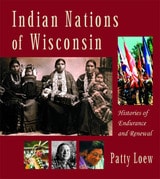
Indian Nations of Wisconsin
Histories of Endurance and RenewalPatty Loew
Wisconsin Historical Society Press, 2001
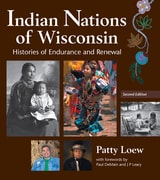
Indian Nations of Wisconsin
Histories of Endurance and Renewal, 2 EditionPatty Loew
Wisconsin Historical Society Press, 2013
From origin stories to contemporary struggles over treaty rights and sovereignty issues, Indian Nations of Wisconsin explores Wisconsin's rich Native tradition. This unique volume—based on the historical perspectives of the state’s Native peoples—includes compact tribal histories of the Ojibwe, Potawatomi, Oneida, Menominee, Mohican, Ho-Chunk, and Brothertown Indians. Author Patty Loew focuses on oral tradition—stories, songs, the recorded words of Indian treaty negotiators, and interviews—along with other untapped Native sources, such as tribal newspapers, to present a distinctly different view of history. Lavishly illustrated with maps and photographs, Indian Nations of Wisconsin is indispensable to anyone interested in the region's history and its Native peoples.
The first edition of Indian Nations of Wisconsin: Histories of Endurance and Renewal, won the Wisconsin Library Association's 2002 Outstanding Book Award.
Indian New England Before the Mayflower
Howard S. Russell
University Press of New England, 1983
Indian Resilience and Rebuilding
Indigenous Nations in the Modern American WestDonald L. Fixico
University of Arizona Press, 2013
Fixico identifies the tools to this empowerment such as education, navigation within cultural systems, modern Indian leadership, and indigenized political economy. He explains how these tools helped Indian communities to rebuild their nations. Fixico constructs an Indigenous paradigm of Native ethos and reality that drives Indian modern political economies heading into the twenty-first century.
This illuminating and comprehensive analysis of Native nation’s resilience in the twentieth century demonstrates how Native Americans reinvented themselves, rebuilt their nations, and ultimately became major forces in the United States. Indian Resilience and Rebuilding, redefines how modern American history can and should be told.
Indian Self Rule
First-Hand Accounts of Indian-White Relations from Roosevelt to Reaganedited by Kenneth R. Philp
Utah State University Press, 1995
Indian Stream Republic
Settling a New England Frontier, 1785-1842Daniel Doan
Brandeis University Press, 1996
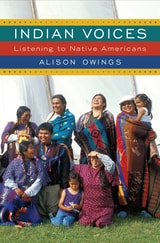
Indian Voices
Listening to Native AmericansOwings, Alison
Rutgers University Press, 2012
In Indian Voices, Alison Owings takes readers on a fresh journey across America, east to west, north to south, and around again. Owings's most recent oral history—engagingly written in a style that entertains and informs—documents what Native Americans say about themselves, their daily lives, and the world around them.
Young and old from many tribal nations speak with candor, insight, and (unknown to many non-Natives) humor about what it is like to be a Native American in the twenty-first century. Through intimate interviews many also express their thoughts about the sometimes staggeringly ignorant, if often well-meaning, non-Natives they encounter—some who do not realize Native Americans still exist, much less that they speak English, have cell phones, use the Internet, and might attend powwows and power lunches.
Indian Voices, an inspiring and important contribution to the literature about the original Americans, will make every reader rethink the past—and present—of the United States.
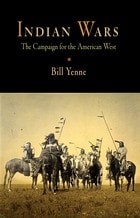
Indian Wars
The Campaign for the American WestBill Yenne
Westholme Publishing, 2006
A Chronicle of the Longest Military Action in American History
"Splendid. . . .a book that has the rare quality of being both an excellent reference work and a pleasure to read."—Wall Street Journal
"As complete and balanced an overview of nearly a century of fighting between the U.S. Army and dozens of Indian nations as there is." —Martin Naparsteck, Salt Lake Tribune
"Excellent. . . . Indian Wars is an outstanding introduction to the 'longest campaign ever waged by any of the United States armed forces.' It also has the virtue of speaking eloquently to the past while offering valuable guidance for the future."—Military.com
The Indian wars remain the most misunderstood campaign ever waged by the U. S. Army. From the first sustained skirmishes west of the Mississippi River in the 1850s to the sweeping clashes of hundreds of soldiers and warriors along the upper plains decades later, these wars consumed most of the active duty resources of the army for the greater part of the nineteenth century and resulted in the disruption of nearly all of the native cultures in the West. Yet the popular understanding of the Indian wars is marred by stereotypes and misinformation as well as a tendency to view these individual wars—the battles against the Sioux, the Cheyenne, the Nez Perce, the Apache, and other groups—as distinct incidents rather than parts of a single overarching campaign. Dispelling notions that American Indians were simply attempting to stop encroachment on their homelands or that they shared common views on how to approach the Europeans, Bill Yenne explains in Indian Wars: The Campaign for the American West, that these wars, fought for more than five decades across a landscape the size of continental Europe, were part of a general long-term strategy by the U. S. Army to control the West as well as extensions of conflicts among native peoples that predated European contact.
Complete with a general history of Indian and European relations from the earliest encounters to the opening of the west, and featuring legendary figures from both sides, including Crazy Horse, Chief Joseph, Sitting Bull, Geronimo, George Custer, Kit Carson, and George Crook, Indian Wars allows the reader to better understand the sequence of events that transformed the West and helped define the American temperament.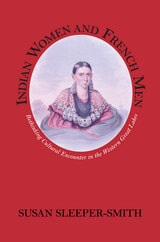
Indian Women and French Men
Rethinking Cultural Encounter in the Western Great LakesSusan Sleeper-Smith
University of Massachusetts Press, 2001
A center of the lucrative fur trade throughout the colonial period, the Great Lakes region was an important site of cultural as well as economic exchange between native and European peoples. In this well-researched study, Susan Sleeper-Smith focuses on an often overlooked aspect of these interactions—the role played by Indian women who married French traders. Drawing on a broad range of primary and secondary sources, she shows how these women used a variety of means to negotiate a middle ground between two disparate cultures. Many were converts to Catholicism who constructed elaborate mixed-blood kinship networks that paralleled those of native society, thus facilitating the integration of Indian and French values. By the mid-eighteenth century, native women had extended these kin linkages to fur trade communities throughout the Great Lakes, not only enhancing access to the region's highly prized pelts but also ensuring safe transport for other goods.
Indian Women and French Men depicts the encounter of Old World and New as an extended process of indigenous adaptation and change rather than one of conflict and inevitable demise. By serving as brokers between those two worlds, Indian women who married French men helped connect the Great Lakes to a larger, expanding transatlantic economy while securing the survival of their own native culture. As such, Sleeper-Smith points out, their experiences illuminate those of other traditional cultures forced to adapt to market-motivated Europeans.
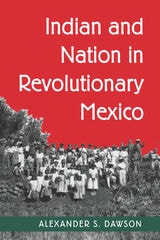
Indian and Nation in Revolutionary Mexico
Alexander S. Dawson
University of Arizona Press, 2004
Traditionally, scholars have seen Indigenismo as an elitist formulation of the "Indian problem." Dawson instead explores the ways that the movement was mediated by both elite and popular pressures over time. By showing how Indigenismo was used by a variety of actors to negotiate the shape of the revolutionary state—from anthropologist Manual Gamio to President Lázaro Cárdenas—he demonstrates how it contributed to a new "pact of domination" between indigenous peoples and the government.
Although the power of the Indigenistas was limited by the face that "Indian" remained a racial slur in Mexico, the indígenas capacitados empowered through Indigenismo played a central role in ensuring seventy years of PRI hegemony. In studying the confluence of state formation, social science, and native activism, Dawson's book offers a new perspective for understanding the processes through which revolutionary hegemony emerged.
Indiana 1816-1850
The Pioneer EraDonald F. Carmony
Indiana Historical Society Press, 1998

Indiana Out Loud
Dan Carpenter on the Heartland BeatDan Carpenter
Indiana Historical Society Press, 2013
Indiana Political Heroes
Geoff Paddock
Indiana Historical Society Press, 2008
Indiana Quakers Confront the Civil War
Jacquelyn S. Nelson
Indiana Historical Society Press, 1991
Indiana Through Tradition and Change
A History of the Hoosier State and Its People, 1920-1945James H. Madison
Indiana Historical Society Press, 1982
Indiana in Transition
The Emergence of an Industrial Commonwealth, 1880-1920Clifton J. Phillips
Indiana Historical Society Press, 1968
Indiana in the Civil War Era, 1850-1880
Emma Lou Thornbrough
Indiana Historical Society Press, 1965
Indiana to 1816
The Colonial PeriodJohn D. Barnhart
Indiana Historical Society Press, 2016

Indiana's 200
The People Who Shaped the Hoosier StateLinda C. Gugin
Indiana Historical Society Press, 2015
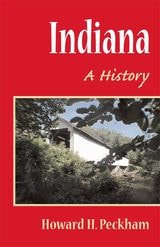
Indiana
A HistoryHoward H. Peckham
University of Illinois Press, 1978
During the Civil War, the state found itself divided, with Indianans' allegiances split between Southern partisans and zealous Yankees. Throughout this period, the workshops and farms of Indiana continued to provide the growing nation with food and other necessities. Countless small towns prospered; Indianapolis grew, and Gary, on the southern shore of Lake Michigan, became synonymous with steel production, symbolizing the industrial might of America. Readers all over the country embraced the writings of Indianans such as James Whitcomb Riley and Booth Tarkington, while Indiana's painters disseminated iconic and idyllic images of America.
This comprehensive history traces the history of the Hoosier state, revealing its most significant contributions to the nation as a whole, while also exploring the unique character of its land and people. Howard H. Peckham relates recent changes in Indiana as a variety of ethnic and racial groups have come seeking a share in the good life, enriching and redefining this ever-changing state for the new millennium.

Indianapolis
A City of ImmigrantsM. Teresa Baer
Indiana Historical Society Press, 2012

Indianapolis
The Bass Photo Company CollectionSusan Sutton
Indiana Historical Society Press, 2008