Results by title
321 books match the query 'Mexican Americans' and 49 start with m

Magical Habits
Monica Huerta
Duke University Press, 2021
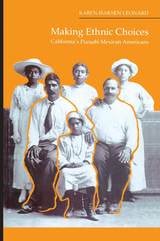
Making Ethnic Choices
California's Punjabi Mexican AmericansKaren Isaksen Leonard
Temple University Press, 1994
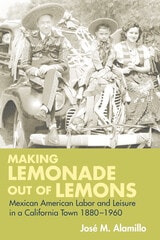
Making Lemonade out of Lemons
Mexican American Labor and Leisure in a California Town 1880-1960José M. Alamillo
University of Illinois Press, 2006
Out of the “lemons” handed to Mexican American workers in Corona, California--low pay, segregated schooling, inadequate housing, and racial discrimination--Mexican men and women made “lemonade” by transforming leisure spaces such as baseball games, parades, festivals, and churches into politicized spaces where workers voiced their grievances, debated strategies for advancement, and built solidarity. Using oral history interviews, extensive citrus company records, and his own experiences in Corona, José Alamillo argues that Mexican Americans helped lay the groundwork for civil rights struggles and electoral campaigns in the post-World War II era.
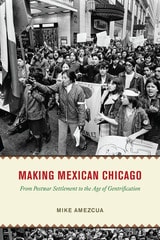
Making Mexican Chicago
From Postwar Settlement to the Age of GentrificationMike Amezcua
University of Chicago Press, 2022
Though Chicago is often popularly defined by its Polish, Black, and Irish populations, Cook County is home to the third-largest Mexican-American population in the United States. The story of Mexican immigration and integration into the city is one of complex political struggles, deeply entwined with issues of housing and neighborhood control. In Making Mexican Chicago, Mike Amezcua explores how the Windy City became a Latinx metropolis in the second half of the twentieth century.
In the decades after World War II, working-class Chicago neighborhoods like Pilsen and Little Village became sites of upheaval and renewal as Mexican Americans attempted to build new communities in the face of white resistance that cast them as perpetual aliens. Amezcua charts the diverse strategies used by Mexican Chicagoans to fight the forces of segregation, economic predation, and gentrification, focusing on how unlikely combinations of social conservatism and real estate market savvy paved new paths for Latinx assimilation. Making Mexican Chicago offers a powerful multiracial history of Chicago that sheds new light on the origins and endurance of urban inequality.
Making the MexiRican City
Migration, Placemaking, and Activism in Grand Rapids, MichiganDelia Fernández-Jones
University of Illinois Press, 2023
A Choice Outstanding Academic Title for 2023
Large numbers of Latino migrants began to arrive in Grand Rapids, Michigan, in the 1950s. They joined a small but established Spanish-speaking community of people from Texas, Mexico, and Puerto Rico. Delia Fernández-Jones merges storytelling with historical analysis to recapture the placemaking practices that these Mexicans, Tejanos, and Puerto Ricans used to create a new home for themselves. Faced with entrenched white racism and hostility, Latinos of different backgrounds formed powerful relationships to better secure material needs like houses and jobs and to recreate community cultural practices. Their pan-Latino solidarity crossed ethnic and racial boundaries and shaped activist efforts that emphasized working within the system to advocate for social change. In time, this interethnic Latino alliance exploited cracks in both overt and structural racism and attracted white and Black partners to fight for equality in social welfare programs, policing, and education.
Groundbreaking and revelatory, Making the MexiRican City details how disparate Latino communities came together to respond to social, racial, and economic challenges.

Man of Fire
Selected WritingsErnesto Galarza, Edited by Armando Ibarra and Rodolfo D. Torres
University of Illinois Press, 2013
Maria's Journey
Ramon Arredondo and Trisha (Hull) Arredondo
Indiana Historical Society Press, 2010
Mario Barradas and Son Jarocho
The Journey of a Mexican Regional MusicYolanda Broyles-González, Rafael Figueroa Hernández, and Francisco González
University of Texas Press, 2022
Son Jarocho was born as the regional sound of Veracruz but over time became a Mexican national genre, even transnational, genre—a touchstone of Chicano identity in the United States. Mario Barradas and Son Jarocho traces a musical journey from the Gulf Coast to interior Mexico and across the border, describing the transformations of Son Jarocho along the way.
This comprehensive cultural study pairs ethnographic and musicological insights with an oral history of the late Mario Barradas, one of Son Jarocho’s preeminent modern musicians. Chicano musician Francisco González offers an insider’s account of Barradas’s influence and Son Jarocho’s musical qualities, while Rafael Figueroa Hernández delves into Barradas’s recordings and films. Yolanda Broyles-González examines the interplay between Son Jarocho’s indigenous roots and contemporary role in Mexican and US society. The result is a nuanced portrait of a vital and evolving musical tradition.

Meditación Fronteriza
Poems of Love, Life, and LaborNorma Elia Cantú
University of Arizona Press, 2019
The poems are a celebration of culture, tradition, and creativity that navigates themes of love, solidarity, and political transformation. Deeply personal yet warmly relatable, these poems flow from Spanish to English gracefully. With Gloria Anzaldúa’s foundational work as an inspiration, Meditación Fronteriza unveils unique images that provide nuance and depth to the narrative of the borderlands.
Poems addressed to talented and influential women such as Gwendolyn Brooks and Adrienne Rich, among others, pour gratitude and recognition into the collection. While many of the poems in Meditación Fronteriza are gentle and inviting, there are also moments that grieve for the state of the borderlands, calling for political resistance.
Memories of a Hyphenated Man
Ramón Eduardo Ruiz Urueta
University of Arizona Press, 2003
Historian, author, and intellectual, Ruiz has established himself through such books as Triumphs and Tragedy: A History of the Mexican People and Cuba: The Making of a Revolution, and in 1998 he was awarded the National Humanities Medal by President Clinton. Now he turns his pen on his own life to offer a personal look at what it really means to be American by birth but Mexican by culture.
Little has been written by or about persons of Mexican origin who have achieved the academic stature of Ruiz, and his memoir provides insights not found in the more common biographies of labor leaders and civil rights activists. His early life straddled the social worlds of his parent's Mexico and semi-rural America, where his father's success as an entrepreneur and property owner set his family's experiences apart from those of most other Mexican Americans at the time. His parents reinforced in their children an identity as mexicanos, and that connection with his ancestral roots was for Ruiz a lifejacket in the days of acute bigotry in America.
In making an early, self-conscious commitment to a life of the mind, Ruiz became aware of his unique nature, and while not immune to prejudice he was able to make a name for himself in several endeavors. As a student, he attended college when few Mexican Americans were given that opportunity, and he was one of the first of his generation to earn a Ph.D. As an Army Air Force officer during World War II, he served as a pilot in the Pacific theatre. And as an intellectual, he navigated the currents of the historical profession and charted new directions in Latin American research through his prolific writing.
Ruiz's career teaching took him to Mexico, Massachusetts, Texas, Oregon—often as the lone "Mexican professor," and ultimately back to his native California. While teaching at Smith, he exulted in being "free to interpret Spanish American life and culture to my heart's content," and at the University of California, San Diego, he saw the era of campus racial barrier give way to the birth of affirmative action. While at UCSD, he taught hundreds of Chicanos and trained one of the largest groups of Chicano Ph.D's.
Memories of a Hyphenated Man is the story of a unique individual who, while shaped by his upbringing and drawing on deep cultural roots, steadfastly followed his own compass in life. It tells of a singular man who beat the odds as it poignantly addresses the ambiguities associated with race, class, citizenship, and nationality for Mexicans and Mexican Americans.
Memory Fever
Ray Gonzalez
University of Arizona Press, 1999
Through 29 storylike essays, Gonzalez takes readers into the heart of the desert and the soul of a developing poet. He introduces us to the people who shaped his life. We learn of his father's difficulties with running a pool hall and of his grandmother's steadfast religious faith. We meet sinister Texas Rangers, hallucinatory poets, illegal aliens, and racist high school jocks. His vivid recollections embrace lizard hunts and rattlesnake dreams, rock music and menudo making—all in stories that convey the pains and joys of growing up on the border. As Gonzalez leads us through his desert of hope and vision, we come to recognize the humor and sadness that permeate this special place.
Mestizaje
Critical Uses of Race in Chicano CultureRafael Perez-Torres
University of Minnesota Press, 2005
Informed by a broad-ranging theoretical investigation of identity politics and race and incorporating feminist and queer critiques, Pérez-Torres skillfully analyzes Chicano cultural production. Contextualizing the history of mestizaje, he shows how the concept of mixed race has been used to engage issues of hybridity and voice and examines the dynamics that make mestizo and mestiza identities resistant to, as well as affirmative of, dominant forms of power. He also addresses the role that mestizaje has played in expressive culture, including the hip-hop music of Cypress Hill and the vibrancy of Chicano poster art. Turning to issues of mestizaje in literary creation, Pérez-Torres offers critical readings of the works of Emma Pérez, Gil Cuadros, and Sandra Cisneros, among others. This book concludes with a consideration of the role that the mestizo body plays as a site of elusive or displaced knowledge.
Moving beyond the oppositions—nationalism versus assimilation, men versus women, Texans versus Californians—that have characterized much of Chicano studies, Mestizaje synthesizes and assesses twenty-five years of pathbreaking thinking to make a case for the core components, sensibilities, and concerns of the discipline.
Rafael Pérez-Torres is professor of English at the University of California, Los Angeles. He is author of Movements in Chicano Poetry: Against Myths, Against Margins, coauthor of To Alcatraz, Death Row, and Back: Memories of an East LA Outlaw, and coeditor of The Chicano Studies Reader: An Anthology of Aztlán, 1970–2000.
Mestizo in America
Generations of Mexican Ethnicity in the Suburban SouthwestThomas Macias
University of Arizona Press, 2006
Mexican American Civil Rights in Texas
Robert Brischetto
Michigan State University Press, 2022

Mexican American Fertility Patterns
By Frank D. Bean and Gray Swicegood
University of Texas Press, 1985
The Mexican American population is the fastest growing major racial/ethnic group in the United States. During the decade 1970–1980, the Mexican origin population increased from 4.5 million to 8.7 million persons. High fertility, not immigration, was responsible for nearly two-thirds of this growth.
Recent and historical evidence shows that women of Mexican origin or descent bear significantly more children than other white women in the United States. Mexican American Fertility Patterns clarifies the nature and magnitude of these fertility differences by analyzing patterns of childbearing both across ethnic groups and within the Mexican American population.
Using data from the 1970 and 1980 U.S. Censuses and from the 1976 Survey of Income and Education, the authors evaluate various hypotheses of cultural, social, demographic, and/or economic factors as determinants of fertility differences. Empirical analyses center on the interrelationships between fertility and generational status, language usage and proficiency, and female education. This timely report concludes that Mexican American fertility is closest to that of other whites under conditions of greater access to the opportunity structures of the society.
Mexican American Mojo
Popular Music, Dance, and Urban Culture in Los Angeles, 1935–1968Anthony Macías
Duke University Press, 2008
Macías conducted numerous interviews for Mexican American Mojo, and the voices of little-known artists and fans fill its pages. In addition, more famous musicians such as Ritchie Valens and Lalo Guerrero are considered anew in relation to their contemporaries and the city. Macías examines language, fashion, and subcultures to trace the history of hip and cool in Los Angeles as well as the Chicano influence on urban culture. He argues that a grass-roots “multicultural urban civility” that challenged the attempted containment of Mexican Americans and African Americans emerged in the neighborhoods, schools, nightclubs, dance halls, and auditoriums of mid-twentieth-century Los Angeles. So take a little trip with Macías, via streetcar or freeway, to a time when Los Angeles had advanced public high school music programs, segregated musicians’ union locals, a highbrow municipal Bureau of Music, independent R & B labels, and robust rock and roll and Latin music scenes.
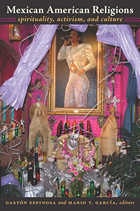
Mexican American Religions
Spirituality, Activism, and CultureGastón Espinosa and Mario T. García, eds.
Duke University Press, 2008
Turning to literature, contributors consider Gloria Anzaldúa’s view of the borderlands as a mystic vision and the ways that Chicana writers invoke religious symbols and rhetoric to articulate a moral vision highlighting social injustice. They investigate the role of healing, looking at it in relation to both the Latino Pentecostal movement and the practice of the curanderismo tradition in East Los Angeles. Delving into to popular culture, they reflect on Luis Valdez’s video drama La Pastorela: “The Shepherds’ Play,” the spirituality of Chicana art, and the religious overtones of the reverence for the slain Tejana music star Selena. This volume signals the vibrancy and diversity of the practices, arts, traditions, and spiritualities that reflect and inform Mexican American religion.
Contributors: Rudy V. Busto, Davíd Carrasco, Socorro Castañeda-Liles, Gastón Espinosa, Richard R. Flores, Mario T. García, María Herrera-Sobek, Luís D. León, Ellen McCracken, Stephen R. Lloyd-Moffett, Laura E. Pérez, Roberto Lint Saragena, Anthony M. Stevens-Arroyo, Kay Turner
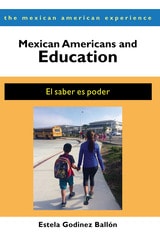
Mexican Americans and Education
El saber es poderEstela Godinez Ballón
University of Arizona Press, 2015
Mexican Americans and Education begins with a brief overview of historical educational conditions that have impacted the experiences and opportunities of Mexican American students, and moves into an examination of major contemporary institutional barriers to academic success, including segregation, high-stakes testing, and curriculum tracking. Ballón also explores the status of Mexican American students in higher education and introduces theories and pedagogies that aim to understand and improve school conditions. Through her extensive examination of the major issues impacting Mexican American students, Ballón provides a broad introduction to an increasingly relevant topic.
Ballón uses understandable and accessible language to examine institutional and ideological factors that have negatively impacted Mexican Americans’ public school experiences, while also focusing on their strengths and possibilities for future action. This unique overview serves as a foundation for both education and Chicana/o studies courses, as well as in teacher and professional development.

Mexican Americans and Health
¡Sana! ¡Sana!Adela de la Torre and Antonia Estrada
University of Arizona Press, 2001
- how values such as machismo, familismo, and marianismo influence care-seeking decisions and treatment of illness;
- how factors such as cultural values, socioeconomic status, peer pressure, and family concerns can contribute to substance abuse;
- how cultural attitudes toward sex can heighten the risk of AIDS—and how approaches to AIDS prevention and education need to reflect core cultural values such as familismo, respeto, and confianza. The book also addresses concerns of Mexican Americans regarding the health care system. These include not only access to care and to health insurance but also the shortage of bilingual and bicultural health care professionals. This coverage stresses not only the importance of linguistic competency but also the need to understand folklore illnesses, herbal remedies, and spiritual practices that can delay the treatment of illness and either complement or compromise treatment. Of all the issues that face the contemporary Mexican American community, none is as important to its very survival as health and health care. This timely book gives readers a broad understanding of these complex issues and points the way toward a healthier future for all people of Mexican origin. Mexican Americans and Health and Chicano Popular Culture are the first volumes in the series The Mexican American Experience, a cluster of modular texts designed to provide greater flexibility in undergraduate education. Each book deals with a single topic concerning the Mexican American population. Instructors can create a semester-length course from any combination of volumes, or may choose to use one or two volumes to complement other texts.

Mexican Americans and Health
¡Sana! ¡Sana!Adela de la Torre and Antonio Estrada
University of Arizona Press, 2015
Given recent developments in health care and policy and a steadily increasing population of people of Mexican origin in the United States, a comprehensive look at Mexican American health has never been more necessary. Adela de la Torre and Antonio Estrada first accomplished such an overview with Mexican Americans and Health in 2001, and they have since continued to revise and expand their initial work. With a multitude of additions and renovations, Mexican Americans and Health, 2nd Edition provides a timely and accessible description of current topics in Latino health.
De la Torre and Estrada once again present a broad and nuanced understanding of recent issues involving Mexican American health and well-being, this time with the addition of discussions on:
* the new U.S. Human Development Index to contextualize the health, education, and income status of Mexican Americans relative to other population groups,
* emerging diseases, such as diabetes and obesity,
* recent health-care reforms under the Obama administration,
* substance abuse, sexual risk, and psychological distress among HIV-positive individuals in the gay/bisexual community,
* and predictions of future trends for the next decade.
This new volume has been updated throughout to reflect the many developments in health care since its first edition. Mexican Americans and Health, 2nd Edition continues to present data on a large number of health issues that are important and relevant to the Mexican American population, while describing the social contexts in which they are occurring. Its comprehensive and interdisciplinary approach brings originality and focus to a dynamic literature.
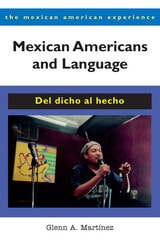
Mexican Americans and Language
Del dicho al hechoGlenn A. Martínez
University of Arizona Press, 2006
This book offers an overview of some of the central issues in the Mexican American language experience, describing it in terms of both bilingualism and minority status. It is the first book to focus on the historical, social, political, and structural aspects of multiple languages in the Mexican American experience and to address the principles and methods of applied sociolinguistic research in the Mexican American community. Spanish and non-Spanish speakers in the Mexican American community share a common set of social and ethnic bonds. They also share a common experience of bilingualism.
As Martínez observes, the ideas that have been constructed around bilingualism are as important to understanding the Mexican American language experience as bilingualism itself. Mexican Americans and Language gives students the background they need to respond to the multiple social problems that can result from the language differences that exist in the Mexican American community. By showing students how to go from word to deed (del dicho al hecho), it reinforces the importance of language for their community, and for their own lives and futures.
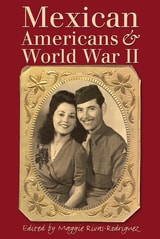
Mexican Americans and World War II
Edited by Maggie Rivas-Rodriguez
University of Texas Press, 2005
Up to 750,000 Mexican American men served in World War II, earning more Medals of Honor and other decorations in proportion to their numbers than any other ethnic group. Mexican American women entered the workforce on the home front, supporting the war effort and earning good wages for themselves and their families. But the contributions of these men and women have been largely overlooked as American society celebrates the sacrifices and achievements of the "Greatest Generation." To bring their stories out of the shadows, this book gathers eleven essays that explore the Mexican American experience in World War II from a variety of personal and scholarly perspectives.
The book opens with accounts of the war's impact on individuals and families. It goes on to look at how the war affected school experiences; how Mexican American patriotism helped to soften racist attitudes; how Mexican Americans in the Midwest, unlike their counterparts in other regions of the country, did not experience greater opportunities as a result of the war; how the media exposed racist practices in Texas; and how Mexican nationals played a role in the war effort through the Bracero program and through the Mexican government's championing of Mexican Americans' rights. As a whole, the collection reveals that World War II was the turning point that gave most Mexican Americans their first experience of being truly included in American society, and it confirms that Mexican Americans of the "Greatest Generation" took full advantage of their new opportunities as the walls of segregation fell.
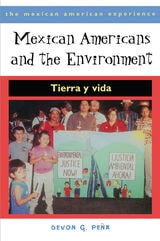
Mexican Americans and the Environment
Tierra y VidaDevon G. Peña
University of Arizona Press, 2005
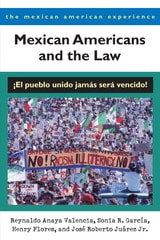
Mexican Americans and the Law
¡El pueblo unido jamás será vencido!Reynaldo Anaya Valencia, Sonia R. García, Henry Flores, and José Roberto Juárez Jr.
University of Arizona Press, 2004
Each chapter highlights historical contexts, relevant laws, and policy concerns for a specific issue and features abridged versions of significant state and federal cases involving Mexican Americans. Beginning with People v. Zammora (1940), the trial that was a precursor to the Zoot Suit Riots in Los Angeles during World War II, the authors lead students through some of the most important and precedent-setting cases in American law:
- Educational equality: from segregation concerns in Méndez v. Westminster (1946) to unequal funding in San Antonio Independent School District vs. Rodríguez (1973)
- Gender issues: reproductive rights in Madrigal v. Quilligan (1981), workplace discrimination in EEOC v. Hacienda Hotel (1989), sexual violence in Aguirre-Cervantes v. INS (2001)
- Language rights: Ýñiguez v. Arizonans for Official English (1995), García v. Gloor (1980), Serna v. Portales Municipal Schools (1974)
- Immigration-: search and seizure questions in U.S. v. Brignoni-Ponce (1975) and U.S. v. Martínez-Fuerte (1976); public benefits issues in Plyler v. Doe (1982) and League of United Latin American Citizens v. Wilson (1997)
- Voting rights: redistricting in White v. Regester (1973) and Bush v. Vera (1996)
- Affirmative action: Hopwood v. State of Texas (1996) and Coalition for Economic Equity v. Wilson (1997)
- Criminal justice issues: equal protection in Hernández v. Texas (1954); jury service in Hernández v. New York (1991); self incrimination in Miranda v. Arizona (1966); access to legal counsel in Escobedo v. Illinois (1964)
With coverage as timely as the 2003 Supreme Court decision on affirmative action, Mexican Americans and the Law offers invaluable insight into legal issues that have impacted Mexican Americans, other Latinos, other racial minorities, and all Americans. Discussion questions, suggested readings, and Internet sources help students better comprehend the intricacies of law.
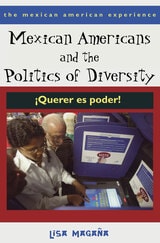
Mexican Americans and the Politics of Diversity
¡Querer es poder!Lisa Magaña
University of Arizona Press, 2005
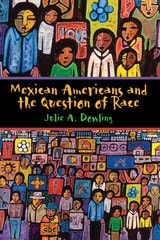
Mexican Americans and the Question of Race
By Julie A. Dowling
University of Texas Press, 2014
Honorable Mention, Oliver Cromwell Cox Book Award, presented by the Racial and Ethnic Minorities Section of the American Sociological Association, 2015
With Mexican Americans constituting a large and growing segment of U.S. society, their assimilation trajectory has become a constant source of debate. Some believe Mexican Americans are following the path of European immigrants toward full assimilation into whiteness, while others argue that they remain racialized as nonwhite. Drawing on extensive interviews with Mexican Americans and Mexican immigrants in Texas, Dowling’s research challenges common assumptions about what informs racial labeling for this population. Her interviews demonstrate that for Mexican Americans, racial ideology is key to how they assert their identities as either in or outside the bounds of whiteness. Emphasizing the link between racial ideology and racial identification, Dowling offers an insightful narrative that highlights the complex and highly contingent nature of racial identity.
Mexican Americans and the U.S. Economy
Quest for Buenos DíasArturo González
University of Arizona Press, 2002
Mexican Americans in a Dallas Barrio
Shirley Achor
University of Arizona Press, 1978
Mexican Chicago
Race, identity and Nation, 1916-39Gabriela F. Arredondo
University of Illinois Press, 2007
Mexican Chicago builds on previous studies of Mexicans in the United States while challenging static definitions of “American” and underlying assumptions of assimilation. Gabriela F. Arredondo contends that because of the revolutionary context from which they came, Mexicans in Chicago between 1916 and 1939 were not just another ethnic group working to be assimilated into a city that has a long history of incorporating newcomers. Suggesting a new understanding of identity formation, she argues that Mexicans wielded tools of identification forged in revolutionary Mexico to collectively battle the prejudices of ethnic groups that included Poles, Italians, and the Irish, as well as African Americans. By turning inward, however, Mexicans also highlighted tremendous differences among themselves, such as gender and class. In discussing this distinctive process of becoming “Mexican” in Chicago during the early twentieth century, Arredondo not only explores how that identity was constructed but also provides telling insight into the repercussions of that identity formation process.
Mexican Consuls and Labor Organizing
Imperial Politics in the American SouthwestBy Gilbert G. González
University of Texas Press, 1999
Chicano history, from the early decades of the twentieth century up to the present, cannot be explained without reference to the determined interventions of the Mexican government, asserts Gilbert G. González. In this pathfinding study, he offers convincing evidence that Mexico aimed at nothing less than developing a loyal and politically dependent emigrant community among Mexican Americans, which would serve and replicate Mexico's political and economic subordination to the United States.
González centers his study around four major agricultural workers' strikes in Depression-era California. Drawing on a wide variety of sources, he documents how Mexican consuls worked with U.S. growers to break the strikes, undermining militants within union ranks and, in one case, successfully setting up a grower-approved union. Moreover, González demonstrates that the Mexican government's intervention in the Chicano community did not end after the New Deal; rather, it continued as the Bracero Program of the 1940s and 1950s, as a patron of Chicano civil rights causes in the 1960s and 1970s, and as a prominent voice in the debates over NAFTA in the late 1980s and early 1990s.
Mexican Folk Narrative from the Los Angeles Area
Introduction, Notes, and ClassificationBy Elaine K. Miller
University of Texas Press, 1973
Urban Los Angeles is the setting in which Elaine Miller has collected her narratives from Mexican-Americans. The Mexican folk tradition, varied and richly expressive of the inner life not only of a people but also of the individual as each lives it and personalizes it, is abundantly present in the United States. Since it is in the urban centers that most Mexican-Americans have lived, this collection represents an important contribution to the study of that tradition and to the study of the changes urban life effects on traditional folklore.
The collection includes sixty-two legendary narratives and twenty traditional tales. The legendary narratives deal with the virgins and saints as well as with such familiar characters as the vanishing hitchhiker, the headless horseman, and the llorona. Familiar characters appear in the traditional tales—Juan del Oso, Blancaflor, Pedro de Ordimalas, and others. Elaine Miller concludes that the traditional tales are dying out in the city because tale telling itself is not suited to the fast pace of modern urban life, and the situations and characters in the tales are not perceived by the people to be meaningfully related to the everyday challenges and concerns of that life. The legendary tales survive longer in an urban setting because, although containing fantastic elements, they are related to the beliefs and hopes of the narrator—even in the city one may be led to buried treasure on some dark night by a mysterious woman.
The penchant of the informants for the fantastic in many of their tales often reflects their hopes and fears, such as their dreams of suddenly acquiring wealth or their fears of being haunted by the dead. Miller closely observes the teller's relation to the stories—to the duendes, the ánimas, Death, God, the devil—and she notes the tension on the part of the informant in his relation to their religion.
The material is documented according to several standard tale and motif indices and is placed within the context of the larger body of Hispanic folk tradition by the citation of parallel versions throughout the Hispanic world. The tales, transcribed from taped interviews, are presented in colloquial Spanish accompanied by summaries in English.
Mexican Hometown Associations in Chicagoacán
From Local to Transnational Civic EngagementBada, Xóchitl
Rutgers University Press, 0
Hometown associations (HTAs) consist of immigrants from the same town in Mexico and often begin quite informally, as soccer clubs or prayer groups. As Bada’s work shows, however, HTAs have become a powerful force for change, advocating for Mexican immigrants in the United States while also working to improve living conditions in their communities of origin. Focusing on a group of HTAs founded by immigrants from the state of Michoacán, the book shows how their activism has bridged public and private spheres, mobilizing social reforms in both inner-city Chicago and rural Mexico.
Bringing together ethnography, political theory, and archival research, Bada excavates the surprisingly long history of Chicago’s HTAs, dating back to the 1920s, then traces the emergence of new models of community activism in the twenty-first century. Filled with vivid observations and original interviews, Mexican Hometown Associations in Chicagoacán gives voice to an underrepresented community and sheds light on an underexplored form of global activism.
Mexican Immigration to the United States
Edited by George J. Borjas
University of Chicago Press, 2007
From debates on Capitol Hill to the popular media, Mexican immigrants are the subject of widespread controversy. By 2003, their growing numbers accounted for 28.3 percent of all foreign-born inhabitants of the United States. Mexican Immigration to the United States analyzes the astonishing economic impact of this historically unprecedented exodus. Why do Mexican immigrants gain citizenship and employment at a slower rate than non-Mexicans? Does their migration to the U.S. adversely affect the working conditions of lower-skilled workers already residing there? And how rapid is the intergenerational mobility among Mexican immigrant families?
This authoritative volume provides a historical context for Mexican immigration to the U.S. and reports new findings on an immigrant influx whose size and character will force us to rethink economic policy for decades to come. Mexican Immigration to the United States will be necessary reading for anyone concerned about social conditions and economic opportunities in both countries.
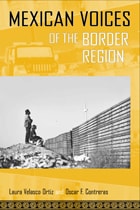
Mexican Voices of the Border Region
Mexicans and Mexican Americans Speak about Living along the WallAuthored by Laura Velasco Ortiz and Oscar F. Contreras with translations by Sandra del Castillo
Temple University Press, 2011
Every day, 40,000 commuters cross the U.S. Mexico border at Tijuana San Diego to go to work. Untold numbers cross illegally. Since NAFTA was signed into law, the border has become a greater obstacle for people moving between countries. Transnational powers have exerted greater control over the flow of goods, services, information, and people.
Mexican Voices of the Border Region examines the flow of people, commercial traffic, and the development of relationships across this border. Through first-person narratives, Laura Velasco Ortiz and Oscar F. Contreras show that since NAFTA, Tijuana has become a dynamic and significant place for both nations in terms of jobs and residents. The authors emphasize that the border itself has different meanings whether one crosses it frequently or not at all. The interviews probe into matters of race, class, gender, ethnicity, place, violence, and political economy as well as the individual's sense of agency.
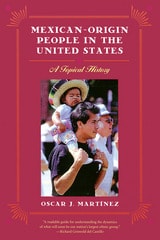
Mexican-Origin People in the United States
A Topical HistoryOscar J. Martínez
University of Arizona Press, 2001
Focusing on social, economic, and political change during the twentieth century—particularly in the American West—Martínez provides a survey of long-term trends among Mexican Americans and shows that many of the difficult conditions they have experienced have changed decidedly for the better. Organized thematically, the book addresses population dynamics, immigration, interaction with the mainstream, assimilation into the labor force, and growth of the Mexican American middle class. Martínez then examines the various forms by which people of Mexican descent have expressed themselves politically: becoming involved in community organizations, participating as voters, and standing for elective office. Finally he summarizes salient historical points and offers reflections on issues of future significance. Where appropriate, he considers the unique circumstances that distinguish the experiences of Mexican Americans from those of other ethnic groups.
By the year 2000, significant numbers of people of Mexican origin had penetrated the middle class and had achieved unprecedented levels of power and influence in American society; at the same time, many problems remain unsolved, and the masses face new challenges created by the increasingly globalized U.S. economy. This concise overview of Mexican-origin people puts these successes and challenges in perspective and defines their contribution to the shaping of modern America.
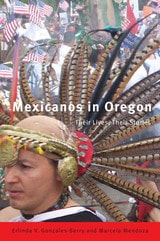
Mexicanos in Oregon
Their Stories, Their LivesErlinda Gonzales-Berry
Oregon State University Press, 2010
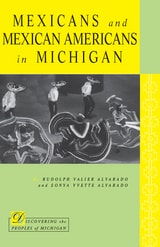
Mexicans and Mexican Americans in Michigan
Rudolph V. Alvarado
Michigan State University Press, 2003
Unlike most of their immigrant counterparts, up until the turn of the twentieth century most Mexicans and Mexican Americans did not settle permanently in Michigan but were seasonal laborers, returning to homes in the southwestern United States or Mexico in the winter. Nevertheless, during the past century the number of Mexicans and Mexican Americans settling in Michigan has increased dramatically, and today Michigan is undergoing its third “great wave” of Mexican immigration. Though many Mexican and Mexican American immigrants still come to Michigan seeking work on farms, many others now come seeking work in manufacturing and construction, college educations, opportunities to start businesses, and to join family members already established in the state. In Mexicans and Mexican Americans in Michigan, Rudolph Valier Alvarado and Sonya Yvette Alvarado examine the settlement trends and growth of this population, as well as the cultural and social impact that the state and these immigrants have had on one another. The story of Mexicans and Mexican Americans in Michigan is one of a steadily increasing presence and influence that well illustrates how peoples and places combine to create traditions and institutions.
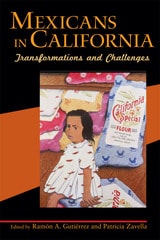
Mexicans in California
Transformations and ChallengesEdited by Ramon A. Gutierrez and Patricia Zavella
University of Illinois Press, 2008
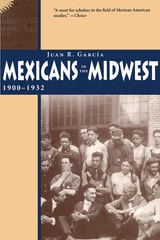
Mexicans in the Midwest, 1900-1932
Juan R. García
University of Arizona Press, 1996
Here is a book that persuasively challenges many prevailing assumptions about Mexican people and the communities they established in the Midwest. The author notes the commonalities and differences between Mexicans in that region and their compadres who settled elsewhere. He further demonstrates that although Mexicans in the Midwest maintained a strong sense of cultural identity, they were quick to adopt the consumer culture and other elements of U.S. life that met their needs.
Focusing on a people, place, and time rarely covered before now, this wide-ranging work will be welcomed by scholars and students of history, sociology, and Chicano studies. General readers interested in ethnic issues and the multicultural fabric of American society will find here a window to the past as well as new perspectives for understanding the present and the future.
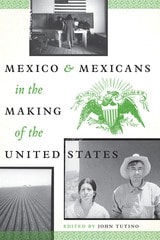
Mexico and Mexicans in the Making of the United States
Edited by John Tutino
University of Texas Press, 2012
Mexico and Mexicans have been involved in every aspect of making the United States from colonial times until the present. Yet our shared history is a largely untold story, eclipsed by headlines about illegal immigration and the drug war. Placing Mexicans and Mexico in the center of American history, this volume elucidates how economic, social, and cultural legacies grounded in colonial New Spain shaped both Mexico and the United States, as well as how Mexican Americans have constructively participated in North American ways of production, politics, social relations, and cultural understandings.
Combining historical, sociological, and cultural perspectives, the contributors to this volume explore the following topics: the Hispanic foundations of North American capitalism; indigenous peoples’ actions and adaptations to living between Mexico and the United States; U.S. literary constructions of a Mexican “other” during the U.S.-Mexican War and the Civil War; the Mexican cotton trade, which helped sustain the Confederacy during the Civil War; the transformation of the Arizona borderlands from a multiethnic Mexican frontier into an industrializing place of “whites” and “Mexicans”; the early-twentieth-century roles of indigenous Mexicans in organizing to demand rights for all workers; the rise of Mexican Americans to claim middle-class lives during and after World War II; and the persistence of a Mexican tradition of racial/ethnic mixing—mestizaje—as an alternative to the racial polarities so long at the center of American life.
Migrant Song
Politics and Process in Contemporary Chicano LiteratureBy Teresa McKenna
University of Texas Press, 1996
Migration and continuity have shaped both the Chicano people and their oral and written literature. In this pathfinding study of Chicano literature, Teresa McKenna specifically explores how these works arise out of social, political, and psychological conflict and how the development of Chicano literature is inextricably embedded in this fact.
McKenna begins by appraising the evolution of Chicano literature from oral forms—including the important role of the corrido in the development of Chicano poetry. In subsequent chapters she examines the works of Richard Rodriguez and Rolando Hinojosa. She also devotes a chapter to the development of the Chicana voice in Chicano literature. Her epilogue considers the parallel development of Chicano literary theory and discusses some possible directions for research.
In McKenna's own words, "I believe that the future of this literature, as that of all literatures by people of color in the United States, rests largely on its being effectively introduced into the curricula at all levels, as well as its entrance into the critical consciousness of literary theory." This book will be an important step in that process.
Mirrors Beneath the Earth
Short Fiction by Chicano WritersRay González
Northwestern University Press, 1995

Mouth Filled with Night
PoemsRodney Gomez
Northwestern University Press, 2014
The winner of the Drinking Gourd Chapbook Poetry Prize, Rodney Gomez’s collection Mouth Filled with Night employs familiar emblems of Mexican American identity to repeatedly subvert expectations while intensifying the dilemmas of affiliation. The poems run beyond more conventional ideas of agency, identity, and experience, creating a newly invigorated imaginative space. As a collection, Mouth Filled with Night gains particular momentum—a pitched anxiety that slowly grows throughout the volume—to create a poetic experience unique to the chapbook form.
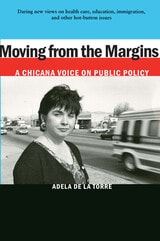
Moving from the Margins
A Chicana Voice on Public PolicyAdela de la Torre
University of Arizona Press, 2002
Addressing immigration, education, health care, and economic and political concerns, Adela de la Torre provides a distinctly Chicana perspective that often differs from that of mainstream readers and voters. Drawn from the author's syndicated column in the Los Angeles Times along with writings from other publications, Moving from the Margins includes incisive and often provocative commentaries that provide insights into the roots of ethnic tensions in the Golden State.
The book also includes readers' reactions to the articles, creating a dialogue of ideas while confronting fears of what many Americans view as an alien culture. Whether addressing entitlements granted to noncitizens, the future of public schools, or access to health care, de la Torre challenges readers to move beyond their own frame of reference and consider new points of view. The issues she faces have shaped today's California—and they also lie at the heart of urban public policy in America for the twenty-first century.

My Chicano Heart
New and Collected Stories of Love and Other TransgressionsDaniel A. Olivas
University of Nevada Press, 2024
Each story is drawn from Olivas’s nearly twenty-five years of experience writing fiction deeply steeped in Chicano and Mexican culture. Some of the stories are fanciful and full of magic, while others are more realistic, and still others border on noir. All touch upon that most ephemeral and confounding of human emotions: love in all its wondrous forms.
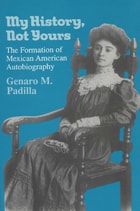
My History, Not Yours
The Formation of Mexican American AutobiographyGenaro M. Padilla
University of Wisconsin Press, 1994
"I am willing to relate all I can remember, but I wish it clearly understood that it must be in my own way, and at my own time. I will not be hurried or dictated to. It is my history and not yours I propose to tell.”—Mariano Guadelupe Vallejo, on “Recuerdos históricos y personales” (1875)
My History, Not Yours is a landmark study of the autobiographical writings of Mexican Americans in the century following the US-Mexican War of 1846-1848. Some 75,000 inhabitants of what is now Texas, New Mexico, Arizona, Nevada, and California were suddenly foreigners on their own lands. Faced with the deliberate obliteration of their history, culture, language, and personal experiences, these women and men set down the stories of their lives and their communities, as a means of both remembering and resisting.
Genaro M. Padilla and other scholars have begun to uncover the huge store of literary materials forgotten in manuscript archives: memoirs long out of print, others unpublished and unread, diaries, family histories, poetry, correspondence, and texts of corridos (ballads). Padilla writes, “Lives are scattered on broken pages, faded, partially lost at the margins, suspended in language unread until there is a reader who opens the file and begins. It is my intention to initiate a recovery of that autobiographical formation that emerged after a war of conquest.”
In providing an overview of this rich literature, Padilla also points out the power relations embedded in the narratives, showing that the reconstruction of the Mexican past was not merely nostalgic idealization, but often an angry and deeply politicized recovery of a world ruptured by American domination.
My Nature Is Hunger
New and Selected Poems, 1989 2004Luis J. Rodriguez
Northwestern University Press, 2005
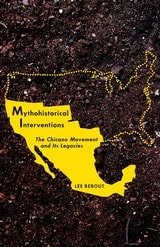
Mythohistorical Interventions
The Chicano Movement and Its LegaciesLee Bebout
University of Minnesota Press, 2010
Examining the deployment of the Aztec eagle by the United Farm Workers union, the poem Yo Soy Joaquín, the document El Plan de Santa Barbara, and icons like La Malinche and La Virgen de Guadalupe, Bebout reveals the centrality of culture to the Chicano movement. For Bebout, the active implementation of cultural narrative was strategically significant in several ways. First, it allowed disparate movement participants to imagine themselves as part of a national, and nationalist, community of resistance. Second, Chicano use of these narratives contested the images that fostered Anglo-American hegemony.
Bringing his analysis up to the present, Bebout delineates how demographic changes have, on the one hand, encouraged the possibility of a panethnic Latino community, while, on the other hand, anti-Mexican nativists attempt to resurrect Chicano myths as a foil to restrict immigration from Mexico.
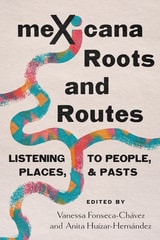
meXicana Roots and Routes
Listening to People, Places, and PastsEdited by Vanessa Fonseca-Chávez and Anita Huízar-Hernández
University of Arizona Press, 2025
In this collection, established and emerging scholars draw upon their rootedness in the U.S. Southwest and U.S.-Mexico borderlands. The meXicana contributors use personal and scholarly inquiry to discuss what it means to cultivate spaces of belonging, navigate language policies, and explore and excavate silences in various spaces, among other important themes.
From the recruitment of Latinas for the U.S. Benito Juárez Squadron in World War II, to the early twentieth-century development of bilingual education in Arizona, to new and insightful analyses of Bracero Program participants and their families, the book details little-known oral histories and archival material to present a rich account of lives along the border with emphasis on women and the working class.
As the inaugural publication of the Arizona Crossroads series, readers will find Arizona featured as a central node of borderlands roots and routes. Each section of the book intentionally centers Arizona within broader comparative and cross-state dialogues, alongside chapters that reflect regional concerns in other southwestern states, including Texas, California, Colorado, and New Mexico. Throughout, this volume highlights the ways in which personal experience, community building, and scholarly perspectives can provide a powerful space for community voices.
Contributors
Vanessa Fonseca-Chávez
Lillian Gorman
Gloria Holguín Cuádraz
Anita Huízar-Hernández
Christine Marin
Valerie A. Martínez
Alina R. Méndez
Karen R. Roybal
Yvette J. Saavedra
Liliana Toledo-Guzmán
Andrea Tovar