Results by title
527 books match the query 'Translations into English' and 49 start with s
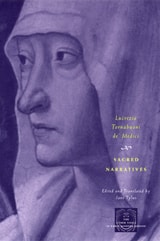
Sacred Narratives
Lucrezia Tornabuoni de' Medici
University of Chicago Press, 2001
This is the first major collection in any language of her extensive body of religious poems. Ranging from gentle lyrics on the Nativity to moving dialogues between a crucified Christ and the weeping sinner who kneels before him, the nine laudi (poems of praise) included here are among the few such poems known to have been written by a woman. Tornabuoni's five storie sacre, narrative poems based on the lives of biblical figures-three of whom, Judith, Susanna, and Esther, are Old Testament heroines-are virtually unique in their range and expressiveness. Together with Jane Tylus's substantial introduction, these poems offer us both a fascinating portrait of a highly educated and creative woman and a lively sense of cultural and social life in Renaissance Florence.
Saints of the Christianization Age of Central Europe
Tenth to Eleventh CenturiesCristian Gaspar
Central European University Press, 2012
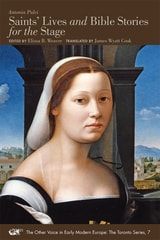
Saints' Lives and Bible Stories for the Stage
A Bilingual EditionAntonia Pulci
Iter Press, 2010
—Sharon Strocchia
Professor of History, Emory University
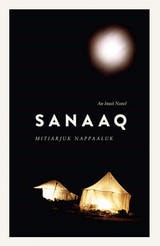
Sanaaq
An Inuit NovelMitiarjuk Nappaaluk
University of Manitoba Press, 2014
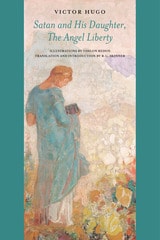
Satan and His Daughter, the Angel Liberty
Selected VersesVictor Hugo
Swan Isle Press, 2018
Satan and his Daughter, the Angel Liberty, drawn from this larger poem, tells the story of Satan and his daughter, the angel created by God from a feather left behind following his banishment. Hugo details Satan’s fall, and through a despairing soliloquy, reveals him intent on revenge, yet desiring God’s forgiveness. The angel Liberty, meanwhile, is presented by Hugo as the embodiment of good, working to convince her father to return to Heaven.
This new translation by Richard Skinner presents Hugo’s verse in a unique prose approach to the poet’s poignant work, and is accompanied by the Symbolist artist Odilon Redon’s haunting illustrations. No adventurous reader will want to miss this beautiful mingling of the epic and familial, religious and political.
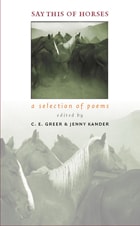
Say This of Horses
A Selection of PoemsC.E. Greer
University of Iowa Press, 2007
Divided into six sections, Say This of Horses considers horses in a multitude of times and places. “Antiquity” explores the forging of the earliest mythical ties between horses and humans. “Here, Now” places horses in the present, where their physical presence is most acutely felt. “Esssence” explores the metaphysical qualities of horses. “Harnessed” contains a selection of poems about horses in war, at work, and in sport and recreation. “Mirrors” shows them as imaginative symbols. Finally, “Lenses” moves into the realm of abstraction and fantasy.
The selections within this far-reaching collection are joyous, moving, erudite, and at times profoundly sad. Poems by Henry Wadsworth Longfellow, W. S. Merwin, Tess Gallagher, Yusef Komunyakaa, Pablo Neruda, Anne Sexton, Wallace Stevens, May Sarton, Jane Kenyon, and James Dickey, among many others, are sure to delight and surprise readers familiar with or just exploring the rich literature on horses.
Contributors include:
Guillaume Apollinaire, Gwendolyn Brooks, Lawrence Ferlinghetti, C.E. Greer, Donald Hall, Joy Harjo, Imru’ al-Qays, Ted Kooser, Philip Larkin, Ann McCarthy de Zavala, Rainer Maria Rilke, Patiann Rogers, William Carlos Williams

Secrets Need Words
Indonesian Poetry, 1966–1998Harry Aveling
Ohio University Press, 2001
Short listed for the 2007 New South Wales Premier's Translation Prize
The period from 1966 to 1999 represents a distinct era in Indonesian history. Throughout the “New Order” regime of President Suharto, the policies of economic development and political stability were dominant. However, the public opinion of personal expression was consistently under suspicion, and indeed dissent was severely punished.
Secrets Need Words traces the development of Indonesian poetry throughout this entire period. Texts are presented both in the original Indonesian and in careful, stylistically sensitive English translations.
In this anthology of contemporary work by Indonesian poets, the renowned translator and editor Harry Aveling presents a series of ongoing analyses detailing the political and social shifts that have influenced the work of particular poets.
Professor Aveling's analyses, along with the poems themselves, demonstrate how the poets responded to the power of the state in a variety of ways ranging from direct confrontation to withdrawal into personal and private realms characterized by fantasy and the use of heavily rhythmic language.
Secrets Need Words will be of interest to scholars of Indonesia and comparative literature, and will be for many years to come a basic text for scholarship and teaching. But it also offers all readers of poetry an opportunity to explore a new, complex, and exciting body of literature from one of the world's largest nations.
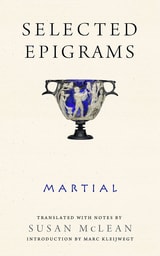
Selected Epigrams
Martial, Translated with notes by Susan McLean, Introduction by Marc Kleijwegt
University of Wisconsin Press, 2014
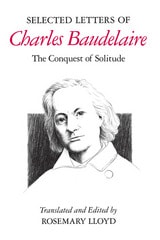
Selected Letters of Charles Baudelaire
The Conquest of SolitudeCharles Baudelaire
University of Chicago Press, 1986
Writing to family, friends, and lovers, Baudelaire reveals the incidents and passions that went into his poetry. In letters to editors, idols, and peers—Hugo, Flaubert, Vigny, Wagner, Cladel, among others—he elucidates the methods and concerns of his own art and criticism and comments tellingly on the arts and politics of his day. In all, ranging from childhood to days shortly before his death, these letters comprise a complex and moving portrait of the quintessential poet and his time.
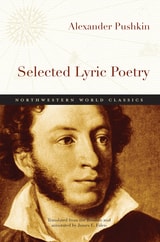
Selected Lyric Poetry
Alexander Pushkin, Translated from the Russian and annotated by James E. Falen
Northwestern University Press, 2009
Renowned translator James Falen’s collection of 167 of Pushkin’s lyrics is arranged chronologically, beginning with verse written in the poet’s teenage years—Pushkin published his first poem at fifteen and was widely revered by his later teens—and closing with lines composed shortly before his death. As a whole, these selections reveal Pushkin's development as a poet, but they also capture the wide range of subjects and styles in Pushkin’s poetry.
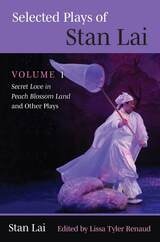
Selected Plays of Stan Lai
Volume 1: Secret Love in Peach Blossom Land and Other PlaysStan Lai, edited by Lissa Tyler Renaud
University of Michigan Press, 2021
Volume One contains:
Secret Love in Peach Blossom Land
Look Who's Crosstalking Tonight
The Island and the Other Shore
I Me She Him
Ménage à 13
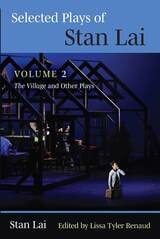
Selected Plays of Stan Lai
Volume 2: The Village and Other PlaysStan Lai, edited by Lissa Tyler Renaud
University of Michigan Press, 2021
Volume Two contains:
Millennium Teahouse
Sand on a Distant Star
Like Shadows
The Village
Writing in Water
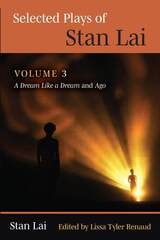
Selected Plays of Stan Lai
Volume 3: A Dream Like a Dream and AgoStan Lai, edited by Lissa Tyler Renaud
University of Michigan Press, 2021
Volume Three contains:
A Dream Like a Dream
Ago
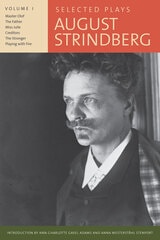
Selected Plays, Volume I
August Strindberg
University of Minnesota Press, 2012
August Strindberg is often considered the father of modern Swedish literature. His vast output of plays was innovative in style and form. Volume 1 of Selected Plays presents selections from the beginning of his career, before Strindberg’s period of psychotic attacks in the 1890s. Master Olof (1872) is a historical drama set in early Reformation Sweden, influenced by Ibsen and Shakespeare. Two of his most produced plays today, The Father (1887) and Miss Julie (1888), are examples of his naturalistic plays. Strindberg described Creditors (1888), a tragicomedy, as his “most mature work.” The Stronger (1889), a playlet, is a favorite in acting classes. Playing with Fire (1893) is one of his few comedies. These plays deal with Strindberg’s preoccupation with power struggles and sexual warfare.
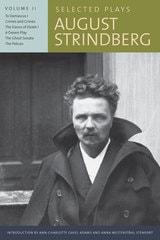
Selected Plays, Volume II
August Strindberg
University of Minnesota Press, 2012
This second volume of the great Swedish writer August Strindberg’s plays begins with To Damascus I (1898), the first of a trilogy. It mirrors his own departure from the naturalism he had explored in several of his earlier works, as he set forth on a spiritual odyssey. Crimes and Crimes (1899), from the beginning of his symbolist mode, is a lighter take on the themes in To Damascus I. The first of a two-part play, Dance of Death I (1900) depicts a dysfunctional marriage. A Dream Play (1901), which is one of Strindberg’s most influential, shows reality converted into a dream; many critics consider it his greatest play. In 1907, Strindberg founded the Intimate Theater in Stockholm; The Ghost Sonata (1907) and The Pelican (1907), which were written for its opening, are two examples of a chamber play, a genre that Strindberg helped to originate.
Selected Poems
Vladimir Mayakovsky, Translated from the Russian by James H. McGavran III
Northwestern University Press, 2013
Selected Poems of Jacint Verdaguer
A Bilingual EditionJacint Verdaguer
University of Chicago Press, 2007
Selected Poems is the first book-length translation of Verdaguer’s works into English. Ronald Puppo offers readable and faithful verse adaptations of poetry from all periods of the poet-priest’s life, from his days as a seminary student and farmhand to his journeys as a ship’s chaplain and eventual spiritual crisis. These adroit translations will recover Verdaguer as a major figure in the modern literary tradition of the West, restoring him to the pantheon of world letters.
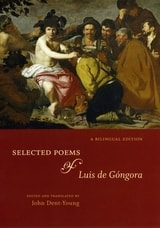
Selected Poems of Luis de Góngora
A Bilingual EditionLuis de Góngora
University of Chicago Press, 2007
Making Luis de Góngora’s work available to contemporary English-language readers without denying his historical context, Selected Poems of Luis de Góngora presents him as not only one of the greatest and most complex poets of his time, but also the funniest and most charismatic. From longer works, such as “The Fable of Polyphemus and Galatea,” to shorter ballads, songs, and sonnets, John Dent-Young’s free translations capture Góngora’s intensely musical voice and transmit the individuality and self-assuredness of the poet. Substantial introductions and extensive notes provide personal and historical context, explain the ubiquitous puns and erotic innuendo, and discuss translation choices. A significant edition of this seminal and challenging poet, Selected Poems of Luis de Góngora will find an eager audience among students of poetry and scholars studying the history and literature of Spain.
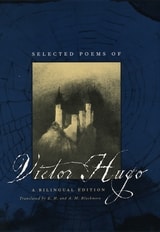
Selected Poems of Victor Hugo
A Bilingual EditionVictor Hugo
University of Chicago Press, 2001
Although best known as the author of Notre Dame de Paris and Les Misérables, Victor Hugo was primarily a poet—one of the most important and prolific in French history. Despite his renown, however, there are few comprehensive collections of his verse available and even fewer translated editions.
Translators E. H. and A. M. Blackmore have collected Victor Hugo's essential verse into a single, bilingual volume that showcases all the facets of Hugo's oeuvre, including intimate love poems, satires against the political establishment, serene meditations, religious verse, and narrative poems illustrating his mastery of the art of storytelling and his abiding concern for the social issues of his time. More than half of this volume's eight thousand lines of verse appear here for the first time in English, providing readers with a new perspective on each of the fascinating periods of Hugo's career and aspects of his style. Introductions to each section guide the reader through the stages of Hugo's writing, while notes on individual poems provide information not found in even the most detailed French-language editions.
Illustrated with Hugo's own paintings and drawings, this lucid translation pays homage to this towering figure of nineteenth-century literature by capturing the energy of his poetry, the drama and satirical force of his language, and the visionary beauty of his writing as a whole.
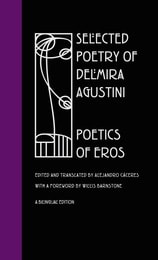
Selected Poetry of Delmira Agustini
Poetics of ErosEdited and Translated by Alejandro Cáceres. Foreword by Willis Barnstone.
Southern Illinois University Press, 2008
This graceful translation and bilingual edition, now in paperback, is the first to bring English readers a representative sampling of the poetry Delmira Agustini published before her untimely death on July 6, 1914 at the age of twenty-seven. Translated by native Uruguayan Alejandro Cáceres and including work from each of Agustini's four published books, Selected Poetry of Delmira Agustini: Poetics of Eros is a response to a resurgent interest not just in the poems but in the passionate and daring woman behind them and the social and political world she inhabited.
Delmira Agustini was born in Montevideo, Uruguay, on October 24, 1886 to wealthy parents of German and Italian descent. She published her first volume of poetry when she was twenty-one and followed with two more in the next six years: the fourth volume was a posthumous publication. Her life was cut short in 1914, when Enrique Job Reyes, her ex-husband, shot her to death and then turned the gun on himself.
Carefully selected for this bilingual, en face edition, the poems collected here track and highlight Agustini's development and strengths as an artist—including her methods of experimentation, first relying on modernista forms and later abandoning them—and her focus on the figure of the male, which she portrays as the crux of devotion and attention but deems ultimately unreachable. Cáceres's introduction presents biographical information and situates Agustini's work and life in a larger political, historical, and literary context, particularly the modernismo movement, whose followers broke linguistic and political ties with the pathos and excesses of romanticism.
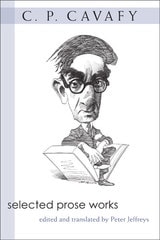
Selected Prose Works
C. P. Cavafy
University of Michigan Press, 2010
"A timely and significant supplement to C. P. Cavafy's poetic canon, the Selected Prose Works, eloquently translated and meticulously annotated by Peter Jeffreys, allows readers yet another creative engagement with the greatest Greek writer since antiquity. Marked by a wide and intriguing range of interests, these writings offer a rich trove for general readers and scholars alike, who from now on will find it difficult to discuss Cavafy's poetry without reference to his prose."
---Vassilis Lambropoulos, C. P. Cavafy Professor of Modern Greek, University of Michigan
"Peter Jeffreys gives us a rare gift---access to Constantine Cavafy's prose work. Through his intelligent translation, these texts, which range from literary criticism to personal notes, from essays on the Greek language to the Parthenon marbles, offer unexpected entry into the mind of one of the twentieth century's greatest literary figures. They suggest new ways to think about not only Cavafy's remarkable poetry but also the man himself. An indispensable companion for all who love Cavafy's work."
---Gregory Jusdanis, The Ohio State University
"Once you've felt his influence, you won't need telling that Cavafy is unique in his distinctive voice, his quiet humor, and his unassertive culture."
---Frank Kermode, Formerly Lord Northcliffe Professor of Modern English Literature at University College, London, and King Edward VII Professor of English Literature, University of Cambridge
Constantine Cavafy (1863–1933) is arguably the most important modern poet of Greece and Greek culture. Long a resident of Egypt and then Constantinople, Cavafy in his poems and prose works tended to focus on Greco-Roman antiquity, on Greece's national identity, and on personal and mythological images and themes including his ethnicity and sexual identity. He wrote some 150 poems, plus a few works in collaboration with his brother John.
His poetical works have been much translated and discussed, but until now, very little consideration has been given to his prose works, in part because many remained untranslated from the original Greek. This book collects Cavafy's more interesting prose pieces and translates those that originally appeared in Greek.
Of the forty pieces included, only thirteen have previously appeared in print, and of those thirteen only a few were in English. The pieces include essays, "prose poems," short stories, self-assessments, and considerations of other poets, including John Keats. This significant new collection offers a different perspective on the well-known Cavafy.
Peter Jeffreys, Assistant Professor of English at Suffolk University in Boston, received a Doctorate in English Literature from the University of Toronto. He is the author of Eastern Questions: Hellenism and Orientalism in the Writings of E.M. Forster and C.P. Cavafy and the editor of The Forster-Cavafy Letters: Friends at a Slight Angle. He is currently working on a bio-critical study of C. P. Cavafy and the decadent tradition.
Cover image copyright © David Levine
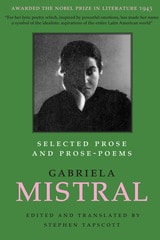
Selected Prose and Prose-Poems
By Gabriela Mistral
University of Texas Press, 2002
The first Latin American to receive a Nobel Prize for Literature, the Chilean writer Gabriela Mistral (1889-1957) is often characterized as a healing, maternal voice who spoke on behalf of women, indigenous peoples, the disenfranchised, children, and the rural poor. She is that political poet and more: a poet of philosophical meditation, self-consciousness, and daring. This is a book full of surprises and paradoxes. The complexity and structural boldness of these prose-poems, especially the female-erotic prose pieces of her first book, make them an important moment in the history of literary modernism in a tradition that runs from Baudelaire, the North American moderns, and the South American postmodernistas. It's a book that will be eye-opening and informative to the general reader as well as to students of gender studies, cultural studies, literary history, and poetry.
This Spanish-English bilingual volume gathers the most famous and representative prose writings of Gabriela Mistral, which have not been as readily available to English-only readers as her poetry. The pieces are grouped into four sections. "Fables, Elegies, and Things of the Earth" includes fifteen of Mistral's most accessible prose-poems. "Prose and Prose-Poems from Desolación / Desolation [1922]" presents all the prose from Mistral's first important book. "Lyrical Biographies" are Mistral's poetic meditations on Saint Francis and Sor Juana de la Cruz. "Literary Essays, Journalism, 'Messages'" collects pieces that reveal Mistral's opinions on a wide range of subjects, including the practice of teaching; the writers Alfonso Reyes, Alfonsina Storni, Rainer Maria Rilke, and Pablo Neruda; Mistral's own writing practices; and her social beliefs. Editor/translator Stephen Tapscott rounds out the volume with a chronology of Mistral's life and a brief introduction to her career and prose.
Selected Sermons, Volume 2
William B. Peter Chrysologus
Catholic University of America Press, 2004
Selected Sermons, Volume 3
William B. Peter Chrysologus
Catholic University of America Press, 2005
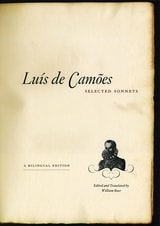
Selected Sonnets
A Bilingual EditionLuís de Camões
University of Chicago Press, 2005
The first significant English translation of Camões's sonnets in more than one hundred years, Selected Sonnets: A Bilingual Edition collects seventy of Camões's best—all musically rendered into contemporary, yet metrical and rhymed, English-language poetry by William Baer, with the original Portuguese on facing pages—and reintroduces the genius of a poet whom Cervantes called "the incomparable treasure of Lusus." A comprehensive selection of sonnets that demonstrates the full range of Camões's interests and invention, Selected Sonnets will prove indespensible for both students and teachers in comparative and Renaissance literature, Portuguese and Spanish history, and the art of literary translation.
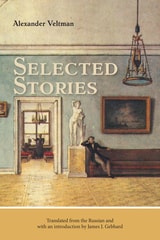
Selected Stories
A. F. Veltman
Northwestern University Press, 2026
In 1830s and ’40s Russia, A. F. Veltman’s eccentric writings were a fixture on the bookshelves of the reading public. In his era, his work influenced writers including Pushkin, Gogol, and Dostoevsky. The five stories collected here, united by themes of social satire, display Veltman’s characteristic pivots between the tragic, comic, and grotesque.
“Erotida” riffs on the genre of the society tale with linguistic puns and a bizarre plot resolution. In “Roland the Furious,” provincial officials mistake a traveler for a high-ranking government functionary. “Travel Impressions, and, among Other Things, a Pot of Geraniums” plays on the travelogue genre and includes what may be the first description in Russian literature of journey by railroad. “A Traveler from the Provinces; or, A Commotion in the Capital” parodies the Moscow literary salons of Veltman’s day. Finally, “It’s Not a House, but a Plaything!” toys with yet another storytelling convention of the time—the Russian folkloric tradition of “house spirits.”
Sermons
Saint Leo the Great
Catholic University of America Press, 1995
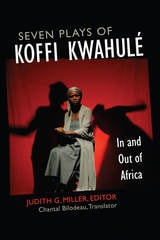
Seven Plays of Koffi Kwahulé
In and Out of AfricaJudith G. Miller, Editor, Chantal Bilodeau, Translator
University of Michigan Press, 2017
Kwahulé’s theater delves into both the horror of civil war in Africa and the diasporic experience of peoples of African origin living in Europe and the “New World.” From the split consciousness of the protagonist and rape victim in Jaz to the careless buffoonery of mercenaries in Brewery, Kwahulé’s characters speak in riffs and refrains that resonate with the improvisational pulse of jazz music. He confronts us with a violent world that represents the damage done to Africa and asks us, through exaggeration and surreal touches, to examine the reality of an ever-expanding network of global migrants. His plays speak to the contemporary state of humanity, suffering from exile, poverty, capitalist greed, collusion, and fear of “the other”—however that “other” gets defined.
Judith G. Miller’s introductory essay situates Kwahulé among his postcolonial contemporaries. Short introductory essays to each play, accompanied by production photos, contextualize possible approaches to Kwahulé’s often enigmatic work. Anglophone theater scholars and theater professionals eager to engage with contemporary theater beyond their borders, particularly in terms of what so-called minority theater artists from other countries are creating, will welcome this indispensable collection. Students and scholars of African studies and of global French studies will also find this work intriguing and challenging.
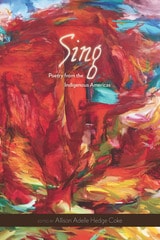
Sing
Poetry from the Indigenous AmericasEdited by Allison Adelle Hedge Coke
University of Arizona Press, 2011
They write from disparate zones and parallel experience, from lands of mounded earthwork long-since paved, from lands of ancient ball courts and the first great cities on the continents, from places of cold, from places of volcanic loam, from zones of erased history and ongoing armed conflict, where “postcolonial” is not an academic concept but a lived reality. As befits a volume of such geographical inclusivity, many poems here appear in multiple languages, translated by fellow poets and writers like Juan Felipe Herrera and Cristina Eisenberg.
Hedge Coke’s thematic organization of the poems gives them an added resonance and continuity, and readers will appreciate the story of the genesis of this project related in Hedge Coke’s deeply felt introduction, which details her experiences as an invited performer at several international poetry festivals. Sing is a journey compelled by the exploration of kinship and the desire for songs that open “pathways of return.”
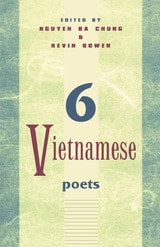
Six Vietnamese Poets
Bilingual EditionEdited by Kevin Bowen and Nguyen Ba Chung
Northwestern University Press, 2001
Speaking to the Heart
After a long night up writing poems,a streak of sunlight leapt into my room.
I ran to the yard,
running as if I were a child,
footprints breaking the earth's first dew,
chest brushing softly the short grass.
Earth and sky seeped into me like wine.
Startled,
I saw my heart in the shape of a ploughshare<
resting on the earth's shoulder,
the heart thumping, steadily ploughing into time.
—Lam Thi My Da
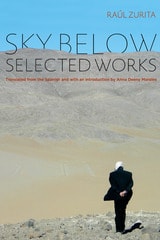
Sky Below
Selected WorksRaul Zurita; Translated from the Spanish and with an introduction by Anna Deeny Morales
Northwestern University Press, 2016
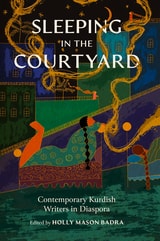
Sleeping in the Courtyard
Contemporary Kurdish Writers in DiasporaHolly Mason Badra
University of Arkansas Press, 2025
Sleeping in the Courtyard brings together historically isolated writers in community—and invites readers to join them around the table to share in their memories, secrets, tears, and joys. Featuring poetry, fiction, nonfiction, and graphic work by emerging and well-established writers, this collection shines a light on works by a diverse group of contemporary Kurdish women and nonbinary writers living in Kurdistan and in diaspora.
Recognizing the complex web of physical and lingual displacement of the Kurdish people and celebrating the diverse tapestry of their stories, this collection presents work originally written in English and work translated from Kurdish dialects as well as from Arabic, Turkish, Persian, and Swedish. A few works in Kurdish dialects appear alongside their translations, both in recognition of the experience of linguicide and to push against oppressive attempts to strip away Kurdish language.
Several works here explore the impact of the countless forms of militarized displacement, cultural destruction, and mass genocide that Kurds have endured. Other pieces illuminate Kurdish experiences of desire, friendship, empowerment, familial intricacies, and other topics spanning across universal human conditions. The writers in these pages take risks both in craft and content—and in some cases, just by daring to write and publish. What emerges in Sleeping in the Courtyard is the antithesis of erasure.
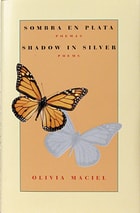
Sombra en plata
poemas / Shadow in Silver: Poems: A Bilingual EditionOlivia Maciel
Swan Isle Press, 2005
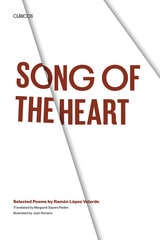
Song of the Heart
Selected Poems by Ramón López VelardeBy Ramón López Velarde
University of Texas Press, 1995
Ramón López Velarde (1888-1921) was one of the most Mexican of Mexican poets, whose sense of history found expression in many poems, including his best-known "La suave Patria" ("Sweet Land"). This bilingual collection, drawn primarily from Poesías completas y el minutero, offers English-language readers our first book-length introduction to his poetry.
Often called a "poet of the provinces," López Velarde gives us a glimpse into a slower and more gentle way of life. His poems present the contrast between city and hometown and between urban and pastoral landscapes. Through these contrasts runs the thread of religious faith, while urgency of language informs the entire body of his poetic production.
Original, specially commissioned drawings by noted contemporary Mexican artist Juan Soriano complement the poems. This combination of poetry and art speaks to universal emotions; indeed the poetry of López Velarde belongs to everyone who sings the Song of the Heart.
Songs for the Fast and Pascha
Blake St. Ephrem the Syrian
Catholic University of America Press, 2022
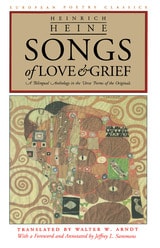
Songs of Love and Grief
A Bilingual Anthology in the Verse Forms of the OriginalsHeinrich Heine
Northwestern University Press, 1995
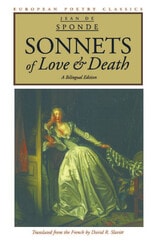
Sonnets of Love and Death
Jean De Sponde
Northwestern University Press, 2001
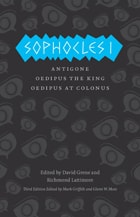
Sophocles I
The Theban Plays: Antigone, Oedipus the King, Oedipus at ColonusEdited and Translated by Mark Griffith, Glenn W. Most, David Grene, and Richmond Lattimore
University of Chicago Press, 2013
Sophocles I contains the plays “Antigone,” translated by Elizabeth Wyckoff; “Oedipus the King,” translated by David Grene; and “Oedipus at Colonus,” translated by Robert Fitzgerald.
Many years ago, the University of Chicago Press undertook a momentous project: a new translation of the Greek tragedies that would be the ultimate resource for teachers, students, and readers. They succeeded. Under the expert management of eminent classicists David Grene and Richmond Lattimore, those translations combined accuracy, poetic immediacy, and clarity of presentation to render the surviving masterpieces of Aeschylus, Sophocles, and Euripides in an English so lively and compelling that they remain the standard translations. The updated third editions of these classic works were designed to ensure that our Greek tragedies remain the leading English-language versions throughout the twenty-first century.
In this highly anticipated third edition, Mark Griffith and Glenn W. Most have carefully updated the translations to bring them even closer to the ancient Greek while retaining the vibrancy for which our English versions are famous. This edition also includes brand-new translations of Euripides’ Medea, The Children of Heracles, Andromache, and Iphigenia among the Taurians, fragments of lost plays by Aeschylus, and the surviving portion of Sophocles’s satyr-drama The Trackers. New introductions for each play offer essential information about its first production, plot, and reception in antiquity and beyond. In addition, each volume includes an introduction to the life and work of its tragedian, as well as notes addressing textual uncertainties and a glossary of names and places mentioned in the plays.
In addition to the new content, the volumes have been reorganized both within and between volumes to reflect the most up-to-date scholarship on the order in which the plays were originally written. The result is a set of handsome paperbacks destined to introduce new generations of readers to these foundational works of Western drama, art, and life.
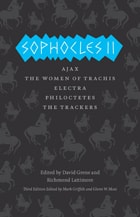
Sophocles II
Ajax, The Women of Trachis, Electra, Philoctetes, The TrackersEdited by Mark Griffith, Glenn W. Most, David Grene, and Richmond Lattimore
University of Chicago Press, 2013
Sophocles II contains the plays “Ajax,” translated by John Moore; “The Women of Trachis,” translated by Michael Jameson; “Electra,” translated by David Grene; “Philoctetes,” translated by David Grene; and “The Trackers,” translated by Mark Griffith.
Many years ago, the University of Chicago Press undertook a momentous project: a new translation of the Greek tragedies that would be the ultimate resource for teachers, students, and readers. They succeeded. Under the expert management of eminent classicists David Grene and Richmond Lattimore, those translations combined accuracy, poetic immediacy, and clarity of presentation to render the surviving masterpieces of Aeschylus, Sophocles, and Euripides in an English so lively and compelling that they remain the standard translations. The updated third editions of these classic works were designed to ensure that our Greek tragedies remain the leading English-language versions throughout the twenty-first century.
In this highly anticipated third edition, Mark Griffith and Glenn W. Most have carefully updated the translations to bring them even closer to the ancient Greek while retaining the vibrancy for which our English versions are famous. This edition also includes brand-new translations of Euripides’ Medea, The Children of Heracles, Andromache, and Iphigenia among the Taurians, fragments of lost plays by Aeschylus, and the surviving portion of Sophocles’s satyr-drama The Trackers. New introductions for each play offer essential information about its first production, plot, and reception in antiquity and beyond. In addition, each volume includes an introduction to the life and work of its tragedian, as well as notes addressing textual uncertainties and a glossary of names and places mentioned in the plays.
In addition to the new content, the volumes have been reorganized both within and between volumes to reflect the most up-to-date scholarship on the order in which the plays were originally written. The result is a set of handsome paperbacks destined to introduce new generations of readers to these foundational works of Western drama, art, and life.
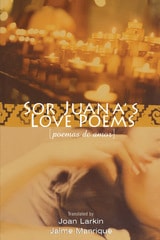
Sor Juana's Love Poems
Sor Juana Inés de la Cruz; Translated by Joan Larkin and Jaime Manrique
University of Wisconsin Press, 2003
These exquisite love poems, some of them clearly addressed to women, were written by the visionary and passionate genius of Mexican letters, the seventeenth-century nun Sor Juana Inés de la Cruz. In this volume they are translated into the idiom of our own time by poets Joan Larkin and Jaime Manrique. Some of them are rooted in Renaissance courtly conventions; others are startlingly ahead of their time, seemingly modern in the naked power of the complex sexual feelings they address.
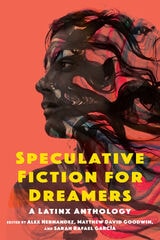
Speculative Fiction for Dreamers
A Latinx AnthologyEdited by Alex Hernandez, Matthew David Goodwin, and Sarah Rafael García with a Preface by Frederick Luis Aldama
The Ohio State University Press, 2021
Finalist, 2022 World Fantasy Awards
Finalist, 2022 Ignyte Awards
Finalist, 2022 Utopia Awards
In a tantalizing array of new works from some of the most exciting Latinx creators working in the speculative vein today, Speculative Fiction for Dreamers extends the project begun with a previous anthology, Latinx Rising (The Ohio State University Press, 2020), to showcase a new generation of writers. Spanning diverse forms, settings, perspectives, and styles, but unified by their drive to imagine new Latinx futures, these stories address the breadth of contemporary Latinx experiences and identities while exuberantly embracing the genre’s ability to entertain and surprise. With new work for new audiences in their teens and up, and especially for Latinx people navigating their identities in the ever-shifting, sometimes perilous, but always promising cultural landscape of the US, this book is for dreamers—and DREAMers—everywhere.
Contributors: Grisel Y. Acosta, Stephanie Adams-Santos, Frederick Luis Aldama, William Alexander, Nicholas Belardes, Louangie Bou-Montes, Lisa M. Bradley, Eliana Buenrostro, Diana Burbano, Pedro Cabiya, Steve Castro, Fernando de Peña, Scott Russell Duncan, Samy Figaredo, Tammy Melody Gomez, J. M. Guzman, Ernest Hogan, Pedro Iniguez, Ezzy G. Languzzi, Patrick Lugo, Roxanne Ocasio, Daniel Parada, Stephanie Nina Pitsirilos, Reyes Ramirez, Julia Rios, Sara Daniele Rivera, Roman Sanchez, Tabitha Sin, Alex Temblador, Rodrigo Vargas, Laura Villareal, Sabrina Vourvoulias, Karlo Yeager Rodriguez
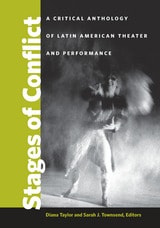
Stages of Conflict
A Critical Anthology of Latin American Theater and PerformanceDiana Taylor and Sarah J. Townsend, Editors
University of Michigan Press, 2008
"An invaluable resource to teachers of Latin American theater, with texts that provide an accurate panorama of Latin American theater."
---Adam Versenyi, University of North Carolina at Chapel Hill
"A most welcome and needed collection . . . Not only is it the first English-language anthology of theater and performance in Latin America from the Conquest onward, but it also includes excellent introductory and background material . . . certain to become an essential source book."
---Marvin Carlson, City University of New York
"A rich resource for teachers and students, and for everyone intrigued by the history of performing Latin America . . . Diana Taylor and Sarah Townsend locate an animating tension between indigenous and colonial performance practices, and between the irreducibly local character of performance and the insistent pressure---as visible in the sixteenth century as in the twenty-first---of a globalizing, often oppressive modernity."
---W. B. Worthen, Barnard College, Columbia University
Stages of Conflict brings together a vast array of dramatic texts, ambitiously tracing the intersection of theater and social and political life in the Americas over the past five centuries. Including eighteen works faithfully translated into English, the collection moves from a sixteenth century Mayan dance-drama to a 2003 production by the first published indigenous playwright in Mexico. Historical pieces from the sixteenth century to the present highlight the encounter between indigenous tradition and colonialism, while contributions from modern playwrights such as Virgilio Pinero, Jose Triana, and Denise Stolkos take on the tumultuous political and social upheavals of the past century.
The editors have added comprehensive critical commentary that details the origins of each play, affording scholars and students of theater, performance studies, and Latin American studies the opportunity to view the history of a continent through its rich and diverse theatrical traditions.
Diana Taylor is Director of The Hemispheric Institute of Performance and Politics and Professor of Performance Studies and Spanish at New York University. Her books include the award-winning volume The Archive and the Repertoire: Performing Cultural Memory in the Americas.
Sarah J. Townsend is a doctoral student at New York University.
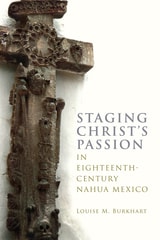
Staging Christ's Passion in Eighteenth-Century Nahua Mexico
Louise M. Burkhart
University Press of Colorado, 2023
A cast with over fifty distinct roles acted out events extending from Palm Sunday to Christ’s death on the cross. One actor became a localized embodiment of Jesus through a process of investiture and mimesis that carried aspects of pre-Columbian materialized divinity into the later colonial period. The play told afar richer version of the Passion story than what later colonial Nahuas typically learned from their priests or catechists. And by assimilating Jesus to an Indigenous, or macehualli, identity, the players enacted a protest against colonial rule.
The situation in eighteenth-century New Spain presents both a unique confrontation between Indigenous communities and Enlightenment era religious reformers and a new chapter in an age-old power game between popular practice and religious orthodoxy. By focusing on how Nahuas localized the universalizing narrative of Christ’s Passion, Staging Christ’s Passion in Eighteenth-Century Nahua Mexico offers an unusually in-depth view of religious life under colonial rule.
Burkhart’s accompanying website also makes available transcriptions and translations of the six Nahuatl-language plays, four Spanish-language plays composed in response to the suppression of the Nahuatl practice, and related documentation, providing a valuable resource for anyone interested in consulting the original material.
Comments restricted to single page
plays composed in response to the suppression of the Nahuatl practice, and related documentation,
providing a valuable resource for anyone interested in consulting the original material
Stigmata of Bliss
Three NovellasKlaus Merz
Seagull Books, 2017
Jacob Asleep introduces a family marked by illness, eccentricity, and a child’s death. In A Man’s Fate, a moment of inattention on a mountainous hike upends a teacher’s life and his understanding of mortality. And finally, The Argentine traces the fluctuations of memory and desire in a man’s journey around the world. In each novella, Merz takes readers on a profound and intimate journey. Read as a whole, the works complement, enrich, and echo each other.

Stone Lyre
René Char
Tupelo Press, 2010
Strange Cocktail
Translation and the Making of Modern Hebrew PoetryAdriana X. Jacobs
University of Michigan Press, 2018
For centuries, poets have turned to translation for creative inspiration. Through and in translation, poets have introduced new poetic styles, languages, and forms into their own writing, sometimes changing the course of literary history in the process. Strange Cocktail is the first comprehensive study of this phenomenon in modern Hebrew literature of the late nineteenth century to the present day. Its chapters on Esther Raab, Leah Goldberg, Avot Yeshurun, and Harold Schimmel offer close readings that examine the distinct poetics of translation that emerge from reciprocal practices of writing and translating. Working in a minor literary vernacular, the translation strategies that these poets employed allowed them to create and participate in transnational and multilingual poetic networks. Strange Cocktail thereby advances a comparative and multilingual reframing of modern Hebrew literature that considers how canons change and are undone when translation occupies a central position—how lines of influence and affiliation are redrawn and literary historiographies are revised when the work of translation occupies the same status as an original text, when translating and writing go hand in hand.
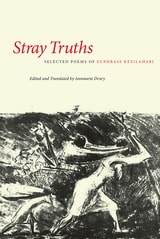
Stray Truths
Selected Poems of Euphrase KezilahabiAnnmarie Drury
Michigan State University Press, 2015
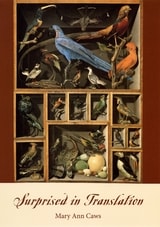
Surprised in Translation
Mary Ann Caws
University of Chicago Press, 2006
For Mary Ann Caws—noted translator of surrealist poetry—the most appealing translations are also the oddest; the unexpected, unpredictable, and unmimetic turns that translations take are an endless source of fascination and instruction. Surprised in Translation is a celebration of the occasional and fruitful peculiarity that results from some of the most flavorful translations of well-known authors. These translations, Caws avers, can energize and enliven the voice of the original.
In eight elegant chapters Caws reflects on translations that took her by surprise. Caws shows that the elimination of certain passages from the original—in the case of Stéphane Mallarmé translating Tennyson, Ezra Pound interpreting the troubadours, or Virginia Woolf rendered into French by Clara Malraux, Charles Mauron, and Marguerite Yourcenar—often produces a greater and more coherent art. Alternatively, some translations—such as Yves Bonnefoy’s translations of Shakespeare, Keats, and Yeats into French—require more lines in order to fully capture the many facets of the original. On other occasions, Caws argues, a swerve in meaning—as in Beckett translating himself into French or English—can produce a new text, just as true as the original.
Imbued with Caws’s personal observations on the relationship between translators and the authors they translate, Surprised in Translation will interest a wide range of readers, including students of translation, professional literary translators, and scholars of modern and comparative literature.
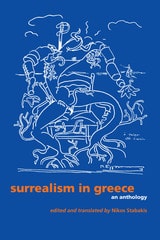
Surrealism in Greece
An AnthologyEdited and translated by Nikos Stabakis
University of Texas Press, 2008
In the decades between the two World Wars, Greek writers and artists adopted surrealism both as an avant-garde means of overturning the stifling traditions of their classical heritage and also as a way of responding to the extremely unstable political situation in their country. Despite producing much first-rate work throughout the rest of the twentieth century, Greek surrealists have not been widely read outside of Greece. This volume seeks to remedy that omission by offering authoritative translations of the major works of the most important Greek surrealist writers.
Nikos Stabakis groups the Greek surrealists into three generations: the founders (such as Andreas Embirikos, Nikos Engonopoulos, and Nicolas Calas), the second generation, and the Pali Group, which formed around the magazine Pali. For each generation, he provides a very helpful introduction to the themes and concerns that animate their work, as well as concise biographies of each writer. Stabakis anthologizes translations of all the key surrealist works of each generation—poetry, prose, letters, and other documents—as well as a selection of rarer texts. His introduction to the volume places Greek surrealism within the context of the international movement, showing how Greek writers and artists used surrealism to express their own cultural and political realities.