Results by title
18284 books match the query 'United States' and 3764 start with t
To Become an American
Immigrants and Americanization Campaigns of the Early Twentieth CenturyLeslie A. Hahner
Michigan State University Press, 2017

To Care for the Sick and Bury the Dead
African American Lodges and Cemeteries in TennesseeLeigh Ann Gardner
Vanderbilt University Press, 2022
These Black cemeteries dot the Tennessee landscape, but few know their history or the societies of care they represent. To Care for the Sick and Bury the Dead is the first book-length look at these cemeteries and the lodges that fostered them.
This book is a must-have for genealogists, historians, and family members of the people buried in these cemeteries.
To Do Justice
The Civil Rights Ministry of Reverend Robert E. HughesRandall C. Jimerson
University of Alabama Press, 2022
A minister’s call to justice in the struggle for civil rights.
A native Alabamian, Reverend Robert E. Hughes worked full-time in the civil rights movement as executive director of the Alabama Council of Human Relations, where he developed a close relationship with Dr. Martin Luther King Jr. After facing backlash from the Ku Klux Klan, spending four days in jail for refusing to disclose ACHR membership lists, and ultimately being forced to leave the state of Alabama, he served as a Methodist missionary in Southern Rhodesia (now part of Zimbabwe). After two years of organizing Black liberation groups, he was banned as a “prohibited immigrant” by the Ian Smith government. His lifelong commitment to social justice, racial equality, and peaceful resolution of conflicts marks a fascinating career richly documented in this comprehensive biography.
To Do Justice: The Civil Rights Ministry of Reverend Robert E. Hughes traces the life and career of an admirable and lesser-known civil rights figure who fought injustice on two continents. This account presents valuable new evidence about the civil rights movement in the United States as well as human rights and liberation issues in colonial Southern Rhodesia in the years leading up to independence and self-rule. It provides an intimate portrait of a courageous individual who worked outside of the public spotlight but provided essential support and informational resources to public activists and news reporters
Randall C. Jimerson explores the interwoven threads of race relations and religious beliefs on two continents, focusing on the dual themes of the American civil rights movement and the African struggles for decolonization and majority rule. The life and career of Robert Hughes provide insight into the international dimensions of racial prejudice and discrimination that can be viewed in comparative context to similar oppressions in other colonial lands.
To Fight Aloud Is Very Brave
American Poetry and the Civil WarFaith Barrett
University of Massachusetts Press, 2012
Focusing on literary and popular poets, as well as work by women, African Americans, and soldiers, this book considers how writers used poetry to articulate their relationships to family, community, and nation during the Civil War. Faith Barrett suggests that the nationalist “we” and the personal “I” are not opposed in this era; rather they are related positions on a continuous spectrum of potential stances. For example, while Julia Ward Howe became famous for her “Battle Hymn of the Republic,” in an earlier poem titled “The Lyric I” she struggles to negotiate her relationship to domestic, aesthetic, and political stances.
Barrett makes the case that Americans on both sides of the struggle believed that poetry had an important role to play in defining national identity. She considers how poets created a platform from which they could speak both to their own families and local communities and to the nations of the Confederacy, the Union, and the United States. She argues that the Civil War changed the way American poets addressed their audiences and that Civil War poetry changed the way Americans understood their relationship to the nation.
To Foster the Spirit of Professionalism
Southern Scientists and State Academies of ScienceNancy Smith Midgette
University of Alabama Press, 1991
"A welcome contribution to the history of science in the South during the period since the Civil War. . . . By considering the academies in the larger context of scientific professionalism, South and North, Midgette has produced a surprisingly wide-ranging and informative study. This is overall a judicious and carefully researched work. The writing is straightforward and admirably clear, while the topic is effectively organized and presented. The book is a commendably original addition to local and regional history as well as history of American Science."
—Journal of American History
"Midgette’s study is thorough and well organized and should be consulted by anyone interested in American science and American higher education."
—Florida Historical Quarterly
"A very useful survey."
—Choice
To Give Their Gifts
Health, Community, and DemocracyRichard A. Couto
Vanderbilt University Press, 2002
To Have and to Hold
Marriage, the Baby Boom, and Social ChangeJessica Weiss
University of Chicago Press, 2000
Jessica Weiss delves beneath these mythic images and paints a far more complex picture that reveals strong continuities between the baby boomers and their parents. Drawing on interviews with American couples from the 1950s to the 1980s, Weiss creates a dynamic portrait of family and social change in the postwar era. She pairs these firsthand accounts with a deft analysis of movies, television shows, magazines, and advice books from each decade, providing an unprecedented and intimate look at ordinary marriages in a time of sweeping cultural change.
Weiss shows how young couples in the 1950s attempted to combine egalitarian hopes with traditional gender roles. Middle-class women encouraged their husbands to become involved fathers. Midlife wives and mothers reshaped the labor force and the home by returning to work in the 1960s. And couples strove for fulfilling marriages as they dealt with the pressures of childrearing in the midst of the sexual and divorce revolutions of the 1960s and 1970s. By the 1980s, they were far more welcoming to the ideas of the women's movement than has often been assumed. More than simply changing with the times, the parents of the baby boom contributed to changing times themselves.
Weiss's excellent use of family interviews that span three decades, her imaginative examination of popular culture, and her incisive conclusions make her book an invaluable contribution not only to our understanding of the past but also to our understanding of men's and women's roles in today's family.
"Weiss has written an enlightening book that examines the dynamics of American families past and present. . . . Since Weiss is a historian, she provides analyses of her arguments that are factual rather than emotive, and her use of family interviews further contributes to a strong presentation. Overall, this is a unique works because its multidisciplinary approach informs but never preaches on the emotionally charged topic of the American family.—Sheila Devaney, Library Journal
To Heal the Scourge of Prejudice
The Life and Writings of Hosea EastonHosea Easton
University of Massachusetts Press, 1999
How did racial prejudice originate and why has it been so deeply rooted in American culture? What have been the long-term effects of prejudice on the intellectual, communal, and psychological resources of African Americans? How might the nightmare of racial domination be truly brought to an end? Still pertinent today, these were among the key questions addressed more than a century and a half ago by Hosea Easton (1799–1837), an important yet long neglected activist and intellectual.
A black minister from New England, Easton rose to prominence during the 1820s and 1830s by joining in the struggle of free African Americans to resist southern slavery and secure racial equality. From this experience he developed a deep understanding of the problem of "race" in the United States and became a trenchant critic of white supremacy and its devastating consequences. This volume brings back into print the only extended writings of Easton that have survived into our time: his insightful, almost prescient A Treatise on the Intellectual Character, and the Civil and Political Condition of the Colored People of the U. States, first published in 1837; and his passionate 1828 Thanksgiving Day “Address.” The book also provides a biographical portrait of Easton and his family, drawn from primary documents as well as secondary sources in the areas of biography, genealogy, and social history.
To Keep the Republic
Thinking, Talking, and Acting Like a Democratic CitizenElizabeth C. Matto
Rutgers University Press, 2024
To Keep the Republic is a wake-up call about the responsibilities that come with being a citizen in a participatory democracy. It describes the many ways that individuals can make a difference on both local and national levels—and explains why they matter. Political scientist Elizabeth C. Matto highlights the multiple facets of democratic citizenship, identifies American democracy’s sometimes competing values and ideals, and explains how civic engagement can take various forms, including political conversation. Combining political philosophy with concrete suggestions for how to become a more engaged citizen, To Keep the Republic reminds us that democracy is not a spectator sport; it only works when we get off the sidelines and enter the political arena to make our voices heard.
To Life
The Story of a Chicago LawyerElmer Gertz
Southern Illinois University Press, 1990
Elmer Gertz has defended famous people—including Henry Miller, Nathan Leopold, and Jack Ruby—and he has become famous in his own right through his struggle for civil liberties and personal rights.
Gertz has taken on a lengthy list of cases and causes over the six decades of his legal career. He fought successfully against the censorship of Henry Miller’s book Tropic of Cancer,which had been banned in Chicago for obscenity. He got Nathan Leopold released from prison after Leopold had served 34 years for his part in the death of 14-year-old Bobby Franks. An ardent foe of the death penalty, Gertz labored for years as part of a national team of lawyers that was finally able to overturn Jack Ruby’s death sentence for the murder of Lee Harvey Oswald. Gertz’s cases have helped make libel law in the nation.
For this edition, Gertz adds an afterword that covers the 15 years since the book’s first publication. Gertz talks of Henry Miller’s last days and his travels to the USSR on behalf of the Refuseniks.
To Live Peaceably Together
The American Friends Service Committee's Campaign for Open HousingTracy E. K'Meyer
University of Chicago Press, 2022
The bitterly tangled webs of race and housing in the postwar United States hardly suffer from a lack of scholarly attention. But Tracy K’Meyer’s To Live Peaceably Together delivers something truly new to the field: a lively examination of a predominantly white faith-based group—the Quaker-aligned American Friends Service Committee (AFSC)—that took a unique and ultimately influential approach to cultivating wider acceptance of residential integration. Built upon detailed stories of AFSC activists and the obstacles they encountered in their work in Chicago, Philadelphia, and Richmond, California, To Live Peaceably Together is an engaging and timely account of how the organization allied itself to a cause that demanded constant learning, reassessment, and self-critique. K’Meyer details the spiritual and humanist motivations behind the AFSC, its members’ shifting strategies as they came to better understand structural inequality, and how those strategies were eventually adopted by a variety of other groups. Her fine-grained investigation of the cultural ramifications of housing struggles provides a fresh look at the last seventy years of racial activism.

To Live Peaceably Together
The American Friends Service Committee's Campaign for Open HousingTracy E. K'Meyer
University of Chicago Press, 2022
This is an auto-narrated audiobook edition of this book.
A groundbreaking look at how a predominantly white faith-based group reset the terms of the fight to integrate US cities.
The bitterly tangled webs of race and housing in the postwar United States hardly suffer from a lack of scholarly attention. But Tracy K’Meyer’s To Live Peaceably Together delivers something truly new to the field: a lively examination of a predominantly white faith-based group—the Quaker-aligned American Friends Service Committee (AFSC)—that took a unique and ultimately influential approach to cultivating wider acceptance of residential integration. Built upon detailed stories of AFSC activists and the obstacles they encountered in their work in Chicago, Philadelphia, and Richmond, California, To Live Peaceably Together is an engaging and timely account of how the organization allied itself to a cause that demanded constant learning, reassessment, and self-critique. K’Meyer details the spiritual and humanist motivations behind the AFSC, its members’ shifting strategies as they came to better understand structural inequality, and how those strategies were eventually adopted by a variety of other groups. Her fine-grained investigation of the cultural ramifications of housing struggles provides a fresh look at the last seventy years of racial activism.

To Live and Die in America
Class, Power, Health and HealthcareRobert Chernomas and Ian Hudson
Pluto Press, 2013
To Live and Die in America details how the United States has among the worst indicators of health in the industrialised world and at the same time spends significantly more on its health care system than any other industrial nation.
Robert Chernomas and Ian Hudson explain this contradictory phenomenon as the product of the unique brand of capitalism that has developed in the US. It is this particular form of capitalism that created both the social and economic conditions that largely influence health outcomes and the inefficient, unpopular and inaccessible health care system that is incapable of dealing with them.
The authors argue that improving health in America requires a change in the conditions in which people live and work as well as a restructured health care system.
To Live and Die
Collected Stories of the Civil War, 1861–1876Kathleen Diffley, ed.
Duke University Press, 2002
The authors, who include Louisa May Alcott and Mark Twain, depict the horrors of the battlefield, the suffering in prison camps and field hospitals, and the privations of the home front. In these pages, bushwhackers carry the war to out-of-the-way homesteads, spies work households from the inside, journeying paymasters rely on the kindness of border women, and soldiers turn out to be girls. The stories are populated with nurses, officers, speculators, preachers, slaves, and black troops, and they take place in cities, along the frontier, and on battlefields from Shiloh to Gettysburg.
The book opens with a prewar vigilante attack on the Underground Railroad and a Kansas parson in Henry King’s “The Cabin at Pharoah’s Ford” and concludes with an ex-slave recalling the loss of her remaining son in Twain’s “A True Story.” In between are stories written by both women and men that were published in magazines from the South and West as well as the culturally dominant Northeast. Wartime wood engravings highlight the text. Kathleen Diffley’s introduction provides literary and historical background, and her commentary introduces readers to magazine authors as well as the deepening disruptions of a country at war.
Just as they did for nineteenth-century readers, these stories will bring the war home to contemporary readers, giving shape to a crisis that rocked the nation then and continues to haunt it now.
To Make a Prairie
Essays on Poets, Poetry, and Country LivingMaxine Kumin
University of Michigan Press, 1980
To My Dearest Wife, Lide
Letters from George B. Gideon Jr. during Commodore Perry’s Expedition to Japan, 1853–1855Edited by M. Patrick Sauer and David A. Ranzan
University of Alabama Press, 2019
George B. Gideon Jr. served as second assistant engineer aboard the USS Powhatan from 1852 to 1856. From his position on the steam frigate, Gideon traveled to Singapore, Labuan, Borneo, Hong Kong, and many other Asian lands. During his time at sea, Gideon penned dozens of letters to his wife, Lide, back home in Philadelphia. Recently discovered in the attic of his great-great-grandniece, were fifty-one letters penned by Gideon providing thorough and insightful commentary throughout the voyage.
Through these correspondences, Gideon laboriously documents the details of his daily life on board, from the food they ate to the technical aspects of his work, as well as observations concerning the historical events unfolding around him, such as Chinese piracy, the Taiping Rebellion, the Crimean War, and the devastation of Shimoda. To My Dearest Wife, Lide: Letters from George B. Gideon Jr. during Commodore Perry’s Expedition to Japan, 1853–1855 is a rare first-person account of the landmark American naval expedition to Japan to establish commercial relations between the two countries. Gideon’s letters have been meticulously transcribed and annotated by the editors and are an invaluable primary historical source.
Gideon’s letters are candid and revealing, delving into the rampant dysfunction in the navy of the 1850s—sickness and disease, alcohol abuse, and poor leadership, among other challenges. Gideon also unabashedly shares his own cynical views of the navy’s role in supporting American economic interests in Japan. This firsthand account of the political mission of the Perry expedition is a unique contribution to naval and military history and gives readers a better view of life aboard a navy ship.
To Offer Compassion
A History of the Clergy Consultation Service on AbortionDoris Andrea Dirks and Patricia A. Relf
University of Wisconsin Press, 2019
As religious leaders spoke out on issues of civil rights, peace, or poverty, CCS members were also called to action by the suffering of women who had approached them for help. Overwhelmingly male, white, affluent, and middle-aged, these mainline Protestant and Jewish clergy were nonetheless outspoken advocates for the rights of women, particularly poor women. To Offer Compassion is a detailed history of this unique and largely forgotten movement, drawing on extensive interviews with original participants and on primary documents from the CCS's operations.

To Possess The Land
A Biography Of Arthur Rochford ManbyFrank Waters
Ohio University Press, 1993
Ambitious and only twenty-four years old, Arthur Manby arrived from England to the Territory of New Mexico in 1883 and saw in its wilderness an empire that he believed himself destined to rule. For his kingdom, he chose a vast Spanish land grant near Taos, a wild 100,000 acres whose title was beyond question. Obsessed, he poured more than twenty years into his dream of glory, and schemed, stole, lied, cajoled, begged, and bribed to take the vast grant from its rightful owners. With great mastery, Waters draws us into this obsession, and the intense drama of these years is at once psychological and historical. In May 1913, Manby came at last to possess the grant, but within three years it had slipped again from his grasp.
The story does not end there, and perhaps only Frank Waters could have portrayed the strange disintegration of Manby’s personality as he aged, his frantic but ingenious efforts to regain “his” land. Among these was the creation of a secret society which terrorized whole towns and villages, becoming so powerful that even Manby no longer knew all its members and workings. At the same time he turned deeper inward, locked and bolted his gates against the outside world which hated and feared him more than ever. On July 3, 1929, a swollen, headless body was discovered in Manby’s Taos home. Some said it was murder; others swore the body was not Manby’s; still others reported seeing him alive afterward. The story blazed into national headlines and an official inquiry followed. Step by step, Waters takes us into the web of strange clues, evidence, more murders and complications—an investigation which the New Mexican government inexplicably called to a halt. The case remains one of the West’s greatest unsolved mysteries.
To Quench Our Thirst
The Present and Future Status of Freshwater Resources of the United StatesDavid A. Francko and Robert G. Wetzel
University of Michigan Press, 1983
To Raise Up a Nation
John Brown, Frederick Douglass, and the Making of a Free CountryWilliam S. King
Westholme Publishing, 2013
Drawing on decades of research, and demonstrating remarkable command of a great range of primary sources, William S. King has written an important history of African Americans’ own contributions and points of crossracial cooperation to end slavery in America. Beginning with the civil war along the border of Kansas and Missouri, the author traces the life of John Brown and the personal support for his ideas from elite New England businessmen, intellectuals such as Emerson and Thoreau, and African Americans, including his confidant, Frederick Douglass, and Harriet Tubman. Throughout, King links events that contributed to the growing antipathy in the North toward slavery and the South’s concerns for its future, including Nat Turner’s insurrection, the Amistad affair, the Fugitive Slave law, the Kansas-Nebraska Act, and the Dred Scott decision. The author also effectively describes the debate within the African American community as to whether the U.S. Constitution was colorblind or if emigration was the right course for the future of blacks in America.
Following Brown’s execution after the failed raid on Harper’s Ferry in 1859, King shows how Brown’s vision that only a clash of arms would eradicate slavery was set into motion after the election of Abraham Lincoln. Once the Civil War erupted on the heels of Brown’s raid, the author relates how black leaders, white legislators, and military officers vigorously discussed the use of black manpower for the Union effort as well as plans for the liberation of the “veritable Africa” within the southern United States. Following the Emancipation Proclamation of January 1863, recruitment of black soldiers increased and by war’s end they made up nearly ten percent of the Union army, and contributed to many important victories.
To Raise Up a Nation: John Brown, Frederick Douglass, and the Making of a Free Country is a sweeping history that explains how the destruction of American slavery was not directed primarily from the counsels of local and national government and military men, but rather through the grassroots efforts of extraordinary men and women. As King notes, the Lincoln administration ultimately armed black Americans, as John Brown had attempted to do, and their role was a vital part in the defeat of slavery.
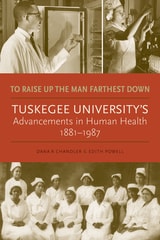
To Raise Up the Man Farthest Down
Tuskegee University’s Advancements in Human Health, 1881–1987Dana R. Chandler and Edith Powell
University of Alabama Press, 2018
An important historical account of Tuskegee University’s significant advances in health care, which affected millions of lives worldwide.
Alabama’s celebrated, historically black Tuskegee University is most commonly associated with its founding president, Booker T. Washington, the scientific innovator George Washington Carver, or the renowned Tuskegee Airmen. Although the university’s accomplishments and devotion to social issues are well known, its work in medical research and health care has received little acknowledgment. Tuskegee has been fulfilling Washington’s vision of “healthy minds and bodies” since its inception in 1881. In To Raise Up the Man Farthest Down, Dana R. Chandler and Edith Powell document Tuskegee University’s medical and public health history with rich archival data and never-before-published photographs. Chandler and Powell especially highlight the important but largely unsung role that Tuskegee University researchers played in the eradication of polio, and they add new dimension and context to the fascinating story of the HeLa cell line that has been brought to the public’s attention by popular media.
Tuskegee University was on the forefront in providing local farmers the benefits of agrarian research. The university helped create the massive Agricultural Extension System managed today by land grant universities throughout the United States. Tuskegee established the first baccalaureate nursing program in the state and was also home to Alabama’s first hospital for African Americans. Washington hired Alabama’s first female licensed physician as a resident physician at Tuskegee. Most notably, Tuskegee was the site of a remarkable development in American biochemistry history: its microbiology laboratory was the only one relied upon by the National Foundation for Infantile Paralysis (the organization known today as the March of Dimes) to produce the HeLa cell cultures employed in the national field trials for the Salk and Sabin polio vaccines. Chandler and Powell are also interested in correcting a long-held but false historical perception that Tuskegee University was the location for the shameful and infamous US Public Health Service study of untreated syphilis.
Meticulously researched, this book is filled with previously undocumented information taken directly from the vast Tuskegee University archives. Readers will gain a new appreciation for how Tuskegee’s people and institutions have influenced community health, food science, and national medical life throughout the twentieth century.
To Reason Why
Jeffrey Kimball
Temple University Press, 1990
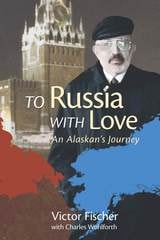
To Russia with Love
An Alaskan's JourneyVictor Fischer with Charles Wohlforth
University of Alaska Press, 2012
Son of the famous American journalist Louis Fischer, who corresponded from Germany and then Moscow, and the Russian writer Markoosha Fischer, Victor Fischer grew up in the shadow of Hitler and Stalin, watching his friends’ parents disappear after political arrests. Eleanor Roosevelt personally engineered the Fischer family’s escape from Russia, and soon after Victor was serving in the United States Army in World War II and fighting opposite his childhood friends in the Russian and German armies.
To See Ourselves as Others See Us
How Publics Abroad View the United States after 9/11Ole R. Holsti
University of Michigan Press, 2008
"Holsti, the authority on American foreign policy attitudes, investigates others' views of us. It's not pretty. It matters. Read this."
---Bruce Russett, Dean Acheson Professor of International Relations, Yale University, and editor of the Journal of Conflict Resolution
"Clearly and engagingly written, Holsti's book ranks among the most important---and most objective---of the post-9/11 scholarly studies. It deserves a large readership, both within and beyond academe."
---Ralph Levering, Vail Professor of History, Davidson College
In terms of military and economic power, the United States remains one of the strongest nations in the world. Yet the United States seems to have lost the power of persuasion, the ability to make allies and win international support.
Why? Immediately after the terrorist attacks of 9/11, leaders and citizens of foreign nations generally expressed sympathy for the United States. Since then, attitudes have changed. Drawing upon public opinion surveys conducted in 30 nations, Ole R. Holsti documents an increasing anti-American sentiment. His analysis suggests that the war in Iraq, human rights violations, and unpopular international policies are largely responsible. Consequently, the United States can rebuild its repute by adopting an unselfish, farsighted approach to global issues.
Indeed, the United States must restore goodwill abroad, Holsti asserts, because public opinion indirectly influences the leaders who decide whether or not to side with the Americans.
Ole R. Holsti is George V. Allen Professor Emeritus of International Affairs in the Department of Political Science at Duke University and author of Public Opinion and American Foreign Policy.
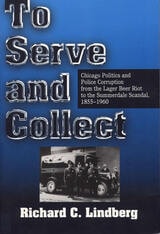
To Serve and Collect
Chicago Politics and Police Corruption from the Lager Beer Riot to the Summerdale Scandal, 1855-1960Richard C. Lindberg
Southern Illinois University Press, 1998
Crooked politicians, gangsters, madams, and cops on the take: To Serve and Collect tells the story of Chicago during its formative years through the history of its legendary police department.
To Shake Their Guns in the Tyrant's Face
Libertarian Political Violence and the Origins of the Militia MovementRobert H. Churchill
University of Michigan Press, 2011
After the bombings of Oklahoma City in 1995, most Americans were shocked to discover that tens of thousands of their fellow citizens had banded together in homegrown militias. Within the next few years, numerous studies and media reports appeared revealing the unseen world of the American militia movement, a loose alliance of groups with widely divergent views. Not surprisingly, it was the movement’s most extreme voices that attracted the lion's share of attention.
In reality the militia movement was neither as irrational nor as new as it was portrayed in the press, Robert Churchill writes. What bound the movement together was the shared belief that citizens have a right, even a duty, to take up arms against wanton exercise of unconstitutional power by the federal government. Many were motivated to join the movement by what they saw as a rise in state violence, illustrated by the government assaults at Ruby Ridge, Idaho in 1992, and Waco, Texas in 1993. It was this perception and the determination to deter future state violence, Churchill argues, that played the greatest role in the growth of the American militia movement.
Churchill uses three case studies to illustrate the origin of some of the core values of the modern militia movement: Fries' Rebellion in Pennsylvania at the end of the eighteenth century, the Sons of Liberty Conspiracy in Civil War-era Indiana and Illinois, and the Black Legion in Michigan and Ohio during the Depression. Building on extensive interviews with militia members, the author places the contemporary militia movement in the context of these earlier insurrectionary movements that, animated by a libertarian interpretation of the American Revolution, used force to resist the authority of the federal government.
A historian of early America, Robert H. Churchill has published numerous articles on American political violence and the right to keep and bear arms. He is currently Associate Professor of History at the University of Hartford.
"This book is about how we think about the past, how cultural memories are formed and evolve, and how these memories then come to impact current understandings of issues. Churchill provides an enlightening analysis of the ideology, structure, and purpose of the militia movement. Where much scholarship has categorized it as a cohesive, single movement, Churchill begins the process of unraveling its complexity."
---Steve Chermak, Michigan State University
"To Shake Their Guns in the Tyrant's Face addresses an area---the relationship of American political violence to American ideology---that is of growing importance and that is commanding an ever increasing audience, and it does so in a way like nothing else in the field."
---David Williams, Indiana University Bloomington
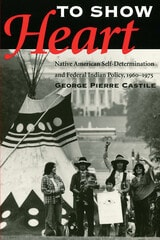
To Show Heart
Native American Self-Determination and Federal Indian Policy, 1960-1975George Pierre Castile
University of Arizona Press, 1998
To Show Heart is a detailed and unbiased account of one of the least understood periods in Indian affairs. It tells how "termination" became a political embarrassment during the civil rights movement, how Lyndon Johnson's War on Poverty prompted politicians to rethink Indian policy, and how championing self-determination presented an opportunity for Presidents Nixon and Ford to "show heart" toward Native Americans. Along the way, Castile assesses the impact of the Indian activism of the 1960s and 1970s and offers an objective view of the American Indian Movement and the standoff at Wounded Knee. He also discusses the recent history of individual tribes, which gives greater meaning to decisions made at the national level. Castile's work greatly enhances our understanding of the formulation of current Indian policy and of the changes that have occurred since 1975. To Show Heart is an important book not only for anthropologists and historians but also for Native Americans themselves, who will benefit from this inside look at how bureaucrats have sought to determine their destinies.
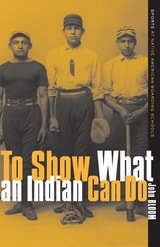
To Show What an Indian Can Do
Sports at Native American Boarding SchoolsJohn Bloom
University of Minnesota Press, 2005
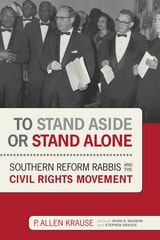
To Stand Aside or Stand Alone
Southern Reform Rabbis and the Civil Rights MovementP. Allen Krause, Edited by Mark K. Bauman with Stephen Krause
University of Alabama Press, 2016
In 1966, a young rabbinical student named P. Allen Krause conducted interviews with twelve Reform rabbis from southern congregations concerning their thoughts, principles, and activities as they related to the civil rights movement. Perhaps because he was a young seminary student or more likely because the interviewees were promised an embargo of twenty-five years before the interviews would be released to the public, the rabbis were extremely candid about their opinions on and their own involvement with what was still an incendiary subject. Now, in To Stand Aside or Stand Alone: Southern Reform Rabbis and the Civil Rights Movement, their stories help elucidate a pivotal moment in time.
After a distinguished rabbinical career, Krause wrote introductions to and annotated the interviews. When Krause succumbed to cancer in 2012, Mark K. Bauman edited the manuscripts further and wrote additional introductions with the assistance of Stephen Krause, the rabbi’s son. The result is a unique volume offering insights into these rabbis’ perceptions and roles in their own words and with more depth and nuance than hitherto available. This exploration into the lives of these teachers and civic leaders is supported by important contextual information on the local communities and other rabbis, with such background information forming the basis of a demographic profile of the Reform rabbis working in the South.
The twelve rabbis whom Krause interviewed served in Alabama, Georgia, Louisiana, Mississippi, Tennessee, and Virginia, and the substance and scope of their discussions cover some of the most crucial periods in the civil rights movement. Although some have provided accounts that appeared elsewhere or have written about their experiences themselves, several new voices appear here, suggesting that more southern rabbis were active than previously thought. These men functioned within a harsh environment: rabbis’ homes, synagogues, and Jewish community centers were bombed; one rabbi, who had been beaten and threatened, carried a pistol to protect himself and his family. The views and actions of these men followed a spectrum from gradualism to activism; while several of the rabbis opposed the evils of the separate and unequal system, others made peace with it or found reasons to justify inaction. Additionally, their approaches differed from their activist colleagues in the North even more than from each other.
Within these pages, readers learn about the attitudes of the rabbis toward each other, toward their congregants, toward national Jewish organizations, and toward local leaders of black and white and Protestant and Catholic groups. Theirs are dramatic stories of frustration, cooperation, and conflict.
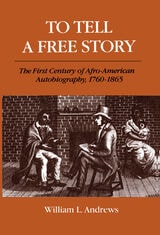
To Tell a Free Story
The First Century of Afro-American Autobiography, 1760-1865William L. Andrews
University of Illinois Press, 1986
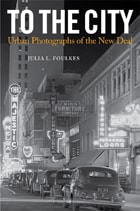
To The City
Urban Photographs of the New DealAuthored by Julia L. Foulkes
Temple University Press, 2011
In the 1930s and 1940s, as the United States moved from a rural to an urban nation, the pull of the city was irrepressible. It was so strong that even a photographic mission designed to record the essence of rural America could not help but capture the energy of urbanization too. To the City showcases over 100 photographs from the Farm Security Administration (FSA) project along with extracts from the Works Progress Administration (WPA) guidebooks and oral histories, to convey the detail and dimensions of that transformation.
This artfully grouped collection of photographs includes magnificent images by notable photographers Dorothea Lange, Walker Evans and Gordon Parks, among many others. Foulkes organizes this history of Americana into five themes: Intersection; Traffic; High Life and Low Life; The City in the Country; and Citizens to illuminate the changes in habits, landscapes, and aspirations that the march to cities encompassed.
As the rural past holds symbolic sway and the suburb presents demographic force, the urban portion of our history—why and how cities have been a destination for hope—recedes from view. To the City is a thoughtful, engaging reminder.
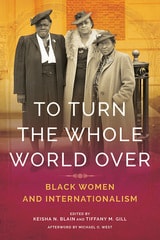
To Turn the Whole World Over
Black Women and InternationalismEdited by Keisha N. Blain and Tiffany M. Gill
University of Illinois Press, 2019
To Your Posts!
Fort Meigs in the War of 1812 through the Voices of Those Who Fought ThereLarry L. Nelson
Michigan State University Press, 2025
To the Boathouse
A MemoirMary Ann Caws
University of Alabama Press, 2008
From Southern roots to scholarly heights—one woman’s journey to find peace, purpose, and her place in the world.
A neat and lavish, if constricting, childhood in the lush landscapes of North Carolina. Summers at a calm, remote beach house. A proper and religiously influenced prep school in Washington. Years at Bryn Mawr, an impulsive study trip to Paris, further education at Yale, married life, and divorced life. These are the settings for Mary Ann Caws’s passionate memoir, in which she recounts the highs and lows of her journey through life. Marked by complicated relationships and a passion for learning, Caws’s story is one that resonates not only with writers like herself, but with all who have struggled with determining their path within the surrounding world.
Caws writes of her formal, stylish parents, her rebellious and deeply admired sister, and her artistic grandmother, whom she respected and idolized more than anyone else. She describes her marriage and subsequent divorce, her bouts with therapy, her children, and her growth as a student and writer. Throughout the memoir is evidence of her love for writing, teaching, art, and poetry as well as her deep respect for the people in her life that ultimately guided her into her career.
The author describes Southern society and her own life with fondness, nostalgia, and a tinge of honest criticism. The carefully selected details and delicate balance of sentiment and fact bring readers into the fascinating, complicated, and all-too-real world of Caws’s—and our own—past.
To the End of the World
Nathanael Greene, Charles Cornwallis, and the Race to the DanAndrew Waters
Westholme Publishing, 2023
“In the most barren inhospitable unhealthy part of North America, opposed by the most savage, inveterate perfidious cruel Enemy, with zeal and with Bayonets only, it was resolv’d to follow Green’s Army, to the end of the World.” So wrote British general Charles O’Hara about the epic confrontation between Nathanael Greene and Charles Cornwallis during the winter of 1780-81. Only Greene’s starving, threadbare Continentals stood between Cornwallis and control of the South—and a possible end to the American rebellion. Burning their baggage train so that they could travel more quickly, the British doggedly pursued Greene’s bedraggled soldiers, yet the rebels remained elusive. Daniel Morgan’s stunning victory at Cowpens over a superior British force set in motion the “Race to the Dan,” Greene’s month-long strategic retreat across the Carolinas. In constant rain and occasional snow, Greene’s soldiers—tracking the ground with their bloody feet—bound toward a secret stash of boats on the Dan River. Just before Cornwallis could close his trap, the Continentals crossed into Virginia and safety. Greene’s path featured three near-miss river escapes, the little-known Battle of Cowan’s Ford, and a final chase so close that the fate of the American South—and the American effort—rested on one wrong British move.
With a background section on the Southern theater in 1780, and a summary outlining the lives and careers of its important officers, To the End of the World: Nathanael Greene, Charles Cornwallis, and the Race to the Dan is a carefully documented and beautifully written account of this extraordinary chapter of American history. The book not only showcases the incredible dramatics of the American Revolution’s “Great Escape,” but also provides a compelling look at the psychological and intellectual distinctions between its two great generals, Greene and Cornwallis.
To the Last Smoke
An AnthologyStephen J. Pyne
University of Arizona Press, 2020
From boreal Alaska to subtropical Florida, from the chaparral of California to the pitch pine of New Jersey, America boasts nearly a billion burnable acres. In nine previous volumes, Stephen J. Pyne has explored the fascinating variety of flame region by region. In To the Last Smoke: An Anthology, he selects a sampling of the best from each.
To the Last Smoke offers a unique and sweeping view of the nation’s fire scene by distilling observations on Florida, California, the Northern Rockies, the Great Plains, the Southwest, the Interior West, the Northeast, Alaska, the oak woodlands, and the Pacific Northwest into a single, readable volume. The anthology functions as a color-commentary companion to the play-by-play narrative offered in Pyne’s Between Two Fires: A Fire History of Contemporary America. The series is Pyne’s way of “keeping with it to the end,” encompassing the directive from his rookie season to stay with every fire “to the last smoke.”
To the Promised Land
A History of Government and Politics in OregonTom Marsh
Oregon State University Press, 2012
From Jason Lee’s first letter urging Congress to take possession of the Oregon Country to John Kitzhaber’s precedent-setting third term as governor, from the land frauds of the early 20th century to the state’s land-use planning goals, from the Beach Bill to the Bottle Bill, this book tells Oregon’s story.
Featuring interesting trivia, historical photographs, and biographical sketches of key politicians, To the Promised Land is an essential volume for readers interested in Oregon’s history.
To the Wide Missouri
Traveling in America During the First Decades of Westward ExpansionLouis A. Garavaglia
Westholme Publishing, 2011
The Fascinating History of the Rapid Expansion of Roads, Canals, and Railways in the First Decades of the United States
While the great overland migration routes to America’s far west are well known and documented—the California, Oregon, Mormon, and Santa Fe Trails, the Central Overland and Pony Express—less attention has been given to how Americans in the first decades of the republic traveled across the western frontiers of the original colonies. Following the revolution, Americans began to seek their fortunes to the west in greater numbers. Land grants to veterans inspired others to move, including tradesmen, merchants, and tavern owners. With the Louisiana Purchase in 1803, the country doubled in size, and the rate of migration became extraordinary, with wider and more durable roads built, ferries installed at river crossings, canals cut to move goods, regular stage routes established, and ultimately the first railroad tracks laid down. Entire regions that supported few communities in the 1790s exploded in population, and as a result seven new states were admitted to the Union in the decade following the War of 1812. John Bradbury, who traveled through the United States between 1809 and 1811, wrote that “In passing through the upper parts of Virginia, I observed a great number of farms that had been abandoned, on many of which good houses had been erected, and fine apple and peach orchards had been planted. On enquiring the reason, I was always informed that the owners had gone to the western country.” In Maryland, a newspaper reporter wrote, “The time is close at hand when the region west of the Allegheny mountains will sway the destinies of the nation.” By 1839, the National Road extended more than 700 miles from Washington, DC, to central Illinois, New York’s Erie Canal operated from Albany to Buffalo, and the Baltimore and Ohio Railroad carried passengers briskly west, ultimately to the Ohio River.
Tocqueville in Arabia
Dilemmas in a Democratic AgeJoshua Mitchell
University of Chicago Press, 2013
In America, more than a half century of scholarship has explored and chronicled our growing isolation and loneliness. What of the Middle East? Does Tocqueville prediction—confirmed already by the American experience—hold true there as well? Americans look to the Middle East and see a rich network of familial and tribal linkages that seem to suggest that Tocqueville’s analysis does not apply. A closer look reveals that this is not true. In the Middle East today, citizens and subjects live amidst a profound tension: familial and tribal linkages hold them fast, and at the same time rapid modernization has left them as isolated and lonely as so many Americans are today. The looming question, anticipated so long ago by Tocqueville, is how they will respond to this isolation and loneliness.
Joshua Mitchell has spent years teaching Tocqueville’s classic account, Democracy in America, in America and the Arab Gulf and, with Tocqueville in Arabia, he offers a profound account of how the crisis of isolation and loneliness is playing out in similar and in different ways, in America and in the Middle East. While American students tend to value individualism and commercial self-interest, Middle Eastern students have grave doubts about individualism and a deep suspicion about capitalism, which they believe risks the destruction of long-held loyalties and obligations. Where American students, in their more reflective moments, long for more durable links than they currently have, the bonds that constrain the freedoms Middle Eastern students imagine the modern world offers at once frighten them and enkindle their imagination. When pondering suffering, American students tend to believe its causes can be engineered away, through better education and the advances of science. Middle Eastern students tend still to offer religious accounts, but are also enticed by the answers Americans give―and wonder if the two accounts can coexist at all. Moving back and forth between self-understandings in America and in the Middle East, Mitchell offers a framework for understanding the common challenges in both regions, and highlights the great temptation both will have to overcome—rejecting the seeming incoherence of the democratic age, and opting for one or another scheme to re-enchant the world. Whether these schemes take the form of various purported Islamic movements in the Middle East, or the form of enchanted nationalism in American and in Europe, the remedy sought will not cure the ailment of the democratic age. About this, Mitchell comes to the defense Tocqueville long ago offered: the dilemmas of the democratic age can be courageously endured, but they cannot resolved.
We live in a time rife with mutual misunderstandings between America and the Middle East. Tocqueville in Arabia offers a guide to the present, troubled times, leavened by the author’s hopes about the future.
Together, Alone
A Memoir of Marriage and PlaceBy Susan Wittig Albert
University of Texas Press, 2009
What does it mean to belong to a place, to be truly rooted and grounded in the place you call home? How do you commit to a marriage, to a full partnership with another person, and still maintain your own separate identity? These questions have been central to Susan Wittig Albert's life, and in this beautifully written memoir, she movingly describes how she has experienced place, marriage, and aloneness while creating a home in the Texas Hill Country with her husband and writing partner, Bill Albert.
Together, Alone opens in 1985, as Albert leaves a successful, if rootless, career as a university administrator and begins a new life as a freelance writer, wife, and homesteader on a patch of rural land northwest of Austin. She vividly describes the work of creating a home at Meadow Knoll, a place in which she and Bill raised their own food and animals, while working together and separately on writing projects. Once her sense of home and partnership was firmly established, Albert recalls how she had to find its counterbalance—a place where she could be alone and explore those parts of the self that only emerge in solitude. For her, this place was Lebh Shomea, a silent monastic retreat. In writing about her time at Lebh Shomea, Albert reveals the deep satisfaction she finds in belonging to a community of people who have chosen to be apart and experience silence and solitude.
Tohopeka
Rethinking the Creek War and the War of 1812Edited by Kathryn E. Holland Braund
University of Alabama Press, 2012
Reexamining the Creek War, the War of 1812, and the Making of the American South.
Tohopeka contains a variety of perspectives and uses a wide array of evidence and approaches, from scrutiny of cultural and religious practices to literary and linguistic analysis, to illuminate this troubled period. Almost two hundred years ago, the territory that would become Alabama was both ancient homeland and new frontier where a complex network of allegiances and agendas was playing out. The fabric of that network stretched and frayed as the Creek Civil War of 1813-14 pitted a faction of the Creek nation known as Red Sticks against those Creeks who supported the Creek National Council. The war began in July 1813, when Red Stick rebels were attacked near Burnt Corn Creek by Mississippi militia and settlers from the Tensaw area in a vain attempt to keep the Red Sticks’ ammunition from reaching the main body of disaffected warriors. A retaliatory strike against a fortified settlement owned by Samuel Mims, now called Fort Mims, was a Red Stick victory. The brutality of the assault, in which 250 people were killed, outraged the American public and “Remember Fort Mims” became a national rallying cry.
During the American-British War of 1812, Americans quickly joined the war against the Red Sticks, turning the civil war into a military campaign designed to destroy Creek power. The battles of the Red Sticks have become part of Alabama and American legend and include the famous Canoe Fight, the Battle of Holy Ground, and most significantly, the Battle of Tohopeka (also known as Horseshoe Bend)—the final great battle of the war. There, an American army crushed Creek resistance and made a national hero of Andrew Jackson.
New attention to material culture and documentary and archaeological records fills in details, adds new information, and helps disabuse the reader of outdated interpretations.
Contributors
Susan M. Abram / Kathryn E. Holland Braund/Robert P. Collins / Gregory Evans Dowd / John E. Grenier / David S. Heidler / Jeanne T. Heidler / Ted Isham / Ove Jensen / Jay Lamar / Tom Kanon / Marianne Mills / James W. Parker / Craig T. Sheldon Jr. / Robert G. Thrower / Gregory A. Waselkov
Tolerable Entertainment
Herman Melville and Professionalism in Antebellum New YorkJohn Evelev
University of Massachusetts Press, 2006
Perhaps more than any other nineteenth-century writer, Melville has been read and understood in the context of his career, embodied in a narrative of the trajectory from immature emergence, through brilliant ascendance, to collapse into neglect. Moving beyond these stereotypes, John Evelev uses Melville's writings to place the concept of "career" within a historical framework, as part of the ideological project of a new middle-class professionalism. He describes a meritocratic ethos of competitive specialization and expertise that distanced itself from both the deskilling of industrialized labor and the older professional arrangement of elite patronage. By exploring the intersections of class and culture in antebellum America, Evelev offers a new perspective on Melville's literary career.
Tolerable Entertainment reads Melville's life and work in relation to such cultural developments as the famous "high/low" theater riots at Astor Place and the rise of the lyceum circuit, a forum for celebrity lecturers to reach the new urban "middlebrow" audience. The book also considers such transformations in antebellum social attitudes as urban workers' protests against industrialization and the growth of the "self-culture" of the new urban middle class, with the emergence of vocational associations and professional specialization.
Evelev's readings run against the grain of modern Melville scholarship by emphasizing not the values of individualism and democracy that have led critics to construe Melville's writings as central to the American canon, but rather the ambivalent cultural and vocational distinctions of the developing middle class to which Melville belonged.
Tom's Town
Kansas City and the Pendergast LegendWilliam M. Reddig
University of Missouri Press, 1986
The Pendergast machine rose to power riding the industrial and business boom of the 1920s, strengthened its grip during the chaos of the depression years, and grew fat and arrogant during the spending spree that followed. It fell apart in a fantastic series of crimes, including voting fraud and tax evasion, that shocked the nation and resulted in the incarceration of Tom Pendergast in a federal prison in 1939. Now available in paperback with a foreword by Charles Glaab, William M. Reddig's political and social history of Kansas City from the mid-1800s to 1945, focusing on the lives of Alderman Jim Pendergast and especially his younger sibling, Big Tom Pendergast, chronicles both the influence of the brothers on the growing metropolitan area and the national phenomenon of bossism.
"The story of the Pendergasts has been told ... in many places and in many ways. It has hardly been told anywhere, however, with more fascinating detail and healthy irony than in this volume of William M. Reddig." --New York Times
"Reddig has written his history of the Pendergast machine in a reportorial style which manages to combine plain city desk prose with a great deal of humor, irony, and insight. He has dwelt with obvious delight on the local characters, the factions, and feuds, and has given several brilliant personality sketches." --Saturday Review of Literature
Tomboys, Pretty Boys, and Outspoken Women
The Media Revolution of 1973Edward D. Miller
University of Michigan Press, 2011
“Edward Miller has written a sharply observant, often revelatory, and stimulating book that explores the 1970s with gusto, showing all the intimacy and pleasure and startling richness of observation with which a scholar may sometimes approach a period in which he lived.”
—Martin Harries, New York University
Contemporary American media is awash with reality programs, faux documentaries, and user generated content. When did this fixation on real or feigned nonfictionality begin? Tomboys, Pretty Boys, and Outspoken Women argues that its origins can be found in the early 1970s, when American media discovered the entertainment value of documentaries, news programming, and other nonfiction forms. Edward D. Miller challenges preconceptions of the ’60s and ’70s through close readings of key events and important figures in the early 1970s: John Dean’s performance in front of the Senate during the Watergate Hearings; Billie Jean King popularizing tennis by taking on Bobby Riggs in a prime-time match; David Bowie experiencing “outer space” in his tours across America; An American Family and their gay son facing the public’s consternation; and Alison Steele, a female DJ who invited listeners to fly with her at night. Miller explores the early 1970s as a turning point in American culture, with nonfiction media of the time creating new possibilities for expressions of gender and sexuality, and argues that we are living in its aftermath.
In addition to readers attracted to media studies, this book will be of great interest to those involved in LGBT studies, feminism, and queer studies as well as students of contemporary media culture. The aim of the book is to demystify current media trends by providing an analysis of the recent past. Tomboys, Pretty Boys, and Outspoken Women is written for a large audience that extends beyond academia and embraces readers who have an interest in American pop culture and, in particular, the '70s.
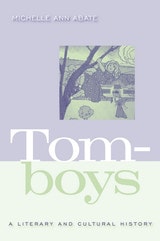
Tomboys
A Literary and Cultural HistoryMichelle Ann Abate
Temple University Press, 2008
Starting with the figure of the bold, boisterous girl in the mid-19th century and ending with the “girl power” movement of the 1990’s, Tomboys is the first full-length critical study of this gender-bending code of female conduct. Michelle Abate uncovers the origins, charts the trajectory, and traces the literary and cultural transformations that the concept of “tomboy” has undergone in the United States.
Abate focuses on literature including Louisa May Alcott's Little Women and Carson McCullers's The Member of the Wedding and films such as Peter Bogdanovich's Paper Moon and Jon Avnet's Fried Green Tomatoes. She also draws onlesser-known texts like E.D.E.N. Southworth's once wildly popular 1859 novel The Hidden Hand, Cold War lesbian pulp fiction, and New Queer Cinema from the 1990s.
Tomboys also explores the gender and sexual dynamics of tomboyism, and offers intriguing discussions of race and ethnicity's role in the construction of the enduring cultural archetype. Abate’s insightful analysis provides useful, thought-provoking connections between different literary works and eras. The result demystifies this cultural phenomenon and challenges readers to consider tomboys in a whole new light.
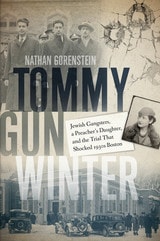
Tommy Gun Winter
Jewish Gangsters, a Preacher's Daughter, and the Trial That Shocked 1930s BostonNathan Gorenstein
University Press of New England, 2015
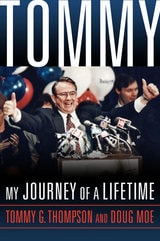
Tommy
My Journey of a LifetimeTommy G. Thompson and Doug Moe
University of Wisconsin Press, 2018
Personal and revealing stories punctuate the biographical details and policy discussions. Here is Tommy as a young man, just happening to be on the National Mall in 1964 when Dr. Martin Luther King told the nation "I have a dream." Here is Tommy as Wisconsin governor, struggling to start a Harley-Davidson motorcycle before leading "a pack of Hell's Republicans" on a ride through the state. Here is Tommy in Washington after the 9/11 attacks, slipping out of a secure bunker (in defiance of orders) to aid the emergency medical response.
Thompson speaks candidly of his achievements and regrets, including his involvement with welfare reform, school choice, land conservancy, prisons, the financing of Miller Park, stem cell research, and health insurance.
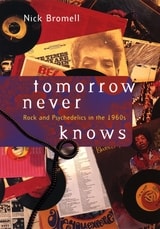
Tomorrow Never Knows
Rock and Psychedelics in the 1960sNick Bromell
University of Chicago Press, 2000
Tonality as Drama
Closure and Interruption in Four Twentieth-Century American OperasEdward D. Latham
University of North Texas Press, 2008

Tongass Odyssey
Seeing the Forest Ecosystem through the Politics of TreesJohn Schoen
University of Alaska Press, 2020