Results by title
1668 books match the query 'Popular culture' and 121 start with a

A Cold War State of Mind
Brainwashing and Postwar American SocietyMatthew W. Dunne
University of Massachusetts Press, 2013
First popularized during the 1950s, the concept of “brainwashing” is often viewed as an example of Cold War paranoia, an amusing relic of a bygone era. Yet as Matthew W. Dunne shows in this study, over time brainwashing came to connote much more than a sinister form of Communist mind control, taking on broader cultural and political meanings.
Moving beyond well-known debates over Korean War POWs and iconic cultural texts like The Manchurian Candidate, Dunne explores the impact of the idea of brainwashing on popular concerns about freedom, individualism, loyalty, and trust in authority. By the late 1950s the concept had been appropriated into critiques of various aspects of American life such as an insistence on conformity, the alleged “softening” of American men, and rampant consumerism fueled by corporate advertising that used “hidden” or “subliminal” forms of persuasion. Because of these associations and growing anxieties about the potential misuse of psychology, concerns about brainwashing contributed to a new emphasis on individuality and skepticism toward authority in the 1960s. The notion even played an unusual role in the 1968 presidential race, when Republican frontrunner George Romney's claim that he had been “brainwashed” about the Vietnam War by the Johnson administration effectively destroyed his campaign.
In addition to analyzing the evolving meaning of brainwashing over an extended period of time, A Cold War State of Mind explores the class and gender implications of the idea, such as the assumption that working-class POWs were more susceptible to mind control and that women were more easily taken in by the manipulations of advertisers.

A Colored Man Round the World
David F. Dorr
University of Michigan Press, 1999
Malini Johar Schueller has edited and annotated the 1858 text and added a critical introduction that provides a useful context for understanding and appreciating this important but heretofore neglected document. Her edition of A Colored Man Round the World provides a fascinating account of Dorr's negotiation of the conflicting roles of slave versus man, taking into account all of the racial complexities that existed at the time. As a traveler abroad, Dorr claimed an American selfhood that allowed him mobility in Europe, and he benefited from the privileges accorded American "Orientalists" venturing in the near East. However, any empowerment that Dorr experienced while a tourist vanished upon his return to America.
The book will be welcomed for the rare perspective it provides of the mid-nineteenth century, through the eyes of an African-American slave and for the light it casts on world and U.S. history as well as on questions of racial and national identity.
Malini Johar Schueller is Professor of English, University of Florida.

A Common Spring
Crime Novel and ClassicNadya Aisenberg
University of Wisconsin Press, 1980
Nadya Aisenberg discusses the potentialities of the crime novel, its implications, principles, and scope, and its analogy ot myth and the fairy tale. She proposes that the detective story and the thriller have made an unacknowledged contribution to "serious" literature. Her discussion of Dickens, Conrad, and Green indicate that each borrowed many important ingredients from the formulaic novel.
A Comprehensive Index to Black Mask, 1920-1951
E. R. Hagemann
University of Wisconsin Press, 1982

A Cultural History of the Disneyland Theme Parks
Middle Class KingdomsSabrina Mittermeier
Intellect Books, 2020
When the first Disneyland opened its doors in 1955, it reinvented the American amusement park and transformed the travel, tourism, and entertainment industries forever. Now a global vacation empire, the original park in Anaheim, California, has been joined by massive complexes in Florida, Tokyo, Paris, Hong Kong, and Shanghai.
Spanning six decades, three continents, and five distinct cultures, Sabrina Mittermeier presents an interdisciplinary examination of the parks, situating them in their proper historical context and exploring the distinct cultural, social, and economic landscapes that defined each one at the time of its construction. Mittermeier then spotlights the central role of class in the subsequent success or failure of each venture. The first comparative study of the Disney theme parks, the book closes a significant gap in existing research and is an important new contribution to the field.

A Date Which Will Live
Pearl Harbor in American MemoryEmily S. Rosenberg
Duke University Press, 2005
Rosenberg considers the emergence of Pearl Harbor’s symbolic role within multiple contexts: as a day of infamy that highlighted the need for future U.S. military preparedness, as an attack that opened a "back door" to U.S. involvement in World War II, as an event of national commemoration, and as a central metaphor in American-Japanese relations. She explores the cultural background that contributed to Pearl Harbor’s resurgence in American memory after the fiftieth anniversary of the attack in 1991. In doing so, she discusses the recent “memory boom” in American culture; the movement to exonerate the military commanders at Pearl Harbor, Admiral Husband Kimmel and General Walter Short; the political mobilization of various groups during the culture and history "wars" of the 1990s, and the spectacle surrounding the movie Pearl Harbor. Rosenberg concludes with a look at the uses of Pearl Harbor as a historical frame for understanding the events of September 11, 2001.

A Fan Studies Primer
Method, Research, EthicsPaul Booth
University of Iowa Press, 2021
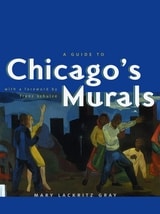
A Guide to Chicago's Murals
Mary Lackritz Gray
University of Chicago Press, 2001
With full-color illustrations of nearly two hundred Chicago murals and accompanying entries that describe their history—who commissioned them and why, how artists collaborated with architects, the subjects of the murals and their contexts—A Guide to Chicago's Murals serves both a general and a specific audience. Divided into easy-to-read geographical sections with useful maps for walking tours, it is the perfect companion for tourists or Chicagoans interested in coming to know better this aspect of the city's history. Gray also provides crucial information on lesser-known artists and on murals that have been destroyed over the years, filling a gap in the visual record of the city's development.
Gray also includes biographies of more than 150 artists and a glossary of key terms, making A Guide to Chicago's Murals essential reading for mural viewing. From post offices to libraries, fieldhouses to banks, and private clubs to street corners, Mary Gray chronicles the amazing works of artists who have sought to make public declarations in this most social of art forms.
"A major lacuna in the history of art in Chicago has been filled, with the thoroughness of the research proportionate to the richness of the material revealed."—From the Foreword by Franz Schulze
"Gray's book . . . can function as a guidebook, as the murals are conveniently arranged according to the quadrants of the city. But the book is also beautiful to look at and indespensable as art history and Chicago history as well. . . . This book is a wonderful guide to Chicago's rich and unique mural tradition."—Elizabeth Alexander, Chicago Tribune Books
"If you love art and history, this is a book you'll truly enjoy."—Al Paulson, Utne Reader
A History Of Hispanics In Southern Nevada
M. L. Miranda
University of Nevada Press, 1997
Hispanics were among the first people of European descent to venture into the territory that became Nevada, and they have participated in every stage of the state’s history and development since then--its mines, railroads, and ranches, the growth of its cities, and its modern industries. Until recently, however, their role in the development of the state and their lively cultural contributions have escaped the scrutiny of scholars. Now, in this important pioneering study, M. L. Miranda offers a thoughtful account of Nevada’s largest ethnic minority. Miranda analyzes their growing role in the state—especially in the booming urban South—and offers some projections for their future.

A History of Horror
Wheeler Winston Dixon
Rutgers University Press, 2010
Arranged by decades, with outliers and franchise films overlapping some years, this one-stop sourcebook unearths the historical origins of characters such as Dracula, Frankenstein, and the Wolfman and their various incarnations in film from the silent era to comedic sequels. A History of Horror explores how the horror film fits into the Hollywood studio system and how its enormous success in American and European culture expanded globally over time.
Dixon examines key periods in the horror film-in which the basic precepts of the genre were established, then banished into conveniently reliable and malleable forms, and then, after collapsing into parody, rose again and again to create new levels of intensity and menace. A History of Horror, supported by rare stills from classic films, brings over fifty timeless horror films into frightfully clear focus, zooms in on today's top horror Web sites, and champions the stars, directors, and subgenres that make the horror film so exciting and popular with contemporary audiences.

A History of Horror, 2nd Edition
Wheeler Winston Dixon
Rutgers University Press, 2023
Ever since horror leapt from popular fiction to the silver screen in the late 1890s, viewers have experienced fear and pleasure in exquisite combination. Wheeler Winston Dixon's fully revised and updated A History of Horror is still the only book to offer a comprehensive survey of this ever-popular film genre.
Arranged by decades, with outliers and franchise films overlapping some years, this one-stop sourcebook unearths the historical origins of characters such as Dracula, Frankenstein, and the Wolfman and their various incarnations in film from the silent era to comedic sequels. In covering the last decade, this new edition includes coverage of the resurgence of the genre, covering the swath of new groundbreaking horror films directed by women, Black and queer horror films, and a new international wave in body horror films.
A History of Horror explores how the horror film fits into the Hollywood studio system, how the distribution and exhibition of horror films have changed in a post-COVID world, and how its enormous success in American and European culture expanded globally over time.
Dixon examines key periods in the horror film-in which the basic precepts of the genre were established, then banished into conveniently reliable and malleable forms, and then, after collapsing into parody, rose again and again to create new levels of intensity and menace. A History of Horror, supported by rare stills from classic films, brings over sixty timeless horror films into frightfully clear focus, zooms in on today's top horror Web sites, and champions the stars, directors, and subgenres that make the horror film so exciting and popular with contemporary audiences.
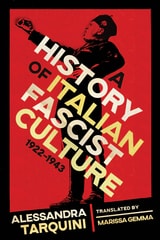
A History of Italian Fascist Culture, 1922–1943
Alessandra Tarquini, Translated by Marissa Gemma
University of Wisconsin Press, 2022
Tarquini sketches the universe of Italian fascism in three broad directions: the regime’s cultural policies, the condition of various art forms and scholarly disciplines, and the ideology underpinning the totalitarian state. She details the choices the ruling class made between 1922 and 1943, revealing how cultural policies shaped the country and how intellectuals and artists contributed to those decisions. The result is a view of fascist ideology as a system of visions, ideals, and, above all, myths capable of orienting political action and promoting a precise worldview.
Building on George L. Mosse’s foundational research, Tarquini provides the best single-volume work available to fully understand a complex and challenging subject. It reveals how the fascists used culture—art, cinema, music, theater, and literature—to build a conservative revolution that purported to protect the traditional social fabric while presenting itself as maximally oriented toward the future.

A Kinder, Gentler America
Melancholia and the Mythical 1950sMary Caputi
University of Minnesota Press, 2005
Analyzing these competing uses of the past, A Kinder, Gentler America reveals how longing for the era of “the greatest generation” actually exposes a disillusionment with the present. Caputi draws on the theoretical frameworks of Julia Kristeva and Walter Benjamin to look at how the decade has been portrayed in movies such as Pleasantville and Far from Heaven and delves further to investigate our disenchantment’s lost origins in early modernity through a reading of the poetry of Baudelaire. What emerges is a stark contrast between the depictions of a melancholic present and a cheerful, shiny past. In the right’s invocation of the mythical 1950s and the left’s criticism of the same, Caputi recognizes a common unfulfilled desire, and proposes that by understanding this loss both sides can begin to accept that American identity, despite chaos and confusion, lies in the here and now.
Mary Caputi is professor of political science at California State University, Long Beach, and is author of Voluptuous Yearnings: A Feminist Theory of the Obscene.
A Legend for the Legendary
The Origin of the Baseball Hall of FameJames A. Vlasich
University of Wisconsin Press, 1990
The origins of baseball are controversial. James A. Vlasich discusses the debates between two men intimately involved in nineteenth-century baseball, Henry Chadwick and Albert G. Spalding. Abner Graves of the Mills Commission claimed that Abner Doubleday had invented the game and he had done it in Cooperstown, New York. This claim was scrutinized at the time but the myth became etched into baseball history.
Through the years, however, some critics have questioned the Mills Commission report. The problem is that the Baseball Hall of Fame is built on this shaky foundation. The lack of diligence on the part of Spalding’s self-appointed committee has led to a credibility gap for the baseball shrine that continues a half century after its dedication. Indeed, the story of the building of the Baseball Hall of Fame is filled with intrigue worthy of a political thriller.

A Mexican State of Mind
New York City and the New Borderlands of CultureMelissa Castillo-Garsow
Rutgers University Press, 2020
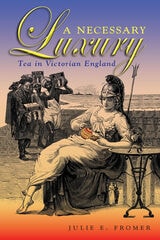
A Necessary Luxury
Tea in Victorian EnglandJulie E. Fromer
Ohio University Press, 2008
In A Necessary Luxury: Tea in Victorian England, Julie E. Fromer analyzes tea histories, advertisements, and nine Victorian novels, including Alice’s Adventures in Wonderland, Wuthering Heights, and Portrait of a Lady. Fromer demonstrates how tea functions within the literature as an arbiter of taste and middle-class respectability, aiding in the determination of class status and moral position. She reveals the way in which social identity and character are inextricably connected in Victorian ideology as seen through the ritual of tea.
Drawing from the fields of literary studies, cultural studies, history, and anthropology, A Necessary Luxury offers in-depth analysis of both visual and textual representations of the commodity and the ritual that was tea in nineteenth-century England.

A New Species
GENDER AND SCIENCE IN SCIENCE FICTIONRobin Roberts
University of Illinois Press, 1993
A Passion for Consumption
The Gothic Novel in AmericaAnna Sonser
University of Wisconsin Press, 2001

A People Numerous and Armed
Reflections on the Military Struggle for American IndependenceJohn Shy
University of Michigan Press, 1990
A People's History of Baseball
Mitchell Nathanson
University of Illinois Press, 2012
A Pillar of Fire to Follow
American Indian Dramas, 1808–1859Priscilla Sears
University of Wisconsin Press, 1982

A Poetics of Resistance
Women Writing in El Salvador, South Africa, and the United StatesMary DeShazer
University of Michigan Press, 1994
Engaging the works of critics such as Chandra Mohanty, Barbara Harlow, Claribel Alegria, Albie Sachs, and Audre Lorde, among others, Mary DeShazer reconceptualizes traditional notions of resistance and literature and the relationship between them. She argues that women’s voices have been underrepresented in previous analyses of Third World resistance poetry, and that when examined collectively, their work reveals overtly gendered concerns that distinguish it from that of their male counterparts.
DeShazer defines resistance as an active quest for justice and a means of collective empowerment. She looks at the diasporic consciousness of exiled and dislocated women, examines the tensions between claims of identity and claims of difference, and explores the ways in which gender and struggle connect women across nationalities and historical imperatives. Her analysis of Salvadoran and South African women’s poetry reveal the ways in which poetic conventions can be seen as “political declarations of privilege,” casting a new light on women’s resistance poetry in the United States.
A Populist Assault
Sarah E. Van De Vort Emery on American Democracy 1862–1895Pauline Adams and Emma Thornton
University of Wisconsin Press, 1982
Sarah E. Van De Vort Emery, a Michigan woman transplanted from the Finger Lakes region of New York, was for many years a voice for Populism in the late 19th century. Emery was a woman who believed and acted on her beliefs that freedom and the flowering of the human potential should not five way to the demands of the "money power."

A Problem Like Maria
Gender and Sexuality in the American MusicalStacy Wolf
University of Michigan Press, 2002
Chapter by chapter, the book analyzes the stars' best-known and best-loved roles, including Martin as Nellie in South Pacific, Merman as Momma Rose in GypsyAndrews as Eliza in My Fair Lady and Guinevere in Camelot, and Streisand as Fanny Brice in Funny Girl. The final chapter scrutinizes the Broadway and film versions of The Sound of Music, illuminating its place in the hearts of lesbian spectators and the "delicious queerness" of Andrews's troublesome nun. As the first feminist and lesbian study of the American Broadway musical, A Problem Like Maria is a groundbreaking contribution to feminist studies, queer studies, and American studies and a delight for fans of musical theater.
Stacy Wolf is Associate Professor of Theatre and Dance, University of Texas, Austin.
A Queer Sort of Materialism
Recontextualizing American TheaterDavid Savran
University of Michigan Press, 2003
The selections presented here are by turns entertaining, informative, sophisticated, and polemical, reflecting the author's dual citizenship as rigorous scholar and engaging theater critic. This book also provides a model for a kind of queer historical materialism that will prove useful to a wide range of disciplines, including theater and performance, gender and sexuality, queer/gay/lesbian/transgender studies, American studies, and popular culture.
David Savran is Professor of Theater, the Graduate Center, the City University of New York, and author of Cowboys, Communists, and Queers and Taking It Like a Man.
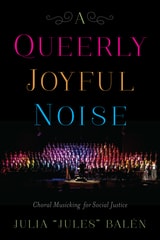
A Queerly Joyful Noise
Choral Musicking for Social JusticeJulia "Jules" Balén
Rutgers University Press, 2017
Honorable Mention, 2019 Herndon Book Prize - (SEM-GST)
A Queerly Joyful Noise examines how choral singing can be both personally transformative and politically impactful. As they blend their different voices to create something beautiful, LGBTIQ singers stand together and make themselves heard. Comparing queer choral performances to the uses of group singing within the civil rights and labor movements, Julia “Jules” Balén maps the relationship between different forms of oppression and strategic musical forms of resistance. She also explores the potential this queer communal space creates for mobilizing progressive social action.
A proud member of numerous queer choruses, Balén draws from years of firsthand observations, archival research, and extensive interviews to reveal how queer chorus members feel shared vulnerability, collective strength, and even moments of ecstasy when performing. A Queerly Joyful Noise serves as a testament to the power of music, intimately depicting how participation in a queer chorus is more than a pastime, but a meaningful form of protest through celebration.
A Question of Class
The Redneck Stereotype in Southern FictionDuane Carr
University of Wisconsin Press, 1997
A Question of Quality
Popularity and Value in Modern Creative WritingEdited by Louis Filler
University of Wisconsin Press, 1976
The subjects treated in this symposium have one major characteristic in common, that they have recently, or relatively recently, enjoyed high popularity among readers. Also, they have received from substantial to torrents of comment.
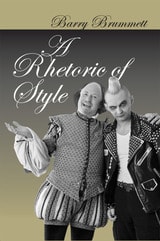
A Rhetoric of Style
Barry Brummett
Southern Illinois University Press, 2008
Exploring style in a global culture
In A Rhetoric of Style, Barry Brummett illustrates how style is increasingly a global system of communication as people around the world understand what it means to dress a certain way, to dance a certain way, to decorate a certain way, to speak a certain way. He locates style at the heart of popular culture and asserts that it is the basis for social life and politics in the twenty-first century.
Brummett sees style as a system of signification grounded largely in image, aesthetics, and extrarational modes of thinking. He discusses three important aspects of this system—its social and commercial structuring, its political consequences, and its role as the chief rhetorical system of the modern world. He argues that aesthetics and style are merging into a major engine of the global economy and that style is becoming a way to construct individual identity, as well as social and political structures of alliance and opposition. It is through style that we stereotype or make assumptions about others’ political identities, their sexuality, their culture, and their economic standing.
To facilitate theoretical and critical analysis, Brummett develops a systematic rhetoric of style and then demonstrates its use through an in-depth exploration of gun culture in the United States. Armed with an understanding of how this rhetoric of style works methodologically, students and scholars alike will have the tools to do their own analyses. Written in clear and engaging prose, A Rhetoric of Style presents a novel discussion of the workings of style and sheds new light on a venerable and sometimes misunderstood rhetorical concept by illustrating how style is the key to constructing a rhetoric for the twenty-first century.

A Short History of Film, Fourth Edition
Wheeler Winston Dixon
Rutgers University Press, 2026
This updated and expanded edition of A Short History of Film provides an accessible overview of the major movements, directors, studios, and genres from the 1880s to the present. Succinct yet comprehensive, with more than 250 rare stills and illustrations, this edition provides new information on contemporary horror, comic book, and franchise films; issues surrounding women and minority filmmakers; the effects of the COVID-19 pandemic on movies worldwide; the shift from film to digital production; the rising use of artificial intelligence in cinema; and the impact of streaming on the industry.
Beginning with the precursors of moving pictures, Wheeler Winston Dixon and Gwendolyn Audrey Foster lead a fast-paced tour through the invention of the kinetoscope, the introduction of sound and color between the two world wars, and ultimately the computer-generated imagery of the present day. They detail significant periods in world cinema, including the creation of early major industries in Europe, the dominance of the Hollywood studio system in the 1930s and 1940s, and the French New Wave of the 1960s. They also highlight independent efforts in developing nations and the corresponding more personal independent film movement that briefly flourished in the United States.
Compact and easily readable, this is a vital history of international cinema is a one-stop resource for students, teachers, and general readers alike.
A Small Boy and Others
Imitation and Initiation in American Culture from Henry James to Andy WarholMichael Moon
Duke University Press, 1998
Moon illuminates the careers of James, Warhol, and others by examining the imaginative investments of their protogay childhoods in their work in ways that enable new, more complex cultural readings. He deftly engages notions of initiation and desire not within the traditional framework of “sexual orientation” but through the disorienting effects of imitation. Whether invoking the artist Joseph Cornell’s early fascination with the Great Houdini or turning his attention to James’s self-described “initiation into style” at the age of twelve—when he first encountered the homoerotic imagery in paintings by David, Géricault, and Girodet—Moon reveals how the works of these artists emerge from an engagement that is obsessive to the point of “queerness.”
Rich in historical detail and insistent in its melding of the recent with the remote, the literary with the visual, the popular with the elite, A Small Boy and Others presents a hitherto unimagined tradition of brave and outrageous queer invention. This long-awaited contribution from Moon will be welcomed by all those engaged in literary, cultural, and queer studies.
A Social Gospel for Millions
The Religious Bestsellers of Charles Sheldon, Charles Gordon, and Harold Bell WrightJohn Ferre
University of Wisconsin Press, 1988
In the twentieth century Marxism challenged laissez-faire economics, psychoanalysis reinterpreted the processes of thought, and evolution discredited the idea of creation. These changes profoundly affected American Protestantism. Ferré examines the belief system that underlies what middle-class Protestants chose to read.

A Social History of Truth
Civility and Science in Seventeenth-Century EnglandSteven Shapin
University of Chicago Press, 1994
In A Social History of Truth, Shapin engages these universal questions through an elegant recreation of a crucial period in the history of early modern science: the social world of gentlemen-philosophers in seventeenth-century England. Steven Shapin paints a vivid picture of the relations between gentlemanly culture and scientific practice. He argues that problems of credibility in science were practically solved through the codes and conventions of genteel conduct: trust, civility, honor, and integrity. These codes formed, and arguably still form, an important basis for securing reliable knowledge about the natural world.
Shapin uses detailed historical narrative to argue about the establishment of factual knowledge both in science and in everyday practice. Accounts of the mores and manners of gentlemen-philosophers are used to illustrate Shapin's broad claim that trust is imperative for constituting every kind of knowledge. Knowledge-making is always a collective enterprise: people have to know whom to trust in order to know something about the natural world.
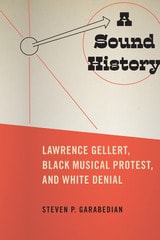
A Sound History
Lawrence Gellert, Black Musical Protest, and White DenialSteven P. Garabedian
University of Massachusetts Press, 2020
Lawrence Gellert has long been a mysterious figure in American folk and blues studies, gaining prominence in the left-wing folk revival of the 1930s for his fieldwork in the U.S. South. A “lean, straggly-haired New Yorker,” as Time magazine called him, Gellert was an independent music collector, without formal training, credentials, or affiliation. At a time of institutionalized suppression, he worked to introduce white audiences to a tradition of black musical protest that had been denied and overlooked by prior white collectors.
By the folk and blues revival of the 1960s, however, when his work would again seem apt in the context of the civil rights movement, Gellert and his collection of Negro Songs of Protest were a conspicuous absence. A few leading figures in the revival defamed Gellert as a fraud, dismissing his archive of black vernacular protest as a fabrication—an example of left-wing propaganda and white interference. A Sound History is the story of an individual life, an excavation of African American musical resistance and dominant white historiography, and a cultural history of radical possibility and reversal in the defining middle decades of the U.S. twentieth century.
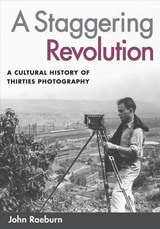
A Staggering Revolution
A Cultural History of Thirties PhotographyJohn Raeburn
University of Illinois Press, 2006
While other studies of thirties photography have concentrated on the documentary work of the Farm Security Administration (FSA), no previous book has considered it alongside so many of the decade's other important photographic projects. A Staggering Revolution includes individual chapters on Edward Steichen's celebrity portraiture; Berenice Abbott's Changing New York project; the Photo League's ethnography of Harlem; and Edward Weston's western landscapes, made under the auspices of the first Guggenheim Fellowship awarded to a photographer. It also examines Margaret Bourke-White's industrial and documentary pictures, the collective undertakings by California's Group f.64, and the fashion magazine specialists, as well as the activities of the FSA and the Photo League.
A Tough Little Patch of History
Gone with the Wind and the Politics of MemoryJennifer W. Dickey
University of Arkansas Press, 2014
More than seventy-five years after its publication, Gone with the Wind remains thoroughly embedded in American culture. Margaret Mitchell’s novel and the film produced by David O. Selznick have melded with the broader forces of southern history, southern mythology, and marketing to become, and remain, a cultural phenomenon.
A Tough Little Patch of History (the phrase was coined by a journalist in 1996 to describe the Margaret Mitchell home after it was spared from destruction by fire) explores how Gone with the Wind has remained an important component of public memory in Atlanta through an analysis of museums and historic sites that focus on this famous work of fiction. Jennifer W. Dickey explores how the book and film threw a spotlight on Atlanta, which found itself simultaneously presented as an emblem of both the Old South and the New South. Exhibitions produced by the Atlanta History Center related to Gone with the Wind are explored, along with nearby Clayton County’s claim to fame as “the Home of Gone with the Wind,” a moniker bestowed on the county by Margaret Mitchell’s estate in 1969. There’s a recounting of the saga of “the Dump,” the tiny apartment in midtown Atlanta where Margaret Mitchell wrote the book, and how this place became a symbol for all that was right and all that was wrong with Mitchell’s writing.

Abbie Hoffman
American RebelJezer, Marty
Rutgers University Press, 1993
"... Abbie, more than any other radical, showed potheads how to demonstrate and radicals how to dance." -- Chicago Tribune
"... deeply sympathetic and scrupulously detached-a triumph of judicious empathy." -- MARTIN DUBERMAN, Distinguished Professor of History, Lehman/The Graduate School, C.U.N.Y.
"... details Hoffman's humor, manic energy, depressive spells, political skills, and above all, his Incurable and still contagious optimism." -- Entertainment Weekly
"Here's the Abbie I knew and loved! Marty Jezer has captured him in all his complexity, dedication, humor, and heart." -- ANITA HOFFMAN

Academic Freedom Imperiled
The Mccarthy Era At The University Of NevadaJ. Dee Kille
University of Nevada Press, 2004

Acculturated
23 Savvy Writers Find Hidden Virtue in Reality TV, Chic Lit, Video Games, and Other Pillars of Pop CultureNaomi Schaefer Riley
Templeton Press, 2012
Contemporary popular culture, from books to film to television to music to the deepest corners of the internet, has provoked much criticism, some of it well deserved. Yet, popular culture is culture for many Americans—particularly younger Americans. It is the only kind of cultural experience they seek and the currency in which they trade.
In Acculturated, twenty-three thinkers examine the rituals, the myths, the tropes, the peculiar habits, the practices, and the neuroses of our modern era. Every culture finds a way for people to tell stories about themselves. We rely on these stories to teach us why we do the things we do, to test the limits of our experience, to reaffirm deeply felt truths about human nature, and to teach younger generations about vice and virtue, honor and shame, and a great deal more. A phenomenon like the current crop of reality television shows, for example, with their bevy of “real” housewives, super-size families, and toddler beauty-pageant candidates, seems an unlikely place to find truths about human nature or examples of virtue. And yet, on these shows, and in much else of what passes for popular culture these days, a surprising theme emerges: Move beyond the visual excess and hyperbole, and you will find the makings of classic morality tales.
As the title suggests, readers will find in these pages “A-Culture Rated.” This lively roundtable of “raters” includes renowned cultural critics like Caitlin Flannigan and Chuck Colson and celebrated culture creators like the producers of the hit ABC comedy Modern Family and the host of TLC’s What Not to Wear. Editors Christine Rosen and Naomi Schaefer Riley have tasked these contributors—both the critics and the insiders—with taking a step or two back from the unceasing din of popular culture so that they might better judge its value and its values and help readers think more deeply about the meaning of the narratives with which they are bombarded every waking minute. In doing so, the editors hope to foster a wide-reaching public conversation to help us think more clearly about our culture.
CONTRIBUTORS INCLUDE Judy Bachrach, Megan Basham, Mark Bauerlein, Pia Catton, Chuck Colson, Paul Corrigan, Caitlin Flanagan, Meghan Cox Gurdon, Margo Howard, Kay S. Hymowitz, Jonathan V. Last, Herb London, Stacy London, Rob Long, Megan McArdle, Wilfred M. McClay, Caitrin Nicol, Joe Queenan, Emily Esfahani Smith, Brad Walsh, and Tony Woodlief.
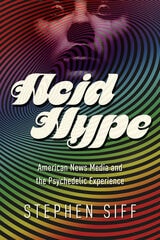
Acid Hype
American News Media and the Psychedelic ExperienceSteven Siff
University of Illinois Press, 2015
Acid Hype offers the untold tale of LSD's wild journey from Brylcreem and Ivory soap to incense and peppermints. As Stephen Siff shows, the early attention lavished on the drug by the news media glorified its use in treatments for mental illness but also its status as a mystical--yet legitimate--gateway to exploring the unconscious mind. Siff's history takes readers to the center of how popular media hyped psychedelic drugs in a constantly shifting legal and social environment, producing an intricate relationship between drugs and media experience that came to define contemporary pop culture. It also traces how the breathless coverage of LSD gave way to a textbook moral panic, transforming yesterday's refined seeker of truths into an acid casualty splayed out beyond the fringe of polite society.
Actors and American Culture, 1880-1920
Benjamin Mcarthur
University of Iowa Press, 2000

Acts of Authority/Acts of Resistance
Theater and Politics in Colonial and Postcolonial IndiaNandi Bhatia
University of Michigan Press, 2004
Nandi Bhatia argues that Indian theater was a significant force in the struggle against oppressive colonial and postcolonial structures, as it sought to undo various schemes of political and cultural power through its engagement with subjects derived from mythology, history, and available colonial models such as Shakespeare. Bhatia's attention to local histories within a postcolonial framework places performance in a global and transcultural context. Drawing connections between art and politics, between performance and everyday experience, Bhatia shows how performance often intervened in political debates and even changed the course of politics.
One of the first Western studies of Indian theater to link the aesthetics and the politics of that theater, Acts of Authority/Acts of Resistance combines in-depth archival research with close readings of dramatic texts performed at critical moments in history. Each chapter amplifies its themes against the backdrop of specific social conditions as it examines particular dramatic productions, from The Indigo Mirror to adaptations of Shakespeare plays by Indian theater companies, illustrating the role of theater in bringing nationalist, anticolonial, and gendered struggles into the public sphere.
Nandi Bhatia is Associate Professor of English at the University of Western Ontario.
Adolf Hitler
A Psychological Interpretation of His Views on Architecture, Art, and MusicSherree Owens Zalampas
University of Wisconsin Press, 1990

Adoption in America
Historical PerspectivesE. Wayne Carp, Editor
University of Michigan Press, 2004
---Choice
"Sheds new light on the roots of this complex and fascinating institution."
---Library Journal
"Well-written and accessible . . . showcases the wide-ranging scholarship underway on the history of adoption."
---Adoptive Families
"[T]his volume is a significant contribution to the literature and can serve as a catalyst for further research."
---Social Service Review
Adoption affects an estimated 60 percent of Americans, but despite its pervasiveness, this social institution has been little examined and poorly understood. Adoption in America gathers essays on the history of adoptions and orphanages in the United States. Offering provocative interpretations of a variety of issues, including antebellum adoption and orphanages; changing conceptions of adoption in late-nineteenth-century novels; Progressive Era reform and adoptive mothers; the politics of "matching" adoptive parents with children; the radical effect of World War II on adoption practices; religion and the reform of adoption; and the construction of birth mother and adoptee identities, the essays in Adoption in America will be debated for many years to come.
Adventures in Shondaland
Identity Politics and the Power of RepresentationGriffin, Rachel Alicia
Rutgers University Press, 2018
Shonda Rhimes is one of the most powerful players in contemporary American network television. Beginning with her break-out hit series Grey’s Anatomy, she has successfully debuted Private Practice, Scandal, How to Get Away with Murder, The Catch, For The People, and Station 19. Rhimes’s work is attentive to identity politics, “post-” identity politics, power, and representation, addressing innumerable societal issues. Rhimes intentionally addresses these issues with diverse characters and story lines that center, for example, on interracial friendships and relationships, LGBTIQ relationships and parenting, the impact of disability on familial and work dynamics, and complex representations of womanhood. This volume serves as a means to theorize Rhimes’s contributions and influence by inspiring provocative conversations about television as a deeply politicized institution and exploring how Rhimes fits into the implications of twenty-first century television.
Adventures in the Play-Ritual Continuum
Audun Kjus
Utah State University Press, 2025
Adventures in the Play-Ritual Continuum explores the connectivity between the playful and the ritualized through a fresh theoretical perspective, highlighting the creative messiness and the cultural paradoxes such intersections allow. The chapters span topics such as hen parties, marriage proposals, ash scatterings, extreme sports races, football fans, computer game festivals, celebrations of fandom, migration heritages, and antiracist protests. While the case studies are selected to show a range of diversity with various mergings of play, game, ritual, ceremony, rite, and ritualizing, the introductory and concluding discussions offer sharpened perspectives on common aspects.
Following these excursions through the play-ritual continuum will be enjoyable for readers interested in how people make sense of their own existence and profitable for scholars in folklore, anthropology, religion, pedagogy, cultural studies, and social sciences and humanities more generally.
Advertising and Popular Culture
Studies in Variety and VersatilitySammy R. Danna
University of Wisconsin Press, 1992
Advertising as Culture
Edited by Chris Wharton
Intellect Books, 2013
Affirmative Reaction
New Formations of White MasculinityHamilton Carroll
Duke University Press, 2011
Throughout Affirmative Reaction, Carroll examines the kinds of difference white masculinity claims for itself as it attempts to hold onto or maintain majority privilege. Whether these are traditional sites of minority difference—such as Irishness, white trash, or domestic melodrama—or reworked sites of masculinist investment—including laboring bodies, public-sphere politics, and vigilantism—the outcome is the same: the foregrounding of white masculinity over and against women, people of color, and the non-heteronormative. By revealing the strategies through which white masculinity is produced as a formal difference, Carroll sheds new light on the ways that privilege is accrued and maintained.

Africa Every Day
Fun, Leisure, and Expressive Culture on the ContinentOluwakemi M. Balogun
Ohio University Press, 2019