
 A SCHOLARLY BOOK REPOSITORY
2150 start with C start with C
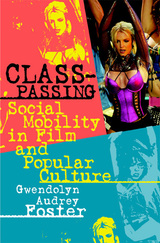
Oprah Winfrey, Donald Trump, Roseanne Barr, Martha Stewart, and Britney Spears typify class-passers—those who claim different socioeconomic classes as their own—asserts Gwendolyn Audrey Foster in Class-Passing: Social Mobility in Film and Popular Culture. According to new rules of social standing in American popular culture, class is no longer defined by wealth, birth, or education. Instead, today’s notion of class reflects a socially constructed and regulated series of performed acts and gestures rooted in the cult of celebrity.
In examining the quest for class mobility, Foster deftly traces class-passing through the landscape of popular films, reality television shows, advertisements, the Internet, and video games. She deconstructs the politics of celebrity, fashion, and conspicuous consumerism and analyzes class-passing as it relates to the American Dream, gender, and marriage.
Class-Passing draws on dozens of examples from popular culture, from old movie classics and contemporary films to print ads and cyberspace, to illustrate how flagrant displays of wealth that were once unacceptable under the old rules of behavior are now flaunted by class-passing celebrities. From the construction worker in Who Wants to Marry a Millionaire? to the privileged socialites Paris Hilton and Nicole Richie of The Simple Life, Foster explores the fantasy of contact between the classes. She also refers to television class-passers from The Apprentice, Queer Eye for the Straight Guy, and Survivor and notable class-passing achievers Warren Buffet, Bill Gates, and P. Diddy.
Class-Passing is a notable examination of the historical, social, and ideological shifts in expressions of class. The first serious book of its kind, Class-Passing is fresh, innovative, and invaluable for students and scholars of film, television, and popular culture.
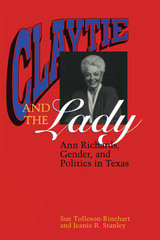
It was like a remake of The Cowboy and the Lady, except that this time they weren't friends. The 1990 Texas governor's race pitted Republican Clayton Williams, a politically conservative rancher and oil millionaire, against Democrat Ann Richards, an experienced progressive politician noted for her toughness and quick wit. Their differences offered voters a choice not only of policies and programs but also of stereotypes and myths of men's and women's proper roles.
Claytie and the Lady is the first in-depth look at how gender affected the 1990 governor's race. The authors' analysis reveals that Ann Richards' victory was a result of a unique combination of characteristics. She was simultaneously tough enough to convince voters that she could lead and feminine enough to put them at ease. At the same time, she remained committed to the progressive and women's issues that had won her the early support of feminists and progressives. The authors also show how Clayton Williams' appeal to the Texas cowboy myth backfired when he broke the cowboy code of chivalry to women.
The authors set their discussion within the historical context of twentieth-century Texas politics and the theoretical context of gender politics in order to pose a number of thought-provoking questions about the effects of women's participation in political life. Interviews with key players in the 1990 election, including Governor Ann Richards, add a lively and insightful counterpoint to the text.
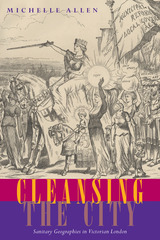
From the novels of Charles Dickens and George Gissing to anonymous magazine articles and pamphlets, resistance to reform found expression in the nostalgic appreciation of a threatened urban landscape and anxiety about domestic autonomy in an era of networked sanitary services. Cleansing the City emphasizes the disruptions and disorientation occasioned by purification—a process we are generally inclined to see as positive. By recovering these sometimes oppositional, sometimes ambivalent responses, Michelle Allen elevates a significant undercurrent of Victorian thought into the mainstream and thus provides insight into the contested nature of sanitary modernization.
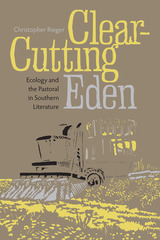
Examines how Southern literary depictions of the natural world were influenced by the historical, social, and ecological changes of the 1930s and 1940s
Rieger studies the ways that nature is conceived of and portrayed by four prominent Southern writers of the era: Erskine Caldwell, Marjorie Kinnan Rawlings, Zora Neale Hurston, and William Faulkner. Specifically, he argues that these writers created new versions of an old literary mode—the pastoral—in response to the destabilizing effects of the Great Depression, the rise of Southern modernism, and the mechanization of agricultural jobs.
Mass deforestation, soil erosion, urban development, and depleted soil fertility are issues that come to the fore in the works of these writers. In response, each author depicts a network model of nature, where humans are part of the natural world, rather than separate, over, or above it, as in the garden pastorals of the Old South, thus significantly revising the pastoral mode proffered by antebellum and Reconstruction-era writers.
Each writer, Rieger finds, infuses the pastoral mode with continuing relevance, creating new versions that fit his or her ideological positions on issues of race, class, and gender. Despite the ways these authors represent nature and humankind’s place in it, they all illustrate the idea that the natural environment is more than just a passive background against which the substance of life, or fiction, is played out.

Each folktale expresses an aspect of Bulgarian folk culture, presents characters who are clever enough to avoid ill-conceived courtship, kind enough to esteem even the poorest of neighbors, tricky enough to evade shysters, or sly enough to remain independent in the face of great power. Each of these traits has helped the Bulgarian people survive and thrive in a relatively poor, mountainous environment for more than fourteen centuries. In celebrating these traits and others, the folktales collected here honor the character of a people.

Here, eight tales from Power and five tales from Lannon take up issues of vital concern—such as spousal abuse, bullying, and social and generational conflict—allusively, through a screen of fiction. In commentary following the stories Anita Best, Martin Lovelace, and Pauline Greenhill discuss the transmission of fairy tales in oral tradition, address the relation of these magic tales to Lannon’s and Power’s other stories, and share specifics about Newfoundland storytelling and the two tellers themselves. The text is further enriched by expressive illustrations from artist Graham Blair.
Clever Maids, Fearless Jacks, and a Cat presents the fairy-tale oeuvres of two superb storytellers as a contribution to interdisciplinary fairy-tale studies and folklore—countering fairy-tale studies’ focus on written traditions and printed texts—as well as to gender studies, cultural studies, Newfoundland studies, and Canadian studies. Students, scholars, and general readers interested in folk and fairy tales, contemporary Märchen, Newfoundland folklore, or oral tradition more generally will find much of value in these pages.
Support for this publication was provided, in part, by the University of Winnipeg.
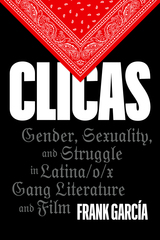
2025 First Book Prize Honorable Mention, Cultural Studies Association
How Latina/o/x gang literature and film represent women and gay gang members’ challenges to gendered, sexual, racial, and class oppression.
Clicas examines Latina/o/x literature and film by and/or about gay and women gang members. Through close readings of literature and film, Frank García reimagines the typical narratives describing gang membership and culture, amplifying and complicating critical gang studies in the social sciences and humanities and looking at gangs across racial, ethnic, and national identities. Analyzing how the autobiographical poetry of Ana Castillo presents gang fashion, culture, and violence to the outside world, the effects of women performing female masculinity in the novel Locas, and gay gang members’ experiences of community in the documentary Homeboy, García complicates the dialogue regarding hypermasculine gang cultures. He shows how they are accessible not only to straight men but also to women and gay men who can appropriate them in complicated ways, which can be harming and also, at times, emancipating. Reading gang members as (de)colonial agents who contest the power relations, inequalities, oppressions, and hierarchies of the United States, Clicas considers how women and gay gang members resist materially and psychologically within a milieu shaped by the intersection of race, gender, sexuality, and class.
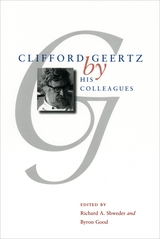
As part of the American Anthropological Association's centennial celebration, the executive board sponsored a presidential session honoring Geertz. Clifford Geertz by His Colleagues compiles the twelve speeches given then by a distinguished panel of social scientists along with a concluding piece by Geertz in which he responds to each speaker and reflects on his own career. These edited speeches cover a broad range of topics, including Geertz's views on morality, cultural critique, interpretivism, time and change, Islam, and violence.
A fitting tribute to one of the great thinkers of our age, this collection will be enjoyed by anthropologists as well as students of psychology, history, and philosophy.
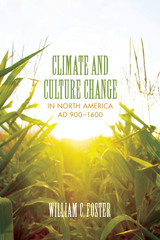
Climate change is today’s news, but it isn’t a new phenomenon. Centuries-long cycles of heating and cooling are well documented for Europe and the North Atlantic. These variations in climate, including the Medieval Warm Period (MWP), AD 900 to 1300, and the early centuries of the Little Ice Age (LIA), AD 1300 to 1600, had a substantial impact on the cultural history of Europe. In this pathfinding volume, William C. Foster marshals extensive evidence that the heating and cooling of the MWP and LIA also occurred in North America and significantly affected the cultural history of Native peoples of the American Southwest, Southern Plains, and Southeast.
Correlating climate change data with studies of archaeological sites across the Southwest, Southern Plains, and Southeast, Foster presents the first comprehensive overview of how Native American societies responded to climate variations over seven centuries. He describes how, as in Europe, the MWP ushered in a cultural renaissance, during which population levels surged and Native peoples substantially intensified agriculture, constructed monumental architecture, and produced sophisticated works of art. Foster follows the rise of three dominant cultural centers—Chaco Canyon in New Mexico, Cahokia on the middle Mississippi River, and Casas Grandes in northwestern Chihuahua, Mexico—that reached population levels comparable to those of London and Paris. Then he shows how the LIA reversed the gains of the MWP as population levels and agricultural production sharply declined; Chaco Canyon, Cahokia, and Casas Grandes collapsed; and dozens of smaller villages also collapsed or became fortresses.
Our population is aging—by 2034, the US will have more people over 65 than under 18. Despite the evidence that climate change is severely impacting older adults, and the reality that communities will be confronted with more frequent and more severe disasters, we’re not prepared to address the needs of older adults and other vulnerable populations in the face of a changing climate.
In Climate Resilience for an Aging Nation, community resilience and housing expert Danielle Arigoni argues that we cannot achieve true resilience until communities adopt interventions that work to meet the needs of their oldest residents. She explains that when we plan for those most impacted by climate, and for those with the greatest obstacles to opportunity and well-being, we improve conditions for all.
Arigoni explores how to integrate age-friendly resilience into community planning and disaster preparedness efforts through new planning approaches—including an age-friendly process, and a planning framework dedicated to inclusive disaster recovery—to create communities that serve the needs of older adults better, not only during disasters but for all the days in between. Examples are woven throughout the book, including case studies of age-friendly resilience in action from New York State; Portland, Oregon and Multnomah County; and New Orleans.
Climate Resilience for an Aging Nation will help professionals and concerned citizens understand how to best plan for both the aging of our population and the climate changes underway so that we can create safer, more livable communities for all.

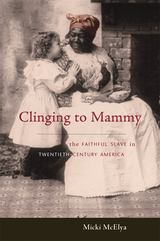
When Aunt Jemima beamed at Americans from the pancake mix box on grocery shelves, many felt reassured by her broad smile that she and her product were dependable. She was everyone's mammy, the faithful slave who was content to cook and care for whites, no matter how grueling the labor, because she loved them. This far-reaching image of the nurturing black mother exercises a tenacious hold on the American imagination.
Micki McElya examines why we cling to mammy. She argues that the figure of the loyal slave has played a powerful role in modern American politics and culture. Loving, hating, pitying, or pining for mammy became a way for Americans to make sense of shifting economic, social, and racial realities. Assertions of black people's contentment with servitude alleviated white fears while reinforcing racial hierarchy. African American resistance to this notion was varied but often placed new constraints on black women.
McElya's stories of faithful slaves expose the power and reach of the myth, not only in popular advertising, films, and literature about the South, but also in national monument proposals, child custody cases, white women's minstrelsy, New Negro activism, anti-lynching campaigns, and the civil rights movement. The color line and the vision of interracial motherly affection that helped maintain it have persisted into the twenty-first century. If we are to reckon with the continuing legacy of slavery in the United States, McElya argues, we must confront the depths of our desire for mammy and recognize its full racial implications.

Cooper and Waldby examine the rapidly expanding transnational labor markets surrounding assisted reproduction and experimental drug trials. As they discuss, the pharmaceutical industry demands ever greater numbers of trial subjects to meet its innovation imperatives. The assisted reproductive market grows as more and more households look to third-party providers for fertility services and sectors of the biomedical industry seek reproductive tissues rich in stem cells. Cooper and Waldby trace the historical conditions, political economy, and contemporary trajectory of clinical labor. Ultimately, they reveal clinical labor to be emblematic of labor in twenty-first-century neoliberal economies.
In Clio's Foot Soldiers, Lara Leigh Kelland investigates these questions by examining 1960s and 1970s social movements comprised of historically marginalized peoples: Civil Rights, Black Power, Women's and Gay Liberation, and American Indian. These movements sought ownership over their narratives to create historical knowledge reflective of their particular experiences. To accomplish their goals, activists generated new forms of adult education, published movement newspapers, and pursued campus activism and speeches, public history efforts and community organizations. Through alternative means, marginalized communities developed their own historical discourses to mobilize members, define movement goals, and become culturally sovereign. In so doing, they provided a basis for achieving political liberation and changed the landscape of liberal cultural institutions.
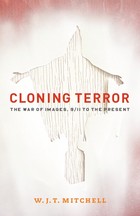
The phrase “War on Terror” has quietly been retired from official usage, but it persists in the American psyche, and our understanding of it is hardly complete. Nor will it be, W. J. T Mitchell argues, without a grasp of the images that it spawned, and that spawned it.
Exploring the role of verbal and visual images in the War on Terror, Mitchell finds a conflict whose shaky metaphoric and imaginary conception has created its own reality. At the same time, Mitchell locates in the concept of clones and cloning an anxiety about new forms of image-making that has amplified the political effects of the War on Terror. Cloning and terror, he argues, share an uncanny structural resemblance, shuttling back and forth between imaginary and real, metaphoric and literal manifestations. In Mitchell’s startling analysis, cloning terror emerges as the inevitable metaphor for the way in which the War on Terror has not only helped recruit more fighters to the jihadist cause but undermined the American constitution with “faith-based” foreign and domestic policies.
Bringing together the hooded prisoners of Abu Ghraib with the cloned stormtroopers of the Star Wars saga, Mitchell draws attention to the figures of faceless anonymity that stalk the ever-shifting and unlocatable “fronts” of the War on Terror. A striking new investigation of the role of images from our foremost scholar of iconology, Cloning Terror will expand our understanding of the visual legacy of a new kind of war and reframe our understanding of contemporary biopower and biopolitics.
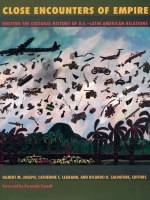
Exploring a variety of nineteenth- and twentieth-century encounters in Latin America, these theoretically engaged essays by distinguished U.S. and Latin American historians and anthropologists illuminate a wide range of subjects. From the Rockefeller Foundation’s public health initiatives in Central America to the visual regimes of film, art, and advertisements; these essays grapple with new ways of conceptualizing public and private spheres of empire. As such, Close Encounters of Empire initiates a dialogue between postcolonial studies and the long-standing scholarship on colonialism and imperialism in the Americas as it rethinks the cultural dimensions of nationalism and development.
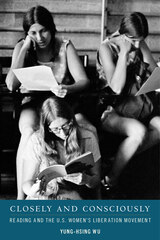
The significant archive of writing that came out of the women’s liberation movement in the United States, from 1965 to 1980, speaks to the value activists placed on reading as an act that is at once personal and yet also about the collective good. Yung-Hsing Wu examines the importance of reading—personal, professional, vocational, aesthetic, and always political—and how the act itself brought a host of women, each with their own history with the movement, into relation, and into a belief in that relation. The value given to reading can be seen in the ways feminists pursued media representation; in consciousness-raising (CR) groups including shared reading in their meetings; in women opening bookstores, developing newsletters, establishing journals, and starting presses; and in corporate publishers pursuing feminist fiction.
Closely and Consciously crisscrosses distinct print spheres, including newsletters and periodicals produced by feminist cells and consciousness-raising groups, feminist presses seeking to articulate their visions for women’s writing, the emergence of feminist literary criticism in first-time monographs and newly established journals, personal and editorial correspondence, press records, and the publishing histories of bestsellers that testified to the increasingly broad popularity of women’s writing. Uniting all these disparate activists and media outlets, and providing crucial relationality, was reading. With a mix of close readings and archival research, Wu unpacks and interprets this central act of reading and why it matters during a crucial moment of feminist history.

In Closet Writing/Gay Reading, Creech shows how a literary critic can be receptive to implicit and closeted sexual content. Forcefully advocating a tactic of identification and projection in literary analysis, he lends renewed currency to the kind of "sentimental" response to literature that continental theory—particularly deconstruction—has sought to discredit.
In the second half of his book, Creech sets out to analyze what he considers the exemplary novel of the nineteenth-century closet, Melville's Pierre, or: The Ambiguities. By approaching Pierre as the gay man Melville longed to have as its reader, Creech is able to decipher the novel's "encrypted erotics" and to reveal that Melville's apparent tale of incest is actually a homosexual novel in disguise. The closeted "address" to queer-sensitive readers that Pierre disseminates finally receives a critical reading that strives to be explicit, shareable, and public.
Cancer has become a leading cause of death and disability and a serious yet unforeseen challenge to health systems in low- and middle-income countries. A protracted and polarized cancer transition is under way and fuels a concentration of preventable risk, illness, suffering, impoverishment from ill health, and death among poor populations. Closing this cancer divide is an equity imperative. The world faces a huge, unperceived cost of failure to take action that requires an immediate and large-scale global response.
Closing the Cancer Divide presents strategies for innovation in delivery, pricing, procurement, finance, knowledge-building, and leadership that can be scaled up by applying a diagonal approach to health system strengthening. The chapters provide evidence-based recommendations for developing programs, local and global policy-making, and prioritizing research. The cases and frameworks provide a guide for developing responses to the challenge of cancer and other chronic illnesses. The book summarizes results of the Global Task Force on Expanding Access to Cancer Care and Control in Developing Countries, a collaboration among leaders from the global health and cancer care communities worldwide, originally convened by Harvard University. It includes contributions from civil society, global and national policy-makers, patients and practitioners, and academics representing an array of fields.
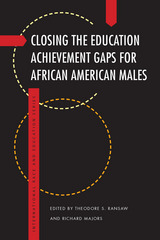
The distinguished and expert contributors whose work comprises this volume include an achievement-gap specialist for males of color, two psychologists, a math teacher, an electrical engineer, a former school principal, a social worker, and a former human rights commissioner. From black male learning styles to STEM, this book shows that issues pertaining to educational outcomes for black males are nuanced and complex but not unsolvable.
With its combination of fresh new approaches to closing achievement gaps and up-to-date views on trends, this volume is an invaluable resource on vital contemporary social and educational issues that aims to improve learning, equity, and access for African American males.

When it comes to the end of a relationship, the loss of a loved one, or even a national tragedy, we are often told we need “closure.” But while some people do find closure for their pain and grief, many more feel closure does not exist and believe the notion only promises false hopes. Sociologist Nancy Berns explores these ideas and their ramifications in her timely book, Closure.
Berns uncovers the various interpretations and contradictory meanings of closure. She identifies six types of “closure talk,” revealing closure as a socially constructed concept—a “new emotion.” Berns also explores how closure has been applied widely in popular media and how the idea has been appropriated as a political tool and to sell products and services.
This book explains how the push for closure—whether we find it helpful, engaging, or enraging—is changing our society.

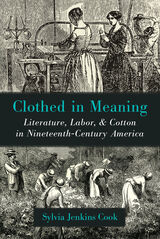
Cloth and clothing provide potent tropes not only for physical but also for intellectual forms of self-expression. Drawing on sources ranging from fugitive slave narratives, newspapers, manifestos, and mill workers’ magazines to fiction, poetry, and autobiographies, Clothed in Meaning examines the significant part played by mill workers and formerly enslaved people, many of whom still worked picking cotton, in this revolution of literary self-expression. They created a new literature from their palpable daily intimacy with cotton, cloth, and clothing, as well as from their encounters with grimly innovative modes of work. In the materials of their labor they discovered vivid tropes for formulating their ideas and an exotic and expert language for articulating them. The harsh conditions of their work helped foster in their writing a trenchant irony toward the demeaning reduction of human beings to “hands” whose minds were unworthy of interest. Ultimately, Clothed in Meaning provides an essential examination of the intimate connections between oppression and luxury as recorded in the many different voices of nineteenth-century labor.

Examines how centuries-old stagecraft shaped modern racial politics—and why the performance of whiteness still commands the spotlight.
From Shakespearean blackface to the alt-right’s khaki-clad protests, Clothed Villainy: Acting White in in Early Modern Drama by Jamie Paris confronts the uncomfortable truths of racial performance across centuries. Paris argues that whiteness is not a fixed identity but a precarious and performative construct—shaped and sustained through actions, appearances, and cultural scripts.
Drawing on critical race theory, performance studies, and Indigenous scholarship, Clothed Villainy traces how racial scripts—whether “playing Black,” “playing Indian,” or especially “playing white”—have been used to uphold white supremacy and erase marginalized identities. By examining the costuming and characterization of white actors portraying Black villains on the early modern stage, Paris reveals how these theatrical traditions continue to echo in contemporary racial politics.
Written with bold clarity and personal insight, this book opens space for reimagining race, history, and identity through a more critical and inclusive lens. Clothed Villainy is essential reading for scholars, students, and anyone seeking to understand the deep-rooted performance of race in society and how we might reimagine it for a more equitable future.
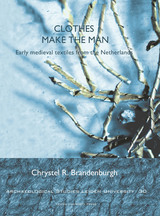
Clothes have been used to assert power, challenge authority, and instigate social change throughout Indian society. During the struggle for independence, members of the Indian elite incorporated elements of Western style into their clothes, while Gandhi's adoption of the loincloth symbolized the rejection of European power and the contrast between Indian poverty and British wealth. Similar tensions are played out today, with urban Indians adopting "ethnic" dress as villagers seek modern fashions.
Illustrated with photographs, satirical drawings, and magazine advertisements, this book shows how individuals and groups play with history and culture as they decide what to wear.
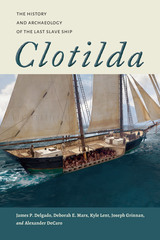
Documents the maritime historical research and archaeological fieldwork used to identify the wreck of the notorious schooner Clotilda
Clotilda: The History and Archaeology of the Last Slave Ship is the first definitive work to examine the maritime historical and archaeological record of one of the most infamous ships in American history. Clotilda was owned by Alabama businessman Timothy Meaher, who, on a dare, equipped it to carry captured Africans from what is now Benin and bring them to Alabama in 1860—some fifty years after the import of captives to be enslaved was banned. To hide the evidence, Clotilda was set afire and sunk.
What remained was a substantially intact, submerged, and partially buried shipwreck located in a backwater of the Mobile River. The site of the wreck was an open secret to some people who knew Meaher, but its identity remained unknown for more than a century as various surveys through the years failed to locate the ship.
This volume, authored by the archaeological team who conducted a comprehensive, systematic survey of a forgotten “ship graveyard,” details the exhaustive forensic work that conclusively identified the wreck, as well as the stories and secrets that have emerged from the partly burned hulk. James P. Delgado and his coauthors discuss the various searches for Clotilda, sharing the forensic data and other analyses showing how those involved concluded that this wreck was indeed Clotilda. Additionally, they offer physical evidence not previously shared that situates the schooner and its voyage in a larger context of the slave trade.
Clotilda: The History and Archaeology of the Last Slave Ship serves as a nautical biography of the ship as well. After reviewing the maritime trade in and out of Mobile Bay, this account places Clotilda within the larger landscape of American and Gulf of Mexico schooners and chronicles its career before being used as a slave ship. All of its voyages had a link to slavery, and one may have been another smuggling voyage in violation of federal law. The authors have also painstakingly reconstructed Clotilda’s likely appearance and characteristics.

Unearths the religious and cultural roots of a powerful political machine that empowered some everyday Chicagoans but ruled all of the city for decades.
In politics, clout is essential. Too often, it determines whether insider access is granted or denied, favors are given or withheld, and payoffs are made or received. But Chicago clout, as we know it today, is even more potent than that—it’s the absolute currency of a social, cultural, and political order that is self-reinforcing and self-dealing. Or, at least, it was.
In Clout City, award-winning historian Dominic A. Pacyga reveals how cultural, ethnic, and religious forces created this distinctive system—and ultimately led to its collapse. Tracing clout’s origins in the Irish Catholic–dominated working-class neighborhood of Bridgeport, shaped by De La Salle Institute and home to the legendary Daley family, Pacyga shows how communal ties can be a force for good and also the deepest wellspring of corruption. He maps Chicago’s unique politics to its remarkable history, from the Great Fire of 1871 through its rise and decline as an industrial center to its emergence as a global city in the early twenty-first century. With deep research and firsthand experience from a lifetime in the city, Pacyga argues that Chicago’s politics is understood best as a mixture of cultural and religious influences and more worldly pursuits, exploring how both Jewish and Catholic communalism played central roles in the creation and sustenance of the Chicago machine.
Chicago’s politics today aren’t as defined by its distinctive brand of clout. But they are shaped by clout’s decline and the ghost of the machine. Pacyga’s tour of the city’s multilayered past is an indispensable guide to its present and future.
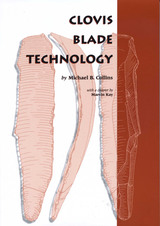
Around 11,000 years ago, a Paleoindian culture known to us as "Clovis" occupied much of North America. Considered to be among the continent's earliest human inhabitants, the Clovis peoples were probably nomadic hunters and gatherers whose remaining traces include camp sites and caches of goods stored for utilitarian or ritual purposes.
This book offers the first comprehensive study of a little-known aspect of Clovis culture—stone blade technology. Michael Collins introduces the topic with a close look at the nature of blades and the techniques of their manufacture, followed by a discussion of the full spectrum of Clovis lithic technology and how blade production relates to the production of other stone tools. He then provides a full report of the discovery and examination of fourteen blades found in 1988 in the Keven Davis Cache in Navarro County, Texas.
Collins also presents a comparative study of known and presumed Clovis blades from many sites, discusses the Clovis peoples' caching practices, and considers what lithic technology and caching behavior can add to our knowledge of Clovis lifeways. These findings will be important reading for both specialists and amateurs who are piecing together the puzzle of the peopling of the Americas, since the manufacture of blades is a trait that Clovis peoples shared with the Upper Paleolithic peoples in Europe and northern Asia.

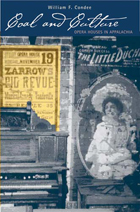
Opera houses were fixtures of Appalachian life from the end of the Civil War through the 1920s. Most towns and cities had at least one opera house during this golden age. Coal mining and railroads brought travelers, money, and change to the region. Many aspects of American life converged in the opera house.
Coal and Culture: Opera Houses in Appalachia is a critical appreciation of the opera house in the coal-mining region of Appalachia from the mid-1860s to the early 1930s. Author William Faricy Condee demonstrates that these were multipurpose facilities that were central to the life of their communities. In the era before radio, movies, television, and malls, these buildings were essential. They housed little, if any, opera, but were used for almost everything else, including traveling theater, concerts, religious events, lectures, commencements, boxing matches, benefits, union meetings, and—if the auditorium had a flat floor—skating and basketball.
The only book on opera houses that stresses their cultural context, Condee’s unique study will interest cultural geographers, scholars of Appalachian studies, and all those who appreciate the gaudy diversity of the American scene.
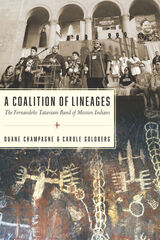
The history of Southern California’s Indigenous communities is mapped through the story of family and their descendants, or lineages. The authors explain how politically and culturally independent lineages merged and strengthened via marriage, creating complex and enduring coalitions among Indigenous communities. The Indigenous people of Southern California faced waves of colonizers—the Spanish, then the Mexicans, followed by Americans—and their coalitions allowed them to endure to today.
Champagne and Goldberg are leading experts in Native sovereignty policies and histories. They worked in collaboration with members of the Fernandeño Tataviam Band of Mission Indians to illustrate how the community formed and persisted. A Coalition of Lineages is not only the story of a Native Southern California community, it is also a model for multicultural tribal development for recognized and nonrecognized Indian nations in the United States and elsewhere.
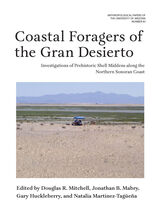
Focused on the coast near Puerto Peñasco, Sonora, Mexico, Coastal Foragers of the Gran Desierto examines the diverse groups occupying the coast for salt, abundant food sources, and shells for ornament manufacturing. The archaeological patterns demonstrated by the data gathered lead to the conclusion that, since ancient times, this coastal landscape was not a marginal zone but rather an important source of food and trade goods, and a pilgrimage destination that influenced broad and diverse communities across the Sonoran Desert and beyond.
Contributors
Jenny L. Adams
Karen R. Adams
Thomas Bowen
Tessa L. Branyan
Bill Broyles
Richard C. Brusca
David L. Dettman
Michael S. Foster
Gary Huckleberry
Jonathan B. Mabry
Natalia Martínez-Tagüeña
Richard J. Martynec
Douglas R. Mitchell
Kirsten Rowell
Melissa R. Schwan
M. Steven Shackley
R. J. Sliva
Kayla B. Worthey
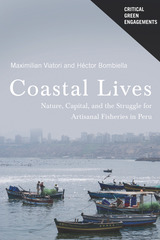
In Coastal Lives, Maximilian Viatori and Héctor Bombiella argue that this has not made Peru’s fisheries more sustainable. Through a fine-grained ethnographic and historical account of Lima’s fisheries, the authors reveal that new government regimes of entrepreneurial agency have placed overwhelming burdens on the city’s impoverished artisanal fishers to demonstrate that they are responsible producers and have created failures that can be used to justify closing these fishers’ traditional use areas and to deny their historically sanctioned rights. The result is a critical examination of how neoliberalized visions of nature and individual responsibility work to normalize the dispossessions that have enabled ongoing capital accumulation at the cost of growing social dislocations and ecological degradation.
The authors’ innovative approach to the politics of constructing and degrading coastal lives will interest a wide range of scholars in cultural anthropology, environmental humanities, and Latin American studies, as well as policymakers and anyone concerned with inequality, global food systems, and multispecies ecologies.
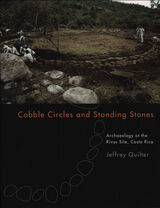
Writing in the first person with a balance between informal language and academic theory, Quilter concludes that Rivas was a ceremonial center for mortuary rituals to bury chiefly elite on the Panteón. Through use of his narrative technique, he provides the reader with accounts of discoveries as they occurred in fieldwork and the development of interpretations to explain the ancient refuse and cobble architecture his team uncovered. As his story progresses amid the enchantment of the Costa Rican landscape, research plans are adjusted and sometimes completely overturned as new discoveries, often serendipitous ones, are made. Such changing circumstances lead to new insights into the rise and fall of the people who built the cobble circles and raised the standing stones at Rivas, a thousand years ago.
The only book in English that focuses on a single archaeological site in Costa Rica, which continues to develop as a destination for archaeological tourism, Cobble Stones and Standing Circles will appeal to laypeople and professionals alike.
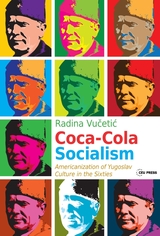
This book is about the Americanization of Yugoslav culture and everyday life during the nineteen-sixties. After falling out with the Eastern bloc, Tito turned to the United States for support and inspiration. In the political sphere the distance between the two countries was carefully maintained, yet in the realms of culture and consumption the Yugoslav regime was definitely much more receptive to the American model. For Titoist Yugoslavia this tactic turned out to be beneficial, stabilising the regime internally and providing an image of openness in foreign policy.
Coca-Cola Socialism addresses the link between cultural diplomacy, culture, consumer society and politics. Its main argument is that both culture and everyday life modelled on the American way were a major source of legitimacy for the Yugoslav Communist Party, and a powerful weapon for both USA and Yugoslavia in the Cold War battle for hearts and minds.
Radina Vučetić explores how the Party used American culture in order to promote its own values and what life in this socialist and capitalist hybrid system looked like for ordinary people who lived in a country with communist ideology in a capitalist wrapping. Her book offers a careful reevaluation of the limits of appropriating the American dream and questions both an uncritical celebration of Yugoslavia’s openness and an exaggerated depiction of its authoritarianism.

Contributors. Enrique Desmond Arias, Lilian Bobea, Philippe Bourgois, Anthony W. Fontes, Robert Gay, Paul Gootenberg, Romain Le Cour Grandmaison, Thomas Grisaffi, Laurie Kain Hart, Annette Idler, George Karandinos, Fernando Montero, Dennis Rodgers, Taniele Rui, Cyrus Veeser, Autumn Zellers-León
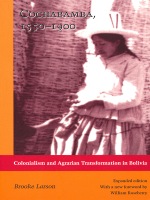
This study of Bolivia uses Cochabamba as a laboratory to examine the long-term transformation of native Andean society into a vibrant Quechua-Spanish-mestizo region of haciendas and smallholdings, towns and villages, peasant markets and migratory networks caught in the web of Spanish imperial politics and economics. Combining economic, social, and ethnohistory, Brooke Larson shows how the contradictions of class and colonialism eventually gave rise to new peasant, artisan, and laboring groups that challenged the evolving structures of colonial domination. Originally published in 1988, this expanded edition includes a new final chapter that explores the book’s implications for understanding the formation of a distinctive peasant political culture in the Cochabamba valleys over the eighteenth and nineteenth centuries.
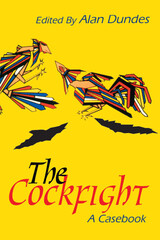
Originating more than 2500 years ago, cockfighting is one of the oldest documented sports in the world. It has continued to flourish despite bans against it in many countries. In The Cockfight: A Casebook, folklorist Alan Dundes brings together a diverse array of writing on this male-dominated ritual.
Vivid descriptions of cockfights from Puerto Rico, Tahiti, Ireland, Spain, Brazil, and the Philippines complement critical commentaries, from the fourth-century reflections of St. Augustine to contemporary anthropological and psychoanalytic interpretations. The various essays discuss the intricate rules of the cockfight, the ethical question of pitting two equally matched roosters in a fight to the death, the emotional involvement of cockfighters and fans, and the sexual implications of the sport. The result is an enlightening collection for anthropologists, folklorists, sociologists, and psychologists, as well as followers of this ancient blood sport.
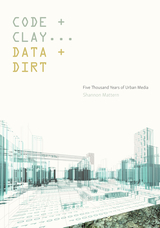
For years, pundits have trumpeted the earthshattering changes that big data and smart networks will soon bring to our cities. But what if cities have long been built for intelligence, maybe for millennia? In Code and Clay, Data and Dirt Shannon Mattern advances the provocative argument that our urban spaces have been “smart” and mediated for thousands of years.
Offering powerful new ways of thinking about our cities, Code and Clay, Data and Dirt goes far beyond the standard historical concepts of origins, development, revolutions, and the accomplishments of an elite few. Mattern shows that in their architecture, laws, street layouts, and civic knowledge—and through technologies including the telephone, telegraph, radio, printing, writing, and even the human voice—cities have long negotiated a rich exchange between analog and digital, code and clay, data and dirt, ether and ore.
Mattern’s vivid prose takes readers through a historically and geographically broad range of stories, scenes, and locations, synthesizing a new narrative for our urban spaces. Taking media archaeology to the city’s streets, Code and Clay, Data and Dirt reveals new ways to write our urban, media, and cultural histories.


In Code of the Suburb, Scott Jacques and Richard Wright offer a fascinating ethnography of the culture of suburban drug dealers. Drawing on fieldwork among teens in a wealthy suburb of Atlanta, they carefully parse the complicated code that governs relationships among buyers, sellers, police, and other suburbanites. That code differs from the one followed by urban drug dealers in one crucial respect: whereas urban drug dealers see violent vengeance as crucial to status and security, the opposite is true for their suburban counterparts. As Jacques and Wright show, suburban drug dealers accord status to deliberate avoidance of conflict, which helps keep their drug markets more peaceful—and, consequently, less likely to be noticed by law enforcement.
Offering new insight into both the little-studied area of suburban drug dealing, and, by extension, the more familiar urban variety, Code of the Suburb will be of interest to scholars and policy makers alike.

Software applications have taken over our lives. We use and are used by software many times a day. Nevertheless, we know very little about the invisibly ubiquitous workers who write software. Who are they and how do they perceive their practice? How does that shape how they collaborate to build the myriad of apps that we use every day? And how does that impact the users of apps?
Coderspeak provides a critical approach to the digital transformation of our world through an engaging and thoughtful analysis of the people who write software applications. It is a focused and in-depth look at one programming language and its community, Ruby, based on ethnographic research at a London company and conversations with members of the wider Ruby community in Europe, the Americas, and Japan.
This book shows that the place where people write code, the language they write it in, and the stories shared by that community are crucial in questioning and unpacking what it means to be a coder. Understanding this social group is essential if we are to grasp a future (and a present) in which computer programming increasingly dominates our lives.

Against the backdrop of the industrial growth of Bombay, Codes of Misconduct examines the relationship between lawmaking, law enforcement, and sexual commerce. Ashwini Tambe challenges linear readings of how laws create effects and demonstrates that the regulation and criminalization of prostitution were not contrasting approaches to prostitution but different modes of state coercion. By analyzing legal prohibitions as productive forces, she also probes the pornographic imagination of the colonial state, showing how regulations made sexual commerce more visible but rendered the prostitute silent.
Codes of Misconduct engages with debates on state control of sex work and traces how a colonial legacy influences contemporary efforts to contain the spread of HIV and decriminalize sex workers in India today. In doing so, Tambe’s work not only adds to our understanding of empire, sexuality, and the law, it also sheds new light on the long history of Bombay’s transnational links and the social worlds of its underclasses.
Co-designing Infrastructures tells the story of a research program designed to bring the power of engineering and technology into the hands of grassroots community groups in order to create bottom-up solutions to global crises. The authors examine in detail four projects in London in detail that exemplify collaboration with engineers, designers, and scientists to enact urban change. The projects at the heart of the book are grounded in specific settings that face challenges familiar to urban communities throughout the world. This place-based approach to infrastructure is of international relevance as a foundation for urban resilience and sustainability. The authors document the tools used to deliver this work, providing guidance for others who are working to deliver local technical solutions to complex social and environmental problems around the world.
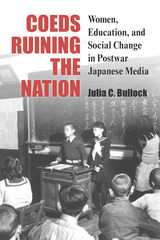
This is the first book in English to explore the arguments for and against coeducation as presented in newspaper and magazine articles, cartoons, student-authored school newsletters, and roundtable discussions published in the Japanese press as these reforms were being implemented. It complicates the notion of the postwar years as a moment of rupture, highlighting prewar experiments with coeducation that belied objections that the practice was a foreign imposition and therefore “unnatural” for Japanese culture. It also illustrates a remarkable degree of continuity between prewar and postwar models of femininity, arguing that Occupation-era guarantees of equal educational opportunity were ultimately repurposed toward a gendered division of labor that underwrote the postwar project of economic recovery. Finally, it excavates discourses of gender and sexuality underlying the moral panic surrounding coeducation to demonstrate that claims of rampant sexual deviance and other concerns were employed as disciplinary mechanisms to reinforce an ideology of harmonious gender complementarity and to dissuade women from pursuing conventionally masculine prerogatives.

Focusing on La Voz Que Clama en el Desierto-a cooperative in San Juan la Laguna, Guatemala-and its relationships with coffee roasters, importers, and certifiers in the United States, Coffee and Community argues that while fair trade does benefit small coffee-farming communities, it is more flawed than advocates and scholars have acknowledged. However, through detailed ethnographic fieldwork with the farmers and by following the product, fair trade can be understood and modified to be more equitable.
This book will be of interest to students and academics in anthropology, ethnology, Latin American studies, and labor studies, as well as economists, social scientists, policy makers, fair-trade advocates, and anyone interested in globalization and the realities of fair trade. Winner of the Society for Economic Anthropology Book Award
“This is an important book and likely the most thoughtful of the year in the social sciences… Highly recommended, it is likely to prove one of the most thought-provoking books of the year.”—Tyler Cowen, Marginal Revolution
How did human minds become so different from those of other animals? What accounts for our capacity to understand the way the physical world works, to think ourselves into the minds of others, to gossip, read, tell stories about the past, and imagine the future? These questions are not new: they have been debated by philosophers, psychologists, anthropologists, evolutionists, and neurobiologists over the course of centuries. One explanation widely accepted today is that humans have special cognitive instincts. Unlike other living animal species, we are born with complicated mechanisms for reasoning about causation, reading the minds of others, copying behaviors, and using language.
Cecilia Heyes agrees that adult humans have impressive pieces of cognitive equipment. In her framing, however, these cognitive gadgets are not instincts programmed in the genes but are constructed in the course of childhood through social interaction. Cognitive gadgets are products of cultural evolution, rather than genetic evolution. At birth, the minds of human babies are only subtly different from the minds of newborn chimpanzees. We are friendlier, our attention is drawn to different things, and we have a capacity to learn and remember that outstrips the abilities of newborn chimpanzees. Yet when these subtle differences are exposed to culture-soaked human environments, they have enormous effects. They enable us to upload distinctively human ways of thinking from the social world around us.
As Cognitive Gadgets makes clear, from birth our malleable human minds can learn through culture not only what to think but how to think it.
The case studies contained in A Coincidence of Desires speak to questions about the relation of sexualities to nationalism, religion, and globalization. They include an examination of zines published by gay Indonesians; an analysis of bahasa gay—a slang spoken by gay Indonesians that is increasingly appropriated in Indonesian popular culture; and an exploration of the place of warias (roughly, “male-to-female transvestites”) within Indonesian society. Boellstorff also considers the tension between Islam and sexuality in gay Indonesians’ lives and a series of incidents in which groups of men, identified with Islamic fundamentalism, violently attacked gatherings of gay men. Collectively, these studies insist on the primacy of empirical investigation to any queer studies project that wishes to speak to the specificities of lived experience.


Sardis, capital city of the Lydian and Persian kings, stronghold of the Seleukid kings, metropolis of Roman Asia, and episcopal see in the Byzantine period, has been the focus of archaeological research since the early 1900s. This monograph focuses on the over 8,000 coins minted in the Lydian, Hellenistic, Roman, and Byzantine periods that were excavated between 1973 and 2013 in the Harvard-Cornell Expedition.
The book places coins within eastern Mediterranean historical, cultural, and economic contexts, in order to better understand the monetized economy of Sardis. It adds important archaeological context to shed light on the uses of coins and the nature of the deposits, with attention paid to the problems of monetary circulation and chronological development of the deposits, especially in the Late Roman period. Statistical analyses, including a new method of analyzing the deposits, help define the nature and chronological horizons of the strata. A catalog of the coins concludes the main body of the study, followed by appendices on countermarks, monograms, and statistical analyses.
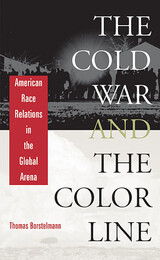
After World War II the United States faced two preeminent challenges: how to administer its responsibilities abroad as the world’s strongest power, and how to manage the rising movement at home for racial justice and civil rights. The effort to contain the growing influence of the Soviet Union resulted in the Cold War, a conflict that emphasized the American commitment to freedom. The absence of that freedom for nonwhite American citizens confronted the nation’s leaders with an embarrassing contradiction.
Racial discrimination after 1945 was a foreign as well as a domestic problem. World War II opened the door to both the U.S. civil rights movement and the struggle of Asians and Africans abroad for independence from colonial rule. America’s closest allies against the Soviet Union, however, were colonial powers whose interests had to be balanced against those of the emerging independent Third World in a multiracial, anticommunist alliance. At the same time, U.S. racial reform was essential to preserve the domestic consensus needed to sustain the Cold War struggle.
The Cold War and the Color Line is the first comprehensive examination of how the Cold War intersected with the final destruction of global white supremacy. Thomas Borstelmann pays close attention to the two Souths—Southern Africa and the American South—as the primary sites of white authority’s last stand. He reveals America’s efforts to contain the racial polarization that threatened to unravel the anticommunist western alliance. In so doing, he recasts the history of American race relations in its true international context, one that is meaningful and relevant for our own era of globalization.
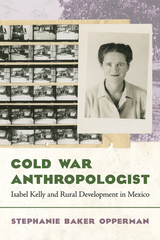
Kelly’s transition from a prominent archaeologist to a key figure in applied anthropology is meticulously chronicled, unveiling her pivotal role in shaping rural development strategies in Mexico amidst the geopolitical context of the Cold War. Through an extensive examination of her correspondence, archival material, and scholarly output, Kelly’s evolving viewpoints offer profound insights into the intricate dynamics of U.S.-Mexico relations and the challenges encountered by female academics during this era.
Organized chronologically, each chapter of this work delves into distinct facets of Kelly’s international journey, with a particular emphasis on her involvement in cooperative programs aimed at fostering diplomatic relations with Mexico. Through this narrative framework, readers are immersed in a compelling exploration of Kelly’s enduring impact on both the field of anthropology and the realm of international diplomacy.
This book is indispensable for historians, anthropologists, and individuals intrigued by the nuanced complexities of Cold War politics, presenting pioneering research at the intersection of history and anthropology. Opperman skillfully brings to light the previously untold narratives of Isabel Kelly, unveiling her influence on mid-twentieth-century Mexico.

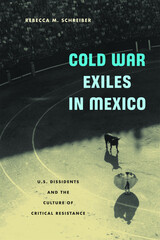
As Schreiber recounts, the first exiles to arrive in Mexico after World War II were visual artists, many of them African-American, including Elizabeth Catlett, Charles White, and John Wilson. Individuals who were blacklisted from the Hollywood film industry, such as Dalton Trumbo and Hugo Butler, followed these artists, as did writers, including Willard Motley. Schreiber examines the artists’ work with the printmaking collective Taller de Gráfica Popular and the screenwriters’ collaborations with filmmakers such as Luis Buñuel, as well as the influence of the U.S. exiles on artistic and political movements.
The Cold War culture of political exile challenged American exceptionalist ideology and, as Schreiber reveals, demonstrated the resilience of oppositional art, literature, and film in response to state repression.


Nicholas J. Schlosser draws on broadcast transcripts, internal memoranda, listener letters, and surveys by the U.S. Information Agency to profile RIAS. Its mission: to undermine the German Democratic Republic with propaganda that, ironically, gained in potency by obeying the rules of objective journalism. Throughout, Schlosser examines the friction inherent in such a contradictory project and propaganda's role in shaping political culture. He also portrays how RIAS's primarily German staff influenced its outlook and how the organization both competed against its rivals in the GDR and pushed communist officials to alter their methods in order to keep listeners.
From the occupation of Berlin through the airlift to the construction of the Berlin Wall, Cold War on the Airwaves offers an absorbing view of how public diplomacy played out at a flashpoint of East-West tension.
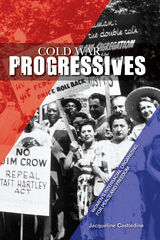
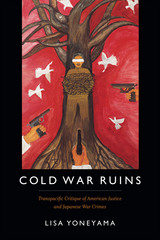

First popularized during the 1950s, the concept of “brainwashing” is often viewed as an example of Cold War paranoia, an amusing relic of a bygone era. Yet as Matthew W. Dunne shows in this study, over time brainwashing came to connote much more than a sinister form of Communist mind control, taking on broader cultural and political meanings.
Moving beyond well-known debates over Korean War POWs and iconic cultural texts like The Manchurian Candidate, Dunne explores the impact of the idea of brainwashing on popular concerns about freedom, individualism, loyalty, and trust in authority. By the late 1950s the concept had been appropriated into critiques of various aspects of American life such as an insistence on conformity, the alleged “softening” of American men, and rampant consumerism fueled by corporate advertising that used “hidden” or “subliminal” forms of persuasion. Because of these associations and growing anxieties about the potential misuse of psychology, concerns about brainwashing contributed to a new emphasis on individuality and skepticism toward authority in the 1960s. The notion even played an unusual role in the 1968 presidential race, when Republican frontrunner George Romney's claim that he had been “brainwashed” about the Vietnam War by the Johnson administration effectively destroyed his campaign.
In addition to analyzing the evolving meaning of brainwashing over an extended period of time, A Cold War State of Mind explores the class and gender implications of the idea, such as the assumption that working-class POWs were more susceptible to mind control and that women were more easily taken in by the manipulations of advertisers.
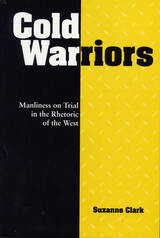
Cold Warriors: Manliness on Trial in the Rhetoric of the West returns to familiar cultural forces—the West, anticommunism, and manliness—to show how they combined to suppress dissent and dominate the unruliness of literature in the name of a national identity after World War II. Few realize how much the domination of a “white male” American literary canon was a product not of long history, but of the Cold War. Suzanne Clark describes here how the Cold War excluded women writers on several levels, together with others—African American, Native American, poor, men as well as women—who were ignored in the struggle over white male identity.
Clark first shows how defining national/individual/American identity in the Cold War involved a brand new configuration of cultural history. At the same time, it called upon the nostalgia for the old discourses of the West (the national manliness asserted by Theodore Roosevelt) to claim that there was and always had been only one real American identity.
By subverting the claims of a national identity, Clark finds, many male writers risked falling outside the boundaries not only of public rhetoric but also of the literary world: men as different from one another as the determinedly masculine Ernest Hemingway and the antiheroic storyteller of the everyday, Bernard Malamud. Equally vocal and contentious, Cold War women writers were unwilling to be silenced, as Clark demonstrates in her discussion of the work of Mari Sandoz and Ursula Le Guin.
The book concludes with a discussion of how the silencing of gender, race, and class in Cold War writing maintained its discipline until the eruptions of the sixties. By questioning the identity politics of manliness in the Cold War context of persecution and trial, Clark finds that the involvement of men in identity politics set the stage for our subsequent cultural history.
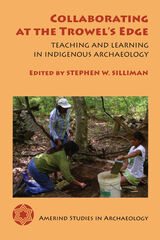
Eighteen contributors—many with tribal ties—cover the current state of collaborative indigenous archaeology in North America to show where the discipline is headed. Continent-wide cases, from the Northeast to the Southwest, demonstrate the situated nature of local practice alongside the global significance of further decolonizing archaeology. And by probing issues of indigenous participation with an eye toward method, theory, and pedagogy, many show how the archaeological field school can be retailored to address politics, ethics, and critical practice alongside traditional teaching and research methods.
These chapters reflect the strong link between politics and research, showing what can be achieved when indigenous values, perspectives, and knowledge are placed at the center of the research process. They not only draw on experiences at specific field schools but also examine advances in indigenous cultural resource management and in training Native American and non-native students.
Theoretically informed and practically grounded, Collaborating at the Trowel’s Edge is a virtual guide for rethinking field schools and is an essential volume for anyone involved in North American archaeology—professionals, students, tribal scholars, or avocationalists—as well as those working with indigenous peoples in other parts of the world. It both reflects the rapidly changing landscape of archaeology and charts new directions to ensure the ongoing vitality of the discipline.
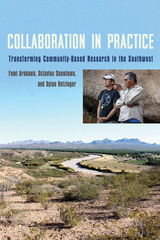
The book situates this collaboration within the broader historical and political context of archaeology and museology. It critically explores how museums and academic institutions can shift from extractive practices to ones that prioritize Indigenous sovereignty, knowledge systems, and cultural continuity. Through personal narratives, historical context, and methodological insights, the authors highlight the challenges and transformative potential of working collaboratively. They show how true collaboration requires humility, mutual respect, and a commitment to shared authority in both research and representation.
Ultimately, this work charts a path forward for community-based research that centers Indigenous voices and values. It advocates for an archaeology that is not only more inclusive but also more meaningful to the communities whose histories are being studied. A vital resource for scholars, students, and practitioners, this work seeks to engage in ethical, reciprocal, and culturally grounded research in the Southwest and beyond.
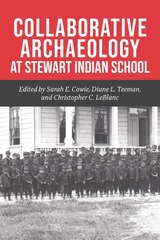
This edited volume addresses the theory, methods, and outcomes of collaborative archaeology conducted at the Stewart Indian School site and is a genuine collective effort between archaeologists, former students of the school, and other tribal members. With more than twenty contributing authors from the University of Nevada, Reno, Nevada Indian Commission, Washoe Tribal Historic Preservation Office, and members of Washoe, Paiute, and Shoshone tribes, this rich case study is strongly influenced by previous work in collaborative and Indigenous archaeologies. It elaborates on those efforts by applying concepts of governmentality (legal instruments and practices that constrain and enable decisions, in this case, regarding the management of historical populations and modern heritage resources) as well as social capital (valued relations with others, in this case, between Native and non-Native stakeholders).
As told through the trials, errors, shared experiences, sobering memories, and stunning accomplishments of a group of students, archaeologists, and tribal members, this rare gem humanizes archaeological method and theory and bolsters collaborative archaeological research.
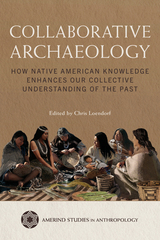
Collaborative Archaeology brings together a diverse group of scholars and tribal cultural resource professionals to showcase how Indigenous knowledge is transforming archaeological practice. Edited by Chris Loendorf, this volume features twelve case studies that highlight the power of partnership between Native American communities and archaeologists. These collaborations not only enrich our understanding of the past but also affirm Indigenous cultural continuity. From the establishment of Tribal Historic Preservation Offices to tribally led research initiatives, the book illustrates how Native voices are reshaping the field.
This timely collection bridges disciplinary divides between archaeology, history, and traditional knowledge, challenging outdated narratives that separate “prehistory” from living Indigenous communities. Contributors demonstrate how ethical, community-based research can lead to more accurate and respectful interpretations of the past. Collaborative Archaeology is essential reading for scholars, students, and practitioners committed to scientific understanding and cultural preservation.
Contributors
Nicole Armstrong-Best
Skylar Begay
Jennifer Bess
Hannah F. Chavez
Robert B. Ciaccio
Shannon Cowell
William H. Doelle
Karl A. Hoerig
Anabel Galindo
Barnaby V. Lewis
Chris Loendorf
Brian Medchill
Linda Morgan
Laurene G. Montero
Stephen E. Nash
Eloise Pedro
Glen E. Rice
Teresa Rodrigues
Hoski Schaafsma
Thomas E. Sheridan
Katrina Soke
Lindsey Vogel-Teeter
Anastasia Walhovd
Reylynne Williams
M. Kyle Woodson
Aaron M. Wright
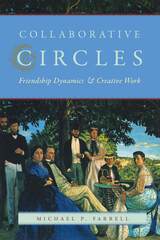
In a unique study that will become a rich source of ideas for professionals and anyone interested in fostering creative work in the arts and sciences, Michael P. Farrell looks at the group dynamics in six collaborative circles: the French Impressionists; Sigmund Freud and his friends; C. S. Lewis, J. R. R. Tolkien, and the Inklings; social reformers Elizabeth Cady Stanton and Susan B. Anthony; the Fugitive poets; and the writers Joseph Conrad and Ford Maddox Ford. He demonstrates how the unusual interactions in these collaborative circles drew out the creativity in each member. Farrell also presents vivid narrative accounts of the roles played by the members of each circle. He considers how working in such circles sustains the motivation of each member to do creative work; how collaborative circles shape the individual styles of the persons within them; how leadership roles and interpersonal relationships change as circles develop; and why some circles flourish while others flounder.
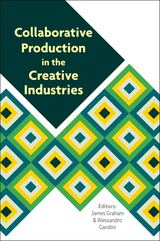
In recent years research into creative labour and cultural work has usually addressed the politics of production in these fields, but the sociotechnical and aesthetic dimensions of collaborative creative work have been somewhat overlooked.
This book aims to address this gap. Through case studies that range from TV showrunning to independent publishing, from the film industry to social media platforms such as Tumblr and Wattpad, this collection develops a critical understanding of the integral role collaboration plays in contemporary media and culture. It draws attention to diverse kinds of creative collaboration afforded via the intermediation of digital platforms and networked publics. It considers how these are incorporated into emergent market paradigms and investigates the complicated forms of subjectivity that develop as a consequence. But it also acknowledges historical continuities, not least in terms of the continued exploitation of ‘support personnel’ and of resulting artistic conflicts but also of alternative models that resist the precarious nature of contemporary cultural work.
Finally, this volume attempts to situate creative collaboration in broader social and economic contexts, where the experience and outcomes of such work have proved more problematic than the rich potential of their promise would lead us to expect.
The Editors: James Graham is Senior Lecturer in the Faculty of Arts and Creative Industries, Middlesex University, London. Alessandro Gandini is Lecturer in Digital Media Management and Innovation in the Department of Digital Humanities, Kings College, London.

The book begins with collards’ obscure origins. Like a good detective story, the search for collards’ home country leads the authors both to Europe and West Africa, where they unravel a tale as surprising and complex as that of southern people themselves. Crossing back over the Atlantic, the authors traverse miles of American back roads, from Arkansas to Florida and from Virginia to Louisiana. They vividly recount visits to homes, gardens, grocers, farms, and restaurants where the many varieties of collards are honored, from the familiar green collards to the yellow cabbage collard and rare purple cultivars.
In uncovering the secrets of growing collards, the authors locate prize-winning patches of the plant, interview “seed savers,” and provide useful tips for kitchen gardeners. They also describe how collards made the leap from kitchen garden staple to highly valued commercial crop.
Collards captures the tastes, smells, and prize-winning recipes from the South’s premier collards festivals. They find collards at the homes of farmers, jazz musicians, governors, and steel workers. Kin to cabbage and broccoli but superior to both in nutritional value, collard greens transcend human divisions of black and white, rich and poor, sophisticated and rustic, and urban and rural.
Food trends may come and go, but collards are a tradition that southerners return to again and again. Richly illustrated in color, Collards demonstrates the abiding centrality of this green leafy vegetable to the foodways of the American South. In it, readers will rediscover an old friend.
Contributors. Anne Alison, Naisargi N. Dave, Angela Garcia, Fady Joudah, Julie Livingston, Elizabeth A. Povinelli, Solmaz Sharif, Lisa Stevenson, Zoë H. Wool
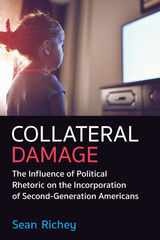
Collateral Damage provides an overview of how political communication influences the process of incorporation with the broad society as well as its political parties. Sean Richey shows that how politicians talk about immigrants affects how their children perceive America and their feelings about the nation. These perceptions and feelings in turn greatly influence the children’s desire to incorporate into American political society. He also shows that regardless of a speaker’s intended outcome, what is said can still have a deleterious effect on incorporation desire, a communicative process that he terms “collateral damage.” Richey uses new experimental and survey evidence, as well as the rhetoric of Donald Trump as a test case, to examine how anti-immigration communication influences the incorporation of the children of immigrants.
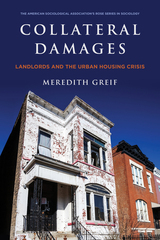
For three years, Greif followed sixty private landlords serving low- and moderate-income residents in the Cleveland, Ohio, metropolitan area to better understand how local regulations, such as criminal activity nuisance ordinances (CANOs) and local water billing regulations, affect their landlording practices. CANOs are intended to protect communities by discouraging criminal activity on private properties. Property owners can face financial and criminal sanctions if they do not abate nuisance activities, which can include littering, noise, drug use, and calls for police assistance, including calls for domestic violence. Local water billing regulations hold landlords responsible for delinquent water bills, even in cases where the account is registered in the tenant’s name. Greif finds that such laws often increase landlords’ sense of “financial precarity” – the real or perceived uncertainty that their business is financially unsustainable – by holding them responsible for behavior they feel is out of their control. Feelings of financial uncertainty led some landlords to use illegitimate business practices against their tenants, including harassment, oversurveillance, poor property upkeep, and illegal evictions. And to avoid to financial penalties associated with CANOs and delinquent water bills, some landlords engage in discriminatory screening of vulnerable potential tenants who are unemployed or have histories of domestic violence or drug use. In this sense, by promoting a sense of financial insecurity among landlords, laws meant to protect renters ultimately had the opposite effect.
While some landlords, particularly those who rented a larger number of units, were able to operate their businesses both lawfully and profitably, the majority could not. Greif offers practical recommendations to address the concerns of small- and mid-sized landlords, such as regular meetings that bring landlords and local authorities together to engage in constructive dialogue about local housing policy, issues, and concerns. She also proposes policy recommendations to protect renters, such as establishing the right to counsel for lower-income tenants in eviction hearings and enacting a federal renter’s tax credit.
Collateral Damages is an enlightening investigation on how local laws and practices perpetuate disadvantage among marginalized populations and communities, in ways that are hidden and often unintended.

Who are the agents of financial regulation? Is good (or bad) financial governance merely the work of legislators and regulators? Here Annelise Riles argues that financial governance is made not just through top-down laws and policies but also through the daily use of mundane legal techniques such as collateral by a variety of secondary agents, from legal technicians and retail investors to financiers and academics and even computerized trading programs.
Drawing upon her ten years of ethnographic fieldwork in the Japanese derivatives market, Riles explores the uses of collateral in the financial markets as a regulatory device for stabilizing market transactions. How collateral operates, Riles suggests, is paradigmatic of a class of low-profile, mundane, but indispensable activities and practices that are all too often ignored as we think about how markets should work and be governed. Riles seeks to democratize our understanding of legal techniques, and demonstrate how these day-to-day private actions can be reformed to produce more effective forms of market regulation.
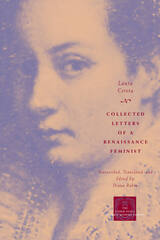
Yet these letters also furnish a detailed portrait of an early modern woman’s private experience, for Cereta addressed many letters to a close circle of family and friends, discussing highly personal concerns such as her difficult relationships with her mother and her husband. Taken together, these letters are a testament both to an individual woman and to enduring feminist concerns.

This groundbreaking edition compiles many of the late unpublished works of American writer Djuna Barnes (1892–1982). Because she published only seven poems and a play during the last forty years of her life, scholars believed Barnes wrote almost nothing during this period. But at the time of her death her apartment was filled with multiple drafts of unpublished poetry and notes toward her memoirs, both included here for the first time. Best known for her tragic lesbian novel Nightwood, Barnes has always been considered a crucial modernist. Her later poetry will only enhance this reputation as it shows her remarkable evolution from a competent young writer to a deeply intellectual poet in the metaphysical tradition. With the full force of her biting wit and dramatic flair, Barnes’s autobiographical notes describe the expatriate scene in Paris during the 1920s, including her interactions with James Joyce and Gertrude Stein and her intimate recollections of T. S. Eliot. These memoirs provide a rare opportunity to experience the intense personality of this complex and fascinating poet.
READERS
Browse our collection.
PUBLISHERS
See BiblioVault's publisher services.
STUDENT SERVICES
Files for college accessibility offices.
RECENTLY PUBLISHED




UChicago Accessibility Resources
home | accessibility | search | about | contact us
BiblioVault ® 2001 - 2025
The University of Chicago Press