
 A SCHOLARLY BOOK REPOSITORY
2150 start with C start with C

Modern permissiveness and the new culture of entitlement allows disturbed people to reach adulthood without proper socialization. In a book meant both for the general public and for professionals, bestselling author and psychologist George Simon explains in plain English:
•How most disturbed characters think.•The habitual behaviors the disturbed use to avoid responsibility and to manipulate, deceive, and exploit others.
•Why victims in relationships with disturbed characters do not get help they need from traditional therapies.
•A straightforward guide to recognizing and understanding all relevant personality types, especially those most likely to undermine relationships.
•A new framework for making sense of the crazy world many find themselves in when there's a disturbed character in their lives.
•Concrete principles that promote responsibility and positive change when engaging disturbed characters.
•Tactics (for both lay persons and therapists) to lessen the chances for victimization and empower those who would otherwise be victims in their relationships with many types of disturbed characters.

Through meticulous research on the event, relying on such primary sources as newspaper articles, author Silvio Manno provides the only comprehensive account of Eureka’s charcoal crisis and what came to be known as the Fish Creek Massacre. This is a well-documented narrative history of an important instance of class and ethnic conflict in the West. Readers interested in Nevada history, Italian American history, frontier trade unionism, and mining in the West will find this book a unique examination of an incident that occurred almost a century and a half ago and that has, until now, been largely overlooked.
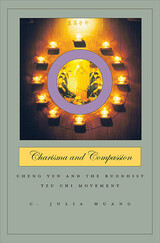
The Venerable Cheng-yen is an unassuming Taiwanese Buddhist nun who leads a worldwide social welfare movement with five million devotees in over thirty countries—with its largest branch in the United States. Tzu-Chi (Compassion Relief) began as a tiny, grassroots women's charitable group; today in Taiwan it runs three state-of-the-art hospitals, a television channel, and a university. Cheng-yen, who has been nominated for the Nobel Peace Prize, is a leader in Buddhist peace activism and has garnered recognition by Business Week as an entrepreneurial star.
Based on extensive fieldwork in Taiwan, Malaysia, Japan, and the United States, this book explores the transformation of Tzu-Chi. C. Julia Huang offers a vivid ethnography that examines the movement’s organization, its relationship with NGOs and humanitarian organizations, and the nature of its Buddhist transnationalism, which is global in scope and local in practice. Tzu-Chi's identity is intimately tied to its leader, and Huang illuminates Cheng-yen's successful blending of charisma and compassion and the personal relationship between leader and devotee that defines the movement.
This important book sheds new light on religion and cultural identity and contributes to our understanding of the nature of charisma and the role of faith-based organizations.
Social and political change is impossible in the absence of gifted male charismatic leadership—this is the fiction that shaped African American culture throughout the twentieth century. If we understand this, Erica R. Edwards tells us, we will better appreciate the dramatic variations within both the modern black freedom struggle and the black literary tradition.
By considering leaders such as Marcus Garvey, Martin Luther King Jr., Malcolm X, and Barack Obama as both historical personages and narrative inventions of contemporary American culture, Edwards brings to the study of black politics the tools of intertextual narrative analysis as well as deconstruction and close reading. Examining a number of literary restagings of black leadership in African American fiction by W. E. B. Du Bois, George Schuyler, Zora Neale Hurston, William Melvin Kelley, Paul Beatty, and Toni Morrison, Edwards demonstrates how African American literature has contested charisma as a structuring fiction of modern black politics.
Though recent scholarship has challenged top-down accounts of historical change, the presumption that history is made by gifted men continues to hold sway in American letters and life. This may be, Edwards shows us, because while charisma is a transformative historical phenomenon, it carries an even stronger seductive narrative power that obscures the people and methods that have created social and political shifts.
The first full-scale study of this industry, Charismatic Capitalism, revises the standard contention that the rationalization of social institutions is an inevitable consequence of advanced capitalism. Nicole Woolsey Biggart argues instead that less rational organizations built on social networks may actually be more economically viable.
Charity and Condescension explores how condescension, a traditional English virtue, went sour in the nineteenth century, and considers how the failure of condescension influenced Victorian efforts to reform philanthropy and to construct new narrative models of social conciliation. In the literary work of authors like Dickens, Eliot, and Tennyson, and in the writing of reformers like Octavia Hill and Samuel Barnett, condescension—once a sign of the power and value of charity—became an emblem of charity’s limitations.
This book argues that, despite Victorian charity’s reputation for idealistic self-assurance, it frequently doubted its own operations and was driven by creative self-critique. Through sophisticated and original close readings of important Victorian texts, Daniel Siegel shows how these important ideas developed even as England struggled to deal with its growing underclass and an expanding notion of the state’s responsibility to its poor.

Author Sean F. Edgecomb focuses on the neo-Ridiculous artists Charles Busch, Bradford Louryk, and Taylor Mac to trace the connections between Ludlam’s legacy and their performances, using alternative queer models such as kinetic kinship, lateral historiography, and a new approach to camp. Charles Ludlam Lives! demonstrates that the queer legacy of Ludlam is one of distinct transformation—one where artists can reject faithful interpretations in order to move in new interpretive directions.

Author Sean F. Edgecomb focuses on the neo-Ridiculous artists Charles Busch, Bradford Louryk, and Taylor Mac to trace the connections between Ludlam’s legacy and their performances, using alternative queer models such as kinetic kinship, lateral historiography, and a new approach to camp. Charles Ludlam Lives! demonstrates that the queer legacy of Ludlam is one of distinct transformation—one where artists can reject faithful interpretations in order to move in new interpretive directions.

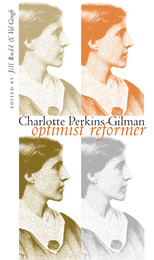
Charlotte Perkins Gilman and a Woman’s Place in America is a pioneering collection that probes how depictions of space, confinement, and liberation establish both the difficulty and necessity of female empowerment. Turning Victorian notions of propriety and a woman’s place on its ear, this finely crafted essay collection studies Gilman’s writings and the manner in which they push back against societal norms and reject male-dominated confines of space.
The contributors present fascinating and innovative readings of some of Gilman’s most significant works. By examining the settings in “The Yellow Wallpaper” and Herland, for example, the volume analyzes Gilman’s construction of place, her representations of male dominance and female subjugation, and her analysis of the rules and obligations that women feel in conforming to their assigned place: the home.
Additionally, this volume delineates female resistance to this conformity. Contributors highlight how Gilman’s narrators often choose resistance over obedient captivity, breaking free of the spaces imposed upon them in order to seek or create their own habitats. Through biographical interpretations of Gilman’s work that focus on the author’s own renouncement of her “natural” role of wife and mother, contributors trace her relocation to the American West in an attempt to appropriate the masculinized spaces of work and social organization.
Engaging, well-researched, and deftly written, the essays in this collection will appeal to scholars of Gilman, literature, and gender issues alike.
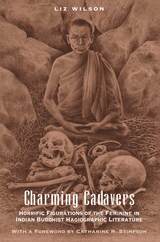
Liz Wilson investigates first-millennium Buddhist notions of
spirituality. She argues that despite the marginal role women played in
monastic life, they occupied a very conspicuous place in Buddhist
hagiographic literature. In narratives used for the edification of
Buddhist monks, women's bodies in decay (diseased, dying, and after
death) served as a central object for meditation, inspiring spiritual
growth through sexual abstention and repulsion in the immediate world.
Taking up a set of universal concerns connected with the representation
of women, Wilson displays the pervasiveness of androcentrism in Buddhist
literature and practice. She also makes persuasive use of recent
historical work on the religious lives of women in medieval
Christianity, finding common ground in the role of miraculous
afflictions.
This lively and readable study brings provocative new tools and insights
to the study of women in religious life.
In Chasing Change in Camden, John Shjarback investigates how Camden’s police department re-formed and questions whether it can serve as a model for other cities. He analyzes successful policies—from innovative police training to advancements in technology—and evidence-based policing strategies.
Shjarback explains how the changes were implemented and then adjusted in response to community backlash. Chasing Change in Camden concludes with a discussion of threats to the reform and accountability efforts in both the CCPD and American policing more broadly. Ultimately, Camden’s case study offers valuable lessons for cities seeking effective police reform.
Questions increasingly dominant urban planning orthodoxies and whether they truly serve everyday city dwellers
What makes some cities world class? Increasingly, that designation reflects the use of a toolkit of urban planning practices and policies that circulates around the globe. These strategies—establishing creative districts dedicated to technology and design, “greening” the streets, reinventing historic districts as tourist draws—were deployed to build a globally competitive Buenos Aires after its devastating 2001 economic crisis. In this richly drawn account, Jacob Lederman explores what those efforts teach us about fast-evolving changes in city planning practices and why so many local officials chase a nearly identical vision of world-class urbanism.
Lederman explores the influence of Northern nongovernmental organizations and multilateral agencies on a prominent city of the global South. Using empirical data, keen observations, and interviews with people ranging from urban planners to street vendors he explores how transnational best practices actually affect the lives of city dwellers. His research also documents the forms of resistance enacted by everyday residents and the tendency of local institutions and social relations to undermine the top-down plans of officials. Most important, Lederman highlights the paradoxes of world-class urbanism: for instance, while the priorities identified by international agencies are expressed through nonmarket values such as sustainability, inclusion, and livability, local officials often use market-centric solutions to pursue them. Further, despite the progressive rhetoric used to describe urban planning goals, in most cases their result has been greater social, economic, and geographic stratification.
Chasing World-Class Urbanism is a much-needed guide to the intersections of culture, ideology, and the realities of twenty-first-century life in a major Latin American city, one that illuminates the tension between technocratic aspirations and lived experience.
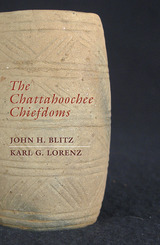
As objects from the mounds were unearthed, occasionally illustrated and discussed in print, attention became focused on the aesthetic qualities of the artifacts, the origins of the remains, and the possible relationship to the Creek Indians. Beginning in the 20th century, new concerns emerged as the developing science of archaeology was introduced to the region. As many of the sites became threatened or destroyed by reservoir construction, trained archaeologists initiated extensive excavations of the mounds. Although classification of artifacts and sites into a chronological progression of cultures was the main objective of this effort, a second concern, sometimes more latent than manifest, was the reconstruction of a past way of life. Archaeologists hoped to achieve a better understanding of the sociopolitical organization of the peoples who built the mounds and of how those organizations changed through time.
Contemporary archaeologists, while in agreement on many aspects of the ancient cultures, debate the causes, forms, and degrees of sociopolitical complexity in the ancient Southeast. Do the mounds mark the capitals of political territories? If so, what was the scale and scope of these ancient “provinces”? What manner of society constructed the mound settlements? What was the sociopolitical organization of these long-dead populations? How can archaeologists answer such queries with the mute and sometimes ordinary materials with which they work: pottery, stone tools, organic residues, and the strata of remnant settlements, buildings, and mounds?
From Plato’s contempt for “the madness of the multitude” to Kant’s lament for “the great unthinking mass,” the history of Western thought is riddled with disdain for ordinary collective life. But it was not until Kierkegaard developed the term chatter that this disdain began to focus on the ordinary communicative practices that sustain this form of human togetherness.
The Chattering Mind explores the intellectual tradition inaugurated by Kierkegaard’s work, tracing the conceptual history of everyday talk from his formative account of chatter to Heidegger’s recuperative discussion of “idle talk” to Lacan’s culminating treatment of “empty speech”—and ultimately into our digital present, where small talk on various social media platforms now yields big data for tech-savvy entrepreneurs.
In this sense, The Chattering Mind is less a history of ideas than a book in search of a usable past. It is a study of how the modern world became anxious about everyday talk, figured in terms of the intellectual elites who piqued this anxiety, and written with an eye toward recent dilemmas of digital communication and culture. By explaining how a quintessentially unproblematic form of human communication became a communication problem in itself, McCormick shows how its conceptual history is essential to our understanding of media and communication today.
Draws parallels between questions of identity in Chaucer’s time and our own.
Bringing the concerns of queer theory and postcolonial studies to bear on Chaucer’s Canterbury Tales, this ambitious book compels a rethinking not only of this most canonical of works, but also of questions of sexuality and gender in pre- and postmodern contexts, of issues of modernity and nation in historiography, and even of the enterprise of historiography itself. Glenn Burger shows us Chaucer uneasily situated between the medieval and the modern, his work representing new forms of sexual and communal identity but also enacting the anxieties provoked by such departures from the past.
Burger argues that, under the pressure of producing a poetic vision for a new vernacular English audience in the Canterbury Tales, Chaucer reimagines late medieval relations between the body and the community. In close readings that are at once original, provocative, and convincing, Chaucer’s Queer Nation helps readers to see the author and audience constructed with and by the Tales as subjects-in-process caught up in a conflicted moment of "becoming." In turn, this historicization unsettles present-day assumptions about identity with the realization that social organizations of the body can be done differently.
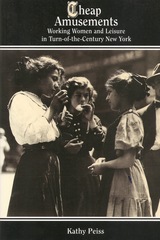
Kathy Peiss follows working women into saloons, dance halls, Coney Island amusement parks, social clubs, and nickelodeons to explore the culture of these young women between 1880 and 1920 as expressed in leisure activities. By examining the rituals and styles they adopted and placing that culture in the larger context of urban working-class life, she offers us a complex picture of the dynamics shaping a working woman's experience and consciousness at the turn-of-the-century. Not only does her analysis lead us to new insights into working-class culture, changing social relations between single men and women, and urban courtship, but it also gives us a fuller understanding of the cultural transformations that gave rise to the commercialization of leisure.
The early twentieth century witnessed the emergence of "heterosocial companionship" as a dominant ideology of gender, affirming mixed-sex patterns of social interaction, in contrast to the nineteenth century's segregated spheres. Cheap Amusements argues that a crucial part of the "reorientation of American culture" originated from below, specifically in the subculture of working women to be found in urban dance halls and amusement resorts.

Recent law school graduates often work as temporary attorneys, but law firm layoffs and downsizing have strengthened the temporary attorney industry. Cheaper by the Hour is the first book-length account of these workers.
Drawing from participant observation and interviews, Robert A. Brooks provides a richly detailed ethnographic account of freelance attorneys in Washington, DC. He places their document review work in the larger context of the deprofessionalization of skilled labor and considers how professionals relegated to temporary jobs feel diminished, degraded, or demeaned by work that is often tedious, repetitive, and well beneath their abilities.
Brooks documents how firms break a lawyer's work into discrete components that require less skill to realize maximum profits. Moreover, he argues that information technology and efficiency demands are further stratifying the profession and creating a new underclass of lawyers who do low-end commodity work.
By delving into the history of American Jews’ philanthropic giving to Israelis, Fleisch assesses the core nature of power sharing between both sides of the Jewish diaspora to the United States through in-depth contemporary case studies of the relationship between sixteen non-governmental organizations and their American Jewish donors. Field observation, document analysis, and interviews with leaders, activists, and select donors alike serve a critical role here, as Fleisch assesses whether these contemporary philanthropic associations repeat classic dynamics of power-sharing or whether they represent a marked departure from the Checkbook Zionism of old. The result is a new paradigm for evaluating power sharing that can be applied to future considerations of development in the Israel-Diaspora relationship.

Tracing how a notorious checkpoint shapes power, resistance, and lives in Palestine
Checkpoint 300, the highly securitized border facility between occupied Bethlehem and Jerusalem, is a central feature of Israeli control of Palestinian land and life. An apparatus of turnstiles, overcrowded corridors, and invasive inspections, the checkpoint regulates the movement of hundreds of thousands of Palestinians, granting access to some while excluding most. Offering a nuanced exploration of space, Mark Griffiths reveals Checkpoint 300 as a stark symbol of Israeli colonialism that embodies larger systems of control and violence.
Griffiths’s sensitive and timely work highlights the myriad ways Palestinians are affected by Israel’s spatial control—whether they travel through the checkpoint or not—demonstrating how colonial infrastructures of inequity extend far beyond their physical boundaries to shape daily life. Drawing on nearly a decade of fieldwork, Griffiths examines how colonial power infiltrates family dynamics, enforces gendered mobility restrictions, shapes local economies, and extends into the global exchange of capital and security technologies. He also underscores how Palestinians endure and resist under oppressive conditions and how indigenous forms of life and living are sustained, illuminating how colonial space is contested and countered, unmade and remade.
Blending meticulous research with vivid human stories to show the lived realities of borders, power, and resistance in the West Bank, Checkpoint 300 portrays the checkpoint as an entry into the ways that colonial space is formed through security infrastructure that is both the product and producer of wider geographies of oppression, complicity, and control.
Retail e-book files for this title are screen-reader friendly with images accompanied by short alt text and/or extended descriptions.

Is religion best seen as only a cause of war, or is it a source of comfort for those caught up in conflict?
Checkpoint, Temple, Church and Mosque is based on fieldwork in Sri Lanka’s most religiously diverse and politically troubled region in the closing years of the civil war. It provides a series of new and provocative arguments about the promise of a religiously based civil society, and the strengths and weaknesses of religious organisations and religious leaders in conflict mediation. It argues that for people trapped in long and violent conflicts, religion plays a contradictory role, often acting as a comforting and stabilising force but also, in certain situations, acting as a source of new conflict. Additionally, war itself can lead to profound changes in religious institutions: Catholic priests engage with Buddhist monks and new Muslim leaders, while Hindu temples and Pentecostal churches offer the promise of healing.
This book will provoke new debate about the role of religious organisations and leaders in situations of extreme conflict and will be of great interest to students of anthropology, development studies, religious studies and peace/conflict studies.
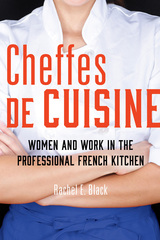
Works of Distinction, LDEI M.F.K. Fisher Prize for Excellence in Culinary Media Content, 2022
A rare woman’s-eye-view of working in the professional French kitchen
Though women enter France’s culinary professions at higher rates than ever, men still receive the lion’s share of the major awards and Michelin stars. Rachel E. Black looks at the experiences of women in Lyon to examine issues of gender inequality in France’s culinary industry. Known for its female-led kitchens, Lyon provides a unique setting for understanding the gender divide, as Lyonnais women have played a major role in maintaining the city’s culinary heritage and its status as a center for innovation. Voices from history combine with present-day interviews and participant observation to reveal the strategies women use to navigate male-dominated workplaces or, in many cases, avoid men in kitchens altogether. Black also charts how constraints imposed by French culture minimize the impact of #MeToo and other reform-minded movements.
Evocative and original, Cheffes de Cuisine celebrates the successes of women inside the professional French kitchen and reveals the obstacles women face in the culinary industry and other male-dominated professions.

Chefs, Restaurants, and Culinary Sustainability explores how chefs around the world approach culinary sustainability in highly unstable times while working in myriad professional domains. Building on empirical data collected from a wide range of cultural, historical, political, and economic settings, the contributors to this collection provide a sophisticated and engaging examination of how chefs in diverse culinary contexts tackle the increasingly urgent societal and environmental need for a more secure food future.

Hereis the first historical and sociological account of the formation of an interdisciplinary science known as genetic toxicology, and of the scientists’ social movement that created it.
After research geneticists discovered that synthetic chemicals were capable of changing the genetic structure of living organisms, scientists began to explore how these chemicals affected gene structure and function. In the late 1960s, a small group of biologists became concerned that chemical mutagens represented a serious and possibly global environmental threat.
Genetic toxicology is nurtured as much by public culture as by professional practices, reflecting the interplay of genetics research and environmental politics. Drawing on a wealth of resources, Scott Frickel examines the creation of this field through the lens of social movement theory. He reveals how a committed group of scientist-activists transformed chemical mutagens into environmental problems, mobilized existing research networks, recruited scientists and politicians, secured financial resources, and developed new ways of acquiring knowledge. The result is a book that vividly illustrates how science and activism were interwoven to create a discipline that remains a defining feature of environmental health science.


Chemically Imbalanced is a field report on how ordinary people dealing with common problems explain their suffering, how they’re increasingly turning to the thin and mechanistic language of the “body/brain,” and what these encounters might tell us. Drawing on interviews with people dealing with struggles such as underperformance in school or work, grief after the end of a relationship, or disappointment with how their life is unfolding, Joseph E. Davis reveals the profound revolution in consciousness that is underway. We now see suffering as an imbalance in the brain that needs to be fixed, usually through chemical means. This has rippled into our social and cultural conversations, and it has affected how we, as a society, imagine ourselves and envision what constitutes a good life. Davis warns that what we envision as a neurological revolution, in which suffering is a mechanistic problem, has troubling and entrapping consequences. And he makes the case that by turning away from an interpretive, meaning-making view of ourselves, we thwart our chances to enrich our souls and learn important truths about ourselves and the social conditions under which we live.
Everyday suffering—those conditions or feelings brought on by trying circumstances that arise in everyone’s lives—is something that humans have grappled with for millennia. But the last decades have seen a drastic change in the way we approach it. In the past, a person going through a time of difficulty might keep a journal or see a therapist, but now the psychological has been replaced by the biological: instead of treating the heart, soul, and mind, we take a pill to treat the brain.
Chemically Imbalanced is a field report on how ordinary people dealing with common problems explain their suffering, how they’re increasingly turning to the thin and mechanistic language of the “body/brain,” and what these encounters might tell us. Drawing on interviews with people dealing with struggles such as underperformance in school or work, grief after the end of a relationship, or disappointment with how their life is unfolding, Joseph E. Davis reveals the profound revolution in consciousness that is underway. We now see suffering as an imbalance in the brain that needs to be fixed, usually through chemical means. This has rippled into our social and cultural conversations, and it has affected how we, as a society, imagine ourselves and envision what constitutes a good life. Davis warns that what we envision as a neurological revolution, in which suffering is a mechanistic problem, has troubling and entrapping consequences. And he makes the case that by turning away from an interpretive, meaning-making view of ourselves, we thwart our chances to enrich our souls and learn important truths about ourselves and the social conditions under which we live.
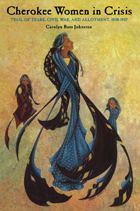
American Indian women have traditionally played vital roles in social hierarchies at the family, clan, and tribal levels. In the Cherokee Nation, specifically, women and men are considered equal contributors to the culture. With this study, however, we learn that three key historical events in the 19th and early 20th centuries—removal, the Civil War, and allotment of their lands—forced a radical renegotiation of gender roles and relations in Cherokee society.
Carolyn Johnston (who is related to John Ross, principal chief of the Nation) looks at how Cherokee women navigated these crises in ways that allowed them to retain their traditional assumptions, ceremonies, and beliefs and to thereby preserve their culture. In the process, they both lost and retained power. The author sees a poignant irony in the fact that Europeans who encountered Native societies in which women had significant power attempted to transform them into patriarchal ones and that American women struggled for hundreds of years to achieve the kind of equality that Cherokee women had enjoyed for more than a millennium.
Johnston examines the different aspects of Cherokee women’s power: authority in the family unit and the community, economic independence, personal autonomy, political clout, and spirituality. Weaving a great-grandmother theme throughout the narrative, she begins with the protest of Cherokee women against removal and concludes with the recovery of the mother town of Kituwah and the elections of Wilma Mankiller and Joyce Dugan as principal chiefs of the Cherokee Nation and the Eastern Band of Cherokees.
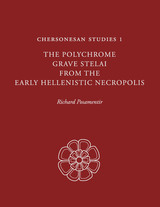
Chersonesan Studies 1 presents the painted grave stelai of the Early Hellenistic necropolis of Chersonesos Taurike, a Greek city on the northern shore of the Black Sea. This unique collection of over one hundred objects is of major interest to students of ancient art and Greek culture. Their polychrome decoration has been extraordinarily well preserved, a rarity in the ancient world. They compose a remarkable, even unique, body of evidence of Greek funerary memorial sculpture: their shapes are gender-specific, their depicted objects are gender- and age-specific, and they can be ascribed to a handful of specific workshops. Their surprising uniformity requires an explanation, since comparable assemblages from other parts of the Greek world show substantial diversity in all these aspects.
This book provides the first complete catalog and description of the stelai, together with full-color illustrations of all the significant stelai and many details. Through his painstaking recovery and reassembling of fragments, as well as the use of advanced photographic techniques, Richard Posamentir has been able to add a whole new dimension to the study of these artifacts. The volume covers the history of the stelai, analysis of the workshops, and reconstruction of the necropolis that the stelai originally graced. A comparison chapter discusses how the stelai fit into the context of Greek funerary art and provides insights into the culture and society of a city on the Black Sea.
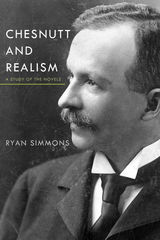
Although Chesnutt is typically acknowledged as the most prominent African American writer of the realist period, scholars have paid little attention to the central question of this study: what does it mean to call Chesnutt a realist? As a writer whose career was restricted by the dismal racial politics of his era, Chesnutt refused to conform to literary conventions for depicting race. Nor did he use his imaginative skills to evade the realities he and other African Americans faced. Rather, he experimented with ways of portraying reality that could elicit an appropriate, proportionate response to it, as Ryan Simmons demonstrates in extended readings of each of Chesnutt’s novels, including important unpublished works overlooked by previous critics.
In addition, Chesnutt and Realism addresses a curiously neglected subject in American literary studies—the relationship between American literary realism and race. By taking Chesnutt seriously as a contributor to realism, this book articulates the strategies by which one African American intellectual helped to define the discourses that influenced his fate.
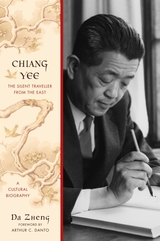
This biography is more than a recounting of extraordinary accomplishments. It also embraces the transatlantic life experience of Yee who traveled from China to England and then on to the United States, where he taught at Columbia University, to his return to China in 1975, after a forty-two year absence. Interwoven is the history of the communist revolution in China; the battle to save England during World War II; the United States during the McCarthy red scare era; and, eventually, thawing Sino-American relations in the 1970s. Da Zheng uncovers Yee's encounters with racial exclusion and immigration laws, displacement, exile, and the pain and losses he endured hidden behind a popular public image.
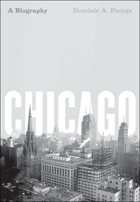
Chicago has been called by many names. Nelson Algren declared it a “City on the Make.” Carl Sandburg dubbed it the “City of Big Shoulders.” Upton Sinclair christened it “The Jungle,” while New Yorkers, naturally, pronounced it “the Second City.”
At last there is a book for all of us, whatever we choose to call Chicago. In this magisterial biography, historian Dominic Pacyga traces the storied past of his hometown, from the explorations of Joliet and Marquette in 1673 to the new wave of urban pioneers today. The city’s great industrialists, reformers, and politicians—and, indeed, the many not-so-great and downright notorious—animate this book, from Al Capone and Jane Addams to Mayor Richard J. Daley and President Barack Obama. But what distinguishes this book from the many others on the subject is its author’s uncommon ability to illuminate the lives of Chicago’s ordinary people. Raised on the city’s South Side and employed for a time in the stockyards, Pacyga gives voice to the city’s steelyard workers and kill floor operators, and maps the neighborhoods distinguished not by Louis Sullivan masterworks, but by bungalows and corner taverns.
Filled with the city’s one-of-a-kind characters and all of its defining moments, Chicago: A Biography is as big and boisterous as its namesake—and as ambitious as the men and women who built it.
This is an auto-narrated audiobook version of this book.
Chicago has been called by many names. Nelson Algren declared it a “City on the Make.” Carl Sandburg dubbed it the “City of Big Shoulders.” Upton Sinclair christened it “The Jungle,” while New Yorkers, naturally, pronounced it “the Second City.”
At last there is a book for all of us, whatever we choose to call Chicago. In this magisterial biography, historian Dominic Pacyga traces the storied past of his hometown, from the explorations of Joliet and Marquette in 1673 to the new wave of urban pioneers today. The city’s great industrialists, reformers, and politicians—and, indeed, the many not-so-great and downright notorious—animate this book, from Al Capone and Jane Addams to Mayor Richard J. Daley and President Barack Obama. But what distinguishes this book from the many others on the subject is its author’s uncommon ability to illuminate the lives of Chicago’s ordinary people. Raised on the city’s South Side and employed for a time in the stockyards, Pacyga gives voice to the city’s steelyard workers and kill floor operators, and maps the neighborhoods distinguished not by Louis Sullivan masterworks, but by bungalows and corner taverns.
Filled with the city’s one-of-a-kind characters and all of its defining moments, Chicago: A Biography is as big and boisterous as its namesake—and as ambitious as the men and women who built it.
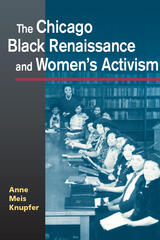
The book examines various groups of black female activists, including writers and actresses, social workers, artists, school teachers, and women's club members to document the impact of social class, gender, nativity, educational attainment, and professional affiliations on their activism. Together, these women worked to sponsor black history and literature, to protest overcrowded schools, and to act as a force for improved South Side housing and employment opportunities. Knupfer also reveals the crucial role these women played in founding and sustaining black cultural institutions, such as the first African American art museum in the country; the first African American library in Chicago; and various African American literary journals and newspapers. As a point of contrast, Knupfer also examines the overlooked activism of working-class and poor women in the Ida B. Wells and Altgeld Gardens housing projects.
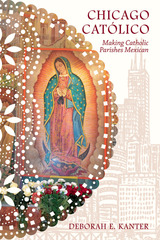
Deborah E. Kanter tells the story of neighborhood change and rebirth in Chicago's Mexican American communities. She unveils a vibrant history of Mexican American and Mexican immigrant relations as remembered by laity and clergy, schoolchildren and their female religious teachers, parish athletes and coaches, European American neighbors, and from the immigrant women who organized as guadalupanas and their husbands who took part in the Holy Name Society. Kanter shows how the newly arrived mixed memories of home into learning the ways of Chicago to create new identities. In an ever-evolving city, Mexican immigrants and Mexican Americans’ fierce devotion to their churches transformed neighborhoods such as Pilsen.
The first-ever study of Mexican-descent Catholicism in the city, Chicago Católico illuminates a previously unexplored facet of the urban past and provides present-day lessons for American communities undergoing ethnic integration and succession.
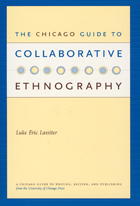
The Chicago Guide to Collaborative Ethnography presents a historical, theoretical, and practice-oriented road map for this shift from incidental collaboration to a more conscious and explicit collaborative strategy. Luke Eric Lassiter charts the history of collaborative ethnography from its earliest implementation to its contemporary emergence in fields such as feminism, humanistic anthropology, and critical ethnography. On this historical and theoretical base, Lassiter outlines concrete steps for achieving a more deliberate and overt collaborative practice throughout the processes of fieldwork and writing. As a participatory action situated in the ethical commitments between ethnographers and consultants and focused on the co-construction of texts, collaborative ethnography, argues Lassiter, is among the most powerful ways to press ethnographic fieldwork and writing into the service of an applied and public scholarship.
A comprehensive and highly accessible handbook for ethnographers of all stripes, The Chicago Guide to Collaborative Ethnography will become a fixture in the development of a critical practice of anthropology, invaluable to both undergraduates, graduate students, and faculty alike.
Miller, an experienced teacher of research methods, statistics, and research writing, opens by introducing a set of basic principles for writing about numbers, then presents a toolkit of techniques that can be applied to prose, tables, charts, and presentations. Throughout the book, she emphasizes flexibility, showing writers that different approaches work for different kinds of data and different types of audiences.
The second edition adds a chapter on writing about numbers for lay audiences, explaining how to avoid overwhelming readers with jargon and technical issues. Also new is an appendix comparing the contents and formats of speeches, research posters, and papers, to teach writers how to create all three types of communication without starting each from scratch. An expanded companion website includes new multimedia resources such as slide shows and podcasts that illustrate the concepts and techniques, along with an updated study guide of problem sets and suggested course extensions.
This continues to be the only book that brings together all the tasks that go into writing about numbers, integrating advice on finding data, calculating statistics, organizing ideas, designing tables and charts, and writing prose all in one volume. Field-tested with students and professionals alike, this holistic book is the go-to guide for everyone who writes or speaks about numbers.

Mexican American and Puerto Rican women have long taken up the challenge to improve the lives of Chicagoans in the city’s Latino/a/x communities. Rita D. Hernández, Leticia Villarreal Sosa, and Elena R. Gutiérrez present testimonies by Latina leaders who blazed new trails and shaped Latina Chicago history from the 1960s through today.
Taking a do-it-all attitude, these women advanced agendas, built institutions, forged alliances, and created essential resources that Latino/a/x communities lacked. Time and again, they found themselves the first Latina to hold their post or part of the first Latino/a/x institution of its kind. Just as often, early grassroots efforts to address issues affecting themselves, their families, and their neighborhoods grew into larger endeavors. Their experiences ranged from public schools to healthcare to politics to broadcast media, and each woman’s story shows how her work changed countless lives and still reverberates across the entire city.
An eyewitness view of an unknown history, Chicago Latina Trailblazers reveals the vision and passion that fueled a group of women in the vanguard of reform.
Contributors: Ana Castillo, Maria B. Cerda, Carmen Chico, Aracelis Flecha Figueroa, Aida Luz Maisonet Giachello, Mary Gonzales, Ada Nivia López, Emma Lozano, Virginia Martinez, Carmen Mendoza, Elena Mulcahy, Guadalupe Reyes, Luz Maria B. Solis, and Carmen Velasquez

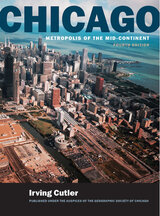
Chicago: Metropolis of the Mid-Continent provides a comprehensive portrayal of the growth and development of Chicago from the mudhole of the prairie to today’s world-class city. This completely revised fourth edition skillfully weaves together the geography, history, economy, and culture of the city and its suburbs with a special emphasis on the role of the many ethnic and racial groups that comprise the “real Chicago” of its neighborhoods. Cutler demonstrates how the geography of “Chicagoland” and the influx of a diverse population spurred transportation, industrial technology, the economy, and sporadic planning to foster rapid urban growth, which brought both great progress and severe problems.
Through insightful analysis, Cutler also traces the demographic and societal changes to Chicago, critically examining such problems as the environment, education, racial tension, crime, welfare, housing, employment, and transportation. Richly illustrated with nearly three hundred drawings, photos, maps, and tables, the volume includes six appendices with sections dedicated to Chicago facts, population growth and income data, weather and climate, significant dates, and historic sites.

"This is an important piece of work on the history of sociology, but it is more than merely historical: Martin Bulmer's undertaking is also to explain why historical events occurred as they did, using potentially general theoretical ideas. He has studied what he sees as the period, from 1915 to 1935, when the 'Chicago School' most flourished, and defines the nature of its achievements and what made them possible . . . It is likely to become the indispensible historical source for its topic."—Jennifer Platt, Sociology
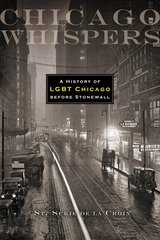
Chicago Whispers illuminates a colorful and vibrant record of lesbian, gay, bisexual, and transgendered people who lived and loved in Chicago from the city’s beginnings in the 1670s as a fur-trading post to the end of the 1960s. Journalist St. Sukie de la Croix, drawing on years of archival research and personal interviews, reclaims Chicago’s LGBT past that had been forgotten, suppressed, or overlooked.
Included here are Jane Addams, the pioneer of American social work; blues legend Ma Rainey, who recorded “Sissy Blues” in Chicago in 1926; commercial artist J. C. Leyendecker, who used his lover as the model for “The Arrow Collar Man” advertisements; and celebrated playwright Lorraine Hansberry, author of A Raisin in the Sun. Here, too, are accounts of vice dens during the Civil War and classy gentlemen’s clubs; the wild and gaudy First Ward Ball that was held annually from 1896 to 1908; gender-crossing performers in cabarets and at carnival sideshows; rights activists like Henry Gerber in the 1920s; authors of lesbian pulp novels and publishers of “physique magazines”; and evidence of thousands of nameless queer Chicagoans who worked as artists and musicians, in the factories, offices, and shops, at theaters and in hotels. Chicago Whispers offers a diverse collection of alternately hip and heart-wrenching accounts that crackle with vitality.
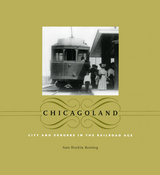
Historian and coeditor of the acclaimed Encyclopedia of Chicago, Ann Durkin Keating resurrects for us here the bustling network that defined greater Chicagoland. Taking a new approach to the history of the city, Keating shifts the focus to the landscapes and built environments of the metropolitan region. Organized by four categories of settlements-farm centers, industrial towns, commuter suburbs, and recreational and institutional centers-that framed the city, Chicagoland offers the collective history of 230 neighborhoods and communities, the people who built them, and the structures they left behind that still stand today.
Keating reanimates nineteenth-century Chicagoland with more than a hundred photographs and maps; we find here the taverns, depots, and way stations that were the hubs of the region's vibrant, mobile life. Keating also includes an appendix of driving tours so readers can see this history for themselves. Chicagoland takes us into the buildings and sites that are still part of our landscape and repopulates them with the stories and characters behind their creation. The result is a wide-angle historical view of Chicago, an entirely new way to understand the region.
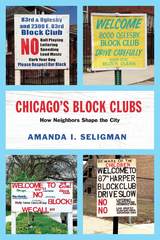
In Chicago’s Block Clubs, Amanda I. Seligman uncovers the history of the block club in Chicago—from its origins in the Urban League in the early 1900s through to the Chicago Police Department’s twenty-first-century community policing program. Recognizing that many neighborhood problems are too big for one resident to handle—but too small for the city to keep up with—city residents have for more than a century created clubs to establish and maintain their neighborhood’s particular social dynamics, quality of life, and appearance. Omnipresent yet evanescent, block clubs are sometimes the major outlets for community organizing in the city—especially in neighborhoods otherwise lacking in political strength and clout. Drawing on the stories of hundreds of these groups from across the city, Seligman vividly illustrates what neighbors can—and cannot—accomplish when they work together.
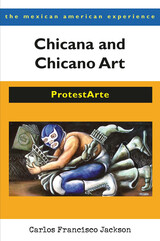
Although the word “Chicano” once held negative connotations, students—along with civil rights activists and artists—adopted it in the late 1960s in order to reimagine and redefine what it meant to be Mexican American in the United States. Chicanismo is the ideology and spirit behind the Chicano Movement and Chicanismo unites the artists whose work is revealed and celebrated in this book.
Jackson’s scope is wide. He includes paintings, prints, murals, altars, sculptures, and photographs—and, of course, the artists who created them. Beginning with key influences, he describes the importance of poster and mural art, focusing on the work of the Mexican artist José Guadalupe Posada and the significance of Mexican and Cuban talleres (print workshops). He examines the importance of art collectives in the United States, as well as Chicano talleres and community art centers, for the growth of the Chicano art movement. In conclusion, he considers how Chicano art has been presented to the general American public.
As Jackson shows, the visual arts have both reflected and created Chicano culture in the United States. For college students—and for all readers who want to learn more about this fascinating subject—his book is an ideal introduction to an art movement with a social conscience.

Chicana and Chicano Mental Health offers a model to understand and to address the mental health challenges and service disparities affecting Mexican immigrants and Mexican Americans/Chicanos. Yvette G. Flores, who has more than thirty years of experience as a clinical psychologist, provides in-depth analysis of the major mental health challenges facing these groups: depression; anxiety disorders, including post-traumatic stress disorder; substance abuse; and intimate partner violence. Using a life-cycle perspective that incorporates indigenous health beliefs, Flores examines the mental health issues affecting children and adolescents, adult men and women, and elderly Mexican Americans.
Through case studies, Flores examines the importance of understanding cultural values, class position, and the gender and sexual roles and expectations Chicanas/os negotiate, as well as the legacies of migration, transculturation, and multiculturality. Chicana and Chicano Mental Health is the first book of its kind to embrace both Western and Indigenous perspectives.
Ideally suited for students in psychology, social welfare, ethnic studies, and sociology, the book also provides valuable information for mental health professionals who desire a deeper understanding of the needs and strengths of the largest ethnic minority and Hispanic population group in the United States.
Creating an invaluable archive, Laura E. Pérez examines the work of more than forty Chicana artists across a variety of media including painting, printmaking, sculpture, performance, photography, film and video, comics, sound recording, interactive CD-ROM, altars and other installation forms, and fiction, poetry, and plays. While key works from the 1960s and 1970s are discussed, most of the pieces considered were produced between 1985 and 2001. Providing a rich interpretive framework, Pérez describes how Chicana artists invoke a culturally hybrid spirituality to challenge racism, bigotry, patriarchy, and homophobia. They make use of, and often radically rework, pre-Columbian Mesoamerican and other non-Western notions of art and art-making, and they struggle to create liberating versions of familiar iconography such as the Virgin of Guadalupe and the Sacred Heart. Filled with representations of spirituality and allusions to non-Western visual and cultural traditions, the work of these Chicana artists is a vital contribution to a more inclusive canon of American arts.
The contributors contemplate a number of facets of Chicana experience: life on the Mexico-U.S. border, bilingualism, the problems posed by a culture of repressive sexuality, the ranchera song, and domesticana artistic production. They also look at Chicana feminism in the 1960s and 1970s, the history of Chicanas in the larger Chicano movement, autobiographical writing, and the interplay between gender and ethnicity in the movie Lone Star. Some of the essays are expansive; others—such as Norma Cantú’s discussion of the writing of her fictionalized memoir Canícula—are intimate. All are committed to the transformative powers of critical inquiry and feminist theory.
Contributors. Norma Alarcón, Gabriela F. Arredondo, Ruth Behar, Maylei Blackwell, Norma E. Cantú, Sergio de la Mora, Ann duCille, Michelle Fine, Rosa Linda Fregoso, Rebecca M. Gámez, Jennifer González, Ellie Hernández, Aída Hurtado, Claire Joysmith, Norma Klahn, Amalia Mesa-Bains, Olga Nájera-Ramírez, Anna Nieto Gomez, Renato Rosaldo, Elba Rosario Sánchez, Marcia Stephenson, Jose Manuel Valenzuela, Patricia Zavella
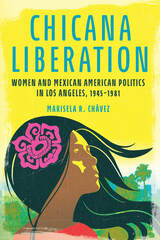
Mexican American women reached across generations to develop a bridging activism that drew on different methods and ideologies to pursue their goals. Marisela R. Chávez uses a wealth of untapped oral histories to reveal the diverse ways activist Mexican American women in Los Angeles claimed their own voices and space while seeking to leverage power. Chávez tells the stories of the people who honed beliefs and practices before the advent of the Chicano movement and the participants in the movement after its launch in the late 1960s. As she shows, Chicanas across generations challenged societal traditions that at first assumed their place on the sidelines and then assigned them second-class status within political structures built on their work. Fueled by a surging pride in their Mexican heritage and indigenous roots, these activists created spaces for themselves that acknowledged their lives as Mexicans and women.
Vivid and compelling, Chicana Liberation reveals the remarkable range of political beliefs and life experiences behind a new activism and feminism shaped by Mexican American women.
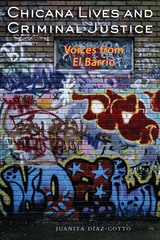
This first comprehensive study of Chicanas encountering the U.S. criminal justice system is set within the context of the international war on drugs as witnessed at street level in Chicana/o barrios. Chicana Lives and Criminal Justice uses oral history to chronicle the lives of twenty-four Chicana pintas (prisoners/former prisoners) repeatedly arrested and incarcerated for non-violent, low-level economic and drug-related crimes. It also provides the first documentation of the thirty-four-year history of Sybil Brand Institute, Los Angeles' former women's jail.
In a time and place where drug war policies target people of color and their communities, drug-addicted Chicanas are caught up in an endless cycle of police abuse, arrest, and incarceration. They feel the impact of mandatory sentencing laws, failing social services and endemic poverty, violence, racism, and gender discrimination. The women in this book frankly discuss not only their jail experiences, but also their family histories, involvement with gangs, addiction to drugs, encounters with the juvenile and adult criminal justice systems, and their successful and unsuccessful attempts to recover from addiction and reconstitute fractured families. The Chicanas' stories underscore the amazing resilience and determination that have allowed many of the women to break the cycle of abuse. Díaz-Cotto also makes policy recommendations for those who come in contact with Chicanas/Latinas caught in the criminal justice system.
The volume is organized in four parts: (1) separation, migration, state violence, and detention; (2) Chicana/Latina/WOC mother-activists; (3) intergenerational mothering; and (4) loss, reproductive justice, and holistic pregnancy. Contributors offer a just framework for Chicana and Women of Color mother-scholars, activists, and allies to thrive within and outside of the academy. They describe a new interpretation of motherwork that addresses the layers of care work needed for collective resistance to structural oppression and inequality.
This anthology is a call to action for justice. Contributions are both theoretical and epistemological, and they offer an understanding of motherwork through Chicana and Women of Color experiences.
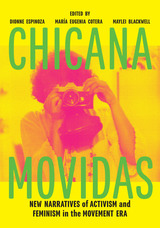
Winner, Best Multiauthor Nonfiction Book, International Latino Book Awards, 2019
With contributions from a wide array of scholars and activists, including leading Chicana feminists from the period, this groundbreaking anthology is the first collection of scholarly essays and testimonios that focuses on Chicana organizing, activism, and leadership in the movement years. The essays in Chicana Movidas: New Narratives of Activisim and Feminism in the Movement Era demonstrate how Chicanas enacted a new kind of politica at the intersection of race, class, gender, and sexuality, and developed innovative concepts, tactics, and methodologies that in turn generated new theories, art forms, organizational spaces, and strategies of alliance.
These are the technologies of resistance documented in Chicana Movidas, a volume that brings together critical biographies of Chicana activists and their bodies of work; essays that focus on understudied organizations, mobilizations, regions, and subjects; examinations of emergent Chicana archives and the politics of collection; and scholarly approaches that challenge the temporal, political, heteronormative, and spatial limits of established Chicano movement narratives. Charting the rise of a field of knowledge that crosses the boundaries of Chicano studies, feminist theory, and queer theory, Chicana Movidas: New Narratives of Activisim and Feminism in the Movement Era offers a transgenerational perspective on the intellectual and political legacies of early Chicana feminism.
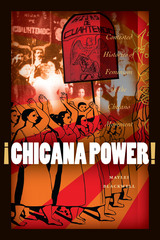
The first book-length study of women's involvement in the Chicano Movement of the late 1960s and 1970s, ¡Chicana Power! tells the powerful story of the emergence of Chicana feminism within student and community-based organizations throughout southern California and the Southwest. As Chicanos engaged in widespread protest in their struggle for social justice, civil rights, and self-determination, women in el movimiento became increasingly militant about the gap between the rhetoric of equality and the organizational culture that suppressed women's leadership and subjected women to chauvinism, discrimination, and sexual harassment. Based on rich oral histories and extensive archival research, Maylei Blackwell analyzes the struggles over gender and sexuality within the Chicano Movement and illustrates how those struggles produced new forms of racial consciousness, gender awareness, and political identities.
¡Chicana Power! provides a critical genealogy of pioneering Chicana activist and theorist Anna NietoGomez and the Hijas de Cuauhtémoc, one of the first Latina feminist organizations, who together with other Chicana activists forged an autonomous space for women's political participation and challenged the gendered confines of Chicano nationalism in the movement and in the formation of the field of Chicana studies. She uncovers the multifaceted vision of liberation that continues to reverberate today as contemporary activists, artists, and intellectuals, both grassroots and academic, struggle for, revise, and rework the political legacy of Chicana feminism.
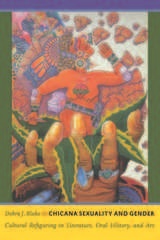
Blake looks at how the Chicana professional intellectuals and the U.S. Mexicana women refigure confining and demeaning constructions of female gender roles and racial, ethnic, and sexual identities. She organizes her analysis around re-imaginings of La Virgen de Guadalupe, La Llorona, indigenous Mexica goddesses, and La Malinche, the indigenous interpreter for Hernán Cortés during the Spanish conquest. In doing so, Blake reveals how the professional intellectuals and the working-class and semiprofessional women rework or invoke the female icons to confront the repression of female sexuality, limiting gender roles, inequality in male and female relationships, and violence against women. While the representational strategies of the two groups of women are significantly different and the U.S. Mexicanas would not necessarily call themselves feminists, Blake nonetheless illuminates a continuum of Chicana feminist thinking, showing how both groups of women expand lifestyle choices and promote the health and well-being of women of Mexican origin or descent.
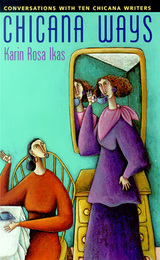
As the United States witnesses a major shift in its population—from a white majority to a country where no single group predominates—the new mix not only affects relations between ethnic groups but also influences how individuals view themselves. This book addresses the development of individual and social identity within the context of these new demographic and cultural shifts. It identifies the contemporary forces that shape group identity in order to show how Chicana/os' sense of personal identity and social identity develops and how these identities are affected by changes in social relations.
The authors, both nationally recognized experts in social psychology, are concerned with the subjective definitions individuals have about the social groups with which they identify, as well as with linguistic, cultural, and social contexts. Their analysis reveals what the majority of Chicanas/os experience, using examples from music, movies, and the arts to illustrate complex concepts. In considering ¿Quién Soy? ("Who Am I?"), they discuss how individuals develop a positive sense of who they are as Chicanas/os, with an emphasis on the influence of family, schools, and community. Regarding ¿Quiénes Somos? ("Who Are We?"), they explore Chicanas/os' different group memberships that define who they are as a people, particularly reviewing the colonization history of the American Southwest to show how Chicanas/os' group identity is influenced by this history. A chapter on "Language, Culture, and Community" looks at how Chicanas/os define their social identities inside and outside their communities, whether in the classroom, neighborhood, or region. In a final chapter, the authors speculate how Chicana/o identity will change as Chicanas/os become a significant proportion of the U.S. population and as such factors as immigration, intermarriage, and improvements in social standing influence the process of identification. At the end of each chapter is an engaging exercise that reinforces its main argument and shows how psychological approaches are applicable to real life. Chicana/o Identity in a Changing U.S. Society is an unprecedented introduction to psychological issues that students can relate to and understand. It complements other titles in the Mexican American Experience series to provide a balanced view of issues that affect Mexican Americans today.
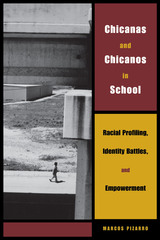
By any measure of test scores and graduation rates, public schools are failing to educate a large percentage of Chicana/o youth. But despite years of analysis of this failure, no consensus has been reached as to how to realistically address it. Taking a new approach to these issues, Marcos Pizarro goes directly to Chicana/o students in both urban and rural school districts to ask what their school experiences are really like, how teachers and administrators support or thwart their educational aspirations, and how schools could better serve their Chicana/o students.
In this accessible, from-the-trenches account of the Chicana/o school experience, Marcos Pizarro makes the case that racial identity formation is the crucial variable in Chicana/o students' success or failure in school. He draws on the insights of students in East Los Angeles and rural Washington State, as well as years of research and activism in public education, to demonstrate that Chicana/o students face the daunting challenge of forming a positive sense of racial identity within an educational system that unintentionally yet consistently holds them to low standards because of their race. From his analysis of this systemic problem, he develops a model for understanding the process of racialization and for empowering Chicana/o students to succeed in school that can be used by teachers, school administrators, parents, community members, and students themselves.
Chicanas/Chicanos at the Crossroads is a state-of-the-art assessment of the most significant developments in the conditions, fortunes, and experiences of Chicanas/os since the late seventies, with an emphasis on the years after 1980, which have thus far received little scholarly attention. Ten essays by leading Chicana and Chicano scholars on economic, social, educational, and political trends in Chicana/o life examine such issues as the rapid population growth of Chicanas/os and other Latinos; the ascendancy of Reaganomics and the turn to the right of American politics; the rise of anti-immigrant sentiment; the launching of new initiatives by the Mexican government toward the Chicano community; and the emergence of a new generation of political activists. The authors have been drawn from a broad array of disciplines, ranging from economics to women's studies, in order to offer a multidisciplinary perspective on Chicana/o developments in the contemporary era. The inclusion of authors from different regions of the United States and from divergent backgrounds enhances the broad perspective of the volume.
The editors offer this anthology with the intent of providing timely and useful insights and stimulating reflection and scholarship on a diverse and complex population. A testament to three decades of intense social struggle, Chicanas/Chicanos at the Crossroads is ample evidence that the legacy of the Movimiento is alive and well.
Contents
Part One: Demographic and Economic Trends Among Chicanas/os
1. Demographic Trends in the Chicano Population: Policy Implications for the Twenty First Century, Susan Gonzalez-Baker
2. Mexican Immigration in the 1980s and Beyond: Implications for Chicanos/as, Leo R. Chavez and Rebecca Martinez
3. Chicanas/os in the Economy: Issues and Challenges Since 1970, Refugio Rochin and Adela de la Torre
Part Two: Chicano Politics: Trajectories and Consequences
4. The Chicano Movement: Its Legacy for Politics and Policy, John A. Garcia
5. Chicano Organizational Politics and Strategies in the Era of Retrenchment, Isidro D. Ortiz
6. Return to Aztlan: Mexican Policy Design Toward Chicanos, María Rosa Garcia-Acevedo
Part Three: Chicana/o Educational Struggles: Dimensions, Accomplishments and Challenges
7. Actors Not Victims: Chicanos in the Struggle for Educational Equality, Guadalupe San Miguel
8. Juncture in the Road: Chincano Studies Since El Plan de Santa Barbara, Ignacio Garcia
Part Four: Gender Feminism and Chicanas/os: Developments and Perspectives
9. Gender and Its Discontinuities in Male/Female Domestic Relations: Mexicans in Cross Cultural Context, Adelaida R. Del Castillo
10. With Quill and Torch: A Chicana Perspective on the American Women's Movement and Feminist Theories, Beatríz Pesquera and Denise A. Segura

Chicane Mental Health offers an intersectional and developmental framework for understanding and addressing the mental health needs of Chicane communities. Drawing on over four decades of clinical and academic experience, Yvette G. Flores addresses the entire lifespan from children and youth to emerging adults, adults, and elders.
Foregrounding cultural humility and an understanding of Chicane strengths and community cultural wealth, the author uses vivid vignettes and community-based insights to address how historical trauma, systemic oppression, and sociocultural dynamics shape mental well-being. Flores highlights the cultural strengths and protective factors that foster resilience.
This new edition expands on Flores’s influential work by integrating Indigenous healing practices, decolonial theory, and liberatory models of care. It challenges dominant Western paradigms and calls for culturally affirming, community-engaged approaches to mental health. With a focus on issues such as depression, substance use, intimate partner violence, and intergenerational trauma, the book provides practical tools for scholars, clinicians, and students committed to social justice and healing in Chicane and Latine communities.
Contributors. Carlos Almaraz, David Avalos, Judith F. Baca, Raye Bemis, Jo-Anne Berelowitz, Elizabeth Blair, Chaz Bojóroquez, Philip Brookman, Mel Casas, C. Ondine Chavoya, Karen Mary Davalos, Rupert García, Alicia Gaspar de Alba, Shifra Goldman, Jennifer A. González, Rita Gonzalez, Robb Hernández, Juan Felipe Herrera, Louis Hock, Nancy L. Kelker, Philip Kennicott, Josh Kun, Asta Kuusinen, Gilberto “Magu” Luján, Amelia Malagamba-Ansotegui, Amalia Mesa-Bains, Dylan Miner, Malaquias Montoya, Judithe Hernández de Neikrug, Chon Noriega, Joseph Palis, Laura Elisa Pérez, Peter Plagens, Catherine Ramírez, Matthew Reilly, James Rojas, Terezita Romo, Ralph Rugoff, Lezlie Salkowitz-Montoya, Marcos Sanchez-Tranquilino, Cylena Simonds, Elizabeth Sisco, John Tagg, Roberto Tejada, Rubén Trejo, Gabriela Valdivia, Tomás Ybarra-Frausto, Victor Zamudio-Taylor
In this comprehensive examination of Chicano and Chicana literature, Charles M. Tatum brings a new and refreshing perspective to the ethnic identity of Mexican Americans. From the earliest sixteenth-century chronicles of the Spanish Period, to the poetry and narrative fiction of the second half of the nineteenth century and the first half of the twentieth century, and then to the flowering of all literary genres in the post–Chicano Movement years, Chicano/a literature amply reflects the hopes and aspirations as well as the frustrations and disillusionments of an often marginalized population.
Exploring the work of Rudolfo Anaya, Sandra Cisneros, Luis Alberto Urrea, and many more, Tatum examines the important social, historical, and cultural contexts in which the writing evolved, paying special attention to the Chicano Movement and the flourishing of literary texts during the 1960s and early 1970s. Chapters provide an overview of the most important theoretical and critical approaches employed by scholars over the past forty years and survey the major trends and themes in contemporary autobiography, memoir, fiction, and poetry.
The most complete and up-to-date introduction to Chicana/o literature available, this book will be an ideal reference for scholars of Hispanic and American literature. Discussion questions and suggested reading included at the end of each chapter are especially suited for classroom use.
Lesser known is the influence that Communism and socialism had on the early roots of the Chicano Movement, a legacy that continues today. Examining the role of Mexican American working-class and radical labor activism in American history, Enrique M. Buelna focuses on the work of the radical Left, particularly the Communist Party (CP) USA.
Buelna delves into the experiences of Cuarón, in particular, as well as those of his family. He writes about the family’s migration from Mexico; work in the mines in Morenci, Arizona; move to Los Angeles during the Great Depression; service in World War II; and experiences during the Cold War as a background to exploring the experiences of many Mexican Americans during this time period.
The author follows the thread of radical activism and the depth of its influence on Mexican Americans struggling to achieve social justice and equality. The legacy of Cuarón and his comrades is significant to the Chicano Movement and in understanding the development of the labor and civil rights movements in the United States. Their contributions, in particular during the 1960s and 1970s, informed a new generation to demand an end to the Vietnam War and to expose educational inequality, poverty, civil rights abuses, and police brutality.
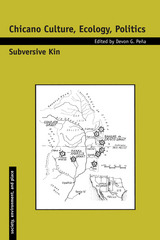
Employing a variety of genres ranging from poetry to autobiography to theoretical and empirical essays, the voices in this collection speak to the most significant issues of environmentalism and social justice, recognizing throughout the need for a pluralism of Chicana/o philosophies. The contributors provide an excellent basis for understanding how multiple Chicana/o views on the environment play out in the context of dominant social, political and economic views. Chicano Culture, Ecology, Politics examines a number of Chicana/o ecological perspectives. How can the ethics of reciprocity present in Chicana/o agropastoral life be protected and applied on a broader scale? How can the dominant society, whose economic structure is invested in "placeless mobility," take note of the harm caused to land-based cultures, take responsibility for it, and take heed before it is too late? Will the larger society be "ecologically housebroken" before it destroys its home?
Grounded in actual political struggles waged by Chicana/o communities over issues of environmental destruction, cultural genocide, and socioeconomic domination, this volume provides an important series of snapshots of Chicana/o history. Chicano Culture, Ecology, Politics illuminates the bridges that exist—and must be understood—between race, ethnicity, class, gender, politics, and ecology.
CONTENTS
Part 1: IndoHispano Land Ethics
Los Animalitos: Culture, Ecology, and the Politics of Place in the Upper R¡o Grande, Devon G. Peña
Social Action Research, Bioregionalism, and the Upper Río Grande, Rubén O. Martínez
Notes on (Home)Land Ethics: Ideas, Values, and the Land, Reyes García
Part 2: Environmental History and Ecological Politics
Ecological Legitimacy and Cultural Essentialism: Hispano Grazing in Northern New Mexico, Laura Pulido
The Capitalist Tool, the Lawless, and the Violent: A Critique of Recent Southwestern Environmental History, Devon G. Peña and Rubén O. Martínez
Ecofeminism and Chicano Environmental Struggles: Bridges across Gender and Race, Gwyn Kirk
Philosophy Meets Practice: A Critique of Ecofeminism through the Voices of Three Chicana Activists, Malia Davis
Part 3: Alternatives to Destruction
The Pasture Poacher (a poem), Joseph C. Gallegos
Acequia Tales: Stories from a Chicano Centennial Farm, Joseph C. Gallegos
A Gold Mine, an Orchard, and an Eleventh Commandment, Devon G. Peña
The various protest movements that together constituted the Chicano Movement of the 1960s and 1970s urged a "politics of inclusion" to bring Mexican Americans into the mainstream of United States political and social life. This volume of ten specially commissioned essays assesses the post-movement years, asking "what went wrong? what went right? and where are we now?" Collectively, the essays offer a wide-ranging portrayal of the complex situation of Mexican Americans as the twenty-first century begins.
The essays are grouped into community, institutional, and general studies, with an introduction by editor Montejano. Geographically, they point to the importance of "Hispanic" politics in the Southwest, as well as in Chicago wards and in the U.S. Congress, with ramifications in Mexico and Central America. Thematically, they discuss "non-traditional" politics stemming from gender identity, environmental issues, theatre production, labor organizing, university policymaking, along with the more traditional politics revolving around state and city government, the Congressional Hispanic Caucus, and various advocacy organizations.
This edition features:
- Chicanas in the Chicano Movement and Chicanos since the Chicano Movement
- New material on popular authors such as Denise Chávez, Alfredo Vea, Luis Alberto Urrea, and Juan Felipe Herrera
- Suggested Readings to supplement each chapter
- Theoretical approaches to popular culture, including the perspectives of Norma Cantú, Alicia Gaspar de Alba, Pancho McFarland, Michelle Habell-Pallán, and Víctor Sorell
With clear examples, an engaging writing style, and helpful discussion questions, Chicano Popular Culture, Second Edition invites readers to discover and enjoy Mexican American popular culture.
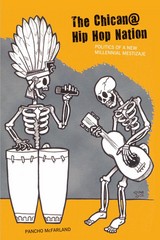
Powered by a driving beat, clever lyrics, and assertive attitudes, rap music and hip hop culture have engrossed American youth since the mid-1980s. Although the first rappers were African Americans, rap and hip hop culture quickly spread to other ethnic groups who have added their own cultural elements to the music. Chicano Rap offers the first in-depth look at how Chicano/a youth have adopted and adapted rap music and hip hop culture to express their views on gender and violence, as well as on how Chicano/a youth fit into a globalizing world.
Pancho McFarland examines over five hundred songs and seventy rap artists from all the major Chicano rap regions—San Diego, San Francisco and Northern California, Texas, and Chicago and the Midwest. He discusses the cultural, political, historical, and economic contexts in which Chicano rap has emerged and how these have shaped the violence and misogyny often expressed in Chicano rap and hip hop. In particular, he argues that the misogyny and violence of Chicano rap are direct outcomes of the "patriarchal dominance paradigm" that governs human relations in the United States. McFarland also explains how globalization, economic restructuring, and the conservative shift in national politics have affected Chicano/a youth and Chicano rap. He concludes with a look at how Xicana feminists, some Chicano rappers, and other cultural workers are striving to reach Chicano/a youth with a democratic, peaceful, empowering, and liberating message.
This collection examines changes across a broad range of cultural forms--art, literature, music, cinema and television, radio, and theater--with an emphasis on the last two decades. Original articles by both established and emerging scholars review such subjects as the growth of Tejano music and the rise of Selena, how films and television have affected the Chicana/o experience, the evolution of Chicana/o art over the last twenty years, and postmodern literary trends.
In all of the essays, the contributors emphasize that, contrary to the popular notion that Chicanas/os have succumbed to a victim mentality, they continue to actively struggle to shape the conditions of their lives and to influence the direction of American society through their arts and social struggle. Despite decades usually associated with self-interest in the larger society, the spirit of commitment and empowerment has continued to infuse Chicana/o cultural expression and points toward a vibrant future.
CONTENTSAll Over the Map: La Onda Tejana and the Making of Selena, Roberto R. Calderón
Outside Inside-The Immigrant Workers: Creating Popular Myths, Cultural Expressions, and Personal Politics in Borderlands Southern California, Juan Gómez-Quiñones
"Yo soy chicano": The Turbulent and Heroic Life of Chicanas/os in Cinema and Television, David R. Maciel and Susan Racho
The Politics of Chicano Representation in the Media, Virginia Escalante
Chicana/o and Latina/o Gazing: Audiences of the Mass Media, Diana I. Ríos
An Historical Overview/Update on the State of Chicano Art, George Vargas
Contemporary Chicano Theater, Arturo Ramírez
Breaking the Silence: Developments in the Publication and Politics of Chicana Creative Writing, 1973-1998, Edwina Barvosa-Carter
Trends and Themes in Chicana/o Writings in Postmodern Times, Francisco A. Lomelí, Teresa Márquez, and María Herrera-Sobek
Chicano Studies is a comparatively new academic discipline. Unlike well-established fields of study that long ago codified their canons and curricula, the departments of Chicano Studies that exist today on U.S. college and university campuses are less than four decades old. In this edifying and frequently eye-opening book, a career member of the discipline examines its foundations and early years. Based on an extraordinary range of sources and cognizant of infighting and the importance of personalities, Chicano Studies is the first history of the discipline.
What are the assumptions, models, theories, and practices of the academic discipline now known as Chicano Studies? Like most scholars working in the field, Michael Soldatenko didn't know the answers to these questions even though he had been teaching for many years. Intensely curious, he set out to find the answers, and this book is the result of his labors. Here readers will discover how the discipline came into existence in the late 1960s and how it matured during the next fifteen years-from an often confrontational protest of dissatisfied Chicana/o college students into a univocal scholarly voice (or so it appears to outsiders).
Part intellectual history, part social criticism, and part personal meditation, Chicano Studies attempts to make sense of the collision (and occasional wreckage) of politics, culture, scholarship, ideology, and philosophy that created a new academic discipline. Along the way, it identifies a remarkable cast of scholars and administrators who added considerable zest to the drama.
The Chicano Worker is an incisive analysis of the labor-market experiences of Mexican American workers in the late twentieth century. The authors—each established in the fields of labor economics and research on Chicano workers—describe the major employment patterns of the Chicano labor force and discuss the historical and institutional factors determining these patterns. This work speaks to the continuing widespread public interest in Mexican immigration, migrant farm labor, unionization of farm workers, Chicano education and training needs, and the legacy of discriminatory treatment against Chicanos. The authors treat the convergence of these issues and their public policy implications.
Drawing from census data as well as other sources, The Chicano Worker reports on Chicano unemployment, labor-force participation, occupational and industrial distributions of employment, and various indices of earnings. It also deals with such issues as history, family size, health, and culture. The Chicano Worker is likely to open new areas of interest, discussion, and criticism concerning Chicanos in the United States.
Each biographical chapter analyzes an underappreciated actor, revealing their artistic contributions to U.S. common culture. Their long-shot careers tell a tale of players taking action with agency and fighting for screen time and equal opportunity despite disadvantages and differential treatment in Hollywood. These dynamic and complex individuals altered cinematic representations—and audience expectations—by surpassing stereotypes.
The book explores American national character by showing how ethnic Mexicans attained social and cultural status through fair, open competition without a radical realignment of political or economic structures. Their creative achievements demanded dignity and earned respect. Anthony Macías argues that these performances demonstrated a pop culture pluralism that subtly changed mainstream America, transforming it from the mythological past of the Wild West to the speculative future of science fiction.
“We have come a long way,” says Arnulfo D. Trejo, editor of this volume, “from the time when the Mexicano silently accepted the stereotype drawn of him by the outsider.” He identifies himself as a Chicano, and his “promised land” is Aztlán, home of the ancient Aztecs, which now provides spiritual unity and a vision of the future for Chicanos.
In these twelve original compositions, says Trejo, “our purpose is not to talk to ourselves, but to open a dialogue among all concerned people.” The personal reactions to Chicano women’s struggles, political experiences, bicultural education and history provide a wealth of information for laymen as well as scholars. In addition, the book provides the most complete recorded definition of the Chicano Movement, what it has accomplished, and its goals for the future.
Contributors:
Fausto Avendaño
Roberto R. Bacalski-Martínez
David Ballesteros
José Antonio Burciaga
Rudolph O. de la Garza
Ester Gallegos y Chávez
Sylvia Alicia Gonzales
Manuel H. Guerra
Guillermo Lux
Martha A. Ramos
Reyes Ramos
Carlos G. Vélez-Ibáñez
Maurilio E. Vigil

2023 Honorable Mention Best History Book, International Latino Book Awards
Broad and encompassing examination of Chicanx popular culture since World War II and the utopian visions it articulated
Amid the rise of neoliberalism, globalization, and movements for civil rights and global justice in the post–World War II era, Chicanxs in film, music, television, and art weaponized culture to combat often oppressive economic and political conditions. They envisioned utopias that, even if never fully realized, reimagined the world and linked seemingly disparate people and places. In the latter half of the twentieth century, Chicanx popular culture forged a politics of the possible and gave rise to utopian dreams that sprang from everyday experiences.
In Chicanx Utopias, Luis Alvarez offers a broad study of these utopian visions from the 1950s to the 2000s. Probing the film Salt of the Earth, brown-eyed soul music, sitcoms, poster art, and borderlands reggae music, he examines how Chicanx pop culture, capable of both liberation and exploitation, fostered interracial and transnational identities, engaged social movements, and produced varied utopian visions with divergent possibilities and limits. Grounded in the theoretical frameworks of Walter Benjamin, Stuart Hall, and the Zapatista movement, this book reveals how Chicanxs articulated pop cultural utopias to make sense of, challenge, and improve the worlds they inhabited.
For over three decades Rich has been one of the most important voices in feminist film criticism. Her presence at film festivals (such as Sundance, where she is a member of the selection committee), her film reviews in the Village Voice, Elle, Out, and the Advocate, and her commentaries on the public radio program “The World” have secured her a place as a central figure in the remarkable history of what she deems “cinefeminism.” In the hope that a new generation of feminist film culture might be revitalized by reclaiming its own history, Rich introduces each essay with an autobiographical prologue that describes the intellectual, political, and personal moments from which the work arose. Travel, softball, sex, and voodoo all somehow fit into a book that includes classic Rich articles covering such topics as the antiporn movement, the films of Yvonne Rainer, a Julie Christie visit to Washington, and the historically evocative film Maedchen in Uniform. The result is a volume that traces the development not only of women’s involvement in cinema but of one of its key players as well.
The first book-length work from Rich—whose stature and influence in the world of film criticism and theory continue to grow—Chick Flicks exposes unexplored routes and forgotten byways of a past that’s recent enough to be remembered and far away enough to be memorable.
A provocative critique of chick lit’s glossy narratives and their complex relationship with postfeminist ideals.
Chick-Lit: Postfeminist Fiction is the fourth volume in “On the Edge: New Women’s Fiction,” FC2’s ongoing effort to discover new and innovative voices in women’s fiction. Determined to contradict the myth that “women don't write experimental fiction,” Chick-Lit discovers women writers with a fresh and irreverent wit and honesty, but no less powerful in their rendering of human experience.
Chick-Lit collects the original fiction of newly discovered writers, but also the award winning work of notable writers like Carole Maso, Jonis Agee, Stacy Levinne and Carolyn Banks. Marked by innovations in form and point-of-view, the writers in this collection are not satisfied with the terrain commonly referred to as “women’s writing.” Insane asylum sex, board games that control people’s lives, a masochistic pedophile humiliated by his victim, an obese woman paying nickels and quarters for attention from teenage girls, a deranged hair stylist and her disloyal dog, a men's impotence therapy group, a surreal landscape constantly producing the body of a woman's mother: this is writing that shouts, yes, there is such a thing as postfeminist fiction.
“Sustainability is not a buzz-word anymore; it’s a matter of survival. Meaningful achievement in sustainability will require significant paradigm shifts in attitudes about how we live, how we consume resources, how we govern ourselves and how we transport people and goods. Asti’s excellent exploration of the issues is a must-read.”
-- Subrata Basu, AIA, AICP Miami-Dade County Department of Planning and Zoning
“Industries, health care, education and others are trying to tread more lightly on our environment. To achieve sustainability goals our times demand, we must work together to maximize the benefit to our communities. Asti has always seen the larger picture and encouraged orchestration of diverse initiatives. The Chicken Came First is full of knowledge, sensitivity, and insights certain to advance the achievement of sustainable communities.”
--Richard Renfro, AIA
Renfro Design Group, AIA, New York City
READERS
Browse our collection.
PUBLISHERS
See BiblioVault's publisher services.
STUDENT SERVICES
Files for college accessibility offices.
RECENTLY PUBLISHED



UChicago Accessibility Resources
home | accessibility | search | about | contact us
BiblioVault ® 2001 - 2025
The University of Chicago Press