
 A SCHOLARLY BOOK REPOSITORY
Some of the papers in this volume evaluate a variety of policy rules based on monetary aggregates, nominal income, commodity prices, and other economic variables. Others analyze price behavior and inflation, particularly the short-run behavior of prices. Still others examine the monetary transmission mechanism—the channel through which the central bank's actions affect spending on goods and services—with a special focus on the reduction in bank lending that must accompany a reduction in reserves.
This new research will be of special interest to central bankers and academic economists.
After describing the constitutional principles that the Founding Fathers laid down to prevent state and federal governments from printing money. Timberlake shows how the First and Second Banks of the United States gradually assumed the central banking powers that were originally denied them. Drawing on congressional debates, government documents, and other primary sources, he analyses the origins and constitutionality of the greenbacks and examines the evolution of clearinghouse associations as private lenders of last resort. He completes this history with a study of the legislation that fundamentally changed the power and scope of the Federal Reserve System—the Banking Act of 1935 and the Monetary Control Act of 1980.
Writing in nontechnical language, Timberlake demystifies two centuries of monetary policy. He concludes that central banking has been largely a series of politically inspired government-serving actions that have burdened the private economy.
Monetary Policy Rules illustrates that simple policy rules are more robust and more efficient than complex rules with multiple variables. A state-of-the-art appraisal of the fundamental issues facing the Federal Reserve Board and other central banks, Monetary Policy Rules is essential reading for economic analysts and policymakers alike.
The editors of this volume attribute low inflation and deflation in the region to a number of recent phenomena. Some of these episodes, they argue, may be linked to rapid growth on the supply side of economies. Here, inadequate demand policy can produce what is referred to as a "liquidity trap" in which the expectation of falling prices encourages agents to defer costly purchases, thereby discouraging growth. Low inflation rates can also be traced to the presence of a "zero-lower bound" on interest rates, as well as the inflation-targeting phenomenon. Targets have been set so low, the editors argue, that in some cases a few bad shocks lead to deflation.
Is conventional money simply a discourse? Is it merely a socially constructed unit of exchange? If money is not an actual thing, are people then free to make collective agreements to use other forms of currency that might work more effectively for them? Proponents of “better money” argue that they have created currencies that value people more than profitability, ensuring that human needs are met with reasonable costs and decent wages—and supporting local economies that emphasize local sustainability. How did proponents develop these new economies? Are their claims valid?
Grappling with these questions and more, Money and Liberation examines the experiences of groups who have tried to build a more equitable world by inventing new forms of money. Presenting in-depth profiles of the trading networks that have been constructed both historically and more recently, including Local Exchange Trading Schemes (England), Green Dollars (New Zealand), Talente (Hungary), and the barter system in Argentina, Peter North shows how the use of currency has been redefined as part of political action, revealing surprising political ambiguity and a nuanced understanding of the potential and limits on alternative currencies as a resistance practice.
Peter North is lecturer in geography at the University of Liverpool.
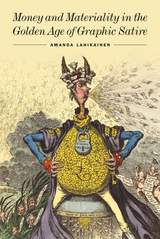
This book examines the entwined and simultaneous rise of graphic satire and cultures of paper money in late eighteenth- and early nineteenth-century Britain. Asking how Britons learned to value both graphic art and money, the book makes surprising connections between two types of engraved images that grew in popularity and influence during this time. Graphic satire grew in visual risk-taking, while paper money became a more standard carrier of financial value, courting controversy as a medium, moral problem, and factor in inflation. Through analysis of satirical prints, as well as case studies of monetary satires beyond London, this book demonstrates several key ways that cultures attach value to printed paper, accepting it as social reality and institutional fact. Thus, satirical banknotes were objects that broke down the distinction between paper money and graphic satire altogether.
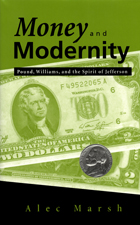

Sarah Bracking explores the role of governments and development finance institutions in managing the markets in which the poorest countries operate. These institutions -- the 'Great Predators' -- are trapping the populations of the south in a permanent cycle of austerity.
Bracking examines the political economy relations between states. She shows how pseudo-public 'development' institutions retain complete economic control over Southern markets, yet the international system is itself unregulated. Operating in the interests of North America and the European Union, they have a political purpose, and yet serve to cloud the brute power relations between states.
This book will be of interest to anyone studying debt and development, global financial institutions, and the way the world economy is regulated and governed.
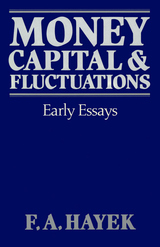
EDITOR'S INTRODUCTION
INTRODUCTION
1. THE MONETARY POLICY OF THE UNITED STATES AFTER THE RECOVERY FROM THE 1920 CRISIS (1925)
2. SOME REMARKS ON THE PROBLEM OF IMPUTATION (1926)
3. ON THE PROBLEM OF THE THEORY OF INTEREST (1927)
4. INTERTEMPORAL PRICE EQUILIBRIUM AND MOVEMENTS IN THE VALUE OF MONEY (1928)
5. THE FATE OF THE GOLD STANDARD (1932)
6. CAPITAL CONSUMPTION (1932)
7. ON 'NEUTRAL MONEY' (1933)
8. TECHNICAL PROGRESS AND EXCESS CAPACITY (1936)
Two reviews
MARGINAL UTILITY AND ECONOMIC CALCULATION (1925)
THE EXCHANGE VALUE OF MONEY (1929)
NAME INDEX
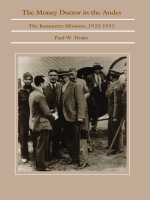
Drake links the Kemmerer missions to vital developments in the political economic history of the Andean republics in the interwar period. He analyzes the domestic interest groups and political forces whose convergent strategies gave the Kemmerer missions their remarkable record in achieving local success for the reforms proposed. Second, Drake situates the Kemmerer missions at the center of a process of political modernization that created new institutions and policy agencies in each of the five countries; the missions thereby contributed to the expansion of the central government as an agent of development in ways that later differed sharply from Kemmerer's orthodox policies. Finally, The Money Doctor in the Andes regards developments in the Andean countries in the context of the region's developing economic ties to the United States. Expectations that Kemmerer's plans would simultaneously attract foreign capital and control inflation drew support from sectors as diverse as trade unions and landowners. When the Depression deepened, Kemmerer's policies proved counterproductive and the fragile consensus that had installed them fell apart, but the political and administrative reforms endured—with far-reaching consequences.
Within this fascinating behind-the-scenes account, Ostrander argues that the "social relations of philanthropy" are more important and more varied than previously understood. Written at a time when Haymarket was dealing with crisis, this book tells a story of organizational change as the Fund moved from an informal collective to a more formal structure; it is also the story of a struggle to build a multi-race, multi-class, gender-equal organization. Ostrander details these ongoing struggles and addresses the larger issue of how fundraising can itself be a kind of social movement organizing among the progressive people with wealth who continue to be Haymarket's main donors.
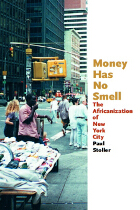
Blending fascinating ethnographic description with incisive social analysis, Stoller shows how these savvy West African entrepreneurs have built cohesive and effective multinational trading networks, in part through selling a simulated Africa to African Americans. These and other networks set up by the traders, along with their faith as devout Muslims, help them cope with the formidable state regulations and personal challenges they face in America. As Stoller demonstrates, the stories of these West African traders illustrate and illuminate ongoing debates about globalization, the informal economy, and the changing nature of American communities.
Is it possible that the consensus around what caused the 2008 Great Recession is almost entirely wrong? It’s happened before. Just as Milton Friedman and Anna Schwartz led the economics community in the 1960s to reevaluate its view of what caused the Great Depression, the same may be happening now to our understanding of the first economic crisis of the 21st century.
Forgoing the usual relitigating of problems such as housing markets and banking crises, renowned monetary economist Scott Sumner argues that the Great Recession came down to one thing: nominal GDP, the sum of all nominal spending in the economy, which the Federal Reserve erred in allowing to plummet. The Money Illusion is an end-to-end case for this school of thought, known as market monetarism, written by its leading voice in economics. Based almost entirely on standard macroeconomic concepts, this highly accessible text lays the groundwork for a simple yet fundamentally radical understanding of how monetary policy can work best: providing a stable environment for a market economy to flourish.
In the papers in part I, dating from 1947 to the present, Dr. Schwartz examines money and banking in the United States and the United Kingdom from a historical perspective. Her investigation of the historical evidence linking economic instability to erratic monetary behavior—this behavior itself a product of discretionary monetary policy—has led her to argue for the importance of stable money, and her writings on these issues over the last two decades form part II. The volume concludes with four recent articles on international monetary arrangements, including Dr. Schwartz's well-known work on the gold standard.
This volume of classic essays by Anna Schwartz will be a useful addition to the libraries of scholars and students for its exemplary historical research and commentary on monetary systems.
“There was money in the air, ever so much money,” wrote Henry James in 1907, reflecting on the American appetite for art acquisitions. Indeed, collectors such as Henry Clay Frick and Andrew W. Mellon are credited with bringing noteworthy European art to the United States, with their collections forming the backbone of major American museums today. But what of the dealers, who possessed the expertise in art and recognized the potential of developing a new market model on both sides of the Atlantic?
Money in the Air investigates the often-overlooked role of these dealers in creating an international art world. Contributors examine the histories of well-known international firms like Duveen Brothers, M. Knoedler & Co., and Goupil & Cie and their relationships with American clients, as well as accounts of other remarkable dealers active in the transatlantic art market. Drawing on dealer archives, scholars reveal compelling findings, including previously unknown partnerships and systems of cooperation. This volume offers new perspectives on the development of art collections that formed the core of American art museums, such as the National Gallery of Art, the Metropolitan Museum of Art, and the Frick Collection.
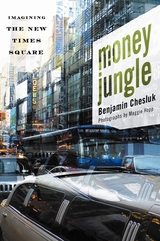
For more than a century, Times Square has mesmerized the world with the spectacle of its dazzling supersigns, its theaters, and its often-seedy nightlife. New York City’s iconic crossroads has drawn crowds of revelers, thrill-seekers, and other urban denizens, not to mention lavish outpourings of advertising and development money.
Many have hotly debated the recent transformation of this legendary intersection, with voices typically falling into two opposing camps. Some applaud a blighted red-light district becoming a big-budget, mainstream destination. Others lament an urban zone of lawless possibility being replaced by a Disneyfied, theme-park version of New York. In Money Jungle, Benjamin Chesluk shows that what is really at stake in Times Square are fundamental questions about city life—questions of power, pleasure, and what it means to be a citizen in contemporary urban space.
Chesluk weaves together surprising stories of everyday life in and around the Times Square redevelopment, tracing the connections between people from every level of this grand project in social and spatial engineering: the developers, architects, and designers responsible for reshaping the urban public spaces of Times Square and Forty-second Street; the experimental Midtown Community Court and its Times Square Ink. job-training program for misdemeanor criminals; encounters between NYPD officers and residents of Hell’s Kitchen; and angry confrontations between city planners and neighborhood activists over the future of the area.
With an eye for offbeat, telling details and a perspective that is at once sympathetic and critical, Chesluk documents how the redevelopment has tried, sometimes successfully and sometimes not, to reshape the people and places of Times Square. The result is a colorful and engaging portrait, illustrated by stunning photographs by long-time local photographer Maggie Hopp, of the street life, politics, economics, and cultural forces that mold America’s urban centers.
Pointing to the disparities between wealthy and impoverished school districts in areas where revenue depends primarily upon local taxes, reformers repeatedly call for the centralization of school funding. Their proposals meet resistance from citizens, elected officials, and school administrators who fear the loss of local autonomy.
Bryan Shelly finds, however, that local autonomy has already been compromised by federal and state governments, which exercise a tremendous amount of control over public education despite their small contribution to a school system's funding. This disproportionate relationship between funding and control allows state and federal officials to pass education policy yet excuses them from supplying adequate funding for new programs. The resulting unfunded and underfunded mandates and regulations, Shelly insists, are the true cause of the loss of community control over public education.
Shelly outlines the effects of the most infamous of underfunded federal mandates, the No Child Left Behind Act of 2001 (NCLB), and explores why schools implemented it despite its unpopularity and out-of-pocket costs. Shelly's findings hold significant implications for school finance reform, NCLB, and the future of intergovernmental relations.
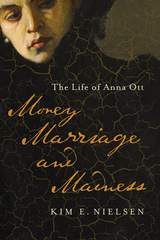
Kim E. Nielsen explores a life at once irregular and unexceptional. Historical and institutional structures, like her whiteness and laws that liberalized divorce and women's ability to control their property, opened up uncommon possibilities for Ott. Other structures, from domestic violence in the home to rampant sexism and ableism outside of it, remained a part of even affluent women's lives. Money, Marriage, and Madness tells a forgotten story of how the legal and medical cultures of the time shaped one woman—and what her life tells us about power and society in nineteenth century America.
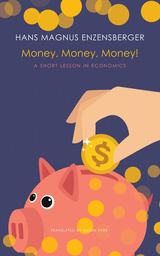
The Federmanns live a pleasant but painfully normal life in the Munich suburbs. All that the three children really know about money is that there’s never enough of it in their family.
Every so often, their impish Great-Aunt Fé descends on the city. After repeated cycles of boom and bust, profligacy and poverty, the grand old lady has become enormously wealthy and lives alone in a villa on the shore of Lake Geneva. But what does Great-Aunt Fé want from the Federmanns, her only surviving relatives? This time, she invites the children to tea at her luxury hotel where she spoils, flummoxes, and inspires them. Dismayed at their ignorance of the financial ways of the world, she gives them a crash course in economics that piques their curiosity, unsettles their parents, and throws open a whole new world. The young Federmanns are for once taken seriously and together they try to answer burning questions: Where does money come from? Why are millionaires and billionaires never satisfied? And why are those with the most always showered with more?
In this rich volume, the renowned poet, translator, and essayist Hans Magnus Enzensberger turns his gimlet eye on the mechanisms and machinations of banks and politicians—the human greed, envy, and fear that fuels the global economy. A modern, but moral-less fable, Money, Money, Money! is shot through with Enzensberger’s trademark erudition, wit, and humanist desire to cut through jargon and forearm his readers against obscurantism.
Money, Morals, and Manners is an ambitious and sophisticated attempt to illuminate the nature of social class in modern society. For all those who downplay the importance of unequal social groups, it will be a revelation.
"A powerful, cogent study that will provide an elevated basis for debates in the sociology of culture for years to come."—David Gartman, American Journal of Sociology
"A major accomplishment! Combining cultural analysis and comparative approach with a splendid literary style, this book significantly broadens the understanding of stratification and inequality. . . . This book will provoke debate, inspire research, and serve as a model for many years to come."—R. Granfield, Choice
"This is an exceptionally fine piece of work, a splendid example of the sociologist's craft."—Lewis Coser, Boston College
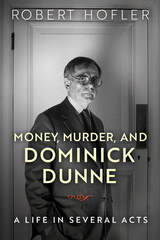
Dunne admitted to inventing himself, and it was that public persona he wrote about in his own memoir, The Way We Lived Then. Left out of that account, but brought to light here, were his intense rivalry with his brother John Gregory, the gay affairs and relationships he had throughout his marriage and beyond, and his fights with editors at Vanity Fair. Robert Hofler also reveals the painful rift in the family after the murder of Dominick's daughter, Dominique—compounded by his coverage of her killer's trial, which launched his career as a reporter.
Money, Myths, and Change provides new answers to these complex questions. This is the first comprehensive work to explore the economic lives of gays and lesbians in the United States. M. V. Lee Badgett weaves through and debunks common stereotypes about gay privilege, income, and consumer behavior. Studying the ends and means of gay life from an economic perspective, she disproves the assumption that gay men and lesbians are more affluent than heterosexuals, that they inspire discrimination when they come out of the closet, that they consume more conspicuously, that they enjoy a more self-indulgent, even hedonistic lifestyle. Badgett gets to the heart of these misconceptions through an analysis of the crucial issues that affect the livelihood of gay men and lesbians: discrimination in the workplace, denial of health care benefits to domestic partners and children, lack of access to legal institutions such as marriage, the corporate wooing of gay consumer dollars, and the use of gay economic clout to inspire social and political change.
Both timely and readable, Money, Myths, and Change stands as a much-needed corrective to the assumptions that inhibit gay economic equality. It is a definitive work that sheds new light on just what it means to be gay or lesbian in the United States.
Why are baseball players paid so much money? In this insightful book, legal scholar and salary arbitrator Roger Abrams tells the story of how a few thousand very talented young men obtain their extraordinary riches. Juggling personal experience and business economics, game theory and baseball history, he explains how agents negotiate compensation, how salary arbitration works, and how the free agency "auction" operates. In addition, he looks at the context in which these systems operate: the players' collective bargaining agreement, the distribution of quality players among the clubs, even the costs of other forms of entertainment with which baseball competes.
Throughout, Dean Abrams illustrates his explanations with stories and quotations -- even an occasional statistic, though following the dictum of star pitcher, club owner, and sporting goods tycoon Albert Spalding, he has kept the book as free of these as possible. He explains supply and demand by the cost of a bar of soap for Christy Mathewson's shower. He illustrates salary negotiation with an imaginary case based on Roy Hobbs, star of The National. He leads the reader through the breath-taking successes of agent Scott Boras to explain the intricacies of free agent negotiating.
Although studies have shown that increases in admissions prices precede rather than follow the rise in player salaries, fans are understandably bemused by skyrocketing salaries. Dean Abrams does not shy away from the question of whether it is "fair" for an athlete to earn more than $10,000,000 a year. He looks at issues of player (and team) loyalty and player attitudes, both today and historically, and at what increased salaries have meant for the national pastime, financially and in the eyes of its fans. The Money Pitch concludes that "the money pitch is a story of good fortune, good timing, and great leadership, all resulting from playing a child's game -- a story that is uniquely American."
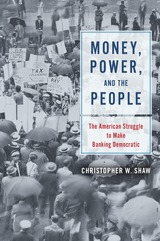
Yet the situation was vastly different a century ago, as Christopher W. Shaw shows. This book upends the conventional thinking that financial policy in the early twentieth century was set primarily by the needs and demands of bankers. Shaw shows that banking and politics were directly shaped by the literal and symbolic investments of the grassroots. This engagement remade financial institutions and the national economy, through populist pressure and the establishment of federal regulatory programs and agencies like the Farm Credit System and the Federal Deposit Insurance Corporation. Shaw reveals the surprising groundswell behind seemingly arcane legislation, as well as the power of the people to demand serious political repercussions for the banks that caused the Great Depression. One result of this sustained interest and pressure was legislation and regulation that brought on a long period of relative financial stability, with a reduced frequency of economic booms and busts. Ironically, this stability led to the decline of the very banking politics that brought it about.
Giving voice to a broad swath of American figures, including workers, farmers, politicians, and bankers alike, Money, Power, and the People recasts our understanding of what might be possible in balancing the needs of the people with those of their financial institutions.
In The Money Problem, Morgan Ricks addresses all of these questions and more, offering a practical yet elegant blueprint for a modernized system of money and banking—one that, crucially, can be accomplished through incremental changes to the United States’ current system. He brings a critical, missing dimension to the ongoing debates over financial stability policy, arguing that the issue is primarily one of monetary system design. The Money Problem offers a way to mitigate the risk of catastrophic panic in the future, and it will expand the financial reform conversation in the United States and abroad.
From "classy" shows like Oprah to "trashy" shows like Jerry Springer, the key to a talk show's success is what Laura Grindstaff calls the money shot—moments when guests lose control and express joy, sorrow, rage, or remorse on camera. In this new work, Grindstaff takes us behind the scenes of daytime television talk shows, a genre focused on "real" stories told by "ordinary" people. Drawing on extensive interviews with producers and guests, her own attendance of dozens of live tapings around the country, and more than a year's experience working on two nationally televised shows, Grindstaff shows us how producers elicit dramatic performances from guests, why guests agree to participate, and the supporting roles played by studio audiences and experts.
Grindstaff traces the career of the money shot, examining how producers make stars and experts out of ordinary people, in the process reproducing old forms of cultural hierarchy and class inequality even while seeming to challenge them. She argues that the daytime talk show does give voice to people normally excluded from the media spotlight, but it lets them speak only in certain ways and under certain rules and conditions. Working to understand the genre from the inside rather than pass judgment on it from the outside, Grindstaff asks not just what talk shows can tell us about mass media, but also what they reveal about American culture more generally.

A data-rich, eye-opening look at how, when, and why political fundraising is consequential.
Over the last two decades, the number of competitive congressional races has declined precipitously. Yet candidates and officeholders dial for more and more dollars each election, and they do so earlier and earlier in the campaign cycle.
In The Money Signal, Danielle M. Thomsen offers a new perspective on the role of money in politics. She shows that fundraising matters because it is widely used as an indicator of a candidate’s viability and strength, which shapes subsequent donations, dropout decisions, media attention, and rewards in office. Put simply, money is a focal point that candidates, donors, journalists, and party leaders rally around. For candidates, fundraising is a highly public form of self-presentation that pays dividends long before the election and well after the votes are cast.
Thomsen draws on comprehensive fundraising data that spans more than four decades, in addition to interviews, surveys of candidates and donors, newspaper coverage, committee assignments, and analysis of legislative success. The Money Signal highlights the numerous ways that dollars influence the perceptions and behavior of key actors and observers throughout the election cycle.


Money Trees is an interdisciplinary history of the crucial decades that shaped the modern American conception of the value of the forest. It begins with early 20th century environmental changes in the Douglas Fir forests of the Pacific Northwest, which led to increasing divisiveness and controversy among foresters. Brock balances this regional story with a national view of the intellectual and political currents that governed forest management, marshaling archival evidence from industry, government, and scientific sources.
An important contribution to environmental scholarship, Money Trees offers a nuanced vision of forestry’s history and its past relationship to both wilderness activism and scientific ecology. With fresh perspectives on well-known environmental figures such as Bob Marshall and Gifford Pinchot, it will add to the conversation among scholars in environmental history, history of science, and the history of the American West. It will be welcomed as a key resource across the spectrum of environmental studies, and by anyone interested in natural resources, land management, the role of science in environmentalism, and the modern wilderness movement.

For five months in 2013–2014, Dušan Pavlović took time off from teaching to accept a senior position in Serbia’s Ministry of Economy. This short period was long enough for him to make a penetrating diagnosis of the economic activity of the postcommunist government. He found that a coterie of tycoons and politicians live off the wealth of the majority of citizens and smaller entrepreneurs, while the economy performs below its capacities. In academic terms, extractive economic institutions create allocative inefficiency.
Vivid, suggestive, and even entertaining accounts depict how privatization is administered and foreign investment projects are handled, and how party members, relatives, and friends are hired into public administration and state-owned companies. They show how the managers of firms that queue for state subsidies resist the systematic screening of their businesses. The principles of Keynesian economics are distorted and misused to conceal deliberate fiscal mismanagement. Huge ill-conceived development projects siphon taxpayers’ money from “non-economic” activities like social services, health, education, science, and culture.
What Pavlović found in Serbia is acutely symptomatic of many other European post-communist regimes of our time, lending his book singular importance.
A merger of expert scholarship and eyewitness experience, Mongolian Sound Worlds illuminates a diverse and ever-changing musical culture.
Contributors: Bayarsaikhan Badamsuren, Otgonbaayar Chuulunbaatar, Andrew Colwell, Johanni Curtet, Charlotte D’Evelyn, Tamir Hargana, Peter K. Marsh, K. Oktyabr, Rebekah Plueckhahn, Jennifer C. Post, D. Tserendavaa, and Sunmin Yoon
Mongrel Nation surveys the history of the United Kingdom’s African, Asian, and Caribbean populations from 1948 to the present, working at the juncture of cultural studies, literary criticism, and postcolonial theory. Ashley Dawson argues that during the past fifty years Asian and black intellectuals from Sam Selvon to Zadie Smith have continually challenged the United Kingdom’s exclusionary definitions of citizenship, using innovative forms of cultural expression to reconfigure definitions of belonging in the postcolonial age. By examining popular culture and exploring topics such as the nexus of race and gender, the growth of transnational politics, and the clash between first- and second-generation immigrants, Dawson broadens and enlivens the field of postcolonial studies.
Mongrel Nation gives readers a broad landscape from which to view the shifting currents of politics, literature, and culture in postcolonial Britain. At a time when the contradictions of expansionist braggadocio again dominate the world stage, Mongrel Nation usefully illuminates the legacy of imperialism and suggests that creative voices of resistance can never be silenced.Dawson
“Elegant, eloquent, and full of imaginative insight, Mongrel Nation is a refreshing, engaged, and informative addition to post-colonial and diasporic literary scholarship.”
—Hazel V. Carby, Yale University
“Eloquent and strong, insightful and historically precise, lively and engaging, Mongrel Nation is an expansive history of twentieth-century internationalist encounters that provides a broader landscape from which to understand currents, shifts, and historical junctures that shaped the international postcolonial imagination.”
—May Joseph, Pratt Institute
Ashley Dawson is Associate Professor of English at the City University of New York’s Graduate Center and the College of Staten Island. He is coeditor of the forthcoming Exceptional State: Contemporary U.S. Culture and the New Imperialism.
Contributors provide critical and disparate snapshots—some more theoretical and abstract, some more experiential and concrete—of debates on, and investments in, Wittig’s theoretical legacy. Judith Butler analyzes Wittig’s “particular” universalism and offers a careful exposition of her worldview. Diane Griffin Crowder studies Wittig within a context of materialist inquiry that has often been ignored or misunderstood. Robyn Wiegman examines the complex nature of memorialization and inquires into Wittig’s place in contemporary queer theory. Seth Clark Silberman, calling attention to Wittig’s fiction, reverses the usual ascendancy of critique over narrative fiction and produces a formally innovative, if willfully “parasitic,” account of Wittig’s claim on the contributor’s imagination as he watches his mother slowly die of cancer. Alice Jardine, who situates Wittig as a disruptive and disorienting force in a mother-centered feminism, provides an autobiographically charged review of the recent history of feminism, queer studies, and the still uneasy relations between them. The issue also includes a detailed introduction by Brad Epps and Jonathan Katz; a brief personal reflection by Sandra K. Soto, a close friend and colleague of Wittig’s; and two texts by Wittig, one critical (with a foreword by Sande Zeig) and the other creative, both previously unavailable in English.
Contributors. Judith Butler, Diane Griffin Crowder, Brad Epps, Alice Jardine, Jonathan Katz, Seth Clark Silberman, Sandra K. Soto, Robyn Wiegman, Monique Wittig, Sande Zeig
What does this technocratic ideology and surveillance-heavy culture reveal about the deeper reality of modern society? Monitored investigates the history and implications of this modern accountability paradox. Peter Bloom reveals pervasive monitoring practices which mask how at its heart, the elite remains socially and ethically out of control.
Challenging their exploitive 'accounting power', Bloom demands that the systems that administer our lives are oriented to social liberation and new ways of being in the world.
The first major study of Asian American representation on U.S. television.
Early in the movement of Asian labor to the United States, immigrants from the Far East were viewed by the dominant Euro-American society as a peril to a white, Christian nation. How far have we come since then? This first comprehensive study of Asian American representation on network television supplies some unsettling answers.
A meticulous work of history, cultural criticism, and political analysis, Monitored Peril illuminates the unstable relationship between the discursive practices of commercial television programs, liberal democratic values, and white supremacist ideology. The book clearly demonstrates the pervasiveness of racialized discourse throughout U.S. society, especially as it is reproduced by network television. In treating his topic, Darrell Hamamoto addresses a wide variety of issues facing diverse Asian American communities: interracial conflict, conservative politics, U.S.-Japan trade friction, and postcolonial Vietnam. Through an examination of selected programs from the 1950s to the present, he attempts to correct the consistently distorted optic of network television. Finally, he calls for an engaged independent Asian American media practice, and for the expansion of public sector television. Selected as a CHOICE Outstanding Academic Book for 1995ISBN 0-8166-2368-6 cloth $49.95xISBN 0-8166-2369-4 paper $18.95320 pages 6 x 9AugustContentsPreface1. White Christian Nation2. Asians in the American West3. War against Japanese America4. Asian Americans and U.S. Empire5. Southeast Asian America6. Contemporary Asian America7. Counterprogramming EpilogueRelated BacklistThe Bronze Screen: Chicana and Chicano Film CultureRosa Linda FregosoExplores Chicana and Chicano popular culture in Hollywood commercial and independent cinema. (1993)
Conventional methods used in the planning and management of human-landscape interactions fall far short of the needs of today’s land management professionals. Monitoring, Simulation, and Management of Visitor Landscapes presents a growing body of applied research that provides decision makers with tools to maintain the ecological integrity of public places by evaluating the impacts of humans in various landscapes across space and time. This timely volume, available in both print and electronic editions, presents the latest research in this field, specifically focusing on the intersection of research and applied techniques. The contributors examine environmental management from around the world, including river traffic analysis in Melbourne, Australia; wilderness solitude and land use in the backcountry recreation areas of North America; the spatial modeling of visitor behavior at recreational areas near Vienna, Austria; the application of visibility studies and data from automatic visitor counters to simulation models in Denmark; and the integration of recreation and biodiversity in high-use environments in the Netherlands. This invaluable reference will help land managers and policy makers construct strategies for evaluating interactions between humans and the environment and expand the model of land management to include social and geographic, as well as environmental, factors.
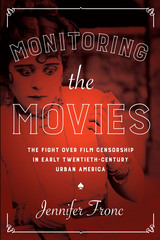
As movies took the country by storm in the early twentieth century, Americans argued fiercely about whether municipal or state authorities should step in to control what people could watch when they went to movie theaters, which seemed to be springing up on every corner. Many who opposed the governmental regulation of film conceded that some entity—boards populated by trusted civic leaders, for example—needed to safeguard the public good. The National Board of Review of Motion Pictures (NB), a civic group founded in New York City in 1909, emerged as a national cultural chaperon well suited to protect this emerging form of expression from state incursions.
Using the National Board’s extensive files, Monitoring the Movies offers the first full-length study of the NB and its campaign against motion-picture censorship. Jennifer Fronc traces the NB’s Progressive-era founding in New York; its evolving set of “standards” for directors, producers, municipal officers, and citizens; its “city plan,” which called on citizens to report screenings of condemned movies to local officials; and the spread of the NB’s influence into the urban South. Ultimately, Monitoring the Movies shows how Americans grappled with the issues that arose alongside the powerful new medium of film: the extent of the right to produce and consume images and the proper scope of government control over what citizens can see and show.
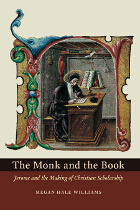
In the West, monastic ideals and scholastic pursuits are complementary; monks are popularly imagined copying classics, preserving learning through the Middle Ages, and establishing the first universities. But this dual identity is not without its contradictions. While monasticism emphasizes the virtues of poverty, chastity, and humility, the scholar, by contrast, requires expensive infrastructure—a library, a workplace, and the means of disseminating his work. In The Monk and the Book, Megan Hale Williams argues that Saint Jerome was the first to represent biblical study as a mode of asceticism appropriate for an inhabitant of a Christian monastery, thus pioneering the enduring linkage of monastic identities and institutions with scholarship.
Revisiting Jerome with the analytical tools of recent cultural history—including the work of Bourdieu, Foucault, and Roger Chartier—Williams proposes new interpretations that remove obstacles to understanding the life and legacy of the saint. Examining issues such as the construction of Jerome’s literary persona, the form and contents of his library, and the intellectual framework of his commentaries, Williams shows that Jerome’s textual and exegetical work on the Hebrew scriptures helped to construct a new culture of learning. This fusion of the identities of scholar and monk, Williams shows, continues to reverberate in the culture of the modern university.
"[Williams] has written a fascinating study, which provides a series of striking insights into the career of one of the most colorful and influential figures in Christian antiquity. Jerome's Latin Bible would become the foundational text for the intellectual development of the West, providing words for the deepest aspirations and most intensely held convictions of an entire civilization. Williams's book does much to illumine the circumstances in which that fundamental text was produced, and reminds us that great ideas, like great people, have particular origins, and their own complex settings."—Eamon Duffy, New York Review of Books

A compact abridgment of the legendary Chinese classic that inspired the hit game Black Myth: Wukong!
Anthony C. Yu’s celebrated translation of The Journey to the West reinvigorated one of Chinese literature’s most beloved classics for English-speaking audiences when it first appeared thirty years ago. Yu’s abridgment of his four-volume translation, The Monkey and the Monk, finally distills the epic novel’s most exciting and meaningful episodes without taking anything away from their true spirit.
These fantastic episodes recount the adventures of Xuanzang, a seventh-century monk who became one of China’s most illustrious religious heroes after traveling for sixteen years in search of Buddhist scriptures. Powerfully combining religious allegory with humor, fantasy, and satire, accounts of Xuanzang’s journey were passed down for a millennium before culminating in the sixteenth century with The Journey to the West. Now, readers of The Monkey and the Monk can experience the full force of his lengthy quest as he travels to India with four animal disciples, most significant among them a guardian-monkey known as “the Great Sage, Equal to Heaven.” Moreover, in its newly streamlined form, this acclaimed translation of a seminal work of world literature is sure to attract an entirely new following of students and fans.
“A new translation of a major literary text which totally supersedes the best existing version. . . . It establishes beyond contention the position of The Journey to the West in world literature, while at the same time throwing open wide the doors to interpretive study on the part of the English audience.”—Modern Language Notes, on the unabridged translation

The Monkey and The Tiger includes two detective stories, "The Morning of the Monkey" and "The Night of the Tiger." In the first, a gibbon drops an emerald in the open gallery of Dee's official residence, leading the judge to discover a strangely mutilated body in the woods—and how it got there. In the second, Dee is traveling to the imperial capital to assume a new position when he is separated from his escort by a flood. Marooned in a large country house surrounded by fierce bandits, Dee confronts an apparition that helps him solve a mystery.
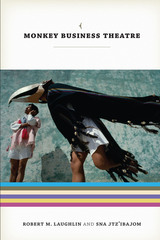
In 1983, a group of citizens in San Cristóbal de las Casas, Chiapas, formed Sna Jtz'ibajom, the Tzotzil-Tzeltal Maya writers' cooperative. In the two decades since, this group has evolved from writing and publishing bilingual booklets to writing and performing plays that have earned them national and international renown.
Anthropologist Robert M. Laughlin has been a part of the group since its beginnings, and he offers a unique perspective on its development as a Mayan cultural force. The Monkey Business Theatre, or Teatro Lo'il Maxil, as this branch of Sna Jtz'ibajom calls itself, has presented plays in virtually every corner of the state of Chiapas, as well as in Mexico City, Guatemala, Honduras, Canada, and in many museums and universities in the United States. It has presented to the world, for the first time in drama, a view of the culture of the Mayas of Chiapas.
In this work, Laughlin presents a translation of twelve of the plays created by Sna Jtz'ibajom, along with an introduction for each. Half of the plays are based on myths and half on the social, political, and economic problems that have confronted—and continue to confront—the Mayas of Chiapas.

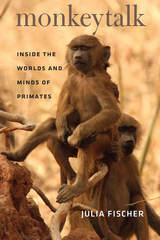
An eye-opening blend of storytelling, memoir, and science, Monkeytalk takes us into the field and the world’s primate labs to investigate the intricacies of primate social mores through the lens of communication. After first detailing the social interactions of key species from her fieldwork—from baby-wielding male Barbary macaques, who use infants as social accessories in a variety of interactions, to aggression among the chacma baboons of southern Africa and male-male tolerance among the Guinea baboons of Senegal—Fischer explores the role of social living in the rise of primate intelligence and communication, ultimately asking what the ways in which other primates communicate can teach us about the evolution of human language.
Funny and fascinating, Fischer’s tale roams from a dinner in the field shared with lionesses to insights gleaned from Rico, a border collie with an astonishing vocabulary, but its message is clear: it is humans who are the evolutionary mimics. The primate heritage visible in our species is far more striking than the reverse, and it is the monkeys who deserve to be seen. “The social life of macaques and baboons is a magnificent opera,” Fischer writes. “Permit me now to raise the curtain on it.”


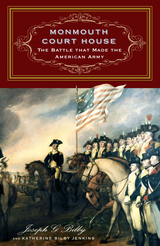
The Strategic Victory that Established the Continental Army as a True Fighting Force
The battle of Monmouth Court House, New Jersey, is among the most important battles in the history of the American Army. Well known in American mythology as the battle where Molly Pitcher fought alongside her fallen husband, Monmouth Court House is regarded by historians as the moment when the image of the American army in both Europe and the colonies was transformed from that of a rag-tag band of ill-trained civilians to that of a disciplined, well-guided, professional military unit. In June 1778, British General Henry Clinton’s army evacuated Philadelphia and struck out across “the Jerseys” on its way back to New York City. George Washington’s Continental Army, retrained and confident after enduring a winter at Valley Forge and supplemented by a large number of fresh New Jersey militia, marched in pursuit. About 50 miles south of New York City, the armies clashed at Monmouth Court House on June 28, in the last major Revolutionary War battle in the north. Essentially a draw, the battle marked the first time in the war that the Continental Army was able to hold a battlefield, fighting the full force of the British army to a standstill. Monmouth Court House: The Battle that Made the American Army by Joseph G. Bilby and Katherine Bilby Jenkins is the story of this battle, how it came to be, and its influence on the course of the war and American history.
The authors set Monmouth Court House within the context of the American Revolution and the civil war between Tories and Whigs that erupted in New Jersey during that time. The entire campaign and battle are described, including an analysis of the commanders, personnel, organization, training, and weapons of both armies. The book also assesses the historiography and folklore of the battle, including the story of the real “Molly Pitcher,” the use of the battleground as Civil War muster-in camp, its eventual status as Monmouth Battleground State Park, and current efforts at interpretation and battlefield archaeology and how they have changed our understanding of the battle.

A vividly illustrated volume tracing the monochrome as a fundamental yet expansive strategy in twentieth- and twenty-first-century art.
Exploring a fantastic range of monochromatic artworks, Monochrome Multitudes upends traditional accounts of abstraction, revisits modernist ideas, and reveals the creative possibilities and global resonance of a seemingly reductive art form.
Bringing together examples spanning five continents, the book considers how artists such as El Anatsui, Mark Bradford, Lygia Clark, Lucio Fontana, Ellsworth Kelly, Yayoi Kusama, Kasimir Malevich, Gerhard Richter, Betye Saar, Amanda Williams, Haegue Yang, as well as little-known early cartoonists have experimented with monochrome compositions. Scholars of art history, film, music, law, disability studies, astrophysics, neurobiology, mathematics, and more reflect on monochrome artworks that build on foundational components of modernism. Together, they illuminate often overlooked cultural, political, racial, and gendered meanings of artworks; reveal the significance of materials ranging from fiber, wall paint, and videotape, to footballs, pantyhose, and candy; and engage North American art in a global dialog extending into Europe, Asia, Latin America, and Africa. Artworks are presented in monochromatic groupings—yellow, blue, white, red, gray, and black—and thematic sections trace connections across topics such as the body, the environment, urban space, sound, and media.

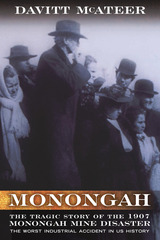
New paperback edition with an introduction by Robert B. Reich
Monongah: The Tragic Story of the 1907 Monongah Mine Disaster documents the events and conditions that led to the worst industrial accident in the history of the United States. This mining accident claimed hundreds of lives on the morning of December 6, 1907 and McAteer, an expert on mine and workplace health and safety, delves deeply into the economic forces and social-political landscape of the mining communities of north central West Virginia to expose the truth behind this tragedy. After nearly thirty years of exhaustive research, McAteer determines that close to 500 men and boys—many of them immigrants—lost their lives that day, leaving hundreds of women widowed and more than one thousand children orphaned.
The tragedy at Monongah led to a greater awareness of industrial working conditions, and ultimately to the Federal Coal Mine Health and Safety Act of 1969, which McAteer helped to enact. This new paperback edition includes an introduction by Robert B. Reich, Chancellor’s Professor of Public Policy at the University of California at Berkeley and Secretary of Labor during the Clinton administration.

As the high drama of national elections keeps watchers on the edge of their seats, a different phenomenon altogether characterizes the politics of the American states: long-term one-party monopolies. Widely (and wrongly) assumed to be specific to the South, one-party domination is as ubiquitous as it is consequential. Monopoly Rule documents the startling pervasiveness of state party monopolies since the 1930s.
Even in the “battleground states” of recent presidential elections, Janine A. Parry and Zoe Nemerever make the case that one party or the other usually holds a large and enduring advantage outside the presidential contest. Using a novel State Party Control Index, the authors demonstrate the troubling effects of these partisan juggernauts, including upticks in elite malfeasance, voter complacency, and democratic backsliding. Despite the renewed willingness of contemporary party elites to advance their electoral success by rigging the rules, Monopoly Rule argues that contemporary state and local experiments in ranked choice voting, independent redistricting, and campaign finance reform offer options for reinvigorating the health of American democracy.
This volume of essays intends to present diverse aspects of monotheistic kingship during the Middle Ages in two general-theoretical articles and a series of “case studies” on the relationship of religion and rulership. The authors discuss examples of the role of religion—based on both textual and iconic evidence—in Carolingian, Ottonian and late medieval western Europe; in Byzantium and Armenia; Georgia; Hungary; the Khazar Khanate; Poland, and Rus’. Two studies explore the issue in medieval Jewish and Islamic political thought. The editors hope that these special inquiries will engender more comparative studies on the subject.
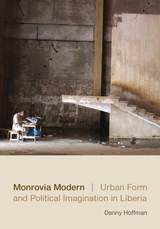

Through these stories, written with a mix of poignant nostalgia and sharp criticism, Vimala Devi recreates the colonial Goa of her childhood. First published in 1963, two years after the Portuguese colony became part of India, Monsoon is a cycle of twelve stories that vary in tone. By turns satirical, desolate, tender, humorous, and dramatic, they come together through a subtle interplay of echoes, parallels and cross-references to form a composite picture of a world gone by. They delve into divisions of caste, religion, language, and material privilege, setting them off against a common historical experience and deeply felt attachment to the land.
Including a critical and contextualizing introduction by Jason Keith Fernandes, this rendition of Monsoon allows contemporary readers a rare peep into a colonial society that was significantly different from the British Indian mainstream.
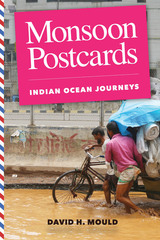
In Monsoon Postcards, journalist David H. Mould, notebook in hand, traverses the Indian Ocean—from Madagascar through India and Bangladesh to Indonesia. It’s an unpredictable journey on battered buses, bush taxis, auto-rickshaws, and crowded ferries. Mould travels from the traffic snarls of Delhi, Dhaka, and Jakarta to the rice paddies and ancestral tombs of Madagascar’s Central Highlands; from the ancient kingdom of Hyderabad to India’s so-called chicken neck—the ethnically diverse and underdeveloped northeast; and from the textile factories and rivers of Bangladesh to the beaches of Bali and the province of Aceh—ground zero for the 2004 tsunami.
Along the way, in markets, shops, roadside cafes, and classrooms, he meets journalists, professors, students, aid workers, cab drivers, and other everyday residents to learn how they view their past and future. Much like its predecessor, Mould’s Postcards from Stanland,Monsoon Postcards offers witty and insightful glimpses into countries linked by history, trade, migration, religion, and a colonial legacy. It explores how they confront the challenges of climate change, urban growth, economic development, land, water and natural resources, and national and ethnic identity.
Armed with an encyclopedic knowledge of film history, Grant presents us with an eclectic array of monster movies, from Nosferatu to Get Out. As he discovers, although monster movies might claim to be about Them!, they are really about the capacity for horror that lurks within each of us.

Structured operatically into overture, acts, and postlude, The Monster I Am Today guides the reader through associative shifts from arias like “weather events” and Price’s forty-two-minute final ovation to memories of Simmonds’s coming of age in New Orleans. As he melds lyric forms with the biography of one of classical music’s greatest virtuosos, Simmonds composes a duet that spotlights Price’s profound influence on him as a person and an artist: “That’s how I hear: Her.”
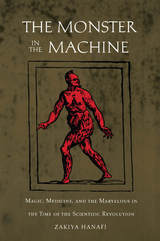
Noting that the word “monster” is derived from the Latin for “omen” or “warning,” Hanafi explores the monster’s early identity as a portent or messenger from God. Although monsters have always been considered “whatever we are not,” they gradually were tranformed into mechanical devices when new discoveries in science and medicine revealed the mechanical nature of the human body. In analyzing the historical literature of monstrosity, magic, and museum collections, Hanafi uses contemporary theory and the philosophy of technology to illuminate the timeless significance of the monster theme. She elaborates the association between women and the monstrous in medical literature and sheds new light on the work of Vico—particularly his notion of the conatus—by relating it to Vico’s own health. By explicating obscure and fascinating texts from such disciplines as medicine and poetics, she invites the reader to the piazzas and pulpits of seventeenth-century Naples, where poets, courtiers, and Jesuit preachers used grotesque figures of speech to captivate audiences with their monstrous wit.
Drawing from a variety of texts from medicine, moral philosophy, and poetics, Hanafi’s guided tour through this baroque museum of ideas will interest readers in comparative literature, Italian literature, history of ideas, history of science, art history, poetics, women’s studies, and philosophy.

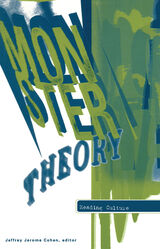
In viewing the monstrous body as a metaphor for the cultural body, the contributors to Monster Theory consider beasts, demons, freaks, and fiends as symbolic expressions of cultural unease that pervade a society and shape its collective behavior. Through a historical sampling of monsters, these essays argue that our fascination for the monstrous testifies to our continued desire to explore difference and prohibition.
Contributors: Mary Baine Campbell, Brandeis U; David L. Clark, McMaster U; Frank Grady, U of Missouri, St. Louis; David A. Hedrich Hirsch, U of Illinois; Lawrence D. Kritzman, Dartmouth College; Kathleen Perry Long, Cornell U; Stephen Pender; Allison Pingree, Harvard U; Anne Lake Prescott, Barnard College; John O'Neill, York U; William Sayers, George Washington U; Michael Uebel, U of Virginia; Ruth Waterhouse.


What interests González is the signature of authorial selfhood in narrative and performance, which he finds willfully and temptingly disfigured in the works he examines: horrific and erotic, subservient and tyrannical, charismatic and repellent. Searching out the personal image and plot, González uncovers two fundamental types of narrative: one that strips character of moral choice; and another in which characters' choices deprive them of personal autonomy and hold them in ritual bondage to a group. Thus The Monstered Self becomes a study of the conflict between individual autonomy and the stereotypes of solidarity.
Written in a characteristically allusive, elliptical style, and drawing on psychoanalysis, religion, mythology, and comparative literature, The Monstered Self is in itself a remarkable performance, one that will engage readers in anthropology, psychology, and cultural history as well as those specifically interested in Latin American narrative.
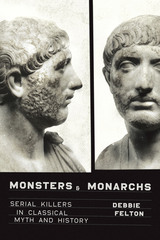
Jack the Ripper. Jeffrey Dahmer. John Wayne Gacy. Locusta of Gaul. If that last name doesn’t seem to fit with the others, it’s likely because our modern society largely believes that serial killers are a recent phenomenon. Not so, argues Debbie Felton—in fact, there’s ample evidence to show that serial killers stalked the ancient world just as they do the modern one.
Felton brings this evidence to light in Monsters and Monarchs, and in doing so, forces us to rethink the assumption that serial killers arise from problems unique to modern society. Exploring a trove of stories from classical antiquity, she uncovers mythological monsters and human criminals that fit many serial killer profiles: the highway killers confronted by the Greek hero Theseus, such as Procrustes, who tortured and mutilated their victims; the Sphinx, or “strangler,” from the story of Oedipus; child-killing demons and witches, which could explain abnormal infant deaths; and historical figures such as Locusta of Gaul, the most notorious poisoner in the early Roman Empire. Redefining our understanding of serial killers and their origins, Monsters and Monarchs changes how we view both ancient Greek and Roman society and the modern-day killers whose stories still captivate the public today.
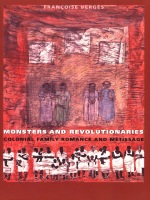
Originally settled by sugar plantation owners and their Indian and African slaves following a seventeenth-century French colonial decree, Réunion abolished slavery in 1848. Because plantation owners continued to import workers from India, Africa, Asia, and Madagascar, the island was defined as a place based on mixed heritages, or métissage. Vergès reads the relationship between France and the residents of Réunion as a family romance: France is the seemingly protective mother, La Mère-Patrie, while the people of Réunion are seen and see themselves as France’s children. Arguing that the central dynamic in the colonial family romance is that of debt and dependence, Verges explains how the republican ideals of the French Revolution and the Enlightenment are seen as gifts to Réunion that can never be repaid. This dynamic is complicated by the presence of métissage, a source of anxiety to the colonizer in its refutation of the “purity” of racial bloodlines. For Vergès, the island’s history of slavery is the key to understanding métissage, the politics of assimilation, constructions of masculinity, and emancipatory discourses on Réunion.
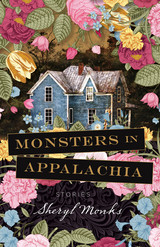
We come upon them in the mountains of West Virginia, in the backyards of rural North Carolina, and at tourist traps along Route 66, where they smolder with hidden desires and struggle to resist the temptations that plague them.
A Melungeon woman has killed her abusive husband and drives by the home of her son’s new foster family, hoping to lure the boy back. An elderly couple witnesses the end-times and is forced to hunt monsters if they hope to survive. A young girl “tanning and manning” with her mother and aunt resists being indoctrinated by their ideas about men. A preacher’s daughter follows in the footsteps of her backsliding mother as she seduces a man who looks a lot like the devil.
A master of Appalachian dialect and colloquial speech, Monks writes prose that is dark, taut, and muscular, but also beguiling and playful. Monsters in Appalachia is a powerful work of fiction.

How and why you should take your children backpackingDespite America’s enthusiasm for outdoors activities like hiking and backpacking, most books on these subjects focus on adults. Backpacking, however, is an ideal activity for the entire family. Tim Hauserman, who is both an experienced outdoors guide and the father of two daughters, now offers a handbook for parents who would like to introduce their children to backpacking and camping. Hauserman provides practical, humorous advice for families new to the outdoors and for trail-savvy parents planning to take their children along for the first time: how to prepare, what to bring, who carries what, how far to walk, what to do in camp, safety precautions, dealing with mishaps, and proper trail and campground etiquette. He includes guidance about appropriate distances and pack weights for every age level of child, as well as tips about backpacking with an infant and bringing the family dog along on the adventure. He even suggests appealing destinations in the Sierra Nevada appropriate for various age groups and recounts some of his (and his daughters’) favorite hikes. Hauserman’s down-to-earth encouragement is based on decades of backpacking and camping with his own children, their friends, and other groups of youngsters. He is candid about his experiences and the lessons he learned from his own mistakes and how he dealt with them. Ultimately, the reward of sharing a special adventure and the peace and beauty of the outdoors makes all the effort worthwhile.

What is it like to be young and broken in a country that is on the brink of collapse? This is what acclaimed poet and sound artist Ulrike Almut Sandig shows us in her debut novel, through the story of old friends Ruth and Viktor in the last days of Communist East Germany. The two central characters are inseparable since kindergarten, but they are forced to go their different ways to escape their difficult childhood: Ruth into music and the life of a professional musician; Viktor into violence and a neo-Nazi gang. Monsters Like Us is a story of families, a story of abuse, a story about the search for redemption and the ways it takes shape over generations. More than anything, it is about the stories we tell ourselves about who we are, and who we want to be. Bold, brutal, and lyrical, this is a coming-of-age novel that charts the hidden violence of the world we live in today.

Monsters vs. Patriarchy examines female monstrosity as it appears in horror films from around the world and considers specific political, scientific, and historical contexts to better understand how we construct and reconstruct monstrosity, using an intersectional approach to examine the imposition of gender and racial hierarchies that support national power structures. The authors contend that monstrous female cinematic subjects, including ghosts, witches, cannibals, and posthuman beings, are becoming empowered, using the tools of their monstrification to smash the colonial, white supremacist, and misogynist structures that created them.
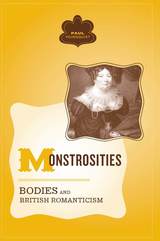
A surprising evaluation of the role of the physical body in the construction of British identity
Eighteenth-century medicine used the word “monstrosities” to describe physically deformed bodies—those irreducible to the “proper body” in their singular, sometimes startling difference. Considering British society in confrontation with such monstrosities, Paul Youngquist reveals the cultural politics of embodiment in Britain during the late eighteenth and early nineteenth centuries. Drawing on the histories of medicine, economics, liberalism, and nationalism, his work shows that bodies are not simply born but rather built by cultural practices directed toward particular social ends.
Among the phenomena Youngquist treats are the science of comparative anatomy, the annual festivity of Bartholomew Fair, the social status of black Britons, opium habitués, pregnant women, and wounded war veterans. The authors he engages include John Locke, William Blake, Olaudah Equiano, Samuel Taylor Coleridge, Thomas De Quincey, Mary Wollstonecraft, Lord Byron, and Mary Shelley. Uniquely interdisciplinary, formidably researched, and replete with curious illustrations, this remarkable book should be of interest to anyone concerned with the historical and cultural fate of bodies in liberal society—and with the importance of deviance in determining that fate.
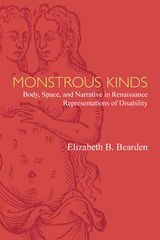
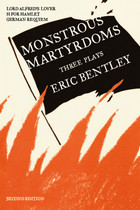
Recipient of 2007 The Robert Chesley Foundation Lifetime Achievement Award in Playwriting
Winner of 2006 Village Voice OBIE Awards Lifetime Achievement Award
"The road will be red with monstrous martyrdoms, but we shall win." Oscar Wilde wrote these words at the end of the nineteenth century after serving two years at hard labor for the crime of being homosexual. This modern martyrdom is the subject of Lord Alfred's Lover, Eric Bentley's Brechtian dramatization of Wilde's last days.
H for Hamlet is another variation on the modern martyr play, this time in homage to Pirandello. The protagonist thinks, or once thought, he was Hamlet. Fantasy? Perhaps. But, to paraphrase Marianne Moore, there was a real toad in the imaginary garden--a real martyr in the toy theatre.
In German Requiem, Bentley takes inspiration from Heinrich von Kleist's play The Schroffenstein Family, which in turn is a version of Shakespeare's Romeo and Juliet. The young star-crossed lovers in his play are martyrs of an internecine conflict much like those seen in recent history in Ireland and the Middle East.

The authors use examples from popular culture, including Disney and Marvel Cinematic Universe films, to consider ideas about how the environment responds to people who cause it harm. Brisman and South identify and discuss three dominant and interrelated depictions of the relationship between humans and the environment: first, nature as monstrous or fear inducing; second, nature and the Earth (or parts of it) as abject; and third, the entanglement of nature and the apocalypse, wherein nature is contributing to the end of the world, with an end point sometimes conceptualized as one without humans.
Monstrous Nature and Representations of Environmental Harms argues that such representations have material consequences. The authors make the case for challenging them so that we neither perpetuate them nor retreat into cynicism and defeatism about the future of our planet.

Transdisciplinary by design, Monstrous Politics first moves historically through Mexico City’s turbulent twentieth century, driven centrally by the contentious imbrication of the Institutional Revolutionary Party (PRI) and its capital city. Participant observation, expert interviews, and archival materials demonstrate the shifting strategies and alliances of recent decades, provide the reader with a sense of the texture of contemporary political life in the city during a time of unprecedented change, and locate these dynamics within the history and geography of twentieth-century urbanization and political revolution. Substantive ethnographic chapters trace the emergence and decline of the political language of “the right to the city,” the establishment and contestation of a “postpolitical” governance regime, and the culmination of a century of urban politics in the processes of “political reform” by which Mexico City finally wrested back significant political autonomy and local democracy from the federal state.
A four-fold transection of the revolutionary structure of feeling that pervades the city in this historic moment illustrates the complex and contradictory sentiments, appraisals, and motivations through which contemporary politics are understood and enacted. Drawing on theories of social revolution that embrace complexity, and espousing a methodology that foregrounds the everyday nature of politics, Monstrous Politics develops an understanding of revolutionary urban politics at once contextually nuanced and conceptually expansive, and thus better able to address the realities of politics in the “urban age” even beyond Mexico City.
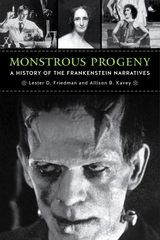

Radical Black feminist refusal through the works of mid-twentieth-century African American women writers
Monstrous Work and Radical Satisfaction offers new and insightful readings of African American women’s writings in the 1930s–1950s, illustrating how these writers centered Black women’s satisfaction as radical resistance to the false and incomplete promise of liberal racial integration. Eve Dunbar examines the writings of Ann Petry, Dorothy West, Alice Childress, and Gwendolyn Brooks to show how these women explored self-fulfillment over normative and sanctioned models of national belonging.
Paying close attention to literary moments of disruption, miscommunication, or confusion rather than ease, assimilation, or mutual understanding around race and gender, Dunbar tracks these writers’ dissatisfaction with American race relations. She shows how Petry, West, Childress, and Brooks redeploy the idea of monstrous work to offer potential modalities for registering Black women’s capacity to locate satisfaction within the domestic and interpersonal.
While racial integration may satisfy the national idea of equality and inclusion, it has not met the long-term needs of Black people’s quest for equity. Dunbar responds, demonstrating how these mid-century women offer new blueprints for Black life by creating narrative models for radical satisfaction: Black women’s completeness, joy, and happiness outside the bounds of normative racial inclusion.
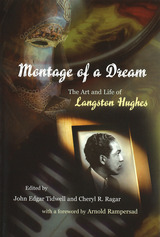
Over a forty-six-year career, Langston Hughes experimented with black folk expressive culture, creating an enduring body of extraordinary imaginative and critical writing. Riding the crest of African American creative energy from the Harlem Renaissance to the onset of Black Power, he commanded an artistic prowess that survives in the legacy he bequeathed to a younger generation of writers, including award winners Alice Walker, Paule Marshall, and Amiri Baraka.
Montage of a Dream extends and deepens previous scholarship, multiplying the ways in which Hughes’s diverse body of writing can be explored. The contributors, including such distinguished scholars as Steven Tracy, Trudier Harris, Juda Bennett, Lorenzo Thomas, and Christopher C. De Santis, carefully reexamine the significance of his work and life for their continuing relevance to American, African American, and diasporic literatures and cultures.
Probing anew among Hughes’s fiction, biographies, poetry, drama, essays, and other writings, the contributors assert fresh perspectives on the often overlooked “Luani of the Jungles” and Black Magic and offer insightful rereadings of such familiar pieces as “Cora Unashamed,” “Slave on the Block,” and Not without Laughter. In addition to analyzing specific works, the contributors astutely consider subjects either lightly explored by or unavailable to earlier scholars, including dance, queer studies, black masculinity, and children’s literature. Some investigate Hughes’s use of religious themes and his passion for the blues as the fabric of black art and life; others ponder more vexing questions such as Hughes’s sexuality and his relationship with his mother, as revealed in the letters she sent him in the last decade of her life.
Montage of a Dream richly captures the power of one man’s art to imagine an America holding fast to its ideals while forging unity out of its cultural diversity. By showing that Langston Hughes continues to speak to the fundamentals of human nature, this comprehensive reconsideration invites a renewed appreciation of Hughes’s work—and encourages new readers to discover his enduring relevance as they seek to understand the world in which we all live.
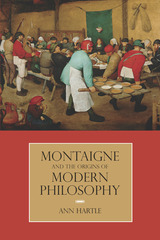
Montaigne’s Essays are rightfully studied as giving birth to the literary form of that name. Ann Hartle’s Montaigne and the Origins of Modern Philosophy argues that the essay is actually the perfect expression of Montaigne as what he called "a new figure: an unpremeditated and accidental philosopher." Unpremeditated philosophy is philosophy made sociable—brought down from the heavens to the street, where it might be engaged in by a wider audience. In the same philosophical act, Montaigne both transforms philosophy and invents "society," a distinctly modern form of association. Through this transformation, a new, modern character emerges: the individual, who is neither master nor slave and who possesses the new virtues of integrity and generosity. In Montaigne’s radically new philosophical project, Hartle finds intimations of both modern epistemology and modern political philosophy.

Educated in the humanities and trained in psychiatry, Jean Starobinski is a central figure in the Geneva School of criticism. His classic work, Montaigne in Motion, is a subtly conceived and elegantly written study of the Essais of Montaigne, whose deceptively plainspoken meditations have entranced readers and stimulated philosophers since their first publication in 1580 and 1595.
Here Starobinski offers a decidedly postmodern reading of Montaigne. In chapters dealing with the themes of public and private life, friendship, death, the body, and love, Starobinski reveals much that will remind us that Montaigne’s thought is as apropos to our time as it was to his own.
“The most important contribution to Montaigne studies since Friedrich’s work . . . . [It] will be the critical framework in which scholars will discuss Montaigne in the years to come.”—Choice
“Starobinski brings Montaigne to life by treating him as our contemporary and asking him modern questions.”—Hudson Review
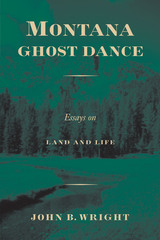
Montana has been the "last best place" for so many people. A century ago, Native Americans gathered here to perform the Ghost Dance—a last, doomed attempt to make white settlers vanish and bring back the old ways of life. Today, people are still pouring into Montana, looking for the pristine wilderness they saw in A River Runs through It.
The reality of Montana—indeed, of all the West—has never matched the myths, but this book eloquently explores how the search for a perfect place is driving growth, development, and resource exploitation in Big Sky country. In ten personal essays, John Wright looks at such things as Montana myths; old-timers; immigrants; elk; ways of seeing the landscape; land conservation and land trusts; the fate of the Blackfoot, Bitterroot, and Paradise valleys; and some means of preserving the last, best places.
These reflections offer a way of understanding Montana that goes far beyond the headlines about militia groups and celebrities' ranches. Montana never was or will be a pristine wilderness, but Wright believes that much can be saved if natives and newcomers alike see what stands to be lost. His book is a wake-up call, not a ghost dance.

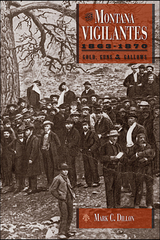
Using newspaper articles, diaries, letters, biographies, invoices, and books that speak to the compelling history of Montana’s vigilantism in the 1860s, Dillon examines the conduct of the vigilantes in the context of the due process norms of the time. He implicates the influence of lawyers and judges who, like their non-lawyer counterparts, shaped history during the rush to earn fortunes in gold.
Dillon’s perspective as a state Supreme Court justice and legal historian uniquely illuminates the intersection of territorial politics, constitutional issues, corrupt law enforcement, and the basic need of citizenry for social order. This readable and well-directed analysis of the social and legal context that contributed to the rise of Montana vigilante groups will be of interest to scholars and general readers interested in Western history, law, and criminal justice for years to come.

Aldenderfer's investigation forms a methodological and theoretical tour de force that elucidates elevational stress—what it takes for humans to adjust and survive at high altitudes. In a masterful integration of mountain biology and ecology, he emphasizes the nature of hunter-gatherer adaptations to high-mountain environments. He carefully documents the cultural history of Asana, the first stratified, open-air site discovered in the highlands of the south-central Andes. He establishes a number of major occurrences at this revolutionary site, including the origins of plant and animal domestication and transitions to food production, the growth and packing of forager populations, and the advent of some form of complexity and social hierarchy.
The rich and diversified archaeological record recovered at Asana—which spans from 10,000 to 3,500 years ago—includes the earliest houses as well as public and ceremonial buildings in the central cordillera. Built, used, and abandoned over many millennia, the Asana structures completely transform our understanding of the antiquity and development of native American architecture. Aldenderfer's detailed archaeological case study of high-elevation foraging adaptation, his description of this extreme environment as a viable human habitat, and his theoretical model of montane foraging create a new understanding of the lifeways of foraging peoples worldwide.

After the Revolution of 1910, a powerful group of Monterrey businessmen led by the Garza-Sada family emerged as a key voice of the Mexican private sector. The Monterrey Elite and The Mexican State is the first major historical study of the "Grupo Monterrey," the business elite that transformed Monterrey into a premier industrial center, the "Pittsburgh" of Mexico.
Drawing on archival resources in the United States and Mexico and the work of previous scholars, Alex Saragoza examines the origins of the Monterrey elite. He argues that a "pact" between the new state and business interests was reached by the 1940 presidential elections—an accord that paved the way for the "alliance for profits" that has characterized relations between the Mexican state and capitalists since that time.
More than a standard business history, this study delves into both the intimate social world of the Garza-Sadas and their allies and the ideas, beliefs, and vision of the Monterrey elite that set it apart from and often against the Mexican government. In so doing, The Monterrey Elite and the Mexican State reveals the underlying forces that led to the most historic battle between the private sector and the Mexican state: the dramatic showdown in 1936 between the Garza-Sadas and then President Lázaro Cárdenas in Monterrey, Nuevo León.
READERS
Browse our collection.
PUBLISHERS
See BiblioVault's publisher services.
STUDENT SERVICES
Files for college accessibility offices.
RECENTLY PUBLISHED






UChicago Accessibility Resources
home | accessibility | search | about | contact us
BiblioVault ® 2001 - 2026
The University of Chicago Press