
 A SCHOLARLY BOOK REPOSITORY
450 start with M start with M
In the treacherous swamps of southeast Missouri, a different kind of Civil War was waged.
Meriwether Jeff Thompson was one of the most intriguing but least-known Missouri participants in the Civil War. He and his troops traveled fast and light to harass Union forces, materializing out of the countryside to surprise the enemy and evading the traps set for them by Northern commanders. Early in the war, Union General Ulysses S. Grant gave Thompson the name “Swamp Fox” for his exploits in the Bootheel region. This book now tells his story—an adventure that will be appreciated by readers of all ages. Doris Mueller has produced a meticulously researched account of Thompson’s life, from his Virginia boyhood and early successes to his wartime exploits and postwar life. When the war began, Thompson left his adopted city of St. Joseph—where he had served as mayor—to fight for the Confederacy. He was elected brigadier general in the First Military District of Southeast Missouri and led poorly equipped and loosely trained men in skirmishes and raids, often using guerrilla tactics. He was captured in August 1863. After being released twelve months later in a prisoner exchange, he joined Sterling Price’s ill-fated raid into Missouri. After the war, he was one of the first Southern leaders to seek reinstatement as a U.S. citizen and worked to allay hostilities among fellow Southerners.
Thompson was also known as the “Poet Laureate of the Marshes,” and Mueller includes numerous excerpts from his writings about his experiences. Her account not only provides a wealth of little-known biographical details about this important Missourian but also offers insight into the state’s unique experiences during that bloody era, personalizing events through the life of this brave soldier.
Scorned by the Northern press for impudence, but beloved as a leader by his men, Thompson was courageous in battle, often to the point of recklessness, making him a constant thorn in the side of Union forces; after the war he was an oft-maligned model for reconciliation. Doris Mueller’s recounting of his life is an action-adventure story that will delight readers as it attests to his important role in Missouri’s heritage.

Author Ann Lane Hedlund draws from the artist’s letters, photo albums, and published reviews to tell the story of Mac’s creative and adventuresome life. Her watercolors, oil paintings, prints, and sculptures—a diverse body of work never before seen in public—range from naturalistic studies of Sonoran Desert animals to impressionistic landscapes to moody abstractions. A sharp observer of Indigenous life, she sketched and painted scenes of Navajo (Diné), Hopi, O’odham, and Yaqui people and events. These unique portrayals of the Southwest illustrate this saga of a maverick artist rediscovered.

On the 150th anniversary of the death of the English historian and politician Thomas Babington Macaulay, Robert Sullivan offers a portrait of a Victorian life that probes the cost of power, the practice of empire, and the impact of ideas.
His Macaulay is a Janus-faced master of the universe: a prominent spokesman for abolishing slavery in the British Empire who cared little for the cause, a forceful advocate for reforming Whig politics but a Machiavellian realist, a soaring parliamentary orator who avoided debate, a self-declared Christian, yet a skeptic and a secularizer of English history and culture, and a stern public moralist who was in love with his two youngest sisters.
Perhaps best known in the West for his classic History of England, Macaulay left his most permanent mark on South Asia, where his penal code remains the law. His father ensured that ancient Greek and Latin literature shaped Macaulay’s mind, but he crippled his heir emotionally. Self-defense taught Macaulay that power, calculation, and duplicity rule politics and human relations. In Macaulay’s writings, Sullivan unearths a sinister vision of progress that prophesied twentieth-century genocide. That the reverent portrait fashioned by Macaulay’s distinguished extended family eclipsed his insistent rhetoric about race, subjugation, and civilizing slaughter testifies to the grip of moral obliviousness.
Devoting his huge talents to gaining power—above all for England and its empire—made Macaulay’s life a tragedy. Sullivan offers an unsurpassed study of an afflicted genius and a thoughtful meditation on the modern ethics of power.

“Machiavellian”—used to describe the ruthless cunning of the power-obsessed and the pitiless—is never meant as a compliment. But the man whose name became shorthand for all that is ugly in politics was more engaging and nuanced than his reputation suggests. Christopher S. Celenza’s Machiavelli: A Portrait removes the varnish of centuries to reveal not only the hardnosed political philosopher but the skilled diplomat, learned commentator on ancient history, comic playwright, tireless letter writer, and thwarted lover.
Machiavelli’s hometown was the epicenter of the Italian Renaissance in the fifteenth century, a place of unparalleled artistic and intellectual attainments. But Florence was also riven by extraordinary violence. War and public executions were commonplace—Machiavelli himself was imprisoned and brutally tortured at the behest of his own government. These experiences left a deep impression on this keen observer of power politics, whose two masterpieces—The Prince and The Discourses—draw everywhere on the hard-won wisdom gained from navigating a treacherous world. But like many of Machiavelli’s fellow Florentines, he also immersed himself in the Latin language and wisdom of authors from the classical past. And for all of Machiavelli’s indifference to religion, vestiges of Christianity remained in his thought, especially the hope for a redeemer—a prince who would provide the stability so rare in Machiavelli’s worldly experience.
- AFP/Skystone Partners Prize for Research on Fundraising and Philanthropy, Association of Fundraising Professionals, 2021
- Terry McAdam Book Award, given by the Alliance for Nonprofit Management
- 2023 Peter Dobkin Hall History of Philanthropy Prize from the Association for Research on Nonprofit and Voluntary Action (ARNOVA).
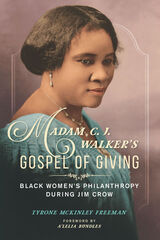
Founder of a beauty empire, Madam C. J. Walker was celebrated as America's first self-made female millionaire in the early 1900s. Known as a leading African American entrepreneur, Walker was also devoted to an activist philanthropy aimed at empowering African Americans and challenging the injustices inflicted by Jim Crow.
Tyrone McKinley Freeman's biography highlights how giving shaped Walker's life before and after she became wealthy. Poor and widowed when she arrived in St. Louis in her twenties, Walker found mentorship among black churchgoers and working black women. Her adoption of faith, racial uplift, education, and self-help soon informed her dedication to assisting black women's entrepreneurship, financial independence, and activism. Walker embedded her philanthropy in how she grew her business, forged alliances with groups like the National Association of Colored Women, funded schools and social service agencies led by African American women, and enlisted her company's sales agents in local charity and advocacy work.
Illuminating and dramatic, Madam C. J. Walker’s Gospel of Giving broadens our understanding of black women’s charitable giving and establishes Walker as a foremother of African American philanthropy.
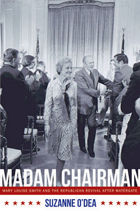
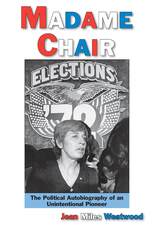
A Utah national committeewoman and member of the reform committee that reorganized the party, Westwood answered George McGovern’s call to lead his presidential campaign. In the dramatic year of 1972, she became “chairman” of the party, McGovern lost in a landslide, Nixon was reelected, and a covert operation burglarized Democratic National Committee headquarters at the Watergate.
Westwood provides an inside account of a period that reshaped national politics. Second-wave feminism—“women’s liberation”—and the civil rights and antiwar movements opened the way. As a major player in political reform, Jean Westwood both helped build that road and traveled it.
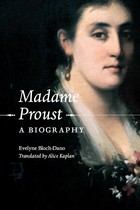
Now Evelyne Bloch-Dano’s touching biography acquaints Proust fans with the real Jeanne Weil Proust. Written with the imaginative force of a novel, but firmly grounded in Jeanne and Marcel Proust’s writings, Madame Proust skillfully captures the life and times of Proust’s mother, from her German-Jewish background and her marriage to a Catholic grocer’s son to her lifelong worries about her son’s sexuality, health problems, and talent. As well as offering intimate glimpses of the Prousts’ daily life, Madame Proust also uses the family as a way to explore the larger culture of fin-de-siècle France, including high society, spa culture, Jewish assimilation, and the Dreyfus affair. Throughout, Bloch-Dano offers sensitive readings of Proust’s work, drawing out the countless interconnections between his mother, his life, and his magnum opus.
Those coming to In Search of Lost Time for the first time will find in Madame Proust a delightful primer on Marcel Proust’s life and times. For those already steeped in the pleasures of Proust, this gem of a biography will give them a fresh understanding of the rich, fascinating background of the writer and his art.
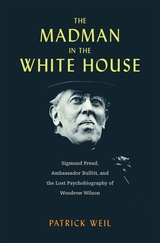
“The extraordinary untold story of how a disillusioned American diplomat named William C. Bullitt came to Freud’s couch in 1926, and how Freud and his patient collaborated on a psychobiography of President Woodrow Wilson.”—Wall Street Journal
The notorious psychobiography of Woodrow Wilson, rediscovered nearly a century after it was written by Sigmund Freud and US diplomat William C. Bullitt, sheds new light on how the mental health of a controversial American president shaped world events.
When the fate of millions rests on the decisions of a mentally compromised leader, what can one person do? Disillusioned by President Woodrow Wilson’s destructive and irrational handling of the 1919 Treaty of Versailles, a US diplomat named William C. Bullitt asked this very question. With the help of his friend Sigmund Freud, Bullitt set out to write a psychological analysis of the president. He gathered material from personal archives and interviewed members of Wilson’s inner circle. In The Madman in the White House, Patrick Weil resurrects this forgotten portrait of a troubled president.
After two years of collaboration, Bullitt and Freud signed off on a manuscript in April 1932. But the book was not published until 1966, nearly thirty years after Freud’s death and only months before Bullitt’s. The published edition was heavily redacted, and by the time it was released, the mystique of psychoanalysis had waned in popular culture and Wilson’s legacy was unassailable. The psychological study was panned by critics, and Freud’s descendants denied his involvement in the project.
For nearly a century, the mysterious, original Bullitt and Freud manuscript remained hidden from the public. Then in 2014, while browsing the archives of Yale University, Weil happened upon the text. Based on his reading of the 1932 manuscript, Weil examines the significance of Bullitt and Freud’s findings and offers a major reassessment of the notorious psychobiography. The result is a powerful warning about the influence a single unbalanced personality can have on the course of history.
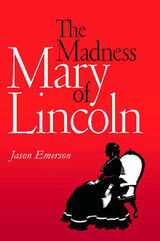
WINNER, Russell P. Strange Memorial Book of the Year Award from the Illinois State Historical Society, 2007!
University Press Books for Public and Secondary Schools 2013 edition
In 2005, historian Jason Emerson discovered a steamer trunk formerly owned by Robert Todd Lincoln's lawyer and stowed in an attic for forty years. The trunk contained a rare find: twenty-five letters pertaining to Mary Todd Lincoln's life and insanity case, letters assumed long destroyed by the Lincoln family. Mary wrote twenty of the letters herself, more than half from the insane asylum to which her son Robert had her committed, and many in the months and years after.
The Madness of Mary Lincoln is the first examination of Mary Lincoln’s mental illness based on the lost letters, and the first new interpretation of the insanity case in twenty years. This compelling story of the purported insanity of one of America’s most tragic first ladies provides new and previously unpublished materials, including the psychiatric diagnosis of Mary’s mental illness and her lost will.
Emerson charts Mary Lincoln’s mental illness throughout her life and describes how a predisposition to psychiatric illness and a life of mental and emotional trauma led to her commitment to the asylum. The first to state unequivocally that Mary Lincoln suffered from bipolar disorder, Emerson offers a psychiatric perspective on the insanity case based on consultations with psychiatrist experts.
This book reveals Abraham Lincoln’s understanding of his wife’s mental illness and the degree to which he helped keep her stable. It also traces Mary’s life after her husband’s assassination, including her severe depression and physical ailments, the harsh public criticism she endured, the Old Clothes Scandal, and the death of her son Tad.
The Madness of Mary Lincoln is the story not only of Mary, but also of Robert. It details how he dealt with his mother’s increasing irrationality and why it embarrassed his Victorian sensibilities; it explains the reasons he had his mother committed, his response to her suicide attempt, and her plot to murder him. It also shows why and how he ultimately agreed to her release from the asylum eight months early, and what their relationship was like until Mary’s death.
This historical page-turner provides readers for the first time with the lost letters that historians had been in search of for eighty years.

In one memorable scene, after realizing that her friend Carmen is cleaning the house of one of the producers of Annie Hall, María recruits her to take her picture as she poses dramatically with Mr. Joffe’s Oscar in hand. It is María’s defiant yet determined attitude amidst her sacrifices that allows for Guillermo’s spirited coming of age and coming out.
Their common ground is the drama of their encounters with discovery, heartbreak, and passion—the explosive emotions that light up the stage of their two-actor theater.
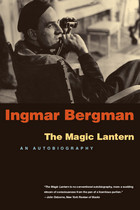
“When a film is not a document, it is a dream. . . . At the editing table, when I run the strip of film through, frame by frame, I still feel that dizzy sense of magic of my childhood.” Bergman, who has conveyed this heady sense of wonder and vision to moviegoers for decades, traces his lifelong love affair with film in his breathtakingly visual autobiography, The Magic Lantern.
More grand mosaic than linear account, Bergman’s vignettes trace his life from a rural Swedish childhood through his work in theater to Hollywood’s golden age, and a tumultuous romantic history that includes five wives and more than a few mistresses. Throughout, Bergman recounts his life in a series of deeply personal flashbacks that document some of the most important moments in twentieth-century filmmaking as well as the private obsessions of the man behind them. Ambitious in scope yet sensitively wrought, The Magic Lantern is a window to the mind of one of our era’s great geniuses.
“[Bergman] has found a way to show the soul’s landscape . . . . Many gripping revelations.”—New York Times Book Review
“Joan Tate’s translation of this book has delicacy and true pitch . . . The Magic Lantern is as personal and penetrating as a Bergman film, wry, shadowy, austere.”—New Republic
“[Bergman] keeps returning to his past, reassessing it, distilling its meaning, offering it to his audiences in dazzling new shapes.”—New York Times
“What Bergman does relate, particularly his tangled relationships with his parents, is not only illuminating but quite moving. No ‘tell-all’ book this one, but revealing in ways that much longer and allegedly ‘franker’ books are not.”—Library Journal

Duke University Press Scholars of Color First Book Award recipient

The story of Mai Ya Xiong and her family and their journey from the Ban Vinai refugee camp in Thailand to a new life in Madison, Wisconsin, is extraordinary. Yet it is typical of the stories of the 200,000 Hmong people who now live in the United States and who struggle to adjust to American society while maintaining their own culture as a free people.
Mai Ya's Long Journey follows Mai Ya Xiong, a young Hmong woman, from her childhood in Thailand's Ban Vinai Refugee Camp to her current home in Wisconsin. Mai Ya's parents fled Laos during the Vietnam War and were refugees in Thailand for several years before reaching the United States. But the story does not end there. Students will read the challenges Mai Ya faces in balancing her Hmong heritage and her adopted American culture as she grows into adulthood.
Using feminist and psychoanalytic approaches to examine the "female voice" in the Heroides, Sara H. Lindheim closely reads these fictive letters in which the women seemingly tell their own stories. She points out that in Ovid’s verse epistles all the women represent themselves in a strikingly similar and disjointed fashion. Lindheim turns to Lacanian theory of desire to explain these curious and hauntingly repetitive representations of the heroines in the "female voice." Lindheim’s approach illuminates what these poems reveal about both masculine and feminine constructions of the feminine

Winner, Best First Monograph, British Association of Film, Television and Screen Studies
The first scholarly book on John Hughes examines Hollywood's complex relationship with genre, the role of the auteur in commercial cinema, and the legacy of favorites such as Sixteen Candles and Ferris Bueller's Day Off.
In the 1980s and 1990s, John Hughes was one of Hollywood's most reliable hitmakers, churning out beloved teen comedies and family films such as The Breakfast Club and Home Alone, respectively. But was he an artist? Hughes, an adamantly commercial filmmaker who was dismissed by critics, might have laughed at the question. Since his death in 2009, though, he has been memorialized on Oscar night as a key voice of his time. Now the critics lionize him as a stylistic original.
Holly Chard traces Hughes's evolution from entertainer to auteur. Studios recognized Hughes's distinctiveness and responded by nurturing his brand. He is therefore a case study in Hollywood's production not only of movies but also of genre and of authorship itself. The films of John Hughes, Chard shows, also owed their success to the marketers who sold them and the audiences who watched. Careful readings of Hughes's cinema reveal both the sources of his iconic status and the imprint on his films of the social, political, economic, and media contexts in which he operated.
The first serious treatment of Hughes, Mainstream Maverick elucidates the priorities of the American movie industry in the New Hollywood era and explores how artists not only create but are themselves created.
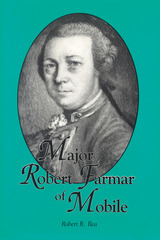
"An engaging biography [and] a colorful tale. . . . Robert Farmar, a son of New Jersey, used his position among that colony's elite to secure a commission as a captain in the British Army during the War of Jenkins' Ear and King George's War, serving in the unsuccessful assaults at Cartegena, Cuba, and Panama and then in the disaster at Fontenoy in Flanders and in the reversals at Rocoux and Laffeldt. . . . During the Seven Years' War he participated in the capture of Havana.

Hardly more than a decade old, the twenty-first century has already been dubbed the Asian Century in recognition of China and India’s increasing importance in world affairs. Yet discussions of Asia seem fixated on economic indicators—gross national product, per capita income, share of global trade. Makers of Modern Asia reorients our understanding of contemporary Asia by highlighting the political leaders, not billionaire businessmen, who helped launch the Asian Century.
The nationalists who crafted modern Asia were as much thinkers as activists, men and women who theorized and organized anticolonial movements, strategized and directed military campaigns, and designed and implemented political systems. The eleven thinker-politicians whose portraits are presented here were a mix of communists, capitalists, liberals, authoritarians, and proto-theocrats—a group as diverse as the countries they represent.
From China, the world’s most populous country, come four: Mao Zedong, leader of the Communist Revolution; Zhou Enlai, his close confidant; Deng Xiaoping, purged by Mao but rehabilitated to play a critical role in Chinese politics in later years; and Chiang Kai-shek, whose Kuomintang party formed the basis of modern Taiwan. From India, the world’s largest democracy, come three: Mohandas Gandhi, Jawaharlal Nehru, and Indira Gandhi, all of whom played crucial roles in guiding India toward independence and prosperity. Other exemplary nationalists include Vietnam’s Ho Chi Minh, Indonesia’s Sukarno, Singapore’s Lee Kuan Yew, and Pakistan’s Zulfiqar Ali Bhutto. With contributions from leading scholars, Makers of Modern Asia illuminates the intellectual and ideological foundations of Asia’s spectacular rise to global prominence.
Modern India is the world's largest democracy, a sprawling, polyglot nation containing one-sixth of all humankind. The existence of such a complex and distinctive democratic regime qualifies as one of the world's bona fide political miracles. Furthermore, India's leading political thinkers have often served as its most influential political actors—think of Gandhi, whose collected works run to more than ninety volumes, or Ambedkar, or Nehru, who recorded their most eloquent theoretical reflections at the same time as they strove to set the delicate machinery of Indian democracy on a coherent and just path.
Out of the speeches and writings of these thinker-activists, Ramachandra Guha has built the first major anthology of Indian social and political thought. Makers of Modern India collects the work of nineteen of India's foremost generators of political sentiment, from those whose names command instant global recognition to pioneering subaltern and feminist thinkers whose works have until now remained obscure and inaccessible. Ranging across manifold languages and cultures, and addressing every crucial theme of modern Indian history—race, religion, language, caste, gender, colonialism, nationalism, economic development, violence, and nonviolence—Makers of Modern India provides an invaluable roadmap to Indian political debate.
An extensive introduction, biographical sketches of each figure, and guides to further reading make this work a rich resource for anyone interested in India and the ways its leading political minds have grappled with the problems that have increasingly come to define the modern world.
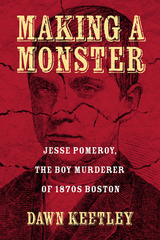
In this book, Dawn Keetley details the story of Pomeroy's crimes and the intense public outcry. She explores the two reigning theories at the time—that he was shaped before birth when his pregnant mother visited a slaughterhouse and that he imitated brutal acts found in popular dime novels. Keetley then thoughtfully offers a new theory: that Pomeroy suffered a devastating reaction to a smallpox vaccination which altered his brain, creating a psychopath who revealed the human potential for brutality. The reaction to Pomeroy's acts, then and now, demonstrates the struggle to account for exactly those aspects of human nature that remain beyond our ability to understand.

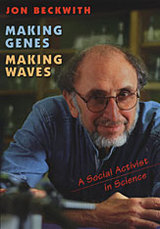
In 1969, Jon Beckwith and his colleagues succeeded in isolating a gene from the chromosome of a living organism. Announcing this startling achievement at a press conference, Beckwith took the opportunity to issue a public warning about the dangers of genetic engineering. Jon Beckwith's book, the story of a scientific life on the front line, traces one remarkable man's dual commitment to scientific research and social responsibility over the course of a career spanning most of the postwar history of genetics and molecular biology.
A thoroughly engrossing memoir that recounts Beckwith's halting steps toward scientific triumphs--among them, the discovery of the genetic element that turns genes on--as well as his emergence as a world-class political activist, Making Genes, Making Waves is also a compelling history of the major controversies in genetics over the last thirty years. Presenting the science in easily understandable terms, Beckwith describes the dramatic changes that transformed biology between the late 1950s and our day, the growth of the radical science movement in the 1970s, and the personalities involved throughout. He brings to light the differing styles of scientists as well as the different ways in which science is presented within the scientific community and to the public at large. Ranging from the travails of Robert Oppenheimer and the atomic bomb to the Human Genome Project and recent "Science Wars," Beckwith's book provides a sweeping view of science and its social context in the latter half of the twentieth century.

Throughout this memoir, the couple demonstrates that their lifelong commitment to making history through social activism cannot be understood without returning to the deeply personal context of their family history—of growing up “Red Diaper babies” in 1950s New York City, using folk music as self-expression as adolescents in the 1960s, and of making blintzes for their own family through the 1970s and 1980s. As the children of immigrants and first generation Jews, Dick and Mickey crafted their own religious identity as secular Jews, created a critical space for American progressive activism through SDS, and ultimately, found themselves raising an “American” family.

Robert Gardner’s classic Dead Birds is one of the most highly acclaimed and controversial documentary films ever made. This detailed and candid account of the process of making Dead Birds, from the birth of the idea through filming in New Guinea to editing and releasing the finished film, is more than the chronicle of a single work. It is also a thoughtful examination of what it meant to record the moving and violent rituals of warrior-farmers in the New Guinea highlands and to present to the world a graphic story of their behavior as a window onto our own. Letters, journals, telegrams, newspaper clippings, and over 50 images are assembled to recreate a vivid chronology of events. Making Dead Birds not only addresses the art and practice of filmmaking, but also explores issues of representation and the discovery of meaning in human lives.
Gardner led a remarkable cast of participants on the 1961 expedition. All brought back extraordinary bodies of work. Probably most influential of all was Dead Birds, which marked a sea change in nonfiction filmmaking. This book takes the reader inside the creative process of making that landmark film and offers a revealing look into the heart and mind of one of the great filmmakers of our time.
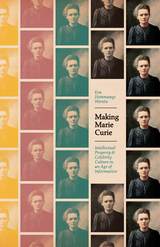
Making Marie Curie explores what went into the creation of this icon of science. It is not a traditional biography, or one that attempts to uncover the “real” Marie Curie. Rather, Eva Hemmungs Wirtén, by tracing a career that spans two centuries and a world war, provides an innovative and historically grounded account of how modern science emerges in tandem with celebrity culture under the influence of intellectual property in a dawning age of information. She explores the emergence of the Curie persona, the information culture of the period that shaped its development, and the strategies Curie used to manage and exploit her intellectual property. How did one create and maintain for oneself the persona of scientist at the beginning of the twentieth century? What special conditions bore upon scientific women, and on married women in particular? How was French identity claimed, established, and subverted? How, and with what consequences, was a scientific reputation secured?
In its exploration of these questions and many more, Making Marie Curie provides a composite picture not only of the making of Marie Curie, but the making of modern science itself.

The Making of a Black Scholar is structured around schools. Porter attends Georgia's segregated black schools until he enters the privileged world of Amherst College. He graduates (spending one semester at Morehouse College) and moves on to graduate study at Yale. He starts his teaching career at Detroit's Wayne State University and spends the 1980s at Dartmouth College and the 1990s at Stanford University.
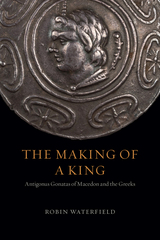
In this book, distinguished historian Robin Waterfield draws on his deep understanding of Greek history to bring us into the world of this complicated, splintered empire. He shows how, while Antigonus was confirming his Macedonian rule through constitutional changes, the Greeks were making moves toward independence. Two great confederacies of Greek cities emerged, forming powerful blocs that had the potential to resist the power of Macedon. The Making of a King charts Antigonus’s conflicts with the Greeks and with his perennial enemy, Ptolemy of Egypt. But Antigonus’s diplomatic and military successes were not enough to secure peace, and in his final years he saw his control of Greece whittled away by rebellion and the growing power of the Greek confederacies. Macedon’s lack of firm control over Greece ultimately made it possible for Rome to take its place as the arbiter of the Greeks’ future.
The Making of a King is Waterfield’s third volume about the Greeks in the era after Alexander the Great. Completing the story begun in his previous two books, Dividing the Spoils and Taken at the Flood, it brings Antigonus and his turbulent era to life. With The Making of a King—the first book in more than a century to tell in full the story of Antigonus Gonatas’s reign—this fascinating figure finally receives his due.
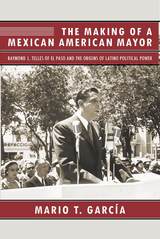
In the border metropolis of El Paso, more than half the population is Mexican American, yet this group had been denied effective political representation. Mexican Americans broke this barrier and achieved the “politics of status” through Telles’s stunning 1957 victory. This book captures the excitement of that long-awaited election.
The Making of a Mexican American Mayor also examines Telles’s story as a microcosm of the history of Mexican Americans before and after World War II—the Mexican American Generation. As mayor and ambassador, Telles symbolized this generation’s striving for political participation, and his legacy is evident in the growing number of Latinas/os holding office today.
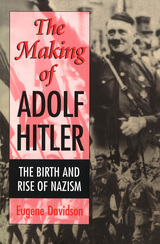
The harsh Armistice terms of 1918, the short-lived Weimar Republic, Hindenburg's senile vacillations, and behind-the-scene power plays form the backbone of this excellent study covering German history during the first three-and-a-half decades of the century.
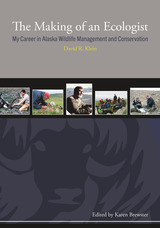
The first portion of the book is comprised of stories from Klein’s life collected during oral history interviews, while the latter section contains essays written by Klein about philosophical topics of importance to him, such as eco-philosophy, the definition of wilderness, and the morality of hunting.
Many of Klein’s graduate students have gone on to become successful wildlife managers themselves, in Alaska and around the globe. Through The Making of an Ecologist, Klein’s outlook, philosophy, and approach toward sustainability, wildlife management, and conservation can now inspire even more readers to ensure the survival of our fragile planet in an ever-changing global society.
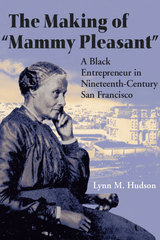
Investigating Mary Ellen Pleasant's convoluted legacy
Mary Ellen Pleasant arrived in Gold Rush-era San Francisco a free black woman with abolitionist convictions and a predilection for entrepreneurial success. Behind the convenient and trusted disguise of "Mammy," she transformed domestic labor into enterprise, amassed remarkable real estate, wealth, and power, and gained notoriety for her work in fighting Jim Crow.
Pleasant's legacy is steeped in scandals and lore. Was she a voodoo queen who traded in sexual secrets? A madam? A murderer? In The Making of "Mammy Pleasant," Lynn M. Hudson examines the folklore of Pleasant's real and imagined powers. Emphasizing the significance of her life in the context of how it has been interpreted or ignored in the larger trends of American history, Hudson integrates fact and speculation culled from periodicals, court cases, diaries, letters, Pleasant's interviews with the San Francisco press, and various biographical and fictional accounts.
Addressing the lack of a historical record of black women's lives, the author argues that the silences and mysteries of Pleasant's past, whether never recorded or intentionally omitted, reveal as much about her life as what has been documented. Through Pleasant's life, Hudson also interrogates the constructions of race, gender, and sexuality during the formative years of California's economy and challenges popular mythology about the liberatory sexual culture of the American West.

Making of the Auden canon was first published in 1957. Minnesota Archive Editions uses digital technology to make long-unavailable books once again accessible, and are published unaltered from the original University of Minnesota Press editions.
No poet writing in English is more representative of the intellectual trends of the thirties and forties than W. H. Auden. British born, Oxford educated, American by naturalization, and now returned to Oxford to occupy the chair of poetry, he is widely regarded as the spiritual guide and keeper of the conscience of the age, at the same time that he exemplifies the gradual passage from ideological left to right so characteristic of the period. This study of Auden's poetry and revisions has far-reaching implications for an understanding not only of Auden's own writing but that of his contemporaries as well.
Considering that 1945 Collected Poetry as the Auden canon, or authorized version of the poems, Mr. Beach examines the process by which Auden selected poems to be admitted to the canon. He shows that the poet eliminated many that were at odds with his later style and thought, discreetly revised others to bring them into line, and, at the same time, left unaltered some of the pieces from his unregenerate days. Auden's system of selection and revision reflects the winding course of his thought, and, by tracing this course, Mr. Beach endeavors to penetrate the poet's diverse masks in an effort to get at the identity of t he man himself.
Urged forward by these silences, Linden, a feminist and sociologist, began to interview Jewish Holocaust survivors in 1983. As Linden interprets survivors' accounts of the death camps and the resistance, she reveals complex ways in which selves are constructed through storytelling. The stories that unfold are continuously fashioned and refashioned—never stripped of context or frozen in time. What emerges is an unexpectedly elegant montage in which interviewee, interviewer, and author are intertwined.
Linden's meetings with survivors and her encounters with their stories transformed her as a feminist, a Jew, and a social scientist. Her analysis reveals the intimate connections between an ethnographer's lived experience and her interpretations of others'. Linden's reflections on the process of ethnography belie the rhetoric of positivism in the social sciences. They will inspire other scholars to break free of research and writing practices in their own disciplines that efface the ineluctable bond between knower and known. All readers will be challenged to reexamine the Holocaust in an intensely personal light and to reconsider the meanings of survival in our own time.
Cutting across the boundaries of ethnography and autobiography to create a new kind of text, Making Stories, Making Selves offers a significant contribution to interpretive social science and the literature of the Holocaust. Linden's original and courageous work is vital reading for Holocaust scholars, students of modern Jewish life, sociologists, feminist theorists, and all readers seeking to understand their own relationship to the Holocaust.
An extraordinary illustrated biography of a Métis man and Anishinaabe woman navigating great changes in their homeland along the U.S.–Canada border in the early twentieth century
John Linklater, of Anishinaabeg, Cree, and Scottish ancestry, and his wife, Tchi-Ki-Wis, of the Lac La Croix First Nation, lived in the canoe and border country of Ontario and Minnesota from the 1870s until the 1930s. During that time, the couple experienced radical upheavals in the Quetico–Superior region, including the cutting of white and red pine forests, the creation of Indian reserves/reservations and conservation areas, and the rise of towns, tourism, and mining. With broad geographical sweep, historical significance, and biographical depth, Making the Carry tells their story, overlooked for far too long.
John Linklater, a renowned game warden and skilled woodsman, was also the bearer of traditional ecological knowledge and Indigenous heritage, both of which he was deeply committed to teaching others. He was sought by professors, newspaper reporters, museum personnel, and conservationists—among them Sigurd Olson, who considered Linklater a mentor. Tchi-Ki-Wis, an extraordinary craftswoman, made a sweeping array of necessary yet beautiful objects, from sled dog harnesses to moose calls to birch bark canoes. She was an expert weaver of large Anishinaabeg cedar bark mats with complicated geometric designs, a virtually lost art.
Making the Carry traces the routes by which the couple came to live on Basswood Lake on the international border. John’s Métis ancestors with deep Hudson’s Bay Company roots originally came from Orkney Islands, Scotland, by way of Hudson Bay and Red River, or what is now Winnipeg. His family lived in Manitoba, northwest Ontario, northern Minnesota, and, in the case ofJohn and Tchi-Ki-Wis, on Isle Royale. A journey through little-known Canadian history, the book provides an intimate portrait of Métis people.
Complete with rarely seen photographs of activities from dog mushing to guiding to lumbering, as well as of many objects made by Tchi-Ki-Wis, such as canoes, moccasins, and cedar mats, Making the Carry is a window on a traditional way of life and a restoration of two fascinating Indigenous people to their rightful place in our collective past.
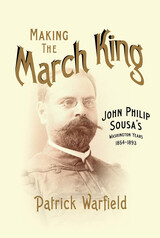
Warfield examines Sousa's wide-ranging experience composing, conducting, and performing in the theater, opera house, concert hall, and salons, as well as his leadership of the United States Marine Band and the later Sousa Band, early twentieth-century America's most famous and successful ensemble. Sousa composed not only marches during this period but also parlor, minstrel, and art songs; parade, concert, and medley marches; schottisches, waltzes, and polkas; and incidental music, operettas, and descriptive pieces. Warfield's examination of Sousa's output reveals a versatile composer much broader in stylistic range than the bandmaster extraordinaire remembered as the March King.
In particular, Making the March King demonstrates how Sousa used his theatrical training to create the character of the March King. The exuberant bandmaster who pleased audiences was both a skilled and charismatic conductor and a theatrical character whose past and very identity suggested drama, spectacle, and excitement. Sousa's success was also the result of perseverance and lessons learned from older colleagues on how to court, win, and keep an audience. Warfield presents the story of Sousa as a self-made business success, a gifted performer and composer who deftly capitalized on his talents to create one of the most entertaining, enduring figures in American music.

Making the Weather is the story of six postwar politicians, all of whom exerted an outsized influence on the political life of the United Kingdom—an influence greater than that of most prime ministers. Vernon Bogdanor’s cast includes three from the political Left—Aneurin “Nye” Bevan, Roy Jenkins, and Tony Benn—and three from the Right—Enoch Powell, Keith Joseph, and Nigel Farage. Each study is a fascinating analysis examining how these men achieved such prominence and influence and how, though very different figures in many ways, they came to dominate the political landscape, often for years.
Each of the six made fundamental contributions to the debate about Britain’s future and to the vibrancy of British democracy. From immigration to Europe, from the National Health Service to devolution, the issues and causes that brought these men to prominence are still relevant.
A Kirkus Reviews Best Nonfiction Book of 2024
A Spectator Best Book of the Year
Finalist for the 2025 ASALH Book Prize
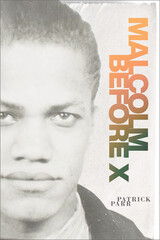
Drawing upon interviews, correspondence, and nearly 2000 pages of never-before-used prison records, Malcolm Before X is the definitive examination of the prison years of civil rights icon Malcolm X.
In February 1946, when 20-year-old Malcolm Little was sentenced to eight to ten years in a maximum-security prison, he was a petty criminal and street hustler in Boston. By the time he was paroled in August 1952, he had transformed into a voracious reader, joined the Black Muslims, and was poised to become Malcolm X, one of the most prominent and important intellectuals of the civil rights era. While scholars and commentators have exhaustively detailed, analyzed, and debated Malcolm X’s post-prison life, they have not explored these six and a half transformative years in any depth.
Paying particular attention to his time in prison, Patrick Parr’s Malcolm Before X provides a comprehensive and groundbreaking examination of the first twenty-seven years of Malcolm X’s life (1925–1965). Parr traces Malcolm’s African lineage, explores his complicated childhood in the Midwest, and follows him as he moves east to live with his sister Ella in Boston’s Roxbury neighborhood, where he is convicted of burglary and sentenced.
Parr utilizes a trove of previously overlooked documents that include prison files and prison newspapers to immerse the reader into the unique cultures—at times brutal and at times instructional—of Charlestown State Prison, the Concord Reformatory, and the Norfolk Prison Colony. It was at these institutions that Malcolm devoured books, composed poetry, boxed, debated, and joined the Nation of Islam, changing the course of his life and setting the stage for a decade of antiracist activism that would fundamentally reshape American culture.
In this meticulously researched and beautifully written biography, the inspiring story of how Malcolm Little became Malcolm X is finally told.
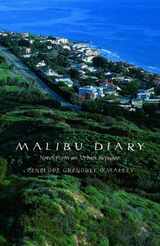

Thomas Robert Malthus’s An Essay on the Principle of Population was an immediate succès de scandale when it appeared in 1798. Arguing that nature is niggardly and that societies, both human and animal, tend to overstep the limits of natural resources in “perpetual oscillation between happiness and misery,” he found himself attacked on all sides—by Romantic poets, utopian thinkers, and the religious establishment. Though Malthus has never disappeared, he has been perpetually misunderstood. This book is at once a major reassessment of Malthus’s ideas and an intellectual history of the origins of modern debates about demography, resources, and the environment.
Against the ferment of Enlightenment ideals about the perfectibility of mankind and the grim realities of life in the eighteenth century, Robert Mayhew explains the genesis of the Essay and Malthus’s preoccupation with birth and death rates. He traces Malthus’s collision course with the Lake poets, his important revisions to the Essay, and composition of his other great work, Principles of Political Economy. Mayhew suggests we see the author in his later writings as an environmental economist for his persistent concern with natural resources, land, and the conditions of their use. Mayhew then pursues Malthus’s many afterlives in the Victorian world and beyond.
Today, the Malthusian dilemma makes itself felt once again, as demography and climate change come together on the same environmental agenda. By opening a new door onto Malthus’s arguments and their transmission to the present day, Robert Mayhew gives historical depth to our current planetary concerns.

The perils of aging are many, but the debilitating effects of serious illness loom large. In this stirring memoir, readers will discover a man who improved the lives of many arthritis sufferers before himself succumbing to a cruel debilitating disease. The Man behind the Mask tells the story of Thomas Mallory, who was inspired to become a doctor after undergoing surgery for a high school football injury. He went on to become a renowned surgeon and a pioneer in joint replacement. In 2002, his successful career came to an abrupt halt when he was diagnosed with Parkinson’s disease.
Mallory was one of the first surgeons in the United States to see the potential for joint replacement technology, and in this memoir he describes not only the nuances of introducing hip replacement surgery but also the systems that he established to make it a highly successful operation. He tells how he overcame initial resistance to the procedure and became a respected teacher of the technology, training many surgeons who went on to successful careers, lecturing about his procedure around the world, and also seeing VIP patients who journeyed to Ohio just to be operated on by him.
As a pioneer in this type of operation, Mallory first recognized the value of using prosthetic innovation and development. He became a proponent of modularity in joint replacement surgery, which allowed a surgeon to customize a prosthesis to a patient’s joint in the operating room. His innovations, along with those of Dr. William Head, resulted in the introduction in 1983 of the Mallory-Head Hip System—a technology still in use today and one that has offered relief to thousands of patients.
Tracing the joys and sorrows of his own career, Mallory dispels the myth that surgeons are emotionally invulnerable and cold. He offers his perspective on the pursuit of medicine as a profession, on the doctor-patient relationship, and on litigious challenges to physicians. He also commends the benefits of family and leisure and the blessing of life in general while offering insight into the management of an incurable disease.
In our skeptical era, Thomas Mallory is a shining example of a prominent scientist who has maintained his faith in God throughout the highs and lows of life. The Man behind the Mask is an inspiring account for fellow professionals and general readers, as well as for those who have benefited from the procedures he introduced.
Historian William G. Robbins illuminates the wrenching transformation of American political culture in A Man for All Seasons: Monroe Sweetland and the Liberal Paradox. Racial and economic inequalities motivated much of Sweetland’s civic life, including his lifelong memberships in the American Civil Liberties Committee, the National Association for the Advancement of Colored People, the Urban League, the Japanese American Citizens League, and the Red Cross, where Sweetland worked repatriating American prisoners of war after Japan’s surrender.
Robbins’ portrait is holistic, exploring Sweetland’s socialist beginnings, inconsistencies in his politics—especially during the Cold War—and his regional legacy. He was the most important person in the resurgence of the modern, liberal Oregon Democratic Party from the late 1940s to the 1960s. He joined the National Education Association in 1964 and became the driving force behind the Bilingual Education Act of 1968 and the fight for the age-18 vote, achieved in the ratification of the 26th amendment in 1971. Monroe Sweetland was a nationally prominent figure, whose fights bequeathed to modern America important legislation that shaped its political landscape.
On Earth Day 1970 twenty million Americans displayed their commitment to a clean environment. It was called the largest demonstration in human history, and it permanently changed the nation’s political agenda. By Earth Day 2000 participation had exploded to 500 million people in 167 countries.
The seemingly simple idea—a day set aside to focus on protecting our natural environment—was the brainchild of U.S. Senator Gaylord Nelson of Wisconsin. It accomplished, far beyond his expectations, his lifelong goal of putting the environment onto the nation’s and the world’s political agendas.
A remarkable man, Nelson ranks as one of history’s leading environmentalists. He also played a major role as an early, outspoken opponent of the Vietnam War, and as a senate insider was a key player in civil rights, poverty, civil liberties and consumer protection issues.
The life of Nelson, a small town boy who learned his values and progressive political principles at an early age, is woven through the political history of the twentieth century. Nelson’s story intersects at times with Fighting Bob La Follette, Joe McCarthy, and Bill Proxmire in Wisconsin, and with George McGovern, Lyndon Johnson, Hubert Humphrey, Russell Long, Walter Mondale, John F. Kennedy, and others on the national scene.
Winner, Elizabeth A. Steinberg Prize, University of Wisconsin Press
There have been many books written about Johnny Cash, but The Man in Song is the first to examine Cash’s incredible life through the lens of the songs he wrote and recorded. Music journalist and historian John Alexander has drawn on decades of studying Cash’s music and life, from his difficult depression-era Arkansas childhood through his death in 2003, to tell a life story through songs familiar and obscure. In discovering why Cash wrote a given song or chose to record it, Alexander introduces readers anew to a man whose primary consideration of any song was the difference music makes in people’s lives, and not whether the song would become a hit.
The hits came, of course. Johnny Cash sold more than fifty million albums in forty years, and he holds the distinction of being the only performer inducted into the Rock and Roll Hall of Fame, the Country Music Hall of Fame, the Songwriters Hall of Fame, and the Gospel Music Hall of Fame. The Man in Song connects treasured songs to an incredible life. It explores the intertwined experience and creativity of childhood trauma. It rifles through the discography of a life: Cash’s work with the Tennessee Two at Sam Phillips’s Sun Studios, the unique concept albums Cash recorded for Columbia Records, the spiritual songs, the albums recorded live at prisons, songs about the love of his life, June Carter Cash, songs about murder and death and addiction, songs about ramblers, and even silly songs.
Appropriate for both serious country and folk music enthusiasts and those just learning about this musical legend, The Man in Song will appeal to a fan base spanning generations. Here is a biography for those who first heard “I Walk the Line” in 1956, a younger generation who discovered Cash through songs like his cover of Trent Reznor’s “Hurt,” and everyone in between.
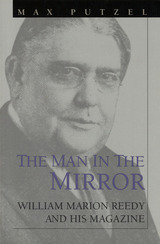
A flamboyant and controversial figure, William Marion Reedy was one of the most successful literary entrepreneurs of his day. Editor of the Mirror, a St. Louis weekly, from 1891 to 1920, Reedy played a large role in breaking down the genteel literary tradition, developing a native poetry, and helping to form some fifty significant poets. Emily Dickinson, Stephen Crane, Ezra Pound, Edwin Arlington Robinson, Amy Lowell, Sara Teasdale, Carl Sandburg, and Vachel Lindsay are just a few of the writers whose works Reedy featured in his magazine.
The Man in the Mirror offers a colorful description of Reedy's boyhood in St. Louis during the turbulent period following the Civil War. This well-documented biography follows Reedy throughout his years as a reporter in the early days of the St. Louis Post-Dispatch and Globe-Democrat and as editor of the St. Louis Star. Only seven years after Reedy founded the Mirror as a national journal of opinion--a potpourri of political comment, social gossip, and literary miscellany—the magazine's circulation far surpassed that of the Dial, Atlantic Monthly, or Nation.
Max Putzel truly conveys the spirit and personality of Reedy by carefully examining his life within the context of the literary world he influenced so significantly. Full chapters are devoted to his relationships with Theodore Dreiser, Ezra Pound, Vachel Lindsay, Amy Lowell, and others. Edgar Lee Masters, whose Spoon River Anthology first appeared in the Mirror, called Reedy both the "Literary Boss of the Middle West" and his best friend. In fact, Reedy had quite a range of friends, from librarians to politicians, St. Louis locals to Teddy Roosevelt. His personal effect on people, writers and readers alike, is what has made him such an important historical figure.
It is a tribute to Reedy's critical judgment that the reputations he helped to build would later overshadow his own. The Man in the Mirror, lauded as "the first substantial study of Reedy's work" by American Literature, reveals Reedy's notable contribution to the literary world.

In this poignant and provocative memoir, Steve Majors takes us on a journey of his own self-discovery as he grows from a gay boy in search of a father figure to a gay man grappling with what it means to be a father himself. In doing so, Majors creates various snapshots of time in which his—and the world’s—understanding of what it means to be a gay man changes.
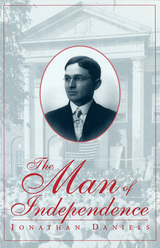
Having worked closely with Harry S. Truman in the triumphant campaign of 1948, Jonathan Daniels believed that President Truman was an "everyday" American, an ordinary human who aspired to greatness and achieved it. Thus, it was Daniels's intention that The Man of Independence not be a conventional biography; rather, he wanted it to reveal in real terms "the Odyssey of the 'everyday' American through our times." As a result, this comprehensive work not only presents Truman's life, it also details the development of the America in which the president grew up.
Truman spent his youth and his political life believing that old- fashioned, determined conservatism was vital to the preservation of personal liberty. Daniels re-creates Truman's remarkable journey through life—employing newspapers, letters, memos, family papers, as well as interviews with Truman, his family, and his close acquaintances. In the process, Daniels provides powerful evocations of the time during which Truman lived.
Daniels tells this extraordinary story by following this simple farm boy from Missouri through his youth and his years as a farmer, a veteran, and a businessman, on to his early career in politics, and then his presidency. Along the way, Daniels deals with issues, events, and ideas that were part of Missouri and American politics in the 1920s, 1930s, and 1940s; ultimately, he gives us the Truman who was to become the legend.
This inside account provides thought-provoking and personal information about Truman. His relationship with Thomas Pendergast, the seeming conflict between Truman's midwestern conservatism and his belief in equality for American blacks, and his momentous decision to use the atomic bomb to end the war—these are just a few of the topics touched on. Ending in 1949 when Truman was for the second time sworn in as president, The Man of Independence provides a fascinating and valuable look at one of America's most important and beloved presidents, as well as a crucial look at the America from which he emerged.
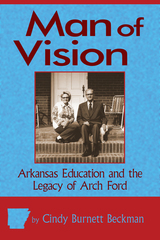
As commissioner of the Arkansas Department of Education from 1953 to 1978, Arch Ford served under five governors. His vision was to expand educational opportunities because he believed education was the foundation for improving people’s lives. Throughout his career, he campaigned for increased educational funding, better-qualified teachers, and higher teachers’ salaries. Ford helped lead the state in peacefully integrating its schools and established twenty-three vocational-technical schools across the state. During Ford’s tenure, the Arkansas Children’s Colony was established to provide educational services to the developmentally disabled, and the Arkansas Educational Television Network was set up to provide instructional programming across the state.
The state also expanded educational opportunities to include kindergarten, special education, community colleges, and adult education. His leadership left Arkansas with a strong educational system that continued to advance. This was his legacy.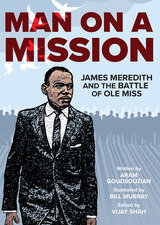
In 1962, James Meredith famously desegregated the University of Mississippi (a.k.a. Ole Miss). As the first Black American admitted to the school, he demonstrated great courage amidst the subsequent political clashes and tragic violence. After President Kennedy summoned federal troops to help maintain order, the South—and America at large—would never be the same.
Man on a Mission depicts Meredith’s relentless pursuit of justice, beginning with his childhood in rural Mississippi and culminating with the confrontation at Ole Miss. A blend of historical research and creative inspiration, this graphic history tells Meredith’s dramatic story in his own singular voice.
From the dawn of the modern civil rights movement, Meredith has offered a unique perspective on democracy, racial equality, and the meaning of America. Man on a Mission presents his captivating saga for a new generation in the era of Black Lives Matter.

A cantor's son, Arlen believed his music was from a place outside himself, a place that also sent tragedy. When his wife became mentally ill and was institutionalized he turned to alcohol. It nearly killed him. But the beautiful songs kept coming: "Blues in the Night," "My Shining Hour," "Come Rain or Come Shine," and "The Man That Got Away."
Walter Rimler drew on interviews with friends and associates of Arlen and on newly available archives to write this intimate portrait of a genius whose work is a pillar of the Great American Songbook.
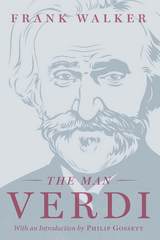
“Walker focuses on some of the more significant people in Verdi’s life and carefully scrutinizes his relationships with them. His wife, Giuseppina Strepponi; his student and amanuensis, Emanuele Muzio; the conductor who first fully understood Verdi’s mature art, Angelo Mariani; the great prima donna, Teresa Stolz; the incomparable librettist and friend of his old age, Arrigo Boito—each passes before our eyes in Walker’s meticulous reconstruction. As we learn more about them, we learn more about Verdi. We see him through the eyes of his closest friends, we watch his daily activities, his daily thoughts, his habits, his warmth, his domestic tyranny. The myth dissolves and a human being stands before us.”—Philip Gossett, from the introduction
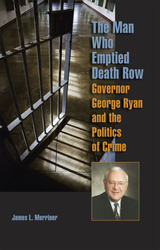
George H. Ryan, Illinois governor from 1999 to 2003, became nationally known for two significant and very different reasons. The first governor in the United States to clear out his state’s death row and put a moratorium on the death penalty, he was also convicted and sent to prison on corruption charges. The Man Who Emptied Death Row: Governor George Ryan and the Politics of Crime details the career of a man who both enhanced and tarnished the image of the highest office in Illinois and examines the political history and culture that shaped him.
Author James L. Merriner explores the two very different stories of George Ryan: the brave crusader against the death penalty and the petty crook. An extensive analysis of the official record, exclusive interviews, and previously undisclosed incidents in Ryan’s career expose why the governor pardoned or commuted the sentences of all 171 prisoners on Illinois’s death row before leaving office and how he later was convicted of eighteen counts of official corruption.
This biography traces Ryan’s family history and the Illinois political climate that influenced his development as a politician. Although Ryan championed “good-government” initiatives—organ donations, tougher drunken-driving and lobbyist disclosure laws—he never overcame a reputation as a wheeler-dealer, notes Merriner.
Merriner goes beyond Ryan’s life and career to explore the politics of crime, highlighting the successes and failures of the criminal justice system and suggesting how both white-collar fraud and violent crime shape politics. A fascinating story that reveals much about the way Illinois politics works, The Man Who Emptied Death Row will help determine how history will judge Illinois governor George Ryan.
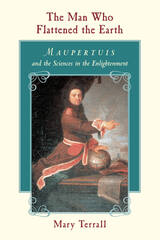
Beginning his scientific career as a mathematician in Paris, Maupertuis entered the public eye with a much-discussed expedition to Lapland, which confirmed Newton's calculation that the earth was flattened at the poles. He also made significant, and often intentionally controversial, contributions to physics, life science, navigation, astronomy, and metaphysics. Called to Berlin by Frederick the Great, Maupertuis moved to Prussia to preside over the Academy of Sciences there. Equally at home in salons, cafés, scientific academies, and royal courts, Maupertuis used his social connections and his printed works to enhance a carefully constructed reputation as both a man of letters and a man of science. His social and institutional affiliations, in turn, affected how Maupertuis formulated his ideas, how he presented them to his contemporaries, and the reactions they provoked.
Terrall not only illuminates the life and work of a colorful and important Enlightenment figure, but also uses his story to delve into many wider issues, including the development of scientific institutions, the impact of print culture on science, and the interactions of science and government. Smart and highly readable, Maupertuis will appeal to anyone interested in eighteenth-century science and culture.
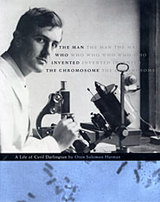
Born by mistake, or connivance, to struggling parents in a small Lancashire cotton town in 1903, an uninspired Darlington inadvertently escaped the obscurity of farming life and rose instead, against all odds, to become within a few short years the world's greatest expert on chromosomes, and one of the most penetrating biological thinkers of the twentieth century. Harman follows Darlington's path from bleak prospects to world fame, showing how, within the most miniscule of worlds, he sought answers to the biggest questions--how species originate, how variation occurs, how Nature, both blind and foreboding, random and insightful, makes her way from deep past to unknown future. But Darlington did not stop there: Chromosomes held within their tiny confines untold, dark truths about man and his culture. This passionate conviction led the once famed Darlington down a path of rebuke, isolation, and finally obscurity.
As The Man Who Invented the Chromosome unfolds Darlington's forgotten tale--the Nazi atrocities, the Cold War, the crackpot Lysenko, the molecular revolution, eugenics, Civil Rights, the welfare state, the changing views of man's place in nature, biological determinism--all were interconnected. Just as Darlington's work provoked him to ask questions about the link between biology and culture, his life raises fundamental questions about the link between science and society.
Robert Francis (1901–1987), the author of eight volumes of poetry, an autobiography, a book of fiction, essays on poetry, and a reminiscence of Robert Frost, lived for most of his career on the outskirts of Amherst, Massachusetts, devoting himself to Yankee simplicity and self-renunciation derived from his reading of Thoreau. His preference for solitude and disinclination to write about or promote himself account for the elusiveness of his persona in his prose and poetry.
This book charts how Francis developed and elaborated this persona through distanced self-portraits in prose and through poems that both reveal and conceal the self of the poet. Folded into the study are discussions of Francis's pastoralism, his affinities with Emerson and Thoreau, his experimentation with new poetic forms, his protest against the Vietnam War and environmental despoliation, his homoeroticism, and a comparison of his poetry with that of Robert Frost. The book also explores Francis's characteristic attitude, figured as “hovering,” where his speaker is both subject and object, writing about himself while inhabiting the role of detached observer.
Complementing the emphasis on Francis's elusiveness, Andrew Stambuk offers readings of his poems attentive to aesthetic qualities that give them their particular reticence. Stambuk's sensitive evaluations underscore that Francis is a craftsman of intricate precisions whose work speaks to contemporary political and global concerns.

The Man Who Painted the Universe: The Story of a Planetarium in the Heart of the North Woods introduces readers to the mild-mannered astronomy enthusiast whose creativity, ingenuity, fervor, and endurance realized a dream of galactic proportions. The story of this stargazer from Wisconsin’s North Woods so inspired two newspapermen, authors Ron Legro and Avi Lank, that they sought to document the story of the Kovac Planetarium for a new generation of stargazers and dreamers.
Both a memoir and a documentary history of the Chinese revolution from 1949 through the Cultural Revolution, The Man Who Stayed Behind provides a human perspective on China’s efforts to build a new society. Critical of both his own mistakes and those of the Communist leadership, Rittenberg nevertheless gives an even-handed account of a country that is now free of internal war for the first time in a hundred years.
The island nation of Iceland is known for many things—majestic landscapes, volcanic eruptions, distinctive seafood—but racial diversity is not one of them. So the little-known story of Hans Jonathan, a free Black man who lived and raised a family in early nineteenth-century Iceland, is improbable and compelling, the stuff of novels.
In The Man Who Stole Himself, Gisli Palsson lays out the story of Hans Jonathan (also known as Hans Jónatan) in stunning detail. Born into slavery in St. Croix in 1784, Hans was taken as a slave to Denmark, where he eventually enlisted in the navy and fought on behalf of the country in the 1801 Battle of Copenhagen. After the war, he declared himself a free man, believing that he was due freedom not only because of his patriotic service, but because while slavery remained legal in the colonies, it was outlawed in Denmark itself. He thus became the subject of one of the most notorious slavery cases in European history, which he lost. Then Hans ran away—never to be heard from in Denmark again, his fate unknown for more than two hundred years. It’s now known that Hans fled to Iceland, where he became a merchant and peasant farmer, married, and raised two children. Today, he has become something of an Icelandic icon, claimed as a proud and daring ancestor both there and among his descendants in America.
The Man Who Stole Himself brilliantly intertwines Hans Jonathan’s adventurous travels with a portrait of the Danish slave trade, legal arguments over slavery, and the state of nineteenth-century race relations in the Northern Atlantic world. Throughout the book, Palsson traces themes of imperial dreams, colonialism, human rights, and globalization, which all come together in the life of a single, remarkable man. Hans literally led a life like no other. His is the story of a man who had the temerity—the courage—to steal himself.
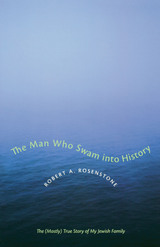
The story begins with a grandfather who heroically escaped from Russia by swimming the Pruth River to Romania—or did he? Then there are stories of another grandfather who kept a lifelong mistress; grandmothers who were ignored except in the kitchen; migrations legal and illegal from Eastern Europe to Canada to California; racketeers on one side of the family and Communists on the other; and a West Coast adolescence in the McCarthy years. All of these (mostly true) stories form a Jewish family's history, a tale of dislocation and assimilation. But in the hands of award-winning historian Robert Rosenstone, they become much more. The fragments of memory so beautifully preserved in The Man Who Swam into History add unforgettable, human characters to the now familiar story of the Jewish diaspora in the twentieth century.
This combination memoir/short story collection recounts the Rosenstone family's passage from Romania to America. Robert Rosenstone tells the story not as a single, linear narrative, but through "tales, sequences, windows, moments, and fragments resurrected from the lives of three generations in my two parental families, set in five countries on two continents over the period of almost a century." This more literary and personal approach allows Rosenstone's relatives to emerge as distinct personalities, voices who quarrel and gossip, share their dreams and fears, and maintain the ties of a loving, if eccentric, family. Among the genre of "coming to America" tales, The Man Who Swam into History is a work of unique vision, one that both records and reconstructs the past even as it continuously—and humorously—questions the truth of its own assertions.
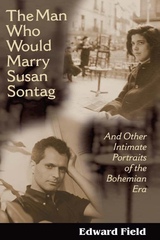
Long before Stonewall, young Air Force veteran Edward Field, fresh from combat in WWII, threw himself into New York’s literary bohemia, searching for fulfillment as a gay man and poet. In this vivid account of his avant-garde years in Greenwich Village and the bohemian outposts of Paris’s Left Bank and Tangier—where you could write poetry, be radical, and be openly gay—Field opens the closet door to reveal, as never been seen before, some of the most important writers of his time.
Here are young, beautiful Susan Sontag sitting at the feet of her idol Alfred Chester, who shrewdly plotted to marry her; May Swenson and her two loves; Paul and Jane Bowles in their ambiguous marriage; Frank O’Hara in and out of bed; Fritz Peters, the anointed son of Gurdjieff; and James Baldwin, Isabel Miller (Patience and Sarah), Tobias Schneebaum, Robert Friend, and many others. With its intimate portraits, Field’s memoir brings back a forgotten era—postwar bohemia—bawdy, comical, romantic, sad, and heroic.
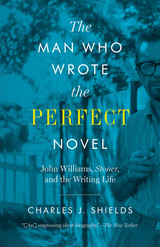
When Stoner was published in 1965, the novel sold only a couple of thousand copies before disappearing with hardly a trace. Yet John Williams’s quietly powerful tale of a Midwestern college professor, William Stoner, whose life becomes a parable of solitude and anguish eventually found an admiring audience in America and especially in Europe. The New York Times called Stoner “a perfect novel,” and a host of writers and critics, including Colum McCann, Julian Barnes, Bret Easton Ellis, Ian McEwan, Emma Straub, Ruth Rendell, C. P. Snow, and Irving Howe, praised its artistry. The New Yorker deemed it “a masterly portrait of a truly virtuous and dedicated man.”
The Man Who Wrote the Perfect Novel traces the life of Stoner’s author, John Williams. Acclaimed biographer Charles J. Shields follows the whole arc of Williams’s life, which in many ways paralleled that of his titular character, from their shared working-class backgrounds to their undistinguished careers in the halls of academia. Shields vividly recounts Williams’s development as an author, whose other works include the novels Butcher’s Crossing and Augustus (for the latter, Williams shared the 1972 National Book Award). Shields also reveals the astonishing afterlife of Stoner, which garnered new fans with each American reissue, and then became a bestseller all over Europe after Dutch publisher Lebowski brought out a translation in 2013. Since then, Stoner has been published in twenty-one countries and has sold over a million copies.
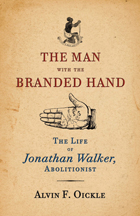
Captured While Attempting to Smuggle Slaves to Freedom in 1844, the Only Man Branded in a Courtroom by a United States Marshal
Sailing around the Florida Keys in 1844, forty-five-year-old Jonathan Walker had a price on his head. On board the small boat he had built that winter in Alabama were seven fugitives from slavery. The Cape Cod sailor and abolitionist was wanted in Pensacola, Florida, for his crime: stealing slaves. The slaves’ owners had posted $100 each as reward money for their property and $1,000 for Walker’s apprehension. Only a day’s sail from their goal of freedom in British-controlled Bahamas, Walker and the slaves were stopped and seized by bounty hunters and taken to a Key West court. Ordered back to Pensacola for trial, Walker ended up spending a year in jail. He was fined and sentenced to stand in the pillory; in addition, he was to suffer a unique punishment in American history: while a packed courtroom watched, a United States marshal was ordered to use a hot branding iron to burn the letters SS, for “slave stealer,” into Walker’s right hand.
Walker survived his ordeal, spending much of his incarceration in isolation. Once released, he remained active in the antislavery movement even while he and his devoted wife Jane raised their nine children. His attempt to help form a new colony in Mexico for runaway American slaves also led to punishing experiences for Walker and one of his sons. Living later with his family in Plymouth, Massachusetts, in the years before the Civil War, Walker made room in his crowded house to shelter runaway slaves along the Underground Railroad. He participated in abolitionist lecture tours across the North where he would be urged to reveal his branded hand—made famous by John Greenleaf Whittier’s poem “The Branded Hand”—to astonished audiences. Too old to enlist in the Civil War, Walker instead headed to Virginia in the war’s final year to help educate African Americans fleeing Confederate forces. In The Man With the Branded Hand: The Life of Jonathan Walker, Abolitionist, distinguished journalist Alvin F. Oickle relates this entire remarkable story of a life devoted to the supposition that “all men are created equal.”
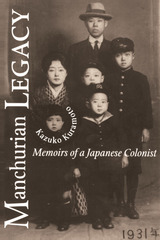
Kazuko Kuramoto was born and raised in Dairen, Manchuria, in 1927, at the peak of Japanese expansionism in Asia. Dairen and the neighboring Port Arthur were important colonial outposts on the Liaotung Peninsula; the train lines established by Russia and taken over by the Japanese, ended there. When Kuramoto's grandfather arrived in Dairen as a member of the Japanese police force shortly after the end of the Russo-Japanese War in 1905, the family's belief in Japanese supremacy and its "divine" mission to "save" Asia from Western imperialists was firmly in place. As a third-generation colonist, the seventeen-year-old Kuramoto readily joined the Red Cross Nurse Corps in 1944 to aid in the war effort and in her country's sacred cause. A year later, her family listened to the emperor's radio broadcast ". . . we shall have to endure the unendurable, to suffer the insufferable." Japan surrendered unconditionally.
Manchurian Legacy is the story of the family's life in Dairen, their survival as a forgotten people during the battle to reclaim Manchuria waged by Russia, Nationalist China, and Communist China, and their subsequent repatriation to a devastated Japan. Kuramoto describes a culture based on the unthinking oppression of the colonized by the colonizer. And, because Manchuria was, in essence, a Japanese frontier, her family lived a freer and more luxurious life than they would have in Japan—one relatively unscathed by the war until after the surrender.
As a commentator Kuramoto explores her culture both from the inside, subjectively, and from the outside, objectively. Her memoirs describe her coming of age in a colonial society, her family's experiences in war-torn Manchuria, and her "homecoming" to Japan—where she had never been—just as Japan is engaged in its own cultural upheaval.

Roland White’s long career has taken him from membership in Bill Monroe’s Blue Grass Boys and Lester Flatt’s Nashville Grass to success with his own Roland White Band. A master of the mandolin and acclaimed multi-instrumentalist, White has mentored a host of bluegrass musicians and inspired countless others.
Bob Black draws on extensive interviews with White and his peers and friends to provide the first in-depth biography of the pioneering bluegrass figure. Born into a musical family, White found early success with the Kentucky Colonels during the 1960s folk revival. The many stops and collaborations that marked White's subsequent musical journey trace the history of modern bluegrass. But Black also delves into the seldom-told tale of White's life as a working musician, one who endured professional and music industry ups-and-downs to become a legendary artist and beloved teacher.
An entertaining merger of memories and music history, Mandolin Man tells the overdue story of a bluegrass icon and his times.
"Leiris writes to appall, and thereby to receive from his readers the gift of a strong emotion—the emotion needed to defend himself against the indignation and disgust he expects to arouse in his readers."—Susan Sontag, New York Review of Books
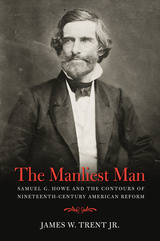
A native of Boston and a physician by training, Samuel G. Howe (1801–1876) led a remarkable life. He was a veteran of the Greek War of Independence, a fervent abolitionist, and the founder of both the Perkins School for the Blind and the Massachusetts School for Idiotic and Feeble-Minded Children. Married to Julia Ward Howe, author of “Battle Hymn of the Republic,” he counted among his friends Senator Charles Sumner, public school advocate Horace Mann, and poet Henry Wadsworth Longfellow.
Always quick to refer to himself as a liberal, Howe embodied the American Renaissance's faith in the perfectibility of human beings, and he spoke out in favor of progressive services for disabled Americans. A Romantic figure even in his own day, he embraced a notion of manliness that included heroism under fire but also compassion for the underdog and the oppressed. Though hardly a man without flaws and failures, he nevertheless represented the optimism that characterized much of antebellum American reform.
The first full-length biography of Samuel G. Howe in more than fifty years, The Manliest Man explores his life through private letters and personal and public documents. It offers an original view of the reformer's personal life, his association with social causes of his time, and his efforts to shape those causes in ways that allowed for the greater inclusion of devalued people in the mainstream of American life.
Using a framework that was both scientific and philosophical, Shehata convinced his audience that conventional views of virtue and vice were a deceptive simplification and that social and religious reform was necessary. A humble man at heart, he was reluctant to publish his talk in his lifetime, but thanks to Malik R. Dahlan’s expert translation and insightful discussion of the larger historical and geographical context for the speech, readers are now able to appreciate a fascinating snapshot of Arabian history that would otherwise be lost.
Understanding the iconoclastic work of a lifelong cinematic pioneer
Manoel de Oliveira's eighty-five year career made him a filmmaking icon and a cultural giant in his native Portugal. A lifelong cinematic pioneer, Oliveira merged distinctive formal techniques with philosophical treatments of universal themes--frustrated love, aging, nationhood, evil, and divine grace--in films that always moved against mainstream currents.
Randal Johnson navigates Oliveira's massive feature film oeuvre. Locating the director's work within the broader context of Portuguese and European cinema, Johnson discusses historical and political influences on Oliveira's work, particularly Portugal's transformation from dictatorship to social democracy. He ranges from Oliveira's early concerns with cinematic specificity to hybrid discourses that suggest a tenuous line between film and theater on the one hand, and between fiction and documentary on the other.
A rare English-language portrait of the director, Manoel de Oliveira invites students and scholars alike to explore the work of one of the cinema's greatest and most prolific artists.
Manon Gropius (1916–1935) was the daughter of Alma Mahler, the widow of Gustav Mahler, and the architect Walter Gropius, the founder of the Bauhaus, and the stepdaughter of the writer Franz Werfel. In Manon’s World, James Reidel explores the life and death of a child at the center of a broken love triangle. The story takes a unique course, describing a peripheral figure but in a context where her significance and centrality in the lives of her famous parents and circles comes into relief. Reidel reveals a neglected and fascinating life in a world gone by—Vienna, Venice, and Berlin of the interwar years.
Not just a narrative biography, Manon’s World is also a medical history of the polio that killed Manon and a personal cultural history of the aspirations projected on her—and seen as lost by such keen observers as Elias Canetti, who devoted two chapters of his Nobel Prize–winning memoirs to his encounters with Manon and her funeral. That event led Alban Berg to dedicate his signature Violin Concerto “to an angel.” Reidel reveals a more complex image of a young woman who desired to be an actress and artist in her own right despite being her mother’s intended protégé, an inspiration to her father who rarely saw her, and her stepfather Franz Werfel, who obsessively wrote her into his novels, beginning with The Forty Days of Musa Dagh and as a revenant in all the books that followed.
Director Michael Curtiz was the mastermind behind some of the most iconic films of classical Hollywood—Casablanca, Yankee Doodle Dandy, The Sea Hawk, White Christmas, and Mildred Pierce, to name only a few. The most prolific and consistently successful Hollywood generalist with an all-embracing interest in different forms of narrative and spectacle, Curtiz made around a hundred films in an astonishing range of genres: action, biopics, melodramas/film noir, musicals, and westerns. But his important contributions to the history of American film have been overlooked because his broadly varied oeuvre does not present the unified vision of filmmaking that canonical criticism demands for the category of “auteur.”
Exploring his films and artistic practice from a variety of angles, including politics, gender, and genre, The Many Cinemas of Michael Curtiz sheds new light on this underappreciated cinematic genius. Leading film studies scholars offer fresh appraisals of many of Curtiz’s most popular films, while also paying attention to neglected releases of substantial historical interest, such as Noah’s Ark , Night and Day, Virginia City, Black Fury, Mystery of the Wax Museum, and Female. Because Curtiz worked for so long and in so many genres, this analysis of his work becomes more than an author study of a notable director. Instead, The Many Cinemas of Michael Curtiz effectively adds a major chapter to the history of Hollywood’s studio era, including its internationalism and the significant contributions of European émigrés.

The life of Töhötöm Nagy (1908–1979), Jesuit, Mason, and secret service agent, offers fascinating insights into interwar Hungary, the Catholic Church and Vatican diplomacy, Freemasonry, and the activities of communist state security service.
As a young Jesuit Nagy was one of the leaders of a successful Catholic youth movement in interwar Hungary. After World War II he played an important role acting as an intermediary between the Vatican, the Red Army, and the Hungarian Catholic Church. After being sent to South America, he was attracted by liberation theology, but left the Society of Jesus, joined the Freemasons, and did social and philanthropic work in the slums of Buenos Aires. However, in the late 1960s he agreed to work for the Hungarian state security service in return for his repatriation. This latter period is reconstructed from the files of the Historical Archives of State Security in Budapest. Éva Petrás writes with empathy but with a sense of distance of the courage and restless energy of her subject. Her discussion of the limits of free choice and Nagy’s intense struggle to live a meaningful life make this biography breathtaking.
The Many Lives of Cy Endfield is the first book on this fascinating figure. The fruit of years of archival research and personal interviews by Brian Neve, it documents Endfield’s many identities: among them second-generation immigrant, Jew, Communist, and exile. Neve paints detailed scenes not only of the political and personal dramas of the blacklist era, but also of the attempts by Hollywood directors in the postwar 1940s and early 1950s to address social and political controversies of the day. Out of these efforts came two crime melodramas (what would become known as film noir) on inequalities of class and race: The Underworld Story and The Sound of Fury (also known as Try and Get Me!). Neve reveals the complex production and reception histories of Endfield’s films, which the critic Jonathan Rosenbaum saw as reflective of “an uncommon intelligence so radically critical of the world we live in that it’s dangerous.”
The Many Lives of Cy Endfield is at once a revealing biography of an independent, protean figure, an insight into film industry struggles, and a sensitive and informed study of an underappreciated body of work.
Best Five Books of the Year list, Iranian 24 Monthly, London UK
“Make[s] a case for [Endfield’s] distinctive voice while tracing the way struggle, opposition, and thwarted ambition both defined his life and became the powerful themes of his best work.”—Cineaste

The life story of a daredevil who became a war hero will fascinate adventurous young readers with its tales of survival.
At age thirteen, following the death of his father, young Eddie dropped out of school and joined the workforce. Through a combination of smarts, hard work, and perseverance, Rickenbacker would grow up to become an automobile mechanic, a race car driver, a fighter pilot, an entrepreneur, a war hero, a business executive, and a staunch advocate for hard work and personal responsibility.
Along the way he lived on the line between recklessness and courage. He survived dozens of accidents, coming close to death more than once. During the earliest years of American automobile racing, Rickenbacker was “the most daring and withal the most cautious driver” on the circuit. How could he have been both daring and cautious? This book invites young readers to decide for themselves as they follow Rickenbacker on his many hair-raising adventures.

Mina—or Anna Maria Mazzini—is an Italian popular music icon whose sixty-year career has come to represent a range of diverse meanings. She is one of the best-loved popular music stars in Italy and abroad, with a large fan base across Europe, Asia, and South America. Her career began in the late 1950s and reached its peak in the 1960s and 1970s. Despite having retired from public appearances in the late 1970s, Mina remains iconic to this day. Her star status is exemplary of how stardom is constructed and what it reveals about the society from which it springs. This book explores Mina’s star image and iconic status, tracing the process by which she has come to embody a revelation of the values and ideals of contemporary Italian society.
Stoic musings of a philosopher-emperor at war.
Marcus Aurelius (AD 121–180), Roman emperor and Stoic philosopher, born at Rome, received training under his guardian and uncle emperor Antoninus Pius (reigned 138–161), who adopted him. He was converted to Stoicism and henceforward studied and practiced philosophy and law. A gentle man, he lived in agreement and collaboration with Antoninus Pius. He married Pius’ daughter and succeeded him as emperor in March 161, sharing some of the burdens with Lucius Verus.
Marcus’ reign soon saw fearful national disasters from flood, earthquakes, epidemics, threatened revolt (in Britain), a Parthian war, and pressure of barbarians north of the Alps. From 169 onwards he had to struggle hard against the German Quadi, Marcomani, Vandals, and others until success came in 174. In 175 (when Faustina died) he pacified affairs in Asia after a revolt by Avidius. War with Germans was renewed during which he caught some disease and died by the Danube in March 180.
The famous Meditations of Marcus Aurelius (not his title; he simply calls them “The matters addressed to himself”) are reflections written in periods of solitude during the emperor’s military campaigns. Originally intended for his private guidance and self-admonition, the Meditations have endured as a potent expression of Stoic belief. It is a central text for students of Stoicism as well as a unique personal guide to the moral life.
In 1815 a manuscript containing one of the long-lost treasures of antiquity was discovered—the letters of Marcus Cornelius Fronto, reputed to have been one of the greatest Roman orators. But this find disappointed many nineteenth-century readers, who had hoped for the letters to convey all of the political drama of Cicero’s. That the collection included passionate love letters between Fronto and the future emperor Marcus Aurelius was politely ignored—or concealed. And for almost two hundred years these letters have lain hidden in plain sight.
Marcus Aurelius in Love rescues these letters from obscurity and returns them to the public eye. The story of Marcus and Fronto began in 139 CE, when Fronto was selected to instruct Marcus in rhetoric. Marcus was eighteen then and by all appearances the pupil and teacher fell in love. Spanning the years in which the relationship flowered and died, these are the only love letters to survive from antiquity—homoerotic or otherwise. With a translation that reproduces the effusive, slangy style of the young prince and the rhetorical flourishes of his master, the letters between Marcus and Fronto will rightfully be reconsidered as key documents in the study of the history of sexuality and classics.
This is the first full-length introduction to the life and works of significant American composer Marga Richter (born 1926), who has written more than one hundred works for orchestra, chamber ensemble, dance, opera, voice, chorus, piano, organ, and harpsichord. Still actively composing in her eighties, Richter is particularly known for her large-scale works performed by ensembles such as the London Philharmonic Orchestra and the Civic Orchestra of Chicago and for other pieces performed by prominent artists including pianist Menahem Pressler, conductor Izler Solomon, and violinist Daniel Heifetz.
Interspersing consideration of Richter's musical works with discussion of her life, her musical style, and the origins and performances of her works, Sharon Mirchandani documents a successful composer's professional and private life throughout the twentieth century. Covering Richter's formative years, her influences, and the phases of her career from the 1950s to the present, Mirchandani closely examines Richter's many interesting, attractive musical works that draw inspiration from distinctly American, Irish/English, and Asian sources. Drawing extensively on interviews with the composer, Mirchandani also provides detailed descriptions of Richter's scores and uses reviews and other secondary sources to provide contexts for her work, including their relationship to modern dance, to other musical styles, and to 1970s feminism.
This volume is a collaboration of international scholars who, from varied fields and approaches, assess Fuller’s genius and character. Treating the last several years of Margaret Fuller’s short life, these essays offer a truly international discussion of Fuller’s unique cultural, political, and personal achievements. From the origins and articulations of Fuller’s cosmopolitanism to her examination of “the woman question,” and from her fascination with the European “other” to her candid perception of imperial America from abroad, they ponder what such an extraordinary woman meant to America, and also to Italy and Europe, during her lifetime and continuing to the present.

Adler, through her exploration of the events central to Duras's career, including her affair with and eventual denunciation of a Nazi collaborator and her childhood in Indochina, reveals Duras as the consummate pragmatist. She has combed through archives, unearthed letters, studied unpublished manuscripts, and interviewed scores of Duras's friends, lovers, enemies, and colleagues—as well as Duras herself—and she emerges with the richest portrait we have of Duras's life: her upbringing, her student days at the Sorbonne, her career as a novelist and filmmaker, and her involvement in French politics through the most complex decades of the twentieth century. "The masks and the truth" was the headline of a French review of Marguerite Duras, and Adler explores both, probing the line between fiction and selfhood and between political activities and personal responsibility.
Here, in its intricate and often contradictory detail, is Marguerite Yourcenar's story, one in which loss and learning intertwined almost from the first and in which love assumed a strangely paradoxical place. Drawing on letters, diaries, and interviews with Yourcenar's friends, colleagues, and lovers, Josyane Savigneau's biography paints an intimate portrait of an artist who lived according to her own, occasionally contrary, terms: a Frenchwoman ardently in love with her native tongue, yet who lived half her life in New England; an avid seductress of women, who spent nearly forty years with one woman, yet fell in love early and late in her life with two young men; a powerful female writer whose most memorable protagonists were male, from Alexis of her first novel to the later historical characters Hadrian and Zeno. Savigneau weaves these and other contraries of Yourcenar's life into a vibrant and engrossing pattern.
Editor of "Le Monde des Livres," the literary pages of France's most influential newspaper, Savigneau first met Marguerite Yourcenar on assignment in 1984. What began as a professional relationship gradually turned into a friendship. Her personal insights into that life enrich this exhaustively documented text. Following the lead set by Yourcenar in her memoir Dear Departed, the biographer found herself "searching for a truth that is multiple, unstable, evasive, sometimes saddening, and at first glance scandalous but that one cannot approach without often feeling for human beings in all their frailty a certain measure of kinship and, always, a sense of pity." Yourcenar's profound intelligence and sympathy, her foibles and obsessions, her accomplishments and trials: all are revealed here in an uncompromising portrait of an incomparable artist.
Published by the University of Cincinnati Press
While the adage may go, “Behind every great man is a great woman,” the story of Maria Longworth Storer necessitates a new adage—at the front of every great city is a great woman. After being shunted into the biographies and history books of other people, Longworth Storer is now finally given center stage on the one hundred and seventieth anniversary of her birth.
Maria Longworth Storer: From Music and Art to Popes and Presidents is the most comprehensive biography of this one of a kind Cincinnatian. Known as the founder of the first female-run manufacturing company in the United States, Rookwood Pottery, Longworth Storer was passionate about women’s rights, her city, and issues of poverty and the arts. She owned Rookwood pottery for nine years, and then transferred ownership after earning recognition at the Exhibition of American Art Industry in Philadelphia and receiving a gold medal at the Exposition Universelle in Paris. Aside from her success with Rookwood, Longworth Storer was central to making the Queen City the major cultural landmark it is today. Although the rest of her life was no less remarkable as the wife of notorious diplomat Bellamy Storer, later embroiled in the famous Roosevelt-Storer scandal, little has been written about her contributions and exploits in diplomatic relations and her powerful influence on turn-of-the-twentieth-century political leaders.
Featuring new archival research, and never before seen photos of the Storer family, authors Constance J. Moore and Nancy M. Broermann have compiled a portrait of Maria Longworth Storer that is rich in detail, fitting to both the wide, often eclectic, breadth of Longworth Storer’s projects, and to the depth of her impact on leaders from Washington D.C. to Europe.
Moving through major moments in both American and Cincinnati history, and intersecting with significant historical figures including Teddy Roosevelt and William Howard Taft, Moore and Broermann expose the broader historical narrative of Longworth Storer’s life without letting her unique spirit and individual accomplishments become overshadowed by them.
Through thoughtful, balanced narrative, readers get to know a remarkable woman whose fascinating and dramatic life as a political figure, women’s rights advocate, and patron of the arts has had a long lasting legacy on the Queen City and the Shaping of our nation’s diplomatic policies.
In the twilight of the nineteenth century, a third daughter was born to Tsar Nicholas II and his wife Alexandra. Grand Duchess Maria Nikolaevna—known to her family and friends simply as “Mashka”—grew into an empathetic, down-to-earth girl, unaffected by her imperial status. Often overshadowed by her two older sisters, Olga and Tatiana, and later, her brother Alexei and younger sister Anastasia, Maria ultimately proved to have a uniquely strong and solid personality.
In Maria Romanov: Third Daughter of the Last Tsar, Diaries and Letters, 1908–1918, by translator and researcher Helen Azar with George Hawkins, Mashka’s voice is heard again through her intimate writings, presented for the first time in English. The Grand Duchess was much more than a pretty princess wearing white dresses in hundreds of faded sepia photographs; Maria’s surviving diaries and letters offer a fascinating insight into the private life of a loving family—from festivals and faith, to Rasputin and the coming Revolution; it is clear why this middle child ultimately became a pillar of strength and hope for them all. Maria’s gentle character belied her incredible courage, which emerged in the darkest hours of her brief life. “The incarnation of modesty elevated by suffering,” as Maria was described during the last weeks of her life, she was able to maintain her kindness and optimism, even in the midst of violence and degradation.
On a stuffy summer night in 1918, only a few weeks after her nineteenth birthday, Maria was murdered along with the rest of her family in a cellar of a house chosen for this “special purpose.” Two sets of charred remains, confirmed to be Maria’s and her brother Alexei’s, were not discovered until almost ninety years later, separately from those of the other victims of the massacre. As the authors relate, it is still unknown if these remains will ever be allowed to be laid to rest.
Allan Keiler chronicles the life of the legendary singer and activist from the childhood manifestation of her musical genius to her worldwide celebrity. As he shows, community and familial support could not shield her from the economic hardship and bigotry she encountered in her early performing days. Early successes in London and Berlin set the stage for her American breakthrough while the triumphant 1939 Lincoln Memorial concert established her immediately as an icon in the struggle against discrimination. Keiler reveals a woman more comfortable as artist than activist. But if Anderson's intense privacy and devotion to her work distanced her from a direct role in the civil rights movement, she remained a powerful symbol of possibility.
Drawing on rare archives and meetings with Anderson before her death, Marian Anderson is a magnificent study of a groundbreaking American artist.
READERS
Browse our collection.
PUBLISHERS
See BiblioVault's publisher services.
STUDENT SERVICES
Files for college accessibility offices.
RECENTLY PUBLISHED




UChicago Accessibility Resources
home | accessibility | search | about | contact us
BiblioVault ® 2001 - 2025
The University of Chicago Press