
 A SCHOLARLY BOOK REPOSITORY
1429 start with A start with A

Howard Pollack's expansive biography examines Copland's long list of accomplishments while also telling the story of the composer's musical development, political sympathies, personal life, relationships as an openly gay man, and tireless encouragement of younger composers. A winner of the Pulitzer Prize and an Academy Award, Copland played a vital role in the Yaddo Festival and as a beloved teacher at Tanglewood, Harvard, and the New School for Social Research. He turned to conducting later in life and via tours promoted American classical music overseas while taking it to appreciative audiences across the United States.
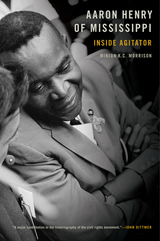
When Aaron Henry returned home to Mississippi from World War II service in 1946, he was part of wave of black servicemen who challenged the racial status quo. He became a pharmacist through the GI Bill, and as a prominent citizen, he organized a hometown chapter of the NAACP and relatively quickly became leader of the state chapter.
From that launching pad he joined and helped lead an ensemble of activists who fundamentally challenged the system of segregation and the almost total exclusion of African Americans from the political structure. These efforts were most clearly evident in his leadership of the integrated Mississippi Freedom Democratic Party delegation, which, after an unsuccessful effort to unseat the lily-white Democratic delegation at the Democratic National Convention in 1964, won recognition from the national party in 1968.
The man who the New York Times described as being “at the forefront of every significant boycott, sit-in, protest march, rally, voter registration drive and court case” eventually became a rare example of a social-movement leader who successfully moved into political office. Aaron Henry of Mississippi covers the life of this remarkable leader, from his humble beginnings in a sharecropping family to his election to the Mississippi house of representatives in 1979, all the while maintaining the social-change ideology that prompted him to improve his native state, and thereby the nation.
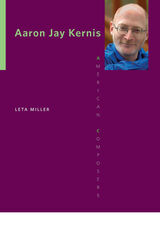
The first full-length biography of the Pulitzer Prize-winning composer
Winner of both the Pulitzer Prize and the Grawemeyer Award, Aaron Jay Kernis achieved recognition as one of the leading composers of his generation while still in his thirties. Since then his eloquent yet accessible style, emphasis on melody, and willingness to engage popular as well as classical forms has brought him widespread acclaim and admiring audiences.
Leta Miller's biography offers the first survey of the composer's life and work. Immersed in music by middle school, and later training under Theodore Antoniou, John Adams, Jacob Druckman, and others, Kernis rejected the idea of distancing his work from worldly concerns and composed on political themes. His Second Symphony, from 1991, engaged with the first Gulf War; 1993's Still Moment with Hymn was a reaction to the Bosnian Genocide; and the next year's Colored Field and 1995's Lament and Prayer dealt with the Holocaust. Yet Kernis also used sources as disparate as futurist agitprop and children's games to display humor in his work. Miller's analysis addresses not only Kernis's wide range of subjects but also the eclecticism that has baffled critics, analyzing his dedication to synthesis and the themes consistent in his work. Informed and engaging, Aaron Jay Kernis gives a rare mid-career portrait of a major American cultural figure.
Vasquez-Tokos finds that their experiences in childhood, adolescence, and young adulthood shape their perceptions of race, which in turn influence their romantic expectations. Most Latinos marry other Latinos, but those who intermarry tend to marry whites. She finds that some Latina women who had domineering fathers assumed that most Latino men shared this trait and gravitated toward white men who differed from their fathers. Other Latina respondents who married white men fused ideas of race and class and perceived whites as higher status and considered themselves to be “marrying up.” Latinos who married non-Latino minorities—African Americans, Asian Americans, and Native Americans—often sought out non-white partners because they shared similar experiences of racial marginalization. Latinos who married Latinos of a different national origin expressed a desire for shared cultural commonalities with their partners, but—like those who married whites—often associated their own national-origin groups with oppressive gender roles.
Vasquez-Tokos also investigates how racial and cultural identities are maintained or altered for the respondents’ children. Within Latino-white marriages, biculturalism—in contrast with Latinos adopting a white “American” identity—is likely to emerge. For instance, white women who married Latino men often embraced aspects of Latino culture and passed it along to their children. Yet, for these children, upholding Latino cultural ties depended on their proximity to other Latinos, particularly extended family members. Both location and family relationships shape how parents and children from interracial families understand themselves culturally.
As interracial marriages become more common, Marriage Vows and Racial Choices shows how race, gender, and class influence our marital choices and personal lives.
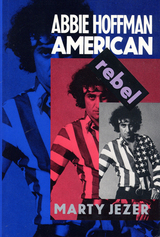
"... Abbie, more than any other radical, showed potheads how to demonstrate and radicals how to dance." -- Chicago Tribune
"... deeply sympathetic and scrupulously detached-a triumph of judicious empathy." -- MARTIN DUBERMAN, Distinguished Professor of History, Lehman/The Graduate School, C.U.N.Y.
"... details Hoffman's humor, manic energy, depressive spells, political skills, and above all, his Incurable and still contagious optimism." -- Entertainment Weekly
"Here's the Abbie I knew and loved! Marty Jezer has captured him in all his complexity, dedication, humor, and heart." -- ANITA HOFFMAN
A hard-hitting look at the regulation of sexual difference and its role in circumscribing African American culture
The sociology of race relations in America typically describes an intersection of poverty, race, and economic discrimination. But what is missing from the picture—sexual difference—can be as instructive as what is present. In this ambitious work, Roderick A. Ferguson reveals how the discourses of sexuality are used to articulate theories of racial difference in the field of sociology. He shows how canonical sociology—Gunnar Myrdal, Ernest Burgess, Robert Park, Daniel Patrick Moynihan, and William Julius Wilson—has measured African Americans’s unsuitability for a liberal capitalist order in terms of their adherence to the norms of a heterosexual and patriarchal nuclear family model. In short, to the extent that African Americans’s culture and behavior deviated from those norms, they would not achieve economic and racial equality.
Aberrations in Black tells the story of canonical sociology’s regulation of sexual difference as part of its general regulation of African American culture. Ferguson places this story within other stories—the narrative of capital’s emergence and development, the histories of Marxism and revolutionary nationalism, and the novels that depict the gendered and sexual idiosyncrasies of African American culture—works by Richard Wright, Ralph Ellison, James Baldwin, Audre Lorde, and Toni Morrison. In turn, this book tries to present another story—one in which people who presumably manifest the dysfunctions of capitalism are reconsidered as indictments of the norms of state, capital, and social science. Ferguson includes the first-ever discussion of a new archival discovery—a never-published chapter of Invisible Man that deals with a gay character in a way that complicates and illuminates Ellison’s project.
Unique in the way it situates critiques of race, gender, and sexuality within analyses of cultural, economic, and epistemological formations, Ferguson’s work introduces a new mode of discourse—which Ferguson calls queer of color analysis—that helps to lay bare the mutual distortions of racial, economic, and sexual portrayals within sociology.
During the many years that they were separated by the perils of the American Revolution, John and Abigail Adams exchanged hundreds of letters. Writing to each other of public events and private feelings, loyalty and love, revolution and parenting, they wove a tapestry of correspondence that has become a cherished part of American history and literature.
With Abigail and John Adams, historian G. J. Barker-Benfield mines those familiar letters to a new purpose: teasing out the ways in which they reflected—and helped transform—a language of sensibility, inherited from Britain but, amid the revolutionary fervor, becoming Americanized. Sensibility—a heightened moral consciousness of feeling, rooted in the theories of such thinkers as Descartes, Locke, and Adam Smith and including a “moral sense” akin to the physical senses—threads throughout these letters. As Barker-Benfield makes clear, sensibility was the fertile, humanizing ground on which the Adamses not only founded their marriage, but also the “abhorrence of injustice and inhumanity” they and their contemporaries hoped to plant at the heart of the new nation. Bringing together their correspondence with a wealth of fascinating detail about life and thought, courtship and sex, gender and parenting, and class and politics in the revolutionary generation and beyond, Abigail and John Adams draws a lively, convincing portrait of a marriage endangered by separation, yet surviving by the same ideas and idealism that drove the revolution itself.
A feast of ideas that never neglects the real lives of the man and woman at its center, Abigail and John Adams takes readers into the heart of an unforgettable union in order to illuminate the first days of our nation—and explore our earliest understandings of what it might mean to be an American.
An adaptation of Olaudah Equiano’s Interesting Narrative published for Black children in 1829, now given new life in a major scholarly edition.
In 1829, Samuel Wood and Sons, a New York publisher of children’s literature, printed and sold the Quaker Abigail Field Mott’s Life and Adventures of Olaudah Equiano. Mott adapted Olaudah Equiano’s Interesting Narrative, a bestselling autobiography first published in London in 1789, for Black children studying at New York African Free Schools, one of the first educational systems to teach individuals of African descent in the United States.
By reissuing Mott’s neglected adaptation with contextualizing scholarly apparatus, Eric D. Lamore disrupts the editorial tradition of selecting a London edition of Equiano’s Interesting Narrative, and positions Equiano in the United States instead of Great Britain. Lamore’s volume contains Mott’s children’s book, which includes a series of illustrations, in a facsimile edition; instructive notes on Life and Adventures; a provocative essay on the adaptation; and selections from relevant texts on the New York African Free Schools and other related topics. With its focus on the intersections of early Black Atlantic and American studies, children’s literature, history of education, life writing, and book history, this edition offers a fresh take on Equiano and his autobiography for a variety of twenty-first-century audiences.
This examination of nineteenth-century journalism explores the specific actions and practices of the publications that provided a true picture of slavery to the general public. From Boston's strident <i>Liberator</i> to Frederick Douglass' <i>North Star</i>, the decades before the Civil War saw more than forty newspapers founded with the specific aim of promoting emancipation. Not only did these sheets provide a platform for discourse, but they also gave slavery a face for a wider audience. The reach of the abolitionist press only grew as the fiery publications became objects of controversy and targets of violence in both South and North. These works kept the issue of slavery in the public eye even as mainstream publications took up the call for emancipation, as the nation went to war, up to the end of slavery. Their legacy has endured, as dedicated reform writers and editors continue to view the press as a vital tool in the fight for equality.
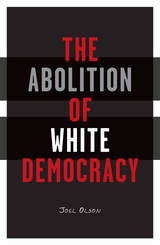
Offers a new way of understanding the tortured relationship between race and democracy in the United States
Racial discrimination embodies inequality, exclusion, and injustice and as such has no place in a democratic society. And yet racial matters pervade nearly every aspect of American life, influencing where we live, what schools we attend, the friends we make, the votes we cast, the opportunities we enjoy, and even the television shows we watch.
Joel Olson contends that, given the history of slavery and segregation in the United States, American citizenship is a form of racial privilege in which whites are equal to each other but superior to everyone else. In Olson’s analysis we see how the tension in this equation produces a passive form of democracy that discourages extensive participation in politics because it treats citizenship as an identity to possess rather than as a source of empowerment. Olson traces this tension and its disenfranchising effects from the colonial era to our own, demonstrating how, after the civil rights movement, whiteness has become less a form of standing and more a norm that cements white advantages in the ordinary operations of modern society. To break this pattern, Olson suggests an “abolitionist-democratic” political theory that makes the fight against racial discrimination a prerequisite for expanding democratic participation.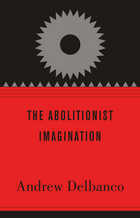
The abolitionists of the mid-nineteenth century have long been painted in extremes--vilified as reckless zealots who provoked the catastrophic bloodletting of the Civil War, or praised as daring and courageous reformers who hastened the end of slavery. But Andrew Delbanco sees abolitionists in a different light, as the embodiment of a driving force in American history: the recurrent impulse of an adamant minority to rid the world of outrageous evil.
Delbanco imparts to the reader a sense of what it meant to be a thoughtful citizen in nineteenth-century America, appalled by slavery yet aware of the fragility of the republic and the high cost of radical action. In this light, we can better understand why the fiery vision of the "abolitionist imagination" alarmed such contemporary witnesses as Herman Melville and Nathaniel Hawthorne even as they sympathized with the cause. The story of the abolitionists thus becomes both a stirring tale of moral fervor and a cautionary tale of ideological certitude. And it raises the question of when the demand for purifying action is cogent and honorable, and when it is fanatic and irresponsible.
Delbanco's work is placed in conversation with responses from literary scholars and historians. These provocative essays bring the past into urgent dialogue with the present, dissecting the power and legacies of a determined movement to bring America's reality into conformity with American ideals.
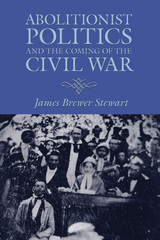
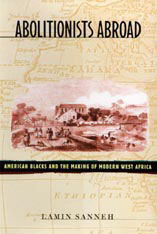
In 1792, nearly 1,200 freed American slaves crossed the Atlantic and established themselves in Freetown, West Africa, a community dedicated to anti-slavery and opposed to the African chieftain hierarchy that was tied to slavery. Thus began an unprecedented movement with critical long-term effects on the evolution of social, religious, and political institutions in modern Africa.
Lamin Sanneh's engrossing book narrates the story of freed slaves who led efforts to abolish the slave trade by attacking its base operation: the capture and sale of people by African chiefs. Sanneh's protagonists set out to establish in West Africa colonies founded on equal rights and opportunity for personal enterprise, communities that would be havens for ex-slaves and an example to the rest of Africa. Among the most striking of these leaders is the Nigerian Samuel Ajayi Crowther, a recaptured slave who joined a colony in Sierra Leone and subsequently established satellite communities in Nigeria. The ex-slave repatriates brought with them an evangelical Christianity that encouraged individual spirituality--a revolutionary vision in a land where European missionaries had long assumed they could Christianize the whole society by converting chiefs and rulers.
Tracking this potent African American anti-slavery and democratizing movement through the nineteenth century, Lamin Sanneh draws a clear picture of the religious grounding of its conflict with the traditional chieftain authorities. His study recounts a crucial development in the history of West Africa.
An innovative analysis of the Enlightenment’s effects on the anti-slavery movement
Echoes of Thomas Paine and Enlightenment thought resonate throughout the abolitionist movement and in the efforts of its leaders to create an antislavery reading public. In Abolition’s Public Sphere Robert Fanuzzi critically examines the writings of William Lloyd Garrison, Frederick Douglass, Henry David Thoreau, and Sarah and Angelina Grimke, and their massive abolition publicity campaign—pamphlets, newspapers, petitions, and public gatherings—geared to an audience of white male citizens, free black noncitizens, women, and the enslaved. Including provocative readings of Thoreau’s Walden and of the symbolic space of Boston’s Faneuil Hall, Abolition’s Public Sphere demonstrates how abolitionist public discourse sought to reenact eighteenth-century scenarios of revolution and democracy in the antebellum era.
Fanuzzi illustrates how the dissemination of abolitionist tracts served to create an “imaginary public” that promoted and provoked the discussion of slavery. However, by embracing Enlightenment abstractions of liberty, reason, and progress, Fanuzzi argues, abolitionist strategy introduced aesthetic concerns that challenged political institutions of the public sphere and prevailing notions of citizenship. Insightful and thought-provoking, Abolition’s Public Sphere questions standard versions of abolitionist history and, in the process, our understanding of democracy itself.

What can abortion and divorce laws in other countries teach Americans about these thorny issues? In this incisive new book, noted legal scholar Mary Ann Glendon looks at the experiences of twenty Western nations, including the United States, and shows how they differ, subtly but profoundly, from one another. Her findings challenge many widely held American beliefs. She reveals, for example, that a compromise on the abortion question is not only possible but typical, even in societies that are deeply divided on the matter. Regarding divorce, the extensive reliance on judicial discretion in the United States is not the best way to achieve fairness in arranging child support, spousal maintenance, or division of property—to judge by the experience of other countries. Glendon's analysis, by searching out alternatives to current U.S. practice, identities new possibilities of reform in these areas. After the late 1960s abortion and divorce became more readily available throughout the West—and most readily in this country—but the approach of American law has been anomalous. Compared with other Western nations, the United States permits less regulation of abortion in the interest of the fetus, provides less public support for maternity and child-rearing, and does less to mitigate the economic hardships of divorce through public assistance or enforcement of private obligations of support.
Glendon looks at these and more profound differences in the light of a powerful new method of legal interpretation. She sees each country's laws as part of a symbol-creating system that yields a distinctive portrait of individuals, human life, and relations between men and women, parents and children, families and larger communities. American law, more than that of other countries, employs a rhetoric of rights, individual liberty, and tolerance for diversity that, unchecked, contributes to the fragmentation of community and its values. Contemporary U.S. family law embodies a narrative about divorce, abortion, and dependency that is probably not the story most Americans would want to tell about these sad and complex matters but that is recognizably related to many of their most cherished ideals.

These are the questions that drive Wendy Simonds' Abortion at Work. Simonds documents the ways in which workers at a feminist clinic construct compelling feminist visions, and also watch their ideals fall short in practice. Simonds interprets these women's narratives to get at how abortion works on feminism, and to show what feminism can gain by rethinking abortion utilizing these activists' terms. In thoroughly engaging prose, Simonds frames her analysis with a moving account of her own personal understanding of the issues.

One of the most private decisions a woman can make, abortion is also one of the most contentious topics in American civic life. Protested at rallies and politicized in party platforms, terminating pregnancy is often characterized as a selfish decision by women who put their own interests above those of the fetus. This background of stigma and hostility has stifled women’s willingness to talk about abortion, which in turn distorts public and political discussion. To pry open the silence surrounding this public issue, Sanger distinguishes between abortion privacy, a form of nondisclosure based on a woman’s desire to control personal information, and abortion secrecy, a woman’s defense against the many harms of disclosure.
Laws regulating abortion patients and providers treat abortion not as an acceptable medical decision—let alone a right—but as something disreputable, immoral, and chosen by mistake. Exploiting the emotional power of fetal imagery, laws require women to undergo ultrasound, a practice welcomed in wanted pregnancies but commandeered for use against women with unwanted pregnancies. Sanger takes these prejudicial views of women’s abortion decisions into the twenty-first century by uncovering new connections between abortion law and American culture and politics.
New medical technologies, women’s increasing willingness to talk online and off, and the prospect of tighter judicial reins on state legislatures are shaking up the practice of abortion. As talk becomes more transparent and acceptable, women’s decisions about whether or not to become mothers will be treated more like those of other adults making significant personal choices.

Traveling from high culture to pop culture and back again, About Religion approaches cyberspace and Las Vegas through Hegel and Kant and reads Melville's The Confidence-Man through the film Wall Street. As astonishing juxtapositions and associations proliferate, formerly uncharted territories of virtual culture disclose theological vestiges, showing that faith in contemporary culture is as unavoidable as it is elusive.
The most accessible presentation of Taylor's revolutionary ideas to date, About Religion gives us a dazzling and disturbing vision of life at the end of the old and beginning of the new millennium.
In addition to the editors and David S. Reynolds, contributors include Jeffrey Bilbro, Dawn Coleman, Jonathan A. Cook, Tracy Fessenden, Zachary Hutchins, Richard Kopley, Mason I. Lowance Jr., John Matteson, Christopher N. Phillips, Vivian Pollak, Michael Robertson, Gail K. Smith, Claudia Stokes, and Timothy Sweet.
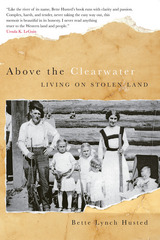
Like her father before her, Bette Husted grew up on stolen land. The bench land above the Clearwater River in north-central Idaho had been a home for the Nez Perce Indians until the Dawes Act opened their reservation to settlement in 1895. As a child on the family homestead, Husted felt the presence of the Nez Perce: "But they were always just out of sight, like a smoky shadow behind me that I couldn't quite turn around quickly enough to catch."
Above the Clearwater chronicles her family's history on the land, revealing their joys and sorrows, their triumphs and tragedies. In a series of graceful and moving essays, Husted traces this intimate history, from her Cold War childhood to her struggles as a parent and finally to her life as a woman and teacher in the rural West. Her family's stories echo those of countless other families in the American West: the conflicts with guns, the struggles over land ownership and water rights, the isolation of women, the separations by race and class, the family secrets of mental illness and suicide.
With a powerful, poetic voice, Husted illuminates the tangled relationship between the history of a particular place and the history of the families who inhabit that place over time. As Above the Clearwater explores one family's search for a home on land taken from its original inhabitants, it quietly asks all readers to examine their own homes in the same light.
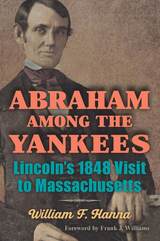
Hanna provides excellent context on the politics of the era, particularly the question of slavery, both in Massachusetts and nationwide, and he features the people Lincoln met and the cities or towns in which he spoke. Lincoln stumped for Taylor in Worcester, New Bedford, Boston, Lowell, Dorchester, Chelsea, Dedham, Cambridge, and Taunton. He gave twelve speeches in eleven days to audiences who responded with everything from catcalls to laughter to applause. Whatever they thought of Lincoln’s arguments, those who saw him were impressed by his unusual western style and remembered his style more than the substance of his talks.
Meticulously researched, Abraham among the Yankees invites readers to take an East Coast journey with a thirty-nine-year-old Lincoln during election season in 1848 to see how Massachusetts audiences responded to the humorous, informal approach that served Lincoln well during the rest of his political career.
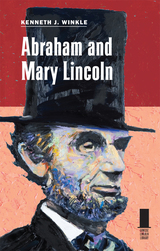
When the awkward but ambitious Lincoln landed Mary Todd, people were surprised by their seeming incompatibility. Lincoln, lacking in formal education and social graces, came from the world of hardscrabble farmers on the American frontier. Mary, by contrast, received years of schooling and came from an established, wealthy, slave-owning family. Yet despite the social gulf between them, these two formidable personalities forged a bond that proved unshakable during the years to come. Mary provided Lincoln with the perfect partner in ambition—one with connections, political instincts, and polish. For Mary, Lincoln was her “diamond in the rough,” a man whose ungainly appearance and background belied a political acumen to match her own.
While each played their role in the marriage perfectly— Lincoln doggedly pursuing success and Mary hosting lavish political soirées—their partnership was not without contention. Mary—once described as “the wildcat of her age”—frequently expressed frustration with the limitations placed on her by Victorian social strictures, exhibiting behavior that sometimes led to public friction between the couple. Abraham’s work would at times keep him away from home for weeks, leaving Mary alone in Springfield.
The true test of the Lincolns’ dedication to each other began in the White House, as personal tragedy struck their family and civil war erupted on American soil. The couple faced controversy and heartbreak as the death of their young son left Mary grief-stricken and dependent upon séances and spiritualists; as charges of disloyalty hounded the couple regarding Mary’s young sister, a Confederate widow; and as public demands grew strenuous that their son Robert join the war. The loss of all privacy and the constant threat of kidnapping and assassination took its toll on the entire family. Yet until a fateful night in the Ford Theatre in 1865, Abraham and Mary Lincoln stood firmly together—he as commander-in-chief during America’s gravest military crisis, and she as First Lady of a divided country that needed the White House to emerge as a respected symbol of national unity and power.
Despite the challenges they faced, the Lincolns’ life together fully embodied the maxim engraved on their wedding bands: love is eternal. Abraham and Mary Lincoln is a testament to the power of a stormy union that held steady through the roughest of seas.
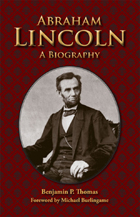
Long considered a classic, Benjamin P. Thomas's Abraham Lincoln: A Biography takes an incisive look at one of American history's greatest figures. Originally published in 1952 to wide acclaim, this eloquent account rises above previously romanticized depictions of the sixteenth president to reveal the real Lincoln: a complex, shrewd, and dynamic individual whose exceptional life has long intrigued the public.
Thomas traces the president from his hardscrabble beginnings and early political career, through his years as an Illinois lawyer and his presidency during the Civil War. Although Lincoln is appropriately placed against the backdrop of the dramatic times in which he lived, the author's true focus is on Lincoln the man and his intricate personality. While Thomas pays tribute to Lincoln's many virtues and accomplishments, he is careful not to dramatize a persona already larger than life in the American imagination. Instead he presents a candid and balanced representation that provides compelling insight into Lincoln's true character and the elements that forged him into an extraordinary leader. Thomas portrays Lincoln as a man whose conviction, resourcefulness, and inner strength enabled him to lead the nation through the most violent crossroads in its history.
Thomas's direct, readable narrative is concise while losing none of the crucial details of Lincoln's remarkable life. The volume's clarity of style makes it accessible to beginners, but it is complex and nuanced enough to interest longtime Lincoln scholars. After more than half a century, Abraham Lincoln: A Biography is still an essential source for anyone interested in learning more about the many facets of the sixteenth president, and it remains the definitive single-volume work on the life of an American legend.
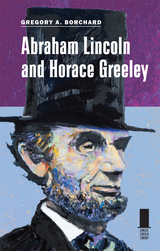
Borchard begins with an overview of the lives of both Lincoln and Greeley, delving particularly into their mutual belief in Henry Clay’s much-debated American System, and investigating the myriad similarities between the two political giants, including their comparable paths to power and their statuses as self-made men, their reputations as committed reformers, and their shared dedication to social order and developing a national infrastructure. Also detailed are Lincoln’s and Greeley’s personal quests to end slavery in the United States, as well as their staunch support of free-soil homesteads in the West.
Yet despite their ability to work together productively, both men periodically found themselves on opposite ends of the political spectrum. Their by turns harmonious and antagonistic relationship often played out on the front pages of Greeley’s influential newspaper, the New York Tribune. Drawing upon historical gems from the Tribune, as well as the personal papers of both Lincoln and Greeley, Borchard explores in depth the impact the two men had on their times and on each other, and how, as Lincoln’s and Greeley’s paths often crossed—and sometimes diverged—they personified the complexities, virtues, contradictions, and faults of their eras.
Abraham Lincoln and Horace Greeley goes beyond tracing each man’s personal and political evolution to offer a new perspective on the history-changing events of the times, including the decline of the Whig Party and the rise of the Republicans, the drive to extend American borders into the West; and the bloody years of the Civil War. Borchard finishes with reflections on the deaths of Lincoln and Greeley and how the two men have been remembered by subsequent generations.
Sure to become an essential volume in the annals of political history and journalism, Abraham Lincoln and Horace Greeley is a compelling testament to the indelible mark these men left on both their contemporaries and the face of America’s future.

Today the images of Robert Burns and Abraham Lincoln are recognized worldwide, yet few are aware of the connection between the two. In Abraham Lincoln and Robert Burns: Connected Lives and Legends, author Ferenc Morton Szasz reveals how famed Scots poet Robert Burns—and Scotland in general—influenced the life and thought of one of the most beloved and important U.S. presidents and how the legends of the two men became intertwined after their deaths. This is the first extensive work to link the influence, philosophy, and artistry of these two larger-than-life figures.
Lacking a major national poet of their own in the early nineteenth century, Americans in the fledgling frontier country ardently adopted the poignant verses and songs of Scotland’s Robert Burns. Lincoln, too, was fascinated by Scotland’s favorite son and enthusiastically quoted the Scottish bard from his teenage years to the end of his life. Szasz explores the ways in which Burns’s portrayal of the foibles of human nature, his scorn for religious hypocrisy, his plea for nonjudgmental tolerance, and his commitment to social equality helped shape Lincoln’s own philosophy of life. The volume also traces how Burns’s lyrics helped Lincoln develop his own powerful sense of oratorical rhythm, from his casual anecdotal stories to his major state addresses.
Abraham Lincoln and Robert Burns connects the poor-farm-boy upbringings, the quasi-deistic religious views, the shared senses of destiny, the extraordinary gifts for words, and the quests for social equality of two respected and beloved world figures. This book is enhanced by twelve illustrations and two appendixes, which include Burns poems Lincoln particularly admired and Lincoln writings especially admired in Scotland.
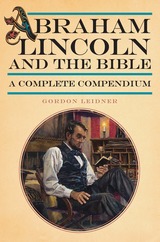
How did Abraham Lincoln’s lifelong study of scripture influence him as a man and, ultimately, as president? Historian Gordon Leidner believes the impact was profound—more than previously recognized—and has investigated all the known writings of Abraham Lincoln to identify, catalog, and study every instance in which Lincoln quoted from or alluded to the Bible. Rather than dwelling on the never-ending debate about Lincoln’s religious beliefs, Leidner shows how scripture affected Lincoln personally, professionally, and politically.
Leidner offers first a short biography that focuses on Lincoln’s use of the Bible, how it shaped him as a person, how its influence changed over time, and how biblical quotations peppered his letters, speeches, and conversations. The book concludes with an unparalleled appendix that tabulates nearly 200 instances of Lincoln’s quoting from or alluding to scripture, giving locators for the Bible and Roy P. Basler’s nine volume Collected Works of Abraham Lincoln and quotations from both sources. The appendix also includes when and where Lincoln used each quote, providing valuable context, whether the use was in personal letters such as one to Queen Victoria after the death of Prince Albert, political speeches such as the Gettysburg Address, or state addresses such as the Second Inaugural Address.
By showcasing Lincoln’s specific biblical references and influences, Leidner reframes the question of Lincoln’s religious beliefs so that readers may evaluate for themselves what solace and guidance the Bible afforded the sixteenth president.
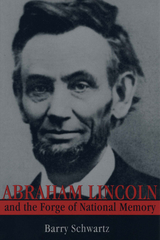
Schwartz draws on a wide array of materials—painting and sculpture, popular magazines and school textbooks, newspapers and oratory—to examine the role that Lincoln's memory has played in American life. He explains, for example, how dramatic funeral rites elevated Lincoln's reputation even while funeral eulogists questioned his presidential actions, and how his reputation diminished and grew over the next four decades. Schwartz links transformations of Lincoln's image to changes in the society. Commemorating Lincoln helped Americans to think about their country's development from a rural republic to an industrial democracy and to articulate the way economic and political reform, military power, ethnic and race relations, and nationalism enhanced their conception of themselves as one people.
Lincoln's memory assumed a double aspect of "mirror" and "lamp," acting at once as a reflection of the nation's concerns and an illumination of its ideals, and Schwartz offers a fascinating view of these two functions as they were realized in the commemorative symbols of an ever-widening circle of ethnic, religious, political, and regional communities. The first part of a study that will continue through the present, Abraham Lincoln and the Forge of National Memory is the story of how America has shaped its past selectively and imaginatively around images rooted in a real person whose character and achievements helped shape his country's future.
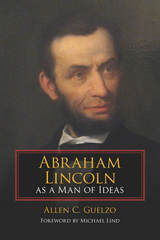
Despite the most meager of formal educations, Lincoln had a tremendous intellectual curiosity that drove him into the circle of Enlightenment philosophy and democratic political ideology. And from these, Lincoln developed a set of political convictions that guided him throughout his life and his presidency. This compilation of ten essays from Lincoln scholar Allen C. Guelzo uncovers the hidden sources of Lincoln’s ideas and examines the beliefs that directed his career and brought an end to slavery and the Civil War.
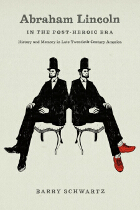
2015 ISHS Superior Achievement Award
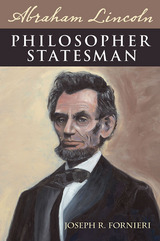
What constitutes Lincoln’s political greatness as a statesman? As a great leader, he saved the Union, presided over the end of slavery, and helped to pave the way for an interracial democracy. His great speeches provide enduring wisdom about human equality, democracy, free labor, and free society. Joseph R. Fornieri contends that Lincoln’s political genius is best understood in terms of a philosophical statesmanship that united greatness of thought and action, one that combined theory and practice. This philosophical statesmanship, Fornieri argues, can best be understood in terms of six dimensions of political leadership: wisdom, prudence, duty, magnanimity, rhetoric, and patriotism. Drawing on insights from history, politics, and philosophy, Fornieri tackles the question of how Lincoln’s statesmanship displayed each of these crucial elements.
Providing an accessible framework for understanding Lincoln’s statesmanship, this thoughtful study examines the sixteenth president’s political leadership in terms of the traditional moral vision of statecraft as understood by epic political philosophers such as Aristotle and St. Thomas Aquinas. Fornieri contends that Lincoln’s character is best understood in terms of Aquinas’s understanding of magnanimity or greatness of soul, the crowning virtue of statesmanship. True political greatness, as embodied by Lincoln, involves both humility and sacrificial service for the common good. The enduring wisdom and timeless teachings of these great thinkers, Fornieri shows, can lead to a deeper appreciation of statesmanship and of its embodiment in Abraham Lincoln.
With the great philosophers and books of western civilization as his guide, Fornieri demonstrates the important contribution of normative political philosophy to an understanding of our sixteenth president. Informed by political theory that draws on the classics in revealing the timelessness of Lincoln’s example, his interdisciplinary study offers profound insights for anyone interested in the nature of leadership, statesmanship, political philosophy, political ethics, political history, and constitutional law.
Abraham Lincoln drew upon history in his political career and particularly when crafting the rhetorical masterpieces that still resonate in the present day. Jesse Derber explores how Lincoln’s views of the limits of human understanding drove a belief in--and untiring pursuit of--historical truth.
Lincoln embraced the traditional ideas that good history made good statesmanship and that an understanding of the past informed decision-making in the present. Seeing history as a source of wisdom, Lincoln strove for accuracy through a combination of research, reasoning ability, emotional maturity, and a willingness to admit his mistakes and challenge his biases. His philosophy flowed from an idea that authentic history could enlighten people about human nature. Though he revered precedents, Lincoln understood the past could be imperfect, and that progress through change was an ineffable part of building a better nation.
Perceptive and revealing, Abraham Lincoln, Statesman Historian looks at how the Lincoln practiced history and applied its lessons to politics and leadership.
Editor Michael Burlingame sifted through the original forty-seven-hundred-page work and selected only the personal observations of the secretaries during the Lincoln presidency, placing ten excerpts in chronological order in Abraham Lincoln: The Observations of John G. Nicolay and John Hay. The result is an important collection of Nicolay and Hay’s interpretations of Lincoln’s character, actions, and reputation, framed by Burlingame’s compelling preface, introduction, chapter introductions, and notes. The volume provides vivid descriptions of such events as Election Day in 1860, the crisis at Fort Sumter, the first major battle of the war at Bull Run, and Lincoln’s relationship with Edwin Stanton and George McClellan.
In this clear and captivating new work, Burlingame has made key portions of Nicolay and Hay’s immense biography available to a wide audience of today’s readers.
Though Lincoln’s presidency is inextricably linked to the Civil War, and he is best known for his defense of the Union and executive wartime leadership, Lincoln believed that Congress should be at the helm of public policy making. Likewise, Lincoln may have embraced limited government in vague terms, but he strongly supported effective rule of law and distribution of income and wealth. Placing the Lincoln presidency within a deeper and more meaningful historical context, Abraham Lincoln’s Statesmanship and the Limits of Liberal Democracy highlights Lincoln’s significance in the development of American power institutions and social movement politics.
Using Lincoln’s prepresidential and presidential words and actions, this book argues that decent government demands a balance of competing goods and the strong statesmanship that Lincoln exemplified. Instead of relying too heavily on the will of the people and institutional solutions to help prevent tyranny, Jon D. Schaff proposes that American democracy would be better served by a moderate and prudential statesmanship such as Lincoln’s, which would help limit democratic excesses.
Schaff explains how Lincoln’s views on prudence, moderation, natural rights, and economics contain the notion of limits, then views Lincoln’s political and presidential leadership through the same lens. He compares Lincoln’s views on governmental powers with the defense of unlimited government by twentieth-century progressives and shows how Lincoln’s theory of labor anticipated twentieth-century distributist economic thought. Schaff’s unique exploration falls squarely between historians who consider Lincoln a protoprogressive and those who say his presidency was a harbinger of industrialized, corporatized America.
In analyzing Lincoln’s approach, Abraham Lincoln’s Statesmanship and the Limits of Liberal Democracy rejects the idea he was a revolutionary statesman and instead lifts up Lincoln’s own affinity for limited presidential power, making the case for a modest approach to presidential power today based on this understanding of Lincoln’s statesmanship. As a counterpoint to the contemporary landscape of bitter, uncivil politics, Schaff points to Lincoln’s statesmanship as a model for better ways of engaging in politics in a democracy.
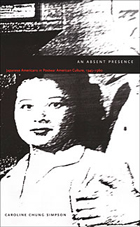
Simpson argues that when popular journals or social theorists engaged the topic of Japanese American history or identity in the Cold War era they did so in a manner that tended to efface or diminish the complexity of their political and historical experience. As a result, the shadowy figuration of Japanese American identity often took on the semblance of an “absent presence.” Individual chapters feature such topics as the case of the alleged Tokyo Rose, the Hiroshima Maidens Project, and Japanese war brides. Drawing on issues of race, gender, and nation, Simpson connects the internment episode to broader themes of postwar American culture, including the atomic bomb, McCarthyism, the crises of racial integration, and the anxiety over middle-class gender roles.
By recapturing and reexamining these vital flashpoints in the projection of Japanese American identity, Simpson fills a critical and historical void in a number of fields including Asian American studies, American studies, and Cold War history.
Bringing together fifteen original and path-breaking essays by world-class authorities on Abstract Expressionism as well as by younger scholars, this anthology looks beyond the canonical painters to explore the broader connections among abstract artists of the post–World War II era. Moving from the margins to the center, the essays recognize the contributions of artists working far beyond New York City. Topics include Jackson Pollock’s contact with Mexican muralists and the legacy of Abstract Expressionism for leftist artists in Latin America, the relevance of Jean-Paul Sartre and Samuel Beckett as sources of philosophical thought, the significance of northern European CoBrA painters such as Asger Jorn, the impact of Japanese Gutai artists, and connections with the revolutionary art of Italy, Belgium, and France. Abstract Expressionism is also described as a model for contemporaneous developments in the former Soviet Union.
As the first book to consider the movement in relation to post–World War II abstraction on four continents, this book brings a fresh perspective to this widely studied school of painting. Scholars and students alike will find this anthology essential reading in creating a more complete and nuanced understanding of Abstract Expressionism.
William Seitz was a creative witness to one of the most exciting artistic upheavals of our time. His analysis of American Abstract Expressionism is the unique testament of one who was there at the Cedar Bar and at The Club in the early 1950s, sharing the milieu of the painters about whom he writes-Gorky, de Kooning, Hofmann, Motherwell, Rothko, and Tobey. Seitz was finely tuned to their idiosyncratic development, able to document at first hand the influences entering their discourse, whether Suzuki or Empson, Klee or the French existentialists. Beyond this, the uncertainty and verbal confusion of the time, Seitz takes the reader directly to the works of art, probing not what the artists were saying, but what they were painting.
A painter himself, he could explore the passions and methods of Abstract Expressionism with the insight and technical precision of one who had labored in the studio. Seitz maintains a profound respect for the mysterious power of the individual talent, for the artist as an intellectual, and for painting as a form of knowledge. His work, confined to the "underground" of microfilm after it was completed in 1955, stands alone in conveying the anxiety, exhilaration, and richness of a movement racing ahead while its criteria were still being formed. Lavishly illustrated with over 300 paintings, many in full color, Abstract Expressionist Painting in America is a book that Motherwell describes in his foreword as "unsurpassed...in the literature of Abstract Expressionism, but also sui generis in the scholarship of Modernism."
The line between punishment and torture can be razor-thin—yet the entire world agreed that it was definitively crossed at Abu Ghraib. Or perhaps not. George W. Bush won a second term in office only months after the Abu Ghraib scandal was uncovered, and only the lowest-ranking U.S. soldiers involved in the scandal have been prosecuted. Where was the public outcry? Stephen Eisenman offers here an unsettling explanation that exposes our darkest inclinations in the face of all-too-human brutality.
Eisenman characterizes Americans’ willful dismissal of the images as “the Abu Ghraib effect,” rooted in the ways that the images of tortured Abu Ghraib prisoners tapped into a reactionary sentiment of imperialist self-justification and power. The complex elements in the images fit the “pathos formula,” he argues, an enduring artistic motif in which victims are depicted as taking pleasure in their own extreme pain. Meanwhile, the explicitly sexual nature of the Abu Ghraib tortures allowed Americans to rationalize the deeds away as voluntary pleasure acts by the prisoners—a delusional reaction, but, The Abu Ghraib Effect reveals, one with historical precedence. From Greek sculptures to Goya paintings, Eisenman deftly connects such works and their disturbing pathos motif to the Abu Ghraib images.
Skillfully weaving together visual theory, history, philosophy, and current events, Eisenman peels back the political obfuscation to probe the Abu Ghraib images themselves, contending that Americans can only begin to grapple with the ramifications of torture when the moral detachment of the “Abu Ghraib effect” breaks down and the familiar is revealed to be horribly unfamiliar.

Walk into any nursery, florist, or supermarket, and you’ll encounter displays of dozens of gorgeous flowers, from chrysanthemums to orchids. At one time these fanciful blooms were the rare trophies of the rich and influential—even the carnation, today thought of as one of the humblest cut flowers. Every blossom we take for granted now is the product of painstaking and imaginative planning, breeding, horticultural ingenuity, and sometimes chance. The personalities of the breeders, from an Indiana farmer to Admiral Lord Gambier’s gardener, were as various and compelling as the beauty they conjured from skilled hybridization.
In Visions of Loveliness: Great Flower Breeders of the Past, Judith Taylor wrote engagingly about the vivid history and characters behind eighteen types of popular flowers. In this companion volume she uncovers information about another eight familiar flowers: poinsettias, chrysanthemums, gladioli, pansies, carnations, water lilies, clematis, and penstemons.
Taylor has tapped into an enormous trove of stories about extraordinary people with vision and skill who added to our enjoyment piece by piece, starting about 150 years ago. This beautifully illustrated book will please flower enthusiasts, gardeners, and history buffs alike.

Athan Theoharis, long a respected authority on surveillance and secrecy, established his reputation for meticulous scholarship with his work on the loyalty security program developed under Truman and McCarthy. In Abuse of Power, Theoharis continues his investigation of U.S. government surveillance and historicizes the 9/11 response.
Criticizing the U.S. government's secret activities and policies during periods of "unprecedented crisis," he recounts how presidents and FBI officials exploited concerns about foreign-based internal security threats.
Drawing on information sequestered until recently in FBI records, Theoharis shows how these secret activities in the World War II and Cold War eras expanded FBI surveillance powers and, in the process, eroded civil liberties without substantially advancing legitimate security interests.
Passionately argued, this timely book speaks to the costs and consequences of still-secret post-9/11 surveillance programs and counterintelligence failures. Ultimately, Abuse of Power makes the case that the abusive surveillance policies of the Cold War years were repeated in the government's responses to the September 11 attacks.
The first two essays in the book provide a history of the academic and professional writing program at the University of Maryland. Subsequent essays explore successes and challenges in the establishment and development of writing programs at four other major institutions, identify the features of language that facilitate academic and professional communication, look at the ways digital practices in academic and professional writing have shaped how writers compose and respond to texts, and examine the role of assessment in curriculum and pedagogy. An afterword by distinguished rhetoric and composition scholars Jessica Enoch and Scott Wible offers perspectives on the future of academic and professional writing.
This collection takes stock of the historical, rhetorical, linguistic, digital, and evaluative aspects of the teaching of writing in higher education. Among the critical issues addressed are how university writing programs were first established and what early challenges they faced, where writing programs were housed and who administered them, how the language backgrounds of composition students inform the way writing is taught, the ways in which current writing technologies create new digital environments, and how student learning and programmatic outcomes should be assessed.
The university today is under attack from all sides. Parents and students resent the escalating costs of education and wonder where the money is being spent. Aspiring scholars feel betrayed by an institution that prepares them for nonexistent jobs. Critics on the right condemn the teachers who neglect "the canon" while critics on the left condemn the creeping corporatism on campus. Politicians seek greater control over the conduct of research and add new conditions to the use of government funds. Worst of all, the academics are increasingly uneasy in an environment that fosters competition, discourages cooperation, and has made "publish or perish" a condition of survival.
Donald Kennedy, the former president of Stanford University and currently a member of its faculty, has been at the front lines of the issues confounding the academy today. In this important new book, he brings his experience and concern to bear on the present state of the university. He examines teaching, graduate training, research, and their ethical context in the research university. Aware of the numerous pressures that academics face, from the pursuit of open inquiry in the midst of culture wars, to confusion and controversy over the ownership of ideas, to the scramble for declining research funds and facilities, he explores the whys and wherefores of academic misconduct, be it scholarly, financial, or personal.
Kennedy suggests that meaningful reform cannot take place until more rigorous standards of academic responsibility--to students, the university, and the public--are embraced by both faculty and the administration. With vision and compassion, he offers an important antidote to recent attacks from without that decry the university and the professoriate, and calls upon the college community to counter those attacks by looking within and fulfilling its duties.
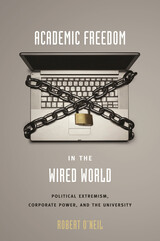
In this passionately argued overview, a longtime activist-scholar takes readers through the changing landscape of academic freedom. From the aftermath of September 11th to the new frontier of blogging, Robert O'Neil examines the tension between institutional and individual interests. Many cases boil down to a hotly contested question: who has the right to decide what is taught in the classroom?
O'Neil shows how courts increasingly restrict professorial judgment, and how the feeble protection of what is posted on the Internet and written in email makes academics more vulnerable than ever. Even more provocatively, O'Neil argues, the newest threats to academic freedom come not from government, but from the private sector. Corporations increasingly sponsor and control university-based research, while self-appointed watchdogs systematically harass individual teachers on websites and blogs. Most troubling, these threats to academic freedom are nearly immune from legal recourse.
Insisting that new concepts of academic freedom, and new strategies for maintaining it are needed, O'Neil urges academics to work together--and across rigid and simplistic divisions between "left" and "right."

Ideal for practitioners looking to advance their careers and for use in LIS programs, this "comprehensive overview" (Journal of Access Services) has been thoroughly revised and updated to provide a timely exploration of the characteristics of academic librarianship and its place in the ever-changing environment of higher education. Evans and new coauthor Greenwell guide readers towards understanding what is required to have a successful career in academic librarianship, explaining why academic libraries are distinct from other types of libraries and lending practical insight into their unique political and operational characteristics. The text offers comprehensive coverage of such key issues as
- teaching faculty roles and the status of the academic librarian;
- governance and the growing tension on some campuses between faculty and administration;
- curriculum, with a discussion of the balance between general education requirements and applied courses;
- the student body;
- collections, data management, digitization, and metadata;
- scholarly communication, plus alternative models such as open educational resources (OERs);
- providing quality service, and the role of user experience (UX) in assessment;
- ACRL's Information Literacy Framework;
- funding, including how and where to find detailed higher education expenditure data;
- classrooms, common learning spaces, and other facilities;
- staffing and professional development;
- technology and IT support;
- career development, with advice on preparing a vita and undergoing a successful interview; and
- the future of academic librarianship.
This updated edition enables readers to understand how academic libraries deliver information, offer services, and provide learning spaces in new ways to better meet the needs of today's students, faculty, and other communities of academic library users.
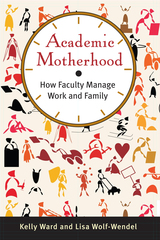
Academic Motherhood tells the story of over one hundred women who are both professors and mothers and examines how they navigated their professional lives at different career stages. Kelly Ward and Lisa Wolf-Wendel base their findings on a longitudinal study that asks how women faculty on the tenure track manage work and family in their early careers (pre-tenure) when their children are young (under the age of five), and then again in mid-career (post-tenure) when their children are older. The women studied work in a range of institutional settings—research universities, comprehensive universities, liberal arts colleges, and community colleges—and in a variety of disciplines, including the sciences, the humanities, and the social sciences.
Much of the existing literature on balancing work and family presents a pessimistic view and offers cautionary tales of what to avoid and how to avoid it. In contrast, the goal of Academic Motherhood is to help tenure track faculty and the institutions at which they are employed “make it work.” Writing for administrators, prospective and current faculty as well as scholars, Ward and Wolf-Wendel bring an element of hope and optimism to the topic of work and family in academe. They provide insight and policy recommendations that support faculty with children and offer mechanisms for problem-solving at personal, departmental, institutional, and national levels.
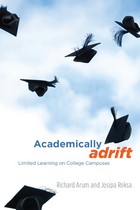
In spite of soaring tuition costs, more and more students go to college every year. A bachelor’s degree is now required for entry into a growing number of professions. And some parents begin planning for the expense of sending their kids to college when they’re born. Almost everyone strives to go, but almost no one asks the fundamental question posed by Academically Adrift: are undergraduates really learning anything once they get there?
For a large proportion of students, Richard Arum and Josipa Roksa’s answer to that question is a definitive no. Their extensive research draws on survey responses, transcript data, and, for the first time, the state-of-the-art Collegiate Learning Assessment, a standardized test administered to students in their first semester and then again at the end of their second year. According to their analysis of more than 2,300 undergraduates at twenty-four institutions, 45 percent of these students demonstrate no significant improvement in a range of skills—including critical thinking, complex reasoning, and writing—during their first two years of college. As troubling as their findings are, Arum and Roksa argue that for many faculty and administrators they will come as no surprise—instead, they are the expected result of a student body distracted by socializing or working and an institutional culture that puts undergraduate learning close to the bottom of the priority list.
Academically Adrift holds sobering lessons for students, faculty, administrators, policy makers, and parents—all of whom are implicated in promoting or at least ignoring contemporary campus culture. Higher education faces crises on a number of fronts, but Arum and Roksa’s report that colleges are failing at their most basic mission will demand the attention of us all.
Faculty members, administrators, and professionals with experience at all levels of higher education offer candid, practical advice to help beginning academics understand matters including:
— The different kinds of institutions of higher learning and expectations of faculty at each.
— The advantages and disadvantages of teaching at four-year colleges instead of research universities.
— The ins and outs of the job market.
— Alternatives to tenure-track, research-oriented positions.
— Salary and benefits.
— The tenure system.
— Pedagogy in both large lecture courses and small, discussion-based seminars.
— The difficulties facing women and minorities within academia.
— Corporations, foundations, and the federal government as potential sources of research funds.
— The challenges of faculty mentoring.
— The impact of technology on contemporary teaching and learning.
— Different types of publishers and the publishing process at university presses.
— The modern research library.
— The structure of university governance.
— The role of departments within the university.
With the inclusion of eight new chapters, this edition of The Academic’s Handbook is designed to ease the transition from graduate school to a well-rounded and rewarding career.
Contributors. Judith K. Argon, Louis J. Budd, Ronald R. Butters, Norman L. Christensen, Joel Colton, Paul L. Conway, John G. Cross, Fred E. Crossland, Cathy N. Davidson, A. Leigh DeNeef, Beth A. Eastlick, Matthew W. Finkin, Jerry G. Gaff, Edie N. Goldenberg, Craufurd D. Goodwin, Stanley M. Hauerwas, Deborah L. Jakubs, L. Gregory Jones, Nellie Y. McKay, Patrick M. Murphy, Elizabeth Studley Nathans, A. Kenneth Pye, Zachary B. Robbins, Anne Firor Scott, Sudhir Shetty, Samuel Schuman, Philip Stewart, Boyd R. Strain, Emily Toth, P. Aarne Vesilind, Judith S. White, Henry M. Wilbur, Ken Wissoker
Contributors. Luis Alvarez, Steven Alvarez, Eladio Bobadilla, Genevieve Carpio, Marcia Chatelain, Ernesto Chávez, Miroslava Chávez-García, Nathan D. B. Connolly, Jeremy V. Cruz, Cathy N. Davidson, Sarah Deutsch, Brenda Elsey, Sylvanna M. Falcón, Michelle Falkoff, Kelly Fayard, Matthew W. Finkin, Lori A. Flores, Kathryn J. Fox, Frederico Freitas, Neil Garg, Nanibaa’ A. Garrison, Joy Gaston Gayles, Tiffany Jasmin González, Cynthia R. Greenlee, Romeo Guzmán, Lauren Hall-Lew, David Hansen, Heidi Harley, Laura M. Harrison, Sonia Hernández, Sharon P. Holland, Elizabeth Q. Hutchison, Deborah Jakubs, Bridget Turner Kelly, Karen Kelsky, Stephen Kuusisto, Magdalena Maczynska, Sheila McManus, Cary Nelson, Jocelyn H. Olcott, Rosanna Olsen, Natalia Mehlman Petrzela, Charles Piot, Bryan Pitts, Sarah Portnoy, Laura Portwood-Stacer, Yuridia Ramirez, Meghan K. Roberts, John Elder Robison, David Schultz, Lynn Stephen, James E. Sutton, Antar A. Tichavakunda, Keri Watson, Ken Wissoker, Karin Wulf
For all the near-fanatic attention brought each year to the Academy Awards, the organization that dispenses those awards—the Academy of Motion Picture Arts and Sciences—has yet to be understood. To date, no one has ever produced a thorough account of the Academy’s birth and its awkward adolescence, and the few reports on those periods from outside have always had a glancing, cursory quality. Yet the story of the Academy’s creation and development is a critical piece of Hollywood’s history.
Now that story is finally being told. Bruce Davis, executive director of the Academy for over twenty years, was given unprecedented access to its archives, and the result is a revealing and compelling story of the men and women, famous and infamous, who shaped one of the best-known organizations in the world. Davis writes about the Academy with as intimate a view of its workings, its awards, and its world-famous membership. Thorough and long overdue, The Academy and the Award fills a crucial gap in Hollywood history.
The political and cultural ties between England and the US act as a backdrop for the identity negotiations of these English people, many of whom do not even consider themselves to be immigrants. This unique exploration of the workings of white privilege offers an important new understanding of the paradoxes of how class, gender, and race are formed in the US and, by implication, in the UK.
The companion to Signs and Voices: Deaf Culture, Identity, Language, and Arts, this volume presents an accomplished group of contributors who address the major technological, institutional, and societal advances in access for deaf people, as well as the remaining hurdles. Part One: Assistive Technologies begins with Maggie Casteel’s description of the latest innovative hearing assistive technology. Al Sonnenstrahl discusses his career as a deaf engineer who segued into advocating for equal access in telecommunications. Robert C. O’Reilly, Amanda J. Mangiardi, and H. Timothy Bunnell outline the process of cochlear implantation in children.
Jami N. Fisher and Philip J. Mattiacci open Part Two: Education and Literacy by examining civil rights issues in education. Michael Stinson considers the conflict that inclusion creates in developing a deaf identity. Lisa Herbert discusses her identity as a signing deaf person who also has a cochlear implant. Grace Walker focuses on her experiences with a cochlear implant that eventually led her to stop using it.
In the final section, Part Three: Civil Rights, Christy Hennessey describes her work as an advocate and job placement counselor with deaf and hard of hearing people. Tony Saccente discusses HIV/AIDs counseling to the deaf gay community. Leila Monaghan follows by reviewing recent studies of deaf attitudes towards HIV/AIDs. Greg Hlibok concludes with his commentary on leading the Deaf President Now! movement and its subsequent effects on deaf civil rights.
A volume in the American Literatures Initiative
“Should stand for years as the definitive history of New Orleans’s first century.” —Jonathan Yardley, Washington Post
This is the story of a city that shouldn’t exist. In the seventeenth century, what is now America’s most beguiling metropolis was nothing more than a swamp: prone to flooding, infested with snakes, battered by hurricanes. But through the intense imperial rivalries of Spain, France, and England, and the ambitious, entrepreneurial merchants and settlers from four continents who risked their lives to succeed in colonial America, this unpromising site became a crossroads for the whole Atlantic world.
Lawrence N. Powell, a decades-long resident and observer of New Orleans, gives us the full sweep of the city’s history from its founding through Louisiana statehood in 1812. We see the Crescent City evolve from a French village, to an African market town, to a Spanish fortress, and finally to an Anglo-American center of trade and commerce. We hear and feel the mix of peoples, religions, and languages from four continents that make the place electric—and always on the verge of unraveling. The Accidental City is the story of land-jobbing schemes, stock market crashes, and nonstop squabbles over status, power, and position, with enough rogues, smugglers, and self-fashioners to fill a picaresque novel.
Powell’s tale underscores the fluidity and contingency of the past, revealing a place where people made their own history. This is a city, and a history, marked by challenges and perpetual shifts in shape and direction, like the sinuous river on which it is perched.

As a gateway to economic opportunity, a college degree is viewed by many as America’s great equalizer. And it’s true: wealthier, more connected, and seemingly better-qualified students earn exactly the same pay as their less privileged peers. Yet, the reasons why may have little to do with bootstraps or self-improvement—it might just be dumb luck. That’s what sociologist Jessi Streib proposes in The Accidental Equalizer, a conclusion she reaches after interviewing dozens of hiring agents and job-seeking graduates.
Streib finds that luck shapes the hiring process from start to finish in a way that limits class privilege in the job market. Employers hide information about how to get ahead and force students to guess which jobs pay the most and how best to obtain them. Without clear routes to success, graduates from all class backgrounds face the same odds at high pay. The Accidental Equalizer is a frank appraisal of how this “luckocracy” works and its implications for the future of higher education and the middle class. Although this system is far from eliminating American inequality, Streib shows that it may just be the best opportunity structure we have—for better and for worse.
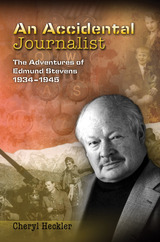
When an idealistic American named Edmund Stevens arrived in Moscow in 1934, his only goal was to do his part for the advancement of international Communism. His job writing propaganda led to a reporting career and an eventual Pulitzer Prize in 1950 for his uncensored descriptions of Stalin’s purges. This book tells how Stevens became an accidental journalist—and the dean of the Moscow press corps.
The longest-serving American-born correspondent working from within the Soviet Union, Stevens was passionate about influencing the way his stateside readers thought about Russia’s citizens, government, and social policy. Cheryl Heckler now traces a career that spanned half a century and four continents, focusing on Stevens’s professional work and life from 1934 to 1945 to tell how he set the standards for reporting on Soviet affairs for the Christian Science Monitor.
Stevens was a keen observer and thoughtful commentator, and his analytical mind was just what the Monitor was looking for in a foreign correspondent. He began his journalism career reporting on the Russo-Finnish War in 1939 and was the Monitor’s first man in the field to cover fighting in World War II. He reported on the Italian invasion of Greece, participated in Churchill’s Moscow meeting with Stalin as a staff translator, and distinguished himself as a correspondent with the British army in North Africa.
Drawing on Stevens’s memoirs—to which she had exclusive access—as well as his articles and correspondence and the unpublished memoirs of his wife, Nina, Heckler traces his growth as a frontline correspondent and interpreter of Russian culture. She paints a picture of a man hardened by experience, who witnessed the brutal crushing of the Iron Guard in 1941 Bucharest and the Kharkov hangings yet who was a failure on his own home front and who left his wife during a difficult pregnancy in order to return to the war zone. Heckler places his memoirs and dispatches within the larger context of events to shed new light on both the public and the private Stevens, portraying a reporter adapting to new roles and circumstances with a skill that journalists today could well emulate.
By exposing the many facets of Stevens’s life and experience, Heckler gives readers a clear understanding of how this accidental journalist was destined to distinguish himself as a war reporter, analyst, and cultural interpreter. An Accidental Journalist is an important contribution to the history of war reporting and international journalism, introducing readers to a man whose inside knowledge of Stalinist Russia was beyond compare as it provides new insight into the Soviet era.
In the five decades after the Civil War, the United States witnessed a profusion of legal institutions designed to cope with the nation’s exceptionally acute industrial accident crisis. Jurists elaborated the common law of torts. Workingmen’s organizations founded a widespread system of cooperative insurance. Leading employers instituted welfare-capitalist accident relief funds. And social reformers advocated compulsory insurance such as workmen’s compensation.
John Fabian Witt argues that experiments in accident law at the turn of the twentieth century arose out of competing views of the loose network of ideas and institutions that historians call the ideology of free labor. These experiments a century ago shaped twentieth- and twenty-first-century American accident law; they laid the foundations of the American administrative state; and they occasioned a still hotly contested legal transformation from the principles of free labor to the categories of insurance and risk. In this eclectic moment at the beginnings of the modern state, Witt describes American accident law as a contingent set of institutions that might plausibly have developed along a number of historical paths. In turn, he suggests, the making of American accident law is the story of the equally contingent remaking of our accidental republic.
The existence of two Chinese states—one controlling mainland China, the other controlling the island of Taiwan—is often understood as a seemingly inevitable outcome of the Chinese civil war. Defeated by Mao Zedong, Chiang Kai-shek’s Nationalists fled to Taiwan to establish a rival state, thereby creating the “Two Chinas” dilemma that vexes international diplomacy to this day. Accidental State challenges this conventional narrative to offer a new perspective on the founding of modern Taiwan.
Hsiao-ting Lin marshals extensive research in recently declassified archives to show that the creation of a Taiwanese state in the early 1950s owed more to serendipity than careful geostrategic planning. It was the cumulative outcome of ad hoc half-measures and imperfect compromises, particularly when it came to the Nationalists’ often contentious relationship with the United States.
Taiwan’s political status was fraught from the start. The island had been formally ceded to Japan after the First Sino-Japanese War, and during World War II the Allies promised Chiang that Taiwan would revert to Chinese rule after Japan’s defeat. But as the Chinese civil war turned against the Nationalists, U.S. policymakers reassessed the wisdom of backing Chiang. The idea of placing Taiwan under United Nations trusteeship gained traction. Cold War realities, and the fear of Taiwan falling into Communist hands, led Washington to recalibrate U.S. policy. Yet American support of a Taiwan-based Republic of China remained ambivalent, and Taiwan had to eke out a place for itself in international affairs as a de facto, if not fully sovereign, state.
NAGPRA requires museums and federal agencies to return requested Native American cultural items to lineal descendants, culturally affiliated Indian tribes, and Native Hawai’ian organizations. Since the 1990 passage of the act, museums and federal agencies have made more than one million cultural items—and the remains of nearly forty thousand Native Americans—available for repatriation.
Drawing on case studies, personal reflections, historical documents, and statistics, the volume examines NAGPRA and its grassroots, practical application throughout the United States.? Accomplishing NAGPRA will appeal to professionals and academics with an interest in cultural resource management, Indian and human rights law, Indigenous studies, social justice movements, and public policy.
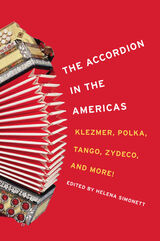
This rich collection considers the accordion and its myriad forms, from the concertina, button accordion, and piano accordion familiar in European and North American music to the exotic-sounding South American bandoneon and the sanfoninha. Capturing the instrument's spread and adaptation to many different cultures in North and South America, contributors illuminate how the accordion factored into power struggles over aesthetic values between elites and working-class people who often were members of immigrant and/or marginalized ethnic communities. Specific histories and cultural contexts discussed include the accordion in Brazil, Argentine tango, accordion traditions in Colombia and the Dominican Republic, cross-border accordion culture between Mexico and Texas, Cajun and Creole identity, working-class culture near Lake Superior, the virtuoso Italian-American and Klezmer accordions, Native American dance music, and American avant-garde.
Contributors are María Susana Azzi, Egberto Bermúdez, Mark DeWitt, Joshua Horowitz, Sydney Hutchinson, Marion Jacobson, James P. Leary, Megwen Loveless, Richard March, Cathy Ragland, Helena Simonett, Jared Snyder, Janet L. Sturman, and Christine F. Zinni.
A troubling portrait of democracy in US state legislatures.
State legislatures hold tremendous authority over key facets of our lives, ranging from healthcare to marriage to immigration policy. In theory, elections create incentives for state legislators to produce good policies. But do they?
Drawing on wide-ranging quantitative and qualitative evidence, Steven Rogers offers the most comprehensive assessment of this question to date, testing different potential mechanisms of accountability. His findings are sobering: almost ninety percent of American voters do not know who their state legislator is; over one-third of incumbent legislators run unchallenged in both primary and general elections; and election outcomes have little relationship with legislators’ own behavior.
Rogers’s analysis of state legislatures highlights the costs of our highly nationalized politics, challenging theories of democratic accountability and providing a troubling picture of democracy in the states.

According to a recent Institute of Medicine report, as many as 98,000 Americans die each year as a result of medical error—a figure higher than deaths from automobile accidents, breast cancer, or AIDS. That astounding number of fatalities does not include the number of those serious mistakes that are grievous and damaging but not fatal. Who can forget the tragic case of 17-year-old Jésica Santillán, who died after receiving a heart-lung transplant with an incompatible blood type? What can be done about this? What should be done? How can patients and their families regain a sense of trust in the hospitals and clinicians that care for them? Where do we even begin the discussion?
Accountability brings the issue to the table in response to the demand for patient safety and increased accountability regarding medical errors. In an interdisciplinary approach, Virginia Sharpe draws together the insights of patients and families who have suffered harm, institutional leaders galvanized to reform by tragic events in their own hospitals, philosophers, historians, and legal theorists. Many errors can be traced to flaws in complex systems of health care delivery, not flaws in individual performance. How then should we structure responsibility for medical mistakes so that justice for the injured can be achieved alongside the collection of information that can improve systems and prevent future error? Bringing together authoritative voices of family members, health care providers, and scholars—from such disciplines as medical history, economics, health policy, law, philosophy, and theology—this book examines how conventional structures of accountability in law and medical structure (structures paradoxically at odds with justice and safety) should be replaced by more ethically informed federal, state, and institutional policies. Accountability calls for public policy that creates not only systems capable of openness concerning safety and error—but policy that also delivers just compensation and honest and humane treatment to those patients and families who have suffered from harmful medical error.
For years, school reform efforts targeted either students in regular education or those with special needs, but not both. As a result of the No Child Left Behind legislation (NCLB) and its focus on accountability, administrators established policies that would integrate the needs of students who previously were served under separate frameworks. Using the NCLB structure as a starting point, Stephanie W. Cawthon’s new book Accountability-Based Reforms: The Impact on Deaf and Hard of Hearing Students discusses key assumptions behind accountability reforms. She specifically examines how elements of these reforms affect students who are deaf or hard of hearing, their teachers, and their families.
Cawthon begins by providing a brief introduction to the deaf education context, offering detailed information on student demographics, settings, and academic outcomes for deaf students. She then outlines the evolution of accountability-based education reforms, following with a chapter on content standards, assessment accommodations, accountability as sanctions, and students with disabilities. The remaining chapters in Accountability-Based Reforms closely examine educational professionals, accountability, and students who are deaf or hard of hearing; school choice policies and parents; and deaf education and measures of success. Each chapter presents an overview of an important component of accountability reform, available research, and how it has been implemented in the United States. These chapters also offer recommendations for future action by educators, parents, researchers, and education policymakers.
This is a big story, told through an ostensibly marginal event: the birth of a class of “merchant clerks” in the United States in the middle of the nineteenth century. The personal trajectory of these young men from farm to metropolis, homestead to boarding house, and, most significantly, from growing things to selling them exemplified the enormous social effort required to domesticate the profit motive and turn it into the practical foundation of civic life. As Zakim reveals in his highly original study, there was nothing natural or preordained about the stunning ascendance of this capitalism and its radical transformation of the relationship between “Man and Mammon.”
A Five Books Best Economics Book of the Year
A Politico Great Weekend Read
“Absolutely compelling.”
—Diane Coyle
“The evolution of modern management is usually associated with good old-fashioned intelligence and ingenuity…But capitalism is not just about the free market; it was also built on the backs of slaves.”
—Forbes
The story of modern management generally looks to the factories of England and New England for its genesis. But after scouring through old accounting books, Caitlin Rosenthal discovered that Southern planter-capitalists practiced an early form of scientific management. They took meticulous notes, carefully recording daily profits and productivity, and subjected their slaves to experiments and incentive strategies comprised of rewards and brutal punishment. Challenging the traditional depiction of slavery as a barrier to innovation, Accounting for Slavery shows how elite planters turned their power over enslaved people into a productivity advantage. The result is a groundbreaking investigation of business practices in Southern and West Indian plantations and an essential contribution to our understanding of slavery’s relationship with capitalism.
“Slavery in the United States was a business. A morally reprehensible—and very profitable business…Rosenthal argues that slaveholders…were using advanced management and accounting techniques long before their northern counterparts. Techniques that are still used by businesses today.”
—Marketplace
“Rosenthal pored over hundreds of account books from U.S. and West Indian plantations…She found that their owners employed advanced accounting and management tools, including depreciation and standardized efficiency metrics.”
—Harvard Business Review
Contemporary popular culture, from books to film to television to music to the deepest corners of the internet, has provoked much criticism, some of it well deserved. Yet, popular culture is culture for many Americans—particularly younger Americans. It is the only kind of cultural experience they seek and the currency in which they trade.
In Acculturated, twenty-three thinkers examine the rituals, the myths, the tropes, the peculiar habits, the practices, and the neuroses of our modern era. Every culture finds a way for people to tell stories about themselves. We rely on these stories to teach us why we do the things we do, to test the limits of our experience, to reaffirm deeply felt truths about human nature, and to teach younger generations about vice and virtue, honor and shame, and a great deal more. A phenomenon like the current crop of reality television shows, for example, with their bevy of “real” housewives, super-size families, and toddler beauty-pageant candidates, seems an unlikely place to find truths about human nature or examples of virtue. And yet, on these shows, and in much else of what passes for popular culture these days, a surprising theme emerges: Move beyond the visual excess and hyperbole, and you will find the makings of classic morality tales.
As the title suggests, readers will find in these pages “A-Culture Rated.” This lively roundtable of “raters” includes renowned cultural critics like Caitlin Flannigan and Chuck Colson and celebrated culture creators like the producers of the hit ABC comedy Modern Family and the host of TLC’s What Not to Wear. Editors Christine Rosen and Naomi Schaefer Riley have tasked these contributors—both the critics and the insiders—with taking a step or two back from the unceasing din of popular culture so that they might better judge its value and its values and help readers think more deeply about the meaning of the narratives with which they are bombarded every waking minute. In doing so, the editors hope to foster a wide-reaching public conversation to help us think more clearly about our culture.
CONTRIBUTORS INCLUDE Judy Bachrach, Megan Basham, Mark Bauerlein, Pia Catton, Chuck Colson, Paul Corrigan, Caitlin Flanagan, Meghan Cox Gurdon, Margo Howard, Kay S. Hymowitz, Jonathan V. Last, Herb London, Stacy London, Rob Long, Megan McArdle, Wilfred M. McClay, Caitrin Nicol, Joe Queenan, Emily Esfahani Smith, Brad Walsh, and Tony Woodlief.
Acheson and Empire offers a compelling reassessment of Dean Acheson's policies toward the former colonial world during his period as secretary of state from 1949 to 1953. John T. McNay argues that Acheson inherited through his own personal history a way of understanding the world that encouraged imperial-style international relationships. This worldview represented a well-developed belief system rooted in his Ulster Protestant heritage that remained consistent throughout his life.
By exploring relationships of the United States with Britain and countries formerly or then controlled by Britain, such as India, Ireland, Iran, and Egypt, McNay shows the significance of Acheson's beliefs. McNay argues that Acheson's support of existing imperial relationships was so steadfast that it often led other nations to perceive that the United States was nothing more than a front for British interests. He believes this approach to foreign policy damaged American relations with emerging countries and misled the British regarding possibilities of an Anglo-American partnership.
Acheson and Empire contends that the widely accepted view of Acheson as a foreign policy realist is misleading and that historians should acknowledge that his affinity for the British Empire went beyond his clothing and mannerisms. McNay maintains that the widely accepted view of Acheson as one of a group of "wise men" who shaped the Cold War world by basing their decisions on cold calculation of American interests should be reconsidered.
Drawing from extensive research in archival sources, including the Truman Library, the National Archives, the Public Record Office in London, and Acheson's personal papers at Yale, Acheson and Empire offers a fresh look at Dean Acheson that runs counter to previous biographies and many histories of the Cold War.
During his years in the U.S. House of Representatives, Skelton became known as a bipartisan negotiator and a champion of the Armed Services. Throughout the decades, he helped steer the nation through its most dangerous challenges, from Communism to terrorism; took a leading role in the reform of the Department of Defense; dedicated himself to fulfilling the interests of his constituents; and eventually rose to become chair of the House Armed Services Committee during such pivotal events as the wars in Iraq and Afghanistan. In addition to detailing Skelton’s political career and its accompanying challenges and triumphs, Achieve the Honorable provides inside glimpses into the lives of political titans like Harry Truman, Richard Nixon, and Bill Clinton. Along the way, we are treated to Skelton’s engaging humor and shrewd insight into twentieth- and twenty-first-century U.S. politics.

Must the sins of America's past poison its hope for the future? Lately the American Left, withdrawing into the ivied halls of academe to rue the nation's shame, has answered yes in both word and deed. In Achieving Our Country, one of America's foremost philosophers challenges this lost generation of the Left to understand the role it might play in the great tradition of democratic intellectual labor that started with writers like Walt Whitman and John Dewey.
How have national pride and American patriotism come to seem an endorsement of atrocities--from slavery to the slaughter of Native Americans, from the rape of ancient forests to the Vietnam War? Achieving Our Country traces the sources of this debilitating mentality of shame in the Left, as well as the harm it does to its proponents and to the country. At the center of this history is the conflict between the Old Left and the New that arose during the Vietnam War era. Richard Rorty describes how the paradoxical victory of the antiwar movement, ushering in the Nixon years, encouraged a disillusioned generation of intellectuals to pursue "High Theory" at the expense of considering the place of ideas in our common life. In this turn to theory, Rorty sees a retreat from the secularism and pragmatism championed by Dewey and Whitman, and he decries the tendency of the heirs of the New Left to theorize about the United States from a distance instead of participating in the civic work of shaping our national future.
In the absence of a vibrant, active Left, the views of intellectuals on the American Right have come to dominate the public sphere. This galvanizing book, adapted from Rorty's Massey Lectures of 1997, takes the first step toward redressing the imbalance in American cultural life by rallying those on the Left to the civic engagement and inspiration needed for "achieving our country."
Acid Hype offers the untold tale of LSD's wild journey from Brylcreem and Ivory soap to incense and peppermints. As Stephen Siff shows, the early attention lavished on the drug by the news media glorified its use in treatments for mental illness but also its status as a mystical--yet legitimate--gateway to exploring the unconscious mind. Siff's history takes readers to the center of how popular media hyped psychedelic drugs in a constantly shifting legal and social environment, producing an intricate relationship between drugs and media experience that came to define contemporary pop culture. It also traces how the breathless coverage of LSD gave way to a textbook moral panic, transforming yesterday's refined seeker of truths into an acid casualty splayed out beyond the fringe of polite society.

“Covers a wide range of issues with balance and clarity. . . . I can recommend the book highly as an intermediate-level source of information and insight into the international aspects of the acid rain problem.”—J. F. Hornig, Ambio
“A masterful analysis of the policy problems raised by acid rain in the U.S. and Canada . . . detailed, objective, understandable, and compelling. Weaving substantive and institutional factors into their analysis, the authors skillfully portray the controversy’s multifaceted nature.”—Tracy Dobson, American Journal of International Law
“[A] thorough, well-balanced analysis . . . [that] could serve as a model for analysis of complex policy issues.”—Choice
“Reveals the interface between science, technology, and public policy as being the co-extensive network it really is. . . . Timely and welcomed.”—John de la Mothe, Canadian Public Policy/Analyse de Politiques

A vivid analysis of the history and revival of clinical psychedelic science
Psychedelic drugs are making a comeback. In the mid-twentieth century, scientists actively studied the potential of drugs like LSD and psilocybin for treating mental health problems. After a decades-long hiatus, researchers are once again testing how effective these drugs are in relieving symptoms for a wide variety of psychiatric conditions, from depression and obsessive–compulsive disorder to posttraumatic stress disorder and substance addiction. In Acid Revival, Danielle Giffort examines how this new generation of researchers and their allies are working to rehabilitate psychedelic drugs and to usher in a new era of psychedelic medicine.
As this team of researchers and mental health professionals revive the field of psychedelic science, they are haunted by the past and by one person in particular: psychedelic evangelist Timothy Leary. Drawing on extensive archival research and interviews with people working on scientific psychedelia, Giffort shows how today’s researchers tell stories about Leary as an “impure” scientist and perform his antithesis to address a series of lingering dilemmas that threaten to rupture their budding legitimacy. Acid Revival presents new information about the so-called psychedelic renaissance and highlights the cultural work involved with the reassembly of dormant areas of medical science.
This colorful and accessible history of the rise, fall, and reemergence of psychedelic medicine is infused with intriguing narratives and personalities—a story for popular science aficionados as well as for scholars of the history of science and medicine.
Based on original archival research in Buenos Aires, Havana, Paris, and the United States, the book develops a literary media theory that understands sound as a transmedial phenomenon and radio as a transnational medium. Analyzing the construction of new social and political relations in the wake of the United States’ 1930s Good Neighbor Policy, Acoustic Properties challenges standard narratives of hemispheric influence through new readings of Richard Wright’s cinematic work in Argentina, Severo Sarduy’s radio plays in France, and novels by John Dos Passos, Manuel Puig, Raymond Chandler, and Carson McCullers. Alongside these writers, the book also explores Che Guevara and Fidel Castro’s Radio Rebelde, FDR’s fireside chats, Félix Caignet’s invention of the radionovela in Cuba, Evita Perón’s populist melodramas in Argentina, Orson Welles’s experimental New Deal radio, Cuban and U.S. “radio wars,” and the 1960s African American activist Robert F. Williams’s proto–black power Radio Free Dixie.
From the doldrums of the Great Depression to the tumult of the Cuban Revolution, Acoustic Properties illuminates how novelists in the radio age converted writing into a practice of listening, transforming realism as they struggled to channel and shape popular power.
Using the common thread of the same train trip across the American landscape, she weaves together the two stories—her great grandparents, Charles and Fannie Crosby’s leisurely Victorian tourist trip described in both their diaries—and her own trip. Mary Ann’s adventurous and determined voice fills the pages with entertaining encounters on the train, escapades on her folding bike, and her reflections on her birth country and her own life story.
During her journey, she discovers the stories of her 1950s childhood reflect a “Wild West” at odds with the West her great-grandparents record in their diaries, leading her to uncover more of the real and meatier history of the American West—going through conquest, rapid settlement, and economic development. As Mary Ann fulfills her quest to understand better why glorified myths were created to describe the Wild West of her childhood, and reflects on the pitfalls of what “progress” is doing to the environment, she is left with a much bigger question: Can we transform our way of doing things quickly enough to stop our much-loved West becoming an uninhabitable desert?

Biking from Oregon to Maine is no small feat, especially for two newly retired women who carry everything they need for three months, powered only by the strength of their legs and a desire for adventure. Alice Honeywell and Bobbi Montgomery invite readers to follow their ride by bicycle across the United States, as they face scorching sun, driving rain, buffeting winds, equipment failures, killer hills, wild fires, and even a plague of grasshoppers.
As Alice and Bobbi pedal along their 3,600-mile journey, they test and deepen their friendship, defy their aches and pains, experience the vast and varied beauties of their country, and discover the challenges and satisfaction of a scaled-down lifestyle. And, they encounter unfailing generosity from people they meet—from the prayers of a North Dakota woman for their safekeeping, to the offer of a house in Michigan, to invitations for dinner and a place to sleep at stops all along the way. And there are incidents to laugh over, too, such as the bewildered woman who asked them, “Well, but where do you pack your dresses?”
Ride along with Alice and Bobbi as they embrace retirement with gusto and live their dream.
Winner (Gold Medalist), Travel Essays, Foreword Magazine’s Books of the Year
READERS
Browse our collection.
PUBLISHERS
See BiblioVault's publisher services.
STUDENT SERVICES
Files for college accessibility offices.
RECENTLY PUBLISHED


UChicago Accessibility Resources
home | accessibility | search | about | contact us
BiblioVault ® 2001 - 2024
The University of Chicago Press