Results by title
3388 books match the query 'Fiction' and 126 start with b
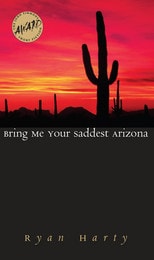
Bring Me Your Saddest Arizona
Ryan Harty
University of Iowa Press, 2003
The vast, unsettling landscape of the American Southwest is as much a character in Ryan Harty's debut collection, Bring Me Your Saddest Arizona, as the men and women who inhabit its award-winning stories. In eight vivid tales of real life in the west, Harty reminds us that life's greatest challenge may be to find the fine balance between desire and obligation.
A high school football player must make a choice between family and friends when his older brother commits an act of senseless violence. A middle-aged man must fly to Las Vegas to settle his dead sister's estate, only to discover that he must first confront his guilt over his sister's death. A young teacher tries to help a homeless girl, but, as their lives intertwine, he begins to understand that his generosity is motivated by his own relenting sense of lonliness. Well-intentioned but ultimately human, the characters in these stories often fall short of achieving grace. But the possibility of redemption, like the Sonoran Desert at the edge of Bring Me Your Saddest Arizona's suburban landscapes, is never far off. Harty's characters are as complicated as the people we know, and his vision of life in the west is as hopeful as it is strikingly real.
Bringing the Devil to His Knees
The Craft of Fiction and the Writing LifeCharles Baxter and Peter Turchi, Editors
University of Michigan Press, 2001
Each of the contributors is a current or former lecturer at the Warren Wilson College MFA Program for Writers, one of the most highly respected writing programs in the country. Included are essays by Charles Baxter, Robert Boswell, Karen Brennan, Judith Grossman, Ehud Havazelet, C. J. Hribal, Margot Livesey, Michael Martone, Kevin McIlvoy, Pablo Medina, Antonya Nelson, Susan Neville, Richard Russo, Steven Schwartz, Jim Shepard, Joan Silber, Debra Spark, Peter Turchi, and Chuck Wachtel.
Rich with masterful examples and personal anecdotes, these imaginative essays provide hard-earned insight into a writer's work. The book will interest not only those seeking inspiration and guidance to become stronger writers, but also readers of contemporary literary fiction, who will find a number of surprising and original approaches to the writer's work by award-winning practitioners adept at teaching others what they know.
Charles Baxter is author of several novels, including The Feast of Love, Shadow Play, and First Light. and collections of stories including Believers and A Relative Stranger. He teaches writing at the University of Michigan. Peter Turchi is author of the novel The Girls Next Door, a collection of stories, Magician, and a book of non-fiction, The Pirate Prince. He is Director of the MFA Program for Writers, Warren Wilson College.
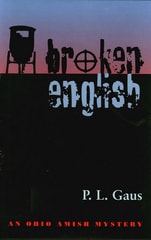
Broken English
An Amish Country MysteryP. L. Gaus
Ohio University Press, 2000
Broken English is a tale of honor, deception, and revenge, one in which circumstances and the search for justice test the mettle of the closest of friends and reveal the desperate measures of the strongest of foes. Following on the critical and popular success of P. L. Gaus’ acclaimed Amish mystery series, this new edition of Broken English includes an exclusive interview with the author, discussion questions for reading groups, and a detailed map and driving guide to Holmes County, Ohio, with everything one needs to visit the iconic scenes depicted in the story.
The peaceful town of Millersburg, Ohio, in the heart of Amish country, is rocked by the vicious murder of a woman at the hands of an ex-convict. When a local reporter covering the story turns up dead, while the convict is already behind bars, suspicion falls on David Hawkins, the first victim’s father. With Hawkins nowhere to be found among the protective Amish community that had taken him in as one of its own, Professor Michael Branden, Sheriff Bruce Robertson, and Pastor Cal Troyer set out to uncover the elusive truth in this otherwise quiet corner of the world.
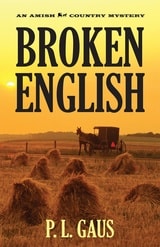
Broken English
An Amish Country MysteryP. L. Gaus
Ohio University Press, 2000
Broken English is a tale of honor, deception, and revenge, one in which circumstances and the search for justice test the mettle of the closest of friends and reveal the desperate measures of the strongest of foes. Following on the critical and popular success of P. L. Gaus’ acclaimed Amish mystery series, this new edition of Broken English includes an exclusive interview with the author, discussion questions for reading groups, and a detailed map and driving guide to Holmes County, Ohio, with everything one needs to visit the iconic scenes depicted in the story.
The peaceful town of Millersburg, Ohio, in the heart of Amish country, is rocked by the vicious murder of a woman at the hands of an ex-convict. When a local reporter covering the story turns up dead, while the convict is already behind bars, suspicion falls on David Hawkins, the first victim’s father. With Hawkins nowhere to be found among the protective Amish community that had taken him in as one of its own, Professor Michael Branden, Sheriff Bruce Robertson, and Pastor Cal Troyer set out to uncover the elusive truth in this otherwise quiet corner of the world.
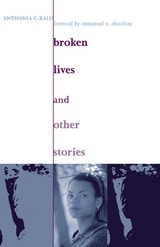
Broken Lives and Other Stories
Ris Af#79Anthonia C. Kalu
Ohio University Press, 2003
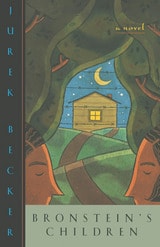
Bronstein's Children
Jurek Becker
University of Chicago Press, 1999
"[A] chilly, disquieting novel about historical slippage; about the seemingly inevitable decline of horror into a vague and generic recollection. The East German writer has devised something between story and allegory to evoke the cold generational millennium that separates a father, with his concentration-camp memories, from a son, adrift in a society with no memories whatsoever."—Richard Eder, Los Angeles Times Book Review
"Mr. Becker, writing simply and clearly in an unstrained narrative, speaks with the voice of knowledge, and we do well to listen to him."—Eva Figes, New York Times Book Review
Jurek Becker (1937-1998) is the author of Jacob the Liar, Sleepless Days, The Boxer, and Amanda Herzlos.
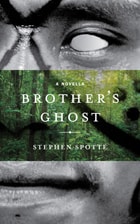
Brother's Ghost
A NovellaStephen Spotte
Northwestern University Press, 2012
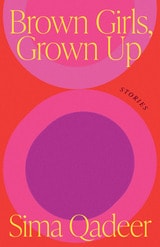
Brown Girls, Grown Up
StoriesSima Qadeer
Northwestern University Press, 2026
A poignant and graceful story collection about the clash and harmony of finding one’s place in an adult world that feels “other”
Brown Girls, Grown Up shines a light on the nuances of modern womanhood with grace, honesty, and charm. The stories in Qadeer’s debut collection delve into the subtleties and blatant struggles of navigating shifting identities as one matures, into the joys and challenges of intimacy and aging, and into the changing tides of motherhood. Middle-aged Amira takes radical action after meeting a new friend who lulls her into feeling safe and accepted; Hanna enrolls her biracial children in a local Sunday school after worrying they have no real connection to her Muslim heritage; betrayals and secrets come to light when a group of college friends reunite to take stock and compare achievements. Filled with humor and heartache, this collection offers a fresh and profoundly relatable perspective on the lifelong search for belonging in a world shaped by tradition, modernity, and individual ambition.
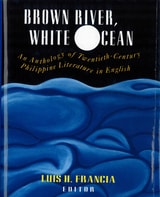
Brown River, White Ocean
An Anthology of Twentieth-Century Philippine Literature in EnglishFrancia, Luis H
Rutgers University Press, 1993
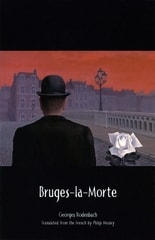
Bruges-la-Morte
Georges Rodenbach
University of Scranton Press, 2007
With penetrating psychological force and richly metaphorical language, Bruges-la-Morte draws a haunting picture of love, grief, and murder in what has become a “dead city,” severely Catholic and once proud. The source of the famous opera Die tote Stadt and endless inspiration for Belgian and French artists, this novella will enthrall both the imaginations and heartstrings of an Anglophile audience.
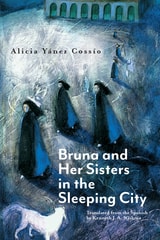
Bruna and Her Sisters in the Sleeping City
Alicia Yánez Cossío, Translated from the Spanish by Kenneth J. A. Wishnia
Northwestern University Press, 1999
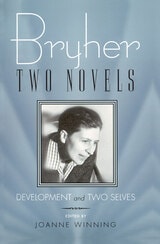
Bryher
Two Novels: Development And Two SelvesUniversity of Wisconsin Press, 2000
Bryher (born Annie Winifred Ellerman) is perhaps best known today as the lifelong partner of the poet H.D. She was, however, a central figure in modernist and avant-garde cultural experimentation in the early twentieth century; a prolific producer of poetry, novels, autobiography, and criticism; and an intimate and patron of such modernist artists as Gertrude Stein, Marianne Moore, and Dorothy Richardson. Bryher’s own path-breaking writing has remained largely neglected, long out of print, and inaccessible to those interested in her oeuvre. Now, for the first time since their original publication in the early 1920s, two of Bryher's pioneering works of fictionalized autobiography, titled Development and Two Selves, are reprinted in one volume for a new audience of readers, scholars, and critics.
Blending poetry, prose, and autobiographical details, Development and Two Selves together constitute a compelling bildungsroman that is among the first ever to follow a young woman's process of coming out. Through the fictionalized character Nancy, the novels trace Bryher’s life through her childhood and young adulthood, giving the reader an account of the development of a unique lesbian, feminist, and modernist consciousness. Development and Two Selves recover significant work by one of the first experimenters of the modernist movement and are a welcome reintroduction of the enigmatic Bryher.
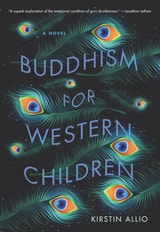
Buddhism for Western Children
Kirstin Allio
University of Iowa Press, 2018
In search of community and transcendence, ten-year-old Daniel’s family is swept into the thrall of a potent and manipulative guru. To his followers, Avadhoot Master King Ivanovich is a living god, a charismatic leader who may reveal enlightenment as he mesmerizes, and alchemizes, Eastern and Western spiritual traditions.
Daniel’s family plunges into a world with different rules and rhythms—and with no apparent exit. They join other devotees in shunning the outside world, and fall under the absolutist authority of the guru and his lieutenants. Daniel bears witness to the relentless competition for the guru’s favor, even as he begins to recognize the perversion of his spirituality. Soon, Daniel himself is chosen to play a role. As tensions simmer and roil, darkness intrudes. Devotees overstep, placing even the children in jeopardy. Daniel struggles with conflicting desires to resist and to belong, until finally he must decide who to save and who to abandon.
With spiraling, spellbinding language, Allio reveals a cast of vivid, often darkly funny characters, and propels us toward a shocking climax where Daniel’s story cracks open like a kaleidoscope, revealing the costs of submitting to a tyrant and the shimmering resilience of the human spirit.
Buffalo Boy and Geronimo
James Janko
Northwestern University Press, 2006
The unique vision in Janko's Buffalo Boy and Geronimo is the depiction of the Vietnam War as seen through the lens of a wounded but resilient nature, as a Confucian society still rooted in the earth and the unbroken fabric of ancestors is pitted against a desensitized military high-tech culture. As critic Paul Pines noted, "The forces here that seek to conquer the landscape are those, which by implication, shatter the harmonious fabric of the natural world to create a pathology that is far deeper than the political stakes indicate—one that indeed may determine the future of the entire ecosphere."
The two heroes of the book, Nguyen Luu Mong, the Vietnamese buffalo boy, and Antonio Lucio, the US Chicano medic (Geronimo), both have a deep respect for the natural world, and it is through their eyes that we witness the devastation of the natural world of which they are a part.
Geronimo's unit is engaged in search and destroy missions, and he becomes appalled by the pain and death inflicted on animals and humans. Eventually, he deserts and finds his way back into the jungle. Meanwhile, the young adolescent Mong loses his beloved buffalo in an early firefight and eventually sees his entire village destroyed, the survivors relocating deeper into Viet Cong territory.
Burning Daylight
Jack London
University of Alaska Press, 2019
The story features one of London’s most engaging larger-than-life protagonists, Elam Harnish, a prospector with John Henry–like strength and a thirst for gold-plated wealth. Harnish, the “Burning Daylight” of the title, eventually strikes it rich through his talent in the mines—and at the poker table. But he ultimately makes the biggest gamble of his life when he decides to trade it all for the golden-haired love of his life.
While the novel moves from Alaska to the Sonoma Valley and later into the wilds of Wall Street, it’s the vivid descriptions of the Gold Rush–era Klondike that shine. London takes readers on journeys deep into mines and across the frozen North via sled dog. He captures the competitive spirit of the time and the endless hope that the big score is just one dig away. London weaves in progressive views on sustainability and land use, and also timeless lessons about the real riches in life.
This new edition presents London’s text in full and features a new afterword from University of Alaska Fairbanks professor Eric Heyne. Heyne situates the novel within London’s life and writings and looks at some of the sources that may have inspired him. The re-emergence of Burning Daylight will allow London’s fans to fill in an important spot on their bookshelf and rediscover a long–lost work.

Burning Valley
Phillip Bonosky
University of Illinois Press, 1953
But Crime Does Punish
Ján Johanides
Karolinum Press, 2022
“So, as you see, I am familiar with the case. However, we can’t discuss it unless you learn more about some other court cases, so that you can compare your father’s trial with other, more baffling cases, and see it in the context of the madness that reigned at the time.”
Ján Johanides’ riveting Slovak novel immediately thrusts you into the midst of a bewildering second-person dialogue, bestowing the reader with the role of a silent partner in a one-sided conversation with a mysterious archivist. As the story unfurls piece by piece, it becomes clear that the archivist, who can’t seem to stay on topic, has both a tragic history and the key to unlocking your family’s darkest secret, a secret that may or may not involve the Czechoslovak secret police, American and Soviet intelligence, Israeli politics, and a tire full of dollars.
Set after the fall of the Soviet Union and the dissolution of Czechoslovakia, But Crimes Do Punish is awash with paranoia, revealing how the madness of the Communist era continues to bleed into the instability of the present. Written in 1995, this haunting novel—the first work of Slovak fiction published by Karolinum Press—evokes the spirit of John le Carré and the style of Carlos Fuentes while illuminating issues that still plague post-Communist Europe.
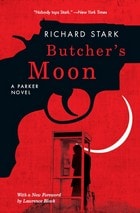
Butcher's Moon
A Parker NovelRichard Stark
University of Chicago Press, 2011
The biggest, baddest novel in the entire Parker series, Butcher's Moon finds Parker taking on a whole mobbed-up town--and you can guess who comes out on top.
Richard Stark's Parker novels are the hardest of hard-boiled, classic crime novels where the heists are huge, the body counts are high, and the bad guys usually win.
The Parker novels have been a huge influence on countless writers and filmmakers, including Quentin Tarantino, Stephen King, George Pelecanos, Colson Whitehead, Lucy Sante, John Banville, and many more. Their stripped-down language and hard-as-nails amorality create an unforgettable world where the next score could be the big one, but your next mistake could also be your last. There's nothing else like them.
The sixteenth Parker novel, Butcher’s Moon is more than twice as long as most of the master heister’s adventures, and absolutely jammed with the action, violence, and nerve-jangling tension readers have come to expect. Back in the corrupt town where he lost his money, and nearly his life, in Slayground, Parker assembles a stunning cast of characters from throughout his career for one gigantic, blowout job: starting—and finishing—a gang war. It feels like the Parker novel to end all Parker novels, and for nearly twenty-five years that’s what it was. After its publication in 1974, Donald Westlake said, “Richard Stark proved to me that he had a life of his own by simply disappearing. He was gone.”
Featuring a new introduction by Westlake’s close friend and writing partner, Lawrence Block, this classic Parker adventure deserves a place of honor on any crime fan’s bookshelf. More than thirty-five years later, Butcher’s Moon still packs a punch: keep your calendar clear when you pick it up, because once you open it you won’t want to do anything but read until the last shot is fired.
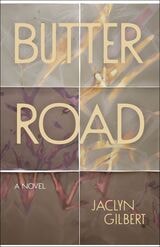
Butter Road
A NovelJaclyn Gilbert
Acre Books, 2026
A searing novel about a community irrevocably transformed by gun violence.
In 2006, a gunman entered a one-room Amish schoolhouse in Lancaster County, Pennsylvania, taking the students hostage and shooting ten girls before turning his weapon on himself. Set twelve years after this event, largely in the village of Nickel Mines, Butter Road explores the long-reaching ramifications of tragedy through the imagined lives of three women: Emma Walsh, an eighteen-year-old survivor of the shooting; her mother, Ruth, who lost her eldest daughter to the violence; and Sara Caldwell, an “English” outsider and wife of a doctor researching genetic disorders in the Amish population.
At the novel's outset, Sara enlists young Emma for housework and gardening to help the Walshes alleviate the debt they’ve accumulated caring for Emma’s disabled brother, who has the rare condition Sara’s husband is studying. Over the course of several months, Sara and Emma form a bond, and as Emma explores Sara's library, she begins writing fragments of memory on the backs of old feed calendars—a process that leads her to grapple with the devastating deaths of her sister and friends, and the insularity of Amish forgiveness. The more Emma writes, the more she questions her upbringing and ingrained beliefs, ultimately seeing her relationship to Isaac Ames, the man she is destined to marry, in a new light. The story culminates with the characters making breathtaking, self-searching decisions that alter the lives of others as well as their own.
Emotionally acute and lyrically spare, Butter Road centers on living with what we can’t control, on understanding trauma and collective grief, and on following one’s heart.
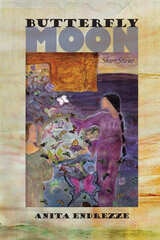
Butterfly Moon
Short StoriesAnita Endrezze
University of Arizona Press, 2012
Anita Endrezze has deep memories. Her father was a Yaqui Indian. Her mother traced her heritage to Slovenia, Germany, Romania, and Italy. And her stories seem to bubble up from this ancestral cauldron. Butterfly Moon is a collection of short stories based on folk tales from around the world. But its stories are set in the contemporary, everyday world. Or are they?
Endrezze tells these stories in a distinctive and poetic voice. Fantasy often intrudes into reality. Alternate “realities” and shifting perspectives lead us to question our own perceptions. Endrezze is especially interested in how humans hide feelings or repress thoughts by developing shadow selves. In “Raven’s Moon,” she introduces the shadow concept with a Black Moon, the “unseen reflection of the known.” (Of course the story is about a witch couple who seem very much in love.) The title character in “The Wife Who Lived on Wind” is an ogress who lives in a world somewhat similar to our own, but only somewhat. “The Vampire and the Moth Woman” reveals shape-shifters living among us.
Not surprisingly, Trickster appears in these tales. As in Native American stories, Trickster might be a fox or a coyote or a raven or a human—or something in between. “White Butterflies” and “Where the Bones Are” both deal with devastating diseases that swept through Yaqui country in the 1530s. Underneath their surfaces are old Yaqui folktales that feature the greatest Trickster of all: Death (and his little brother Fate).
Enjoyably disturbing, these stories linger—deep in our memory.

Butterfly sleep
Kim Kyung Ju
Tupelo Press, 2019

By Fire
Writings on the Arab SpringTahar Ben Jelloun, translated and with an introduction by Rita Nezami
Northwestern University Press, 2016
Tahar Ben Jelloun’s By Fire, the first fictional account published on the Arab Spring, reimagines the true-life self-immolation of Mohamed Bouazizi in Tunisia, an event that has been credited with setting off the Tunisian revolt. The novella depicts the days leading up to Bouazizi’s self-immolation. Ben Jelloun’s deliberate ambiguity about the location of the story, set in an unnamed Islamic country, allows the reader to imagine the experiences and frustrations of other young men who have endured physical violence and persecution in places beyond Tunisia. The tale begins and ends in fire, and the imagery of burning frames the political accounts in The Spark, Ben Jelloun’s nonfiction writings on the Tunisian events that provide insight into the despotic regimes that drove Bouazizi to such despair. Rita S. Nezami’s elegant translations and critical introduction provide the reader with multiple strategies for approaching these potent texts.
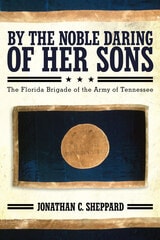
By the Noble Daring of Her Sons
The Florida Brigade of the Army of TennesseeJonathan C. Sheppard
University of Alabama Press, 2012
A fascinating account of Floridians who served in the Confederate army and the changes to Florida society and politics that resulted from the state's Confederate experience
Until recently Florida’s Confederate soldiers have received scant attention. This volume explores the story of Florida soldiers going to war, families left behind, a white population fighting to maintain a society built on slavery, and a state torn by political and regional strife.
Before the war Florida’s inhabitants engaged in bitter political rivalries. Sheppard argues that prior to secession Florida citizens maintained regional loyalties rather than considering themselves “Floridians.” He argues that service in Confederate armies eased tensions between political factions and fostered solidarity among white Floridians. In this illuminated account, Sheppard also addresses the practices of prisoner parole and exchange, unit consolidation and its effects on morale and unit identity, politics within the Army of Tennessee, and conscription and desertion in the Southern armies. These issues come together to demonstrate the connection between the front lines and the home front.
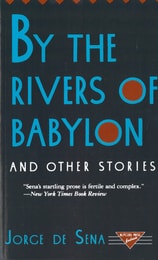
By the Rivers of Babylon and Other Stories
Patai, Daphne
Rutgers University Press, 1991
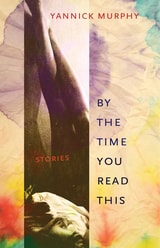
By the Time You Read This
StoriesYannick Murphy
University of Alabama Press, 2021
WINNER OF FC2’s CATHERINE DOCTOROW INNOVATIVE FICTION PRIZE
A gathering of luminescent stories that illustrates how fraught and contingent the simplest of lives can be, and the often unexpected means available to each of us for our own salvation
The truths revealed and the lives upended in the 13 stories that make up Yannick Murphy’s By the Time You Read This are at once singularly foreign and uncannily familiar. A wife pens a series of suicide notes to her family that verge on the comic, hovering between the tyrannical and the absurd. A mother obsesses over what her child eats. A young girl left with caretakers in New York draws on her potent imagination with consequences in real life that are both liberating and disastrous. In a college application essay a young woman finally begins to make sense of the troubling vicissitudes of her existence. A young French girl departs for America with her reprehensible beau to find she’s as much a stranger to herself abroad as she was at home. As with her previous novels and story collections, Murphy’s keen rendering of these disparate, complex lives illuminate in ways both quiet and startling our capacity for deliverance and devastation through daring acts of self-invention.

brutt, or The Sighing Gardens
Friederike Mayrocker
Northwestern University Press, 2007
Mayröcker is known for crossing the boundaries of literary forms and in her prose work she creates a hypnotic, slurred narrative stream that is formally seamless while simultaneously overstepping all the bounds of grammar and style. She is always pushing to expose the limits of language and explore its experimental potential, seeking a re-ordering of the world through the re-ordering of words. Her multilayered texts are reminiscent of the traditions of Surrealism and Dadaism and display influences from the works of Beckett, Hölderlin, Freud, and Barthes. Yet, much of Mayrocker’s writing simply has no corollary and the experience of reading Roslyn Theobald’s brilliant translation grants the English-speaking audience an unforgettable encounter with this completely original work.