
 A SCHOLARLY BOOK REPOSITORY

Bill Whitehead Award for Lifetime Literary Achievement, Publishing Triangle
“Told in a series of revealing vignettes and poems, González’s Autobiography of my Hungers turns moments of need and want into revelations of truth and self-awareness, creating the portrait of an artist that is complex if not entirely complete.”—El Paso Times
“Through his provocative vignettes, González communicates a lifetime of struggle for affirmation and self-acceptance.”—Make/Shift
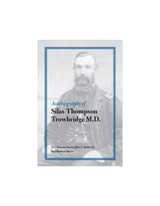
Autobiography of Silas Thompson Trowbridge M.D. is a remarkable account of nineteenth-century medicine, politics, and personal life that recovers the captivating experiences of a Civil War–era regimental surgeon who was also a president of the Illinois State Medical Society and a United States consul in Mexico. First published in 1872 by Trowbridge’s family and even printed on a family-owned press, only a handful of copies of the initial publication survive. In this first paperback edition, Trowbridge’s memoirs are reprinted as they originally appeared.
Indiana-born Trowbridge moved to Illinois in his early twenties. A teacher by trade, he continued that career while he began the study of medicine, eventually starting a medical practice near New Castle, which he later moved to Decatur. Though respected by the community, Trowbridge lacked an authentic medical degree, so he enrolled in a four-month course of medical lectures at Rush Medical College in Chicago. Autobiography describes the atmosphere of the medical school and delineates Trowbridge’s opinions on the lack of quality control in medical colleges of the day.
Although three years of study and two annual terms of sixteen weeks were the actual requirements for the degree, Trowbridge was allowed to graduate after a single course of lectures and completion of a twenty-page thesis due to his previous experience. He then married a young widow and returned to Decatur, where he began a partnership with two local physicians and inaugurated a county medical society. In addition to practicing medicine, he was known and respected for regulating it, too, having supported legislation that would legalize dissection and prohibit incompetent persons from practicing medicine.
In 1861, Trowbridge began service as a surgeon of the 8th Illinois Volunteer Infantry commanded by Colonel Richard J. Oglesby. Autobiography describes his experiences beginning in Cairo, Illinois, where the infantry was involved in several expeditions and where Trowbridge made his “debut at the operating table.” Revealing a litany of surgical duties, replete with gruesome details, these war-time recollections provide a unique perspective on medical practices of the day. Likewise, his commentaries on political issues and his descriptions of combat serve to correct some of the early written histories of the war’s great battles.
After receiving an honorable discharge in 1864, Trowbridge returned to Decatur to resume his partnership with Dr. W. J. Chenoweth and devote himself to surgery. His reminiscences recount several difficult surgeries, his efforts to reorganize the county medical society (which had collapsed during the war), and his communications to the Illinois legislature to set higher qualifications for practicing physicians. He was later elected president of the Illinois State Medical Society and appointed by President Grant United States Consul to Vera Cruz on the eastern coast of Mexico, where he studied and challenged the treatment of yellow fever. The autobiography ends in 1874 with a six-day family vacation and the marriage of his daughter to a merchant of Vera Cruz.

A bold challenge to established scholarship, Autochthonomies ranges from Africa to Europe and the Americas to provide powerful new tools for charting the transnational interactions between African cultural producers and sites.
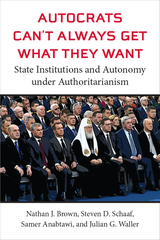
In Autocrats Can’t Always Get What They Want, the authors find that when state bodies form strong institutional patterns and forge links with key allies both inside the state and outside of it, they can define interests and missions that are different from those at the top of the regime. By focusing on three such structures (parliaments, constitutional courts, and official religious institutions), the book shows that the degree of autonomy realized by a particular part of the state rests on how thoroughly it is institutionalized and how strong its links are with constituencies. Instead of viewing authoritarian governance as something that reduces politics to rulers’ whims and opposition movements, the authors show how it operates—and how much what we call “authoritarianism” varies.
In his second collection of poetry, Reginald Harris traverses real and imagined landscapes, searching for answers to the question “What are you?” From Baltimore to Havana, Atlantic City to Alabama—and from the broad memories of childhood to the very specific moment of Marvin Gaye singing at the 1983 NBA All-Star Game shortly before his death—this is a travel diary of internal and external journeys exploring issues of race and sexuality. The poet traveler falls into and out of love and lust, sometimes coupled, sometimes alone. Autogeography tracks how who you are changes depending on where you are; how where you are and where you’ve been determine who you are and where you might be headed.
Sadock's principal innovation is the postulation of a uniform set of interface conditions that require the several orthogonal representations of a single natural language expression to match up in certain ways. Through a detailed application of his theory to the twin morphosyntactic problems of cliticization and incorporation, Sadock shows that very straightforward accounts are made possible by the nonderivational model. He demonstrates the empirical success of these accounts by examining more than two dozen morphosyntactic problems in almost as many languages.
Autolexical Syntax will be of interest to those in the fields of theoretical grammar, particularly concerned with the problems of morphology and syntax, as well as philosophers of language, logicians, lexicographers, psychologists of language, and computer scientists.

A critical history of the recurring idea that technology will free us from work and bring about a truly democratic society.
In popular thought, ancient Athens endures as a place ahead of its time—the birthplace of democracy, a cultural center, and a model toward which modern societies should strive. In Automated Athens, Michele Kennerly examines the many and frequent appeals to this nostalgic vision of the ancient city-state throughout the early age of computerized automation. In the mid-twentieth century, people hoped that automation would free us from mindless, dehumanizing work so that we could attend to creative and communal pursuits. Proponents appealed to ancient Athens, saying automated systems and machines would stand in for the craftsmen, enslaved people, and subordinated women who performed the undesirable work that enabled that city-state’s flourishing. Automated Athens scrutinizes this appeal as it moves chronologically into present debates about the promise of automation and AI. For Kennerly, our inability to settle debates about where accelerating automation may take us, especially politically, reveals a deeper cultural indecisiveness about how to live well and live well together.
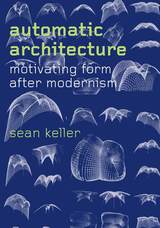
The quixotic attempts to formulate such design processes extended modernist principles and tried to draw architecture closer to mathematics and the sciences. By focusing on design methods, and by examining evidence at a range of scales—from institutions to individual buildings—Automatic Architecture offers an alternative to narratives of this period that have presented postmodernism as a question of style, as the methods and techniques traced here have been more deeply consequential than the many stylistic shifts of the past half century. Sean Keller closes the book with an analysis of the contemporary condition, suggesting future paths for architectural practice that work through, but also beyond, the merely automatic.
Automatic Religion explores an unlikely series of episodes from the end of the nineteenth century, when crucial ideas related to automatism and, in a different realm, the study of religion were both being born. Paul Christopher Johnson draws on years of archival and ethnographic research in Brazil and France to explore the crucial boundaries being drawn at the time between humans, “nearhumans,” and automata. As agency came to take on a more central place in the philosophical, moral, and legal traditions of the West, certain classes of people were excluded as less-than-human. Tracking the circulation of ideas across the Atlantic, Johnson tests those boundaries, revealing how they were constructed on largely gendered and racial foundations. In the process, he reanimates one of the most mysterious and yet foundational questions in trans-Atlantic thought: what is agency?
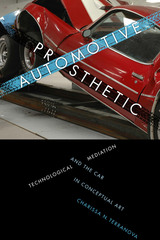
In the twenty-first century, we are continually confronted with the existential side of technology—the relationships between identity and the mechanizations that have become extensions of the self. Focusing on one of humanity’s most ubiquitous machines, Automotive Prosthetic: Technological Mediation and the Car in Conceptual Art combines critical theory and new media theory to form the first philosophical analysis of the car within works of conceptual art. These works are broadly defined to encompass a wide range of creative expressions, particularly in car-based conceptual art by both older, established artists and younger, emerging artists, including Ed Ruscha, Martha Rosler, Richard Prince, Sylvie Fleury, Yael Bartana, Jeremy Deller, and Jonathan Schipper.
At its core, the book offers an alternative formation of conceptual art understood according to technology, the body moving through space, and what art historian, curator, and artist Jack Burnham calls “relations.” This thought-provoking study illuminates the ways in which the automobile becomes a naturalized extension of the human body, incarnating new forms of “car art” and spurring a technological reframing of conceptual art. Steeped in a sophisticated take on the image and semiotics of the car, the chapters probe the politics of materialism as well as high/low debates about taste, culture, and art. The result is a highly innovative approach to contemporary intersections of art and technology.

Autonomy is a vital concept in much of modern theory, defining the Subject as capable of self-governance. Democratic theory relies on the concept of autonomy to provide justification for participatory government and the normative goal of democratic governance, which is to protect the ability of the individual to self-govern.
Offering the first examination of the concept of autonomy from a postfoundationalist perspective, The Autonomous Animal analyzes how the ideal of self-governance has shaped everyday life. Claire E. Rasmussen begins by considering the academic terrain of autonomy, then focusing on specific examples of political behavior that allow her to interrogate these theories. She demonstrates how the adolescent—a not-yet-autonomous subject—highlights how the ideal of self-governance generates practices intended to cultivate autonomy by forming the individual’s relationship to his or her body. She points up how the war on drugs rests on the perception that drug addicts are the antithesis of autonomy and thus must be regulated for their own good. Showing that the animal rights movement may challenge the distinction between human and animal, Rasmussen also examines the place of the endurance athlete in fitness culture, where self-management of the body is the exemplar of autonomous subjectivity.
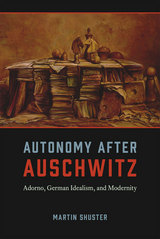
Shuster uncovers dangers in the notion of autonomy as it was originally conceived by Kant. Putting Adorno into dialogue with a range of European philosophers, notably Kant, Hegel, Horkheimer, and Habermas—as well as with a variety of contemporary Anglo-American thinkers such as Richard Rorty, Stanley Cavell, John McDowell, and Robert Pippin—he illuminates Adorno’s important revisions to this fraught concept and how his different understanding of autonomous agency, fully articulated, might open up new and positive social and political possibilities. Altogether, Autonomy after Auschwitz is a meditation on modern evil and human agency, one that demonstrates the tremendous ethical stakes at the heart of philosophy.
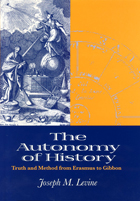
Levine's first three essays discuss Thomas More's preoccupation with the distinction between history and fiction; Erasmus's biblical criticism and the contribution of Renaissance philology to critical method; and the way in which Renaissance rhetoric, as in Thomas Elyot's Book of the Governor, continued to inhibit the autonomy of history. He then shows how these issues persisted into the eighteenth century, even as critical method developed. He concludes with a close description of the great controversy that culminated in Edward Gibbon's day over the authenticity of a biblical text that had been used for centuries to defend the Trinity but which turned out to be a forgery. Levine shows how by then all sides were ready to concede the autonomy of history.

An investigation of identity as prompted by art and artists.
In AutoPortrait (as flotsam), Kirsten Kaschock uses the words, lives, and images of other artists as springboards into the self. Arranged almost as a gallery walk, AutoPortrait alternates between masque-like encounters with art and reflective passages engaging memory and desire. Influenced by photographers Francesca Woodman and Cindy Sherman, Kaschock walks a tightrope between vulnerability and artifice—using lines and shapes provided by the many artists referenced here (painters, musicians, and poets) to sketch an impression of a woman artist.
The struggle she chronicles is familiar to any storyteller: an effort to piece together minor episodes to create some semblance of a whole. The question is whether such a project can ever be accomplished. Can the fragments gathered on the shore of memory be tied together, brought to life? Other artists, perhaps especially the abstract expressionists, serve her as both guide and glue. The result is an intimate travelogue—the poet’s own narrow road to an interior where she finds a meditative balance between rage and regret, sorrow and joy.
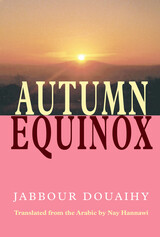
The diary begins with a view of an Israeli bombing in South Lebanon and ends with a description of refugee families fleeing to the mountain villages. Otherwise, except for allusions to what is going on in the capital, the Lebanese Civil War is far from the story, although its violence has never been far from this village. America, personified by a Lara who does not answer his letters, is a faraway land of nostalgia. The village is here, at the center of the young man’s narration, peopled by comic characters who seem to insist on their own unchanging selfhoods and to resist his attempts to be different.
The Civil War and the Occupation, the author seems to be saying, are not the only sources of turmoil. Violence and revenge have been part of the people’s consciousness, and people might indeed need to redefine themselves while at the same time adjusting to the environment.
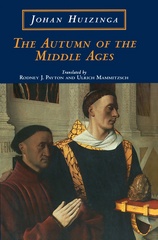
The Autumn of the Middle Ages is Johan Huizinga's classic portrait of life, thought, and art in fourteenth- and fifteenth-century France and the Netherlands. Few who have read this book in English realize that The Waning of the Middle Ages, the only previous translation, is vastly different from the original Dutch, and incompatible will all other European-language translations.
For Huizinga, the fourteenth- and fifteenth-century marked not the birth of a dramatically new era in history—the Renaissance—but the fullest, ripest phase of medieval life and thought. However, his work was criticized both at home and in Europe for being "old-fashioned" and "too literary" when The Waning of the Middle Ages was first published in 1919. In the 1924 translation, Fritz Hopman adapted, reduced and altered the Dutch edition—softening Huizinga's passionate arguments, dulling his nuances, and eliminating theoretical passages. He dropped many passages Huizinga had quoted in their original old French. Additionally, chapters were rearranged, all references were dropped, and mistranslations were introduced.
This translation corrects such errors, recreating the second Dutch edition which represents Huizinga's thinking at its most important stage. Everything that was dropped or rearranged has been restored. Prose quotations appear in French, with translations preprinted at the bottom of the page, mistranslations have been corrected.
"The advantages of the new translation are so many. . . . It is one of the greatest, as well as one of the most enthralling, historical classics of the twentieth century, and everyone will surely want to read it in the form that was obviously intended by the author." —Francis Haskell, New York Review of Books
"A once pathbreaking piece of historical interpretation. . . . This new translation will no doubt bring Huizinga and his pioneering work back into the discussion of historical interpretation." —Rosamond McKitterick, New York Times Book Review
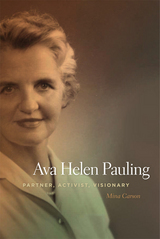
Though she began her public career in the shadow of her spouse, Ava Helen soon found herself tugged between her ardor to support Linus in his career and her desire that he embrace the social and political causes she felt passionate about. She believed it was her destiny to accept duties as a mother and homemaker, but neither of those roles was fully satisfying. Her more complete identity emerged over decades, as she evolved as an influential activist.
Ava Helen Pauling’s story is significant because so many aspects of it were shared with countless American women of her generation and the generations surrounding her. They had new educational opportunities but were expected to conform to the same limited social roles dictated by the gender ideology of the nineteenth century. When second wave feminism erupted in the 1960s, its force did not come solely from the young women rebelling against their elders’ rules and limitations, but also from the frustrated dreams of those elders themselves.
Ava Helen did not experience overt oppression by her husband or community; she even asserted some very non-feminist positions as a young woman. This, combined with a structural lack of opportunity, contributed to the strength and persistence of role expectations in her life. At the same time, she was feisty and willful. Her personality both created her marital loyalty and eventually took her down an openly feminist path.
Ava Helen Pauling: Partner, Activist, Visionary is an important complement to writings about Linus Pauling and a welcome addition to the literature on women’s and family history. It will also appeal to students and scholars of peace and reform movements and the social history of science.

Available Light tells the story of an activist, an artist, a uniquely South African individual, and his community and family across the second half of the twentieth century. Omar Badsha was born in Durban, on the country’s southeastern coast in 1945. His was the third generation of his Gujarati family to call South Africa home. Before he turned five, the country’s white electorate had voted to institute apartheid to strip the rights and privileges of citizenship from most of the population, including Badsha’s Indian community and especially the country’s Black majority. By the time he turned fifteen, nonviolent protest against apartheid had been quashed; by the time he turned twenty, so too had the armed struggle to dislodge white supremacy within the country. The ongoing, resilient, and oft-rebuffed struggle against apartheid was a definitive factor in Badsha’s life.
Furthermore, Badsha was raised in a community where art—painting, carving, music, poetry, theater—was inseparable from other values, whether Islamic and conservative or radical and urgently committed. When Badsha struggled in school, he, like his father, turned to art to express what he otherwise had difficulty conveying. Art brought him into contact with people of disparate backgrounds from far beyond Durban. In time, his friendships with other artists helped him refine his voice, first in drawing and eventually in photography, and capture the political ethic by which he strove to live his life and which he shared with similarly committed artist-activists.
Daniel Magaziner chronicles how art and politics became intertwined in South Africa and explains what it takes to maintain a critical aesthetic approach to political crises in the past and present. The book tracks the personal and social costs that commitment can incur, while also appreciating how Badsha and others like him have maintained their vision of an equitable, transformed society even today, when the ideals that once animated the South African struggle are on the back foot worldwide.
In Available Surfaces , T. R. Hummer explores the art of making both poetry and music, and of the concept of "making" itself. He draws on childhood experiences and experiences as an adult, as a poet, and as an explorer of unworldly spaces to examine that "something ineffable about the process of making of which the poem is the exemplary artifact."
Hummer grew up in the deep South, and spent many of his high school years playing saxophone in various rock and roll bands before he met poetry. This musical influence is visible in his work: he often discusses poetry together with music, or music with poetry, and his career has included both writing and performance.

In Avala Is Falling, Jovanović’s breakout success in 1978, a young woman challenges the expectations that teachers, parents, bus drivers, and doctors have for her. The “Avala” of the title refers to a mountain south of Belgrade which is home to some of Serbia’s most important nationalist monuments and shrines; it is also the site of the main mental hospital for the region, and its “falling” is the unexpected fulfillment of a prophecy from a traditional Serbian folk song. Jovanović’s use of stream of consciousness in her characters’ thinking and speaking, as well as of intertextuality in description and plot advancement heralded the arrival of an innovative new writer who was determined to break with the of traditional concerns of earlier women writers.
This book is now recognized as much more than “jeans prose,” although the fame the book achieved under that characterization eventually pushed it to cult status. Jovanović is now considered a major avant-garde writer, whose stylistic innovations were as challenging as her women-centered themes.

Antliff considers three French fascists: Georges Valois, Philippe Lamour, and Thierry Maulnier, demonstrating how they appropriated the avant-garde aesthetics of cubism, futurism, surrealism, and the so-called Retour à l’Ordre (“Return to Order”), and, in one instance, even defined the “dynamism” of fascist ideology in terms of Soviet filmmaker Sergei Eisenstein’s theory of montage. For these fascists, modern art was the mythic harbinger of a regenerative revolution that would overthrow existing governmental institutions, inaugurate an anticapitalist new order, and awaken the creative and artistic potential of the fascist “new man.”
In formulating the nexus of fascist ideology, aesthetics, and violence, Valois, Lamour, and Maulnier drew primarily on the writings of the French political theorist Georges Sorel, whose concept of revolutionary myth proved central to fascist theories of cultural and national regeneration in France. Antliff analyzes the impact of Sorel’s theory of myth on Valois, Lamour, and Maulnier. Valois created the first fascist movement in France; Lamour, a follower of Valois, established the short-lived Parti Fasciste Révolutionnaire in 1928 before founding two fascist-oriented journals; Maulnier forged a theory of fascism under the auspices of the journals Combat and Insurgé.
The renowned Argentine art historian and critic Andrea Giunta analyzes projects specifically designed to internationalize Argentina’s art and avant-garde during the 1960s: the importation of exhibitions of contemporary international art, the sending of Argentine artists abroad to study, the organization of prize competitions involving prestigious international art critics, and the export of exhibitions of Argentine art to Europe and the United States. She looks at the conditions that made these projects possible—not least the Alliance for Progress, a U.S. program of “exchange” and “cooperation” meant to prevent the spread of communism through Latin America in the wake of the Cuban Revolution—as well as the strategies formulated to promote them. She describes the influence of Romero Brest, prominent art critic, supporter of abstract art, and director of the Centro de Artes Visuales del Instituto Tocuato Di Tella (an experimental art center in Buenos Aires); various group programs such as Nueva Figuración and Arte Destructivo; and individual artists including Antonio Berni, Alberto Greco, León Ferrari, Marta Minujin, and Luis Felipe Noé. Giunta’s rich narrative illuminates the contentious postwar relationships between art and politics, Latin America and the United States, and local identity and global recognition.

Avant-Garde Jazz Musicians focuses on performers whose out styles, by definition, transcend traditional boundaries of jazz and most Western forms of music; some of these performers are well known, such as John Coltrane, Ornette Coleman, and Cecil Taylor, and others are not, including Daniel Carter, Billy Bang, and Jemeel Moondoc. David Such uses an interdisciplinary approach, ranging from philosophy to ethnomusicology to psychobiology, to examine how both cultural and personal factors have influenced the out musicians and their music and what the music symbolizes to listeners and to the musicians themselves.
Such strikes a balance between out music itself and the cultural domain as he explores the social contexts and economic pressures that affect out musical performance. Using material from extensive personal interviews, Such evaluates the impact of civil rights, postindustrialization, and urbanization on the beliefs and attitudes of out musicians.
By performing with many of the out musicians he interviews, Such is able to examine out music and the worldviews of out musicians in a uniquely comprehensive manner and to resolve some of the more controversial issues surrounding out jazz. In the process, he makes out music more understandable to jazz fans and scholars alike and clarifies its role in the overall development of jazz.
The museum of contemporary art might be the most advanced recording device ever invented. It is a place for the storage of historical grievances and the memory of forgotten artistic experiments, social projects, or errant futures. But in late nineteenth and early twentieth-century Russia, this recording device was undertaken by artists and thinkers as a site for experimentation.
Arseny Zhilyaev’s Avant-Garde Museology presents essays documenting the wildly encompassing progressivism of this period by figures such as Nikolai Fedorov, Aleksandr Rodchenko, Kazimir Malevich, Alexander Bogdanov, and others—many which are translated from the Russian for the first time. Here the urgent question is: How might the contents of the museum be reanimated so as to transcend even the social and physical limits imposed on humankind?
Contributors: David Arkin; Vladimir Bekhterev; Alexander Bogdanov; Osip Brik; Vasiliy Chekrygin; Leonid Chetyrkin; Nikolai Druzhinin; Nikolai Fedorov; Pavel Florensky; R. N. Frumkina; M. S. Ilkovskiy; V. I. Karmilov; V. Karpov; Valentin Kholtsov; P. N. Khrapov; Yuriy Kogan; Natalya Kovalenskaya; Nadezhda Krupskaya; S. P. Lebedyansky; A. F. Levitsky; Vera Leykina (Leykina-Svirskaya); Ivan Luppol; Kazimir Malevich; Andrey Platonov; Nikolay Punin; Aleksandr Rodchenko; Yuriy Samarin; I. F. Sheremet; Andrey Shestakov; Natan Shneerson; Ivan Skulenko; M. Vorobiev; N. Vorontsovsky; Boris Zavadovsky; I. M. Zykov.

Mike Sell's study is groundbreaking in its consideration of the avant-garde in relationship to a crucial but rarely considered agent: the scholar and critic. The book examines the role of the scholar and critic in the cultural struggles of radical artists and activists and reveals how avant-garde performance identifies the very limits of critical consideration. The book also explores the popularization of the avant-garde: how formerly subversive art is eventually discovered by the mass media, is gobbled up by the marketplace, and eventually finds its way onto the syllabi of college and university courses. Avant-Garde Performance and the Limits of Criticism is a timely and significant book that will become a standard reference for scholars in the fields of avant-garde literary criticism, theater history, critical theory, and performance studies.
"A provocative exploration of relations between the historical avant-garde and Cold War vanguard art and theatre. Sell's compelling historical and cultural narrative shows how the connections between the two exist at a very deep level of radical politics and aesthetics--an amazing concoction of rigorous scholarship, interdisciplinary learning, and progressive theorizing."
--Michael Vanden Heuvel, University of Wisconsin, Madison
"One of the most sophisticated, engaged, and engaging studies of the avant-garde in the United States that I've read-an important study that will raise the bar not only on scholarship of the Black Arts Movement, but on U.S. avant-gardism generally."
--James Smethurst, University of Massachusetts
A volume in the series Theater: Theory/Text/Performance. A list of recent titles in the series appears at the front of this volume.
The Avant-Postman explores a broad range of innovative postwar writing from France, Britain, and the United States. Taking James Joyce’s Ulysses and Finnegans Wake as a joint starting point, David Vichnar draws genealogical lines from there through the work of more than fifty writers up to very recent years, including William Burroughs, B. S. Johnson, Ian Sinclair, Kathy Acker, Alan Moore, David Foster Wallace, and many others. Centering the exploration around five strategies employed by Joyce—narrative parallax, stylistic metempsychosis, concrete writing, forgery, and neologizing the logos—the book reveals the striking continuities and developments from Joyce’s day to our own.
An ethically-based approach to human relations for the media age
Otherness, alterity, the alien—over the course of the past fifty years many of us have based our hopes for more ethical relationships on concepts of difference. Combining philosophy, literary criticism, fiction, autobiography, and real and imagined correspondence, Ann Weinstone proposes that only when we stop ordering the other to be other—whether technological, animal, or simply inanimate—will we truly become posthuman.
Posthumanism has thus far focused nearly exclusively on human–technology relations. Avatar Bodies develops a posthumanist vocabulary for human-to-human relationships that turns our capacities for devotion, personality, and pleasure. Drawing on both the philosophies and practices of Indian Tantra, Weinstone argues for the impossibility of absolute otherness; we are all avatar bodies, consisting of undecidably shared gestures, skills, memories, sensations, beliefs, and affects.
Weinstone calls her book a “tantra”—by which she means a set of instructions for practices aimed at sensitizing the reader to the inherent permeability of self to other, self to world. This tantra for posthumanism elaborates devotional gestures that will expose us to more unfettered contacts and the transformative touch.
In this novel, originally published in 1988, Lincoln creates with deft skill the drama that rises from the lives of the people of Clayton City. In turn amusing, disgusting, enraging, wistful, and, as one hears the secrets hidden deep in their hearts, shocking, they exist in a place whose vibrant personality is itself a unique configuration of geography, relationships, patterns of behavior, and events. It is also a place whose unspoken and hidden power lies in its crushing compulsion to maintain itself as it already is—a power that forces everyone to succumb to an inflexible social order.
That’s what infinity did, contain and threaten,
until friends complied by going one by one
to resurface obligingly in memories, and it sometimes still feels
we left them at our leisure, that such choice was good
so long as a larger choice seemed to succeed it,
nor could gazing bereave us of common sense,
nor would all plenty and foison fall into penury,
nor would shame forever drop its heavy head.
Infinity felt like life, and it said so, and waited.
It even spelled our autumnal names in solid gold
leaves that an inexhaustible supply of wind
tossed for such pleasure as we had said and said
until it transformed into the profound conviction
that the right track was lost—imagine—forever,
it turned our tears into pebbles that can’t seep away,
that can’t fly away, that we don’t dare to pronounce,
yet it seemed concocted out of a clear beautiful sky,
yet it peeped out the woodshed and drank from the gutter spout,
yet it wrestled with itself and sank in eager mud
that presently it might be outwardly known
along with all the other creatures that perish,
heartbreaking idea among many heartbreaking ideas.
--from Infinity
By examining six mainline white denominations—Episcopalians, Methodists, Presbyterians, Baptists, Disciples of Christ, and Lutherans—Samuel C. Shepherd Jr. emphasizes the extent to which the city fostered religious diversity, even as “blind spots” remained regarding Catholics, African Americans, Mormons, and Jews. Shepherd explores such topics as evangelism, interdenominational cooperation, the temperance campaign, the Sunday school movement, the international peace initiatives, and the expanding role of lay people of both sexes. He also notes the community’s widespread rejection of fundamentalism, a religious phenomenon almost automatically associated with the South, and shows how it nurtured social reform to combat a host of urban problems associated with public health, education, housing, women’s suffrage, prohibition, children, and prisons.
In lucid prose and with excellent use of primary sources, Shepherd delivers a fresh portrait of Richmond Protestants who embraced change and transformed their community, making it an active, progressive religious center of the New South.

Salt Lake City’s oldest residential historic district is a neighborhood known as the Avenues. During the late nineteenth century this area was home to many of the most influential citizens of Salt Lake City. Built from 1860 until 1930, it contains a mix of middle and upper middle class homes of varying architectural styles. This architectural diversity makes the Avenues unique among Utah's historic districts. For the past thirty years, as citizens have rediscovered the value of living in historic properties near downtown and the University of Utah, preservation efforts have soared in the area.
In 1980, the Avenues was established as a historic district and the Utah Historical Society published The Avenues of Salt Lake City. That book’s authors, Karl T. Haglund and Philip F. Notarianni, gleaned much about the area’s history by using information found on the historic district applications. This newly revised edition of The Avenues of Salt Lake City by Cevan J. LeSieur updates the original with a greatly expanded section on the historic homes in the neighborhood, including more than 600 new photos, and additional material covering the history of the Avenues since 1980.
The book is designed so that readers can take it along as a guide when exploring the neighborhoods. All the pictures of Avenues homes are accompanied with architectural information and brief histories of the properties. This volume makes a valuable resource for those interested in the history of the Avenues and its diverse architecture, and for anyone interested in Utah history, Utah architecture, and historic preservation.
A territory split by slavery, a state forged for union
Avenues of Transformation traces the surprising path, marked by shame, ambition, and will that led to Illinois’s admission to the Union in 1818. Historian James A. Edstrom guides the reader through this story by associating each stage of the narrative—the original statehood campaign, the passage of Illinois’s statehood-enabling act by Congress, and Illinois’s first constitutional convention—with the primary leaders in each of those episodes. The lives of these men—Daniel Pope Cook, Nathaniel Pope, and Elias Kent Kane—reflect the momentous tangle of politics, slavery, and geography. This history maps the drive for statehood in the conflict between nation and state, in the perpetuation of slavery, and in the sweep of water and commerce. It underscores the ways in which the Prairie State is uniquely intertwined—economically, socially, and politically—with every region of the Union: North, South, East, and West—and captures the compelling moment when Illinois statehood stood ready to more perfectly unify the nation.
This volume is the first full-length book in over a century to describe and analyze Illinois’s admission to the Union. It marks the first time that a historian has analyzed in detail the roll-call votes of the first state constitutional convention, seated evenly by pro- and antislavery delegates. Edstrom’s wit and prose weave a lively narrative of political ambition and human failure. Patiently crafted, Avenues of Transformation will be the first source for readers to turn to for gaining a better understanding of Illinois statehood.
Cities both near and far communicate in a variety of ways. Travel between, through, and among urban centers initiates contact, and cities themselves are sites of ever-changing cultural and historical encounters. Predictable and surprising challenges and opportunities arise when city borders are crossed, voices meet, and artistic traditions find their counterparts. Using the Latin word for “translation,” translatio, or “to carry across,” as a point of departure, Avenues of Translation explores how translation perpetuates, diversifies, deepens, and expands the literary production of cities in their greater cultural context, and how translation shapes an understanding of and access to a city's past and present literary and cultural practices. Thinking about translation and the city is a way to tell the backstories of the cities, texts, and authors that are united by acts of translation.
Published by Bucknell University Press. Distributed worldwide by Rutgers University Press.
Abū al-Walīd Muḥammad ibn Aḥmad ibn Rushd (d. 1198 AD), known as Averroes in the West, wrote one of the most significant medieval Arabic commentaries on Aristotle’s famous treatise, Rhetoric. Averroes worked within a tradition that included the Muslim philosophers Al-Farabi (d. 950) and Avicenna (d. 1037), who together built an early canon introducing Aristotle’s writings to the academies of medieval Europe. Here, for the first time, Lahcen El Yazghi Ezzaher translates Averroes’ Middle Commentary into English, with analysis highlighting its shaping of philosophical thought.
Ibn Rushd was born into a prominent family living in Córdoba and Seville during the reign of the Almoḥad dynasty in the Maghreb and al-Andalus. At court, he received support to write a body of rhetorical commentaries extending the work of his Arabic-Muslim predecessors, a critical step in fostering Aristotle’s influence on European scholasticism and Western education. Ezzaher’s meticulous translation of Averroes’ Middle Commentary reflects the depth and breadth of this engagement, incorporating a discussion of the Arabic-Muslim commentary tradition and Averroes’ contribution to it. His research illuminates the complexity of Averroes’ position, articulating the challenges Muslim scholars faced in making non-Muslim texts available to their community. Through his work, we see how people at different historical moments have adapted intellectual concepts to preserve rhetoric’s vitality and relevance in new contexts.
Averroes’ Middle Commentary exemplifies the close connections between ancient Greece and medieval Muslim scholarship and the ways Muslim scholars navigated an appreciation for Aristotelian philosophy alongside a commitment to their cultural and religious systems.
Bonner finds that India’s inability or refusal to address its debilitating social structure may be the precursor to an apocalyptic social upheaval unless heed is paid to the social movements that his first-hand investigation reveals.


In Avocado Dreams, Ana Patricia Rodríguez draws from her own positionality as a Salvadoran transplant to examine the construction of the unique Salvadoran cultural imaginary made in the greater D.C. area. Through a careful reading of the creative works of local writers, performers, artists, and artivists, Rodríguez demonstrates how the people have remade themselves in relation to the cultural, ethnoracial, and sociolinguistic diversity of the area. She discusses how Salvadoran people have developed unique, intergenerational Salvadoreñidades, manifested in particular speech and symbolic acts, ethnoracial embodiments, and local identity formations in relation to the diverse communities, most notably Black Washingtonians, who co-inhabit the region.
This timely and relevant work not only enriches our understanding of Salvadoran diasporic experiences but also contributes significantly to broader discussions on migration, identity, and cultural production in the United States.
This volume is a comprehensive examination of the benefits and potential pitfalls of employing prospect theory---a leading alternative to expected utility as a theory of decision under risk---to understand and explain political behavior. The collection brings together both theoretical and empirical studies, thus grounding the conclusions about prospect theory's potential for enriching political analyses in an assessment of its performance in explaining actual cases.
The theoretical chapters provide an overview of the main hypotheses of prospect theory: people frame risk-taking decisions around a reference point, they tend to accept greater risk to prevent losses than to make gains, and they often perceive the devastation of a loss as greater than the benefit of a gain. The three case studies---Roosevelt's decision-making during the Munich crisis of 1938, Carter's April 1980 decision to rescue the American hostages in Iran, and Soviet behavior toward Syria in 1966-67---generally support these hypotheses. Nevertheless, the authors are frank about potentially difficult conceptual and methodological problems, making explicit reference to alternative explanations, such as the rational actor model, which posits the maximization of expected value.
Contributors to the volume include Jack Levy, Robert Jervis, Barbara Farnham, Rose McDermott, Audrey McInerney, and Eldar Shafir.
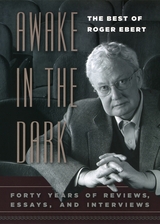
Roger Ebert has been writing film reviews for the Chicago Sun-Times for nearly forty years. And during those four decades, his wide knowledge, keen judgment, prodigious energy, and sharp sense of humor have made him America’s most celebrated film critic. He was the first such critic to win a Pulitzer Prize—one of just three film critics ever to receive that honor—and the only one to have a star dedicated to him on the Hollywood Walk of Fame. His groundbreaking hit TV show, At the Movies, meanwhile, has made “two thumbs up” one of the most coveted hallmarks in the entire industry.
No critic alive has reviewed more movies than Roger Ebert, and yet his essential writings have never been collected in a single volume—until now. With Awake in the Dark, both fans and film buffs can finally bask in the best of Ebert’s work. The reviews, interviews, and essays collected here present a picture of this indispensable critic’s numerous contributions to the cinema and cinephilia. From The Godfather to GoodFellas, from Cries and Whispers to Crash, the reviews in Awake in the Dark span some of the most exceptional periods in film history, from the dramatic rise of rebel Hollywood and the heyday of the auteur, to the triumph of blockbuster films such as Star Wars and Raiders of the Lost Ark, to the indie revolution that is still with us today.
The extraordinary interviews gathered in Awake in the Dark capture Ebert engaging not only some of the most influential directors of our time—Martin Scorsese, Steven Spielberg, Woody Allen, Robert Altman, Werner Herzog, and Ingmar Bergman—but also some of the silver screen’s most respected and dynamic personalities, including actors as diverse as Robert Mitchum, James Stewart, Warren Beatty, and Meryl Streep. Ebert’s remarkable essays play a significant part in Awake in the Dark as well. The book contains some of Ebert’s most admired pieces, among them a moving appreciation of John Cassavetes and a loving tribute to the virtues of black-and-white films.
If Pauline Kael and Andrew Sarris were godmother and godfather to the movie generation, then Ebert is its voice from within—a writer whose exceptional intelligence and daily bursts of insight and enthusiasm have shaped the way we think about the movies. Awake in the Dark, therefore, will be a treasure trove not just for fans of this seminal critic, but for anyone desiring a fascinating and compulsively readable chronicle of film since the late 1960s.
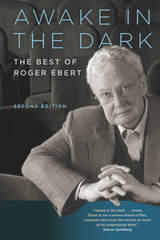
Arriving fifty years after Ebert published his first film review in 1967, this second edition of Awake in the Dark collects Ebert’s essential writings into a single, irresistible volume. Featuring new Top Ten Lists and reviews of the years’ finest films through 2012, this edition allows both fans and film buffs to bask in the best of an extraordinary lifetime’s work. Including reviews from The Godfather to GoodFellas and interviews with everyone from Martin Scorsese to Meryl Streep, as well as showcasing some of Ebert’s most admired essays—among them a moving appreciation of John Cassavetes and a loving tribute to the virtues of black-and-white films—Ebert’s Awake in the Dark is a treasure trove not just for fans of this era-defining critic, but for anyone desiring a compulsively readable chronicle of the silver screen.
Stretching from the dramatic rise of rebel Hollywood and the heyday of the auteur to the triumph of blockbuster films such as Star Wars and Raiders of the Lost Ark, to the indie revolution that is still with us today, Awake in the Dark reveals a writer whose exceptional intelligence and daily bursts of insight and enthusiasm helped shape the way we think about the movies. But more than this, Awake in the Dark is a celebration of Ebert’s inimitable voice—a voice still cherished and missed.
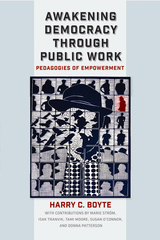
Awakening Democracy through Public Work begins with the story of Public Achievement, a youth civic education and empowerment initiative with roots in the civil rights movement. It describes Public Achievement's first home in St. Bernard's, a low-income Catholic elementary school in St. Paul, Minnesota, and how the program spread across the country and then abroad, giving birth to the larger concept of public work.
In Public Achievement, young people practice "citizen politics" as they tackle issues ranging from bullying, racism, and sexual harassment to playground improvements, curriculum changes, and better school lunches. They develop everyday political skills for working across differences and making constructive change. Such citizen politics, more like jazz than a set piece of music, involves the interplay and negotiation of diverse interests and views, sometimes contentious, sometimes harmonious. Public Achievement highlights young people's roles as co-creators—builders of schools, communities, and democratic society. They are not citizens in waiting, but active citizens who do public work.
Awakening Democracy through Public Work also describes how public work can find expression in many kinds of work, from education and health to business and government. It is relevant across the sweep of society. People have experimented with the idea of public work in hundreds of settings in thirty countries, from Northern Ireland and Poland to Ghana and Japan. In Burundi it birthed a national initiative to rework relations between villagers and police. In South Africa it helped people in poor communities to see themselves as problem solvers rather than simply consumers of government services.
In the US, at Denison University, public work is being integrated into dorm life. At Maxfield School in St. Paul, it is transforming special education. In rural Missouri, it led to the "emPowerU" initiative of the Heartland Foundation, encouraging thousands of young people to stay in the region. In Eau Claire, Wisconsin, it generated "Clear Vision," a program providing government support for citizen-led community improvements. Public work has expanded into the idea of "citizen professionals" working with other citizens, not on them or for them. It has also generated the idea of "civic science," in which scientists see themselves as citizens and science as a resource for civic empowerment.
Awakening Democracy through Public Work shows that we can free the productive powers of people to work across lines and differences to build a better society and create grounded hope for the future.
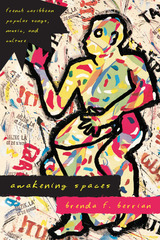
Based on personal interviews and discussions of song texts, Berrian shows how these musicians express their feelings about current and past events, about themselves, their islands, and the French. Through their lyrical themes, these songs create metaphorical "spaces" that evoke narratives of desire, exile, subversion, and Creole identity and experiences. Berrian opens up these spaces to reveal how the artists not only engage their listeners and effect social change, but also empower and identify themselves. She also explores the music as it relates to the art of drumming, and to genres such as African American and Latin jazz and reggae. With Awakening Spaces, Berrian adds fresh insight into the historical struggles and arts of the French Caribbean.
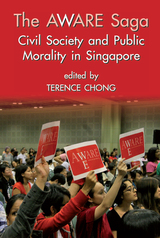
In this book, academics and public intellectuals examine the AWARE saga within the context of Singapore's civil society, considering the political and historical background and how the issues it raised relate to contemporary societal trends. In addition to documenting a milestone event for Singapore's civil society, the authors offer provocative interpretations that will interest a broad range of readers.

Denounced by some as a dangerous cult and lauded by others as a miraculous faith community, the International Churches of Christ was a conservative evangelical Christian movement that grew rapidly in the 1980s and 1990s.
Among its followers, promises to heal family relationships were central to the group's appeal. Members credit the church for helping them develop so-called "awesome families"-successful marriages and satisfying relationships with children, family of origin, and new church "brothers and sisters." The church engaged an elaborate array of services, including round-the-clock counseling, childcare, and Christian dating networks-all of which were said to lead to fulfilling relationships and exciting sex lives. Before the unified movement's demise in 2003-2004, the lure of blissful family-life led more than 100,000 individuals worldwide to be baptized into the church.
In Awesome Families, Kathleen Jenkins draws on four years of ethnographic research to explain how and why so many individuals-primarily from middle- to upper-middle-class backgrounds-were attracted to this religious group that was founded on principles of enforced community, explicit authoritative relationships, and therapeutic ideals. Weaving classical and contemporary social theory, she argues that members were commonly attracted to the structure and practice of family relationships advocated by the church, especially in the context of contemporary society where gender roles and family responsibilities are often ambiguous.
Tracing the rise and fall of this fast-growing religious movement, this timely study adds to our understanding of modern society and offers insight to the difficulties that revivalist movements have in sustaining growth.
After sketching a broader framework for understanding what evidence is, Awful Archives then asks how we can practice more ethical and productive forms of debate, especially when we’re faced with arguments that feel like a dead end. Thorough, engaging, and deeply insightful, Awful Archives:Conspiracy Theory, Rhetoric, and Acts of Evidence introduces an entirely new perspective on evidence—one that will impact the field for years to come.
In the years between the American Revolution and the Civil War, there was an awkward persistence of sovereign rituals, vestiges of a monarchical past that were not easy to shed. In Awkward Rituals, Dana Logan focuses our attention on these performances, revealing the ways in which governance in the early republic was characterized by white Protestants reenacting the hierarchical authority of a seemingly rejected king. With her unique focus on embodied action, rather than the more common focus on discourse or law, Logan makes an original contribution to debates about the relative completeness of America’s Revolution.
Awkward Rituals theorizes an under-examined form of action: rituals that do not feel natural even if they sometimes feel good. This account challenges common notions of ritual as a force that binds society and synthesizes the self. Ranging from Freemason initiations to evangelical societies to missionaries posing as sailors, Logan shows how white Protestants promoted a class-based society while simultaneously trumpeting egalitarianism. She thus redescribes ritual as a box to check, a chore to complete, an embarrassing display of theatrical verve. In Awkward Rituals, Logan emphasizes how ritual distinctively captures what does not change through revolution.
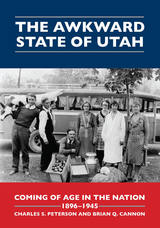
The half century between statehood in 1896 and the end of World War II in 1945 was a period of transformation and transition for Utah. This book interprets those profound changes, revealing sweeping impacts on both institutions and ordinary people. Drawing upon expertise honed over decades of teaching, researching, and writing about Utah’s history, the authors incorporate fresh archival sources, new oral histories, and hundreds of scholarly articles and books as they narrate the little-known story of the crucial formative years when Utah came of age.
During its sometimes awkward years of adolescence and maturation, Utah was gradually incorporated into the American political, social, and economic mainstream. Urban and industrial influences supplanted agrarian traditions, displacing people socially, draining the countryside of population, and galvanizing a critical crisis in values and self-identification. National corporations and mass labor movements took root in the state as commerce expanded. Involvement in world events such as the Spanish-American War, two world wars, and the Great Depression further set the stage for entry into the modern, globalized world as Utahns immersed themselves in national politics and became part of the democratic, corporate culture of twentieth-century America.
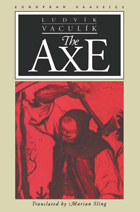
In late Sixties Czechoslovakia, communist ideology is failing. A disillusioned middle-aged journalist retreats from the politics of Prague to the Moravian countryside of his youth. There he rediscovers the complex relationship with his dead father, a communist crusader. But when the journalist is accused of disgracing his father and his proletariat background, he realizes that he, too, is a leader—and that the stakes are now reversed.

Why did abstraction dominate American art, social science, and natural science in the mid-twentieth century? Why, despite opposition, did abstraction and theoretical knowledge flourish across a diverse set of intellectual pursuits during the Cold War? In recovering the centrality of abstraction across a range of modernist projects in the United States, Alma Steingart brings mathematics back into the conversation about midcentury American intellectual thought. The expansion of mathematics in the aftermath of World War II, she demonstrates, was characterized by two opposing tendencies: research in pure mathematics became increasingly abstract and rarified, while research in applied mathematics and mathematical applications grew in prominence as new fields like operations research and game theory brought mathematical knowledge to bear on more domains of knowledge. Both were predicated on the same abstractionist conception of mathematics and were rooted in the same approach: modern axiomatics.
For American mathematicians, the humanities and the sciences did not compete with one another, but instead were two complementary sides of the same epistemological commitment. Steingart further reveals how this mathematical epistemology influenced the sciences and humanities, particularly the postwar social sciences. As mathematics changed, so did the meaning of mathematization.
Axiomatics focuses on American mathematicians during a transformative time, following a series of controversies among mathematicians about the nature of mathematics as a field of study and as a body of knowledge. The ensuing debates offer a window onto the postwar development of mathematics band Cold War epistemology writ large. As Steingart’s history ably demonstrates, mathematics is the social activity in which styles of truth—here, abstraction—become synonymous with ways of knowing.
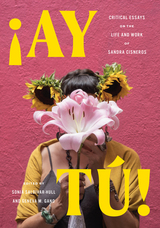
A comprehensive volume on the life and work of renowned Chicana author Sandra Cisneros.
Sandra Cisneros (b. 1954), author of the acclaimed novel The House on Mango Street and a recipient of the National Medal of the Arts, a MacArthur “Genius Grant” and the PEN/Nabokov Award for International Literature, was the first Chicana to be published by a major publishing house. ¡Ay Tú! is the first book to offer a comprehensive, critical examination of her life and work as a whole. Edited by scholars Sonia Saldívar-Hull and Geneva M. Gano, this volume addresses themes that pervade Cisneros’s oeuvre, like romantic and erotic love, female friendship, sexual abuse and harassment, the exoticization of the racial and ethnic “other,” and the role of visual arts in the lives of everyday people. Essays draw extensively on the newly opened Cisneros Papers, housed in the Wittliff Collections at Texas State University, and the volume concludes with a new long-form interview with Cisneros by the award-winning journalist Macarena Hernández.
As these essays reveal, Cisneros’s success in the literary field was integrally connected to the emergent Chicana feminist movement and the rapidly expanding Chicanx literary field of the late twentieth century. This collection shows that Cisneros didn’t achieve her groundbreaking successes in isolation and situates her as a vital Chicana feminist writer and artist.

Aymara Indians are a geographically isolated, indigenous people living in the Andes Mountains near Chile’s Atacama Desert, one of the most arid regions of the world. As rapid economic growth in the area has begun to divert scarce water to hydroelectric and agricultural projects, the Aymara struggle to maintain their sustainable and traditional systems of water use, agriculture, and pastoralism.
In Aymara Indian Perspectives on Development in the Andes, Amy Eisenberg provides a detailed exploration of the ethnoecological dimensions of the tension between the Aymara, whose economic, spiritual, and social life are inextricably tied to land and water, and three major challenges: the paving of Chile Highway 11, the diversion of the Altiplano waters of the Río Lauca for irrigation and power-generation, and Chilean national park policies regarding Aymara communities, their natural resources, and cultural properties within Parque Nacional Lauca, the International Biosphere Reserve.
Pursuing collaborative research, Eisenberg performed ethnographic interviews with Aymara people in more than sixteen Andean villages, some at altitudes of 4,600 meters. Drawing upon botany, agriculture, natural history, physical and cultural geography, history, archaeology, and social and environmental impact assessment, she presents deep, multifaceted insights from the Aymara’s point of view.
Illustrated with maps and dramatic photographs by John Amato, Aymara Indian Perspectives on Development in the Andes provides an account of indigenous perspectives and concerns related to economic development that will be invaluable to scholars and policy-makers in the fields of natural and cultural resource preservation in and beyond Chile.

A Slate Best Book of 2008
Included in Pushcart Prize XXXIV: Best of the Small Presses
Like a voyage to the Portuguese islands of the title, the poems in Azores arrive at their striking and hard-won destinations over the often-treacherous waters of experience—a man mourns the fact that he cannot not mourn, a father warns his daughter about harsh contingency, an unnamed visitor violently disrupts a quiet domestic scene. The ever-present and uncomfortable realities of envy, lust, and mortality haunt the book from poem to poem. Yezzi does not shy away from frank assessments of desire and human failing, the persistent difficulties of which are relieved periodically by a cautious optimism and even joy. Whether the poem’s backdrop is volcanic islands in the Mid-Atlantic or Manhattan Island at sunset, Yezzi examines the forces of change in the natural world, as w hether mundane or startlingly intimate. By turns plainspoken, caustic, evocative, and wry, these poems are, in matters of form, well-wrought and musical and, in matters of the heart, clear-eyed and always richly human.
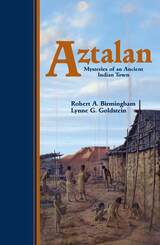
Birmingham and Goldstein attempt to unlock some of the mysteries, providing insights and information about the group of people who first settled here in 1100 AD. Filled with maps, drawings, and photographs of artifacts, this small volume examines a time before modern Native American people settled in this area.
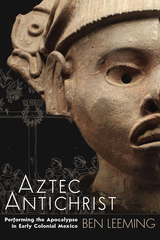
Discovered in the archives of the Hispanic Society of America in New York inside a notebook of miscellaneous Nahuatl-Christian texts written almost entirely by an Indigenous writer named Fabían de Aquino, the plays are filled with references to human sacrifice, bloodletting, ritual divination, and other religious practices declared “idolatrous” at a time when ecclesiastical authorities actively sought to suppress writing about Indigenous religion. These are Indigenous plays for an Indigenous audience that reveal how Nahuas made sense of Christianity and helped form its colonial image—the title figure is a powerful Indigenous being, an “Aztec Antichrist,” who violently opposes the evangelizing efforts of the church and seeks to draw converted Nahuas back to the religious practices of their ancestors. These practices include devotion to Nahua deities such as Tlaloc, Quetzalcoatl, and Tezcatlipoca who, in one of the most striking moves made by Aquino, are cast as characters in the plays.
Along with the translations, Leeming provides context and analysis highlighting these rare and fascinating examples of early Indigenous American literature that offer a window into the complexity of Nahua interactions with Christianity in the early colonial period. The work is extremely valuable to all students and scholars of Latin American religion, colonialism, Indigenous history, and early modern history and theater.
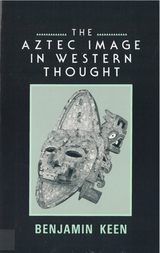
In The Aztec Image, Benjamin Keen explores the shifting attitudes and focus of the scores of historians, philosophers, scientists, and men of letters and the arts who dealt with the Aztec theme in the four and a half centuries after the conquest of Mexico. From that time to the present, the world of the ancient Aztecs has been a subject of compelling interest and controversy in the West. Keen explains how each new view continuously corrected and developed, the Western conception of Aztec civilization. He relates prevailing ideas about the Aztecs to the broad socioeconomic, political, and ideological patterns of the age, as well as to the contemporary state of knowledge about ancient Mexico. A comprehensive work of historiography, Keen's book is the first to encompass the sweep of Western thought on the Aztecs from Cortes to the present.
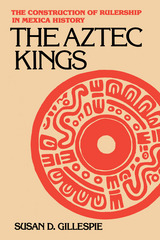
The Aztec Kings is the first major study to take into account the Aztec cyclical conception of time—which required that history constantly be reinterpreted to achieve continuity between past and present—and to treat indigenous historical traditions as symbolic statements in narrative form. Susan Gillespie focuses on the dynastic history of the Mexica of Tenochtitlan, whose stories reveal how the Aztecs used "history" to construct, elaborate, and reify ideas about the nature of rulership and the cyclical nature of the cosmos, and how they projected the Spanish conquest deep into the Aztec past in order to make history accommodate that event.
By demonstrating that most of Aztec history is nonliteral, she sheds new light on Aztec culture and on the function of history in society. By relating the cyclical structure of Aztec dynastic history to similar traditions of African and Polynesian peoples, she introduces a broader perspective on the function of history in society and on how and why history must change.

Originally, young Tio wanted to perfect the comic role of the Aztec Love God, his ideal persona. Along the way, he meets Jester, an older, Caucasian comedian who makes Tio an offer he’s like to refuse. Jester offers Tio an opportunity to join his act. The only condition is that he, Tio, has to perform Latino stereotypes. Tio has to decide if he is going to take the blank check for easy thoughts or develop the Aztec Love God on his own.
The Aztec Love God combines humor, politics, and street knowledge. Diaz comes at the reader from all angles. His mixture of styles and influences pushes The Aztec Love God to a multi-multiculturalism.
The Aztec Love God is a vato but not too loco.
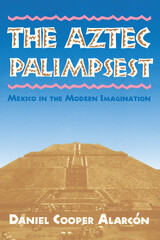
He shows how the Chicano myth of Aztlan was constructed upon earlier Mesoamerican myths, discusses representations of Mexico in texts by nineteenth- and twentieth-century writers, and analyzes the content of tourist literature, thereby revealing the economic, social, and political interests that drive the production of Mexicanness today. This original linking of seemingly incongruous discourses corrects the misconception that Mexicanness is produced only by hegemonic groups. Cooper shows how Mexico has been defined and represented, by both Mexicans and non-Mexicans, as more than a political or geographic entity, and he particularly reveals how Mexicanness has been exploited by Mexicans themselves through the promotion of tourism as a form of neocolonialism.
Cooper's work is valuable both for identifying attempts to revise and control Mexican myth, history, and culture and for defining the intricate relationship between history, historiography, and cultural nationalism. The Aztec Palimpsest extends existing analyses of Mexicanness into new theoretical realms and provides a fresh perspective on the relationship between the United States and Mexico at a time when these two nations are becoming more intimately linked.
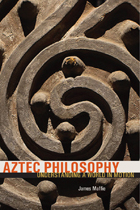
Aztec Philosophy focuses on the ways Aztec metaphysics—the Aztecs’ understanding of the nature, structure and constitution of reality—underpinned Aztec thinking about wisdom, ethics, politics,\ and aesthetics, and served as a backdrop for Aztec religious practices as well as everyday activities such as weaving, farming, and warfare. Aztec metaphysicians conceived reality and cosmos as a grand, ongoing process of weaving—theirs was a world in motion. Drawing upon linguistic, ethnohistorical, archaeological, historical, and contemporary ethnographic evidence, Maffie argues that Aztec metaphysics maintained a processive, transformational, and non-hierarchical view of reality, time, and existence along with a pantheistic theology.
Aztec Philosophy will be of great interest to Mesoamericanists, philosophers, religionists, folklorists, and Latin Americanists as well as students of indigenous philosophy, religion, and art of the Americas.

Supported with ample iconographic, ethnohistoric, etymological, and scientific evidence, Aztec Science is a groundbreaking endeavor introducing a new and radical approach to the study of Aztec art. It demonstrates that the Indigenous peoples of ancient Mesoamerica recorded scientific information about plants in their material culture. The detailed analysis of plant imagery in Aztec art, including in manuscripts such as the Codex Borgia, reveals that the cultural importance of maize and other plants was closely linked to scientific concepts that were well known in central Mexico centuries before they were subsequently “discovered” in Europe.
For the Nahua, Helen Burgos-Ellis argues, maize’s significance went far beyond economic value and religious importance. In Nahua art, references to maize, grass, and Quetzalcoatl reflect historic and scientifically relevant information. These images and glyphs, when studied against the ethnohistoric and scientific record of central Mexicans’ vast knowledge of plants, indicate that the Nahua understood key concepts about the maize plant, including its genetic origin from a common grass, pollination process, life cycle, and sexual reproduction. Consequently, the cultural significance of maize for the Nahuas was deeply intertwined with scientific understanding.
Aztec Science is a radical departure from bulk of the scholarship on the Codex Borgia, which has primarily been understood to contain calendrical and ritual information rather than botanical content, and is of significant interest to Pre-Columbianists and students and scholars of ethnohistory, Indigenous history and culture, traditional ecological knowledge, art history, and the history of science and botany.
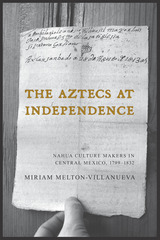
The Aztecs at Independence offers the first internal ethnographic view of these central Mexican indigenous communities in the critical transitional time of Independence. Miriam Melton-Villanueva uses previously unknown Nahuatl-language sources—primarily last wills and testaments—to provide a comprehensive understanding of indigenous societies during the transition from colonial to postcolonial times. The book describes the cultural life of people now called Nahuas or Mexicas in the nineteenth century—based on their own words, their own written records. The book uses previously unknown, unstudied, and untranslated indigenous texts to bring Nahua society into history, fleshing out glimpses of daily life in the early nineteenth century. Thus, The Aztecs at Independence describes life at the most local level: Nahua lineages of ritual and writing, guilds and societies, the people that take turns administering festivals and attending to the last wishes of the dying.
Interwoven with personal stories and memory, The Aztecs at Independence invites a general audience along on a scholarly journey, where readers are asked to imagine Nahua concepts and their contemporary meanings that give light to modern problems.
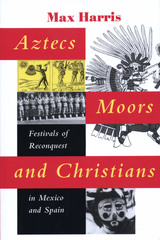
In villages and towns across Spain and its former New World colonies, local performers stage mock battles between Spanish Christians and Moors or Aztecs that range from brief sword dances to massive street theatre lasting several days. The festival tradition officially celebrates the triumph of Spanish Catholicism over its enemies, yet this does not explain its persistence for more than five hundred years nor its widespread diffusion.
In this insightful book, Max Harris seeks to understand Mexicans' "puzzling and enduring passion" for festivals of moros y cristianos. He begins by tracing the performances' roots in medieval Spain and showing how they came to be superimposed on the mock battles that had been a part of pre-contact Aztec calendar rituals. Then using James Scott's distinction between "public" and "hidden transcripts," he reveals how, in the hands of folk and indigenous performers, these spectacles of conquest became prophecies of the eventual reconquest of Mexico by the defeated Aztec peoples. Even today, as lively descriptions of current festivals make plain, they remain a remarkably sophisticated vehicle for the communal expression of dissent.
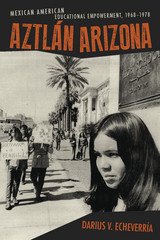
The word Aztlán, originally meaning the legendary ancestral home of the Nahua peoples of Mesoamerica, was adopted as a symbol of independence by Chicano/a activists during the movement of the 1960s and 1970s. In an era when poverty, prejudice, and considerable oppositional forces blighted the lives of roughly one-fifth of Arizonans, the author argues that understanding those societal realities is essential to defining the rise and power of the Chicano Movement.
The book illustrates how Mexican American communities fostered a togetherness that ultimately modified larger Arizona society by revamping the educational history of the region. The concluding chapter outlines key Mexican American individuals and organizations that became politically active in order to address Chicano educational concerns. This Chicano unity, reflected in student, parent, and community leadership organizations, helped break barriers, dispel the Mexican American inferiority concept, and create educational change that benefited all Arizonans.
No other scholar has examined the emergence of Chicano Movement politics and its related school reform efforts in Arizona. Echeverría’s thorough research, rich in scope and interpretation, is coupled with detailed and exact endnotes. The book helps readers understand the issues surrounding the Chicano Movement educational reform and ethnic identity. Equally important, the author shows how residual effects of these dynamics are still pertinent today in places such as Tucson.
This selection of poems by internationally renowned Peruvian poet Carlos Germán Belli tempers a dark, ironic vision of worldly injustice with the “red midnight sun” of hope. Belli’s contemplative verses express faith in language, in bodily joy, and in artistic form. These thirty-five poems explore public and domestic spaces of confinement and freedom, from paralysis to the ease of a bird in its “azure cloister.”
Translations by Karl Maurer retain Belli’s original meter, follow his complex syntax, and meet the challenges of his poetic language, which ranges from colloquial Peruvian slang to the ironic use of seventeenth-century Spanish. This bilingual edition also includes notes and reflections on Belli and on the art of translation. Beyond introducing American readers to a major presence in world poetry, The Azure Cloister offers a fresh approach to the translation of contemporary verse in Spanish.

READERS
Browse our collection.
PUBLISHERS
See BiblioVault's publisher services.
STUDENT SERVICES
Files for college accessibility offices.
RECENTLY PUBLISHED


UChicago Accessibility Resources
home | accessibility | search | about | contact us
BiblioVault ® 2001 - 2026
The University of Chicago Press