
 A SCHOLARLY BOOK REPOSITORY
A classic resource for beginning Hebrew students
First published over thirty years ago under the title A Student's Vocabulary of Biblical Hebrew, this classic work has been completely revised, updated, and expanded by the author to assist a new generation of students in naturally developing a basic Biblical Hebrew vocabulary. Designed to help beginning Hebrew readers acquire vocabulary quickly, this valuable teaching tool focuses on words that occur most frequently in the Hebrew Bible, while arranging them by roots and cognates allowing students to naturally expand their working vocabulary. Vocabulary lists have been kept to a manageable size; extensive cross-references document when words appear frequently with different meanings, and an index allows rapid location of every word encountered. As a result, students who master this volume will remember words more easily, consult a lexicon less frequently but more intelligently, and translate the Hebrew Bible at sight more readily and enjoyably.
Features
- Vocabulary groupings based on frequency, roots, and cognates
- Separate listing for nouns without verbal roots in the Hebrew Bible
- Appendices including proper names and the forms and meanings of pronominal suffixes
David Rush takes beginning playwrights through the first draft of a play and deep into the revision process. Drawing on examples from such classics as Othello and The Glass Menagerie, Rush provides detailed models for writers to evaluate their work for weaknesses and focus on the in-depth development of their plays.
Rush encourages writers to make sure their plays are clear and focused. He shows how to keep plays dramatically compelling and offers ways to avoid common mistakes that make them dull, confusing, or ineffective. He then distills the essence of traditional revision into key questions and discusses frequently overlooked tools, terms, and strategies that go beyond established methods of evaluation.
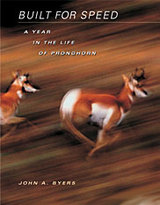
North America’s fastest mammal, the pronghorn can accelerate explosively from a standing start to a top speed of 60 miles per hour—but it can also cruise at 45 miles per hour for many miles. What accounts for the speed of this extraordinary animal, a denizen of the American outback, and what can be observed of this creature’s way of life? And what is it like to be a field biologist dedicating twenty years to studying this species? In Built for Speed, John A. Byers answers these questions as he draws an intimate portrait of the most charismatic resident of the American Great Plains.
The National Bison Range in western Montana, established in 1908 to snatch bison from the brink of extinction, also inadvertently rescued the largest known remnant of Palouse Prairie. It is within this grassland habitat—home to meadowlarks, rattlesnakes, bighorn sheep, coyotes, elk, snipe, and a panoply of wildflowers—that Byers observes the pronghorn’s life from birth to death (a life often as brief as four days, sometimes as long as fifteen years) and from season to season. Readers will also experience the vicarious pleasures of a biologist who is eager to race a pronghorn in his truck, scrutinize bison dung through binoculars, and peer through the gathering dusk of a rainy evening to count the display dives of snipe.
A vivid and memorable tale of a first-rate scientist’s twenty-year encounter with a magnificent animal, the story of the pronghorn is also a reminder of the crucial role we can play in preserving the fleeting life of the native American grassland.
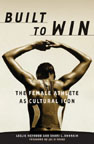
A timely look at the rise of women in sports
The sculpted speed of Marion Jones. The grit and agility of Mia Hamm. The slam-dunk style of Lisa Leslie. The skill and finesse of these sports figures are widely admired, no longer causing the puzzlement and discomfort directed toward earlier generations of athletic women. Built to Win explores this relatively recent phenomenon—the confident, empowered female athletes found everywhere in American popular culture.
Leslie Heywood and Shari L. Dworkin examine the role of female athletes through interviews with elementary- and high school-age girls and boys; careful readings of ad campaigns by Nike, Reebok, and others; discussions of movies like Fight Club and Girlfight; and explorations of their own sports experiences. They ask: what, if any, dissonance is there between popular images and the actual experiences of these athletes? Do these images really “redefine femininity” and contribute to a greater inclusion of all women in sport? Are sexualized images of these women damaging their quest to be taken seriously? Do they inspire young boys to respect and admire female athletes, and will this ultimately make a difference in the ways gender and power are constructed and perceived?Proposing a paradigm shift from second- to third-wave feminism, Heywood and Dworkin argue that, in the years since the passage of Title IX, gender stereotypes have been destabilized in profound ways, and they assert that female athletes and their imagery are doing important cultural work to that end. Important, refreshing, and engrossing, Built to Win examines sport in all its complexity.

Bulb gardening in the southwestern and southern United States presents challenges unknown in cooler climates. Bulbs that turn Holland into a kaleidoscope of color droop and fade in our mild winters, hot summers, and uncertain rainfall. Yet hundreds of native and naturalized species of bulbs thrive in these same conditions and offer as many colors, shapes, and fragrances as even the most demanding gardener desires. These are the bulbs that Thad Howard describes in this comprehensive guide to bulbs that will grow in USDA gardening zones 8 and 9.
Writing from more than forty-five years' experience in collecting and cultivating bulbs, Howard offers expert advice about hundreds of little-known, hybrid, and common species and varieties that grow well in warm climates. His species accounts, which are grouped by family, describe each plant and its growing requirements and often include interesting stories from his collecting expeditions. Lovely color photos illustrate many of the species.
Howard also gives reliable information about refrigerating bulbs, using them in the landscape and in containers, choosing scented ones, making potpourri, buying, collecting, cultivating, and hybridizing bulbs, and dealing with pests and diseases. He concludes with lists of plant societies and suppliers and a helpful glossary and bibliography.

Critical Edition with introduction and commentary by Leon J. Weinberger
This is the first in-depth study of three 11th- to 12th-century poets from Balkan Byzantium. Included are all of the known works by Moses b. Hiyya, Joseph b. Jacob Qalai, and Isaac b. Judah, collected from rare manuscripts and printed editions and from Geniza collections at Oxford and Cambridge. These works provide the evidence that the Balkan synagogue poets favored distinctive literary forms even as they show the strong influence of the Hispanic-Hebrew writers. Completing the volume are indexes of rabbinic, Aramaic, and payyetanic usages and tables of metonymical terms.Published by the Hebrew Union College Press, distributed by The University of Alabama Press.
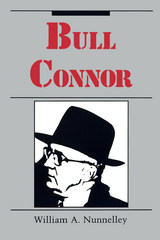
Nunnelley’s biography covers Connor’s early life as a sportscaster, his years as a nearly pathological police chief, and his reign as president of a corrupt public service commission.While providing the first published biographical study of Connor, Bull also traces the evolution of the civil rights movement in Birmingham. The book amplifies traditional one-dimensional accounts through the use of such primary sources a s Connor FBI files gained from a Freedom of Information request, Connor papers discovered in an old fire station about to be demolished, files from a law firm which represented Connor, interviews, and newspaper files. Connor’s racist image remains intact, but a more complete portrait of the controversial commissioner emerges.
Eugene “Bull” Connor gained infamy during the spring of 1963 as the heavy-handed Birmingham police commissioner who turned power hoses and police dogs on the black demonstrators led by Martin Luther King, Jr. Bull Connor and Birmingham symbolized hard-line Southern racism. Connor’s actions received national and international media coverage, which dramatized the plight of black people in segregated areas, giving the civil rights movement much-needed attention. After viewing television reports of the fire-hose and police-dogs episode, President John Kennedy said, “The civil rights movement should thank God for Bull Connor. He helped is as much as Abraham Lincoln.”
Bull Connor was an unlikely catalyst for the civil rights movement. Rather than forestalling integration, his response to the 1963 demonstrations hastened the demise of the dual society of which he became a symbol. Within weeks of King’s much-publicized Birmingham campaign, Congress took the first steps toward enacting the most sweeping civil rights legislation in American history. Birmingham was a turning point in the civil rights struggle, and Connor was the movement’s perfect adversary.

The androgynous, asexual Buddha of contemporary popular imagination stands in stark contrast to the muscular, virile, and sensual figure presented in Indian Buddhist texts. In early Buddhist literature and art, the Buddha’s perfect physique and sexual prowess are important components of his legend as the world’s “ultimate man.” He is both the scholarly, religiously inclined brahman and the warrior ruler who excels in martial arts, athletic pursuits, and sexual exploits. The Buddha effortlessly performs these dual roles, combining his society’s norms for ideal manhood and creating a powerful image taken up by later followers in promoting their tradition in a hotly contested religious marketplace.
In this groundbreaking study of previously unexplored aspects of the early Buddhist tradition, John Powers skillfully adapts methodological approaches from European and North American historiography to the study of early Buddhist literature, art, and iconography, highlighting aspects of the tradition that have been surprisingly invisible in earlier scholarship. The book focuses on the figure of the Buddha and his monastic followers to show how they were constructed as paragons of masculinity, whose powerful bodies and compelling sexuality attracted women, elicited admiration from men, and convinced skeptics of their spiritual attainments.
—David Krasner, author of A Beautiful Pageant: African American Theatre, Drama, and Performance in the Harlem Renaissance, 1910-1927
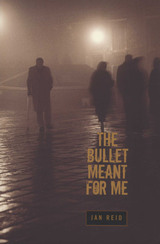
Jan Reid's powerful, moving account of what being shot during a robbery in Mexico City and the painful road to recovery taught him about manhood, friendship, and marriage.
On April 20, 1998, Jan Reid was shot during a robbery in Mexico City, where he had gone to watch his friend, the boxer Jesus Chavez, fight. In The Bullet Meant for Me, Reid powerfully recounts his ordeal, the long chain of life events that brought him to that fateful attack, and his struggle to regain the ability to walk and to be a full partner in a deeply satisfying marriage. Re-examining the whole trajectory of his life, Reid questions how much the Texan ideal of manhood shaped his identity, including his love for boxing and participation in the sport. He meditates on male friendship as he tells the story of his close relationship with Chavez, whose career and personal travails Reid details with empathy and insight. And he describes his long months in physical therapy, during which he drew on the unwavering love of his wife and daughter, as well as the courage and strength he had learned from boxing, to heal his body and spirit. A moving, intimate portrait of a man, a friendship, and a marriage, The Bullet Meant for Me is Jan Reid's most personal book.





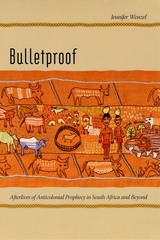
In 1856 and 1857, in response to a prophet’s command, the Xhosa people of southern Africa killed their cattle and ceased planting crops; the resulting famine cost tens of thousands of lives. Much like other millenarian, anticolonial movements—such as the Ghost Dance in North America and the Birsa Munda uprising in India—these actions were meant to transform the world and liberate the Xhosa from oppression. Despite the movement’s momentous failure to achieve that goal, the event has continued to exert a powerful pull on the South African imagination ever since. It is these afterlives of the prophecy that Jennifer Wenzel explores in Bulletproof.
Wenzel examines literary and historical texts to show how writers have manipulated images and ideas associated with the cattle killing—harvest, sacrifice, rebirth, devastation—to speak to their contemporary predicaments. Widening her lens, Wenzel also looks at how past failure can both inspire and constrain movements for justice in the present, and her brilliant insights into the cultural implications of prophecy will fascinate readers across a wide variety of disciplines.

Fabrics that are not only stain resistant but actually clean themselves. Airplane wings that change shape in midair to take advantage of shifts in wind currents. Hypodermic needles that use tiny serrations to render injections virtually pain free.
Though they may sound like the stuff of science fiction, in fact such inventions represent only the most recent iterations of natural mechanisms that are billions of years old—the focus of the rapidly growing field of biomimetics. Based on the realization that natural selection has for countless eons been conducting trial-and-error experiments with the laws of physics, chemistry, material science, and engineering, biomimetics takes nature as its laboratory, looking to the most successful developments and strategies of an array of plants and animals as a source of technological innovation and ideas. Thus the lotus flower, with its waxy, water-resistant surface, gives us stainproofing; the feathers of raptors become transformable airplane wings; and the nerve-deadening serrations on a mosquito’s proboscis are adapted to hypodermics.
With Bulletproof Feathers, Robert Allen brings together some of the greatest minds in the field of biomimetics to provide a fascinating—at times even jaw-dropping—overview of cutting-edge research in the field. In chapters packed with illustrations, Steven Vogel explains how architects and building engineers are drawing lessons from prairie dogs, termites, and even sand dollars in order to heat and cool buildings more efficiently; Julian Vincent goes to the very building blocks of nature, revealing how different structures and arrangements of molecules have inspired the development of some fascinating new materials, such as waterproof clothing based on shark skin; Tomonari Akamatsu shows how sonar technology has been greatly improved through detailed research into dolphin communication; Yoseph Bar-Cohen delves into the ways that robotics engineers have learned to solve design problems through reference to human musculature; Jeannette Yen explores how marine creatures have inspired a new generation of underwater robots; and Robert Allen shows us how cooperative behavior between birds, fish, and insects has inspired technological innovations in fields ranging from Web hosting to underwater exploration.
A readable, yet authoritative introduction to a field that is at the forefront of design and technology—and poised to become even more important in the coming decades as population pressures and climate change make the need for efficient technological solutions more acute—Bulletproof Feathers offers adventurous readers a tantalizing peek into the future, by way of our evolutionary past.

Among the topics discussed are the lynching of slaves, the Arkansas Council of the Association of Southern Women for the Prevention of Lynching, the 1927 lynching of John Carter in Little Rock, and the state’s long opposition to a federal anti-lynching law.
Throughout, the work reveals how the phenomenon of lynching—as the means by which a system of white supremacy reified itself, with its perpetrators rarely punished and its defenders never condemned—served to construct authority in Arkansas. Bullets and Fire will add depth to the growing body of literature on American lynching and integrate a deeper understanding of this violence into Arkansas history.
The Confederacy's hopes for independence were founded less on the belief that the South could defeat the North than on a strategy of staving off defeat long enough for the North to weary of the fight. The South’s single biggest opportunity to effect political change in the North was the presidential contest of 1864. If Lincoln’s support foundered and the North elected a president with a more flexible vision of peace on the continent, the South might realize its dream of independence.
Praised as an important contribution to understanding the Davis administration, in Bullets, Ballots, and Rhetoric, Larry Nelson vividly brings to life the complex state of Northern and Southern internal politics during the election year of 1863. He recounts fluctuations in the value of the dollar, draft resistance and riots, protests against emancipation, political defeats suffered by the Republicans in the elections of 1862, and growing discontent in the border states and Midwest. This gripping account explores a mission Davis sent to Canada in 1864 seeking to influence the election of a new US president, a strategy Nelson's persuasive analysis shows to have been intelligent and reasonable. Nevertheless, Davis's haphazard leadership contributed to its failure. Nelson hypothesizes that had Davis drawn the North into negotiations before the Democratic convention for the upcoming elections, a temporary armistice might well have proved permanent.
Nelson offers an insider’s look at the administration of Jefferson Davis as it searched for cracks in Northern unity and electoral opportunities to exploit—and yet also as it overlooked war-weariness in the South itself. Bullets, Ballots, and Rhetoric is an engrossing account of a little-known but critical aspect of Civil War statecraft and politics.


public celebration, describing and analyzing the corrida in a way not previously attempted in English.
In talking about bulls and bullfighting, observes Douglass, one ends up talking not only about differences in region, class, and politics in Spain but also about that country's ongoing struggle between modernity and tradition. She relates how Spaniards and outsiders see bullfighting as representative of a traditional, irrational Spain contrasted with a more civilized Europe, and she shows how Spaniards' ambivalence about bullfighting is actually a way of expressing ambivalence about the loss of traditional culture in a modern world. To fully explore the symbolism of bulls and bullfighting, Douglass offers an overview of Spain's fiesta cycle, in which the bull is central. She broadly and meticulously details three different fiestas through ethnographic fieldwork conducted over a number of years, delineating the differences in festivals held in different regions.
She also shows how a cycle of these fiestas may hold the key to resolving some of Spain's fundamental political contradictions by uniting the different regions of Spain and reconciling opposing political camps--the right, which holds that there is one Spain, and the left, which contends that there are many. Bulls, Bullfighting, and Spanish Identities is an intriguing study of symbolism used to examine the broader anthropological issues of identity and nationhood. Through its focus on the political discourse of bulls and bullfighting, it makes an original contribution to understanding not only Spanish politics but also Spain's place in the modern world.

The 1990s were a glorious time for the Chicago Bulls, an age of historic championships and all-time basketball greats like Scottie Pippen and Michael Jordan. It seemed only fitting that city, county, and state officials would assist the team owners in constructing a sparkling new venue to house this incredible team that was identified worldwide with Chicago. That arena, the United Center, is the focus of Bulls Markets, an unvarnished look at the economic and political choices that forever reshaped one of America’s largest cities—arguably for the worse.
Sean Dinces shows how the construction of the United Center reveals the fundamental problems with neoliberal urban development. The pitch for building the arena was fueled by promises of private funding and equitable revitalization in a long-blighted neighborhood. However, the effort was funded in large part by municipal tax breaks that few ordinary Chicagoans knew about, and that wound up exacerbating the rising problems of gentrification and wealth stratification. In this portrait of the construction of the United Center and the urban life that developed around it, Dinces starkly depicts a pattern of inequity that has become emblematic of contemporary American cities: governments and sports franchises collude to provide amenities for the wealthy at the expense of poorer citizens, diminishing their experiences as fans and—far worse—creating an urban environment that is regulated and surveilled for the comfort and protection of that same moneyed elite.
Moving beyond the identification of aggressive behaviors to an analysis of how and why we have arrived at a culture that thrives on humiliation, she critiques the social forces that gave rise to, and help maintain, bullying. Martocci’s analysis of gossip, laughter, stereotyping, and competition—dynamics that foment bullying and prompt responses of shame, violence, and depression—is positioned within a larger social narrative: the means by which we negotiate damaged social bonds and the role that bystanders play in the possibility of atonement, forgiveness, and redemption.
Martocci’s fresh perspective on bullying positions shame as pivotal. She urges us to acknowledge the pain and confusion caused by social disgrace; to understand its social, psychological, and neurological nature; and to address it through narratives of loss, grief, and redemption—cultural supports that are already in place.

Here is a brilliant introduction to insect and plant ecology focusing on one of nature’s most adaptive creatures, the bumblebee. Survival for the bumblebee depends on its ability to regulate body temperature through a complex energy exchange, and it is this management of energy resources around which Bernd Heinrich enters his discussion of physiology, behavior, and ecological interaction. Along the way, he makes some amusing parallels with the theories of Adam Smith—which, Heinrich observes, work rather well for the bees, however inadequate they may be for human needs.
Bumblebee Economics uniquely offers both the professional and amateur scientist a coherent biological model that goes beyond any particular species or level of biological organization. Rich in specific detail and including an extensive appendix on the rearing of bumblebees, as well as a full-color guide to field identification, this book organizes practical knowledge according to a new criterion.
In a new preface, Heinrich ranges from Maine to Alaska and north to the Arctic as he summarizes findings from continuing investigations over the past twenty-five years—by himself and others—into the wondrous “energy economy” of bumblebees.


The Burden of Over-representation artfully explores three curious racial moments in sport: Jackie Robinson’s expletive at a Dodgers spring training game; the transformation of a formality into an event at the end of the 1995 rugby World Cup in South Africa; and a spectral moment at the 2010 FIFA World Cup. Grant Farred examines the connotations at play in these moments through the lenses of race, politics, memory, inheritance and conciliation, deploying a surprising cast of figures in Western thought, ranging from Jacques Derrida and Friedrich Nietzsche to Judith Butler, William Shakespeare, and Jesus-the-Christ. Farred makes connection and creates meaning through the forces at play and the representational burdens of team, country and race.
Farred considers Robinson’s profane comments at black Dodgers fans, a post-match exchange of “thank yous” on the rugby pitch between white South African captain François Pienaar and Nelson Mandela, and being “haunted” by the ghost of Derrida on the occasion of the first FIFA World Cup on African soil. In doing so, The Burden of Over-representation provides a passionate, insightful analysis of the social, political, racial, and cultural consequences of conciliation at key sporting events.
Through the prism of the lives of Leon Blum, Albert Camus, and Raymond Aron, Judt examines pivotal issues in the history of contemporary French society—antisemitism and the dilemma of Jewish identity, political and moral idealism in public life, the Marxist moment in French thought, the traumas of decolonization, the disaffection of the intelligentsia, and the insidious quarrels rending Right and Left. Judt focuses particularly on Blum's leadership of the Popular Front and his stern defiance of the Vichy governments, on Camus's part in the Resistance and Algerian War, and on Aron's cultural commentary and opposition to the facile acceptance by many French intellectuals of communism's utopian promise. Severely maligned by powerful critics and rivals, each of these exemplary figures stood fast in their principles and eventually won some measure of personal and public redemption.
Judt constructs a compelling portrait of modern French intellectual life and politics. He challenges the conventional account of the role of intellectuals precisely because they mattered in France, because they could shape public opinion and influence policy. In Blum, Camus, and Aron, Judt finds three very different men who did not simply play the role, but evinced a courage and a responsibility in public life that far outshone their contemporaries.
"An eloquent and instructive study of intellectual courage in the face of what the author persuasively describes as intellectual irresponsibility."—Richard Bernstein, New York Times
The Burden of Rhyme shows how the nineteenth-century search for the origin of rhyme shaped the theory and practice of poetry. For Victorians, rhyme was not (as it was for the New Critics, and as it still is for us) a mere technique or ahistorical form. Instead, it carried vivid historical fantasies derived from early studies of world literature. Naomi Levine argues that rhyme’s association with the advent of literary modernity and with a repertoire of medievalist, Italophilic, and orientalist myths about love, loss, and poetic longing made it a sensitive historiographic instrument. Victorian poets used rhyme to theorize both literary history and the most elusive effects of aesthetic form. This Victorian formalism, which insisted on the significance of origins, was a precursor to and a challenge for twentieth-century methods. In uncovering the rich relationship between Victorian poetic forms and a forgotten style of literary-historical thought, The Burden of Rhyme reveals the unacknowledged influence of Victorian poetics—and its repudiation—on the development of modern literary criticism.
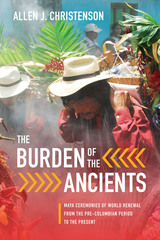
In Maya theology, everything from humans and crops to gods and the world itself passes through endless cycles of birth, maturation, dissolution, death, and rebirth. Traditional Maya believe that human beings perpetuate this cycle through ritual offerings and ceremonies that have the power to rebirth the world at critical points during the calendar year. The most elaborate ceremonies take place during Semana Santa (Holy Week), the days preceding Easter on the Christian calendar, during which traditionalist Maya replicate many of the most important world-renewing rituals that their ancient ancestors practiced at the end of the calendar year in anticipation of the New Year’s rites.
Marshaling a wealth of evidence from Pre-Columbian texts, early colonial Spanish writings, and decades of fieldwork with present-day Maya, The Burden of the Ancients presents a masterfully detailed account of world-renewing ceremonies that spans the Pre-Columbian era through the crisis of the Conquest period and the subsequent colonial occupation all the way to the present. Allen J. Christenson focuses on Santiago Atitlán, a Tz’utujil Maya community in highland Guatemala, and offers the first systematic analysis of how the Maya preserved important elements of their ancient world renewal ceremonies by adopting similar elements of Roman Catholic observances and infusing them with traditional Maya meanings. His extensive description of Holy Week in Santiago Atitlán demonstrates that the community’s contemporary ritual practices and mythic stories bear a remarkable resemblance to similar cultural entities from its Pre-Columbian past.
Utilizing Japanese and South Korean newspaper databases to review discussion of the two countries’ disputed historical perceptions from the end of World War II to the present, The Burden of the Past provides readers with the historical framework and the major players involved, offering much-needed clarity on such polarizing issues. By seeing behind the public discourse and political rhetoric, this book offers a firmer footing for a discussion and the steps toward resolution.

Winner of the J. Russell Major Prize, American Historical Association
Winner of the David H. Pinkney Prize, Society for French Historical Studies
Winner of the JDC–Herbert Katzki Award, National Jewish Book AwardsWinner of the American Library in Paris Book Award
A Choice Outstanding Academic Title of the Year
Headlines from France suggest that Muslims have renewed an age-old struggle against Jews and that the two groups are once more inevitably at odds. But the past tells a different story. The Burdens of Brotherhood is a sweeping history of Jews and Muslims in France from World War I to the present.
“Katz has uncovered fascinating stories of interactions between Muslims and Jews in France and French colonial North Africa over the past 100 years that defy our expectations…His insights are absolutely relevant for understanding such recent trends as rising anti-Semitism among French Muslims, rising Islamophobia among French Jews and, to a lesser degree, rising rates of aliyah from France.”
—Lisa M. Leff, Haaretz
“Katz has written a compelling, important, and timely history of Jewish/Muslim relations in France since 1914 that investigates the ways and venues in which Muslims and Jews interacted in metropolitan France…This insightful, well-researched, and elegantly written book is mandatory reading for scholars of the subject and for those approaching it for the first time.”
—J. Haus, Choice
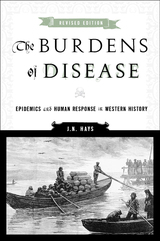
In this updated volume, with revisions and additions to the original content, including the evolution of drug-resistant diseases and expanded coverage of HIV/AIDS, along with recent data on mortality figures and other relevant statistics, J. N. Hays chronicles perceptions and responses to plague and pestilence over two thousand years of western history. Disease is framed as a multidimensional construct, situated at the intersection of history, politics, culture, and medicine, and rooted in mentalities and social relations as much as in biological conditions of pathology. This revised edition of The Burdens of Disease also studies the victims of epidemics, paying close attention to the relationships among poverty, power, and disease.

In this sweeping approach to the history of disease, historian J. N. Hays chronicles perceptions and responses to plague and pestilence over two thousand years of western history. Hays frames disease as a multi-dimensional construct, situated at the intersection of history, politics, culture, and medicine, and rooted in mentalities and social relations as much as in biological conditions of pathology. He shows how diseases affect social and political change, reveal social tensions, and are mediated both within and outside the realm of scientific medicine.
Beginning with the legacy of Greek, Roman, and early Christian ideas about disease, the book then discusses many of the dramatic epidemics from the fourteenth through the twentieth centuries, moving from leprosy and bubonic plague through syphilis, smallpox, cholera, tuberculosis, influenza, and poliomyelitis to AIDS. Hays examines the devastating exchange of diseases between cultures and continents that ensued during the age of exploration. He also describes disease through the lenses of medical theory, public health, folk traditions, and government response. The history of epidemics is also the history of their victims. Hays pays close attention to the relationships between poverty and power and disease, using contemporary case studies to support his argument that diseases concentrate their pathological effects on the poor, while elites associate the cause of disease with the culture and habits of the poor.
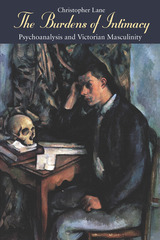
Lane discredits the conservative notion that Victorian literature expresses only a demand for repression and moral restraint. But he also refutes historicist and Foucauldian approaches, arguing that they dismiss the very idea of repression and end up denouncing psychoanalysis as complicit in various kinds of oppression. These approaches, Lane argues, reduce Victorian literature to a drama about politics, power, and the ego. Striving instead to reinvigorate discussions of fantasy and the unconscious, Lane offers a clear, often startling account of writers who grapple with the genuine complexities of love, desire, and friendship.
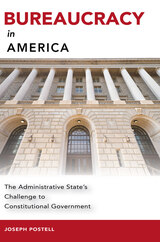

Although everyone agrees on the need to make government work better, few understand public bureaucracy sufficiently well to offer useful suggestions, either theoretical or practical. In fact, some consider bureaucratic efficiency incompatible with democratic government.
Douglas Yates places the often competing aims of efficiency and democracy in historical perspective and then presents a unique and systematic theory of the politics of bureaucracy, which he illustrates with examples from recent history and from empirical research. He argues that the United States operates under a system of “bureaucratic democracy,” in which governmental decisions increasingly are made in bureaucratic settings, out of the public eye. He describes the rational, self-interested bureaucrat as a “minimaxer,” who inches forward inconspicuously, gradually accumulating larger budgets and greater power, in an atmosphere of segmented pluralism, of conflict and competition, of silent politics.
To make the policy process more competitive, democratic, and open, Yates calls for strategic debate among policymakers and bureaucrats and insists that bureaucrats should give a public accounting of their significant decisions rather than bury them in incremental changes. He offers concrete proposals, applicable to federal, state, and local governments, for simplifying the now-chaotic bureaucratic policymaking system and at the same time bolstering representation and openness.
This is a book for all political scientists, policymakers, government officials, and concerned citizens. It may well become a classic statement on the workings of public bureaucracy.

Plunging into the verbal quagmire of official language used by bureaucrats in both government and business, distinguished linguist Roger W. Shuy develops new techniques based on linguistic principles to improve their communication with the public.
Shuy presents nine case studies that reveal representative problems with bureaucratic language. He characterizes the traits of bureaucratic language candidly, though somewhat sympathetically, and he describes how linguists can provide bureaucrats with both the tools for communicating more clearly and also the authority to implement these changes.
Drawing on documents cited in class action lawsuits brought against the Social Security Administration and Medicare, Shuy offers a detailed linguistic analysis of these agencies’ problems with written and oral communication, and he outlines a training program he developed for government writers to solve them. Moving on to the private sector, Shuy analyzes examples of the ways that businesses such as car dealerships, real estate and insurance companies, and commercial manufacturers sometimes fail to communicate effectively. Although typically bureaucracies change their use of language only when a lawsuit threatens, Shuy argues that clarity in communication is a cost effective strategy for preventing or at least reducing litigation.
Bureaucratic Language in Government and Business explains why bureaucratic language can be so hard to understand and what can be done about it.
Drawing upon the unique public and private papers of Ting Jih-ch’ang, Governor of Kiangsu, 1868–1870, this work examines the implementation of post-Taiping T’ung-chih Restoration programs in that province. The restoration of local order and rectification of society, judicial administration, fiscal affairs, and personnel problems are described against a background of continuous struggle for dominance in the countryside between local government on the one hand and the local elite on the other.
Jonathan Ocko demonstrates that the declining quality of local officials resulted in an erosion of public capacity, in particular of the government’s fiscal efficiency, and sharpened the moral dilemmas of office holding. Ocko’s close look at the provincial and local levels of administration and at the day-to-day problems faced by Ting Jih-ch’ang illuminates the frustrations and failures of the reform process.

Bureaucratizing the Muse is a study of the Chicago AIR program. By its very nature art is a nonrational process, even at times antirational, and the idea of organizing artists in this kind of work environment was an unusual one. Steven C. Dubin's account is a fascinating story of the tensions between struggling artists who need a paycheck but fear the compromise of their art and bureaucrats who need to produce measurable results.
The novel contains the recognizable themes of Balzac's work: obsessive ambition, conspiracy and human pettiness, and a melodramatic struggle between the social good and the evils of folly and stupidity. It is also an unusual, dramatized analysis of a developing political institution and its role in shaping social class and mentality.
In uneasy partnership at the helm of the modern state stand elected party politicians and professional bureaucrats. This book is the first comprehensive comparison of these two powerful elites. In seven countries—the United States, Great Britain, France, Germany, Sweden, Italy, and the Netherlands—researchers questioned 700 bureaucrats and 6OO politicians in an effort to understand how their aims, attitudes, and ambitions differ within cultural settings.
One of the authors’ most significant findings is that the worlds of these two elites overlap much more in the United States than in Europe. But throughout the West bureaucrats and politicians each wear special blinders and each have special virtues. In a well-ordered polity, the authors conclude, politicians articulate society’s dreams and bureaucrats bring them gingerly to earth.

The late eighteenth century was a critical time for the southernmost regions of Latin America, for in this period they became a separate political entity, the Viceroyalty of the Rio de la Plata. Socolow's work, part of a continuing study of the political, economic, and social elites of the emerging city of Buenos Aires, here considers the bureaucracy put into place by the Bourbon reforms. The author examines the professional and personal circumstances of all bureaucrats, from the high-ranking heads of agencies to the more lowly clerks, contrasting their expectations and their actual experiences. She pays particular attention to their recruitment, promotion, salary, and retirement, as well as their marriage and kinship relationships in the local society.

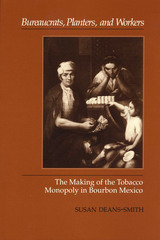
Honorable Mention, Bolton Memorial Prize, Conference on Latin American History
A government monopoly provides an excellent case study of state-society relationships. This is especially true of the tobacco monopoly in colonial Mexico, whose revenues in the later half of the eighteenth century were second only to the silver tithe as the most valuable source of government income. This comprehensive study of the tobacco monopoly illuminates many of the most important themes of eighteenth-century Mexican social and economic history, from issues of economic growth and the supply of agricultural credit to rural relations, labor markets, urban protest and urban workers, class formation, work discipline, and late colonial political culture.
Drawing on exhaustive research of previously unused archival sources, Susan Deans-Smith examines a wide range of new questions. Who were the bureaucrats who managed this colonial state enterprise and what policies did they adopt to develop it? How profitable were the tobacco manufactories, and how rational was their organization? What impact did the reorganization of the tobacco trade have upon those people it affected most—the tobacco planters and tobacco workers?
This research uncovers much that was not previously known about the Bourbon government's management of the tobacco monopoly and the problems and limitations it faced. Deans-Smith finds that there was as much continuity as change after the monopoly's establishment, and that the popular response was characterized by accommodation, as well as defiance and resistance. She argues that the problems experienced by the monopoly at the beginning of the nineteenth century did not originate from any simmering, entrenched opposition. Rather, an emphasis upon political stability and short-term profits prevented any innovative reforms that might have improved the monopoly's long-term performance and productivity.
With detailed quantitative data and rare material on the urban working poor of colonial Mexico, Bureaucrats, Planters, and Workers will be important reading for all students of social, economic, and labor history, especially of Mexico and Latin America.


Exposes and explores the prevalence of racist restaurant branding in the United States
Aunt Jemima is the face of pancake mix. Uncle Ben sells rice. Chef Rastus shills for Cream of Wheat. Stereotyped Black faces and bodies have long promoted retail food products that are household names. Much less visible to the public are the numerous restaurants that deploy unapologetically racist logos, themes, and architecture. These marketing concepts, which center nostalgia for a racist past and commemoration of our racist present, reveal the deeply entrenched American investment in anti-blackness. Drawing on wide-ranging sources from the late 1800s to the present, Burgers in Blackface gives a powerful account, and rebuke, of historical and contemporary racism in restaurant branding.
Forerunners: Ideas First
Short books of thought-in-process scholarship, where intense analysis, questioning, and speculation take the lead
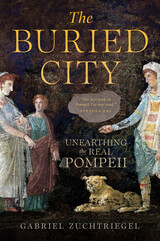
In The Buried City, Gabriel Zuchtriegel takes us on a behind-the-scenes tour of Pompeii and reveals new archaeological finds that are being unearthed at the site’s biggest dig in a generation. As director of the Pompeii Archaeological Park, Zuchtriegel presents a uniquely intimate perspective on this city that was tragically destroyed and frozen in time by the eruption of Mount Vesuvius in 79 CE. Among the ruins, we find unmade beds, dishes left drying, and bodies of victims encased in ash, but Zuchtriegel shows that we’ve only begun to understand this fascinating place, as a third of the site remains unexcavated.
Zuchtriegel leads us into the heart of the city, reconstructing Pompeii as it would have been, showing us who lived there, what mattered to them, and what happened in their final hours. The Buried City reveals the latest discoveries unearthed at Pompeii—including a banquet hall with murals of Greek gods, a fresco of what appears to be a pizza, and the remains of individuals crushed by debris—all buried for almost two thousand years. Zuchtriegel offers a vivid portrait of this World Heritage site as a vibrant and diverse city, connecting us to a past that is much closer than we think and inviting us to reflect on our role as keepers of the site and its history.
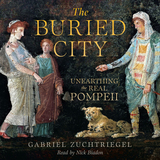
The director of the Pompeii Archaeological Park offers a vivid view of daily life in the lost city, shares the latest discoveries, and reflects on preserving heritage.
In The Buried City, Gabriel Zuchtriegel takes us on a behind-the-scenes tour of Pompeii and reveals new archaeological finds that are being unearthed at the site’s biggest dig in a generation. As director of the Pompeii Archaeological Park, Zuchtriegel presents a uniquely intimate perspective on this city that was tragically destroyed and frozen in time by the eruption of Mount Vesuvius in 79 CE. Among the ruins, we find unmade beds, dishes left drying, and bodies of victims encased in ash, but Zuchtriegel shows that we’ve only begun to understand this fascinating place, as a third of the site remains unexcavated.
Zuchtriegel leads us into the heart of the city, reconstructing Pompeii as it would have been, showing us who lived there, what mattered to them, and what happened in their final hours. The Buried City reveals the latest discoveries unearthed at Pompeii—including a banquet hall with murals of Greek gods, a fresco of what appears to be a pizza, and the remains of individuals crushed by debris—all buried for almost two thousand years. Zuchtriegel offers a vivid portrait of this World Heritage site as a vibrant and diverse city, connecting us to a past that is much closer than we think and inviting us to reflect on our role as keepers of the site and its history.
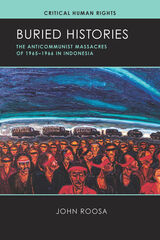
Drawing upon years of research and interviews with survivors, Buried Histories is an impressive contribution to the literature on genocide and mass atrocity, crucially addressing the topics of media, military organization, economic interests, and resistance.
In this groundbreaking new book, Billy J. Stratton offers a critical examination of the narrative of Mary Rowlandson. Although it has long been thought that the book’s preface was written by the influential Puritan minister Increase Mather, Stratton’s research suggests that Mather was also deeply involved in the production of the narrative itself, which bears strong traces of a literary form that was already well established in Europe. As Stratton notes, the portrayal of Indian people as animalistic “savages” and of Rowlandson’s solace in Biblical exegesis served as a convenient alibi for the colonial aspirations of the Puritan leadership.
Stratton calls into question much that has been accepted as fact by scholars and historians over the last century, and re-centers the focus on the marginalized perspective of Native American people, including those whose land had been occupied by the Puritan settlers. In doing so, Stratton demands a careful reconsideration of the role that the captivity narrative—which was instrumental in shaping conceptions of “frontier warfare”—has played in the development of both American literary history and national identity.
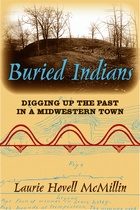
In Buried Indians, Laurie Hovell McMillin presents the struggle of her hometown, Trempealeau, Wisconsin, to determine whether platform mounds atop Trempealeau Mountain constitute authentic Indian mounds. This dispute, as McMillin subtly demonstrates, reveals much about the attitude and interaction-past and present-between the white and Indian inhabitants of this Midwestern town.
McMillin's account, rich in detail and sensitive to current political issues of American Indian interactions with the dominant European American culture, locates two opposing views: one that denies a Native American presence outright and one that asserts its long history and ruthless destruction. The highly reflective oral histories McMillin includes turn Buried Indians into an accessible, readable portrait of a uniquely American culture clash and a dramatic narrative grounded in people's genuine perceptions of what the platform mounds mean.
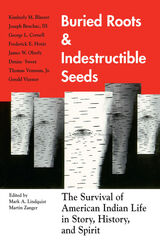
This anthology highlights central values and traditions in Native American societies, exploring the ongoing struggles and survival power of Native American people today. The essays and stories by well-known writers provide an excellent introduction for general readers as well as high school and college students. The stories and historical events are drawn especially from the tribes of the Great Lakes region, such as the Ojibwa (Chippewa) of Wisconsin, and are part of a continuing, sustaining storytelling tradition.
Starting with the opening selection, “The Circle of Stories,” which reaffirms the relationship of humans to all living things, the anthology emphasizes themes of connectedness and survival in essays on the environment, identity, community allegiance and treaty rights, marginalization and assimilation in American society, and conflict within the educational system. Several selections about Trickster tales introduce traditions of humor, irony, and imagination that have come to embody native survival, liberation, and continuance.
The authors included in Buried Roots and Indestructible Seeds are Kim Blaeser, Joseph Bruchac, George Cornell, Fred Hoxie, James Oberly, Denise Sweet, Tom Vennum, and Gerald Vizenor.
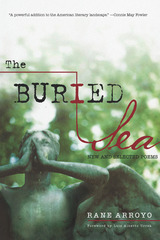
Reading Rane Arroyo’s poems is a little like watching a movie playing at fastforward speed on the TV in your darkened bedroom. The colors pop and snap, the images leap and recede, the colors seem brighter than life—and you can’t stop watching even long enough to blink. It’s an intimate experience. Even at hyperspeed you can make out the images of friends, family, and lovers (especially lovers) burning rubber across the unblinking screen. And even without a sound track, you can hear the music—a symphony of jazz and samba, salsa and street sounds.
In The Buried Sea, Arroyo has selected poems from his first eleven books—five full-length collections of poems and six chapbooks—and has added nineteen new poems. When asked to describe himself, Arroyo writes that “the answer is easy: I’m a Puerto Rican, gay, Midwestern, educated, former working class, liberal, atheistic, humanist, American, male, ex-Mormon, ex-Catholic, pseudo-Buddhist, teacher, reader, global, and popular culture—informed poet.” Readers will find traces of all of these selves in this collection. And Arroyo does make it “easy” to follow the clues. His poems—vivacious, sexy, shiny, sly, pointed, ambitious—are easy to approach and easy to love. But they come with strings attached—like all affairs of the heart—and therein lies so much of their pleasure.
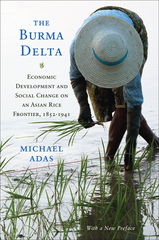
In the decades following its annexation to the Indian Empire in 1852, Lower Burma (the Irrawaddy-Sittang delta region) was transformed from an underdeveloped and sparsely populated backwater of the Konbaung Empire into the world’s largest exporter of rice. This seminal and far-reaching work focuses on two major aspects of that transformation: the growth of the agrarian sector of the rice industry of Lower Burma and the history of the plural society that evolved largely in response to rapid economic expansion.
Long isolated by rigid military rule, Burma, or Myanmar, is one of the least known, significantly sized states in the world. Possessed of a rich cultural history yet facing a range of challenges to stability and growth, it has struck the imaginations of those concerned not only with geopolitical or trade affairs but also with poverty, health, and human rights. David I. Steinberg sheds new light on this reclusive state by exploring issues of authority and legitimacy in its politics, economics, social structure, and culture since the popular uprising and military coup of 1988.
Exploring the origins of that year’s tumultuous events, Steinberg analyzes a generation of preceding military governments and their attempts to address the nation’s problems. He focuses on the role of the military, the effects of Burma’s geopolitical placement, the plight of the poor, the destruction of civil society, and rising ethnic tensions. While taking into account the importance of foreign observers as counterpoints to official views, suppliers of economic aid, and advocates of reform, Steinberg contends that ultimately, the solutions to Myanmar’s varied problems lie with the Burmese themselves and the policies of their government.
The paperback edition includes a postcript that reveals the most current and critical issues facing Burma since the publication of the original hardcover in March 2001. Steinberg brings readers up to date on the recent release of political prisoners, economic and military conditions, United Nations actions, and the complex, ever-changing relationship between Thailand and Myanmar.
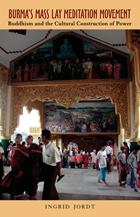
Burma's Mass Lay Meditation Movement: Buddhism and the Cultural Construction of Power describes a transformation in Buddhist practice in contemporary Burma. This revitalization movement has had real consequences for how the oppressive military junta, in power since the early 1960s, governs the country.
Drawing on more than ten years of extensive fieldwork in Burma, Ingrid Jordt explains how vipassanā meditation has brought about a change of worldview for millions of individuals, enabling them to think and act independently of the totalitarian regime. She addresses human rights as well as the relationship between politics and religion in a country in which neither the government nor the people clearly separates the two. Jordt explains how the movement has been successful in its challenge to the Burmese military dictatorship where democratically inspired resistance movements have failed.
Jordt's unsurpassed access to the centers of political and religious power in Burma becomes the reader's opportunity to witness the political workings of one of the world's most secretive and tyrannically ruled countries. Burma's Mass Lay Meditation Movement is a valuable contribution to Buddhist studies as well as anthropology, religious studies, and political science.

A lyrical meditation on time, survival, and merciful moments of joy
Sara Henning’s Burn draws readers deep into the moments that make us, focusing on instances of crisis and renewal to explore our relation to time and lived experience. In these poems, we follow a speaker as she works through the loss of young love, the death of her parents, marriage’s hardness and beauty, sexual assault, and the devastation of a pandemic—evolutions of trauma that fracture time and alter perception. Twinned with these extremes are shimmering manifestations of joy only an imperfect world can make possible.
Burn magnifies the way time leaves us both the victim and the victor of our realities. The blaze of her late-mother’s Tiffany lamps sends the speaker back to childhood, where she unearths mica from the schoolyard dirt. The devastation of an ecological crisis, the annihilating act of rape, and the unsolved disappearance of a caretaker all level the speaker’s world and upend her place in it, forcing her to reconstitute reality from what remains. In poems which summon the spirit of Stephen Hawking’s A Brief History of Time, this collection walks through the physics of temporality as refracted through love, loss, and grief, so we better understand its effect on our lives. Through this insight, Henning introduces a new way of being in the world.
A work of advocacy and uplift, Burn shines with the vibrant possibilities of narrative lyric poetry as it forges a path from grief to hope.
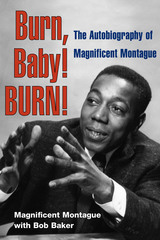
Like many black disc jockeys of his day, Montague played a role in his community beyond simply spreading the music of James Brown, Otis Redding, Aretha Franklin, and other prominent artists. Montague served as an unofficial spokesman for his black listeners, reflecting their beliefs and acting as a sounding board for their concerns.
Montague was based in Los Angeles in 1965 when the Watts rioters seized on his incendiary slogan, turning the shout of musical appreciation into a rallying cry for racial violence. In Burn, Baby! BURN! Montague recalls these tumultuous times, including the personal struggle he faced over whether to remain true to his listeners or bend to political pressure and stop shouting his suddenly controversial slogan.
Since the mid-1950s Montague had also expressed his passion for African American culture by becoming a zealous collector of artifacts of black history. He has built a monumental collection, taking time out from his collecting to become only the second African American to build his own radio station literally from the ground up.
A compelling account of a rich and varied life, Burn, Baby! BURN! gives an insider's view of half a century of black history, told with on-the-air zest by the DJ/historian who was there to see it unfold.

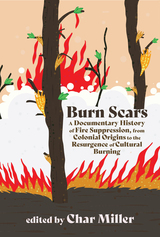
In Burn Scars, historian Char Miller assembles a collection of primary sources focused on debates over “light burning” (as prescribed or controlled burning was called). These historic documents show that not only was fire suppression controversial, but that it was also driven by explicitly racist and colonial beliefs. Yet the suppression paradigm contained within it the seeds of its destruction: Indigenous people continued to use fire as did non-Indigenous land managers. By the 1920s, scientific evidence was beginning to reveal that fire was essential for regenerating grasslands and forests; by the 1930s even the Forest Service was testing fire’s ecological benefits.
Burn Scars focuses on the burning debates of the early twentieth century, but Miller also provides evidence of a powerful counternarrative emerging from southern non-Indigenous foresters who used fire to revive longleaf pine ecosystems. The volume begins and ends with contributions from Indigenous practitioners discussing the long history and resurgent practice of cultural burning as part of traditional land management.
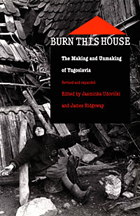
The contributors show that, contrary to descriptions by the Western media, the roots of the warring lie not in ancient Balkan hatreds but rather in a specific set of sociopolitical circumstances that occurred after the death of Tito and culminated at the end of the Cold War. In bringing together these essays, Serbian-born sociologist Jasminka Udovicki and Village Voice Washington correspondent James Ridgeway provide essential historical background for understanding the turmoil in Croatia, Bosnia, and Kosovo and expose the catalytic role played by the propaganda of a powerful few on all sides of what eventually became labeled an ethnic dispute.
Burn This House offers a poignant, informative, and fully up-to-date explication of the continuing Balkan tragedy.
Contributors. Sven Balas, Milan Milosevi´c Branka Prpa-Jovanovi´c, James Ridgeway, Stipe Sikavica, Ejub Stitkovac, Mirko Tepavac, Ivan Torov, Jasminka Udovicki, Susan Woodward

"Professor Hines has written what may prove to be an epoch-making book in the study of American civilization."—Reyner Banham, Times Literary Supplement
"Indeed, the book as a whole is a model of the balanced portrait, sure of Burnham's importance but always conscious of his failings."—Paul Goldberger, New York Times Book Review
"In every sense this is the definitive biography, and it is long overdue."—Harry Weese, Chicago Tribune
"This is a many-faceted book. Even if one were not interested in architecture or city planning, nor especially in Burnham the man, one would likely find the book rewarding because of the window it provides on a significant period of American history. . . . Hines brings alive many of the forces that were beating upon Burnham and his contemporaries, and which are shaping our lives today."—Edmund M. Bacon, Architectural Record
"Hines has provided an intelligently organized, well-written, and fascinating account of Burnham's entire career. The analysis [is] a model of scholarship, good judgment, and literary grace that satisfies a long felt need."—Kenneth T. Jackson, American Historical Review
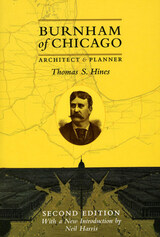
“In every sense this is the definitive biography.”—Harry Weese, Chicago Tribune
WPAs face a range of challenges on a regular basis: organizing class schedules, leading professional learning events, conducting program assessments, responding to student needs, meeting with deans and provosts, and more. Additionally, WPAs need to learn about and direct their programs strategically when considering the kind of program they currently have, the sort of program they envision, and how they can transition from one to another. Burnin’ Daylight acts as a roadmap for IRB-approved research and provides WPAs—specifically, new and returning WPAs—with a detailed yet flexible plan for understanding the inner workings of a writing program and how to develop a future trajectory for it.
Burnin’ Daylight is for writing program administrators of all experience levels and other administrators interested in taking a “principled practices” approach to their work.
Drawing from years of research and a rich array of sources, Cooper accounts for how school fires stoke a national conversation about the limited means for ordinary Kenyans, and especially youth, to peacefully influence the governance of their own lives. Further, Cooper argues that Kenyan students’ actions challenge the existing complacency with the globalized agenda of “education for all,” demonstrating that submissive despondency is not the only possible response to the failed promises of education to transform material and social inequalities.
Soon after overthrowing the Tokugawa government in 1868, the new Meiji leaders devised ambitious plans to build a modern nation-state. Among the earliest and most radical of the Meiji reforms was a plan for a centralized, compulsory educational system modeled after those in Europe and America. Meiji leaders hoped that schools would curb mounting social disorder and mobilize the Japanese people against the threat of Western imperialism.
The sweeping tone of this revolutionary plan obscured the fact that the Japanese were already quite literate and had clear ideas about what a school should be. In the century preceding the Meiji restoration, commoners throughout Japan had established 50,000 schools with almost no guidance or support from the government. Consequently, the Ministry of Education's new code of 1872 met with resistance, as local officials, teachers, and citizens sought compromises and pursued alternative educational visions. Their efforts ultimately led to the growth and consolidation of a new educational system, one with the imprint of local demands and expectations. This book traces the unfolding of this process in Nagano prefecture and explores how local people negotiated the formation of the new order in their own communities.
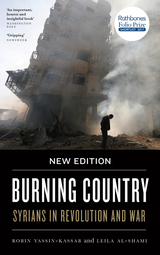
Burning Country explores the complicated reality of life in present-day Syria with unprecedented detail and sophistication, drawing on new firsthand testimonies from opposition fighters, exiles lost in an archipelago of refugee camps, and courageous human rights activists. Robin Yassin-Kassab and Leila Al-Shami expertly interweave these stories with an incisive analysis of the militarization of the uprising, the rise of the Islamists and sectarian warfare, and the role of Syria’s government in exacerbating the brutalization of the conflict. Through these accounts and a broad range of secondary source material, the authors persuasively argue that the international community has failed in its stated commitments to support the Syrian opposition movements.
This new edition brings the story up to the present, with a new chapter that covers the internationalization of the conflict, including interventions by the United States, Russia, and Iran; the rollback of ISIS; the fall of Daraya and Aleppo; the crushing of local democracy; sectarian cleansing; and the forced exile of millions of Syrians.

The story features one of London’s most engaging larger-than-life protagonists, Elam Harnish, a prospector with John Henry–like strength and a thirst for gold-plated wealth. Harnish, the “Burning Daylight” of the title, eventually strikes it rich through his talent in the mines—and at the poker table. But he ultimately makes the biggest gamble of his life when he decides to trade it all for the golden-haired love of his life.
While the novel moves from Alaska to the Sonoma Valley and later into the wilds of Wall Street, it’s the vivid descriptions of the Gold Rush–era Klondike that shine. London takes readers on journeys deep into mines and across the frozen North via sled dog. He captures the competitive spirit of the time and the endless hope that the big score is just one dig away. London weaves in progressive views on sustainability and land use, and also timeless lessons about the real riches in life.
This new edition presents London’s text in full and features a new afterword from University of Alaska Fairbanks professor Eric Heyne. Heyne situates the novel within London’s life and writings and looks at some of the sources that may have inspired him. The re-emergence of Burning Daylight will allow London’s fans to fill in an important spot on their bookshelf and rediscover a long–lost work.
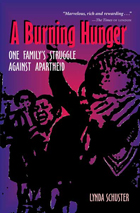
If the Mandelas were the generals in the fight for black liberation, the Mashininis were the foot soldiers. Theirs is a story of exile, imprisonment, torture, and loss, but also of dignity, courage, and strength in the face of appalling adversity. Originally published in Great Britain to critical acclaim, A Burning Hunger: One Family’s Struggle Against Apartheid tells a deeply moving human story and is one of the seminal books about the struggle against apartheid.
This family, Joseph and Nomkhitha Mashinini and their thirteen children, became immersed in almost every facet of the liberation struggle—from guerrilla warfare to urban insurrection. Although Joseph and Nomkhitha were peaceful citizens who had never been involved in politics, five of their sons became leaders in the antiapartheid movement. When the students of Soweto rose up in 1976 to protest a new rule making Afrikaans the language of instruction, they were led by charismatic young Tsietsi Mashinini. Scores of students were shot down and hundreds were injured. Tsietsi’s actions on that day set in motion a chain of events that would forever change South Africa, define his family, and transform their lives.
A Burning Hunger shows the human catastrophe that plagued generations of black Africans in the powerful story of one religious and law-abiding Soweto family. Basing her narrative on extensive research and interviews, Lynda Schuster richly portrays this remarkable family and in so doing reveals black South Africa during a time of momentous change.
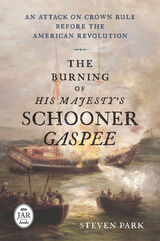
Between the Boston Massacre in 1770 and the Boston Tea Party in 1773—a period historians refer to as “the lull”—a group of prominent Rhode Islanders rowed out to His Majesty’s schooner Gaspee,which had run aground six miles south of Providence while on an anti-smuggling patrol. After threatening and shooting its commanding officer, the raiders looted the vessel and burned it to the waterline. Despite colony-wide sympathy for the June 1772 raid, neither the government in Providence nor authorities in London could let this pass without a response. As a result, a Royal Commission of Inquiry headed by Rhode Island governor Joseph Wanton zealously investigated the incident. In The Burning of His Majesty’s Schooner Gaspee: An Attack on Crown Rule Before the American Revolution, historian Steven Park reveals that what started out as a customs battle over the seizure of a prominent citizen’s rum was soon transformed into the spark that re-ignited Patriot fervor. The significance of the raid was underscored by a fiery Thanksgiving Day sermon given by a little-known Baptist minister in Boston. His inflammatory message was reprinted in several colonies and was one of the most successful pamphlets of the pre-Independence period. The commission turned out to be essentially a sham and made the administration in London look weak and ineffective. In the wake of the Gaspee affair, Committees of Correspondence soon formed in all but one of the original thirteen colonies, and later East India Company tea would be defiantly dumped into Boston Harbor.
READERS
Browse our collection.
PUBLISHERS
See BiblioVault's publisher services.
STUDENT SERVICES
Files for college accessibility offices.
RECENTLY PUBLISHED




UChicago Accessibility Resources
home | accessibility | search | about | contact us
BiblioVault ® 2001 - 2025
The University of Chicago Press