
 A SCHOLARLY BOOK REPOSITORY
240 start with M start with M

“Machiavellian”—used to describe the ruthless cunning of the power-obsessed and the pitiless—is never meant as a compliment. But the man whose name became shorthand for all that is ugly in politics was more engaging and nuanced than his reputation suggests. Christopher S. Celenza’s Machiavelli: A Portrait removes the varnish of centuries to reveal not only the hardnosed political philosopher but the skilled diplomat, learned commentator on ancient history, comic playwright, tireless letter writer, and thwarted lover.
Machiavelli’s hometown was the epicenter of the Italian Renaissance in the fifteenth century, a place of unparalleled artistic and intellectual attainments. But Florence was also riven by extraordinary violence. War and public executions were commonplace—Machiavelli himself was imprisoned and brutally tortured at the behest of his own government. These experiences left a deep impression on this keen observer of power politics, whose two masterpieces—The Prince and The Discourses—draw everywhere on the hard-won wisdom gained from navigating a treacherous world. But like many of Machiavelli’s fellow Florentines, he also immersed himself in the Latin language and wisdom of authors from the classical past. And for all of Machiavelli’s indifference to religion, vestiges of Christianity remained in his thought, especially the hope for a redeemer—a prince who would provide the stability so rare in Machiavelli’s worldly experience.
In the 1960s and 1970s, a popular diagnosis for America’s problems was that society was becoming a madhouse. In this intellectual and cultural history, Michael E. Staub examines a time when many believed insanity was a sane reaction to obscene social conditions, psychiatrists were agents of repression, asylums were gulags for society’s undesirables, and mental illness was a concept with no medical basis.
The first study to describe how social diagnostic thinking emerged, Madness Is Civilization casts new light on the politics of the postwar era.

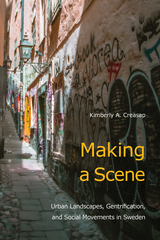
In the three largest cities in Sweden, social movement “scenes”—networks of social movement actors and the places they inhabit—challenge threats such as gentrification. The geography of the built environment influences their ability to lay claim to urban space and to local political processes. In Making a Scene, Kimberly Creasap emphasizes that it is the centrality, concentration, and visibility of these scenes that make them most effective. Whereas some scenes become embedded as part of everyday life—as in Malmö—in contrast, scenes in Göteborg and Stockholm often fail to become part of the fabric of urban neighborhoods.
Creasap investigates key spaces for scenes, from abandoned industrial areas and punk clubs to street festivals, bookstores, and social centers, to show how activists create sites and develop structures of resistance that are anti-capitalist, anti-fascist, anti-gentrification, queer, and feminist. She also charts the relationship between scenes and city spaces to show these autonomous social movements create their own cultural landscapes. Making a Scene encourages critical thinking about spatiality and place in the sociology of social movements and the role of social movements as important actors in urban development.
Poovey illuminates the ways literary genres, such as the novel, and innovations in social thought, such as statistical thinking and anatomical realism, helped separate social concerns from the political and economic domains. She then discusses the influence of the social body concept on Victorian ideas about the role of the state, examining writings by James Phillips Kay, Thomas Chalmers, and Edwin Chadwick on regulating the poor. Analyzing the conflict between Kay's idea of the social body and Babbage's image of the social machine, she considers the implications of both models for the place of Victorian women. Poovey's provocative readings of Disraeli's Coningsby, Gaskell's Mary Barton, and Dickens's Our Mutual Friend show that the novel as a genre exposed the role gender played in contemporary discussions of poverty and wealth.
Making a Social Body argues that gender, race, and class should be considered in the context of broader concerns such as how social authority is distributed, how institutions formalize knowledge, and how truth is defined.
Workers' self-management was one of the unique features of communist Yugoslavia. Goran Musić has investigated the changing ways in which blue-collar workers perceived the recurring crises of the regime. Two self-managed metal enterprises, one in Serbia another in Slovenia, provide the frame of the analysis in the time span between 1945 and 1989. These two factories became famous for strikes in 1988 that evoked echoes in popular discourses in former Yugoslavia. Drawing on interviews, factory publications and other media, local archives, and secondary literature, Musić analyzes the two cases, going beyond the clichés of political manipulation from the top and workers' intrinsic attraction to nationalism.
The author explains how, in the later phase of communist Yugoslavia, growing social inequalities among the workers and undemocratic practices inside the self-managed enterprises facilitated the spread of a nationalist and pro-market ideology on the shop floors. Yet rather than being a mass taken advantage of by populist leaders, the working class Musić presents is one with agency and voice, a force that played an important role in shaping the fate of the country. The book thus seeks to open a debate on the social processes leading up to the dissolution of Yugoslavia.

Grounded in a richly detailed ethnography of Haya practice, Weiss’s analysis considers the symbolic qualities and values embedded in goods and transactions across a wide range of cultural activity: agricultural practice and food preparation, the body’s experience of epidemic disease from AIDS to the infant affliction of “plastic teeth,” and long-standing forms of social movement and migration. Weiss emphasizes how Haya images of consumption describe the relationship between their local community and the global economy. Throughout, he demonstrates that particular commodities and more general market processes are always material and meaningful forces with the potential for creativity as well as disruption in Haya social life. By calling attention to the productive dimensions of this spatial and temporal world, his work highlights the importance of human agency in not only the Haya but any sociocultural order.
Offering a significant contribution to the anthropological theories of practice, embodiment, and agency, and enriching our understanding of the lives of a rural African people, The Making and Unmaking of the Haya Lived World will interest historians, anthropologists, ethnographers, and scholars of cultural studies.
With essays devoted to theories of racial domination, comparative global racisms, and transnational white identity, the geographical reach of the volume is significant and broad. Dalton Conley writes on “How I Learned to Be White.” Allan Bérubé discusses the intersection of gay identity and whiteness, and Mab Segrest describes the spiritual price white people pay for living in a system of white supremacy. Other pieces examine the utility of whiteness as a critical term for social analysis and contextualize different attempts at antiracist activism. In a razor-sharp introduction, the editors not only raise provocative questions about the intellectual, social, and political goals of those interested in the study of whiteness but assess several of the topic’s major recurrent themes: the visibility of whiteness (or the lack thereof); the “emptiness” of whiteness as a category of identification; and conceptions of whiteness as a structural privilege, a harbinger of violence, or an institutionalization of European imperialism.
Contributors. William Aal, Allan Bérubé, Birgit Brander Rasmussen, Dalton Conley, Troy Duster, Ruth Frankenberg, John Hartigan Jr., Eric Klinenberg, Eric Lott, Irene J. Nexica, Michael Omi, Jasbir Kaur Puar, Mab Segrest, Vron Ware, Howard Winant, Matt Wray
Making Down Syndrome: Motherhood and Kinship Futures in Urban Jordan draws on ethnographic research conducted primarily in Jordan’s capital city of Amman to explore how the label and identity of Down syndrome is gaining increasing cohesiveness. Focused on the experiences of mothers, who serve as an entry point for understanding broader family dynamics and choices, the book argues that practices and ideologies of care play a central role in making Down syndrome’s embodied and political realities. They do so through the momentum of kinship futures, or futures imagined through the prism of kinship roles and relations, which shape how families organize and distribute care between and beyond kinship networks and under conditions of economic and political uncertainty. By approaching everyday life in Jordan through the lens of disability, Making Down Syndrome offers new insights into how people navigate structures of family, gender, power, inequality, and precarity, all while trying to maintain hope for and cultivate better futures.

Throughout this memoir, the couple demonstrates that their lifelong commitment to making history through social activism cannot be understood without returning to the deeply personal context of their family history—of growing up “Red Diaper babies” in 1950s New York City, using folk music as self-expression as adolescents in the 1960s, and of making blintzes for their own family through the 1970s and 1980s. As the children of immigrants and first generation Jews, Dick and Mickey crafted their own religious identity as secular Jews, created a critical space for American progressive activism through SDS, and ultimately, found themselves raising an “American” family.

Drawing on memoirs, press accounts, and cultural criticism, Jackson uses the history of jazz in Paris to illuminate the challenges confounding French national identity during the interwar years. As he explains, many French people initially regarded jazz as alien because of its associations with America and Africa. Some reveled in its explosive energy and the exoticism of its racial connotations, while others saw it as a dangerous reversal of France’s most cherished notions of "civilization." At the same time, many French musicians, though not threatened by jazz as a musical style, feared their jobs would vanish with the arrival of American performers. By the 1930s, however, a core group of French fans, critics, and musicians had incorporated jazz into the French entertainment tradition. Today it is an integral part of Parisian musical performance. In showing how jazz became French, Jackson reveals some of the ways a musical form created in the United States became an international phenomenon and acquired new meanings unique to the places where it was heard and performed.
Out of the “lemons” handed to Mexican American workers in Corona, California--low pay, segregated schooling, inadequate housing, and racial discrimination--Mexican men and women made “lemonade” by transforming leisure spaces such as baseball games, parades, festivals, and churches into politicized spaces where workers voiced their grievances, debated strategies for advancement, and built solidarity. Using oral history interviews, extensive citrus company records, and his own experiences in Corona, José Alamillo argues that Mexican Americans helped lay the groundwork for civil rights struggles and electoral campaigns in the post-World War II era.

Countering our image of early Anglo-American families as dominated by harsh, austere patriarchs, Anne Lombard challenges long-held assumptions about the history of family life by casting a fresh look at the experience of growing up male in seventeenth- and eighteenth-century New England. Drawing upon sources ranging from men's personal writings to court records to medical literature, Lombard finds that New England's Puritan settlers and their descendants shared a distinctive ideal of manhood that decisively shaped the lives of boys and men.
At its core was a suspicion of emotional attachments between men and women. Boys were taken under their father's wing from a young age and taught the virtues of reason, responsibility, and maturity. Intimate bonds with mothers were discouraged, as were individual expression, pride, and play. The mature man who moderated his passions and contributed to his family and community was admired, in sharp contrast to the young, adventurous, and aggressive hero who would emerge after the American Revolution and embody our modern image of masculinity.
Lombard writes with empathy and sensitivity of colonial life and the ways in which it interacted not only with male experience but also with the larger political history of eighteenth-century America.
Winner of the 2015 Aidoo-Snyder Book Prize for outstanding book on African women's experiences. (African Studies Association)
Honorable Mention, New York African Studies Association Book Prize
In Making Modern Girls, Abosede A. George examines the influence of African social reformers and the developmentalist colonial state on the practice and ideology of girlhood as well as its intersection with child labor in Lagos, Nigeria. It draws from gender studies, generational studies, labor history, and urban history to shed new light on the complex workings of African cities from the turn of the twentieth century through the nationalist era of the 1950s.
The two major schemes at the center of this study were the modernization project of elite Lagosian women and the salvationist project of British social workers. By approaching children and youth, specifically girl hawkers, as social actors and examining the ways in which local and colonial reformers worked upon young people, the book offers a critical new perspective on the uses of African children for the production and legitimization of national and international social development initiatives.
Making Modern Girls demonstrates how oral sources can be used to uncover the social history of informal or undocumented urban workers and to track transformations in practices of childhood over the course of decades. George revises conventional accounts of the history of development work in Africa by drawing close attention to the social welfare initiatives of late colonialism and by highlighting the roles that African women reformers played in promoting sociocultural changes within their own societies.

This social, cultural, and political history of Slavic Muslim women of the Yugoslav region in the first decades of the post-Ottoman era is the first to provide a comprehensive overview of the issues confronting these women. It is based on a study of voluntary associations (philanthropic, cultural, Islamic-traditionalist, and feminist) of the period.
It is broadly held that Muslim women were silent and relegated to a purely private space until 1945, when the communist state “unveiled” and “liberated” them from the top down. After systematic archival research in Bosnia, Croatia, Serbia, and Austria, Fabio Giomi challenges this view by showing: • How different sectors of the Yugoslav elite through association publications, imagined the role of Muslim women in post-Ottoman times, and how Muslim women took part in the construction or the contestation of these narratives. • How associations employed different means in order to forge a generation of “New Muslim Women” able to cope with the post-Ottoman political and social circumstances. • And how Muslim women used the tools provided by the associations in order to pursue their own projects, aims and agendas. The insights are relevant for today’s challenges facing Muslim women in Europe. The text is illustrated with exceptional photographs.T

Eugene Gordon (1891–1974) was a major writer involved in the development of the burgeoning Black literary scene in Boston in the 1920s, an active player in the Harlem Renaissance, and a longtime member of the Communist Party. Despite his credentials as a reporter, editor, fiction writer, and political activist, he is rarely mentioned in studies of the Harlem Renaissance or Marxist politics. Here, Louis J. Parascandola has pulled together Gordon’s journalism, autobiographical writing, and fiction. This new collection, featuring both previously published pieces from a wide variety of publications as well as material that has never before been published, demonstrates his range and his skill while establishing his importance as a critical voice of his time.
Gordon was born and raised in the South but made his way north at a young age. In Boston, he founded the Saturday Evening Quill Club, an African American literary group that included other notable writers such as Helene Johnson and Dorothy West. He later became editor of and contributor to two major publications coming out of the era: the Messenger and Opportunity: A Journal of Negro Life. As he grew more political, he joined the Communist Party in the 1930s and became editor of and contributor to the New Masses. Scholars looking to research him have struggled to find disparate writings to get a fuller sense of his literary stylings as well as his political commitments. This welcome new volume establishes Gordon as a significant, understudied figure.
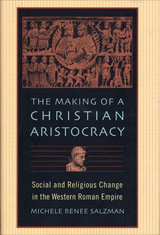
What did it take to cause the Roman aristocracy to turn to Christianity, changing centuries-old beliefs and religious traditions? Michele Salzman takes a fresh approach to this much-debated question. Focusing on a sampling of individual aristocratic men and women as well as on writings and archeological evidence, she brings new understanding to the process by which pagan aristocrats became Christian, and Christianity became aristocratic.
Roman aristocrats would seem to be unlikely candidates for conversion to Christianity. Pagan and civic traditions were deeply entrenched among the educated and politically well-connected. Indeed, men who held state offices often were also esteemed priests in the pagan state cults: these priesthoods were traditionally sought as a way to reinforce one’s social position. Moreover, a religion whose texts taught love for one’s neighbor and humility, with strictures on wealth and notions of equality, would not have obvious appeal for those at the top of a hierarchical society. Yet somehow in the course of the fourth and early fifth centuries Christianity and the Roman aristocracy met and merged.
Examining the world of the ruling class—its institutions and resources, its values and style of life—Salzman paints a fascinating picture, especially of aristocratic women. Her study yields new insight into the religious revolution that transformed the late Roman Empire.
Professor Lien looks at political participation by Asian Americans prior to 1965 and then examines, at both organizational and mass politics levels, how race, ethnicity, and transnationalism help to construct a complex American electorate. She looks not only at rates of participation among Asian Americans as compared with blacks, Latinos, American Indians, and non-Hispanic whites, but also among specific groups of Asian Americans—Chinese, Japanese, Filipinos, Koreans, Asian Indians, and Vietnamese. She also discusses how gender, socioeconomic class, and place of birth affect political participation.
With documentation ranging from historical narrative to opinion survey data, Professor Lien creates a picture of a diverse group of politically active people who are intent on carving out a place for themselves in American political life.
An unprecedented account of social stratification within the US legal profession.
How do race, class, gender, and law school status condition the career trajectories of lawyers? And how do professionals then navigate these parameters?
The Making of Lawyers’ Careers provides an unprecedented account of the last two decades of the legal profession in the US, offering a data-backed look at the structure of the profession and the inequalities that early-career lawyers face across race, gender, and class distinctions. Starting in 2000, the authors collected over 10,000 survey responses from more than 5,000 lawyers, following these lawyers through the first twenty years of their careers. They also interviewed more than two hundred lawyers and drew insights from their individual stories, contextualizing data with theory and close attention to the features of a market-driven legal profession.
Their findings show that lawyers’ careers both reflect and reproduce inequalities within society writ large. They also reveal how individuals exercise agency despite these constraints.
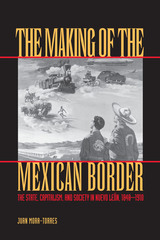
The issues that dominate U.S.-Mexico border relations today—integration of economies, policing of boundaries, and the flow of workers from south to north and of capital from north to south—are not recent developments. In this insightful history of the state of Nuevo León, Juan Mora-Torres explores how these processes transformed northern Mexico into a region with distinct economic, political, social, and cultural features that set it apart from the interior of Mexico.
Mora-Torres argues that the years between the establishment of the U.S.-Mexico boundary in 1848 and the outbreak of the Mexican Revolution in 1910 constitute a critical period in Mexican history. The processes of state-building, emergent capitalism, and growing linkages to the United States transformed localities and identities and shaped class formations and struggles in Nuevo León. Monterrey emerged as the leading industrial center and home of the most powerful business elite, while the countryside deteriorated economically, politically, and demographically. By 1910, Mora-Torres concludes, the border states had already assumed much of their modern character: an advanced capitalist economy, some of Mexico's most powerful business groups, and a labor market dependent on massive migrations from central Mexico.
Urban theorists have tried for decades to define exactly what a neighborhood is. But behind that daunting existential question lies a much murkier problem: never mind how you define them—how do you make neighborhoods productive and fair for their residents? In Making Our Neighborhoods, Making Our Selves, George C. Galster delves deep into the question of whether American neighborhoods are as efficient and equitable as they could be—socially, financially, and emotionally—and, if not, what we can do to change that. Galster aims to redefine the relationship between places and people, promoting specific policies that reduce inequalities in housing markets and beyond.
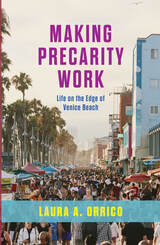
In Making Precarity Work, sociologist Laura A. Orrico shows how Los Angeles’s Venice Beach boardwalk, which is a magnet for tourists, is also a workplace, one that wouldn’t exist without the motley crew of people selling art, drinking, performing, using drugs, and working odd jobs who gather daily to engage in varied activities, from selling crafts to minding each other’s wares and asking for spare change.
Throughout the book, Orrico lifts up this workplace as a collective accomplishment, demonstrating how it can be a safety net to manage insecurity and inequality for those opting into its flexible and precarious structure, as well as how the LA government’s efforts to stabilize this work often disrupt the success of this collaborative and creative ecosystem. She also presents the ways this work can exacerbate those very inequalities. Sharing the personal stories of boardwalk workers, Orrico considers these juxtaposed realities and asks her audience to question how we can and should respond to a society whose best option for the disadvantaged is precarity.
How did political power function in the communist regimes of East Central Europe after 1945? Making Sense of Dictatorship addresses this question with a particular focus on the acquiescent behavior of the majority of the population until, at the end of the 1980s, their rejection of state socialism and its authoritarian world.
The authors refer to the concept of Sinnwelt, the way in which groups and individuals made sense of the world around them. The essays focus on the dynamics of everyday life and the extent to which the relationship between citizens and the state was collaborative or antagonistic. Each chapter addresses a different aspect of life in this period, including modernization, consumption and leisure, and the everyday experiences of “ordinary people,” single mothers, or those adopting alternative lifestyles.
Empirically rich and conceptually original, the essays in this volume suggest new ways to understand how people make sense of everyday life under dictatorial regimes.

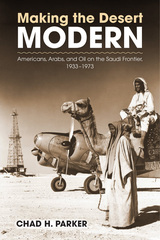
In 1933 American oilmen representing what later became the Arabian American Oil Company (Aramco) signed a concession agreement with the Saudi Arabian king granting the company sole proprietorship over the oil reserves in the country's largest province. As drilling commenced and wells proliferated, Aramco soon became a major presence in the region. In this book Chad H. Parker tells Aramco's story, showing how an American company seeking resources and profits not only contributed to Saudi “nation building” but helped define U.S. foreign policy during the early Cold War.
In the years following World War II, as Aramco expanded its role in Saudi Arabia, the idea of “modernization” emerged as a central component of American foreign policy toward newly independent states. Although the company engaged in practices supportive of U.S. goals, its own modernizing efforts tended to be pragmatic rather than policy-driven, more consistent with furthering its business interests than with validating abstract theories. Aramco built the infrastructure necessary to extract oil and also carved an American suburb out of the Arabian desert, with all the air-conditioned comforts of Western modern life. At the same time, executives cultivated powerful relationships with Saudi government officials and, to the annoyance of U.S. officials, even served the monarchy in diplomatic disputes. Before long the company became the principal American diplomatic, political, and cultural agent in the country, a role it would continue to play until 1973, when the Saudi government took over its operation.
A Choice Outstanding Academic Title for 2023
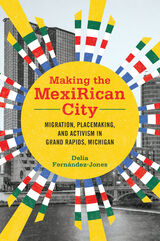
Large numbers of Latino migrants began to arrive in Grand Rapids, Michigan, in the 1950s. They joined a small but established Spanish-speaking community of people from Texas, Mexico, and Puerto Rico. Delia Fernández-Jones merges storytelling with historical analysis to recapture the placemaking practices that these Mexicans, Tejanos, and Puerto Ricans used to create a new home for themselves. Faced with entrenched white racism and hostility, Latinos of different backgrounds formed powerful relationships to better secure material needs like houses and jobs and to recreate community cultural practices. Their pan-Latino solidarity crossed ethnic and racial boundaries and shaped activist efforts that emphasized working within the system to advocate for social change. In time, this interethnic Latino alliance exploited cracks in both overt and structural racism and attracted white and Black partners to fight for equality in social welfare programs, policing, and education.
Groundbreaking and revelatory, Making the MexiRican City details how disparate Latino communities came together to respond to social, racial, and economic challenges.

on that momentous movement historians know as the Great Migration. Peter
Gottlieb shatters the received portrait of southern migrants as bewildered,
premodern folk, 'utterly unprepared' for the complexities of urban life.
African Americans in his account emerge as complex, creative agents, exploiting
old solidarities and building new ones, transforming the urban landscape
even as it transformed them." -- James Campbell, Northwestern University
"Engagingly written and well organized. . . . A major addition to
the fields of Afro-American, urban, and working-class history." --
Howard N. Rabinowitz, Georgia Historical Quarterly
"Gottlieb uses oral histories, corporate records, and primary and
secondary scholarship to present a useful picture of an important part
of the Great Migration that followed World War I." -- George Lipsitz,
Choice
"Sensitive and yet also incisive. . . . clear and often compelling.
An outstanding study." -- James R. Barrett, Journal of American
Ethnic History
Publication of this work was supported in part by a grant from the
Andrew W. Mellon Foundation.
In recent years these questions have occasioned intensifying debates, but they have seldom extended beyond the boundaries of individual academic disciplines or crossed the divide that has traditionally separated the academy from the "outside" world. Making Worlds both questions and traverses those divisions by combining personal essays, activist political rhetoric, oral history, poetry, iconography, and performance art with interdisciplinary academic discourses.
Representing a wide range of perspectives, Making Worlds develops a provocative conversation about gender and spatiality in the interwoven symbolic and material environments we create. The contributors engage such issues as the body as site of symbolic action, fabrication, and desire; the place and play of sexualities; the cultural implications of everyday life—home, travel, work, childbirth, food, disease, and death; technology and mass media; surveillance, confinement, and the law; the dynamics of race and ethnicity; imperialism, oppression, and resistance; the politics of urban spaces; landscape and cultural memory; the experience of time; and the nature of "Nature." For students and scholars in cultural studies, geography, literary criticism, anthropology, history, and women's studies, it offers new ways of thinking about space, place, and the spatial contexts of social thought and action.
Amid these disadvantages, what is a Mama, PhD to do? This literary anthology brings together a selection of deeply felt personal narratives by smart, interesting women who explore the continued inequality of the sexes in higher education and suggest changes that could make universities more family-friendly workplaces.
The contributors hail from a wide array of disciplines and bring with them a variety of perspectives, including those of single and adoptive parents. They address topics that range from the level of policy to practical day-to-day concerns, including caring for a child with special needs, breastfeeding on campus, negotiating viable maternity and family leave policies, job-sharing and telecommuting options, and fitting into desk/chair combinations while eight months pregnant.
Candid, provocative, and sometimes with a wry sense of humor, the thirty-five essays in this anthology speak to and offer support for any woman attempting to combine work and family, as well as anyone who is interested in improving the university's ability to live up to its reputation to be among the most progressive of American institutions.
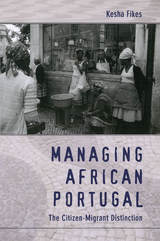
The ethnographic focus is a former undocumented fish market that at one time employed both Portuguese and Cape Verdean women. Both groups eventually sought work in low-wage professions as maids, nannies, and restaurant-kitchen help. The visibility of poor Portuguese women as domestics was thought to undermine the appearance of Portuguese modernity; by contrast, the association of poor African women with domestic work confirmed it. Fikes argues that we can better understand how Portugal interpreted its economic absorption into the EU by attending to the different directions in which working-poor Portuguese and Cape Verdean women were routed in the mid-1990s and by observing the character of the new work relationships that developed among them. In Managing African Portugal, Fikes pushes for a study of migrant phenomena that considers not only how the enactment of citizenship by the citizen manages the migrant, but also how citizens are simultaneously governed through their uptake and assumption of new EU citizen roles.
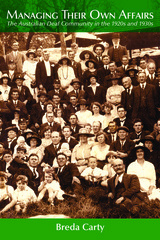
During this time, deaf Australians aspired to manage their own affairs. They enjoyed some success by establishing “breakaways” from the Deaf Societies, and they also established an independent national organization, which was contested and ultimately suppressed by the Deaf Societies. These developments were influenced by wider social movements in Australian society, such as the mobilization of minority groups in their push for autonomy and equal rights. Although most of the breakaway Deaf organizations did not survive beyond the 1930s, they significantly affected the power structures and relationships between deaf and hearing people in Australia. The Australian Deaf community’s attempts to organize independently during these years have been largely erased from collective memory, making Carty’s examination a particularly important and necessary addition to the historical literature.
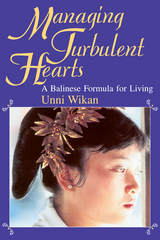
Wikan's study of the Indonesian island of Bali is an absorbing debate with previous anthropological interpretations as well as an innovative development of the anthropology of experience.
"This is indeed an important book, a landmark in studies of Bali and one surely destined to have major theoretical impact on anthropological research well beyond that famous Indonesian island."—Anthony R. Walker, Journal of Asian and African Studies

At the border where Brazil, Paraguay, and Argentina meet under the scrutiny of the US and Mercosur (the large South American trade bloc), Arabs have long fulfilled what author John Tofik Karam calls a "manifold destiny." Karam casts Lebanese, Palestinians, and Syrians at this American border as circumstantial protagonists of a hemispheric saga.
For the more than six decades since they started settling at the trinational border between Brazil, Paraguay, and Argentina, Arabs have animated the hemisphere. Their transnational economic and social projects reveal a heretofore unacknowledged venue of exceptional rule in which the community accommodates and abides multiple states' varied suspensions of norms and laws. Arabs set up businesses and community centers at the border under authoritarian military governments between the 1950s and 1980s; thereafter, when denied full democratic enfranchisement, they instead underwent increasing surveillance from the 1990s to today. Karam reveals an unfinished history of exceptional rule that Arabs accommodate from an authoritarian past to a counterterrorist present.
Karam's riveting account draws on anthropological and historical research from each side of this trinational South American border, as well as from the US—where government bureaucrats still suspect Arabs at the border of would-be-terrorist subversion. Offering a fresh understanding of the hemisphere, Manifold Destiny brings the transnational turn of Middle Eastern studies to bear upon the fields of American studies, Brazilian studies, and Latin American studies.

Gerald D. Suttles here offers an irreverent, highly critical guide to both the realities and myths of land-use planning and development in Chicago from 1976 through 1987.
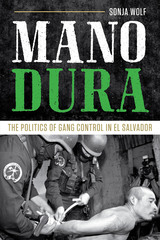
In 1992, at the end of a twelve-year civil war, El Salvador was poised for a transition to democracy. Yet, after longstanding dominance by a small oligarchy that continually used violence to repress popular resistance, El Salvador’s democracy has proven to be a fragile one, as social ills (poverty chief among them) have given rise to neighborhoods where gang activity now thrives. Mano Dura examines the ways in which the ruling ARENA party used gang violence to solidify political power in the hands of the elite—culminating in draconian “iron fist” antigang policies that undermine human rights while ultimately doing little to address the roots of gang membership.
Drawing on extensive ethnographic fieldwork and policy analysis, Mano Dura examines the activities of three nongovernmental organizations (NGOs) that have advocated for more nuanced policies to eradicate gangs and the societal issues that are both a cause and an effect of gang proliferation. While other studies of street gangs have focused on relatively distant countries such as Colombia, Argentina, and Jamaica, Sonja Wolf’s research takes us to a country closer to the United States, where forced deportation has brought with it US gang culture. Charting the limited success of NGOs in influencing El Salvador’s security policies, the book brings to light key contextual aspects—including myopic media coverage and the ironic populist support for ARENA, despite the party’s protection of the elite at the expense of the greater society.
In an era when many organizations are focused on principles of responsibility, Harvard Business School has long tried to promote better business standards. Anteby’s rich account reveals the surprising role of silence and ambiguity in HBS’s process of codifying morals and business values. As Anteby describes, at HBS specifics are often left unspoken; for example, teaching notes given to faculty provide much guidance on how to teach but are largely silent on what to teach. Manufacturing Morals demonstrates how faculty and students are exposed to a system that operates on open-ended directives that require significant decision-making on the part of those involved, with little overt guidance from the hierarchy. Anteby suggests that this model—which tolerates moral complexity—is perhaps one of the few that can adapt and endure over time.
Manufacturing Morals is a perceptive must-read for anyone looking for insight into the moral decision-making of today’s business leaders and those influenced by and working for them.
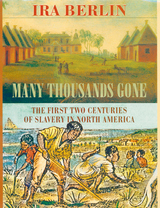
Today most Americans, black and white, identify slavery with cotton, the deep South, and the African-American church. But at the beginning of the nineteenth century, after almost two hundred years of African-American life in mainland North America, few slaves grew cotton, lived in the deep South, or embraced Christianity. Many Thousands Gone traces the evolution of black society from the first arrivals in the early seventeenth century through the Revolution. In telling their story, Ira Berlin, a leading historian of southern and African-American life, reintegrates slaves into the history of the American working class and into the tapestry of our nation.
Laboring as field hands on tobacco and rice plantations, as skilled artisans in port cities, or soldiers along the frontier, generation after generation of African Americans struggled to create a world of their own in circumstances not of their own making. In a panoramic view that stretches from the North to the Chesapeake Bay and Carolina lowcountry to the Mississippi Valley, Many Thousands Gone reveals the diverse forms that slavery and freedom assumed before cotton was king. We witness the transformation that occurred as the first generations of creole slaves—who worked alongside their owners, free blacks, and indentured whites—gave way to the plantation generations, whose back-breaking labor was the sole engine of their society and whose physical and linguistic isolation sustained African traditions on American soil.
As the nature of the slaves’ labor changed with place and time, so did the relationship between slave and master, and between slave and society. In this fresh and vivid interpretation, Berlin demonstrates that the meaning of slavery and of race itself was continually renegotiated and redefined, as the nation lurched toward political and economic independence and grappled with the Enlightenment ideals that had inspired its birth.
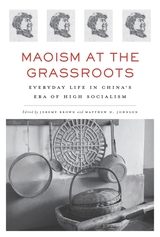
The Maoist state’s dominance over Chinese society, achieved through such watersheds as the Great Leap Forward and the Cultural Revolution, is well known. Maoism at the Grassroots reexamines this period of transformation and upheaval from a new perspective, one that challenges the standard state-centered view. Bringing together scholars from China, Europe, North America, and Taiwan, this volume marshals new research to reveal a stunning diversity of individual viewpoints and local experiences during China’s years of high socialism.
Focusing on the period from the mid-1950s to 1980, the authors provide insights into the everyday lives of citizens across social strata, ethnicities, and regions. They explore how ordinary men and women risked persecution and imprisonment in order to assert personal beliefs and identities. Many displayed a shrewd knack for negotiating the maze-like power structures of everyday Maoism, appropriating regime ideology in their daily lives while finding ways to express discontent and challenge the state’s pervasive control.
Heterogeneity, limited pluralism, and tensions between official and popular culture were persistent features of Maoism at the grassroots. Men had gay relationships in factory dormitories, teenagers penned searing complaints in diaries, mentally ill individuals cursed Mao, farmers formed secret societies and worshipped forbidden spirits. These diverse undercurrents were as representative of ordinary people’s lives as the ideals promulgated in state propaganda.

"How do we apply Chairman Mao's Thought to get fat pigs?" Squad Leader Ho (who knew the most about pigs) replied that, according to Chairman Mao, one must investigate the problem fully from all sides, and then integrate practice and theory. Ho concluded that the reason for our skinny pigs had to be found in one of three areas: the relationship between the pigs and their natural environment (excluding man); the relationship between the cadres and the pigs; and the relationship among the pigs themselves.
And so the city slickers, sent down to the countryside for political reeducation, set out to find the Thousand-Dollar Pig, much to the bemusement of the local peasants.
The sixteen stories collected in this remarkable book give firsthand accounts of daily life in contemporary China. From 250 interviews conducted in Hong Kong between 1972 and 1976, Mr. Frolic has created charming vignettes that show how individuals from all parts of China led their lives in the midst of rapid social change and political unrest. We hear about oil prospectors, rubber growers, and factory workers, Widow Wang and her sit-in to get a larger apartment, the thoroughly corrupt Man Who Loved Dog Meat, the young people who flew kites to protest antidemocratic tendencies.
As fresh and original as the individual accounts are, common and timeless themes emerge: the sluggishness of an agrarian society in responding to modernization; the painful lack of resources in a poor and gigantic country; the constraints imposed on common people by the bureaucracy; the way in which individuals outwardly support the system and inwardly resist it; the limitations of heavy and conflicting doses of ideology in motivating individuals.
But there are also recurrent motifs of economic and social progress: production rises, illiteracy declines, and socialist values have impact. A new China has emerged, though change is occurring far more slowly than its leaders had intended.
Mao's People contains much new information on China both for the general reader and for specialists in the field. Above all, it is a completely engrossing and vivid glimpse into the ways of a nation we are only beginning to discover.

Mapping AsiaTown Cleveland challenges ideas about the invisibility of Asian Americans in the urban Midwest by linking the contemporary development of Cleveland’s “AsiaTown” to the multiple and fragmented histories of Cleveland’s Asian American communities from the 1940s to present day. Kinney’s sharp insights illustrate how region matters for Japanese Americans who resettled from concentration camps and Chinese Americans food purveyors, as well as the ways in which Asian American community leaders have had to fight for visibility and representation in city planning—even as the Cleveland Asian Festival is branded as a marquee “diversity” event for the city.
Mapping AsiaTown Cleveland recognizes the vibrant Asian American community formations and belonging that have developed in seemingly unexpected spaces and places.
In the series Asian American History and Culture
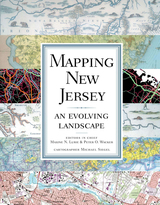
Tracing the changes in environment, land use patterns, demography, transportation, economy, and politics over the course of many centuries, Mapping New Jerseyilluminates the state's transformation from a simple agricultural society to a post-industrial and culturally diverse place inhabited by more people per acre than anywhere else in the country.
An innovator in transportation, from railroads to traffic circles to aviation, New Jersey from its beginnings was a "corridor" state, with a dense Native American trail system once crisscrossed on foot, country roads traveled by armies of the American Revolution, and, lately, the rolling wheels of many sedans, SUVs, hybrids, public and commercial vehicles, and freight. Early to industrialize, it also served as the headquarters for Thomas Edison and the development of the modern American economy. Small in territory and crowded with people, the state works to recycle garbage and, at the same time, best utilize and preserve its land.
New Jersey has been depicted in useful and quite stunning historical maps, many of the best included in Mapping New Jerseyùcrude maps drawn by sixteenth-century navigators; complex and beautifully decorated pieces created by early Dutch cartographers; land maps plotted by seventeenth-century English settlement surveyors; examples of the nineteenth century's scientific revolution in map making that helped locate topography and important mineral resources; detailed insurance maps that correct London map maker William Faden's 1777-78 classic rendering of the state; and aerial photos, remote sensing, and global positioning system maps generated through twenty-first-century technology breakthroughs in cartography.
Integrating new maps, graphs, and diagrams unavailable through ordinary research or Internet searches, Mapping New Jersey is divided into six topical chapters, each accompanied by an introduction and overview telling the story of the state's past and detailing its diversity. Mapping New Jersey, dramatically bold and in full color, travels where New Jersey has gone and the rest of the nation is likely to follow.

Mapping Wonderlands fills part of this gap in existing regional studies by looking at early popular pictorial maps of Arizona. These cartographic representations of the state utilize formal mapmaking conventions to create a place-based state history. They introduce illustrations, unique naming conventions, and written narratives to create carefully visualized landscapes that emphasize the touristic aspects of Arizona.
Analyzing the visual culture of tourism in illuminating detail, this book documents how Arizona came to be identified as an appealing tourism destination. Providing a historically situated analysis, Dori Griffin draws on samples from a comprehensive collection of materials generated to promote tourism during Arizona’s first half-century of statehood. She investigates the relationship between natural and constructed landscapes, visual culture, and narratives of place. Featuring sixty-six examples of these aesthetically appealing maps, the book details how such maps offered tourists and other users a cohesive and storied image of the state. Using historical documentation and rhetorical analysis, this book combines visual design and historical narrative to reveal how early-twentieth-century mapmakers and map users collaborated to imagine Arizona as a tourist’s paradise.

Sensational headlines have publicized the drug trafficking, brutal violence, and other organized crime elements associated with Central America's mara gangs, but there have been few clear-eyed analyses of the history, hierarchies, and future of the mara phenomenon. The first book to look specifically at the Central American gang problem by drawing on the perspectives of researchers from different disciplinary backgrounds, Maras: Gang Violence and Security in Central America provides much-needed insight.
These essays trace the development of the gangs, from Mara Salvatrucha to the 18th Street Gang, in Los Angeles and their spread to El Salvador, Honduras, Guatemala, and Nicaragua as the result of members' deportation to Central America; there, they account for high homicide rates and threaten the democratic stability of the region. With expertise in areas ranging from political science to law enforcement and human rights, the contributors also explore the spread of mara violence in the United States. Their findings comprise a complete documentation that spans sexualized violence, case studies of individual gangs, economic factors, varied responses to gang violence, the use of intelligence gathering, the limits of state power, and the role of policy makers.
Raising crucial questions for a wide readership, these essays are sure to spark productive international dialogues.
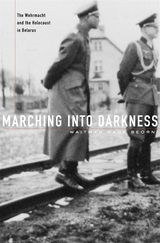
On October 10, 1941, the entire Jewish population of the Belarusian village of Krucha was rounded up and shot. While Nazi death squads routinely carried out mass executions on the Eastern Front, this particular atrocity was not the work of the SS but was committed by a regular German army unit acting on its own initiative. Marching into Darkness is a bone-chilling exposé of the ordinary footsoldiers who participated in the Final Solution on a daily basis.
Although scholars have exploded the myth that the Wehrmacht played no significant part in the Holocaust, a concrete picture of its involvement at the local level has been lacking. Among the crimes Waitman Wade Beorn unearths are forced labor, sexual violence, and graverobbing, though a few soldiers refused to participate and even helped Jews. By meticulously reconstructing the German army's activities in Belarus in 1941, Marching into Darkness reveals in stark detail how the army willingly fulfilled its role as an agent of murder on a massive scale. Early efforts at improvised extermination progressively became much more methodical, with some army units going so far as to organize "Jew hunts." Beorn also demonstrates how the Wehrmacht used the pretense of anti-partisan warfare as a subterfuge by reporting murdered Jews as partisans.
Through archival research into military and legal records, survivor testimonies, and eyewitness interviews, Beorn paints a searing portrait of a professional army's descent into ever more intimate participation in genocide.
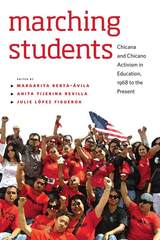
Contributors: Alejandro Covarrubias, Xico González, Eracleo Guevara, Adriana Katzew, Lilia R. De Katzew, Rita Kohli, Edward M. Olivos, Alejo Padilla, Carmen E. Quintana, Evelyn M. Rangel-Medina, Marianna Rivera, Daniel G. Solórzano, Carlos Tejeda
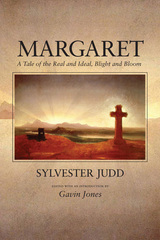
Praised at the time as the most emphatically “American” book ever written, Margaret is a breathtaking combination of female bildungsroman, utopian novel, and historical romance. First published in 1845, Sylvester Judd's novel centers on the fictional New England village of Livingston, where the young Margaret Hart strives to escape the poverty and vice of her surroundings by learning from a mysterious teacher, the “Master,” and by entwining herself with the powers of nature. But when Margaret's brother is tried and hanged for murder, this rural community collapses, forcing Margaret to face the temptations of an urban underworld and to confront the intrigue of her family history. Margaret is the story of a young woman's attempt to create a new social order, founded on beauty and truth, in a land plagued by violence, debauchery, and political instability.
As Gavin Jones points out in his new introduction, Margaret perhaps stands alone in its creation of a female character who grows in social rather than domestic power. The novel also remains unique in its exploration of transcendental philosophy in novelistic form. Part eco-criticism, part seduction novel, part temperance tract, and part social history, Margaret is a virtual handbook for understanding the literary culture of mid-nineteenth-century America, the missing piece in puzzling out connections between writers such as Hawthorne, Melville, Whitman, and Thoreau.
Margaret was widely read and deeply influential on both British and American writers throughout the nineteenth century but controversial for its representations of alcoholism and capital punishment. Judd's novel remains resonant for today's readers as it overturns conventional views of the literary representation of women and the origins of the American Renaissance.
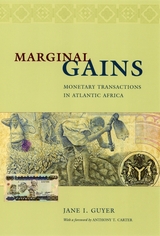
The answer is a rich diversity of economic practices responsive to both local and global circumstances. In Marginal Gains, Jane I. Guyer explores and explains these often bewildering practices, including trade with coastal capitalism and across indigenous currency zones, and within the modern popular economy. Drawing on a wide range of evidence, Guyer demonstrates that the region shares a coherent, if loosely knit, commercial culture. She shows how that culture actually works in daily practice, addressing both its differing scales of value and the many settings in which it operates, from crisis conditions to ordinary household budgets. The result is a landmark study that reveals not just how popular economic systems work in Africa, but possibly elsewhere in the Third World.
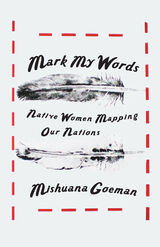
Dominant history would have us believe that colonialism belongs to a previous era that has long come to an end. But as Native people become mobile, reservation lands become overcrowded and the state seeks to enforce means of containment, closing its borders to incoming, often indigenous, immigrants.
In Mark My Words, Mishuana Goeman traces settler colonialism as an enduring form of gendered spatial violence, demonstrating how it persists in the contemporary context of neoliberal globalization. The book argues that it is vital to refocus the efforts of Native nations beyond replicating settler models of territory, jurisdiction, and race. Through an examination of twentieth-century Native women’s poetry and prose, Goeman illuminates how these works can serve to remap settler geographies and center Native knowledges. She positions Native women as pivotal to how our nations, both tribal and nontribal, have been imagined and mapped, and how these women play an ongoing role in decolonization.
In a strong and lucid voice, Goeman provides close readings of literary texts, including those of E. Pauline Johnson, Esther Belin, Joy Harjo, Leslie Marmon Silko, and Heid Erdrich. In addition, she places these works in the framework of U.S. and Canadian Indian law and policy. Her charting of women’s struggles to define themselves and their communities reveals the significant power in all of our stories.
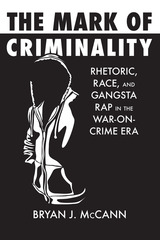
In The Mark of Criminality: Rhetoric, Race, and Gangsta Rap in the War-on-Crime Era, Bryan J. McCann argues that gangsta rap should be viewed as more than a damaging reinforcement of an era’s worst racial stereotypes. Rather, he positions the works of key gangsta rap artists, as well as the controversies their work produced, squarely within the law-and-order politics and popular culture of the 1980s and 1990s to reveal a profoundly complex period in American history when the meanings of crime and criminality were incredibly unstable.
At the center of this era—when politicians sought to prove their “tough-on-crime” credentials—was the mark of criminality, a set of discourses that labeled members of predominantly poor, urban, and minority communities as threats to the social order. Through their use of the mark of criminality, public figures implemented extremely harsh penal polices that have helped make the United States the world’s leading jailer of its adult population.
At the same time when politicians like Ronald Reagan, George H. W. Bush, and Bill Clinton and television shows such as COPS and America’s Most Wanted perpetuated images of gang and drug-filled ghettos, gangsta rap burst out of the hip-hop nation, emanating mainly from the predominantly black neighborhoods of South Central Los Angeles. Groups like NWA and solo artists (including Dr. Dre, Snoop Dogg, and Tupac Shakur) became millionaires by marketing the very discourses political and cultural leaders used to justify their war on crime. For these artists, the mark of criminality was a source of power, credibility, and revenue. By understanding gangsta rap as a potent, if deeply imperfect, enactment of the mark of criminality, we can better understand how crime is always a site of struggle over meaning. Furthermore, by underscoring the nimble rhetorical character of criminality, we can learn lessons that may inform efforts to challenge our nation’s failed policies of mass incarceration.
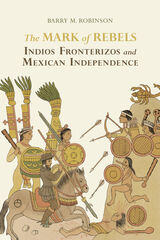
In The Mark of Rebels Barry Robinson offers a new look at Mexican Independence from the perspective of an indigenous population caught in the heart of the struggle. During the conquest and settlement of Mexico’s Western Sierra Madre, Spain’s indigenous allies constructed an indio fronterizo identity for their ethnically diverse descendants. These communities used their special status to maintain a measure of autonomy during the colonial era, but the cultural shifts of the late colonial period radically transformed the relationship between these indios fronterizos and their neighbors.
Marshalling an extensive array of archival material from Mexico, the United States, and Spain, Robinson shows that indio fronterizo participation in the Mexican wars of independence grafted into the larger Hidalgo Revolt through alignment with creole commanders. Still, a considerable gulf existed between the aims of indigenous rebels and the creole leadership. Consequently, the privileges that the indios fronterizos sought to preserve continued to diminish, unable to survive either the late colonial reforms of the Spanish regime or creole conceptions of race and property in the formation of the new nation-state.
This story suggests that Mexico’s transition from colony to nation can only be understood by revisiting the origins of the colonial system and by recognizing the role of Spain’s indigenous allies in both its construction and demolition. The study relates events in the region to broader patterns of identity, loyalty, and subversion throughout the Americas, providing insight into the process of mestizaje that is commonly understood to have shaped Latin America. It also foreshadows the popular conservatism of the nineteenth century and identifies the roots of post-colonial social unrest.
This book provides new context for scholars, historians, ethnographers, anthropologists, and anyone interested in the history of Mexico, colonization, Native Americans, and the Age of Revolutions.
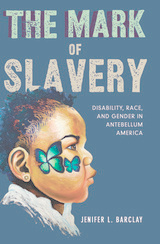
Time and again, antebellum Americans justified slavery and white supremacy by linking blackness to disability, defectiveness, and dependency. Jenifer L. Barclay examines the ubiquitous narratives that depicted black people with disabilities as pitiable, monstrous, or comical, narratives used not only to defend slavery but argue against it. As she shows, this relationship between ableism and racism impacted racial identities during the antebellum period and played an overlooked role in shaping American history afterward. Barclay also illuminates the everyday lives of the ten percent of enslaved people who lived with disabilities. Devalued by slaveholders as unsound and therefore worthless, these individuals nonetheless carved out an unusual autonomy. Their roles as caregivers, healers, and keepers of memory made them esteemed within their own communities and celebrated figures in song and folklore.
Prescient in its analysis and rich in detail, The Mark of Slavery is a powerful addition to the intertwined histories of disability, slavery, and race.

A leading sociologist’s groundbreaking three-decade study challenges outdated views of crime and character, revealing that traditional risk factors alone poorly predict children’s futures.
Between 1970 and 2020, the United States experienced a dramatic rise in crime and incarceration, followed by an unexpected decline. Along with plummeting violence came reductions in substance use, car accidents, child poverty, and lead exposure. By 2020, incarceration rates hit a twenty-five-year low, with African Americans benefiting the most. Yet these positive shifts have not registered in public discourse or policies, which continue to rely on outdated studies and reductive narratives of moral character and personal responsibility.
A major reason for this oversight is how social scientists study youth development—typically through single-birth-cohort approaches that fail to capture generational change. In a pioneering three-decade study of over one thousand Chicago children across multiple cohorts, Robert J. Sampson challenges this convention. He finds that children with similar self-control and family backgrounds, born just a decade apart, experienced dramatically different life paths. Strikingly, children born in the mid-1980s faced twice the likelihood of arrest by their mid-twenties than those born ten years later.
This research reframes deeply ingrained assumptions about ongoing social decline and the importance of individual fortitude. Sampson spotlights the role of shifting social conditions and structural change in driving measurable improvements in youth trajectories, along with new risks that threaten these gains.
The era into which a child is born shapes their future as profoundly as race, upbringing, or neighborhood. To rethink progress, inequality, and policy, we must first acknowledge how time itself leaves a transformative mark on individual lives.
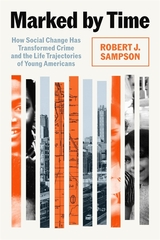
A leading sociologist’s groundbreaking three-decade study challenges outdated views of crime and character, revealing that traditional risk factors alone poorly predict children’s futures.
Between 1970 and 2020, the United States experienced a dramatic rise in crime and incarceration, followed by an unexpected decline. Along with plummeting violence came reductions in substance use, car accidents, child poverty, and lead exposure. By 2020, incarceration rates hit a twenty-five-year low, with African Americans benefiting the most. Yet these positive shifts have not registered in public discourse or policies that continue to rely on outdated studies and reductive narratives of moral character and personal responsibility.
A major reason for this oversight is how social scientists study youth development—typically through single birth-cohort approaches that fail to capture generational change. In a pioneering three-decade study of over 1,000 Chicago children across multiple cohorts, Robert J. Sampson challenges this convention. He finds that children with similar self-control and family backgrounds, born just a decade apart, experienced dramatically different life paths. Strikingly, children born in the mid-1980s faced twice the likelihood of arrest by their mid-twenties than those born ten years later.
This research reframes deeply ingrained assumptions about ongoing social decline and the importance of individual fortitude. Sampson spotlights the role of shifting social conditions and structural change in driving measurable improvements in youth trajectories, along with new risks that threaten these gains.
The era into which a child is born shapes their future as profoundly as race, upbringing, or neighborhood. To rethink progress, inequality, and policy, we must first acknowledge how time itself leaves a transformative mark on individual lives.
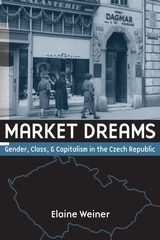
Drawing on a rich trove of focus group data, interviews, and textual sources, Elaine Weiner's Market Dreams powerfully captures the varied responses of female managers and factory workers in the Czech Republic to their country's transition from socialism to capitalism. Her work, rooted in sociology and comparative feminism, is an important advance for the literature on women in Eastern Europe.
"Market Dreams is a conceptually-sophisticated and empirically-rich account of how the discourses and practices of the free market penetrated the hearts and minds of everyday Czech citizens. Weiner's provocative analysis takes readers inside the worlds of female factory workers to expose the discontinuities between their radiant market dreams and their everyday realities--and juxtaposes them to the continuities experienced by female managers. In the process, it challenges many of our ideas about post/socialism, marketization, and gender and reveals the enduring power of stories in shaping social identities and actions."
---Lynne Haney, Associate Professor of Sociology, New York University
"Through interviews and a careful analysis of newspaper articles written in the first decade after the collapse of state socialism, Weiner explores the complicated interconnections between personal stories and the emerging neoliberal metanarrative of the free market in the Czech Republic after 1989. Her book transcends many of the dichotomies with which researchers of post-state socialism have been struggling: 'East' vs. 'West,' losers and winners, emancipation vs. oppression, etc., and thus makes a truly novel contribution to our understanding of women's lives after state socialism."
---Éva Fodor, Assistant Professor of Gender Studies, Central European University
"Weiner's rich and innovative study of female Czech managers and workers exemplifies the importance of narrative analysis for understanding why gender and class have not (yet) reconfigured the sense of postcommunism's alternatives. This is critical reading for feminists, class analysts, and students of postcommunist social change."
---Michael Kennedy, Director, Center for European Studies, University of Michigan
Elaine Weiner is Assistant Professor of Sociology at McGill University. Visit the author's website at: www.mcgill.ca/sociology/faculty/weiner/.
Cover Credit: Frank Scherschel/Time & Life Pictures/Getty Images
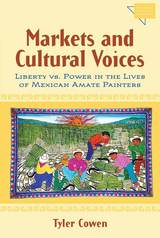
Cowen examines this cultural interaction between Mexico and the United States to see how globalization shapes the lives and the work of the artists and their families. The story of these three artists reveals that this exchange simultaneously creates economic opportunities for the artists, but has detrimental effects on the village.
A view of the daily village life of three artists connected to the larger art world, this book should be of particular interest to those in the fields of cultural economics, Latino studies, economic anthropology and globalization.
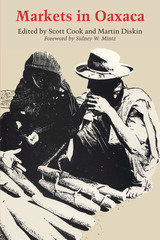
Markets in Oaxaca is a study of the regional peasant marketing system in the Valley of Oaxaca, Mexico. It relates the marketing system to other aspects of the regional economy, to neighboring regions, and to the Mexican national economy. Combining ethnographic, theoretical, and regional analyses, it suggests new directions in the fields of peasant and development studies.
Contributors to the volume describe the operation and nature of several marketplaces in the region, analyze village-based artisan production and various specialized economic roles (particularly the role of traders), and describe the operation of several total regional marketing systems. The editors then consider their findings against the background of political, economic, and social structures from the pre-Conquest period to the present. In their conclusion, the editors find the regional peasant economy to be responsive both to the influence of the urban metropolitan sector, on the one hand, and to its own indigenous structural integrity and internal dynamism, on the other.
In addition to the editors, the contributors to Markets in Oaxaca are Ralph L. Beals, Richard L. Berg Jr., Beverly Chiñas, Herbert M. Eder, Charlotte Stolmaker, Carole Turkenik, John C. Warner, Ronald Waterbury, and Cecil R. Welte. Their essays combine analyses of the elements of the system within a comprehensive theoretical framework. Together, they present a complete and integrated view of a peasant economy.
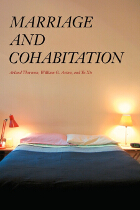
In an era when half of marriages end in divorce, cohabitation has become more commonplace and those who do get married are doing so at an older age. So why do people marry when they do? And why do some couples choose to cohabit? A team of expert family sociologists examines these timely questions in Marriage and Cohabitation, the result of their research over the last decade on the issue of union formation.
Situating their argument in the context of the Western world’s 500-year history of marriage, the authors reveal what factors encourage marriage and cohabitation in a contemporary society where the end of adolescence is no longer signaled by entry into the marital home. While some people still choose to marry young, others elect to cohabit with varying degrees of commitment or intentions of eventual marriage. The authors’ controversial findings suggest that family history, religious affiliation, values, projected education, lifetime earnings, and career aspirations all tip the scales in favor of either cohabitation or marriage. This book lends new insight into young adult relationship patterns and will be of interest to sociologists, historians, and demographers alike.
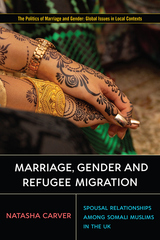
This ethical and poetic ethnography analyses the upheavals to gender roles and marital relationships brought about by Somali refugee migration to the UK. Unmoored from the socio-cultural norms that made them men and women, being a refugee is described as making "everything" feel "different, mixed up, upside down." Marriage, Gender and Refugee Migration details how Somali gendered identities are contested, negotiated, and (re)produced within a framework of religious and politico-national discourses, finding that the most significant catalysts for challenging and changing harmful gender practices are a combination of the welfare system and Islamic praxis. Described as “an important and urgent monograph," this book will be a key text relevant to scholars of migration, transnational families, personal life, and gender. Written in a beautiful and accessible style, the book voices the participants with respect and compassion, and is also recommended for scholars of qualitative social research methods.

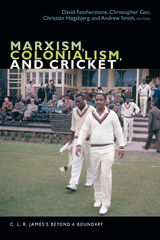
Contributors. Anima Adjepong, David Austin, Hilary McD. Beckles, Michael Brearley, Selwyn R. Cudjoe, David Featherstone, Christopher Gair, Paget Henry, Christian Høgsbjerg, C. L. R. James, Selma James, Roy McCree, Minkah Makalani, Clem Seecharan, Andrew Smith, Neil Washbourne, Claire Westall
Marshalling a wide array of colorful evidence—including legal records, letters, medical sources, and the literature of the period—Derek G. Neal here plumbs the social and cultural significance of masculinity during the generations born between the Black Death and the Protestant Reformation. He discovers that social relations between men, founded on the ideals of honesty and self-restraint, were at least as important as their domination and control of women in defining their identities. By carefully exploring the social, physical, and psychological aspects of masculinity, The Masculine Self in Late Medieval England offers a uniquely comprehensive account of the exterior and interior lives of medieval men.
Throughout this work, Eric Silverman details the dialogics of mothering and manhood throughout Eastern Iatmul culture, including in his analysis cosmology and myth; food- and childraising; architecture and canoes; ethnophysiology and sexuality; shame and hygiene; marriage and kinship; and perhaps most significantly, a ceremonial locus classicus in anthropology: the famous Iatmul naven rite. This book provides the first sustained examination of naven since Bateson, presenting new data and interpretations that are based entirely on original, first-hand ethnographic research.
The sustained engagement with anthropological and psychoanalytic theory coupled with a refreshing examination of a famous and still-enigmatic ritual is sure to make multiple contributions to pressing debates in contemporary anthropology and social theory.
Eric Silverman is Associate Professor of Anthropology, DePauw University.

From Blurred Lines to gang signs, how does society cause toxic masculinity? How do we define masculinity today? Dominating the world around us, seen in deadly gun violence, higher male suicide rates, and the incels on Reddit, masculinity is perceived to be “toxic,” “fragile,” and “in crisis.” What does that mean for society, and how can we understand it?
In Mask Off, JJ Bola exposes masculinity as a performance that men are socially conditioned into. Using examples of non-Western cultural traditions, music, and sport, he shines light on historical narratives around manhood, debunking popular myths along the way. He explores how LGBTQ men, men of color, and male refugees experience masculinity in diverse ways, revealing its fluidity, how it's strengthened and weakened by different political contexts, such as the patriarchy or the far-right, and perceived differently by those around them. Chapters include:
*Real men: Myths of masculinity
*What’s love got to do with it? Love, sex and consent
*This is a man’s world: The politics of masculinity, the masculinity of politics
*If I were a boy: Gender equality and feminism
*Slamdunk at the funk: masculinity and sport
At the heart of love and sex, the political stage, competitive sports, gang culture, and mental health issues, lies masculinity: Mask Off is an urgent call to unravel masculinity and redefine it. "What do our own perceptions of masculinity and the wider cultural norms around it mean for young boys growing up into manhood? What do they mean for young men and older men grappling with a society that encourages them to hold on to the anger that destroys the lives of women as well as the lives of many men?" Those questions and more offer food for thought for every man.

An ambitious reassessment of the political uses of masking.
Does the mask reveal more than it conceals? What, this book asks, becomes visible and invisible in the masking practiced in Caribbean cultures-not only in the familiar milieu of the carnival but in political language, social conduct, and cultural expressions that mimic, misrepresent, and mislead? Focusing on masking as a socially significant practice in Caribbean cultures, Gerard Aching’s analysis articulates masking, mimicry, and misrecognition as a means of describing and interrogating strategies of visibility and invisibility in Cuba, Trinidad and Tobago, Martinique, and beyond.
Masking and Power uses ethnographic fieldwork, psychoanalysis, and close literary readings to examine encounters between cultural insiders as these locals mask themselves and one another either to counter the social invisibility imposed on them or to maintain their socioeconomic privileges. Aching exposes the ways in which strategies of masking and mimicry, once employed to negotiate subjectivities within colonial regimes, have been appropriated for state purposes and have become, with the arrival of self-government in the islands, the means by which certain privileged locals make a show of national and cultural unity even as they engage in the privatization of popular culture and its public performances.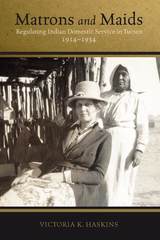
From 1914 to 1934 the US government sent Native American girls to work as domestic servants in the homes of white families. Matrons and Maids tells this forgotten history through the eyes of the women who facilitated their placements. During those two decades, “outing matrons” oversaw and managed the employment of young Indian women. In Tucson, Arizona, the matrons acted as intermediaries between the Indian and white communities and between the local Tucson community and the national administration, the Office of Indian Affairs.
Based on federal archival records, Matrons and Maids offers an original and detailed account of government practices and efforts to regulate American Indian women. Haskins demonstrates that the outing system was clearly about regulating cross-cultural interactions, and she highlights the roles played by white women in this history. As she compellingly argues, we cannot fully engage with cross-cultural histories without examining the complex involvement of white women as active, if ambivalent, agents of colonization.
Including stories of the entwined experiences of Indigenous and non-Indigenous women that range from the heart-warming to the heart-breaking, Matrons and Maids presents a unique perspective on the history of Indian policy and the significance of “women’s work.”
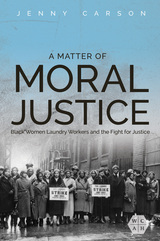
Like thousands of African American women, Charlotte Adelmond and Dollie Robinson worked in New York’s power laundry industry in the 1930s. Jenny Carson tells the story of how substandard working conditions, racial and gender discrimination, and poor pay drove them to help unionize the city’s laundry workers. Laundry work opened a door for African American women to enter industry, and their numbers allowed women like Adelmond and Robinson to join the vanguard of a successful unionization effort. But an affiliation with the powerful Congress of Industrial Organizations (CIO) transformed the union from a radical, community-based institution into a bureaucratic organization led by men. It also launched a difficult battle to secure economic and social justice for the mostly women and people of color in the plants. As Carson shows, this local struggle highlighted how race and gender shaped worker conditions, labor organizing, and union politics across the country in the twentieth century.
Meticulous and engaging, A Matter of Moral Justice examines the role of African American and radical women activists and their collisions with labor organizing and union politics.

In Matters of Choice, Iris Lopez presents a comprehensive analysis of the dichotomous views that have portrayed sterilization either as part of a coercive program of population control or as a means of voluntary, even liberating, fertility control by individual women. Drawing upon her twenty-five years of research on sterilized Puerto Rican women from five different families in Brooklyn, Lopez untangles the interplay between how women make fertility decisions and their social, economic, cultural, and historical constraints. Weaving together the voices of these women, she covers the history of sterilization and eugenics, societal pressures to have fewer children, a lack of adequate health care, patterns of gender inequality, and misinformation provided by doctors and family members.
Lopez makes a stirring case for a model of reproductive freedom, taking readers beyond victim/agent debates to consider a broader definition of reproductive rights within a feminist anthropological context.
Among the Maya of Xculoc, an isolated farming village in the lowland forests of the Yucatán peninsula, children contribute to household production in considerable ways. Thus this village, the subject of anthropologist Karen Kramer's study, affords a remarkable opportunity for understanding the economics of childhood in a pre-modern agricultural setting.
Drawing on a range of theoretical perspectives and extensive data gathered over many years, Kramer interprets the form, value, and consequences of children's labor in this maize-based culture. She looks directly at family size and birth spacing as they figure in the economics of families; and she considers the timing of children's economic contributions and their role in underwriting the cost of large families. Kramer's findings--in particular, that the children of Xculoc begin to produce more than they consume long before they marry and leave home--have a number of interesting implications for the study of family reproductive decisions and parent-offspring conflict, and for debates within anthropology over children's contributions in hunter/gatherer versus agricultural societies.
With its theoretical breadth, and its detail on crop yields, reproductive histories, diet, work scheduling, and agricultural production, this book sets a new standard for measuring and interpreting child productivity in a subsistence farming community.
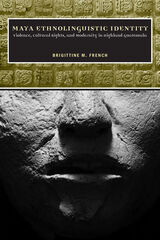
French shows, with useful examples, how constructions of language and collective identity are in fact strategies undertaken to serve the goals of institutions (including the government, the military, the educational system, and the church) and social actors (including linguists, scholars, and activists). But by incorporating in-depth fieldwork with groups that speak Kaqchikel and K’iche’ along with analyses of Spanish-language discourses, Maya Ethnolinguistic Identity also shows how some individuals in urban, bilingual Indian communities have disrupted the essentializing projects of multiculturalism. And by focusing on ideologies of language, the author is able to explicitly link linguistic forms and functions with larger issues of consciousness, gender politics, social positions, and the forging of hegemonic power relations.
The Maya are the single largest group of indigenous people living in North and Central America. Beginning in the early 1980s, hundreds of thousands of Maya fled the terror of Guatemalan civil strife to safety in Mexico and the U.S. This ethnography of Mayan immigrants who settled in Indiatown, a small agricultural community in south central Florida, presents the experiences of these traditional people, their adaptations to life in the U.S., and the ways they preserve their ancestral culture. For more than a decade, Allan F. Burns has been researching and doing advocacy work for these immigrant Maya, who speak Kanjobal, Quiche, Mamanâ, and several other of the more than thirty distinct languages in southern Mexico and Guatemala. In this fist book on the Guatemalan Maya in the U.S, he uses their many voices to communicate the experience of the Maya in Florida and describes the advantages and results of applied anthropology in refugee studies and cultural adaptation.
Burns describes the political and social background of the Guatemalan immigrants to the U.S. and includes personal accounts of individual strategies for leaving Guatemala and traveling to Florida. Examining how they interact with the community and recreate a Maya society in the U.S., he considers how low-wage labor influences the social structure of Maya immigrant society and discusses the effects of U.S. immigration policy on these refugees.
The Maya of Santiago Chimaltenango have experienced increasingly rapid, even violent, integration into Guatemalan society in the last fifty years, yet they still distinguish themselves ethnically from Spanish-speaking Guatemalans and other Maya. Why this sense of ethnic identity persists—and also changes—over time is the focus of Maya Saints and Souls in a Changing World, a beautifully written ethnography of a Mam-speaking Maya town in the western highlands of Guatemala.
John Watanabe uniquely explores how Chimaltecos themselves define their local distinctiveness. This approach uncovers significant continuities in lifeways and world view that might otherwise remain imperceptible to an outsider.
Another important feature of the study is that it updates Charles Wagley's pioneering research in the community during the 1930s. Watanabe identifies both the external, historical factors that have prompted change in the community since Wagley's time and the people's responses to these changes.
In the last decades of the twentieth century, thousands of Mayas were expelled, often violently, from their homes in San Juan Chamula and other highland communities in Chiapas, Mexico, by fellow Mayas allied with the ruling Institutional Revolutionary Party (PRI). State and federal authorities generally turned a blind eye to these human rights abuses, downplaying them as local conflicts over religious conversion and defense of cultural traditions. The expelled have organized themselves to fight not only for religious rights, but also for political and economic justice based on a broad understanding of human rights.
This pioneering ethnography tells the intertwined stories of the new communities formed by the Mayan exiles and their ongoing efforts to define and defend their human rights. Focusing on a community of Mayan Catholics, the book describes the process by which the progressive Diocese of San Cristóbal and Bishop Samuel Ruiz García became powerful allies for indigenous people in the promotion and defense of human rights. Drawing on the words and insights of displaced Mayas she interviewed throughout the 1990s, Christine Kovic reveals how the exiles have created new communities and lifeways based on a shared sense of faith (even between Catholics and Protestants) and their own concept of human rights and dignity. She also uncovers the underlying political and economic factors that drove the expulsions and shows how the Mayas who were expelled for not being "traditional" enough are in fact basing their new communities on traditional values of duty and reciprocity.
2005 — Best Book Award – New England Council of Latin American Studies
Selling handicrafts to tourists has brought the Maya peoples of Guatemala into the world market. Vendors from rural communities now offer their wares to more than 500,000 international tourists annually in the marketplaces of larger cities such as Antigua, Guatemala City, Panajachel, and Chichicastenango. Like businesspeople anywhere, Maya artisans analyze the desires and needs of their customers and shape their products to meet the demands of the market. But how has adapting to the global marketplace reciprocally shaped the identity and cultural practices of the Maya peoples?
Drawing on over a decade of fieldwork, Walter Little presents the first ethnographic study of Maya handicraft vendors in the international marketplace. Focusing on Kaqchikel Mayas who commute to Antigua to sell their goods, he explores three significant issues:
- how the tourist marketplace conflates global and local distinctions.
- how the marketplace becomes a border zone where national and international, developed and underdeveloped, and indigenous and non-indigenous come together.
- how marketing to tourists changes social roles, gender relationships, and ethnic identity in the vendors' home communities.
Little's wide-ranging research challenges our current understanding of tourism's negative impact on indigenous communities. He demonstrates that the Maya are maintaining a specific, community-based sense of Maya identity, even as they commodify their culture for tourist consumption in the world market.
In 1970, Kenneth Gibson was elected as Newark, New Jersey’s first African-American mayor, a position he held for an impressive sixteen years. Yet even as Gibson served as a trailblazer for black politicians, he presided over a troubled time in the city’s history, as Newark’s industries declined and its crime and unemployment rates soared.
This book offers a balanced assessment of Gibson’s leadership and his legacy, from the perspectives of the people most deeply immersed in 1970s and 1980s Newark politics: city employees, politicians, activists, journalists, educators, and even fellow big-city mayors like David Dinkins. The contributors include many of Gibson’s harshest critics, as well as some of his closest supporters, friends, and family members—culminating in an exclusive interview with Gibson himself, reflecting on his time in office.
Together, these accounts provide readers with a compelling inside look at a city in crisis, a city that had been rocked by riots three years before Gibson took office and one that Harper’s magazine named “America’s worst city” at the start of his second term. At its heart, it raises a question that is still relevant today: how should we evaluate a leader who faced major structural and economic challenges, but never delivered all the hope and change he promised voters?
While Papua New Guinea’s resident white population has been severely reduced due to postcolonial white flight, the whiteman remains a significant racial and cultural other here—not only as an archetype of power and wealth in the modern arena, but also as a foil for people’s evaluations of themselves within vernacular frames of meaning. As Ira Bashkow explains, ideas of self versus other need not always be anti-humanistic or deprecatory, but can be a creative and potentially constructive part of all cultures.
A brilliant analysis of whiteness and race in a non-Western society, The Meaning of Whitemen turns traditional ethnography to the purpose of understanding how others see us.
A searing critique of the “freedom” that America offers to the victims of its imperialist machinations of war and occupation
Meaningless Citizenship traces the costs of America’s long-term military involvement around the world by following the forced displacement of Iraqi families, unveiling how Iraqis are doubly displaced: first by the machinery of American imperialism in their native countries and then through a more pernicious war occurring on U.S. soil—the dismantling of the welfare state.
Revealing the everyday struggles and barriers that texture the lives of Iraqi families recently resettled to the United States, Sally Wesley Bonet draws from four years of deep involvement in the refugee community of Philadelphia. An education scholar, Bonet’s analysis moves beyond the prevalent tendency to collapse schooling into education. Focusing beyond the public school to other critical institutions, such as public assistance, resettlement programs, and healthcare, she shows how encounters with institutions of the state are an inherently educative process for both refugee youths and adults, teaching about the types of citizenship they are expected to enact and embody while simultaneously shaping them into laboring subjects in service of capitalism.
An intimate, in-depth ethnography, Meaningless Citizenship exposes how the veneer of American values—freedom, democracy, human rights—exported to countries like Iraq, disintegrates to uncover what is really beneath: a nation-state that prioritizes the needs of capitalism above the survival and wellbeing of its citizens.
The United States has always fancied itself a nation apart—"exceptional" in its values, traditions, and way of life. For most of the country's history, ideas about what made America distinctive generally were framed in terms of a liberal idealism rooted in the thought of John Locke and articulated by Jefferson, Madison, and other Founders. While some commentators also observed that the United States was a land of plenty, it wasn't until the mid-twentieth century that material abundance emerged as the principal standard of American “greatness,” as measured by a host of new economic indicators.
Beginning in earnest in the wake of World War II, opinion-shapers in politics, business, academia, the media, the schools, and public diplomacy gloried in the nation's booming economy. Where “plenty” had once been a largely abstract concept, it was now quantifiable, thanks to new national income accounting and other economic data collection and analysis techniques. One could tally up production and consumption of an ever-expanding cornucopia of goods and services that made up the gross national product (GNP), the king of postwar statistics. American preeminence and American identity were increasingly linked with this measurable prosperity, presented in the language of a newly influential economics profession.
In Measuring America, Andrew L. Yarrow explores this history, telling two parallel, interlocking stories—of how economic ideas came to have vastly greater influence on American culture after World War II, and how those ideas dovetailed with a growing belief that the meaning and value of the United States resided in its material output. How and why this new way of “measuring America” developed, how it was expressed, and what it has meant and means for Americans today are the subject of this well-researched and insightful book.
Mediating Gender in Post-Authoritarian South Korea maps the ways in which popular media and public discourse make the social dynamics of gender visible and open them up for debate and dismantling. In presenting innovative new research on the ways in which popular ideas about gender gain concrete form and political substance through mass mediation, the book’s contributors investigate the discursive production of gender in contemporary South Korea through trends, tropes, and thematics, as popular media become the domain in which new gendered subjectivities and relations transpire. The essays in this volume present cases and media objects that span multiple media and platforms, introducing new ways of thinking about gender as a platform and a conceptual infrastructure in the post-authoritarian era.

Drawing on sources in Cuba, Puerto Rico, Brazil, and the United States, Amador shows that initiatives launched in colonial settings laid the foundation for the rise of public health programs in the hemisphere and transformed debates about the formation of national culture. Writers rethought theories of environmental and racial danger, while Cuban reformers invoked the yellow fever campaign to exclude nonwhite immigrants. Puerto Rican peasants flooded hookworm treatment stations, and Brazilian sanitarians embraced regionalist and imperialist ideologies. Together, these groups illustrated that public health campaigns developed in the shadow of empire propelled new conflicts and conversations about achieving modernity and progress in the tropics.
This book is a recipient of the annual Norman L. and Roselea J. Goldberg Prize for the best project in the area of medicine.
Mediterranean in Dis/order reveals the connection between space and politics by examining the role that space has played in insurgencies, conflicts, uprisings, and mobilities in the Mediterranean region. With this approach, the authors are able to challenge well-established beliefs about the power structure of the state across different disciplines (including political science, history, sociology, geography, and anthropology), and its impact on the conception, production, and imagination of space in the broader Mediterranean. Further, they contribute to particular areas of studies, such as migration, political Islam, mobilization, and transition to democracy, among others. The book, infusing critical theory, unveils original and revelatory case studies in Tunisia, Libya, Lebanon, Turkey, Syria, Morocco, and the EU Mediterranean policy, through a various set of actors and practices—from refugees and migrations policies, to Islamist or students’ movements, architectural sites, or movies. This multidisciplinary perspective on space and power provides a valuable resource for practitioners interested in how space, context, and time interact to produce institutions, political subjectivities, and asymmetries of power, particularly since the turning point of the Arab uprisings. The book also helps readers understand the conditions under which the uprisings develop, giving a clearer picture about various national, regional, and international dynamics.


Shlomo Deshen, author of several books on North African Jewish immigrants to Israel, here turns his attention to the past. Taking as his focus the tension between individualism and communal authority—symbolized by the walls of the mellahs, the Jewish quarters—he applies to traditional Moroccan Jewish society questions of concern to sociologists everywhere regarding political organization, economic activity, religion, and the family.
From such documents as private correspondence, archival photographs, and the legal commentaries of rabbis who served in the Jewish community courts, Deshen draws out details of daily life: disputes between spouses, businessmen, craftsmen, and inheritors; the ramifications of marriage contracts; and claims involving community taxes and extortions by Muslim potentates. Linking this material with recent historical and anthropological studies of the Maghreb, Deshen reconstructs a community about which little has been known and places it squarely within the context of traditional Moroccan society.
Individual chapters deal with relations between Muslims and Jews, the material conditions of Jewish life, and the nature of politics within the mellah. Deshen devotes particular attention to the nature of the Moroccan rabbinate, the sociology of the mellah synagogue, lay community leadership, and the historic role of the Sephardic heritage in Morocco after the expulsion from medieval Spain. His close study of the nature of the extended family in traditional Morocco corrects popular misconceptions.
Originally published in Israel in 1983, now translated and expanded by its author, The Mellah Society draws upon Middle Eastern and Jewish history, textual Judaic studies, and social anthropology to make an original contribution that will interest scholars of the Middle East and North Africa as well as anyone concerned with Jewish history and ethnicity.



Staring in the 1980s, Chiloé was thrust into the global economy when major companies moved into the region to extract wild stocks of fish and to grow salmon and shellfish for export. The archipelago’s economy shifted abruptly from one of subsistence farming and fishing to wage labor in export industries. Local knowledge, traditions, memories, and identities similarly shifted, with young islanders expressing a more critical view of the rural past than their elders.
This book highlights the region’s unique past, emphasizing the generational tensions, disconnects, and continuities of the last half century. Drawing on interviews, field observations, and historical documents, Anton Daughters brings to life one of South America’s most culturally distinct regions.
READERS
Browse our collection.
PUBLISHERS
See BiblioVault's publisher services.
STUDENT SERVICES
Files for college accessibility offices.
RECENTLY PUBLISHED



UChicago Accessibility Resources
home | accessibility | search | about | contact us
BiblioVault ® 2001 - 2026
The University of Chicago Press